Home Blog

The climate money went to war instead

0
the-climate-money-went-to-war-instead
The climate money went to war instead

<

article id=”post-953643″>

Nepal asked the United Nations for exactly as much help as the rules allowed. When a glacier collapse on the border with Tibet sent a wall of water down the Bhote Koshi valley in late August, killing at least 1,453 people, Kathmandu applied to the Fund for Responding to Loss and Damage for $20 million, the maximum a single request may claim. The government puts recovery and reconstruction at $4.7 billion. In October the fund approved the request, its first payout, and the money covers less than one percent of the bill.

COP31 ended on Sunday in Antalya, Turkey, without an overarching agreement, the first UN climate summit to break down that way since Copenhagen in 2009. The European Union, Panama and a coalition of vulnerable states refused the proposed Antalya Pact because its final text left out fossil fuels. Speaking for the bloc, Darragh O’Brien, Ireland’s climate minister, said Europe would not endorse a pact “that does not even mention fossil fuels.” That fight took the headlines, for obvious reasons. The finance collapse did more damage, one deleted line at a time.

A target of at least $120 billion a year in adaptation finance by 2035 sat in Monday’s draft and had vanished from Thursday’s revision. Its replacement, a technical report, then went down with the pact. The loss and damage fund came to Antalya with 176 requests worth about $2.8 billion and only $342 million it could allocate. New pledges to the Adaptation Fund came to roughly $50 million against a yearly target of $300 million. Ten days before the summit opened, Wopke Hoekstra, the EU’s climate commissioner, had already called talks on new finance commitments “dead in the water.”

A Carbon Brief analysis published as delegates arrived found that developed countries had pledged about £42 billion a year in public climate finance. Nearly all of those pledges expired in 2025, and what remains averages £11.8 billion a year for the rest of the decade, a fall of about 71 percent. In dollars, recent levels of around $40 billion have shrunk to $11.7 billion. Of the five countries that have long carried most of this money (Japan, Germany, France, the United States and Britain), only Britain has announced a new pledge, and it looks larger mainly because London changed how it counts. The United States, which under Joe Biden committed to $11.4 billion a year, has left the Paris Agreement again and will provide nothing. Two years ago in Baku, the same donors promised to lead the way to $300 billion a year by 2035.

The explanation offered in the corridors is scarcity. Carbon Brief’s sources cited conflict, fiscal constraints and the far right. The first and last are real enough. Fiscal constraint does not survive a glance at the defense ledgers. World military spending reached $2,887 billion in 2025, the 11th consecutive annual rise. The Bundestag approved more than €108 billion for Germany’s armed forces for 2026, the highest since the Cold War. Over the same stretch, Germany’s budgeted climate finance fell from €6.1 billion to €4.7 billion, a drop of 23 percent. Tokyo set a record defence budget of ¥9.04 trillion for fiscal 2026, its 12th straight annual increase.

London went farther and said the quiet part aloud. When Keir Starmer announced Britain’s biggest sustained rise in defense spending since the Cold War, he paid for it by cutting aid from 0.5 percent of national income to 0.3 percent by 2027, a 40 percent cut. Berlin did not run out of money, and neither did London. Both decided what the money was for.

Washington made the same choice on a larger scale. Congress approved more than $1 trillion for the military for 2026, and Donald Trump has asked for $1.5 trillion for 2027. Official development assistance from rich countries fell 23.1 percent in 2025 to $174.3 billion, the largest annual drop on record, and the United States alone accounted for three-quarters of it. In June, under pressure from the Trump administration, the World Bank retired its 45 percent target for climate finance.

There is a fair objection. Pledges run in cycles, and a lapsed promise is not a canceled program. But the numbers above are not pledges. Germany’s outlay fell in cash, American climate finance went to zero, and the British cut was written into a budget. Europe faces a real threat from Russia, and Tokyo has its own reasons to spend. Nobody is asking either to disarm.

The deeper imbroglio is one of accounting. Under NATO’s Hague declaration, allies may count up to 1.5 percent of GDP a year toward protecting critical infrastructure and ensuring civil preparedness and resilience. A flood barrier on the Rhine could, it seems, be booked as security spending. A glacier-lake warning system in the Himalayas counts for nothing, although the failures it would prevent are part and parcel of the instability those military budgets are meant to manage. Hilda Heine, president of the Marshall Islands, told the conference that the greatest security threat her people face remains underfunded, and asked delegates to “find money for life, not death.”

The fix has to be small enough to pass and honest about what it buys. Every developed country that raised its defense budget this year should commit 1 percent of that budget as grant-based climate finance, measured against a published baseline and reported through the climate finance work program that developing countries forced onto the Antalya agenda over EU objections. For Germany, 1 percent of €108 billion is about €1.1 billion a year, most of what its climate budget lost between 2024 and 2025. For Japan it is roughly ¥90 billion, about $580 million. Across Europe’s NATO members, which spent $559 billion on their militaries in 2025, it comes to some $5.6 billion.

That would not close the $28 billion annual hole left by the expired pledges. With Washington absent, it would fill between a fifth and a quarter of it without touching a single brigade, and even that share is many times what the loss and damage fund could hand out this year. The grants condition is the part that bites, because donors relabel old money, as Britain’s new pledge shows.

The fund’s board meets again in December, with those 176 requests still on its desk. When the next summit opens in Addis Ababa in November 2027, the first test will not be a sentence about fossil fuels. It will be whether a single defense ministry has posted 1 percent of its budget to the climate account, and whether anyone in the hall can name which one.

Source: Iwpost.com

The Obamas Face Backlash After Thanksgiving ‘Photo Op’ (Video)

0
the-obamas-face-backlash-after-thanksgiving-‘photo-op’-(video)
The Obamas Face Backlash After Thanksgiving ‘Photo Op’ (Video)


What was supposed to be a heartwarming Thanksgiving gesture by Barack and Michelle Obama has turned into an unexpected controversy, with critics accusing the former first couple of staging a publicity stunt after learning they spent just 25 minutes at a Chicago charity.

The Obamas made a surprise appearance at Dion’s Chicago Dream on Wednesday, November 25, rolling up their sleeves to help pack boxes of fresh produce for struggling families ahead of the holiday.

But when video footage of their charitable efforts surfaced on social media, not everyone was impressed.

Some critics immediately questioned whether the visit was a genuine act of generosity or simply another carefully photographed appearance designed to generate positive publicity.

“They spent 25 minutes there. Just another photo op,” one commenter complained.

Another questioned why the couple appeared to keep their coats on while helping workers pack produce, suggesting they hadn’t planned to stay very long.

And that wasn’t the only criticism.

One social media user argued that placing a few pieces of fruit into boxes wasn’t the same as working alongside volunteers throughout an entire shift.

The backlash intensified after the Chicago Sun-Times confirmed that the Obamas arrived at approximately 11:50 a.m. and departed around 12:15 p.m., spending about 25 minutes meeting employees and helping prepare food.

However, the brief visit was only part of the story.

The couple had surprised workers at Dion’s Chicago Dream, a nonprofit founded by Navy veteran Dion Dawson that provides fresh produce to families throughout Chicago.

Dawson reportedly received only about an hour’s notice before the former president and first lady arrived.

Once inside, Barack and Michelle joined employees on the packing line, filling cardboard boxes with fruits and vegetables destined for local households.

The atmosphere appeared relaxed and cheerful, with the couple joking with workers as they helped prepare the deliveries.

At one point, Michelle playfully encouraged her husband to get some exercise while lifting boxes.

Barack also praised the organization for addressing food insecurity and bringing healthier food options to underserved communities, an issue he said had long been important to Michelle.

The former president later posted footage of the visit on social media, wishing Americans a happy Thanksgiving.

But while critics questioned the couple’s motives, supporters quickly rushed to their defense.

Some praised the Obamas for using their public profile to bring attention to families struggling to afford groceries, while others argued that even a brief celebrity visit could provide valuable publicity for a nonprofit.

Dawson himself appeared thrilled by the surprise.

Speaking to reporters, the organization’s founder said he was especially excited that his employees were receiving recognition for their hard work.

And the nonprofit’s impact extends far beyond one Thanksgiving appearance.

Dion’s Chicago Dream has delivered more than 9.5 million pounds of fresh produce and serves thousands of Chicago households each week, making the organization’s mission considerably larger than the brief celebrity visit that sparked the controversy.

Meanwhile, the online debate soon spilled into another familiar political rivalry.

As the Obamas faced accusations of using charity work for publicity, President Donald Trump was celebrating Thanksgiving at his luxurious Mar-a-Lago estate in Palm Beach, Florida.

Videos circulating online showed Trump and First Lady Melania Trump entering an elaborate ballroom filled with applauding guests.

The lavish celebration prompted its own backlash, with critics accusing the president of being out of touch with Americans struggling financially.

Supporters of the Obamas pointed to the contrasting holiday appearances, while Trump defenders questioned whether a short volunteer visit should be treated as a major charitable achievement.

Neither controversy established that the families had done anything improper, but both illustrated how even Thanksgiving celebrations can become flashpoints in America’s ongoing political divisions.

For the Obamas, the most uncomfortable questions centered on the cameras, the publicity and the relatively brief amount of time they spent volunteering.

Still, there is no evidence that their visit was merely staged or that the food they helped pack went to waste.

The boxes were prepared for distribution to Chicago families, and the charity’s founder publicly welcomed the attention his organization received.

What began as a simple holiday gesture ultimately became another heated social media argument about celebrity philanthropy, political image-making and whether good deeds should be celebrated when cameras are rolling.

For the families receiving food, however, the political arguments were likely far less important than what was inside those boxes.

Source: Iwpost.com

Russia’s unenforced red lines fuel calls for escalation

0
russia’s-unenforced-red-lines-fuel-calls-for-escalation
Russia’s unenforced red lines fuel calls for escalation

Subscribe now with a one-month trial for only $1, then enjoy the first year at an exclusive rate of just $99.

Kremlin insiders question Putin’s approach to the West

James Davis reports that frustration is growing inside the Kremlin over Putin’s continued faith in diplomacy with Trump and Europe despite repeated attacks Moscow views as crossing Russian red lines. Younger officials increasingly favor a harder military response, warning that unchecked escalation could bring Europe closer to direct confrontation with Russia.

Germany’s budget: Debt without a growth strategy

Diego Faßnacht reports that Germany is financing rising defense and social commitments with record borrowing without a credible strategy to expand productivity or private investment. As demographic costs mount and coalition divisions persist, debt is postponing rather than solving the underlying conflict over how Germany funds security, welfare and future growth.

New urgency in Japan’s drive for sovereign AI

Scott Foster reports that Japan is accelerating efforts to build sovereign AI infrastructure as dependence on US technology increasingly exposes it to foreign political and regulatory risk. Mitsubishi Heavy Industries and Sakura Internet aim to develop domestic cloud and data-center capacity that gives Japan greater control over critical digital infrastructure.

Source: Iwpost.com

New rules for the EU’s pharmaceutical sector

0
new-rules-for-the-eu’s-pharmaceutical-sector
New rules for the EU’s pharmaceutical sector
cde.news desk · 3 min read

The European Parliament on Wednesday gave its final approval to the reform of the EU’s pharmaceutical legislation, including measures to tackle shortages of critical medicines.

The new rules aim to prevent shortages, boost industry innovation and combat antimicrobial resistance. They will allow authorities to tackle medicine shortages through better monitoring and coordination at both national and EU levels. EU countries will be able to require companies to supply medicines in sufficient quantities to meet patients’ needs.

To support earlier market entry of generic medicines, manufacturers will be allowed to conduct certain activities during the original product’s market protection period.

For newly authorised medicines, a maximum of eleven years of combined regulatory protection is envisaged. This consists of eight years of data protection, during which other companies cannot access product data, and one additional year of market protection, during which generic or biosimilar products cannot be sold. There is also the possibility of gaining additional market protection periods when certain conditions are met.

Various measures simplify the internal functioning of the European Medicines Agency (EMA), enabling it to cut red tape and speed up market authorisation requests.

To promote the prudent use of antimicrobials, stricter requirements are introduced. These include compulsory medical prescriptions for all antimicrobials and specific information on package leaflets. For each new priority antimicrobial they develop, manufacturers can earn one additional year of data protection through a “transferable exclusivity voucher”.

The Parliament’s president announced in plenary that the proposed pharmaceutical package was deemed adopted, following the deal reached last year between the co-legislators.

Critical Medicines Act backed by 592 votes

The agreement reached by Parliament and the Council in May 2026 on the Critical Medicines Act was adopted with 592 votes in favour, 35 against and 30 abstentions.

The new rules define criteria for setting up industrial “strategic projects” located in the EU to create, modernise and increase manufacturing capacity. Companies benefiting from national or EU financial support will have to abide by clear obligations, including prioritising supply to the EU market.

To reduce the EU’s dependency on non-EU countries and incentivise EU-based manufacturing, suppliers will be rewarded in proportion to the share of their medicinal products and active pharmaceutical substances manufactured in the EU.

For critical medicines, orphan medicines and other medicines of common interest, five or more EU countries will be able to join forces in voluntary collaborative procurements.

The pharmaceutical package consists of a regulation and a directive put forward by the Commission in April 2023. It revises the EU’s 20-year-old general pharmaceutical legislation. The Critical Medicines Act, proposed in March 2025, complements the reform with specific rules to enhance the availability and supply of critical medicines in the EU, such as antibiotics, insulin, vaccines and medicines for chronic diseases.

Source: Iwpost.com

Kim’s changing calculus: What would lure him back to Trump talks?

0
kim’s-changing-calculus:-what-would-lure-him-back-to-trump-talks?
Kim’s changing calculus: What would lure him back to Trump talks?

<

article id=”post-953651″>

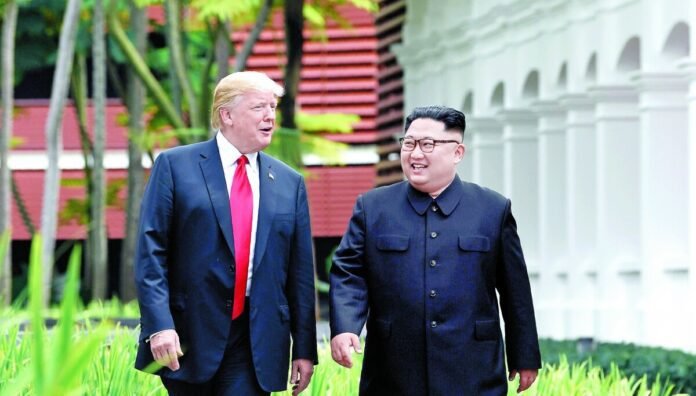
A potential US-North Korea summit was one of the most closely watched prospects at the APEC summit in China. Although hopes for such a meeting were dashed by Pyongyang’s refusal to engage, the possibility of renewed dialogue remains alive. On November 24, US President Donald Trump reopened that possibility by suggesting that his exchange of letters with North Korean leader Kim Jong Un could resume at any time.

Why, despite Washington’s repeated willingness to engage, has Pyongyang refused to return to the negotiating table? The answer lies in North Korea’s choice of “inreach” – consolidating ties within its own camp with the backing of China and Russia – over “outreach” to broaden its engagement with the international community.

Another obstacle to renewed US-North Korea talks has been the rivalry among the major powers, evident in recent summit diplomacy involving the United States, China and Russia.

While Washington was preoccupied with the struggle for global dominance and Moscow with defending its sphere of influence, Beijing focused on protecting its economic interests, particularly trade. The North Korean nuclear issue consequently slipped down the list of priorities, with no meaningful progress toward renewed dialogue between Washington and Pyongyang.

Ultimately, these competing interests among the major powers have created a strategic environment in which North Korea can secure substantial benefits without improving relations with the United States.

When and why does North Korea pursue outreach?

North Korea’s foreign policy has never been oriented toward reform and opening up. Instead, guided by its Juche doctrine of self-reliance and the overriding imperative of regime survival, Pyongyang has repeatedly adjusted the scope of its diplomacy, alternating between outreach and inreach.

Although inreach has been the dominant approach, North Korea occasionally pursued outreach around the end of the Cold War to ensure regime survival and seek new economic opportunities. Examples include the adoption of a joint venture law to attract Western capital and the establishment of diplomatic relations with major European countries. The culmination of this approach was the Kaesong Industrial Complex, a symbol of inter-Korean economic cooperation until its closure in 2016.

North Korea also pursued dialogue and negotiations with South Korea and the United States after Kim Jong Un came to power. These efforts ultimately came to nothing following the failed Hanoi summit and the subsequent breakdown of the September 19 inter-Korean military agreement. Pyongyang then made a sharp turn toward inreach, devoting its resources to advancing its nuclear and missile capabilities while strengthening strategic cooperation with China and Russia.

Behind this shift lies a structural change in the international order: the increasingly entrenched rivalry among Washington, Beijing and Moscow. With the outbreak of wars in Ukraine and Iran, Pyongyang exploited the geopolitical turmoil to pursue a strategy of “bandwagoning” with China and Russia. The substantial wartime gains and economic and military benefits secured through its deployment of some 14,000 troops to Russia have significantly diminished its incentive to pursue a “grand bargain” with the second Trump administration.

External conditions for reviving North Korea’s outreach

Historically, two factors have driven North Korea to pursue outreach: the need to overcome severe domestic economic hardship and the desire to escape international sanctions and isolation.

Today, however, Pyongyang finds itself in a markedly different strategic environment. Closer ties with Russia have opened up new economic and military opportunities, while China’s and Russia’s blatant departures from the UN sanctions regime have substantially undermined its effectiveness. North Korea can now secure through inreach much of what it previously sought to achieve through outreach.

Even so, as long as US and UN sanctions remain in place, North Korea will continue to face considerable constraints on its economic development and regime stability. Its leadership is likely well aware of these limitations. The possibility of renewed US-North Korea talks has therefore not disappeared entirely, but strategic incentives would have to be created for Pyongyang to pursue outreach once again.

What, then, would it take to bring North Korea back to the negotiating table? A key diplomatic prerequisite is an improvement in US-China relations. As long as Beijing prioritizes solidarity with North Korea and Russia in its confrontation with Washington, Pyongyang is unlikely to seek talks with the United States on its own. Only when Washington and Beijing ease their intense confrontation and restore strategic communication can North Korea begin to alleviate its security concerns and broaden its external engagement.

The APEC summit opened the door to an easing of US-China tensions, but that alone will not be enough. If Beijing continues to shield Pyongyang unconditionally, it risks undermining the recently established momentum toward better relations with Washington.

China’s policy toward North Korea, particularly the extent of its economic cooperation, is equally critical. If Beijing disregards UN Security Council sanctions and proceeds with large-scale economic assistance, Pyongyang will have greater incentives to consolidate its alignment with China and Russia than to negotiate with the United States. Encouraging North Korea to look beyond that alignment will therefore require a more responsible approach from Beijing. Trump’s explicit remark that the prospects for a US-North Korea summit depend on Chinese President Xi Jinping reflects the same understanding.

Restoring inter-Korean relations could also serve as a catalyst for renewed US-North Korea dialogue. Although Pyongyang remains entrenched in its doctrine of two hostile states and seeks to sever ties with South Korea, inter-Korean dialogue could resume unexpectedly, generating fresh momentum for talks between Washington and Pyongyang.

The events of 2017 and 2018 offer a case in point. After tensions on the Korean Peninsula reached their peak in 2017, South Korea used the PyeongChang Winter Olympics to open a channel of dialogue with Pyongyang, helping pave the way for the US-North Korea summit in Singapore. If Seoul demonstrates a firm and consistent commitment to the peace process on the Korean Peninsula, combining principle with flexibility, it may still create openings for change despite Pyongyang’s rigid stance.

Ultimately, the success of US-North Korea dialogue depends on Pyongyang’s strategic choices. But neighboring countries have a responsibility to shape the diplomatic environment and conditions that can encourage such a decision. South Korea and China, in particular, should take the lead in shaping a diplomatic environment that enables North Korea to move beyond the confines of its alignment with China and Russia and engage with the wider international community.

The real starting point for renewed US-North Korea dialogue lies not merely in seeking another summit, but in creating the structural incentives and political rationale that would make outreach a compelling strategic choice for Pyongyang itself. Only when the strategic benefits of engaging with the wider world outweigh those of consolidating ties within its own camp will a genuine opening for renewed US-North Korea talks emerge.

Lee Min-Yong is a visiting professor in the School of Global Service at Sookmyung Women’s University in Seoul and a former adviser for foreign affairs and national security to the Presidential Office of the Republic of Korea.

Source: Iwpost.com

South Arabia is not a question about Yemen’s future: it is a question of justice for the past

0
south-arabia-is-not-a-question-about-yemen’s-future:-it-is-a-question-of-justice-for-the-past
South Arabia is not a question about Yemen’s future: it is a question of justice for the past
Some political questions cannot be understood simply by looking at what lies ahead. They carry within them unresolved questions that politics has failed to answer in the past. The Southern Question in Yemen is one such issue. It cannot be adequately understood as a disagreement over the future shape of the state, or as a political dispute that can be contained within another settlement. Before asking what Yemen’s future will look like, a more fundamental question must be addressed: what about the past that has never been given justice, and the rights that have yet to find their place in a fair political order?

Reducing the Southern Question to the framework of Yemen’s contemporary political crisis overlooks its historical roots. It transforms the aspirations of a people with a distinct political memory, national identity and experience of statehood into a negotiating file that can be postponed or rearranged according to shifting balances of power. This is the central dilemma: not everything that can be postponed politically can be erased historically.

A history politics cannot bypass

South Arabia, the name many southern Yemenis use for the former South Yemen, was never merely a geographical territory incorporated into a new political map. It had its own political and historical trajectory, its experience of state-building and institutions, and an identity shaped over generations. When Yemeni unity was established in 1990, it carried widespread hopes for a state founded on partnership and equal citizenship. Yet the subsequent course of events, particularly the 1994 war and the political, economic and military imbalances that followed, left a profound wound in the southern consciousness.

Since then, the issue has extended beyond disagreements over the distribution of power. It has come to encompass questions of property, land, political representation, resources, identity and national decision-making. These are not matters that can be resolved simply by calling for stability or renewing commitment to a political union that failed to deliver the promised partnership.

Stability that ignores the causes of injustice does not create peace; it merely postpones the contradictions until another day.

When justice becomes a condition for peace

One of the fundamental shortcomings of many approaches to the Yemeni crisis has been their treatment of peace as an agreement among political and military forces, while the rights and aspirations of communities are relegated to details that can be addressed later.

Yet any settlement that disregards the political will of the people of the South will suffer from a fundamental deficit in social and historical legitimacy. Peace should not be measured solely by the ability of political actors to sign agreements, but by whether those agreements can address the grievances that gave rise to the conflict in the first place.

No people can reasonably be asked to abandon their historical questions in exchange for future promises that offer no guarantee of their right to participate in determining their own destiny. Justice is not a reward granted by victorious or powerful parties; it is a foundation upon which any sustainable political process must be built.

The future of the South, therefore, should not be treated merely as the outcome of regional or international understandings. It must reflect the will of its people through a clear political process that safeguards their right to choose and respects the diversity of their views and aspirations.

Hadramout and the South: a shared history, distinct identities

At the heart of this equation lies Hadramout, an integral part of southern history and identity, with its distinctive social, cultural and economic characteristics and its strategic geographical importance. The future of the South cannot be understood without understanding Hadramout. Nor can Hadramout be reduced to calculations of political influence or treated merely as a collection of resources over which competing forces struggle.

READ: More than 360,000 displaced in Yemen since August as UN reports rising civilian casualties

Respecting Hadramout’s distinctiveness and strengthening the role of its people in decision-making are not contradictions of southern identity. Rather, they are essential conditions for building a coherent southern political project. National projects do not derive their strength from eliminating internal differences, but from their ability to accommodate them and transform them into foundations for partnership.

A South that demands justice for itself cannot build its future without making justice a governing principle in its relationship with all its communities and governorates.

The international community faces a test of justice

Numerous experiences have demonstrated that ignoring the roots of conflicts does not bring them to an end. Instead, it can give them new and more complicated forms. From this perspective, the international approach to the Yemeni crisis requires a reassessment that goes beyond focusing exclusively on ending the war and arranging political power. It must recognise that the Southern Question represents an issue with its own political and historical dimensions and cannot simply be absorbed into any general Yemeni settlement.

The international community’s responsibility is not limited to bringing parties together around a negotiating table. It also includes ensuring that negotiations do not become a means of reproducing old imbalances. Any serious peace process must place the political will and rights of the people of the South at the centre of the discussion, rather than leaving them at its margins.

The future begins with acknowledging the truth

Ultimately, the Southern Question is not simply about the shape of the state that may emerge after the war. It is about the nature of the justice that was absent before the war, the history that has never been addressed fairly, and a people seeking to become genuine partners in determining their own destiny.

Politics may postpone answers, and agreements may rearrange balances of power, but history does not lose its questions simply because governments change or alliances shift.

The path towards sustainable peace in Yemen and the wider region will not begin by imposing a predetermined vision for the future of the South. It must begin by recognising its right to be an authentic and essential participant in shaping that future.

South Arabia is not asking to be included in a future designed for it by others. It is raising a question about a past that has yet to receive justice. Without answering that question, every political settlement will remain vulnerable to becoming little more than a temporary pause in a conflict whose underlying causes have never been addressed.

OPINION: Yemen’s peace process has a structural blind spot: The south’s political future

The views expressed in this article belong to the author and do not necessarily reflect the editorial policy of Middle East Monitor.

Source: Iwpost.com

What sex and state strategy have in common

0
what-sex-and-state-strategy-have-in-common
What sex and state strategy have in common
The individual private sex and the art of diplomacy of a nation share more than what polite society is willing to acknowledge. For starters, both involve elements of secrecy. Both involve the use of subtle signs, gesture and body language that are not always verbally expressed. Both break down whenever the private becomes public. And both, if handled tactfully, can transform conflict into compromise.

Most people assume sex begins with involving partners’ desire and diplomacy with involving nations’ interest. That’s only half true. The more revealing similarities lie elsewhere. What happens in a bedroom isn’t advertised in the street. When it has to be discussed in public at all, it comes out in careful, almost euphemistic language. Playfulness that would raise eyebrows in public is tolerated – even expected – in private.

Partners communicate through gesture and tone – rather than explicit declaration, which is absolutely unnecessary. And when misunderstandings arise, the most effective place to resolve them is usually the same private space where they began. The act itself can serve as repair or reconciliation.

States behave in strikingly similar ways. Strategists and leaders don’t broadcast what’s said in closed-door conversations. When they need to make them public, they arrive in the polished dialect of diplomacy. Disagreements that may be sharp in private are softened or left out for public consumption.

Diplomats, strategists and leaders convey much through posture, timing and carefully calibrated silence. And the preferred venue for managing big differences remains the back channel or the closed summit, not the podium. These parallels aren’t just literary. Sometimes, two countries may work to keep a third country under their influence—without explicitly stating anything – by using their conduct, body language, and gestures as intimate partners do in their sex lives. This illuminates the peculiar predicament India often finds itself in between the United States and China.

A familiar cycle

In 2016, the United States pressured India to sign the Logistics Exchange Memorandum of Agreement (LEMOA). India eventually signed on August 29, 2016. China registered its displeasure with characteristic firmness. The United States then sought a communications agreement with India known as COMCASA.

China responded by escalating pressure at the Doklam trijunction involving Bhutan. Then India proposed the first informal summit between Chinese and Indian leaders in Wuhan in April 2018 to lower the temperature. Then, under US pressure, India signed COMCASA with the United States in 2018, despite China’s intense reaction in September 2018. Later, India hosted the second India-China informal summit in Mahabalipuram, India. The conversations took place. Underlying pressures from China and the US appeared repeatedly.

At the beginning of 2020, the United States sought a Basic Exchange and Cooperation Agreement (BECA) with India for geospatial intelligence cooperation. Soon enough, the Galwan Valley incident took place in June 2020. Indian Army officers called it a stab in the back amid the coronavirus pandemic.

Twenty Indian troops, including an officer, died in the confrontation; deaths from the Chinese side are still not officially confirmed. It took India’s attention and wasted precious money and political capital. India’s focus shifted, and much time was spent on the issue rather than on economic and technological growth. Despite pressure from China, India and the United States signed the Basic Exchange and Cooperation Agreement (BECA) on October 27, 2020. Thus, four essential agreements were concluded with the US, and India became a strategic partner of the US.

The pattern has reappeared since the beginning of 2025. A returning Trump administration has resumed its characteristic mixture of inducement and pressure. China has done the same from the opposite direction.

As a result, on November 19, Prime Minister Narendra Modi—often described in Western commentary as a decisive world leader and, in India, by his supporters as a vishwaguru (world mentor) – was conspicuously absent from a trilateral gathering in Shenzhen, China. Modi’s absence was a signal in itself. Behind it lay the same dual pressure that has defined the relationship for nearly a decade and shaped Modi’s place in the evolving multipolar world.

The Goldilocks trap

India’s current difficulty is structural. Chinese imports remain essential to large parts of its manufacturing industry base. The US markets and technology remain equally difficult to forego for its growth trajectory. The result is a classic Goldilocks problem: India must stay close enough to each power to secure what India needs, yet distant enough to preserve a measure of autonomy. Neither Washington nor Beijing appears to require explicit coordination to keep India in this uncomfortable middle. Each responds to the other’s advances, and the combined effect is a form of strategic containment of India without any conspiracy.

Public declarations of Indian strategic autonomy sound impressive. In practice, they are continually renegotiated under dual constraint. None of this means India is passive. It has expanded defense partnerships, invested in domestic manufacturing and sought closer ties with other middle powers and the EU. Yet the recurring sequence – agreements with the US, Chinese pressure, Indian accommodation, renewed United States’ demand – suggests the underlying geometry has changed less than the rhetoric implies. Each cycle consumes political attention and fiscal resources. Each left India less room for the long-term power projection that genuine strategic autonomy would require.

The limits of performance

Western commentary has sometimes treated Modi’s leadership as a force of nature, capable of rewriting the region’s strategic map by sheer personality. Modi’s exclusion in Shenzhen offers a quieter corrective.

Leadership matters, but structure matters more. When two larger powers apply pressure from opposite directions, even a highly skilled political practitioner has little room to maneuver.

The language of multipolarity and strategic autonomy remains useful for domestic audiences and other international forums except the great powers. This does not resolve the material constraints that influence everyday decision-making.

This metaphor works for the very reason that it makes one squirm. This reminds us that much of international politics takes place in a register which is deliberately obfuscated in official communications. Official pronouncements are the carefully crafted versions that are presented to outsiders. The real negotiations happen elsewhere – through posture, timing, and the willingness to absorb limited costs to avoid larger ones. When those private mechanisms fail, the resulting crises – Galwan being the most vivid recent example—are expensive in blood, treasure and attention.

What remains possible

There is nothing else left for India but to be trapped in such a situation. Diversifying supply chains, rapid technological independence, the concept of Atmanirbhar Bharat (self-reliant India), and forging alliances with middle-power nations that don’t force either-or choices can definitely increase room for maneuverability. However, all these things take a lot of time. The kind of time that gets diminished with the onset of every crisis cycle. The problem with every crisis cycle is that it tends to distract one from the underlying problem.

The comparison between private sex behavior and statecraft isn’t meant to trivialize either. It’s meant to highlight a shared logic of discretion, signaling and private repair. States that forget this logic – or allow private disagreements to become public spectacles – usually pay a price, as India has. Partners who manage the private realm with some skill can often contain friction that would otherwise turn destructive.

India’s position between the United States and China is unlikely to become comfortable very soon. The two great powers have their own rivalry to manage, and India remains a convenient secondary arena for that rivalry to play out. The challenge for New Delhi is to recognize the pattern clearly enough to stop treating each new pressure as an isolated event. Only then can it begin to shape the private conversations that ultimately determine the public outcomes.

Follow Bhim Bhurtel on X at @BhimBhurtel. Subscribe to his Substack here.

Source: Iwpost.com

Meghan Markle’s AI Christmas Calendar Sparks Outrage

0
meghan-markle’s-ai-christmas-calendar-sparks-outrage
Meghan Markle’s AI Christmas Calendar Sparks Outrage


Meghan Markle’s picture-perfect Christmas business is facing an embarrassing new controversy after the artwork on her $148 luxury advent calendar was reportedly created using artificial intelligence rather than commissioned from a human artist.

The Duchess of Sussex, 45, has been promoting the holiday treat through her lifestyle brand, As Ever, promising customers a taste of the luxurious California lifestyle she shares with Prince Harry.

But while the chocolates inside the expensive calendar are advertised as handcrafted, the festive illustration decorating the box has now landed Meghan in hot water.

According to an investigation by the Daily Mail, the artwork depicting the Sussexes’ lavish Montecito mansion was generated using artificial intelligence technology developed by OpenAI, the company behind ChatGPT.

The newspaper reportedly examined several versions of the illustration using Google’s SynthID detection system, which identifies invisible digital watermarks embedded in AI-generated content.

The results reportedly indicated that the artwork had been created or edited using OpenAI technology, raising uncomfortable questions about why a luxury lifestyle brand would turn to computer-generated imagery rather than hire a professional illustrator.

And the criticism has been fierce.

Award-winning California graphic designer Chris Koehler, whose work includes projects associated with major Hollywood franchises, blasted the reported decision as deeply disappointing.

“I can’t say I’m surprised, but it is deeply disappointing,” Koehler told the Daily Mail, criticizing the growing replacement of professional artists with artificial intelligence.

He argued that the technology threatens the livelihoods of creative professionals, particularly those already struggling to find steady work.

Koehler estimated that commissioning an original illustration for the calendar could cost approximately $4,000 to $7,000, an expense critics argue would be reasonable for a business selling premium holiday products.

He suggested that such a commission could provide meaningful financial security for an independent artist during the holiday season.

Instead, critics accused the brand of turning what was supposed to be a personal, luxurious Christmas experience into another example of companies cutting creative costs.

Koehler went even further, describing the broader practice of replacing artists with AI as producing “another soulless commodity.”

The allegations are particularly awkward given Meghan’s previous public comments about artificial intelligence.

During a 2025 appearance on Bloomberg’s The Circuit, the former actress admitted that the rapidly developing technology made her uneasy.

She described herself as “a little bit vintage” and explained that artificial intelligence wasn’t something she regularly used in her personal life.

In May 2026, Meghan also warned that AI was intensifying existing dangers on the internet, particularly those affecting children.

Although those remarks focused largely on online safety rather than commercial artwork, they have resurfaced as questions mount about the technology allegedly being used by her own company.

And this isn’t the first time As Ever has faced scrutiny over AI-generated promotional materials.

Earlier reports questioned whether the brand had used artificial intelligence to create images advertising its holiday products, including a hostess basket, a jam jar dog toy and a popcorn container.

Other promotional posts reportedly received automatic AI-related labels on Instagram.

The latest controversy threatens to complicate the image Meghan has carefully cultivated around As Ever, which emphasizes thoughtful gifts, personal touches and traditional craftsmanship.

The calendar itself was created in collaboration with Los Angeles chocolatier Compartés and contains 24 specialty chocolates inspired by California flavors and Meghan’s signature fruit spreads.

Each chocolate features a countdown number based on her handwriting, while the packaging showcases an elaborate nighttime illustration of her Montecito property decorated for Christmas.

At $148, the limited-edition product costs more than $6 per chocolate, although the price also includes the elaborate keepsake packaging.

The use of AI in the artwork does not mean the chocolates themselves aren’t handmade, and there is no evidence that Meghan personally generated the disputed illustration.

It also remains unclear who commissioned or produced the design, or how much human artistic work may have been involved.

Representatives for Meghan and As Ever reportedly did not provide a public explanation when approached about the artwork.

There is no indication that the company violated the law or deliberately attempted to conceal its use of artificial intelligence.

Still, the controversy has reignited a much bigger debate about celebrity brands, luxury pricing and the growing use of technology to replace artists.

For Meghan, the timing is especially unfortunate.

What was meant to be a charming Christmas offering has instead attracted headlines about artificial intelligence, missing opportunities for professional artists and whether customers paying premium prices should expect something more personal.

And as the Duchess continues expanding her lifestyle empire, the latest controversy leaves one particularly uncomfortable question hanging over her holiday collection: When a brand sells the magic of handmade luxury, how much of that magic should come from a machine?

Source: Iwpost.com

UK to get ‘Swiss-style’ consultative rights under new EU deals

0
uk-to-get-‘swiss-style’-consultative-rights-under-new-eu-deals
UK to get ‘Swiss-style’ consultative rights under new EU deals
cde.news desk · 3 min read

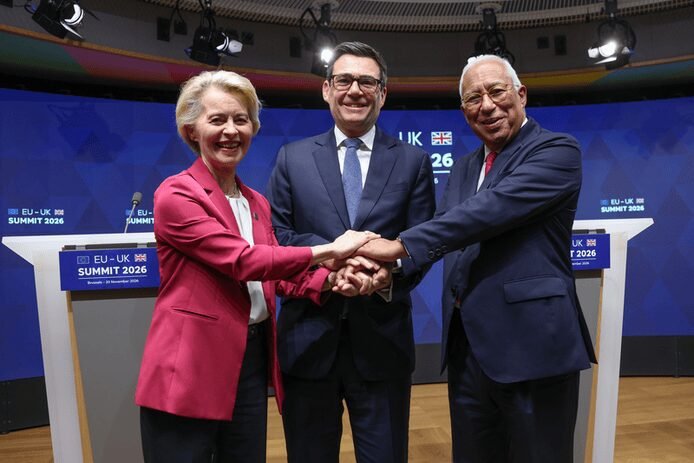
Britain will be granted “Swiss-style” consultation rights over European Union legislation but no decision-making powers under agrifood and emissions trading deals agreed at last week’s U.K.-EU summit.

The details were set out in legal texts published on Thursday ahead of the introduction to parliament of the government’s ‘Cutting Costs’ (European Partnership) Bill, the legislation being used to implement the agreements.

The agrifood deal will see the U.K. align with most EU sanitary and phytosanitary (SPS) rules, removing the need for costly border controls. The emissions trading system (ETS) deal will reconnect U.K. and EU carbon markets, shielding businesses on both sides from paying carbon taxes.

Both deals allow the U.K. to be consulted on relevant EU legislative proposals and to contribute views during the drafting process, including through expert discussions and committee meetings. However, the U.K. will have no vote or formal role in EU decision-making.

French negotiators had initially resisted the consultative powers set out in the deals, before ultimately backing down on the eve of the summit.

Joël Reland, a senior research fellow at UK in a Changing Europe think tank, said the U.K.’s role would be akin to Switzerland, which can participate in early legislative consultation phases and still has to actively apply legislation itself.

This will give parliament “some notional power to resist,” Reland explained, “though with the size of Labour’s majority we’re unlikely to see any obstruction in the near future.”

This model diverges from that of the Windsor Framework, a U.K.-EU deal that controls the flow of goods between Great Britain and Northern Ireland, where Northern Ireland has no say over the legislation, which is applied by default.

While the U.K. will not be afforded all the rights of an EU member country, Adam Berman, director of policy and advocacy at Energy UK, said it was “positive to see an openness to the U.K. as a decision-shaper” in the ETS deal.

“This should benefit both sides given that the U.K. has substantial expertise in this area,” he added.

Carveout confirmation

In the case of the agrifood deal, the legal text confirms exceptions to alignment on the export of live animals, pet smuggling and precision-bred plants, as well as transitional arrangements for novel foods, pesticides and organic products. These details were set out in an explanatory document published by the U.K. government last week.

The legal text also confirms reports of a 10-year termination clause in the agrifood deal, which requires either side to pay “reasonable and proportionate” costs to rebuild border infrastructure if the deal is scrapped.

Meanwhile, the text of the ETS deal confirms that the U.K. will have freedom to use its Emissions Trading System to reward high-emitting industries which integrate greenhouse gas removal technologies into their manufacturing processes.

The U.K. will keep all revenue drawn from its emissions trading scheme and retain autonomy over how it is spent.

The U.K. will be required to pay both an “operational contribution” towards the EU’s food security system, as well as an additional “participation fee,” calculated at 4% of the operational contribution.

Via Politico

Source: Iwpost.com

Israeli Forces Arrest American Human Rights Worker Mel Duncan in the West Bank

0
israeli-forces-arrest-american-human-rights-worker-mel-duncan-in-the-west-bank
Israeli Forces Arrest American Human Rights Worker Mel Duncan in the West Bank


Israeli security forces acting in concert with local settler groups stormed onto an Israeli-operated charter bus and arrested American human rights worker Mel Duncan in the occupied West Bank on Friday, threatening deportation for a longtime peace activist who works to protect Palestinian civilians.

Duncan, who is 76, is the co-founder of Nonviolent Peaceforce, an international NGO that has special consultative status with the United Nations. He works in the West Bank with Unarmed Civilian Protection in Palestine, or UCPIP, an organization he helped found to protect civilians threatened by Israeli military units and settler groups.

On Friday afternoon, a group of Israeli settlers and their security forces followed a tour bus carrying Duncan as it left a Palestinian-owned home in Ras-al Auja, a small Palestinian village just outside Jericho. Shortly thereafter, according to witness testimony and video footage shared with The Intercept, Israeli military and police units intercepted the bus, ordered Duncan to disembark, confiscated his passport, and placed him under arrest. As of Friday evening he is being held at a police station in Ma’ale Adumim, an Israeli settlement, and faces a deportation hearing on Saturday morning.

A spokesperson for Unarmed Civilian Protection in Palestine told The Intercept in a statement that Duncan was accused of “obstructing a soldier and police officer, being present in an illegal area, and conspiring to disturb the peace.” The group maintains that Duncan was “not engaged in any unlawful activity,” and that “the detention and impending deportation of a longtime advocate for nonviolence and civilian protection raises serious concerns about the treatment of international peace and human rights defenders.”

Israel’s ministry of justice did not immediately respond to a request for comment.

Settler attacks in the West Bank have skyrocketed in frequency since the Hamas attacks on October 7, 2023, as local Israeli groups carry out a campaign of ethnic cleansing designed to force residents out of Palestinian areas. Dozens of Palestinians have been killed, and hundreds have been wounded, in attacks by settlers and security forces over the past year. The Jericho district, where Duncan was arrested, has seen near daily instances of violence, including the killing of a 72-year-old Palestinian woman by settlers earlier this month.

The Israeli state has simultaneously cracked down on efforts by international activists and human rights organizations to monitor and intervene in the violence. In 2024, representatives in Israel’s Knesset held a special session to discuss “the agitating activity of activists in Judea and Samaria,” using the Israeli name for the West Bank. Israeli Minister of National Security Itamar Ben-Gvir that year announced the formation of a new police unit designed to target and deport international activists working in the territory, whom he characterized as “anarchists.” Since the declaration, deportations of international activists and human rights workers have increased by as much as 575 percent.

UCPIP staff have begun petitioning for the United States to secure Duncan’s release and ensure that he has access to his medications while in Israeli custody. But in chats with the U.S. Embassy in Jerusalem, screenshots of which were reviewed by The Intercept, an embassy spokesperson said that while staff were “working on Mr. Duncan’s case,” the embassy “does not have legal jurisdiction outside of the US” and cannot “enter any judicial negotiations on behalf of an individual.”

The U.S. Embassy did not immediately respond to the Intercept’s request for comment.

Duncan is scheduled to be transferred to Israel’s population and immigration authority on Saturday and appear in court for visa revocation and deportation hearings. While he has the right to appeal the court’s verdict, doing so would likely require him to stay in custody for the duration of the proceedings.

Amira Musallam, who works as the head of mission for UCPIP, believes that Israel is targeting Duncan in part to send a message to other human rights workers and activists.

“It’s an attack on every foreigner in the whole West Bank who is coming to be in solidarity with Palestinians,” Musallam told The Intercept. “They don’t want people to spread what is going on in the West Bank to the world.”

Source: Iwpost.com

0FansLike
0FollowersFollow
0FollowersFollow
0SubscribersSubscribe
- Advertisement -
Google search engine

Recent Posts