Home Blog

China’s mystery MQ-25-like drone built for Pacific power reach

0
china’s-mystery-mq-25-like-drone-built-for-pacific-power-reach
China’s mystery MQ-25-like drone built for Pacific power reach

<

article id=”post-953352″>

Satellite imagery revealed an unidentified uncrewed aircraft at Pucheng Neifu Airport in China’s Shaanxi Province, bearing strong visual similarities to Boeing’s MQ-25A Stingray carrier tanker, alongside a CH-7 stealth flying-wing drone and a Jiutian drone mothership, multiple media outlets reported.

Measured by Vantor at roughly 20.12 meters in wingspan and 14.94 meters in length compared with the MQ-25’s 22.86-meter span and 15.54-meter length, the yellow-primer airframe diverges in key details: a tapered nose suggests it could house a radar or radome, a dorsal intake with apparent serrations or channel separation and a laterally flared V-tail.

The design could point toward a multirole tanker or intelligence, surveillance, and reconnaissance (ISR) platform, though external imagery cannot verify internal fuel volume, propulsion, mission systems, or carrier catapult and arresting compatibility.

Media reporting on the imagery notes that any tanker role could ease fighter buddy-tanking burdens for J-15 and J-35 jets operating from Fujian or Type 076 vessels like Sichuan, where GJ-21 trials were reported in October 2026, while the aircraft could alternatively serve as a non-carrier unmanned combat aerial vehicle (UCAV), collaborative combat aircraft (CCA), or test surrogate.

That possibility matters because China’s carrier-based fighters face clear reach and endurance limits that unmanned aerial refueling could help offset. A May 2026 China Aerospace Studies Institute (CASI) report notes that J-15 fighters operating from China’s two ski-jump carriers, Liaoning and Shandong, face operating-radius and endurance limits tied to short takeoff profiles and takeoff weight ceilings.

That May 2026 CASI report adds that ski-jump launches restrict fuel and ordnance loads, leaving those fighters reliant on shore-based command-and-control and ISR aircraft for wide-area battlespace awareness.

Furthermore, the Chosun Daily reported in February 2026 that China’s J-35 stealth carrier fighter faces severe range and loiter limits because it relies on the WS-21 engine rather than the anticipated WS-19 powerplant. The Chosun Daily report states that this engine setup limits the J-35 to just seven minutes of operation at 900 kilometers from the Fujian carrier.

That report places this constraint within China’s broader jet-engine gap behind the US despite over US$40 billion in development spending, and questions the J-35’s long-range naval strike effectiveness far from its carrier group.

While current fighter capabilities can support operations inside the First Island Chain or brief surges beyond it, those limits can constrain organic carrier air-wing reach, motivating China’s push for aerial refueling.

Using an uncrewed tanker to shuttle fuel from larger manned tankers to fighters in contested areas could keep vulnerable manned tankers farther from threats while sustaining fighter operations.

Carrier modernization could reinforce any uncrewed refueling or ISR role. In a November 2025 International Institute for Strategic Studies (IISS) analysis, Douglas Barrie notes that Fujian’s electromagnetic catapults and arrester gear mark a major advance over earlier ski-jump carriers, allowing China’s carrier-based aircraft to fly longer ranges with heavier payloads while supporting more aircraft and a broader aircraft mix.

Barrie mentions that Fujian’s electromagnetic catapults, observed in trials with J-15 Flanker K, J-35, and KJ-600 aircraft, help enable more ambitious deployments beyond the First Island Chain and support a more capable air wing.

In an October 2026 Center for Strategic and International Studies (CSIS) report, Matthew Funaiole and co-authors state that China’s upcoming Type 004 carrier, likely nuclear-powered and larger than Fujian, will enable longer-duration operations farther from China’s shores, projecting naval and air power deeper into the Indo-Pacific and beyond.

Funaiole and co-authors write that nuclear propulsion on the Type 004 would remove ship-refueling limits, sustain higher speeds without draining fuel reserves, generate more power for electromagnetic catapults, and free interior space for more aircraft, munitions, fuel, and supplies.

Land-based tanker expansion adds a wider operational layer to long-range power projection. In a January 2026 Lowy Institute article, David Vallance argues that China is expanding its air-to-air refueling fleet to narrow a wide gap with the US and support long-range power projection, including a counter-intervention force capable of blocking allied relief to Taiwan and operating beyond the First and possibly the Second Island Chains.

Vallance writes that China is fielding Y-20B multirole tankers alongside YY-20As that could give the People’s Liberation Army Air Force (PLAAF) over 100 refuelers within a decade while phasing out older IL-78s and converted H-6s.

He adds that these modular platforms also fulfill domestic airlift requirements for personnel and materiel across China’s territory while extending air operations east and south across the maritime Indo-Pacific.

Uncrewed ISR and kill-web concepts further shape how such a platform could operate in a conflict. In an October 2026 American Foreign Policy Council (AFPC) brief, Robert Pierce and co-authors write that unmanned systems strengthen the People’s Liberation Army’s (PLA) ability to find, fix, track, and identify US forces across the First Island Chain and beyond.

Pierce and co-authors state that combining high- and low-altitude unmanned aircraft supports layered multi-intelligence collection, localized surveillance of surface ships, and persistent communications relays when satellites face degradation.

They add that this force mix compresses sensor-to-shooter timelines, relays targeting data, and extends radar coverage, making US ships and aircraft more targetable and increasing the lethality of People’s Liberation Army Rocket Force (PLARF) missiles, naval strikes and air defenses, raising intervention costs.

In a July 2026 CASI report, Catherine Welch and other authors report that Chinese researchers view uncrewed platforms as a cost-effective way to scale sensors and strike nodes across kill chains and kill webs, enabling clustering or swarming, wide-area coverage, rapid response, greater autonomy, and lower risk to costly or crewed systems.

Welch and her co-authors add that Chinese studies examine crewed-uncrewed teaming — including a crewed leader paired with uncrewed aircraft — using drones as early warning or interceptor platforms against swarm raids, providing communications and computing relays for distributed forces, and deploying them in distant waters for dynamic kill networks, while noting persistent hurdles in crewed-uncrewed task allocation and future operational deployment.

Whether the Pucheng Neifu drone becomes a carrier-capable tanker, ISR node, or test surrogate, uncrewed refueling and sensing could help China overcome fighter range limits and project power across the Indo-Pacific. This capability could pair with catapult-equipped, nuclear-powered carriers, more tankers, and distributed kill webs, despite engine, ship-endurance, and crewed-uncrewed operational constraints.

Source: Iwpost.com

Man Almost Dies After Wood Plank Smashes Through Windshield on the Highway

0
man-almost-dies-after-wood-plank-smashes-through-windshield-on-the-highway
Man Almost Dies After Wood Plank Smashes Through Windshield on the Highway


A routine drive down an Arizona highway turned into a real-life horror scene when a massive piece of wood flew off a passing truck, crashed through a man’s windshield and struck him directly in the face, leaving him fighting for his life.

DJ Hughes, 35, of Phoenix, suffered devastating injuries in the November 10 incident along Interstate 10 near Buckeye, about 30 miles west of Phoenix. The terrifying accident, reminiscent of a scene from the “Final Destination” movies, has left his family searching for answers as he faces a long and painful recovery.

According to the Arizona Department of Public Safety, Hughes was traveling eastbound near State Route 85 around 1:20 p.m. when a large piece of plywood broke loose from a white truck hauling lumber.

The wood sailed across the hood of Hughes’ vehicle before smashing through his windshield and striking him in the face.

Despite the devastating impact, Hughes somehow managed to maintain enough control of his vehicle to travel approximately 350 yards before reaching safety, according to his mother, Lisa Hughes.

But the injuries were catastrophic.

His family revealed that the impact fractured nearly every bone in his face, caused a brain bleed and skull fractures, and left him with a broken rib and hand.

“Broke every bone in his face, from his eyes down. Split his chin in half,” his mother told Arizona’s Family.

Hughes spent days in intensive care and initially required a medically induced coma. By November 20, he had undergone three surgeries, with doctors preparing for additional reconstructive procedures.

His jaw has been wired shut, and surgeons have installed multiple metal plates to repair the extensive damage. His family said another major operation is planned to address fractures around his eyes and injuries to his nose.

The emotional toll has been overwhelming for his loved ones, particularly his mother, who has struggled to see her adult son suffering.

“It’s tough seeing your baby. I know he’s 35, but seeing him laying like that in pain,” Lisa said.

Amid the ordeal, the family is also desperate to find the driver whose truck lost the plywood.

Arizona highway patrol investigators announced November 20 that they were searching for the unidentified motorist, who may not even realize what happened.

Authorities believe the driver of the white truck could have continued down the interstate without noticing that the plywood had fallen from the vehicle.

As of the department’s latest public statement, no charges were pending, and investigators were asking witnesses to come forward.

The family has reportedly hired a private investigator in hopes of identifying the truck and determining how the dangerous piece of lumber came loose.

Meanwhile, Hughes’ relatives have launched a GoFundMe campaign to help cover medical expenses and everyday bills during his recovery.

His aunt, Amanda, described the long road ahead, explaining that the injuries will require extensive medical treatment and additional reconstructive surgery.

The incident has also raised serious questions about the dangers of unsecured cargo on America’s highways.

Arizona law requires drivers to secure their loads to prevent materials from falling onto roadways. A violation resulting in an accident that causes serious physical injury can carry a civil penalty of up to $500.

Lisa has expressed interest in pushing for tougher penalties, hoping her son’s experience might prevent another family from enduring a similar nightmare.

She also acknowledged how easily the accident could have ended in tragedy, particularly if the flying wood had struck a child.

For now, her focus remains on her son’s recovery and making sure other drivers understand just how dangerous an unsecured load can be.

“Just take the extra two seconds to secure it. It’s not that much time to save a life,” she warned.

Anyone with information about the November 10 incident is urged to contact the Arizona Department of Public Safety at 877-429-8477 and reference incident number I26069459.

Source: Iwpost.com

ICE Spreads Misinformation About Securing Your iPhone. Here’s How to Really Do It.

0
ice-spreads-misinformation-about-securing-your-iphone-here’s-how-to-really-do-it.
ICE Spreads Misinformation About Securing Your iPhone. Here’s How to Really Do It.


A viral piece of misinformation about iPhone security made its way into official government communications after multiple regional branches of Homeland Security Investigations sent out memos containing false or misleading information, sources told The Intercept.

Staff in at least three regional offices of HSI, a division of U.S. Immigration and Customs Enforcement, told The Intercept they received memos within the past week warning of the iPhone’s “Live Listen” feature, which the memos erroneously described as enabling all iPhones to capture nearby audio, transcribe it, and transmit it to Apple.

The memos were handed down amid a broader swell of viral social media posts about the feature, which began to bubble up sometime last month, according to the fact-checking website Snopes.

“It feels very much like there are people in the U.S. government who are getting their security advice from TikTok rather than from actual professionals.”

A fourth memo, which was verified by an ICE spokesperson, appears to have broken containment this week when a screenshot of the memo, sent from the “chief intelligence officer” of Chicago’s HSI office began making the rounds on social media. The language in that memo was almost identical to the memos described by HSI officials who spoke with The Intercept on the condition of anonymity because they were not authorized to speak on the record.

“The recent Apple iOS 27 update automatically enables ‘Live Listening’ [sic] on Apple devices,” the Chicago memo read. “This means that all iPhones and iPads with this update, both personal and operational, are by default capturing conversations around them, transcribing them, and sending those transcriptions up to Apple for advertising purposes.”

That description gets several key facts wrong, according to Thorin Klosowski, a senior security and privacy activist at the Electronic Frontier Foundation. Klosowski said it conflates the Live Listen feature with commonly held fears of iPhones picking up ambient audio and using it to target users with advertising.

“It feels very much like there are people in the U.S. government who are getting their security advice from TikTok rather than from actual professionals,” Klosowski said. “It’s almost verbatim some of the memeified warnings that I’ve seen. You would hope that government organizations would be providing more concrete, useful, and correct security advice to the people in the government.”

A spokesperson for ICE acknowledged the message with incorrect information about a vulnerability.

“This notice was not accurate and was subsequently corrected,” the spokesperson said. “It was not a formal government cybersecurity advisory. Formal government cybersecurity advisories are disseminated by DHS’s Cybersecurity and Infrastructure Security Agency.”

Live Listen, an accessibility feature first introduced in 2014, enables iPhone users to stream audio from their phone’s microphone into hearing aids or headphones synched with the device. The “remote control” feature is newer, first introduced in iOS 26, and allows users to control the feature remotely from a nearby Apple device signed into the same iCloud account.

A spokesperson for Apple declined to directly address the memos or the social media furor around the Live Listen feature, but denied that Apple stores any data from Live Listen, which processes transcripts of captured audio directly on the iPhone.

Actually Securing Your Phone

Just because social media — and some government officials — are propagating fears about Apple audio surveillance doesn’t mean there isn’t anything to do to secure one’s phone.

Though it is a feature intended to help people with accessibility needs, the Live Listen feature can turn your iPhone into a listening device — and Apple provides instructions on how to use your iPhone as a remote microphone.

Bad actors, however, can only use your phone’s Live Listen feature to spy on you if they gain access to your phone or log into your Apple account to read transcripts. If the attackers were to manage any of those feats, the Live Listen feature would be the least of your worries — not a purported security flaw that has already been debunked.

While it’s certainly a good idea to disable the Live Listen feature if you’re not actively using it — as with any feature not in use — there are other practical measures that will likely have a much bigger impact on your phone’s security.

Clean Up Your Apps

One of the ways data can stolen off your phone is through rogue apps hoovering up your contacts and other information.

The first thing to do to minimize this is to go through your installed apps and remove anything that you don’t regularly use. That one time you downloaded a specific app to be able to fly on an airline you haven’t flown on in years? Get rid of it.

Get into the habit of removing one-time or limited-use apps as soon as you’re done with them.

A good rule of thumb is if you haven’t used an app in over a month, go ahead and uninstall it. You can always download it again.

In general, get into the habit of removing one-time or limited-use apps as soon as you’re done with them. If you used the Disney World app for maps and ordering food, for instance, you can delete the app as soon as you leave Florida.

Once you’ve narrowed the playing field to apps you actually regularly use, the next thing to do is to limit the permissions that your installed apps have. Your casual gaming apps do not need access to your contacts list, and your grocery store loyalty app doesn’t need access to your camera or microphone.

If you’re not sure about whether an app needs a particular permission to be able to function, the best approach is to disable all permissions and only enable them one by one if the app isn’t working.

Update Everything, Constantly

After you’ve pruned your in-use apps and locked down their permissions, the next step is to make sure you regularly keep them updated. Ideally, you should go into your App (iOS) or Play (Android) store0 at least once a week, and update all your apps regularly.

Speaking of updates, be sure you’re keeping your phone’s operating system up to date, too. Even if you have automatic updates enabled, it’s still beneficial to regularly go into your update settings and manually check.

Even when you’ve updated all of your apps and your OS, you’re not out of the woods quite yet. You also need to stay on top of hardware updates, and make sure your phone can run the latest security and app updates and isn’t vulnerable to any known hardware-based security threats.

These threats are real: In June, older iPhone models like the XS, XR, 11, and SE 2 were found to have a hardware vulnerability that’s not fixable by any measure other than upgrading to a new device.

Thwart Spyware

If you’re worried about sophisticated spyware — like one used by state actors or deep-pocketed corporations — both modern iOS and Android phones come with specialized security modes that you can enable to limit the chances that advanced malicious actors can sink their claws into your device.

On iPhones, you’ll want to turn on Lockdown Mode (by going to Settings > Privacy & Security > Lockdown Mode > Turn On Lockdown Mode), while on Androids, the roughly analogous mode is called Advanced Protection (go to Settings > Security & Privacy > Advanced Protection > Enable Device Protection > Turn On).

Security has traditionally been at loggerheads with usability, and this is the case here: Enabling these advanced security features does come with certain functionality trade-offs. You can’t, for example, use shared albums. It’s up to you to decide if your security concerns outweigh your need to, say, FaceTime with strangers.

Another quick way to thwart some spyware is to regularly turn off and restart your phone. The National Security Agency recommends that you do so at least weekly, but it can’t hurt to do it once a day. This simple trick works because malicious code often lingers in your phone’s ephemeral versus permanent memory, so it’s much harder for spyware and malware to survive a reboot. Rebooting your device would require the spyware to reinfect your device.

Phone security requires keeping your wits about you and constantly staying vigilant.

All of these tips will help you harden your phone against unwanted surveillance and malicious actors. You may also consider switching your phone over to a more hardened operating system such as GrapheneOS, which provides several added security functionality beyond those offered by Android or iOS.

Phone security, however, isn’t just about tweaking settings or running the right operating system; it requires keeping your wits about you and constantly staying vigilant. The best thing you can do is to not download shady apps or click on unknown links.

Source: Iwpost.com

Saudi-led coalition intercepts Houthi drone targeting southern Saudi Arabia

0
saudi-led-coalition-intercepts-houthi-drone-targeting-southern-saudi-arabia
Saudi-led coalition intercepts Houthi drone targeting southern Saudi Arabia
The Saudi-led coalition said Sunday it intercepted and destroyed a drone launched by Yemen’s Houthi group toward southern Saudi Arabia, Anadolu reports.

The coalition announced the interception in a statement on the US social media company X. It gave no specific location for the interception or details on any casualties or damage.

Earlier, the coalition said that it had intercepted and destroyed another drone launched by the Houthis toward the Riyadh region.

The interceptions came amid escalating hostilities between the Houthis and the coalition and attacks targeting Saudi airports and energy facilities.

Saudi Arabia has led a military coalition supporting Yemen’s government against the Houthis since 2015. The group has controlled the capital Sanaa and other parts of Yemen since 2014.

READ: Saudi-led coalition launches military operation against Houthi targets in Yemen

Source: Iwpost.com

How wildfire litigation became big business in America

0
how-wildfire-litigation-became-big-business-in-america
How wildfire litigation became big business in America
This story was originally published by Inside Climate News and is reproduced here as part of the Climate Desk collaboration.​

On a November morning in 2018, the foothills of the Sierra Nevada were primed to burn. Northern California had received little rainfall, and the grasses and shrubs above the town of Paradise were bone dry. Humidity levels were dangerously low as winds up to 40 miles per hour gusted downslope toward the 26,000-person community.

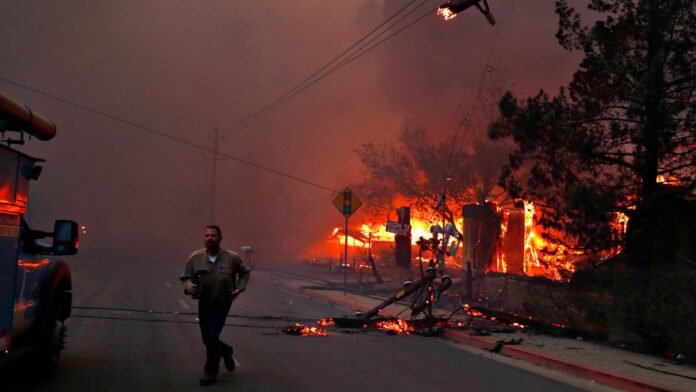
When a live wire broke free from a 99-year-old transmission tower owned by Pacific Gas and Electric Co., Paradise stood little chance. 

The arcing wire ignited the brush below to start the Camp Fire, which claimed the lives of 85 people and destroyed more than 18,000 structures in a matter of hours, charring whole neighborhoods to displace tens of thousands of people. It was the deadliest wildfire in California’s history.

But another metric would later come to define the fire that destroyed Paradise.

Thousands of victims sued PG&E. The utility eventually agreed to settle their claims for $13.5 billion in compensation for the Camp Fire, as well as other blazes ignited by its equipment in Northern California in 2017 and 2018. It was one of the largest civil settlements for an environmental disaster in U.S. history, driving the company to bankruptcy and demonstrating that utilities could be held liable for huge sums when faulty equipment ignites conflagrations. 

The settlement sparked a wave of lawsuits against utilities implicated in wildfire ignitions across the country. Today, wildfire litigation is a multibillion-dollar business in the U.S., with more than $18 billion awarded or agreed to in civil settlements for victims in California, Hawaiʻi, Colorado and Oregon since 2017. Utility companies PG&E, PacifiCorp, Xcel Energy and Southern California Edison have so far borne the brunt of such claims.

Litigation focuses on ignitions

This year is shaping up to be among the worst on record for U.S. wildfires. Following a mild winter in which precipitation often fell as rain, mountain ranges including the Rockies and California’s Sierra Nevada were left with one of the lightest snowpacks in recent history. As of October, more than 9 million acres have burned in wildfires across the U.S. — about 1.5 times the average in the past decade for the year to date, according to the National Interagency Fire Center. 

Lawsuits have followed in lockstep. Already, some Colorado residents have sued San Isabel Electric Association, a not-for-profit rural electric cooperative, for allegedly sparking the Aspen Acres Fire, which ranks as the seventh-largest wildfire in state history and destroyed more than 320 homes. An investigation into the fire by state officials found that an aspen tree had fallen onto energized powerlines, starting the blaze. 

As the wildfire crisis confronting America accelerates and intensifies, some question whether a litigious approach to address mounting losses is sustainable — or just — in a world reshaped by climate change. Especially so because the actual number of wildfire ignitions hasn’t changed much over the decades.

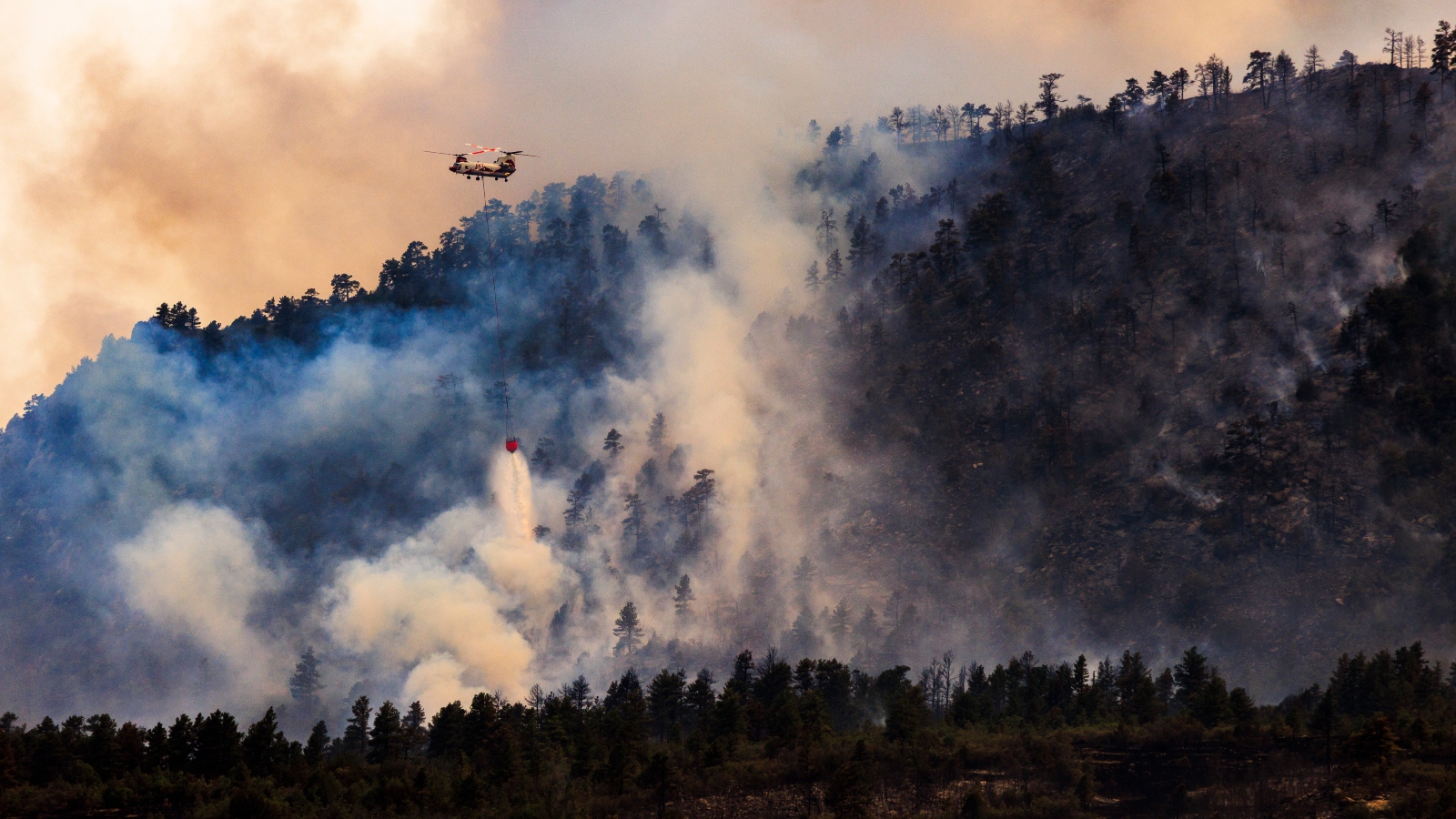
A helicopter drops water over a forest teeming with smokemillions of houses have been built in wildfire-prone areas, risking greater property losses. 
Yet utility lawsuits have emerged as a seemingly state-sanctioned climate resilience strategy to help homeowners deal with losses as the insurance industry backs out of areas with high fire danger. With such an approach, if your house burns down in a wildfire, you had better hope a large utility with deep pockets was responsible for the ignition, rather than lightning or a private individual. 

“The people in the Palisades Fire, they’re just out of luck,” said Richard Bridgford, a California trial attorney who has represented close to 12,000 wildfire victims in cases against utilities in California and Hawaiʻi. 

Authorities arrested a 29-year-old former Uber driver in connection with that blaze, one of the two large fires that tore through Los Angeles County in January 2025, causing tens of billions of dollars in damage. (A federal judge declared a mistrial of the alleged arsonist in June, with jurors deadlocked 10-2 in favor of his acquittal in the criminal case.) With no legally definitive source of ignition, thousands of victims are now suing the city of Los Angeles, the L.A. Department of Water and Power and the state of California for $10 billion for alleged contributions to the fire’s damage, including gross negligence in failing to fully extinguish hot spots from a previous fire and failing to provide sufficient water to fight the blaze. 

Read Next

Left to market forces alone, wildfire litigation shows little sign of slowing down. But the U.S. appears to be heading toward a reckoning over ever-rising payouts, as policymakers grapple with whether — and how much — the power sector should be made to bear the costs of a warming world. 

America’s reliance on wildfire litigation has sent shockwaves through the country’s social and economic systems, raising electricity rates, contributing to power shutoffs and draining public funds when governments are found liable. And it is jeopardizing interventions, such as prescribed burns, that can meaningfully reduce the destructive potential of wildfires. 

But even beyond such consequences lies a more foundational question of justice. Climate scientists and legal analysts have challenged the idea of singular liability versus collective responsibility: Is it appropriate, or fair, to hold one person or entity responsible for a massive wildfire enabled by the burning of fossil fuels alongside decades of federal fire suppression and development policies? Judgments against oil majors for their climate impacts have so far proved nearly impossible to win in U.S. courtrooms, leaving utility companies holding the bag for worsening wildfires that other corporations helped fuel.

While governments consider who to hold accountable and how, a new legal industry is growing almost as fast as the wildfires ravaging the country. 

Wildfires, and lawsuits, are booming

Gerald Singleton, a managing partner with Singleton Schreiber law firm in San Diego, has specialized in wildfire litigation since the mid-2000s and has been behind some of the largest wildfire lawsuits against utilities. Currently, he is serving as the court-appointed liaison counsel in the 2025 Eaton Fire in Los Angeles, which involves more than 50 law firms representing plaintiffs, and the 2021 Dixie Fire in Northern California, which devastated large parts of the Sierra Nevada. 

The firm, he said, now has a couple dozen lawyers and 200 or so staff members working exclusively on wildfire cases. Over the past two decades, he and his team have represented over 30,000 fire victims and recovered $3 billion on their behalf. “My practice is pretty much 90 percent fires,” he said. 

For a long time, Singleton said, just a few firms in the state did this work. But since the 2017 fires in both Northern and Southern California, “there are just more and more firms that are getting involved.”

Read Next

California has a strict liability standard for investor-owned utilities, which means a utility can be held financially liable for a wildfire even if it was not negligent in igniting the fire. This rule, known as inverse condemnation, has historically allowed claims in California to soar far beyond those in other Western states. (The U.S. precedent for assigning wildfire culpability to ignition alone dates back to the late 19th century, when railroad companies were often subject to such rulings.)

But in the past six years, California firms have begun trying their luck at litigating multibillion-dollar claims against energy companies implicated in wildfire ignitions in other states, including Oregon, Colorado and Hawaiʻi. 

“California is not Vegas. What happens in California does not stay in California,” said Marek Smith, North America fire director at The Nature Conservancy, an environmental nonprofit. “It is significantly influential. The 2017-18 fires started to have this ripple effect, and then it just went exponential last year with the Southern California and LA wildfires.”

Attorneys have flocked to the booming niche. Dozens of law firms now advertise themselves online as wildfire litigation experts in the American West.

Bridgford said that at least 95 percent of his practice’s focus over the last decade has been wildfires. The firm’s primary form of advertising, he added, is through town hall meetings held in communities from Pasadena to Maui that have been devastated by wildfires, encouraging victims to sign up to large lawsuits.

Pools of plaintiffs prove profitable 

Wildfire claims are often handled as mass torts — a large pool of plaintiffs pursuing claims against one or more defendants over the same event. The scale of the cases, and the billions of dollars at stake, has made wildfire litigation a lucrative specialization. Mass tort lawyers are generally paid through contingency fees, receiving a percentage of any settlement or jury judgment rather than charging clients upfront. These fees generally fall between 30 percent and 40 percent of the total compensation recovered, although some states may dictate how much lawyers are able to receive. 

The 2023 Maui wildfires in Lahaina, for example, ultimately led to a $4 billion settlement — including $1.99 billion from the utility Hawaiian Electric Industries and its subsidiary, and $800 million from the state of Hawaiʻi. A Hawaiian state statute notes that attorney fees must be “limited to a reasonable amount as approved by the court having jurisdiction of the action,” while another statute caps reasonable fees to a total of 25 percent. 

The plaintiff’s lawyers in the Maui wildfires were hoping for a $1 billion payday, local media reported, before a judge in June capped attorneys’ fees at $222 million. 

Read Next

Eric Macomber, a wildfire legal fellow at Stanford University, said that as cases expand beyond the Golden State, he expects utilities will prefer to settle, as Xcel Energy did with the 2021 Marshall Fire in Colorado, rather than go to court for a public jury judgment. The lawsuits for that wildfire outside of Boulder were brought, in part, by law firms headquartered in California. 

“Utilities don’t want to generate bad precedent in states that haven’t really litigated a lot of these cases yet,” Macomber explained. 

Although most of the large wildfire payouts to date have been the result of a settlement, some have been awarded by jury verdicts, including more than $1 billion against PacifiCorp in litigation over Oregon’s 2020 Labor Day fires. (That ruling has since been reversed by the Oregon Court of Appeals.)

More recently, Wall Street has taken notice of lucrative settlements. Hedge funds and investment banks made a move last year to back California law firms in hopes of making a profit off fire litigation. Jefferies Financial Group Inc. and Oppenheimer Holdings Inc. were among the companies trying to broker arrangements to finance residents’ lawsuits against utilities for the Eaton Fire, Bloomberg reported last year. 

These third-party funders help law firms shoulder the costs of suing a utility, providing loans that cover their caseloads. Such litigation finance often comes with interest rates above 20 percent on an annualized basis. Jefferies and Oppenheimer did not respond to requests for comment. 

Many lawyers have bristled at Wall Street’s interest and the resulting optics that could lead to greater government intervention. “I think it’s awful,” Singleton said, adding he would support a ban on the Wall Street arrangements. 

“Hedge funds don’t come out and say, ‘We care about the community. We’re trying to make the world a better place.’ There’s none of that. It’s, ‘We are here to make a profit.’” 

Intervention may be coming either way. More and more Western states — California included — are considering legislation that would afford greater protections to utilities, perhaps putting an end to ever-growing litigation. And the utility companies themselves are pushing back.

“There are many things that contribute to the spread and the severity of a wildfire,” said Douglas Dixon, a lawyer with Hueston Hennigan who has also worked with roughly a dozen utilities or defendants accused of igniting wildfires across the Western U.S. since 2018. “It’s not just the spark that starts the fire that is really solely responsible for the damage.”


Source: Iwpost.com

Terry Bradshaw Spits and Slobbers During FOX NFL Broadcast (Video)

0
terry-bradshaw-spits-and-slobbers-during-fox-nfl-broadcast-(video)
Terry Bradshaw Spits and Slobbers During FOX NFL Broadcast (Video)


Terry Bradshaw left NFL fans stunned Sunday after an outrageous live television moment saw the legendary quarterback sticking out his tongue, making exaggerated slobbering noises and leaving his FOX NFL Sunday colleagues struggling to contain their laughter.

The bizarre scene unfolded during the November 22 pregame broadcast as the 78-year-old Hall of Famer joined Michael Strahan, Howie Long and the rest of the FOX crew to preview the day’s biggest matchups.

What began as a routine discussion about the Minnesota Vikings’ upcoming showdown with the San Francisco 49ers quickly took an unexpected turn when Bradshaw decided to demonstrate how he used to react to aggressive defenses during his playing days.

While discussing Minnesota’s blitz-heavy defensive strategy, Bradshaw explained that he actually enjoyed facing opponents who repeatedly pressured the quarterback.

The four-time Super Bowl champion compared his younger self to the Tasmanian Devil before suddenly launching into an animated performance, sticking out his tongue and making exaggerated slobbering motions in front of the cameras.

“I was slobbering going everywhere,” Bradshaw declared before adding, “Bring those blitzes on.”

The unexpected display caught his fellow broadcasters off guard. Cameras cut to Strahan, who covered his mouth while apparently trying to suppress his laughter.

Viewers watching at home were equally surprised, and reactions quickly surfaced on social media.

“For the love of god, take Terry Bradshaw off the air,” one frustrated viewer wrote on X.

Another questioned what was happening with the longtime broadcaster, while a third asked FOX directly what was going on with Bradshaw.

Although the unusual performance appeared to be Bradshaw’s attempt at humor, it reignited a familiar debate over whether the NFL legend should finally step away from television.

Bradshaw has become known for his unpredictable behavior during FOX’s Sunday broadcasts, occasionally delivering confusing remarks or getting tangled up in conversations with his fellow analysts.

Earlier this season, he left the studio laughing when he asked about Arizona Cardinals tight end Trey McBride moments after Rob Gronkowski had already discussed the same player. Bradshaw later suggested that the apparent mistake had been intentional.

His latest antics come at a particularly sensitive time in his broadcasting career, with the former Pittsburgh Steelers quarterback recently acknowledging that he has grown increasingly concerned about his future at FOX.

Bradshaw, who joined the network in 1994, recently secured a contract extension that will keep him on television through the Super Bowl in February 2029. By then, he will be 80 years old.

However, the negotiations apparently left him more anxious than he expected.

“I love my job. This year was the first year that I got nervous,” Bradshaw admitted during an October interview with the Los Angeles Times.

The television veteran also acknowledged that younger broadcasters are waiting for their opportunities, although he made it clear he has little desire to surrender his seat.

In a separate interview with Men’s Health, Bradshaw suggested that FOX could eventually decide to replace him, but insisted he has no intention of formally announcing his retirement.

His determination to keep working is especially striking considering that he has spent more than four decades in sports broadcasting following his retirement from the NFL in 1984.

Bradshaw has also been reflecting on his life and career while promoting his memoir, Looking for Terry, which explores personal struggles and experiences that many viewers may know little about.

Despite the criticism surrounding his occasional on-air missteps, Bradshaw remains one of the most recognizable personalities in American sports television, and his willingness to joke around has long been part of his appeal.

Still, Sunday’s tongue-wagging spectacle demonstrated just how sharply audiences can disagree over his unpredictable broadcasting style.

For some, the moment was another example of the humor that has made Bradshaw a Sunday fixture for more than three decades. For others, it provided fresh ammunition in the growing debate about how much longer the NFL legend should remain behind the FOX desk.

And with Bradshaw showing no interest in voluntarily walking away, viewers can probably expect more unpredictable moments before his current contract expires.

Source: Iwpost.com

Establishment Dems Want to Renew Trump’s Domestic Spy Powers Before New Congress

0
establishment-dems-want-to-renew-trump’s-domestic-spy-powers-before-new-congress
Establishment Dems Want to Renew Trump’s Domestic Spy Powers Before New Congress


With huge changes looming in Congress, the fate of a controversial warrantless surveillance law underlying many of former National Security Agency contractor Edward Snowden’s disclosures is up for debate.

And, instead of waiting for an influx of progressives in the next Congress to shake up the conversation, establishment Democrats are pushing to renew the law before the Republican-dominated Senate and House flip over.

The might, however, run into the same foes who have held up the renewal of Section 702 of the Foreign Intelligence Surveillance Act — chief among them Sen. Ron Wyden, D-Ore.

Wyden and other privacy advocates said they are opposed to passing the law during the lame-duck period without major reforms. One long-sought-after goal is a warrant requirement.

Wyden told The Intercept this week that he has never felt so close to achieving real reform.

“I would very much like to see a FISA program that would ensure both liberty and security,” Wyden said. “I have been through this for quite some time. I think we’ve now got a huge following on both sides of the aisle.”

The surveillance law has long sparked complicated maneuvering in Congress, where the warrant question scrambles traditional partisan divides. The law, which allows the NSA to collect communications of Americans made from or to recipients abroad, expired in June. Existing court orders, however, meant that the NSA and other agencies can continue to collect reams of intelligence from foreign communications until March 17, 2027.

President Donald Trump inflamed the debate over renewal this spring by tapping a loyalist mortgage official, Bill Pulte, to briefly lead the Office of the Director of National Intelligence.

The result was a collapse in Democratic support for the law — but not a permanent one.

Top Democratic members on the House and Senate intelligence committees, Rep. Jim Himes of Connecticut and Sen. Mark Warner of Virginia, want a renewal this year.

Warner acknowledged in comments to reporters this week that the only way the controversial law can pass is if it’s tacked on to a larger piece of “must-pass” legislation.

“We need FISA,” he said. “I think the only way to get it done is if it gets attached to something, at this point. But none of this gets easier in a new Congress.”

“Take It or Leave It”

The few pieces legislation considered by broad swaths of Congress to be “must-pass” bills this year include the National Defense Authorization Act and a bill to replace the current government funding law, which expires December 11.

Both bills will already involve fraught negotiations over funding for the Iran war. The ranking Democrat on the House Armed Services Committee told Punchbowl News that he opposes adding FISA to the defense law.

“It’s time to sit down and make some meaningful changes to FISA.”

Senate Judiciary Committee ranking member Dick Durbin, D-Ill., told The Intercept that he is doubtful a renewal can pass this year.

“I don’t think that’s realistic,” said Durbin, whose committee has dual jurisdiction over the law. “I think it’s time to sit down and make some meaningful changes to FISA.”

The Democrats joining Trump loyalists in favor of renewal before a new Congress is sworn in were bolstered by testimony from Director of National Intelligence Jay Clayton at a Tuesday hearing. Clayton, who said the lapse of the authorization hadn’t caused a substantial decline in the number of foreign communications collected, argued that the law needs to be renewed soon to prevent internet communication companies from refusing to comply with the law.

The push from Democrats such as Himes and Warner has outraged progressive groups who favor adding a warrant requirement. They argue that voting on the law now before the next Congress would represent a betrayal of the voters.

“Even with the rejection of the status quo that we saw at the ballot box earlier this month, the leadership, possibly of both parties, seem to be pulling the same tactics, possibly leaving members with a ‘take it or leave it’ proposition,” said Hajar Hammado, a senior policy adviser at the group Demand Progress.

Senate Minority Leader Chuck Schumer, D-N.Y., and House Minority Leader Hakeem Jeffries, D-N.Y., have not said whether they support passing a renewal of the law this year.

Jeffries said Tuesday that there were open discussions between Himes and House Judiciary Committee ranking member Jamie Raskin, who favors stricter limits on the spying program.

One representative-elect who campaigned on reform, Brad Lander, told The Intercept last week that he is agnostic on the timing of FISA renewal — as long as a warrant requirement is included.

“We should add a warrant requirement,” Lander said. “If that can happen now, great, but if it’s not going to happen now, we should wait and do it in the new Congress.”

Source: Iwpost.com

10 port workers injured in attack on Russian ship in Libya’s Benghazi

0
10-port-workers-injured-in-attack-on-russian-ship-in-libya’s-benghazi
10 port workers injured in attack on Russian ship in Libya’s Benghazi
Ten Libyan port workers were injured in an attack on a Russian ship docked in Benghazi early Sunday, while a second attack in the evening targeted a Maltese cargo ship off the port, Anadolu reports.

An official with the Health Ministry of Libya’s eastern-based government, speaking on condition of anonymity, said all 10 injured were Libyan port workers and were in moderate condition.

A Libyan military source said the second vessel targeted by drone boats “was Maltese and its entire crew was evacuated.” The source added that Libyan air and naval forces destroyed several of the explosive-laden boats.

Al-Masar and Libya Al-Hadath, two broadcasters affiliated with Libyan forces in the country’s east, reported that remotely operated explosive boats targeted the port, the city’s coastline and a commercial ship offshore. The broadcasters described the boats as Ukrainian.

There was no immediate comment from Russia or Ukraine.

Earlier Sunday, Libya’s eastern-based government said preliminary findings indicated that a drone attack likely caused the explosion aboard the Russian ship at the Benghazi naval base.

READ: Explosion hits ammunition depot at Libya’s Benghazi naval base

Source: Iwpost.com

Pumpkin Pecan Cobbler

0
pumpkin-pecan-cobbler
Pumpkin Pecan Cobbler
Pumpkin Pecan Cobbler with golden pumpkin cake, chopped pecans, and amber sauce exposed in a scooped-out corner.
Pumpkin Pecan Cobbler combines warmly spiced pumpkin cake, buttery pecans, and a rich maple-brown sugar sauce for a comforting dessert.

Pumpkin Pecan Cobbler combines soft, warmly spiced pumpkin cake, buttery pecans, and a rich maple-brown sugar sauce that forms right in the baking dish. The top turns golden with slightly crisp edges, while underneath, a warm caramel-like sauce makes every spoonful extra inviting.

Browned butter adds a lovely toasted flavor that pairs beautifully with pumpkin and cinnamon. Meanwhile, a generous layer of pecans brings just the right crunch. A touch of maple syrup rounds out the sweetness without overpowering the pumpkin.

What makes this dessert especially appealing is how easily it comes together. There’s no pastry to roll, no caramel to prepare separately, and no complicated layering. Just a simple pumpkin batter, a sweet pecan topping, and a clever baking method that creates its own sauce.

Serve it warm with vanilla ice cream for a cozy, comforting dessert that feels special enough for company.


Pumpkin Pecan Cobbler with golden pumpkin cake, chopped pecans, and amber sauce exposed in a scooped-out corner.
Pumpkin Pecan Cobbler combines warmly spiced pumpkin cake, buttery pecans, and a rich maple-brown sugar sauce for a comforting dessert.

Recipe Yield: 8 servings

INGREDIENTS

Pumpkin Cobbler:
1 1/4 cups all-purpose flour
3/4 cup pure pumpkin puree (not pumpkin pie filling)
1/3 cup whole milk
5 tbsp unsalted butter
2 tsp baking powder
1/2 tsp fine sea salt
1 1/2 tsp ground cinnamon
1/2 tsp ground ginger
1/4 tsp ground nutmeg
1/2 cup packed light brown sugar
1 1/2 tsp vanilla extract

Maple Pecan Topping:
3/4 cup packed light brown sugar
1/4 cup granulated sugar
1/4 tsp ground cinnamon
3/4 cup roughly chopped pecans
1/4 cup pecan halves
1 1/3 cups very hot water
2 tbsp pure maple syrup

Optional for Serving:
vanilla ice cream or lightly sweetened whipped cream

INSTRUCTIONS

1. Prepare the Oven:
Preheat the oven to 350°F. Lightly grease a deep 8-inch square baking dish or a similarly sized oval baking dish, at least 2 1/2 inches deep. Place it on a rimmed baking sheet.

2. Brown the Butter:
Melt the butter in a small, light-colored saucepan over medium heat. Swirl frequently until golden-brown flecks appear and the butter smells nutty, about 4–7 minutes. Immediately transfer to a bowl, including the browned bits. Cool for 5 minutes.

3. Mix the Dry Ingredients:
In a large bowl, whisk together the flour, baking powder, salt, cinnamon, ginger, nutmeg, and brown sugar. Break up any sugar lumps.

4. Make the Pumpkin Batter:
In another bowl, whisk together the pumpkin puree, milk, browned butter, and vanilla. Add to the dry ingredients and stir gently until just combined. The batter will be thick.

5. Spread the Batter:
Spoon the pumpkin batter into the prepared baking dish. Spread evenly with a spatula, reaching into the corners.

6. Add the Pecan Topping:
Mix the brown sugar, granulated sugar, cinnamon, and chopped pecans in a bowl. Sprinkle evenly over the pumpkin batter.

7. Create the Maple Sauce:
Stir the maple syrup into the very hot water. Slowly pour over the entire cobbler, using the back of a spoon to soften the flow. Do not stir. Gently scatter the pecan halves over the surface.

8. Bake Until Golden:
Bake for 45–60 minutes, until the top is golden, the center looks set rather than wet, and the edges bubble with sauce. The cake should spring back lightly when touched. The sauce underneath will remain fluid.

9. Rest and Serve:
Let the cobbler rest for 15–20 minutes so the sauce thickens slightly. Spoon into bowls, reaching to the bottom for the warm maple-brown sugar sauce. Serve with vanilla ice cream, if desired.


Helpful Tips to Perfect This Recipe

  • Use a deep baking dish: A deep 8-inch square dish gives the pumpkin cake room to rise while keeping plenty of sauce underneath. Avoid shallow pans, and place the dish on a rimmed baking sheet to catch any bubbling sauce.
  • Measure flour carefully: Spoon the flour into your measuring cup and level it off. Too much flour can make the pumpkin cake heavy. Also, use fresh baking powder for a light, tender texture.
  • Don’t stir after adding water: The liquid may look unusual sitting over the topping, but that’s exactly how it should be. As the cobbler bakes, the cake rises and the sugar mixture forms a warm sauce underneath.
  • Check the center before removing: The surface should look set, not wet or shiny with uncooked batter. The edges may finish first, so allow extra baking time if needed. A toothpick pushed into the sauce underneath won’t give an accurate result.
  • Serve warm for the best texture: The sauce thickens as the cobbler rests. Refrigerate cooled leftovers in a covered container for up to 4 days, then gently reheat individual portions until warm.

Rate This Recipe

Enjoyed this recipe? Your rating helps other home cooks!

Source: Iwpost.com

An Air Force Major Is Being Held in Solitary Confinement for Criticizing Trump on CNN

0
an-air-force-major-is-being-held-in-solitary-confinement-for-criticizing-trump-on-cnn
An Air Force Major Is Being Held in Solitary Confinement for Criticizing Trump on CNN


Seth Stern is the director of advocacy for Freedom of the Press Foundation.

Government lawyers on Tuesday played a video in court of a CNN interview where an American citizen called for President Donald Trump’s impeachment, arguing that the video alone proves the interviewee must remain in solitary confinement until his February trial.

“Not only is [Trump] a failure as president, he is flagrantly violating the Constitution, breaking the law, engaged in rampant corruption, and is killing Americans,” the now-defendant told CNN host Erin Burnett in August. “I believe we can defeat this government if we just take a stand.”

This view of the current presidential administration is hardly controversial, as this month’s midterm elections proved, let alone criminal. 

The catch is that the interviewee is an Air Force officer, Maj. Jason Watson. In July, he was arrested during a protest on the steps of the U.S. Capitol where he wore his military uniform and held a sign calling for Trump to be impeached and removed from office. 

He was subsequently charged under the Uniform Code of Military Justice over the protest and the CNN and other media interviews, including for “contemptuous words” against the president, failing to obey orders or regulations, and conduct unbecoming of an officer.

The military, unfortunately, has been afforded significantly greater leeway by the judiciary to punish speech than civilian courts.

But not that much leeway. As we’ve seen before, when the law gives the Trump administration an inch, it takes a mile. Watson’s case is the latest example of the administration plucking low-hanging fruit to suppress — and harshly punish — dissent. 

The administration took advantage of purported ambiguities in immigration law to try to deport noncitizens for protesting and writing op-eds and posting on social media. It believes its broad authority to fight terrorism empowers it to make up a domestic terror organization, antifa, and prosecute and convict protesters — or people who merely read radical literature — as conspirators. It has used the archaic Espionage Act to harass journalists and their sources for exposing its incompetence.

Now, it’s weaponizing military law to retaliate against soldiers who talk to journalists. 

The Trump administration is far from the first to try to justify punishing whistleblowers, and like its predecessors, it claims, based on flimsy or no evidence, that leaks of newsworthy classified documents threaten national security. But like the noncitizens the administration targets for their political speech, Watson leaked nothing. He simply spoke his mind, and for that he’s being held in extreme isolation for 24 hours a day, as if his freedom poses a danger to Americans. 

The conditions of Watson’s confinement are further proof of the government’s vengeful motives. The charges against him cite the July 1 protest and his anti-Trump comments to a Substack blog in June in addition to the CNN interview, but he was placed in pretrial solitary confinement after the cable news appearance, where he’s been ever since. That interview was also used to justify his conditions at the recent hearing.

The Air Force says the CNN interview establishes probable cause of “continued misconduct.” But “continued misconduct” implies an initial misconduct, and according to military defense attorney Cody Harnish, who has followed the case closely, the order that Watson reportedly violated by talking to Burnett had expired weeks earlier.

But what kind of “continued misconduct” does the military fear enough that warrants keeping a decorated officer in conditions the United Nations considers torture? Is the prospect that he might give further interviews (despite his attorneys offering assurances he won’t pending trial) so terrifying that Watson must be caged for months? 

Even those who agree that the military should be able to punish political expression in ways that civilian courts cannot should be alarmed by this escalation.

Watson simply spoke his mind, and for that he’s being held in extreme isolation for 24 hours a day, as if his freedom poses a danger to Americans.

Watson has been convicted of no crime. Military law says a service member awaiting trial cannot be punished, and confinement may not be any more rigorous than the circumstances require.

According to Watson’s legal team, the government’s own witnesses testified Watson is not a flight risk. The military has not argued he is dangerous to anyone. Watson offered to resign in lieu of being court-martialed, an offer his attorney said in court that the government declined within a day.

Watson’s attorney, Christopher Mutimer, says Watson is the first major in the history of the military to be charged for “contemptuous words.” Harnish counts only three modern “contemptuous words” cases against service members of any rank. He has noted the offense is aimed at personal attacks, not advocating for legal processes like impeachment.

Yet the government is so committed to keeping Watson in solitary confinement that it’s willing to spend additional taxpayer funds to do so. Watson sits in a Maryland civilian jail because Joint Base Anacostia–Bolling, where he is stationed, has no confinement facility of its own. That means the government is contracting to hold Watson in jail, at your expense, for speaking his mind about the current presidential administration.

The government has claimed Watson is allowed to leave his cell for recreation and library visits. But the defining characteristic of solitary confinement, under the U.N. Nelson Mandela Rules, is solitude rather than space constraints.

His lawyers say he spends 20 to 22 hours a day alone in a small cell, where the lights are on around the clock. But as Mutimer told CNN, “Even if he gets an hour to eat or to exercise, he’s alone.”

Conditions are only getting worse. With the weather getting colder, he reportedly has to wear thermal underwear in his cell to keep warm. Guards have suggested jumping jacks to keep his body temperature up. That will, presumably, be less effective come January.

Mutimer told NPR that even soldiers who have been arrested for sexual assault and other violent crimes are not held in solitary confinement. 

Watson’s case is selective enforcement at best and lawless retaliation at worst. Americans — whether they’re military or civilian, immigrant or citizen — should not be held in torturous conditions for months at a time, without having even been convicted of a crime, merely because they criticized the president or his policies.

A ruling in Watson’s case should come down soon, but even if he succeeds in being freed from solitary confinement, the administration will have succeeded in making an example of him.

Source: Iwpost.com

0FansLike
0FollowersFollow
0FollowersFollow
0SubscribersSubscribe
- Advertisement -
Google search engine

Recent Posts