8.3 C
London
Tuesday, November 10, 2026
Home Blog

The Garbage Man: Bill Gates Has Earned Billions Investing in Climate-Polluting Landfills

0

Reporting Highlights

  • A Little-Known Investment: Bill Gates has quietly accumulated a $29 billion stake in America’s No. 2 landfill operator, Republic Services.
  • Climate Pollution: EPA inspectors have repeatedly found methane — a highly potent greenhouse gas — escaping from Republic landfills at levels above federal limits.
  • Undermining Climate Policies: Republic has lobbied against regulations that could make the waste industry cleaner, including by keeping organic garbage out of landfills in the first place.

These highlights were written by the reporters and editors who worked on this story.

In November 2015, world leaders descended on Paris to negotiate a historic agreement to limit global warming. But on the summit’s opening day, attention turned to a private citizen slouched awkwardly in a chair on stage: Bill Gates.

Gates, with his characteristic flop of sandy hair, grinned impishly as President Barack Obama called him a “visionary” and a “driving force” behind a pair of pledges that both saw as key to the larger agreement. First the world’s largest economies would double their spending on research into clean-energy technologies. Then investors like Gates would back the startups that emerged. The Microsoft cofounder had already enlisted two dozen other billionaires to join the effort.

For Gates, who’d become increasingly consumed by this unprecedented threat to human well-being, the moment marked his arrival as a leading figure in the fight against climate change.

“If we back over 50 different breakthrough approaches, we know that several of those will give us the solution that we need,” Gates said during his own speech. He would invest at least $2 billion of his own money in companies developing geothermal wells, new kinds of nuclear reactors and machines that pull carbon from the air, to name just a few.

With much less fanfare, however, Gates has put more than double that amount into a very dirty, old-school industry. At the time of the Paris summit, he was already the dominant shareholder of America’s No. 2 landfill operator, Republic Services. He has since increased his stake to 38% of the company, a position worth $29 billion. 

Bill Gates’ Stake in Republic Services, a Landfill Operator, Now Exceeds a Fifth of His Net Worth

Note: “Other” includes stakes in other publicly traded companies and accumulated dividends and investment returns. Sources: Forbes’ The World’s Billionaires, Bloomberg’s Billionaires Index, SEC filings, StockAnalysis.com Chris Alcantara/ProPublica

While fossil fuels get most of the attention, scientists increasingly see landfills as a crucial climate issue. They’re responsible for as much as a fifth of the country’s emissions of methane, a highly potent greenhouse gas, studies show. Republic alone generates as much climate pollution as 3 million gasoline-burning cars each year, according to its own reports.

One might imagine that a landfill operator with Gates as its largest shareholder — and with three people closely linked to Gates on its board — would lead the way in tackling those emissions. Even after seemingly softening his stance on global warming in a controversial blog post last year, Gates remains one of the world’s most prominent voices on the issue. As he did in his bestselling 2021 book “How to Avoid a Climate Disaster,” he continues to advocate for cutting emissions, and he has called on his fellow business leaders to do their part. 

Gates, though, has failed to make Republic live up to his own climate principles, a ProPublica investigation has found. Federal inspectors have repeatedly found methane escaping from Republic landfills at levels above federal limits. The company has refrained from adopting the ambitious emissions-reduction goal embraced by its main competitor. Republic has even lobbied against policies that could make the wider industry cleaner, including by keeping organic waste out of landfills in the first place.

“It seems very likely that Bill Gates has the power to influence Republic’s behavior to make it more climate-friendly, even if that costs the company profits,” said Ann Lipton, a legal scholar who studies corporate governance at the University of Colorado, Boulder. 

As for whether he should, in her words, “put his money where his mouth is,” Lipton said, “you can leave it to the reader to make the moral judgment.”

Gates’ Climate Awakening

Gates didn’t respond to repeated requests to discuss his landfill investments, and ProPublica couldn’t find any public comments he’s made about them. But the bet has proven wildly lucrative. Since November 1999, when he emerged as the owner of 5% of Republic’s shares — “It’s ‘Garbage In’ for Gates,” the New York Post headline read — the company’s stock price has soared thirtyfold. And Gates has personally received $2.6 billion in dividends, a ProPublica analysis of securities filings shows.

In those early days, Gates hadn’t yet awakened to the threat of global warming. It was a different time. Microsoft Windows ran on more than 80% of personal computers. Gates was the world’s richest person, and his bespectacled face graced the cover of Time magazine twice that year. He was simultaneously criticized for what a federal judge determined to be Microsoft’s monopolistic practices and admired for establishing what was soon to become the world’s largest charitable foundation. 

A rare clue to why Gates made his foray into landfills can be found in an interview he gave to Fortune that year. To fund his plan to give away virtually his entire fortune, he said he’d given his personal money manager, Michael Larson, a simple remit: Sell Microsoft shares, buy safe, boring assets. 

Republic’s then-chairman, billionaire Wayne Huizenga, had flown Larson by helicopter to his private golf course in Florida, according to the article. It’s unclear if Huizenga pitched Republic there, but it fit the remit. America would always produce trash, ensuring a steady stream of revenue. After that initial investment, Larson progressively increased Gates’ stake in Republic over the years that followed. Larson would also acquire a small chunk of Republic’s main competitor, Waste Management — which Huizenga also once led — on behalf of the Gates Foundation.

It was only in 2006, when he asked two climate scientists to educate him, that Gates started to grasp the potentially “catastrophic” effects of greenhouse gases, he later wrote. But he also saw that the poorest people in the world needed more energy to improve their lot. The solution, he concluded, was something climate activists often underplay: innovation that could make clean energy cheap enough to naturally displace fossil fuels. That was the idea behind Breakthrough Energy, the initiative he launched in Paris in 2015.

Three seated men in suits are clapping their hands. The man furthest to the right looks directly at the camera while the others look in the opposite direction.
Microsoft co-founder Bill Gates, right, then-U.S. President Barack Obama, left, and then-French President François Hollande applaud a speech during the United Nations conference on climate change in Paris in 2015. Jim Watson/AFP via Getty Images

Around the same time, methane began to emerge as a focus of climate action. The gas can trap 80 times more heat than carbon dioxide in the near term, and it’s responsible for one-third of the global warming we experience today, according to the United Nations Environment Programme. But it also breaks down much more quickly, turning into CO2 and water vapor in about a decade — which means that cutting methane emissions now would reduce that warming within our lifetimes. This is especially urgent, scientists say, as the climate approaches tipping points that could doom rainforests, coral reefs and ice sheets.

In speeches and interviews, Gates has sometimes warned about methane, but usually from agricultural sources (“cow farts,” in his words). He has rarely mentioned landfills, even after Larson — who still runs Gates’ investment office, Cascade Asset Management — joined Republic’s board in 2009. Gates’ stake in the company, though, was a relatively small portion of his own net worth until fairly recently. And as Larson put it to Fortune, “I’ll call Bill about something I’m buying if he needs to know, but Bill might not have any idea what Cascade owns.” (Gates’ Republic holdings are publicly disclosed in securities filings.)

Elsewhere in Gatesworld, people started to home in on the climate threat posed by landfills. The root of the issue is that landfills store buried trash — and when organic waste decomposes underground, in the absence of oxygen, it generates methane. The Gates Foundation has funded research and advocacy aimed at solving that problem, and Breakthrough has backed at least two early-stage companies developing their own solutions. One, Windfall Bio, uses microbes to digest methane into fertilizer. Its product was actually tested last year at a Republic landfill in California, where the pink liquid was sprinkled on the soil covering the top layer of trash. 

Windfall said the test worked, substantially reducing emissions, but the startup reportedly ceased operations after a Department of Energy grant was canceled. (Windfall didn’t respond to emailed requests for comment.) 

On the surface, Republic has pursued a path consistent with Gates’ mission. In 2019, it became the first U.S. landfill operator to sign up for the Science Based Targets Initiative, promising to cut its emissions by 35% by 2030. Not that this was charity. Republic’s “climate leadership” became part of its pitch for garbage-collection contracts in progressive cities and counties. The company also won placements on stock indexes for businesses that meet certain environmental, social and governance criteria, attracting sustainability-minded investors. 

Still, a fundamental tension remained — one at the heart of Gates’ vision. As Republic’s then-CEO Donald Slager put it on a 2017 call with investors, “You can’t have sustainability without profitability.”

A Not-So-Model Landfill

Each day, Americans throw away melon rinds, salmon skins and half-eaten drumsticks, paper towels, cheese that was too funky and eggs a day past their sell-by date. They discard greasy pizza boxes with crusts still rattling around inside and unthinkable amounts of leftover Chinese takeout. Not to mention the occasional dead pet.

Clouds of dust hang over the mound at a large-scale municipal landfill on a sunny day.
Dust is kicked up by trucks and bulldozers at Republic Service’s McCarty Road Landfill in Houston. Mark Felix for ProPublica

Most of that trash — 240 million tons a year, enough to bury Manhattan under 100 feet of refuse — is hauled to one of the country’s 1,400 active landfills, where hulking vehicles with spiked wheels crush it into thin layers. At the end of each day, bulldozers typically spread soil on top, and for almost everyone who produced that trash, it will forever remain out of sight and out of mind.

People who live near landfills, though, describe smelling rotten cabbage, rotten eggs and rotten fish, as well as ammonia and skunk. Or as a neighbor to one Republic landfill put it: “I started smelling this stench like burning diapers. … It was foul.” Some describe burning throats, burning eyes, headaches and nausea. And while methane itself has no scent, those odors indicate that the gas is being released, studies show.  

Still, modern landfills are an undeniable improvement over what came before. Open dumping and burning remained widespread until the 1970s. It was only in the ’90s that federal regulators started requiring operators to collect leachate (garbage juice, which can contaminate groundwater) and, at larger facilities, landfill gas (which is typically about half methane and half carbon dioxide but can also contain carcinogens like benzene).

Industry experts often compare landfills to living, breathing creatures. Underground trash inevitably shifts and settles, making it difficult to keep that gas from escaping. Managing such a beast is costly, which helps to explain why smaller operations have increasingly given way to corporations like Republic, which can turn a profit through economies of scale.

Republic declined to make executives available for interviews or to allow ProPublica to visit a landfill. But in May 2022 — around the same time Gates was lobbying for the passage of President Joe Biden’s historic climate bill — the company invited the Houston Chronicle to its local McCarty Road Landfill. Opened a half century earlier, the facility had passed through two corporate owners before being swallowed up by Republic, and now it was the site of a very Gatesian kind of project.

On the day of the visit, gulls circled hungrily as workers in neon vests gave a tour of the gas-collection system. Like at most other large landfills in the country, wells had been drilled deep into the trash below — five hundred of them in total. The top of each well sprouted from the grassy slopes in the form of a stubby black pipe fitted with a valve for adjusting the flow of underground gas. The workers also showed off large, bright blue, snail-shaped “blowers” — machines that suck that gas into a network of pipelines, then push it to the clanking, humming on-site plant that turns it into a salable product.

A man in a fluorescent yellow vest and safety hat stands near pipes coming out of the ground at a landfill while billowy white clouds fill a blue sky above.
A Republic worker stands next to a gas well at the company’s McCarty Road Landfill in Houston in 2022. Houston Chronicle/Hearst Newspapers

Most landfills that are required to collect gas simply burn it off. But they can also process it into “renewable natural gas,” which is functionally equivalent to the version pumped by oil companies. In part because this reuses the carbon from decomposing waste, it’s generally considered more climate-friendly. It also turns an environmental liability into a source of revenue — exactly the kind of win-win that Gates has long championed. 

Yet the technology is no guarantee that the climate is being protected. In fact, it may be just the opposite.

In September 2024, the Environmental Protection Agency issued an “enforcement alert” saying that landfills across the country were “violating monitoring and maintenance requirements.” While the EPA didn’t name the operators, ProPublica obtained the corresponding spreadsheet through a public records request, and a fifth of the facilities targeted belong to Republic.

McCarty, far from being a model landfill, was among the worst offenders. It would soon earn Republic a formal “finding of violation” for allegedly failing to detect “exceedances” — methane escaping at levels above federal limits — for years on end. The EPA also noted repeated failures to address flooded wells, gullies formed by erosion and trash peeking through the surface of the landfill. Despite Republic’s economic incentive to capture methane, EPA inspectors found evidence of “poor maintenance” and “careless operation” of the gas-collection system as well. 

And McCarty is hardly an outlier. Recent studies suggest that landfills with renewable natural gas facilities can actually emit more methane than those that only burn off the gas or use it to generate electricity. One possible explanation is that methane concentrations can vary across different parts of a landfill. According to researchers at Carbon Mapper, a NASA partner that measures emissions from various industries, some operators may prioritize collecting gas with higher methane content, which is cheaper to process — allowing more of the remaining methane to leak out.

Republic spokesperson Rob Litt declined to comment on whether that happened at McCarty, but said in a statement, “We employ hundreds of environmental managers and engineers. … If issues are identified, we work to resolve them.”

“Protecting the environment is part of Republic Services’ business,” he added.

The issues aren’t exclusive to landfills with natural gas facilities. Since 2020, EPA inspectors have used handheld methane detectors to sweep at least 39 of Republic’s roughly 200 landfills, according to inspection reports obtained by ProPublica. Including the issues at McCarty, they documented more than 1,400 problem spots — ranging from animal burrows to choked-off wells — spewing excessive amounts of methane.

In some cases, methane could be seen bubbling up through dark, fetid leachate pools. In others, so much methane was being released — with concentrations between 100 and 300 times the federal limit — that it was an explosion hazard.

Methane Bubbles at a Republic Services Landfill

Methane bubbles up through a pool of liquid drained from the trash at Republic’s Apex Regional Landfill in Nevada, documented by EPA inspectors in 2024. Environmental Protection Agency

What the Satellites Saw

Around the time of the Houston Chronicle visit, Republic’s CEO, a former McKinsey consultant named Jon Vander Ark, was promoting a new slogan: “Sustainability in action.” Meanwhile, though, Republic was quietly shying away from true climate leadership.

In 2021, two years after Republic signed on to the Science Based Targets Initiative, the SBTI made its minimum climate goal much more ambitious. Waste Management (where the Gates Foundation owns a small minority of the shares) would soon adopt it.

This was just months after Gates published “How to Avoid a Climate Disaster,” in which he exhorted private companies “to embrace the harder steps” toward solving global warming. Republic staff calculated that the new SBTI target could require more than $1 billion in additional spending on gas wells and other improvements, according to a former employee. Though that is less than half of what Republic has spent on dividends for Gates alone, it would leave less money for the company to redistribute to him and other shareholders. Republic has also spent more than $8 billion buying its own stock in the open market, ProPublica’s analysis shows, likely boosting the value of shares held by investors.

The matter was finally presented to the board around the second half of 2024, this person said. By then the board included Larson, Gates’ longtime investment manager — whose “insight into sustainability issues” is cited in company filings — and three other people with business ties to Gates (one has since left). While that is only four board members among a total of 13, Gates’ dominant shareholding means that, “as a practical matter, on any matter that gets voted on, he will almost certainly control the outcome,” said Lipton, the corporate-governance expert.

Republic never made the leap, and now it walks an awkward line. It continues to tout its affiliation with the SBTI while saying, in a note buried deep in one of its many sustainability reports, that the more ambitious target is “not an immediate strategic priority.” 

Per SBTI rules, Republic has until the end of this year to submit an updated target. But when ProPublica asked if it would, the spokesperson said only, “We are reviewing our goals.” He declined to comment on the estimated cost or the board discussions.

A Republic sign and a rusted yellow tractor sitting inside a circle of landscaping bricks.
The entrance to Republic’s McCarty Road Landfill in Houston Mark Felix for ProPublica
Several large trucks, including a tractor-trailer and a trash collection truck, enter and exit a driveway leading to a landfill. In a driver-side car mirror, a line of trucks is waiting to enter.
Garbage trucks pull in and out of the McCarty landfill. Mark Felix for ProPublica

There is, though, an even larger issue with Republic’s climate claims.

In line with its existing SBTI goal, Republic says it has already cut its landfill emissions by 20% since 2017. But that figure isn’t based on actual measurements of methane escaping from its facilities. According to the method cited in its sustainability reports, Republic instead typically measures the methane collected by its wells. Then it extrapolates how much it’s failing to collect — and how much is being emitted — based on the characteristics of each facility. 

This method is based on an industry study that, as the EPA has noted, excluded data from gas-collection systems that were “not working well.” The EPA’s own reporting rules allow the same basic approach, which can cause companies collecting less gas due to a “malfunction or inefficiency” to “erroneously report decreasing emissions,” according to a 2025 study using satellite data by researchers at Harvard, NASA and Carbon Mapper. The researchers specifically examined two Republic landfills, and at one of them, the company reported declining emissions to the EPA even though satellite measurements showed they had risen over a four-year period.

The reporting gaps can be enormous. A study led by Hannah Nesser, now at Georgetown, found Republic facilities to be the No. 1 and No. 2 emitters among the roughly 70 large U.S. landfills the researchers observed over the course of 2019. The first, the National Serv-All Landfill in Indiana, was found to be releasing an astounding 13 times as much methane as what the company reported to the EPA. And that pattern repeated to varying degrees across three-quarters of the Republic landfills in the study. (McCarty wasn’t in the study, but according to measurements by Carbon Mapper, it emits more than twice what the company has reported.) 

In response to questions about these studies, the Republic spokesperson said, “We stand by the sustainability results we’ve achieved.” 

He also pointed to a letter from the National Waste and Recycling Association, a major trade group, questioning the accuracy of satellite measurements. It is a tactic from the playbook of another major climate polluter, the oil and gas industry, said Katherine Blauvelt of Full Circle Future, which advocates for cleaning up landfills.

“Satellites, peer-reviewed research studies and EPA inspectors on the ground all keep finding the same thing: unchecked and underreported methane emissions,” she said. “There’s a fire alarm going off and instead of getting out the extinguisher, the waste industry is blaming the smoke detector.”

Quietly Fighting Climate Policies

Last year, Gates published a blog post criticizing the “doomsday view” of global warming — a striking shift for someone who’d once warned of the failing ecosystems, mass migration and soaring mortality that could result from hotter temperatures. That led climate skeptics, including President Donald Trump, to say that Gates had admitted he was wrong. But Gates called that a “gigantic misreading.” While he believed more lives could be saved by improving global health, where he’d decided to shift his resources, he remained a “climate activist,” he told one audience.

Gates has tried to lead by example. In 2019, he sold his shares in oil and gas companies because, he later wrote, “I don’t want to profit if their stock prices go up because we don’t develop zero-carbon alternatives.” He kept flying by private jet, but he “offset” those emissions by buying credits from a company that removes carbon from the air. He has also called on other business leaders to “make sure that they’re not holding back” climate policies, even if those policies could cut into profits.

A man poses with a shiny new shovel on a sunny day while several individuals take pictures of him. A yellow-and-black excavator vehicle is in the background.
Bill Gates attends the groundbreaking for TerraPower’s nuclear power plant near Kemmerer, Wyoming, in 2024. Benjamin Rasmussen/The New York Times/Redux

Republic has actively worked against such policies — and yet Gates, according to securities filings, has never sold a share.

In the final year of the Biden administration, the EPA announced a plan to update its landfill gas rules, which have changed little since the ’90s. Among other potential changes, the agency asked for comments on the newer technologies, such as satellites and drones, that research has found to be effective in monitoring and controlling methane pollution. 

Some landfill operators were already experimenting with these innovations. But they wanted almost all of it to remain voluntary, according to a joint statement from the National Waste and Recycling Association and the Solid Waste Association of North America, both of which have Republic executives on their boards.

“We do not believe that any of these technologies are sufficiently developed,” the industry groups said, adding that the various innovations were “not cost-effective,” “reliable” or “transparent.” 

The Republic spokesperson declined to comment on whether that lobbying goes against its climate commitments.

“A lot of the issue comes down to the profit of the corporate landfill operators and their resistance to do things that will eat into that,” said Darin Schroeder of the Clean Air Task Force, a climate advocacy group.

Gates’ press representatives didn’t respond to questions about whether he’s aware of the issues at Republic — or whether he has independently investigated the source of a fifth of his fortune. But ProPublica interviewed multiple former employees at Breakthrough Energy, Gates’ clean-tech investment arm, who all spoke on condition of anonymity.  They each said they hadn’t even heard about his landfill holdings. 

“I agree there’s a bit of a conundrum there,” said one high-ranking staffer who was laid off last year. But this person added, “Based on my time with him, I think he’s very serious about climate change. This isn’t a vanity thing for him.”

“My theory is that he probably doesn’t have much involvement in those investments,” said another laid-off staffer.

Gates’ investment managers, at least, can’t claim total ignorance. Larson and Thomas Handley, a Cascade senior adviser, both participate actively in Republic’s board discussions, according to a fellow director who spoke on the condition of anonymity to share details of those private discussions. The board also receives regular management briefings, including “high level” reports on the company’s lobbying and litigation over “practices we could do better,” this director said. (Larson didn’t return phone messages left by ProPublica at his office, and Cascade didn’t respond to a question about his and Handley’s involvement in Republic.)

It’s unclear if Gates himself ever learned of those reports. But he appears to have an even larger blind spot on the issue. The waste industry doesn’t fit neatly into his view of climate change as a problem to be solved mainly through technological breakthroughs. Innovations can help, but the root of the problem is the inescapable fact that, when organic waste decomposes in the absence of oxygen, methane is produced. 

Properly managing the waste we’ve already buried is only the first step, said Riley Duren, the former NASA engineer who founded Carbon Mapper. “In parallel,” he said, “reduce food waste. Full stop. Then divert organic waste away from landfills to prevent future emissions.” 

This isn’t a utopian fantasy. Germany started phasing out the landfilling of biodegradable waste in 1993, and its landfill methane emissions have plunged by more than 90%. (That compares to a decline of 40% in the U.S. over roughly the same period.) Within the U.S., California now requires food scraps and yard trimmings to be collected for composting or other uses, and state regulators found that the economic, climate and health benefits would ultimately outweigh the costs.

In its glossy sustainability reports, Republic says that “organics recycling plays an important role in our operations.” And in California, with its mandatory collection rules, the company processed close to a million tons of organic waste last year, much of that at composting facilities.

An aerial photograph shows around two dozen garbage snaking along dirt roads on the large bare mound of a landfill.
A steady stream of garbage trucks flows through Republic’s McCarty Road Landfill in Houston on a recent weekday.  Mark Felix for ProPublica. Aerial support by LightHawk.

But that remains a small fraction of its business. Speaking to a different kind of audience — investors — Republic has described landfilling, along with dumpster collection, as its most profitable segments. So when the EPA floated a federal organics-diversion policy in 2024, the company, along with the rest of the landfill industry, opposed this, too. Their response invoked an argument often used by opponents to regulation: It should be left to the states to decide.

“It’s like you’ve got a mousetrap, and it catches mice,” said Robert Bullard, a Texas Southern University professor widely seen as the father of the environmental justice movement. “You’ve got a landfill, and it makes money — big money. So why tinker with it?”

Source: Iwpost.com

Don’t let Taiwan’s silicon shield become a US silicon trap

0
don’t-let-taiwan’s-silicon-shield-become-a-us-silicon-trap
Don’t let Taiwan’s silicon shield become a US silicon trap
As the midterms loudly demonstrated, there is considerable gloom over the US economy. Cause for economic optimism is in short supply, though there is some encouraging news regarding US-based semiconductor fabrication spurred by enormous investments from the huge Taiwan company TSMC.

According to a recent New York Times report, the company is pouring in a quarter trillion dollars to build 10 chip production plants that could “provide a winning formula for American reindustrialization.”

Though this is good news worth celebrating, there is also a dangerous side to this US-Taiwan technology partnership. The massive TSMC investment could help drag the US into the middle of Asia’s biggest powder keg.

The risk is that with its new TSMC presence, America could gain a sizable economic interest in protecting Taiwan from China. But guarding TSMC production facilities in Taiwan cannot constitute a rationale for US military intervention in a China-Taiwan conflict.

In theory, building a semiconductor plant in the US should enhance American national security by making it less dependent in a crisis on foreign supply networks.

However, in reality, the Taiwan investment may come to seem like a large bribe intended to solidify Taiwan’s so-called “silicon shield,” the effort to make Taiwanese chips so indispensable that Washington has no choice but to try to safeguard the island with its military forces.

Officials in Taipei are even trying a direct approach by appealing to US foreign policy elites with the idea that “Taiwan is indispensable” for US economic and national security.

In a recent Foreign Affairs article couched in sweeping ideological rhetoric, the Taiwan’s Foreign Minister Lin Chia-lung asked: “whether it will be democracies or autocracies that set the standards and values of the new digital age.”

He goes on to argue that “Taiwan is a force multiplier for the United States in artificial intelligence: it has the capability, reliability, and values necessary to support the United States’ technological ambitions.”

What the foreign minister’s appeal does not explain is the massive military risk Americans will run by further integrating with Taiwan. In any military contingency, China will benefit from proximity, preparedness and national will, placing Washington at a serious and dangerous disadvantage. America should not risk war with a highly motivated nuclear superpower in its own backyard over interests ancillary to most Americans.

To understand these risks, consider that the former director of naval intelligence, Adm. Mike Studeman (USN-ret), said recently that China “could potentially defeat big portions of America’s traditional naval force….”

That comment is not surprising to those following the naval balance closely, since the Chinese Navy now deploys many types of hypersonic anti-ship missiles, while the US Navy still lacks this capability.

Nor can the nuclear risks of a Taiwan scenario be put aside either. Indeed, it has become increasingly common for Washington strategists to discuss nuclear scenarios related to Taiwan and this trend is extremely disturbing.

No rational American leader would run such risks, and certainly not for the sake of some advanced semiconductors. In fact, the importance of semiconductor production in Taiwan has been significantly overstated. As it turns out, semiconductors are also made in Japan, Malaysia, Singapore, and South Korea.

These are advanced technology powerhouse countries and could pick up the slack in any emergency. Moreover, much of the relevant technology still comes from the US and Europe, and could thus be replicated in a reasonable time period while avoiding a disastrous war.

Most of the advanced chips made in Taiwan are being used for high-performance computing (relevant to AI and data centers) and ever faster and lighter phones and laptops. These are nice to have but a temporary disruption in the latest consumer product models would not constitute a good reason to risk war between two nuclear-armed powers.

Additionally, many armaments can rely on simpler chips. Hence, Chris Miller in his book “Chip War” mistakenly concludes that Russian missile production faltered for lack of advanced semiconductors. But that has not proven true, since Moscow is wielding large numbers of ever more effective precision-guided munitions, including missiles.

Even if Beijing decided to assault Taiwan, China would still likely want to keep selling semiconductors to America and other countries, since it is such an immensely profitable business.

Markets are rather nimble at adjusting to such shocks, and even if TSMC was knocked offline in a conflict, regrettable as that might be, other sources of supply would emerge. That is the simple, crisp law of supply and demand.

Americans are thankful, of course, for Taipei’s assistance in putting their economic house in order. However, that does not mean tens of thousands of American lives should be put at risk.

The US should not be dragged into the long-frozen Chinese Civil War, with all the enormous military and, yes, nuclear risks and costs this would entail. And especially not to protect the profitable business of TSMC.

Lyle Goldstein is director of the China Initiative at Brown University’s Watson School and concurrently serves as director of the Asia Program at the think-tank Defense Priorities.

Source: Iwpost.com

Saied accuses ‘remnants of colonialism’ of fuelling chaos, crises in Tunisia

0
saied-accuses-‘remnants-of-colonialism’-of-fuelling-chaos,-crises-in-tunisia
Saied accuses ‘remnants of colonialism’ of fuelling chaos, crises in Tunisia
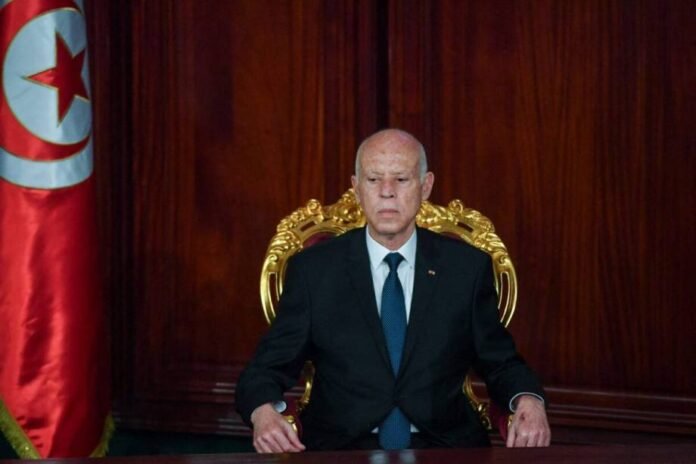
Tunisian President Kais Saied has accused what he described as “remnants of colonialism” of spreading chaos and creating crises in the country.

Speaking during Tunisia’s National Tree Day celebrations, Saied said the outbreak of fires coinciding with disruptions to water supplies was “no coincidence”, adding that the judiciary would investigate the incidents and determine responsibility to ensure those behind them were held accountable, according to a statement from the Tunisian presidency.

He added that the continuation of these practices, accompanied by water shortages, fires and rising prices, reflects attempts by remnants of the former system to regain influence by various means.

READ: Tunisia’s Justice Ministry denies plans to build new prisons

However, he said these attempts had been thwarted by the awareness of Tunisian men and women and their understanding of the sensitivity of the current period, adding that they had foiled the plans of the enemies of the people and the revolution.

Saied also claimed that “covert pressure groups”, which appear and disappear alongside what he called “remnants of colonialism”, are seeking to spread chaos and frustration by creating crises, disrupting services and assigning different roles to those involved.

He said these groups are ignoring the Tunisian people’s awareness and ability to confront such attempts, adding that the country’s people would not forget those who had harmed Tunisia, regardless of their attempts to portray themselves as victims or heroes when they are neither.

READ: Rights group issues international appeal for release of Ghannouchi and political prisoners in Tunisia

Source: Iwpost.com

Multiple Fans Knocked Unconscious in Wild 49ers-Raiders Brawl (Video)

0
multiple-fans-knocked-unconscious-in-wild-49ers-raiders-brawl-(video)
Multiple Fans Knocked Unconscious in Wild 49ers-Raiders Brawl (Video)


A fierce NFL rivalry erupted into shocking violence Sunday when a massive parking lot brawl outside Levi’s Stadium in California left multiple football fans apparently unconscious, sparking a police investigation and outrage across social media.

The chaotic confrontation unfolded during the San Francisco 49ers’ 38-17 victory over the Las Vegas Raiders on November 8, turning what should have been an exciting day of football into a disturbing scene.

Video circulating online shows at least seven people involved in a violent altercation outside the stadium in Santa Clara, with punches flying as nearby spectators scream and scramble to intervene.

One particularly alarming moment shows a man striking another person in the head, apparently knocking him unconscious. Moments later, several other individuals turn on the apparent attacker, knocking him to the pavement and repeatedly striking him as he appears to lose consciousness.

At least two people are seen lying motionless on the ground during the confrontation.

The footage quickly spread across Instagram, Facebook and X, attracting widespread attention as viewers reacted to the intensity of the fighting.

Santa Clara police have confirmed they are investigating the incident.

“The Santa Clara Police Department is aware of a video circulating online of an assault that occurred outside the stadium today,” police spokesperson Lt. Eric Lagergren told the San Francisco Chronicle.

Lagergren confirmed the incident was part of an active investigation, with additional information expected as authorities gather evidence.

The identities of those involved have not been publicly confirmed, and officials have not released details about potential injuries, hospitalizations or arrests.

Although the footage appears to show multiple people losing consciousness, their medical conditions have not been independently verified.

Questions also remain about what triggered the confrontation. One social media post featuring the footage described it as staged entertainment, although police have confirmed they are investigating an assault outside the stadium.

The incident has renewed attention on the long-running rivalry between the 49ers and Raiders, whose fan bases have maintained a heated relationship even after the Raiders relocated from Oakland to Las Vegas in 2020.

The teams’ history includes previous episodes of fan violence. Following serious disturbances surrounding a 2011 preseason matchup, the franchises discontinued their annual preseason meetings.

Sunday’s game marked the Raiders’ first visit to Levi’s Stadium in eight years, adding another chapter to a rivalry that stretches back decades.

On the field, San Francisco dominated the second half, forcing five turnovers and securing a convincing victory behind quarterback Brock Purdy.

But the disturbing scenes outside the stadium threatened to overshadow the result.

Authorities are urging anyone who witnessed the confrontation to contact the Santa Clara Police Department at 408-615-4700. Anonymous tips can also be submitted at 408-615-4847.

As investigators work to determine exactly what happened, the viral footage has raised troubling questions about fan safety and how quickly a heated sports rivalry can escalate into dangerous violence.

Source: Iwpost.com

Who’s who for Europe at the Ukraine talks in Abu Dhabi

0
who’s-who-for-europe-at-the-ukraine-talks-in-abu-dhabi
Who’s who for Europe at the Ukraine talks in Abu Dhabi
Senior officials from the EU, NATO and key European capitals travel to Abu Dhabi this week to participate in U.S.-brokered talks geared toward ending Russia’s war on Ukraine — allaying fears that Europe risks being completely cut out of the process.

The talks coincide with growing concerns in Europe about potential concessions to Russia after Jared Kushner, son-in law and adviser to U.S. President Donald Trump, said last week that discussions would focus on a “new European security architecture” — a phrase often used by Russian officials to mean reducing NATO’s presence in front-line nations and limits on Ukraine’s armed forces.

Ukraine will be represented by Rustem Umerov, the head of Kyiv’s foreign intelligence service, along with senior officials Kyrylo Budanov and David Arakhamia. Russia’s contingent is to be led by presidential aide Vladimir Medinsky. Representing the U.S. side will be Kushner and U.S. Special Envoy Steve Witkoff.

The European contingent includes national security advisers from France, the U.K., Germany and Italy, in addition to senior officials from NATO as well as the European Commission and the European Council. The inclusion of EU figures as well as an Italian representative follows a push by Prime Minister Giorgia Meloni, who warned of fragmentation in a letter to European Council President António Costa last week.

Despite their presence in Abu Dhabi, though, the European team is not expected to be inside the room during the main negotiations, according to two senior officials aware of the format. A German official told POLITICO that the format of talks would be “determined as the discussions progress.” The Kremlin has voiced opposition to Europeans directly participating in the talks, according to the same senior officials.

Here’s a quick look at the key players from Europe in Abu Dhabi.

Günter Sautter (Germany)

Sautter is German Chancellor Friedrich Merz’s foreign and security policy adviser and a senior career diplomat who has become a major figure in Europe’s efforts to end Russia’s war — and secure a European seat at the negotiating table.

Besides representing Germany in the E3 format, Sautter is also coordinating the German-led “Berlin Format” — a German-led coalition to bring together Ukraine, the E3 and other European nations such as Italy, Poland or the Scandinavian countries as well as NATO, EU and others including Canada — that seeks to steer Ukraine’s peace talks and coordinate support for Kyiv.

At a press conference with Ukrainian President Volodymyr Zelenskyy last week, Merz remarked that Sautter “is now devoting a significant portion of his workforce to diplomatic efforts to end this war.”

Sautter’s main credo in the talks is that there can be no discussion about a future European security architecture before Russia agrees to a ceasefire.

Fabrizio Saggio (Italy)

Fabrizio Saggio, diplomatic adviser to Italian Prime Minister Giorgia Meloni, will also attend the talks, according to an Italian official.

Saggio, whose surname means “wise” in Italian, has earned the not-particularly-original sobriquet “Mister Wolf” in the Italian press, a reference to his role as Meloni’s go-to troubleshooter on major international issues, resolving problems and providing strategic advice.

Meloni met him during a visit to Tunis, where he was serving as Italian ambassador, to sign a migration deal. “It took her 20 minutes to realize that he was the one” for the job, an Italian diplomat said.

In a letter sent to European Council President António Costa last week and seen by POLITICO, Meloni complained about the proliferation of negotiating formats on Ukraine. She called for this week’s informal gathering of EU leaders in Dublin to also discuss Ukraine and decide “once and for all, who sits at the negotiating table representing the European Union, and with what mandate.” Costa agreed to put the issue on the agenda.

In the same letter, Meloni also said: “I am not asking for a seat for Italy in this or that format.” But she got one anyway.

Geoffrey van Leeuwen (NATO)

Geoffrey van Leeuwen is NATO Secretary-General Mark Rutte’s chief of staff. A career diplomat who has served everywhere from Kabul to Mumbai, van Leeuwen is a longtime Rutte loyalist who was trade minister and national security adviser during the boss’ time as Dutch prime minister.

Known as an affable and sharp operator who largely shuns the public eye, van Leeuwen helped steer NATO through seemingly unending crises mostly prompted by Donald Trump this year, including the U.S. President’s push to annex Greenland and the fallout from the U.S. war in Iran.

NATO doesn’t formally have any role in negotiating a peace deal. But where the talks touch on alliance issues — troop movements, security guarantees or Ukraine’s NATO accession — van Leeuwen will have an interest. His task is primarily “to observe, report back” and make sure “NATO is aware of what’s being said,” said an official familiar with the matter.

Jonathan Powell (United Kingdom)

U.K. National Security Adviser Jonathan Powell is expected to attend on behalf of the U.K.

The former aide to Tony Blair, known for his role in the Northern Ireland peace process, was brought back into government under Keir Starmer and stayed on under Andy Burnham. He has since become one of London’s most reliable links to Washington and is known to have a particularly strong relationship with Witkoff.

His position has come under scrutiny in recent months, however, with reports that he is on his way out of Downing Street.

Bjoern Seibert (European Commission)

Ursula von der Leyen’s chief of Cabinet is her most trusted lieutenant and one of the most influential figures in Brussels.

A close confidant who helps steer her political and diplomatic work, Seibert is a central player in the EU’s discussions on Ukraine. His presence in Abu Dhabi puts von der Leyen’s office in the mix as Kyiv, Washington and Moscow discuss the war.

He has joined earlier rounds of Ukraine talks, including meetings in Miami and Oslo with U.S. envoy Steve Witkoff, where officials discussed security guarantees, territory and Ukraine’s postwar recovery.

Seibert will play a similar role to the national security advisers of the E3 countries and NATO’s van Leeuwen, and will be present at whatever tables they’re sitting at, according to an EU official. But the Europeans are likely to be briefed separately because the Kremlin has repeatedly objected to them being present in the room for the three-way talks, including on Monday.

Anna-Maria Boura (European Council)

As European Council President António Costa’s chief foreign policy adviser, Boura will be the EU’s member countries’ eyes in Abu Dhabi.

Her place on the ground marks the Council’s return to the Ukraine talks, after Costa’s office was absent from earlier rounds in Miami and Oslo, where Seibert represented the Commission.

Boura’s profile is rising as Pedro Lourtie, Costa’s chief of Cabinet, is expected to leave for a new diplomatic role in the U.S. (It was Lourtie who opened a channel to the Kremlin this summer, speaking by phone with an official close to Vladimir Putin.) Boura also played a key part in the EU-Canada summit, holding the pen on the bloc’s side of the work on the joint declaration.

Emmanuel Bonne (France)

As Emmanuel Macron’s chief diplomatic adviser, Emmanuel Bonne is the man called upon to jet off to key venues — like Abu Dhabi this week — to lay the groundwork for the French president’s most important geopolitical initiatives.

Bonne, a career diplomat who served in multiple postings in the Middle East, joined Macron’s team in 2019 — a long tenure at the Elysée compared to some of his peers. Bonne was reportedly headed toward the exit in January 2025 due to a major dispute with the president’s chief of military staff, but Macron convinced him to stay on.

Via Politico

Source: Iwpost.com

China fast-tracks mobile ICBM to lock down second-strike edge

0
china-fast-tracks-mobile-icbm-to-lock-down-second-strike-edge
China fast-tracks mobile ICBM to lock down second-strike edge

<

article id=”post-952758″>

China’s rapid operational integration of a new type of intercontinental ballistic missile (ICBM) underscores an accelerating push to modernize its land-based deterrent, addressing key technical vulnerabilities of earlier systems while fortifying second-strike survivability amid an unprecedented nuclear expansion.

This month, multiple media outlets reported that China’s newest road-mobile ICBM, the DF-61, has entered routine training with the People’s Liberation Army Rocket Force (PLARF) just 14 months after its public debut, signaling a faster-than-usual integration into operational nuclear forces.

The missile first appeared during a September 2025 military parade and now participates in field maneuvers, repositioning drills, and simulated launch sequences. According to Chinese state media, the DF-61 completed development, design finalization, trial deployment and reliability testing before its public unveiling.

The rapid timeline likely stems from design continuity rather than an accelerated development cycle. Mounted on a 16-wheel transporter-erector-launcher (TEL) nearly identical to that of the older DF-41, the DF-61 is widely assessed as an evolutionary upgrade compatible with existing command, support, and training infrastructure.

While technical specifications remain classified, estimates suggest a solid-fuel range of 12,000 to 18,000 kilometers and multiple independently targetable reentry vehicle capability.

Dispersal training complicates adversary pre-launch tracking, reinforcing China’s second-strike survivability alongside expanding silo fields, though full operational readiness across active units remains unconfirmed.

Understanding the limitations of China’s older DF-41 ICBM provides clues on which technical and operational shortfalls the DF-61 is engineered to address. Missile Threat notes that the DF-41 is a three-stage solid-fuel ICBM capable of striking targets up to 15,000 kilometers away.

According to Missile Threat, the DF-41 measures between 20 and 22 meters, weighs 80,000 kilograms, and carries a 2,500-kilogram payload that accommodates up to 10 multiple independently targetable reentry vehicles, along with penetration aids to defeat adversary missile defenses.

Missile Threat notes that the missile uses inertial navigation with satellite updates, achieving an estimated circular error probable of 100 meters, and supports flexible multi-platform deployment across eight-axle road-mobile TELs, hardened silos, and experimental rail-mobile systems.

However, M.S. Prathibha notes in a 2019 article for the Manohar Parrikar Institute for Defense Studies and Analyses that the DF-41 can carry only three or four nuclear warheads without severely compromising its 11,000-kilometer range, because of throw-weight constraints and China’s less advanced reentry vehicle miniaturization compared to US technology.

Prathibha also points out that the DF-41’s vehicle-weight burden challenges claims of true off-road mobility, while reliance on hot-launch mechanisms generates intense exhaust heat that degrades launcher lifespans, forcing China to retain the heavy, liquid-fueled DF-5 ICBM.

Hence, compared to the DF-41, the DF-61 may possess longer range, increased throw weight, carry more warheads and penetration aids, and incorporate cold-launch capability, building directly on the former’s technology while addressing its mechanical and operational limitations.

Road-mobile ICBMs form a foundational component of China’s land-based nuclear deterrent. Hans Kristensen and others note in a July 2026 Bulletin of the Atomic Scientists article that such missiles form the backbone of China’s secure second-strike nuclear deterrent, designed to survive an adversary’s first strike through dispersal and camouflage.

Kristensen and others note that road-mobile solid-fuel systems such as the DF-31, DF-41, and possibly the DF-61 can quickly relocate into rugged interior networks to evade detection. Kristensen and others add that these units differ from silo-based forces by storing warheads separately during peacetime.

During crises, Kristensen and others say crews must quickly mate warheads and reposition off-road before firing, prioritizing launch survivability and flexible retaliation over immediate hair-trigger readiness.

These dispersal dynamics contrast with fixed launch infrastructure. Silo-based ICBMs deter adversaries through constant readiness and serving as a “nuclear sponge” and tripwire, requiring attacks on hundreds of dispersed sites away from strategic locations to weaken retaliation.

But their vulnerability to preemptive strikes pressures commanders to adopt risky “launch-under-attack” postures, with narrow decision windows prone to false alarms.

Despite advantages over silo-based ICBMs, road-mobile platforms rely on predictable routes, garrison choke points, and support infrastructure exposed to wide-area surveillance.

Convoys’ thermal, physical, and electronic signatures make them vulnerable to quick strikes before they reach secure launch sites. Centralized peacetime warhead storage also delays retaliation and requires vulnerable mating procedures.

Both road- and silo-based ICBMs reinforce China’s nuclear triad, offering unique capabilities that increase survivability while mitigating the vulnerabilities of the air- and sea-based legs.

Strategic bombers such as China’s H-6 series are the most flexible leg of a nuclear triad because they can be retargeted or recalled midflight, but they are also the most visible.

This visibility enables strategic messaging through deployments at South China Sea forward bases and flyovers near contested areas like Scarborough Shoal, but it also exposes bombers to destruction on the ground or interception by enemy air defenses.

At sea, Type 094 and future Type 096 nuclear ballistic missile submarines (SSBNs) provide an undetectable, survivable second-strike capability, but may also create a brittle deterrent.

Losing shore contact, being unable to launch, or destruction by enemy submarines and anti-submarine forces could eliminate much of the nuclear force—especially if only one submarine is on patrol.

Those operational trade-offs should be evaluated in the larger context of China’s ongoing nuclear buildup. January 2026 data from the Stockholm International Peace Research Institute (SIPRI) shows that China’s nuclear stockpile reached 620 warheads in early 2026, including 34 operational warheads deployed on delivery systems and 586 in central storage.

However, SIPRI data shows that while China is significantly expanding its nuclear arsenal, it remains significantly smaller than those of the US and Russia.

The data shows that the US maintains an inventory of 3,700 stockpiled warheads with 1,770 actively deployed, while Russia fields a military stockpile of 4,400 warheads with 1,796 deployed, keeping both traditional nuclear superpowers roughly six to seven times larger than China in total usable warheads.

Even with China lagging behind the US and Russia in terms of deployed nuclear weapons, the US Department of Defense’s (DoD) 2025 China Military Power Report (CMPR) says that China is on track to field over 1,000 operational warheads by 2030.

In a January 2025 Heritage Foundation article, Andrew Harding and others outline three possible trajectories for China’s nuclear weapons deployment in 2035. Under the first path, Harding and others say China accepts nuclear parity with the US by fielding roughly 1,500 strategic and 200 theater weapons to secure regional hegemony.

For the second path, they mention that alternatively, China could seek nuclear advantage by deploying 1,550 strategic arms alongside 2,000 non-strategic weapons to deter US intervention during Indo-Pacific crises.

Finally, Harding and others state that China could pursue nuclear primacy over both the US and Russia, amassing 2,000 strategic and 2,500 non-strategic weapons to insulate itself from potential Russian friction and establish uncontested global dominance.

As China approaches an estimated 1,000-plus warheads by 2030, an upgraded mobile system like the DF-61 could reinforce land-based dispersal as its most survivable hedge against preemptive strikes, anchoring its triad whether it seeks parity, regional advantage, or primacy.

Source: Iwpost.com

The Pressure on LA’s First Self-Proclaimed Socialist Mayor

0
the-pressure-on-la’s-first-self-proclaimed-socialist-mayor
The Pressure on LA’s First Self-Proclaimed Socialist Mayor


On paper, the second-largest city in the country has its first democratic socialist mayor. 

Los Angeles City Councilmember Nithya Raman declared victory on Thursday over the embattled incumbent Karen Bass, joining a list of socialist mayors who have risen to power in recent years, including Zohran Mamdani in New York; Seattle’s Katie Wilson; and most recently Janeese Lewis George in Washington, D.C., who won in a landslide this week. 

Raman, however, did not campaign unabashedly as a socialist. Though she ran as an endorsed member of the Democratic Socialists of America’s Los Angeles chapter, the national DSA threatened to override the local chapter and rescind the endorsement over concerns around her stances on Israel and Palestine. 

Unlike her counterpart in New York, to whom she draws most comparisons, Raman did not make sweeping socialist promises, such as free public transit, universal childcare, or taxing the rich. Instead, she focused on what’s wrong with the city. Riding a wave of resentment for Bass’s alleged mismanagements of the Palisades fire and the Lineage Logistics warehouse fire in Boyle Heights, Raman talked about filling potholes, fixing street lights, and making roads safer for pedestrians and cyclists.

In addition to DSA-LA support, she earned the endorsements of popular anti-corruption City Controller Kenneth Mejia and Unite Here 11, a major local hospitality workers union, whose large membership canvassed for her in the general. But she lacked endorsements from most key labor groups and social justice nonprofits, and the organizing base they provide. Her fellow DSA members on the Los Angeles City Council all pulled for Bass, forcing Raman to battle back the perception that she struggles to build coalitions.

While Mamdani, 10 months into his term, now finds himself under pressure from New York’s left for refusing to fire NYPD’s police commissioner, his massive base of organizer support offers a buffer to criticism. Raman won over the city’s voters, but it’s not clear how much time that will buy her to tackle the city’s most vexing problems once she takes office.

“Folks in New York are willing to cut Mamdani more slack on the movement side, because he was one of them on a bunch of issues,” said David Levitus, executive director of LA Forward, a progressive nonprofit that endorsed Raman in the general election.
”I think Nithya” — who did not come from the ranks of DSA organizing like Mamdani — “has more skepticism from parts of the left because of that.”

Raman will face scrutiny from LA’s progressive left on a host of issues: bloated police department spending amounting to roughly a quarter of the city’s nearly $15 billion budget; fear of collaboration between ICE and law enforcement agencies; the 2028 Olympics prompting an expansion of surveillance; rising homelessness; and failing infrastructure.

Weeks before the November election, Raman seemed less concerned with movement-based allegiances or ideological labels, saying she is “a capitalist and I’m also a democratic socialist.” Before the primary in June, she said she was “one of the most independent voices in City Hall” when asked about her membership with DSA. The statements and her votes in city council have prompted intense debate among DSA-LA’s members over whether Raman holds up to democratic socialist ideals.

While most Angelenos do not care about such fine distinctions, Raman’s measured embrace of the socialist mantle has created among some activists the perception of a more responsive audience in city hall compared to previous administrations. Yet to others on LA’s progressive left, Raman’s ideological elusiveness reads as political unreliability.

“I don’t think Nithya Raman is accountable to anyone in the movement,” said Kris Rehl, an activist who volunteered for Raman during her 2020 city council run and now runs the mutual aid group LA Street Care. “If you do not subscribe to any ideology, you can’t be held accountable to it.” 

Rehl, who advocates for abolishing anti-camping bans that criminalize homeless encampments near schools and daycares, expressed dismay over Raman’s previous votes on expanding the police department despite running on defunding the police in 2020.

Others like Tal Levy, a member of DSA-LA’s electoral politics committee, remain more optimistic about what Raman can deliver as mayor. While DSA-LA is pushing for reallocating funds from the police budget into social services, Levy sees the value of Raman’s pledge to support LA Forward’s initiative of citywide expansion of unarmed crisis response teams, which divert certain 911 calls to teams of social workers and clinicians, rather than police.

“Even if Nithya were a fire-breathing abolitionist, it would still be a long fight to make those changes,” said Levy, who has been organizing with DSA-LA for nearly a decade. “But I believe there is plenty of room for us to make material wins in the short term.”

Room to Push

While there is debate over how much power DSA-LA has within LA’s political landscape, the group provided Raman additional attention and credibility among leftist voters, which was only bolstered by the successes of other DSA-endorsed candidates in New York and in congressional races across the nation.

The DSA’s National Political Committee, however, spurred one of the biggest public rifts during Raman’s campaign. The committee held a vote to un-endorse Raman over her perceived lack of support for the Palestinian-led Boycott, Divestment, and Sanctions movement, which hadn’t been included by the DSA-LA on its endorsement questionnaire. After a week of debate and dueling resolutions, and an email from Raman, in which she wrote, “the best way for working Angelenos to stand in solidarity with Gaza is through non-violent protest, legislative action, and diplomatic pressure, including BDS,” the national committee decided against rescinding its endorsement of Raman by a narrow margin.

Frances Gill, one of three DSA-LA members on the DSA national political committee, voted against rescinding the group’s endorsement. She opposed the idea of alienating the organization’s second largest chapter as “bad organizing and bad leadership,” especially in a high-profile race when the stakes for the regional and national chapters were so closely intertwined.

“The public ties us to one another,” Gill said of the DSA and Raman, “and there’s not a lot of other key players who have also played such a critical role in her being able to win. So I think that gives us an outsized seat at the table.”

She was a part of the faction among national leadership that instead called for a long-term pressure campaign on Raman on the issue of Israel and Palestine. The group is planning to push Raman on what she can do as mayor to halt the transportation of military hardware that makes its way through the Los Angeles International Airport to Israel. Organizers also plan to call for an end to real estate events in LA facilitating the sale of housing illegally built in the occupied West Bank. They will also examine whether the city itself is invested in companies that are profiting off Israel’s genocide in Gaza and apartheid rule of Palestinians.

“I think there is room to push,” Gill said.

Another major public spat between progressives and Raman took place in January before she announced her candidacy for mayor. 

Catching housing advocates by surprise, Raman introduced a motion to reform the city’s “mansion tax” to make exemptions for developers. Raman claimed that the tax, known as Measure ULA, was inadvertently preventing construction of new multi-family housing. Organizers opposed the idea, since the tax generates funds for services to support existing affordable housing and keep people housed, and that carveouts for developers would only fuel displacement of low-income renters, possibly pushing more people to the streets.

LA Forward was among those blindsided by the motion, which she eventually withdrew. Before endorsing Raman, Levitus and the group met with the candidate alongside organizers in an activist’s home. 

“She talked about, ‘The times when I’ve succeeded, it’s because I built a coalition, the times when I failed, it’s because I didn’t, and I didn’t bring people along,’” Levitus recalled from the July meeting. “She really owned her mistake. I don’t know how much her mind has changed intellectually about the policy, but think clearly she recognizes that she needed to do something different — and that might lead to her pushing for a policy that is different from what she had pushed for before.”

Police Chief Dilemma

Among Raman’s early tests progressives will be watching for is how she fulfills her pledge to fire LAPD police chief Jim McDonnell. Raman was among the councilmembers who approved his appointment in 2024, despite concerns around his track record of collaborating with ICE as LA County sheriff. She has since said she would fire McDonnell over his response to the ICE raids and his refusal to enforce a state law that banned federal agents from wearing masks.

Yet the pledge to replace McDonnell may present a political quagmire for Raman, given that the mayor in LA cannot unilaterally force out a police chief. The city’s police commission, consisting of five civilians appointed by the mayor, must make that decision. Raman first will need to assemble her own commission, but that process also requires approval from a city council that remains largely supportive of the police department. 

William Gude, a vocal police accountability advocate who supported Raman in the election, said he planned to push the mayor to circumvent the process by asking McDonnell to resign. “I’m putting pressure on her from day one,” he said. “There’s some promises that she made, and those promises need to be kept.”

In her first press conference as mayor-elect, Raman sidestepped a question about whether she still planned to fire McDonnell, amid public threats from the police union warning of “Armageddon.” “Public safety is the most important service the city is delivering to its people,” said Raman, noting the chief was one of her first phone calls after winning. 

Activist pressure could be a burden for Raman — or a tool she could use to force legislation through a city council she knows well, according to Gude. “Does she want to have activists coming after her, also while battling 15 council members?” said Gude, who goes by @FilmthePoliceLA on social media. “Or would she rather have the activist base going after the council members that are coming after her, to create a buffer, to do a lot of her heavy lifting? It’s a choice she has to make.”

Hamid Khan, who heads the Stop Spying LAPD Coalition, is among those who is closely watching who Raman appoints to her police commission. But he sees Raman’s pledge of firing McDonnell as “a band-aid” for the more glaring structural issues of the department. While crediting Raman’s opposition to automated license plate readers from Flock Safety and Axon, Khan also pointed to Raman’s historic support for expanding the police department.

While in city council, Raman voted to expand LAPD’s budget three times: in 2021, 2022, and 2023. But she also voted against police raises in 2023, and this year, she opposed a plan by Bass to hire 170 more officers. She has said on the campaign trail she does not wish to expand the police budget, but also said she would not cut into it either.

In the span of her time in city council, the LAPD has expanded its surveillance reach, Khan said. The department is slowly unrolling its Real-Time Crime Centers, which meld automated license plate reader technology, social media monitoring software, and CCTV cameras into a constant surveillance tool. He warned such a technology, while marketed to curb retail theft, will disproportionately harm Black and brown Angelenos. 

“We have to situate the people’s expectations in Los Angeles that they’re not based upon the comment, ‘I’m gonna fire Jim McDonald,’” said Khan, who advocates for abolishing the budding police outposts. “What does that do? The fundamentals still remain the same.”

A True Outsider

There is a notion among some on the left that Raman is very much a part of the political machine that bred some of LA’s ongoing problems. She has served on city council for five years and was an ally to Bass, having endorsed Bass just weeks before jumping in the race herself. Yet Raman, a Harvard-educated urban planner and former entertainment director of Time’s Up, is in many respects an outsider to the political establishment. 

Former City Councilmember Mike Bonin, who now runs the Pat Brown Institute for Public Affairs at California State University, Los Angeles, called Raman’s victory a “reordering of the governing class in Los Angeles.” For the past several decades, LA politics has been run by establishment Democrats, such as Bass or her predecessor, Eric Garcetti, son of a former LA County district attorney; the chambers of commerce; lobbyists; longtime city hall staffers; all riding the influence of homeowners.

Lex Steppling, an organizer with Los Angeles Community Action Network and a critic of Raman’s time in city council, said in his personal capacity that the “political recalibration” with her victory in city hall was a welcome sight.

Steppling grew up in a generation of LA political activists who got their start organizing with Community Coalition, which Bass founded in 1990 and for a long time was the only progressive organization in the city offering paid political work. He watched as his peers grew to leading campaigns on issues such as policing and mass incarceration, then began running for elected office. They brought with them their organizing chops, but also their relationships with the organizations that gave them their start. Steppling described this as a “relational ecosystem,” in which movements would be co-opted into electoral politics — in which scoring political points became more important than addressing the issues.

He blamed the lack of gains on policing and mass incarceration since the 2020 George Floyd uprising on such a relational ecosystem. A victory for Raman could mark a reset to such an establishment, and he hopes activists will capitalize on the opening.

“The right kind of openings to do the right kind of work will reemerge,” said Steppling, who helped lead a successful anti-incarceration measure in 2020. “It’s gonna once again start to be about the demands.”

Raman’s election evoked for Bonin memories of the last time an LA incumbent mayor was ousted. In 2005, then-state Assembly member Antonio Villaraigosa beat James Hahn, becoming the city’s first Latino mayor. Villaraigosa, previously director of Southern California ACLU, was seen as a progressive candidate at the time. That’s not how he governed. An early sign of his establishment politics was hiring a longtime political insider as his chief of staff.

Raman will also signal her governing priorities with the hires for her transition team and cabinet. 

Some organizers were encouraged to see progressive figures added to her campaign, such as Faizah Malik, a civil rights attorney and former city council candidate also endorsed by DSA-LA, and Jamie York, an advocate for greater transparency in city politics whose high-profile rejection by the city council as an ethics commission appointee drew public scrutiny. It remains unclear what if any role they would play in city hall. 

The LA Times reported that Rick Cole, former deputy mayor, is expected to supervise Raman’s transition team alongside Andrea Conant, Raman’s chief of staff in city council.

“How big is the table,” Bonin said, “and how much of the activist community is at the table?”

Update: November 9, 2026
This story has been updated to note that Lex Steppling was speaking in his personal capacity, not as a representative of the Los Angeles Community Action Network.

Source: Iwpost.com

Rubio Denounces Articles of Impeachment Filed Against Hegseth as ‘Unfair’ 

0
rubio-denounces-articles-of-impeachment-filed-against-hegseth-as-‘unfair’ 
Rubio Denounces Articles of Impeachment Filed Against Hegseth as ‘Unfair’ 


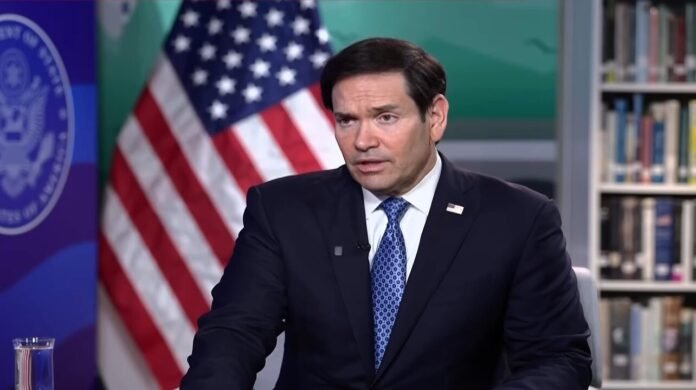
US Secretary of State Marco Rubio defended Defense Secretary Pete Hegseth on Monday against a renewed impeachment effort by Republican Rep. Thomas Massie, calling the move “unfair” and praising Hegseth’s leadership as he faces allegations of conducting unauthorized military operations against Iran. 

Speaking at the G7 gathering in Paris, Rubio said Hegseth had done a “great job” on national security matters. He praised the defense secretary’s professionalism, intelligence, and dedication, citing their daily working relationship. 

Rubio also defended the Trump administration’s military campaign against Iran on Sunday, saying, “It doesn’t have to be necessarily popular, but it can be necessary”. 

Massie, R-Ky., reintroduced eight impeachment articles Monday, alleging that Hegseth had conducted military operations against Iran without congressional authorization and continued hostilities beyond the 60-day period established by the 1973 War Powers Resolution. 

The Kentucky congressman, a longtime critic of President Donald Trump who intends to retire at the end of the year, originally introduced the charges in September. 

Additional allegations concern extrajudicial killings in strikes against suspected drug-trafficking vessels, the US capture of then-Venezuelan President Nicolás Maduro and military operations in Yemen. 

By submitting the resolution as a privileged measure, Massie triggered a requirement for House leaders to bring it to a vote within two legislative days. Republicans could instead move to dismiss the resolution, which would also require majority support. 

Hegseth rejected concerns about the impeachment push Monday, telling reporters, “We’re not worried about that.” He announced plans to address the accusations at a Pentagon news conference Tuesday. 

House Minority Leader Hakeem Jeffries, D-N.Y., expressed support for impeachment Sunday, describing himself as a “hard yes” and accusing Hegseth of abusing his authority and pursuing a costly war against Iran. 

A simple House majority would be sufficient to impeach Hegseth. The Senate would then consider whether to convict him and remove him from office. 


Source: Iwpost.com

F1 in Brazil: You’ve got to keep your tires alive

0
f1-in-brazil:-you’ve-got-to-keep-your-tires-alive
F1 in Brazil: You’ve got to keep your tires alive

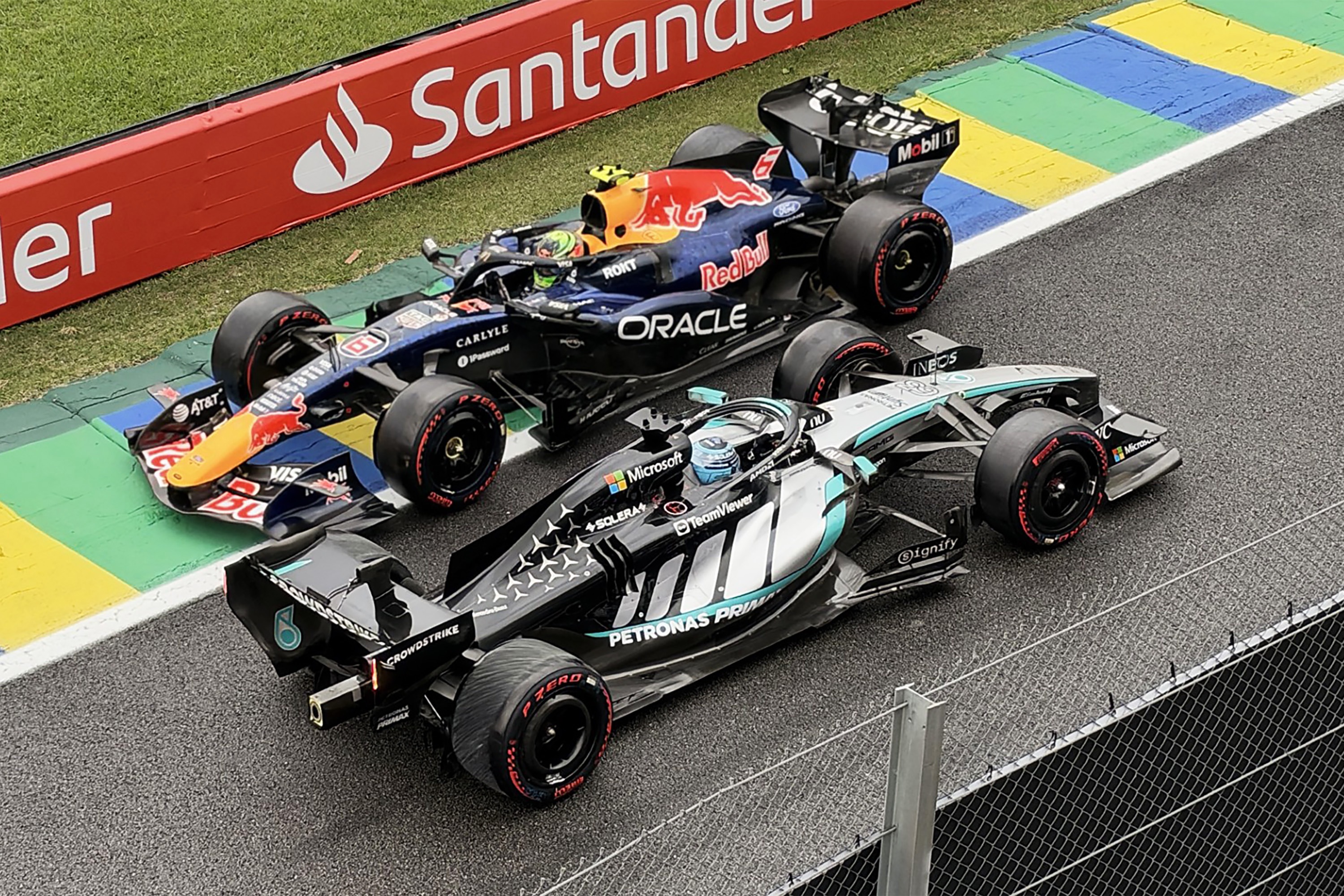
In sports, a “dead rubber” is a match that takes place after the outcome of the series or championship has already been decided. The people in charge hate this*—if you wrap up a title two-thirds of the way through a season, the viewers evaporate, as there’s nothing left at stake. But anyone who decided to skip this year’s Brazilian Grand Prix this past weekend missed one of the year’s most entertaining races, as a combination of a mixed-up starting order, some very fast drivers at the back, and a wet track that dried and then saw rain again resulted in action aplenty.

A peculiarity of F1 is that even if you manage to win a championship, there’s no guarantee you’ll be in a position to defend it. Take McLaren’s Lando Norris, who took the crown in 2025 after a nail-biting fight with his teammate Oscar Piastri and Red Bull’s Max Verstappen. Sadly for Lando, McLaren did not start this year in a position to win races, and even with several upgrades, the team has produced a car that is still very tricky to drive. But this weekend in Brazil, Norris demonstrated the form that earned him the number 1.

Rain on Saturday during qualifying helped jumble the usual running order. It was heavy enough that drivers used the wet weather tire with deep treads, which usually generates so much spray that visibility disappears and running has to be suspended. But with fewer cars on track in the later knockout qualifying sessions, this was not a problem for once. More disruption came from grid penalties for Verstappen and Ferrari’s Lewis Hamilton, both of whom needed to use extra power unit components outside of the season’s allowance.

Everyone’s mixed up

SAO PAULO, BRAZIL - NOVEMBER 08: (EDITOR'S NOTE: Tonal effects have been applied to this image.) Race winner Lando Norris of Great Britain and McLaren celebrates with his broken Champagne bottle on the podium during the F1 Grand Prix of Brazil at Autodromo Jose Carlos Pace on November 08, 2026 in Sao Paulo, Brazil. (Photo by Hector Vivas - Formula 1/Formula 1 via Getty Images)

A happy Lando Norris with his broken champagne bottle.

A happy Lando Norris with his broken champagne bottle. Credit: Hector Vivas – Formula 1/Formula 1 via Getty Images

Norris claimed pole, with this year’s new champion, Kimi Antonelli, alongside in his Mercedes. Row two was filled with the unusual sight of Liam Lawson’s Racing Bull and Nico Hulkenberg’s Audi, followed by Red Bull’s Isack Hadjar and Oliver Bearman’s Haas. Next was George Russell in the other Mercedes, then the even more unusual sight of Fernando Alonso’s Aston Martin, normally found much farther back. One could say the same about William’s Alex Albon, who qualified ninth ahead of the second McLaren of Oscar Piastri.

It looked like it was going wrong for Norris right from the start of the race. Antonelli made a better start and passed him into turn 1. Lawson followed through into second place at the next corner. But Norris kept his head down, and by lap six, he was past the Racing Bull, with about five seconds to make up on Antonelli.

Well-timed pit stops saw Norris switch to the right tires at the right time, and he made none of his rivals’ mistakes, even when the rain returned in the final few laps—at least until the podium ceremony, when he tried to fizz his champagne bottle but instead shattered it.

Keeping one’s tires in the right operating window was vitally important in Brazil, but more than a few struggled with it. The Mercedes duo appeared to struggle to generate sufficient tire temperatures, and their cars looked difficult to handle, prompting plenty of complaints from both Russell and Antonelli to the garage. Russell had been progressing well and ran in the top three early in the race but spun after leaving the pit lane for his first stop, ending up facing the wrong way.

SAO PAULO, BRAZIL - NOVEMBER 08: Isack Hadjar of France driving the (6) Oracle Red Bull Racing RB22 Red Bull Ford Powertrains passes George Russell of Great Britain driving the (63) Mercedes AMG Petronas F1 Team W17 as he spins at the pit lane exit during the F1 Grand Prix of Brazil at Autodromo Jose Carlos Pace on November 08, 2026 in Sao Paulo, Brazil. (Photo by Getty Images/Getty Images)

Isack Hadjar’s Red Bull is facing the right way. Which means that George Russell’s Mercedes is most certainly not.

Isack Hadjar’s Red Bull is facing the right way. Which means that George Russell’s Mercedes is most certainly not. Credit: Getty Images

A few laps later, Antonelli spun his own car from the lead, this time going into turn 1, letting Norris back into first. Antonelli then did it again four laps later, ending fourth. Eventually, the Mercedes finished with Russell in fourth and Antonelli in fifth. But the team sealed its Constructors’ Championship, so there was still plenty of celebrating despite the relatively mediocre results (by Mercedes’ high standards).

Worth a watch

It’s worth watching the in-car footage from the first couple of laps from both Hamilton and Verstappen, who lined up 20th and 21st out of 22 cars. By the end of lap 1, Hamilton was already in ninth and making things look easy—then again, Brazil was his 400th F1 race start, and he has won more than a quarter of them.

But within four laps, his charge had been blunted. Getting his rear tires up to temperature was key to making up so much ground, but with the track drying, the intermediate tires everyone started the race on had a finite life. With his used up, Hamilton started sliding back down the order. On two occasions, he ended up racing his teammate Charles Leclerc, who started mid-pack with his own penalty.

Unlike in Mexico, Italy, or Holland, the two red cars were able to play nice with each other. But neither managed their tires well, and the best they could do on the road was seventh (Leclerc) and ninth (Hamilton), which became eighth for Leclerc after he was given a five-second penalty for rejoining the track unsafely after running off track while battling Lawson.

SAO PAULO, BRAZIL - NOVEMBER 06: Lance Stroll of Canada driving the (18) Aston Martin F1 Team AMR26 Honda Liam Lawson of New Zealand driving the (30) Visa Cash App Racing Bulls VCARB 03 RB Ford George Russell of Great Britain driving the (63) Mercedes AMG Petronas F1 Team W17 Lewis Hamilton of Great Britain driving the (44) Scuderia Ferrari SF-26 Leonardo Fornaroli of Italy driving the (67) McLaren MCL40 Mercedes and Max Verstappen of the Netherlands driving the (3) Oracle Red Bull Racing RB22 Red Bull Ford Powertrains practice their race start procedures during practice ahead of the F1 Grand Prix of Brazil at Autodromo Jose Carlos Pace on November 06, 2026 in Sao Paulo, Brazil.

Starting two multiple world champions at the back created a lot of overtakes.

Starting two multiple world champions at the back created a lot of overtakes. Credit: Mark Sutton – Formula 1/Formula 1 via Getty Images

Verstappen’s first lap wasn’t quite as good as Hamilton’s—the Red Bull was also never entirely within its setup window all weekend. But taking longer to turn on the rear tires probably contributed to their longevity. While Hamilton’s charge through the pack was blunted, Verstappen was in ninth place by lap 4. By lap 24, he was in second, having taken advantage of Antonelli’s second spin. Verstappen would eventually finish the day in second, 14 seconds off Norris.

F1 takes a weekend off next week, then returns for the night race in Las Vegas.

*Perhaps the prime example of this is NASCAR, which switched to a fairly incomprehensible playoff series it has continued to tweak for years in an effort to prevent anyone from winning the big cup until the last race of the year.

Source: Iwpost.com

Beyond Trump: a time to rethink American power

0
beyond-trump:-a-time-to-rethink-american-power
Beyond Trump: a time to rethink American power

<

article id=”post-952755″>

Last Tuesday’s election was a stunning defeat for President Donald Trump. Democrats won both houses of Congress, including Senate races in states they haven’t won in generations. Americans went to the polls angry about rising prices, government corruption, rising authoritarianism, and a war with Iran they never wanted.

Those frustrations are deeply connected. But this moment can, and should, be an opportunity to do more than move beyond President Trump and his movement. It’s an opportunity for people across the country to question how we got here, and what needs to change about American power.

Already, the administration responsible for the war are trying to distance themselves from it. Vice President JD Vance is blaming the Iran war for the Republican defeat. On Election Day, Trump himself went on Fox News to declare that he’s planning to end military aid to Israel, though he openly admitted that his motivation for making the announcement was to deny his opponents a “bad talking point.”

Republicans seem to be coalescing around a scapegoat in Secretary of War Pete Hegseth, in a move reminiscent of George W. Bush’s firing of Donald Rumsfeld after the midterm disaster of 2006. A vote for Hegseth’s impeachment may come as early as next week, if he isn’t forced out sooner.

This kind of double-talk is nothing new from this administration. Trump ran against disastrous wars of choice. Then he started a new one. It’s no surprise that now he’s talking about peace again. But this is about much more than Donald Trump’s hypocrisy.

If Trump disappeared tomorrow, the Office of the Presidency would still have the dangerous power to start wars without any legal authority to do so. American military power would still be deployed around the world, threatening other nations.

Paramilitary forces like Immigration and Customs Enforcement (ICE) and Customs and Border Patrol would still be terrorizing American cities in violation of US law. The American People registered their disapproval of Trumpism at the ballot box. Will they now go further and demand that the powers be stripped from the presidency, or will they just hand them to someone else?

Nearly 60 years ago, Dr. Martin Luther King Jr. asked Americans a similar question in his speech at Riverside Church in New York City, “Beyond Vietnam.” King didn’t just want to end that war. He wanted the American People to confront the racism, extreme materialism, and militarism that made it possible.

King had seen hope in President Lyndon Johnson’s War on Poverty. As Vietnam escalated, he watched the effort to help poor Americans get pushed aside. The war consumed the money, attention, and political will that those programs needed to succeed. King came to see Vietnam as an enemy of poor people here at home, not only of the people being killed overseas.

President Trump returned to the White House promising to bring prices down. Instead, his war with Iran has made everything more expensive. The price of gasoline, diesel fuel, groceries, everything from fertilizer to electronics, has skyrocketed. Mortgage rates and other borrowing costs are higher than they were before the war.

Businesses struggling to predict energy prices and interest rates have a harder time deciding whether to expand or hire. They put off opening a new location, buying equipment, or taking a chance on another employee. Those decisions affect real jobs and make planning a future harder for families, too.

And Americans know it. They were promised economic relief. Now they’re paying for a war they did not ask for.

Now the same administration that brought us the war in Iran is asking to spend even more tax dollars on the military. The United States spent about $954 billion on its military in 2025. Now, Trump is proposing $1.5 trillion in defense funding for 2027, while seeking cuts to domestic programs.

After seeing what this administration has done with a near-trillion-dollar war budget, why would anyone believe that giving it $500 billion more will make life better for Americans?

This isn’t a problem Trump invented. The United States helped overthrow Iran’s prime minister in 1953. It fought in Vietnam, invaded Iraq and Afghanistan, and supplied the weapons Israel used to destroy of Gaza.

It’s undermined democracy in Latin America, Africa, and Asia, repeatedly backing dictatorships and interfering with other countries’ governments. Republicans and Democrats have both taken part.

For generations America has operated as if it has a special right to decide the future of other countries. US leaders condemn invasions and violations of sovereignty when someone else commits them, and make exceptions when the United States does the same. It’s not imperialism, it’s spreading democracy, even when the people on the receiving end haven’t asked for our help.

Racism has always helped make this possible, and it’s more apparent than ever. Trump’s talk about “shithole countries” and his bans on immigration from Muslim countries are blatant and vulgar, but they’re not entirely new. For US policy, some people’s lives and rights have always counted for less than the lives and rights of “others.”

That attitude doesn’t stay overseas. We see it when ICE and Border Patrol agents terrorize immigrant neighborhoods, when police treat protesters as enemies, and when troops are sent into American cities.

The government decides certain communities, ethnicities, or ideologies are dangerous, then it uses that fear to justify using extraordinary violence against them. This has been the case for a long time. The Trump administration just glorifies the cruelty instead of hiding it.

All of this becomes more frightening when we consider how much power is concentrated in the presidency. People worry about Trump having his finger on the nuclear button, and should. But why should anyone have that power?

A president can authorize the use of nuclear weapons without asking anyone’s permission. Author Elaine Scarry calls this a “Thermonuclear Monarchy.” Changing the president doesn’t change that fact.

Nuclear weapons are just the clearest example. The federal government funds research at universities, healthcare for millions, and humanitarian work around the world. Those programs can do real good. But we’ve seen the Trump administration use those funds to threaten universities’ research funding unless they capitulate to political demands.

It threatens nonprofits for exercising protected speech. If one administration can threaten the survival of institutions by withholding money, people naturally start worrying about whether they can afford to speak up.

The damage spreads. University leaders watch what they say. Businesses look for favors and lavish praise on the leader. Members of Congress avoid challenging their own president. Organizations that need federal money learn to keep quiet. Power can corrupt the people who hold it, but it can also corrupt everyone who needs something from them.

James Madison warned that no nation could preserve its freedom in the midst of continual warfare. He knew war increases executive power and creates opportunities for corruption. If, to borrow a phrase from anti-war writer Randolph Bourne, “War is the health of the State,” then America is a sick nation.

Dr. King warned in “Beyond Vietnam” that “a nation that continues year after year to spend more money on military defense than on programs of social uplift is approaching spiritual death.”

Nearly 60 years later, we’re still making those choices. War makes the government more powerful while it makes ordinary people less secure. The question is whether the disease of American militarism is terminal, or whether we’re finally ready to do something about it.

Tuesday’s election gives the next Congress a chance to act. It can challenge the Iran war, take back its constitutional authority over war and spending, put limits on presidential nuclear power, and protect public institutions from political punishment. It can ask why so much public money keeps going toward weapons while Americans struggle with everyday expenses.

But the election also gives us a chance to change the argument itself. If people concerned about war, corruption, freedom, and affordability don’t recognize how those issues fit together, politicians who started or supported this war will keep claiming to be the ones who can deliver peace. We need more than a different set of promises from the people in charge.

King understood that ending Vietnam wouldn’t be enough if America just went back to doing the same thing somewhere else. Defeating Trump won’t be enough either. We’ve spent generations expanding our military reach and handing presidents powers that no one person should have, all while convincing ourselves that America can be trusted to use them responsibly.

We shouldn’t have to wait for the next Donald Trump to recognize how dangerous that is.

Brian Garvey is the executive director of Massachusetts Peace Action. He is also an active member of the Raytheon Antiwar Campaign. Follow him on X at @brianmgarvey.

– Common Dreams

Source: Iwpost.com

0FansLike
0FollowersFollow
0FollowersFollow
0SubscribersSubscribe
- Advertisement -
Google search engine

Recent Posts