Home Blog

Dave Chappelle Sparks Outrage with Shocking Charlie Kirk Murder Joke (Video)

0
dave-chappelle-sparks-outrage-with-shocking-charlie-kirk-murder-joke-(video)
Dave Chappelle Sparks Outrage with Shocking Charlie Kirk Murder Joke (Video)


Comedian Dave Chappelle has ignited a firestorm after telling a packed Madison Square Garden audience that he feels “better” since conservative activist Charlie Kirk was assassinated, drawing laughter from the crowd and furious condemnation from some of the biggest names in conservative media.

The 53-year-old comedian made the controversial remarks during his “Karmageddon” tour stop in New York City over the weekend of November 6–7. A leaked recording of the performance quickly spread across social media, sparking accusations that Chappelle had crossed the line from provocative comedy into making light of a political assassination.

“It’s scary being a public speaker,” Chappelle told the audience before bringing up Kirk’s September 2025 murder.

“Ever since that guy Charlie Kirk got murdered… and I shouldn’t say this publicly, but I feel better,” he continued.

The audience responded with a mixture of laughter, gasps and scattered applause as Chappelle doubled down on the uncomfortable punchline.

“I know I shouldn’t say that, but it’s just a feeling,” he added, joking that he sometimes finds himself in an unusually good mood before remembering Kirk’s death.

Although Chappelle has built his career on controversial humor, his latest routine prompted a particularly fierce backlash because Kirk was fatally shot while addressing college students at a public event.

Among the most prominent critics was billionaire Elon Musk, who responded on X with a blistering rebuke: “Shame, shame, shame on Chappelle.”

Political commentator Tim Pool declared that the comedian had crossed a line he could not come back from, while Meghan McCain questioned what was wrong with him.

Conservative commentator Benny Johnson described the routine as sick rather than funny, and journalist Joe Concha expressed disappointment, saying he had always admired Chappelle’s comedy.

British broadcaster Piers Morgan also condemned the remarks, pointing to a troubling irony in the comedian’s past.

Morgan noted that Chappelle himself survived an onstage attack in 2022, when an audience member rushed him during a performance at the Hollywood Bowl in Los Angeles. Morgan called the joke disgusting and criticized the audience’s reaction.

The controversy also drew a response from Kirk’s widow, Erika Kirk, who condemned people who laugh about political assassinations in a social media statement.

Although she did not specifically name Chappelle, her comments came as the comedian’s remarks were spreading online.

“You do not have to agree with someone’s politics to recognize the value of their life,” she wrote, warning against treating political violence as entertainment.

Kirk, 31, was shot and killed on September 10, 2025, while speaking at Utah Valley University in Orem, Utah. His assassination sent shockwaves through American politics and intensified concerns about threats against public figures.

Tyler Robinson, 23, has been charged with aggravated murder and other offenses in connection with Kirk’s death. In September 2026, a Utah judge ruled that there was sufficient evidence for Robinson to stand trial. He has pleaded not guilty.

Adding another layer to the controversy, Chappelle previously acknowledged that Kirk’s assassination had left him deeply shaken.

In his December 2025 Netflix special, “The Unstoppable,” Chappelle discussed the dangers of speaking publicly after witnessing the aftermath of Kirk’s murder.

“If you talk for a living and see Charlie Kirk get murdered that way, I’m gonna be honest, I was shook,” he said.

That earlier admission stands in sharp contrast to the joke now making headlines.

However, the widely circulated footage captures only part of Chappelle’s Madison Square Garden routine, and the full context of his remarks remains unclear. The comedian has frequently used dark humor to explore uncomfortable political and social issues, leaving room for debate over whether the joke was intended as genuine commentary or deliberate provocation.

As of Sunday, November 8, Chappelle had not publicly addressed the growing backlash.

For a comedian whose career has repeatedly tested the boundaries of free expression, the controversy has reignited a familiar argument: How far can comedy go when the punchline involves a real-life tragedy?

Source: Iwpost.com

Don’t mention the war: how Iran broke Trump’s winning coalition

0
don’t-mention-the-war:-how-iran-broke-trump’s-winning-coalition
Don’t mention the war: how Iran broke Trump’s winning coalition

<

article id=”post-952640″>

In the classic Fawlty Towers episode, Basil Fawlty, hotel proprietor and concussed anglophile, spends an evening ordering his staff not to mention the war in front of his German guests, and then mentions it in every other sentence.

Watching the Republican Party’s 2026 campaign, I kept thinking of Basil. For eight months, the White House, the party’s campaign committees and their friends in the conservative media worked hard at not mentioning the war with Iran. The voters, it turns out, mentioned it for them.

The numbers are not subtle. According to the NBC exit poll, 74% of voters said the Iran war was a “crucial” or “major” factor in their vote for Congress, and Democrats won 63% of them. About the same share, 62%-63%, said military action against Iran was the wrong decision.

Democrats took the House and the Senate, flipping seats in places where a Democratic Senate win used to need a scandal or a miracle: Texas, South Carolina, Kansas, Iowa and North Carolina, along with Michigan and Maine.

The day after, Vice President JD Vance, who had loyally defended the war, told the world on X: “The reason we lost is the war.” President Trump called that “largely true,” before adding that he would do it all again.

The blip that ate the midterms

It is worth recalling what Washington’s wise men and women were telling us.

When the US and Israel launched their strikes on February 28, killing Ayatollah Ali Khamenei and opening what was supposed to be a short, clean campaign, House Speaker Mike Johnson predicted the war would be “wrapped up soon” and described it as a “blip” in political terms.

Mark Levin, the president’s confidant and Israel’s most devoted radio advocate, assured listeners in September that Iran was a “4 percent issue.” Another pundit predicted in the spring that by November the war would be a mild footnote.

The footnote swallowed the text. Iran did what every Pentagon war game since the 1980s said it would do: it went after the Strait of Hormuz and Gulf energy infrastructure. Oil went over US$100 a barrel, gasoline went over $4 a gallon for the first time since 2022, and the war that was supposed to restore American credibility in the Middle East turned into a tax on every commuter in Ohio and every farmer buying diesel and fertilizer in Iowa.

Foreign policy, we are told, never decides American elections. It does when it shows up at the gas pump. The Republican strategy, such as it was, consisted of pretending this wasn’t happening. The party’s two campaign committees left the war to the White House and ran on the border and government spending.

GOP candidates in tight races tried to have it both ways, calling for a “swift end” to the war while pledging trust in the commander in chief to finish the job by force if needed. Voters are not as dumb as campaign consultants think. If you cannot explain why your country is at war, the least you can do is not pretend it isn’t.

The America First voters who noticed

The deeper story is about the coalition Trump built. In 2016 and again in 2024, he won over working-class voters, many of them in rural and small-town America, in part by promising to end the “stupid wars” that the Bushes, the neoconservatives and the bipartisan foreign policy establishment had dragged them into.

These voters, who sent their sons and daughters to Iraq and Afghanistan, took the promise seriously. Many of them still do. What they discovered in 2026 is that the promise came with an asterisk: no stupid wars, except the one Benjamin Netanyahu had been lobbying Washington to fight for two decades.

That is why the most interesting results came not from the suburbs but from farm country. In Iowa, Democrats ran what amounted to an America First antiwar message, blaming Trump’s war for the cost of living. It worked.

The so-called restrainers on the right had warned since March that the war violated the commitments the MAGA coalition was built on. They were treated as cranks or worse. They now look like the only people on the right who read the electorate correctly.

The neoconservatives, of course, have drawn the opposite lesson. In their reading, the problem was not that America went to war with Iran but that it didn’t fight the war hard enough. This is the same school of thought that explained the Iraq quagmire by the absence of a “surge” and the Afghan collapse by a lack of “resolve.”

There is no defeat that cannot be turned into an argument for more of the same. Expect to hear it from think tanks that have never paid for a tank of gas with their own money.

Washington’s favorite scapegoat game

Now the blame game begins. People close to the White House are pointing at Defense Secretary Pete Hegseth for getting the timelines and the goals wrong, and there is talk of replacing him.

Thomas Massie, who lost his primary in May for the sin of opposing the war, wants a House vote on impeaching Hegseth. All of this misses the point. Hegseth did not decide to go to war. The president did, cheered on by a Congress that never voted to authorize it and by an Israeli government that wanted it.

And consider the timing. In the final week of the campaign, The Wall Street Journal reported that Washington had told Gulf allies to brace for a “short, intense military campaign” after the election. On the eve of the vote, US forces struck Iran’s Qeshm Island near the Strait of Hormuz.

Netanyahu reportedly wanted to resume the war before Israelis went to the polls; Trump preferred to wait for the midterms. The plan, in other words, was to not mention the war until the votes were counted, and then resume it.

The voters got there first. In Israel, too, Netanyahu’s Likud lost its majority in the October 27 election. When two democracies hand their war leaders a rebuke within a week, it’s worth asking whether the people know something the policymakers don’t.

Nor should we miss the irony that Tehran is now gloating. Iran’s parliament speaker and chief negotiator, Mohammad Bagher Qalibaf, declared that “Americans said NO TO WAR” and that Iran endorsed the message.

A war launched to weaken the Islamic Republic has ended up handing its leaders a propaganda gift and a new Supreme Leader, Mojtaba Khamenei, with a martyr’s legitimacy his father never quite had.

Will the Democrats become the peace party?

Don’t count on it. I have seen this movie before.

In 2006, voters angry about Iraq gave Democrats both houses of Congress, and the new majority proceeded to fund the war, accept the surge and leave the exit to the next president. The 2026 Democratic campaign was not, for the most part, an antiwar campaign. It was an affordability campaign that happened to have a war in it.

Party leaders attacked the cost of the war at the pump, not the strategic logic behind it; many of them complained that the administration had failed to define “victory,” not that victory was undefinable. That is the language of people who want to manage a war better, not end it.

There are exceptions. Abdul El-Sayed in Michigan won after pro-Israel groups spent more than $40 million against him in the primary and the general election. Some Democrats now talk openly about reducing military aid to Israel, which would have been unthinkable in that party five years ago.

Chuck Schumer has vowed to “end the war” through Congress’s power of the purse, and Hakeem Jeffries is urging Trump to end it before the new Congress convenes in January.

Good, but the power of the purse only means something if you are willing to use it against a president who will veto any war-powers resolution you send him, and that will require Republican senators who, until Tuesday, couldn’t bring themselves to mention the war.

The lesson nobody wants to learn

The lesson of these midterms is not complicated, which is why Washington will work hard to miss it. Americans are not isolationists; they are not pacifists either.

What they are is skeptical of wars of choice in the Middle East that are sold as quick and cheap, that serve a foreign government’s agenda more than their own, and that end up costing them every time they fill up their car.

They punished the Republicans in 2006 for Iraq. They punished them again in 2026 for Iran. Twice is a pattern.

The foreign policy establishment of both parties will tell you the election was about inflation, or turnout, or candidate quality, or anything else. They will insist, like Basil Fawlty, that they didn’t mention the war. They did. The voters noticed, and unless the people running the country start listening, the war will keep mentioning itself.

Leon Hadar is a journalist, blogger, analyst, author and consultant. This article first appeared on his Global Zeitgeist Substack. Become a subscriber here.

Source: Iwpost.com

Iran says 2-day proposal stands, warns US against renewed attacks

0
iran-says-2-day-proposal-stands,-warns-us-against-renewed-attacks
Iran says 2-day proposal stands, warns US against renewed attacks
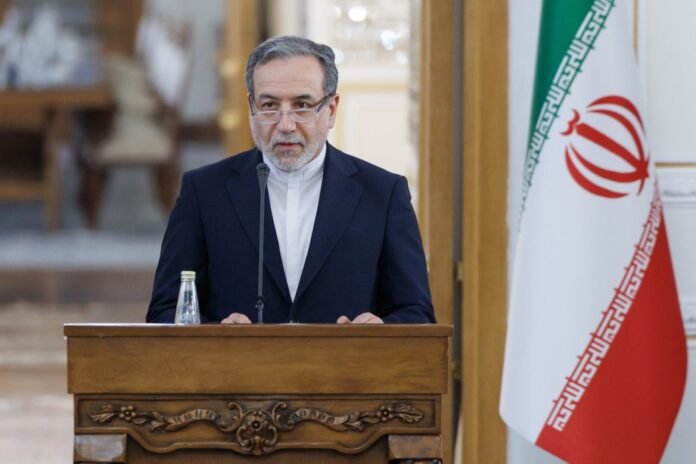
Iranian Foreign Minister Abbas Araghchi said Sunday that Tehran’s two-day proposal to end the war remains on the table, urging the White House to meet Iran’s conditions and warning of a military response if Washington resumes attacks, Anadolu reports.

“American voters have made their choice. Time for the White House to make its own,” Araghchi wrote on the US social media company X, referring to Tuesday’s US midterm elections.

“Our 2-day proposal stands: meet the requirements, including end to war on all fronts, and you will see results,” he said. He warned that if Washington chose war, Iran’s forces would “rain down hell.”

On Monday, Iranian Foreign Ministry spokesman Esmaeil Baghaei said that Tehran’s seven-step proposal, first put forward in September, remained the basis for indirect talks with Washington and had been condensed so it could be implemented within two days.

Qatar, which has been mediating between Washington and Tehran, denied reports Saturday that the two sides had failed to reach a deal.

READ: Trump says return to Iran war ‘highly unlikely’ if talks advance

Source: Iwpost.com

In California’s Central Valley, ICE Swung a Red District Blue

0
in-california’s-central-valley,-ice-swung-a-red-district-blue
In California’s Central Valley, ICE Swung a Red District Blue


In California’s Central Valley, some surprising voters lined up behind a progressive upstart: A law enforcement officer who calls for the abolition of ICE. A millennial who once voted for a Republican congressman. 

They found themselves among supporters of Randy Villegas, a Democrat who ousted longtime incumbent Republican Rep. David Valadao in a district dominated for decades by conservatives in California’s Central Valley. 

With Democratic victories across the nation, California’s 22nd Congressional District is the kind of historically red stronghold where progressive policies may find new purchase.

Villegas’s path to the general election mirrored that of other progressive candidates charting a new identity within the party. Running on policies such as Medicare for All, addressing affordability, rejecting corporate donations, and halting the flow of weapons to Israel, the 31-year-old defeated a moderate Democratic state assembly member backed by the party’s establishment in the June primary. 

Villegas’s opposition to ICE in a district that is 70 percent Latino or Hispanic marked the sharpest point of contrast with Valadao, who defended the Trump administration’s anti-immigrant campaign and famously uttered “It is what it is” on the debate stage last month when pressed on the issue. Valadao claimed “a lot” of the individuals captured by ICE in the Central Valley in recent weeks have criminal records, despite research showing the majority of those detained by ICE lack criminal convictions. 

It was Valadao’s stance on immigration that most animated Central Valley voters who spoke with The Intercept.    

“I’ve never seen him stand up to something I feel is egregious,” said Raul Castro, 53, a Fresno County probation officer who is upset with Valadao’s lack of willingness to oppose Trump on the ICE raids surging through the area in recent weeks. “I just don’t respect people like that.”

While standing on the front porch of his house in a middle-class suburb in northwest Fresno, Castro lamented ICE’s targeting of immigrants based on their appearance, language, or jobs. He spoke out against immigration agents pulling people from the street and into labyrinthine detention centers where civil rights advocates have reported a lack of access to basic necessities such as clean water and adequate healthcare. Though Castro once supported ICE, when asked whether he would support abolishing the agency altogether, he said yes. 

“If you asked me that same question, ‘Hey would you abolish ICE?’ I’d say, ‘No, ‘cause they’re doing things to make sure our country is safe. I want to live in a safe Fresno, safe county, safe city,’” Castro told The Intercept. “But now, wait a minute, maybe that’s not what I thought it was going to be.”

Villegas told The Intercept he wasn’t surprised to hear he had won the support of an anti-ICE law enforcement officer. 

“I don’t find it surprising because I think ICE has made it much more difficult for local law enforcement to carry out their jobs and their work — and everybody is seeing the indiscriminate profiling going on,” Villegas said at a Fresno park rally to support last-minute canvassing efforts.

Villegas himself does not support abolishing ICE but instead has called for wide-ranging reforms of the agency. The policy position makes Villegas somewhat an anomaly among his progressive peers, who are riding a wave of leftist energy into Congress, some of whom include “Abolish ICE” among their campaign platforms. 

While holding key endorsements from high-profile democratic socialists Sen. Bernie Sanders, I-Vt., and Rep. Alexandria Ocasio-Cortez, D-N.Y., Villegas has also rejected the socialist label, preferring “populist,” despite attempts by the Republican national party to weaponize the term against him. Unlike many of his fellow progressives, Villegas is also one of the few who is running in a historically red district. And he’s confident voters are not caught up in the ideological nuances and hopes to instead cut through them. 

“People are fed up with an agency who is unaccountable, people are fed up with a member of Congress who is unaccountable, who doesn’t even have public town halls,” Villegas said. “We deserve better than that in the Central Valley, and I think that’s why our messaging is resonating across the political spectrum.”

Such reach across the political spectrum is also evidenced in voters like Aram Easter, 33, who was born and raised in Fresno. He doesn’t vote in every election, but cast a ballot for Valadao a decade ago when his district previously covered Fresno, largely because he bought the vision of someone with local Central Valley roots (Valadao was born and raised in the nearby Hanford). He also agrees with some aspects of Trump’s agenda, such as building the border wall. But he drew the line on immigration enforcement.   

“You got people tearing people’s families apart,” Easter said. “My family immigrated here — I have Black and Mexican family — I’m not with them overly-aggressively doing it.” 

Since early October, ICE raids have become more prevalent in the region, with more than 200 people detained by authorities throughout the surge, according to the local newsroom Fresnoland. Similar upticks in ICE have taken place recently throughout the state, including Los Angeles and San Diego. Voter rights organizations in the Central Valley have taken notice and are viewing the raids as an effort by the Trump administration to suppress the vote, especially in a key race in the 22nd District. 

“This timing of the uptick in ICE is not a coincidence,” said Marisa Moraza, political director at PowerCA Action, which did independent expenditure work to support Villegas’s campaign. “It’s not a coincidence that this started at the beginning of October when voters received their ballots in the mail.”

The raids have also suppressed get-out-the-vote efforts, Moraza said. Last month, the group had to pause in-person canvassing operations for several days amid the surge in ICE activity, electing to instead do phone banking. 

The ICE activity is also keeping would-be voters from dropping off their ballots, as recent arrests of U.S. citizens struck fear among voters, said Cirilo Ordaz, a canvasser with PowerCA Action supporting Villegas. 

“With going out to vote, I think a lot of them haven’t done it yet because of that fear,” said Ordaz, who was one of dozens of Villegas supporters who fanned out across the region on the Monday before Election Day to urge residents to vote.

Sylvia Ramirez, another Fresno native canvassing with PowerCA Action said she’s noticed far fewer people outside in recent weeks, including a lack of crowds at the popular annual event Big Fresno Fair. For voters, she and her group offer to drop off people’s ballots for them if the fear is keeping them inside. 

“Offering the services of dropping off a ballot for somebody really helps out with the fear that people have of leaving their houses,” she said, adding that she has told her family to stay at home as much as possible in recent days to avoid interactions with ICE.

The Central Valley, known for its significant agriculture production, has been the seat of high-profile Republican lawmakers, such as former Rep. Devin Nunes and former House Speaker Kevin McCarthy. 

But after a Democrat-led redistricting in the state last year in response to Texas’s partisan redistricting effort, the district now includes the northwest sections of Fresno, a city with more Democrats. Voters told The Intercept they were excited about Villegas’s promise to address cost-of-living issues, such as advocating for Medicare for All. The policy message has proven salient for a district in which 67 percent of its residents rely on Medi-Cal, the state’s Medicaid. The area has seen dramatic cuts in funding ($30 billion annually across the state’s healthcare sector) due to the Trump administration’s One Big Beautiful Bill.

“I live in the Valley and my Medi-Cal was slashed and I have to pay for medications out of pocket,” said Ordaz, who had heard the same from voters. One voter was forced to pay as much as $1,000 for their insulin. 

Castro, the probation officer, said he’d voted early for Villegas and noticed residents looking at him with concern while on the job in uniform, showing up at areas where ICE had previously conducted raids. It’s a fear he acutely understood. As a child, he lived in labor camps with his mother and father, who were both undocumented immigrants working in Fresno as farm laborers. He recalled similar indiscriminate sweeps by Border Patrol in the 1970s. 

“When I was small, back then it was Border Patrol, and they used to show up in a van,” Castro recalled. “All the agents used to get out and run after these guys. And they used to round them up and take them out,” he said. 

Seeing video and hearing of recent ICE raids targeting farmworkers in the area conjured such painful memories.

“I never thought I’d see that again,” he said.  

Update: November 4, 2026, 4:09 p.m. ET
This story has been updated after The Associated Press called California’s 22nd Congressional District for Randy Villegas.

Source: Iwpost.com

As the Colorado River shrinks, calls to drain Lake Powell grow

0
as-the-colorado-river-shrinks,-calls-to-drain-lake-powell-grow
As the Colorado River shrinks, calls to drain Lake Powell grow
This story was originally published by Yale Environment 360 and is reproduced here as part of the Climate Desk collaboration.​​

The 27-year-long drought in the Southwestern U.S. — the longest dry period in the last 1,200 years — is taking a serious toll on the flow of the Colorado River. Climate change is shrinking the snowpack in Colorado’s Rocky Mountains, the source of roughly 80 percent of the river’s annual flow, and higher temperatures are melting the snowpack earlier in the year, which saps runoff in late summer and fall. Warmer weather is also increasing evaporation from the river’s 40 reservoirs, including its two largest — lakes Powell and Mead. 

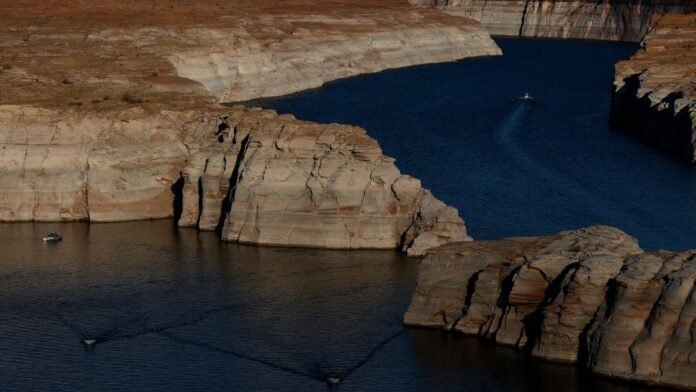
Last month, Lake Powell, on the Utah-Arizona border, reached a record low, at less than 150 feet above dead pool, the point at which water can no longer flow through the Glen Canyon Dam’s bypass tubes to reach Lake Mead, behind Hoover Dam, 300 miles downstream. The low water levels reduced the generation of hydropower from both reservoirs, complicated how riverine ecosystems are managed, and slashed deliveries of water to the Lower Basin states of Arizona, California, and Nevada. 

Farmers are fallowing fields. Developers in some areas have paused housing construction for lack of guaranteed water supplies. And the Bureau of Reclamation has curtailed its “environmental flows” — releases of cold water from Powell — which is threatening protected fish and preventing the buildup of sandbars that provide habitat for wildlife in the Grand Canyon. No matter how the river is managed going forward, observers say, ecosystems both downstream and up will see significant changes. 

Faced with the prospect of even lower Colorado River levels, the federal and state governments have been scrambling to come up with ways to meet the competing demands of disparate interests that rely on its flow, from topping off Lake Powell with water diverted from upstream reservoirs, to slashing downstream water deliveries by 40 percent, to paying farmers to keep their allocations of water in the river. The crisis is even causing some to consider a fix once deemed unthinkable: draining Lake Powell entirely.

When the Glen Canyon Dam was built in the 1960s, proponents hyped its benefits: cheap hydropower, subsidized water for cotton and alfalfa growers, real estate on the new lakeshore, and a playground for boaters. But detractors bemoaned the drowning of Glen Canyon itself, a red rock labyrinth of gorges, spires, cliffs, and grottoes that conservationists described as even more beautiful than the Grand Canyon. 

Read Next

Over the decades, some environmental advocates have argued for removing the Glen Canyon Dam and restoring the canyon, but the idea was always dismissed as too expensive and, because it would wipe out power generation, wildly impractical.

Now, a more tempered approach is gaining support, with groups like the Glen Canyon Institute arguing not to remove the dam but to drain Lake Powell through new diversion tunnels that would be drilled below the existing bypass tubes, close to the riverbed. The upsides, say advocates, would be manifold. The water would boost hydropower production in Lake Mead. The stunning formations of Glen Canyon and sites sacred to Indigenous people would reemerge. Wildlife would return, and riparian habitat above and below the dam site would eventually be restored. The plan is called Fill Mead First.


For more than four decades, the Glen Canyon Dam was considered a huge asset to the river basin, said Eric Balken, executive director of the Glen Canyon Institute. But it’s now “becoming a liability because it might actually prevent water from flowing downstream. All of the core assumptions around the dam have been turned on their head.”

That’s because of the dam’s structural limitations. If the lake drops below minimum power pool, its penstocks — the large pipes that send water to the dam’s eight turbines — will be left stranded, high and dry. Lake water will instead be released through bypass tubes, which sit below the penstocks but have less than half their capacity to discharge water.

These tubes were not built for sustained long-term use, and sending high volumes of water through them could cause vibrations, scouring, and other effects that could cause irreparable damage to the dam. While the Bureau of Reclamation has long warned about relying solely on the bypass tubes to release water, after inspecting and relining them in 2025 it said they might work if needed. But another challenge will remain: Relying on the narrow tubes will make it harder for Upper Basin states (Colorado, New Mexico, Utah, and Wyoming) to meet their delivery obligations to Lower Basin states and, by international agreement, Mexico.

Aerial view of a dam

The Glen Canyon Dam. DEA / S. AMANTINI / Getty Images

Allowing more water to flow through the Glen Canyon Dam — by draining the lake through the existing bypass tubes and newly drilled diversion tunnels near the riverbed — is no longer dismissed out of hand. “That conversation has evolved,” said Kathryn Sorensen, director of research at the Kyl Center for Water Policy at Arizona State University. 

Lower release structures, said Jack Schmidt, director of the Center for Colorado River Studies at Utah State University, are “an utterly reasonable idea” and should be part of the discussion. As for Powell’s potential loss of hydropower, proponents of dam removal say those megawatts could be replaced with solar power. The new Gemini solar plant near Las Vegas has a capacity of 690 megawatts; the Glen Canyon Dam currently has a capacity of around 730 megawatts. 

Read Next

The Lower Basin states, which primarily take their water from Lake Mead and are seeing their allotments held back to prop up Lake Powell, have urged the federal government to consider modifying the dam with lower outlets rather than cutting back on deliveries, as the Biden administration ordered in 2024. 

“Addressing the infrastructure limitations may be the one long-term measure that would best achieve operation and management improvements to the Glen Canyon Dam,” representatives of the Lower Basin states wrote to Interior Secretary Doug Burgum last year.

Draining Lake Powell completely “could [annually] reduce evaporative losses by a couple hundred thousand acre-feet,” said Sorensen: Experts say 11 percent of the water in the reservoir is lost to evaporation each year. “On a river that is much smaller than anyone expected, that water really matters,” she said. But while the Glen Canyon Institute plan is gaining some traction, she added, “it faces a lot of obstacles.”

One of those obstacles is the federal government, which did not even consider the possibility of draining Lake Powell as an option in its recent environmental impact statement — finalized in August — which addressed ways to manage the Colorado over the next 10 years. 

Officials in Page, Arizona, which has a thriving water-based recreation industry, have also opposed draining the lake. The BlueRibbon Coalition, which represents off-road and motorized outdoor recreation, leads the opposition. It has put forward a model bill called the Colorado River Abundance Act, which would supply treated water to Lower Basin states, allowing more water to be retained in Lake Powell. The treated water would come from nuclear-powered desalination of seawater and briny water and through “advanced water reuse,” in which wastewater is cleaned with filter technologies, at an estimated cost of $40 billion. 

Another obstacle is time: New diversion tunnels would likely take a decade to study, design, and build. And the price tag could be in the billions.

Trees that had been submerged in Lake Powell pop up out of the water as the water levels recede

Long-drowned cottonwood trees in Lake Powell have resurfaced as water levels have dropped. Carolyn Cole / Los Angeles Times via Getty Images

The Colorado’s reduced flows are, meanwhile, taking a toll on riverine ecosystems, which scientists call “novel” because they have been radically altered by 70 years of human activity — most significantly by the elimination of seasonal flooding. For a number of reasons, including low lake levels, the Bureau of Reclamation has canceled many environmental flows from the Glen Canyon Dam in recent years, depriving the Colorado of a large pulse of sediment, which is a part of the river’s natural ecology. The flows rebuild sandbars and beaches used by boaters in the Grand Canyon, and they create shallow-water habitat for threatened and endangered native fish.  

The bureau also occasionally releases cold water from the dam to lower the river’s temperature and keep invasive, warm-water-loving bass from taking up residence in the Grand Canyon stretch and displacing native fish. But because of the drought, which is already reducing hydroelectric production, those releases have also been curtailed.

Draining the lake completely would allow Glen Canyon to recover as the river flushes out built-up sediment, experts say. Native cottonwoods and willows would take root and help push out invasives, like tamarisk. River otters, beavers, birds, and amphibians would return to the canyon. And the drowned red rock arches, natural bridges, amphitheaters, and waterfalls would gradually emerge from the muck, along with thousands of sites sacred to Native Americans. 

A shift in the hydrological regime would also have profound effects on hundreds of miles of river ecosystems below Glen Canyon Dam, including in the Grand Canyon. “It would change in ways that are only partially predictable,” said Schmidt. “Suddenly the river would have great fluctuations. The river would have much more sediment. The river would be much more turbid.” A refugium of native fish, the Grand Canyon would suddenly be swamped with non-native fish, many of which were introduced into Lake Powell for sport fishing. “It just keeps getting more complicated,” Schmidt acknowledges. “It’s all a trade-off in this screwy manmade world.”

For now, Fill Mead First remains a pipe dream, one that’s getting a lot more attention as river levels continue to drop and global temperatures rise. The federal government will ultimately decide the Glen Canyon Dam’s future, but Eric Balken, for one, thinks a new regime is long overdue. Propping up Lake Powell is “kicking the can down the road,” he said. “But they are running out of road.”


Source: Iwpost.com

As Texas Turns Blue, Muslim Cleric Tells Jewish Community: ‘We Have Your Back’

0


After a Holocaust education visit to Israel, Imam Marzuq Jaami says interfaith alliances can help counter antisemitism and bridge political divisions

After more than three decades of Republican dominance in Texas, Democrats scored a historic victory in last week’s midterm elections, raising questions about what the political shift could mean for the state’s Jewish community and its longstanding support for Israel.

At a time when parts of the Democratic Party have moved further to the left and become increasingly critical of Israel, the shift could make some Jewish Texans nervous about what lies ahead in a state where they have long felt comfortable, in part because of the strong support of the Christian Right.

Texas has been one of the most supportive states of Israel. In 2017, it passed legislation restricting state contracts and investments involving companies that boycott Israel. Texas officials have also regularly visited Israel and established trade and institutional ties, including agreements with the Samaria Regional Council in the West Bank.

But at least one Muslim cleric says Jews in Texas have nothing to worry about because support for the Jewish community is not about Democrats or Republicans, but about faith.

“We have your back,” Imam Marzuq Abdul Jaami, a member of the Thanks-Giving Square Interfaith Council and a founder of Friendship Among Faiths, told The Media Line.

Jaami, who lives in DeSoto, Texas, near Dallas, was in Israel last week on a mission organized by Sharaka, an organization that promotes relations between Israel and the Arab and Muslim worlds.

“We want to let you know we’re here for you. You’re not in this alone. We have to keep working together to strengthen the human spirit,” he said.

We want to let you know we’re here for you. You’re not in this alone. We have to keep working together to strengthen the human spirit.

Jaami became involved with Sharaka several years ago after meeting current co-chairman, Dan Feferman. Since then, he has participated in several missions with the organization, including visits to Morocco and Israel. He also joined the March of the Living to visit former Nazi concentration camps.

Last week, he returned to Israel on another Sharaka mission, this time in collaboration with Yad Vashem, to deepen his understanding of the Holocaust.

Jaami said that no matter how much antisemitism rises in the United States and around the world, Muslim leaders like himself are determined to assure Jews that “this will never happen again, because now we have a bigger force to make sure that it don’t happen again, and I want them to know that in America too.”

He said his teacher had taught him that Jews, Christians and Muslims are all people of the book and that Muslims do not need to convert followers of other monotheistic faiths.

“Jews and Christians are your brothers and sisters in faith,” he recalled learning, adding that “Abraham, our father, he connects us, and we can never be disconnected.”

Jews and Christians are your brothers and sisters in faith. Abraham, our father, he connects us, and we can never be disconnected.

When he became involved with Sharaka, he said, he discovered how those teachings could be put into practice.

Alyssa Annis, Holocaust education program manager for Sharaka, told The Media Line that the organization had brought four Muslim leaders, two from Texas, one from the United Kingdom and another from Morocco, to participate in an interfaith seminar at Yad Vashem. She said the goal was to engage them in dialogue about the importance of Holocaust education and equip them to share what they learned with their communities.

The participants had taken part in previous Sharaka programs, Annis said. The seminar gave them an opportunity to deepen their knowledge, ask questions, and prepare to share what they learned when they return home. “We want them to take this knowledge on the Holocaust and really spread it to as many people as possible,” she said.

Amit Deri, co-founder and chairman of Sharaka, said the organization sees its work with Muslim leaders as an important way to build bridges between communities.

“Sharaka is proud to work alongside Muslim leaders from across the Western world to strengthen connections between Israel and the Arab and Muslim world. Through partnerships with influential voices such as Imam Marzuq Jaami, we can reach diverse communities and share the importance of the Abraham Accords, promoting dialogue, and people-to-people connections,” Deri told The Media Line.

For Jaami, the visit was eye-opening. He said he had wanted to better understand what caused the Nazis to hate Jews and how that hatred developed over time. After visiting Yad Vashem, he said, he had a clearer understanding of how the history unfolded and how antisemitic narratives evolved.

He plans to bring those lessons back to the interfaith council in Texas, where he has been working to strengthen relationships among religious communities. “The interfaith council makes Texas a kinder place,” Jaami told The Media Line.

He believes that when Jews, Muslims and Christians work together, they can teach their children to be kinder, helping to create a more compassionate next generation.

As an example, he pointed to Dallas Kindness Week, a celebration of unity, compassion, and community that he said grew out of the council’s work. During the event, children compete to see who can perform the most acts of kindness.

He said he was confident that people of different faiths would turn out to support the Jewish community if a synagogue were attacked.

“It’s easier for the Jewish community because now they got allies,” Jaami said. “At first, they didn’t have that many allies, but now they have allies.”

But can that spirit of cooperation survive in a country where the political Right and Left continue to move further apart and hatred spreads rapidly across social media?

Jaami believes it can.

He said interfaith cooperation would succeed as religious communities increasingly came together to demonstrate that their beliefs and their treatment of others could enable them to live in peace. “I don’t care what comes up now, after these midterms, we can fight it.”

For Jaami, the answer to political division and rising anti-Semitism is to continue building relationships across religious and political lines, regardless of who holds power.

He pointed to the Prophet Muhammad’s relationships with Jews and Christians as an example of the alliances he believes religious communities must preserve.

“The Prophet Muhammad … made allies with the Jewish community. He made allies with his Christian brothers and sisters. We need to keep together these allies … I want to remind you, we are all connected.”

Source: Iwpost.com

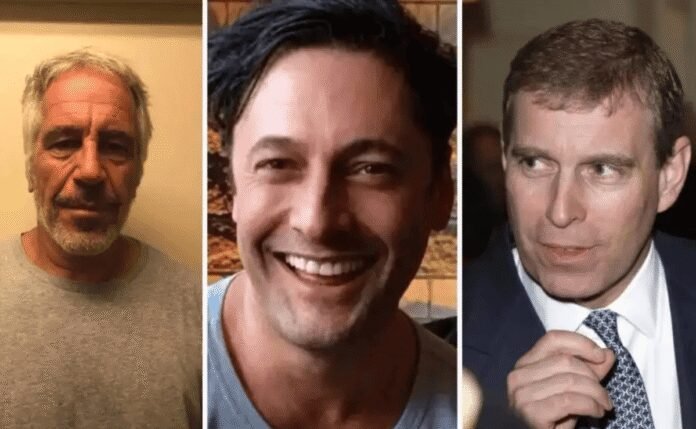
Prince Andrew and Epstein Whistleblower Found Dead in Thailand

0
prince-andrew-and-epstein-whistleblower-found-dead-in-thailand
Prince Andrew and Epstein Whistleblower Found Dead in Thailand


A British whistleblower who exposed alleged financial dealings involving former Prince Andrew, Jeffrey Epstein and powerful American business figures has died in Thailand, raising fresh scrutiny over the treatment he received after speaking out.

Simon Andriesz, 57, died on September 23, just months after publicly revealing information about a proposed $1.3 million arrangement involving Andrew Mountbatten-Windsor, the disgraced former Duke of York.

His family confirmed that he died by suicide and said there was no indication of foul play. However, his death has prompted British lawmakers to demand answers about how financial regulators handled his allegations and his repeated claims of retaliation.

Andriesz, a former senior executive at financial brokerage BGC Partners, became a prominent whistleblower after uncovering documents connecting Jeffrey Epstein to Howard Lutnick, President Donald Trump’s commerce secretary and the former head of BGC.

In a July interview with the BBC, Andriesz also revealed details of an alleged 2013 proposal involving Andrew, who had previously served as Britain’s special representative for international trade and investment.

According to Andriesz, the arrangement involved a £1 million loan, worth approximately $1.3 million, that would have helped secure access to Andrew’s influential contacts and potentially attract wealthy investors.

Andriesz described the alleged proposal as an effort to “buy a prince.” BGC told the BBC that the proposed business venture never went ahead.

The revelations added another layer to the controversy surrounding Andrew, whose longtime friendship with Epstein has already cost him his royal titles and public duties.

Andrew was arrested on February 19, 2026, his 66th birthday, on suspicion of misconduct in public office. Investigators are examining allegations that he shared confidential information with Epstein while serving as Britain’s trade envoy between 2001 and 2011.

The former royal was released without charge but remains under investigation. He has consistently denied wrongdoing connected to Epstein.

In another dramatic development, Andrew secured a legal victory on October 8 when Britain’s High Court determined that warrants used to search his properties at Sandringham and Windsor had been unlawfully issued.

The ruling did not end the criminal investigation. A further hearing is expected in 2027 to determine whether investigators can retain evidence seized during the searches.

Meanwhile, Andriesz had spent years fighting to have his own allegations taken seriously.

Before his death, he accused Britain’s Financial Conduct Authority of failing to adequately address his concerns about alleged misconduct and retaliation following his whistleblowing activities. BGC denied retaliating against him and maintained that it had strong protections for whistleblowers.

Andriesz publicly described the devastating personal consequences of his efforts to expose wrongdoing, saying the experience had taken an enormous toll on his family, finances and well-being.

His death prompted members of Britain’s Parliament to demand an independent examination of how regulators treated him.

The Financial Conduct Authority has since commissioned a review of its handling of Andriesz’s disclosures, including whether it fulfilled its legal obligations to protect whistleblowers.

On November 2, the regulator announced that the review would cover interactions dating back to at least 2017, with a progress update expected in January 2027 and final findings anticipated in spring 2027.

The controversy has also renewed attention on the powerful figures named in documents released from the Epstein investigation, including business executives and members of the British royal family.

Although Andriesz’s family has ruled out suspected foul play, his death has left serious questions about whether his warnings were adequately investigated and whether authorities did enough to protect him.

For Andrew, the fallout from his association with Epstein is far from over. And for British regulators, the death of a whistleblower who spent years trying to be heard has created a separate scandal that now demands answers.

Source: Iwpost.com

Palestinian journalist released from Israeli detention condemns arrest as ‘political pressure’

0
palestinian-journalist-released-from-israeli-detention-condemns-arrest-as-‘political-pressure’
Palestinian journalist released from Israeli detention condemns arrest as ‘political pressure’
Palestinian journalist Abdulkader Abu Shehadeh urged solidarity against political pressure targeting journalists and activists after Israeli authorities released him from detention on Sunday, Anadolu reports.

Israeli police and the Shin Bet domestic security agency arrested Abu Shehadeh at his home in Jaffa on Nov. 4.

Authorities detained Abu Shehadeh on suspicion of “communicating with a foreign agent” following an interview he conducted with Palestinian thinker Azmi Bishara regarding Israeli elections and the situation of Palestinians.

Rejecting a police request for an eight-day extension, the Tel Aviv Magistrate’s Court ordered his detention until Nov. 8, leading to his release on Sunday without charges.

Following his release, residents, activists, and civil society representatives welcomed Abu Shehadeh at the Jaffa Arab Affairs Association.

Addressing the crowd, Abu Shehadeh said Palestinians would not yield to fear.

READ: Palestinian journalists urge medical evacuation for colleague in intensive care in Gaza

“History didn’t start with us, nor will it end with us. We are part of a people, a cause. We demand justice, our rights, and equality for all,” he said.

Stressing the desire to raise children without fear, he added: “We see those across from us as human beings, not as numbers. All we want is justice, for no one to be seen as superior to another.”

Speaking to Anadolu Agency, Abu Shehadeh credited the solidarity of the Jaffa community for providing him strength during his detention. He described his arrest as part of a broader systemic issue.

“The attack on me is not an isolated event. This attack is part of political pressure on activists, journalists, and anyone who doesn’t fit the mainstream narrative dominated by the extreme right,” he said.

Abu Shehadeh urged an end to the rhetoric of war and called on journalists and intellectuals to focus on building a future rooted in democracy, peace, and equality.

READ: Washington condemns violence in West Bank after US journalist attacked by Israeli occupiers

Source: Iwpost.com

The Pressure on LA’s First Socialist Mayor

0


On paper, the second-largest city in the country has its first democratic socialist mayor. 

Los Angeles City Councilmember Nithya Raman declared victory on Thursday over the embattled incumbent Karen Bass, joining a list of socialist mayors who have risen to power in recent years, including Zohran Mamdani in New York; Seattle’s Katie Wilson; and most recently Janeese Lewis George in Washington, D.C., who won in a landslide this week. 

Raman, however, did not campaign unabashedly as a socialist. Though she ran as an endorsed member of the Democratic Socialists of America’s Los Angeles chapter, the national DSA threatened to override the local chapter and rescind the endorsement over concerns around her stances on Israel and Palestine. 

Unlike her counterpart in New York, to whom she draws most comparisons, Raman did not make sweeping socialist promises, such as free public transit, universal childcare, or taxing the rich. Instead, she focused on what’s wrong with the city. Riding a wave of resentment for Bass’s alleged mismanagements of the Palisades fire and the Lineage Logistics warehouse fire in Boyle Heights, Raman talked about filling potholes, fixing street lights, and making roads safer for pedestrians and cyclists.

In addition to DSA-LA support, she earned the endorsements of popular anti-corruption City Controller Kenneth Mejia and Unite Here 11, a major local hospitality workers union, whose large membership canvassed for her in the general. But she lacked endorsements from most key labor groups and social justice nonprofits, and the organizing base they provide. Her fellow DSA members on the Los Angeles City Council all pulled for Bass, forcing Raman to battle back the perception that she struggles to build coalitions.

While Mamdani, 10 months into his term, now finds himself under pressure from New York’s left for refusing to fire NYPD’s police commissioner, his massive base of organizer support offers a buffer to criticism. Raman won over the city’s voters, but it’s not clear how much time that will buy her to tackle the city’s most vexing problems once she takes office.

“Folks in New York are willing to cut Mamdani more slack on the movement side, because he was one of them on a bunch of issues,” said David Levitus, executive director of LA Forward, a progressive nonprofit that endorsed Raman in the general election.
”I think Nithya” — who did not come from the ranks of DSA organizing like Mamdani — “has more skepticism from parts of the left because of that.”

Raman will face scrutiny from LA’s progressive left on a host of issues: bloated police department spending amounting to roughly a quarter of the city’s nearly $15 billion budget; fear of collaboration between ICE and law enforcement agencies; the 2028 Olympics prompting an expansion of surveillance; rising homelessness; and failing infrastructure.

Weeks before the November election, Raman seemed less concerned with movement-based allegiances or ideological labels, saying she is “a capitalist and I’m also a democratic socialist.” Before the primary in June, she said she was “one of the most independent voices in City Hall” when asked about her membership with DSA. The statements and her votes in city council have prompted intense debate among DSA-LA’s members over whether Raman holds up to democratic socialist ideals.

While most Angelenos do not care about such fine distinctions, Raman’s measured embrace of socialist mantle has created among some activists the perception of a more responsive audience in city hall compared to previous administrations. Yet to others on LA’s progressive left, Raman’s ideological elusiveness reads as political unreliability.

“I don’t think Nithya Raman is accountable to anyone in the movement,” said Kris Rehl, an activist who volunteered for Raman during her 2020 city council run and now runs the mutual aid group LA Street Care. “If you do not subscribe to any ideology, you can’t be held accountable to it.” 

Rehl, who advocates for abolishing anti-camping bans that criminalize homeless encampments near schools and daycares, expressed dismay over Raman’s previous votes on expanding the police department despite running on defunding the police in 2020.

Others like Tal Levy, a member of DSA-LA’s electoral politics committee, remain more optimistic about what Raman can deliver as mayor. While DSA-LA is pushing for reallocating funds from the police budget into social services, Levy sees the value of Raman’s pledge to support LA Forward’s initiative of citywide expansion of unarmed crisis response teams, which divert certain 911 calls to teams of social workers and clinicians, rather than police.

“Even if Nithya were a fire-breathing abolitionist, it would still be a long fight to make those changes,” said Levy, who has been organizing with DSA-LA for nearly a decade. “But I believe there is plenty of room for us to make material wins in the short term.”

Room to Push

While there is debate over how much power DSA-LA has within LA’s political landscape, the group provided Raman additional attention and credibility among leftist voters, which was only bolstered by the successes of other DSA-endorsed candidates in New York and in congressional races across the nation.

The DSA’s National Political Committee, however, spurred one of the biggest public rifts during Raman’s campaign. The committee held a vote to un-endorse Raman over her perceived lack of support for the Palestinian-led Boycott, Divestment, and Sanctions movement, which hadn’t been included by the DSA-LA on its endorsement questionnaire. After a week of debate and dueling resolutions, and an email from Raman, in which she wrote, “the best way for working Angelenos to stand in solidarity with Gaza is through non-violent protest, legislative action, and diplomatic pressure, including BDS,” the national committee decided against rescinding its endorsement of Raman by a narrow margin.

Frances Gill, one of three DSA-LA members on the DSA national political committee, voted against rescinding the group’s endorsement. She opposed the idea of alienating the organization’s second largest chapter as “bad organizing and bad leadership,” especially in a high-profile race when the stakes for the regional and national chapters were so closely intertwined.

“The public ties us to one another,” Gill said of the DSA and Raman, “and there’s not a lot of other key players who have also played such a critical role in her being able to win. So I think that gives us an outsized seat at the table.”

She was a part of the faction among national leadership that instead called for a long-term pressure campaign on Raman on the issue of Israel and Palestine. The group is planning to push Raman on what she can do as mayor to halt the transportation of military hardware that makes its way through the Los Angeles International Airport to Israel. Organizers also plan to call for an end to real estate events in LA facilitating the sale of housing illegally built in the occupied West Bank. They will also examine whether the city itself is invested in companies that are profiting off Israel’s genocide in Gaza and apartheid rule of Palestinians.

“I think there is room to push,” Gill said.

Another major public spat between progressives and Raman took place in January before she announced her candidacy for mayor. 

Catching housing advocates by surprise, Raman introduced a motion to reform the city’s “mansion tax” to make exemptions for developers. Raman claimed that the tax, known as Measure ULA, was inadvertently preventing construction of new multi-family housing. Organizers opposed the idea, since the tax generates funds for services to support existing affordable housing and keep people housed, and that carveouts for developers would only fuel displacement of low-income renters, possibly pushing more people to the streets.

LA Forward was among those blindsided by the motion, which she eventually withdrew. Before endorsing Raman, Levitus and the group met with the candidate alongside organizers in an activist’s home. 

“She talked about, ‘The times when I’ve succeeded, it’s because I built a coalition, the times when I failed, it’s because I didn’t, and I didn’t bring people along,’” Levitus recalled from the July meeting. “She really owned her mistake. I don’t know how much her mind has changed intellectually about the policy, but think clearly she recognizes that she needed to do something different — and that might lead to her pushing for a policy that is different from what she had pushed for before.”

Police Chief Dilemma

Among Raman’s early tests progressives will be watching for is how she fulfills her pledge to fire LAPD police chief Jim McDonnell. Raman was among the councilmembers who approved his appointment in 2024, despite concerns around his track record of collaborating with ICE as LA County sheriff. She has since said she would fire McDonnell over his response to the ICE raids and his refusal to enforce a state law that banned federal agents from wearing masks.

Yet the pledge to replace McDonnell may present a political quagmire for Raman, given that the mayor in LA cannot unilaterally force out a police chief. The city’s police commission, consisting of five civilians appointed by the mayor, must make that decision. Raman first will need to assemble her own commission, but that process also requires approval from a city council that remains largely supportive of the police department. 

William Gude, a vocal police accountability advocate who supported Raman in the election, said he planned to push the mayor to circumvent the process by asking McDonnell to resign. “I’m putting pressure on her from day one,” he said. “There’s some promises that she made, and those promises need to be kept.”

In her first press conference as mayor-elect, Raman sidestepped a question about whether she still planned to fire McDonnell, amid public threats from the police union warning of “Armageddon.” “Public safety is the most important service the city is delivering to its people,” said Raman, noting the chief was one of her first phone calls after winning. 

Activist pressure could be a burden for Raman — or a tool she could use to force legislation through a city council she knows well, according to Gude. “Does she want to have activists coming after her, also while battling 15 council members?” said Gude, who goes by @FilmthePoliceLA on social media. “Or would she rather have the activist base going after the council members that are coming after her, to create a buffer, to do a lot of her heavy lifting? It’s a choice she has to make.”

Hamid Khan, who heads the Stop Spying LAPD Coalition, is among those who is closely watching who Raman appoints to her police commission. But he sees Raman’s pledge of firing McDonnell as “a band-aid” for the more glaring structural issues of the department. While crediting Raman’s opposition to automated license plate readers from Flock Safety and Axon, Khan also pointed to Raman’s historic support for expanding the police department.

While in city council, Raman voted to expand LAPD’s budget three times: in 2021, 2022, and 2023. But she also voted against police raises in 2023, and this year, she opposed a plan by Bass to hire 170 more officers. She has said on the campaign trail she does not wish to expand the police budget, but also said she would not cut into it either.

In the span of her time in city council, the LAPD has expanded its surveillance reach, Khan said. The department is slowly unrolling its Real-Time Crime Centers, which meld automated license plate reader technology, social media monitoring software, and CCTV cameras into a constant surveillance tool. He warned such a technology, while marketed to curb retail theft, will disproportionately harm Black and brown Angelenos. 

“We have to situate the people’s expectations in Los Angeles that they’re not based upon the comment, ‘I’m gonna fire Jim McDonald,’” said Khan, who advocates for abolishing the budding police outposts. “What does that do? The fundamentals still remain the same.”

A True Outsider

There is a notion among some on the left that Raman is very much a part of the political machine that bred some of LA’s ongoing problems. She has served on city council for five years and was an ally to Bass, having endorsed Bass just weeks before jumping in the race herself. Yet Raman, a Harvard-educated urban planner and former entertainment director of Time’s Up, is in many respects an outsider to the political establishment. 

Former City Councilmember Mike Bonin called Raman’s victory a “reordering of the governing class in Los Angeles.” For the past several decades, LA politics has been run by establishment Democrats, such as Bass or her predecessor, Eric Garcetti, son of a former LA County district attorney; the chambers of commerce; lobbyists; longtime city hall staffers; all riding the influence of homeowners.

For Lex Steppling, an organizer with Los Angeles Community Action Network and a critic of Raman’s time in city council, the “political recalibration” with her victory in city hall was a welcome sight.

Steppling grew up in a generation of LA political activists who got their start organizing with Community Coalition, which Bass founded in 1990 and for a long time was the only progressive organization in the city offering paid political work. He watched as his peers grew to leading campaigns on issues such as policing and mass incarceration, then began running for elected office. They brought with them their organizing chops, but also their relationships with the organizations that gave them their start. Steppling described this as a “relational ecosystem,” in which movements would be co-opted into electoral politics — in which scoring political points became more important than addressing the issues.

He blamed the lack of gains on policing and mass incarceration since the 2020 George Floyd uprising on such a relational ecosystem. A victory for Raman could mark a reset to such an establishment, and he hopes activists will capitalize on the opening.

“The right kind of openings to do the right kind of work will reemerge,” said Steppling, who helped lead a successful anti-incarceration measure in 2020. “It’s gonna once again start to be about the demands.”

Raman’s election evoked for Bonin memories of the last time an LA incumbent mayor was ousted. In 2005, then-state Assembly member Antonio Villaraigosa beat James Hahn, becoming the city’s first Latino mayor. Villaraigosa, previously director of Southern California ACLU, was seen as a progressive candidate at the time. That’s not how he governed. An early sign of his establishment politics was hiring a longtime political insider as his chief of staff.

Raman will also signal her governing priorities with the hires for her transition team and cabinet. 

Some organizers were encouraged to see progressive figures added to her campaign, such as Faizah Malik, a civil rights attorney and former city council candidate also endorsed by DSA-LA, and Jamie York, an advocate for greater transparency in city politics whose high-profile rejection by the city council as an ethics commission appointee drew public scrutiny. It remains unclear what if any role they would play in city hall. 

The LA Times reported that Rick Cole, former deputy mayor, is expected to supervise Raman’s transition team alongside Andrea Conant, Raman’s chief of staff in city council.

“How big is the table,” Bonin said, “and how much of the activist community is at the table?”

Source: Iwpost.com

At Suez War Memorial, Herzog Says Military Victory Is Not Enough, Katz Sounds Alarm Over Iran’s Nuclear Threat 

0
at-suez-war-memorial,-herzog-says-military-victory-is-not-enough,-katz-sounds-alarm-over-iran’s-nuclear-threat 
At Suez War Memorial, Herzog Says Military Victory Is Not Enough, Katz Sounds Alarm Over Iran’s Nuclear Threat 


President Isaac Herzog called for Israel to translate military victories into lasting political and security achievements, while Defense Minister Israel Katz warned that Iran was renewing efforts to acquire nuclear weapons, during a state memorial ceremony for soldiers killed in the 1956 Suez War. 

Speaking at Mount Herzl in Jerusalem, Herzog drew lessons from Operation Kadesh, Israel’s military campaign in the Sinai Peninsula, emphasizing that battlefield success alone cannot guarantee long-term security. 

“The moves that led to the Sinai campaign taught us that the decisive victory on the battlefield, as important as it may be, is not the end of the matter. That even after the rifles fall silent, leadership is required. Responsibility. And the ability to translate military achievements into a better political and security reality is required.” 

Herzog also urged Israelis to maintain national unity despite internal disagreements. 

“Today as well, alongside military strength, great responsibility is required of us for Israel’s future. Our national resilience is not tested only by our ability to stand against our enemies. It is also tested by our ability to stand side by side with one another.” 

Katz focused on the Iranian nuclear threat, warning that Tehran’s ambitions continued to endanger Israel. 

“Iran is seeking to renew its efforts to obtain nuclear weapons, alongside other serious efforts that pose a real danger to the State of Israel. We cannot accept these threats,” he said. 

“It is our duty to be prepared for every scenario and to act as necessary to protect Israeli citizens. Ahead of the major missions still before us, we must be united,” Katz added. 

He warned that Israel’s adversaries “need to know that even when we have disagreements among ourselves, we stand together, determined and united, against those who threaten our existence.” 

Operation Kadesh began October 29, 1956, with Israel’s invasion of the Sinai Peninsula, coordinated with secret British and French backing. Israeli forces captured the Sinai Peninsula and Gaza Strip during the campaign, aimed at ending border raids and reopening the Straits of Tiran. 

The annual commemoration takes place at Mount Herzl, Israel’s national military cemetery. 


Source: Iwpost.com

0FansLike
0FollowersFollow
0FollowersFollow
0SubscribersSubscribe
- Advertisement -
Google search engine

Recent Posts