7.3 C
London
Sunday, November 8, 2026
Home Blog

Democrats, Don’t Mess This Up

0


For two years, Donald Trump’s Republican Party has worked to push the United States further and further into a state of fascist rule. Trump’s regime has turned the federal government against ideological enemies, enriched and entrenched the power of billionaire allies, and done its utmost to decimate any checks and balances on the actions of the despotic leader and his loyalists.

It is, then, an extraordinary and overdue moment of relief to see the processes of democracy — however flawed in our barely representational system — offer the opportunity to take an off-ramp away from technocapital-backed fascism. Across the nation, Democrats secured historic victories. Even in Republican strongholds including Texas, Georgia, and South Carolina, voters delivered a rebuke to Trump’s GOP.

Democrats in Congress now have a mandate to do two things: Stop Trump, and improve the welfare of the U.S. working class. This should be understood as no less than a moral imperative to act immediately to curb the regime’s fascism in every possible way.

Americans are above all furious at the dire economic conditions in which they’re expected to struggle. The midterm results reflect a limit of Trumpian false consciousness: People know when they are poor, and they can see when billionaires, federal armed forces, genocidal governments, and presidential family members are profiting.

Democrats now have a mandate to do two things: Stop Trump, and improve the welfare of the U.S. working class.

Despite their newfound congressional majority, Democrats now face an uphill battle to deliver legislation that will improve people’s material conditions. But that is not an excuse for inaction, mealy-mouthed gestures, or nods to bipartisanship. Democrats must push legislation that Republicans cannot stop, as well as legislation that Trump is all but sure to veto.

For one, Democrats must immediately roll back cuts to programs like Medicaid and supplemental nutritional programs. They must go further, too, and deliver on campaign promises for robust healthcare provisions, welfare spending, and restrictions on the ruinous depredations of Big Tech.

Trump bypassed Congress to prosecute his illegal war of choice on Iran, which has cost over $47 billion to date. But Congress has the power to curb military spending. Democrats must pass further resolutions to end the war, and they must pull the plug on military budget, directing funds instead to healthcare, housing, and investments in green infrastructure, to name a few urgent priorities. Though a flailing Trump finally announced that he would end military aid to Israel on Monday, it is Democrats who must pass further legislation to end all U.S. complicity in Israel’s apartheid regime and genocide.

Democrats must also propose laws to defund and abolish Immigration and Customs Enforcement. This is no outlandish proposal; the impunity-drenched militia was only founded in 2003, and it is only by virtue of Congress that it now receives more funding than any other federal law enforcement agency. It is in Congress’s power to dismantle the agency and pass legislation to nullify the $170 billion-plus allocated to the border regime in Trump’s One Big Beautiful Bill.

Democrats should do whatever possible to roll back and end political prosecutions and the Trump administration’s brazen efforts to criminalize dissent.

The Democratic program must, in short, reject the austerity logics that have dominated the party for four decades. As sociologist Melinda Cooper has pointed out, and Trump’s Republicans have again and again proven, such austerity is not even austere: Pro-austerity governments since the Nixon administration in the 1970s have overseen lavish public spending in the shape of tax cuts and subsidies for holders of financial wealth (which does not trickle down), as well as funding for policing, border enforcement, prisons, and war machines. These are choices, and Democrats have been given a mandate to make choices that instead benefit — to revive a classic — the many, not the few.

Democrats such as Rep. Pete Aguilar, D-Calif., have stressed that their focus will be on the “affordability agenda” on which the party has run. This must include taking swift action to investigate and impeach the president and the worst offenders in his Cabinet, including Secretary of War Pete Hegseth and Secretary of Health and Human Services Robert F. Kennedy Jr. In no way does insisting on accountability for Trump and his acolytes’ lawlessness distract from an economic focus. No affordability agenda can be achieved with an authoritarian executive in place. Challenging Trump’s despotism and self-dealing with every possible tool goes hand in hand with legislating to deliver on so-called kitchen-table issues.

Will Democrats in Congress, many of whom continue to reject the progressive and left-wing energies that have helped drive this blue wave, succeed in this anti-fascist political and economic agenda? No doubt, they will be thwarted at every turn by a desperate and dangerous executive and an embattled Republican minority. That is no reason to compromise, and constant pressure must be kept on Democrats who pretend otherwise. As the votes tonight make clear, in their millions, Americans know who to blame.

Source: Iwpost.com

Takaichi vs. the tax ‘rebels’

0
takaichi-vs.-the-tax-‘rebels’
Takaichi vs. the tax ‘rebels’

The Japan House of Representatives meets to vote on the consumption tax cut on November 6. Photo: @troffice_0401 on X
Japan’s House of Representatives approved the consumption tax cut on Friday, November 6, but the government’s accomplishment was overshadowed by the decision by four senior Liberal Democratic Party lawmakers — most notably former prime minister Shigeru Ishiba — to absent themselves from the vote.

The bill now heads to the upper house, where the opposition parties will use an ad hoc committee to press the government on the tax cut after what they felt was an inadequate debate in the lower house.

Whatever sense of accomplishment Prime Minister Sanae Takaichi felt from moving the legislation through the lower house may have been soured when Ishiba and the three others didn’t stay for the vote.

Besides Ishiba they are Yuko Obuchi, who quit the leadership of the LDP’s tax commission to protest the tax cut; Yoshihisa Furukawa; and Hajime Funada.

They were conspicuous about it. “I cannot agree to something like this,” Ishiba told colleagues. “The source of funding is unclear. It will damage public finances. The currency will depreciate. Interest rates will rise. Prices will increase…. I cannot dispel these concerns.”

All are fiscal hawks who have been vocal in their opposition to the tax cut, and their public show of non-support highlights that despite Takaichi’s work to push the tax cut forward through the LDP’s decision-making process and now the lower house, she still faces resistance within her own party.

It seems there are other LDP lawmakers who share their views but were more constrained in actively opposing the tax cut.

Takaichi declined to comment on the protest, but other LDP leaders are furious and even called for them to resign their seats. LDP policy chief Takayuki Kobayashi warned that they could face punishments for their failure to vote in accordance with party instructions.

After the vote, the “rebels” reiterated their concerns about the bill’s impact on the government’s finances, the risk to the social security system and the reality that the expiration of the tax cut in two years could mean an effective tax increase for most taxpayers.

The fiscal hawks’ rebellion adds to the problems that Takaichi faces as the legislation heads to the upper house, where the government lacks a majority. The government failed to convince any opposition party to back the tax cut in the lower house and has already conceded to the creation of the ad hoc committee to deliberate on the tax cut in the upper house, in which opposition parties outnumber the ruling parties twenty to nineteen (with the LDP’s Yoshifumi Matsumura chairing).

The committee cannot stop the legislation from reaching the whole house, because legislation referred from the lower house has to go to a plenary session, giving the committee more of an advisory role.

Shigeru Ishiba and Yuko Obuchi leave the legislative chamber on Friday to protest the consumption tax cut. Screenshot by author.

But it will nevertheless hold a more extensive debate on the legislation that could air many of the grievances highlighted by Ishiba and the others – which will presumably get more attention in the coming days, given how unusual this kind of protest on a government bill is.

Opposition parties have flagged other issues with the bill, including the lack of details about how additional subsidies will be distributed, the lack of details about how the tax cut will be financed, and the lack of details about support for businesses managing the costs and impact of implementing the tax cut.

Takaichi’s suggestion in questioning Friday that additional payments could go to roughly 30% of workers will likely do little to sway her opponents. The Upper House’s deliberations will begin on 11 November.

The prime minister is still likely to get her “cherished” tax cut, perhaps even without having to vote on the legislation a second time in the lower house, if the government can convince a few independents to back the bill. But the LDP rebels have made it even less likely that one of the main opposition parties works out a compromise with the government to support the legislation in the upper chamber and called public attention to the process by which the government has moved the legislation through the Diet while avoiding answering major questions about its plan.

As was clear from the beginning, Takaichi would ultimately have the votes thanks to the government’s supermajority in the lower house, but the process could be more or less politically costly. The costs may already be mounting even before the upper house begins its deliberations.

Japan politics analyst Tobias Harris is the author of The Iconoclast: Shinzo Abe and the New Japan and the founder and principal of Japan Foresight LLC. This article first appeared on his Substack Observing Japan. It is republished with permission.

Source: Iwpost.com

Jack Nicholson Sparks ‘Death at Home’ Fears

0
jack-nicholson-sparks-‘death-at-home’-fears
Jack Nicholson Sparks ‘Death at Home’ Fears


Hollywood legend Jack Nicholson has largely vanished from public view, leaving longtime fans wondering how the 89-year-old Oscar winner is spending his final chapter away from the spotlight. Now, close friend Michael Douglas is offering a rare glimpse into the actor’s surprisingly quiet life.

Douglas, 82, opened up about Nicholson during an appearance in Swansea, Wales, while promoting his new memoir, One Helluva Ride. Asked about his longtime friend, the actor acknowledged that Nicholson has essentially walked away from the entertainment industry after decades as one of Hollywood’s biggest stars.

“He’s well. He has disappeared. I know that,” Douglas revealed, confirming that the two remain in contact despite Nicholson’s increasingly private lifestyle.

The Wall Street star described a far different existence from the glamorous Hollywood life Nicholson once dominated, revealing that the famously outspoken actor now spends much of his time relaxing at home, often wandering around in his slippers.

Douglas made clear that he respects his friend’s decision to retreat from the public eye, suggesting Nicholson has earned the right to enjoy his retirement without the constant demands of fame.

The update offers a reassuring contrast to the speculation that has surrounded Nicholson’s lengthy absence from Hollywood. Although the actor has become increasingly difficult to spot in public, Douglas gave no indication that his friend is facing a serious health crisis.

Nicholson last appeared in a movie in 2010’s How Do You Know, alongside Reese Witherspoon, Owen Wilson and Paul Rudd. While he never formally announced his retirement, the three-time Academy Award winner has shown little interest in returning to the screen.

His rare public appearances have become major events for longtime fans. In February 2025, Nicholson surprised viewers when he appeared during Saturday Night Live’s star-studded 50th anniversary celebration to introduce Adam Sandler.

Then, in April 2026, his daughter Lorraine offered another unexpected glimpse of her father while celebrating his 89th birthday. The family photo showed Nicholson smiling and applauding alongside music legend Joni Mitchell, providing a welcome update on the famously private star.

Douglas and Nicholson share a Hollywood connection stretching back more than 50 years. Douglas produced the 1975 classic One Flew Over the Cuckoo’s Nest, which gave Nicholson one of his most celebrated roles and earned him his first Academy Award for Best Actor.

Despite their longstanding friendship, the two never appeared together as actors in a movie, something Douglas admitted he would have enjoyed.

Their professional connection helped produce one of cinema’s greatest achievements. One Flew Over the Cuckoo’s Nest won five Academy Awards, including Best Picture, cementing Nicholson’s status as a Hollywood powerhouse.

For generations of moviegoers, Nicholson remains unforgettable for his performances in The Shining, Chinatown, A Few Good Men and As Good as It Gets.

But while fans may continue hoping for one final appearance from the legendary actor, Douglas’ comments suggest Nicholson is perfectly content leaving the cameras behind.

After more than five decades of unforgettable performances, the man who once commanded Hollywood’s attention appears to be enjoying something fame rarely allows: a little peace and quiet.

Source: Iwpost.com

Nvidia CEO Jensen Huang summoned by Congress over Chinese espionage concerns

0
nvidia-ceo-jensen-huang-summoned-by-congress-over-chinese-espionage-concerns
Nvidia CEO Jensen Huang summoned by Congress over Chinese espionage concerns
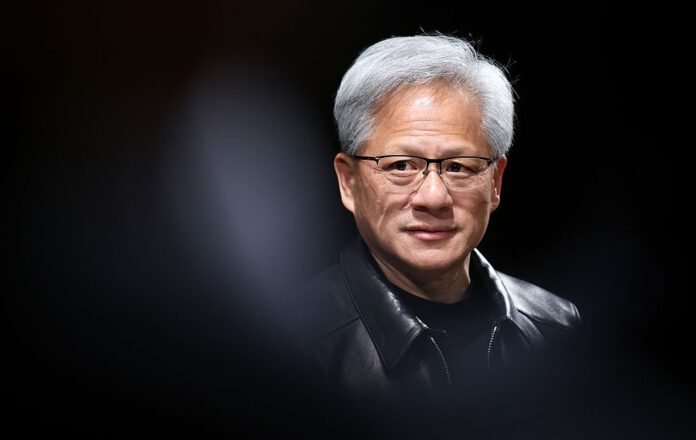
Top Republican lawmakers have asked Jensen Huang to appear before Congress to answer questions after it was reported that US intelligence officials believe Nvidia’s chief executive has been targeted by a Chinese spying operation.

The chairs of the House committees on China, foreign affairs, and intelligence wrote to Huang this week asking him to appear before a joint closed-door briefing for their committees on November 18.

“Recent reports raise significant national security concerns regarding the People’s Republic of China’s access to sensitive US technology and information,” representatives John Moolenaar, Brian Mast, and Rick Crawford wrote.

“The issue of PRC infiltration and access to cutting-edge US technology is core to the investigative work of our three committees this Congress. It is vital that Congress determines the extent to which US national security has been placed at risk,” the lawmakers added.

The New York Times last week wrote that US intelligence officials believed Huang had been the target of a Chinese spy operation. The concerns center on a Chinese woman named Alice Huang, an executive at Megaspeed, a Singapore-based cloud company that has bought billions of dollars of Nvidia’s chips.

Nvidia has rejected the claims and on Thursday would not say if Huang would appear before Congress. “Meetings with customers are part of a CEO’s job. Jensen talks with thousands of customer executives every year,” the company said.

“Our regional cloud customers receive ordinary business information—not sensitive Nvidia trade secrets—and zero information relevant to national security,” it added.

The lawmakers said they wanted Huang to discuss the security protocols Nvidia had in place to protect against “foreign adversary espionage.” The company said its chief executive had an “outstanding security team” that travels with him.

The New York Times said Huang had not received a “defensive briefing,” which the intelligence community usually, but not always, provides potential espionage targets to warn them about the activity.

Nvidia said it was confident that the US government would have let the company know if it thought a person was a threat to US industry and that it often receives updates from Washington about people of concern.

The US has previously scrutinized Megaspeed, founded in 2023 as a spin-off from a Chinese gaming company, for potential chip smuggling, although no charges followed.

Nvidia launched its own unannounced on-site inspections at Megaspeed in Singapore when it became aware of the US concerns, but the internal probe found no evidence of its chips being diverted into China, said people familiar with the matter.

The company’s supply chain has come under increasing scrutiny as US export controls have prompted increased smuggling of its chips. Earlier this year Wally Liaw, a co-founder of Supermicro, one of Nvidia’s key supply chain partners, was arrested in the US and charged with smuggling Nvidia chips into China. He denies any wrongdoing and has pleaded not guilty.

© 2026 The Financial Times Ltd. All rights reserved. Not to be redistributed, copied, or modified in any way.

Source: Iwpost.com

Midterm rebuke leaves Trump cornered and dangerous on Iran

0
midterm-rebuke-leaves-trump-cornered-and-dangerous-on-iran
Midterm rebuke leaves Trump cornered and dangerous on Iran

<

article id=”post-952472″>

WASHINGTON, DC – The Democratic Party’s resounding victories at US midterm elections on November 3 have dealt Republicans a stinging rebuke and pushed President Donald Trump into lame-duck territory, with an incoming Congress poised to frustrate his legislative agenda and intensify scrutiny of the Iran war.

With his domestic power sharply circumscribed, analysts say Trump may increasingly turn his attention abroad, where the White House enjoys greater freedom to maneuver. They say the risk is that a politically boxed-in president seeks to reassert his power overseas, including through renewed military action against Tehran.

Steven Okun, chief executive of APAC Advisors, a Singapore-based strategic consultancy, believes the war’s trajectory will prove difficult to change. Trump campaigned against “forever wars,” but “it’s hard to get out of them,” he told Asia Times, noting that the president will retain broad authority over foreign policy despite a Democrat-controlled Congress.

Those Democratic majorities can subpoena administration officials, launch investigations and scrutinize the conduct and cost of the Iran war. Vice President JD Vance cited the conflict as “the reason we lost” the midterms, while Trump acknowledged after the vote that high gas prices had contributed to the Republicans defeat.

The conflict has driven energy prices higher, compounded Americans’ cost-of-living frustrations and dangerously depleted critical US munitions stockpiles. For a president who promised to keep the country out of new wars, the military campaign has become a political liability, alienating voters already struggling with inflation.

Trump has continued to veer between diplomacy and threats of overwhelming force against Iran. Ahead of the vote, he claimed Tehran wanted a settlement “as soon as possible.” But on Thursday, he warned he might “destroy the rest” of Iran, adding that the public would “know soon enough” if he decided to act.

Military action has continued behind the diplomatic rhetoric. US officials acknowledged limited strikes on Iran’s Qeshm Island, near the Strait of Hormuz, on November 2, the eve of the midterms. Early Saturday, Iranian media reported two more missiles striking the island, although their origin and any damage caused were unconfirmed.

Trump’s recent warnings build on a pattern of increasingly apocalyptic rhetoric directed at Tehran, raising the specter of a possible nuclear strike. Throughout the conflict, he has repeatedly threatened to effectively erase Iran’s modern statehood, warning that any failure to meet US terms could trigger strikes so devastating they would require at least “25 years” of reconstruction.

Such threats carry troubling legal implications. In a September report, UN investigators found reasonable grounds to believe that earlier US attacks on a school and sports facility in Iran constituted war crimes, underscoring the potential consequences of another devastating military offensive.

“Another reason for escalation would be personal and legacy-related; he would not want to be remembered for a failed or forever war,” said Nirmal Ghosh, former US bureau chief of Singapore’s Straits Times newspaper. That calculus could leave Trump reluctant to end the war without something he can portray as a decisive triumph.

The timing adds another complication. Democrats will not take control of Congress until January, leaving Trump nearly two months to conduct new strikes before the Democrats can fully wield their investigative and war purse powers in Congress. Even then, their ability to constrain executive military decisions may prove limited.

“I don’t think there’s much that Democrats can do in Congress to stop Trump if he wants to further escalate the war,” said Michael Cohen, a nonresident senior fellow at the Stimson Center think tank, recalling how Democratic victories in the 2006 midterm wave election failed to prevent George W. Bush’s subsequent troop surge in Iraq.

That precedent lends weight to warnings Democratic Senator Chris Murphy had issued before Tuesday’s vote, saying the administration had briefed lawmakers on possible renewed operations against Iran. Though officials presented it as short-term, Murphy called the plan “insane,” warning it risked spiraling into a much wider war.

He warned that carrying it out would cause “devastating escalation and the likely destruction of our commitment to the rule of law.” Murphy also cited reports of potential strikes against civilian infrastructure, raising concerns that an expanded bombing campaign would violate international law and worsen the conflict.

Pressure to intensify the war may also come from Israel. Joe Kent, who resigned as director of the US National Counterterrorism Center over the war, claims that Israeli military actions could provoke Iranian retaliation against US forces in the region, putting pressure on Trump to deepen rather than end the conflict.

“Our troops right now are being used by the Israelis as bait to drag us back into this war,” Kent said in a recent interview. He claimed that Israel seeks US participation in a regime change campaign against Tehran, with further American casualties potentially making a withdrawal politically humiliating for Trump.

Cohen of the Stimson Center argued that Washington should abandon the quest for a decisive military outcome. “The goal of the war should be to end the war,” he said, adding that prolonged hostilities offered the US no strategic benefit, destabilized the region and imposed mounting costs on the global economy.

“There is no way to win this. There is no winning play. The only winning play is to get out,” Cohen said. Yet he warned that Trump’s reluctance to disengage without declaring victory could encourage another offensive, potentially provoking Iranian retaliation against pipelines and other energy infrastructure across the Gulf.

Kole Campbell, a risk analyst and former US military intelligence officer, questioned whether another bombing campaign could achieve regime change in Tehran. “There are no known cases in world history in which conventional air power alone has overthrown a government,” he told Asia Times.

Campbell warned that further strikes on Iranian nuclear facilities could have the opposite of their intended effect. Additional attacks would “very likely drive Iran to begin or restart a nuclear weapons program,” he assessed, if US and Israeli strikes had not already supplied that incentive.

For all Washington’s destructive power, Campbell argued, another sustained bombing campaign could at most further degrade or delay Iran’s nuclear capabilities, not eliminate them. Achieving that military objective, he said, would require a ground invasion of the Iranian mainland, exposing US forces to potentially devastating casualties.

Kelly Grieco, a senior fellow at the Stimson Center, said Washington’s operational successes obscured a deeper strategic miscalculation. “The military won, if you will, the war that they decided to fight, which was a war of destruction,” she said at a Washington forum on Thursday.

But Iran fought on different terms, using missiles and drones to threaten shipping through the Strait of Hormuz, strike regional energy infrastructure and damage US bases. Grieco argued that Iran had blunted America’s air superiority by imposing economic and military costs that Washington has struggled to absorb.

Tehran’s underlying calculation, Grieco suggested, was that Iran could withstand devastation longer than Americans would tolerate economic disruption. Washington was fighting a “war of choice,” she said, while Tehran regarded the conflict as existential, betting that American resolve would eventually falter.  

Prolonging the war would also further strain Washington’s dwindling weapons inventories. US strikes on Iran expended large numbers of Tomahawk cruise missiles and JASSMs, long-range weapons Grieco described as “the very things that are most needed, particularly in the Indo-Pacific,” where US forces face competing strategic demands vis-a-vis China.

That strategic strain extends to missile defenses. A September Congressional Budget Office assessment estimated that the US had expended between half and two-thirds of its combined inventory of certain interceptors, including Patriot and THAAD missiles, since June 2025. Replenishing those stocks could take at least five years, it said.

Those shortages could give the incoming Democratic Congress another avenue to challenge the war. “I do think the power of the purse still matters,” Grieco said, pointing to Democrat-led investigations and spending restrictions that could constrain a prolonged campaign, even if lawmakers cannot immediately prevent fresh strikes.

She also raised the possibility of legislation requiring congressional authorization before the White House draws further on scarce interceptors and long-range missiles. Such restrictions could force a more explicit debate over whether additional attacks justify sacrificing military readiness elsewhere.

Beyond congressional pressure, the central question is whether Washington can negotiate an end to the hostilities. Grieco suggested that the most realistic outcome would resemble the failed June memorandum of understanding, which envisaged reopening the Strait of Hormuz as Washington lifted its blockade, while leaving the nuclear dispute unresolved.

Such an agreement would fall short of the clear-cut victory Trump has repeatedly sought. Grieco warned that criticism of any concessions to Tehran, even from known opponents of the war, make it politically easier for Trump to escalate the conflict than to negotiate a face-saving exit.

That dilemma could prove particularly awkward for Secretary of State Marco Rubio, a longtime critic of concessions to Iran and one of the administration’s most vocal advocates of military pressure. He could struggle to justify any settlement resembling terms that Washington had previously rejected. Reports suggest he may resign to start pursuing a run for the presidency in 2028.

Vance, widely regarded as Trump’s leading potential successor, has begun distancing himself from the conflict, arguing that disaffected Republican voters want an end to the war and a reassessment of Washington’s relationship with Israel. Florida Governor Ron DeSantis remains another possible contender, although the field is far from settled.

Political strategist Adam Swart told Asia Times that the midterm defeat had weakened Vance and Rubio, whom he called the “two most obvious heirs to Trump.” With both tied to the administration’s increasingly unpopular war, their divergent positions on Iran could become a defining fault line in the Republican presidential contest of 2028.

Defense Secretary Pete Hegseth faces perhaps the heaviest pressure following the midterm rout. Republican Representative Thomas Massie plans to force impeachment articles next week unless Hegseth resigns, accusing him of waging war against Iran without congressional authorization. Hegseth has vowed to stay, and Trump continues to defend him.

“Basically, push Hegseth out,” Cohen said, suggesting Trump could blame his defense chief, “declare victory and go home.” He predicted that enough Republicans might support impeachment by next week, but wondered whether Hegseth could invoke Trump’s own possible impeachment to maintain presidential protection.

Yet removing Hegseth could offer Trump a politically convenient explanation for the war’s unfulfilled objectives, though it would do little to resolve his underlying strategic dilemma. Iran retains the capacity to disrupt regional energy supplies and impose economic costs, while Washington has yet to establish what more military action could realistically achieve.

Trump’s predicament is that neither escalation nor compromise offers an obvious political win. Renewed warfare risks prolonging the economic pain that contributed to the Republican defeat, while a negotiated settlement risks exposing how little Washington has achieved after months of costly military operations.

For Grieco of the Stimson Center, the war ultimately illustrates the limits of overwhelming military power. Washington has demonstrated its ability to devastate Iranian territory, she observed, but not to dictate the political outcome of the conflict. “American military power, as awesome as it is, cannot compensate for bad strategy.”
Source: Iwpost.com

Palestinian families in Belgium seek evacuation of relatives stranded in flood-hit Gaza

0
palestinian-families-in-belgium-seek-evacuation-of-relatives-stranded-in-flood-hit-gaza
Palestinian families in Belgium seek evacuation of relatives stranded in flood-hit Gaza
Palestinians living in Belgium have requested an urgent meeting with Foreign Minister Maxime Prevot to seek the evacuation of relatives holding Belgian visas who remain stranded in Gaza, where heavy rains and strong winds have flooded their shelters, Anadolu reports.

According to Belgian news agency Belga, Ismail El Najjar, speaking on behalf of Palestinian families in Belgium, said hundreds of visa holders had suffered damage to their shelters and belongings due to severe weather since Friday night.

He said families were still awaiting concrete information from the federal government on how their relatives would be brought to Belgium.

“The cold is deadly, but fear and uncertainty are as devastating as bullets,” El Najjar said, adding that between 1,500 and 1,800 Palestinians holding Belgian visas were living in high-risk areas of Gaza.

Prevot acknowledged that extreme weather had further worsened conditions in Gaza and expressed regret that the federal government had yet to reach an agreement on evacuations.

His office said it was considering receiving a delegation representing the families.

Prevot had previously proposed prioritizing the evacuation of 320 Palestinians, but the plan stalled amid disagreements within the coalition government, including opposition to admitting 13 Gaza students holding Belgian student visas.

Israeli attacks have destroyed much of Gaza’s housing and infrastructure, leaving many Palestinians in temporary shelters vulnerable to worsening winter conditions.

Source: Iwpost.com

Pakistan Accuses Israel of Threatening US-Iran Peace Efforts

0
pakistan-accuses-israel-of-threatening-us-iran-peace-efforts
Pakistan Accuses Israel of Threatening US-Iran Peace Efforts


[ISLAMABAD] Pakistan on Friday, November 6, identified Israel as a potential obstacle to a lasting peace agreement between the United States and Iran, accusing the Israeli government of pursuing expansionist policies that fuel regional instability and undermine diplomatic efforts.

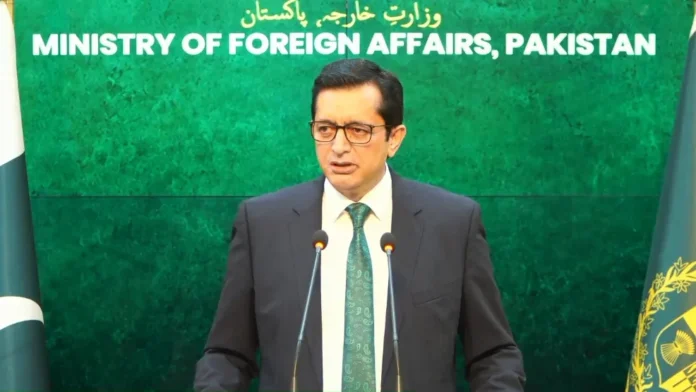
Ministry of Foreign Affairs spokesperson Sajjad Haider Khan made the remarks during his weekly press briefing in Islamabad, responding to a question about countries that could obstruct negotiations between Washington and Tehran.

Khan suggested that other countries could also interfere with the peace process but said he was certain that “peace in the region is certainly not in Israel’s interest.”

He attributed much of the Middle East’s instability to “Israel’s unwarranted and expansionist actions,” accusing Israel of pursuing aggressive policies toward Iran, the Palestinians, Syria, Lebanon, and other neighboring countries.

Khan reaffirmed Islamabad’s commitment to facilitating negotiations between the United States and Iran, emphasizing that Qatar and other regional countries were also working to prevent further escalation.

He said Pakistan would continue its diplomatic efforts because regional peace served not only Islamabad’s interests but also those of neighboring countries and the wider international community. He stressed that a lasting settlement required “political dialogue and diplomacy, not war.”

Pakistan and Qatar played central roles in mediating the Islamabad Memorandum of Understanding, signed by Washington and Tehran on June 17 and publicly announced the following day.

The agreement called for an end to military operations and established a framework for further negotiations on sanctions relief, Iran’s nuclear program, and restoring commercial shipping through the Strait of Hormuz.

The arrangement has remained fragile, with disagreements over implementation and renewed military activity complicating efforts to reach a comprehensive settlement.

On Friday, President Donald Trump said US forces had conducted limited strikes against Iranian air defenses near Qeshm Island in the Strait of Hormuz, adding to concerns about further escalation.

Qatar’s prime minister, Sheikh Mohammed bin Abdulrahman Al Thani, said Saturday that mediation between Washington and Tehran was continuing and that significant progress had been made toward a possible agreement, despite remaining differences.

Khan said the June understanding demonstrated Pakistan’s diplomatic ability to bring Washington and Tehran together after decades of limited direct communication. He maintained that negotiations, rather than military confrontation, offered the only viable route to lasting regional stability.

The spokesperson also reiterated Pakistan’s support for a two-state solution to the Israeli-Palestinian conflict, calling for an independent Palestinian state based on the pre-June 4, 1967 lines, with East Jerusalem as its capital.

He urged an immediate end to Israeli military operations in Gaza and unrestricted humanitarian assistance for Palestinians.

Khan also reviewed the October 23 meeting of the R4 foreign ministers from Pakistan, Turkey, Saudi Arabia, and Egypt in Istanbul, followed by discussions with their counterparts from France, Germany, Italy, and the United Kingdom.

The meetings addressed the US-Israel conflict with Iran, the Israeli-Palestinian conflict, developments in Yemen, and threats to maritime security in the Strait of Hormuz, Bab el Mandeb, and other major shipping routes.

The participating ministers called for diplomatic solutions, de-escalation, and continued negotiations to prevent further regional conflict. The R4 ministers also reaffirmed their support for the Islamabad agreement and efforts to achieve a lasting settlement between Washington and Tehran.

Israel has not issued a public response to Khan’s specific allegations. Earlier in the week, Israeli Ambassador to the United Nations Danny Danon denied that Prime Minister Benjamin Netanyahu was pressuring Washington to resume strikes against Iran, saying Israel would support the US decision on how to proceed.

Source: Iwpost.com

Could potential AI clones of GTA VI force a quicker official port?

0
could-potential-ai-clones-of-gta-vi-force-a-quicker-official-port?
Could potential AI clones of GTA VI force a quicker official port?
Yesterday, when reporting on emerging efforts to pipe the console version of GTA VI through a PC’s DLSS-powered Nvidia GPU, we mentioned in passing that PC players could instead just wait for the AI-assisted decompilation port that will no doubt be coming in short order. Now, a former Rockstar tech director says he thinks that exact threat could cause the developer to work faster on the official PC version of its soon-to-release crime/lifestyle simulator.

Obbe Vermeij hasn’t worked at Rockstar since 2009, but in a new interview with Rock Paper Shotgun, he recalled how artists for the PC version of the original top-down Grand Theft Auto were incensed when the console version squashed the game’s 256-color textures down to 16 colors for the PS1 release.

“So it always has been that sort of awkward relationship between PC and the console,” Vermeij said. “So in those days, it was like PC first and then console second, even though that didn’t really make much sense for the sales, because the PlayStation versions sold way better.”

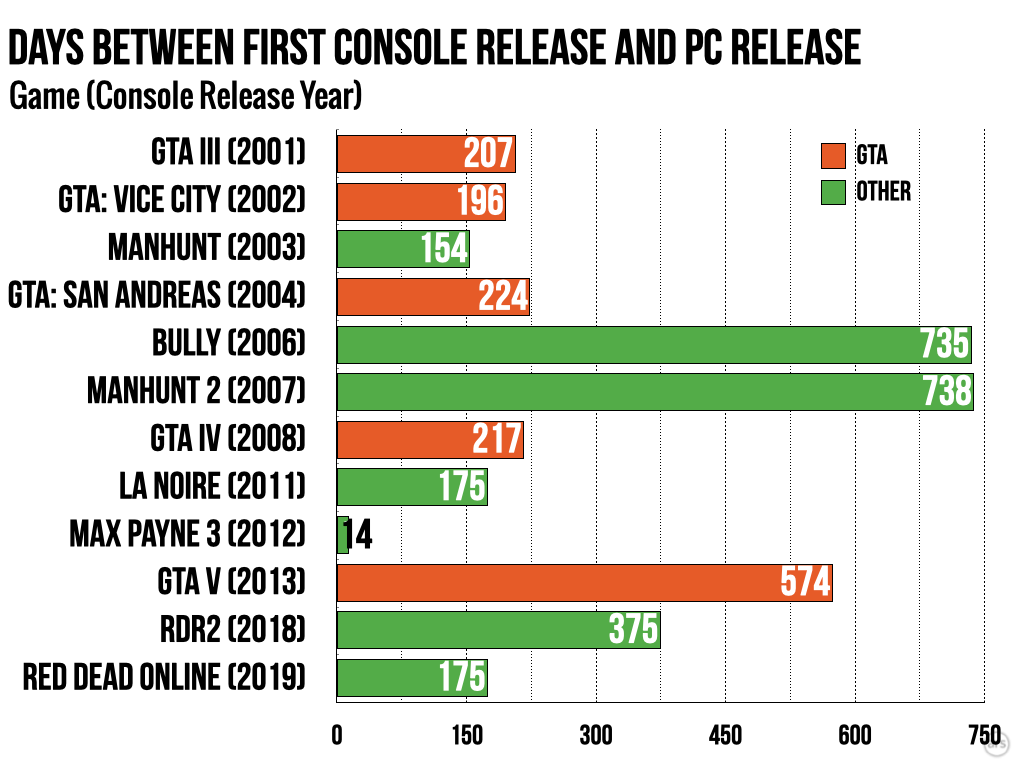
Those sales caused Rockstar to pivot hard toward the console side of the business, with oft-delayed PC ports of its major games only hitting many months or even many years after their console counterparts. It’s a trend that Rockstar has stuck with even as many formerly console-focused game publishers have started treating the PC as an equally relevant platform and as the line between PCs and consoles itself has gotten much fuzzier in recent years.

When it comes to major 3D releases, Rockstar clearly prioritizes console launches over PC ports.

When it comes to major 3D releases, Rockstar clearly prioritizes console launches over PC ports. Credit: Kyle Orland

Time is getting short

The rise of AI-powered reverse-engineering tools—which can quickly turn a console game binary into easy-to-port raw code with incredible brute-force efficiency and minimal human effort—might change that kind of “PC can wait” calculus for Rockstar. “I think I would be concerned, if I was Rockstar, that somebody would just take the PS5 version and get AI to change it to PC,” Vermeij told Rock Paper Shotgun.

To be sure, decompiling a game as complex as Grand Theft Auto VI wouldn’t be as simple as, say, the previous human-led decompilations of early 3D GTA games. But even if an AI coding harness has some difficulty capturing all the details of GTA VI‘s advanced weather systems and scripted sweat simulations, that doesn’t mean it’s impossible.

Vermeij speculated that reverse-engineering the console version of GTA VI could cost “tens of thousands of dollars in tokens,” and a resulting port probably “won’t be as good as [Rockstar’s] effort” in the end. That said, Vermeij said it would probably be good enough to satisfy some potential PC players and that he “wouldn’t be surprised if there was an effort to get [the releases] a little bit closer together” to get ahead of that.

“What was the case before is that there’s so much effort in developing the game, that it is not possible to rip it off, and that’s completely changed now,” Vermeij said. “So, yeah, we’re going to have to see in the next couple of years how that’s going to pan out.”

While there hasn’t been an official timing announcement for the PC port of Grand Theft Auto VI, reports suggest Rockstar is currently aiming for the first quarter of 2027.

Source: Iwpost.com

Haley Stevens Destroyed Her Political Career for Absolutely Nothing

0
haley-stevens-destroyed-her-political-career-for-absolutely-nothing
Haley Stevens Destroyed Her Political Career for Absolutely Nothing


Eoin Higgins is the author of “Owned: How Tech Billionaires on the Right Bought the Loudest Voice on the Left.”

Abdul El-Sayed handily defeated Republican Mike Rogers for Senate in Michigan early Wednesday morning, retaining Democratic control of the seat and solidifying the party’s Senate majority. To become the first Muslim elected to the U.S. Senate, the former public health official overcame rampant, bipartisan Islamophobia and bigotry. For the country, and the Democrats, to move forward, we must cast it out of public life forever. 

The Michigan Democrat’s victory felt almost like an afterthought compared to the upset Senate victories won by Democrats in South Carolina and Texas. The 2026 midterms were a referendum on President Donald Trump and his control of the GOP, and voters delivered their verdict, turning control of both houses of Congress over to the opposition party. 

But we should neither forget nor forgive how we got here. El-Sayed faced an uphill battle from the beginning, which included a protracted, venomous primary, and the call was often coming from inside the house. 

No detractor was as vicious as his former primary opponent Rep. Haley Stevens, whose eleventh-hour betrayal of her party’s nominee — she formally switched her endorsement to Rogers on Sunday — was a transparent attempt to turn the seat red.

Backlash was swift and harsh and came from all corners of the party. Sen. Chuck Schumer, the powerful leader of the Senate who has made little secret of his disagreements with El-Sayed on Israel, called Stevens’s actions “a despicable betrayal.” Michigan Democratic Rep. Debbie Dingell and state Sen. Mallory McMorrow, who finished third in the primary, went as far as to express personal concern for Stevens. 

And Rep. Nancy Pelosi, D-Calif., just days after implying El-Sayed and New York City Mayor Zohran Mamdani were antisemites for opposing ethno-supremacy in Israel, said Stevens chose “to dangerously betray Michigan families’ healthcare, freedoms, and future with her horrific endorsement of Mike Rogers.”

In the 48 hours-plus since she threw in with Rogers — which increasingly seems like it was motivated primarily out of spite when she was boxed out of a Sunday campaign event with Rep. Jim Clyburn, D-S.C., in Detroit — Stevens embarked on a media tour of justification that got weirder and weirder.

A 15-minute, rambling interview with Anderson Cooper on CNN Sunday night didn’t provide insight into her motivations, or much else; on Monday evening, Stevens followed up with a long statement posted on X owning the decision to destroy her political career with the Democratic Party. She also denied that her fiancé, political donor Jason Turkish, played any role in the endorsement: “I made this decision, and I am proud of it. Do not question my independence simply because you disagree with my conclusion.”

Congressional staffers to Stevens resigned en masse on Sunday, and former campaign aides told the Washington Post that they had to run defense to keep Turkish — who had endorsed Rogers before Stevens did — out of the spotlight and marginalize his influence. 

“Any campaign staff being directly quoted in this article, I was made miserable by working with them,” Stevens told the Post in response, adding, “I have nothing else to say about the campaign at this time.”

But a singular explanation of Stevens’s decision lets Democrats off the hook far too easily for the anti-El-Sayed campaign waged by leaders in the House and Senate. For the party to move forward after the midterms, the Democrats need to take a hard look in the mirror and purge institutionalized Islamophobia from their ranks. 

They can start with their friends in the media. The Atlantic’s Jonathan Chait, in a screed published Sunday, whined that “during the same period of time that El-Sayed has been winking at a political movement inflected with anti-Semitism, he has been targeted by a political message that is not merely inflected with racism but saturated with it.” 

We should get ready for a long overdue, but almost certainly painful, intraparty debate on how Democrats policed dissent in their own ranks.

Political commentator Van Jones noted on X ahead of Election Day that “the Republicans are conducting a campaign of blatant anti-Muslim fear mongering.” But in the same post, he also argued El-Sayed’s “refusal to outright denounce” a little-seen ad produced by an outside PAC — an ad which El-Sayed distanced himself and his campaign from — tying the rise of grocery costs to U.S. support for Israel was comparable.

“Something is going horribly wrong in the Senate race in Michigan,” Jones added huffily. “And I am going to keep calling it out.”

After last night’s massive blue wave, it should be undeniable that the left was a major factor in flipping the House and Senate. That means the party’s progressive wing can now credibly claim a seat at the governing table without compromising on domestic or foreign policy. We should get ready for a long overdue, but almost certainly painful, intraparty debate on how Democrats policed dissent in their own ranks in this election, and how to disentangle leadership from unconditional support for Israel.

There’s always the possibility that the party’s centrist wing comes together with the left and repairs the damage. A good first step would be for leadership to make clear that Stevens, and anyone else who indulged in anti-Muslim arguments to score political points, has torched any possible future in the Democratic Party. Any advocacy or lobbying group that offer Stevens or her ilk safe political harbor should also be blacklisted. 

Party discipline applied to the treacherous center doesn’t appear to be the top priority for House Minority Leader Hakeem Jeffries, the presumptive next speaker, who devoted his first remarks after the election to downplaying partisanship in this “patriotic moment.” 

But without backup from party leadership, El-Sayed will continue to be met with hostility. On Wednesday morning, CNN asked fellow incoming Texas Sen. James Talarico if he would “stand up” to El-Sayed and other, unnamed left-wing members of his caucus. To his credit, Talarico demurred from directly challenging his fellow future senator. Still, it’s a sign of a long battle to come. 

The question for “unity”-caping Democrats remains: Who will they rally around — and who will be left out in the cold?

Source: Iwpost.com

“Does Meta think we can’t read?” Meta abandons sketchy commercial terms update.

0
“does-meta-think-we-can’t-read?”-meta-abandons-sketchy-commercial-terms-update.
“Does Meta think we can’t read?” Meta abandons sketchy commercial terms update.
After weeks of backlash—and a failed attempt to quell it—Meta has indefinitely delayed plans to update its commercial terms and require Meta Business account users to allow extensive AI training on external websites linked on Facebook.

“We’re pausing the ‌changes ⁠as we continue to engage with stakeholders and ​take ​our ⁠time to get this right. ​In the ​meantime, ⁠our existing terms remain in ⁠effect,” a Meta spokesperson told Reuters.

Soon after Meta notified business account holders of the upcoming changes, legal experts warned Nieman Lab that the vague language could allow the company to ignore scraping preferences specified in robots.txt files and exhaustively crawl vast amounts of off-Facebook content for AI training. Since virtually every news publisher has a Facebook page, Nieman Lab sounded the alarm that Meta could potentially avoid millions in licensing fees if the TOS update happened as planned.

Ars broke down the changes after Meta announced them, noting that businesses—including news publishers involved in drawn-out legal battles over unwanted AI scraping—had no way to opt out. To keep a business Facebook page, they had to allow Meta to crawl any linked external sites. The terms even required publishers to create test credentials so Meta’s bots could reliably bypass paywalls.

Meta faced global scrutiny

The changes were initially supposed to take effect on October 30. But Meta pushed that date back to November 20 amid pushback from Facebook users, courts, and regulators around the world. Courts in Brazil and Norway issued preliminary injunctions blocking the terms after organizations in those countries promptly filed lawsuits, Nieman Lab reported.

The United Kingdom’s Competition and Markets Authority also opened a formal investigation into whether Meta was exploiting a dominant position to seize valuable AI training data. In a LinkedIn post, Theo Bamber, chief executive of the UK’s News Media Association, pointed to “the continued arrogance of this company to think everyone will just be OK with its actions” as “staggering.”

“Does Meta think we can’t read?” Bamber wrote. He argued that removing the word “train” from the terms of service did little to reassure publishers, since “develop” posed the same threat.

“It’s saying it can use all the content it scrapes to develop ‘any business product’. I mean, come on,” he wrote.

Nieman Lab noted there was bipartisan concern in the US. Sens. Adam Schiff (D-Calif.) and Marsha Blackburn (R-Tenn.) sent letters asking Mark Zuckerberg to withdraw the terms.

On October 28, Meta’s vice president of communications, Andy Stone, posted on X that Meta would do just that, at least for now.

“We’ve heard publishers’ feedback on our proposed ads and business terms update,” Stone said. “We care deeply about our partners and do not plan to make policy changes without a full consultation with industry groups and leaders. We’re committed to getting this right, and as we expect this consultation could extend beyond November 20, in which case we’d delay implementation of the updated terms.”

Meta has insisted that it would never use its terms of service to skirt robots.txt. In an update to business page owners, the company offered a “reminder” that “our crawling practices remain unchanged, and content owners can continue to signal their crawling preferences using robots.txt.”

But the company still faced criticism after promising to pull the terms and consult with publishers to get the policy right.

As regulatory and court scrutiny intensified, Nieman Lab noted that Meta took steps to try to assuage publishers’ concerns but “has not included any specific language about respecting robots.txt preferences in its revised terms of service.”

Source: Iwpost.com

0FansLike
0FollowersFollow
0FollowersFollow
0SubscribersSubscribe
- Advertisement -
Google search engine

Recent Posts