8 C
London
Saturday, November 7, 2026
Home Blog

“Does Meta think we can’t read?” Meta abandons sketchy commercial terms update.

0
“does-meta-think-we-can’t-read?”-meta-abandons-sketchy-commercial-terms-update.
“Does Meta think we can’t read?” Meta abandons sketchy commercial terms update.
After weeks of backlash—and a failed attempt to quell it—Meta has indefinitely delayed plans to update its commercial terms and require Meta Business account users to allow extensive AI training on external websites linked on Facebook.

“We’re pausing the ‌changes ⁠as we continue to engage with stakeholders and ​take ​our ⁠time to get this right. ​In the ​meantime, ⁠our existing terms remain in ⁠effect,” a Meta spokesperson told Reuters.

Soon after Meta notified business account holders of the upcoming changes, legal experts warned Nieman Lab that the vague language could allow the company to ignore scraping preferences specified in robots.txt files and exhaustively crawl vast amounts of off-Facebook content for AI training. Since virtually every news publisher has a Facebook page, Nieman Lab sounded the alarm that Meta could potentially avoid millions in licensing fees if the TOS update happened as planned.

Ars broke down the changes after Meta announced them, noting that businesses—including news publishers involved in drawn-out legal battles over unwanted AI scraping—had no way to opt out. To keep a business Facebook page, they had to allow Meta to crawl any linked external sites. The terms even required publishers to create test credentials so Meta’s bots could reliably bypass paywalls.

Meta faced global scrutiny

The changes were initially supposed to take effect on October 30. But Meta pushed that date back to November 20 amid pushback from Facebook users, courts, and regulators around the world. Courts in Brazil and Norway issued preliminary injunctions blocking the terms after organizations in those countries promptly filed lawsuits, Nieman Lab reported.

The United Kingdom’s Competition and Markets Authority also opened a formal investigation into whether Meta was exploiting a dominant position to seize valuable AI training data. In a LinkedIn post, Theo Bamber, chief executive of the UK’s News Media Association, pointed to “the continued arrogance of this company to think everyone will just be OK with its actions” as “staggering.”

“Does Meta think we can’t read?” Bamber wrote. He argued that removing the word “train” from the terms of service did little to reassure publishers, since “develop” posed the same threat.

“It’s saying it can use all the content it scrapes to develop ‘any business product’. I mean, come on,” he wrote.

Nieman Lab noted there was bipartisan concern in the US. Sens. Adam Schiff (D-Calif.) and Marsha Blackburn (R-Tenn.) sent letters asking Mark Zuckerberg to withdraw the terms.

On October 28, Meta’s vice president of communications, Andy Stone, posted on X that Meta would do just that, at least for now.

“We’ve heard publishers’ feedback on our proposed ads and business terms update,” Stone said. “We care deeply about our partners and do not plan to make policy changes without a full consultation with industry groups and leaders. We’re committed to getting this right, and as we expect this consultation could extend beyond November 20, in which case we’d delay implementation of the updated terms.”

Meta has insisted that it would never use its terms of service to skirt robots.txt. In an update to business page owners, the company offered a “reminder” that “our crawling practices remain unchanged, and content owners can continue to signal their crawling preferences using robots.txt.”

But the company still faced criticism after promising to pull the terms and consult with publishers to get the policy right.

As regulatory and court scrutiny intensified, Nieman Lab noted that Meta took steps to try to assuage publishers’ concerns but “has not included any specific language about respecting robots.txt preferences in its revised terms of service.”

Source: Iwpost.com
These cranberry bogs come with a side of solar

0
these-cranberry-bogs-come-with-a-side-of-solar
These cranberry bogs come with a side of solar
This story was originally published by Canary Media and is reproduced here as part of the Climate Desk collaboration.​​

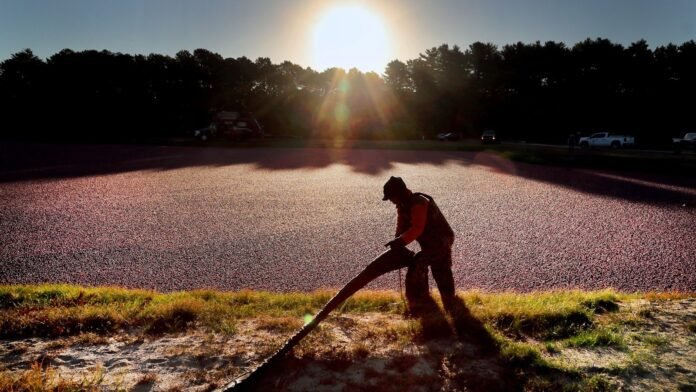
It’s cranberry season in southeastern Massachusetts. At bogs throughout the region, growers are collecting the ruby-red berries destined for holiday cakes, juice bottles, and cans of jellied sauce. At two farms, however, the harvesting process looks a little different: Pickers are navigating equipment around metal poles in the shade of solar panels. 

The two bogs are the first in the country — perhaps the world — to grow cranberries beneath an operating solar installation. This fall marks the second season cranberries have been harvested from beneath the panels.

“We are literally proving it can be done,” said Prateek Tare, co-founder and executive vice president of Distributed Energy Infrastructure. His company constructed the two projects — a 4.4-megawatt array paired with a 13.5-megawatt-hour battery in the town of Kingston, and a 1-MW solar array in neighboring Plymouth. 

Solar development is a major part of Massachusetts’ plan to reach net-zero carbon emissions by 2050. The state has offered solar incentives since 2001, evolving and expanding them over the decades to drive even more development. 

However, the question of where to site solar projects has become a major point of contention in the densely populated and heavily wooded state. Building on rooftops and parking lots in developed areas can increase costs and limit generation capacity. But proposals for arrays on previously undeveloped land often spark protests from locals worried about the character of their community and environmental groups opposed to disrupting ecosystems. Using pre-cleared farmland has potential, but raises concerns about taking agricultural acres out of production. Many of these same dynamics are at play in communities across the U.S.

One of the solutions Massachusetts has been encouraging is agrivoltaics, or dual-use solar, which involves building solar panels above active agricultural operations. This strategy, which is gaining traction nationwide, allows farmland to be used for energy generation even as livestock graze or crops flourish beneath the elevated arrays. 

Read Next

In 2018, Massachusetts became the first state to offer a financial boost to dual-use solar projects like these. The state’s solar incentive program pays participants a set rate for every kilowatt-hour of electricity they generate; an array with a capacity between 1 MW and 5 MW currently gets a base rate of 23.17 cents. Agrivoltaic projects get an extra 9 cents per kilowatt-hour. 

That can be enough money to attract developers interested in leasing land for solar arrays or, less commonly, buying property outright with an agreement to keep it in agricultural use. Farmers who agree to lease are also generally paid for their services maintaining the landscape around the panels and poles. 

In Kingston and Plymouth, clean energy developer Greenbacker Renewables bought the land, which had been home to cranberry-growing operations for decades, from farmers who were ready to get out of the business. Greenbacker then worked with Distributed Energy Infrastructure to build the arrays, and hired Iain Ward, a solar consultant and longtime cranberry farmer in the area, to manage the growing operations. Both projects use a community solar model, selling power to customers interested in the lower prices and environmental benefits offered by renewable energy.

Solar can be particularly advantageous for cranberry farmers in Massachusetts, which grows more of the fruit than any state other than Wisconsin. While sheep farms and cornfields can often be sold to housing or commercial developers, cranberry bogs are protected wetlands: Even if they go out of production, they cannot be built on. Not all bogs are well placed to connect to the grid, but for those that are, solar panels can be a financial lifeline. 

“This is a farm viability opportunity,” Ward said. 

How to put solar on a cranberry bog

Figuring out how to build a solar array over a cranberry bog was a unique puzzle, Tare said. The first challenge was the foundations. For most solar arrays, the foundation goes 8 to 10 feet into the ground, he said. But in a cranberry bog, you have to go well past that to find ground solid and stable enough to hold the pilings. It took some trial and error to find the right machine to sink piles that deep. Wiring couldn’t be buried in the boggy ground, so it had to be hung overhead. 

“You’re trying to figure it out from a farmer’s perspective,” said Tare, who worked closely with Ward on the design of the two projects. 

The resulting installations have photovoltaic panels mounted 10 feet off the ground on an axis that allows them to tilt throughout the day to follow the sun. Pilings are spread farther from each other than standard so that harvesting equipment can be moved freely through the bog. 

Read Next

These successes in Kingston and Plymouth have led to more agrivoltaic opportunities for Tare’s company, including arrays in apple orchards, a cattle pasture, and a Christmas tree farm. Preliminary work is also underway at another bog. 

Meanwhile, a stalled cranberry solar project in the nearby town of Carver could be resuscitated. Five years ago, a different pair of bogs there were set to become the nation’s first cranberry agrivoltaic operations. The arrays were built, and crops are growing beneath them, but the company behind the developments went bankrupt before they could get up and running. Today, the new bog owner has ​“every intention to finish them,” Ward said. 

“They’re not a failure,” Ward said. ​“There is an opportunity for them to be finished.”

Tare expects future cranberry projects to get easier each time, as the company carries forward the lessons it learns. Though momentum has been slow so far, Ward expects development to accelerate soon. 

“It is picking up steam, and the lessons learned have been significant, he said. ​“When you change a paradigm, it takes a little time.”


Source: Iwpost.com

Poland in shock: six dead, 15 wounded in Krakow Main Square shooting

0
poland-in-shock:-six-dead,-15-wounded-in-krakow-main-square-shooting
Poland in shock: six dead, 15 wounded in Krakow Main Square shooting
cde.news desk · 4 min read

A gunman firing from a car killed six people and wounded 15 in the Main Square of the southern Polish city of Krakow on Saturday, officials said. Police shot and arrested the suspect, who they said was a 24-year-old Polish citizen.

Four women and two men were killed. Police first reported five dead, then updated the toll to six in a post on X. Two police officers were also wounded in a shootout with the alleged attacker, one of them seriously, according to Poland’s interior minister.

https://vs.ansa.it/sito/video_mp4_export/m20261107175446780.mp4

Police said they began receiving reports at around 3 p.m. (1400 GMT) that an assailant had opened fire from a car and shot randomly at people in the square, in Poland’s second-largest city and a popular tourist destination.

Krakow police said on X that the alleged gunman was a Polish citizen, adding: “The only known perpetrator of the incident is in police custody”. They did not mention a motive.

Police said the suspect was shot and wounded in a gunfight with officers a short distance from the initial violence and was taken to hospital for surgery.

Katarzyna Cislo, a Krakow police spokesperson, said the attacker wore military-style fatigues and a bulletproof vest and used a military-type long gun. “The shooter was wearing military-like clothes and used military weapons. Many … weapons and ammunition were found in his vehicle too,” she said. She added that he kept firing at police even after being shot himself.

Witnesses describe panic as police intervene

Cislo said the attacker made a “wild ride” around the Main Square, which is why people were wounded at several locations. She said the gunman acted alone and that the public is safe.

Unverified footage shared on social media showed people fleeing as shots rang out and police sirens blared. Other video showed two people lying on blood-spattered paving stones, with bystanders trying to resuscitate them, and a third person motionless on the ground nearby. The footage also showed shooting as traditional horse-drawn carriages, popular with tourists, passed through or were parked nearby. A man could be seen taking cover in one of the restaurants and cafes lining the square.

“I saw shots being fired from the driver’s side window, and smoke was coming out. I ran to the police station in the main market square; when I burst inside, it was full of people hiding on the floor,” a man who gave his name only as Konrad, and witnessed the shooting, told news website Interia.

The Krakow municipal transport company said a tram driver reported around 3 p.m. that his vehicle was shot at by a man in a moving car while passing near the main square. The window of the driver’s cabin was shattered.

Interior Minister Marcin Kierwinski praised the officers who responded. “Police officers in Krakow intervened, risking their own lives. They acted immediately. Thanks to their heroic conduct, the assailant was quickly apprehended,” he said on X.

“One officer sustained a gunshot wound, while another is in very critical condition with three gunshot wounds. Surgery is currently underway,” he added.

Images from the scene showed police officers and ambulances covering the area, and a Polish Medical Air Rescue helicopter landed in the square.

Prime Minister Donald Tusk said on X he was being kept informed about the incident in Krakow’s historic centre, a UNESCO World Heritage Site. A government spokesperson said he later headed to Krakow from Warsaw. Tusk also praised the responding officers. President Karol Nawrocki said his thoughts were with the victims, the wounded and their families.

It was not immediately clear whether the firearm used in the attack, or the guns found in the suspect’s car, were legal. Around 411,000 people hold gun permits in Poland, which has a population of 37 million, and interest in gun ownership has been rising.

Mass shootings are uncommon in Poland. In mid-October, however, three attacks at schools in the central province of Mazovia took place within four days, leaving one person dead and many wounded, including children.

Around 15 million tourists visit Krakow each year, the majority passing through the Main Square.

Source: Iwpost.com

Dustin Hoffman Reveals Shocking Ordeal on Set of Iconic Movie

0
dustin-hoffman-reveals-shocking-ordeal-on-set-of-iconic-movie
Dustin Hoffman Reveals Shocking Ordeal on Set of Iconic Movie


Hollywood legend Dustin Hoffman is exposing the painful behind-the-scenes ordeal he endured while filming The Graduate, revealing that repeated slaps during one scene left him dizzy before he suffered a ruptured eardrum the following day.

The 89-year-old Oscar winner is opening up about the troubling experience nearly 60 years after the 1967 classic transformed him into a Hollywood superstar. In an essay adapted from his upcoming memoir, Look at Me, Hoffman recalls feeling humiliated, physically exhausted and convinced that director Mike Nichols had made a terrible mistake casting him.

Hoffman claims Nichols, who died in 2014, was often difficult on set and appeared particularly harsh toward him. Although the director had been supportive during rehearsals, his attitude reportedly changed dramatically once filming began, leaving the young actor constantly fearing he would lose his starring role.

The tension reached a breaking point during a confrontation between Hoffman’s character, Benjamin Braddock, and Elaine Robinson, played by Katharine Ross. The emotional scene required Elaine to slap Benjamin after discovering he had been having an affair with her mother.

According to Hoffman, Nichols demanded an astonishing 27 takes, repeatedly instructing Ross to strike him harder despite her concerns about hurting her co-star.

Hoffman remembered reassuring the actress while pleading with her to avoid hitting his ear. Unfortunately, several blows landed in precisely the wrong place.

By the end of filming, the actor was dizzy and shaken. Making matters worse, Nichols ultimately left the slap out of the finished movie.

But the physical consequences were far from over.

The following day, Hoffman was filming an underwater sequence in which Benjamin tests a scuba suit in his family’s swimming pool. After several takes beneath the surface, he emerged to discover blood coming from his ear.

A doctor subsequently confirmed he had suffered a punctured eardrum, an injury Hoffman believes resulted from the combination of repeated blows and underwater pressure.

And the punishing filming conditions didn’t end there. Hoffman also recalled being pushed to the brink of collapse while repeatedly sprinting toward a church in scorching California heat for the movie’s famous finale. Co-star Anne Bancroft reportedly fainted during another scene, temporarily halting production.

Beyond the physical demands, Hoffman struggled with deep insecurities about playing Benjamin, a wealthy, privileged young man whose background seemed completely different from his own. He feared Nichols had realized he was wrong for the role and was taking his frustration out on him.

Looking back, Hoffman described making the movie as “a terrible experience,” despite acknowledging that it changed his life forever.

The irony is that The Graduate became one of the defining movies of its generation, earning seven Academy Award nominations, including Hoffman’s first Best Actor nomination. Nichols ultimately won the Oscar for Best Director.

Hoffman went on to become one of Hollywood’s most celebrated performers, winning Oscars for Kramer vs. Kramer and Rain Man.

Now, almost six decades later, the actor is revealing just how much pain, fear and humiliation he says went into creating the movie that made him famous.

His memoir, Look at Me, is scheduled for release November 10.

Source: Iwpost.com

You know the launch market is tough when satellite companies start building rockets

0
you-know-the-launch-market-is-tough-when-satellite-companies-start-building-rockets
You know the launch market is tough when satellite companies start building rockets

There are optimistic plans for spaceflight, and then there are optimistic plans.

AST SpaceMobile is a Texas-based, publicly traded company building very large satellites to provide direct-to-cell communications on Earth. But it has been having trouble finding rides to space. So on Friday, AST announced that it is developing a medium-lift rocket, named Blacklift, which will have the capacity to lift 20 metric tons to low-Earth orbit. Oh, and the company said it would start launching commercially in late 2028.

“The Blacklift rocket is the springboard to significantly expand our total addressable market, providing AST SpaceMobile with regular unconstrained access to orbit and providing for most favorable owner’s economics in the industry,” said Abel Avellan, founder, chairman, and CEO of AST SpaceMobile, in a news release.

To anyone with even a basic understanding of rockets, that timeline is wildly, fantastically, and stupidly optimistic. Still, the announcement is worth examining because it underscores two important trends in today’s launch industry.

First, it’s becoming increasingly apparent that satellite operators planning to deploy large constellations need to secure launch capacity years in advance, as Amazon did nearly half a decade ago. And if they can’t secure that capacity on favorable terms, they are now considering taking the extraordinary step of developing their own rockets.

And secondly, since investors are now recognizing the worsening launch crisis that Ars has been writing about for months, there is apparently capital to be raised for new entrants into the medium-lift launch market. AST is not the only company making fantastical claims of late. A firm called Cowboy Space said in October it was building a large rocket named Big Iron (full credit—that’s an excellent name) to launch orbital data centers. It also claimed its large rocket would make its first flight in 2028.

Sure thing, y’all.

Comparable launch development timelines

Let’s start with a little history. SpaceX became the first purely commercial launch startup to announce plans to build a new medium-lift rocket about two decades ago, in 2005. The company holds the record for the fastest time to orbit with the Falcon 9 vehicle, with a development time of 4.7 years.

But SpaceX had some significant advantages. By then, the company had been operating for more than three years, had extensive experience with the Merlin engine, and was less than a year away from its first launch of the smaller Falcon 1 rocket. In retrospect, it’s also clear that the company had an insanely talented team of engineers. Finally, the Falcon 9 was quite a bit smaller than the recently announced vehicles, Blacklift and Big Iron. In its initial form, Falcon 9 had a lift capacity of about 10 tons.

What about other companies? Since 2015, a number of other US companies—United Launch Alliance (Vulcan), Rocket Lab (Neutron), Relativity Space (Terran R), Firefly/Northrop Grumman (Eclipse), and Stoke Space (Nova) have announced medium to heavy lift vehicles, ranging in payload capacity from about 7 to 27 metric tons (Blue Origin’s New Glenn is much larger than any of these).

Of these, only Vulcan has reached orbit. It took 8.7 years, with an incredibly experienced launch team behind the vehicle and about $2 billion in aggregate federal support across its suppliers.

Broadly speaking, the track records of these existing launch companies suggest that developing a new medium- or heavy-lift rocket takes five to nine years from public announcement to first orbital launch. Moreover, many of these companies either started with smaller rockets or brought other valuable experience to bear.

Yes, they’re getting some engines—at a cost

AST SpaceMobile’s counterargument is that it won’t be starting from scratch. The company said Friday that it has signed an agreement with Firefly to deliver engines for the first three Blacklift rockets, provide engineering services over a three-year period, and acquire the perpetual license to manufacture the Miranda and vacuum-variant Vira engines from Firefly. Nine Miranda engines will power Blacklift’s first stage.

Yes, engines are typically the hardest part of a rocket’s development. And procuring Miranda engines will shave some time off Blacklift’s development. But it will probably be a year or two, not five. Procuring the Miranda engine—which likely remains at least two years from being tested in flight on the Eclipse rocket—does not eliminate the enormous engineering, manufacturing, testing, and regulatory effort required to develop a medium-lift rocket.

AST SpaceMobile is also paying a pretty penny for this privilege. It has committed $1.3 billion to Firefly for the engine license ($800 million), 27 Miranda engines and nine Vira engines ($250 million), and engineering support ($250 million). If we look just at the engine costs for a single Blacklift rocket, that’s $83 million per vehicle for the first three.

The bottom line is that AST SpaceMobile has made a launch timeline claim that is profoundly disconnected from the historical record of every comparable rocket development program this century. Maybe they’re a bunch of geniuses who will vibe-code the vehicle with Claude or Grok and shock us all.

More likely, though, is that this is a company that desperately needs to launch about 90 more of its massive BlueBird direct-to-cell satellites. Yes, the company has some existing commercial launch contracts with SpaceX, Blue Origin, and other companies. And in its news release, it said, “AST SpaceMobile will continue to use external providers, with agreements now covering in total over 100 BlueBird satellites to be deployed cumulatively between 2027 and 2028.”

But that raises an obvious question: If AST already has agreements covering the deployment of more than 100 BlueBird satellites by the end of 2028, what precisely is Blacklift supposed to accomplish? Do you spend several billion dollars to develop a rocket you don’t actually need?

Source: Iwpost.com

Caramel Apple Dump Cake

0
caramel-apple-dump-cake
Caramel Apple Dump Cake
Caramel Apple Dump Cake topped with vanilla ice cream and caramel drizzle.

Caramel Apple Dump Cake brings all the cozy flavor of a caramel-drenched apple dessert without rolling pastry or spending hours in the kitchen. Warm cinnamon apples bubble beneath a golden, buttery pecan topping, while ribbons of caramel make every spoonful feel special. Add a scoop of vanilla ice cream, and dessert gets even better.

This version has a little trick that makes a noticeable difference. Canned apple pie filling keeps preparation simple, but a fresh Granny Smith apple adds brighter flavor and pieces that hold their shape. Meanwhile, lemon juice and a pinch of sea salt balance the sweetness, so the caramel tastes rich rather than overwhelming.

Instead of pouring butter over dry cake mix, toss the two together into loose crumbs. The topping bakes evenly without stubborn powdery spots. It’s a relaxed, one-pan dessert made for sharing, especially while it’s still a little warm.


Caramel Apple Dump Cake topped with vanilla ice cream and caramel drizzle.

Recipe Yield: 12 servings

INGREDIENTS

2 cans (21 oz each) apple pie filling
1 medium Granny Smith apple, peeled and diced into 1/4-inch pieces
1 box (15.25 oz) yellow cake mix
3/4 cup unsalted butter, melted
1/2 cup chopped pecans
1 tbsp fresh lemon juice
1 tsp ground cinnamon
1/4 tsp ground nutmeg
1/4 tsp fine sea salt
1 tsp pure vanilla extract
1/2 cup thick caramel sauce, divided
12 small scoops vanilla ice cream, for serving (optional)

INSTRUCTIONS

1. Prepare the Baking Dish:
Preheat the oven to 350°F. Lightly grease a 9×13-inch baking dish.

2. Make the Apple Filling:
Add the apple pie filling, diced apple, lemon juice, cinnamon, nutmeg, sea salt, and vanilla. Gently stir and spread evenly.

3. Add the Caramel:
Drizzle 6 tbsp caramel sauce over the apples. Gently swirl it through the filling, leaving a few caramel ribbons.

4. Make the Buttery Crumble:
In a bowl, mix the dry cake mix with melted butter using a fork until evenly moistened and crumbly. Break up large clumps, then stir in the pecans.

5. Add the Topping:
Scatter the buttery crumbs evenly over the apples without pressing them down.

6. Bake Until Golden:
Bake uncovered on the center rack for 50–60 mins, until the topping is golden brown, the filling bubbles around the edges, and the fresh apple pieces are tender.

7. Rest and Serve:
Let rest for 15 mins. Drizzle with the remaining 2 tbsp caramel sauce and serve warm with vanilla ice cream, if desired.


Helpful Tips to Perfect This Recipe

  • Choose a Tart Apple: Granny Smith adds a fresh, slightly tangy bite that balances the sweet caramel and apple pie filling. Dice it small so the pieces soften evenly without becoming mushy.
  • Get the Topping Just Right: Use the cake mix straight from the box, without adding the eggs, water, or oil. Mixing it with melted butter before baking prevents dry patches and creates a golden, buttery crumble. Keep the crumbs loose for the best texture.
  • Rest Before Serving: Allow the cake to rest for 15 mins so the warm apple filling thickens slightly. For leftovers, refrigerate covered for up to 4 days. Reheat uncovered at 325°F until warmed through to help revive the topping.

Rate This Recipe

Enjoyed this recipe? Your rating helps other home cooks!

Source: Iwpost.com

Eisenkot Pushes To Form Emergency Government With Potential Arab Party Support 

0
eisenkot-pushes-to-form-emergency-government-with-potential-arab-party-support 
Eisenkot Pushes To Form Emergency Government With Potential Arab Party Support 


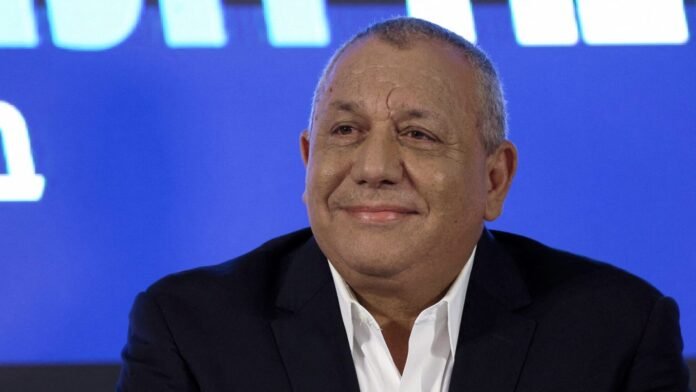
Yashar party chairman Gadi Eisenkot announced Friday that he wants to establish a national emergency government as quickly as possible to replace Prime Minister Benjamin Netanyahu, potentially relying on outside support from Arab parties to secure a minority coalition and avoid another election. 

Eisenkot said his proposal would initially bring together four Zionist parties from the Change and Reform Bloc, while allowing other parties and individual lawmakers to join immediately or later, provided they accept four founding principles, including mandatory military service. 

In a lengthy social media statement, Eisenkot said coalition negotiations had progressed considerably, with his team spending dozens of hours in discussions and holding meetings that were not publicly disclosed. 

“We have made significant progress and achieved breakthroughs, quietly and modestly, while much remains behind the scenes,” he wrote. 

Eisenkot maintained that parliamentary consultations following the elections had established broad support for replacing Netanyahu. 

“An overwhelming majority of Knesset members support change and my serving as prime minister,” he said. 

According to Eisenkot, lawmakers have withheld support for Netanyahu’s continued leadership, with only 46 favoring keeping him in office. 

He argued that Netanyahu should not remain caretaker prime minister without a majority in the Knesset, especially given his authority over Israel’s security establishment and law enforcement agencies. 

Eisenkot also accused the outgoing government of endangering Israeli democracy and allowing political considerations to influence military affairs. 

“Israel is facing a real, tangible and dangerous emergency,” he wrote, pointing to ongoing fighting and what he described as a worsening diplomatic situation. 

The Yashar chairman said the urgency of forming a replacement government justified moving forward without waiting for all potential coalition partners to formally join. 

He pledged to approach every Knesset faction and invite lawmakers who accept his proposed governing principles to participate. 

Eisenkot said negotiations were continuing, with additional meetings in recent hours, and expressed confidence that his political allies recognized the need for swift action. 


Source: Iwpost.com

The folks behind John Wick are back with Karōshi trailer

0
the-folks-behind-john-wick-are-back-with-karoshi-trailer
The folks behind John Wick are back with Karōshi trailer

Those of us missing the John Wick universe can take heart, because Chad Stahelski—who created that franchise—is coming back early next year with a new dystopian action film. It’s called Karōshi (a Japanese term that means “death overwork”), and Lionsgate released a killer trailer that puts this film at the top of my list of “must see” movies of 2027.

Dying from working too hard is a very real phenomenon, not just in Japan and much of Asia, but also in Sweden. The physical cause is usually stress-related heart attacks or strokes, as well as suicide (karōjisatsu in Japan). Writer/director Takashi Doscher has transported that concept to a grim, futuristic corporate Manhattan, specifically a company called Ikigai Technologies. Per the official premise:

Karōshi is an action-thriller set in a near-future Manhattan, where corporate loyalty and cultural tradition have reshaped everyday life. When a mysterious outsider infiltrates a powerful company after a worker’s death, he exposes the violent system hidden beneath its polished surface.

Teo Yoo (Past Lives) stars as the aptly named Hiro, who is clearly out for vengeance against the offending corporation. The cast also includes Takehiro Hira, so memorable in the 2024 miniseries Shōgun, as well as Giancarlo Esposito, Cynthia Erivo, Bill Camp, Richard Harmon, Isabel May, and Show Kasamatsu.

The trailer opens with Hira’s character lauding the contribution of Ikigai Technologies in helping shape “modern life for millions,” adding praise for employees’ “daily commitment and sacrifice.” Then we see one distraught worker deliberately falling backward to his death from the top of the company’s skyscraper. Enter our protagonist, Hiro, who suspects something more sinister is going on behind the company’s embrace of the samurai path, marked by “integrity” and “honor”—and also violence.

It’s not long before Hiro is battling all kinds of opponents in fine Wickian fashion, including using a paper umbrella to shield himself from the blood spurting from the neck of an opponent he’s just killed—a clever flourish. John Wick would be proud.

Karōshi hits theaters on February 5, 2027.

Source: Iwpost.com

Toward a transparent and stable cryptocurrency

0
toward-a-transparent-and-stable-cryptocurrency
Toward a transparent and stable cryptocurrency

<

article id=”post-952478″>

Stablecoins are moving from the fringes of crypto to the center of finance.

The US Genius Act requires issuers to hold reserves one-for-one in cash, deposits, and short-term Treasuries. That makes a digital dollar redeemable. But it does not answer a deeper question: what makes money stable?

For a stablecoin, the answer is liquidity. The closer the reserves are to cash, the more credible the promise of redemption. But a token can remain redeemable for exactly one dollar while that dollar loses purchasing power. Redemption and value are different things.

Value ultimately rests on the sovereign behind the dollar. A Treasury bill is a claim on the US government: its power to tax, to borrow, and to honor its obligations. As stablecoins grow, so will their appetite for those claims. Issuers are already significant buyers.

Yet we examine only half of the balance sheet. Debt is explicit. It has a face value, a coupon and a maturity, and markets reprice it every second. The asset side is murky.

Washington owns vast tracts of land, buildings, infrastructure, mineral rights, energy resources and spectrum. The Treasury’s latest accounts list $6.1 trillion of assets against $47.8 trillion of liabilities, and omit natural resources and stewardship land.

That matters because “full faith and credit” rests on the sovereign’s fiscal capacity, and that includes what it owns. Holders of Treasuries and dollars are implicitly pricing assets no one has counted. Implicit confidence is cheap while it holds and fragile when it does not.

Stablecoin demand makes that confidence look cheaper still. Regulated issuers are a new, structural source of demand for short-dated Treasuries, which eases pressure on government financing just when the fiscal picture is least tested.

Nobody knows how much more revenue the US can raise before higher taxes shrink the base, or at what debt level buyers hesitate. When the limits of future revenue are uncertain, the asset side can take on new significance as part of fiscal capacity.

This is not a return to a land standard. Revolutionary France tried one, issuing assignats backed by confiscated church land. They failed not because the land lost its value, but because the state issued far more paper than the land could support.

More importantly, a parcel of public land is no substitute for a Treasury bill when someone wants to redeem a dollar this afternoon.

Nor should public assets be sold off wholesale; many serve social, strategic or environmental purposes that no market price captures. Backing without discipline and transparency destroys confidence.

The proposal is simpler, and it is preemptive: a full, audited public inventory of what the sovereign owns. What exists, who controls it, what it earns, what it could be worth, and what it is for. The aim is not to offset the debt. It is to show lenders and citizens what stands behind it, before a shock forces the question.

Three things would follow. First, credibility. Markets price what they can see. Second, better stewardship. Governments that do not know what they own cannot manage it, and some assets are surely idle or under-earning.

Third, an honest debate. Some assets could be valued and structured without compromising their public purpose; others should never be touched. Only an inventory lets citizens argue over that line with facts rather than instinct.

An inventory might disappoint. That is a reason to want it now, while demand for Treasuries is strong, rather than after a shock.

US states show what is at stake. They cannot print money, so lenders must judge them by what they raise and what they own, which makes asset transparency even more important for them than for Washington.

Yet the main rating scorecards are built around cash, reserves and liquid assets; land and other non-revenue-producing public property largely sit outside them. States may be understating their own creditworthiness, and a full count could lift their ratings and significantly reduce their interest expense.

For a useful model, the UK and New Zealand already publish comprehensive government-wide accounts.

The dollar was once anchored to gold. For more than half a century, its value has rested on faith in the American state and its fiscal and monetary institutions. Stablecoins are about to put that foundation under new strain. America should not wait for a reckoning to find out what it owns.

A sovereign is not only what it owes. It is also what it owns.

William A. Mundell is the founder of WorkToOwn (worktoownproject.org) and chairman of Neurosphere Entertainment. He has taught at UCLA’s Anderson Graduate School of Management and is an honorary professor at Tsinghua University.

This article first appeared on Appia Institute and is republished with permission. Read the original here.

Source: Iwpost.com

The writing on the wall: Why Apartheid Israel is on the threshold of defeat

0
the-writing-on-the-wall:-why-apartheid-israel-is-on-the-threshold-of-defeat
The writing on the wall: Why Apartheid Israel is on the threshold of defeat
They were both born in 1948 from the womb of European colonialism. Like conjoined twins, apartheid South Africa and Zionist Israel thrived on Western patronage and structures of racism. Three decades after the 1994 demise of South Africa’s apartheid regime, Zionist Israel is hurtling toward a similar inglorious end.

While the immediate catalyst for this dramatic turn of events has been the genocide in Gaza, a key turning point in this process was set in motion in July 2005 when the Boycott, Divestment and Sanctions (BDS) movement was launched.

In the beginning, critics and naysayers claimed that it was wishful thinking to repeat what was accomplished in South Africa. They spared no effort to emphasize the specific differences between the two struggles instead of highlighting their commonalities.

Looking back at the South African experience, the end of the 1980s marked a defining period in their history. International outrage over the atrocities committed by the apartheid regime had reached a crescendo, to the degree that the political classes in Britain and the United States could no longer support the regime without jeopardizing their political and economic interests.

Their initial light ‘sanctions’ seemed sufficient to save face but not far-reaching enough to harm the investments of their multinational corporations. It was against this background of hesitancy that the global anti-apartheid movement intensified its boycott and sanctions campaign, which eventually forced the Western political and business elite to capitulate.

Today, a similar scenario is taking shape. Governments across Europe imposed sanctions against the Israeli settlements in the Occupied West Bank. While these measures are welcome steps in the right direction, they are clearly not enough because they do not target the institutions and structures that support the settler movement. And this is precisely why the cultural and sporting boycott against apartheid Israel has gathered momentum after the genocide.

In entertainment, the decision by English singer-songwriter Ed Sheeran to drop the American rapper Macklemore from his US tour after he made pro-Palestine statements has turned the latter into a cause celebre overnight. Irish musician Aaron Rowe, Danish band Lukas Graham, US artist Finneas and Irish group Beoga all pulled out of the tour after Macklemore’s removal.

When Macklemore announced his “Free Palestine” tour with three concerts in Paris, Dublin and London, tickets sold out immediately. He has announced that all the proceeds will be going to organizations supporting Palestinians.

From the world of sport, seven-time Formula 1 world champion Lewis Hamilton weighed in with his own support for Macklemore after he was removed from the US leg of Sheeran’s tour.

Hamilton commented on Macklemore’s Instagram post, writing: “Thank you for using your voice, standing with you.”

Tellingly, Macklemore explained that he does not view himself as a victim, and that the focus should instead remain on the human toll of the war in the Gaza Strip.

Still in sport, in early October 2026 fans from the Israeli football club Hapoel Be’er Sheva were banned by the Dutch authorities from attending their Europa League match against AZ Alkmaar. This move by the Dutch came exactly one year after Birmingham City Council in the UK banned supporters of Maccabi Tel Aviv FC from attending a match in the city. Although the actions taken in both instances were based on public safety concerns and not boycott per se, they do, nonetheless, underscore the growing unwillingness in Europe to tolerate racist, anti-social and thuggish behavior by Israeli football fans in their cities.

Altogether, the list of influential individuals supporting the boycott of apartheid Israel comes from a wide cross-section of society; they include musicians, artists, sports people, scientists and authors. Sally Rooney, the award-winning Irish novelist, features prominently among them. In 2021, she famously refused to sell the translation rights for her best-selling novel, ‘Beautiful World, Where Are You’, to an Israeli-based publishing house.

More recently, Rooney has emerged as a strong and outspoken supporter of the proscribed British activist group, Palestine Action. After it was banned, Rooney pledged to direct the earnings from her books to Palestine Action.

Three years into the Gaza genocide, a fundamental and decisive change has taken place in world public opinion. Neither the savvy media soundbites, character assassinations, nor contrived guilt narratives are enough to push back the tide of change. When a mainstream European political party like the Green Party in England decides to ditch the farcical two-state solution, declares Zionism a form of racism, and demands a single democratic state in historical Palestine, the writing on the wall could not be clearer. That the demise of Israeli apartheid is much nearer than was expected when the BDS movement was launched in 2005.

This article was first published at Thinking Palestine.

The views expressed in this article belong to the author and do not necessarily reflect the editorial policy of Middle East Monitor.

Source: Iwpost.com

0FansLike
0FollowersFollow
0FollowersFollow
0SubscribersSubscribe
- Advertisement -
Google search engine

Recent Posts