Italy Air Traffic Disrupted, Ryanair Flights Delayed and Cancelled, Enav Rules Out Cyberattack
Air traffic across Italy was heavily disrupted Friday by a data-transmission network failure supporting air traffic control, delaying and cancelling flights, including services run by Ryanair, as a 24-hour strike by EasyJet staff added to the chaos.
Civil-aviation authority Enav said air traffic management capacity was down by about 50% because of anomalies in the network, which began overnight. It said that from 6 a.m., flow-regulation measures were introduced as air traffic increased and the problems persisted, temporarily reducing the number of aircraft that could be handled in Italian airspace.
Enav ruled out a cyberattack or sabotage. It said technical checks, still under way, traced the origin of the problem to the data-transmission network and that it was working to identify the causes and restore full operations.
Ryanair affected
Ryanair flights were among those caught up in the delays at several airports.
At Orio al Serio airport in Bergamo province, the carrier’s 6:50 a.m. flight to Trapani took off an hour and a half late. Another Ryanair flight, to Berlin, was delayed by one hour and 20 minutes.
At Lamezia Terme airport in Calabria, delays reached three to four hours. A Ryanair flight scheduled for 7 a.m. was still waiting to depart, as was an Ita flight to Milan Linate set for 6:35 a.m. A Ryanair flight from Turin due at 11 a.m. was canceled.
At Trieste Airport, a Ryanair flight and a Tirana connection were not affected for the time being.
EasyJet strike
Air-travel specialist RimborsoAlVolo said the technical problems were compounded by a 24-hour strike called by EasyJet staff. Guaranteed service windows, from 7 a.m. to 10 a.m. and from 6 p.m. to 9 p.m., require flights to operate during those hours.
Because the strike was called by airline personnel, passengers are entitled to cash compensation of 250 to 600 euros if a flight is canceled or if they reach their final destination three hours or more late, according to RimborsoAlVolo, citing a European Court of Justice ruling.
Passenger rights
Under European regulation 261/2004, passengers are entitled to refunds and assistance, even in exceptional circumstances, RimborsoAlVolo said. If a flight is delayed for a long period or canceled, the airline must provide meals and drinks, transfers and hotel accommodation if needed.
For flights canceled because of the technical problems, airlines must offer a choice of a ticket refund, with a return flight to the departure airport if the passenger has a connection; rebooking on another flight to the final destination as soon as possible; or rebooking on a later date.
Cash compensation does not apply to the technical failure, said Kathrin Cois, RimborsoAlVolo’s managing director. Because it is considered force majeure, the delay or cancellation is not the airline’s responsibility, she said.
Other airports
At Rome’s Fiumicino airport, four departing flights, to Milan Linate, Riyadh, Tirana and Trieste, were canceled at the time of writing, while about 20 others were delayed by 15 minutes to an hour. Airport operator ADR told passengers to check their flight status with their airline.
At Milan Malpensa, the departures board showed delays from 30 minutes to more than two hours. At Linate, arrivals were delayed by 20 minutes to an hour and departures by more than an hour. Flights at Calabria’s Reggio Calabria and Crotone airports were running normally.
Jio’s IPO seeks a tech multiple for old-school mobile business
India’s largest initial public offering (IPO) opens October 21, and investors in Tokyo, Singapore and Hong Kong are being asked a simple question: What is a Jio customer’s monthly bill worth?
Jio Platforms, the Reliance-owned mobile carrier with some 524 million India-based customers, is selling 270 million new shares at 1,065 to 1,119 rupees each to raise up to US$3.2 billion at a valuation of up to $108.3 billion.
The IPO’s marketing leans heavily on artificial intelligence, satellites and a so-called “digital ecosystem.” The prospectus tells a blunter story: The average Indian customer pays only 214 rupees (US$2.22) a month in tariffs, a rate ripe for hiking.
On September 1, 2016, Mukesh Ambani told Reliance shareholders that voice calls on Jio would be absolutely free and that “the era of paying for voice calls is ending,” local publication Mint recently recalled. A decade later, that monthly bill is still Jio’s top asset.
Jio earned 1.47 trillion rupees in revenue and 300.5 billion rupees in after-tax profit in the year ended March 2026, with an EBITDA margin of 51.9%, The Hindu reported from the IPO’s prospectus. Cash left after capital spending reached 420.7 billion rupees, up from 14.5 billion two years earlier, Moneycontrol reported.
By any financial measure, Jio is a mature, cash-generating machine. At a valuation of roughly 10 trillion rupees, the shares are priced at about 34 times profit. Rival Bharti Airtel is valued at about 11 trillion rupees and earns more per customer at 257 rupees per month. The two figures, however, aren’t strictly comparable.
So where would growth come from to justify Jio’s high 34x multiple? Not likely from new subscribers. Jio added 36.2 million customers in the year to March, reaching 524.4 million, Hindustan Times reported.
Investment bank Nomura, quoted by CNBC, says India’s era of “easy subscriber gains” in the mobile space is ending and tariff increases are likely to become “the primary driver of earnings growth.”
In other words, Jio IPO investors are being asked to pay now for price increases that haven’t yet been announced. The stakes are easy to calculate. A 10-rupee rise in monthly average revenue per unit (ARPU) across Jio’s 524.4 million customers would add about 63 billion rupees in annual revenue, roughly a fifth of last year’s profit. The company’s ballyhooed AI roadmap offers nothing comparable.
The IPO prospectus earmarks up to 275 billion rupees, about 91% of the 302 billion to be raised, to repay borrowings at the telecom unit. That is, the new capital would be used mostly to retire old debt rather than to finance new AI and satellite ambitions that carry the sales pitch to IPO investors.
The rest is scheduled to go to general corporate purposes, including capital spending. Sahi reported from the filing that Jio’s return on average capital employed slipped to 10.76% in fiscal 2026. On that measure, a company priced like a next-generation technology platform is earning only a utility’s return.
Significantly, no existing Jio investor is selling. Among them are Meta, Alphabet, Mubadala and Saudi Arabia’s Public Investment Fund, which together put $20.5 billion into about a third of the company in 2020, at valuations of $57 billion to $65 billion, according to Reuters.
At the top of the new range, their stakes are worth 1.7 to 1.9 times their entry valuations. The American technology giants and sovereign funds are holding, not selling, while new money is being asked to buy in at a price already below the $130 billion valuation floated a year ago, CNBC reported.
The public float is about 3% of the company’s value, based on the $3.2 billion to be raised, so a small slice of shares will conceivably set the price for the whole. Meanwhile, Jio’s revenue flows through a single channel.
Reliance Retail is the sole distributor of Jio’s prepaid services, and prepaid revenue through it made up 77.08% of consolidated revenue, The Hindu reported. Minority shareholders will own a company whose parent, Reliance Industries, controls its main sales channel.
The IPO filing is frank about what could blunt the tariff hike strategy. Jio warns that India’s data-protection and telecom rules may limit how it can monetize data. A company that can’t easily turn its audience into advertising revenue must convert it into higher bills.
Elon Musk, who called Jio “monopolistic” last week, has made satellite competition with it a live question. Indeed, geopolitics are raising the IPO’s risk. Jio is the largest operator in a market where Musk’s Starlink wants to enter, and Indian regulators, not the IPO’s order book, will ultimately decide the contest.
Currently, Jio carries 60% of India’s mobile data traffic. If Starlink wins approval to sell satellite broadband in India, regulators will have a competitor to point to, and may thus scrutinize Jio’s price increases more closely.
So the test for Asian investors is not whether Jio is a technology company. Rather, it depends on what the shares are worth if Jio’s next price rise is smaller or comes later than the market expects. At a valuation of 34 times earnings, there is little room for error or deflated expectations.
If ARPU rises toward 250 rupees per month without losing market share, the price will look modest. If not, the valuation must rest on Jio’s AI story, which has yet to earn a margin to match.
A decade ago, Jio said the era of paying for calls was ending. Its IPO now asks investors to bet that paying more for those same mobile services is the future.
Sidhhant Kapai is an Indian writer and journalist whose commentary on business, technology and democratic institutions appears in The Hindu, The Indian Express, The Central Chronicle, Navbharat, Bandra Buzz and Asia Times. A three-time gold award winner of the Queen’s Commonwealth Essay Competition and recognized by the Obama Foundation as one of India’s young emerging leaders, he founded the creative practice VAARYA Creative. He is an admitted scholar to Columbia University, where he is researching the gap between what institutions say and what their records show.
Israel Bars Airline Crews From Dozens of Countries After Flydubai Attack
Israel has barred pilots and cabin crew members who hold citizenship or dual nationality from countries without official diplomatic relations with Israel from operating flights into or over its airspace, prompting several international airlines to revise crew assignments.
The restrictions cover nationals and dual nationals of more than 30 countries without formal relations with Israel, including Pakistan, Iran, Oman, Saudi Arabia, Algeria and Tunisia. The rules apply to both flight deck personnel and cabin crew.
The directive follows a September 30, 2026, incident in which an Omani co-pilot allegedly attacked an Indian captain and attempted to hijack a Flydubai flight traveling from Dubai to Tel Aviv.
International carriers have adjusted their crew planning to comply with the restrictions, including Air France, US-based United Airlines and Czech carrier Smartwings.
Air France has barred Pakistani pilots and cabin crew members from working on flights to and from Israel as Israeli authorities tighten enforcement of the rules. The restrictions apply to airline employees based on their nationality and also cover crew members who hold dual citizenship in the affected countries.
Enforcement of the policy also resulted in an Ethiopian Airlines flight being ordered to return to Addis Ababa after Israeli authorities discovered that an Indonesian pilot was aboard the aircraft.
Airlines operating services affected by the Israeli requirements have revised assignments to ensure that pilots and cabin crew from countries covered by the restrictions are not scheduled on those flights.
The new Roadster, we’re told, will be unlike anything else, although the angular, wedge-shaped styling owes more than a little to Marcello Gandini’s original Lotus Esprit—Musk is known to own a James Bond prop car—as well as the more recent Lamborghini Gallardo. At the rear are four giant exhaust pipes; these do not signal Tesla’s sudden embrace of hydrocarbons beyond those emitted by private aviation.
Rather, it’s where 100,000 psi jets of compressed nitrogen shoot out. It’s early in the morning and the Federal Motor Vehicle Safety Statutes are dense reading, so I am yet to find the section where it explains how and when it’s legal to use such a thing on the road.
The presence of exhaust pipes don’t signal that Tesla rolls coal… yet.
Credit: Tesla
The presence of exhaust pipes don’t signal that Tesla rolls coal… yet. Credit: Tesla
Unusually, Tesla says it stuck with rear-wheel drive for the new electric vehicle. The battery pack uses the troubled 4680 cells it has been trying to scale up in-house; customer complaints of poor performance were presumably the driving force behind developing what the company says is a special battery chemistry just for this model.
Some of the performance claims are even more grandiose than nine years ago. Now, Musk claims a planned top speed of 383 mph (616 km/h), with a 0-60 mph time of 0.8 seconds. And as with the last time this happened, there are already other EVs on sale that are more capable than Tesla’s vaporware claims.
You want to drive upside down?
And right now, that’s the McMurtry Spéirling, which looks like a miniaturized Batmobile (the good Michael Keaton one) and which is capable of generating up to 3.5 lateral Gs. The best Tesla claims for the new Roadster is 2 Gs. Oh, and the Spéirling will most definitely drive upside down.
An EV you can buy that can drive upside down.
The Spéirling has also set a faster lap time around the Top Gear test track than an F1 car, blitzed the Goodwood Hill Climb record, and I’m pretty sure would demolish Volkswagen’s untouchable Pikes Peak time if it gave it a shot. McMurtry has sold at least 24 of the planned 100-car production run.
In 2022 McMurtry went faster up the Goodwood hill than anyone else, including an F1 car.
McMurtry
In 2022 McMurtry went faster up the Goodwood hill than anyone else, including an F1 car. McMurtry
Crazy looks are rewriting performance.
McMurtry
Crazy looks are rewriting performance. McMurtry
In 2022 McMurtry went faster up the Goodwood hill than anyone else, including an F1 car. McMurtry
Crazy looks are rewriting performance. McMurtry
Will any of this happen?
Musk claims that the Roadster will go into production by 2028. But the CEO has a long and glorious history of overpromising and underdelivering; in 2017 he told attendees at the previous launch that “We are making it now.” Using the company’s referral program, some people were in line to receive two free cars. But those free cars never showed up, and neither did the ones that people put down $50,000 deposits for: last year Sam Altman discovered how hard it can be to get that money back.
And it’s not like there’s actually much of a market for very expensive, very fast EVs: hypercar buyers want noise and an emotional connection, and they don’t get that from an EV.
Its stratospheric valuation was predicated in large part upon promises of constant growth, something that perhaps seemed possible when its marketshare was near total and there was little competition for EVs. But now Europe and China have hundreds of models to choose from—only two of which are offered by Tesla. The Models 3 and Y are both increasingly aged, and Tesla has shown little ability to innovate rapidly like the Chinese brands that have taken so much of its sales away there. In fact, it might even leave the Chinese market.
But as Musk has told us time and again, Tesla is no longer a car company. Currently, he seems more interested in merging Tesla with SpaceX, claiming synergies having to do with AI despite most of his AI-derived revenues coming from renting GPU time to others. But a merger would give SpaceX a backdoor into the S&P 500 index, which rejected the rocket company in June, as it requires several consecutive profitable quarters for inclusion. Should Musk succeed, he will have access to billions of dollars from passive investment funds that invest retirement accounts in the S&P 500. Apparently that could happen before the end of the year.
Trapeze Artist Doctor Killed Himself and Daughter, 3, During Plane Ride
A Colorado emergency room doctor and his 3-year-old daughter were killed when their small airplane crashed into rugged mountain terrain following an unusual flight that lasted nearly three hours.
Dr. Aaron Gingrich, 43, was piloting a single-engine Diamond DA40 with his daughter, Isabella, aboard when the aircraft went down near Eldorado Springs, southwest of Boulder, on the night of October 4.
Now, federal investigators are examining the plane’s flight path and final moments as questions remain about what caused the devastating crash.
One particularly troubling detail has emerged from radio communications recorded earlier that evening.
Another pilot reportedly criticized Gingrich for a dangerous maneuver shortly after takeoff, accusing him of interfering with other aircraft in the airport’s traffic pattern.
But investigators have not established whether that encounter had any connection to the fatal crash nearly three hours later.
According to the National Transportation Safety Board, Gingrich departed Vance Brand Airport in Longmont, Colorado, at approximately 6:32 p.m.
The plane initially traveled west and south before flying southwest of Boulder at altitudes reaching approximately 12,000 feet.
It later headed about 68 miles northwest, climbed as high as 15,000 feet and eventually reversed course.
Flight-tracking information shows the aircraft made several changes in direction during its journey through northern Colorado.
Although the route has raised questions, the NTSB has not determined that the flying was reckless or that the unusual path caused the accident.
The final portion of the flight took the aircraft toward the mountains near Eldorado Springs, where it crashed at approximately 9:30 p.m.
The wreckage was later located at an elevation of roughly 7,360 feet.
The accident occurred in an area of steep, heavily wooded terrain, creating significant challenges for emergency crews attempting to locate the plane in darkness.
At approximately 9:42 p.m., the Boulder County Communications Center received an alert from the U.S. Air Force Rescue Coordination Center about a possible aircraft crash.
A distress beacon had activated near Eldorado Springs, close to the plane’s last reported radar position.
Sheriff’s deputies and search-and-rescue teams immediately began looking for the missing aircraft.
Crews spent hours searching the mountainous area overnight, with a medical helicopter equipped with night-vision technology assisting from above.
Despite their efforts, the aircraft could not be found in the darkness.
The following morning, October 5, a medical helicopter and the Civil Air Patrol located the wreckage north of Eldorado Canyon State Park and south of the Flatirons.
A drone team helped guide rescuers toward the remote site.
Emergency personnel reached the aircraft around noon and made the heartbreaking discovery that neither occupant had survived.
On October 9, the Boulder County Coroner’s Office identified the victims as Gingrich and his young daughter.
Their deaths devastated relatives, friends and colleagues who remembered the doctor as an accomplished medical professional with a wide range of interests.
At the time of his death, Gingrich was an instructor in the Department of Emergency Medicine at the University of Colorado Anschutz Medical Campus.
The university issued a statement mourning his passing and offering condolences to his family.
Gingrich had built an extensive career in medicine, working in several American states and internationally.
He was also a graduate of Columbia University and had reportedly earned his private pilot certificate in 2016.
Outside his medical career, Gingrich pursued an unusual passion for aerial performance.
He was involved in trapeze and circus arts, developing friendships with performers around the world.
Following his death, a Swiss-based trapeze group shared an emotional tribute remembering him for his kindness, positive energy and love of music.
The group described him as someone whose enthusiasm and warmth would be deeply missed.
But the tragedy has been especially devastating for Isabella’s mother, Lauren Willcox, who is now mourning the loss of her little girl.
Friends organized an online fundraiser to help Willcox create a memorial honoring her daughter.
The appeal described Isabella, affectionately known as Bella, as a deeply loved child whose sudden death had left the family heartbroken.
Organizers said donations would help fund a special memorial, with any additional money potentially supporting a charitable donation or a permanent tribute in the Boulder community.
As the family grieves, investigators are continuing to reconstruct the aircraft’s final flight.
The NTSB has confirmed that the plane was destroyed in the crash and that both occupants suffered fatal injuries.
Investigators plan to examine the aircraft’s engine and airframe, review available flight data and evaluate other evidence that could help determine what happened.
The NTSB’s preliminary findings describe the aircraft’s route and circumstances but do not identify a probable cause.
The earlier radio exchange involving another pilot remains one of several details attracting attention.
According to audio reported by the Daily Mail, the other pilot accused Gingrich of cutting in front of aircraft in the traffic pattern and creating an unsafe situation.
However, the allegations contained in that recording have not been established as contributing factors in the crash.
Likewise, there is no official finding that Gingrich intentionally flew the aircraft into the mountain.
For now, investigators have not ruled publicly on whether pilot actions, mechanical problems, environmental conditions or another factor led to the accident.
The NTSB’s final report will be critical to understanding the sequence of events.
For Isabella’s family, however, the loss extends far beyond the technical questions surrounding the flight.
A father and his 3-year-old daughter boarded a small airplane for an evening journey over Colorado.
Neither returned home.
And as investigators work to determine why the plane crashed, those who knew them are remembering two lives lost in a tragedy that has left an entire family searching for answers.
Can India’s cockroach movement reverse its democratic decline?
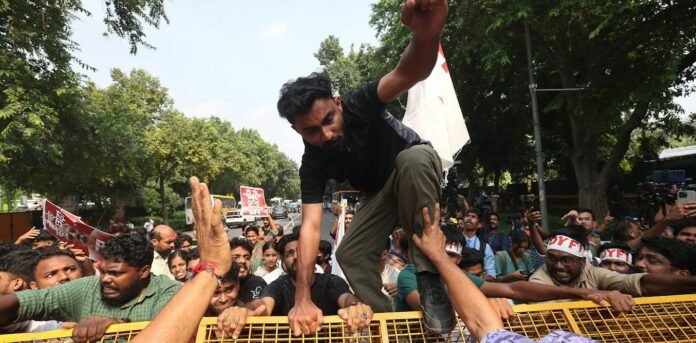
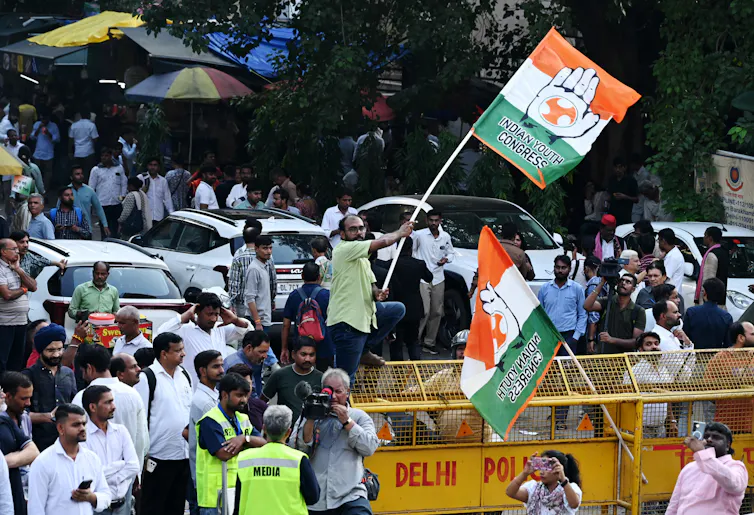
More than 25,000 police officers were deployed across New Delhi recently to prevent demonstrations led by India’s new youth-led political movement, the Cockroach Janta Party (CJP). Government authorities had denied the CJP permission to protest on public-order grounds.
The protests underscore a paradox at the heart of Indian politics. On the one hand, they show just how far India’s democracy has declined. On the other, they offer up glimmers of the key ingredients needed for democratic renewal: widening political participation, greater opposition coordination and mobilisation around concrete demands.
The protests grew out of discontent over a nationwide electoral roll review known as the Special Intensive Revision. The revision, which began in 2025, has removed more than 130 million names from eligible voter lists – almost a tenth of India’s entire population.
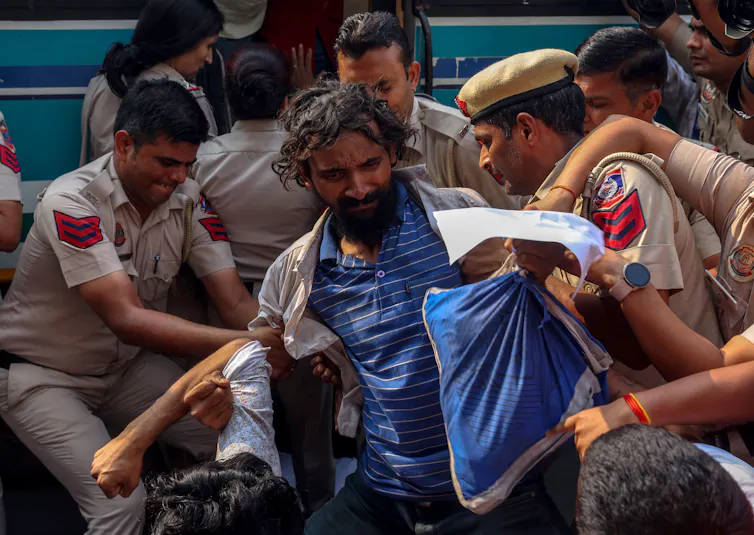
Indian police detain a protester during a demonstration in New Delhi on October 13.Rajat Gupta / EPA
India’s Election Commission has led the revision and says it is necessary to remove duplicate and ineligible voters. But critics allege the review has political motivations. In the state of West Bengal earlier in 2026, almost 12% of registered voters were removed from voter rolls before India’s ruling Bharatiya Janata Party (BJP) sailed to an election victory in a state it had not previously governed.
One analysis found that in a large number of constituencies the BJP won, the number of deleted voters exceeded the party’s margin of victory. These events do not definitively prove that Special Intensive Revision deletions changed the state election results. But the pattern is troubling.
So when the Indian Express recently reported that Election Commission members themselves raised 14 objections to voter exclusion during the revision, all of which were overruled by Chief Election Commissioner Gyanesh Kumar, the CJP called for his resignation and took to Delhi’s streets.
All of this is occurring in the context of considerable democratic decline under Narendra Modi’s government. This has taken the form of executive centralisation, intensified use of anti-terror laws and growing media ownership concentration.
No democracy watchdogs currently classify India as a full democracy. In 2021, Freedom House downgraded India from “free” to “partly free”, while the Sweden-based V-Dem Institute now classifies the world’s most populous country as an “electoral autocracy”.
Arresting the decline
The protests are unlikely to arrest India’s democratic decline. Modi’s government is powered not just by the BJP, but also the Rashtriya Swayamsevak Sangh. This is a century-old Hindu nationalist organisation with well-organised networks extending into schools, unions, charities and neighbourhoods.
The combination of deep grassroots organisation and effective government control of media makes Modi’s government extraordinarily capable of mobilising supporters. These advantages help explain why Modi has remained in power for 12 years in a country historically known for turning incumbents out of power.
But the cockroach movement is getting three aspects of its political activism right. First, the movement has begun to restore a sense of political efficacy in India, or the belief that collective action can force a powerful government to retreat.
Earlier in 2026, CJP-led protests successfully forced Modi’s education minister, Dharmendra Pradhan, to resign over a scandal involving leaked exam papers. The stakes are extremely high. In a country where university graduates make up two-thirds of unemployed 20-29 year olds, success in such exams offers a rare pathway to upward mobility.
One indication that participation in the protest movement is now widening came from popular Indian YouTuber, Dhruv Rathee. In a recent interview, Rathee told the BBC that he was not a political figure but now felt compelled to participate in his first protest because “basically the foundation of our democracy is at stake here”.
The protests have brought together forces from across Indian society.Vipin / EPA
Second, the protests have brought together previously distinct forces across broad sectors of Indian society. For example, lawyers, farmers’ organisations and activists have come together to back the protests.
It is especially important to coordinate the CJP and the Indian National Developmental Inclusive Alliance (India) of opposition parties. This is because challenging a dominant party at the polls requires above all opposition coordination.
Opposition groups need not agree on every policy. The CJP is able to supply youth mobilisation without the historical baggage of an established opposition party, while the India bloc can bring parliamentary representation and organisation.
Third, protests are more effective when they coalesce around a clear and specific demand. Mahatma Gandhi’s 1930 Salt March, a 24-day, 240-mile march to protest the British colonial monopoly on salt production and trade, epitomised this strategy. It brought together broad social alliances in opposition to a discrete policy that could be reversed.
A focused demand, in this case the resignation of the chief election commissioner, also gives any movement strategic flexibility. This includes the ability to pause mobilisation after concessions without entirely dissolving the coalition that produced it.
India’s incumbent government retains formidable advantages. The BJP has enormous organisational resources and nearly three years remain before the next national election in 2029, though an upcoming 2027 election in India’s largest state of Uttar Pradesh will provide an important test of the government’s popularity.
That is ample time to outlast protests, exploit opposition divisions and wait for public attention to shift elsewhere. So, the recent demonstrations have not reversed India’s democratic decline. But they have widened political participation, focused public attention on the institutions that underpin democracy and weakened the belief that public resistance is futile.
TSMC’s global buildout faces crucial capital efficiency test
TSMC expects overseas manufacturing to reduce its consolidated gross margin by nearly two percentage points in 2026, with the impact widening to three to four points later in its expansion program.
The company plans to spend $60 billion to $64 billion on capital expenditure this year. Its latest outlook calls for fourth-quarter revenue of up to $54.3 billion, putting full-year revenue growth at roughly 44% in US dollar terms. Third-quarter profit rose 69% from a year earlier.
Demand for TSMC’s chips underwriting the investment program. But the pace of expansion is becoming a financial question in its own right.
On an October 15 earnings call, CEO C.C. Wei said TSMC has nearly 20 semiconductor facilities in development worldwide, including 13 advanced manufacturing and packaging fabs in Taiwan and another five or six overseas. That compares with the four or five new buildings the company would typically have under development simultaneously.
For a chip-maker whose economics have benefited from decades of concentrated production in Taiwan, geographic expansion carries a measurable cost. How much of that cost can be recovered through scale, productivity and customer demand is unclear.
TSMC reported a third-quarter gross margin of 66.4%, down from 67.7% in the preceding quarter. Management attributed the decline primarily to the initial ramp of its 2-nanometer (N2) technology, which accounted for 8% of wafer revenue.
The cost of overseas manufacturing is a separate issue. New factories require substantial investment before production begins, while labor, construction, supporting infrastructure and local supply chains operate under different cost conditions.
TSMC CFO Wendell Huang expects overseas operations to dilute consolidated gross margin by close to two percentage points for 2026. As additional facilities start production, that impact is expected to widen to three to four points later in its multiyear plan.
TSMC expects greater manufacturing scale in Arizona, productivity improvements and cooperation with suppliers and customers to moderate the cost premium. Gross-margin dilution measures the effect on consolidated profitability. It does not show the return on invested capital of individual factories, which TSMC does not disclose.
Unusualdecision
TSMC expects a new 3-nanometer (N3) fab in Tainan to enter volume production in the first half of 2027. Management has now approved another facility at the same location, scheduled to begin production in the first half of 2028.
Wei acknowledged that TSMC has historically avoided adding capacity to a process node after reaching its original target. The additional investment reflects demand that has exceeded earlier assumptions.
TSMC is also converting compatible 5-nanometer (N5) equipment to support N3 production, alongside productivity improvements and capacity optimization. These decisions have implications for capital efficiency.
Equipment conversions allow an established manufacturing base to support additional production, although conversion and qualification still require investment. Building a new fab involves a much larger capital commitment and a longer period before production reaches mature utilization.
The decision to add another N3 fab also signals that TSMC expects substantial demand for the process well beyond the introduction of N2 manufacturing.
TSMC has completed construction of its second Arizona fab and begun installing equipment. Volume production is now scheduled for the third quarter of 2027, slightly earlier than previously planned. In Japan, the company plans to introduce N3 manufacturing at its second fab, with volume production scheduled for 2028.
Arizona’s accelerated schedule brings forward the opportunity to generate revenue. The factory must still progress through equipment qualification, yield improvement and utilization ramp-up before reaching mature operating economics.
TSMC has decades of experience transferring process technology between manufacturing sites. Its overseas factories must apply that experience within different labor markets, supplier networks and infrastructure conditions.
Government incentives and customer participation can lighten the capital burden of individual projects. How much depends on the terms of support, the timing of payments and the operating costs that remain once production begins.
A successful technology ramp will demonstrate manufacturing capability. The financial outcome will depend on the operating profit generated relative to the capital committed.
Nextinvestmentcycle
On the earnings call, Huang acknowledged rising equipment, material and labor costs. He reiterated that capital expenditure during 2026–2028 would be substantially higher than in the preceding three years.
Outside estimates suggest that spending could rise sharply again in 2027. According to Bloomberg, Goldman Sachs forecasts capital expenditure of $85 billion while UBS expects $90 billion, compared with a $75 billion average among analysts surveyed by the wire service.
These are analyst forecasts, not company guidance, but they nevertheless show the scale of capital commitments the market is beginning to anticipate.
Management expects revenue growth to outpace capital expenditure if its plans are executed successfully. TSMC’s strong earnings and revenue outlook provide support that expectation, although concerns persist about the sustainability of the broader AI infrastructure buildout.
Customer demand can justify additional capacity without guaranteeing that each new facility will match the economics of TSMC’s established operations. Annual revenue growth alone does not measure the return on new factories. Depreciation, operating costs and sustained utilization all affect the economics of the investment.
TSMC is expanding N2 manufacturing, developing future process generations, increasing advanced packaging capacity and building facilities across several countries. These investments have different production schedules and cost structures.
It’s mature Taiwan-based operations will continue to shape consolidated margins as overseas factories move through construction and production ramps. Strong group profitability may therefore conceal substantial differences in the economics of individual facilities.
The overseas cost premium is already reflected in management’s margin forecasts. Whether that premium narrows as the new factories reach scale will depend on utilization, productivity and the operating costs of manufacturing outside Taiwan.
The financial test of TSMC’s global expansion will be the profit generated by the additional capacity relative to the capital required to build it. That measure will also show what geographic diversification costs the semiconductor industry.
Ron Honig is co-CEO andmanagingpartner of From-Honig Family Office. He has more than two decades of experience in the semiconductor industry, including at Intel.
The views expressed are those of the author and are provided for informational purposes only. This article does not constitute investment advice or a recommendation to buy or sell securities. Management forecasts are subject to uncertainty.
The Surface Laptop Ultra delivers on most of Microsoft’s promises
Over the past week, the laptop Microsoft sent me has been summarizing books and movies, generating images from my imagination, and running a 70-billion-parameter AI model that would be a stretch to fit on most laptops. It also played AAA games at a speed and fidelity I would have thought impossible on an ARM system just a year ago. Microsoft wants to sell you one computer for all of your needs, and for once that doesn’t feel like total marketing fluff. Mostly.
Microsoft is throwing both arms around the new Nvidia RTX Spark platform with the Surface Laptop Ultra—and setting its sights on the would-be MacBook Pro buyer, or as the company called it, “a high performance audience.” The bet is that rather than a gaming desktop for fun and a development laptop for work, buyers will pay more for one machine that does both.
The Surface Laptop Ultra arrives at a strange time in personal computing. Recent industry numbers showed a 20 percent drop in total PC shipments year over year in the third quarter of 2026. That’s not just consumer purchasing either—that’s across the board. Between the RAMpocalypse that has exploded consumer prices and an industry fixated on enterprise money, there hasn’t been much new hardware to excite PC enthusiasts.
Microsoft isn’t the only one debuting an RTX-chipped laptop. Dell’s XPS 16 Creator Edition and Asus’s ProArt series (our own Ryan Whitwam‘s review should be appearing on the front page soon) are betting on the chipset as well. The question when reviewing the Surface Laptop Ultra isn’t whether it can achieve the things that it claims competently, but whether there’s finally a compelling reason for power users to switch to an ARM system, and whether their daily workloads can still be achieved without hiccups when compared to a more traditional x86 offering, or the biggest competitor within the segment, the MacBook Pro.
With a starting price of $2,599, this is not a budget alternative to Apple silicon. This is bleeding-edge hardware, and you’re going to be paying a premium for it. Depending on your selected processor and memory options, MSRP can reach as high as $5,899. Prospective buyers should note that the lower-specced 24GB unified memory model ships with Windows 11 Home, while the rest of the fleet arrives with Windows 11 Pro. I received the 64GB model for testing, and I think that would probably be the sweet spot for a lot of users to align cost and performance.
I really have to wonder if 24GB is enough to go around when we know that Windows 11 is memory-hungry on its own. When you have to assign a significant portion of that 24GB of unified memory to VRAM for gaming, does performance suffer? An audience question inside the Surface Laptop Ultra review information session asked about the usefulness of the base model, and didn’t get much back other than a vague “useful for smaller models locally” answer. Microsoft may have a more definitive answer to that question a few months from now when software and drivers catch up with hardware.
So has the Microsoft and Nvidia team-up created the ultimate all-in-one laptop? Or is this the industry once again putting the hardware hype cart before the finished-software horse?
Surface Laptop Ultra specs
Specs at a glance: Surface Laptop Ultra
Base config
As reviewed
Screen
3:2, 15-inch mini-LED touchscreen; 3270×2180 (262 PPI) up to 120 Hz dynamic
3:2, 15-inch mini-LED touchscreen; 3270×2180 (262 PPI) up to 120 Hz dynamic
2 x USB-C/USB4, 1 x USB-C/USB4 w/ Mag Connect, 1 x USB-A 3.1, 1 x HDMI 2.1b, SD Card Reader, 3.5mm Headphone Jack
2 x USB-C/USB4, 1 x USB-C/USB4 w/ Mag Connect, 1 x USB-A 3.1, 1 x HDMI 2.1b, SD Card Reader, 3.5mm Headphone Jack
Size
12.95×9.40×0.71 inches
12.95×9.40×0.71 inches
Weight
4.41 lbs (2.0 kg)
4.41 lbs (2.0 kg)
MSRP
$2,599.99
$4,299.99
Additional features
1080p front-facing webcam
1080p front-facing webcam
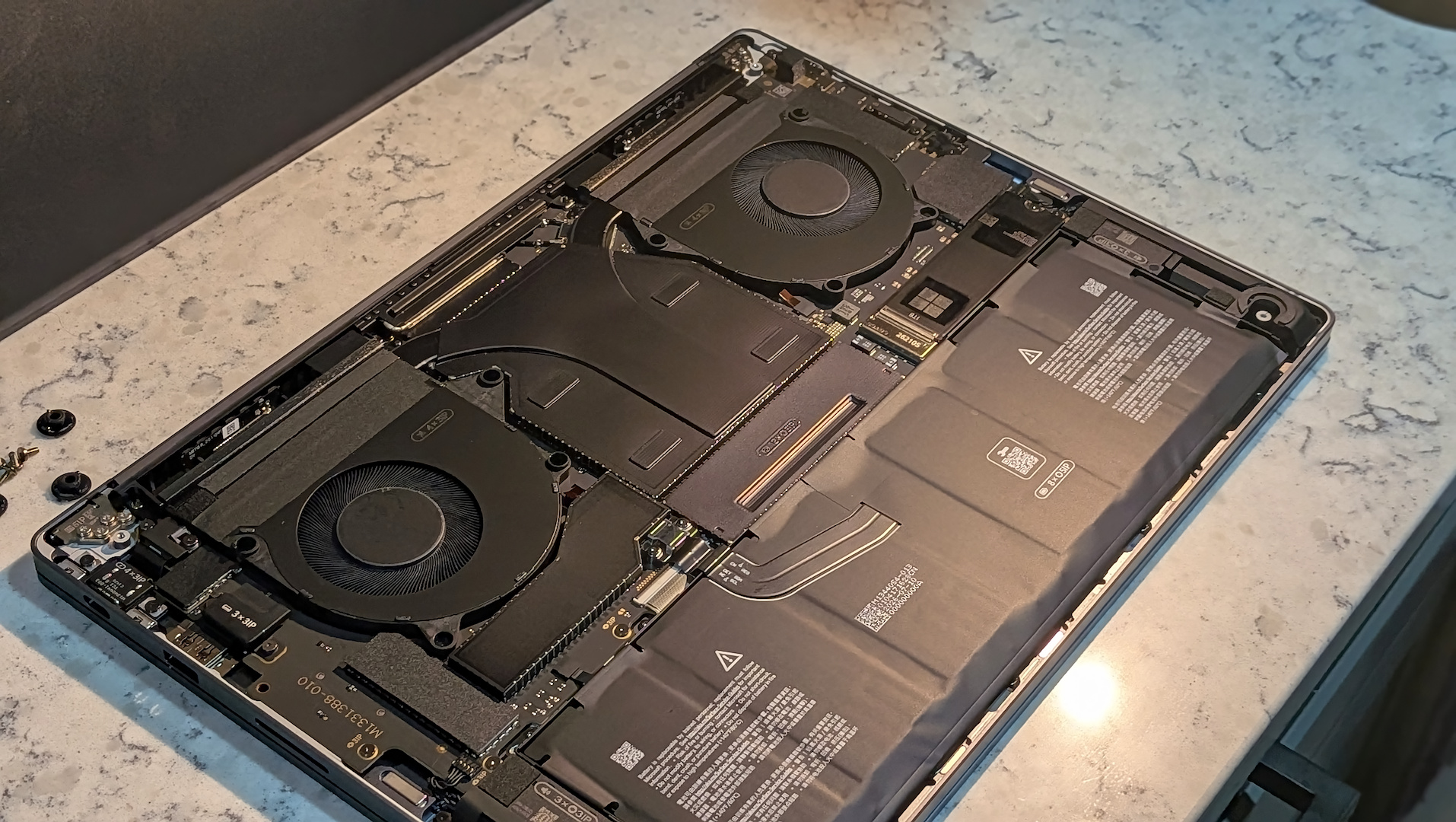
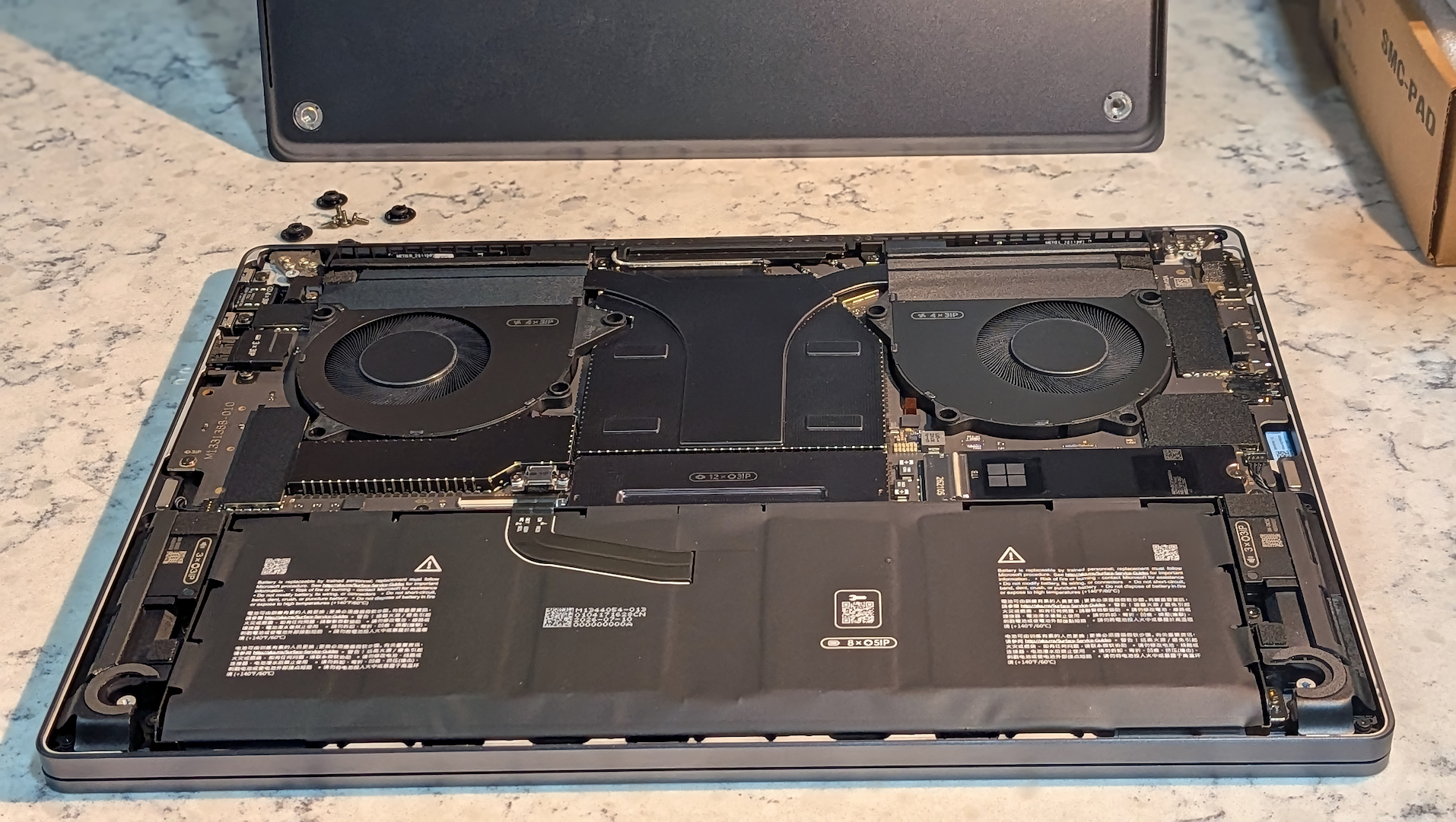
Tidy internals of the Surface Laptop Ultra. Microsoft promises the laptop is “built with serviceability in mind.”
Tidy internals of the Surface Laptop Ultra. Microsoft promises the laptop is “built with serviceability in mind.”
Display
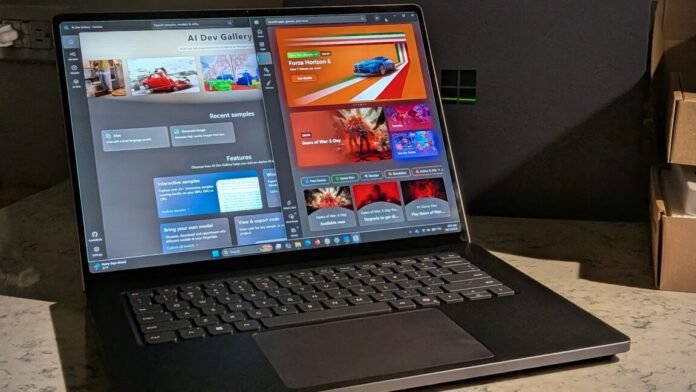
The 15-inch mini-LED display might not be enough to get folks to run to the Ultra on its own, but it’s a compelling reason to add it to the list. The 3270×2180 native resolution looks simply stunning whether you’re watching a 4K video, playing games, or just staring at a desktop spreadsheet. I preferred the Enhanced color profile, but Vivid and sRGB modes looked fantastic as well.
Not the easiest to photograph, but the screen is stunning in person.
Not the easiest to photograph, but the screen is stunning in person.
Blacks stayed deep against bright, vivid subjects without any sort of visible blooming. I wish I could say the same for my TV. While I can’t quantify how it stacks side by side with the latest MacBook Pro Retina display, I can say that this is a damn nice screen. Viewing angles are superb, colors are punchy, and the 2,000-nit peak brightness kept things legible even in a room flooded with natural sunlight. My only gripe is that in bright rooms, there is glare to contend with. The glossy glass looks fantastic at lower light levels but can act a bit mirror-like in direct sunlight. It hindered my ability to photograph the screen more than it did my ability to use the computer. Still, if you’re looking for a matte-screen laptop, you might want to keep that in mind.
Big Buck Bunny in 4k looks incredible on this screen.
Big Buck Bunny in 4k looks incredible on this screen.
Keyboard and trackpad
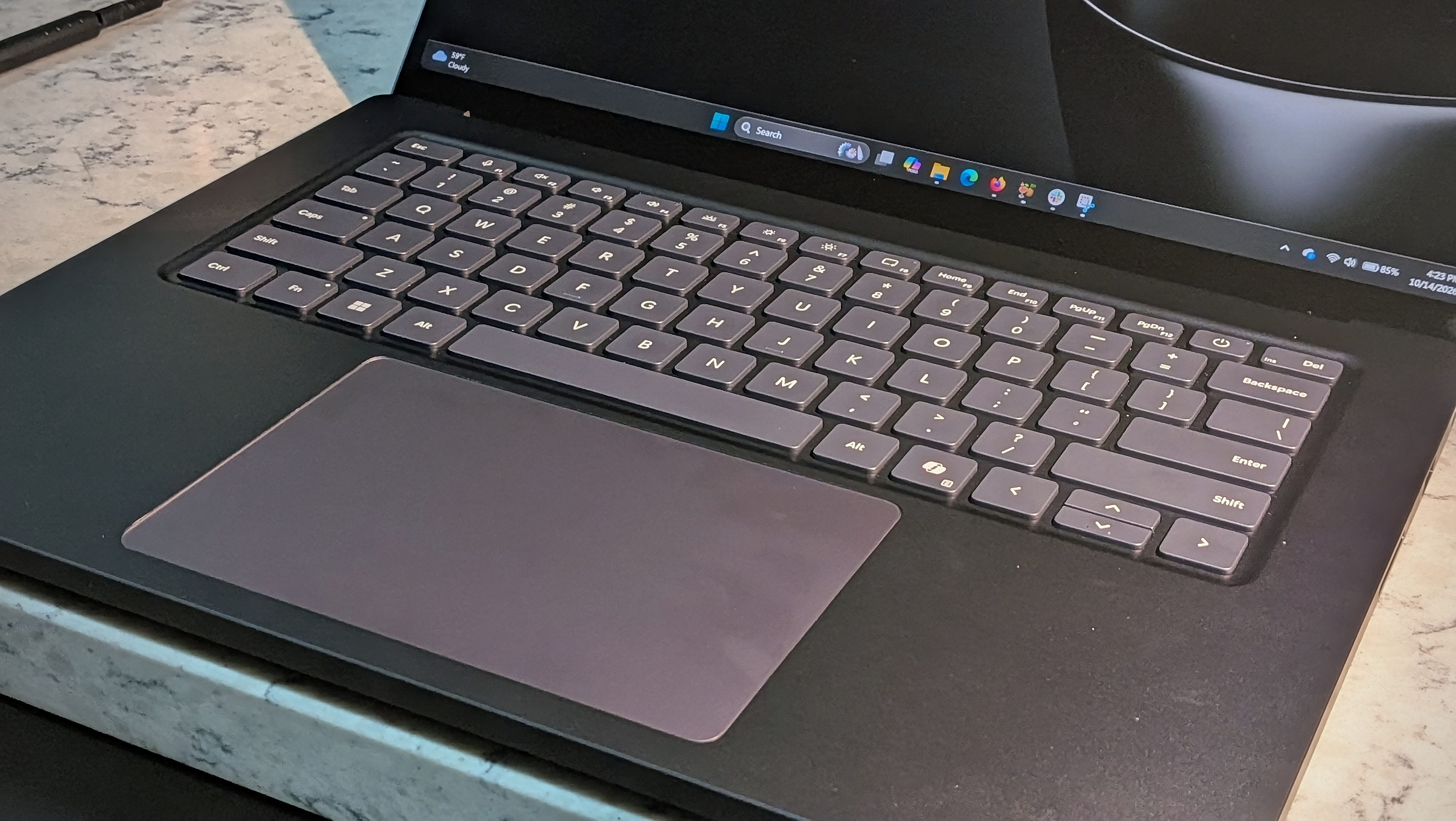
The keyboard on the Surface Laptop Ultra is exactly what you’d expect on a premium machine like this. It’s excellent, if unremarkable. The keys have a shallow but satisfying press, the spacing makes sense for my hands, and the whole package delivers a very comfortable typing experience. I don’t have a whole bunch of laptops lying around to compare it to, but unsurprisingly, the closest would be my 2020 MacBook Pro. Microsoft knows what market it’s going after here, and I don’t mind them lifting direct inspiration from Apple in this department.
Both the keyboard and the trackpad are excellent.
Both the keyboard and the trackpad are excellent.
The trackpad is similarly competent. It’s absolutely huge, measuring 5.5 inches long by 3.5 inches tall, with excellent tracking accuracy throughout my testing time. Normally, one of the first things I do when plugging in a laptop to work from is to attach an external mouse, but over days of testing, I never reached for the mouse drawer. Microsoft made a point to emphasize the trackpad’s haptic feedback capabilities in native programs during the review information session. I’m not sure if there are still updates left to come that I haven’t received yet, but I can’t recall a time when I noticed additional mouse haptics had kicked in when I opened MS Office or anything. As it stands, the trackpad isn’t groundbreaking, but it is premium enough to be part of an “ultra” laptop.
Magnetic USB-C charging
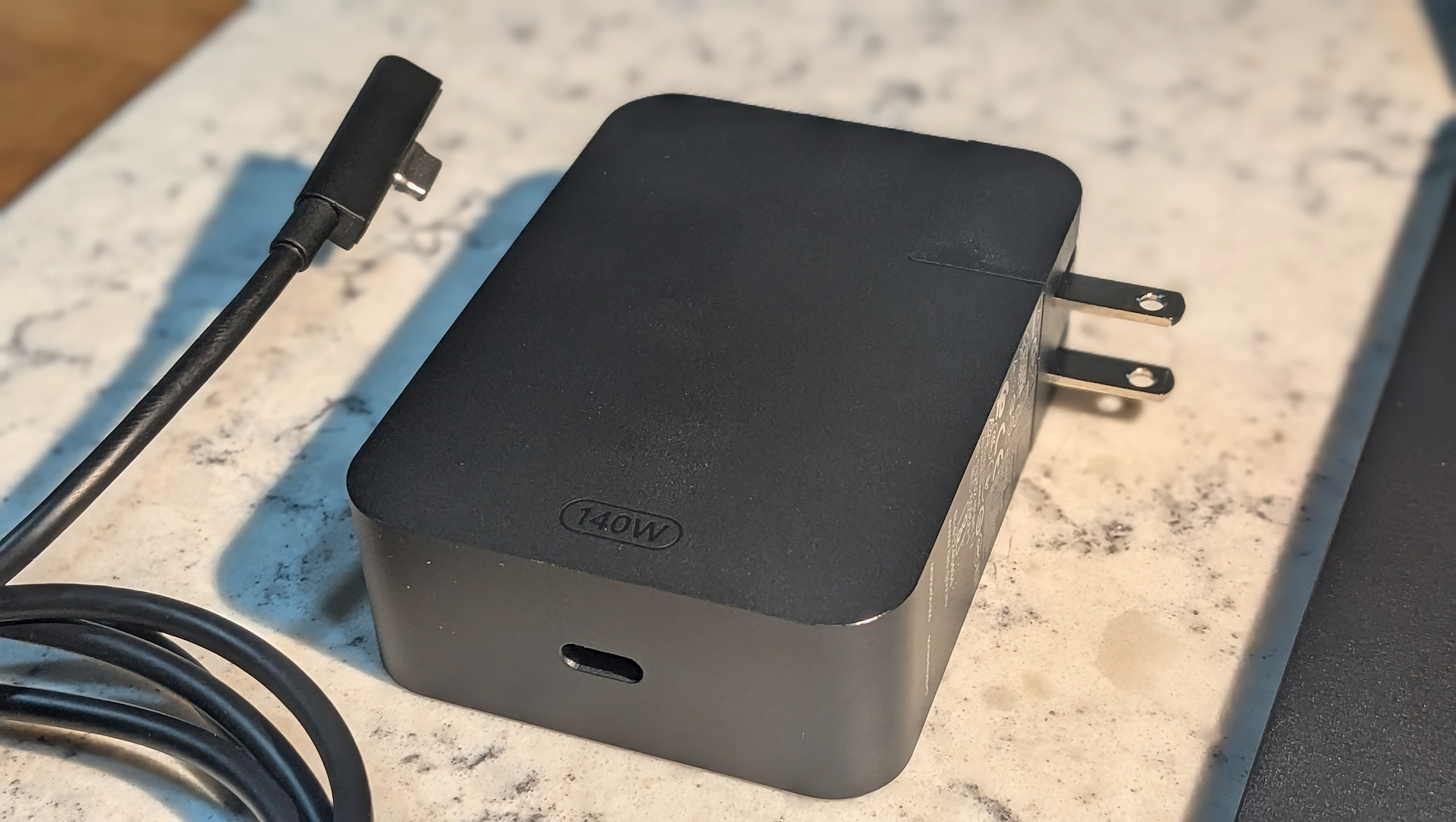
Microsoft describes the included magnetic charging connection and port as being “the world’s first built-in magnetic USB-C charging experience.” It’s difficult to get upset about the marketing department doing their jobs, but this claim struck me as more of a technical truth than engineering feat. Apple’s MagSafe charging debuted on the original MacBook Pro all the way back in 2006. The concept of a breakaway magnetic charger isn’t anything new, but technically Microsoft’s assertion holds water in that it is the first USB-C connector on a laptop with a matching magnetic port, rather than a proprietary connector.
The charging brick and magnetic cable.
The charging brick and magnetic cable.
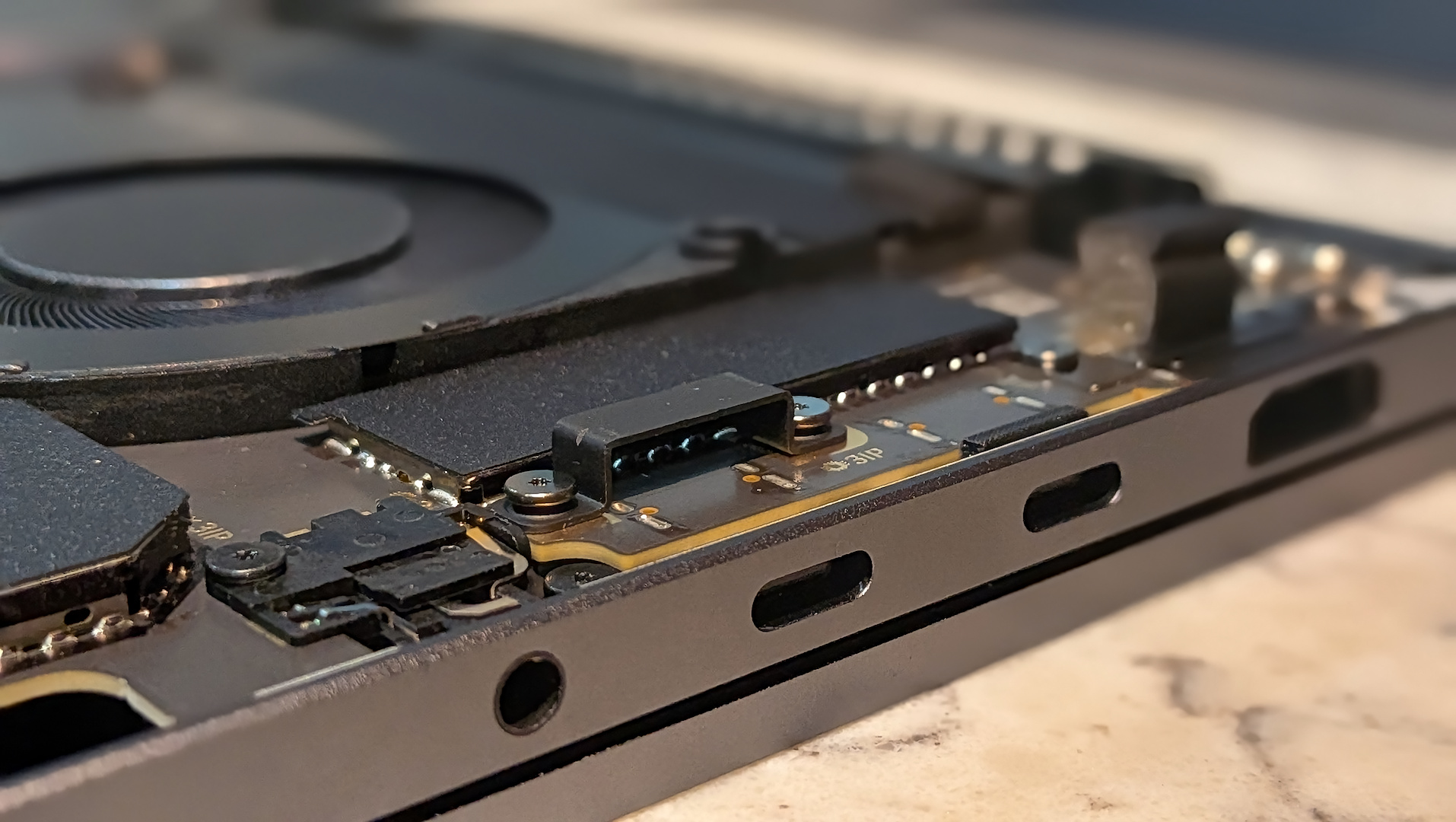
Marketing claims aside, the magnetic connection does work well. The port and charger naturally guide themselves together, as magnets do, and made plugging the laptop in to charge in a dark room hassle-free. Normally I’d be holding the cord in one hand while trying to fumble around in the dark for the phone in my pocket and remember the gesture to quickly turn on the flashlight. Now I just have to get the cable within the vicinity, and the magnets do the rest. Perfect for when all I want to do is plug the PC in and go to bed.
The magnetic charging port exposed.
The magnetic charging port exposed.
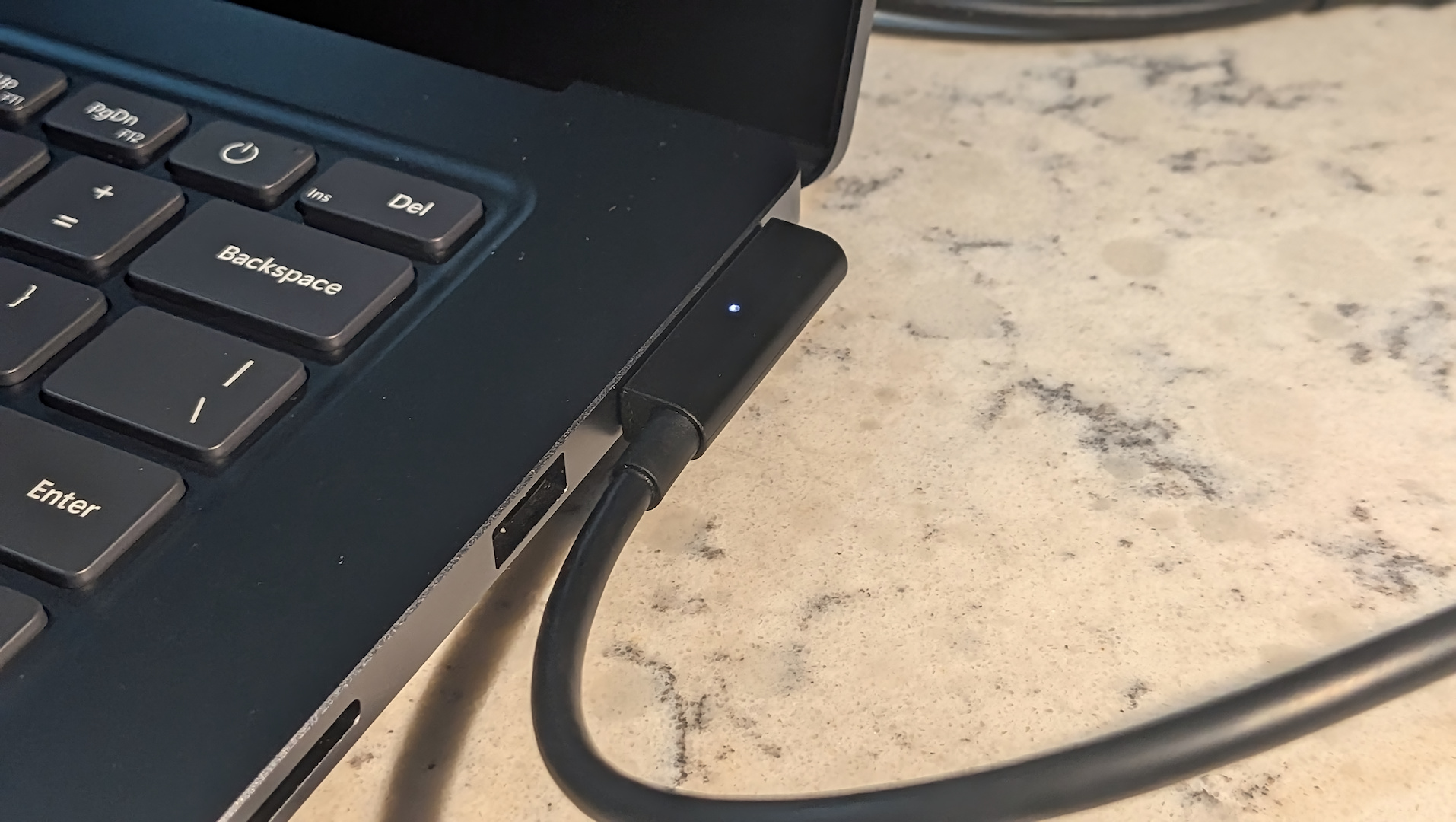
What’s perhaps the larger selling point for magnetic charging is the cable’s ability to break away if yanked from the PC. Nothing will ruin your day faster than watching a new laptop fly off the counter. With the breakaway cable, you’re getting peace of mind that your laptop shouldn’t meet the floor should a startled cat or curious toddler come into contact with the cable. I’ve never had it happen with one of my laptops, but that doesn’t mean accidents don’t occur. I simulated a few ‘accidental disconnects’ with modest force, and the cable disconnected dutifully as it should.
The new USB-C magnetic charger and port.
The new USB-C magnetic charger and port.
While I won’t say that it’s a must-have, it’s certainly a nice-to-have. And in this package it’s certainly the type of premium accessory you’d expect, but it’s not going to move units on its own—not at these price tiers.
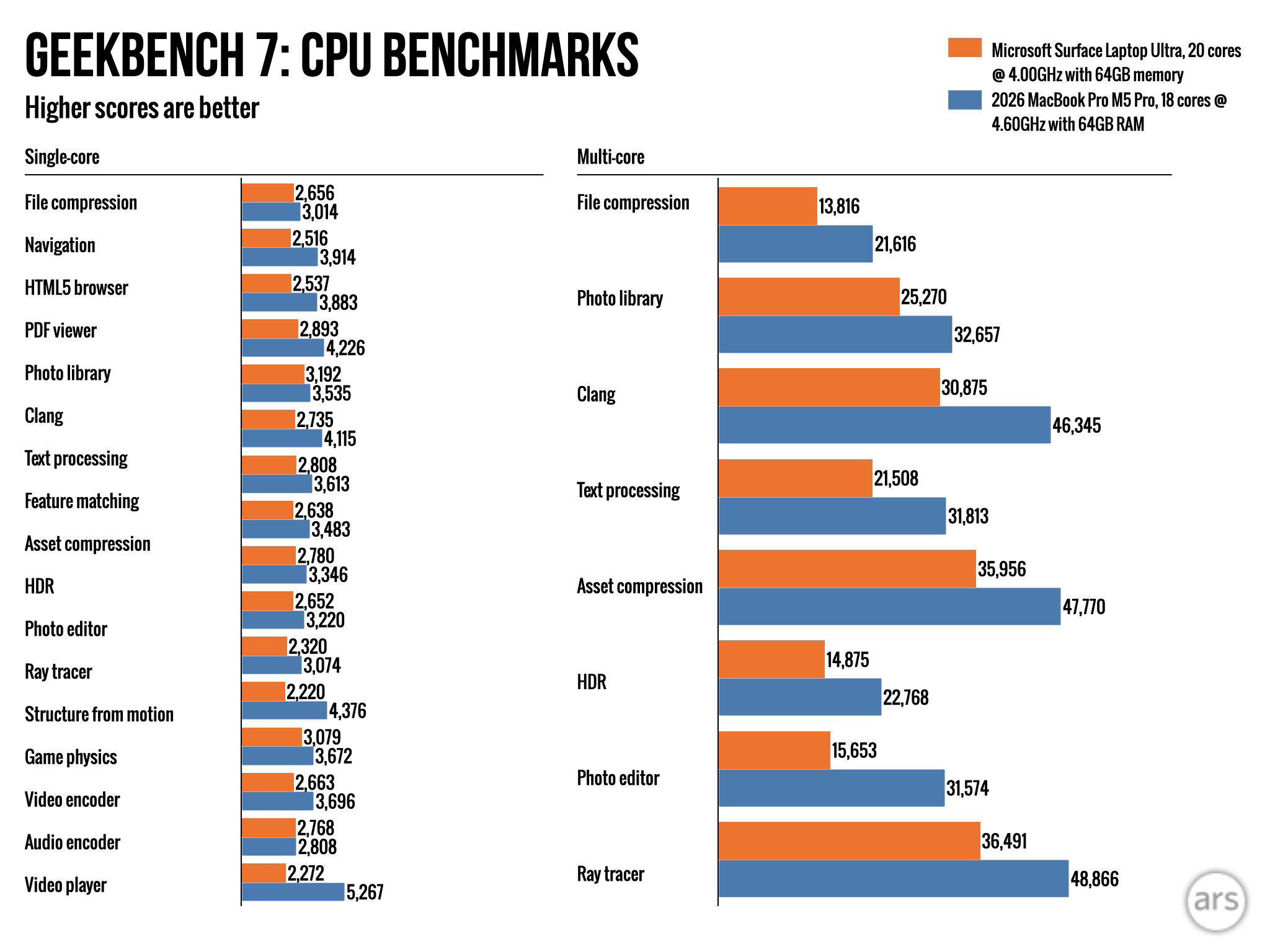
Geekbench
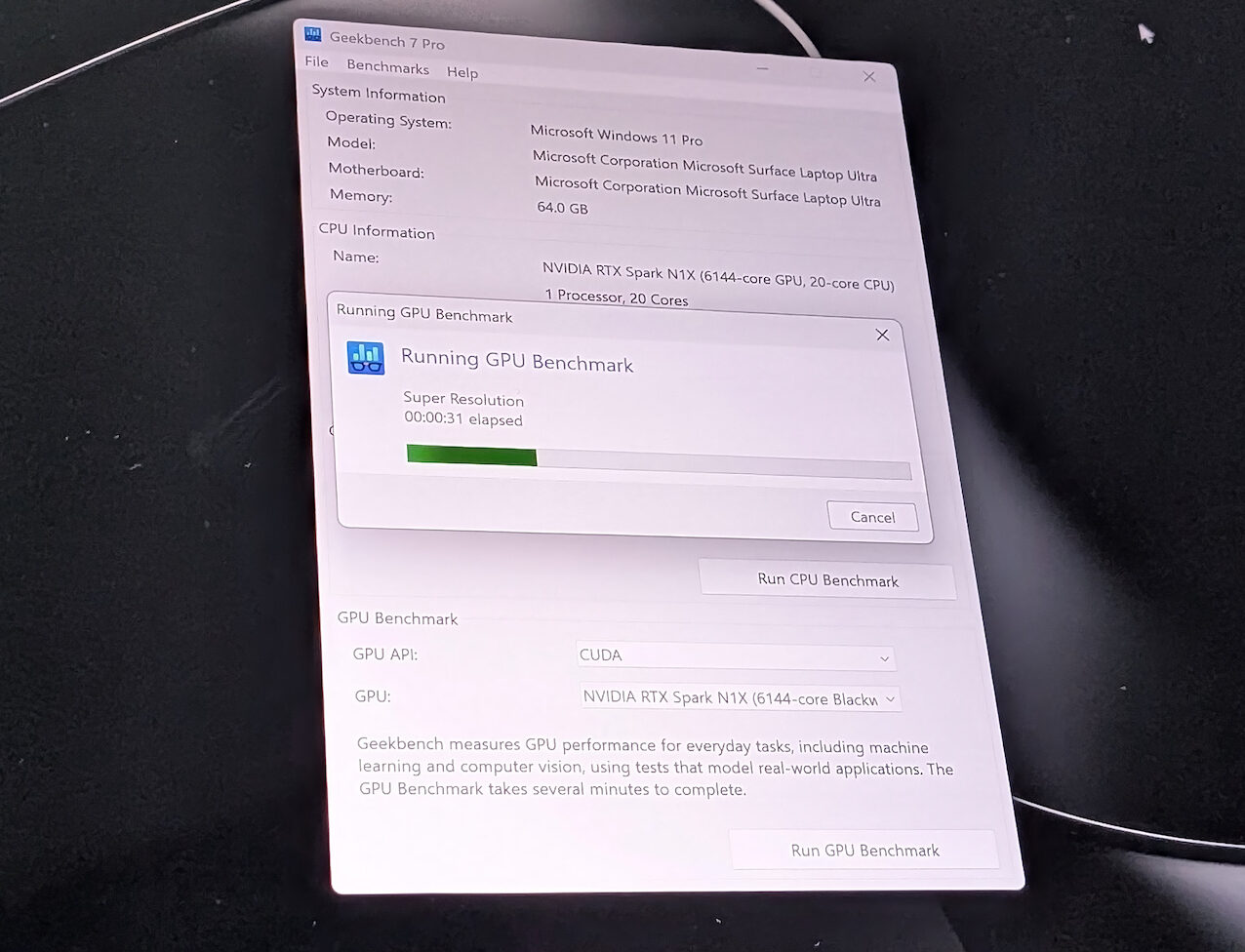
Geekbench 7 Pro.
Geekbench 7 Pro.
According to Nvidia, the RTX Spark N1X is a Grace CPU fused to a Blackwell GPU. Unlike chipsets like AMD’s Ryzen AI and Intel’s Core Ultra series, the N1X has no dedicated NPU—instead it leans on unified memory and the heavy-duty Blackwell GPU for AI work. Traditionally, Copilot+ certification has hinged on a 40+ TOPS NPU, but Microsoft is extending the label to this machine’s GPU-based AI performance anyway (more on that later).
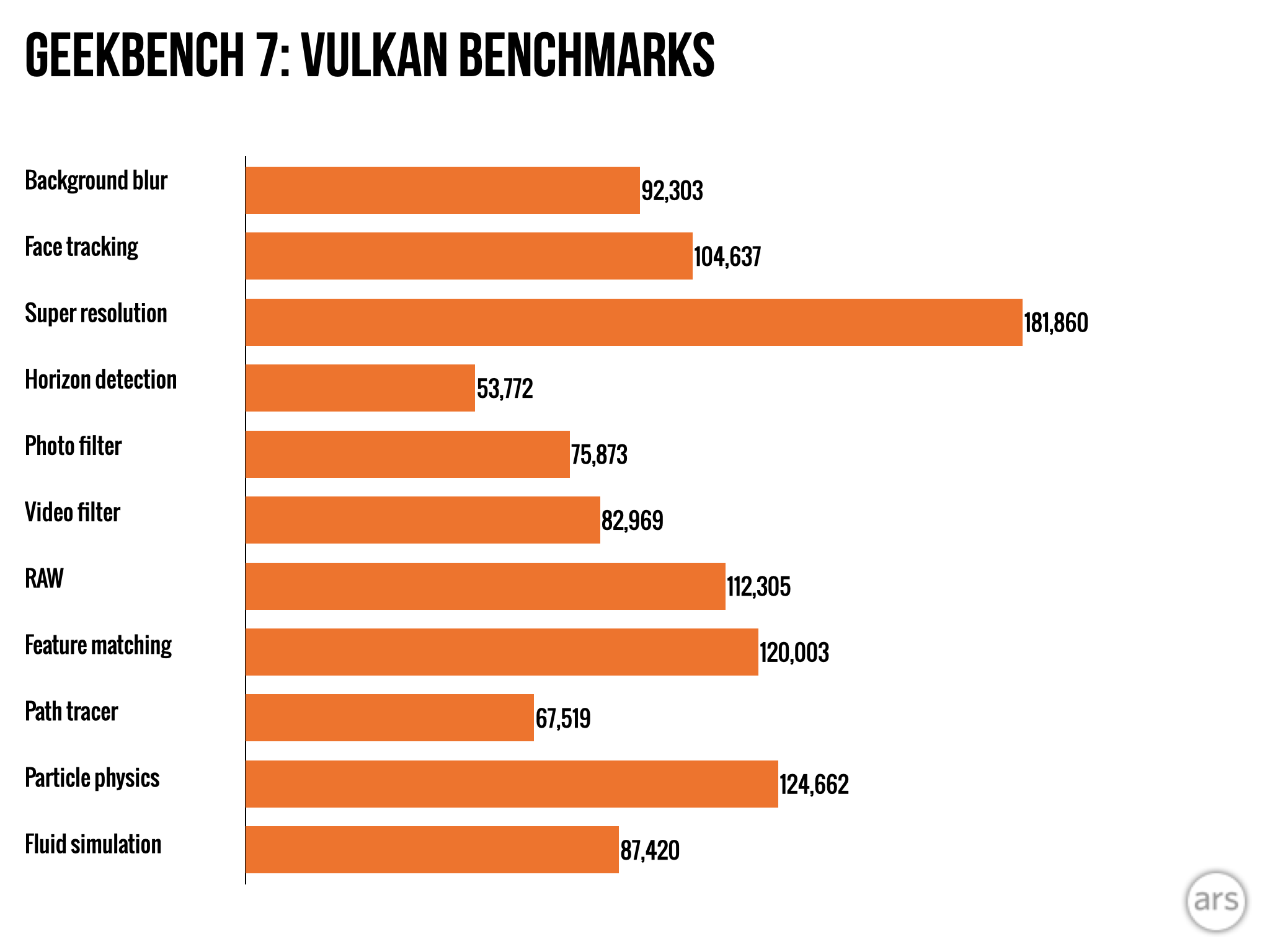
The graphics bench tests sing when given access to 40GB+ of usable RAM. These results certainly back up Microsoft’s claims that the Surface Laptop Ultra can handle modern AAA gaming. It just takes some different paths to performance than we might be used to.
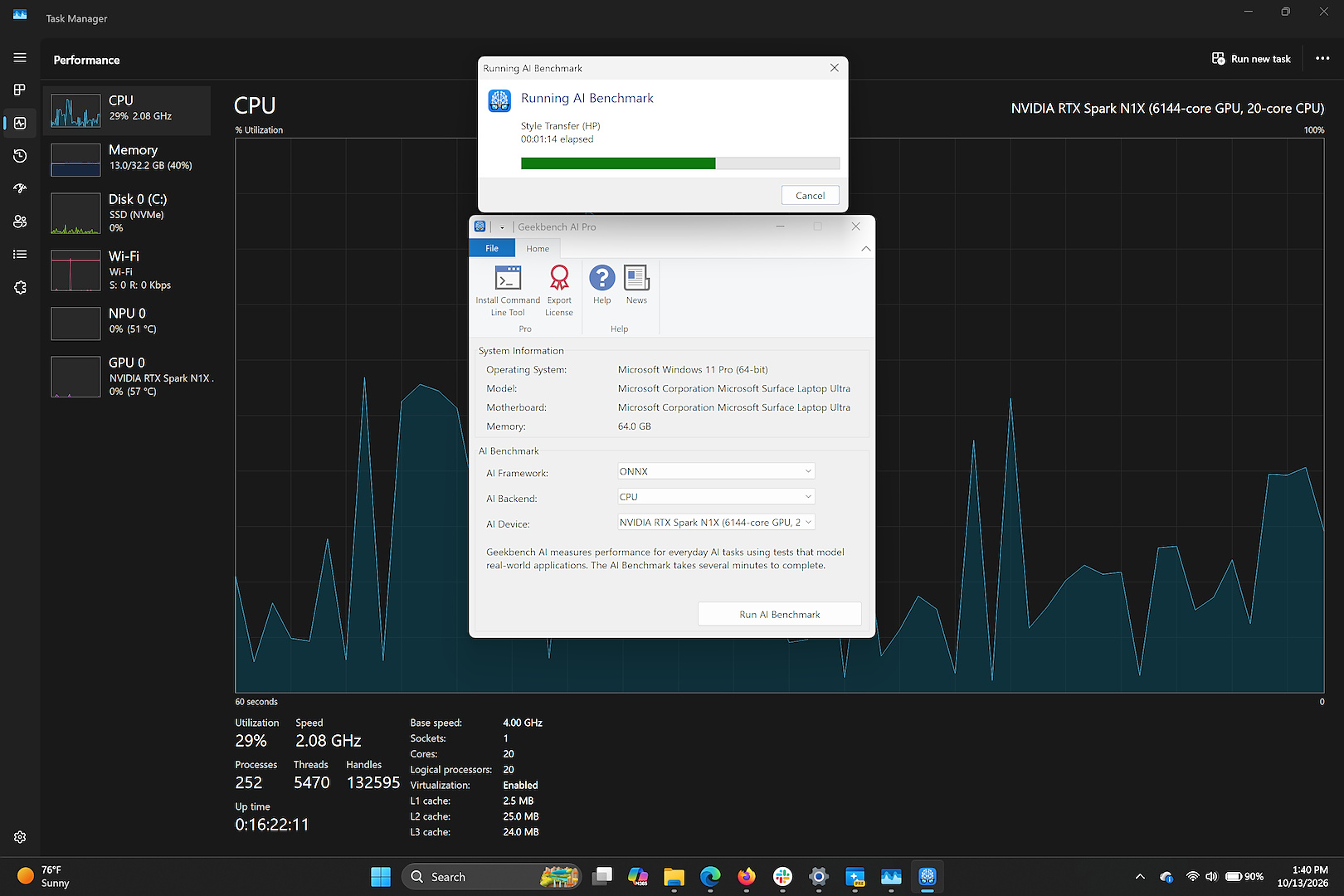
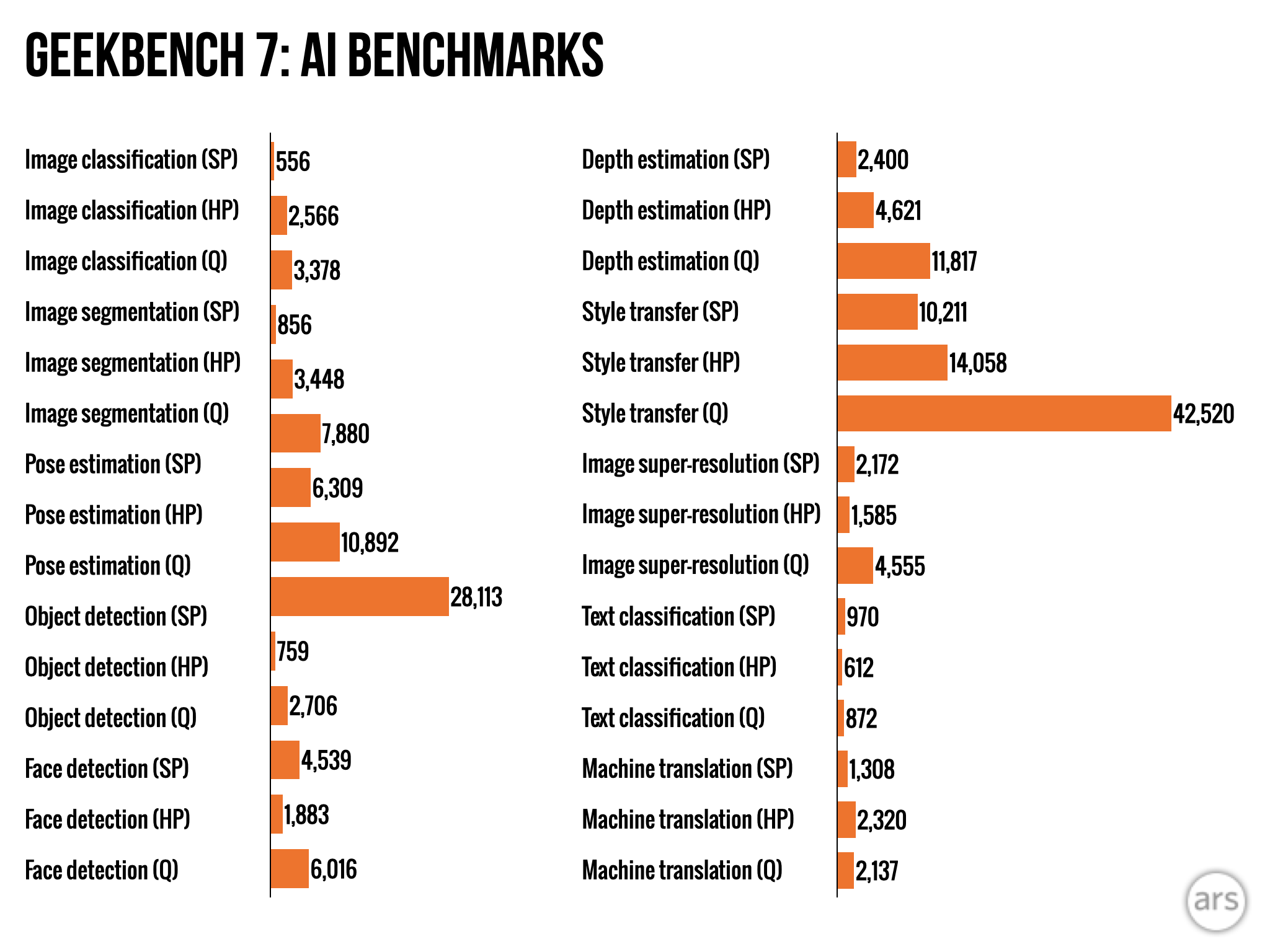
The AI benchmark was a bit of a miss. I don’t have the ability to run an NPU-accelerated benchmark in Geekbench AI, because the software presumably doesn’t currently have a compatible NPU backend for this unique architecture. Curiously, Windows does list a generic NPU under Display Adapters in Device Manager, but Geekbench AI only offered the ONNX CPU testing path. It’s unclear whether the generic NPU listed by Windows is a virtual device, some sort of driver exposure, or something else entirely.
CPU was the only available backend in Geekbench AI for now.
CPU was the only available backend in Geekbench AI for now.
It isn’t possible to get performance metrics on hardware that Geekbench can’t properly see yet. It’s still early days, but it’s the kind of software/hardware incompatibility that you hate to run into when just trying to check out what your new computer can do. The CPU score in Geekbench AI isn’t particularly impressive, and bypassing the Blackwell sort of defeats the purpose of this hardware, so I hope that as the RTX Spark devices start getting out there, we’ll be able to get a better idea of the full potential.
AI testing was limited to the CPU for now.
AI testing was limited to the CPU for now.
AI testing was limited to the CPU for now.
AI testing (where possible) with AI Dev Gallery
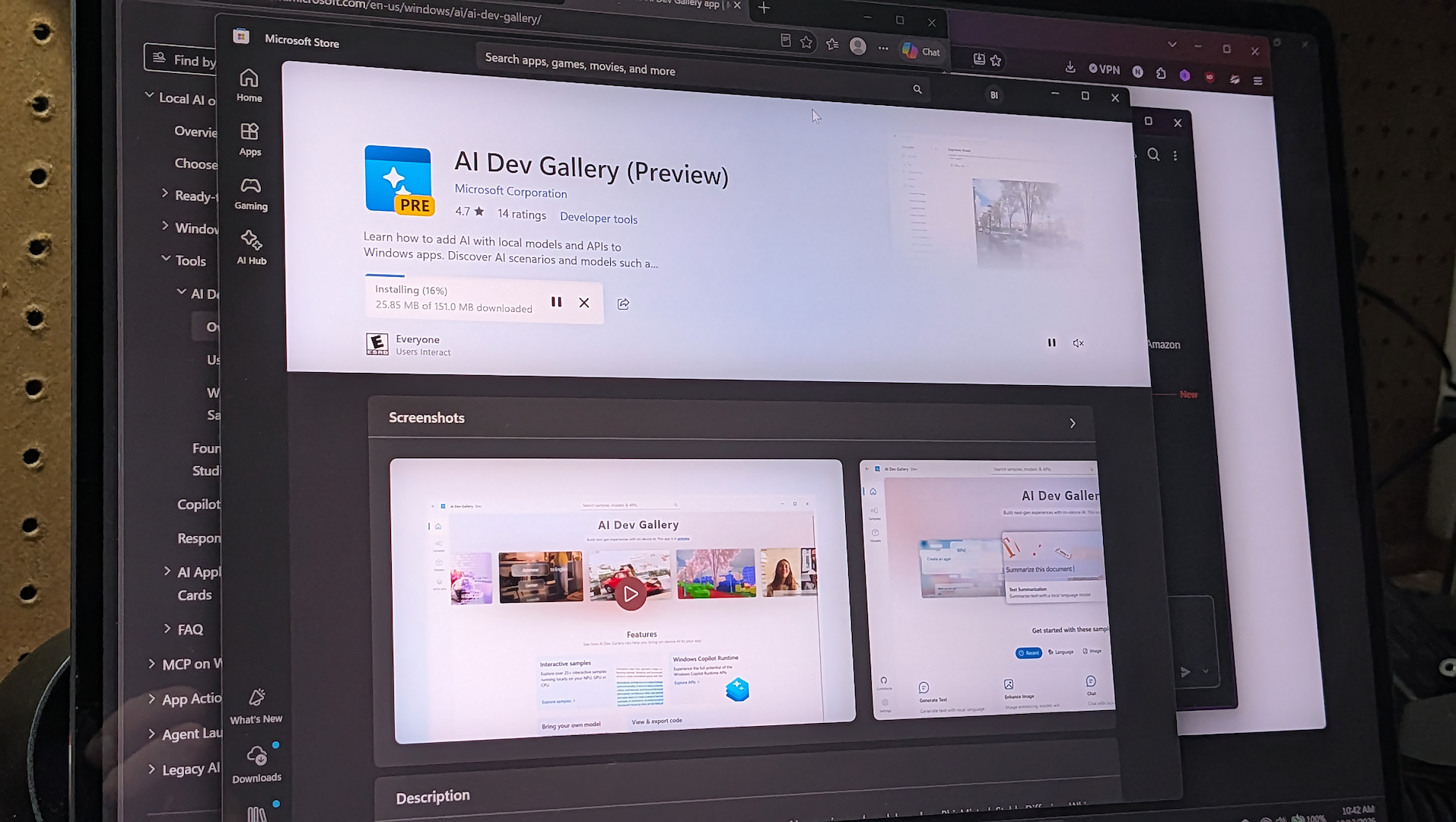
Microsoft recommended reviewers try its new AI Dev Gallery app (preview) as a way to test on-device AI. The software is currently in public preview, and users can pull models of their choice directly from Hugging Face for testing or workflow. The project’s GitHub carries a helpful word of warning about running models on ARM64-based Copilot+ PCs, which, according to Microsoft, this is. Or will be, eventually. Confusing, isn’t it?
The new AI Dev Gallery app preview.
The new AI Dev Gallery app preview.
⚠️ Note: On ARM64-based Copilot+ PCs, make sure to build and run the solution as ARM64 (and not as x64). This is required, especially when running the samples that communicate with models such as Phi Silica.
On paper, AI Dev Gallery should have been a simple one-stop shop to test a barrage of different models against the Surface Laptop Ultra’s new RTX Spark setup. In practice, all of the available conversational Phi and Mistral models in the app are CPU-only—no GPU or NPU pathways available, despite the Blackwell sitting there idling. GPU and NPU paths are available for some image generation and embedded model options, but it again leaves me with that lingering feeling that we’re pushing cutting edge hardware just to have something to offer the market. Oh, and it’s worth noting that twice during my testing, I was browsing AI Dev Gallery’s model selection when the program abruptly froze and then crashed entirely back to desktop. There are still rough edges to smooth out.
Phi Silica, Microsoft’s flagship on-device LLM and a major piece of the Copilot+ stack, cannot be accessed out of the gate. Accessing the API requires a developer registration with an associated app identity. These may seem like obvious steps for those already in the AI-know, but curious consumers might get frustrated by reaching a gate in what is advertised as a ready-to-run experience out of the box.
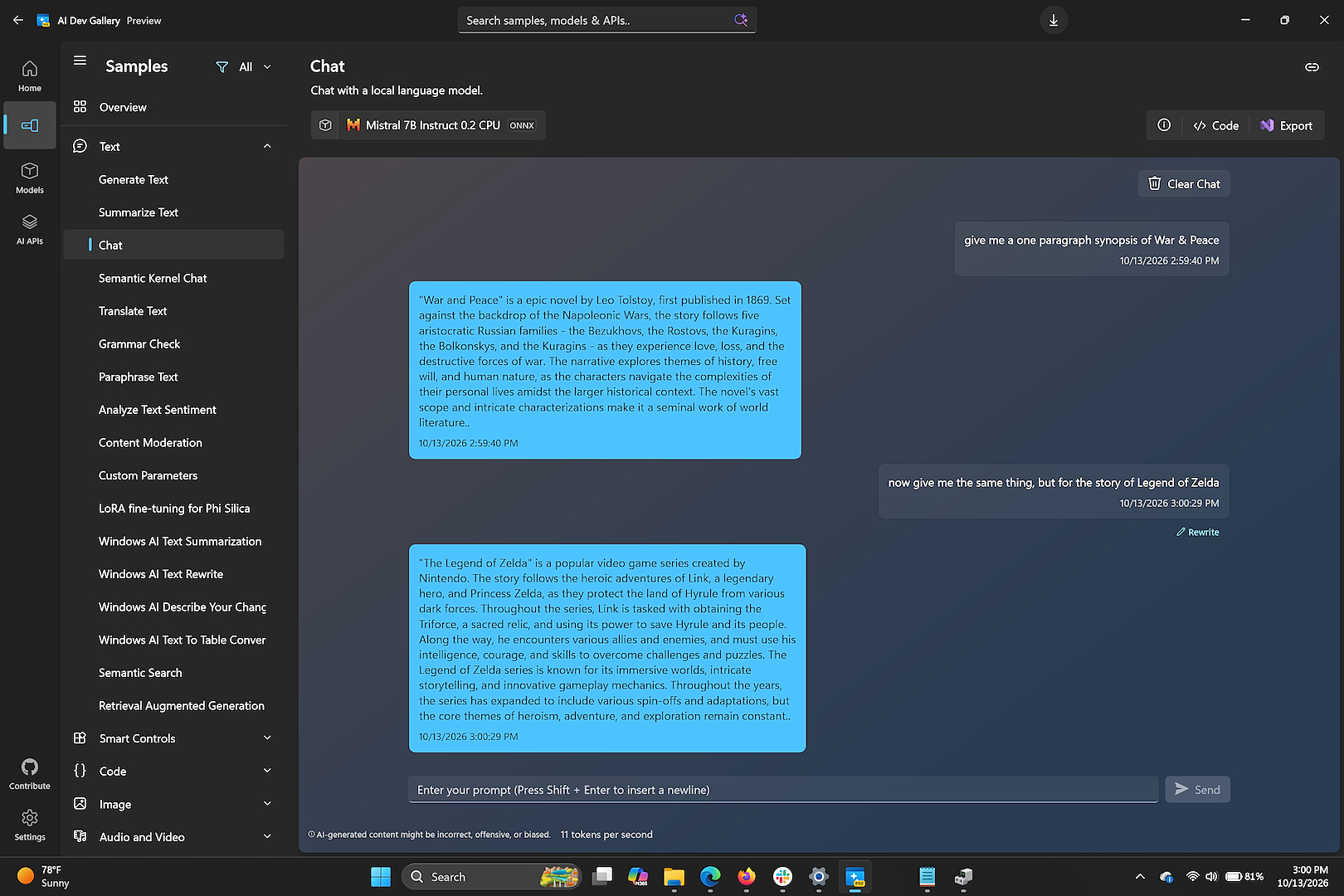
AI Dev Gallery conversational model (Mistral 7B Instruct 0.2 CPU) — Cutting out the GPU, this CPU-only model was still able to manage about 11 tokens/sec. Slower than a GPU path for sure, but it’s interesting that the CPU alone can manage smaller models at a reasonable conversation rate.
Chatting with Mistral.
Chatting with Mistral.
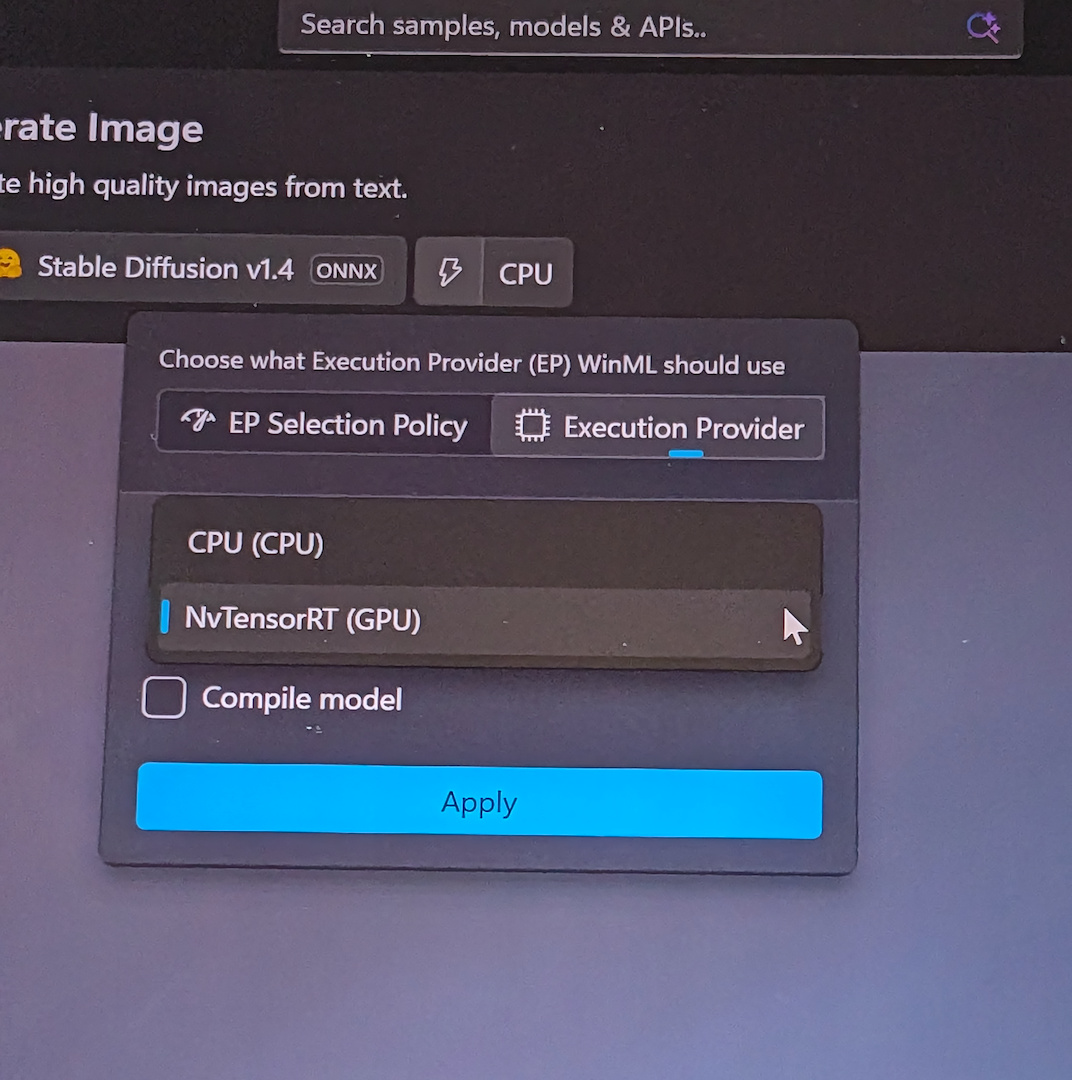
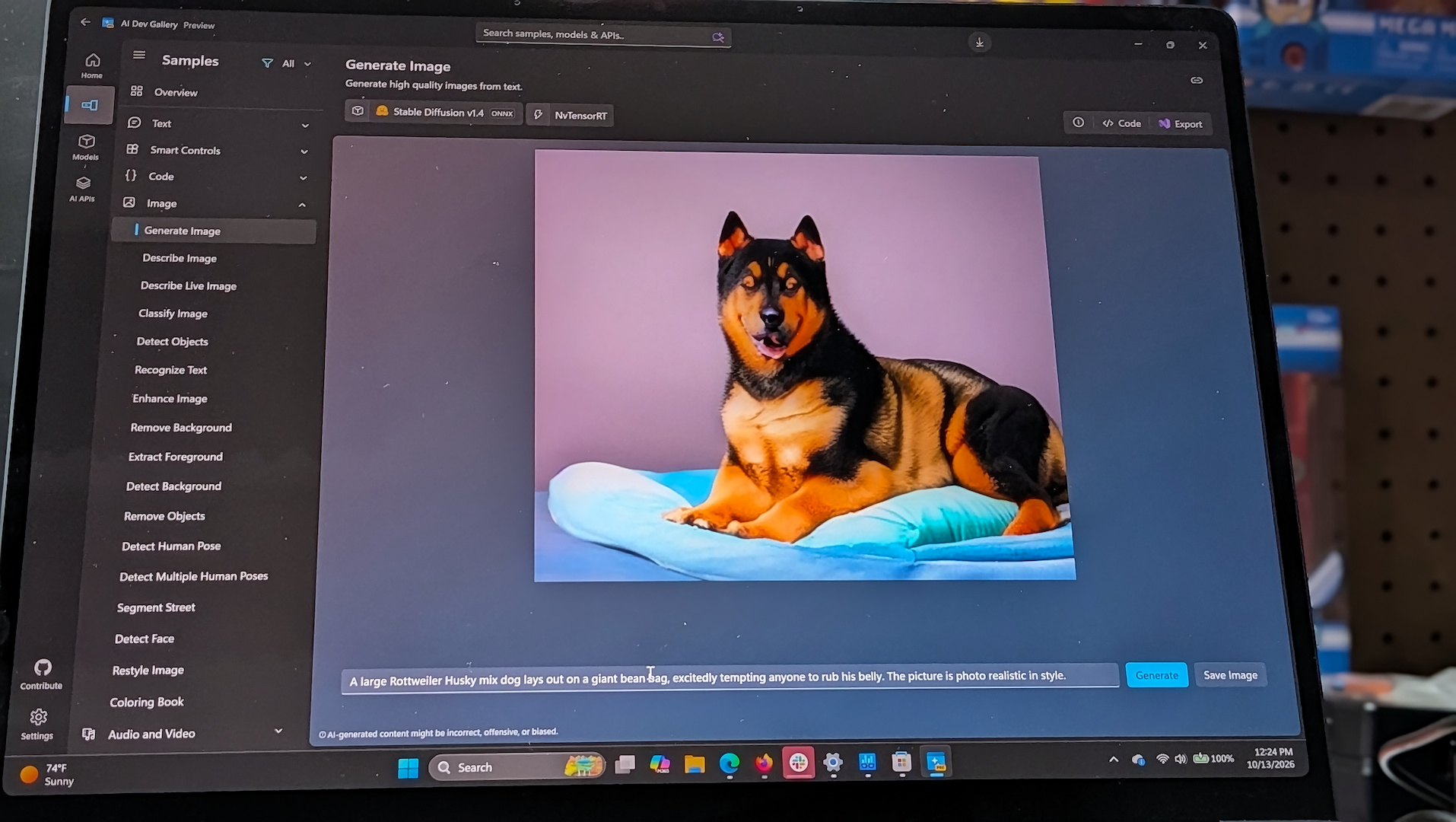
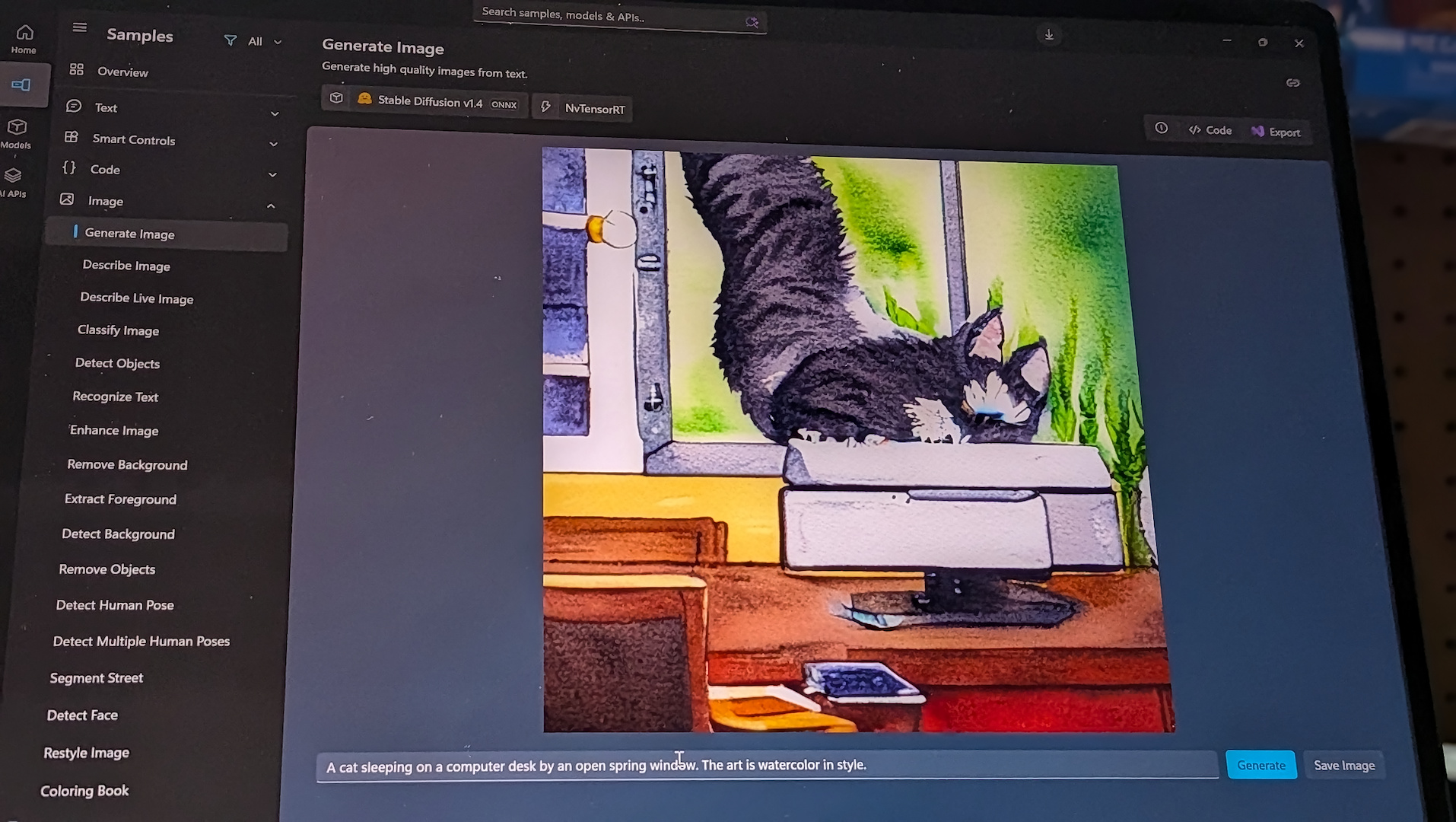
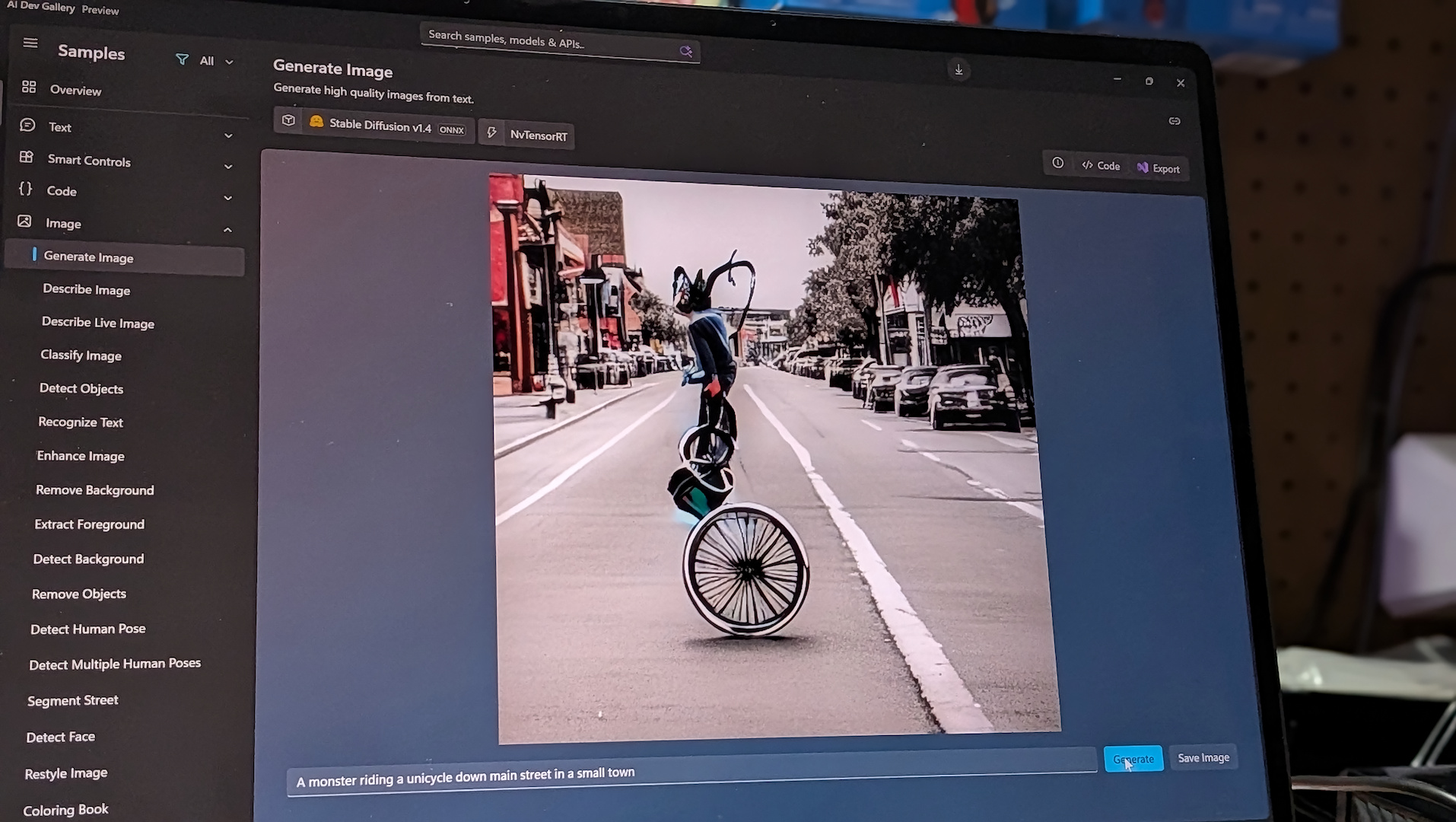
AI Dev Gallery image generation(Stable Diffusion v1.4) — I attempted image generation harnessing the CPU by accident at first. That didn’t fare so well, but as soon as I switched over to the NvTensorRT (GPU) option, I was able to generate images from a prompt in about three to four seconds by my stopwatch. The results aren’t the best you’ve ever seen, but with additional prompting and image coaxing, I’m confident that they could have been improved. Whether you need local AI image generation on your daily driver is another matter.
Make sure you’re powering your model correctly!
Make sure you’re powering your model correctly!
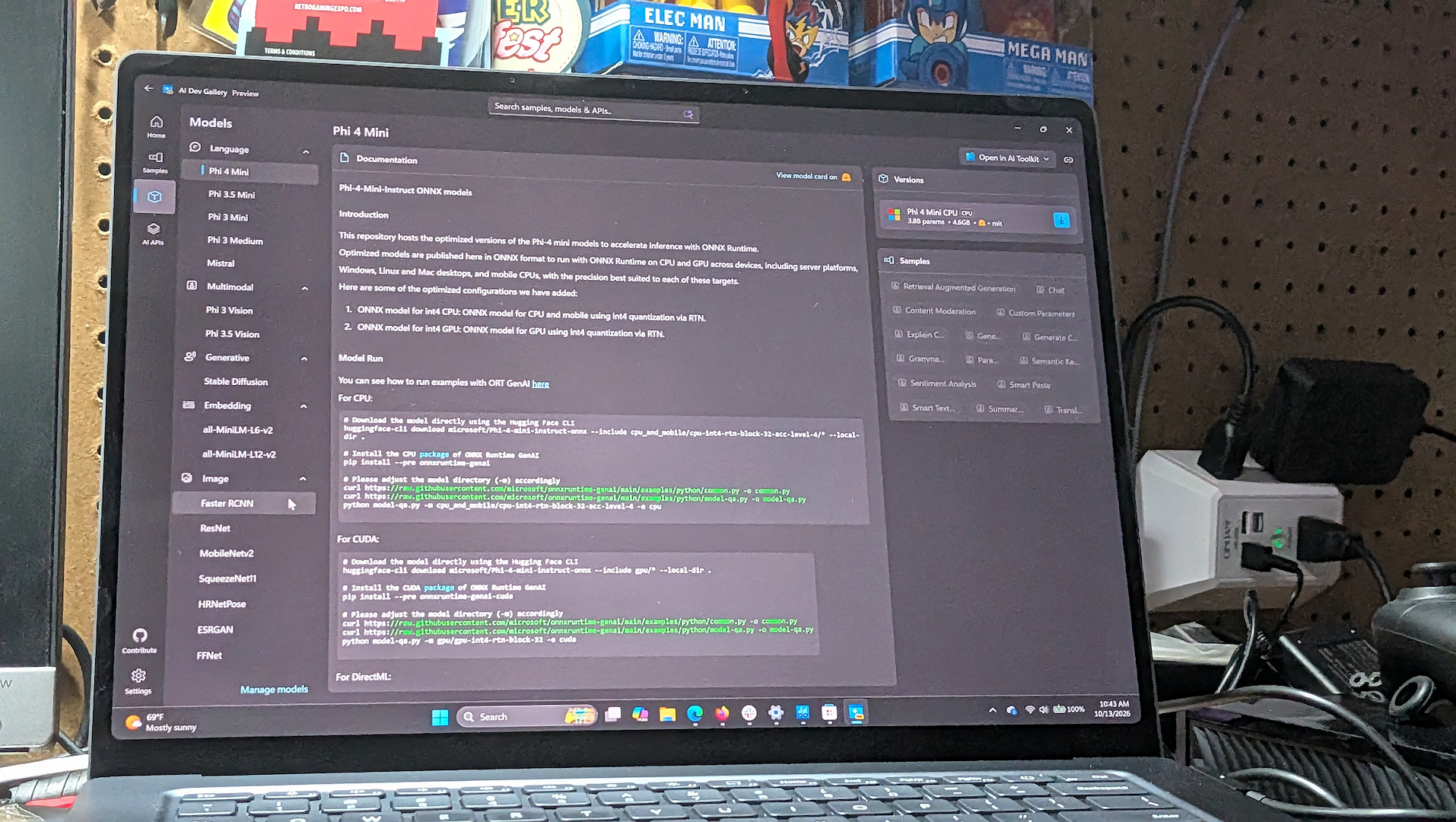
I attempted to follow Microsoft’s instructions listed in the AI Dev Gallery to run a CUDA-accelerated Phi model, but the process failed. After resolving some command-line issues, pip downloaded the correct Python 3.13 package of onnxruntime-genai-cuda for Windows ARM64, but then failed because the required onnxruntime-gpu dependency doesn’t seem to have a compatible distribution for this environment. Logs indicated the CUDA install path wasn’t usable on this setup at this time. Whether this is a limitation of the current package, an ARM64 packaging gap, or human error, I can’t be totally sure. It was just frustrating to feel so limited in the space where Microsoft told me to play.
Windows AI Dev Gallery app.
Windows AI Dev Gallery app.
I attempt to prompt my way into a picture of my dog.
I attempt to prompt my way into a picture of my dog.
The results of my watercolor cat prompt.
The results of my watercolor cat prompt.
AI’s image prompt interpretation of a monster of a unicycle.
AI’s image prompt interpretation of a monster of a unicycle.
The results of my watercolor cat prompt.
AI’s image prompt interpretation of a monster of a unicycle.
Ollama
Time to try something big…
Time to try something big…
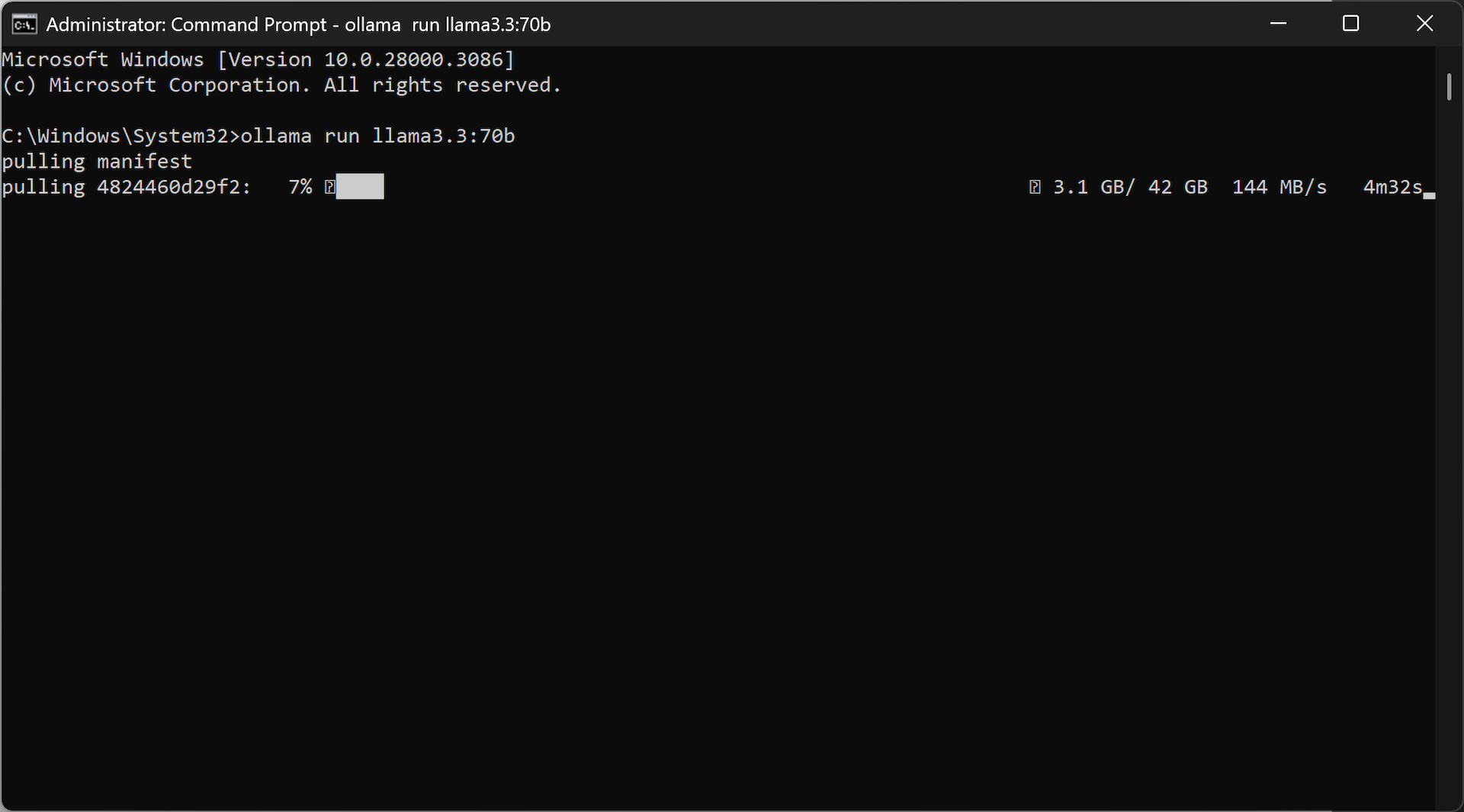
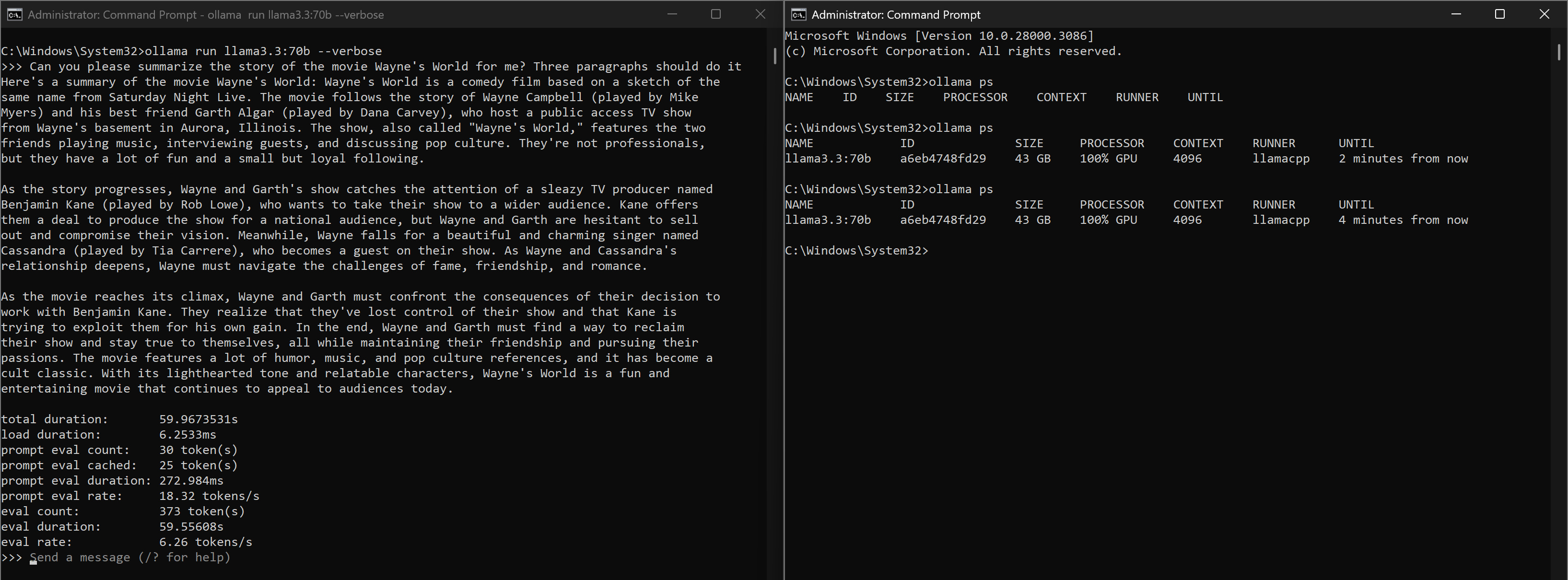
Frustrated with the current state of Microsoft’s AI Dev Gallery app, I decided to try some testing via Ollama running locally in the command prompt. I downloaded the Llama3.3-70b model. That’s a 43GB model—10 times the size of the Mistral model we ran on the CPU in AI Dev Gallery, with 10 times the parameters (70 billion over 7).
If I were Microsoft, this is the type of demo I’d want to be showing off. This massive 70B model would be unlikely to run on any discrete laptop GPU, but the Blackwell still managed 6.26 tokens/sec. The fact that it ran at all is impressive, though I will say this was one of the few times when the Blackwell really seemed to be sweating. System fans were spinning at 100 percent while those Wayne’s World synopses were being written. Credit where due, even at full tilt, the fans don’t generate a lot of sound other than the high-speed pushing of air.
Test
Model
Execution Provider
Speed
Memory
Mistral-7B (AI Dev Gallery)
Mistral 7B Instruct 0.2
CPU only
11 tokens/sec
N/A
Llama-3.3-70B (Ollama)
llama3.3:70b
GPU only
6.26 tokens/sec
43 GB
Using a huge model to help remember the plot of Wayne’s World.
Using a huge model to help remember the plot of Wayne’s World.
Gaming
When Microsoft speaks of a high performance audience, none is more demanding than the modern high-end PC gamer. I’m old enough that I still find 1080p/60 Hz gaming to look great, and that’s probably for the best, given the current cost of video cards, but those who crave the zero input lag, 4K, ray-traced life are a particular bunch. Whether the package on offer with the Surface Laptop Ultra will be high performance enough for that audience will be up to the individual gamer and their wallet, but this gamer was certainly impressed that these results were coming out of an ARM machine.
Microsoft claims 85 percent of its Game Pass library is currently playable on ARM, but I had difficulty trying to find if any titles have a native ARM port, or if they were running in x64 through the Prism lens of emulation. Windows Performance Fit offers a glimpse into how the game might perform on your system, but nothing more. Either way, if it’s the playing of games that you’re concerned with, there shouldn’t be much this system won’t run. The full Nvidia DLSS feature set seems to be available, and ray tracing boxes can be clicked in graphics options. Factor in an HDR-capable display, and the Surface Laptop Ultra is covering a lot of the must-haves for modern gamers.
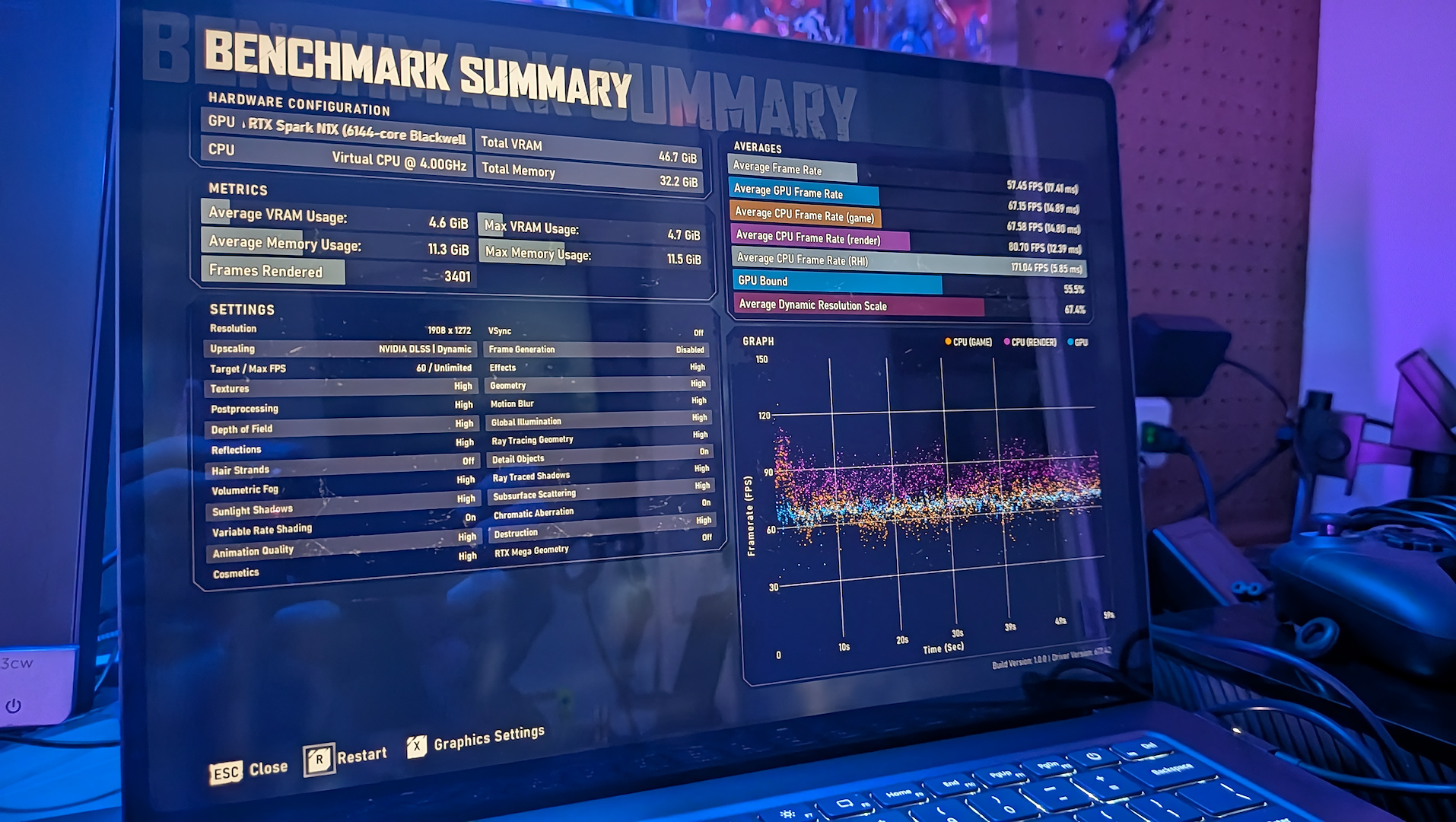
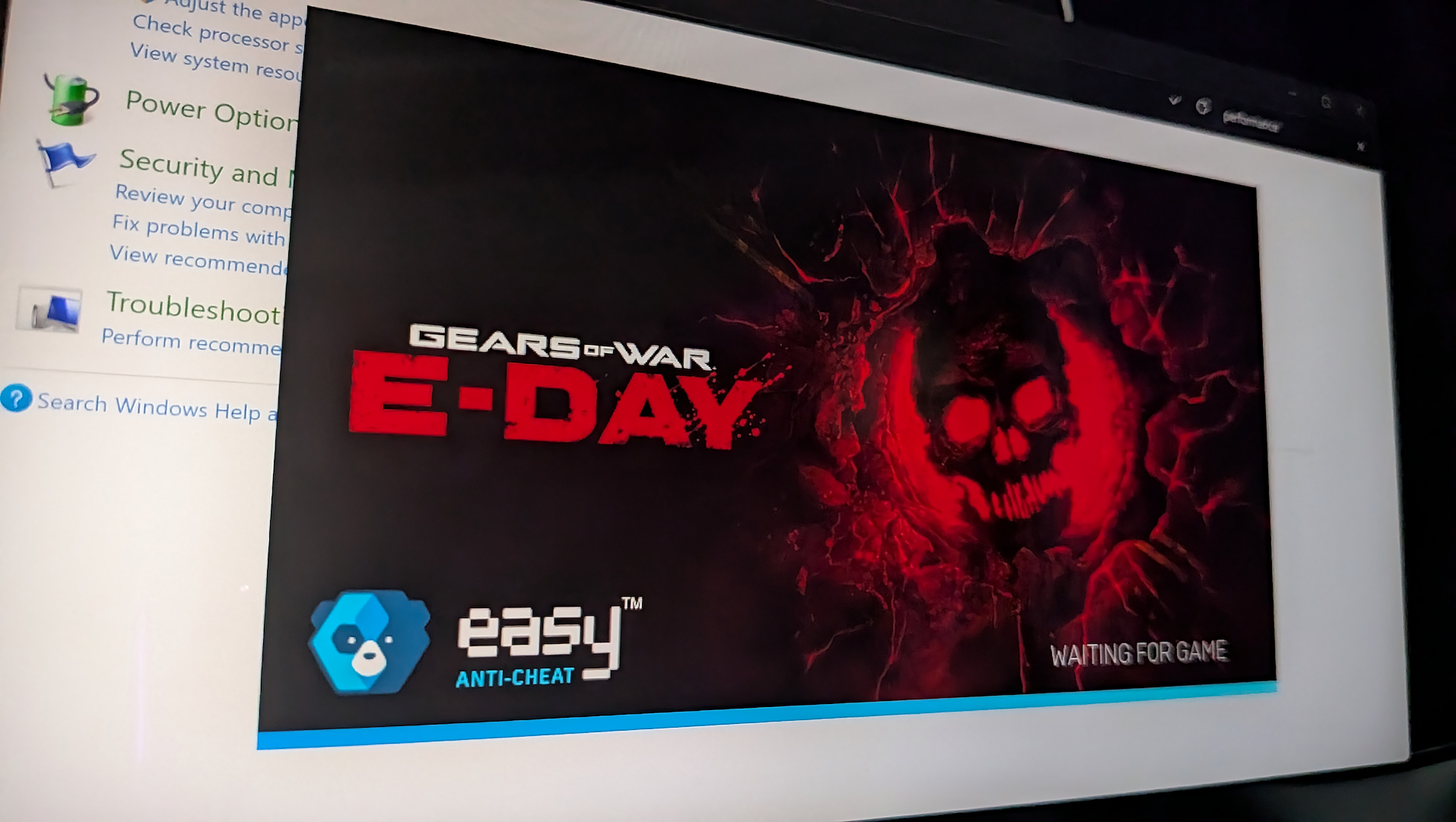
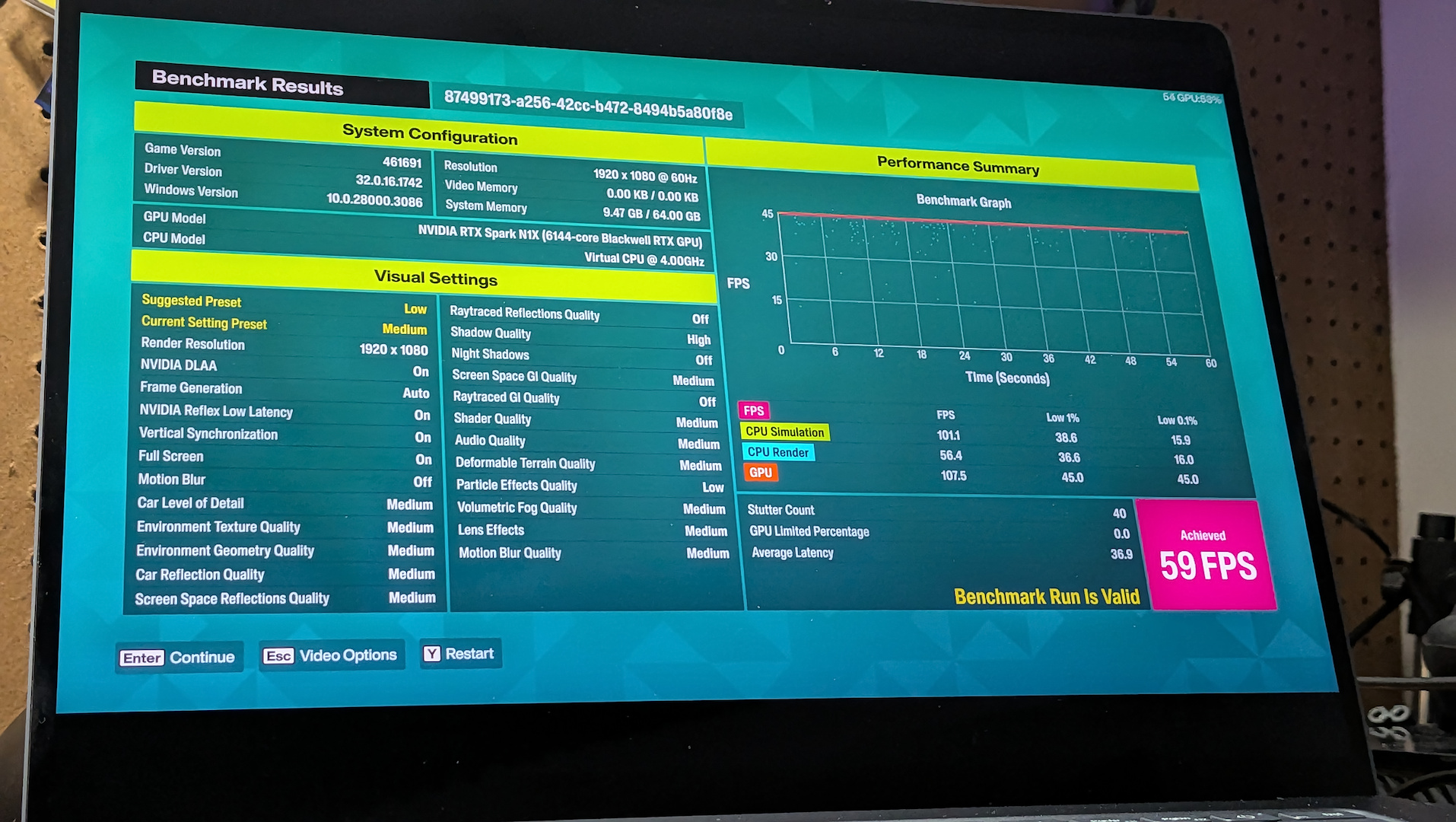
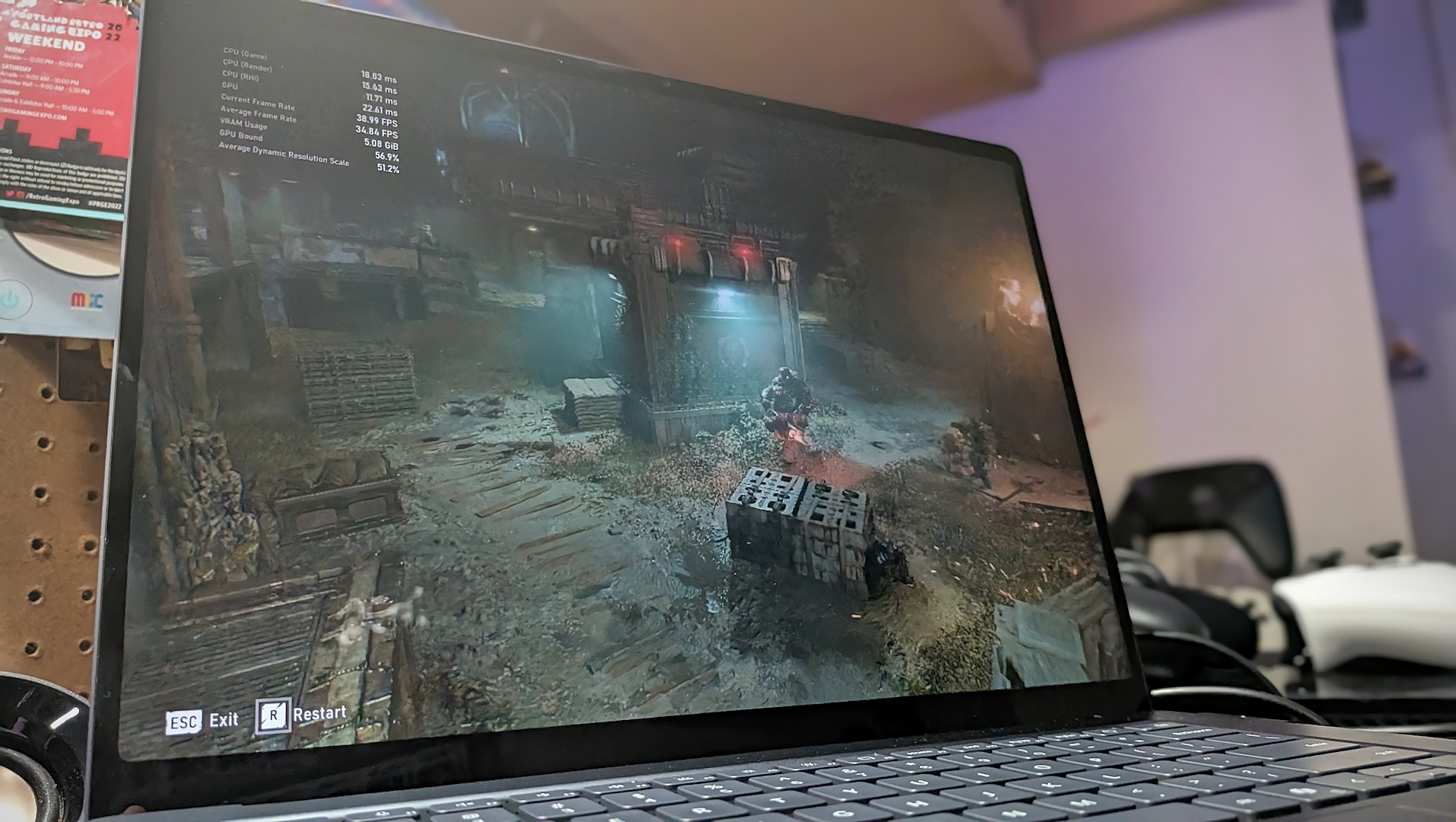
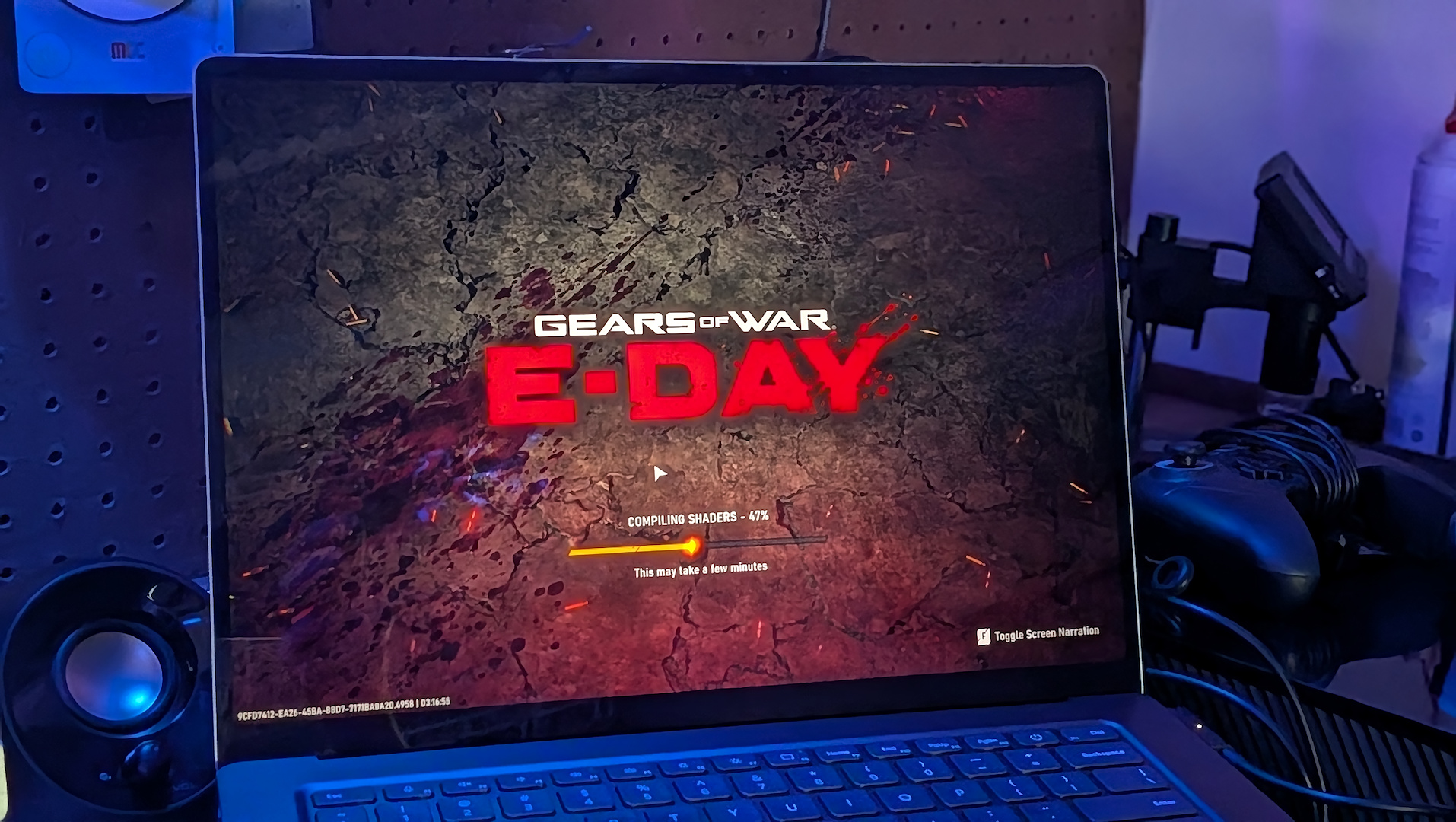
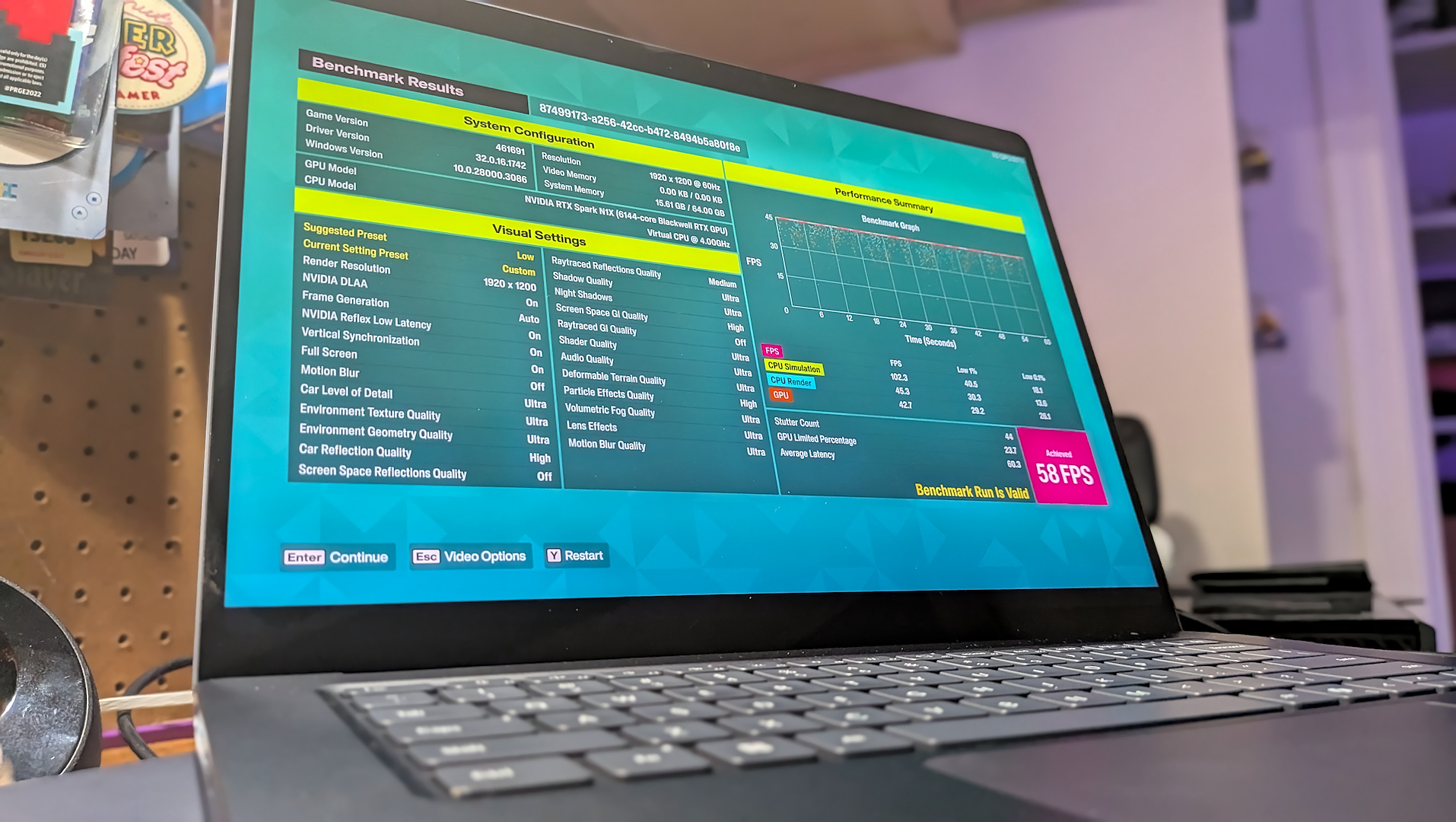
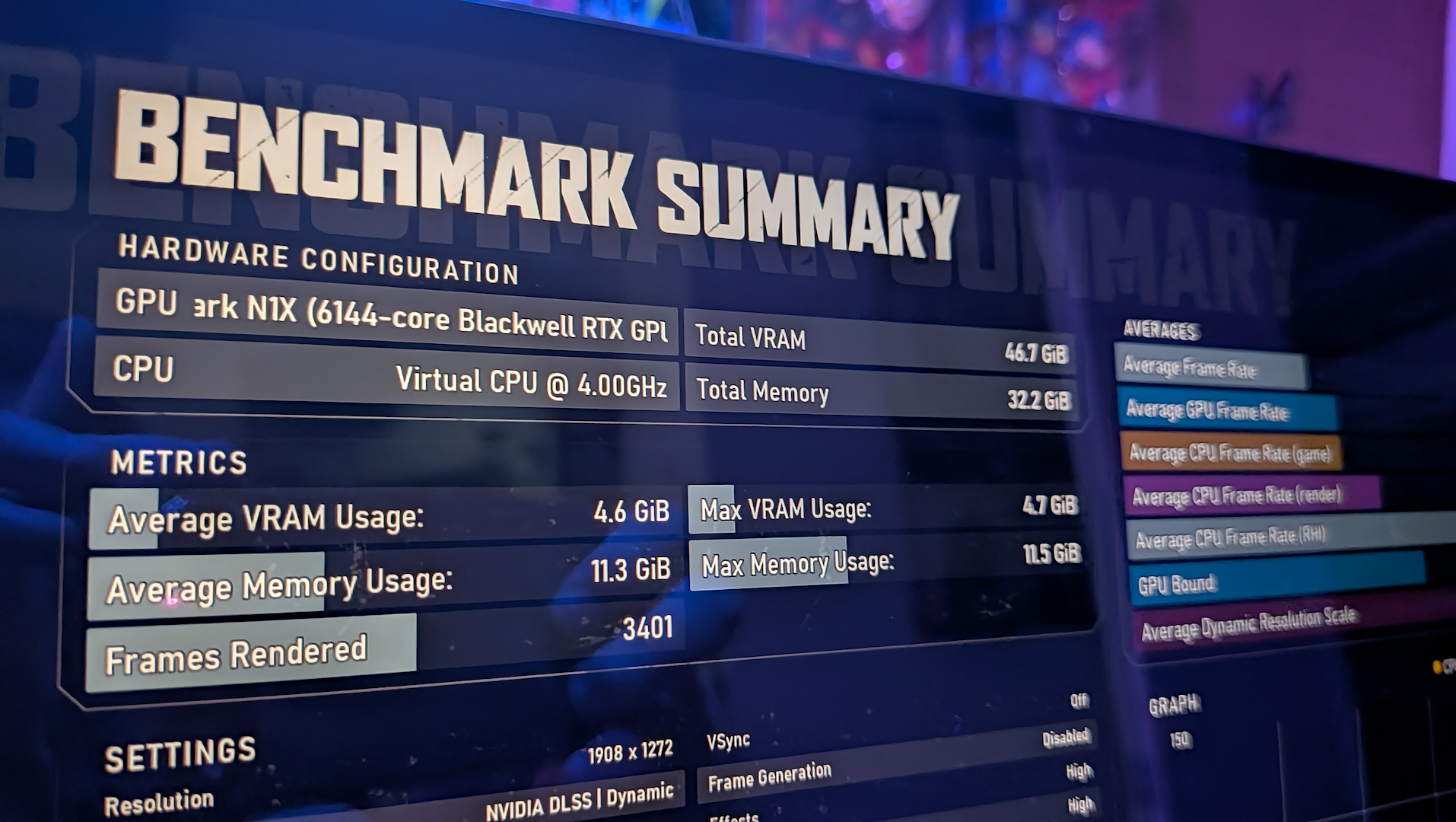
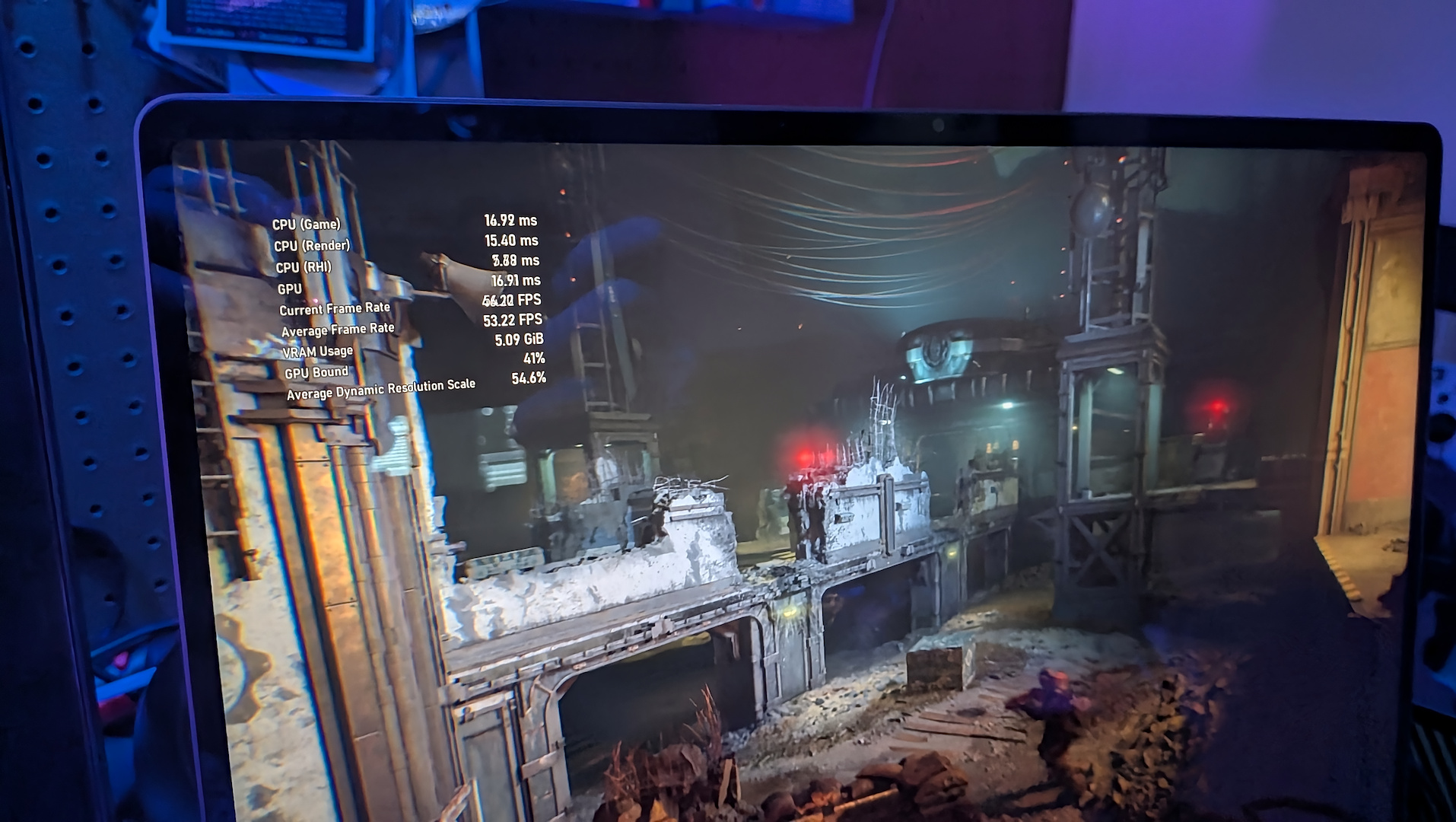
After an initial boot of Gears of War: E-Day that saw a solid 4–5 minutes of shader compiling, I was concerned that this might be an every-time occurrence, but subsequent loads were much faster. This is a game that contains anti-cheat, the latest Unreal Engine, and all the imaginable graphical bells and whistles you’d want from one of your company’s prized franchises. It’s here and running quite well on the Surface Laptop Ultra. While benchmarking, I noticed the system had reported an astonishing 46.7GiB of its 64GiB of unified memory as available VRAM for the game.
Check out that VRAM allocation.
Check out that VRAM allocation.
To their credit, Microsoft has included a warning for consumers who might not be familiar with the new Surface Laptop Ultra architecture: “App compatibility: Surface Laptop Ultra runs Windows 11 on an Arm-based Nvidia RTX Spark platform. Many popular apps run natively on Arm. Apps that are not built for Arm can run through Prism, Windows’ built-in emulator. If you rely on specialized hardware drivers, plug-ins, or older utilities, check app and driver compatibility before purchase.”
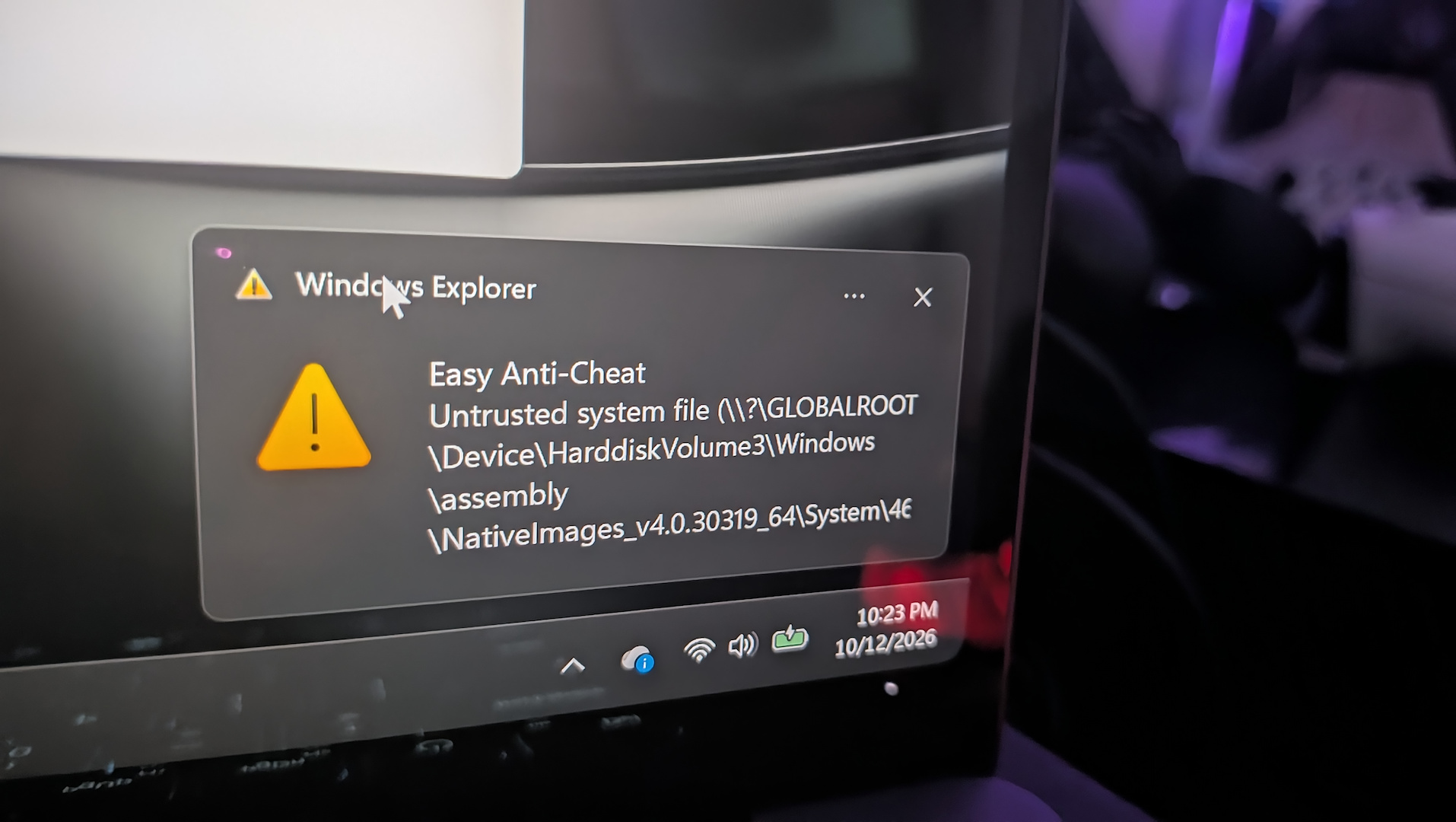
Easy Anti-Cheat and Gears of War: E-Day loading on the Surface Laptop Ultra.
Easy Anti-Cheat and Gears of War: E-Day loading on the Surface Laptop Ultra.
Multiplayer titles with kernel-level anti-cheat measures may fail or show warnings under Prism emulation due to signature mismatches in system files. Each time I ran Gears of War: E-Day, I was greeted with a warning message when exiting back into Windows. It appears as though the Easy Anti-Cheat was flagging the .NET cache as “modified,” though I couldn’t establish whether Prism’s translation was directly responsible.
Untrusted Easy Anti-Cheat files?
Untrusted Easy Anti-Cheat files?
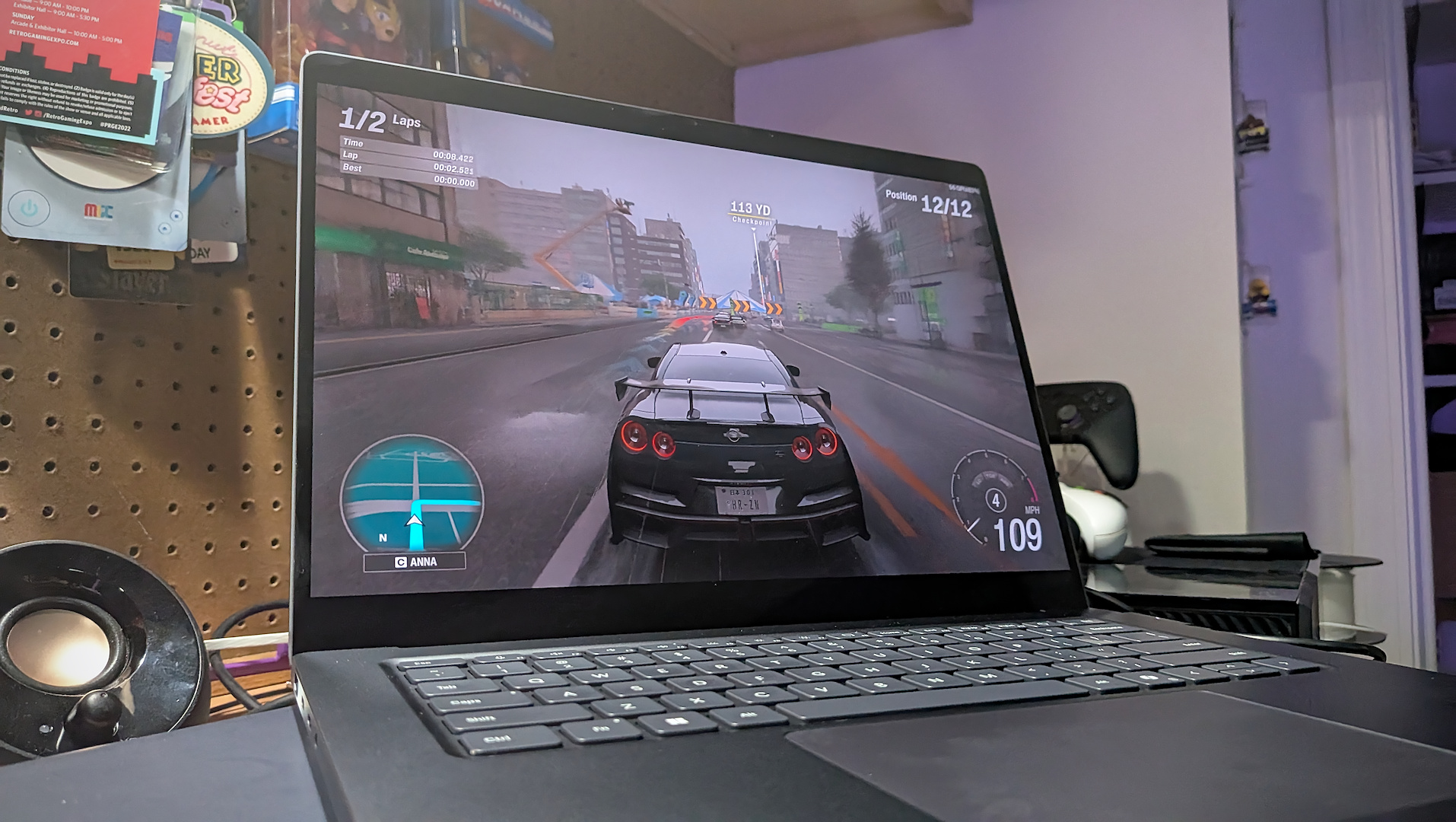
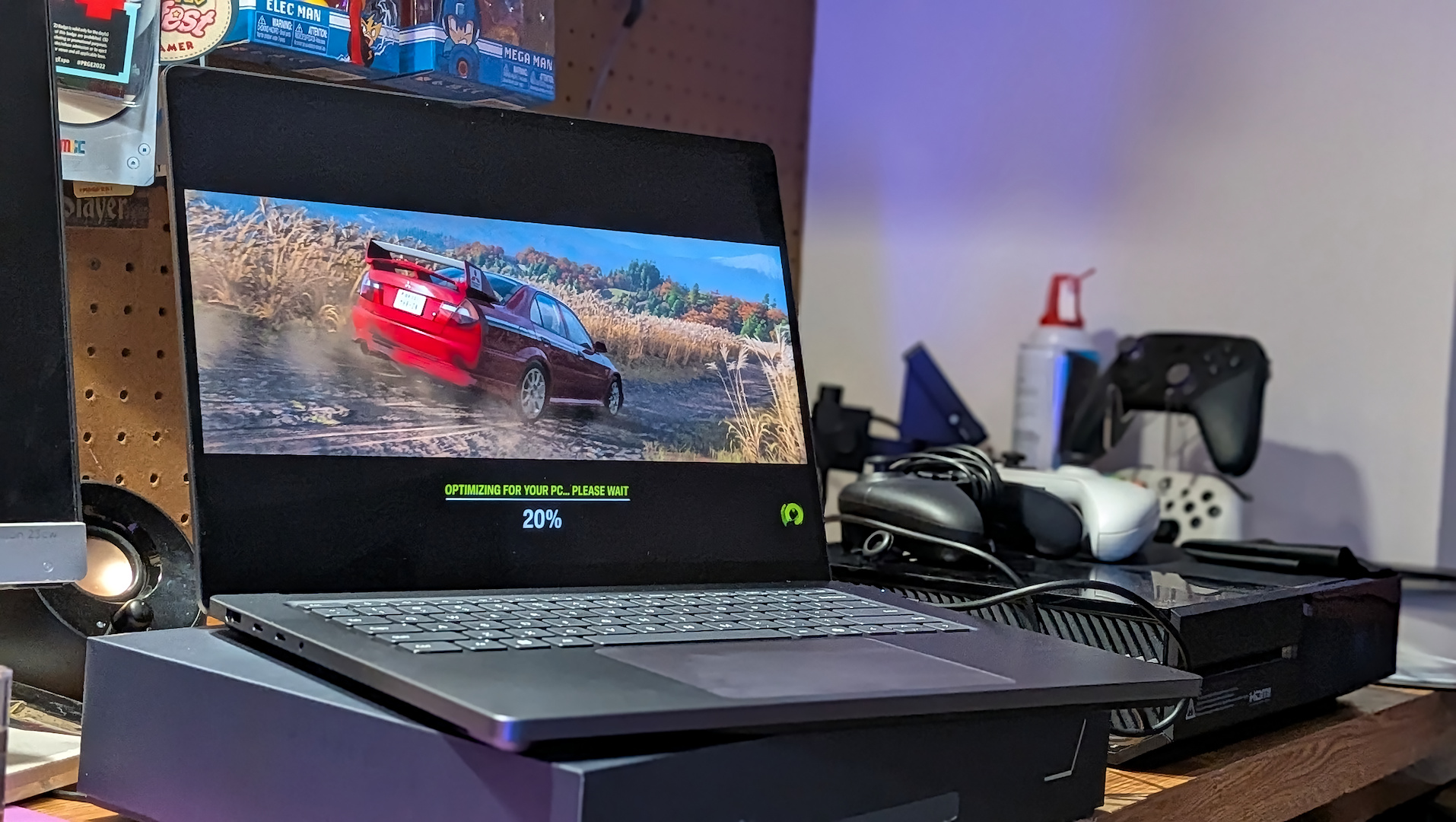
Additional benchmark results in Forza Horizon 6.
Additional benchmark results in Forza Horizon 6.
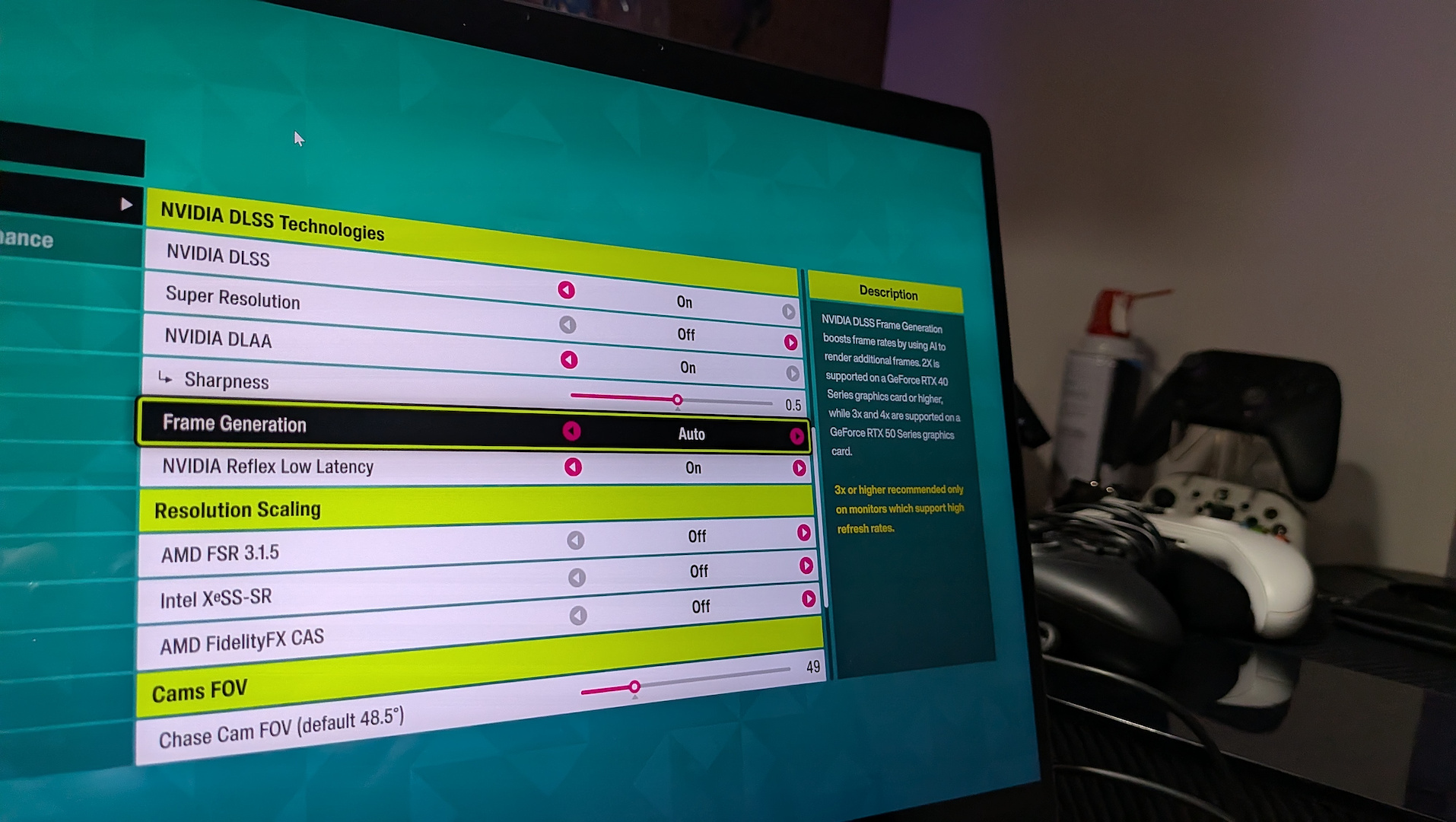
Graphics settings in Forza Horizon 6.
Graphics settings in Forza Horizon 6.
Graphics settings in Forza Horizon 6.
An impressive pool of available memory.
HandBrake
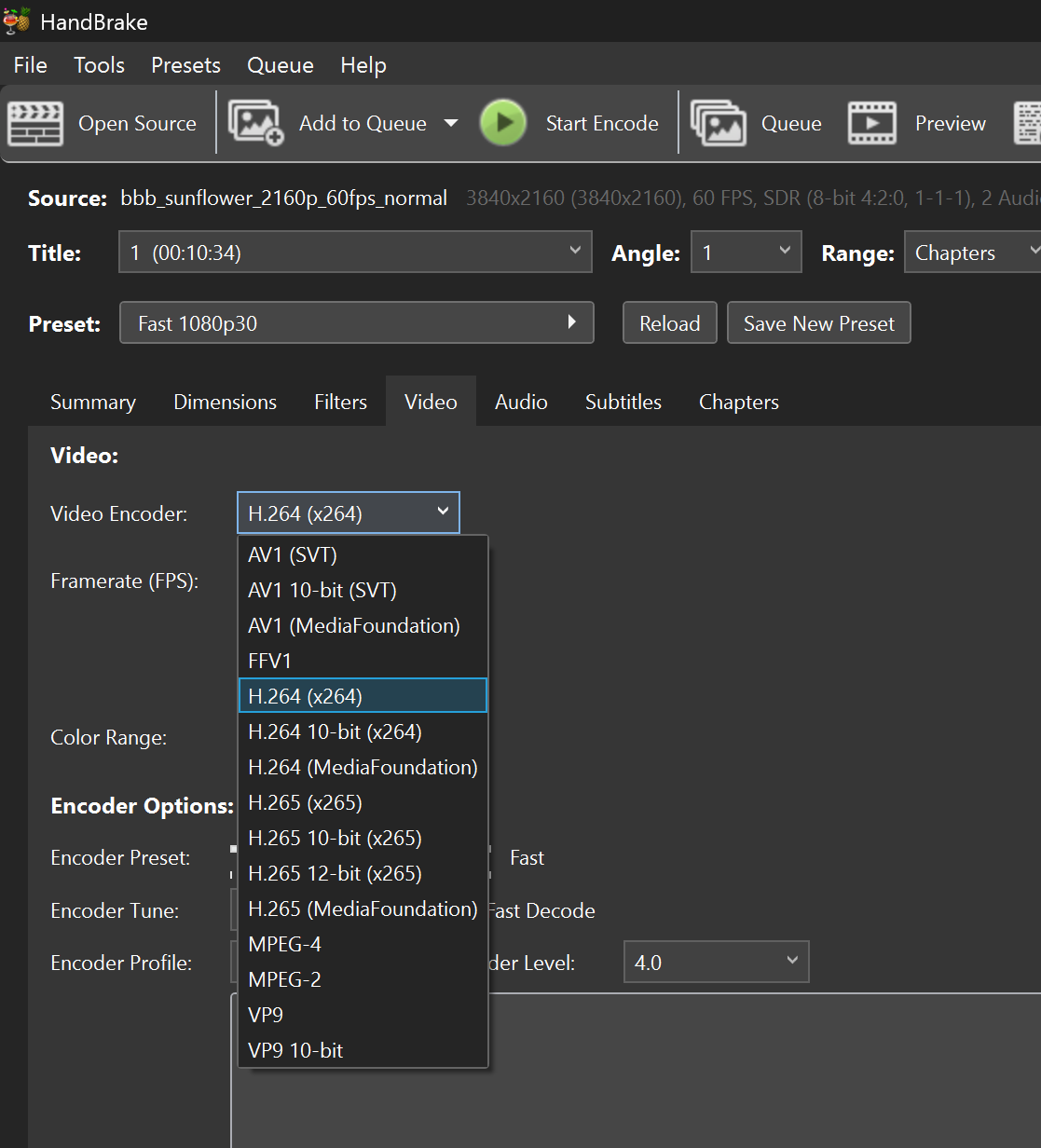
Beyond gaming, I wanted to see how video encoding would fare on the new hardware. I ran a real-world encode test via HandBrake on the 2160p 60 fps version of the famous Big Buck Bunny. The system processed the 10-minute video clip in 2:27 at 180 fps using x264 encoding via the CPU. That’s the snag. Nvidia NVENC or Nvidia HEVC encoding options are nowhere to be found, meaning the Blackwell’s encode engine still isn’t being exposed to the software. That’s not a problem with HandBrake, it’s just the continuation of a familiar pattern. Hardware decode worked just fine via Media Foundation, so it’s specifically the encode side of things running into a roadblock.
Nvidia encoding options are missing for now.
Nvidia encoding options are missing for now.
Copilot+
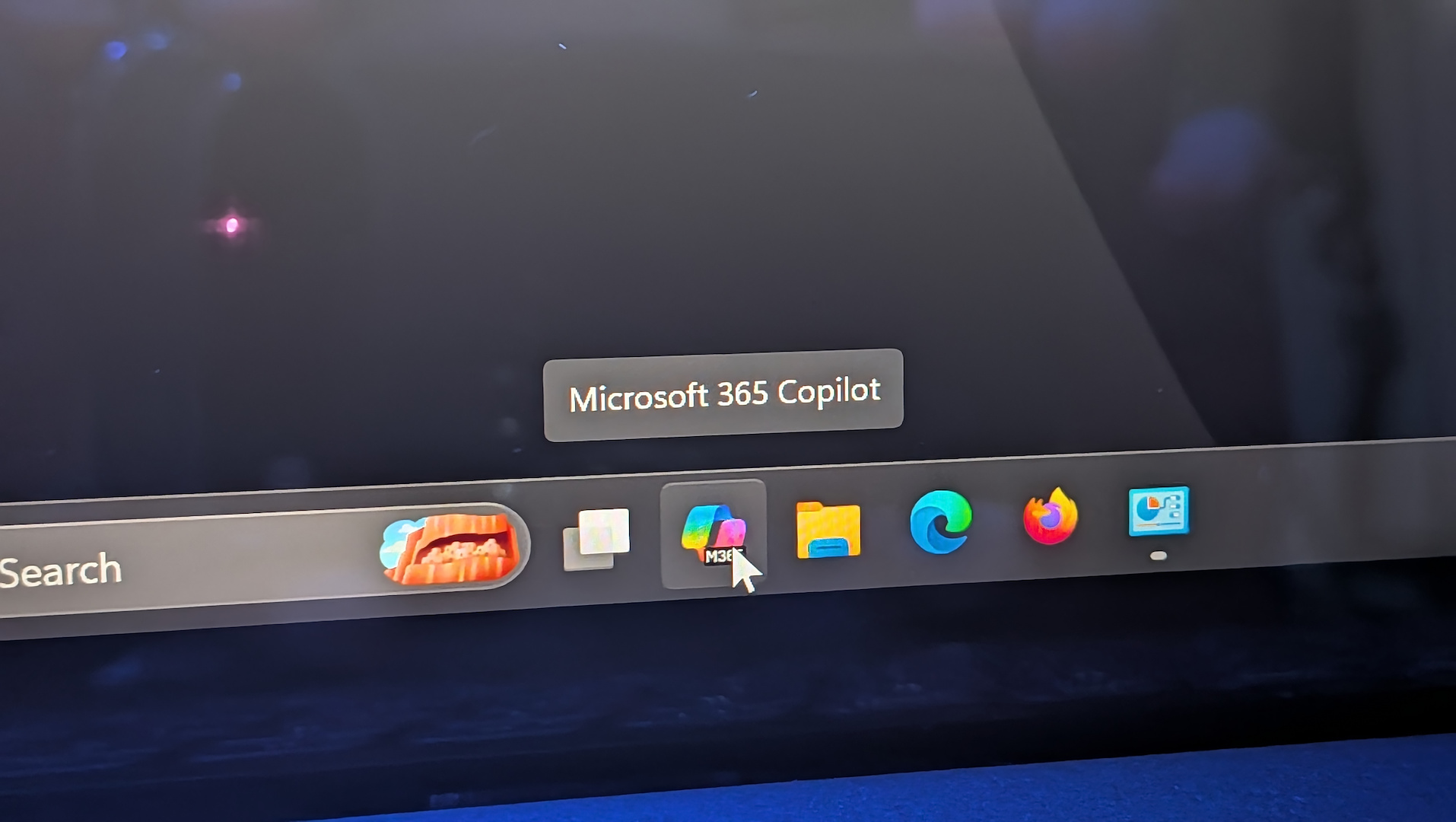
According to Microsoft in the review information session I attended, the Surface Laptop Ultra will be certified as a Copilot+ device, but “full software support won’t arrive until late 2026 or early 2027.” The keyboard’s dedicated Copilot button launches the window for M365 Copilot right now, which is fine if you intended to use it for Cloud AI services, but users may be confused at first given the package they were sold.
The Copilot key currently launches the M365 Copilot assistant, not Copilot+.
The Copilot key currently launches the M365 Copilot assistant, not Copilot+.
Features like Recall, Click to Do, and the new Windows search bar won’t be available until Microsoft finishes baking them for the Surface Laptop Ultra’s hardware. Participants in the Windows Insider Program will likely see early access before the general public, so if you’re itching for those Copilot+ features, you’ll have to agree to participate and share device information with Microsoft. Your call.
No Copilot+ yet…
No Copilot+ yet…
Unscientific battery testing
Since the Surface Laptop Ultra is meant to be an all-day device that can handle your workload during the day and your gaming at night, there’s an unavoidable question of how much of that you can actually do on the go. With this in mind, I attempted to measure battery levels every 30 minutes throughout my testing and mapped it to a partial day of mixed use.
Time Elapsed
Battery
Activity
30 minutes
93%
CPU Benchmark, web browsing
1 hour
87%
Mixed writing, browsing
90 minutes
85%
Idle period
2 hours
80%
AI testing
2.5 hours
78%
Mixed use
3 hours
66%
GPU-heavy AI workloads
The Surface retained 66 percent of battery life after three hours of varied use. AI-heavy application use will have you running for the magnetic plug, though. That final 30-minute sample was when I ran the llama3.3:70b model twice, and there was a significant drop-off during that period that would likely remain constant so long as you were pushing the GPU.
Sound
Speakers on the Surface Laptop Ultra are impressive for such a slim device. I unwittingly found myself sitting at my desk bobbing my head along to the Forza Horizon 6 theme music while benchmarks were running. To no real surprise given the size constraints, it’s the low-end frequencies that seem most absent in the overall sound, but that’s not to say there’s anything hollow about the final mix.
The package is quite serviceable given that most people are going to be using headphones with the device in an office setting or on the go. I didn’t do any dB measuring, but cranking the volume in my basement was loud enough to get my wife to ask what the heck I was doing from the floor above. Normally it takes reference speakers for that reaction, so I’ll call them sufficiently loud. At no point did I encounter any type of crackles or pops when adjusting volume on the fly, which is always a nice sign that everything is shielded as it should be.
The Forza Horizon series has some really catchy theme music.
The Forza Horizon series has some really catchy theme music.
Closing thoughts
The Surface Laptop Ultra is a very capable machine, perhaps even more capable in places than I had assumed. Through clever resource allocations via unified memory and the new RTX Spark SoC, Microsoft has genuinely delivered on the hardware side of its “one device for everything” pitch. When a 70 billion-parameter model can run on this laptop with GPU acceleration and not others, that’s impressive. The Surface Laptop Ultra delivers on the gaming portion of its promises, too: AAA titles running on an ARM machine, complete with the latest bells and whistles, and displayed on one of the nicest laptop displays I’ve ever seen. From the screen to the keyboard to the trackpad, everything feels premium, because it is.
The problem isn’t the laptop’s hardware, but everything currently sitting on top of it. Microsoft’s own AI Dev Gallery still feels half-baked, with a limited selection of small models mostly tied to the CPU. Phi Silica, the flagship LLM, is still gated behind developer registration. The Copilot+ features are still to come at a later date, which might be this year or next. None of these are fatal flaws on their own; this thing is still prelaunch at the time of writing after all. But taken as a whole, you start to see a pattern. PCs are being rushed to market with the new RTX Spark chipset so that manufacturers at least have something new to offer for the 2026 holiday season, with software left to play catch-up later on some non-specific date.
So who is the Surface Laptop Ultra really for? If you’re a CUDA developer who favors portability and needs to test local AI models on the fly, and you happen to have an extra $2,599–$5,899 in your back pocket, this is genuinely exciting hardware. For everyone else? I’d advise patience. Take a pause to see how the software matures before jumping ship from your MacBook Pro.
The Ultra’s box and contents.
The Ultra’s box and contents.
There’s also an element of PC philosophy to consider. I’m the type of person who enjoys purpose-built systems for specific tasks. A desktop rig for gaming, a mini-PC for office work, a laptop or Chromebook for cloud applications on the road. It’s just how I’ve become wired. “This is my PC for that,” as it were. Though with PC prices likely to stay inflated for at least another few years, maybe Microsoft and Nvidia have delivered a middle ground.
If you’re the type of person who really does want everything in one package, then the Surface Laptop Ultra’s multiple personalities may actually suit you. But the math is still somewhat complicated. You’re paying a premium for bleeding-edge tech where not all features are available yet, and having to do so under the umbrella of Microsoft services, with all the live logins and subscriptions that come with it.
The good, the bad, and the ugly
The good:
One of the nicest laptop displays you’re likely to see
Premium hardware and design
Gaming runs shockingly well on ARM
Serious CUDA compute performance on a laptop
Magnetic USB-C charging is a nice touch
Unified memory
The bad:
Copilot+ features are still several months away
AI Dev Gallery’s Preview is still light on features to take advantage of this hardware
Expensive silicon shipping without full driver support
The ugly:
Software support just isn’t there quite yet
Has Microsoft and Nvidia’s partnership delivered the ultimate all-in-one PC? Not yet, but they have delivered the first ARM laptop I’ve used that makes the question worth asking—now the horse just needs to show up.
Diesel Above 2.16 Euros Drives Truckers and Farmers to Protest in Sicily, Calabria
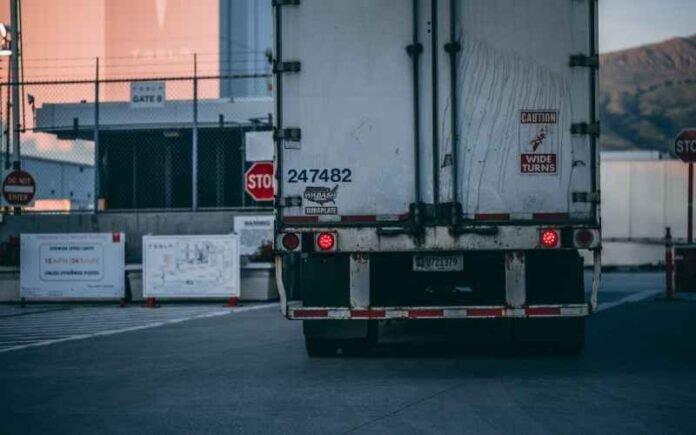
Truck drivers in Sicily halted their vehicles at ports and company yards to protest soaring fuel costs, part of a wave of demonstrations that also disrupted traffic in Calabria, Basilicata and Campania in southern Italy.
Trucks belonging to members of the Sicilian transport committee stood idle at ports and did not unload ships. Others were parked in company yards as the strike by Sicilian truckers began.
“Participation is total,” committee coordinator Salvatore Bella said. “No heavy vehicles are moving in Sicily.” The committee planned a news conference later in the morning.
Bella criticized Transport Minister Matteo Salvini, though the text does not give Salvini’s title. He said he did not understand why Salvini had summoned unions that are not striking while excluding those that are. “It is unheard of to leave Sicilian truckers out,” he said.
Companies belonging to Confindustria Catania are not taking part. The group had initially announced a truckers’ strike from Oct. 16 to Oct. 22.
In Gela, in the province of Caltanissetta, dozens of trucks have been stopped since the previous night at a protest camp set up by farmers over fuel prices. Drivers who halted their vehicles along the roundabout at the town’s entrance said they can no longer bear the increases. They cited 8,000 euros more per year for each vehicle that travels 100,000 kilometers, and diesel that has climbed above 2.16 euros per liter, up 0.35 euros since February.
Traffic slowed, backed up and forced some drivers onto other roads at the entrance to Gela on State Road 117 bis, which links the town with Catania. Truckers briefly blocked the road near Castelluccio before it was cleared, in part because police arrived. Authorities are monitoring the situation. A procession of farm vehicles and tractors also traveled part of the Gela-Catania road.
Calabria
A protest called by Fedralog, the regional logistics federation, began in Calabria and is set to continue through the 20th. Trucks are parked along road edges without full blockades, under police supervision, though narrowed roadways are causing delays. About 15 sites have been identified, including near Lamezia Terme airport, the port of Gioia Tauro and A2 highway junctions near Cosenza.
The action adds to farmers’ protests that have continued for days. In Corigliano Rossano, high school students joined farmers who have occupied a roundabout on State Road 106 for three days. Farmer representative Mario Oliveto, who promoted the protest, led them by tractor, and Mayor Flavio Stasi was present.
Basilicata
Spontaneous truckers’ committees staged sit-ins and blockades, complicating road traffic. The region is also facing a fuel emergency because of a strike at Eni’s Taranto refinery. The worst problems were reported along the Ionian state road at the Calabria and Puglia borders and on the Bradanica road in the Vulture-Melfese area. Most filling stations in Potenza and other towns posted “sold out” signs. Farmers, backed by the Coldiretti agricultural group, planned a rally at 9 a.m. in front of the regional government headquarters in Potenza.
Campania
Truckers have protested since midnight on highways in the provinces of Caserta and Napoli, with vehicles gathered near the Nola toll booth on the A30 Caserta-Salerno and at Caianello on the A1 Milan-Naples. The sites leave a gap for other traffic but still cause delays. Others are at Caserta Sud. At about 9:15 a.m., Autostrade said the Nola exit on the A30 was temporarily closed in both directions, with a kilometer of backup toward Caserta. Highway police and Autostrade staff were on scene, and drivers were advised to use the Tufino exit.
A fresh wave of outrage over the Trump administration’s use of Immigration and Customs Enforcement has surged after two high-profile events involving ICE in the span of a week: the shooting of a young father in New York City last Thursday, and the Monday morning Homeland Security Investigations raid on Rep. Ilhan Omar’s home.
Reporting from the Wall Street Journal suggests that the raid was a part of an ongoing effort by the Trump administration to strip the Minnesota Democrat of her U.S. citizenship. Omar arrived in the United States as a child refugee from Somalia and became a naturalized citizen in 2000, long before the start of her political career. The outspoken progressive congresswoman has since become a foe of President Donald Trump; in a statement, her spokesperson condemned the raid on her home as “an unprecedented escalation in the weaponization of federal law enforcement to target political enemies.”
Omar’s House colleague, Rep. Delia Ramirez, D-Ill., argues this sort of weaponization is an inherent feature of the Department of Homeland Security, which was established in 2003 as part of the George W. Bush administration’s mounting war on terror. This week on The Intercept Briefing, host Jessica Washington speaks with Ramirez about a new bill she introduced on Tuesday to abolish DHS and what the raid on Omar’s home reveals about the department.
“The Department of Homeland Security cannot be reformed. It should be dismantled,” said Ramirez. “What they did — just three weeks from an election — was to attempt to create such paralysis on everyday people. … If they can do this to one of my colleagues, they can do that to anyone. And it should concern everyone.”
Washington also speaks with Rozina Ali — a journalist covering the war on terror, Islamophobia, the Middle East, South Asia, and literature — and Will Sommer, a senior reporter covering right-wing media and conspiracy theories at The Bulwark.
Ali and Sommer unpack the role of conspiracy theories and anti-Muslim propaganda in the attacks on Omar, and how DHS has been historically weaponized against Muslims in the United States.
“Over the last 30 years, we have been conditioned to believe that Muslims, and now more broadly immigrants, are not just a threat to national security, but a threat to the American way of life,” said Ali.
“The right has been really eager to denaturalize Ilhan Omar for really going back a decade almost to the first Trump administration,” said Sommer. He called the investigation into Omar “one of the most striking examples we’ve seen of how the Trump administration is willing to use law enforcement to achieve its political aims and to sort of threaten its enemies.”
For more, listen to the full conversation of The Intercept Briefing on Apple Podcasts, Spotify, YouTube, or wherever you listen to podcasts.
Transcript
Jessica Washington: Welcome to The Intercept Briefing. I’m Jessica Washington, politics reporter at The Intercept. On Monday, Homeland Security Investigation agents searched the home of Minnesota Congresswoman Ilhan Omar. Reporting from the Washington Post suggests that the probe centers on allegations that Omar’s late father lied on immigration paperwork decades ago when Omar was a teenager.
According to a source familiar with the case who spoke to the paper, the Department of Homeland Security had previously declined to move ahead with an investigation years prior based on similar allegations. There still weren’t many details out as of Wednesday. The Department of Justice has vaguely described a “federal criminal investigation,” but Omar has long been a political foe of President Donald Trump.
In a statement to The Intercept, Omar called the raid “an outrageous abuse of power and an unprecedented escalation in the weaponization of federal law enforcement to target political enemies.” The raid on Omar’s home comes days after an Immigration and Customs Enforcement agent shot 28-year-old Oscar Belgal in the neck in New York City, with his 5-year-old son in the back seat.
The incidents have reignited concerns about the violent weaponization of the Department of Homeland Security by President Donald Trump against immigrants and the administration’s perceived political enemies.
The group Democracy Defenders Fund filed a complaint over the raid on Tuesday, arguing it violates the Hatch Act, a federal law that restricts political activity by members of the government’s executive branch. With early voting in Minnesota scheduled to start Friday, the group says the raid “appears to be timed to influence voters in the upcoming midterm election.”
Rep. Delia Ramirez, a Democrat from Illinois, introduced a new bill this week to dismantle the Department of Homeland Security and abolish immigrant detention in the United States. I’m speaking to her on Wednesday, October 14. Congresswoman Ramirez, welcome back to The Intercept Briefing.
Rep. Delia Ramirez: Oh, happy to be on.
JW: First, I wanna get your reaction to the Homeland Security Investigation search of Representative Ilhan Omar’s home on Monday. Were you surprised by the news? And what do you think it tells us about how the Department of Homeland Security is operating under President Donald Trump?
DR: I’m gonna tell you that, unfortunately, I’m not surprised by what happened — but it is still bone-chilling.
You’re talking about a department that was created to have full authority to violate civil rights every single day, now weaponized against a sitting member of Congress — sending, I don’t know, 20 HSI agents into her home at 4:30 in the morning.
Cruelty, complete control, and authoritarianism, and demonstrating their ability to get away with whatever they think they can, was the point of what they just did.
And it is clearly the embodiment of abuse of power. But it also shows us exactly why the Department of Homeland Security cannot be reformed. It should be dismantled. And that what they did — just three weeks from an election — was to attempt to create such paralysis on everyday people to believe that if they can do this to one of my colleagues, that they can do that to anyone. And it should concern everyone.
“Demonstrating their ability to get away with whatever they think they can, was the point of what they just did.”
Anyone that cares deeply about our democracy, about our ability to exercise our freedom of speech, or to be protected from being harmed by the federal government should see what is happening to my colleague Ilhan Omar as a clear indicator that this could also happen to them, if we don’t stop them.
And that justice is not just that she gets her phone back, or they leave her alone. Justice is holding accountable the leadership that made that terrorizing experience for Ilhan happen.
JW: Speaking of stopping them, I want to get into the bill that you introduced on Tuesday, the Reimagining Safety Act, which would abolish the Department of Homeland Security, eliminate all immigrant detention, and repeal “duplicative and overreaching terrorism laws.”
Now, there has been some forward momentum on the movement to abolish Immigration and Customs Enforcement, at least from progressives — but this bill would get rid of all of DHS. Can you talk about how that would work and why, in your opinion, it’s not enough to just abolish ICE?
DR: I just mentioned to you what’s happening to Congresswoman Omar, and to me, it’s a clear indicator of the greatest threat to our security: It’s not immigrants; it’s the Department of Homeland Security.
And I know that a lot of people say, DHS is “rogue,” we need to address this “rogue” organization. But it’s not rogue. I wanna be clear with people. DHS did not exist my entire lifetime. As a matter of fact, it’s been operating less than 23 years. And it was built exactly to do what it’s doing right now: to violate our rights under pretense of securing our safety, and it’s been, in fact, empowered to act with impunity, which is why people keep saying like, “How can they possibly get away with what they’re doing, and why can’t Congress stop them?”
Because frankly, since its inception, DHS has been utilized by the government to target and persecute people that they consider the public enemy. And we know that fascism always requires a public enemy. Muslim Americans, Latinos, Haitians, protesters. DHS has never kept us safe. And 24 years ago, Americans, Republicans, and Democrats alike, let’s be clear, raised a flag about how DHS would constitute unprecedented consolidation of power, and yet this agency was still formed under the United States Congress.
“The greatest threat to our security is not immigrants; it’s the Department of Homeland Security.”
DHS has been a problem of the administration for its entirety. And administration after administration has demonstrated to us that this agency needs to be completely dismantled piece by piece. And when you have people like Donald Trump with very authoritarian tendencies, you have clearly seen what they’re capable of doing. And frankly, I don’t think we’ve seen the full extent of what they could do.
So this is a moment for us to ask ourselves: What kind of world do we wanna live in? And do we want to continue to live with the fear that this agency can be weaponized against you, to persecute you, to arrest you, to detain you, to denaturalize you, to attempt to question your own citizenship, to kill you?
And at the same time, ask ourselves: If FEMA and TSA and cybersecurity and the Coast Guard and other critical programs are important for us, how can we allow them to be politicized by this agency that constantly keeps taking away the resources that these critical programs need? And so for me, this is the moment that we don’t just abolish ICE or abolish CBP — we take on the institution that was created to allow ICE and CBP to operate in the way that it does.
“Do we want to continue to live with the fear that this agency can be weaponized against you, to persecute you, to arrest you, to detain you, to denaturalize you, to attempt to question your own citizenship, to kill you?”
JW: To your point, there are all of these other functions of the Department of Homeland Security, from federal disaster relief to TSA screenings to customs enforcement. What happens to all those other functions if DHS is dismantled?
DR: I’m glad you asked me that question ’cause people keep saying, “Do you not care about FEMA?” Actually, because I care about FEMA, I want to dismantle the Department of Homeland Security.
H.R. 10803, the Reimagining Safety Act, it’s a first of its kind bill, and for the very first time, it’s a bill that community stakeholders spent months designing a Cabinet-level department. Because the Reimagining Safety Act would actually establish another department, the Department of Community Safety, that in fact is about protecting our communities.
It would dismantle DHS by preserving the Cybersecurity and Infrastructure Security Agency — we call it CISA, that was created under the Department of Homeland Security; protecting and expanding the Federal Emergency Management Agency; protecting and redirecting the Transportation Security Agency and custom functions into the Department of Transportation; while abolishing ICE and CBP and reinvesting funds in community.
And, certainly, I think the other piece of that is the surveillance: limiting government surveillance and reining in the unlawful abuses of data and curb the militarized enforcement that you’re seeing under DHS while beginning the process of taking what we call USCIS, that’s also under the Department of Homeland Security, and establishing it as its own separate civil immigration system that no longer operates under this agency that could call Renee Good, Alex Pretti, or Silverio Villegas terrorists.
JW: Thinking about your bill — obviously, Republicans currently control every lever of power, and only a handful of Democrats support abolishing ICE, and fewer still have called to abolish the Department of Homeland Security. Why introduce this bill now, knowing that it likely can’t pass this current Congress, much less get signed by President Donald Trump?
DR: Every single issue, whether it’s talking about universal healthcare, Medicare for All, whether it’s talking about raising wages — and now I introduced Living Wage for All — or blocking bombs and ending endless wars, oftentimes the assumption has been it is too early, or Republicans control, or Democrats have not arrived.
The people have arrived to where we are. They believe that this agency is the biggest threat to their well-being. And for me, this is an opportunity to provide a roadmap on how we actually in fact address the problem and then create a solution that centers people’s safety — and not just rhetoric of protecting the homeland under the guise of protecting us from terrorism, so that they can terrorize us.
Jessica, I am clear that this bill is not gonna pass overnight, but I am also clear that our community expects for us to propose something that is tangible, something that is comprehensive, and something that gets to the root of the problem by creating a permanent solution, so that we’re never here again.
“Our community expects for us to propose something that is tangible … that gets to the root of the problem.”
That means that over the next few months, and perhaps over the next year, we are building the support and changing the conversation in such way where in the same way only nine or 10 of my colleagues were willing to, out loud, say “Abolish ICE” two months ago, now we have actually more like 45, 50 of them, that we are in the same place when we’re talking about reimagining safety in this country.
I am providing a bill that begins to respond to what our communities are demanding. I’m hoping that Congress doesn’t continue to be behind the ball of what the people are asking of them. And now I’m giving them something that they could actually in fact use.
I wanna tell you too that, look, in 2002, people expressed concerns about DHS. And 25 years later, those warnings have been validated as we watch what they’re doing. It’s a weapon pointed at anyone that the state considers a public enemy, whether it’s Congresswoman LaMonica McIver, whether it’s Congresswoman Omar, or the millions of people in this precise moment that are living in fear because of the way that this agency was created.
“We were OK before 2003 without DHS, and we can live in a life without it as well.”
JW: On the subject of looking to the future, if Democrats take one or both houses of Congress in the upcoming midterms, I’m curious what else you’re thinking about in terms of reining in DHS, and if you have any other priorities for the next session.
DR: Let me just come back to this bill, ’cause I think it’s really important — my own bottom line on it. The Reimagining Safety Act takes apart DHS and creates a new agency, a new agency that responds to what people are asking for — for we the people that they’ve elected to represent them, to keep them safe, to protect the mission of community safety, and to protect the public.
And it means that dismantling DHS is doing the work Congress should have done actually 24 years ago, to actually look at these agencies, all agencies under this department, but also how DOJ has been weaponized against us. How we created a Department of War. Just think about that: We’ve created a department where we want to spend more money on war than we want to actually spend on housing, on healthcare, on wages, and on infrastructure.
So for me, this is a moment for us to actually demonstrate that we’re going to fight like hell for accountability, to take on corruption, to end the terror, while also creating tangible ways to address the issues.
And one of those, and I’m going to be introducing a resolution [Thursday] around what should our positioning be when it comes to immigration. Because this agency is about what is wrong and what needs to stop so that we can actually have safety, but then we also need to talk about how we restore our systems of asylum, how we actually in fact establish legal pathways, and how do we bring 11 million people who are in fear, in the shadows, crying daily, to finally come out of the shadows into a justice status.
I am gonna be working really hard to make that front and center with our leadership, and I’m disappointed that our leadership isn’t centering that as one of the very first things that they wanna work on in the first 100 days. Because unfortunately, that is telling the people that have been under siege by this administration: Being an immigrant or being brown or being a protester isn’t the top priority of people that need to be protected.
When our leadership is talking about first 100 days of many important things, but not a word around immigration, and not a word around real accountability to what has happened under ICE and CBP.
JW: Thank you, Congresswoman. We’re gonna leave it there, but people can read more about your bill, the Reimagining Safety Act, at theintercept.com, where we have a story out about it. And thank you so much for joining The Intercept Briefing.
DR: Thank you. Appreciate it.
Jessica Washington: Next, I speak with Rozina Ali, a journalist covering the war on terror, Islamophobia, the Middle East, South Asia, and literature; and Will Sommer, a senior reporter covering right-wing media and conspiracy theories at The Bulwark. Will, welcome to the Intercept Briefing, and Rozina, welcome back.
Will Sommer: Thanks for having me.
Rozina Ali: Thank you so much for having us.
JW: Rozina, I want to start with you. In your new book, “Seasons of Fury: Four Families and the Rise of Islamophobia in America,” you discuss the history of how immigration enforcement has been weaponized against Muslims in the United States. And while I want to preface by saying that there’s still a lot we don’t know about the raid on Congresswoman Ilhan Omar’s home, we do know that Omar is outspoken, Muslim, Black, and an immigrant. She’s also been a consistent target of Trump and his allies.
How might this relate to the broader history of how the Department of Homeland Security has been weaponized against Muslims in the United States?
RA: Well, I really appreciate this question. There’s a very long history when it comes to using immigration enforcement to target Muslims and the Muslim community in the United States, and I just wanna go back a little bit before 9/11 to the late 1990s.
One thing that was happening was the use of secret evidence against Muslim immigrants, a lot of Arabs and South Asians, and a lot of Muslim immigrants, to, essentially, detain them and deport them. And what that meant was actually using classified evidence that the government brought forward that the defendant could not see.
And it actually kind of reminds me of what’s happening with Ilhan Omar now, is that we don’t actually know what the allegations are. We don’t know what the case is hinged on.
What the DHS did after 9/11 was actually broaden out its use of immigration enforcement to target Muslim communities. One of the things it did was actually institute a registry called the National Security Entry-Exit Registration System. That essentially allowed the U.S. government to detain thousands of Muslim immigrants and eventually deport them — even though they had no criminal charges.
One of the things that protects Ilhan Omar is that she is a U.S. citizen, but one of the things that does chill me is there is this longer, broader history of the government using immigration enforcement in order to deport people and detain people, even if they have not been guilty of any criminal charges.
JW: That makes a lot of sense, the concern, because we know there’s history of this power being used in secretive ways, kind of similar to what’s potentially happening now. And I do, again, want to caution that we do not have all the details on this case at the moment. But Will, I wanted to bring you in to kind of get into the origins at least where some of these conspiracy theories that have been swirling around Congresswoman Omar.
You wrote about this in September, kind of where you found that many in MAGA world were frustrated that after nearly a decade of conspiracy theories — some of which were pushed by Trump about alleged immigration fraud from Omar — she remains not only in the United States, but in Congress.
Will, can you explain some of the conspiracy theories that are fueling this push to deport Omar? Is there any evidence for them? And do we know if they had anything to do with the raid on her home?
WS: The right has been really eager to denaturalize Ilhan Omar for really going back a decade, almost to the first Trump administration. A lot of it was fueled by this idea that she had married her brother as some kind of immigration scheme, or essentially that this man she was married to was secretly her brother.
Now, I looked into the origins of this at the time. I thought, “Well, is this true? Could it be?” No, it’s not. In fact, it all started on some random kinda Somali Minnesotan message board where someone said, “Yeah, she’s married to her brother.” And then from there, once she became more prominent as a Democratic figure, people on the right kinda dug through that and sort of built this whole conspiracy theory based off of this one post.
Essentially, now that Trump is back in power, there’s this demand on the right because, as with other conspiracy theories, they’ve come to believe this. So they’re saying, you know, “Oh man, when are we finally gonna deport Ilhan Omar?” So Markwayne Mullin, the head of DHS, has been under this pressure, and he gave this interview at the Republican convention to [right-wing YouTuber] Benny Johnson, and he said, “Oh yeah, she married her brother.”
And Benny Johnson said, “Well, OK. Are you gonna deport her?” Now, you kinda can’t deport her anyway, even if she had married her brother. But there’s all this demand. And so what we’re seeing with this latest investigation is it’s not even related to the brother thing, reportedly. It’s — according to the Washington Post and some other outlets — related to this idea that Ilhan Omar’s father, who is dead now, misstated her age on a citizenship application.
Essentially, she was 17, according to the official record. But had she been a year older, 18, it would’ve kind of complicate it because she would’ve been an adult. It would’ve made it harder for her to get citizenship. This is this idea that’s been pushed by her Republican opponents in elections in the past. It’s really thin, and we can kinda get into it in a second. But this is some thin gruel, essentially, that they’re trying to manufacture this whole effort to pull her citizenship.
JW: I really wanna get more into the conspiracy theory of it and what’s being pushed here. And I think it’s interesting that it’s almost like they’re kind of grasping at any little thing they can get their hands on.
At first, it’s the brother-marriage of it all, which, as you pointed out, has very thin evidence, essentially no evidence. And then it’s pulling at these other threads about her dad, which have all been swirling in the ecosystem for a while.
I want to get a little bit deeper into what conspiracy theories, what role they have here, and I want to talk about what Donald Trump said on Monday night after the raid. He spoke at an Ohio rally pushing more conspiracy theories about Rep. Ilhan Omar and the Somali community in Minnesota in general. Let’s hear that clip now.
Trump: Just look at what’s happening in the once great state of Minnesota. What a mess they have done. Somalia, wonderful, wonderful. And that Ilhan, somebody was asking me, I don’t know what they’re doing with her, but I can tell you this: She’s a disaster. She comes in from a country without laws, without police, without military, without — all they do is shoot each other. And she comes into our country, and she says, “I have a constitutional right.” She’s got a constitutional right. She’s telling us about the Constitution, and she comes from one of the worst countries anywhere on the planet. Last week, savage Somali gang members shot two people in the high school parking lot in the middle of a football game. Just days later, a few miles away, the FBI arrested a radicalized Somalian who was planning to carry out an ISIS-style terrorist attack at the Mall of America, aiming to kill as many as possible, in his words. This is not what we want in this country.
Crowd: Deport! Deport! Deport! Deport!
Trump: What they have done to Minnesota.
JW: Rozina, this isn’t the first time we’ve seen the administration spread conspiracy theories about Muslims. Ahead of Operation Metro Surge in Minneapolis, for example, we heard similar rhetoric about the Somali community. What role have conspiracy theories played in the targeting of Muslims in the United States?
RA: Oh, where to start?
JW: Yeah, there’s a lot.
RA: There is a lot. I think one of the most enduring theories of Muslim communities is that there are radical elements that are living among Muslim neighborhoods, among Muslim communities. And that is a conspiracy theory born out of, obviously, the war on terror framework.
But one of the things that we saw in the aughts, especially under the Obama administration and especially as Trump rose in power, was this notion that Muslims, not just foreign elements, but Muslims living inside the United States are secretly hiding their agenda.
And this is something that we hear with regards to Abdul El-Sayed, that basically any Muslim that you meet is hiding a secret agenda, and what they wanna do is enact Sharia law in the United States. No one has yet to explain what Sharia law means and what that would mean to enact it, but this is one of the things that keeps coming up over and over again.
What is so interesting about this speech that Trump made recently is that he is actually throwing every theory against the wall that he can. That he mentions ISIS — something we haven’t heard for a long time. He mentions radicalization. He mentions fraud. And so all of these things that have been talking points that have been used against Muslim communities, particularly against the Somali community in Minnesota, he is using all at once in this one speech.
“What is so interesting about this speech that Trump made recently is that he is actually throwing every theory against the wall that he can.”
I will say, this is also the talking points — well, fraud is a new one — but when it comes to radicalization and when it comes to the notion of radical elements threatening the security and Western way of life of the United States, these are talking points he was peddling back in 2015 when he eventually called for a Muslim ban.
This is actually something that we see Donald Trump doing a lot, which is, he peddles conspiracy theories. He puts them on the main stage. His allies reinforce them and regurgitate them, and he gives them legitimacy, right? He legitimizes them by using a government framework to offer some veneer of truth to them. And unfortunately, as we know, one iteration of the Muslim ban was eventually upheld by the Supreme Court.
JW: As Rozina said, fraud is kind of a newer iteration of these kind of Muslim conspiracy theories. Where did it originate from, and why has it become such a powerful talking point on the right when targeting particularly the Somali community in Minnesota?
WS: I should say: Minnesota has a very — despite being a Democratic state — it has a very intense Republican activist and kind of like quasi-journalist scene going on. And so a lot of that has been built around, again, building, talking about Ilhan Omar. And now we’ve seen it kinda going after the Somali community in various ways.
But really, this hit a new level in January with this young man named Nick Shirley, who’s like a YouTuber. He went around, he was led around by one of these Minnesota conservative journalist types to various daycares, and they said,”Look at the fraud here.”
Now look, there are some criminal fraud cases that are being prosecuted in Minnesota. But there was this broader sense created by this video of, like the Somali community are parasitic, that they’re up to no good, they’re stealing all this money, what have you.
And then in fact, that helped justify then — at least in the view of the Trump administration — the ICE surge into Minneapolis. And so this has created this idea of constant Somali American fraud, not just in Minnesota, but all over the place. And so obviously it dovetails with the Ilhan Omar idea as well, that she forged her citizenship, she somehow faked that.
JW: That makes a lot of sense. It is really interesting to see the way the administration targeted Minnesota, both because of the Somali community, which was particularly vulnerable, because as we’ve mentioned this is both a Black, immigrant, and Muslim community, so this trifecta of areas that the Trump administration is targeting. And then also you had Ilhan Omar, who was this image that the administration could attack and go after, and it was really popular to their base to do so.
Rozina, when we’re talking about the stories that kind of stick when it comes to conspiracy theories, what sort of stuff has really stuck and why? I’m curious to understand why in the imagination of so many people in the U.S. these conspiracy theories have really stuck.
RA: I think one of the most enduring theories that keeps coming up over and over again and that really has stuck is this notion that, as I mentioned, that Muslims have nefarious secret agendas, but also that they have ties to foreign organizations and foreign elements.
And one of the things that we hear with regards to Ilhan Omar, too, is that — and I think I’ve heard this from some right-wing talking points in the previous days — is that there might be allegations that she has some financial ties or connections to foreign groups. This is something we have heard about Zohran Mandani. This is something we have heard about Abdul El-Sayed. This is actually something that has been a part of the American narrative about Muslims for decades.
One of the crucial things that was happening in the ’90s was that the U.S. government was looking for financial ties to foreign organizations among the Muslim community. And one of the things that happened immediately after 9/11 was that the United States government shut down the biggest Muslim charity in the United States, called the Holy Land Foundation, because of alleged nefarious ties to militant groups abroad.
Because there has been a government framework for this, I think it is really easy for a lot of conspiracy theorists and for a lot of Islamophobes, frankly, to keep regurgitating this notion that “just look at the financial ties of Muslims.” And one of the lasting shifts that we have seen in the last 25 years is that that scrutiny is not just against Muslim immigrants or visa holders, but also against Muslim Americans and citizens of the United States. And I don’t think we’re actually going to be able to break out of those conspiracy theories so easily if we don’t actually start discussing and reckoning with how we think about what terrorism is.
So for example, with the Holy Land Foundation case, that is a case that keeps coming up over and over again. A lot of those ties, financial ties, it’s a really complicated case, but a lot of those financial ties were related to Hamas, but it’s also relevant to remember that Hamas at the time was a governing body in Gaza that was supplying aid to people.
And essentially, the way we talk about terrorism, the way we talk about countries abroad, has a real impact for how we think about the Muslim community at home. So I just wanna go back to Abdul El-Sayed for just really quickly, is that one of the biggest talking points peddled against him these days is that his mother is connected to the Muslim Brotherhood.
Now, there’s very little understanding of what it had meant to be a supporter of the Muslim Brotherhood in Egypt, right? Because we just see that through the lens of terrorism, it’s completely dismissing all the political dynamics on the ground in those countries abroad. And I think what a lot of conspiracy theorists and Islamophobes have done so effectively is forever tie Muslim communities in the U.S. to what Americans largely think of as nefarious elements in other countries.
JW: I think that’s all really important, recognizing, to your point, that none of these conspiracy theories — I mean, again, they had taken new iterations — but that conspiracy theories against Muslims in the United States is not a new phenomenon. I guess I am curious if we’re moving into a new phase though, of danger, essentially, from the administration.
Will, coming back to your September piece, in it you compare the calls to deport Rep. Ilhan Omar to the Department of Justice’s attempts at convicting the president’s political enemies. And those have, for the most part failed, in terms of getting these convictions, “locking up” his enemies, as he’s said he wants to do.
Does this raid of a sitting congresswoman’s home signal a new, more dangerous era from the White House when it comes to threats against the administration’s perceived political enemies? Are we entering a new, more dangerous phase?
WS: I think the raid represents sort of the confluence of two alarming trends. One is what we’ve been talking about, which is the growing, second tide of Islamophobia that we’re seeing from this administration, that I think was sort of on the back burner as there was so much promotion on the right about fears about immigration from Latin America. Now, we see in Texas there’s so much anger at Muslim communities in that area in particular.
We’re also seeing though, as you said, the politicization of the Justice Department. I mean, this raid falls within the 60 days. Typically, the DOJ doesn’t raid politicians this close to an election, particularly something that’s about a 30-years-old child immigration case. Clearly, it’s political. It’s an attempt to make Ilhan Omar the face of the Democratic Party, suggest all this fraud.
Look, a lot of those attacks, those political lawfare, what have you, is related to Israel and Palestine, people like Fergie Chambers, Max Blumenthal, have either faced indictments or had their devices seized, in Max Blumenthal’s case. Certainly a lot of it aimed at campus activists as well.
I think the Ilhan Omar thing is really one of the most striking examples we’ve seen of how the Trump administration is willing to use law enforcement to achieve its political aims and to threaten its enemies.
“The Ilhan Omar [raid] is one of the most striking examples we’ve seen of how the Trump administration is willing to use law enforcement to achieve its political aims and threaten its enemies.”
JW: You mentioned that post-Watergate 60-day rule, which is an unwritten policy designating a blackout period effectively before elections during which the Department of Justice is not supposed to conduct activity which could influence voters. There’s also the Hatch Act, which states that government employees cannot use their authority or influence to interfere with or affect an election. There was actually a Hatch Act complaint filed yesterday by a watchdog group over the raid on Ilhan Omar’s house.
At this point, Will, with an administration that has already done so much over the years without consequence, does the Hatch Act and do these other kind of long-standing norms serve any purpose or any protection?
WS: No. At this point, unfortunately, I think the Hatch Act is a dead letter in terms of, no one’s gonna enforce it, at least until Democrats retake some kind of power. Look, the administration is using government money to buy political ads, outright political ads. And so certainly, I think they’re going to unfortunately be able to get away with things like raiding a congresswoman’s house.
I think really it’s just become, the idea that they would use Justice Department or DHS to achieve political aims is just understood now that that’s something Trump is gonna do.
JW: And Rozina, from your perspective, does this raid to you signal a kind of new, more dangerous era, for not just the president’s political enemies, but also disfavored groups?
RA: Yeah, I want to just go back specifically to the Somali community living in the United States. It is telling that President Trump disparaged the country of Somalia as he also bombs this country with hundreds of airstrikes in the past year alone, displacing more people and causing more people to search for refuge abroad.
We mentioned the ICE Operation Metro Surge in Minnesota last December. Trump was talking about the Somali community in Minnesota, and ostensibly fraud was the reason, one of the reasons, for which he sent ICE agents into the city.
One of the things that the government learned very quickly was that a lot of Somalis living in Minnesota are actually citizens. They are naturalized or that they were born here, and they could not be easily picked up and detained or deported, even though there were some who were. Yet what happened in the months after Operation Metro Surge was that it really chilled the Somali community living in the city. Even though there were so many people who did go out and protest and help each other, there were a lot who basically stayed at home. And I actually spoke with several people who would not leave their house for months.
Now, one of the things that really frightens me about what the DOJ and DHS did with regards to Ilhan Omar is that it is actually expanding the war against Somalis. It’s now seeing ways in which to not just frighten asylum-seekers and refugees and visa holders, but also naturalized citizens.
“What this administration has done so effectively is actually telling everyone that there are some communities who are no longer protected the way they used to be.”
And I think what this administration has done so effectively is actually telling everyone that there are some communities who are no longer protected the way they used to be. And we saw that also in the context of, for example, the arrest of Mahmoud Khalil and pro-Palestine protesters. We are seeing a level in which government is used to target people who before would have protections from the government, and now they are being told that they are actually vulnerable.
And Ilhan Omar, it’s possible that nothing comes of this raid, and things will just go back to normal. But what worries me is the larger chilling effect on the community, including now naturalized citizens.
JW: Trump aside, the Trump administration aside, Rozina, is this just the logical endpoint of effectively decades of crafting a federal domestic surveillance and police state that is laser-focused on immigrants and Muslim Americans?
RA: Yes, it is, right? One of the things that has happened over the 20, or last 25 years has been one immense power that has been concentrated in the executive branch. This notion that when it comes to national security, the government has a lot of leeway to violate people’s civil rights But the other thing — one of the other enduring legacies of the last 30 years — is precisely what the American public is willing to accept.
“We have been conditioned to believe that Muslims … are not just a threat to national security, but a threat to American way of life.”
And over the last 30 years, we have been conditioned to believe that Muslims, and now more broadly immigrants, are not just a threat to national security, but a threat to American way of life.
And again, Trump is able to throw everything — when it comes to Ilhan Omar and the Somali community — throw everything at them. They’re a threat to national security. They are threatening how we live in this country. They are threatening what it means to be American. They are taking away our money and our dollars, and he is using all of these talking points to help build up public support for this agenda against the Somali community. I don’t think such a blatant targeting and explicit targeting would have been met with such support even in, for example, October or November 2001.
JW: I think those are all very good points. I hate when people say this is the only form of acceptable bigotry, because I can frankly say that there are many forms of acceptable bigotry. But the extent to which Islamophobia is a part of American culture is accepted, I think is not just troubling, it’s decades of conditioning, as you’ve pointed out. It is decades of feeding these conspiracy theories, of repeating them until they feel almost natural to so many of us.
But I want to give you both an opportunity to just share any final thoughts. Will, I want to start with you. Is there anything else that you’d wanna add?
WS: As this case goes forward, it’ll be interesting to see what it looks like. But the idea that Ilhan Omar lied about her birthday or whatever is all based on, there was this one congressional website that said she was born in 1981 instead of 1982. And so Republicans have seized on this. Look, it’s one website, right? I looked in the court records, all this stuff. Before she became famous, she was listing her birthday as 1982, all this stuff. And so if that’s gonna be the crux of it, that one website had a typo, I don’t think the administration’s gonna have a lot to run on here.
JW: There’s very thin evidence for some of these conspiracy theories, although people will take very thin evidence and run with them. Rozina, any final thoughts from you?
“What does this mean for denaturalization efforts across the board?”
RA: I agree with Will, I don’t think that the government has that much to go on. It seems to be very thin evidence. But again, it is government resources that are being used to basically go on a, what appears to be for right now, a witch hunt. But again, what worries me is the more lasting effects of this, which is, what does this mean for denaturalization efforts across the board? And there seems to be not just support for it, but also a deliberate desire to run with such an agenda.
JW: And we’re gonna leave it there. But Will, Rozina, thank you both so much for joining me on The Intercept Briefing.
WS: Thank you.
RA: Thank you.
JW: That does it for this episode. We wanna hear from you. Tell us what you’re following or want to see more coverage of. Email us at podcasts@theintercept.com, or leave us a voicemail at 530-PODCAST. That’s 530-763-2278. This episode was produced by Andrew Stelzer. Laura Flynn is our supervising producer. Jordan Uhl is our social media producer.
Ben Muessig is our editor in chief. Maia Hibbett is our managing editor. Nara Shin is our copy editor. William Stanton mixed our show. Legal review by David Bralow. Slipstream provided our theme music. This show and our reporting at The Intercept do not exist without you. Your donation, no matter the amount, makes a real difference.
Keep our investigations free and fearless at theintercept.com/join. And if you haven’t already, please subscribe to The Intercept Briefing wherever you listen to podcasts. Do leave us a rating or review. It helps other listeners find our reporting. Until next time.