4.3 C
London
Wednesday, November 25, 2026
Home Blog

Fresh lead in Orlandi disappearance as Carabinieri analyse anonymous call

0
cde.news desk · 3 min read

Italian investigators have isolated the voice of a previously unknown caller who allegedly contacted the family of Emanuela Orlandi days after she vanished, in a new twist in one of Italy’s most enduring mysteries, according to ANSA.

More than 43 years after the disappearance of the 15-year-old Vatican citizen, carabinieri forensic specialists (Ris) are reported to have isolated the voice, and investigators are said to be closing in on the man’s identity, which remains unknown for now. Orlandi disappeared on June 22, 1983, while returning from a lesson at a music school in Piazza Sant’Apollinare in central Rome.

The latest developments bring the investigative focus back to the anonymous calls received by the family in the first days after her disappearance. Technical checks have pointed investigators to a man who had never emerged before. He allegedly called the Orlandi home only once, saying he had information about the girl.

Forensic analysis points to a specific profile

Analysis by the carabinieri’s Scientific Investigation Unit (Reparto Investigazioni Scientifiche) has given investigators what are described as “significant converging elements” pointing to a specific profile. Carabinieri from the Investigative Unit (Nucleo investigativo), coordinated by the Anti-Mafia District Directorate (Direzione Distrettuale Antimafia) of the prosecutor’s office, are continuing their inquiries at a rapid pace. They aim to gather further evidence to establish his identity, verify precisely any actual involvement, and examine his possible links with other figures who have emerged in the various strands of the investigation.

“We have confidence in the prosecutors’ work. It is clear they are leaving nothing untried,” Laura Sgrò, the lawyer for the Orlandi family, told ANSA.

The chair of the parliamentary commission of inquiry, Fabio Roscani, spoke of “important developments” that are noted “with attention”.

“We fully respect the serious and significant work of the Rome prosecutor’s office and the carabinieri, which I obviously do not comment on in substance as investigations are ongoing,” Roscani said. He added that the commission is continuing its work in detail and has built with prosecutors “a fruitful and loyal institutional collaboration” aimed at reaching the truth about “this painful affair”.

In the days after Orlandi disappeared, the city was plastered with posters seeking the girl. Various callers became part of the case, including the so-called “amerikano”, as well as hoaxers and misleaders. Some claimed to have met her that afternoon in the streets of the historic centre.

Among the first to phone the Orlandi home was a young man who said his name was Pierluigi and claimed to have seen the girl carrying her flute. Another caller introduced himself as Mario and spoke with a strong Roman accent. He told Emanuela’s uncle, who answered the phone, that shortly after her disappearance he had met two girls. One allegedly told him her name was Barbarella and that she had left home voluntarily, earning a living by selling cosmetics and costume jewellery. Mario added that he recognised in Barbarella the same face that appeared on the posters.

The new alleged caller is now added to that list and could give fresh impetus to efforts to solve a mystery that has lasted almost half a century.

Via ANSA

Source: Iwpost.com

Why a Case Against ICC Sanctions Is a Major Victory for Palestine Human Rights Work

0
why-a-case-against-icc-sanctions-is-a-major-victory-for-palestine-human-rights-work
Why a Case Against ICC Sanctions Is a Major Victory for Palestine Human Rights Work


A federal judge on Monday ruled that the Trump administration may not punish Americans for sharing evidence of Israeli war crimes with the International Criminal Court. The ruling also blocked the administration from meting out punishments for sharing information with three sanctioned Palestinian human rights groups and a prominent United Nations official.

The Monday ruling is the broadest challenge yet to an executive order issued by President Donald Trump in the early days of his second term that has been used by U.S. officials to issue sanctions against the ICC; the Palestinian groups al-Haq, al-Mezan, and the Palestinian Center for Human Rights; and U.N. special rapporteur Francesca Albanese.

“It was kind of expected that they would make the preliminary injunction permanent, but the universal part is huge.”

The order, which came as a result of a lawsuit filed in July by Democracy for the Arab World Now, or DAWN, and the Taxpayer Alliance Against Genocide, is the latest setback to efforts by the Trump administration to undermine the efforts by the ICC, Albanese, and others to hold Israel accountable for crimes against humanity.

“This landmark ruling dismantles a core part of Trump’s ICC draconian sanctions regime,” said Omar Shakir, executive director at DAWN. “The court has affirmed that every American has the constitutional right to advocate for justice on Palestine without fear of reprisal.”

While previous rulings against Trump’s executive order applied more narrowly — including an October preliminary injunction in the ICC case that prevented punishments against the plaintiffs — this is the first ruling against the sanctions that protects all Americans.

“The main difference is that this was expanded to be universal, meaning it doesn’t just protect the people who filed the lawsuit in the first place,” Michael Schaeffer Omer-Man, the Israel-Palestine director for DAWN, told The Intercept. “It was kind of expected that they would make the preliminary injunction permanent, but the universal part is huge.”

A spokesperson for the White House did not immediately respond to a request for comment, but in a legal filing earlier this month, attorneys for Trump argued that his original executive order did not represent a restriction on free speech.

Another previous ruling that applied narrowly came in a case brought by a pair of university professors who challenged the administration’s prohibition on working with the ICC. Joseph Pace, a lawyer for DAWN and the Taxpayer Alliance Against Genocide, said this ruling also helped overcome some of the limitations in the professors’ successful case.

“It didn’t stop the administration from enforcing the sanctions against anyone else,” he said, of the decision in the professors’ case. “Nor did that decision say anything about the Palestinian NGOs or Albanese” — neither of which had been sanctioned yet at the time of the ruling.

“The permanent injunction, though, is what’s called a ‘universal injunction,’” Pace told The Intercept. “That means the government can’t penalize anyone for providing (or receiving) First Amendment-protected services to or from ICC, Albanese, and the NGOs.”

“Challenging These Crimes”

In his ruling, U.S. District Judge Jesse Furman found that the so-called services provision of Trump’s order — which threatened penalties for anyone “providing services” to the ICC, Albanese, or the three Palestinian NGOs — was unconstitutional because it undermined the First Amendment rights of people seeking to provide non-financial services to human rights advocates.

In a statement, Taxpayer Alliance Against Genocide co-founder Anna Marie Stenberg said the ruling by Furman provided immediate clearance for her organization and others to resume work with the ICC, Albanese, and the three Palestinian organizations.

“We challenged Trump’s Executive Order on the ICC because we refused to let his regime intimidate us into silence while it used our tax dollars to fund crimes against humanity,” Stenberg said. “This victory means that others can join us in challenging these crimes without fear of punishment for exercising their First Amendment rights. Ordinary people have a right to seek justice, and our government cannot take that right away.”

Trump’s Executive Order 14203, issued in February 2025, called for financial penalties against the ICC under the International Emergency Economic Powers Act. It barred Americans from providing financial assistance or services to further the court’s activities. Trump’s order explicitly cited the court’s investigations into Israel as a justification for the sanctions.

The order led to sanctions by the Trump administration against Albanese, who has consistently drawn the ire of pro-Israel officials for pursuing investigations into Israeli war crimes. The sanctions barred her from entry to the U.S. and froze her assets in the country. Albanese challenged the sanctions and a judge threw them out in May, but they were reinstated later that month.

Source: Iwpost.com

What exactly makes Nvidia’s AI chips so special?

0
what-exactly-makes-nvidia’s-ai-chips-so-special?
What exactly makes Nvidia’s AI chips so special?

<

article id=”post-953469″>

The commotion around Nvidia CEO Jensen Huang’s ouster and reinstatement, the central role of Nvidia in the US-China AI competition, and the US economy’s reliance on the AI boom might leave you asking: What’s so special about Nvidia’s chips?

The answer comes down to graphics processing units, or GPUs, and how far they’ve come from their humble beginnings as sidekicks to computers’ main chips: central processing units, or CPUs.

GPUs now power the most visible advances in generative artificial intelligence, but they began as modestly priced add-on cards for video games and video rendering.

As a researcher of high-performance computing and computer processors, I see three factors that explain how GPUs have become so important to the modern economy and how Nvidia became their dominant supplier: software that made GPUs useful beyond graphics, a research breakthrough that showed what they could do for AI, and a global commercial and political race to build ever-larger AI models.

GPUs vs. CPUs

The CPU is built to handle a wide variety of complicated tasks quickly, a few at a time. In contrast, a GPU typically operates on simpler mathematical tasks, such as multiplying two sets of numbers, but it can perform many of these simpler operations in parallel.

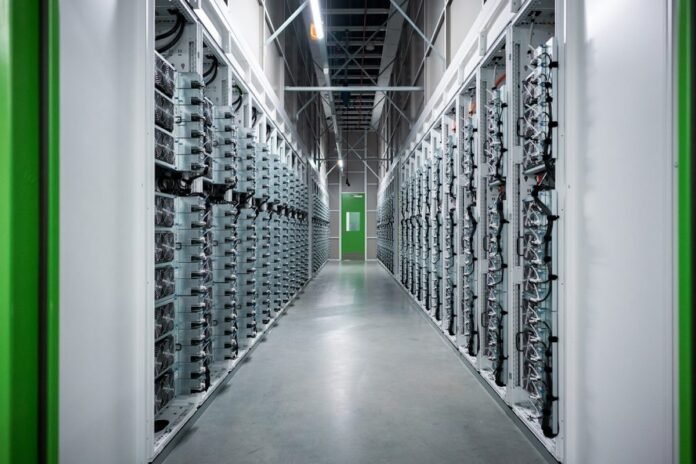
A GPU’s design turns out to be ideal for AI. Training a neural network, the kind of AI model behind today’s chatbots and image generators, comes down mostly to multiplying enormous grids of numbers, over and over. Today’s top AI GPUs can perform more than a quadrillion, or thousand trillion, of these operations every second.

The Financial Times lays out how Nvidia came to dominate the AI chip market.

From pretty pictures to AI data centers

Early GPUs could only draw graphics. Programmers controlled them with small programs called shaders, which calculate things such as the color of each pixel and which can be repeated across millions of pixels in parallel. Nvidia dominated the market for graphics chips in the late 1990s and 2000s.

In the early 2000s, Stanford University researchers built software tools that let programmers use this hardware for other kinds of calculations. That work provided the basis for Nvidia’s Compute Unified Device Architecture, or CUDA, which was released in 2007. CUDA allowed scientists and engineers to run scientific and more general purpose programs using the GPU’s parallel execution model.

The second major shift occurred when AlexNet, a neural network model developed and trained on GPUs, won the 2012 ImageNet challenge, an annual competition to see which software could most accurately identify objects in a set of photographs.

AlexNet was trained on two Nvidia GPUs, and it made far fewer mistakes than any competitor. The result showed that GPUs made it practical to train neural networks big enough to beat the older techniques, and AI researchers quickly adopted them for their work.

Because Nvidia had spent years building CUDA and the software around it, it was positioned to benefit more than anyone. Competitors, including AMD, which also makes GPUs, and Google, which designs its own AI chips, called tensor processing units, have since built strong alternatives.

Nvidia and other chipmakers then began redesigning GPUs for AI with specific features. These include adding hardware specialized for the matrix multiplication math that neural networks rely on, using reduced precision numbers to improve the speed of neural network training and adding larger amounts of fast memory to keep these chips supplied with data for AI workloads.

AI takes off

In 2017, Google researchers introduced the transformer, a neural network design originally built to translate between languages. Transformers turned out to perform remarkably well in terms of accuracy as the model and dataset size grew, and this design became the foundation of today’s chatbots and many other generative AI systems.

The growth of these new transformer models has also led to the current boom of generative AI companies, including US-based companies OpenAI, Anthropic, Meta, Google and xAI, as well as Chinese companies such as DeepSeek, Alibaba and Baidu. Each of these companies is actively focused on building large data centers composed of high-end GPUs to train next-generation foundation models.

These foundation models, exemplified by Google’s Gemini, Anthropic’s Claude Fable and OpenAI’s GPT Astra, are very large neural networks that can reason, write software code and analyze information in response to plain language instructions. The companies working on foundation model training are betting that the best models will automate much of the world’s information work and generate enormous economic returns.

Nvidia’s GPUs dominate the AI market, but rival companies developing other chips are trying to knock Nvidia off its throne.

AI ‘arms race’

Nvidia trains some AI models of its own, but most of its profit comes from selling the chips and software that other companies use to build theirs. This AI boom has led to record profits for Nvidia, but it has also drawn attention from the US government, which has debated how far to restrict sales of advanced chips to China.

The Trump administration tightened its export controls for advanced GPUs in the immediate aftermath of the scandal involving Huang’s relationship with an alleged Chinese spy.

Demand for AI chips looks likely to keep growing as the leading AI companies compete to build more capable models, but the boom faces real limits. AI data centers require enormous amounts of electricity, raising questions about the power costs and environmental impacts to local communities.

The most advanced AI chips, including Nvidia’s, are fabricated largely by one company, Taiwanese chip giant Taiwan Semiconductor Manufacturing Co., known as TSMC. Demand for AI hardware has also strained supplies of memory chips, creating shortages that reach gaming graphics cards and smartphones.

Nvidia also faces direct competition from AMD, cloud companies designing their own chips, and startups, all promising to run AI more cheaply and with less power. Whether Nvidia’s software and hardware advantages can hold off these challengers is one of the biggest open questions in the industry.

Jeffrey Young is principal research scientist, Partnership for an Advanced Computing Environment, Georgia Institute of Technology

This article is republished from The Conversation under a Creative Commons license. Read the original article.

Source: Iwpost.com

Amazon discovers Falcon 9 and Ariane 6 can deliver when nobody else can

0
amazon-discovers-falcon-9-and-ariane-6-can-deliver-when-nobody-else-can
Amazon discovers Falcon 9 and Ariane 6 can deliver when nobody else can
A European Ariane 6 launcher propelled 36 satellites into orbit for the Amazon Leo broadband constellation Tuesday, continuing the network’s build-out after 40 satellites were lost earlier this month during a failure of United Launch Alliance’s Vulcan rocket.

The launch was an important rebound for Amazon, bringing the Amazon Leo fleet to 432 satellites as the company seeks to fill the void left by the grounding of ULA’s Vulcan rocket, Amazon’s primary launch provider. Now, an Amazon official tells Ars it is accelerating several Falcon 9 launches the company has purchased from SpaceX, which also owns the Starlink satellite network that Amazon seeks to dethrone.

The next Falcon 9 launch for Amazon Leo is now planned for December, Amazon said, moved forward from its previous launch date next year. Several more Falcon 9s are scheduled to launch Amazon Leo satellites in rapid succession after the December flight.

Winners and losers

Amazon cast a wide net when it started signing deals for launch services five years ago, securing rides on 108 flights with every available medium- or heavy-lift rocket in the West to place a fleet of 3,232 satellites into low-Earth orbit. As of Tuesday, Amazon and its launch partners have completed 17 of those flights, with one mission failure.

Amazon executives initially bought up capacity from US-based United Launch Alliance, Europe’s Arianespace, and Blue Origin. Nearly all of those launch contracts depended on rockets still in development: ULA’s Vulcan, Europe’s Ariane 6, and Blue Origin’s New Glenn.

Each launch vehicle faced development delays, as all new rockets do. New Glenn has been grounded since May after an explosion on Blue Origin’s launch pad in Florida. ULA’s Vulcan will be sidelined for months after misfiring during a mission with Amazon satellites on November 15.

Amazon started booking launches in 2023 with SpaceX. Falcon 9 successfully launched Amazon’s first three missions last year, each with 24 satellites. Amazon soon reserved 10 more flights on SpaceX’s Falcon 9 rocket as delays mounted with Amazon Leo’s other launch providers, especially ULA and Blue Origin.

The relationship between Amazon and SpaceX is a peculiar one. Amazon aims to catch up to SpaceX’s Starlink network, now boasting more than 11,000 satellites, to bring competition to the satellite broadband market. Federal regulators approved Amazon Leo’s second-generation constellation earlier this year, an addition that will bring the fleet to more than 7,000 satellites in the 2030s. Amazon also plans a direct-to-device service, joining SpaceX and others in the pursuit of consumer demand for mobile connectivity.

But Starlink is far ahead. SpaceX has repurposed the Starlink satellite design for use on several US military programs, and Starlink launches on Falcon 9 are winding down as SpaceX’s Starship enters service. Starship is capable of launching heavier, more powerful Starlink satellites, a culmination that will only widen the gap with Amazon and other competitors in the satellite Internet business.

Starlink’s move to Starship opens up launch slots on Falcon 9, allowing Amazon to accelerate its launches with SpaceX in the near term. But SpaceX doesn’t plan to keep Falcon 9 around for long. The company has reportedly stopped accepting commercial Falcon 9 bookings after 2028.

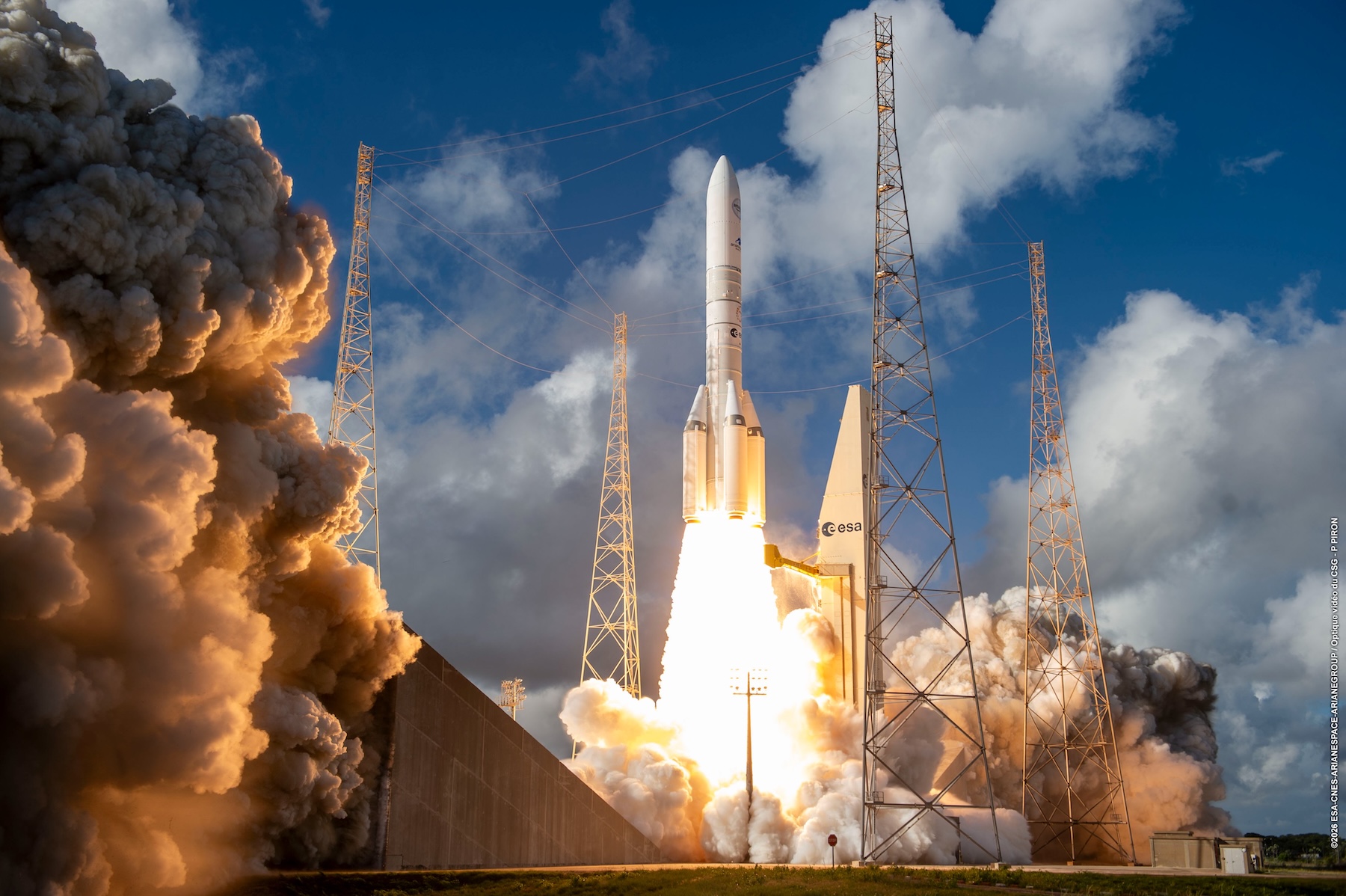
Europe’s Ariane 64 rocket, with four strap-on boosters, lifts off from Kourou, French Guiana, on Tuesday with a package of 36 Amazon Leo satellites.

Europe’s Ariane 64 rocket, with four strap-on boosters, lifts off from Kourou, French Guiana, on Tuesday with a package of 36 Amazon Leo satellites. Credit: Credit: ESA-CNES-Arianespace-P. Piron

That means Amazon Leo needs its other launch providers to step up. Arianespace is doing so, with four successful Ariane 6 flights for Amazon this year. Amazon reserved six additional flights with Arianespace in September as Ariane 6 proved its mettle.

But there are questions about Europe’s ability to ramp up production of Ariane 6 rockets, which are single-use and not reusable like Falcon 9 and New Glenn. Europe’s rocket factories are sized to support a launch cadence of up to nine or 10 Ariane 6 flights per year. Arianespace will likely reach six Ariane 6 flights this year, with one more remaining before the end of December.

European taxpayers paid for development of the Ariane 6 and the industrial capacity to build the rockets, and they continue to subsidize each Ariane 6 flight, whether it carries a European government payload or commercial satellites for a large American corporation like Amazon.

European government ministers are mulling proposals to increase Ariane 6 production to meet surging demand from commercial users and Europe’s internal space programs. A decision could come next month, but a ramp-up in launch cadence won’t happen overnight.

Amazon paid United Launch Alliance hundreds of millions of dollars for expansion at Cape Canaveral, Florida, to prepare for as many as 25 Vulcan launches per year. Such a launch cadence is a long way off for ULA, which has now launched Vulcan five times (with one failure) in its three years of service.

Blue Origin, owned by Amazon founder Jeff Bezos, could resume New Glenn flights early next year after completing a launch pad rebuild. It is not clear when Amazon might begin launching on New Glenn, but finding slots in the rocket’s launch schedule could be difficult as Blue Origin prioritizes work for NASA’s Artemis lunar program.

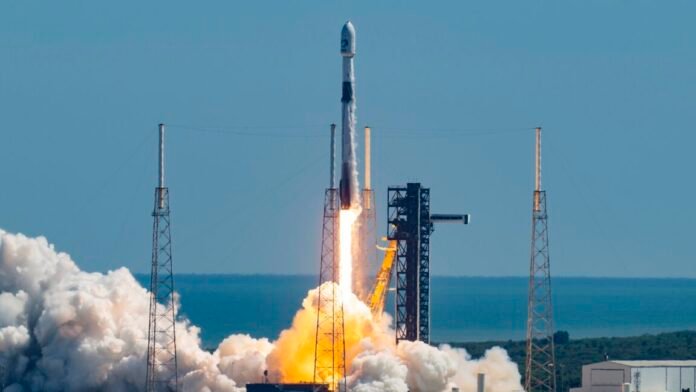
In the meantime, SpaceX will offer Amazon its most assured rides to space. Falcon 9s can launch from Cape Canaveral every few days, and Amazon is ready to tap into that capability with hundreds of satellites in storage waiting to go to orbit.

Source: Iwpost.com

SE Asia’s AI collision: when CAFTA 3.0 hits the US cloud clock

0
se-asia’s-ai-collision:-when-cafta-3.0-hits-the-us-cloud-clock
SE Asia’s AI collision: when CAFTA 3.0 hits the US cloud clock

<

article id=”post-953362″>

In Manila on November 16, Chinese and ASEAN leaders confirmed that the China-ASEAN Free Trade Area (CAFTA) 3.0 upgrade protocol will formally enter into force at the start of next month.

Moving far beyond tariff reductions, the pact institutionalizes cross-border alignment across digital trade, e-payments, smart customs single windows, supply-chain connectivity and artificial intelligence standards.

Yet on the same day in Washington, the US Commerce Department’s Bureau of Industry and Security (BIS) issued its interim final rule, Addressing Remote Access to Advanced Semiconductors.

Taking effect upon its Federal Register publication on November 19, the rule places Singapore, Malaysia, Thailand and Indonesia, alongside Brazil, under strict new licensing requirements for advanced AI chips, triggering a hard 90-day compliance countdown for regional data centers providing remote compute access to Chinese-headquartered firms.

For two years, global tech-policy debates have run on parallel tracks: Washington export-control analysts prioritize closing chip diversion loopholes, while emerging-market researchers debate whether building national AI systems on Chinese open-weight foundations locks the Global South into Beijing’s governance orbit.

Few have modeled what happens when such forces intersect on the ground in Southeast Asia this winter. As CAFTA 3.0’s institutional integration collides with Washington’s extraterritorial cloud policing, ASEAN enterprises face a structural split-stack trap that exposes costly blind spots across the region.

Washington blind spot

In Washington, analysts at the Center for Strategic and International Studies and Center for a New American Security view the BIS rule as an overdue patch to the rescinded Biden-era AI diffusion framework.

By replacing tiered global quotas with targeted destination controls and a 12m aggregate processing cap across digitally linked data centers serving clients in Macau or Country Group D:5 destinations (including China and Hong Kong), BIS aims to stop developers from renting frontier Nvidia clusters in Johor or Singapore to bypass chip bans.

Crucially, the rule exempts US-headquartered end users, privileging American hyperscalers in Southeast Asia while subjecting local operators to strict licensing and customer-screening hurdles.

Meanwhile, Washington’s compliance-centric model has a glaring geoeconomic blind spot: it treats Southeast Asian data centers as isolated server farms rather than nodes embedded in a US$1trillion regional trade bloc.

Legally, Washington’s export-control perimeter is narrower than broad trade decoupling. “The rule doesn’t say you can’t serve the US and China overall; it’s what you can do with the high-end US chips,” said Steven Okun, chief executive of Singapore-based consultancy APAC Advisors. He noted that BIS licensing targets frontier AI models rather than routine warehousing or general logistics.

However, viewing the collision merely as a matter of checking two separate compliance boxes can mask a deeper institutional divide. Washington and Beijing simply do not govern technology the same way.

The US regulatory model relies on legalistic perimeter policing: discrete rules, end-user checklists and auditable walls around specific hardware. On the other hand, China’s governance model under CAFTA 3.0 operates through embedded infrastructural integration: shared technical standards, interoperable payment and customs plumbing and continuous cross-border data corridors.

When a Southeast Asian bank, logistics platform or enterprise plugs into CAFTA 3.0’s digital ecosystem while trying to run generative AI workloads on BIS-restricted compute, two incompatible governance philosophies collide within the same corporate architecture.

More importantly, Washington’s narrow exception for commercial recommender systems leaves general-purpose generative AI squarely inside the licensing net.

By shifting legal liability onto overseas operators to verify end-user workloads within 90 days or face export blacklisting, BIS has turned US cloud infrastructure in ASEAN into a compliance hazard, accelerating commercial defection toward self-hosted Chinese open-weight models such as Alibaba’s Qwen, DeepSeek and Moonshot’s Kimi K3.

Singapore-Malaysia squeeze

These regulatory headwinds are hitting just as Southeast Asia’s physical data-center buildout runs into acute resource and political limits.

In Malaysia’s Johor state, where operational data center load surged to roughly a quarter of the state’s electricity, authorities halted approvals for water-intensive Tier 1 and Tier 2 designs amid drought pressures and grid strain.

Across the Causeway, an asymmetric value-chain hierarchy has taken shape: regional corporate headquarters and legal orchestration cluster in Singapore, while Johor absorbs the water- and power-intensive physical buildout.

Overlaying that infrastructure split is a sharp regulatory and investment bind. “There is a mismatch: on one hand they want investments into Johor, especially AI data centers, and on the other hand they obviously do not want to create issues with Washington,” said James Chin, professor of Asian studies at the University of Tasmania.

He noted that while Prime Minister Anwar Ibrahim’s government seeks to keep both Beijing and Washington onside to protect foreign investment, Putrajaya has already launched probes after receiving a US list of firms suspected of gray-market chip transfers.

A Wall Street Journal investigation published on November 21 highlighted that enforcement challenge, detailing how networks linked to Singapore-based Megaspeed routed hundreds of millions of dollars of Nvidia hardware into Malaysia to serve Chinese clients.

Yet policing physical chip shipments only addresses half of the enforcement puzzle. Even when hardware stays in Malaysia, cross-border data links let Chinese developers run models remotely.

“It is not simply a matter of exporting the chips, because in reality the chips can be based anywhere. It is a question of access to the computing power of the chips,” Chin said.

For operators that financed massive Malaysian server halls assuming they would serve cross-border Chinese demand, severing that remote compute access strikes directly at the revenue math underpinning their buildouts.

Open-weight cyber trap

Nor can Southeast Asian policymakers assume that pivoting toward CAFTA 3.0’s digital ecosystem and Chinese open-weight models offers a frictionless escape.

While open-weight models solve immediate cost and data-residency headaches, emerging cybersecurity research points to a severe operational blind spot for regional chief technology officers.

A June study by Booz Allen Hamilton across more than 2,800 trials found that three of four leading Chinese open-weight models generated significantly higher rates of obfuscated security vulnerabilities when prompted with US defense personas.

Without binding pre-release safety standards in Washington or Beijing, regional banks and public agencies deploying unvetted models on local servers risk trading US regulatory exposure for hard-to-insure software-supply-chain vulnerabilities..

As CAFTA 3.0 enters into force on December 1, the Indo-Pacific AI landscape is shifting from a race to build raw compute capacity toward a fierce contest over regulatory and legal jurisdiction. Three trajectories are set to shape 2027.

First, Washington’s pending Remote Access Security Act, which passed the House in January and awaits Senate deliberation, signals Congress’s intent to close remaining cloud-access loopholes, further hardening the bifurcated cloud perimeter.

While cash-rich US hyperscalers can absorb compliance costs and lock in priority grid capacity, debt-leveraged neoclouds will bear the brunt of stranded capacity.

Second, as speculative expansion stalls against ASEAN grid limits and BIS audits, regulated enterprise workloads will increasingly concentrate in audited institutional clearinghouses.

Jurisdictions such as Hong Kong’s Hetao cross-border data pilots and Singapore’s governance sandboxes and trusted semiconductor frameworks are positioning themselves to legally ring-fence compliant data flows through hardware-enforced confidential computing and auditable access logs.

Third, middle powers such as Japan, South Korea and ASEAN states need to match their upstream hardware and energy investments with shared software verification.

Without joint regional testing standards to audit open-weight models before they enter banks and telecom networks, Southeast Asia risks becoming a fractured digital middle ground built on Japanese materials, powered by rationed local grids, policed by US export lawyers and running unvetted open-weight code.

Albert Cleisthenes Wong is a geopolitical and policy analyst covering technology policy and digital infrastructure.

Source: Iwpost.com

Tourist Killed in Horrifying Elephant Attack as Terrified Hikers Scramble for Their Lives

0
tourist-killed-in-horrifying-elephant-attack-as-terrified-hikers-scramble-for-their-lives
Tourist Killed in Horrifying Elephant Attack as Terrified Hikers Scramble for Their Lives


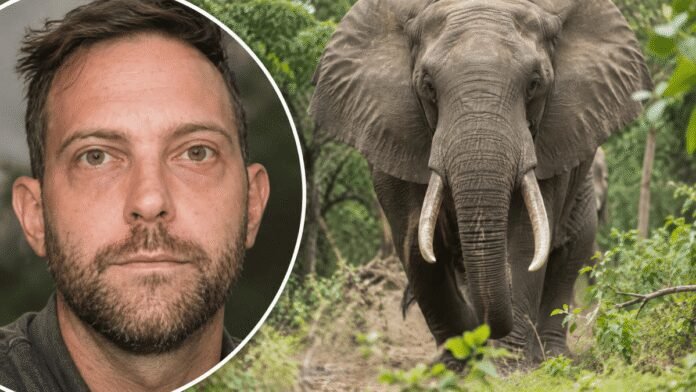
A dream hiking adventure turned into a nightmare when a herd of elephants suddenly charged a group of tourists, killing one man and sending the others scrambling into trees and bushes to escape.

The terrifying encounter unfolded Thursday, November 19, on Mount Cameroon in Central Africa, where six foreign tourists were descending the mountain when they unexpectedly came face-to-face with a herd of wild elephants.

Within moments, the peaceful hike descended into chaos.

The group, which included four British tourists, an American and a Swiss national, scattered in different directions as the massive animals charged toward them. Some climbed trees, while others desperately searched for somewhere to hide.

But one hiker, Swiss tourist Throo Alain Mathieu Han, was unable to escape.

According to local reports, Han fell into a ditch while attempting to flee and was attacked by an elephant that struck him with its tusk. Another tourist was also injured during the frightening encounter.

One survivor described the horrifying moment he realized the elephants were dangerously close.

“I saw these elephants almost next to me, and I thought, if I go down this path as well, I’m going to get hit,” the hiker told local reporters.

He managed to escape into the surrounding vegetation, eventually taking shelter inside a hollow tree stump, where he remained hidden for approximately two hours.

From his hiding place, he could hear screaming as the attack unfolded nearby.

In another frightening detail, survivors reported that an elephant grabbed their hiking guide with its trunk, lifted him off the ground and dropped him onto Han, who had already been injured.

When the group eventually reached Han, he was reportedly still conscious and able to speak despite suffering serious injuries. Rescuers carried him down the mountain on a stretcher, but he later died.

A British tourist also suffered injuries in the attack and was taken to a hospital in Limbe. Officials said those injuries were not life-threatening.

Park rangers and other emergency personnel were dispatched to the mountain to rescue the stranded hikers and escort the survivors to safety in the village of Bakingili.

Wildlife officials believe the elephants may have reacted aggressively because they perceived the tourists as a threat to their calves.

The hikers had reportedly been traveling along a route that elephants also use to reach a nearby lake, putting the group directly in the animals’ path.

Mount Cameroon, one of Africa’s most prominent volcanoes and a popular hiking destination, is home to African forest elephants, a critically endangered species known for being highly protective of their young.

Although elephant attacks on tourists are uncommon, the tragedy is not the first fatal encounter recorded in the area. In 2021, a wildlife ranger was killed by an elephant on Mount Cameroon.

The latest incident has renewed concerns about the dangers of unexpected wildlife encounters in areas where hiking routes overlap with elephant habitats.

For the surviving tourists, what began as an adventure through one of Africa’s most spectacular landscapes ended in a terrifying struggle to escape, with one member of their group never making it home.

Fact-check: The November 19 attack, fatality, rescue and possible protective behavior are corroborated by Swiss and Cameroonian reporting. The more detailed survivor accounts were reported separately. SWI swissinfo.ch+2

Source: Iwpost.com

Back-to-back measles deaths is our new reality; US tally now at 14

0
back-to-back-measles-deaths-is-our-new-reality;-us-tally-now-at-14
Back-to-back measles deaths is our new reality; US tally now at 14
Last week, international health authorities formally announced that the US had lost its measles-elimination status, meaning that the virus is once again endemic. But the official determination is a bit like getting the technical readout of a cracked dam while the country is already feet under water.

The national tally of measles cases is nearing 6,000 for the year, the highest count since 1991. Transmission is widespread, with 47 states and jurisdictions reporting cases. There have been 43 outbreaks this year, which account for 96 percent of the cases. Four states have case counts above 500, including Pennsylvania, which leads with 1,638 cases as of November 23. Nearly 650 people have been hospitalized nationwide. As of today, 14 people have died.

Deaths and transmission

On November 23, Pennsylvania’s health department announced its ninth confirmed death, an unvaccinated resident of Centre County. On November 24, Wisconsin reported its third measles death, an adult in Lafayette County. The report follows two other deaths in the state, an infant and a child. New York has also reported a death, which was of a 7-month-old baby. On November 20, Virginia reported the death of a child between the age of 0 and 4.

The virus isn’t slowing down. Measles is the most contagious virus known; it can linger in the air for up to two hours. Up to 90 percent of people who are not immune will fall ill after an exposure. People are considered immune if they’ve been vaccinated or previously infected. With slipping vaccination rates nationwide, the number of susceptible people is only growing.

To keep measles from getting a foothold in a community, vaccination rates need to be 95 percent or higher. According to the latest data, only 92.4 percent of US kindergartners were vaccinated with the measles, mumps, and rubella (MMR) vaccine in the 2025–2026 school year. Only 10 states have MMR vaccination rates at or above the 95 percent threshold. But even in those states, there are pockets and communities that are undervaccinated.

In Pennsylvania, which has the record for the largest measles outbreak this year so far, the epidemic curve appears to be past the peak. But Wisconsin seems to be in the thick of its outbreak. As of today, the state case count hit 920, with 88 cases reported since November 20. The health department has tallied 418 cases since the start of the month.

Measles infections

In most cases, measles causes high fever, a telltale rash, cough, runny nose, and watery eyes. But some develop complications, which can be severe and even life-threatening, including pneumonia and brain swelling, which can result in intellectual disabilities and hearing loss. In pregnant people, measles can cause more severe illness and pregnancy complications, including premature birth, low birth weight, and congenital measles.

After an acute infection, every person infected faces a long immune recovery in which they are newly vulnerable to a slew of other diseases. The measles virus specifically infects and destroys memory immune cells, which hold molecular records of germs the immune system has previously encountered and defeated. In other words, the immunity built up over the person’s life gets wiped, a phenomenon called immune amnesia. A study in 2019 estimated that the measles virus erases up to 73 percent of a person’s antibody repertoire, which would otherwise defend against infections and reinfections. To regain protection, people must be exposed to the germs again, either through reinfections or repeat vaccinations.

People who appear to recover are also at risk of subacute sclerosing panencephalitis (SSPE), a rare but devastating condition in which the virus remains in the central nervous system, striking years later to cause a progressive, fatal neurological disease.

Source: Iwpost.com

EU proposes ban on Russian-flag athletes and visas for ex-combatants, NATO to send AWACS aircraft to Poland

0
eu-proposes-ban-on-russian-flag-athletes-and-visas-for-ex-combatants,-nato-to-send-awacs-aircraft-to-poland
EU proposes ban on Russian-flag athletes and visas for ex-combatants, NATO to send AWACS aircraft to Poland
cde.news desk · 3 min read
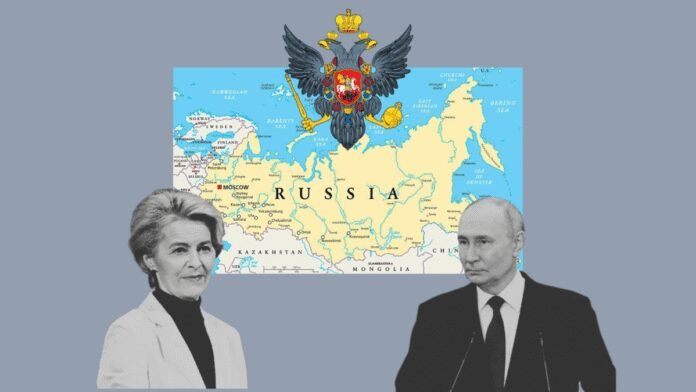
The European Commission proposed new sanctions against Russia on Monday over the war in Ukraine, including a ban on athletes competing under the Russian flag in sports events in the European Union and a ban on visas for Russian ex-combatants. The same day, German Chancellor Friedrich Merz called on Moscow to stop what he called “dangerous provocations” after Russian missiles crossed into NATO member Poland.

European Commission President Ursula von der Leyen also outlined measures targeting Russian financial institutions and crypto platforms in the Commission’s 22nd package of sanctions against Moscow over its full-scale invasion in 2022. Sanctions require unanimity from EU countries to be adopted.

“Sports events cannot be a forum for propaganda activities. Today, for any sports events in the EU, we are introducing bans on Russian teams and athletes competing under the Russian flag,” she said in a video address.

The Commission is also proposing a way to implement an EU visa ban on Russian ex-combatants, which was agreed pending feasibility in the previous package. It has created a Crypto Sanctions Task Force, alongside new restrictions on 60 Russian banks and more crypto platforms.

“We are striking harder at Russia’s ways to finance its war, by targeting its banks and crypto platforms,” von der Leyen said. “We will focus on Russia but also include third countries that help Russia to evade our sanctions. This is a major focus of our new package.”

Kyrgyzstan was the first country to be hit by the EU’s anti-circumvention tool this year, for facilitating circumvention through its banks and cryptocurrency companies. The new sanctions will also target electricity companies for the first time and prohibit European citizens from occupying posts in companies in Russia.

Tensions rise on NATO’s eastern flank

Speaking alongside NATO Secretary General Mark Rutte in Berlin on Monday, Merz also described as “shocking” reports that Russia was preparing to launch a nuclear-capable satellite into space. No NATO member “has any interest in an escalation in the Baltic Sea region,” he added.

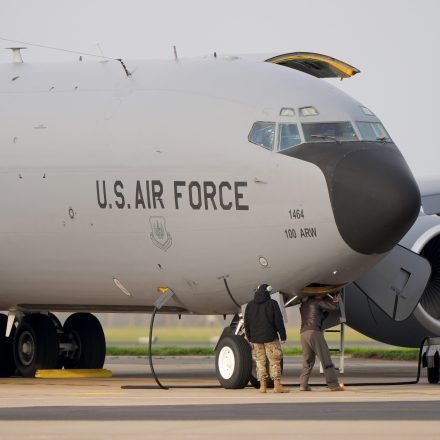
Officials said three Russian Kh-101 missiles landed in Poland on Friday, adding to fears that Russia’s war in Ukraine could spill over into NATO territory. NATO will deploy an AWACS early-warning system aircraft to Poland as part of its response to the missile incident, Deputy Defence Minister Pawel Zalewski said on Monday.

On Tuesday, Poland’s military said a Russian drone briefly entered Polish airspace during an attack on neighbouring Ukraine overnight. Zalewski said he assumed the incursion was deliberate. “It’s hard to imagine this being a coincidence, so we assume it was an intentional act,” he told private radio station RMF FM.

Zalewski said authorities decided not to shoot the drone down to avoid the risk of harming civilians on the ground. Poland’s military said authorization was given to shoot the drone down, but a decision was taken not to open fire after it changed course and headed east, “taking into account the potential threat to civilians”.

Source: Iwpost.com

11 injured in Houthi attack on Riyadh’s financial district tower: Saudi Civil Defense

0
11-injured-in-houthi-attack-on-riyadh’s-financial-district-tower:-saudi-civil-defense
11 injured in Houthi attack on Riyadh’s financial district tower: Saudi Civil Defense
Eleven people were injured Tuesday in a Houthi attack targeting a tower in Riyadh’s financial district, the Saudi Civil Defence said, Anadolu reports.

The agency said in a statement that the attack struck one of the towers in the district, injuring two Saudi citizens, two Indian residents, three Nepalese residents and four Egyptians.

The statement did not provide details on the nature or severity of the injuries.

Civil Defence said authorities responded immediately after the attack and implemented the approved emergency measures and procedures.

It added that necessary steps were taken to protect lives and property.

The statement described the incident as a “terrorist attack” carried out by the Houthi group.

Earlier Tuesday, Saudi-led coalition spokesman Turki al-Maliki said one of the towers in the district had been targeted in a “cowardly terrorist attack.”

Tuesday’s incident marked the second attack on a tower in the financial district in less than a week.

On Thursday, Saudi authorities said a Houthi attack targeted a tower in the capital’s financial district, damaging several floors and neighbouring buildings.​​​​​​​

Source: Iwpost.com

US midterms weaken Trump, strengthen Taiwan’s hand with Congress

0
us-midterms-weaken-trump,-strengthen-taiwan’s-hand-with-congress
US midterms weaken Trump, strengthen Taiwan’s hand with Congress

<

article id=”post-953460″>

Earlier versions of this article were published by Think China and Pacific Forum. It is republished with permission.

Taiwan is well aware that the US is by far its leading foreign influence and that US support cannot be taken for granted.

Even today, officials sometimes recall with considerable bitterness the US cutting off support for the Chiang Kai-shek government fleeing to Taiwan after defeat in the civil war on mainland China in 1949. The cutoff came after nine years of close US support for Chiang’s government as America’s leading ally in the fight against Japan during World War II and support for Chiang’s government against Mao Zedong’s communist forces in the Chinese civil war.

America recalibrated its priorities and left Chiang to face alone the expected communist assault on Taiwan. Chiang survived because the outbreak of the Korean War in June 1950 saw the US government reverse its policies and support Taiwan under Chiang’s rule as a key link in US containment efforts countering Soviet Union-backed China during the first two decades of the Cold War.

But America shifted again in the 1970s as all official relations and a US defense treaty with Taiwan ended through no fault of Taiwan. The US sought normalization of relations with China, and Beijing set strict conditions requiring the cutoff of American official ties with Taiwan.

Taiwan is also well aware that US domestic politics, and especially the role of Congress, have long had more importance in determining US policy toward Taiwan and China than any other issue in the Indo-Pacific region. Job one for Taiwan officials in its large Washington representative office and 13 consular posts throughout the US is to encourage America to support Taiwan.

They have observed with satisfaction over the past nine years the end of US engagement with China and the hardening of American policies to counter multifaceted Chinese challenges. Taiwan has benefited greatly from increased US military, economic and diplomatic support against threatening Chinese coercive actions.

Congress has never been more important in the making of US policy toward China as bipartisan majorities in Congress have been in the lead in the hardening of US policy toward China and increasing support for Taiwan. The bipartisan congressional majorities have remained much more consistent and resolute than President Trump.

Joseph Biden and his aides were dismissive of the dangers posed by Chinese behavior until they received briefings upon entering office, which prompted them to join with the congressional majorities in a so-called Washington Consensus determined to counter Chinese challenges and support Taiwan.

Taiwan in a good position after midterms

Today, the results of the mid-term elections are on balance favorable for Taiwan.

On the one hand, Taiwan officials, ever attentive to changes in US support, worry that so many members of Congress supportive of Taiwan lost their seats. Replacing them are many newcomers with little familiarity with Taiwan. And some of the incoming Democrats are populists with inclinations to pare back US commitments abroad and focus more on the welfare of Americans at home.

In this regard, they mirror the small but sometimes influential congressional cohort on the Republican side which also favors international disengagement.

On the other hand, the elections further constrain President Donald Trump’s remarkable efforts over the past year to accommodate Chinese leader Xi Jinping in summit meetings in October 2025 and May, September and November 2026, with another meeting slated during the G20 leaders’ summit in Miami in December.

This accommodation has come at Taiwan’s expense as the US president has dismissed Taiwan and held up $14 billion in arms sales for over a year as a bargaining chip in negotiating purported deals with China. Trump also avers a strong interest in establishing a “G2” relationship with China, using bilateral talks to determine world developments, which China could use to its advantage at Taiwan’s expense.

I wrote for Think China in July that Trump would be unlikely to actually sacrifice Taiwan in seeking deals with Beijing because a substantial number of congressional Republicans would join Democrats in strong opposition to such a move, adding another major negative to Trump’s domestic stature already reeling from the failure in the Iran war.

And, Xi Jinping’s resolute determination to continue his assertive practices challenging the US meant that China was unlikely to compromise in ways that would make Trump look like a winner after sacrificing Taiwan.

Adding to the mix and showing likely negative consequences that would preclude Trump’s deal-making from hurting Taiwan, is that Congress has, over the past two years, shown little enthusiasm for Trump’s accommodation of China and has not let up in its strong efforts to defend America from a wide range of dangerous Chinese challenges.

The November election results reinforced these constraints on Trump, with Republicans headed by Vice-President JD Vance increasingly distancing themselves from close association with controversial Trump policies. Democrats, led now by Senate Majority Leader Charles Schumer, would attack sacrificing Taiwan in a deal with China for strong partisan as well as substantive reasons. Schumer has a record of several decades of opposition to China.

Putting further constraints on Trump

On the worry in Taiwan that many new members do not yet know much about Taiwan, this situation is offset by the stature of likely leaders of key congressional committees who are critical of China and, unlike Trump, committed to working with US allies and partners, including Taiwan, to meet Chinese challenges.

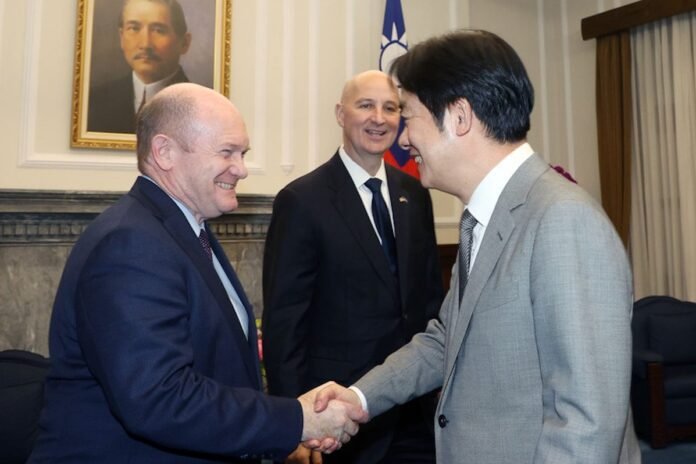
In the Senate, they include Chris Coons (Foreign Relations); Jack Reed (Armed Services), who is likely to be joined by Republican Roger Wicker, who has already voiced strong opposition to Trump’s accommodation of Xi Jinping; and Patty Murray (Appropriations), who is likely to be joined by Republican Lisa Murkowski, who has a long record standing against Trump policies.

In the House, experienced committee leaders who favor working with allies and partners like Taiwan include Gregory Meeks (Foreign Affairs), who accompanied Speaker Nancy Pelosi on her visit to Taiwan in 2022, Rosa Delauro (Appropriations) and Adam Smith (Armed Services).

Meanwhile, the worry that Democratic populists will encourage US withdrawal from Taiwan is countered by the need for Democratic leaders to accommodate all the moderate Democrats from so-called red states who have no interest in posturing with Democratic populists, now a distinct minority in the party’s congressional caucus.

One final constraint on Trump compromising on Taiwan is his much-weakened stature with Xi Jinping. With the wholesale repudiation of the president in the November elections, China has no assurance that promises Trump makes now will not be reversed once he leaves office, if not before. The new situation reinforces China’s rigidity in not compromising in significant ways with the US to provide justification for possible Trump concessions on Taiwan.

The above assessment shows a complicated and still uncertain situation which could be further upset by futile, disruptive actions by President Trump, but overall favors Taiwan in the months ahead.

Robert Sutter (sutterr@gwu.edu), a professor of international affairs at George Washington University, is in the third decade of a second career as a full-time academic after 33 years of government service focused on China, Asia, and US policy. His most recent book is Congress and China Policy: Past Episodic, Recent Enduring Influence (Lexington Books 2024).

Source: Iwpost.com

0FansLike
0FollowersFollow
0FollowersFollow
0SubscribersSubscribe
- Advertisement -
Google search engine

Recent Posts