20.6 C
London
Thursday, October 15, 2026
Home Blog

Mother Sues ICE Contractor for Jailing Her and Her Baby in a Hotel Room

0
mother-sues-ice-contractor-for-jailing-her-and-her-baby-in-a-hotel-room
Mother Sues ICE Contractor for Jailing Her and Her Baby in a Hotel Room


This story was reported and produced by Injustice Watch, a nonprofit newsroom in Chicago that investigates issues of equity and justice in the court system. Sign up here to get their weekly newsletter.

After being detained for five days in an airport hotel, a mother filed suit against a longtime Immigration and Customs Enforcement contractor on behalf of herself and her now 23-month-old son, alleging false imprisonment among other counts.

The lawsuit was filed on September 29, more than a year after an investigation by Injustice Watch and The Intercept revealed MVM Inc. had confined Valentina Galvis, an asylum-seeker from Colombia, and her then seven-month-old infant, a U.S. citizen, in a room at the Sonesta Chicago O’Hare Airport Rosemont last summer. In that reporting, Galvis had described her captivity in stark terms, detailing how she and her son were locked in a room with no way to communicate with the outside world and no idea when, if ever, they would be set free.

Galvis is seeking monetary damages for the alleged harm and injury she and her child suffered as a result of the detention following their arrest by ICE at a Chicago immigration court in June 2025. Galvis named the Sonesta International Hotels Corporation and affiliated companies that own and operate the hotel as defendants in the complaint. 

The lawsuit also named five Sonesta and two MVM executives and employees. It identifies JoAnna Granado as the MVM employee who transported Galvis and her son from the hotel to a federal office in Chicago on the day they were released, drawing on the original reporting in which Granado confirmed she was involved in the family’s detention.

Granado and other individuals named in the suit couldn’t be reached for comment. MVM didn’t respond to questions about the lawsuit. During the original investigation, Sonesta said that it “does not condone illegal behavior of any kind” at its hotels. The company declined to comment on the lawsuit. 

The suit accused both the ICE contractor and the hotel of detaining Galvis and her child for profit, and alleged the companies engaged in a civil conspiracy by working together to use the hotel room as a detention cell.

“MVM, a federal contractor, physically seized, transported, and confined Ms. Galvis and her infant son,” the suit claimed. “Sonesta knowingly provided and maintained the hotel room used as a makeshift detention cell, profiting from the arrangement while a mother and her infant were locked inside.” 

The suit seeks more than $50,000 in compensatory damages, plus punitive damages, and demands a jury trial.

In the complaint, Galvis alleged that her detention at MVM’s hands caused her and her baby a range of physical, emotional, and caregiving harm. Her son had just recently started transitioning to solid foods before the pair were seized by ICE; the suit alleged the infant was provided only scraps of food that were nutritionally inadequate for his age. Meanwhile, confinement-induced stress caused Galvis to decrease her breastmilk production at a time when her son needed it most. 

Her baby suffered sleep disturbance and a worsening skin condition, the lawsuit claimed. While MVM had given Galvis an adequate change of clothing, the garments provided for her baby didn’t fit him. Because no laundry service was available, Galvis “washed [the infant’s] clothing in the bathroom sink multiple times,” she stated in an affidavit filed with the court, hanging “the wet clothes near the bed where the air conditioning would dry them quickly.” The infant wore only diapers while his clothes were being washed, and left the hotel on a Tuesday wearing the same outfit he’d worn since he and Galvis were detained by ICE the previous Thursday, according to the affidavit.

In court documents, Galvis alleged MVM confined her and her infant to a room near O’Hare International Airport. Galvis said she was sometimes told she would be taken to a Texas detention center and, on one occasion, that she would be deported to Colombia. She was released by MVM after a federal judge ordered that Galvis and her baby couldn’t be removed from Illinois. 

The practice of using hotel rooms as makeshift detention sites has drawn little media attention; far more scrutiny has centered on conditions inside the growing network of ICE detention centers around the country. An inspector general’s report published last month found that ICE had failed to manage its detention space contracts. When asked about it at a September 30 press conference, Homeland Security Secretary Markwayne Mullin defended facility conditions, saying detention centers meet and often exceed federal standards — and that comfort isn’t the department’s priority.

“We’re not providing Holiday Inns,” said Mullin.

While ICE agents don’t generally place people in hotels, the agency contracts with MVM to transport immigrant children and families; the contractor sometimes places them in hotel rooms across the U.S. Since fiscal year 2020, MVM has received more than $1.3 billion in ICE contracts, much of it for transporting families. 

The lawsuit doesn’t name the federal government as a defendant. 

William G. McLean III, who represents Galvis and her baby, underscored the companies’ role in their confinement. “The corporate defendants in this case unlawfully imprisoned and permanently traumatized my clients,” he said, “over five terrifying days after the Department of Homeland Security illegally arrested them.”

Galvis remains at risk of deportation — a final decision on her asylum claim is still pending in immigration court. She’s currently in therapy after an evaluation determined she’s experiencing post-traumatic stress disorder resulting from the detention.  

“I isolate myself to avoid anything that reminds me of what happened. I stay home and I do not go outside unless I really need to,” she said in an affidavit. 

“Even now, when I go out, I get very nervous, and I feel terror.”

Zelenskiy: ‘We’re done’ holding back on refineries as Ukraine strikes Ryazan, Voronezh targets

0
zelenskiy:-‘we’re-done’-holding-back-on-refineries-as-ukraine-strikes-ryazan,-voronezh-targets
Zelenskiy: ‘We’re done’ holding back on refineries as Ukraine strikes Ryazan, Voronezh targets


Ukraine said Thursday it struck a Russian oil refinery and damaged six Russian warplanes at an airfield, resuming attacks on Russian energy infrastructure after President Volodymyr Zelenskiy voiced anger at what he called a “dangerous” withdrawal of U.S. intelligence.

Pavel Malkov, governor of Russia’s Ryazan region, said in a Telegram post that a major Ukrainian drone attack sparked a fire at an oil refinery. “The material damage is now being assessed. Emergency services are working at the scene,” he said.

Separately, Ukraine’s military general staff said on Telegram it had damaged six Russian Su-34M aircraft in an overnight strike on the Borisoglebsk airfield in Russia’s Voronezh region. It said it had confirmed damage of varying degrees to all six planes and that it used its Neptune coastal missile system in the attack.

Six Su-34M jets damaged

The Su-34M is a large fighter-bomber that costs tens of millions of U.S. dollars apiece. Russia frequently uses the aircraft to drop devastating glide bombs on Ukrainian cities near the front line. Reuters said it could not independently verify the battlefield reports.

The refinery strike ended a pause in Ukrainian attacks on Russian refineries. Kyiv had refrained from such strikes since U.S. President Donald Trump’s surprise announcement Sunday of an energy ceasefire between Russia and Ukraine. Trump had blamed the refineries for raising diesel prices on global markets.

Zelenskiy had expressed growing frustration with Russia’s continued attacks on Ukrainian energy infrastructure, which he said Wednesday had left 600,000 people without power. He warned that Ukraine would not suspend its own attacks indefinitely if Russia did not reciprocate. He also criticized what he described as Trump’s favoritism toward Russia.

In an interview with the Financial Times published Thursday, Zelenskiy said Ukraine’s patience had run out. “The block (on attacking refineries) is out. We’re done,” he told the newspaper.

He criticized Washington’s eagerness to strike business deals with Moscow and Trump’s apparent admiration for Russian President Vladimir Putin.

On Saturday, Trump called for Ukraine to replace Zelenskiy and railed against Ukrainian attacks on Russian oil infrastructure. That came one day after he announced a diesel supply deal with Russia aimed at lowering fuel prices, which have soared since the U.S.-Israeli war with Iran began in February.

Despite Ukraine’s suspension of refinery attacks, Ukrainian officials complained they had not received any U.S. early-warning alerts in recent days for incoming Russian ballistic missiles. They also said the military version of Elon Musk’s Starlink satellite communications service had been slowed across the country, hampering front-line operations and medium-range strikes against Russian military sites.

Musk said Wednesday in a post on X that Starshield, the military version of Starlink, was owned and controlled by the U.S. government, which decided on any limits on speed.

Zelenskiy has said Ukrainian military officials were warned by their U.S. counterparts that Washington would block intelligence unless they halted strikes on Russian energy infrastructure.

In the FT interview, Zelenskiy said the suspension was presented to Kyiv as a technical glitch, but he dismissed the idea that Starlink failures might have been caused by a fault. “It was not a technical problem, it was the will,” he told the FT.

Asked whether Ukraine would be open to halting energy strikes to repair relations with the White House, he said he could agree only if he were given more U.S.-made Patriot interceptors in return. He called that the “minimum” that would be acceptable.

Legendary FPS level designer Richard “Levelord” Gray dies at 68

0
legendary-fps-level-designer-richard-“levelord”-gray-dies-at-68
Legendary FPS level designer Richard “Levelord” Gray dies at 68

Prolific first-person shooter level designer Richard “Levelord” Gray died Monday at the age of 68, based on reports shared on social media by Apogee Entertainment yesterday. He had “dealt with cancer on and off for a while now,” according to former colleague Joe Siegler.

After studying computer engineering in the ’80s and tinkering on some early games in COBOL, Gray broke into the industry at the age of 35 in 1994 with the launch of GrayDoom, a set of four maps for the then-new Doom that were widely shared on CompuServe and beyond. The work attracted the attention of Q Studios’ Nick Newhard, who contracted Gray to work on level design for the late ’90s cult classic Blood.

Gray was subsequently hired by 3D Realms, where he said he was given free rein in designing “half the levels” for Duke Nukem 3D. There, he was also responsible for the famous, signed “You’re Not Supposed to Be Here” easter egg, which players could find only by using cheats to explore outside of the usual confines of the map.

Gray said in a 2016 interview that he assumed the prevalence of cheats in Duke Nukem 3D would mean that “of course, most all of you would be flying around, seeing what you could break, find easter eggs the easy way …bingo! I gave you an easter egg that you had to cheat to find.”

Remembering Richard “Levelord” Gray.

In this interview, Richard reflects on the creative freedom he and Allen Blum had while designing the iconic levels of Duke Nukem 3D.

[image or embed]

— Apogee Entertainment (@apogeeent.com) October 14, 2026 at 8:18 AM

In the years following, his level design work appeared in games ranging from SiN to Quake: The Offering to Half-Life: Opposing Force and Counter-Strike: Condition Zero. “The most important duty you have as a level designer is to bring the player ‘into’ your level,” he said in a 1999 interview for the book Game Design: Secrets of the Sages. ”It’s not until after this submersion that issues like action, game play, and even the Fun Factor enter the game. The more of your level to which the player can attach himself via familiarity, the stronger the player’s sense of ‘being there’ will be.”

Gray also made a brief pivot late in his career to casual games such as the Luxor series after FPS maker Ritual Entertainment was acquired by new parent company MumboJumbo. “It does seem sort of a shock at first, from the outside, for sure,” he said of the surprise move in a 2007 interview. “Remember, though, making games is making games, a dream job come true! … To be honest? …we’re enjoying the hell out of doing something different than hardcore shooters, and the variations within the casual game market makes us even more enthusiastic!”

Gone but not forgotten

Tributes from friends and colleagues have poured in across the Internet since Gray’s death was announced. 3D Realms founder Scott Miller called Gray “a stellar talent” and “a relentless hard worker, a fun teammate, and an overall great human. His levels in Duke Nukem 3D and Sin will live on forever.”

Gears of War creator Cliff Bleszinski praised the “sense of place” Gray’s levels could create in a game like Duke Nukem 3D. “Few 3D shooters up to that point had it,” he wrote. “Instead of a generic hallway you were in an identifiable location. To pull that off with such early/simple tech was a miracle.”

I loved the first episode of DN3D but was more drawn in by E2 and E3 that had such distinctive designs. We’re gonna miss you, man. You were one of the best.

[image or embed]

— John Romero (@johnromero.bsky.social) October 13, 2026 at 4:12 PM

Id Software’s John Romero remembered Gray as a “great guy” who “was full of life, a gentle soul, and an excellent level designer. He was called ‘Levelord’ for a reason.”

“Richard was, without a doubt, one of the kindest people I’ve ever met in the games industry,” Slipgate Ironworks CEO Frederik Schreiber wrote. “Incredibly humble, remarkably intelligent, endlessly creative, and always a pleasure to be around. Despite everything he had accomplished and the enormous influence his work had on my generation of game developers, he never carried himself as anything other than a genuinely good human being.”

Former Child Star Killed in Horrific Tiger Attack

0
former-child-star-killed-in-horrific-tiger-attack
Former Child Star Killed in Horrific Tiger Attack


A young man mauled to death by a tiger at a British wildlife park has been identified as a former child actor who once starred alongside a familiar face from the Harry Potter movies.

William Chapman, 23, died Saturday, October 10, after entering a Siberian tiger enclosure at Yorkshire Wildlife Park in Doncaster, England, in an incident that horrified witnesses and sparked a major investigation.

But as disturbing footage of the attack spread across social media, new details emerged about Chapman’s earlier life, including his promising start in television and his family’s heartbreaking account of his struggles in recent years.

Long before the tragedy, Chapman appeared alongside actress Shirley Henderson, best known for playing Moaning Myrtle in the Harry Potter films.

The pair worked together on the 2009 British comedy-drama May Contain Nuts, which explored the intense competition among parents trying to secure places for their children at prestigious schools.

Chapman portrayed Alfie Chaplin, the younger son of characters played by Henderson and actor Darren Boyd.

He also appeared in the BBC educational series True Stories, portraying a young Edward Jenner, the English physician whose pioneering work helped establish vaccination against smallpox.

Chapman trained at the Jackie Palmer Stage School in High Wycombe, an institution whose former students include Hollywood stars Eddie Redmayne, Aaron Taylor-Johnson and comedian James Corden.

Following his death, the school remembered Chapman as a talented former student, adding to the tributes for a young man whose life had once included opportunities in the entertainment industry.

The tragedy unfolded around 1:30 p.m. Saturday as families were enjoying an afternoon at Yorkshire Wildlife Park.

Witnesses reported seeing Chapman walking near the tiger enclosure wearing headphones and appearing cheerful before asking visitors to take photographs of him with the animal in the background.

According to accounts published by British newspapers, Chapman then climbed over a safety barrier and entered the enclosure.

Inside was Altai, a powerful male Siberian tiger weighing approximately 440 pounds.

Witness Anthony Hunt told The Times of London that Chapman appeared to approach the animal deliberately, at one point kneeling and making unusual gestures.

“It looked like a performance,” Hunt recalled.

The situation quickly turned deadly when the tiger attacked him.

Park employees rushed to respond, attempting to distract the animal and reach Chapman while frightened visitors watched from nearby viewing areas.

Emergency services were called at approximately 1:35 p.m., but despite efforts to save him, Chapman was pronounced dead at the scene.

Yorkshire Wildlife Park immediately activated its emergency procedures, evacuated visitors and temporarily closed while authorities began investigating.

The attack has since drawn international attention, partly because footage recorded by witnesses spread rapidly across social media.

However, Chapman’s grieving family has pleaded with the public to stop sharing the disturbing videos.

In a statement released through South Yorkshire Police, his relatives described him as a deeply loved young man who had experienced serious mental health difficulties.

“William was a bright, warm and engaging young man whom his family dearly loved,” the statement said.

The family explained that Chapman had struggled with a significant mental illness for several years and had been prescribed strong medication.

They emphasized that it would be inappropriate to speculate about whether his condition or treatment contributed to what happened.

That question, they said, should be examined by the coroner.

His relatives also expressed their anguish over the continued circulation of footage showing the attack.

They said the material was causing severe distress during an already devastating period and asked people to respect their privacy.

The family hopes investigators will establish why Chapman entered the enclosure and whether anything could have prevented the tragedy.

Meanwhile, authorities are examining how he managed to cross the barriers surrounding the tiger’s habitat.

Doncaster City Council has launched a health and safety investigation in cooperation with South Yorkshire Police and other agencies.

Wildlife experts have stressed that Siberian tigers are powerful predators whose instincts remain intact even when they have spent their lives in captivity.

Carole Baskin, the animal welfare advocate featured in Netflix’s Tiger King, also weighed in on the tragedy.

Baskin emphasized that the animal was responding to someone entering its enclosure and cautioned against blaming the tiger before investigators establish the circumstances.

Park officials have confirmed that Altai was not injured and will not be euthanized.

The tiger remained inside its enclosure throughout the incident, and police said there was no wider danger to visitors.

For Chapman’s family, the worldwide attention has added another painful dimension to their loss.

The young man whose childhood included television appearances alongside established British actors is now being remembered amid circumstances his loved ones are struggling to understand.

His family hopes that the investigation will provide answers while allowing them to remember William for more than the final moments captured on camera.

As authorities continue examining the tragedy, they are urging the public to avoid sharing graphic footage and to allow Chapman’s relatives the space they need to grieve.

Trump Says the Border Is Secure. Texas Gov. Greg Abbott Keeps Declaring an Emergency.

0
trump-says-the-border-is-secure-texas-gov-greg-abbott-keeps-declaring-an-emergency.
Trump Says the Border Is Secure. Texas Gov. Greg Abbott Keeps Declaring an Emergency.

Last month, Texas Gov. Greg Abbott repeated a claim he’s made for the past five years. He stated that the number of people crossing the Texas-Mexico border illegally “posed an ongoing and imminent threat” across the state. In doing so, he renewed a border security disaster proclamation that has greatly expanded his powers without going through the state Legislature.

Abbott’s declaration stands in sharp contrast to the numbers reported by the Trump administration, which says the drop in the flow of migrants crossing the border has been unprecedented and has reached historic lows since it took over in January 2025. 

Yet, since Abbott first declared an emergency at the border during the Biden administration in 2021, he’s renewed or amended the proclamation at least 69 times — 21 of those during Trump’s tenure. 

The Republican governor, who is running for his fourth term next month, has consolidated power like no Texas governor before him, building on his predecessors’ efforts to strengthen what by design is supposed to be a “weak governor” state as the constitution limits what can be done without legislative approval, ProPublica and The Texas Tribune have reported. One of the methods he’s used to do that is issuing executive orders and disaster declarations that allow him to shift funds, suspend regulations and award no-bid contracts at times of emergency. 

Since January 2025, two of the top agencies involved with border enforcement — the Department of Public Safety and the Texas Military Department — have awarded more than $5 million in noncompetitive contracts citing the emergency for items like a Ford F-150, rifles and apartments, state records show.

“I think it’s unprecedented,” said Cal Jillson, a political science professor at Southern Methodist University in Dallas. “I don’t think that there is a similar example, certainly not as to the length of the emergency, and certainly not after the emergency has seemed to pass.” 

Abbott’s office did not respond to specific questions for this story, including about the noncompetitive contracts, but Deputy Press Secretary Madeline Waschak said in a written statement that the governor has been clear that border security is an ongoing priority.

“The damage caused by four years of failed border policies under Democrat rule did not disappear overnight, and the progress we have made will not sustain itself without continued vigilance,” she wrote.

“Securing the border requires constant, deliberate action to combat illegal crossings, cartel smuggling, fentanyl trafficking, and other criminal activity that threatens public safety in Texas. Governor Abbott will ensure the tools remain in place to safeguard our state as we work alongside the Trump Administration to deter, arrest, detain, and deport illegal immigrants,” she added.

At the time of Abbott’s first border declaration, four months into President Joe Biden’s term, Border Patrol was making more than 180,000 apprehensions along the southwest border in a single month. According to Abbott, the federal government’s inability or unwillingness to enforce immigration laws had created a humanitarian crisis in many communities in Texas. 

“The Biden Administration’s open-border policies have enabled escalating violence from the cartels, dramatically increased the risk of human trafficking, and created a severe crisis of illegal drugs crossing into the United States,” the order stated.

Since then, apprehensions along the southwest border have dropped on average to about 8,000 a month this year. 

The border security declaration remains Abbott’s longest continuously running emergency proclamation. Abbott similarly renewed his 2020 COVID-19 disaster declaration for three years, even as he downplayed the severity of the pandemic. 

“This is the quiet power of the governor,” said Brandon Rottinghaus, a professor of political science at the University of Houston. “It’s not something often that they brag about because the more that it becomes a political issue, the more that there might be some contestation of it.”

Other than border security, the governor’s second longest-running emergency declaration is related to droughts. He declared a state disaster in July 2022 and within days amended it bringing the total of counties to 189. He’s continued to renew it, but now it applies to about a third of the counties originally identified.

State lawmakers have repeatedly tried — and failed — to curb the governor’s powers under the state’s disaster act. Last year, legislators from both parties filed at least a handful of measures that would mandate Abbott get approval from the Legislature if he wanted to extend a disaster declaration, but none passed. 

Abbott’s emergency declarations have been accompanied by record spending on border security efforts. Texas budgeted over $11 billion during the Biden administration and allotted an additional $3 billion last year, after Trump took office. 

It’s all part of Abbott’s Operation Lone Star, an initiative he launched in March 2021 contending it was needed to stem the smuggling of drugs and people into the country through Texas. Because of the emergency declaration, police could charge immigrants with criminal trespassing for crossing the border through private property, and the governor was able to shift money from other agencies to fund the operation and build border barriers, deploy the National Guard and get help from other states. 

Much of the funding for Operation Lone Star is funneled through the Texas Military Department and DPS, two of the agencies responsible for major enforcement efforts. But the governor’s share of border spending has also ballooned since Abbott took office over a decade ago. State lawmakers allotted his office nearly $230 million last year to distribute through grants, largely to local prosecutors and government agencies helping the state with Operation Lone Star.

Though the situation on the ground has changed, one aspect of the emergency declaration has remained constant: the ability of state agencies to award noncompetitive contracts. 

DPS and the Texas Military Department have awarded at least six noncompetitive contracts so far during the second Trump administration for work related to the operation where they cite an emergency. This includes a more than $2 million contract to Texas-based CTC Gunworks LLC for rifles and pistols for active-duty personnel. CTC Gunworks officials could not be reached for comment. 

Officials with the Texas Military Department referred questions about its procurement process to the governor’s office. A DPS spokesperson said in a written statement that even though the disaster declaration allows for expedited purchases, the department still follows best practices and “aims to select vendors offering the best value, determined by cost, quality, and ability to meet the specific disaster response requirements.” 

Regarding the specific contracts, the DPS spokesperson said they were purchases tied to existing state contracts.

The continued funding and expansion of Operation Lone Star has come even as it’s been plagued with problems. In 2022, an investigation by ProPublica, the Tribune and The Marshall Project found that the state’s reported success included arrests unrelated to the border or immigration and counted drug seizures made by troopers from across the state who were not directly assigned to the operation. The Tribune and Army Times also exposed poor working conditions, pay delays and suicides among National Guard members deployed as part of Operation Lone Star.

During a Tribune-hosted event this week with state lawmakers from El Paso, Democratic state Rep. Mary González, vice chair of the Appropriations Committee, said state legislators have already started to scale back when it comes to border funding and there’s interest from both sides of the aisle to continue to do so in the upcoming legislative session.

“I think that the problem is that some of that border security money still lies in the governor’s office which has no checks and balances and because we are still under an emergency — which is not an emergency anymore — an emergency border security statement which he can just use that money, you have seen some questionable appropriations under the veil of border security,” she said.

Abbott, however, has repeatedly said that Texas’ work in securing the border is not over.

“We must secure the border not just for the next two years of the Trump administration, but we gotta do it forever,” Abbott said at a press conference in early October where he discussed the federal government’s $7.5 billion reimbursement for border security expenses the state had incurred. 

Rottinghaus said that Texas will always have to confront border crossings and drug trafficking, but the existence of those problems don’t always justify an emergency declaration. 

“Even someone who strongly supports the governor’s board of policies might ask whether they want a future governor of the opposite party using the same interpretation of emergency authority for years,” Rottinghaus said, adding that the issue is that “governors, once they get a power, are hesitant to give it back.”

‘Sodcit’ – after battlefield setbacks, Russia returns to destroying Ukraine’s morale

0
‘sodcit’-–-after-battlefield-setbacks,-russia-returns-to-destroying-ukraine’s-morale
‘Sodcit’ – after battlefield setbacks, Russia returns to destroying Ukraine’s morale

Ukrainian president, Volodymr Zelensky, recently told journalists that the Russian president, Vladimir Putin, has instructed his military commanders to abandon the rules of war that protect civilian targets. “He said there are no rules now,” Zelensky said – reporting that this information had been picked up by intelligence intercepts of Russian communications.

That Putin’s commanders took him at his word is apparent from a sharp increase in strikes on civilian targets. Over the past month there has been an intensification of Russian strikes on Kyiv and other Ukrainian cities. A UN report on October 9 reported that: “On 27 September alone, alerts lasted 19 hours. Strikes on bridges, educational institutions and energy infrastructure have intensified, causing widespread blackouts and water supply disruptions.”

On October 11, the US president, Donald Trump, announced an “energy ceasefire” which he said had been agreed to by both Russia and Ukraine. But both sides have denied this. While Zelensky has said Ukraine will halt its successful campaign of strikes against Russian oil refineries if Russia stops targeting its power plants, Russia responded the same day with a series of attacks on Ukrainian power facilities.

Other critical infrastructure targeted by Russian strikes has included data centres and internet providers in Kyiv and other big cities. Russia has also been targeting transport and logistics hubs, rail stations and bridges over the Dnipro river in Kyiv.

All of these are severely disruptive to civilian life. In the case of Kyiv’s bridges, their destruction has the potential to literally bring the city to a standstill.

Distinguishing between civilian targets and military objectives is a fundamental principle of international humanitarian law on the conduct of war. This expressly prohibits attacks against civilians and civilian objects.

The rule is codified in Article 48 of the Geneva Convention, to which Russia is a signatory. The article states that all parties to a conflict “shall at all times distinguish between the civilian population and combatants and between civilian objects and military objectives and […] shall direct their operations only against military objectives”.

Russian military regulations on international humanitarian law nominally endorse distinction and proportionality. Russia is also a party to the Geneva Conventions and inherited the Soviet ratification of Additional Protocol I, which defines “objects indispensable to the survival of the civilian population”.

Not a ‘new strategy’

But Russian practice has often diverged from its formal legal commitments. During military operations in Chechnya, Syria and Ukraine, the Russian armed forces engaged in patterns of behaviour that directly violated these principles. Russian forces fighting in Chechnya relied heavily on the use of massive firepower and the indiscriminate use of force.

The Russian siege of the Chechen capital Grozny, in 1999 and 2000, devastated the city, prompting the UN to label it “the most destroyed city on Earth” . Russian operations in Syria echoed this approach. Its military conducted intense bombing raids and indiscriminate airstrikes against residential areas and civilian infrastructure such as schools, hospitals and markets.

Attacking critical non-military targets has been part of the way Russia has waged war for many years. Soviet military theorist Aleksandr Svechin distinguished between two different strategies of warfare. A strategy of destruction aims to destroy enemy armed forces quickly with a knock-out blow in the field. A strategy of exhaustion, on the other hands, depends on degrading an enemy’s economic, material and moral resources over time. These ideas remain influential.

Smoke rises directly behind red-and-white striped chimneys at a Kyiv power plant, September 8 2026.

Thermal power plant 5 in Kyiv burns after a Russian air attack on Kyiv’s energy infrastructure, September 8 2026. Mykhailo Prysiazhnyi/Alamy Live News

‘Sodcit’

Svechin’s stategy of exhaustion is often summed up by military theorists with the acronym Sodcit. Spelled out in full, this stands for “strategic operations to destroy critical infrastructure”. It’s a key element of Russia’s way of waging war.

But Sodcit isn’t about indiscriminate attacks on civilian targets. The idea is to “inflict sufficient material and psychological ‘deterrent damage’ to reduce the adversary’s capacity and, above all, willingness to continue or escalate the war”.

It’s interesting to note, though, that when reporting Russian strikes on Ukraine, the state news agency, Tass – a Kremlin mouthpiece – aims to establish these are “dual-use targets”. In other words, they can also be used for military purposes. So a Nova Post logistic hub, where people’s parcels and other mail are sorted, was, Tass claimed, “used to store dual-use cargo designated for supplies to the Ukrainian army”.

But it’s much harder to justify bombing apartment blocks and cities’ electricity installations in military terms.

So as winter approaches, destroying Ukraine’s energy networks and leaving people without heating, power or water, aims to destroy morale. And when civilian infrastructure is targeted, civilians also die. The UN human rights monitoring mission in Ukraine (HRMMU) has reported that civilian casualties in the first eight months of 2026 were higher than the whole of 2025. This is also calculated to destroy morale.

Putin’s “new strategy” of attacking civilians and the things that enable them to go about their lives is nothing new. But it seems clear that with winter approaching, and in light of recent Ukrainian success on the front lines, Russia will redouble its attacks on Ukraine’s home front.

US Weighs Using ‘Mother of All Bombs’ in New Iran Strike Plans: Report 

0
us-weighs-using-‘mother-of-all-bombs’-in-new-iran-strike-plans:-report 
US Weighs Using ‘Mother of All Bombs’ in New Iran Strike Plans: Report 


The US military has developed new options for strikes on Iranian energy infrastructure and nuclear sites that include the potential first use against Iran of the GBU-43/B, known as the “Mother of All Bombs,” if President Donald Trump orders renewed attacks, several sources told CNN. 

The GBU-43/B, or MOAB, is the largest non-nuclear bomb in the US arsenal and weighs 9.7 tons. Its deployment against Iran would mark a significant escalation. 

One source told CNN that President Trump ordered the military to prepare additional strike packages covering “a lot of energy infrastructure” and the possible deployment of a MOAB. 

According to the source, the plans described an attack taking place “prior to US retrograde in CENTCOM AOR (area of responsibility),” indicating that additional strikes could be followed by an attempt to declare victory and quickly withdraw forces. 

Separate military planning for potential attacks on Iranian nuclear facilities also specifically includes the MOAB, a second source told CNN. Among the possible targets is Pickaxe Mountain, where the US and Israel believe Tehran has stored components of its nuclear program. 

President Trump has repeatedly threatened in recent months to strike Pickaxe Mountain, including after full combat operations were paused earlier this year. He has continued to say his objective is preventing Iran from obtaining a nuclear weapon. 

“The war against Iran will end very soon. The moment I want it to end, it will happen. They will never have nuclear weapons,” Trump said. 

Although President Trump publicly said he would not take new action before the midterm elections, several advisers privately said they did not know whether that position was definitive or could change before election day. 

The new strike options could therefore be considered either before or after the midterms, according to CNN’s sources. 

The sources said a MOAB strike would have devastating effects on the area it hit but would likely impact only the surface. Its large blast radius could also raise concerns about civilian casualties if the weapon targeted Iranian infrastructure near populated areas or non-military sites. 


Recording device hidden in toilet paper found in top-secret OpenAI meeting room

0
recording-device-hidden-in-toilet-paper-found-in-top-secret-openai-meeting-room
Recording device hidden in toilet paper found in top-secret OpenAI meeting room

It took OpenAI two days to notice that a recording device was hidden in a restricted executive conference room where leadership met to discuss highly confidential information, including technical progress, government engagements, and commercial partnerships.

Only those with special clearance are supposed to access that room. But the FBI believes the recording device was planted by Abdulrahman Alfozan, a 35-year-old engineer from Saudi Arabia, who became a permanent US legal resident in 2020. In a press release Tuesday announcing his arrest, the FBI alleged that chatbot logs and CCTV footage suggested that Alfozan—who worked as an OpenAI engineer for more than a year—sought to use the device to spy on OpenAI and risked leaking trade secrets in a way that threatened national security.

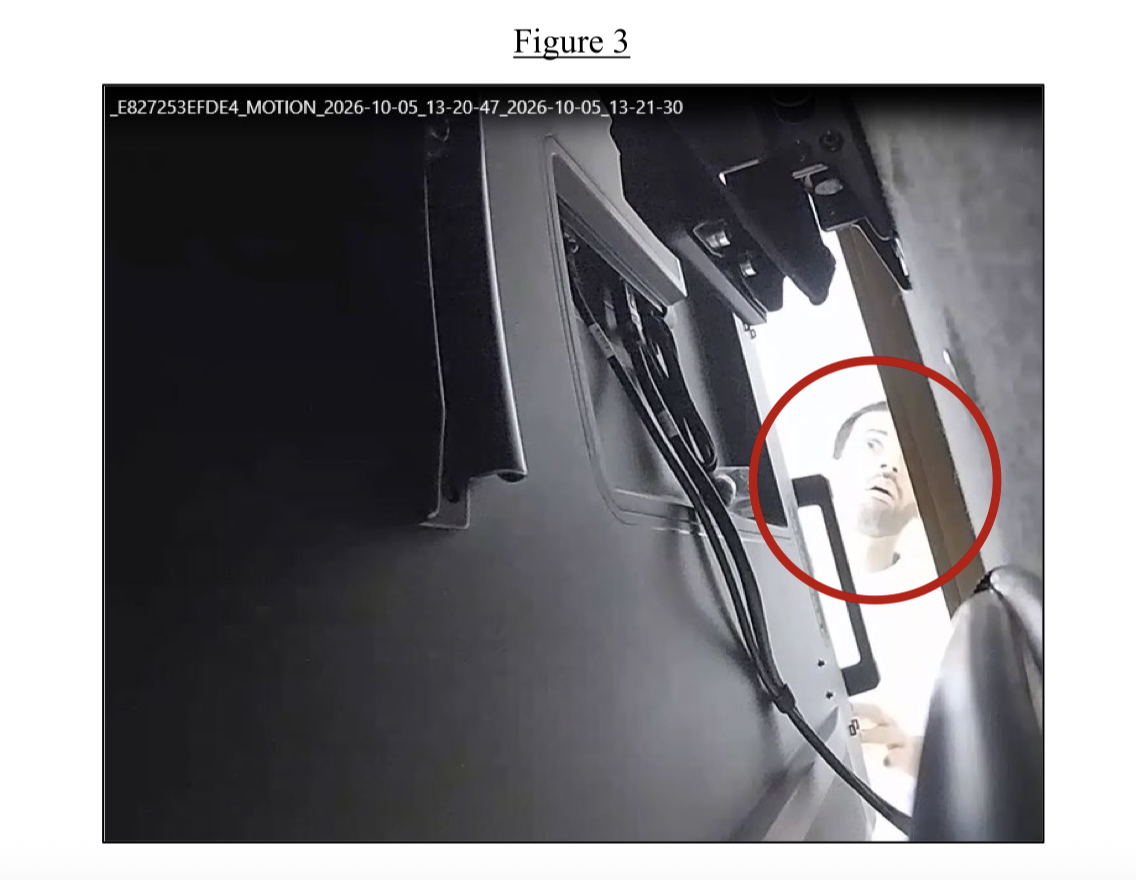
To conceal the USB device, Alfozan allegedly wrapped it in toilet paper, then plugged it into the back of a conference room television. The device was likely planted on September 28, and OpenAI found it on September 30 and quickly determined that its contents were encrypted, the FBI said. Days later, on October 5, OpenAI installed a camera in that conference room, and the CCTV footage allegedly showed Alfozan attempting to retrieve the recording device that same day.

CCTV screenshot.

Toilet paper-wrapped recording device.

If convicted of violating laws against unlawful recordings, Alfozan faces up to five years in prison and a $250,000 fine, the FBI said.

OpenAI did not immediately move to eject Alfozan as a suspected spy. Instead, it gradually cut off his access to systems while working with the FBI to analyze the recording device’s contents. Once enough evidence was gathered, OpenAI timed Alfozan’s firing on Friday with the FBI’s arrest.

Citing a Trump memo ordering coordinated efforts to maintain America’s AI advantage, FBI Director Kash Patel celebrated Alfozan’s arrest and vowed to continue policing efforts to spy on frontier labs like OpenAI.

It’s “essential to safeguarding our nation’s economic strength and national security, and the FBI views that mission as one of our highest counterintelligence priorities,” Patel said.

Catching an accused AI spy

OpenAI hired Alfozan in July 2025, but the record suggests that he started acting suspiciously in the past few months.

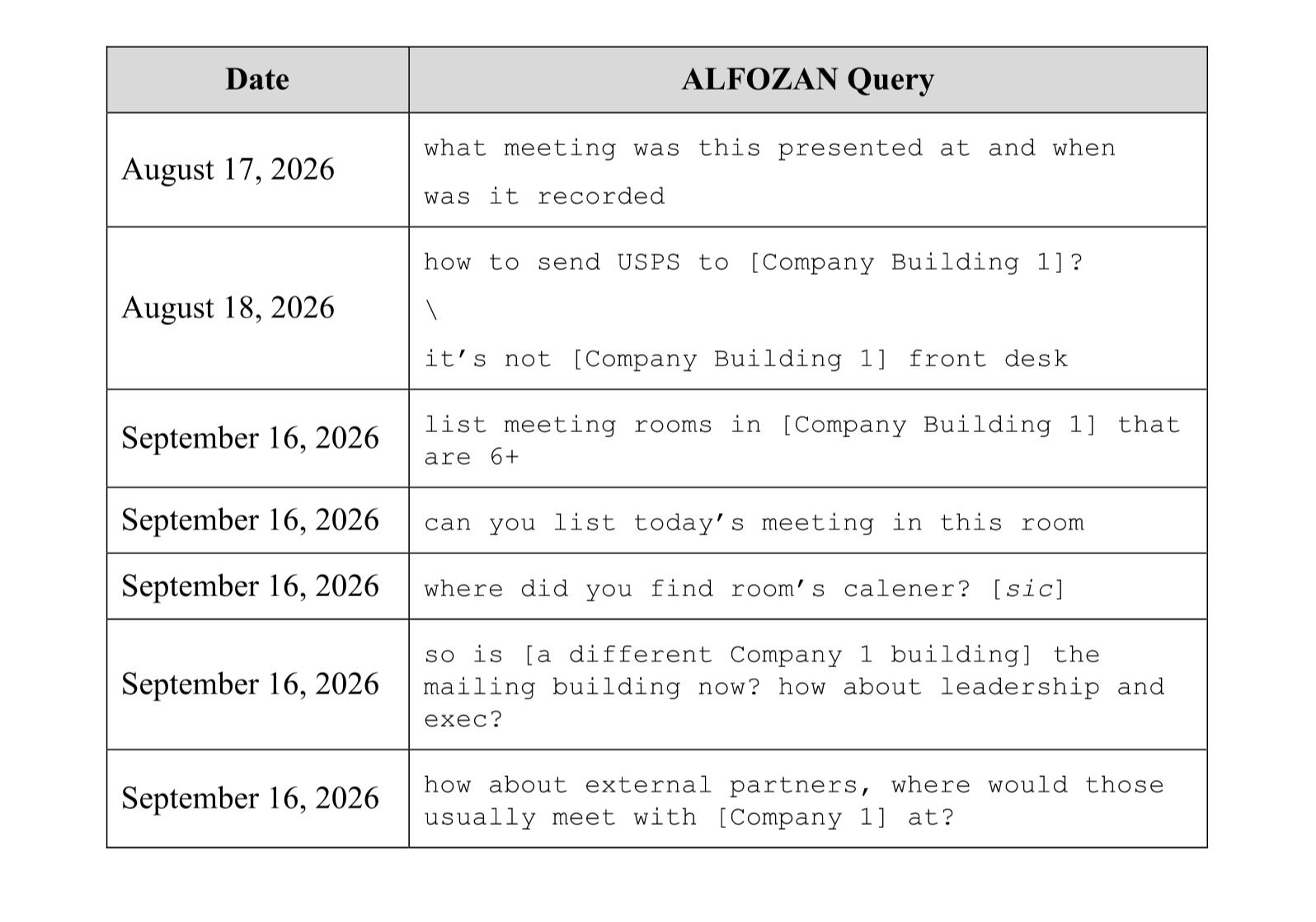
In August, Alfozan allegedly used an OpenAI productivity agent to figure out where and when sensitive meetings were held, a recently unsealed affidavit submitted by FBI special agent Lydia Liang said.

Liang is a data analyst who joined the FBI after working for various tech companies. She analyzed the recording device that OpenAI found, which she said was a Chinese-made Seeed XIAO ESP32-S3 Sense.

According to Liang, the Seeed device “had been customized to obfuscate anything stored on the device, such as potentially intercepted audio communications.” And the microSD card had “a layout consistent with a potentially encrypted file system.”

In addition to reviewing Alfozan’s queries to OpenAI’s productivity agent, the FBI also reviewed an AI chatbot account associated with his spouse. Those logs showed user prompts referencing the Seeed device’s unique MAC address, the FBI said, while researching how to continuously record on that device, set up speech-triggered recording, and encrypt an SD card, among other queries.

Alfozan’s spouse’s logs.

Alfozan’s spouse’s logs. Credit: via Liang’s affidavit

“These written prompts attributable to Alfozan and/or his spouse, indicate that Alfozan inserted Recording Device 1 into the television in Conference Room 1 and was interested in building, customizing, installing, audio recording, testing, obfuscating, and remote accessing, among other things, a surreptitious audio listening and recording device,” Liang said.

Second recording device found

CCTV footage allegedly caught Alfozan lurking outside the executive conference room on 10 different days in September alone, Liang noted.

Even more troubling to the FBI and OpenAI, it seemed that Alfozan had either deemed his plot successful and planned to plant another device or had noticed the camera stopped working and attempted to swap it out.

On the day he was seen checking behind the conference room TV, Alfozan also reported to OpenAI’s lost and found that he lost a bag. That bag had been left unattended in a printer room, the FBI said, where security personnel found it and discovered another Seeed device inside.

Alfozan seemingly did not suspect he had been caught, as he returned to the lost and found the next day and complained about missing items from the bag. When listing what had been taken, though, he did not mention the second recording device.

It remains unclear who the secret recordings were intended for, but that information may soon come out, as officials seem inclined to make an example of Alfozan at a time when maintaining AI dominance is a top Trump administration priority.

US Attorney for the Northern District of California Craig Missakian said he would keep an eye on emerging threats in Silicon Valley.

“The Bay Area and Silicon Valley lead the world in developing tomorrow’s technology, and our Office will continue to stand at the forefront of protecting that American innovation,” Missakian said. “For us, it is a matter of national security. This arrest highlights our relentless efforts in partnership with the FBI to identify and prosecute those who seek to steal our technology, as alleged in the complaint.”

Jack-o’-Lantern Apple Hand Pies

0
jack-o’-lantern-apple-hand-pies
Jack-o’-Lantern Apple Hand Pies
Jack-o’-Lantern Apple Hand Pies with cinnamon apple filling and flaky golden crust.
Jack-o’-Lantern Apple Hand Pies are a fun Halloween dessert with flaky pastry, warm cinnamon apples, and cheerful pumpkin faces.

Print Friendly, PDF & Email

Jack-o’-Lantern Apple Hand Pies have a way of making the Halloween dessert table feel a little more fun. Each golden, flaky pumpkin holds soft cinnamon apples, with cutout eyes and a crooked smile that lets the filling peek through.

The best part? There’s no homemade pie dough to fuss with. Refrigerated crust keeps things simple, while a quick skillet filling brings together tender apples, brown sugar, cinnamon, vanilla, and a splash of lemon. Plus, cooking the apples first helps prevent a soggy crust, so every bite has that lovely contrast of flaky pastry and sweet apple filling.

Then comes the fun: giving every pumpkin its own personality. Some smiles will be wider, others a little lopsided, and that’s part of their charm. A quick egg wash and sprinkle of coarse sugar add a beautiful golden finish. Serve these little Halloween hand pies warm or at room temperature for a festive treat that’s just as enjoyable to make as it is to share.


Jack-o’-Lantern Apple Hand Pies with cinnamon apple filling and flaky golden crust.
Jack-o’-Lantern Apple Hand Pies are a fun Halloween dessert with flaky pastry, warm cinnamon apples, and cheerful pumpkin faces.

Recipe Yield: 10 hand pies

INGREDIENTS

2 (14.1-oz) boxes refrigerated pie crusts (4 rounds total; use 2–3 as needed)
2 small Honeycrisp apples, peeled and diced into 1/4-inch pieces (about 1 1/2 cups)
1 tbsp unsalted butter
1 large egg
3 tbsp packed light brown sugar
1 tsp ground cinnamon
1 tsp fresh lemon juice
1/2 tsp pure vanilla extract
1/8 tsp fine sea salt
1 tsp cornstarch
1 tbsp cold water
1 tsp water
1 tbsp coarse sparkling sugar

INSTRUCTIONS

1. Cook the apples:
Melt the butter in a small skillet over medium heat. Then add the apples, brown sugar, cinnamon, lemon juice, and salt. Cook for 4–5 minutes, stirring occasionally, until the apples begin to soften but still hold their shape.

2. Thicken the filling:
Stir the cornstarch with 1 tbsp cold water until smooth. Next, add the mixture to the apples and cook for 1 minute, stirring, until the juices thicken. Remove from the heat, stir in the vanilla, and transfer to a shallow bowl to cool completely.

3. Prepare the oven:
Meanwhile, preheat the oven to 400°F. Line two baking sheets with parchment paper.

4. Cut the pumpkins:
Let the pie crusts stand just until pliable but still cool. On a lightly floured surface, cut 20 shapes using a 3 1/2-inch-wide pumpkin-shaped cookie cutter, gently rerolling scraps as needed. If necessary, use additional crust from the second box, keeping the dough about 1/8 inch thick. Then arrange 10 shapes on the prepared baking sheets and refrigerate the cutouts while working.

5. Make the happy faces:
Cut two small rounded eyes and a broad curved smile into each of the remaining 10 pumpkin shapes. Keep the openings at least 1/4 inch wide so they remain visible after baking.

6. Add the filling:
Spoon about 1–1 1/2 tbsp cooled apple filling onto the center of each plain pumpkin shape, leaving a 1/2-inch border around the edges. Use only as much filling as fits comfortably.

7. Seal the pies:
Lightly moisten the pastry borders with water. Next, place a smiling pumpkin top over each one, press the edges together firmly, then gently crimp around the edges with a fork.

8. Brush and chill:
Beat the egg with 1 tsp water. Then lightly brush the pastry tops with egg wash, avoiding the facial openings, and sprinkle with coarse sugar. Refrigerate the assembled hand pies for 10 minutes.

9. Bake until golden:
Bake for 18–23 minutes, rotating and switching the baking sheets halfway through, until the pastry is deeply golden and the bottoms are cooked through.

10. Cool and serve:
Let the hand pies cool on the baking sheets for 5 minutes. Finally, transfer to a wire rack and serve warm or at room temperature.


Helpful Tips to Perfect This Recipe

  • Cool the filling completely: Warm apple filling softens the pie dough and makes leaking more likely. A cool, thick filling is much easier to work with.
  • Keep the smiles generous: Small facial cutouts can shrink as the pastry puffs. Slightly larger rounded eyes and curved smiles stay visible and keep the jack-o’-lanterns looking friendly.
  • Do not overfill: Start with 1 tbsp filling and add a little more if the pumpkin shape allows. Leaving enough pastry around the edges makes sealing much easier.
  • Chill before baking: That quick refrigerator rest firms the fat in the crust and helps the pumpkin shapes and little faces hold their definition.

Rate This Recipe

Enjoyed this recipe? Your rating helps other home cooks!

US banks on bunker-busting Tomahawks to crack China’s missile wall

0
us-banks-on-bunker-busting-tomahawks-to-crack-china’s-missile-wall
US banks on bunker-busting Tomahawks to crack China’s missile wall

The US Navy’s bunker-busting Tomahawk push reflects growing recognition from the Iran war that striking deeply buried missile sites protected by robust air defenses requires long-range standoff weapons. But the missile faces serious operational, logistical and escalation challenges against China.

The US Navy plans to award Raytheon an exclusive, sole-source contract for low-rate initial production of the Joint Multiple Effects Warhead System (JMEWS), advancing a bunker-busting variant of the Tomahawk cruise missile from development to operational manufacturing, multiple media outlets reported.

According to a pre-solicitation notice published by Naval Air Systems Command, the procurement will equip the Tomahawk Block Vb with a two-stage warhead that combines penetration capability and blast-fragmentation effects to destroy hardened underground bunkers, missile silos, and command centers from about 1,600 kilometers away.

The US Navy justified the non-competitive award by citing the RTX subsidiary’s proprietary technical data and continuous role since 1994 as the missile’s sole developer and manufacturer, noting no other contractor could meet deployment timelines without duplicative costs.

While exact dollar figures, delivery schedules and production volumes were withheld, recent budget plans slated funding for 35 re-certified missiles with upgrade kits ahead of a projected 2027 initial operational capability.

The initiative, overseen by Patuxent River’s PMA-280 office with work centered in Tucson, Arizona, gives surface destroyers and submarines standoff precision-strike options against fortified adversarial infrastructure without placing manned aircraft inside hostile air-defense envelopes.

The performance of US munitions on Iranian underground sites during Operation Epic Fury may leave much to be desired, prompting the development of the JMEWS Tomahawk Block Vb.

While intense US and Israeli strikes initially crippled Iranian ballistic missile operations, Iran rapidly reconstructed damaged facilities and resumed daily strikes. Iranian forces were bulldozing and unearthing sealed bunkers hours after attacks, preserving an estimated half of their mobile launchers and firing 15 to 30 ballistic missiles daily.

Despite enduring more than 20,000 strikes targeting infrastructure and logistics, Iran leveraged deep mountain fortifications, spare component stockpiles and deceptive decoys to sustain its primary deterrent.

Dwindling US stocks of standoff munitions may have prompted the development of a bunker-busting Tomahawk. Shortages may have forced the US to rely on shorter-range weapons like the Joint Direct Attack Munition (JDAM), requiring aircraft to fly closer to targets and potentially enter enemy air defense range.

Those lessons carry critical operational implications for a potential conflict over Taiwan. In a July 2023 report for the James Martin Center for Nonproliferation Studies (CNS), Decker Eveleth notes that the People’s Liberation Army Rocket Force (PLARF) relies heavily on subterranean networks opposite the Taiwan Strait to protect its frontline strike assets from counter-battery bombardment.

According to Eveleth, Base 61 — headquartered in Huangshan, Anhui — disperses its conventional missile brigades across Fujian, Jiangxi, and Zhejiang into subterranean facilities excavated by Base 68 engineering units upon receiving strategic warning.

Eveleth observes that these mountain tunnel complexes house transporter-erector-launchers (TELs) for hypersonic DF-17s, DF-16s, and DF-15s, enabling crews to service and mate warheads inside hardened bunkers before rolling out to pre-surveyed launch pads.

He adds that Base 61 links these launch sites to subterranean command posts via dedicated fiber-optic networks, ensuring high survivability and enabling rapid “shoot-and-scoot” salvos during a cross-Strait conflict.

As such, “shooting the archer” – destroying TELs before they launch their missiles – may no longer be sufficient to suppress the missile threat the PLARF poses to Taiwan and to US and allied forces – it is now imperative to destroy those underground missile facilities.

But China’s dense air defense network may preclude attacking those underground facilities with traditional bunker-buster bombs such as the BLU-109 and GBU-28, both of which are dropped from aircraft. Hence, a standoff bunker-buster option such as the JMEWS-armed Tomahawk Block Vb may be necessary to attack those targets.

Still, the bunker-busting Tomahawk may not be a wonder weapon against China’s missile forces. While the Tomahawk proved devastating against adversaries with obsolete, non-existent, or disjointed air defenses, such as Iraq, Afghanistan and Iran, its performance against a peer adversary with a modern and dense air defense network, such as China, is debatable.

The Russia-Ukraine War may offer a glimpse of how subsonic cruise missiles perform against modern air defenses.

In the aftermath of a July 2026 Russian air attack on Ukraine, the Ukrainian media outlet Militarnyi reported that Ukrainian air defenses destroyed 31 of 33 Kh-101 air-launched cruise missiles and all six Kalibr ship-launched cruise missiles launched during the attack – but failed to destroy any Russian ballistic missiles during the attack, owing to a shortage of Patriot interceptors.

While the Russian Kh-101 and Kalibr are functionally equivalent to the US Tomahawk, their effectiveness may also depend on the quality of mission planning behind the strikes.

Although the US Tomahawk may be much slower than ballistic missiles, extensive US intelligence, surveillance and reconnaissance (ISR) capabilities, combined with the Tomahawk’s long range, could enable complex flight paths through pre-identified gaps in enemy air defenses. US strike packages may also include suppression/destruction of enemy air defenses (SEAD/DEAD), whereas Russia may rely more on sheer numbers.

Beyond target-end interception, the survival of US launch platforms within Chinese anti-access coverage presents an equally pressing dilemma.

For instance, while the US Army has forward-deployed the land-based Typhon launcher to the Philippines, the battery’s sizable multi-vehicle footprint, constrained archipelago geography, and limited road infrastructure leave it vulnerable to persistent Chinese ISR tracking and rapid counter-battery strikes.

US ships with Tomahawk cruise missiles may also be vulnerable to saturation strikes that deplete their limited missile interceptors, while US submarines must contend with China’s growing ability to track them within the First Island Chain, especially in the South China Sea.

Industrial capacity also poses an acute bottleneck. Before Operation Epic Fury in February 2026, the US military maintained roughly 3,100 Tomahawks in its pre-war inventory; by April, US forces had expended more than 1,000 rounds.

With unit replacement costs running at US$2.6 million and procurement lead times stretching to 47 months per missile, a high-intensity conflict against China would exhaust existing inventories far faster than US assembly lines can replace them.

The kill chains guiding Tomahawk missiles to their targets may also be vulnerable, as China could disrupt or destroy the sensors and networks involved, or misdirect Tomahawk strikes through deception and concealment.

Cruise missile strikes on the Chinese mainland also raise the issue of nuclear ambiguity. While current US Tomahawk missiles are strictly conventional, the US is currently developing a Nuclear-armed Sea-Launched Cruise Missile (SLCM-N), a move that can complicate identifying an attack as nuclear or conventional. That ambiguity may heighten the risk of an inadvertent nuclear escalation.

Whether the JMEWS-equipped Tomahawk Block Vb can fundamentally alter the cross-Strait operational balance will ultimately depend less on its penetrating warhead alone than on the US’s broader ability to expand munitions production, harden launch platforms against preemptive strikes and establish robust escalation guardrails to prevent conventional subterranean strikes from triggering a strategic nuclear response.

0FansLike
0FollowersFollow
0FollowersFollow
0SubscribersSubscribe
- Advertisement -
Google search engine

Recent Posts