17.3 C
London
Monday, October 12, 2026
Home Blog

Epic Games reportedly pivoting to “AI first” game development model

0
epic-games-reportedly-pivoting-to-“ai-first”-game-development-model
Epic Games reportedly pivoting to “AI first” game development model

Epic Games is shifting to an “AI first” development strategy for its collaboration with the Walt Disney Company, letting AI models write all the code and guide all the artwork for an upcoming shooter. That’s according to a Bloomberg report, which cites unnamed people familiar with the project who commented on the significant pivot in internal development at the Unreal Engine maker.

Human developers will be tasked with managing and guiding code and art assets generated by models such as Anthropic’s Claude, according to internal Epic employee messages viewed by Bloomberg. That means “no more hand-written code” and art assets “generated with full AI workflows,” according to the report.

The $1.5 billion collaboration between Epic and Disney, announced in early 2024, was slated to release a Marvel- and Star Wars-themed shooter in March 2027. That project has now been delayed indefinitely amid the AI-related shakeup and understaffed, slower-than-expected development thus far, according to the report.

“We’re embracing AI-accelerated development, led by Epic developers who are the visionaries and creative drivers for everything we do,” an Epic spokesperson said in a statement.

“We have a huge pivot underway here at Epic, moving developers around to retool for maximum AI acceleration,” Epic CEO Tim Sweeney wrote on social media shortly after the Bloomberg story was posted. “The aim isn’t to do the same stuff with fewer people, but to enable everyone here to build MORE and BETTER stuff, and to bring the benefits to all teams using Unreal.”

Let’s get efficient, baby

Sweeney and Epic have long been bullish on what they see as an impending game development revolution spurred by AI. In an interview with IGN in June, Sweeney saw the technology resulting in games with “the possibility of infinite dialogue with a really simple setup for creators,” leading to situations where “small teams will be able to create games with immense amounts of characters and immense and interactive worlds.”

Sweeney said last November that AI usage disclosure tags such as those required by Valve’s Steam platform “make no sense” because AI tools “will be involved in nearly all future production.”

Epic laid off over 1,000 employees in March, citing a “downturn in Fortnite engagement” as the main reason behind the move. Months later, Fortnite Senior External Development Manager Stephanie Arnette said that “I know everyone’s biggest fear is, ‘Oh my god, AI is going to take all our jobs.’ That’s not our goal. The goal is to make us more efficient.”

Last May, Epic and Disney faced some embarrassment when an AI-voiced Darth Vader character added to Fortnite started repeating curse words and uttering some baffling opinions before a hotfix was rolled out.

A survey of over 2,300 game industry professionals ahead of this year’s Game Developers Conference found that 36 percent used generative AI tools as part of their jobs, including 30 percent of those at game development studios. But those AI tools were used for tasks like research and brainstorming (by 81 percent of AI-using respondents) much more than for code assistance (47 percent) and prototyping (35 percent).

A once-in-a-generation opportunity for California’s ocean

0
a-once-in-a-generation-opportunity-for-california’s-ocean
A once-in-a-generation opportunity for California’s ocean

The ocean surrounding California’s Channel Islands can feel like another world. Beneath the surface sway towering kelp forests that are patrolled by huge sheephead fish, striking in pink and black with protruding teeth, along with refrigerator-sized giant sea bass. Seals and sea lions swim among colorful sponges and sea stars. “We sometimes think of the Channel Islands as our Galapagos in California,” said Doug McCauley, a professor of marine science at UC Santa Barbara. 

The cornucopia of marine wildlife here wasn’t always this vibrant. Violet Sage Walker, the chair of California’s Northern Chumash Tribal Council, recalled documentary footage showing the Channel Islands before marine protections were enacted, in an era when intensive commercial fishing had damaged kelp forests and key species. “It looked like Mars, like a dead planet,” she said.

But beginning in 2003, areas around the Channel Islands were designated as California Marine Protected Areas, or MPAs — a conservation strategy akin to creating underwater state parks. With roughly 150 square miles of protected waters, the islands now function as a safe haven for marine flora and fauna, essentially acting as nurseries for baby fish and protecting dozens of iconic species like kelp bass, rockfish, leopard sharks, and more.  

Now, for the first time in 15 years, California officials are considering proposals to create new areas and expand existing ones, as part of the state’s first-ever review of its MPA network. “This is a historic opportunity that we don’t want to miss,” said McCauley.

Building California’s marine protections

MPAs are designated ocean zones where restrictions on activities such as fishing, oil and gas drilling, and other seafloor disturbances can help preserve marine ecosystems and give damaged habitats room to recover. Protections vary by site, but in areas where these kinds of disturbances are removed, “you have larger fish, more abundant wildlife, and a healthier habitat,” said Sandy Aylesworth, director of the Pacific Initiative, Nature, at the Natural Resources Defense Council, or NRDC.

Among the 2026 potential additions are two new proposals for protected areas on the state’s Central Coast: the Point Sal and Mishopshno State Marine Conservation Area proposals. Each of these sites is co-sponsored by a California Tribe in collaboration with NRDC, and in the case of Mishopshno, also by the Environmental Defense Center, a Santa Barbara-based non-profit. These Tribally sponsored proposals represent a first for California’s MPA network, and offer the state an opportunity to formally recognize the longstanding role of California Tribes as ocean stewards and make good on its commitment to Tribal marine stewardship. 

A rare convergence of habitats

The proposed Point Sal State Marine Conservation Area would include roughly nine square miles off the Santa Barbara County coast. Here, a headland shelters the waters on its southern side from the wind, creating calmer conditions where fish larvae can linger and mature safely. Nearby Lion Rock is a gathering place for seals and sea lions and a roosting area for seabirds, while kelp forests and rocky reefs provide habitat for fish, sharks, sea otters, and other wildlife. Over 880 sea lions have been documented there by scientists in a single day. “It’s a little tiny paradise,” Walker said.

For the Northern Chumash Tribal Council, which co-sponsored the proposal, Point Sal is also a place of deep cultural significance. Chairwoman Walker described ancient village sites up and down the coast and a relationship to the area woven through Chumash history. “Our people lived and thrived there for thousands of years,” she said. 

Preserving marine ecosystems and cultural connections

That history is central to another feature of the current MPA review: Tribal stewardship. California’s current MPAs don’t have formal Tribal co-management systems, though the Tribes  have stewarded the lands and waters of the Central Coast for over 10,000 years. The Point Sal and Mishopshno proposals are among the first potential additions to the MPA network led by California Tribes.

Walker said she wants California to create a clearer pathway for coastal Tribes to continue to participate in ocean stewardship, including access for cultural practices and a role in management. “Being able to reconnect and offer our vision and our help with dealing with climate resiliency and coastal stewardship is critical,” she said.

The proposed Mishopshno State Marine Conservation Area offers another example of what that kind of Tribal stewardship could look like. Farther down the coast, near Carpinteria, is another unusual convergence of habitats. Just offshore sits a 1.6-mile rocky reef supporting one of the Central Coast’s most enduring kelp forests. 

Nearby sandy-bottom habitat, beach, and a protected salt marsh create connected nursery and feeding areas for marine life, supporting hundreds of bat rays, large fish species, and juvenile white sharks. The Santa Ynez Band of Chumash Indians, NRDC and the Environmental Defense Center have sponsored a proposal to protect the area, which is named for a historic Chumash village in the region.

A refuge for marine wildlife

Shark filmmaker, documentarian, and researcher Carlos Gauna has spent thousands of hours filming the marine environment that would be protected by the Mishopshno MPA. “I live and breathe sharks daily, and this is one of the most amazing spots in the world to see a great white shark. There is literally nothing like it anywhere else on the California coast,” he said. 

In his years of filming there, Gauna said, he’s documented illegal fishing, jet skiers purposely ramming into wildlife, and other harms to the local marine population. “I’ve seen sharks get hit and injured by boats, or even deliberately killed,” he says, noting that the proposed MPA might help guard against such damaging actions because its status as an MPA would signal to visitors that it’s a safe haven for marine wildlife. 

He also points to successful protected areas as a model for what the new Mishopshno MPA might achieve. At Cabo Pulmo in Baja California, Gauna said, the contrast across the protected-area boundary is night and day. Inside is a thriving, abundant ecosystem. “It’s one of the most stable and beautiful areas in the world for marine wildlife,” he said. Outside, where there is intensive  fishing activity, “it’s an underwater desert.”

An urgent moment

The state’s voters treasure California’s iconic coastal waters and advocate for keeping them healthy: Roughly 70% of California voters support expanding MPA protections at both Point Sal and Mishopshno. And while a small group of fishing interests opposes the new MPA proposals, there is no scientific evidence that California’s MPAs cause financial harm to fisheries. In certain circumstances, the opposite is true: a 2021 study of two Southern California MPAs established in 2012 found that fishing boats in the surrounding areas had increased lobster catch by about 225% over six years.

The California Fish and Game Commission final votes on the proposed changes to the California MPA network are scheduled for October 14th-16th. “We have an opportunity now to protect the areas where California has jurisdiction, at a time when the Federal government is undoing protections more broadly,” McCauley said. Given that the periodic reviews of California’s MPA network only happen once every ten years, the Fish and Game Commission is unlikely to consider these two proposals again for many years. 

The outcome of the October 2026 process could help define the next chapter of California’s marine protection network. For Walker, the stakes extend beyond this unique moment. “The ocean, given the opportunity, will thrive,” she said. “But we have to give it the space and the time to heal itself.”


California’s Fish and Game Commission are deciding whether to expand MPAs this month. Now is our chance to protect these precious areas and the marine life that call them home. Join NRDC in calling on the California Fish and Game Commission to conserve these special areas of our Coast.


FCC product testing ban deepens US-China tech decoupling

0
fcc-product-testing-ban-deepens-us-china-tech-decoupling
FCC product testing ban deepens US-China tech decoupling

The US Federal Communications Commission (FCC) is moving to bar every Chinese lab from testing electronics for the US market, a sector China dominates. And Chinese media and commentators say that Beijing, having already retaliated with three countermeasures, is ready to strike back again.

The FCC said on October 7 that it will vote on October 29 on a rule barring all labs in China from testing smartphones, cameras, computers and other electronic devices for the US market. The ban, due to take effect on December 1, 2028, will also cover labs in any country that denies reciprocal treatment to US-based labs.

The move follows US tariffs, export controls and Covered List bans. Some observers say it gives Washington’s “China plus one” strategy another push to move production bases outside China.

The impact on manufacturers is likely to be mixed. Some may relocate their production lines to Southeast Asia if they eventually have to test their products there. Others may keep producing in China and absorb higher logistics costs as they ship samples back and forth to overseas labs.

“Less than 4% of all electronic devices are tested in labs located inside the US,” FCC Chair Brendan Carr said on October 7, noting that 82% were tested in China in 2025. He added that the FCC will demand fair and reciprocal treatment in international commerce.

“President Trump has revolutionized America’s approach to the world by putting reciprocity at the heart of our international commercial relations,” Carr said in April, when the FCC first proposed the rule. “Today, more than 75% of testing occurs in countries that have refused to commit to reciprocal treatment of US-based labs and certification bodies.”

According to Chinese media reports, Beijing announced three countermeasures against the FCC on August 5, and the Ministry of Commerce warned that it would take further action if Washington introduced new restrictions. The launched measures include:

  • a rigorous case-by-case review of exports of drones, key drone components and related technologies to the US, with no licensing facilitation;
  • a suspension of US-based certification bodies’ authorization to conduct follow-up factory inspections under the China Compulsory Certification (CCC) system; and
  • a ban on Chinese organizations and individuals dealing with Compliance Testing LLC, an Arizona-based firm that Beijing said had supported the FCC’s measures.

The planned ban caps a series of FCC moves against Chinese labs and devices since May 2025, when the agency adopted rules barring labs controlled by foreign adversary governments. Starting in September last year, it withdrew or denied recognition of 23 such labs.

Last December, the FCC banned imports of new models of Chinese drones, followed in March 2026 by new models of Chinese-made consumer routers. In April, it proposed phasing out, over two years, labs in countries without mutual recognition agreements (MRAs) with the US, a reciprocity requirement it had dropped in 2015.

In June, it banned imports of more equipment from a group of Chinese manufacturers including Huawei and ZTE. In July, it voted to bar US sales of devices containing key hardware from Chinese firms deemed national security risks, and added foreign-made advanced robots and power inverters to its Covered List.

“The rule uses regulation to shut Chinese third-party testing firms out of the US market. It artificially drives up the cost of compliance for Chinese electronics makers selling overseas,” Liu Zhenqi, a former professor at the People’s Liberation Army (PLA) Logistics Academy, says in an article.

“Washington has banned these firms across the board in the name of national security without offering any concrete evidence. This is really about stretching the idea of security to justify technological protectionism,” he says.

He says that if the rule passes, Chinese electronics makers will have to test their products abroad, which will take longer and cost more. In turn, US companies and consumers will pay through higher prices, fewer choices, and less efficient supply chains.

He adds that, although there is a two-year transition period, China must see the trend that US efforts to contain its technology have moved beyond core sectors such as chipmaking and are now reaching into the rules governing testing, certification and standards.

A Henan-based writer using the pen name “Gummies” says cross-border e-commerce sellers and small electronics factories, whose profit margins are already thin, will feel the pain first. He says the long testing cycles will hurt them even more than the higher fees.

He notes that a basic test costs US$400 to US$1,300 in China but US$3,000 to US$4,000 in a US lab. Shipping samples abroad takes two weeks and, with lab queues and retests, a full round can take more than a month. A month or two of delay can wipe out sales of short-lived consumer gadgets and force some firms out of the US market.

Higher costs for exporters

On September 8, 2025, the FCC took its first action under the “Bad Labs” rules, beginning proceedings to withdraw recognition from seven labs it said the Chinese government owned or controlled, including CVC Testing, TÜV Rheinland-CCIC Ningbo and UL-CCIC. It also said the recognition of four others, including the China Academy of Information and Communications Technology, had expired and would not be renewed.

“US media have called the September 8 move a new turning point in the technology cold war. It looks like tighter regulation, but it is actually a targeted strike,” Zhong Chengda, a Guangdong-based columnist and logistics expert, says in an article published after the FCC’s September 2025 decision.

“In the past, Washington sanctioned products and brands. Now it is blocking channels and targeting the whole system. No matter how good your product is, if your certification is not recognized, it is not a legal product and cannot even get through the door,” he says.

He says the move will also drag US supply chains into decoupling, as global manufacturers whose products were certified by Chinese labs will have to retest and reapply, doubling their time and financial costs. He notes that Chinese labs not only issue certificates but also help set rules in sectors from electric vehicles to industrial controls.

He adds that China’s most direct retaliatory measure is to hit back in kind by refusing to recognize US testing bodies, turning a trade war into a war over rules. Such a move would be a disaster for multinationals, which would need two sets of research, testing and paperwork for each product, doubling costs and halving efficiency.

Under US rules, all electronic devices that emit radio frequencies must be certified by an FCC-recognized lab before they can be sold in the American market. As of September 8, China had 175 FCC-recognized labs, more than the number of testing labs in the US, and handled about 75% of FCC-recognized testing, according to China’s STDaily.com.

“Washington is politicizing technical testing services and artificially creating technical barriers to trade. This will not only raise costs and supply chain risks for the US electronics industry but also disrupt the stable operation of the global electronics industry,” Zhou Mi, a senior research fellow at the Chinese Academy of International Trade and Economic Cooperation, told the Global Times.

“The US claims to be upholding the principle of reciprocity. In fact, it is trying to change long-established market practices and stop Chinese testing institutions from serving products bound for the US market,” he said.

He said World Trade Organization (WTO) rules require members to prevent technical barriers from obstructing international trade. He added that by changing testing rules at will and imposing unreasonable burdens, the US would turn testing services into a de facto trade barrier and undermine the stability of international trade.

After the FCC said in April it planned to vote on a proposal to ban all Chinese labs from testing electronic devices used in the US, Mao Ning, a spokesperson for the Chinese Foreign Ministry, said China firmly opposed the US overstretching the concept of national security.

She said such moves hurt normal trade between Chinese and US companies and served no one’s interests, including those of American consumers.

Read: For rare earth leverage, US caps aircraft parts licenses to China

Follow Jeff Pao on X at @jeffpao3

TV Meteorologist Refuses to Apologize After Interrupting Georgia Football Game

0
tv-meteorologist-refuses-to-apologize-after-interrupting-georgia-football-game
TV Meteorologist Refuses to Apologize After Interrupting Georgia Football Game


A Georgia meteorologist is standing by her decision to interrupt one of the biggest college football games of the season after frustrated fans complained that her severe weather coverage went on far too long.

WSB-TV Channel 2 meteorologist Ashley Kramlich found herself at the center of a heated debate Saturday night, October 10, when a tornado warning forced the Atlanta television station to cut into its broadcast of the highly anticipated Georgia-Alabama showdown.

The interruption came during a tense second quarter as Alabama was driving downfield with just 40 seconds remaining before halftime. Instead of hearing the game’s announcers, viewers suddenly found themselves listening to urgent weather updates.

Kramlich appeared in a split-screen broadcast alongside storm radar, explaining that a potentially dangerous tornado was threatening parts of central Georgia.

Although the game remained visible, the weather coverage replaced commentary from ESPN announcers Chris Fowler and Kirk Herbstreit, leaving some football fans furious.

The warning was not a false alarm or routine weather advisory. The National Weather Service issued a tornado warning at 9:11 p.m. for portions of Butts and Jasper counties after radar detected rotation in a thunderstorm capable of producing a tornado.

The storm was moving northeast at approximately 25 mph, with forecasters warning that flying debris, damaged homes and downed trees were possible. Residents in the affected areas were urged to seek shelter immediately.

By 9:20 p.m., the warning had been canceled for Butts County, although it remained in effect for part of Jasper County until 9:30 p.m.

The dangerous weather was part of the aftermath of Hurricane Isaias, which had made landfall along Florida’s Gulf Coast the previous evening before bringing heavy rain, strong winds and tornado threats into Georgia.

But for fans watching the crucial Southeastern Conference matchup, the timing could hardly have been worse.

Georgia, ranked No. 2 nationally, was battling sixth-ranked Alabama in a game with major conference championship and College Football Playoff implications. The Bulldogs eventually pulled off a dramatic 20-17 victory, handing Alabama its first loss of the season.

The following day, Kramlich addressed the backlash and made it clear that protecting viewers would always take priority over football.

She acknowledged that she was a football fan herself and understood why the interruption had upset viewers.

However, she insisted that a tornado warning represented a serious threat that required immediate attention.

“When a tornado warning is issued, your safety has to come first,” Kramlich explained.

She also defended the station’s decision to use a split-screen format, allowing viewers to continue following the game while receiving information about the storm.

“We have a responsibility to interrupt programming to bring you potentially life-saving information when severe weather threatens our communities,” she said.

Despite her explanation, several viewers continued to argue that the problem was not the initial warning but how long the coverage continued.

One frustrated viewer complained that the broadcast spent too much time explaining weather terminology instead of quickly identifying which communities were in danger.

Another encouraged the station to review the broadcast and eliminate information that was not immediately necessary.

A third viewer argued that repeated explanations became excessive after the warning and safety instructions had already been delivered.

The criticism highlights a difficult balancing act for local television stations during severe weather emergencies.

Tornado warnings are issued when a tornado has been spotted or when radar indicates one may be developing. Unlike a tornado watch, which means conditions are favorable for tornadoes, a warning calls for immediate protective action.

Broadcasters must also consider viewers who may have just tuned in or missed earlier announcements, making repeated location updates and safety instructions important during an active threat.

Saturday’s dangerous weather had already disrupted plans surrounding the game. President Donald Trump canceled his scheduled appearance in Tuscaloosa, citing Hurricane Isaias and the need to keep emergency personnel focused on storm response rather than presidential security.

On the field, Georgia ultimately secured the victory with a 23-yard field goal by Peyton Woodring late in the fourth quarter.

For Kramlich, however, the biggest controversy of the night had nothing to do with the final score.

The meteorologist’s response made her position clear: Fans may disagree with how long a broadcast interruption should last, but when a tornado threatens local communities, keeping viewers safe comes before keeping the game on television.

WHO report on Russian lab worker death highlights “key uncertainty”

0
who-report-on-russian-lab-worker-death-highlights-“key-uncertainty”
WHO report on Russian lab worker death highlights “key uncertainty”

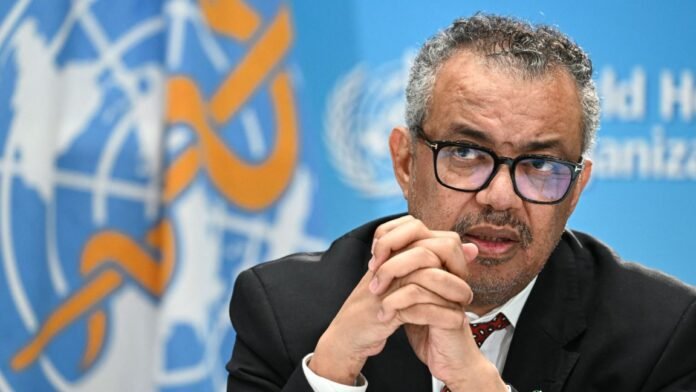
Over the weekend, the World Health Organization released a disease outbreak report on the events surrounding the death of a Russian infectious disease researcher earlier this month, highlighting that Russia has yet to report a confirmed cause of death. With that “key uncertainty,” the United Nations health agency said it remains impossible to assess the risk of the event or whether the public health measures Russia took were adequate to prevent spread of the unknown disease.

The WHO reported that, so far, it has seen no evidence of ongoing transmission of the mystery disease. “However, confidence in the assessment remains limited by the absence of a confirmed etiological diagnosis, and the remaining uncertainty regarding the source and mode of exposure,” the agency wrote in its report.

The agency laid out the order of events as information trickled out from Russian authorities, noting that it only became aware of the death via media reports on October 2. The WHO subsequently made contact with Russian authorities and requested information on October 3, 6, 7, and 8.

Limited information released

Early media reports indicated that the lab worker had become ill on September 29, possibly following an incident at the lab, the Irkutsk Antiplague Research Institute (APRI) of Siberia and the Far East. Some early reports suggested that the researcher—who was identified by media as 28-year-old Darya Shipilova—died of the plague after breaking a test tube.

On October 2, the Irkutsk branch of Russian health agency Rospotrebnadzor (RPN) said in a statement that a “special sanitary-epidemiological expert commission” had already met over a suspected case of a high-threat pathogen. Sanitary and epidemic control measures were put in place, including identifying, monitoring, and testing all contacts. At the time, RPN said that all contacts had tested negative for high-threat pathogens.

On October 6, Russia’s National Focal Point for the International Health Regulations (NFP) first responded to the WHO’s information requests, saying that no case of plague had been recorded in Irkutsk Oblast. The NFP confirmed that an APRI lab worker had died from a severe case of pneumonia after developing symptoms compatible with an acute respiratory viral infection. The worker was tested for a number of high-threat pathogens, but all the tests had come back negative. Doctors categorized the cause of death as being from pneumonia of undetermined etiology.

The NFP also reiterated information from RPN about the public health measures taken and that people in contact with the lab worker all tested negative for high-threat pathogens. The NFP added that the widest range of possible contacts were identified and tested in accordance with Russia’s public health laws.

Uncertain risk

In follow-up responses, the NFP gave more details about testing and some results that weren’t concerning. It said authorities conducted 5,500 laboratory tests on contacts. They tested for a range of pathogens, including influenza, SARS-CoV-2, other respiratory infections, and bacterial infections, including plague and Streptococcus. Among the contacts, they identified two cases of COVID-19, three cases of rhinovirus, and one case of Haemophilus spp., a common bacteria group that includes those that can cause respiratory infections and pneumonia. They also found a few opportunistic infections.

As of October 9, Russian authorities told WHO that they had not detected any high-threat pathogens in the laboratory’s research portfolio in any of the contacts, and they were no longer being monitored. The monitoring period was set for seven days for all the contacts.

Authorities also added that the worker who died was not infected with plague bacteria, Yersinia pestis, and the worker had been vaccinated against the infection due to the occupational hazard. They added that no lab biosafety or biosecurity incident had occurred at APRI, and the deceased worker had not traveled outside the region within the two weeks before becoming ill.

Reviewing all the information coming out of Russia, the WHO was largely at a loss as to what happened and what risk the event posed, concluding: “A key uncertainty for this event is the absence of a confirmed diagnosis in the deceased laboratory worker.” Without the cause of death, the agency can’t “independently assess whether the duration of the reported monitoring period for contacts was sufficient to exclude all plausible causes of the fatal illness.” They also aren’t ruling out the possibility of a laboratory-associated exposure.

Four major European Parliament groups reject Irish Presidency’s EU budget proposal

0
four-major-european-parliament-groups-reject-irish-presidency’s-eu-budget-proposal
Four major European Parliament groups reject Irish Presidency’s EU budget proposal


Leaders of four major political groups in the European Parliament on Monday rejected the Irish Presidency’s revised proposal for the EU’s 2028-2034 budget, saying it cannot serve as a basis for Parliament’s consent.

The leaders of the European People’s Party, the Socialists and Democrats, Renew Europe and the Greens/EFA groups issued a joint statement expressing “utmost dismay” over the revised Negotiating Box. The document was presented ahead of the European Council meeting on Oct. 15-16 and covers the Multiannual Financial Framework, the EU’s long-term budget.

The groups said Parliament adopted its mandate for the next budget in April in its Interim Report. They said that position is “not an opening bid” but the democratic stance of the only directly elected EU institution.

The leaders objected most strongly to the size of the proposed budget. They said that, compared with the current budget and accounting for inflation and economic growth, the Irish proposal would cut the real value of the EU budget by 161 billion euros, or 10%. They said the European Commission’s proposal of 1.15% of EU gross national income represents the same share of the economy as the current budget, and that starting talks below that level would shrink the budget relative to the economy at a time when Europe is being asked to do more.

The statement listed proposed cuts it said would undermine key priorities:

  • The European Competitiveness Fund would fall by 13% and Horizon Europe by nearly 10%.
  • Strategic infrastructure and military mobility funding would drop by 14%.
  • The Union Civil Protection Mechanism would be reduced by 35%.
  • Global Europe would be cut by nearly 16%.

The leaders asked how Europe can close its competitiveness gap, strengthen security, protect citizens from forest fires and climate-related disasters, and remain a credible global actor with such reductions. They urged the European Council to answer those questions before using the Negotiating Box as a basis for discussion.

The groups also said a smaller budget would not make Europe’s challenges disappear but would shift more of the financial burden to national governments. They called the Irish Presidency’s claim of a 30% increase in the EU budget misleading because it ignores inflation and economic growth. National budgets have grown by 68% over the same period, they said, while national contributions to the common budget have fallen in relative terms. They rejected what they described as an attempt to present the budget as an exercise in “budgetary discipline.”

The leaders said the way to finance common priorities while limiting pressure on national budgets is to agree on new sources of EU revenue. They noted Parliament has proposed a levy on online gambling and betting services, a contribution linked to crypto-assets, and a digital levy on major digital platforms. The digital levy alone could generate up to 25 billion euros a year, in addition to the 57.4 billion euros envisaged in the Commission’s July 2025 own resources package, they said.

The leaders urged the European Council to consider Parliament’s proposals alongside the Commission’s. They said that without agreement on new own resources, they will not be ready to support Parliament’s consent to the budget.

The statement noted that Parliament’s position was backed by an absolute majority, the same majority needed to give consent to the final budget.

“We will not support a budget that weakens the Union’s ability to deliver,” the leaders said.

China’s panda diplomacy: how Beijing combines conservation and trade

0
china’s-panda-diplomacy:-how-beijing-combines-conservation-and-trade
China’s panda diplomacy: how Beijing combines conservation and trade

Two giant pandas recently landed in Atlanta, a week after Donald Trump and Xi Jinping met in Washington.

The summit produced no immediate breakthrough on trade deals, Taiwan or AI, but it did produce something cuddly for the American public: a pair of giant pandas, Ping Ping and Fu Shuang, which are on a ten-year loan to Atlanta’s zoo. Both were born in 2020 at the Chengdu Research Base of Giant Panda Breeding, the showpiece of a decades-old conservation effort.

China treats the giant panda as a national treasure and retains ownership every one it lends abroad. Sending a pair is a mark of favour: the bears draw crowds and signal Beijing values the relationship. When relations cool, the loans often seem to lapse and the pandas return to China. This is panda diplomacy.

From gifts to rentals

Some trace the practice to the Tang dynasty, when Empress Wu Zetian is said to have sent a pair of bears, believed to be pandas, to Japan, between 624 and 725 AD. The better-documented history begins in 1941, when Chiang Kai-shek’s government sent a pair to New York’s Bronx zoo as thanks for American aid.

But it was Mao Zedong who turned the gesture into policy. In 1957 he sent a panda, also called Ping Ping, to the Soviet Union, and by 1982 China had given away 23 pandas to nine countries. The most famous pair, Ling-Ling and Hsing-Hsing, were sent to Washington to commemorate Richard Nixon’s 1972 visit to Beijing. They drew more than 20,000 people to the Smithsonian national zoo on their first day and an estimated 1.1 million in their first year.

Under Deng Xiaoping’s reforms, gifts became rentals in 1984, and pandas went on short, lucrative tours. The Los Angeles zoo paid US$100,000 (£75,500) a month for a pair during the 1984 Olympics.

Not everyone was charmed. Conservation groups such as The New York Zoological Society viewed the tours as money-making ventures. In 1988, when the Toledo zoo hosted a pair for 100 days it attracted protests. A judge barred the zoo from charging visitors extra to see them. In 1993 the US Fish and Wildlife Service stopped issuing new import permits. When it resumed in 1998, the new rules said a significant share of the money should protect wild pandas in China.

The result is today’s arrangement: long-term “research” loans, usually for ten years and up to US$1 million a year, with any cub born abroad remaining Chinese property. The rules changed, but the loans still follow Beijing’s interests. University of Oxford researchers found that loans after 2008 often coincided with trade deals. Malaysia received Xing Xing and Liang Liang in 2014 to mark 40 years of ties. And as relations with Washington soured, its pandas flew home in November 2023.

Mei Lun and Mei Huan were the first giant panda twins born in the US.

A conservation story

China set up its first panda reserves and banned hunting in the early 1960s. When a mass die-off of bamboo happened in 2005 and pandas starved, rescuers brought many into captivity. The Chengdu base opened in 1987 with six rescued wild pandas.

A national panda programme followed in 1993. Today there are 67 reserves and a Giant Panda National Park. Wild numbers rose from 1,114 in the mid-1980s to 1,864 by 2014, and in 2016 pandas were moved off the endangered list.

The Chengdu base, a tourist magnet, breeds pandas for display and diplomacy. Releasing them is the job of a separate state body, the China Conservation and Research Centre for the Giant Panda (CCRC). Its scientists say releases are replenishing fragile wild populations. they claim that this makes every zoo panda, including those lent abroad, a lifeline for wild ones. Some are sceptical about this claim.

Two decades of releases

The CCRC began moving pandas to the wild in 2003. Its first, Xiang Xiang, was found dead within a year. Of the dozen released since then, ten have survived, while more than 700 remain in captivity.

The only permanently released panda known to have had a cub, Luxin, was born wild.

Since 2017, previously captive females moved to the forest temporarily to mate with wild males, then returned to captivity, have produced 14 cubs, 12 of them surviving.

Bears for summits

Chinese scientists say the pandemic slowed its rewilding project, but its lack of success has drawn criticism from those who believe it should have had more emphasis and investment.

So far the attempts to replenish the wild panda population have not been as successful as many had hoped, and only small groups of giant pandas survive.

On the other hand China’s attempts to mix trade and conservation in zoos continues to create significant public relation successes. Each new announcement of new pandas heading to a foreign zoo attracts international attention and symbolises a renewed trading and foreign policy relationship between two nations. Something that Beijing will no doubt want to keep building on.

One freed American doesn’t equal US policy shift on Myanmar

0
one-freed-american-doesn’t-equal-us-policy-shift-on-myanmar
One freed American doesn’t equal US policy shift on Myanmar

The recent Reuters headline, “US opens direct talks with Myanmar’s generals, reversing years of isolation,” describes a consequential diplomatic change. It is not a verdict that the junta has won, or that Myanmar’s revolution has lost. The distinction matters because an exaggerated reading can spread precisely the discouragement the generals would welcome.

So what did Reuters actually report? Senior US State Department official Michael Vance joined September 15–16 talks with coup-maker Senior General Min Aung Hlaing to secure American businessman Adam Castillo’s release and open further engagement; US outreach focused on scams, while they also discussed mineral access. Castillo was freed, marking a concrete and legitimate American gain. The Trump administration is giving direct bargaining greater weight.

What would overdramatize that news? Turning it into “America has recognized the junta, lifted its sanctions and traded away the revolution for rare earths.” Reuters establishes no new recognition decision, sanctions relief arising from the meeting or completed minerals bargain. Those are possible fears about where policy could lead, not reported outcomes.

What does a headline-only reading miss? Min Aung Hlaing remains sanctioned; Vance has also met with democratic opposition and ethnic armed groups; the US State Department says it raised questions about violence and political prisoners and continues assistance outside military control.

These details contradict a claim of complete abandonment, although official assurances are not proof of adequate support.

Reuters also quotes Gregory Meeks, the top Democrat on the House Foreign Affairs Committee, calling the shift “contrary to both our values and our interests.” He accused Rubio of conferring greater legitimacy while failing to implement congressionally mandated sanctions and deploy appropriated democracy funding. Washington is not united behind the policy. This offers advocates an opening, not guaranteed congressional support.

There is a genuine warning, too. Reuters reports that most opposition-support programs it describes, including airstrike-warning and defection initiatives, were cut during the aid overhaul. Lost resources can weaken protection and resistance capacity. The accurate conclusion is that support has diminished and diplomatic risks have grown, not that defeat is inevitable.

Another revealing detail reverses the apparent direction of need: one source said Myanmar requested official US engagement at the appropriate level in return for Castillo’s release. The junta has sought access to Washington, but an audience gives it publicity, not proof that Washington accepts military rule.

That pursuit predates the meeting. The lobbyist DCI Group reported work rebuilding US relations for the Ministry of Information, including Roger Stone’s consulting role; the Myanmar embassy contracted McKeon Group in August 2025 to develop congressional and administration relationships. These records demonstrate intent, not control of US policy.

OHCHR documents military economic misrule, expanding narcotics and scam economies, and military-linked criminal income, while also implicating other armed actors. Economic distress cannot simply be blamed on sanctions.

Min Aung Hlaing has courted investment abroad and sought Belarusian export credits at reported rates of 2.25%–9.33%, depending on currency and goods, plus insurance. UN reporting identifies money, weapons and legitimacy as essential to the junta, with foreign banking and supply networks sustaining weapons and aviation-fuel procurement. Foreign-exchange relief without safeguards risks replenishing the means of repression.

Targeted sanctions constrain military procurement. The UN Special Rapporteur to Myanmar reports that military purchases of weapons and related materials through formal banking fell by roughly one-third between the years ending March 2023 and March 2024, largely because of sanctions on state banks and arms networks.

To be sure, rerouted supply chains have outpaced enforcement. Those who have imposed sanctions should close those gaps rather than declare them useless because atrocities continue. Why would unconditional relief produce restraint?

Castillo’s case also deserves scrutiny. He had promoted military–Kachin cooperation linked to rare earths and advocated military engagement, while denying that he lobbied for Myanmar’s government or sought sanctions removal for it and its associates. He was subsequently detained over alleged misuse of his chamber of commerce position, charges his supporters referred to as spurious.

The reported release negotiations raise concern about detention being used as diplomatic leverage. But they do not establish that his arrest was engineered for that purpose.

Civilian welfare cannot be expendable. Washington can deprioritize it, but that does not make the choice defensible. The regime’s September 28 market airstrikes reportedly killed at least 50 people in Kyauktaw. This does not prove US talks caused violence; it shows why one successful transaction cannot establish a successful broader policy or change the junta’s behavior.

Washington’s own September 11 determination found Myanmar had “failed demonstrably” on counternarcotics efforts, while preserving a national-interest assistance exception (presidential determination). As discussed in my Asia Times and DVB articles, that means neither guaranteed funding nor political endorsement. Prospective cooperation must answer this adverse assessment.

The Kachin Independence Army controls major producing areas, while its parent, the Kachin Independence Organization, participates in the Steering Council for the Emergence of a Federal Democratic Union, or SCEF. The junta is not the only interlocutor, but neither coalition membership nor mineral control confers community consent.

China-centered processing and transport obstacles also complicate alternative supply chains. Neither US mineral access nor a geopolitical setback for Beijing should be counted as an accomplished gain at present.

The essential rule is measurable improvement before concessions. Even ASEAN’s imperfect Five-Point Consensus supplies a minimum starting point: ending violence, dialogue among all parties, envoy-led mediation, humanitarian assistance and envoy access to all parties.

Washington should demand independently verified implementation, not another promise. It should also require the release of political prisoners and safeguards that prevent benefits from financing weapons, ammunition and jet fuel.

Diplomatic contact and humanitarian assistance should remain possible. Sanctions relief or broader economic benefits should require sustained civilian-protection results, independent access, published benchmarks and reversal provisions. Engagement must not replenish the military’s ability to attack civilians.

Diaspora communities can act now. Constituents should contact their House representative and both senators, request district-office meetings and submit a concise, sourced brief with four requests: verified conditions before concessions; enforcement against military revenue and procurement networks; delivery of appropriated humanitarian and democracy assistance; and congressional reporting on agreements and outcomes.

Ask members to put these questions to the State Department and Treasury, then follow up for written responses.

Concerned communities can share a common evidence brief, record official responses and correct misleading claims without exposing vulnerable contacts. Judge progress by assistance delivered, civilian protection, prisoner releases, humanitarian access and sustained action against criminal networks, not reassuring statements or alarming headlines.

For the democratic opposition, the hints of a US policy shift merit preparation, not despair. Neither the junta nor advocates promoting a preferred settlement should turn uncertain diplomacy into a verdict that resistance is futile. Myanmar’s people need clear analysis and practical responses, not commentary that inadvertently does the junta’s discouraging work.

James H. Shwe is an independent policy analyst and writer on Myanmar and Southeast Asian affairs based in California.

Susan Collins-Aligned Super PAC Buys Attack Ads in Portland… Oregon

0
susan-collins-aligned-super-pac-buys-attack-ads-in-portland…-oregon
Susan Collins-Aligned Super PAC Buys Attack Ads in Portland… Oregon


A Republican-affiliated super PAC is having a little trouble finding Maine on a map.

The Defending Main Street super PAC spent thousands of dollars on an attack ad to audiences thousands of miles away from the Maine Senate race it was targeting. 

The ad hit Maine Democratic Senate candidate Troy Jackson on the issue of taxes and cost of living in the state.

“Maine can’t afford Troy Jackson and all his taxes,” the ad said.

“It’s clear these people don’t know anything about Maine.”

The group, which describes itself as “most effective independent expenditure organization supporting the governing wing of the Republican Party,” paid for the ad to attack Jackson, who’s mounting a challenge to incumbent GOP Sen. Susan Collins. Both candidates have made cost of living a central plank of their campaigns in the run-up to the midterm election on November 3.

The only problem with the ad in question: The group paid for the video ad to show more than 1 million times in the wrong Portland.

Rather than being delivered to audiences in Portland, Maine, the state’s largest city, the ad was shown to digital audiences more than 3,000 miles and two time zones away in Portland, Oregon, according to data from Google.

The mix-up may be embarrassing for the super PAC, which is oriented around electing so-called moderate Republicans like Collins, but likely spared voters in Maine from the latest wave in a deluge of ad spending in the state, according to Andy O’Brien, a political operative who supports Jackson.

“We have billionaires with no connection to Maine spending millions of dollars to buy Susan Collins the election, so it’s pretty hilarious to see them throwing money at the wrong Portland,” O’Brien told The Intercept. “It’s clear these people don’t know anything about Maine, because they’re directing their ads to the wrong Portland.”

“I’m glad they’re wasting their money in Oregon and not continuing to waste it in Maine.”

Representatives of the Jackson’s and Collins’s campaigns and a spokesperson for Defending Main Street did not immediately respond to requests for comment.

The group is affiliated with Republican Main Street Partnership, a nonprofit group that counts Collins among its nine members in the Senate. Republican Main Street Partnership was initially aimed at supporting moderate Republicans that has, along with much of the rest of the GOP, moved to the right in recent years.

Busy Maine Street

The race between Collins and Jackson — a longtime Maine politico who stepped in to replace Graham Platner after Platner dropped out amid allegations of sexual assault — has become one of the most high-profile races in the country in the run-up to the midterms.

The campaign has helped make Maine one of the top locations for political spending this cycle, according to the Portland Press Herald. 

The Defending Main Street ad, however, did not have the impact its sponsors might have hoped. The ad buy first came to light after an X user reported seeing multiple anti-Troy Jackson ads in Portland, Oregon.

“I’ve gotten 5 anti-Troy Jackson ads in the last 24 hours. I choose to believe they mixed up Portlands,” wrote the user, who goes by the name Lillian Belle and posts about progressive politics in Oregon. “Hearing I’m not alone lol.”

That suspicion appears to be borne out by data from Google Ads Transparency Center, which shows Defending Main Street dropped between $20,000 and $25,000 to place the 30-second ad in hundreds of ZIP codes across Oregon and the state of Washington between October 8 and October 11.

O’Brien, the Maine political operative, said, “At least now Portland, Oregon, residents can enjoy some of the crap we’ve been seeing every single day.”

More than 119 million Brazilians voted in the Oct. 4 election – including about 21,000 Florida residents

0
more-than-119-million-brazilians-voted-in-the-oct.-4-election-–-including-about-21,000-florida-residents
More than 119 million Brazilians voted in the Oct. 4 election – including about 21,000 Florida residents

More than 119 million Brazilians voted on Oct. 4, 2026, in the national elections to select the country’s next president and the governors of all 27 states, among other government officials.

That’s nearly 75% of the approximately 159 million eligible voters. Unlike in the U.S., voting is mandatory in Brazil for all citizens between the ages of 18 and 70.

This includes nearly 1 million Brazilians who currently live outside the country. About 265,000 Brazilians call the U.S. home, with small but growing communities in Boston, New York and Miami.

Because neither incumbent President Luiz Inácio Lula da Silva nor his far-right opponent, Flávio Bolsonaro, the son of disgraced former President Jair Bolsonaro, managed to get over 50% of the votes, Brazilians at home and abroad will have to turn out again on Oct. 25 for a runoff election.

Brazil does not have a long tradition of democracy. But it does have a secure and sophisticated election system. As a scholar of Latin American history and politics, and a Brazilian citizen living in the U.S., I watched these elections with great interest.

No voting by mail

Brazilians living abroad are required by law to vote, but they may not cast ballots by mail or online. In many countries, Brazilian consulates serve as the polling places for the diaspora population. Because the U.S. is so spread out, the Brazilian government sets up 15 polling places in 12 states. Two of these are in Florida – one in the Orlando area, where about 26,000 Brazilian voters live, and one in Miami, which is home to the third-largest concentration of Brazilians in the U.S., with more than 40,000 registered voters.

Voting takes place in a single day – always a Sunday – through electronic voting machines, and results are known within a few hours. Though it is compulsory, the penalty for not voting is just a small fine – about US$1 – and as long as a citizen notifies the government within two months of the election that they did not vote, they remain in good legal standing.

So it’s not surprising that only about 75,000 Brazilians – roughly 28% of eligible voters – cast their ballots in the U.S. on Oct. 4.

It’s unclear whether U.S. Immigration and Customs Enforcement operations prevented people from voting, though some Brazilians say they believe fear of ICE contributed to a lower turnout than in 2022, when more than 37% of eligible voters cast their ballots. Organizations for expats in the U.S. warned Brazilians that if their immigration status was precarious, they should not vote.

people walking by a mural with pictures of two men together

A mural outside a polling place in Sao Paulo shows Donald Trump and Flávio Bolsonaro as a team. Photo by Pablo Porciuncula/AFP via Getty Images

How the US diaspora voted

What is clear is the importance of this election for the future of Latin America’s largest economy and society, as well as for the future of Brazil-U.S. relations. If reelected, Lula is likely to continue to resist overt pressures from Washington to weaken Brazil’s economic ties with China.

On the other hand, Flávio Bolsonaro has signaled that he plans to have much closer relations with the U.S. That is why President Donald Trump would prefer to have a Bolsonaro in power, so that the U.S. influence in Latin America may be further consolidated.

Among Brazilian voters who were abroad on Election Day, Lula won in 64 out of 101 countries where voting was made available by Brazilian diplomatic authorities. But Flávio Bolsonaro won in some of the nations with the largest numbers of Brazilian residents. This includes the U.S., Japan and neighboring countries in South America.

In the U.S., Brazilian voters cast 45,004 ballots for Flávio Bolsonaro and 23,335 for Lula. This seems to be another indication of the polarization that has shaped this key election and, more broadly, the general political context of Brazil in the past few years.

Where Brazil goes next

I was not surprised to see that Flávio Bolsonaro finished in the lead on Oct. 4, as the electoral pendulum across the region has been swinging to the right of the political spectrum for some time.

Even though Lula managed to defeat Jair Bolsonaro in 2022, Bolsonarismo – the extreme-right political movement that carries his name – has remained the most influential political force in the country. This is a right-wing movement whose leaders, especially members of the Bolsonaro family, have openly and consistently called for the revival of Brazil’s military regime that ruled the country from the mid-1960s to mid-1980s.

Now that Flávio Bolsonaro, an otherwise irrelevant senator from the state of Rio de Janeiro, where the staunch political base of the Bolsonaros is located, has finished ahead of Lula in the first round of elections, it seems clear that the extreme right has the upper hand in Brazil today.

A few years ago, Brazil seemed on track to becoming a mature democracy, after having held several electoral cycles with peaceful transfers of power to opposition candidates.

But now, considering the lack of commitment to democratic traditions in the Bolsonarismo movement, this trend risks being derailed, ironically, by means of a democratic election.

0FansLike
0FollowersFollow
0FollowersFollow
0SubscribersSubscribe
- Advertisement -
Google search engine

Recent Posts