18.5 C
London
Friday, October 9, 2026
Home Blog

Plainly, Trump doesn’t really care about the midterms

0
plainly,-trump-doesn’t-really-care-about-the-midterms
Plainly, Trump doesn’t really care about the midterms

With a month still to go before America’s mid-term congressional and gubernatorial elections, the prospect of a “blue wave” of Democratic success in the House of Representatives, the Senate and in many governorships is looking increasingly likely.

But whether that forecast holds true or not, one important aspect has already become clear. It is that President Trump does not really care much about what happens in the elections.

This could be because he thinks, rightly, that he can no longer do much about it, beyond feeble gestures such as allowing truckers to use tax-exempt red diesel. The unusual “mid-term convention” he organized for the Republican Party in early September, which was little more than an extended Trump rally, seems to have done more harm than good for his and his party’s cause.

Alternatively, it could be because he thinks he will be able to use misinformation, intimidation and anti-constitutional measures to disrupt the outcome, delegitimising the Democrat-run House and Senate as much as he can. On that we can only speculate and wait and see, while cheering on the courts, public officials and civil society groups who are gearing up to oppose it.

The third explanation, however, is something we already know a lot about. It is that he thinks that thanks to him Congress no longer matters and intends to carry on governing much the way he has for the past two years. This is the explanation worth focusing on as it also helps clarify what Trump really thinks about the presidency and what it means to “govern” America from the White House.

During his first two years back in office, Trump has really had only two ideas which qualify as a domestic legislative agenda. One was his “big beautiful bill” surrounding his 2025 budget, which represented an effort to reward his supporters, punish his enemies, fund his obsessions and disregard any semblance of fiscal rectitude.

This succeeded but despite America’s “hot” economy is leading the country towards some sort of a debt crisis. The other has been his effort to gain federal control over the country’s voting systems and rules, chiefly in order to suppress the votes of his opponents. This has largely failed.

Beyond those initiatives, Trump has mainly governed by writing executive orders and waiting for courts or Congress to block them, if they can. The courts have often done so, but both the Republican-majority houses of Congress have been too supine to stand in his way to any serious extent.

The virtue of the big beautiful bill, from his point of view, is that it appropriated sufficient funds to allow him to do what he likes, often by transferring funds from one pot to another, without bothering to ask Congress for permission.

Notably, this provided a huge pot of money for his anti-immigration militia, ICE (Immigration and Customs Enforcement), which, apart from Elon Musk and Russell Vought’s project to destroy or disable large parts of the federal government, counts as his main governing initiative, if arresting, deporting and sometimes shooting people largely without due process can qualify as “governing.”

It also gave him access to enough money for his pet legacy-creation projects in Washington, DC, mainly by taking money away from the National Parks Service and using it for his ballroom, his reflecting pool debacle, his “arc de Trump” and other efforts to leave a permanent, vainglorious mark on America’s capital city.

That has been his agenda, but his most common focus has been not on an agenda, per se, but on the accumulation and exercise of power. This has made him and his family hugely richer, for a start, in complete disregard of legal and constitutional constraints on the financial exploitation of office.

He has also used his power to pursue and punish his enemies, through Department of Justice indictments and FBI investigations. And in foreign policy he has used his power to extort investments and other monies from other countries, including allies in Europe and Asia, to try to intimidate and gain concessions from neighbors such as Canada and Mexico, and to exert military force where it pleases him to do so, whether by killing alleged drug-traffickers in international waters, by kidnapping the president of Venezuela or, most fatefully, by seeking to force a change of regime in Iran.

If, as it seems, he does not care very much about what happens to Republican control over the House of Representatives or the Senate in the mid-terms, the implication is that he thinks he will be able to carry on in his final two years acting pretty much in the same way as since January 2025.

Presidents always have wide latitude over foreign policy, which he will continue to exploit. But he will also continue to seek to enrich himself and his family, through corruption, insider trading and deals with foreign powers, and to seek to pursue his enemies inside America. And he will be planning to end his term of office by exercising his presidential power of pardon to try to protect his family and associates.

For a president with such a limited, highly personal conception of his role and opportunities, the prospect of spending his next two years in this way may well be quite attractive. Certainly, he understands that a Democrat-controlled Congress will pursue him with investigations and laws targeting his corruption and his abuse of power, and that he will very likely be impeached for a third time.

But he will know that he can veto laws, can brazen out investigations, can enjoy painting himself as a victim and can be confident again of avoiding being found guilty in a trial in the Senate, which requires a two-thirds majority.

The best conclusion to draw is that even if American voters deliver a well-deserved rebuke on November 3, the next two years are not going to be pretty. A Democratic Congress may decide to use its budgetary power to block the administration’s actions, including in defense, but this will have to be modulated carefully to avoid queering the pitch for the presidential race in 2028.

Only if a large number of Republicans turn against the president, as they did against Richard Nixon in 1974, will there be any real prospect of punishing Trump, given that the Supreme Court in 2024 granted presidents immunity from prosecution for official acts, without defining any limits for what constitute official acts.

The final conclusion can, however, be modestly optimistic. Trump’s disregard for the midterms shows that the Trump presidency is a highly personal and power-obsessed affair rather than being ideological or pursuing any coherent agenda. This, in turn, makes thinking about dealing with the post-Trump America a little less daunting.

There are long-term changes in American attitudes to the world, to be sure, and there are some ideologues trying to pursue their own agendas through Trump who will still be around when he has gone. But the shameful, shameless, bullying, incompetent, corrupt, law-breaking America is defined by Trump, is dominated by Trump and, in that form at least, will end with Trump.

This article first appeared on Bill Emmott’s Global View Substack and is republished with kind permission. Read the original here and become a paid subscriber here.

‘Tenzing biopic made me wonder what he would think if he could return to the mountain today’ – glaciologist and mountaineer

0
‘tenzing-biopic-made-me-wonder-what-he-would-think-if-he-could-return-to-the-mountain-today’-–-glaciologist-and-mountaineer
‘Tenzing biopic made me wonder what he would think if he could return to the mountain today’ – glaciologist and mountaineer

Seventy three years ago Tenzing Norgay stood on top of Everest, known as Chomolungma in Tibetan, which roughly translates as “Goddess Mother of the World”.

A new biopic of Norgay’s life and that first ascent, along with Edmund Hillary, of the highest mountain in the world portrays beautifully, and with compassion, his humility, and intimate bond with nature and the mountains. In some ways, however, the most spectacular star of the film is the majestic and awe-inspiring mountain landscapes captured so beautifully by the sweeping cinematography.

I am a mountaineer and glaciologist by profession and have an affinity for wild, open and vertiginous landscapes. The film made me wonder what Tenzing would think if he could return to the mountain today. How have things changed in the intervening years and what does that mean for the future of mountaineering and Alpine climbing?

Everest Base Camp (EBC) is a very different scene now. Instead of a single, admittedly gargantuan, expedition each year, the Nepalese government now issues many permits and, at peak season, base camp is a sea of tents, people and too often rubbish left behind by climbers.

A group of mountaineers stand beside their tents at Mount Everest base camp in Nepal.

A group of mountaineers at Mount Everest base camp, pictured in 2018. Jonathan Bamber, CC BY-NC-ND

That’s quite sad and a far cry from what the 1953 expedition would have experienced, but so are the conditions and health of the Khumbu glacier which provides access to EBC and the start of the real climbing.

A recent study used declassified spy-satellite imagery to compare loss of ice mass across the Himalayas between the 1970s and the 2000s. They found that the rate of loss had doubled in the period 2000-2016 compared to the early epoch. They estimated the rate of thinning at the altitude of EBC was about 0.8 metres per year. The glacier is around 150 metres thick in the region below base camp. At the rate of thinning observed a decade ago it would lose about a third of its volume in 73 years exposing more and more loose and unstable rock.

However, my own work, with colleagues indicates that the acceleration in mass loss across the Himalaya has continued since 2016 to reach even higher rates. Google Earth imagery over the Khumbu glacier from 2021 shows extensive development of lakes on the ice surface: a sure sign of a glacier in decline. The lakes absorb more solar radiation than the surrounding ice and accelerate melt. There are, of course, no satellite images from 1953 but plenty of analogue photographs were taken and the changes are clear to see: now it’s more chaotic, more broken and more covered in debris.

The cause of the recent catastrophic flood event close to the Nepal/Tibet border has been linked to increasing regional temperatures, weakening permafrost (frozen ground that thaws with warming) and greater glacier melt rates.

In the European Alps the situation feels even more dire. In just two years from 2022-2023 glaciers in the Swiss Alps lost 10% of their volume. If that rate was sustained, they would be gone in 20 years time.

This year, mountain huts closed and guides stopped taking clients up the “normal” routes on the Matterhorn and Mont Blanc because it was too dangerous due to the high temperatures and the consequent increased rockfall.

Many other routes were being avoided because of the dangerous rockfall conditions. The first six months of 2026 were the third warmest on record and it is no wonder that glaciers, and the frozen world is responding to this level global heating .

In August 1990 I climbed perhaps the most iconic and well known route in the Alps: the north face of the Eiger. The photo below shows me on a section called the second icefield, a crucial part of the original 1938 route that gains you access to the upper face and the ominously named Death Bivouc. The icefield no longer exists, and no one who wants a relatively safe passage climbs the route in summer. The recommended climbing season now is late winter or early spring to avoid the rotten rock and dangerous conditions that summer brings. Thus, in my short mountaineering career, I have seen unprecedented changes on famous Alpine routes and a transforming landscape in the high mountains.

The author on the second icefield, Eiger North Face.

The author on the second icefield, Eiger north face, in August 1990. Jonathan Bamber, CC BY-NC-ND

What does this mean for the future of mountaineering and glaciers? Based on current climate policies, the European Alps, western Canada and the US, Scandinavia and other regions are expected to lose about 90-100% of their mass by 2100.

That’s just 74 years away, roughly the time between that first ascent of Everest and now. It will have a dramatic impact on the mountain landscape, ecosystems, tourism, beauty and natural hazard exposure of these, once pristine, mountain environments.

EBC has not been beautiful or pristine for many years, perhaps less because of global heating and more to do with the reckless attitude of some of the expeditions that visit. I wonder what Tenzing would have made of the changes to both the landscape and attitudes that have occurred since his historic and heroic first ascent of Everest, the sacred “Goddess Mother of the World”?

Rocket Report: A rare Falcon 9 scrub; is it just about Vulcan’s time to shine?

0
rocket-report:-a-rare-falcon-9-scrub;-is-it-just-about-vulcan’s-time-to-shine?
Rocket Report: A rare Falcon 9 scrub; is it just about Vulcan’s time to shine?

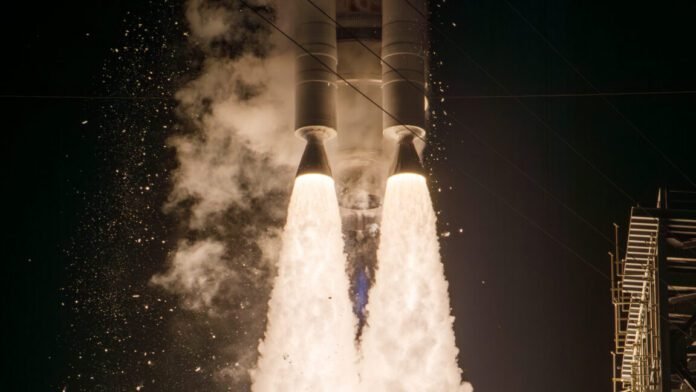
Welcome to Edition 9.14 of the Rocket Report! The big news this week, from our perspective, is that United Launch Alliance’s Vulcan rocket appears to be close to launching. We’ve seen a no-earlier-than launch date for the return to flight mission of October 29 (an Amazon Leo flight), and the next rocket up after that, also an Amazon Leo mission, is also planned for this year. Assuming the solid rocket boosters work, Vulcan could be poised for a major breakthrough next year in cadence.

As always, we welcome reader submissions, and if you don’t want to miss an issue, please subscribe using the box below (the form will not appear on AMP-enabled versions of the site). Each report will include information on small-, medium-, and heavy-lift rockets as well as a quick look ahead at the next three launches on the calendar.

Nuri rocket notches another success. South Korea successfully deployed five satellites for its first domestically launched microsatellite constellation during the fifth flight of its homegrown Nuri rocket Wednesday, Yonhap News Agency reports. In addition to the primary payload of five New-space Earth Observation Satellite Constellation for National Safety microsatellites, nine of the rocket’s 10 CubeSat secondary payloads were released as planned, according to the Korea AeroSpace Administration. PERSAT-02, developed by South Korean startup Quaternion, failed to separate from the rocket.

Pushing for more commercial activity … The mission was Nuri’s fourth consecutive success after its debut flight failed in 2021, raising the small-lift rocket’s overall launch success rate to 80 percent. After the launch, Science Minister Bae Kyung-hoon pledged continued government support for additional launches led by the private sector as South Korea seeks to shift from a government-led space development model toward a more commercially driven industry.

HyImpulse test flight slips into 2027. German launch startup HyImpulse has pushed the second flight of its SR75 suborbital rocket into spring 2027, European Spaceflight reports. As recently as last month, the company had said the flight would occur at the “end of 2026.” HyImpulse said the new target was based on its assessment of the remaining activities required under the license framework and the seasonal weather conditions at SaxaVord, rather than on the vehicle’s readiness.

This will be the rocket’s first flight from European soil … The flight from SaxaVord will be HyImpulse’s second SR75 mission and its first to carry commercial payloads. The company completed an initial test flight of the suborbital rocket on 3 May 2024 from the Koonibba Test Range in South Australia.

Rocket Report
Keep up with the latest in space exploration and rocket launches.

Sign Me Up!

German launch company gets a new CEO. The Supervisory Board of Rocket Factory Augburg has appointed Alexander Dahm as CEO. He succeeds Indulis Kalnins and will be responsible for the company’s continued development and its path to the debut flight of the RFA ONE launch vehicle, the company said this week. Dahm has 30 years of aerospace experience, including involvement with the Ariane 5 program.

Still seeking orbit … “I am impressed by the grit, innovative strength, and passion with which a new generation of European launch vehicles is being developed here. Together, we will reach the next important milestones on the way to the maiden flight of RFA ONE and actively shape the company’s future,” Dahm said. RFA has been working toward its first orbital launch following the loss of its first stage during a 2024 static-fire test.

SpaceX has rare scrub of Falcon 9 late in countdown. A Falcon 9 launch planned for early Monday morning was scrubbed in the final minute of the count as the rocket was shifting into its automated startup sequence, Spaceflight Now reports. SpaceX didn’t provide a reason for the abort. The rocket is intended to launch a new batch of data satellites to low Earth orbit on behalf of the United States Space Force’s Space Development Agency.

A relatively young booster … The company targeted Tuesday, October 6, for its next launch attempt, but waived off that opportunity as well. Following additional changes, the company is now aiming for no earlier than Saturday, October 10. The mission will use Falcon 9 first stage booster B1103. This will be its sixth flight following the launches of the SDA’s T1TL-E, NROL-179, and three batches of Starlink satellites.

Europe’s progress on hop tests remains slow. The European Commission has extended the deadline for the SALTO reusable launcher project to the end of 2026, giving the program another three months to complete the first hop test of Europe’s Themis reusable rocket demonstrator, European Spaceflight reports. This is the latest in a series of extensions that have pushed the completion date back from the original November 2025 deadline.

A long wait … The ArianeGroup-led SALTO initiative is an €42.8 million EU research project that is part of the ESA-managed Themis program. SALTO comprises the first two low-altitude hop tests, with the aim of demonstrating that Themis can be launched, recovered, and then launched again. Themis arrived at Esrange, Sweden, in June 2025, following a two-week road journey from ArianeGroup’s Les Mureaux facility in France. It has since been doing something important while not launching or hopping, we presume.

Concerns about credit risks at SpaceX. SpaceX plans to raise $40 billion in debt to finance the purchase of Nvidia chips, and The Financial Times reports that this has raised concerns about the large company’s creditworthiness. The publication reports that the spread on SpaceX’s five-year credit default swaps rose to 194 basis points on Wednesday, meaning it now costs $19,400 annually to protect $1 million of its debt against default.

Doubling down on Nvidia … As for the $40 billion in new debt, private capital firm Apollo was expected to lead the deal, while bond giant Pimco was among lenders in talks to fund it. It comes after the company issued $25 billion in investment-grade debt in June just weeks after raising $86 billion in its initial public offering. The new debt deal suggests SpaceX founder Elon Musk is doubling down on his bet on Nvidia’s technology.

Cape Canaveral to get drone protection. Cape Canaveral Space Force Station is getting lasers that can zap drones intruding into its airspace, TWZ reports. When installed, the new directed energy defense system will be part of a much larger effort to protect the spaceport against drone incursions. The idea is to ensure launch safety and keep prying eyes away from an installation full of secrets about America’s military and commercial space efforts.

Next step: sharks with laser beams? … Companies like SpaceX, United Launch Alliance, Blue Origin, and Relativity Space use the installation for space launches. The base defense modernization effort comes as the Cape Canaveral region is inundated with drone incursions. There were hundreds last year. For the spaceport, lasers are even more important than for other locations needing drone protection. That’s because the traditional method of jamming radio frequencies to interfere with drone connections to controllers could damage space vehicles. (submitted by biokleen)

Vulcan stacking two launches for Amazon. In a wide-ranging interview with Ars, Amazon Leo officials discussed their progress toward delivering an orbital broadband service to customers back on Earth. Among the challenges faced by the company was launch. “From day one we decided to go with a diverse set of partners to supply us with rockets,” Amazon Leo VP Rajeev Badyal said. “We started off with ULA, Blue Origin, Arianespace, and SpaceX. We signed deals with all four of them. We knew there was risk, but we had to get heavy lift vehicles.”

Vulcan on deck … Badyal said the company is currently working on back-to-back launches on Vulcan this year. “I can say we’re weeks away from launching on Vulcan,” he said. “Things are on track. We’ll follow that with an Arianespace launch and at least one more Vulcan this year. I can also tell you the infrastructure that we put and built with ULA now allows us to process two rockets simultaneously. So right now, there are two vehicle integration facilities, and both have a Vulcan rocket that is vertical and getting ready for our missions.”

Blue Origin building three more pads. In an interview with Fox News this week, Blue Origin founder Jeff Bezos said the company was going to construct three more launch pads after the rebuild of LC-36A to accommodate New Glenn. “We’re building three more pads,” Bezos said. “So we’re building—we’ll have a total of four pads that we’re under construction right now.” Bezos said this in the context of the company’s recent request to the FAA for 50 launches a year from Florida.

Bezos has much bigger goals long-term … “Our goal is to fly every day,” Bezos said. “And then once we’re flying every day, we want to fly every hour. And then once we’re flying every hour, we want to fly every minute. And by the way, that’s where I lose the team.” Bezos has long talked about making spaceflight routine, but launches every minute seems a tad ambitious for a company that has yet to launch once a month.

Next three launches

October 9: Long March 12 | Unknown payload | Wenchang Space Launch Site, China | 19:25 UTC

October 10: Falcon 9 | Tranche 1, Transport Layer A | Vandenberg Space Force Base, Calif. | 07:29 UTC

October 12: Falcon 9 | Starlink 15-25 | Vandenberg Space Force Base, Calif. | 23:00 UTC

Deadly Houthi strikes on Saudi capital raise stakes in regional conflict

0
deadly-houthi-strikes-on-saudi-capital-raise-stakes-in-regional-conflict
Deadly Houthi strikes on Saudi capital raise stakes in regional conflict


Thursday’s attacks on Riyadh airport killed three people, Saudi authorities said on Friday, as Yemen’s Houthi group ​stepped up missile strikes on the kingdom and tried to shut down its airspace in an escalating war ‌triggered by the US-Iran conflict.

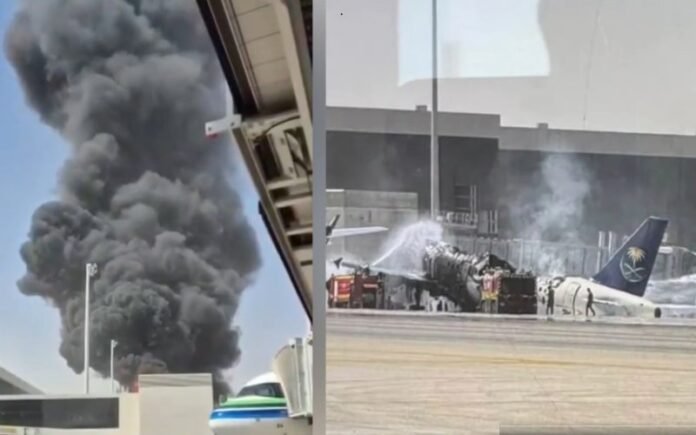
The strikes, which also injured several people, damaged a Saudia Airlines plane and sent smoke billowing over the airport, led many airlines to cancel flights to the Saudi capital days before it is due to host a major meeting of global oil chiefs.

Saudi airstrikes hit ​Houthi targets in the Yemeni capital Sanaa overnight, Houthi officials and affiliated media said, part of an intensifying air ​war against the Iran-allied group aimed at reversing its recent territorial gains, threats to international shipping, and ⁠attacks on the kingdom.

A Saudi-led coalition backing government forces in Yemen said it had destroyed three missile launch platforms used ​by the Houthis and warned it would respond firmly to attacks on civilians.

The Houthis, who have encircled Yemeni government forces in Yemen’s ​third-largest city of Taiz and are trying to defend positions on the Red Sea coast against a Saudi-backed offensive, had already killed three people with strikes on airports in the kingdom earlier this week.

The Saudi civil aviation authority said air traffic at Riyadh airport had returned to normal ​and flight tracking site flightradar24 showed a gradual resumption of flights, including from some Middle Eastern airlines.

Saudia Airlines said one ​of those killed on Thursday was one of its employees.

BITTER FIGHTING INSIDE YEMEN

Yemen’s civil war has rapidly emerged as the fiercest front in a ‌wider regional ⁠conflagration triggered by the US and Israeli attack on Iran that started on February 28.

The conflict is critical for global energy markets, with the Houthis firing on shipping in the Red Sea and its southern gateway the Bab el-Mandeb Strait, further squeezing Gulf oil supplies with Iran partly blocking the Strait of Hormuz.

Last month the Houthis staged a lightning advance down Yemen’s Red Sea ​coast to take full control ​over the coastline around the ⁠strait, prompting Saudi Arabia to re-enter the long-dormant conflict and back a government counteroffensive.

On Monday government forces took back territory around the Bab el-Mandeb coastline after intense Saudi airstrikes and fighting ​continues there.

However, Houthi forces have also managed to cut off a key road connecting Taiz, ​a city of ⁠more than half a million people with a garrison of thousands of pro-government fighters, with advances in mountain districts.

The group has announced repeated rounds of ballistic missile fire at Saudi Arabia, proclaiming it would shut down Saudi airspace and warning workers at oil facilities ⁠that it ​would strike those too.

Saudi Arabia is seeking assistance from Pakistan and Turkey, its ​partners in a mutual defence pact, to help ward off Houthi attacks, and has pushed for wider help from allies to aid it in reversing the group’s ​gains inside Yemen.

Source:  Reuters

Afghan road to China tests Pakistan’s power and leverage

0
afghan-road-to-china-tests-pakistan’s-power-and-leverage
Afghan road to China tests Pakistan’s power and leverage

China is increasingly trying to diversify its connections to the region as Pakistan’s actions in Afghanistan create new security and strategic problems for Beijing. The opening of a road through the Wakhan Corridor is an important step in that effort.

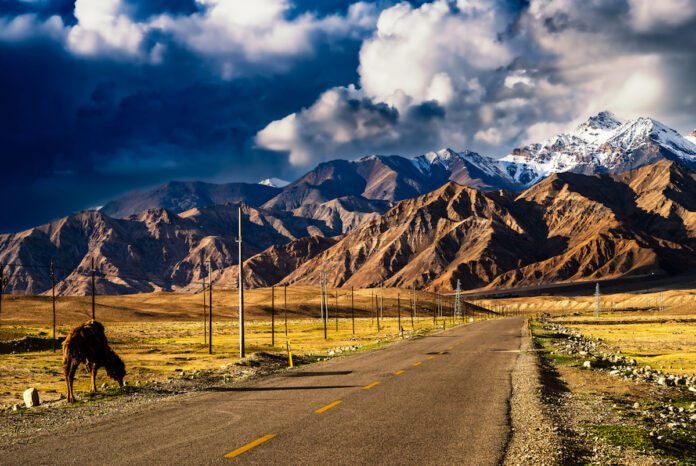
Afghanistan has formally inaugurated a 121-kilometer road through the corridor, running from Broghil to the Chinese border in Badakhshan Province. The road cost about 365 million afghani, roughly US$5.5 million, and was built by Afghan engineers without foreign engineers or advisers.

It gives Afghanistan a physical link to China and gives Beijing a possible alternative route into Afghanistan and the wider region.

China’s recalculation

Afghan officials accuse Pakistan of destabilizing the border region through repeated airstrikes, the use of proxy groups and other measures. In September alone, Pakistan struck multiple locations inside Afghanistan.

Islamabad said it was targeting militants, while Afghan authorities reported civilian casualties. The attacks have raised tensions between the two countries and made Afghanistan’s dependence on Pakistani territory and trade routes increasingly untenable.

China fears that instability could spread to Xinjiang and give militants room to operate against Chinese interests. Beijing is particularly worried that a fractured security environment will let the Turkestan Islamic Party, historically known as the East Turkestan Islamic Movement, establish durable safe havens.

Chinese officials believe such groups could use unsecured Afghan territory to move supplies, train recruits and launch attacks on Chinese personnel, infrastructure and assets.

Beijing also has growing doubts about whether Pakistan can protect its interests inside Pakistan. Chinese workers, engineers and other personnel on large development projects have been killed in repeated attacks, and Beijing has pressed Islamabad over the vulnerability of its people and investments.

The problem is most acute in Balochistan, where ethnic separatist groups, most notably the Baloch Liberation Army, have systematically targeted Chinese nationals and infrastructure linked to the China-Pakistan Economic Corridor, or CPEC. China must now spend resources not only on building infrastructure but on guarding it.

There are financial frustrations, too. Allegations of corruption and mismanagement involving Pakistan’s military and political elite have dogged CPEC, and concerns over irregularities, opaque dealings and delays have made it harder for Beijing to realize the economic and strategic returns it expected.

Geography adds another weakness. CPEC passes through Gilgit-Baltistan, which Pakistan administers and India claims as its own, and India has repeatedly restated that position. Beijing has always had to consider that New Delhi might one day try to reclaim the territory, which leaves a flagship Chinese project running through disputed ground.

The most pressing concern now is Pakistan’s shifting alignment. Under Field Marshal Asim Munir, Islamabad has moved closer to the United States, and China may see this as undercutting its interests while adding to the turmoil.

Beijing may also worry that Pakistan’s deepening engagement with Washington could give the United States greater access and influence in a region China regards as part of its western security periphery. From Beijing’s perspective, any larger American presence there is something to prevent.

That is where the Wakhan Corridor comes in. China is looking for other ways to connect with Afghanistan and the region so that it is less dependent on Pakistan and CPEC. The new road gives Afghanistan a route toward China and gives Beijing another potential link.

It reaches the Chinese border, but that does not mean a fully operating commercial crossing exists. What it does is create the possibility of closer ties later.

Moscow’s stake

Russia has a strong interest in these developments as well. At the eighth Moscow Format meeting on Afghanistan, which brought together representatives of Afghanistan, India, China, Russia, Pakistan, Iran and the Central Asian states, Moscow strongly backed the Taliban and pushed for closer political and economic ties with their government.

Participants focused on regional trade, counternarcotics and counterterrorism. Russia has already formally recognized the Taliban government and remains committed to opposing any expansion of Western military and intelligence activity in Afghanistan and the surrounding region.

Moscow sees instability in Afghanistan as a direct security threat, chiefly because a vacuum lets groups like Islamic State Khorasan Province expand and operate freely. The group has shown it can carry out deadly attacks on Russian soil, most notably the March 2024 assault on Crocus City Hall near Moscow, which killed more than 140 people. Russia wants neither a larger American presence on its periphery nor an Afghanistan where terrorist groups can flourish.

India has its own reasons to welcome an active Wakhan route. It objects to CPEC’s passage through Gilgit-Baltistan and wants a stable, peaceful and prosperous Afghanistan. More trade and transit options for Afghanistan serve that goal, and the Wakhan road gives Kabul another way to reach China and Central Asia without relying on Pakistan.

Afghan officials have called the route strategically, politically and economically important and said it could tie their landlocked country into Central Asian networks and global markets.

Reducing that reliance matters because Kabul accuses Islamabad of using border crossings as a political weapon, closing key points from time to time to gain leverage. Afghanistan needs routes that do not run through Pakistan. Better connections through the Wakhan Corridor could link it to Central Asia and beyond while weakening Pakistan’s traditional hold over Kabul.

Pakistan, for its part, appears to be watching the corridor. There are reports of Pakistani-backed groups trying to extend their influence in Badakhshan, along with reports of Pakistani interest in the corridor itself.

In August, Taliban officials accused Pakistan of supporting anti-Taliban opposition groups operating in Badakhshan and of offering them potential refuge in Pakistan’s Chitral region. A more active Wakhan route, and greater Chinese interest in the area, could limit Pakistan’s ability to shape regional events to its advantage.

Taliban pragmatism

The way the road was built may matter as much as where it leads. According to Afghan officials, the Taliban government used its own engineers and workers and did not rely on extensive foreign assistance.

The Taliban could have asked China for machinery, engineers and other help. They did not, which suggests they understand the risks of debt dependence and heavy foreign involvement in strategic infrastructure, and that they value sovereignty and independence.

The corridor therefore may not become another Belt and Road-style project that leaves Afghanistan heavily dependent on China.

It could instead give Afghanistan an additional trade and transit option while the Taliban retain more control over their infrastructure and strategic choices. Because Afghanistan financed and built the road itself, Kabul has a stronger sense of ownership over it than it would over a large project funded from abroad.

For India, that may be welcome news. The road could reduce Afghanistan’s dependence on Pakistan, connect Kabul more closely with China and Central Asia, and help build a more stable and economically connected country.

For China, it offers an alternative to a Pakistan-centered strategy that has become costly and exposed, including the vulnerable CPEC route through Gilgit-Baltistan.

The Wakhan Corridor is thus about more than a road. It reflects the changing calculations of China, Russia, Afghanistan and India in response to Pakistan’s policies and actions. The more Islamabad uses instability and geography as leverage, the more other regional powers will want alternatives that diminish its importance.

Pakistan may be finding that the more it exploits its position on the map, the more its neighbors will look for ways around it.

Islamic Jihad says Palestinian factions agree in Cairo to postpone elections

0
islamic-jihad-says-palestinian-factions-agree-in-cairo-to-postpone-elections
Islamic Jihad says Palestinian factions agree in Cairo to postpone elections

Palestinian factions participating in talks in Cairo have reached a consensus to postpone the scheduled Palestinian elections, with an official announcement expected in the coming period, according to Islamic Jihad.

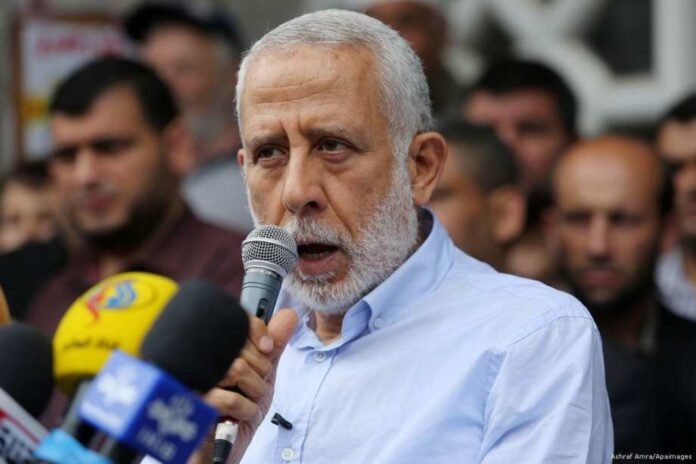
Mohammed al-Hindi, the movement’s deputy secretary-general, said the meetings hosted by Egypt had resulted in an agreement among Palestinian factions to delay the elections as part of broader understandings aimed at addressing national issues and continuing internal dialogue.

Al-Hindi said the Fatah delegation would return to Ramallah to follow up on the understandings reached during the meetings.

He added that a new election date would be determined through consensus among the various Palestinian factions.

According to al-Hindi, participants also agreed to continue national dialogue in the coming period to strengthen Palestinian consensus and address outstanding political issues.

OPINION: The Palestinian election dilemma

Driver wins $76 after ALPR led to bogus traffic stop, drug searches

0
driver-wins-$76-after-alpr-led-to-bogus-traffic-stop,-drug-searches
Driver wins $76 after ALPR led to bogus traffic stop, drug searches

A federal jury in Texas recently ruled in favor of a man who sued Bexar County and its sheriff over allegations that the agency ran what the plaintiff’s attorneys called an “unconstitutional traffic stop scheme” enabled by “AI-powered” license plate readers.

Late last month, plaintiff Alek Schott of Houston was awarded $76, one dollar for each minute that he was detained. (Schott asked for this exact amount as symbolic compensation.)

“After the stop, I filed a complaint with the Sheriff’s Office because I knew what happened to me was wrong,” Schott said in a statement after his win. “The department reviewed it, told me they didn’t see any violation, and said if I had a problem with it, I should sue them. So I did.”

Suspicion

In his civil complaint, Schott outlined a wild tale.

Schott had been driving his pickup truck home from a work trip to Carrizo Springs, in the southwestern part of the state, in March 2022. While in Bexar County, which covers the area around San Antonio, a police officer pulled Schott over for “lane drifting.”

The father of two was questioned by deputy Joel Babb, who admitted later that the stated reason for the traffic stop was bogus.

The real reason for the stop was that Babb had received a tip via a law enforcement WhatsApp group. It came from someone named “Kiki,” who allegedly worked with a federal fusion center in Laredo. Kiki apparently had near real-time access to automated license plate reader data.

According to Babb’s deposition, Kiki told him that Schott’s truck had made a potentially suspicious “one-day turnaround.” That is, Schott drove all the way from Houston, stopped in Carrizo Springs for one night, and then returned home to Houston the next day. (Schott sells oilfield supplies.) To authorities, this was apparently enough to make one look like a smuggling suspect.

After seeing the WhatsApp message, Babb waited for Schott’s vehicle and pulled it over once it passed his location. During the traffic stop, Babb said that he was on the “Criminal Interdiction Unit” looking for “human smuggling, drug smuggling, and all those things like that.”

According to the Institute for Justice, which helped Schott with his lawsuit, the entire stop was a travesty. “Footage from Alek’s own dashcam shows he never drifted lanes,” the group said. “Bodycam footage from the deputy shows Alek gave the officer calm, mundane answers about a run-of-the-mill work trip. Nothing about what he said was suspicious, but the deputy called a drug dog anyway. And moments before the dog alerted by jumping on the truck, the handler’s bodycam shows that he signaled the dog.”

Schott was detained for 76 minutes while his truck was thoroughly searched. Cops found nothing, despite the drug dog’s alert.

Schott eventually sued Bexar County. In late September, he won—the jury gave him the token $76 he requested.

“Money was never what mattered,” his lawyers said. “This was and has always been about the Constitution. IJ will now ask the court to enjoin Bexar County from using baseless traffic stops as a tool for warrantless searches, and will work to enforce the precedent across the state.”

“This is what mass surveillance looks like when it reaches the shoulder of the highway,” Josh Windham, one of Schott’s attorneys, said in a statement. “An AI-powered camera flagged Alek’s plate. An anonymous law enforcement agent decided his completely ordinary trip looked suspicious. And a deputy went out and found a violation that never happened.”

The Bexar County Sheriff’s Office, which touts its use of Flock Safety cameras, declined Ars’ request for comment.

Who watches the watchers?

Longtime critics of license plate readers generally, and Flock in particular, told Ars that scrutiny of this technology is increasing.

“I think this case seems like a pretty quintessential example of what we’re seeing more and more as the public digs into ALPR surveillance: AI tech that vendors sell with pie-in-the-sky promises to improve public safety often face a tough reality check,” Jake Laperruque, deputy director of the Center of Democracy and Technology’s Security and Surveillance Project, wrote in an email to Ars.

“The truth is that ALPRs create serious dangers for Americans’ civil liberties, and if there aren’t sensible guardrails and checks on how these powerful tools are used, they also create serious risks to public safety with drivers being improperly pulled over or stalked by officers abusing the tech.”

Belt and Road paving way for China’s military presence in SE Asia

0
belt-and-road-paving-way-for-china’s-military-presence-in-se-asia
Belt and Road paving way for China’s military presence in SE Asia

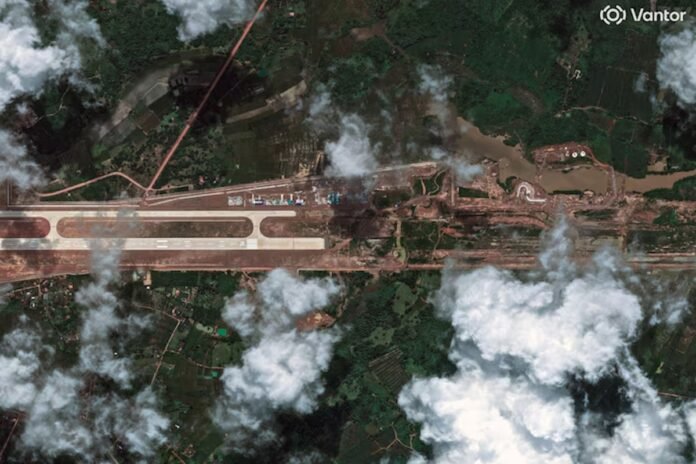
Last week, eight Chinese-made light attack jets sat on a half-finished runway at Ban Keun, flanked by more than two dozen military support vehicles, offering the first aerial glimpse of a new Chinese-Lao military facility north of the Lao capital, Vientiane.

The speed of the buildup and the earthmoving visible around the airstrip in the satellite imagery suggest China may have acquired its first full-fledged military base in Southeast Asia. If so, over a decade of Chinese infrastructure lending likely left Laos too indebted and too dependent to refuse the outpost.

China’s Belt and Road Initiative, which Chinese President Xi Jinping unveiled in Kazakhstan in 2013, has certainly not delivered the economic windfall it promised for Laos, not least from a US$6 billion high-speed rail line connecting the two neighbors that has likely done more for Chinese migration into Laos than mutually beneficial two-way trade.

Rather, the train and other Belt and Road projects have given Beijing something else: leverage. Across Southeast Asia, China has turned economic ties into political and now military power, most overtly in Myanmar and Cambodia but now also in Laos, an impoverished neighbor of just eight million people that is firmly in Beijing’s economic orbit.

China’s Ministry of National Defense said in a September 30 statement that the China-Laos Joint Support and Training Center and a China-Laos Friendship Aviation Academy “officially went into operation on September 29, 2026.”

The Chinese statement said Lao Deputy Prime Minister and Defense Minister Khamlieng Outhakaysone attended the inauguration ceremony, along with a delegation from China’s People’s Liberation Army.

The Chinese ministry said the two sides would jointly maintain and operate the center, which it described as “aimed at helping Laos strengthen the training of its air force pilots.” The statement asserted it is “not directed against any third party” and “contributes to enhancing practical military cooperation as well as promoting regional peace and stability.”

It’s not clear, however, that neighboring Thailand or Vietnam will view the facility the same way. Located about 50 kilometers north of the Lao capital, Ban Keun was an airfield used by the Americans during the Vietnam War era, known as “Lima Site 44.”

Air America, a secretive airline controlled by the US Central Intelligence Agency, used Ban Keun to carry US-backed ethnic minority Hmong fighters from highland areas as well as supplies into remote mountain airstrips, Reuters reported.

Analysts say the new Chinese-funded facility there may not stay modest for long. Alexander Neill, an adjunct fellow at the Pacific Forum in Hawaii, told Reuters the airfield appears engineered to allow a runway extension that “could in future serve larger aircraft, including signals intelligence and electronic-surveillance planes to extend China’s reach into Southeast Asia.”

Diplomats and analysts, meanwhile, will be watching for the introduction of air defenses, fuel and ammunition storage, and surveillance installations, any of which would suggest the base is meant for much more than training.

Laos may have little to no choice but to accommodate China’s commands on the base and potentially others down the line. Chinese state-owned and private companies have financed, built and operate many of Laos’ large hydropower dams, which contribute largely to the small nation’s big power export ambitions.

Upstream, Chinese dams on the Mekong River have altered water flows into Laos and downstream into Thailand and Cambodia. Chinese firms also hold extensive Lao mining concessions, tapping into rich reserves of copper, gold and some rare earth metals. And Chinese capital has turned large stretches of the country into rubber, banana and timber plantations that serve mainly the Chinese market.

The United States and its Western allies have done little to counter China’s spreading influence in Laos beyond working through the Association of Southeast Asian Nations (ASEAN), hoping the bloc can counter Beijing’s pull on Vientiane. ASEAN, however, operates on the twin cardinal principles of “non-interference” and “consensus”, meaning it is ill-suited to any geopolitical rebalancing task.

Cambodia is another version of the same Belt and Road Initiative playbook. China is Cambodia’s largest investor and closest political partner, and years of Belt and Road financing for ports, roads, power plants and special economic zones have deepened Phnom Penh’s economic reliance on Beijing. That dependence has had a military payoff, most visibly at the Ream Naval Base on the Gulf of Thailand.

Fears over China’s presence at Ream first surfaced in 2019, when The Wall Street Journal reported that US officials had seen a draft agreement giving China 30-year use of the base, including the right to post personnel, store weapons and berth warships. Phnom Penh predictably denied it, noting that its constitution forbids foreign bases.

But China began helping to fund a revamp of the facility in 2022, soon after the demolition of a US-funded building on the site in 2020 amid a downturn in bilateral ties on democracy issues and suspended joint military exercises. Chinese warships have since docked there for months at a time.

Ream’s renovation was completed in 2025 with a new pier able to take much larger ships and a dry dock for repairs. Prime Minister Hun Manet inaugurated the base on April 5 of that year, with a delegation from the People’s Liberation Army (PLA) on hand, and said Cambodia had “nothing to hide.”

Within days, China and Cambodia held joint exercises at a China-Cambodia Joint Support and Training Center there. That name is strikingly similar to the one given to the new facility at Ban Keun in Laos, suggesting a Beijing-scripted template: a “joint” training and support center that gives China cover for and a permanent military foothold.

Cambodia insists Ream is open to all friendly nations, and in January 2026 the USS Cincinnati became the first US warship to dock at the upgraded base. But strategic analysts remain skeptical. Having paid for the expansion, they argue, China will continue to enjoy preferential access whatever the constitution says, and Phnom Penh’s hedging looks more like a way to blunt Western criticism than real rebalancing.

The pattern is by now familiar: Beijing finances infrastructure in a Southeast Asian country, the host government denies any quid pro quo and a military presence quietly emerges in the name of joint training.

Myanmar is another ASEAN country where China has made considerable inroads. Beijing’s security planners have long seen Myanmar as a link between China and South and Southeast Asia, and as the one country that can provide safe, relatively easy access to the Indian Ocean and beyond.

The China-Myanmar Economic Corridor, part of the Belt and Road Initiative, includes an already built deep-sea port at Kyaukphyu on the Bay of Bengal and plans for highways and railways linking Myanmar’s coast to China’s southern Yunnan province, and is a vital link in China’s push south.

For decades, the West condemned Myanmar’s junta for human rights abuses but did little constructive to loosen China’s ever-tightening grip on Myanmar. Instead, it was the generals themselves who took the initiative to mitigate Myanmar’s dependence on Beijing.

According to Myanmar army documents seen by Asia Times, the generals viewed dependence on Beijing as a threat to national sovereignty and concluded that Myanmar needed better relations with the West to maintain sovereignty and independence.

That required certain democratic concessions to the West, including freeing political prisoners, allowing press freedom and making way for political parties like Aung San Suu Kyi’s National League for Democracy to contest elections. The NLD won in a landslide in 2015, outpacing the military’s Union Solidarity and Development Party proxy and catapulting Suu Kyi to power as state counselor.  

The West initially cheered this, though Suu Kyi kept an open line to Beijing, especially as Western criticism of her rule mounted over the Rohingya issue. But when the NLD won another landslide in 2020, the generals had had enough and seized power in a February 2021 coup, ending what many had hoped was the start of a new democratic experiment, but which was, in reality, a brief interlude in a long history of direct and indirect military rule.

The West condemned the coup and reimposed sanctions, opening the way for China to become the Myanmar military’s main supporter again, diplomatically and financially. That, in turn, has put the Belt and Road Initiative-driven CMEC back on track, which analysts say is vital to China’s overall strategy for the region, not least by offering an alternative to its shipping vulnerability at the Malacca Strait chokepoint.

Significantly, Myanmar’s military-drafted 2008 constitution forbids the presence of foreign troops from its soil – but China has recently found a way around the ban. A Private Security Service Law that took effect in February 2025 allows foreign security companies to operate in the country.

Because Chinese private security firms have close ties to the state and PLA, their deployments effectively function as a semi-official presence. Under the law, contractors from these security companies are allowed to bear arms. They have arrived mainly to guard the Chinese-built oil and gas pipelines that run over 2,000 kilometers from the Bay of Bengal to Yunnan, along with resource-extraction sites and the Chinese technicians who work there.

While Myanmar may not yet host a facility like Ban Keun, Laos, Cambodia and Myanmar can be seen as successes of the Belt and Road Initiative’s broader strategy of paving the way for regional military inroads, while the US and other outside powers appear neither willing nor able to challenge them.

Shawn W. Crispin contributed reporting from Bangkok.

Michael Douglas Reveals Chilling Words He Heard from Doctor

0
michael-douglas-reveals-chilling-words-he-heard-from-doctor
Michael Douglas Reveals Chilling Words He Heard from Doctor


Michael Douglas is looking back on one of the darkest periods of his life — and the unusual way a close friend helped him face a terrifying stage IV cancer diagnosis.

The 82-year-old Hollywood legend revisits his 2010 cancer battle in his newly released memoir, One Helluva Ride, revealing the fear, anger and uncertainty that followed the discovery of a tumor at the base of his tongue.

Douglas was initially publicly described as having throat cancer. He later clarified that he had actually been diagnosed with stage IV tongue cancer, a distinction that was kept quiet at the time because doctors feared he might require surgery that could dramatically affect his appearance and ability to speak.

For an actor whose voice and face had helped make him one of Hollywood’s biggest stars, the possibilities were frightening.

But amid the grim conversations with doctors and family members, Douglas says writer and longtime friend Shane Salerno reacted in a way almost no one else would have dared.

Instead of offering sympathy, Salerno began sending him deliberately brutal emails.

According to Douglas’ account, one message suggested he probably would not survive because he was “just Kirk Douglas’s son.” Another mocked his beginnings as a television actor, while a third jokingly suggested he would never win an Oscar or defeat cancer.

The messages sound cruel without context, but Douglas understood exactly what his friend was doing.

Rather than treating him as fragile or doomed, Salerno was trying to provoke the famously competitive actor into fighting back.

Douglas’ response made clear that it worked.

“Keep ’em coming,” he fired back, along with an expletive.

The dark humor arrived during an extraordinarily serious moment.

Douglas had been diagnosed in August 2010 after months of medical appointments failed to identify what was causing persistent problems in his throat and mouth. He later recalled that a specialist finally discovered a walnut-sized tumor near the base of his tongue.

By then, the disease was stage IV.

The diagnosis left Douglas contemplating the possibility that his life — and extraordinary career — could suddenly be coming to an end.

Doctors presented him with difficult treatment options. One involved surgery that potentially could have removed part of his tongue and jaw. The other was an aggressive combination of chemotherapy and radiation.

Douglas chose chemotherapy and radiation.

Treatment took a brutal physical toll. He lost significant weight and endured weeks of intensive therapy, but the decision ultimately paid off. Douglas survived the disease and has continued working and making public appearances more than 15 years after his diagnosis.

His recovery is one reason the episode takes on a different meaning in One Helluva Ride, released Oct. 6. Rather than revealing a new health crisis, Douglas is recounting the cancer battle that nearly changed — or ended — his life in 2010.

The ordeal also unfolded during an especially painful period for his family.

Douglas’ oldest son, Cameron Douglas, was in federal prison at the time following drug-related legal troubles. Michael said he deliberately avoided telling Cameron about the cancer at first because his son was already struggling to survive behind bars and stay away from drugs.

Douglas feared adding his own potentially fatal illness to that burden.

“He had enough problems of his own in prison,” Douglas writes in the memoir, explaining that he wanted Cameron focused on staying alive, getting clean and eventually coming home.

But keeping the diagnosis secret became virtually impossible.

Douglas appeared on Late Show with David Letterman in August 2010 and publicly discussed the seriousness of his illness. News of the interview spread quickly, including inside the prison where Cameron was being held.

Cameron eventually learned about his father’s cancer from other inmates and contacted him.

Douglas recalls apologizing for not telling his son himself before explaining that the cancer was stage IV. Cameron was devastated, especially because incarceration left him unable to be with his father while he underwent treatment.

The cancer diagnosis came at a remarkable point in Douglas’ life.

The son of Hollywood icon Kirk Douglas had already spent decades establishing an identity beyond his famous father’s shadow. He starred in movies including Wall Street, Fatal Attraction, Basic Instinct and Romancing the Stone and became one of his generation’s most recognizable leading men.

He also built an extraordinary career behind the camera.

Douglas won an Academy Award as a producer of One Flew Over the Cuckoo’s Nest before later winning the best actor Oscar for his performance as Gordon Gekko in Wall Street.

That history made Salerno’s jokes about Douglas being merely a television actor who would never win an Oscar particularly pointed. They were deliberately absurd attacks on accomplishments Douglas had already achieved — designed, according to Douglas’ telling, to bring out his stubbornness rather than his fear.

More than 15 years later, Douglas is not only able to tell the story himself but has made surviving cancer part of a much larger examination of his life.

One Helluva Ride also explores his complicated relationship with Kirk Douglas, his struggles with drugs and alcohol, his marriages, fatherhood and the highs and lows of a career stretching across more than half a century.

In recent interviews surrounding the memoir’s release, Douglas has spoken openly about surviving stage IV tongue cancer and how the experience changed his priorities.

What once looked like a possible “death sentence” instead became another chapter in a life Douglas now appears determined to document on his own terms.

And the friend who told him he probably wouldn’t make it?

Douglas proved him spectacularly wrong.

Fact-check note: Douglas’ memoir was released Oct. 6, 2026 by Grand Central Publishing. Recent interviews describe his 2010 illness as stage IV tongue cancer, while Douglas previously explained that it was initially presented publicly as throat cancer because of concerns about possible disfiguring surgery. hachettebookgroup.com

President Trump Rules Out Iran Strikes Before November Elections, Citing Progress in Talks

0
president-trump-rules-out-iran-strikes-before-november-elections,-citing-progress-in-talks
President Trump Rules Out Iran Strikes Before November Elections, Citing Progress in Talks


President Donald Trump said Thursday that the United States would not launch new military strikes against Iran before the November 3 congressional midterm elections, citing progress in diplomatic discussions with Tehran despite continuing tensions over Iran’s nuclear program and restrictions on shipping through the Strait of Hormuz.

“We are having productive discussions with the Islamic Republic of Iran,” President Trump wrote on Truth Social.

The US president said Washington would maintain its naval blockade of Iranian oil shipments while negotiations continued.

“We will not be attacking Iran at any time prior to the Midterm Elections to be held in the United States on November 3rd,” he wrote, adding, “IRAN WILL NOT HAVE A NUCLEAR WEAPON!”

The announcement followed reports that the Pentagon was preparing options for renewed large-scale strikes against Iranian military, energy, and nuclear facilities. Axios reported that US Central Command had been instructed to complete preparations for potential operations.

Washington and Tehran have exchanged proposals aimed at ending the conflict, which began February 28 with joint US-Israeli strikes against Iran. A temporary ceasefire agreement reached in June subsequently collapsed as fighting resumed and disputes over control of Hormuz continued.

The strategic waterway, through which roughly one-fifth of global oil supplies passed before the war, has experienced severe shipping disruptions, contributing to higher energy prices worldwide.

President Trump’s announcement helped ease market concerns. Brent crude fell to approximately $103 a barrel Friday after previously climbing above $104 on fears of renewed military action.

The administration also announced additional sanctions Thursday targeting networks and vessels involved in transporting Iranian petroleum, maintaining economic pressure despite the diplomatic opening.

The conflict has become a growing domestic political concern as Republicans prepare for the midterms. A Reuters/Ipsos poll found that 60% of Americans disapproved of President Trump’s handling of the war.

Although the US president has ruled out attacks before November 3, he has left open the possibility of renewed military operations afterward if negotiations fail.

0FansLike
0FollowersFollow
0FollowersFollow
0SubscribersSubscribe
- Advertisement -
Google search engine

Recent Posts