15 C
London
Friday, October 9, 2026
Home Blog

RIP Margaret Hamilton, whose code saved the Apollo 11 Moon landing

0
rip-margaret-hamilton,-whose-code-saved-the-apollo-11-moon-landing
RIP Margaret Hamilton, whose code saved the Apollo 11 Moon landing

Margaret Hamilton, who coined the term “software engineering” and led the development of onboard flight software for NASA’s Apollo program in the 1960s, died last week at the age of 90. A recipient of the Presidential Medal of Freedom in 2016, Hamilton was also immortalized as a LEGO minifig the following year—part of the “Women of NASA” set that also included astronauts Mae Jemison and Sally Ride.

“To say Margaret Hamilton was a pioneer—to say she was ahead of her time—would be a dramatic understatement. She was a software engineer at a time when that field was in its infancy, and she not only developed advanced code herself but also led a team in using that nascent technology to develop one of the most complex systems humanity had ever achieved,” said Olivier de Weck, interim head of the MIT Department of Aeronautics and Astronautics. “The Apollo program still stands as one of our greatest testaments to the power of collaboration, ingenuity, and engineering, and Hamilton was a fundamental contributor to that program’s success.”

Born in 1936 in Paoli, Indiana, Hamilton graduated from Earlham College in 1958 with a degree in mathematics and a minor in philosophy—the latter a nod to her father (a poet) and grandfather (a headmaster). She married her first husband, James Cox Hamilton, that same year. The plan was for her to work until he finished his law degree, after which he would support her through graduate school to earn a PhD in mathematics.

She ended up working for Edward Lorenz, the MIT mathematician who set out to construct a mathematical model of the weather using a set of differential equations representing changes in temperature, pressure, wind velocity, and the like. You’ve probably heard the famous story of how Lorenz kept a continuous simulation running on his LGP-30 computer, and of that fateful 1961 day when he realized that even small differences in starting values could lead to very different outcomes—a sensitivity to initial conditions that is a hallmark of chaos theory, along with strange attractors. You might not have known that it was Hamilton who was responsible for programming the LGP-30.

Computers were still a novelty at the time, and neither Lorenz nor Hamilton had any programming knowledge; they taught themselves. Per a 2019 Quanta article, Lorenz was amused by her unusual methods: For instance, she once bypassed the “clunky debugging process” by rolling the paper tape down the hallway and editing the binary code by hand with a pencil. “I’d poke holes for ones, and I’d cover up with Scotch tape the others,” she recalled. Hamilton moved to another project in 1961, but not before training her replacement: a recent math graduate from Mount Holyoke named Ellen Fetter. Lorenz acknowledged the contributions of both women in his papers.

To the Moon

Hamilton's Official photo for NASA, 1989

Hamilton’s official photo for NASA in 1989.

Margaret Hamilton holds a LEGO figure of ... herself.

Margaret Hamilton holds a Lego figure of herself in 2017.

In 1961, Hamilton moved to the SAGE project at MIT, writing software for a prototype XD-1 computer to aid the US Air Force in searching for possible enemy aircraft. Her first challenge: deciphering a program nobody had managed to get to work, perhaps because the author’s notes were written in Latin and Greek. Hamilton succeeded, noting with amusement that the program even printed out its answers in Greek and Latin. It was during this period that she became interested in the issue of software reliability.

By 1965, Hamilton was all set to go to graduate school as planned when her husband spotted a newspaper ad saying that MIT’s Instrumentation Lab needed people to develop onboard guidance computer software for NASA’s Apollo program. She was the first programmer hired, and the first woman, working on six lunar landing missions from 1969 to 1972. At the time, binary code was stored using copper wires wound around cores. A “1” was a wire passing through a core, and a “0” was a wire bypassing the core. New England textile workers were hired to weave them together into long ropes, earning Hamilton the moniker “rope mother,” since she was responsible for those ropes.

Hamilton would often bring her 4-year-old daughter, Lauren, to the lab on nights and weekends. The child loved pretending to be an astronaut in the simulators, and one day her random button-pressing caused the system to inexplicably crash. Apparently Lauren had typed “P01,” a pre-launch sequence, in the middle of the mission. Hamilton asked NASA if she could add a safeguard to prevent this from happening on an actual mission, but the higher-ups didn’t take it seriously. Then astronaut Jim Lovell actually made that error during the Apollo 8 manned mission to orbit the Moon, causing the navigational data to vanish. Hamilton was called in to retrieve the data, jokingly referring to this as the “Lauren bug.”

By 1968, Hamilton was assistant director in charge of the Command and Service Module team. Hamilton had the idea to incorporate a failsafe into the system software’s “priority display” interface routines, should the onboard guidance computer become overloaded with more tasks than it could handle in real time.

Barack Obama awards the Presidential Medal of Freedom to Hamilton in 2016

President Barack Obama awarded Hamilton the Presidential Medal of Freedom in 2016.

President Barack Obama awarded Hamilton the Presidential Medal of Freedom in 2016. Credit: Public domain

That’s exactly what happened on the historic Apollo 11 mission in 1969. As the Eagle lunar module approached the Moon, Buzz Aldrin entered the codes to display altitude and other relevant data on the screen. The onboard computer started flashing alarms, forcing Mission Control to consider aborting the landing. Hamilton’s fail-safe meant that the computer was prioritizing essential tasks and canceling nonessential ones, and the alarm was to let astronauts know that this was happening. Thanks to Hamilton’s foresight, Eagle still safely landed on the Sea of Tranquility.

As Hamilton herself later recalled in a 1971 letter:

The computer (or rather the software in it) was smart enough to recognize that it was being asked to perform more tasks than it should be performing. It then sent out an alarm, which meant to the astronaut, “I’m overloaded with more tasks than I should be doing at this time and I’m going to keep only the more important tasks”; i.e., the ones needed for landing … Actually, the computer was programmed to do more than recognize error conditions. A complete set of recovery programs was incorporated into the software. The software’s action, in this case, was to eliminate lower priority tasks and re-establish the more important ones … If the computer hadn’t recognized this problem and taken recovery action, I doubt if Apollo 11 would have been the successful Moon landing it was.

The Apollo software she helped develop was added to GitHub in 2015. In 2019, Google marked the 50th anniversary of the Moon landing—and Hamilton’s crucial contribution—by training over 100,000 mirrors at its Mojave Desert solar power farm to create a massive portrait of Hamilton in reflected moonlight.

After the Apollo program ended, the Instrumentation Lab became the independent Draper Laboratory. Hamilton worked there until 1976, when she founded Higher Order Software, based on her work on error prevention and fault tolerance. In 1985, she left the company to found Hamilton Technologies. Its main product is the Universal Systems Language (USL) for developing complex software systems that prioritized error prevention and defensive programming.

Hamilton is survived by her daughter, Lauren Hamilton; her son-in-law, Richard Selesnick; two grandsons; four great-grandchildren; and her siblings John, David, and Kathryn.

ICE Agent on Scene of NYC Shooting Was Posing as Construction Worker, Eyewitness Says

0
ice-agent-on-scene-of-nyc-shooting-was-posing-as-construction-worker,-eyewitness-says
ICE Agent on Scene of NYC Shooting Was Posing as Construction Worker, Eyewitness Says


U.S. Immigrations and Customs Enforcement agents shot a person in New York City on Thursday afternoon, according to police.

The shooting took place around 4 p.m. in Manhattan’s Marble Hill neighborhood, according to a statement from the New York Police Department. The NYPD said the victim was taken to a local hospital and was conscious, but provided no further information about the victim.

Rep. Adriano Espaillat, D-N.Y., told The Intercept that there was a child in the car and that the child is OK, which New York Mayor Zohran Mamdani later confirmed in a statement.

“This afternoon in Marble Hill, a New Yorker was shot by an ICE agent in a residential neighborhood. Early reports indicate agents surrounded him and a 5-year-old child in his car before firing multiple rounds,” Mamdani said. “We believe the child was physically unharmed.”

At a press conference, Espaillat said that he attempted to visit the shooting victim in the hospital, but was prevented from doing so by federal authorities.

“I went to the hospital to see the victim,” Espaillat said, “but we were not allowed by ICE agents to go in the room.”

A neighbor, Iris Rosa, said the shooting happened just as a nearby school was being let out. After hiding in a store for a few minutes, she said she went to look at the scene and said it looked like agents had shot into a car.

The victim, Rosa said, was on the ground bleeding and being held down by the agents. A baby, she said, was in the car and was held by ICE agents until someone picked the child up.

Photos of the aftermath of the shooting, taken by a neighbor and obtained by The Intercept, show apparent government agents in plain clothes and tactical vests pinning a man on the asphalt. Another man in a high-visibility vest is clutching an assault rifle while holding a phone between his cheek and shoulder.

Rosa, the neighbor, said a man with a high-visibility vest appeared to be posing as a construction worker, but as she watched, Rosa told The Intercept, the man took the vest and put it in a nearby vehicle.

ICE agents routinely pose as construction workers in order to stakeout targets for immigrations.

Representatives of Mayor Zohran Mamdani and ICE did not immediately respond to requests for comment.

A spokesperson for the Department of Homeland Security said the shooting occurred during “a targeted enforcement operation.”

“During the incident, an ICE officer discharged his weapon and the criminal illegal alien was injured,” the spokesperson wrote in a statement. “ICE officers immediately rendered aid. The individual is alive and at a local hospital. The FBI and HSI are on the scene. The incident remains under investigation.”

The victim is the latest of at least 25 people to be shot by federal immigration agents this year. In July, after two fatal ICE shootings and a botched arrest in Las Vegas by plainclothes agents wearing hooded sweatshirts, the agency mandated a new dress code for field operations.

New York Gov. Kathy Hochul said she had been briefed on the shooting. “We expect federal authorities to provide a full and transparent accounting of the circumstances surrounding this incident,” she said on X.

“ICE’s violent tactics are a clear danger to all New Yorkers, as today’s shooting in a residential neighborhood demonstrates,” said Murad Awawdeh, the head of the advocacy group New York Immigration Coalition, in a statement. “This incident is another reminder of the unchecked, rampant violence ICE has been spreading throughout our communities.”

This is a developing story and may be updated.

South Korea’s hypersonic leap runs into North Korea’s nuclear wall

0
south-korea’s-hypersonic-leap-runs-into-north-korea’s-nuclear-wall
South Korea’s hypersonic leap runs into North Korea’s nuclear wall

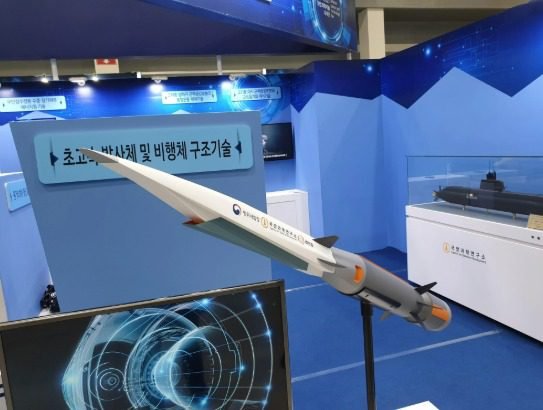
South Korea’s maiden flight test of a domestic hypersonic glide vehicle highlights an accelerating bid to field counterstrike assets capable of bolstering autonomous deterrence against North Korea’s expanding nuclear threat.

This month, multiple media outlets reported that South Korean President Lee Jae-myung oversaw the country’s first test launch of a domestically developed hypersonic glide vehicle, accelerating its drive to field high-speed conventional strike assets that can penetrate regional missile shields.

A booster rocket launched the weapon before it separated at high altitude, then descended and maneuvered both horizontally and vertically at low altitude to strike an offshore test target.

Although the South Korean government did not disclose the exact location, reports indicate the Agency for Defense Development conducted the test from a barge off Taean, approximately 130 kilometers south of Seoul. This trial verified guidance systems and ultra-high-temperature thermal shielding.

The test comes amid rising inter-Korean friction following a September border land mine blast that wounded South Korean soldiers and follows North Korea’s test of an intermediate-range hypersonic missile days earlier.

Seeking to counter North Korea’s evolving arsenal and reduce reliance on the US after scaled-back joint military drills, Lee urged researchers to swiftly deploy the strategic deterrent while also inspecting the military’s bunker-busting Hyunmoo-5 ballistic missile.

Although this hypersonic test sharpens South Korea’s prompt conventional counterstrike posture, deploying such assets directly collides with North Korea’s hardened missile architecture, pre-delegated nuclear doctrine, and South Korea’s capability and hedging limitations.

In an August 2026 Atlantic Council report, Markus Garlauskas and other authors note that non-nuclear hypersonic missiles are a viable counterstrike option to deter and respond to North Korean limited nuclear attacks.

Garlauskas and others recommend assessing posture adjustments that integrate “new US and allied non-nuclear counterstrike options such as hypersonic missiles” alongside South Korea’s heavy penetrating ballistic missiles to strike hardened adversary targets.

In a series of Beyond Parallel reports, Joseph Bermudez Jr. and other writers mention that North Korea operates an estimated 15 to 20 undeclared ballistic missile operating bases across tactical, operational and strategic belts.

Bermudez and others note that these bases are heavily hardened, using underground facilities, protective rock-and-dirt berms, and reinforced drive-through checkout bunkers to withstand airstrikes and artillery fire.

According to Bermudez and others, bases such as Sakkanmol, Sino-ri, and Sangnam-ni serve as dispersal and support hubs to provide conventional and nuclear first-strike capabilities against South Korean, Japanese, and US forces.

Against such threats, Garlauskas and others say that US and South Korean hypersonic strike capabilities aim to expand conventional response rungs between total inaction and regime-ending nuclear escalation.

They point out that fielding South Korean and allied conventional hypersonic and precision penetrators affords the alliance a flexible, survivable counter-battery tool to neutralize North Korean launch facilities and leadership command bunkers without causing catastrophic radiological fallout.

Such counterstrike options fit into a larger doctrine outlined in South Korea’s 2022 Defense White Paper. The document posits a pre-emptive military posture against North Korea, specifying a “Three-Axis System,” primarily spearheaded by the preemptive “Kill Chain” to rapidly detect and neutralize imminent nuclear and missile threats before launch.

The doctrine employs high-power ballistic and tactical surface-to-surface missiles, fifth-generation stealth fighters, and non-kinetic electromagnetic strike assets to destroy mobile launch vehicles and command infrastructure.

This preemptive strike tier is integrated with Korea Air and Missile Defense (KAMD) and Korea Massive Punishment and Retaliation (KMPR), all managed under a specific Joint Chiefs of Staff command structure.

However, the sheer number of North Korea’s mobile missile launchers may pose a significant operational risk, as such numbers can provide strategic depth against attrition while allowing dispersion to complicate enemy targeting and improve survivability.

In August 2024, North Korean Supreme Leader Kim Jong-Un oversaw the delivery of 250 tactical ballistic missile launchers to front-line troops. Operationally, detecting and destroying hundreds of mobile launchers and hardened underground facilities within a compressed launch window could severely strain South Korea’s intelligence and strike capacities.

Highlighting these strains, Chang-Young Lee notes in a September 2025 War on the Rocks article that South Korea’s intelligence, surveillance, and reconnaissance (ISR) capabilities lack a sovereign, persistent space architecture, leaving military planners dangerously reliant on allied data feeds during crises.

Lee notes that while South Korea possesses advanced conventional strike forces, it operates limited airborne assets and only recently began deploying military reconnaissance satellites, forcing it to depend on US and Japanese feeds to track North Korean nuclear sites.

He points out that those dependencies create blind spots if the US reprioritizes assets toward broader regional contingencies.

Furthermore, North Korea has been designing solid-fuel intercontinental ballistic missiles (ICBMs) such as the Hwasong-18 that do not need to be fueled before launch, can be kept in extended readiness, and can be launched with little warning.

The country has also been diversifying its nuclear delivery systems by introducing sea-based options such as the Amnok-class corvette—which could be equipped with nuclear-armed cruise missiles—conventional ballistic missile submarines, potentially nuclear-powered submarines, and possible nuclear-armed underwater drones to provide a second-strike option.

Crucially, preemptive and decapitation threats generate an acute “use-it-or-lose-it” dilemma, incentivizing North Korea to strike first or pre-delegate nuclear launch authority during crises.

North Korea’s leadership is acutely aware of that dilemma, with its September 2022 Law on Nuclear Forces explicitly codifying an automatic, pre-delegated nuclear retaliatory strike mechanism if the regime’s central leadership is incapacitated.

While the law designates the President of State Affairs (a position currently held by Kim Jong-Un) as holding monolithic, decisive command over the arsenal, it establishes that if hostile action endangers the command-and-control apparatus, a nuclear counterstrike is launched automatically and immediately.

Despite those developments, South Korea may be holding its own nuclear option in reserve. A June 2026 report by the National Bureau of Asian Research (NBR) shows low South Korean confidence in US commitment, while also showing high support (70% as of 2024) for having nuclear weapons.

However, the report notes that the discourse does not clearly distinguish between nuclear latency and nuclear hedging.

Nuclear latency is the state of possessing the knowledge, means, and resources to assemble a nuclear weapon without an active political decision or intent to weaponize, whereas nuclear hedging entails maintaining that capability while building the military and diplomatic groundwork to preserve a breakout option should the security situation deteriorate.

The report shows mixed opinions on nuclear latency and hedging in South Korea, with risk-averse positions prioritizing the country’s alliance with the US; bargaining positions that leverage nuclear rhetoric to extract stronger US commitment; entrepreneurial positions seeking space for civilian purposes; and risk-tolerant positions advocating an indigenous nuclear arsenal.

While South Korea’s push to field domestic hypersonic weapons marks an expansion of its conventional deterrence, its long-term security will ultimately hinge on whether it can adequately manage crisis escalation, bridge critical ISR gaps, and temper growing domestic pressure for an independent nuclear arsenal.

5 Palestinians killed, over dozen injured in Israeli attacks across Gaza

0
5-palestinians-killed,-over-dozen-injured-in-israeli-attacks-across-gaza
5 Palestinians killed, over dozen injured in Israeli attacks across Gaza

At least five Palestinians, including a woman, were killed and more than a dozen others injured in Israeli attacks across the Gaza Strip on Thursday, according to medical sources and witnesses, Anadolu reports.

The attacks targeted the Tel al-Hawa neighborhood and the Al-Tawam and Amer Project areas in Gaza City, the Al-Sudaniya area in the northwest, as well as Al-Mawasi in northwestern Rafah and areas around Bani Suheila and northeastern Khan Younis.

A medical source told Anadolu Agency that Palestinian Mohammed Rajab Warsh Agha died from injuries sustained in an Israeli airstrike on a tent sheltering displaced people at the Egyptian Camp in the Al-Tawam area of northwestern Gaza City.

Earlier, a medical source at the Palestine Red Crescent Society’s Northern Field Hospital said two Palestinians had been injured in the strike, one critically.

In another attack, two Palestinians were killed and three others injured, one critically, when an Israeli drone struck a civilian vehicle in the Tel al-Hawa neighborhood of southern Gaza City, a medical source told Anadolu Agency.

The casualties were transferred to Al-Shifa Hospital, according to the source.

READ: Gaza still has no hospital operating at full capacity: Israeli rights group

Earlier Thursday, a Palestinian woman was killed and her husband and two children were injured when Israeli artillery struck their tent in the Amer Project area of northwestern Gaza City.

A medical source at Al-Shifa Hospital identified the woman as Ahlam Mubarak, 30, and said her husband was seriously injured.

Separately, a young Palestinian, Ahmed Khamis Abu Naja, died from injuries sustained in an Israeli airstrike on a vehicle in Gaza City about a week ago.

Witnesses also told Anadolu Agency that Israeli naval forces opened fire and launched shells off the Gaza City coast, while artillery fire targeted the Al-Sudaniya area in the northwestern Gaza Strip.

In southern Gaza, seven Palestinians were injured when Israeli artillery struck a house in the Al-Mawasi area northwest of Rafah, according to medical sources.

Local sources said the Israeli army also demolished residential buildings and other structures in areas where its forces are deployed northeast of Khan Younis.

Witnesses said Israeli forces dropped smoke bombs near the Bani Suheila roundabout east of Khan Younis, causing several tents sheltering displaced Palestinians to catch fire.

As of Wednesday, Israeli violations of the ceasefire agreement had killed 1,467 Palestinians and injured 5,161 others, according to the Gaza Health Ministry.

Since October 2023, more than 74,000 Palestinians have been killed and over 175,000 injured in Israeli attacks on Gaza, while around 90% of the enclave’s infrastructure has been destroyed, according to Palestinian figures.

READ: Over 20,000 students killed in Gaza, West Bank in 3 years of Israeli genocide: Palestinian ministry

Feds get ready to rewrite car headlight rules

0
feds-get-ready-to-rewrite-car-headlight-rules
Feds get ready to rewrite car headlight rules

One of the regulations that make vehicles in the US different from those in Europe or Japan is our headlight rules. They’re laid out in the Federal Motor Vehicle Safety Standards (FMVSS), and changing them is—or used to be—a lengthy, laborious process, which is a major reason automotive lighting technology has lagged in the US. But the current administration says it’s time for “bolstering driver safety, slashing red tape, and embracing new technologies,” so it’s going to start a negotiated rulemaking process to rewrite the regulations to suit 2026.

“Today’s standards do not allow automakers to deploy the latest safety-improving lighting technologies, so we are bringing key experts and stakeholders together to modernize our standards and address potential causes of glare,” the National Highway Traffic Safety Administration’s Jonathan Morrison said. “This collaborative approach will allow us to update outdated regulations, foster innovation, and keep everyone on our roads safer.”

While it is fair to be skeptical of the government’s efforts to streamline bureaucracy, it is also fair to say US headlight regulations really could use an update.

When Ars started covering cars, automakers like Audi, BMW, Mercedes, Toyota, and Volvo were trying to import adaptive headlight technology. At the time, the FMVSS only allowed for “dumb” high- and low-beams, nothing else. Meanwhile, lighting technology evolved, adopting first lasers and then LEDs with addressable pixels that can block out those that would otherwise illuminate oncoming cars.

In 2013, in response to Toyota’s petition, NHTSA said it would start the rulemaking process. It took another five years before a rule was published for consideration; in the interim, the NHTSA was considering adopting Europe’s rules before deciding that if a car with adaptive beam lights “does not have a long preview of another vehicle, such as in an intersection scenario or when two vehicles are oncoming on a curved road, ADB does not have enough time to react to adapt its beam pattern.”

One key difference is how vehicles are regulated. In Europe, cars are homologated for type approval; manufacturers submit examples to authorities for testing to ensure they conform to the rules, and then the authorities approve the car for sale. In the US, OEMs tell NHTSA their cars comply with the FMVSS, or face sanctions if that turns out to be false later. At the time, NHTSA felt that Europe’s glare tests were too subjective for a self-certification regime and decided instead to write its own.

In 2022, that final rule was ready. Since then, cars with active beam matrix LED headlights have gone on sale in the US; Audi’s big new SUVs are a good example, although they are limited in functionality compared with the same technology fitted to European-spec cars.

Among NHTSA’s goals for an updated FMVSS 108 are harmonizing US standards with their global counterparts, updating the rules for technologies like LEDs, ambient light sensors, automatic high beams, and replaceable light sources, improving test procedures for lenses and optics, understanding how to better aim headlights, and making sure that none of this blinds anyone else on the road with glare.

Oil jumps as Middle East supply concerns persist amid shipping attacks

0
oil-jumps-as-middle-east-supply-concerns-persist-amid-shipping-attacks
Oil jumps as Middle East supply concerns persist amid shipping attacks


Oil prices rose nearly 4% on Thursday on persistent worries about supply from the Middle East amid an increase in attacks on shipping in the Gulf and the Strait of Hormuz, while the US cut output as a hurricane menaced offshore production.

Brent crude futures rose $4.14, or 4.13%, to $102.28 a ​barrel by 0900 GMT. US West Texas Intermediate (WTI) crude futures gained $3.71, or 4.2%, to $91.99 a barrel.

IG Chief Market Analyst Chris ​Beauchamp said the pending US storm along with an Axios report that Washington was preparing to ⁠resume major combat operations against Iran were keeping prices above $100 a barrel.

“The US is probably attempting to pile on the pressure in ​a bid to bring Iran to the table, but we can’t discount the possibility of a new round of strikes. Investors certainly ​don’t seem to be taking any chances.”

Reuters was unable to independently verify the Axios report.

Meanwhile, Syria was considering providing military assistance to key ally Saudi Arabia for its escalating conflict with the Iran-backed Houthis in Yemen, a US official and a Syrian military official briefed on the matter said. Options being considered ​include defensive aid or deployment of forces in an offensive capacity to help Saudi-backed Yemeni troops, the sources said.

SUPPLY DISRUPTIONS PERSIST

Prices settled ​lower on Wednesday after the International Energy Agency agreed to accelerate the release of oil stocks and to prioritize diesel supplies as governments seek to tackle ‌record fuel ⁠prices and supply disruptions caused by the Iran war.

However, threats to oil shipping in the Gulf and the Strait of Hormuz, which carried shipments equal to about 20% of global oil and fuel before the war, have increased in October as the Iran conflict enters its eighth month, boosting prices.

Attacks on tankers sailing through the strait last week hit their highest level since the war began, as ​Gulf producers increased exports.

“The frequency ​of Iranian attacks on ships ⁠is now at the highest point since the war began, and likely to intensify further,” said Saul Kavonic, MST Marquee head of energy.

“Constrained product flows, extreme logistics costs and high likelihood of Iranian escalation ​are keeping prices elevated.”

Oil prices are also gaining on supply curtailments as a hurricane moves toward ​offshore production areas ⁠in the US, the world’s biggest oil producer, causing companies to shut their platforms.

Shell and Chevron said on Wednesday they were curtailing offshore operations in the Gulf as Hurricane Isaias approached.

Overall, US Gulf of Mexico oil and gas producers had shut in about 25.08% of current oil production ⁠and 16.37% ​of current natural gas production as of Wednesday because of the storm, according ​to the Marine Minerals Administration.

Inventory data from the US, also the world’s biggest oil consumer, were supportive for prices as crude stockpiles fell by a higher-than-expected amount, ​while diesel inventories declined slightly.

Source:  Reuters

EU weighs safeguard tariffs as China refuses hybrid car limits

0
eu-weighs-safeguard-tariffs-as-china-refuses-hybrid-car-limits
EU weighs safeguard tariffs as China refuses hybrid car limits

Beijing has rebuffed a European Union request to voluntarily cap hybrid car exports to the bloc, raising the prospect of new, steep EU tariffs on Chinese hybrids, which have so far escaped the duties on pure electric vehicles.

China has refused to set quotas on its exports of hybrid electric vehicles (HEVs) and plug-in hybrid electric vehicles (PHEVs) to the EU, the Financial Times reported. Brussels had proposed that Chinese brands limit their share of the bloc’s hybrid market to about 15%, down from more than one-third now.

After Beijing refused, the European Commission is weighing temporary safeguard tariffs that do not require proof of unfair trade practices, the newspaper said, citing two diplomats. Under the plan, a set quota of Chinese hybrids would enter the EU on standard terms, while shipments above that ceiling would face steep extra duties.

Bloomberg reported on Wednesday that Brussels sees the hybrid curbs as a test case that could later be extended to other sectors with large trade imbalances. 

European Trade Commissioner Maros Sefcovic began two days of talks with Chinese Commerce Minister Wang Wentao in Beijing on Thursday (October 8) toward resolving the standoff.

EU leaders will discuss the issue at the European Council summit in Brussels on October 15 and 16, as officials describe the bloc’s trade deficit with China of about 1 billion euros (US$1.15 billion) a day as unsustainable.

In October 2024, the EU imposed five-year countervailing duties of 7.8% to 35.3% on Chinese-made battery electric vehicles (BEVs), on top of its standard 10% import tariff. Beijing responded with anti-dumping measures against European brandy, pork and dairy products.

However, the probe excluded hybrids and left them subject only to the 10% duty. Over the past two years, Chinese carmakers led by BYD and Chery have shifted their export focus toward HEVs and PHEVs, rapidly winning market share in Europe while their BEV shipments faced the extra levies.

HEVs cannot be plugged in and recharge their small batteries through their gasoline engines and braking, while PHEVs carry larger batteries that can be charged from the grid and run on electric power alone over longer distances.

Eurostat data show EU imports of Chinese-made PHEVs rose from 56,706 units in 2022 to 217,764 in the first seven months of this year. Chinese HEV imports jumped from 659 to 160,662 over the same period.

The surge has gathered pace in recent months. EU imports of new Chinese-made HEVs climbed from 23,711 units in May to 32,797 in July, while their monthly value rose from 335.6 million euros to 489.4 million euros, according to Eurostat.

Pro-China commentators assert it is unreasonable to ask Chinese carmakers to limit sales in the EU when European hybrids simply aren’t competitive enough.

“The EU’s so-called voluntary export restraint (VER) tramples on international trade rules, and China will not accept it,” a Zhejiang-based columnist using the pen name “Automobile Observe” says in an article. “Brussels is playing word games. An outright ban or a unilateral tariff hike would break the World Trade Organization’s rules, so it is pressuring China to limit its own exports instead.”

She says China’s PHEV exports to Europe grew 155% year-on-year in 2025, far outpacing the 12% growth in pure electric models, as European consumers voted with their wallets for products that offer the best value for money. She says financial institutions such as Morgan Stanley expected the EU to extend its anti-subsidy duties to HEVs and PHEVs. 

“The EU wants to extend the tariffs on pure EVs to hybrids and give its slow-moving legacy carmakers more time to catch up,” she adds. “Chinese carmakers can simply get around the tariff barriers by setting up assembly plants in Europe.”

On March 4, the European Commission unveiled the Industrial Accelerator Act (IAA), a “Made in Europe” proposal. Publicly funded or subsidized EVs and PHEVs would have to be assembled in the EU, with at least 70% of their non-battery components sourced locally.

The IAA would also screen non-EU investments over 100 million euros in strategic industries, tying approval to technology sharing and local sourcing.

Investors from free trade partners would be exempt, but China is not among them. If the European Parliament and member states approve it, the EV rules would apply from around mid-2027 and the other provisions from January 1, 2029.

“Chinese carmakers won’t be stopped by the EU’s export quotas or tariffs as they are already building cars in the bloc,” a Liaoning-based writer using the pen name “Xingwan” says in an article. “For example, BYD’s plant in Hungary, which involves an investment of 4 billion euros, aims to make 300,000 cars a year and will begin mass production in the fourth quarter of 2026.”

“EU policymaking is far too slow to keep up. Brussels moves on a yearly timetable, while Chinese firms can adjust their production every month,” she says. “Chinese carmakers have spread their capacity across Europe, Mexico and Turkey, so no single measure can stop them.”

However, the columnist admits that the IAA’s 70% local-content rule and its limits on foreign ownership put pressure on Chinese carmakers, whose cars could lose their price advantage if buyers can no longer claim subsidies.

She adds that, over the long run, Chinese carmakers with factories in Europe will be drawn deeper into the EU’s production ecosystem, facing pressure to share their technology and buy more parts from European suppliers.

Japan’s two-decade integration

Japan went through a similar Western market squeeze from the mid-1970s. Britain held Japanese brands to about 11% of its market and France to about 3%. The US pushed Tokyo to curb its car shipments and kept a 25% tariff on imported light trucks.

In 1981, Japan agreed to a voluntary cap on its car exports to the US, which it kept until 1994. In 1991, Tokyo and Brussels agreed that Japan would restrain its car exports to the European Community until the end of 1999.

The curbs expired as planned, as Japanese carmakers kept building plants and hiring workers in the US and Britain. Japan still exports traditional cars and HEVs to the US and the EU.

“China-EU economic and trade relations are mutually beneficial in nature, not a zero-sum competition,” Chinese Foreign Ministry spokesperson Guo Jiakun said on September 18, when asked about the EU’s request that Beijing cap hybrid sales at about 15% of the bloc’s market.

“We hope the EU will honor its commitments to market openness and free trade and observe WTO rules,” he said. “We will closely follow the EU’s moves and do what is necessary to protect the legitimate and lawful rights and interests of our businesses.”

The flood of cheap Chinese EVs into Europe comes as Washington keeps its own door shut. The US imposed a 100% tariff on Chinese EVs in 2024 and has since banned Chinese software and hardware in connected vehicles on national security grounds.

“We don’t allow his cars into the US, and we never did,” US President Donald Trump said in a Fox News interview on September 11, referring to Chinese President Xi Jinping. “Now, if China wanted to come in and open a plant to build their cars here, I’d be okay with it. Japan does it, but they hire our people.”

He added that he did not want Chinese carmakers to build cars cheaply in Mexico and ship them across the border. Ahead of Xi’s September 24 visit to the White House, Ford, General Motors and the United Auto Workers union urged Trump to keep Chinese carmakers out of the US market.

Read: ‘China Shock 2.0’ fuels EU push for united response to Beijing

Follow Jeff Pao on X at @jeffpao3

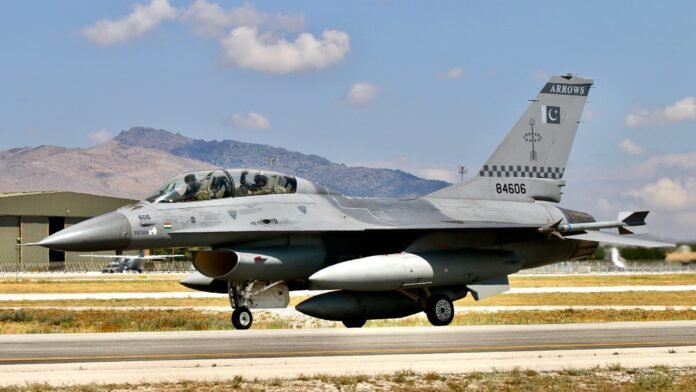
Pakistan Rejects NYT Report on PAF Jets Striking Houthis as ‘Fake and Fabricated’

0
pakistan-rejects-nyt-report-on-paf-jets-striking-houthis-as-‘fake-and-fabricated’
Pakistan Rejects NYT Report on PAF Jets Striking Houthis as ‘Fake and Fabricated’


Pakistan’s Ministry of Information and Broadcasting on Thursday strongly rejected a New York Times report claiming that Pakistan Air Force (PAF) fighter jets were being used in strikes against Yemen’s Houthi rebels, describing the story as “fake and fabricated.” 

In an official fact-check posted on its X account, the Ministry stated, “NYT above-referred story attributing employment of PAF aircraft against Houthis is fake and fabricated. 

International Media houses are again asked to avoid speculative reporting regarding the employment of Pakistan’s Military Forces under the Makkah Joint Defense Agreement. Details of any employment, if necessary, will be given by concerned authorities. Truth Prevails over Falsehood.” 

The Ministry shared a screenshot of the New York Times article, which had cited unnamed Pakistani military officials. 

According to the NYT report published on October 7, a senior Pakistani military official claimed that PAF jets were being employed against the Houthis amid escalating attacks on Saudi Arabia. 

A second official reportedly said Pakistan’s role focused on degrading Houthi drone and missile threats through air support rather than a ground offensive in Yemen. 

The denial comes against the backdrop of the Mecca Joint Defence Agreement between Pakistan, Saudi Arabia, and Turkey. 

Pakistani forces, including air assets, are already present in Saudi Arabia in various support and defensive roles.   

Director-General of Inter-Services Public Relations Lt. Gen. Ahmed Sharif Chaudhry told CNN in an interview Thursday that Pakistani forces are already present in Saudi Arabia in “multiple capabilities and domains,” but declined to provide details about their numbers, roles or possible operations. 

Asked specifically whether Pakistani forces could be involved in operations across the Saudi border into Yemen, Chaudhry did not confirm such involvement, saying the relevant details were classified. 

The Ministry has repeatedly urged international media to refrain from speculative reporting on the possible employment of Pakistani forces under the defence pact. 

Just days earlier, it had also dismissed a Reuters report claiming the deployment of 30,000 to 40,000 Pakistani troops in Saudi Arabia as “speculative.” 

Officials reiterated that any details regarding deployments or operational employment, if required, would be released only by the relevant authorities through official channels. 

The New York Times report had raised questions about whether Pakistan was moving beyond defensive support for Saudi Arabia into more direct involvement in the Yemen conflict.  

Islamabad has historically maintained a cautious stance on the Yemen war while deepening defense cooperation with Riyadh. 

The Pakistan Armed Forces and the Ministry of Foreign Affairs have not issued any further official statement beyond the Information Ministry’s fact-check. 


7-Month-Old Baby Dies After Freak Pony Accident in Minnesota

0
7-month-old-baby-dies-after-freak-pony-accident-in-minnesota
7-Month-Old Baby Dies After Freak Pony Accident in Minnesota


A 7-month-old Minnesota girl has died after a frightening accident involving a pony that authorities say became startled during a wagon ride and kicked the infant in the head.

The Southern Minnesota Regional Medical Examiner’s Office identified the child as Ruth Stutzman, who was born March 1, 2026.

The tragedy unfolded Tuesday afternoon, October 6, at a home north of Harmony, a small community in southeastern Minnesota.

According to the Fillmore County Sheriff’s Office, dispatchers received a 911 call at approximately 1:56 p.m.

Investigators said Ruth and an adult family member were riding in a wagon being pulled by a pony when the animal apparently became spooked.

The pony kicked backward, striking the baby in the head, according to the sheriff’s office.

Emergency crews rushed to the property, including Fillmore County deputies, Harmony Ambulance, the Harmony Fire Department and officers from the Preston Police Department.

Ruth was transported by Mayo One medical helicopter to Mayo Clinic Hospital-Saint Marys in Rochester.

Despite efforts to save her, authorities said the little girl later died from her injuries.

Officials have described the circumstances as part of a preliminary investigation, and authorities have not announced any indication that the incident was intentional.

The Fillmore County Sheriff’s Office and the Southern Minnesota Regional Medical Examiner’s Office are continuing to investigate the child’s death.

The heartbreaking accident occurred only days after another serious incident involving a horse-drawn buggy elsewhere in Minnesota.

On October 1, authorities in Becker County responded to a collision involving a pickup truck and a horse-drawn buggy on County Road 122 in Evergreen Township.

Investigators said the truck and buggy were both traveling west when the pickup collided with the buggy.

Four people riding in the buggy — two 23-year-old adults from Frazee, a toddler and an infant — were injured and taken for medical care.

The pickup driver was not injured.

Authorities said drugs and alcohol were not suspected in that crash, which also remains under investigation.

While the two incidents were unrelated, they occurred less than a week apart and both involved very young children riding in horse-drawn vehicles in rural Minnesota.

No additional information about the circumstances surrounding Ruth’s death had been released as of Thursday.

Trump Mobile hack and apparent lack of FCC authorization raise security alarms

0
trump-mobile-hack-and-apparent-lack-of-fcc-authorization-raise-security-alarms
Trump Mobile hack and apparent lack of FCC authorization raise security alarms

Trump Mobile apparently failed to obtain necessary authorizations to operate the international calling portion of its phone service, Sen. Maggie Hassan (D-N.H.) wrote in a letter to the company today.

Her letter said Trump Mobile also doesn’t appear to have submitted a required plan for fighting robocalls. Trump Mobile’s key business partner, Liberty Mobile Wireless, did make a robocall database filing, but it was not complete, Hassan said.

Hassan’s letter raised questions about Trump Mobile’s security related to a report that hackers stole personal data of 3,615 customers and Trump Mobile’s previous confirmation that a vendor it uses exposed customers’ personal data on the Internet. Hassan alleged that Trump Mobile failed to follow multiple FCC filing rules that are supposed to help ensure the security of mobile services.

“The apparent absence of authorization for Trump Mobile international services raises questions about who is providing or reselling the international telecommunications services advertised by Trump Mobile, the authority under which those services are being provided, and the company’s commitment to complying with requirements designed to safeguard national security,” Hassan told Trump Mobile CEO Patrick O’Brien.

Referring to the recent data breach, Hassan said it’s worrisome that a ransomware group “claimed that when it notified Trump Mobile of the breach, the company responded that ‘[w]e have no team to handle this.’” Trump Mobile also seems to lack a robust customer authentication process and offers “streamlined service activation that can make it easier for scammers to obtain US numbers,” Hassan wrote.

Trump Mobile, which has a trademark and name licensing deal with the Trump family, advertises that its customers can call more than 230 countries and territories. “Yet a search of the FCC’s International Communications Filing System suggests that Trump Mobile does not hold the necessary authorization for these services under Section 214 of the Communications Act of 1934,” wrote Hassan, the top Democrat on the US Congress Joint Economic Committee.

Ties to Liberty Mobile raise questions

Hassan said the authorization process requires disclosure of foreign ownership so the FCC can assess potential national security risks. These FCC filings are required both for carriers that operate their own networks and Mobile Virtual Network Operators (MVNOs) like Trump Mobile, which resell other carriers’ mobile service, Hassan’s letter said.

Hassan’s letter cited a 2012 ruling against a different carrier, in which the FCC said “international telecommunications carriers that fail to obtain Section 214 authority may endanger important public interest considerations involving national security, law enforcement, foreign policy and trade policy.” She also cited the 2021 revocation of China Telecom Americas’ authorization, in which the FCC said that a carrier controlled by a foreign government could be used to “access, monitor, store, disrupt and/or misroute US communications” for the purpose of espionage.

Hassan asked questions about Trump Mobile’s ties to Liberty Mobile Wireless, an MVNO based in Florida. Trump Mobile officials told The Verge in February that Liberty Mobile is the “enabler” and “backbone” of Trump Mobile, and that Liberty Mobile handles much of Trump Mobile’s technical, legal, and financial operations.

Trump Mobile officials’ statements to The Verge indicated that Trump Mobile and Liberty Mobile are run by the same people. Hassan’s letter asked whether Trump Mobile owns, operates, or controls Liberty Mobile.

Missing robocall database filings

Trump Mobile emerged last year, claiming it would sell a phone made entirely in the US. Trump Mobile quickly abandoned that claim but couldn’t deliver the promised phone on time. Preorders shipped nearly a year late, and the phone’s price increased from $499 to $749. Hassan’s letter noted that the phone itself is reportedly “a near exact match for the HTC U24 Pro, a phone launched in 2024 and manufactured in China.”

Hassan said she found evidence that Trump Mobile and Liberty Mobile both failed to submit required information about efforts to verify customer identities. Hassan wrote:

Concerningly, Trump Mobile and Liberty Mobile also seem to have weak scam prevention efforts. They do not appear to have included “a description of their ‘know-your-customer’ [KYC] processes in their robocall mitigation plan,” which is required in annual Robocall Mitigation Database (RMD) filings. Liberty Mobile’s most recent filing does not appear to include KYC information, and a search for Trump Mobile and T1 Mobile LLC, its operational business name, in the database yielded no filings under those names.

Failure to comply with RMD rules can be punished with fines, removal from the database, and an order requiring other phone companies to block the offending carrier’s phone traffic. Hassan quoted an FCC enforcement advisory issued in February of this year, which she said “made it clear that compliance by MVNOs like Trump Mobile and Liberty Mobile is especially important because ‘[r]esellers of voice service that serve end-users are often in the best position to identify customers that are the source of apparently illegal traffic.’”

Senator demands answers

Hassan’s letter asked O’Brien a series of questions related to the data breach, Trump Mobile’s ownership structure, its relationship with Liberty Mobile and other carriers, its systems for subscriber verification, compliance with various legal obligations, its FCC filings, device sales, and which countries supply parts for Trump phones. She requested a response by October 29.

We contacted Trump Mobile, Liberty Mobile, and the FCC today and will update this article if we receive any comments.

FCC Chairman Brendan Carr has proposed stricter Know-Your-Customer rules, but that doesn’t necessarily mean he would be quick to investigate Trump Mobile. Carr is an enthusiastic Trump supporter and backs Trump’s claim of power over historically independent agencies like the FCC. Carr recently refused calls to take action on a complaint that Trump commercials violate laws against using taxpayer funds for propaganda.

0FansLike
0FollowersFollow
0FollowersFollow
0SubscribersSubscribe
- Advertisement -
Google search engine

Recent Posts