7.5 C
London
Thursday, October 8, 2026
Home Blog

Harry and Meghan are ‘Wildly Unhappy’

0
harry-and-meghan-are-‘wildly-unhappy’
Harry and Meghan are ‘Wildly Unhappy’


Prince Harry and Meghan Markle may be back in Britain, but one veteran celebrity journalist says a change of country may not solve the deeper problem hanging over the couple.

Dan Wakeford, the former editor-in-chief of People and Us Weekly and founder of Celebrity Intelligence, has opened up about reports that the Duke and Duchess of Sussex had become “wildly unhappy” with the life they built after walking away from royal duties.

But Wakeford stressed that the provocative description was not necessarily about trouble inside their marriage.

Instead, he said the unhappiness centered on how their post-royal life in America had unfolded.

“It was their life in America they were wildly unhappy about,” Wakeford told royal journalist Tom Sykes during an appearance on The Royalist.

Wakeford said Harry and Meghan had become frustrated that life in the United States had not developed the way they apparently expected.

“They were wildly unhappy with how things had gone, and they hadn’t gone how they expected,” he said.

The comments add another layer to the extraordinary transformation the Sussexes have undergone since stepping back as senior working royals in 2020.

Harry and Meghan eventually settled with their children, Prince Archie and Princess Lilibet, in Montecito, California, where they launched a series of media, business and philanthropic ventures.

Their new life brought enormous opportunities, including high-profile deals with Netflix and Spotify, Harry’s bestselling memoir “Spare” and Meghan’s growing lifestyle ventures.

But the couple also faced setbacks, intense scrutiny and continuing questions over what their long-term roles would look like outside the monarchy.

In August 2026, Harry and Meghan made another dramatic change, returning to Britain with their children after approximately six years based in California.

The couple have retained their California property, however, suggesting their future may not be a simple choice between America and Britain.

Wakeford believes that question cuts straight to one of the biggest challenges facing them.

“The problem with this couple is you have two people with completely different goals in life and geographical, like, homes,” he said.

According to Wakeford, people familiar with Harry and Meghan continue to describe the pair as very much in love.

The difficulty, he argued, is that the things making each of them fulfilled may not always be the same.

Harry, who grew up in Britain and spent much of his adult life supporting military veterans and charitable causes, appears increasingly comfortable being back on British soil.

Since returning, he has continued making public appearances tied to veterans, humanitarian causes and organizations close to him.

Meghan’s professional identity, meanwhile, remains deeply connected to American entertainment, entrepreneurship and lifestyle ventures. The Los Angeles native built an acting career years before marrying Harry and has continued developing commercial projects since leaving royal life.

That difference, Wakeford suggested, could make it difficult for the couple to settle on one vision of their future.

“They’re not on the same page with where they’re going in life,” he said, pointing to questions over whether they belong in England or America and whether their focus should be philanthropy or a more glamorous Hollywood-centered business empire.

Wakeford argued that those competing ambitions can create friction even when two people remain deeply committed to each other.

Sykes made a similar observation, noting that being in love does not automatically mean two people will agree on where or how they want to live.

Wakeford also traced some of the apparent conflict back to Meghan’s brief experience as a working member of the royal family.

He argued that Meghan entered royal life believing she might have more ability to modernize or reshape the institution than was realistically possible.

From Wakeford’s perspective, the rigid structure of the monarchy proved deeply frustrating for her.

“I mean, from the moment Meghan entered into the royal family, it was obvious that she was naive to the understanding of the structure and what was expected from the royal family and felt that she could change that,” he said.

Harry and Meghan officially stepped back from senior royal duties in 2020 before eventually settling in Southern California.

Their departure sparked years of tension with the royal family, fueled by their 2021 interview with Oprah Winfrey, the couple’s Netflix documentary series and Harry’s explosive memoir.

Their return to Britain has now opened an entirely new chapter.

Recent reports indicate Harry has continued attempting to rebuild some royal and family connections, although his relationship with Prince William remains strained.

At the same time, Meghan continues overseeing business ventures that remain closely tied to her American brand and public image.

Wakeford believes those contrasting priorities are at the heart of the uncertainty surrounding the Sussexes.

The question, he suggested, is no longer simply whether Harry and Meghan love each other.

It is whether they can build a life that gives both of them what they want.

For a couple that once crossed an ocean in search of a happier and more independent future, that may now be the biggest challenge of all.

Harry and Meghan have not publicly responded to Wakeford’s assessment of their relationship or ambitions.


The shadow of Balfour: Confronting a century of selective memory

0
the-shadow-of-balfour:-confronting-a-century-of-selective-memory
The shadow of Balfour: Confronting a century of selective memory

As the 2nd November 1917 anniversary of the infamous Balfour Declaration approaches, we are reminded of the fateful promise issued by the British government that would go on to define much of historical Palestine ever since. Eight years after issuing his government’s infamous pledge to establish a Jewish “national home” in Palestine—a promise that would later evolve into today’s Israel—Arthur Balfour visited Palestine for the first time in the spring of 1925. He was met by the Arab population, who constituted the overwhelming majority at the time, with a wave of fierce protests and general strikes. They acutely recognized that what he had set into motion in 1917 was the first structural nail driven by Great Britain—then governing Palestine under an imperial League of Nations Mandate—into the body of Palestine and its indigenous people, initiating a catastrophic process of displacement that continues to our very day.

Standing before the crowds during the dedication of the Hebrew University in Jerusalem, Balfour unblinkingly proclaimed the dawn of a new order, asserting: “A new epoch has begun within the Palestine which came to an end so many hundred years ago.” That grandiose declaration—utterly erasing the living, breathing Arab population looking on—reflected an aristocratic, colonial mindset completely detached from the daily realities of a people who were already beginning to fear for their homeland and their very survival.

The text of the 1917 Balfour Declaration itself exposes the fragility of one of modern history’s most enduring propaganda myths: the tired colonial slogan that Palestine was simply “a land without a people for a people without a land.” If Palestine were truly empty space, the British government would have had no legal or diplomatic reason to include the specific proviso that “nothing shall be done which may prejudice the civil and religious rights of existing non-Jewish communities in Palestine.” By explicitly acknowledging the indigenous Arab majority—even while deliberately reducing them to nameless “non-Jewish communities” to bypass their political and national rights—Balfour’s own language inadvertently refutes the myth of an empty land. For decades, Israel’s propaganda machine relied heavily on this fabrication to justify displacement, though mounting historical scrutiny and modern global awareness have thankfully rendered this talking point increasingly hollow.

From Jerusalem, Balfour moved on to Damascus, where popular demonstrations against him intensified to such a dangerous degree that crowds stoned his hotel, clashes broke out with security forces, and he was forced to cut his visit short.

Unable to safely deliver speeches or complete his itinerary, he had to flee under heavy guard to escape the roaring tide of Arab fury spanning Palestine, Syria, and the wider Levant. 

Today, modern Britain appears to be trying—however belatedly and inconsistently—to reckon with the catastrophic legacy it set into motion over a century ago. For more than one hundred years since the 1917 Declaration, successive UK governments maintained an unyielding double standard: they rigidly guaranteed Israel’s security, military superiority, and diplomatic shielding, while treating Palestinian statehood as a distant abstraction. For decades, London resisted any notion of compelling Israel to accept a genuine Palestinian state, turned a blind eye to the ongoing denial of a common-sense refugee return, and routinely shielded Israeli leadership from international accountability over illegal land confiscations and systematic displacement.

READ: Saudi crown prince meets Syrian president in Riyadh

Yet, under relentless public pressure and the unbearable weight of unfolding humanitarian disasters, that armor of diplomatic complacency is finally beginning to crack. No one expects an overnight revolution in Whitehall, but the underlying posture is shifting. While London historically reduced its commitment to the two-state solution to hollow lip service, modern political reality has forced a deeper reckoning—culminating in formal steps toward Palestinian statehood and a growing willingness to challenge illegal settlements.

At the same time, the domestic political landscape inside the UK has undergone a structural transformation. Within the Labour Party, years of intense grassroots pressure made Palestinian rights a central feature of its election platform, with numerous candidates contesting seats explicitly under pro-Palestinian platforms. Following its return to power and particularly under new prime minister, Burnham, the government took concrete policy measures—banning imports of goods from illegal West Bank settlements, penalizing settlement expansion, and implementing targeted sanctions against extremist settlers—marking a restrictive shift against the colonial enterprise that succeeding governments will find politically difficult to reverse.

This shifting baseline culminated dramatically when the UK Green Party formally adopted a landmark policy position defining Zionism as a form of racism. Passing by a majority vote at its conference last week, the motion explicitly characterizes Zionism as an ethno-nationalist ideology that privileges one group over another through displacement, while backing a single democratic state across historic Palestine, a full arms embargo, and the Boycott, Divestment, and Sanctions (BDS) movement. While drawing sharp divisions with its own parliamentary MPs and fierce condemnation from Jewish community organisations, the move shatters long-standing Westminster taboos, bringing the foundational ideology of the Israeli state directly into the arena of mainstream British political debate.

In today’s language, if modern Britain is truly serious about breaking from its colonial past, it cannot continue to selectively enforce the Balfour Declaration. True accountability demands that Whitehall implement the declaration in its entirety—honoring not just the commitment to a Jewish “national home,” but fulfilling the fundamental moral and legal obligation to safeguard the indigenous population, a duty Britain has evaded for over a century.

Honouring the Balfour Declaration requires adhering strictly to what the document itself explicitly stipulated: that “it being clearly understood that nothing shall be done which may prejudice the civil and religious rights of existing non-Jewish communities in Palestine.”

For over a hundred years, London weaponised the first half of the text while burying the second; true integrity means honoring both.

For over a century, Britain treated its foundational promise to Palestine as fine print to be ignored. Until Whitehall matches its rhetorical shifts with the full weight of its historical obligations—ensuring that Palestinian rights and self-determination are finally realized—the shadow of 1917 will continue to define Britain’s moral standing in the world.

OPINION: How Gaza’s genocide is reshaping US domestic politics

The views expressed in this article belong to the author and do not necessarily reflect the editorial policy of Middle East Monitor.

Fraudster jailed for using 10K bots and AI songs to outstream Taylor Swift

0
fraudster-jailed-for-using-10k-bots-and-ai-songs-to-outstream-taylor-swift
Fraudster jailed for using 10K bots and AI songs to outstream Taylor Swift

After pleading guilty, a 54-year-old North Carolina man, Michael Smith, was sentenced to 18 months in prison for using artificial intelligence to generate songs for a scheme that stole millions from music streaming platforms.

In a press release Tuesday, the US Department of Justice said that Smith is the first American criminally charged with AI-assisted streaming fraud.

First charged in 2024, Smith successfully ran the scheme for seven years without detection.

Starting in 2017, Smith began using fake email accounts and “fraudulently obtained debit cards” to create “thousands of fraudulent accounts” on services including Amazon Music, Apple Music, Spotify, and YouTube Music, the DOJ said. He then employed software that pushed the bots to continuously stream songs that he claimed to own, which the DOJ said were AI-generated.

By his arrest in 2024, he had created “hundreds of thousands of AI-generated songs,” then dispersed billions of automated streams among them so that the bots could avoid raising any red flags by all targeting the same song at once. All together, the fake songs generated substantially more streams than some of the most popular artists today, however. According to the DOJ, in a glaring example from April 2023, Smith’s fake songs were fraudulently streamed 80.9 million times during that month, while Taylor Swift’s entire catalog only got 9.3 million streams during the same time period.

Smith’s streaming fraud didn’t just hurt platforms but genuine artists who share royalty pools on streaming services, the DOJ claimed. By cutting into that pool, Smith reduced royalties across the board. Therefore, on top of serving 18 months in prison, he must forfeit the $8,091,843.64 that he claimed through his AI scheme, the court ruled.

For Smith, the outcome likely feels outsized, as a letter from his lawyers prior to sentencing urged the court that the DOJ should not be punishing one man for the “ills of an industry.” Since this is the DOJ’s first prosecution of this kind, Smith’s legal team suggested officials were making an example of Smith, while knowing that he did not actually pocket $8 million.

Instead of jail time, Smith fought for a probation sentence, noting that he was “profoundly sorry.” He further explained that he’d been offered a job that paid $5,000 per month to do “audio production, mixing, mastering, and recording for a record label.” By requiring jail time, the DOJ would only serve to delay Smith’s ability to pay back the forfeiture, his lawyers suggested.

The DOJ disagreed, though, telling the court that Smith engaged in increasingly deceptive tactics to sustain his artificial streaming, lied to cops when confronted, and needed a stronger sentence for deterrence.

“For years, Smith orchestrated a sophisticated fraudulent scheme that stole millions of dollars in musical royalties from rights holders,” the DOJ said. “The Court should impose a sentence that adequately punishes the defendant for his fraud scheme and sends a message to others that streaming fraud will be met with significant punishment.”

WHO Presses Russia for Information on Siberia Lab Death

0
who-presses-russia-for-information-on-siberia-lab-death
WHO Presses Russia for Information on Siberia Lab Death


The World Health Organization is looking into reports of a second pneumonia case linked to an anti-plague institute in Irkutsk, Siberia, after the Kremlin said there are no plague cases in the region following the death of a lab worker.

The latest reports suggest Russia is not fully cooperating with international health authorities by rapidly sharing its data on the cause of death of a 28-year-old woman who worked at the anti-plague lab, who died Oct. 2.

“WHO has requested further information to clarify the cause of the severe pneumonia, the pathogen that prompted the public health measures, and media reports of a second employee with pneumonia of undetermined cause,” WHO Director-General Tedros Adhanom Ghebreyesus said Wednesday.

“Timely, complete and transparent information sharing under the International Health Regulations is essential to clarify conflicting reports and enable an accurate assessment of potential public health risks,” Tedros said in his social media post.

U.S. President Donald Trump said Tuesday he had a “call scheduled” with Russian President Vladimir Putin “very soon” to discuss the situation.

The WHO is looking into the death of the laboratory worker at the Irkutsk Anti-Plague Institute of Siberia and the Far East. Alexei Tsydenov, head of the neighboring republic of Buryatia, suggested this could be a case of pneumonic plague, as did several initial media reports.

Pneumonic plague is fatal unless patients receive treatment with antibiotics.

Russian authorities have said that “no case of plague had recently been registered in Irkutsk oblast.” Rospotrebnadzor, Russia’s national public health agency, said that the employee died from “pneumonia of unknown etiology” and that no microorganisms associated with her work were identified in the patient sample.

The WHO said Tuesday that “no cause of death had officially been confirmed.”

More than 200 people had initially been placed under observation following the woman’s death. In a statement sent to the WHO Tuesday, Russian health authorities said they conducted an investigation “following the identification of a case of community acquired pneumonia” and that “no pathogens of dangerous infectious diseases were detected among any of the contacts.”

The WHO said they have remained in contact with Russian authorities and “offered technical support.”

The EU and the U.S. are both monitoring the situation closely. The European Commission and countries are set to discuss the case at Wednesday’s Health Security Meeting, according to a Commission spokesperson.

But the U.S. is growing increasingly concerned with Russia’s transparency over the case. U.S. Secretary of State Marco Rubio on Tuesday urged Russia to share more information, adding that it would be “irresponsible” to speculate until then.

The Wall Street Journal reported Wednesday that the U.S. sent a formal diplomatic message to Russia requesting more information about the woman’s death and reminding the Kremlin that it has obligations under international law to share information about disease outbreaks in a timely manner.

The WHO said Tuesday that the risk is “moderate to low” for the Irkutsk region, “low” for Russia and “very low” for Europe.

Bit by bit, the Taliban is losing control of Afghanistan

0
bit-by-bit,-the-taliban-is-losing-control-of-afghanistan
Bit by bit, the Taliban is losing control of Afghanistan

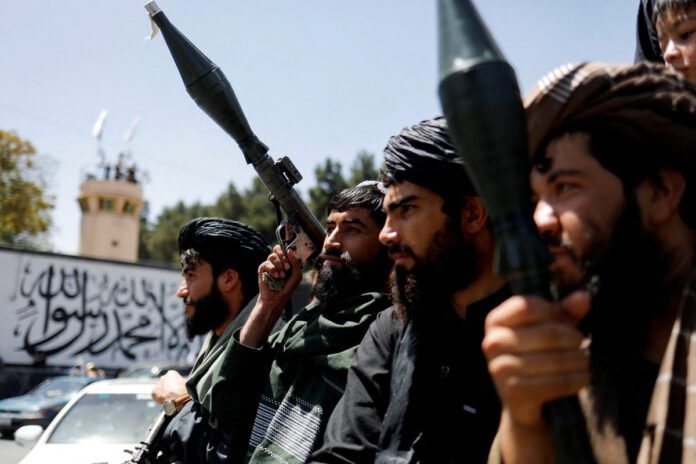
Five years after seizing Kabul, the Taliban’s strongest argument for international acceptance rests on control.

The Taliban governs every provincial capital and faces no conventional army capable of marching on Kabul. It repeatedly cites improved security as proof that Afghanistan’s post-2021 order is settled.

But armed resistance is becoming more geographically dispersed, more organizationally diverse and harder to dismiss as a residual and largely spent northern rebellion. The Taliban may have won Afghanistan’s last war while creating the conditions for its next one.

Resistance is spreading

In the first years after the takeover, the National Resistance Front and the Afghanistan Freedom Front dominated anti-Taliban armed activity, concentrating their operations in Panjshir, Badakhshan, Takhar, Baghlan and other northern and northeastern provinces.

That geography let the Taliban portray the resistance as a narrow remnant of the former republic, rooted mainly among ethnic Tajiks. By 2026, however, the argument has weakened.

The UN secretary-general’s September report recorded 88 attacks claimed by armed opposition groups in 21 provinces between May 1 and July 31. UN investigators verified 55 of them and concluded that the resistance did not significantly threaten Taliban control of territory.

Data compiled for August and September point to a wider pattern. Resistance groups claimed 119 attacks in 26 of Afghanistan’s 34 provinces, across the north, northeast, center, east, south and west. The figures come from the groups themselves, so their casualty claims warrant caution. The geographic spread of the attacks is the more telling indicator.

The Afghanistan United Front claimed 59 operations, the Afghanistan Freedom Front 29, the National Resistance Front 11, the National Independence Front nine and Afghan Green Trend seven. Two newer groups claimed two each. An insurgency can become strategically significant long before it reaches military parity with a state.

The most consequential shift is seemingly in the country’s south. Sami Sadat, a former lieutenant general in the Afghan National Army, leads the Afghanistan United Front, which began its armed campaign in August this year.

The organization claims operations in Helmand, Kandahar, Nimroz, Ghor, Badghis and Faryab. Unlike the predominantly Tajik National Resistance Front and Afghanistan Freedom Front, it has a substantial Pashtun profile and draws heavily on former Afghan security personnel.

This does not amount to an ethnic Pashtun uprising, nor does the Taliban appear close to losing Kandahar or Helmand. But a Pashtun-led force under a former general, claiming operations in the Taliban’s traditional heartland, undercuts the claim that armed opposition is an ethnically narrow northern phenomenon.

If anti-Taliban violence takes root in areas associated with Taliban political and military strength, the resistance begins to look less like a peripheral northern problem and more like a broader national security challenge.

To be sure, Afghanistan’s resistance is far from unified. Ahmad Massoud’s National Resistance Front, Yasin Zia’s Afghanistan Freedom Front, Sadat’s Afghanistan United Front, the Homeland Soldiers Front, the National Independence Front, the Afghanistan Republican Front, the New Horizon Organization and others differ sharply in leadership, ethnicity, objectives and military capacity.

That fragmentation may prevent them from forming a coherent alternative government, but it does not make them strategically irrelevant. Afghanistan could face a decentralized insurgency in which numerous armed networks attack Taliban personnel, installations and administrative institutions, with none strong enough to replace the regime.

Such a conflict would resemble less the country’s earlier nationwide civil wars than a persistent and grinding security burden spread across multiple provinces.

Broken amnesty

The Taliban may also be helping to build the resistance’s manpower. After returning to power in 2021, its leaders announced a general amnesty for former government officials and security personnel.

Later reports repeatedly undermined confidence in the pledge. The UN Assistance Mission in Afghanistan documented hundreds of violations against former officials and security personnel, including extrajudicial killings, arbitrary detention, torture, ill-treatment and enforced disappearances. Reports of killings and abuse continued in 2026.

From the Taliban’s perspective, this is more a counterinsurgency problem than a human rights one. Former soldiers, commandos, police officers and intelligence agents have exactly what emerging armed groups need: weapons training, battlefield experience, knowledge of local terrain, intelligence networks, command experience and familiarity with Taliban tactics.

A credible amnesty might have helped demobilize them. Continued persecution tells them that neutrality offers no protection, and some former security officers have already founded, joined or supported resistance groups. The Taliban thus faces a crucial paradox: repression meant to eliminate potential opponents is giving them stronger incentives to organize and fight.

None of this, of course, means the Taliban is on the brink of collapse. No rival government controls a major city, and no resistance group has the conventional strength to try to seize Kabul. The United Nations continues to assess that armed opposition does not significantly threaten Taliban territorial control.

But territorial control is not the only measure. International observers should watch whether attacks keep spreading, whether new armed groups emerge, whether opposition reaches areas once considered secure and whether trained former security personnel keep joining resistance networks.

The Taliban also faces a separate threat from the Islamic State-Khorasan Province (ISIS-K), a terrorist organization whose ideology and aims differ fundamentally from those of other anti-Taliban resistance groups. To understand the rising resistance phenomenon, the two should not be conflated.

But simultaneous pressure from transnational terrorists and politically motivated Afghan armed opposition groups is forcing the Taliban to confront two distinct security problems at once and is undermining its central claim that authoritarian control has delivered stability.

Control is not stability

This distinction matters for the United States, which must decide how far to engage the Taliban and whether the regime’s territorial control should lead American policymakers to treat the post-2021 order as permanent. This fast-changing and increasingly potent resistance landscape is cause for caution.

The Taliban conquered the state, dismantled the previous US-backed government’s army, monopolized national institutions and eliminated every conventional rival.

Yet political exclusion, repression of former security personnel, violations of the Taliban’s own amnesty and the lack of meaningful peaceful channels for dissent is generating the grievances and abuses from which insurgencies grow.

The evidence does not show yet that Afghanistan is heading toward another nationwide civil war. It does show, however, that the geography of resistance is widening, new armed groups are emerging and former security officers are returning to action as anti-Taliban commanders and fighters.

Opposition activity is reaching beyond the nation’s north, where the Taliban once could claim to contain both the military challenge and the political narrative fueling it.

The Taliban’s vulnerability may therefore lie less in whether it can control Afghanistan today than in how it has exercised that control to date. The Taliban won the last war, but the way it is governing the peace is arguably preparing the ground for the next one.

Saima Afzal is a researcher specializing in South Asian security, counterterrorism and geopolitical dynamics across the Middle East, Afghanistan and the Indo-Pacific. She is a research scholar at Justus Liebig University in Germany.

75 Retired Military Leaders, Legal Experts Reject Claims of Israeli Genocide in Gaza 

0
75-retired-military-leaders,-legal-experts-reject-claims-of-israeli-genocide-in-gaza 
75 Retired Military Leaders, Legal Experts Reject Claims of Israeli Genocide in Gaza 


Seventy-five retired senior military leaders and legal experts rejected accusations that Israel committed genocide in Gaza, arguing in an open letter released by the Jewish Institute for National Security of America that Israel’s conduct does not meet the legal definition of genocide. 

The letter, issued in Washington, DC, on the third anniversary of Hamas’ October 7, 2023, attack, said genocide requires evidence of an intention to destroy a national, ethnic, racial or religious group in whole or in part. The signatories maintained that Israel neither intended to destroy nor destroyed Palestinians as a group in Gaza. 

They also challenged arguments based primarily on Gaza casualty figures, saying genocide is not determined by the number of deaths. The letter questioned figures issued by Hamas, noting that they do not distinguish between civilians and combatants. 

According to the signatories, civilian deaths during combat are not sufficient on their own to establish genocidal intent. Many of those signing the letter commanded US forces against enemies operating among civilian populations, they said. 

The letter cited assessments by some signatories that found the Israel Defense Forces took extensive precautions to reduce civilian casualties, including advance warnings, evacuation instructions, protected corridors and tactical pauses. It said strikes were repeatedly canceled because civilians were present and that Israel Defense Forces (IDF)procedures include legal reviews of targets. 

The signatories also pointed to humanitarian assistance entering Gaza, saying more than 3.5 million tons of food, 48,000 tons of medical supplies and 5,000 tons of baby food were delivered, while Israel supplied up to 15,000 cubic meters of desalinated water per day. More than half a million Gazan children were vaccinated during the war, and about 5,000 Gazans were evacuated for medical treatment abroad, according to the letter. 

While condemning inflammatory statements by Israeli political officials, the signatories argued that comments by politicians outside military decision-making did not represent IDF operations. 

They warned that applying genocide allegations without sufficient factual and legal grounds could encourage future adversaries to deliberately place civilians at risk and affect how American forces are able to operate in future conflicts. 


Pediatricians renew call to ban raw milk as anti-science rhetoric reigns

0
pediatricians-renew-call-to-ban-raw-milk-as-anti-science-rhetoric-reigns
Pediatricians renew call to ban raw milk as anti-science rhetoric reigns

As many doctors are moving ahead with the latest advances of modern medicine—from powerful obesity drugs to breakthrough cancer treatments—pediatricians are being forced to turn back, fighting to maintain advances in children’s health that were hard-won decades ago.

With anti-vaccine advocate Robert F. Kennedy Jr. as health secretary, the American Academy of Pediatrics (AAP) has spent a considerable amount of time and resources in the past year fiercely defending lifesaving vaccinations—safe, routine shots that have saved the lives of millions of children over decades and thwarted untold suffering and disability.

But just this week, The New York Times reported that Ken Paxton, the attorney general of Texas, has opened aggressive investigations against pediatricians simply because they vaccinated their patients. Paxton falsely claims vaccines are part of a “multi-level, multi-industry scheme.” But critics say his anti-vaccine campaign appears more aimed at currying favor with Kennedy, President Trump, and their supporters as Paxton runs for the US Senate.

Meanwhile, the AAP this week had to renew another decades-old stance for children’s health—one against unpasteurized dairy, aka raw milk. Since the early 20th century, dairy producers in the US have briefly heated milk to kill the array of dangerous pathogens that naturally dwell in and around cattle and can easily migrate into milk. The simple intervention of pasteurization contributed to a sharp, “remarkable” drop in infant deaths and illnesses.

But, much like vaccines, a flood of misinformation has eroded trust and understanding of this public health triumph. And again, Kennedy has been among the advocates working to reverse this health victory.

Regressive health

In recent years, state laws have been loosening on raw milk, despite a federal ban on interstate commerce. At least 27 states now allow raw milk sales. In turn, outbreaks from raw milk have increased over the past two decades, the AAP highlights. Nearly half the illnesses in these outbreaks are in children—who are particularly vulnerable to foodborne pathogens.

Last week, ProPublica reported the heart-wrenching story of a 17-month-old girl in California, who nearly died after acquiring E. coli O157:H7 from drinking raw goat milk. She developed a life-threatening complication called hemolytic uremic syndrome that destroys red blood cells and damages blood vessels in the kidneys, which can lead to kidney failure and death. She required intensive care, and although she survived, she will have lasting effects from the ordeal. Her speech and motor development were halted, and she faces long-term kidney problems, requiring monitoring by a nephrologist every six months.

Prior to the girl’s infection, her mother was unaware of the dangers of unpasteurized dairy and trusted information on social media, which falsely claimed that raw milk has health benefits over pasteurized milk. Such myths have persisted despite experts pointing out for years that they are unfounded or plainly false. The girl’s mother now strongly regrets ever giving her daughter the raw milk and has tried to raise awareness of the risk—only to get barred from online groups for speaking out.

In the AAP’s policy renewal this week, pediatricians review all the reasons health experts have, for decades, endorsed consuming only pasteurized dairy products.

“The AAP also endorses a ban on the sale or distribution of unpasteurized milk and milk products throughout the United States,” the AAP wrote. “This recommendation is based on the multiplicity of data regarding the burden of illness associated with consumption of unpasteurized milk and milk products, especially among pregnant people, fetuses and neonates, and infants and young children, as well as the strong scientific evidence that pasteurization does not alter the nutritional value of milk.”

Trump sons-backed firms bank $6 billion plus in Pentagon deals

0
trump-sons-backed-firms-bank-$6-billion-plus-in-pentagon-deals
Trump sons-backed firms bank $6 billion plus in Pentagon deals

Eric Trump and Donald Trump Jr. stand outside of NASDAQ in New York City on August 13, 2025. Photo: Spencer Platt / Getty Images via Common Dreams

An analysis published on Wednesday by ABC News estimated that companies backed financially by Donald Trump Jr. and Eric Trump have so far scored more than $6 billion in contracts from the US Department of Defense.

As ABC documented, many of the investments into the defense firms come through 1789 Capital, a venture capital firm founded by pro-Trump donors in 2023 that brought Trump Jr. in as a partner in 2024.

The most recent example came earlier this week, when President Donald Trump announced a multibillion-dollar funding agreement with AI defense firm Anduril Industries, more than a year after 1789 Capital claimed a $2.5 billion stake in the company.

The ABC report also pointed to Florida-based drone parts manufacturer Unusual Machines securing a deal to supply motors for the US Army last year, mere months after the company named Trump Jr. as an adviser.

Drone company Powerus, which lists both Trump sons as investors, won a purchase order from the US Air Force earlier this year for an undisclosed amount.

Neither Unusual Machines nor Powerus had previously received government contracts prior to getting investments from the Trump brothers.

Vulcan Elements, a rare earths magnet startup that has received funding from 1789 Capital, last year received a $620 million loan from the Pentagon.

Foundation Future Industries, a robotics startup that named Eric Trump as its chief strategy adviser, was awarded a $24 million Pentagon contract in April. Shortly after the deal was announced, the Trump son boasted to Fox Business that it would help the US “win” the race with China to build battle-ready robots.

A spokesperson for the Trump brothers told ABC that they “are experienced business leaders who have built and invested in businesses across a wide range of industries for decades, long before their father first ran for public office.”

“Their investment decisions are based solely on their independent business judgment and personal convictions,” the spokesperson said, “and they do not seek to influence, direct, or participate in any government decision, procurement, award, regulatory action, or other governmental process. Attempts to portray their ordinary investment activities as improper are a deliberate distortion of the facts.”

Critics of the Trump family, however, were quick to accuse the two Trump brothers of engaging in unprecedented corruption.

“Donald Trump and his sons have raked in BILLIONS while Americans struggle to make ends meet,” wrote the social media account for Democrats in the US House of Representatives. “Let’s call this what it is: blatant corruption and an abuse of power.”

Phillips O’Brien, professor of strategic studies at the University of St. Andrews, said congressional Democrats should use the power of the purse to defund the Trump family’s self-dealing.

“Corruption of this kind is why the Democrats need to freeze or cut back US defense spending if they take control of Congress,” O’Brien wrote in a social media post. “If you actually care about US security, funding this is destructive.”

Mark Jacob, former metro editor at the Chicago Tribune, wrote that Pentagon contracts for the Trump-linked firms were “not a coincidence” but “deep corruption that never would have been tolerated before a convicted felon took over the White House.”

Sarah Longwell, a former Republican pollster who left the party over its embrace of Trump, said the deals show that “the president of the United States and his family are insanely, unprecedentedly corrupt.”

– Common Dreams

TP-Link problems in US grow amid FCC router ban and four state lawsuits

0
tp-link-problems-in-us-grow-amid-fcc-router-ban-and-four-state-lawsuits
TP-Link problems in US grow amid FCC router ban and four state lawsuits

TP-Link is facing more legal troubles in the US as Florida and three other states filed lawsuits alleging that it lied to consumers about its connections to China and the risks of its routers being exploited by Chinese state hackers.

The lawsuits were filed yesterday, about six months after the Federal Communications Commission announced a sweeping ban on consumer-grade routers produced wholly or partly outside of the US. Numerous router makers have obtained exemptions to the ban, but the Trump administration so far has not granted one to TP-Link.

Router makers that received exemptions include Netgear, Asus, Adtran, Amazon and its Eero subsidiary, Calix, Nokia, SpaceX’s Starlink division, and others. For now, TP-Link is unable to sell its latest Wi-Fi 8 routers in the US, though models approved before the ban can still be sold.

The state lawsuits claim that TP-Link misled US consumers by telling them its routers are safe. The suits allege that TP-Link committed unfair and deceptive trade acts in violation of the states’ consumer protection laws.

“Chinese state-sponsored hackers exploited TP-Link routers sitting in American living rooms,” Florida Attorney General James Uthmeier said while announcing his lawsuit filed in a Florida county court. Uthmeier said Florida “will not allow families to be misled into handing their personal data to the Chinese Communist Party. We are seeking an injunction, restitution for Florida consumers, and [financial] penalties under Florida law.”

TP-Link criticizes coordinated lawsuits

TP-Link was founded in China but moved its headquarters to California in October 2024 amid investigations into high-profile attacks linked to the Chinese government, including a botnet composed mostly of TP-Link routers. The Florida lawsuit accuses TP-Link of “lying about the safety of its routers and its ties to the CCP,” Uthmeier said.

Uthmeier was one of four Republican state attorneys general to sue TP-Link yesterday. Lawsuits were also filed against TP-Link by Montana, Iowa, and Nebraska.

“The coordinated lawsuits are built on false premises,” said Steve Kovsky, TP-Link’s corporate affairs officer. “They do nothing to advance national security while unfairly penalizing an industry-leading US company.” TP-Link said that for the past few months it has “provided state regulators with clear, verifiable documentation demonstrating two fundamental facts: TP-Link Systems devices sold in the US are manufactured in Vietnam and TP-Link Systems is an independent, US company that is not owned or controlled by any foreign government.”

The four state lawsuits use virtually identical language, starting with this statement explaining the function of routers in simplified fashion:

A router serves as a consumer’s virtual mouth and ears to the Internet. What the consumer says to the Internet comes out of the router’s mouth, and what the Internet says back goes through the router’s ears. If compromised, it can whisper lies in both directions, impersonating the consumer and creating a foothold in the consumer’s own home for state-sponsored cyberattacks.

Florida AG says TP-Link defense is “fiction”

Uthmeier said TP-Link’s claim of splitting from China and building products in Vietnam is “fiction” and that “research and manufacturing remain rooted in China.” The Florida lawsuit said that “final assembly of components sourced from or through China in Vietnam does not cure the company’s deceptive statements and material omissions regarding its Chinese dependence and affiliations.”

The lawsuit cites an April 2025 Bloomberg article that said, “TP-Link confirmed that, aside from components bought in Vietnam that account for 0.5 percent of the total value of inputs to the plant there, all other components are imported from China.”

The lawsuits note that even before the FCC’s general router ban, US government officials “weighed banning the sale of TP-Link routers in the United States as an ‘unacceptable risk’ to national security.” They also point to US government statements about Russian intelligence agency GRU exploiting vulnerabilities in TP-Link routers, and TP-Link’s reported use of a Chinese construction contractor to expand the Vietnam plant.

“TP-Link does not disclose to consumers that it has ongoing ties to a Chinese military contractor, and that its products are vulnerable to exploitation by Russian intelligence and state-affiliated Chinese hackers,” Nebraska Attorney General Mike Hilgers’ office said.

TP-Link’s response to the state lawsuits said the company “complies with US privacy and data protection laws. We perform comprehensive security testing and rely on trusted third-party security labs for additional scrutiny to ensure our products meet the highest security standards and are recognized as among the most secure on the market… We do not, and will not, share customer network data with foreign governments or unauthorized third parties.”

Router ban weighs on TP-Link

Meanwhile, there has been little news on TP-Link’s attempt to secure an FCC exemption from the foreign router ban. In April, TP-Link met with officials in FCC Chairman Brendan Carr’s office. The company told Carr’s staff that it “is investing hundreds of millions of dollars to bring manufacturing and research and development of its consumer routers to the US, in alignment with the FCC’s policy goals,” and “already employs over 550 employees in the United States, including hundreds of engineers working at its California headquarters.”

The FCC process requires each router maker to obtain a determination from the Department of Defense or Department of Homeland Security that its devices do not pose national security risks. Router makers must also submit a “justification on why any foreign manufactured router is not currently manufactured in the United States, including why these foreign sources were selected and whether alternatives exist,” and a “detailed, time-bound plan to establish or expand manufacturing in the United States.”

We asked TP-Link today if there is any update on its application to the FCC. The company responded that its “existing products remain available for sale in the US. For new products, we’re going through the FCC’s standard approval process like other router makers.” TP-Link separately told PCMag last week that “we’re particularly excited to bring our next-gen Wi-Fi 8 portfolio to American consumers” and are “working with regulators to bring these products to users worldwide, so keep an eye on our website for more updates.”

US-based broadband providers are also seeking changes to the router ban so they can more easily upgrade consumer equipment. Cable industry lobby group NCTA petitioned the FCC for a waiver letting Internet providers swap in different components because of supply chain shortages, saying it is needed “to prevent disruptions in the availability of broadband for NCTA members’ customers.”

MEPs Want Employers Held Responsible for Workers’ Mental, Physical Health

0
meps-want-employers-held-responsible-for-workers’-mental,-physical-health
MEPs Want Employers Held Responsible for Workers’ Mental, Physical Health


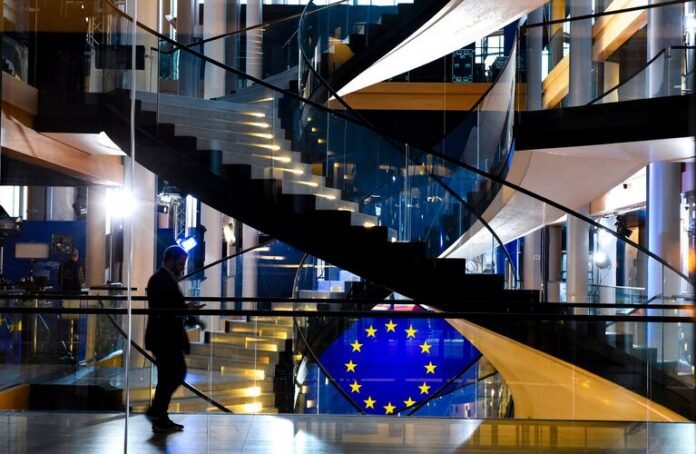
The European Parliament voted Tuesday to urge the European Commission to propose new EU rules aimed at preventing, eliminating or reducing workplace risks that can cause stress, burnout, and mental and physical disorders.

Lawmakers adopted the non-binding legislative initiative report by a vote of 413-210, with 29 abstentions. They said any proposal should be preceded by an impact assessment that includes a review of existing legislation.

Members want employers to be obligated to protect workers’ mental and physical health and ensure safe, dignified working conditions. They also want the Commission and EU countries to explicitly recognize that work-related psychosocial risks can cause occupational diseases.

Violence and harassment

Employers should adopt and carry out policies that define and prohibit violence, harassment, bullying and discriminatory behavior that undermines workers’ dignity or health, lawmakers said. They also called for early detection mechanisms and risk-based prevention protocols for violence by third parties, along with timely support for affected workers.

Risk assessments

Lawmakers recommended that employers regularly assess psychosocial risks, such as excessive workload and high work intensity, and adopt action plans with concrete measures.

They said major restructuring should be subject to a prior risk assessment conducted with workers and their representatives. Examples include teleworking arrangements and the introduction of automated decision-making and monitoring systems.

Employers should ensure that algorithmic management systems do not impose excessive burdens or monitoring on workers, and human oversight must always be maintained, lawmakers said. They also reiterated that workers have a right to disconnect from work.

Returning to work

Workers who have been absent because of psychosocial risks should have a right to a supported and sustainable return, according to the report. Lawmakers recommended that employers create individual return-to-work plans that could include adjustments to working time or work organization and changes to a worker’s tasks or workload.

“Europe must move away from a ‘burnout society’ and help create healthy workplaces where everyone can thrive, especially as the use of digital technologies and AI in the workplace continues to grow,” said Estelle Ceulemans, a Belgian lawmaker with the S&D group who wrote the report. She said the issue also affects public finances “as the cost to society is skyrocketing.”

The Commission has three months to respond. It must either tell Parliament what steps it plans to take or explain why it is refusing to propose legislation along the lines Parliament requested.

0FansLike
0FollowersFollow
0FollowersFollow
0SubscribersSubscribe
- Advertisement -
Google search engine

Recent Posts