12.8 C
London
Wednesday, October 7, 2026
Home Blog

Homeless Shelters Around Phoenix Are Full. His Phone Is the Unofficial Hotline for Struggling Families.

0
homeless-shelters-around-phoenix-are-full-his-phone-is-the-unofficial-hotline-for-struggling-families.
Homeless Shelters Around Phoenix Are Full. His Phone Is the Unofficial Hotline for Struggling Families.

For about a year, Austin Davis’ phone has been flooded with hundreds of pleas for help from across the Phoenix metropolitan area.

A school employee wanted to help a homeless family but couldn’t find space at a shelter. Could Davis pay for a hotel room?

A mother of five living in a storage unit contacted a homeless services organization for help. They told her to call Davis.

A mother panhandling with her six children said passersby gave her Davis’ phone number, telling her he might be able to provide shelter. “I feel like the worst mother in the world,” she texted him.

Nearly every person who’s reached out to Davis, a 26-year-old poet and advocate for homeless people, says they’d first called 211, seeking help through the official channel, only to learn it could be months before they’d get shelter or a housing placement. His phone has become the unofficial hotline for emergency shelter.

Caseworkers, teachers, social workers, police and hospital workers have called and texted to see if Davis can help people without a place to go. Even workers from the official channel — 211 and the Family Housing Hub — have sent people to him.

Davis’ path to becoming the de facto advocate of last resort illustrates how the system set up to care for families who are homeless in Maricopa County is failing them. ProPublica found that calling and visiting the official channel to address family homelessness rarely leads to offers of help, leaving families feeling hopeless.

Volunteers serve warm food and sides to people standing in line under an outdoor shelter.
People gather around a picnic table at an outdoor park event offering free meals and water bottles to attendees.

Davis’ nonprofit, AZ Hugs, holds daily food distributions at “The Hill” for homeless people in Phoenix.

In January, I started coming to Tempe’s Moeur Park, known as “The Hill,” to meet the families Davis was assisting. I was struck by the scene of desperate parents, some of whom had recently been evicted, lost a job or fled domestic violence, surrounding Davis to tell him about their situation. As he listened, he played with their children, always with an energy drink in hand.

The scene was both heartening and disconcerting. Davis was helping families stay off the street, which was good. But why, I wondered, in a county of nearly 5 million people, was a man in a park their best chance at getting help? And why were government agencies and multimillion-dollar nonprofits, some tasked with helping the very same homeless families, sending people to him?

Davis, who runs a small nonprofit called AZ Hugs, is known for working outside the system. With the help of volunteers, he hosts a nightly meal for homeless people at a suburban Phoenix park. This has drawn the ire of Tempe officials and led to 35 citations against him for trespassing and holding picnics without permits. (In 2024, he reached a deal to plead guilty to one permit violation, and the city dismissed the other citations, according to court documents. He’s spent three nights in jail.) In 2025, Davis and two other advocates for homeless people filed a lawsuit against Tempe, alleging it had violated their free speech protections by citing them for feeding people in parks. The city revised its permit ordinance, and Davis withdrew the lawsuit.

In recent months, he has tried to draw attention to what he calls the “family homelessness crisis,” raising money on social media to pay for hotel rooms for families, many with young children, who would otherwise sleep on the street or in their cars. Davis said he cannot assist everyone who asks for help. A much bigger effort is needed, he added, involving nonprofits and local and state officials, but he sees little evidence that it’s happening.

The number of people in homeless families in Maricopa County reached 2,103 this year, its highest level since 2015, according to the latest figures that are compiled locally and reported to the federal government. And those numbers are considered an undercount because the tally is taken on a single night by volunteers who can miss people who are trying to stay out of sight. In late September, nearly 200 families were on the waitlist for shelter in the county. It doesn’t include those who couldn’t get on; were kicked off because they weren’t considered homeless; or those who called 211, found it unhelpful and never called back. (Solari, a nonprofit that runs the statewide 211 line, said that the Family Housing Hub, which is run by UMOM, a nonprofit, sets the eligibility criteria for placement on the shelter waitlist.)

I spoke to more than 30 families searching for shelter. Parents told me they worried how their situation was affecting their children. Research shows homelessness harms children, disrupting brain development and growth and leading to permanent changes in the brain and body.

A close-up view shows a smartphone screen displaying text notifications requesting help with food and shelter.
Davis’ phone is flooded daily with pleas for help from people who are homeless across Maricopa County. Blurred for privacy by ProPublica

Candice Ortiz had tried since spring to find stable shelter and housing. As the months dragged on, she noticed the toll on her 8-year-old son. He was hospitalized for heat exhaustion after spending the day outside, and she worried about the school he missed.

Davis helped Ortiz as she hit dead ends in her search for a place to stay, according to text messages reviewed by ProPublica.

She said she had called 211 over and over, answering the same questions about her living situation, only to receive information she could have found through a simple internet search. She said a worker with the Family Housing Hub told her that since she and her children were sleeping in her car, she wasn’t actually homeless. Another told her the waitlist was full.

In June, she spent the day at a Phoenix cooling center to escape the heat. A representative told her to go to UMOM, which runs an emergency shelter for families. She said she used her last $20 on a rideshare to the shelter. They took her information again and told her she wasn’t “in the system.” Nothing was available. UMOM said to protect the privacy of clients, it does not comment on individual families.

At the end of August, she connected with the Phoenix Rescue Mission, a nonprofit that offers programs for homeless people. The group sent Ortiz to a local apartment complex where she viewed an apartment. Later, a worker with the Phoenix Rescue Mission told her that it ran out of funding to pay for it, text messages reviewed by ProPublica show. Phoenix Rescue Mission did not respond to requests for comment.

UMOM, which during the last fiscal year received more than $7 million in government grants, set aside 23 units of shelter and about a dozen tents for families this summer, as temperatures reached 117 degrees. The program, which is part of the city of Phoenix’s heat relief effort, has helped nearly 300 households so far but is winding down this month.

In early April, Davis had tried to force a broader effort to address the crisis by launching an online petition. It called on Arizona Gov. Katie Hobbs, a Democrat, to declare a state of emergency to address family homelessness. The petition has more than 5,000 signatures.

In June, a volunteer with Davis’ organization attended a fundraiser for Hobbs, who is running for reelection, to hand her a letter about the petition. The letter suggested such a declaration could unlock funding for emergency shelter and recommended making it easier to access the Family Housing Hub.

“I implore you to consider the children who endure extreme heat without safe shelter,” the letter stated. “No parent should be told to wait months for assistance while temperatures reach life-threatening levels.”

A close-up portrait of a man with long hair, round glasses and a gray baseball hat featuring handwritten text.
Davis said he wishes that the leaders of nonprofits and government agencies would do more to address the difficulties faced by families in need of shelter.

Davis told me he hasn’t heard from the governor’s office or from other nonprofit leaders about joining his effort — only from caseworkers hoping he might help them find shelter for families. He wished that other organizations would at least acknowledge the problem and called their silence “frustrating” and a “disservice” to those in crisis.

The governor’s press secretary, Liliana Soto, told me emergency declarations are reserved for natural disasters, and using one to address homelessness might not be appropriate. Soto added that the governor is “deeply aware” of these challenges. Since taking office in 2023, Hobbs has allocated at least $245 million statewide on efforts such as eviction prevention, affordable housing, emergency shelter and rapidly rehousing people experiencing housing insecurity. “The governor believes no family, especially families with infants or young children, should be left without a safe place to go during the summer heat,” Soto said in a statement.

Davis sees families in that situation daily. And he spends most nights pleading for money on social media to put them in hotel rooms. Some nights he has raised thousands of dollars, posting updates at 2 a.m.

In September, Davis’ organization started hosting an overnight shelter at the First United Methodist Church of Mesa. It has space for at least six families. Davis said he knows it’s a Band-Aid on a much bigger problem.

At the church on a recent evening, some families arrived in vehicles packed with their belongings. Inside a large air-conditioned room, a volunteer had set up canopy tents with cots, pillows and blankets. She offered them a dinner of chicken penne pasta.

A mother and her two children showered, then got in their tent and zipped it up. Gradually, others, some with toddlers, settled in, and the room became quiet.

They’d need to be gone by 6 a.m.

A young girl reaches up toward a water bottle set inside a public park hydration station while another child plays nearby.
In Maricopa County, the number of people with children who are homeless is at its highest point since 2015, according to a regional count.

Prosecution of Kosovan leader Hashim Thaçi illustrates the challenges of bringing war criminals to justice

0
prosecution-of-kosovan-leader-hashim-thaci-illustrates-the-challenges-of-bringing-war-criminals-to-justice
Prosecution of Kosovan leader Hashim Thaçi illustrates the challenges of bringing war criminals to justice

More than 27 years after the end of the Kosovo war, former prime minister and president Hashim Thaçi and three other leaders of the Kosovo Liberation Army (KLA) have been found guilty of war crimes and sentenced to up to 25 years in prison. Thaçi and his fellow defendants faced charges including arbitrary detention, cruel treatment, torture and murder committed during Kosovo’s struggle for independence.

The guilty verdict was reached after a three-year trial in the Kosovo Specialist Chambers in the Hague. The special court was set up in 2015 to try crimes committed during the 1998-99 war, in which about 13,500 people were killed or went missing and roughly 1.5 million people were displaced.

So why did it take so long to convict Thaçi and his fellow defendants? Global power politics is often touted as the explanation for delays or even for states’ failure to act on an international arrest warrant. Benjamin Netanyahu appeared at the UN general assembly in September, despite being subject to an International Criminal Court (ICC) arrest warrant for alleged war crimes in Gaza. Similarly, Vladimir Putin met the US president, Donald Trump, for a summit in Alaska in August 2025. He is the subject of an ICC arrest warrant for the aggression against Ukraine.

Both leaders are seemingly safe from international accountability while they enjoy the support of the US.

Yet, the case of the western Balkans illustrates that international prosecutions against heads of states are also affected by national politics within the host states.

War crimes in the Western Balkans

The Balkan wars of the 1990s shocked the international community. Reports of the deliberate targeting of civilians, strategic use of ethnic cleansing, torture and sexual violence prompted an international outcry. In 1993, the UN Security Council set up the International Criminal Tribunal for the former Yugoslavia (ICTY) to prosecute those held to be responsible.

From 1989, the majority Albanian population of the former Serbian province of Kosovo was subjected to discrimination by the Serbian government under Slobodan Milošević and terror by the Serbian army.

In the face of mounting repression and violence by the Serbian authorities, the KLA formed in 1995 to fight back. Diplomatic attempts to solve the question failed and in March 1999, a massive and violent campaign of ethnic cleansing by Serbian forces triggered Nato intervention.

In June 1999, Serbian forces agreed to withdraw from Kosovo, which was placed under international administration by the UN, to be enforced by Nato troops. An interim administration was set up by the UN, which Thaçi joined. His party won the biggest vote share in the first elections in 2007 and he became Kosovo’s first prime minister the following year. In 2016, he became the country’s president but stepped down in November 2020 following his indictment for war crimes.

Fight for justice

In the intervening years, Serbian war crimes were prosecuted by the ICTY – and many of those involved in atrocities, most notably Milošević, found guilty and jailed. But the path toward justice for most victims of KLA crimes took much longer.

This only began in earnest when new evidence was presented by the Council of Europe in 2011 and a special EU-backed war crimes court, the Kosovo Specialist Chambers and Specialist Prosecutor’s Office (KSC), was established.

An elderly man sits in court wearing headphones. Behind him is another man in suit and a man and a woman site in front of him.

Hashim Thaçi was sentenced to 25 years for his part in war crimes committed by the Kosovo Liberation Army in the late 1990s. EPA/Koen van Weel

In early 2020 the KSC started indicting former KLA leaders. This included Thaçi and his fellow leaders. They were charged with acts of imprisonment against 385 individuals, 303 counts of torture, and 96 cases of murder of perceived “opponents” to the KLA. On September 16 2026, the KSC trial panel sentenced the four to lengthy prison sentences, including 25 years for Thaçi.

The power of national politics

Why was this guilty verdict so long in coming? A big reason is the influence of national politics. A country’s ruling elites have the power to undermine prosecutions against themselves and their people. Governments can illegally withhold evidence, refuse to surrender suspects, or block access to territory for investigations.

Serbia shielded its former president, Slobodan Milošević, from arrest, letting him live openly in Belgrade from 1999 to 2001 despite an arrest warrant from the ICTY. The Republika Srpska refused to arrest and handover generals Radovan Karadžić and Ratko Mladić, who were wanted for the Srebrenica genocide, delaying their arrests for 13 and 16 years, respectively.

Such tactics significantly impede speedy trials. In the instances of Milošević, Mladić and Karadžić, it took a change of national government for ruling elites to cooperate and trials to proceed.

In both Serbia and Kosovo, political narratives centred on ethnic and nationalist identities, galvanised popular support for members of ruling elites who face prosecutions. In such an atmosphere, witnesses find it hard, and often unsafe, to come forward and testify.

Witness intimidation, including suspicious deaths, marred ICTY and KSC trials. Thaçi faces a separate trial on witness intimidation later this year.

One of the cornerstones of international criminal law is the need to separate individual criminal accountability from collective responsibility. But this can be hard to sell in societies made up of groups that have experienced victimisation on grounds of their collective identity.

In recent days, Albanian supporters of Thaçi have protested that the prosecution and sentencing were unjust, biased and denigrated the KLA’s struggle to liberate Kosovo. Reassurances by the presiding judge that “the trial was not about the legitimacy of the Kosovo Liberation Army and its goal of an independent Kosovo” have not been enough to quell anger against the court’s decision.

The long road to justice is not only shaped by global power politics but also national politics. If wanted suspects, including Netanyahu or Putin, are to be held to account for international crimes, ruling elites need to change and societal narratives must stop protecting those elites by whitewashing their crimes.

This takes time, persistence – and the acceptance that not everyone will consider, when the court reaches a verdict, that justice has been served.

Missing ambassadors, inexperienced appointees – is Washington dropping the diplomatic ball?

0
missing-ambassadors,-inexperienced-appointees-–-is-washington-dropping-the-diplomatic-ball?
Missing ambassadors, inexperienced appointees – is Washington dropping the diplomatic ball?

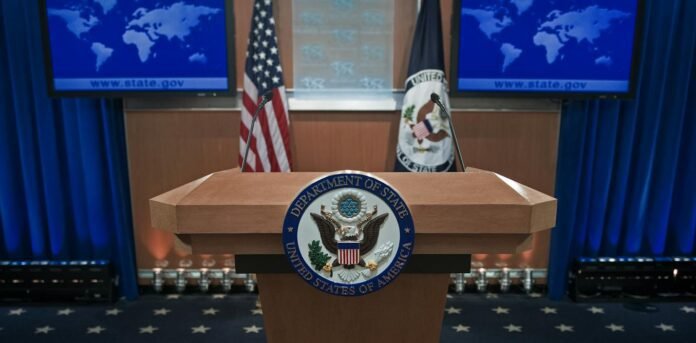
Just before leaving town on Sept. 30, 2026, U.S. senators confirmed 10 new ambassadors. Among those nodded through before Congress closed for an extended midterm recess were new U.S. ambassadors for Kenya, Nicaragua, Malaysia and Kyrgyzstan.

That’s commendable – many of those countries hold geographical or strategic importance for U.S. diplomacy. But it still leaves 92 out of 196 ambassador jobs currently unfilled. In some of those cases, the White House has not sent names to Capitol Hill despite the second Trump administration being a year and a half into the job. In others, the Senate, which is controlled by the same party as the White House, hasn’t acted on the names put forward.

Regardless of the reason, as a former ambassador and an expert in the process of diplomacy, I find the current vacancies concerning. Among those embassies still without a top person in place are key partners for the U.S. – countries that Washington needs to achieve its security, economic and strategic objectives.

What makes these vacancies more worrying, in my view, is that they come amid other concerning developments in the State Department’s staffing of embassies.

Politicizing diplomacy

Chief among them are the high percentage of politically appointed ambassadors relative to positions filled by career diplomats – that is, senior foreign service officers, usually with at least 20 years of diplomatic experience.

Though many countries send politicians abroad as ambassadors, America’s diplomatic service is unique in two ways. The percentage of U.S. ambassadors who are political appointees – those who haven’t followed a career civil service path – is higher than comparative countries across the world. Second, those political appointees are often donors with little to no government experience.

The practice has existed for decades, but in recent years the number of political appointees has increased. During the Obama administration, the percentage of political appointees was around 30%. The number rose to around 40% in the first Trump administration and the subsequent Biden administration.

But in Trump’s second term, some 80% of names the White House has sent to the Senate have been political.

And many of the people Trump has put forward don’t appear to have the credentials usually associated with holding important diplomatic positions. Rather, many are friends, associates or donors to Trump, often with little overseas experience or knowledge of the country they are going to.

Lee Lipton, ambassador to a key ally in the Philippines, is owner of a restaurant in Palm Beach – Florida Benny’s on the Beach – a member of Trump’s Mar-a-Lago Club and a contributor to his political campaign. The ambassador to Greece is Kimberly Guilfoyle, a former Trump adviser and ex-fiancée of his son Donald Jr.

The system of political appointees has always had an element of handing ambassadorships to friends and supporters. But what has changed under Trump is the range of positions now available. In the past, ambassadors to key countries like Chile, Israel, Peru, the Philippines, Turkey and Egypt, for example, have almost always been career appointees. This has changed under the second Trump administration.

Appointing noncareer diplomats to small, faraway nations has the additional problem that the chosen individual may not actually spend much time there. The rule of thumb has long been that ambassadors should spend no more than one month every year back in the United States. But that is compromised if a noncareer diplomat with expansive business ties in the U.S. is selected.

The role of a deputy

A closely related problem is the State Department’s handling of an ambassador’s second in command, their deputy chiefs of missions – DCMs for short – under Secretary of State Marco Rubio.

During Trump’s first term in the White House, politically appointed ambassadors were often encouraged to swap out the DCMs they inherited from their predecessors. It meant going through a long hiring process, leaving those key jobs unfilled for months.

In 2025, the State Department went further, canceling the assignments of senior officers en route to take up embassy jobs and opening a new hiring process.

It formed part of a Trump purge of what many MAGA Republicans characterized as a “deep state” civil service. The reality is that DCMs fill a critically important role in helping political appointees navigate the bureaucracy and implement their policy ideas, as well as raising the occasional reality check.

With more politically appointed ambassadors – some of them with no relevant experience – having an experienced DCM can be the difference between success and failure.

Looking for other friends

When you put all of these personnel changes together, the result is the degradation of what was once seen as one of the most effective diplomatic services in the world.

What makes this potentially more worrying is where the vacancies are. For example, Belarus and Bulgaria, neighbors to Russia and Ukraine, are without U.S. ambassadors. And important countries in the fight against terrorism or in geopolitical hot spots, such as Kuwait, Qatar and Mauritania, are in the same camp.

Other countries still without ambassadors include Indonesia, Southeast Asia’s largest nation and the most populous Muslim-majority country in the world; key Middle East ally Egypt and nuclear power Pakistan; and nations the U.S. needs to help manage inward migration, such us Haiti and Guatemala.

The problem of absent or inexperienced ambassadors goes both ways. It means Washington may not have a capable diplomatic figurehead in these countries to contact in times of need. There are also fewer avenues for host nations to successfully convey messages back to the U.S. administration.

When faced with absent ambassadors, amateurish political appointees and deputy mission chiefs who are very junior or career appointees with short resumes, host countries may conclude that they aren’t seen as important to the U.S. and start looking elsewhere for friends.

And the U.S. has hollowed out its ambassadorial corps at a time when it is facing growing international influence by the likes of Russia, China and Iran – rival nations hoping to capitalize on a perceived diplomatic void left by Washington.

For example, as the U.S. tries to contain Beijing’s influence in the Asia-Pacific region, Fiji, Indonesia and Laos remain without U.S. ambassadors. Similarly, China’s diplomatic relations with Pakistan – a former key security partner for Washington – have grown while the ambassadorial seat in Islamabad remains empty.

And former Soviet states including Georgia, Kazakhstan and Uzbekistan don’t have U.S. ambassadors even as Russia President Vladimir Putin attempts to consolidate Moscow’s regional influence.

In large areas of the world, such as Africa and the Pacific region, and in important areas of policy, the lights may be on in U.S. embassies, but nobody’s home. And that is a distinct problem for national security and strategic interests.

Review: Fine, let’s talk about Digger

0
review:-fine,-let’s-talk-about-digger
Review: Fine, let’s talk about Digger

I found the trailer for Digger intriguing, starring a nearly unrecognizable Tom Cruise and giving off strong Doctor Strangelove vibes. Plus, it is four-time Oscar-winning director Alejandro G. Iñárritu’s (Birdman) first English-language film since 2015’s The Revenant. Those elements quickly moved it near the top of my “must-see” list even if details about the actual plot were lacking. Given Iñárritu’s pedigree, the film seemed poised to be prime Oscar bait.

(Major spoilers appear below the gallery. We’ll give you a heads-up when we get there.)

By now it’s clear that Digger is on track to be one of the biggest bombs of the year instead, racking up a mere $20 million globally its opening weekend, against a $125 million (possibly more) budget. It has sharply polarized critics and audiences alike, with some appreciating Iñárritu’s bold, creative swings and others finding the film practically unwatchable.

Count me among the film’s unabashed champions, even though Digger turned out to be nothing like what I expected. It’s closer to absurdist theater than satire or dark comedy, and it’s not aiming to be the Doctor Strangelove of climate change. This is a film that doesn’t just challenge the viewer; it deliberately keeps the audience off-balance, its excesses pushing the boundaries of one’s patience at times—and then Iñárritu sticks the landing with a savagely moving third act in which the final pieces of his vision fall into place.

That said, it’s also the kind of film destined to irritate, if not outright alienate, a solid faction of the audience. I get why plenty of people dislike Digger so intensely, even if I came to the opposite conclusion.

Iñárritu had the idea for Digger the character shortly after wrapping The Revenant. “I knew who this character was,” he told Variety back in July. “I knew how he spoke, how he survived, how he seduced reality into agreeing with him.” Initially the project was being developed at Netflix with Leonardo DiCaprio as a possible star; Netflix opted to make Don’t Look Up with DiCaprio instead. (Some have compared Digger to Don’t Look Up; apart from a climate theme, they are very different films.) But the idea piqued Cruise’s interest; the actor was a longtime fan of the director. And thus Digger was born.

Beware of Judy

The film opens with Digger waking up to find his decrepit cat, Maggie, at death’s door. His frenetic morning gets worse from there, when there is an explosion at his company’s drilling operation to extract oil in Greenland, thanks to all that methane under the ice. This dislodges an ice shelf the size of Maryland (nicknamed Judy) and sets it on a collision course with the coast of Norway—a disaster that would see massive tidal waves destroying much of the European coast. He conspires with US President Compson (John Goodman) to keep the news from getting out (there’s a small chance it could melt away in the Atlantic instead), thereby delaying any evacuations.

WARNING: Major spoilers below.

crowd of men in suits seated at a table and peering toward the camera

Digger delivers the bad news to the US president and his cabinet.

old man glowering at unwelcome news

President Compson (John Goodman) is mightily displeased.

Then comes the film’s big twist: as Digger and Compson are gazing out into Digger’s garden, the camera pulls back to reveal they are standing on a stage set. Cruise is actually playing an actor, Curtis Markson, who in turn is portraying Digger Rockwell in a satirical play called Fossil Fools. Compson and the others we’ve seen thus far are actors too, and this is the final dress rehearsal before opening night. Curtis is not entirely happy with the creative decisions of the play’s director, Hannah (Sophie Wilde). He’s also worried about his daughter, whose whereabouts are unknown after she boarded a plane from Jamaica with a “Category 6” hurricane brewing.

Digger’s colorful set design is aptly “stage-y,” somewhat reminiscent of a Wes Anderson film, only more faded and worn around the edges. And the director has assembled a terrific cast.

But this is Cruise’s star vehicle, and his performance is phenomenal—on par with 1999’s Magnolia. I’ve always found Cruise rather irritating as an actor, but he’s grown considerably since his Risky Business and Top Gun days. He switches easily between Digger’s loud, swaggering, cartoonish personality and the anxiety-ridden Curtis beset by opening night jitters and growing concern for his daughter. Cruise has received multiple Oscar nominations but never won, and his transformative turn as Digger Rockwell is certainly Oscar-worthy (although the critical backlash could dash those hopes, which would be a shame).

Granted, the play rehearsal segments are dialed to 11, but this is clearly by design. Curtis even echoes several of the criticisms that have been leveled at Iñárritu’s film: the caricatures are too broad, the “jokes” aren’t quite landing, and Hannah seems to be more interested in creating an auteur theater production than a crowd-pleasing comedy. Curtis’ discomfort, and ours, builds to a tense crescendo during Digger’s bombastic speech in front of the European Parliament. Iñárritu has described this 10-minute monologue as the “spine” of the film—apparently he wrote 70 versions—but it’s frankly a little too ham-fisted, even for the play-within-a-film, and goes on a bit too long.

It’s Jesse Plemons’ Kenny who turns out to be the film’s secret heart. We only see Kenny in brief interactions until the final act, when he breaks up Hannah and Curtis’ latest creative argument with a powerful speech of his own. Kenny isn’t just any financial backer; he turns out to be the real Digger Rockwell’s nephew. Kenny confirms what has been hinted throughout: we are 25 years past the devastating events being satirized in the play, and the world is now a dystopian hellscape.

For Kenny, it doesn’t matter whether the play is a comedy, a tragedy, a farce, or something else entirely. It doesn’t matter if it’s historically accurate or particularly funny. That was never the point. Everyone venturing out to the theater on opening night lost loved ones in the global tragedy. His uncle Digger became the avatar of their grief and rage over their ruined lives. Kenny bought the rights and revived Fossil Fools to give people a cathartic outlet in which to mourn that loss—by laughing and cheering through their pain at the final fate of this hated figure.

Digger might boast an A-list star, but it’s not a commercial film by any stretch. Its modest box office take would be considered pretty solid by arthouse standards, if it weren’t for that hefty production budget. (Honestly, that miscalculation is entirely on Warner Bros.) Perhaps if it had been marketed as a quirky arthouse film, critical expectations might have been tempered and the naysayers’ assessments a bit less savage. That said, Iñárritu has always been a staunchly uncompromising director when it comes to his artistic vision. This is the man who made the two-and-a-half-hour, stream-of-consciousness passion project Bardo (2022), after all, which several critics also found rather abrasive and self-indulgent.

Los Angeles Times reviewer Amy Nicholson admitted, “While I don’t entirely love this strange comedy, I’m giddy that it’s lurched into existence.” Well, I do kinda love this prickly, imperfect, audacious film, in large part because I was still pondering its themes and Iñárritu’s objectives several days after the screening. That’s exactly what art is supposed to do. Besides, cinematic history is rife with critical and financial bombs that went on to become beloved cult classics—Ridley Scott’s Blade Runner chief among them. Only time will tell, but I suspect Digger might join their ranks in the future.

How Yemen’s renewed civil war could set the whole region ablaze

0
how-yemen’s-renewed-civil-war-could-set-the-whole-region-ablaze
How Yemen’s renewed civil war could set the whole region ablaze

The Middle East has seen many explosions of violence in recent years. But while the US-Iran war has grabbed the headlines this year, the rapidly escalating conflict between the Houthis and Yemen’s internationally recognized government and Saudi Arabia risks becoming just as consequential for the region.

The complexity of Yemen’s internal conflict cannot be underestimated. The violence is linked to two major regional powers – Iran and Saudi Arabia – as well as the ongoing US-Israel confrontation with Iran over the Strait of Hormuz.

Iran backs the Houthis (also known as Ansar Allah or Partisans of God), while Saudi Arabia supports the Yemeni government (known as the Presidential Leadership Council or PLC). The United States is also standing beside its de facto ally, the Saudis, while Russia and China are aligned with Iran.

And Riyadh’s other regional allies, Turkey and Pakistan, have just agreed to activate their newly signed mutual defence pact and deploy troops to help defend Saudi Arabia if it’s attacked again.

Given how many actors are involved, the conflict could quickly spiral out of control and engulf the entire region, further destabilizing global fuel supplies.

Houthis gaining ground

The US-Iran war has reached a stalemate in recent months. Tehran remains adamant that it controls the Strait of Hormuz, a conduit for 20% of the world’s daily supply of oil and liquefied natural gas before the war.

And US President Donald Trump has been running hot and cold about how to end the conflict. Neither America’s military might, nor its maximum economic pressure, has worked so far.

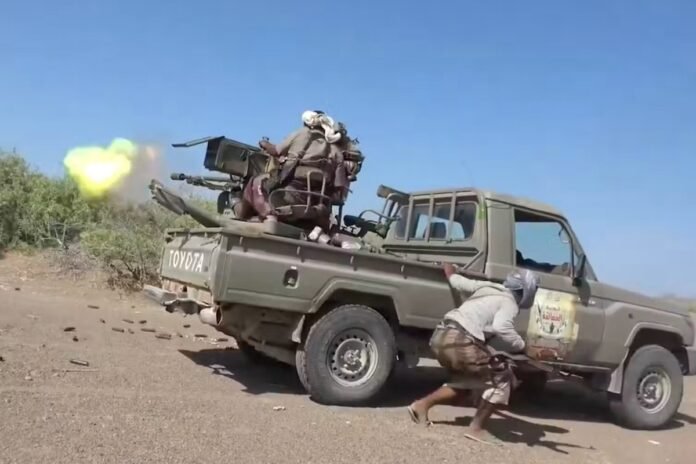
Tehran’s Houthi allies, who control one-third of Yemen (including the capital, Sanaa), entered the fray to support Iran earlier this year. They have tightened their control of the vital Bab el-Mandeb Strait that connects the Red Sea to the Gulf of Aden and the Indian Ocean.

And they have made territorial gains in Yemen since July, with the aim of taking over the whole country, while also attacking Saudi oil facilities, tankers and its main airport in Riyadh.

An attack in recent days again halted the pumping of oil through the East-West Pipeline, which Riyadh has been using to export oil via Bab el-Mandeb since the closure of the Strait of Hormuz.

Yemeni and Saudi forces have launched a counteroffensive in recent days in an attempt to retake all the territory held by the Houthis, raising the specter of a return to a major civil war and a potentially dire humanitarian crisis for Yemenis.

Riyadh has asked Washington to carry out airstrikes on the Houthis, but Trump has declined the request to get actively involved, instead offering support from US intelligence and military analysts in the country.

Trump has been disinclined to expand the US-Iran war and get the US embroiled in another conflict, while the potential for a restart of the war with Iran remains very real.

In addition, despite his denials that he is concerned, Trump will no doubt be aware of the impact of the Iran war on American consumers, with higher petroleum prices and cost-of-living pressures. His Republican Party is urgently trying to shore up its voter base with the midterm elections now just a month away.

Without direct US involvement, Riyadh has looked for support from its new security partners, Pakistan and Turkey. Before committing to deploy military forces to Saudi Arabia this week, the two had appeared cautious about getting involved – caught between the need to support Saudi Arabia and not to offend Iran and its strategic partners, Russia and China.

The renewed conflict has already taken a very heavy toll on the Yemeni people, with more than 800 killed, 3,000 injured and 158,000 displaced. This comes on top of the hundreds of thousands of people who have died since the civil war and Saudi-led intervention began in 2014–15.

These deaths were due to fighting, as well as indirect impacts such as hunger, disease and lack of health services and infrastructure.

Where is this going?

The worse the fighting becomes in Yemen, the greater the impact on the world economy.

While the Strait of Hormuz remains partially inoperable due to the fear of ships being attacked, some tankers have managed to sail through after making deals with Iran’s new Persian Gulf Strait Authority, or with US escort protection.

The US energy secretary, Chris Wright, recently claimed 13 million barrels of crude oil were getting through the strait daily. This has been disputed by Iran.

On October 4, Iran’s parliamentary speaker, Mohammad Bagher Ghalibaf, said the strait will not reopen fully until the US meets Iranian demands. These include a ceasefire on all fronts, the lifting of the US blockade of Iranian ports and the unfreezing of Iran’s assets.

And after the Houthis announced a blockade of Saudi ports and started attacking Saudi-linked ships in the Red Sea in July, disruptions in the global oil supply are expected to worsen.

At the root of this expanding and multi-dimensional crisis is the US war of choice against Iran. If Trump does escalate that conflict with more lethal force, Tehran is prepared to retaliate. It has warned the US’ Arab allies in the Gulf they could be targeted more severely than before.

The overall situation remains very explosive, unless Washington and Tehran pull back from the brink and opt for a negotiated deal. This seems like a distant goal, but it is still possible.

Amin Saikal is emeritus professor of Middle Eastern Studies, Australian National University; The University of Western Australia; Victoria University

This article is republished from The Conversation under a Creative Commons license. Read the original article.

Hamas rejects Guterres’s 7th October statement, accuses him of adopting Israeli narrative

0
hamas-rejects-guterres’s-7th-october-statement,-accuses-him-of-adopting-israeli-narrative
Hamas rejects Guterres’s 7th October statement, accuses him of adopting Israeli narrative

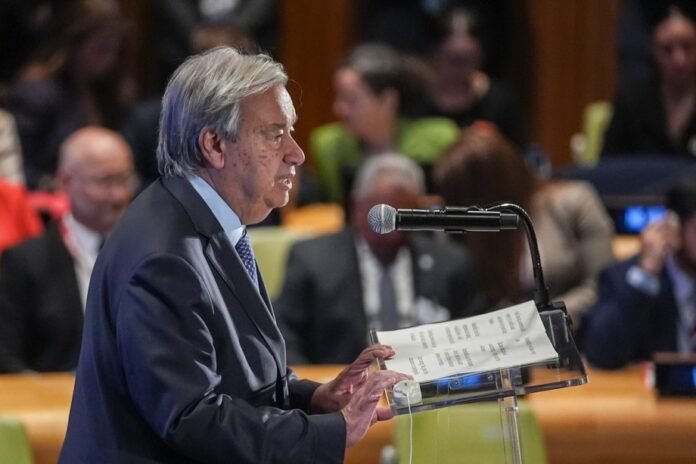
Hamas on Tuesday rejected a statement by UN Secretary-General António Guterres marking the anniversary of the 7th October 2023 attack, accusing him of adopting Israel’s account of events and disregarding the broader context of the Israeli-Palestinian conflict.

In a statement, Hamas said Guterres’s remarks contained what it described as “fallacies proven false” and disregarded established facts, calling on the UN chief to retract what the group termed “fabrications.”

Hamas also criticised what it described as Guterres’s “softened language” in addressing Israel’s military campaign in Gaza and its impact on the Palestinian population.

The statement came in response to remarks by Guterres marking the 7th October anniversary, in which he described the Palestinian-led attack on Israel as “horrific and large-scale terrorism.” He said civilians had been deliberately killed and referred to reports of sexual violence and abuses against Israeli hostages.

READ: Hamas condemns Mladenov’s silence over Israeli actions in Gaza

Guterres also addressed the impact of the subsequent hostilities on Palestinians in Gaza, saying they had endured “unspeakable suffering,” including extensive loss of life, displacement and widespread destruction.

Hamas rejected allegations concerning the deliberate targeting of civilians, sexual violence and mistreatment of Israeli hostages, saying such accounts had been contradicted by human rights reports, investigative journalism and other evidence.

The group described Guterres’s statement as “a reprehensible adoption” of what it called a “false and misleading Zionist narrative,” accusing him of presenting the 7th October  attack without its historical context.

Hamas said the statement disregarded what it described as decades of occupation, blockade and violations against Palestinians, their land, religious sites and prisoners.

The group also argued that Guterres’s remarks denied Palestinians’ right to defend themselves and resist Israeli occupation under international law.

READ: Former Shin Bet chief says he will sue Netanyahu over 7th October accusations

If you’re looking, here’s a “good deal” for NASA and the European Space Agency

0
if-you’re-looking,-here’s-a-“good-deal”-for-nasa-and-the-european-space-agency
If you’re looking, here’s a “good deal” for NASA and the European Space Agency

It’s no surprise that NASA’s new tack toward foreign partnerships—good deals only, please—is challenging preconceived notions of international cooperation in space.

Without a massive budget hike, the US space agency’s emphasis on building a Moon Base and winning a competition for lunar real estate and resources with China will inevitably leave lesser priorities behind.

Gone is the Lunar Gateway, a space station that was to be assembled in orbit around the Moon. For the United States, Gateway was an unnecessary distraction and expense as NASA goes all-in on placing a surface station near the Moon’s south pole.

NASA canceled the Mars Sample Return mission after its budget ballooned beyond $10 billion. It would have cannibalized the agency’s budget for robotic science missions, a funding line already in jeopardy as the Trump administration directs NASA to focus on human spaceflight and a Moon Base.

Before their cancellation, each project involved extensive cooperation with NASA’s international partners, but NASA was the leader on both. It’s not surprising that a nation’s priorities will change with elections and external pressures, like the 21st-century space race taking shape with China.

Going forward, NASA Administrator Jared Isaacman said NASA’s international partners must be ready to make “meaningful contributions,” with greater urgency than before. That means they should offer something that NASA or US companies aren’t already doing and deliver the contribution when NASA needs it.

This is creating friction in some areas. It’s most apparent between NASA and the European Space Agency, which is struggling to find a place in NASA’s Moon Base program after the cancellation of Gateway. Isaacman dismissed an ESA proposal earlier this year to develop a European cargo lander to carry supplies for the Moon Base, a role NASA officials expect US-built landers to fill sooner.

So what does a good deal in international spaceflight look like in the Trump era? Isaacman cited a couple of examples: Japan’s commitment to provide a pressurized rover for astronauts on the Moon and Italy’s agreement to build what will likely be the first habitat for the Moon Base.

The idea for the LISA mission has been around for decades, but the concept was supercharged in 2015 with the first detection of gravitational waves by a ground-based observatory and the launch of LISA Pathfinder, seen here, a satellite to demonstrate that the technologies behind LISA would actually work.

The idea for the LISA mission has been around for decades, but the concept was supercharged in 2015 with the first detection of gravitational waves by a ground-based observatory and the launch of LISA Pathfinder, seen here, a satellite to demonstrate that the technologies behind LISA would actually work. Credit: ESA–P. Sebirot, 2015

Cosmic vibes

Here’s another one. Scientists are in the early stages of developing the Laser Interferometer Space Antenna (LISA) mission, the world’s first space-based observatory for detecting and studying gravitational waves.

As currently envisioned, the LISA mission will be led by the European Space Agency, with significant contributions from the United States. The mission will use three spacecraft flying in a triangle formation in heliocentric orbit, positioned nearly 1.6 million miles (2.5 million kilometers) apart to pick up the faint signals of low-frequency gravitational waves. Launch is scheduled for around 2035.

Gravitational waves are a relatively new area of astronomy, using detectors spread across a wide area, like on a continent or in space, to identify ripples in the fabric of space-time generated by cataclysmic events in the distant cosmos. Beginning with the first detection with a ground-based observatory in 2015, astronomers have used gravitational waves rippling across the Universe to reveal the collisions of black holes and neutron stars in faraway galaxies.

LISA will unlock a new wave of gravitational wave science by spreading its detectors over greater distances. Each spacecraft will carry two free-floating gold-platinum cubes inside an internal Faraday cage that protects them from all external disturbances other than gravitation, canceling out thruster firings, spacecraft vibrations, and the almost imperceptible influences from solar radiation pressure and interplanetary dust.

The LISA spacecraft will literally fly themselves around the free-floating cubes inside them, while inter-satellite lasers will measure the exact distances between the test masses. The laser ranging instruments must be sensitive enough to detect a change in distance smaller than the size of an atom to confirm a gravitational wave detection.

Under its agreement with ESA, NASA is responsible for supplying the transmitters and telescopes for the lasers. NASA will also provide charge management devices to reduce the buildup of electric charge on the proof masses inside each spacecraft and support data analysis on the ground to find the sources of LISA’s gravitational wave detections. Europe will build the spacecraft, launch them, and operate them.

This is exactly the kind of international partnership NASA should hold onto, according to Ira Thorpe, a gravitational wave astronomer at NASA’s Goddard Space Flight Center and leader of the US science team for the LISA mission. NASA isn’t working on its own gravitational wave observatory for space, and the agency likely couldn’t afford it if it wanted to.

An artist’s impression of gravitational waves generated by binary neutron stars.

An artist’s impression of gravitational waves generated by binary neutron stars. Credit: R. Hurt/NASA/JPL-Caltech

“We are in the era of people interested in having good deals, and LISA is a very good deal for the US,” Thorpe said in a recent presentation at the National Academies’ Committee on Astronomy and Astrophysics.

“We are paying for roughly a third [of the mission],” Thorpe said. “We’re getting all of the science data, 100 percent of it. That is very good leverage. We are giving them (ESA) this flagship. If the US was to do LISA on its own, it would probably be a… $3 billion kind of number as an off-the-top-of-my-head guess. For a fraction of that cost, we are getting the same science.”

Thorpe’s $3 billion estimate isn’t far off the mark. ESA approved development of the LISA mission in 2024 with a budget of 1.75 billion euros ($2 billion), but that figure doesn’t include contributions from the United States or individual ESA member states. As it stands today, NASA’s work on the LISA mission is expected to cost around $1 billion, but the agency hasn’t yet established a firm budget commitment.

“I think this is the largest science mission that ESA has attempted to do. Full stop,” Thorpe said. The LISA mission has a long history, with the first concepts for a gravitational wave observatory dating to the 1970.

“It’s bounced back and forth, depending on how the political winds have shifted on both sides of the Atlantic over decades,” Thorpe said. “I think we’re in a very stable system where ESA is going to clearly lead. NASA is going to be the major partner, a critical partner, for the project.”

But the Trump administration injected doubt into LISA’s future last year when the White House proposed canceling NASA’s participation in the project, alongside dozens of other science missions. Congress rejected the cuts and restored funding for fiscal year 2026, but the Trump administration again proposed cancellation in its 2027 budget request released earlier this year.

“That caused some concern in Europe, which I think is understandable,” Thorpe said. “But at the same time, speaking from the project side, we continue to do our work. We try to just focus on making our deliverables. We’ve met every deliverable commitment to ESA so far. We have not missed.”

The full-scale Engineering Development Unit Telescope for the LISA mission, still in its shipping frame, is seen inside a clean room in 2024 at NASA’s Goddard Space Flight Center in Greenbelt, Maryland.

The full-scale Engineering Development Unit Telescope for the LISA mission, still in its shipping frame, is seen inside a clean room in 2024 at NASA’s Goddard Space Flight Center in Greenbelt, Maryland. Credit: NASA/Dennis Henry

Powerful friends

Congress is expected to continue funding LISA, which has powerful patrons on Capitol Hill and was one of a handful of future NASA science missions with a specific funding line in Congress’s appropriations bill for 2026.

Sen. Chris Van Hollen (D-Md.), whose constituency includes NASA’s Goddard Space Flight Center leading the US contribution to LISA, is the top Democrat on the Senate subcommittee responsible for writing NASA’s budget. Van Hollen could take over as chairman if Democrats win control of the Senate in this year’s midterm elections. Across the Capitol, Rep. Glenn Ivey (D-Md.), whose district also includes Goddard, sits on the corresponding subcommittee in the House.

“I think we’re in very good shape going forward,” Thorpe said.

The NASA official overseeing all of the agency’s astrophysics missions is Shawn Domagal-Goldman. Despite the White House’s attempt to end NASA’s contribution to the LISA mission, the 2026 budget passed by Congress and subsequently signed into law by President Trump should signal to ESA that Washington supports the project.

“Something this complex is always challenging, but it’s why it’s important that we reaffirm our commitment with the funding that we have in the FY ’26 appropriations bill,” Domagal-Goldman said. “As long as we have a continuing resolution or anything at our current funding levels, we will maintain our commitment to the LISA mission.”

“I’m really happy for that because when LISA launches, it’s going to answer some of these other big questions that you can only do with a space-based gravitational wave observatory,” he said.

LISA’s scientific pursuits include investigating the origins of black holes and galaxy formation. It could potentially be sensitive enough to detect gravitational waves originating shortly after the Big Bang, allowing scientists to test the theories about the birth of our Universe, according to NASA.

“These are propagating disturbances in space-time,” Thorpe said of gravitational waves. “They can carry energy. They can carry momentum, and I think most interesting for astronomers, they can carry information about the systems that produce them, and we can use them to understand the Universe.”

Physicists will use detections from LISA to test Einstein’s general theory of relativity. Some of the most cataclysmic events in the cosmos, such as mergers of supermassive black holes, should produce a very specific gravitational wave signature, according to general relativity. LISA will be more sensitive to lower-frequency gravitational waves than ground-based observatories, like LIGO, corresponding to the kind of waves scientists expect to be generated by the most massive black holes.

“GR gives us an exact prediction for what this waveform would look like, so any small deviation would give you some hint as to what might be going on,” Thorpe said. “I like to think if GR is going to break—and I don’t generally like to bet against Einstein—but if it is going to break, these are the kinds of places where it may break down.”

Gravitational waves are ripples in space-time produced by the acceleration of very massive objects, such as black holes coming together and merging. Different objects in space produce gravitational waves of different timescales, ranging from milliseconds to billions of years. Some of these waves can only be observed from space.

Gravitational waves are ripples in space-time produced by the acceleration of very massive objects, such as black holes coming together and merging. Different objects in space produce gravitational waves of different timescales, ranging from milliseconds to billions of years. Some of these waves can only be observed from space. Credit: European Space Agency

Another joint science mission between NASA and ESA has, at least so far, survived the White House’s budget ax. NASA has long been on the hook to provide the launch for Europe’s Rosalind Franklin Mars rover, along with a science instrument and retrorockets for the craft that will deliver it to the Martian surface. The Trump administration sought to cancel NASA’s role in the mission, but funding approved by Congress last year was enough for NASA to finally book a launch for Europe’s first Mars rover on a SpaceX rocket in 2028. Notably, Rosalind Franklin is currently the only future Mars rover with any NASA involvement.

Questions remain about NASA’s role in other joint missions with ESA. The New Athena X-ray observatory, scheduled to launch in the late 2030s, is supposed to be the largest X-ray telescope ever built, a successor to NASA’s Chandra X-ray Observatory, still operational after launching in 1999. As with LISA, New Athena was conceived as a European-led mission with major support from NASA.

Domagal-Goldman said NASA is “fully engaged” with ESA on the New Athena mission and remains “fully committed” to the partnership. But New Athena didn’t get a specific funding callout in Congress’s 2026 budget for NASA.

The chances of a major US contribution to ESA’s next mission to Venus, named Envision, are less assured. NASA has its own Venus missions in the pipeline, and although the US space agency has not officially announced that it is pulling out of the Envision partnership, ESA is moving ahead with contracts to begin developing a European-made radar mapping instrument for the Envision orbiter, which was previously supposed to be built at NASA’s Jet Propulsion Laboratory in California.

As NASA’s support wavered, ESA was on the clock to decide on Envision’s radar because the mission is slated for launch in 2031. With Envision, at least, ESA is ready to strike out on its own.

Paramount-Warner Bros merger – How the deal could affect you

0
paramount-warner-bros-merger-–-how-the-deal-could-affect-you
Paramount-Warner Bros merger – How the deal could affect you


It has been months in the making but Paramount Skydance has finally completed its $110bn (£82.8bn) merger with Warner Bros Discovery.

The deal welds two legacy Hollywood powerhouses, uniting franchises like Harry Potter and Game of Thrones, into an entertainment behemoth named Skydance.

Yet behind this milestone lies strict rules about what the combined business can and cannot do – from how many films it must produce a year to the editorial independence of its newsroom.

Here are four ways this could affect you and the movies, TV and news you watch.

1. Streaming prices may rise

Warner Bros owns HBO Max, home to The Sopranos, House of the Dragon and Euphoria among others. Meanwhile, Paramount Skydance has Paramount+, which streams the likes of Yellowstone, Parks and Recreation and NCIS.

Combining HBO Max and Paramount+ into a single platform or bundle will likely squeeze subscribers’ wallets over time.

While existing subscribers to both might enjoy short-term savings, analysts expect overall prices to rise as the combined giant seeks profitability.

The merged company, Skydance, carries a massive $80bn in debt from the deal, even as executives target $6bn in annual cost savings.

Analysts warn that consumers will ultimately bear the financial burden of the $110bn deal.

Mike Proulx, research director at Forrester, noted that with streaming services constantly raising fees to increase profitability and Skydance saddled with massive debt, price increases are likely to come.

While viewers will gain access to a broader catalog, as Skydance shifts toward a Paramount+ and HBO Max bundle rather than a single app, Proulx warns that “it’s far-fetched to think it’ll prevent downstream price hikes”.

2. More film releases

As part of a settlement deal with US states who had objected to the merger, Paramount Skydance has agreed to release a set number of films every year for the next five years.

For the first two years, that’s 30 movies annually, and for the remaining period it has to release 32 films each year.

That’s 156 movies in total – and the majority have to be “wide releases,” meaning they must be shown in cinemas.

The merged studio must also release at least four independent films each year.

If Skydance misses its movie quota, it could be forced to sell its 49% stake in Miramax – the studio co-founded by disgraced Hollywood mogul Harvey Weinstein.

Breanne Gilliam, a corporate lawyer at Maddin Hauser, said the film commitment is meaningful, even if it comes with an expiration date.

“Once those obligations expire, the company will have far more flexibility,” she said.

“Temporary rules cannot permanently fix a structural market shift”.

Once the five-year deal ends, Skydance could follow rivals like Disney and Netflix by prioritizing streaming over cinema.

As Disney’s $71bn buyout of 21st Century Fox in 2019 proved, mega-deals can lead to fewer films in cinemas.

Before the acquisition, 20th Century Fox routinely released 12 to 17 movies annually in theatres, but under Disney that slate scaled down to just three to six a year.

3. Hollywood jobs could be hit

For those working behind the scenes, the merger of two historic studios has been described as a “disaster” by those on the ground.

Actors and writers recently gathered at Paramount Studios in Los Angeles to oppose the deal, accusing regulators of failing to protect industry livelihoods.

Criminal Minds star Kirsten Vangsness told the BBC she was “heartbroken”.

“It’s people that make this city,” she said. “It’s people that make entertainment, it’s the everyday creatives that this industry is built on – this is who it hurts.”

A report by consultancy CVL Economics for LA County estimated the merger could eliminate roughly 4,500 direct film and TV jobs, while causing $1.26bn in lost wages over three years.

The blow could hit a region that has already lost roughly a third of its film and TV workforce, about 50,000 jobs, since 2022.

Syleecia Thompson, a business professor at National University, said that “it hits small businesses, vendors, caterers and local communities”.

She warned that Hollywood may become less of a “single location” and more of a “dispersed network.”

Although the settlement establishes a workforce fund to retrain displaced workers, lawyers note it does not block job cuts.

“Nothing in the settlement limits layoffs,” attorney Gilliam added.

4. CNN and CBS could change

To address concerns over journalistic independence at CNN and CBS, the settlement creates a news editorial independence board that will be appointed directly by Paramount.

The $110bn deal brings two major US television news operations under a single corporate roof. Before the deal, Paramount owned CBS News, and Warner Bros. owned CNN.

Both networks have faced intense political pressure – CNN was one of a handful of news organisations banned from the White House by President Donald Trump – as well as leadership shifts amid broader industry consolidation.

Paramount chief executive David Ellison has asked CNN boss Mark Thompson – the former director general of the BBC – to remain at the helm after the takeover closes. CBS News’s editor-in-chief Bari Weiss will remain in her role.

Yet as Paramount targets billions in cost cuts across the merged company, staff fear the consolidation will trigger significant job losses at CNN and CBS.

Beyond potential workforce reductions, media advocates and legal experts remain deeply skeptical about whether it can ensure newsroom freedom.

Seth Stern, chief of advocacy at Freedom of the Press Foundation, described the Paramount-appointed board as “worthless”.

“The board creates the same First Amendment problems it claims to solve, the government meddling in news,” Stern said.

Gilliam agrees paper promises mean little without real authority. “An oversight board only has as much power as the agreement gives it. Oversight without authority is just observation,” she said.

Read more via BBC

He Confessed to an Afghanistan War Murder. The U.S. Military Promptly Closed the Case.

0
he-confessed-to-an-afghanistan-war-murder-the-us-military-promptly-closed-the-case.
He Confessed to an Afghanistan War Murder. The U.S. Military Promptly Closed the Case.


In the spring of 2023, on a partly sunny day where the temperature flirted with 70 degrees, an Army veteran of the Afghanistan War walked into the unique Prairie-style police headquarters in Banning, California. In a private room in the detective bureau, the former specialist, who served with the storied 82nd Airborne Division, sat down with a special agent from the Army’s Criminal Investigation Division — better known as CID — to make a confession.

The veteran had served with roughly 20 mortarmen and scouts from a platoon in the 2nd Battalion, 508th Parachute Infantry Regiment assigned to Combat Outpost Ware in Afghanistan’s Arghandab River Valley in 2010. A lush land of grape groves and pomegranate orchards, towering sunflowers and marijuana plants, the Arghandab was crisscrossed by canals and was a flashpoint in Kandahar Province, the spiritual homeland of Afghanistan’s once and future rulers, the Taliban. 

The soldiers from the 82nd Airborne played a cat-and-mouse game with the Taliban. America’s official policy was counterinsurgency, or COIN: a re-tread of a failed strategy of the Vietnam War that promised a kinder, gentler brand of warfare aimed at winning Afghan hearts and minds. But in the Arghandab Valley, the COIN of the realm was kinetic.

The Taliban seeded the orchards with improvised explosive devices set off by a foot on a pressure plate, a boot on a tripwire, or Taliban hands gripping a remote control. The Americans countered with overwhelming firepower: attack helicopters, armored gun trucks, and infantrymen toting M4 carbines. It was a “rough time for the unit,” another veteran of the platoon remembered. They saw a great deal of “contact,” engaging the Taliban more times than another unit member could recall.

But the former mortarman in Banning had come to talk about one particular incident that, more than a decade later, he could not forget.

The CID agent gave the veteran a “cleansing waiver of rights” to read and sign. It advised the veteran that he had the right to remain silent, that any statement he made could be used against him at trial, and that he was providing testimony “freely and voluntarily.” The veteran waived his rights and signed the document on March 28, 2023 at 1:31 p.m. He acknowledged, according to exclusive criminal investigation documents obtained by The Intercept, that he killed an unarmed man and wounded a woman. More than that, he said that he “needed to be held accountable for his actions.” He told CID that he had “committed a war crime.”

Twenty-five years ago, in the wake of the 9/11 attacks, an angry America went to war in Afghanistan. The conflict would become, by some counts, the longest in U.S. history, stretching across four presidential administrations. It ended where it started, with the Taliban in control of the country after a crushing 2021 defeat for the U.S. and the Afghan allies it propped up for two decades.

The U.S. lost around 2,400 troops in Afghanistan at a staggering cost of around $2.3 trillion. Afghans suffered far worse. In October 2001, President George W. Bush announced that “the oppressed people of Afghanistan will know the generosity of America.” But from almost the opening American salvo, they began dying at U.S. hands.

During just the first five months of the conflict, there were no fewer than 136 media reports of U.S. attacks that killed between 1,200 and 3,155 civilians. Year after year, U.S. and coalition airstrikes killed Afghans – sometimes scores of civilians, sometimes hundreds. The deaths continued to the war’s final moments when an August 2021 drone strike targeting a suspected terrorist in the country’s capital, Kabul, instead killed 10 civilians, seven of them children. More than 70,000 Afghan and Pakistani civilians are estimated to have died as a direct result of the war, according to Brown University’s Costs of War project.

While the carnage of the American air war garnered the biggest headlines, Afghans were also gunned down, again and again, by U.S. ground troops. Following a 2007 ambush, Marines killed 19 civilians and wounded 50. An initial investigation found the Marines used excessive force when they killed civilians after a suicide bombing. Later, the Americans were recast as victims. In 2010, a “kill team” from the Army’s 5th Stryker Brigade slew at least three civilians over four months and mutilated the dead for war trophies. Eleven of the 12 soldiers charged were convicted of crimes, but most were released from prison by the mid-2010s. Staff Sgt. Robert Bales massacred 16 Afghan civilians in 2012. A Special Forces A-Team was accused of killing close to 20 civilians in 2012 and 2013. The remains of 10 victims were later found buried outside their base. A U.S. investigation exonerated the Americans of any wrongdoing. Only one man was punished: Zikria Kandahari, the unit’s Afghan interpreter. 

Pete Hegseth, now the self-styled Secretary of War, served with the Army National Guard in Afghanistan during that era. In Trump’s first term, when he was a Fox News personality, Hegseth lobbied on behalf of three men who were convicted or facing charges related to war crimes committed in Iraq and Afghanistan. Trump intervened in all three cases, granting two pardons and reversing a demotion.

During his confirmation hearing last year, Hegseth complained that “restrictive” rules of engagement had “difficult to actually do your job on the battlefield,” repeatedly recalling his own service. “I was the senior counter-insurgency instructor in Afghanistan. My job was to understand how the Taliban and Al Qaeda operated,” he explained. “They knew our rules of engagement, and when they were more restrictive, they took advantage of them.” He continued: “We don’t need burdensome rules of engagement that make it impossible for us to win these wars.”

But what the veteran in Banning described to CID agents was anything but burdensome.

In April or May — he couldn’t recall which — of 2010, that veteran said he was carrying an M4 carbine as his unit moved about 3 kilometers into the Arghandab and occupied an abandoned building at the edge of a village. When the Americans were attacked, they returned fire, killing a couple Taliban members.

The unit readied themselves, expecting the Taliban to regroup and mount another assault. The Americans intercepted a radio transmission. A translator told them that a single male militant on a motorcycle, transporting rocket-propelled grenades, was headed toward them, according to the documents. The unit’s chain of command authorized the use of force.

When a motorcycle rider came into view, a sniper took aim and fired off one round. He missed.

The respite for the motorcycle man was short-lived, however. About 500 feet away, close to 20 Americans raised their rifles.

An M4 carbine — a magazine-fed, gas-operated, air-cooled, shoulder-fired weapon — shoots lightweight bullets at extremely high speeds. In the spring of 2010, M855 5.56-mm bullets were de rigueur for U.S. forces. Fast with low mass, the rounds produce a tremendous amount of kinetic energy. When they slam into a human body, that energy is transmitted to the soft tissue of the victim creating a “wound channel” that causes massive blood loss.

The Banning mortarman fired off one round. Others from the unit opened up, too.

The motorcycle man never reached his destination. If someone was waiting for him to arrive on that spring day in 2010, they still are.

The Banning veteran and others walked up to the Afghan man and “witnessed a military aged male deceased with multiple gunshot wounds to the face and other areas of his body,” wrote the CID special agent, transcribing the mortarman’s testimony. “No RPG’s were present.”

Nobody knew how many rounds hit him, but the damage to the Afghan man’s body was so extensive that he was “unidentifiable,” according to another witness. The mutilation was so devastating that the Americans were unable to even collect his “biometrics”: fingerprints, iris scans, facial images.

The dead man, said the veteran, wasn’t alone. There was a wounded woman, too. He told the CID agent that the “woman was crawling on the ground.” There may also have been a baby or child present as well — CID’s redactions make it impossible to know for certain.

After the veteran made his confession, in late March 2023, Army criminal investigators started consulting U.S. sources. Despite detailed unit records for more than 100 notable incidents in April and May 2010, an Army historian could locate none for the killing of the motorcycle man.

When CID began interviewing unit members, the company commander — by then a lieutenant colonel — said the incident did not sound familiar to him. The unit’s first sergeant told CID that while he saw most “troops in contact” reports, he didn’t recollect the incident. He acknowledged that the details “sounded plausible.” 

Others recalled the incident in detail but excused it. One soldier who never saw the motorcycle man before he was killed said, for example, that it “sounded like” the man handed off the RPG to someone before he was shot. Another former specialist — who by 2023 was a warrant officer — told CID that unit members “fired on the military age male on the motorcycle.” He also recalled that “a woman was on the motorcycle,” too. He told the Army investigators that it was “unfortunate that no RPGs were present” but believed “the incident was handled properly” since “they were authorized to fire from their command team.”

Having never even attempted to identify the Afghan man, the woman on the scene, or the possible child; having never sought out any evidence beyond the testimony of members of the unit; and despite a signed, sworn confession by one of the shooters, Army CID concluded — within six weeks — that there was not “probable cause to believe that any soldier committed the offense of murder.” 

CID refused to make the special agent in charge of the case available for an interview. “Unfortunately, we are unable to support your request to interview DACID personnel involved,” Special Agent Mark Lunardi told The Intercept, before leaving his job. More than a year ago, after multiple follow-up requests for information, Thomas Hamilton of CID’s press office wrote: “I will get back to you as soon as I can.” He has, despite repeated follow-ups, failed to respond.

For more than a century, the U.S. military has shown a consistent disregard for civilian lives. It has repeatedly cast or misidentified ordinary people as enemies; failed to investigate civilian harm allegations; excused casualties as regrettable but unavoidable; and failed to prevent their recurrence or to hold troops accountable.

A 2020 study of post-9/11 civilian casualty incidents found most have gone uninvestigated. When they did come under official scrutiny, the “military too often relies solely on its internal records and sources —which can be flawed and incomplete — to assess civilian harm,” the Center for Civilians in Conflict and Columbia Law School’s Human Rights Institute reported.

“There were probably hundreds of incidents that were just like it that we’ll never know about.”

These findings were bolstered by the groundbreaking work of the podcast “In the Dark.” Their 2024 investigation — a corollary to a reexamination of the 2005 killings of civilians in Haditha, Iraq — found U.S. troops had committed 781 possible war crimes in Afghanistan and Iraq that the U.S. military actually investigated. In at least 65 percent of cases analyzed by “In The Dark,” investigators didn’t believe that a crime had taken place — even in cases where perpetrators had, like the Banning veteran, confessed. The 2010 killing of the Afghan motorcycle man is, however, not one of the cases in their database.

In the 151 cases in which investigators found probable cause that a crime had occurred, that the rules of engagement had been violated, or that a use of force hadn’t been justified, true accountability was rare. While 572 alleged perpetrators were involved in these cases, only 130 were convicted; the records show they rarely received significant prison terms. Much more often, their cases were dealt with by commanders with broad discretion to punish their troops with extra duty, demotions, or reprimands, in lieu of formal prosecutions. Fewer than 1 in 5 perpetrators, investigators found, appeared to have been sentenced to any type of confinement. The median sentence was just eight months.

Todd Huntley, an active-duty Judge Advocate for more than 23 years who deployed to Afghanistan twice with a Joint Special Operations Task Force, believes killings like the one described by the Banning veteran were a common occurrence. “There were probably hundreds of incidents that were just like it that we’ll never know about,” he told The Intercept. A current government official, who was involved in the wars in the Greater Middle East, said the total could reach into the thousands.

Since taking the helm of the Pentagon last year, Hegseth has launched overlapping efforts to weaken transparency, scuttle accountability, hobble military justice, and undercut protections for civilians in conflict zones — from replacing the Pentagon press corps with pro-administration sycophants, and firing the top legal authorities of the Army and the Air Force, to pursuing changes that would encourage lawyers to approve more aggressive tactics and take a more lenient approach to those who violate the laws of war.

The Intercept has previously reported on Hegseth’s gutting of civilian harm mitigation and response efforts. In late April, Hegseth repeatedly dismissed congressional concerns about civilian harm and respect for the laws of war in testimony before the House Armed Services Committee. “The Department of War fights to win,” Hegseth replied when asked if he stood by his statement that the U.S. would afford enemies “no quarter” — a war crime. A recent report by the Pentagon’s top watchdog says cuts to civilian harm mitigation and response efforts have been so severe under Hegseth that the United States cannot adequately protect civilians in conflict zones. This was driven home at the outset of the Iran war when the U.S. attacked the Shajarah Tayyebeh elementary school, killing more than 150 people, most of them children.

The CID records of the motorcycle man investigation are redacted in ways that make it impossible to ascertain key facts about additional civilian harm. “An [REDACTED] woman was on the motorcycle with the military aged male and [REDACTED] from the engagement,” according to the summary of a statement by one unit member. The Banning veteran also “stated he [REDACTED] an unarmed [REDACTED] woman during his deployment.”

The redactions also prevented The Intercept from identifying the veteran and fellow unit members to gather additional information. “If it wasn’t for the soldier involved coming forward, this incident would never have come to light,” Huntley, now the director of the National Security Law Program at Georgetown University Law Center, told The Intercept. “The 13-year delay in reporting made any investigation difficult as others involved couldn’t remember details and the redactions in the report make it impossible to learn anything else about the incident.”

Only one member of the unit contacted by The Intercept agreed to speak about the incident. The veteran acknowledged, on background, that the incident occurred, but would not say if he was one of those interviewed by CID.

Still, the case of the motorcycle man offers a stark counter-narrative to Hegseth’s assertions about the war on terror — and the basis for his efforts to undermine protections for civilians today.

The rules of engagement in Afghanistan in 2010 were so lax that a man was killed for no reason and with no repercussions.

It was so unremarkable that no record of the engagement could be located. It was so commonplace that senior unit members couldn’t recall it.

It was so typical that only one man even thought to report it — and he waited 13 years.

It was so characteristic of U.S. military policy that no inquiry was conducted into the rules of engagement in force at the time.

And the incident was so in keeping with U.S. military tradition that, despite a murder confession and little question that an unarmed man was gunned down, Army CID and the 82nd Airborne’s chief of military justice quickly concluded there was no probable cause for charges, and the investigation was closed.

Indonesia’s bourse rebuild is really a monetary policy story

0
indonesia’s-bourse-rebuild-is-really-a-monetary-policy-story
Indonesia’s bourse rebuild is really a monetary policy story

For decades, the Indonesia Stock Exchange has run like a members’ club, where the brokers who trade on the IDX also own it. But that cozy arrangement is about to end under an amended financial sector law that requires the exchange to demutualize.

The Financial Services Authority, or OJK, has issued a new regulation on exchange shareholders, opening the way for the Finance Ministry, Bank Indonesia and the newly established Danantara sovereign wealth fund to hold IDX stakes.

Danantara’s stake in the exchange is the part everyone is watching. Its chief executive, Rosan Roeslani, has put it at roughly 5% to 10%. Yet a shareholder document reported by Bisnis Indonesia in September indicated 40.12%, a figure Danantara says is not final.

Skeptics already see maneuvers geared for an eventual IDX initial public offering (IPO). But the bigger issue is arguably how the IDX’s reformed ownership structure will affect how well Bank Indonesia’s policy rate transmits through the economy.

The timing is no coincidence. Supply chains are fraying, trade disputes keep flaring and capital moves in and out of emerging markets with little warning. Economies with deep domestic markets can ride that out. The rest rent stability from foreign investors.

A bank-heavy system

Indonesia’s financial system still leans heavily on its commercial banks. Stock market capitalization has long hovered below 50% of gross domestic product, according to CEIC Data and World Bank benchmarks, while Singapore, Malaysia and Thailand are well above that.

Thin markets are a headache for any central bank. Bank Indonesia can move its policy rate, but banks decide how quickly to pass it on.

Each lender sets its own timetable for deposit and lending rates, dictated by its balance sheet and quarterly margins rather than the latest Bank Indonesia policy decision. That means an official rate change can actually take months to reach firms and households.

Thin markets also magnify outside shocks. When foreign money heads for the exits, too few domestic buyers are willing to take the other side. The rupiah then takes the hit from capital flight, and Bank Indonesia must spend reserves or raise rates, often when the real economy needs easier, not tighter, money.

What ownership changes

Demutualization can change how an exchange behaves. Singapore, Sydney and Kuala Lumpur show how. Once broker cartels lost their grip, the exchanges stopped optimizing for guaranteed commissions and began to worry about market depth.

Technology was overhauled, settlement sped up and the product range expanded, from interest-rate derivatives and index futures to corporate bonds and sustainable finance instruments.

Sovereign capital brings something else: patience. Singapore’s Temasek and Malaysia’s Khazanah are the usual models of state money that thinks in decades rather than quarters. Indonesia remembers the 2013 taper tantrum, when the rupiah was swept up in the emerging-market rout.

Imagine another sell-off after a hawkish Federal Reserve meeting or another flare-up in the Middle East. Most investors run for the door. One with a long horizon and a big balance sheet can stay put, or even buy when foreigners flee the scene. That keeps prices from free-falling, keeps markets functioning and can stop a local scare from becoming contagion.

Plumbing for monetary policy

The change fits with Bank Indonesia’s Money Market Development Blueprint, known as BPPU 2030. If the money, bond and equity markets are well connected, a change in the central bank’s policy rate should reach yield curves and corporate borrowing costs far faster than it does now.

Deeper capital markets would also ease pressure on banks. Long-term infrastructure loans funded by short-term deposits invite a maturity mismatch, and shifting some of that funding to public markets reduces the risk.

A larger domestic investor base would help, too. The more Indonesians and Indonesian institutions own Indonesian assets, the less the market depends on foreign portfolio money that can vanish overnight. That gives Bank Indonesia room to set policy for local conditions rather than whatever is spooking investors in New York.

But ownership alone will not create depth. Pension funds, insurers and retail investors need reasons to hold local assets, and companies need reasons to list in the first place. Demutualization of the IDX is thus only a first step, not the finish line.

Governance test

None of this works without trust, and mixing state ownership with a public market will be delicate, to say the least. The chief worry is a conflict of interest.

Danantara already holds large stakes in state-owned companies that dominate the exchange’s listings. If it also owns part of the exchange, private participants will fairly ask whether the referee is also playing the game.

Global institutional investors, whose money shapes index weightings and liquidity, are allergic to political interference. A whiff of favored listings, privileged data or a heavy government hand, and they won’t stick around to ask questions.

Officials say the right things. Pandu Sjahrir, Danantara’s chief investment officer, has said regulation and supervision will remain with OJK, which has stressed that new shareholders, including Bank Indonesia, must not compromise the exchange’s independence.

Promises are cheap, though. OJK must be willing and able to police the exchange as it would any other market operator. Danantara should put its own commitments on the record: adopt the Santiago Principles for sovereign wealth funds and the OECD guidelines on the governance of state-owned enterprises, publish how it votes and make regular disclosures.

A smaller minority stake, not 40.2%, would also help with confidence. Anchor investors are welcome; controlling ones make investors nervous.

Get this right, and the benefits will reach well beyond a livelier Indonesian bourse. Monetary policy would work better, the economy would be less exposed to shocks from abroad and Bank Indonesia would have more room to maneuver. Get the governance wrong, and investors will price in the risk before the first trade under the new structure.

Indonesia’s stock exchange is being rebuilt. Whether it becomes a foundation of Indonesia’s financial sovereignty or a cautionary tale will depend on how credible its safeguards prove to be.

Rabiul Misa is a junior analyst at Bank Indonesia. His work focuses on monetary economics, payment systems, financial inclusion, MSME development, and public policy. His commentary has appeared in Asia Times, Modern Dyplomacy, Kompas.id, Kompas.com, Tribun News, ANTARA News and Kumparan, covering topics monetary policy, cross-border payments, digital finance, MSME development and regional economic development.

0FansLike
0FollowersFollow
0FollowersFollow
0SubscribersSubscribe
- Advertisement -
Google search engine

Recent Posts