22.1 C
London
Monday, October 5, 2026
Home Blog

Behind in EVs, Toyota powering ahead with hydrogen vehicles

0
behind-in-evs,-toyota-powering-ahead-with-hydrogen-vehicles
Behind in EVs, Toyota powering ahead with hydrogen vehicles

Hydrogen-powered passenger cars have been left far behind by electric vehicles and hybrids, but the hydrogen truck market is growing and new technology developed for auto racing is keeping hopes for hydrogen cars alive. Toyota and its European partners are in the vanguard of these developments.

On September 26 and 27, at the FIA World Endurance Championship auto-racing event, 6 Hours of Fuji, held at Fuji Speedway in Japan, Toyota Racing, MissionH24 and Automobile Club de l’Ouest announced that Toyota will supply a hydrogen combustion engine for Mission24’s H24EVO race car prototype.

The FIA (Fédération Internationale de l’Automobile) is the worldwide governing body for four-wheeled motorsport. Automobile Club de l’Ouest (ACO) creates, owns and organizes the 24 Hours of Le Mans and related auto races.

MissionH24 is the program created by ACO and H24Project to bring hydrogen-powered cars to endurance racing. H24Project is the French engineering company responsible for MissionH24’s technical development, prototype testing and track operations.

Toyota’s hydrogen combustion engine is a 3.5-liter V6 model designed specifically for motorsport. When integrated with the H24EVO’s hybrid system, it is expected to deliver power and performance much closer to Le Mans endurance racing standards than its predecessors.

MissionH24 aims to introduce a Hydrogen category at the 24 Hours of Le Mans in 2030. Both hydrogen fuel cell electric and hydrogen internal combustion engine prototypes will be allowed.

Speaking to reporters at Fuji Speedway, MissionH24 technical director Bassel Aslan said the new prototype “is already taking concrete form” as MissionH24 and Toyota Racing work on the mechanical interfaces between the engine, chassis, and gearbox; the communication architecture; electrical interfaces; controls; and associated software.

“This engine also offers high efficiency,” he said, “a key asset for optimizing the use of on-board liquid hydrogen and, consequently, the vehicle’s range, which is a major advantage in endurance racing.”

Looking at the bigger economic picture, Pierre Fillon, president of ACO and co-president of MissionH24, emphasized decarbonizing mobility, the energy transition to zero emissions, and the need to develop alternatives to battery-powered electric vehicles (EVs).

Asked about the woeful state of the European auto industry, which is under severe pressure from Chinese EVs, high fuel prices and weak consumer demand, Frederic Lequien, CEO of Le Mans Endurance Management, pointed out that motorsport is attracting more fans every year, including a rising percentage of women.

As more fans buy more cars, it is generating a high return on investment for participating automakers.

Kazuki Nakajima, Vice Chairman of Toyota Racing, told reporters that as Toyota’s relationship with MissionH24 expands from the provision of aerodynamics and cooling technology to the hydrogen internal-combustion engine, they can further develop the infrastructure and supply chain for hydrogen-powered endurance racing.

Toyota has been demonstrating hydrogen-powered racing vehicles since 2021. Its hydrogen fuel cell R&D dates back to 1992, when it established an Electric Vehicle Development Division to develop both electric and hydrogen fuel cell vehicles. After developing a series of prototypes, Toyota put a small number of FCHVs on sale in Japan and the US in 2002.

Toyota introduced the Mirai, the first mass-produced commercial fuel cell passenger car, in 2014. About 25,000 of them were sold through 2023, over half of them in California, about 30% in Japan and the rest in Europe.

But sales dropped rapidly after that due to inadequate fueling infrastructure and competition from EVs and hybrids. Priced at more than 8 million yen ($50,000) in Japan, a new Mirai is also relatively expensive. Resale value has plummeted in California, and they are rarely seen on Japanese roads.

Honda also introduced its FCX (Fuel Cell eXperimental) in 2002 but has sold even fewer hydrogen-powered passenger cars than Toyota. Hyundai Motor’s NEXO is now the category leader, but it sells only a few thousand vehicles each year. Toyota is collaborating with BMW to develop hydrogen passenger-car technology, but its main effort outside motorsport is now in the truck market.

On September 15, Toyota and seven European companies – Volvo Group, Daimler Truck, Bosch, Air Liquide, TotalEnergies, TEAL Mobility and MB Energy –  revealed plans to accelerate the roll-out of hydrogen-powered commercial vehicles in Europe. The announcement was made at IAA Transportation, the world’s premier trade exhibition dedicated to trucks and other commercial vehicles.

Held every other year by Deutsche Messe AG in Hanover, IAA Transportation aims to advance carbon neutrality in logistics and transport. Its coverage includes electric, hybrid, and hydrogen-powered vehicles; fleet operations; biofuels; connected and autonomous vehicles; logistics systems; charging and fueling infrastructure; and urban mobility.

Supported by Germany’s hydrogen truck infrastructure, Volvo Group and Daimler are rolling out trucks powered by hydrogen fuel cells and hydrogen combustion engines. Toyota serves as a technology partner, drawing on its long experience in fuel cell R&D and vehicle production, which dates back to the 1990s.

In July, the three companies signed a binding agreement making Toyota an equal partner in cellcentric, a joint venture that develops and produces hydrogen fuel cell systems for heavy-duty commercial applications.

Bosch, also a fuel cell maker, supplies components and refueling technologies for liquid and gaseous hydrogen. Air Liquide, TotalEnergies, MB Energy and TEAL Mobility (a 50/50 joint venture between TotalEnergies and Air Liquide) supply the hydrogen. The goal is to establish a European hydrogen-powered trucking industry competitive with diesel by 2030.

A parallel effort is underway in Japan. Last March, Toyota and Japanese truck maker Isuzu announced plans to jointly develop a light-duty electric truck powered by Toyota’s newest (3rd generation) hydrogen fuel cell system.

Targeting mass production in the fiscal year to March 2028, they aim to contribute to Japan’s hydrogen infrastructure and, along with electric vehicles, to building a carbon-neutral logistics sector.

Last April, the Japan Hydrogen Association, which includes Toyota, more than 500 other companies and local governments, proposed a Hydrogen Freight Corridor running 1,350km along the expressways and other main roads from Fukuoka in Kyushu to Fukushima north of Tokyo, with refueling infrastructure along the way.

If things go according to plan, more than 1,000 hydrogen-powered trucks would be in service by the early 2030s, reducing dependence on imported fossil fuels and creating new, scalable opportunities for Japan’s motor vehicle and related industries.

The Hydrogen Freight Corridor project is supported by the Ministry of Economy, Trade and Industry, which sees it as a solution to the “chicken and egg” problem of getting demand for hydrogen vehicles off the ground.

A year ago, Toyota joined the Tokyo Metropolitan Government’s TOKYO H2 project, which targets deploying 600 fuel cell taxis by 2030. Any rebound in consumer demand for hydrogen-powered passenger cars would presumably come after that.

Follow this writer on X: @ScottFo83517667
Russian drones strike Ukraine’s data centers by exploiting air defense gaps

0
russian-drones-strike-ukraine’s-data-centers-by-exploiting-air-defense-gaps
Russian drones strike Ukraine’s data centers by exploiting air defense gaps

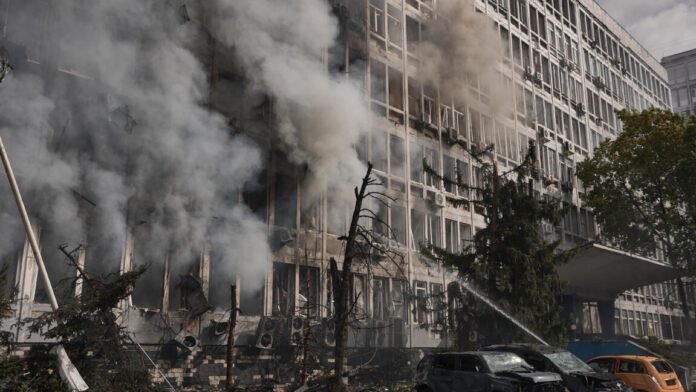
A surge in Russian jet-powered drone strikes on Ukrainian data centers has increasingly disrupted mobile phone and Internet services for thousands of people. Now Ukraine President Volodymyr Zelenskyy and other government officials are warning of the need for more air defense capabilities, as such telecommunication outages could threaten Ukraine’s digital economy and undermine the country’s ongoing resistance to Russia’s invasion.

The Russian attacks on Ukrainian telecommunication infrastructure have focused on Ukraine’s capital of Kyiv since September 23, according to the nonprofit Reporters Without Borders. Ukraine’s digital transformation ministry reported that 100,000 households in the Kyiv region were temporarily experiencing Internet outages from those initial strikes—and Russia has only intensified its strike campaign against major Ukrainian data centers and mobile phone networks in recent weeks.

“Russian attacks on Ukraine’s telecommunication infrastructure are not new, with strikes and shelling previously damaging fiber optic lines, cell towers, and facilities belonging to mobile network companies,” said Tetiana Gaviuk, analyst for Europe at ACLED, in a post on October 1. “However, the recent concentrated attacks on Kyiv’s data centers and telecom networks stand out because multiple providers and facilities were hit within days, indicating Russia’s increased pressure on Ukraine’s digital infrastructure.”

Such repeated attacks could undermine the telecommunication networks that support Ukraine’s banks, payment systems, and public services, according to warnings from officials and industry figures, as reported by The Guardian.

Russia’s strike campaign

Russia has launched mass missile and drone attacks on Ukraine’s power grid infrastructure, railroad stations, shipping ports, and even residential apartment buildings since the first year of its full-scale invasion in 2022. But such long-range strikes have become even more damaging this year, as they have exhausted Ukraine’s supply of missile interceptors—and Russia has also upgraded many of its one-way attack drones to become faster jet-powered drones that are more difficult to shoot down.

For example, Zelenskyy stated on October 4 that Ukrainian air defenses currently intercept more than 85 percent of conventional Shahed-type drones originally developed by Iran and supplied to Russia. But such interception rates fall to just 50 or 60 percent when dealing with newer and faster jet-powered Shahed drones.

Russia’s targeting of data centers is part of a broader long-range strike campaign against energy and commercial infrastructure that “aims to make civilian life in Ukraine unbearable such that Ukraine will capitulate to Russia’s demands,” according to the DC think tank Institute for the Study of War. The Russian strategy seeks to exploit Ukraine’s current air defense gaps and damage or destroy Ukrainian infrastructure during the colder fall and winter seasons.

However, Russia’s intensified strike campaign also coincides with Russian battlefield setbacks, especially with the Ukrainian military’s Operation Vivaldi having retaken dozens of square miles of territory near the vital fortress belt cities guarding eastern Ukraine. So the strike campaign arguably represents the main avenue open for Russian President Vladimir Putin to try claiming some semblance of victory nearly five years after the start of his so-called special military operation in Ukraine.

Telecommunication resiliency and alternatives

Ukraine has already moved some data centers outside the country and invested in building more underground telecommunication networks to boost resiliency, said Kateryna Chernohorenko, Ukraine’s former deputy minister of defense for digital transformation, in an interview with Breaking Defense. But she also cautioned that “you cannot move everything underground” and emphasized the need for allies to help boost Ukraine’s air defenses against Russia’s ballistic missiles and drones.

The telecommunication outages could force more local media outlets and ordinary civilians to turn to satellite-based solutions, like Starlink. Former Ukrainian government advisor Serhii Sternenko recommended that residents of Kyiv purchase Starlink terminals or similar alternatives ahead of winter.

“These repeated Russian strikes on Ukraine’s telecommunications infrastructure not only affect the work of the media, but also the Ukrainian population’s right to information,” said Pauline Maufrais and Vincent Berthier, regional officer for Ukraine and head of the technology and journalism desk at Reporters Without Borders, in a statement. “These are war crimes and their gravity is undeniable.”

This is not the only instance of data centers becoming wartime targets in the past year. When the United States and Israel first attacked Iran in February 2026, Iran’s retaliatory strikes on the Gulf region included targeting multiple Amazon data centers in Bahrain and the United Arab Emirates. Amazon has since acknowledged the permanent loss of some Amazon Web Services customer data because of the data center destruction.

Two straits, one pact: what Makkah can and cannot protect

0

Two months. That’s how long the Makkah pact has existed, and already it’s being asked to do the thing pacts are least ready for in their early days: handle a real war.

On Sunday, Yemen’s internationally recognised government said it was launching a campaign to retake all Houthi-held territory. The Houthis claimed missile and drone strikes on Aramco sites in Riyadh and Khurais within hours. The pact’s strategic political and defence committee was already due to meet in Riyadh on 5 October, with Türkiye’s foreign and defence ministers flying in. Nobody planned that timing, but it couldn’t be sharper. The ministers aren’t just asking whether the alliance can deter an attack. They need to agree where their response ends.

Same waters, different traffic

I’d avoid calling Hormuz “closed” these days, because the numbers don’t support it. Kpler data reported by CNBC put combined crude and refined-product flows at 14.2 million barrels a day, roughly 80 per cent of the pre-war level. Crude on its own is back near normal. Still, a good week of tanker data doesn’t make the strait safe, and anyone who has watched insurers react to a single drone strike knows how fast confidence can leave.

Saudi Arabia’s second outlet is working again too. Riyadh restarted the East-West pipeline and resumed loadings at Yanbu, though volumes sit below what they were before the attacks. Here geography helps a little. Oil going north from Yanbu to Suez never comes near Bab al-Mandab. Oil going south to Asian buyers has to. And that southern route has taken a beating: the same report shows Bab al-Mandab flows more than halving between August and September, which pushed more Saudi crude back through Hormuz. The Houthis, meanwhile, now hold virtually the whole Red Sea coastline of Yemen. Owning a coastline doesn’t mean they decide which ships get through, but shipowners aren’t going to wait to find out.

So the real danger is uncertainty. A tanker may well sail. Whether its owner, insurer and buyer believe the next one will is a different matter, and a defence pact ought to be judged partly on whether it calms that doubt.

READ: Mecca pact strategic political defense committee to meet ‘soon’: Pakistan’s foreign minister

A promise needs machinery

The 7 August text says an attack on any one of the three counts as an attack on all. That’s a heavy political promise. It isn’t a working military system yet, and pretending otherwise helps no one.

The sceptics have a case. The Arab Center Washington DC argues the agreement is unlikely to produce a real military response if an attack happens, and Middle East Eye points out that Pakistan and Türkiye sat on the sidelines when the Houthis swept down the Red Sea last month. I think that criticism lands harder than supporters admit. Where I part ways with it is the yardstick. Even NATO’s Article 5 doesn’t force every ally to react identically. Each member decides what help it thinks necessary. Leaving room for judgment doesn’t make a guarantee worthless.

What I’d want answered is more mundane. Who says an attack has happened? Who asks for help? Who signs off on deployments? Which places and threats are covered? And when Ankara, Islamabad and Riyadh disagree, who breaks the tie before events do it for them?

Foreign Minister Ishaq Dar has said the pact will need at least a year to become fully operational. Meaning the three are fighting the fire while still putting the hoses together. Some things shouldn’t wait, though: early warning, air defence, protecting infrastructure, a reliable line between capitals in a crisis. And they should tell their own publics, and everyone else, what they’re actually trying to achieve.

Where defence starts looking like offence

Pakistan’s army has condemned the Houthi attacks and pledged to the security of Islam’s holy sites. Saudi Arabia says the Houthis have gone after both holy cities, and Dar has called a strike on a power plant in Madinah “not acceptable”.

Words are one thing. Cargo planes are another. Reuters, citing a Pakistani government official, reported that Islamabad sent air-defence systems, light artillery, drones and anti-drone equipment to Aden, with Pakistani advisers working beside Saudi officers to support Yemeni troops. I’m leaning on Middle East Eye’s summary of that report, and it’s worth remembering these are attributed claims, not an official list of everything Pakistan has done. Even so, it’s getting hard to say Pakistan’s role ends at the Saudi border.

Stopping a missile over a Saudi city and helping another army fight inside Yemen are two different jobs. On the ground they overlap. Politically, they cost very different things. The allies should say where one stops and the other starts, before the fighting says it for them.

And please, nobody should reach for the nuclear card to avoid this conversation. The published statement commits the three to collective defence. It says nothing about a nuclear guarantee.

READ: Saudi crown prince says ‘Mecca Defense Alliance’ with Turkiye, Pakistan aims to bolster regional stability

A door worth trying

Dar also told reporters Iran had suggested engaging the Houthis politically, instead of through “kinetic action”, calling it “brainstorming between two foreign ministers” rather than a written offer. He said Tehran had distanced itself from the Houthis, and that he’d briefed Iranian officials on how Pakistan would honour the pact.

I wouldn’t call that a breakthrough. I’d call it worth a try. Pakistan can back Saudi security and still keep talking to Tehran, but only if both capitals believe what Islamabad tells them. And Iran saying it wants calm isn’t the same as Iran being able to deliver the Houthis. A deal has to bind whoever is actually launching the missiles, and someone must be able to check that they’ve stopped.

What should Islamabad ask for? A clearly defined defensive mission. Open political approval before anything wider. And a diplomatic track that doesn’t stop when the shooting gets louder.

Protection needs an exit

Yemen’s new offensive makes the gap between goals hard to ignore. Keeping shipping safe, winning back territory and defeating a movement dug in across a whole country are ambitions of very different size, and they shouldn’t blur together as the speeches get bigger.

A realistic diplomatic package would tie an end to cross-border attacks and threats to shipping to mutual de-escalation, humanitarian access and fresh Yemeni political talks. Getting the order right will be miserable. Dodging it would be worse. The region’s older wounds, Palestine included, won’t heal soon. But sailors and ordinary Yemenis shouldn’t be made to wait for all of that before their safety is up for negotiation.

Makkah can help protect territory and infrastructure. It might even give its members the nerve to negotiate. I’d measure it by whether lives get safer and ships get through, not by how large the military response looks.

Can it defend Saudi Arabia and still leave a believable way out? That’s the whole test. Time bought by force is only worth having if somebody uses it to build the exit.

OPINION: A shield, not a sword: what the Makkah pact’s first test reveals

The views expressed in this article belong to the author and do not necessarily reflect the editorial policy of Middle East Monitor.

Nigerian Delegation Joins Eagles’ Wings in Israel in Show of Solidarity Ahead of October 7 Commemorations

0
nigerian-delegation-joins-eagles’-wings-in-israel-in-show-of-solidarity-ahead-of-october-7-commemorations
Nigerian Delegation Joins Eagles’ Wings in Israel in Show of Solidarity Ahead of October 7 Commemorations


Fifty-one nations attend Awake Jerusalem event at the Tower of David with Bishop Robert Stearns

A Christian delegation representing 51 countries is visiting Israel for meetings with officials, returned hostages, and bereaved families ahead of the third anniversary of the October 7 attacks.  

Eagles’ Wings founder and president Bishop Robert Stearns is leading the 10-day program, which organizers say has brought more than 550 participants to the country during Sukkot. The delegation includes senior church leaders whose churches and networks collectively reach tens of millions of people worldwide.

The itinerary combines worship and commemorative events with discussions involving Israeli government, military, and diplomatic representatives. Organizers say the meetings will give participants firsthand insight into Israel’s security concerns and the effects of the past three years on its people.  

We are here from many, many different backgrounds, but we are here serving one God

“We are here from many, many different backgrounds, but we are here serving one God,” Stearns said at a pre-event gathering in Jerusalem.   

The program included Awake Jerusalem, a worship festival on October 3 at the Tower of David, featuring international Christian artists.  

On October 7, delegates are due to attend a Jerusalem event organized by Friends of Zion and its founder, Mike Evans. A 24-hour international broadcast will commemorate those killed in the 2023 attacks and honor survivors, former hostages, and bereaved families.

Among the Nigerian participants are His Royal Majesty Ogiame Atuwatse III and Her Royal Majesty Olori Atuwatse III, the king and queen of the Warri Kingdom, alongside several church leaders.

Apostle Daps Dalyop Gwom, the African representative of Israel Christian Nexus, told The Media Line that he invited the royal couple to join the delegation. Stearns credited Gwom with bringing together participants from across Africa, including Nigerian bishops.

Gwom named five Nigerian church leaders attending and said they would return home able to share their experiences with millions of Christians. He added that Nigeria’s defense minister, Gen. Christopher Musa, was expected to join the delegation during the following week.

He also emphasized the importance of established leaders engaging with young people seeking answers about faith. “People like Robert are looking [in] their direction, which is very important for mentorship,” he said.

For Seyi Ajala, a Nigerian Christian who has lived in the United Kingdom for about five years, the first-time visit to Israel offered a chance to encounter places previously known through Scripture.

“What attracted me to Eagles Wings was the opportunity to experience Israel beyond what I have read in the Bible,” he told The Media Line.

Ajala described the trip as meaningful, emphasizing the value of meeting people and seeing the country directly rather than knowing it only through biblical accounts or news coverage.

Coming here is about being present, learning, listening, and experiencing the land and its people firsthand

“Coming here is about being present, learning, listening, and experiencing the land and its people firsthand,” Ajala said.

He said a large number of Nigerian Christians shared his interest: “Many Nigerians have always had a desire to visit the biblical sites and experience the land where many of the events we read about in Scripture took place.”

Stearns noted that the delegation participants had come to Jerusalem “believing together that God’s love, God’s light, God’s hope, God’s peace will overcome all darkness.”

Why some Indigenous communities don’t resist oil extraction in their territories

0
why-some-indigenous-communities-don’t-resist-oil-extraction-in-their-territories
Why some Indigenous communities don’t resist oil extraction in their territories

More than half of the Ecuadorian Amazon has been marked for oil drilling, overlapping with Indigenous territories and areas of high biodiversity. The ecological and cultural impacts of oil extraction are well documented, and have fuelled some of Latin America’s most prominent environmental movements. Yet at the local level, extraction is not always met with resistance.

My research investigates why Quichua communities living along the lower Napo river in the Ecuadorian Amazon accepted oil extraction despite its expected environmental consequences such as river pollution, deforestation and habitat loss.

Their territories overlap with the Ishpingo-Tambococha-Tiputini (ITT) oil project, which became famous during the 2007-13 Yasuní-ITT initiative. This bold proposal attempted to leave 20% of the country’s last-known oil reserves underground in the Yasuní national park in return for US$3.6 billion (£2.6 billion) from international donors.

The initiative aimed to avoid the emission of 407 million tonnes of CO₂ and protect the biodiversity of Yasuní. Its failure in 2013, officially due to the lack of financial support, cleared the way for the ITT oil project, which began operating in 2016.

It also gave rise to a national conflict led by the Yasunidos, a coalition of youth groups defending Yasuní and its people. This culminated in a national referendum in August 2023, in which Ecuadorians voted to halt the ITT oil project.

When I first visited the lower Napo river in 2014, I wanted to investigate the potential consequences of the oil project for local people and their territories. I expected to hear how residents would be affected. Instead, they kept telling me about the benefits they were going to receive.

While the project was expected to have knock-on effects on the river, land and forest, it would also bring jobs, indemnification money and so-called “social compensation” through projects in health, education and infrastructure. I started to perceive oil as a local dilemma: either livelihoods were going to be affected or potential benefits from the oil company had to be renounced.

What I didn’t yet understand was why this dilemma so often seemed to result in the local acceptance of oil extraction.

Understanding acceptance

I travelled back to this region in August 2016, a month before the inauguration of the ITT oil project. By then, the six Quichua communities whose territories overlap with the ITT fields had accepted it. Other communities along the river were about to face oil exploration for the first time. This allowed me to observe oil decisions as they unfolded over the next few months.

When oil exploration reached the community of Vicente Salazar, in January 2017, I asked what the community was going to decide – by which I meant: are you going to accept or oppose the oil project? It soon became clear that my question made little sense. “How come will they oppose, if the people don’t have anywhere to poop?” said Juan Manuel, a councilman and member of the community. “We are fed up with making small holes in the bushes.” Johnny, a local resident, explained: “Someone who would say that oil should remain underground, like this, there isn’t.”

I understood that if oil could be seen as a dilemma, it was a highly asymmetric one.

The thing is, oil extraction does not arrive in an untouched environment. While people rely on nature for their livelihoods, hunting and fishing, collecting wood from the forest and drinking water from the river are increasingly under pressure from river pollution, the growing scarcity of bushmeat and fish (due to factors including overhunting and river pollution), and conservation laws from central government constraining hunting, fishing and cutting down wood.

At the same time, these pressures create new needs for cash and services. Residents want access to all the basic services (including drinking water, electricity and sewage systems), better health and education. They also want money to buy “bigger things”: a fibre canoe, a zinc roof, a gas kitchen to make life easier, faster and more comfortable. As one resident put it: “Indigenous people have the right to progress too.”


Read more: Our research measures the real cost of coal mines to people and planet


In this context, the oil company is often perceived by inhabitants as a provider of much-needed jobs, cash, infrastructure and services. And while extraction puts further pressure on nature and people’s livelihoods, some of the benefits it provides are seen as capable of addressing some of the consequences of both existing (past) and expected (new) ecological pressures. Drinking water provision, seen as a necessary response to the pollution of the Napo river, exemplifies this paradox.

blue canoe style boat on river, rainforest trees on banks either side

Travelling by boat into the Ecuadorian rainforest. Fotos593

Oil as problem and solution

The environmental consequences of oil extraction extend beyond the boundaries of particular oil projects. As the oil frontier pushes further and further into the rainforest, pollution travels through shared rivers, along which Quichua communities are settled. Along the Napo river, pollution largely originates from past oil projects further upstream.

By contrast, the benefits that come with oil are conditional on communities directly overlapping with oil projects. This means that the impacts of oil extraction can affect communities downstream long before an oil project enters their specific territories with the promised social compensation. As one inhabitant put it: “Here, we lack drinking water. They will pollute us, and they don’t give us drinking water.”

This is how oil becomes both problem and solution. By the time oil extraction reaches these communities, the question is often no longer whether it should go ahead, but what they should ask for in return. In the ITT case, all six communities demanded the provision of basic services. Four communities asked for drinking water specifically.

When I returned for fieldwork in 2023, I found continued support for oil extraction in all six communities.

As oil projects expand globally, many Indigenous communities face environmental threats alongside pressing needs for jobs, services and infrastructure, as well as aspirations for a better life. In places such as the Ecuadorian Amazon, this can lead to uneasy compromises where the choices are far from equal. These quiet situations are a reminder that the absence of visible conflict does not mean the absence of struggle.

US migrant flights to Liberia evoke troubling history of sending people deemed unwanted to the West African nation

0
us-migrant-flights-to-liberia-evoke-troubling-history-of-sending-people-deemed-unwanted-to-the-west-african-nation
US migrant flights to Liberia evoke troubling history of sending people deemed unwanted to the West African nation

The Supreme Court’s recent decision to temporarily allow the United States to resume deporting migrants to third-country destinations could see the resumption of flights to Liberia.

About the size of Ohio, the West African country is one of 35 countries the Trump administration is paying to shelter and feed Latin Americans and others living in the U.S. without proper legal status. Some of those receiving nations have a reputation for corruption and human rights abuses, and in most cases, those being deported have no links to the host nation.

The policy may ultimately be deemed unconstitutional, but on Sept. 29, 2026, the Supreme Court justices gave the green light for flights to continue while they consider the policy’s legality.

So far, at least 20 U.S. deportees have been flown to Liberia. One Colombian national who arrived in the African nation on Aug. 20 told PBS: “Honestly, I had never heard of Liberia.”

While those being deported to Liberia may not be familiar with the country, the same can’t be said for American policymakers. Unlike the other countries participating in the Trump administration’s efforts, Liberia has a long history with American immigration policy.

As a scholar who has written about that history, I see echoes of past U.S. efforts to move nonwhite people to Liberia in the latest removals. Indeed, it is those past events that gave Liberia its name.

Liberia’s American roots

In the early 1800s, Africa’s west coast attracted American leaders who were looking for a place to send those they viewed as unwanted U.S. residents: free people of African descent.

The region became the endpoint for America’s first massive removal campaign, starting in 1820, focused on relocating Black people “back to Africa.” The chief U.S. organization advocating for this effort was the American Colonization Society, created in 1816.

An old map.

An American Colonization Society map of Liberia from 1835. Buyenlarge/Getty Images

The initial wave of departures was made up of African American intellectuals, church leaders and merchants. The brutality and inhumanity that white Americans inflicted on free and enslaved Black people drove them out. Many abolitionists and Quakers – who fought to ban slavery – initially supported the colonization society’s removal efforts as a means for helping Black residents escape the cruelty of American laws, especially the Fugitive Slave Acts.

But the true driving force was the slaveholder class, which held a majority in Congress. Those politicians demanded the deportations because they knew the presence of free Black people gave hope to the millions in bondage — who, in some states, outnumbered white people.

These early American settlers named their new home Liberia, for liberty. And by 1847, they fought the colonization society’s control over the land and turned the settlement into the first independent republic in Africa. They set up towns and farms along the coastline, which had local indigenous communities estimated to be in the hundreds of thousands.

By the end of the century, some 16,000 Black Americans made the journey, many against their will and all on the promise of a better life. Thousands more joined them, some from the Caribbean and at least 6,000 who were rescued from slave-trading vessels, intercepted and sent to Liberia by the U.S. Navy.

A promised land

The colonization society’s mass deportation plan was a nationwide effort with powerful political leaders and slaveholders like Henry Clay, who was a U.S. senator, speaker of the House, secretary of state and three-time presidential candidate; Francis Scott Key, a famous U.S. attorney best known for writing “The Star Spangled Banner”; and Bushrod Washington, a Supreme Court justice and nephew of George Washington.

Ten Southern state legislatures endorsed the idea by passing laws that allowed the freeing of an enslaved person only when deportation out of the state was arranged and paid for. The colonization society raised the funds to pay for their removal to Liberia.

A certificate of membership to the New York City Colonization Society

The New York City Colonization Society supported the migration of free Africans Americans to Africa. The New York Historical/Getty Images

Some abolitionists and future leaders, including Abraham Lincoln, at first supported colonization because they believed it would help accelerate emancipation. But over time, and especially during the Civil War, most instead supported citizen rights for Black residents.

The effort was also opposed by powerful public intellectuals, including Frederick Douglass, who helped convince many — including Lincoln — of the need to secure freedom and justice for Black people in a country where they already lived.

At least 20% of those who made the journey to Liberia in the 1800s died of malaria. The rest dealt with supply shortages, severe weather, failed crops and hostility from indigenous communities.

But most white Americans knew none of this. They were told Liberia had fertile soil and a healthy climate; it was a promised land for Black people wishing to go home.

Harriet Beecher Stowe, in her best-selling novel “Uncle Tom’s Cabin,” furthered this notion by having her main characters, on a hair-raising and violent odyssey to escape enslavement, finally find freedom and peace on a boat headed to Liberia.

Douglass praised her novel in his newspaper, but for this last part of it, which he vehemently opposed. Douglass wrote to Stowe: “We are here, and here we are likely to remain. … We have grown up with this Republic; and I see nothing in our character … which compels the belief that we must leave the United States.”

A lingering US legacy

The American Colonization Society’s strong influence on deportations ended with the Civil War, though the organization continued raising money and influencing U.S. policy until it was dissolved in 1964.

Other independent waves of migration to Liberia followed, especially as the end of Reconstruction unleashed white-led terrorism against Black communities throughout the South. This included the Liberian Exodus Joint Stock Steamship Company, a Black-owned business that transported well-off African Americans to Liberia in 1878. Its schooner carried some of Liberia’s soon-to-be-famous families from Charleston, South Carolina, to Liberia’s capital, Monrovia.

A crowd of people are seen next to a large ship.

African Americans emigrants depart for Liberia on the steamship Laurada from Savannah, Ga., in 1896. Illustrated American/Library of Congress/Corbis/VCG via Getty Images

In my view, what they accomplished along West Africa’s windward coast is astounding and, unfortunately, forgotten by most Americans. I’ve collected thousands of records from archives, including the U.S. National Archives, that show how surviving “Americo-Liberians,” as they called themselves, used grit and ingenuity to build large farming operations, grow merchant fleets, establish fisheries and spur other industries in their efforts to be integrated into Western global markets.

Yet for all the successes in difficult circumstances, Liberia in the 20th century remained in America’s shadow. After decades of fending off European attempts to absorb it into their colonial holdings, Liberia sought refuge in its historical relationship with the U.S. And in the 1920s, the two countries began a “special friendship.” At a time when Jim Crow laws ravaged the American South, U.S. business interests created a plantation economy in Liberia rooted in resource extraction that enriched large U.S. companies, including Firestone Tire and Republic Steel.

Archival records show the corruption that grew from deals benefiting the few at the expense of the many that became a long-term driver in the country’s political instability, resulting in civil strife and poverty that has wracked the country for decades.

Coming full circle

For many of the 1,200 people earmarked for deportation to Liberia in the coming months by the U.S. government, landing in the capital, Monrovia, may feel cruel. That it was once a thriving city of Black elites whose forebearers arrived there from America may feel meaningless.

The circumstances of their deportations to Liberia are obviously very different form earlier waves. Those being deported today weren’t captured and sold into bondage; many left home to escape civil war, gang violence or starvation.

But there is a common driver between American policymakers now and those in the 19th century in encouraging and enforcing deportation to Liberia: a desire to rid the U.S. of nonwhite people deemed to represent a problem at home.

In December 2026, the Supreme Court will hear arguments and ultimately decide the constitutionality of this desire, as written into today’s rapid deportation policies.

Mass quarantine issued in Russia after unexplained death of plague researcher

0
mass-quarantine-issued-in-russia-after-unexplained-death-of-plague-researcher
Mass quarantine issued in Russia after unexplained death of plague researcher

Roughly 200 people are under medical observation, several hospitals are under quarantine, and dozens are in isolation in Russia following the unexplained death of an infectious disease researcher at the Irkutsk Anti-Plague Research Institute of Siberia, in the town of Shelekhov, according to early reports of the situation on Sunday and Monday.

Researcher Darya Shipilova reportedly died last week from pneumonia of “unknown” cause, according to Rospotrebnadzor, a Russian public health agency.

Unconfirmed information regarding her death has swirled. Some reports have claimed she accidentally broke a test tube containing the plague pathogen, Yersinia pestis, on September 25. She subsequently fell ill, was admitted to a hospital September 29 with severe pneumonia and died overnight between October 1 and Oct. 2.  The head of the Russian region that neighbors Irkutsk, Alexey Tsydenov, initially reported that she had died of plague but later altered his statement to say she “possibly” died of the disease.

Y. pestis can cause several forms of plague: bubonic, septicemic, and pneumonic—the latter of which can be aggressive and quickly fatal. However, the pathogen is generally easily treated by antibiotics. In the US, the Centers for Disease Control and Prevention recommends that anyone exposed to the pathogen should undergo an immediate 7-day post-exposure antibiotic prophylaxis treatment. Additionally, though pneumonic plague is spread via respiratory particles from coughing, it is not considered highly infectious; it requires direct, close contact for the bacteria to be transmitted.

Former Rospotrebnadzor head Gennady Onishchenko said Friday that Shipilova’s infection was “most likely not the plague” but that there “will be no spread of this disease,” CNN reported.

Rospotrebnadzor has downplayed the incident, saying in a statement that the “epidemiological situation” in the region is stable. “No micro-organisms associated with the employee’s professional duties were detected in samples taken from the patient,” it said.

However, the current head of the agency, Anna Popova, made an unusual trip to Irkutsk on Friday, which Igor Kobzev, the local governor, described as being due to a “suspected case of a particularly dangerous infection affecting a resident of the region.”

A spokesperson for the US State Department told CNN, “We are monitoring the situation closely with the CDC and our other interagency partners. Many details have not been confirmed. We encourage Russian authorities to share accurate information quickly and openly.”

The European Centre for Disease Prevention and Control said on Monday that it, too, is monitoring the situation “very closely.”

Kyrgyzstan, around 1,500 miles from Irkutsk, said Monday it was introducing quarantine controls at state border crossing points.

Warning that Germany at risk of violent conflict with Russia

0
warning-that-germany-at-risk-of-violent-conflict-with-russia
Warning that Germany at risk of violent conflict with Russia


Germany is at risk of entering ‌a violent conflict as Moscow steps up an increasingly aggressive “shadow war” against European democracies, its head of foreign intelligence warned on Monday.

“The confrontation we are facing with Russia has taken on a new, more dangerous dimension,” Martin Jaeger, head of ​the Bundesnachrichtendienst (BND), told the annual public hearing of intelligence chiefs in parliament.

“Germany is in danger ​of becoming embroiled in a violent conflict with Russia — the attempted attack in Leipzig ⁠is just one example,” he said, describing Russia as “waging a shadow war” with the threat of attacks ​against targets in Germany remaining “real and imminent”.

German authorities have warned repeatedly that Russia is conducting a hybrid ​campaign of drone and cyber attacks, and have blamed it for an attempted drone attack on Leipzig airport in August.

INTELLIGENCE BOSS SAYS RUSSIA IS TESTING GERMANY

President Vladimir Putin said on Thursday that Russia had “no intention of attacking anyone … but if we ​are subjected to aggression, we will have no choice but to respond”.

Jaeger, however, said Moscow was prepared to ​use force to achieve its goals, and that Russian intelligence services’ operations in and against Germany were “increasingly aggressive”.

“Russia is putting us to the test ‌and ⁠closely watching how we handle this situation. From the perspective of the Kremlin leadership, any sign of wavering invites them to further increase the pressure on Germany.”

Jaeger said there was no indication of an imminent large-scale Russian attack on NATO territory.

“However, Russia could engage in low-intensity military activities, particularly in the Baltic states.”

Germany ​must prepare for more ​meddling and attempts at ⁠intimidation, including threats of nuclear attack, he said.

“Moscow is betting on our weakness”, he added. “We have to stand up to that.”

Jaeger said Moscow was trying to compel Germany, ​Ukraine’s largest donor, to drop its support.

“Russia is determined to bring Ukraine ​to its knees ⁠this coming winter,” he said. “We must expect Russian attacks of a severity and brutality that we have not yet seen.”

Germany’s intelligence services are set to receive new powers to carry out active operations to thwart attacks if ⁠parliament approves ​new legislation.

Created after World War Two, when memories of the ​Nazi regime were still fresh, the German services have traditionally been more constrained than those of allies such as France, Britain or ​the US.

Adds more quotes on ​threat to NATO and Ukraine, context

Russia courts the Taliban without dropping Pakistan

0
russia-courts-the-taliban-without-dropping-pakistan
Russia courts the Taliban without dropping Pakistan

I have watched Pakistan-Afghanistan relations long enough to distrust easy headlines, and last week’s news produced a few of them.

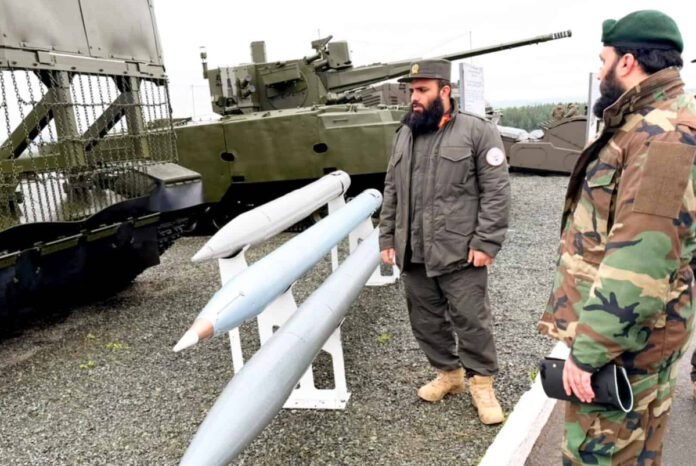
At the Center-2026 (Tsentr-2026) war games in Russia’s Chelyabinsk region, Taliban officers stood among the foreign observers. Reports say it was the first time Moscow had invited a Taliban military delegation since the movement returned to power in 2021.

Days earlier, Pakistani jets had struck Kunar and Helmand provinces. The UN mission confirmed at least 10 civilians dead, most of them children.

Set side by side, the two events invite a theory of a Russian plot against Pakistan. I don’t buy it. What I see is messier and, for Islamabad, harder: Kabul is becoming a military partner that others want to be seen with, and Pakistan no longer holds a special place in Afghan strategy.

From pariah to partner

Russia once banned the Taliban as a terrorist group. Its Supreme Court suspended that ban in April 2025, and by July Moscow had become the first government to recognize Taliban rule.

On May 27, Sergei Shoigu, the secretary of Russia’s Security Council, and Mohammad Yaqoob Mujahid, the Taliban’s defense minister, signed a military-technical agreement. Its text has not been made public. Zamir Kabulov, Moscow’s envoy for Afghanistan, has described it as mostly about refurbishing equipment Kabul already owns.

On the public record, then, Russia has agreed to keep an old Soviet-era arsenal running, not to build a new one. Afghanistan International, a London-based outlet that is no friend of the Taliban, claims that Kabul has asked for much more, including air defense and help reviving fighter jets and helicopters. I can’t verify that. If accurate, it would suggest the Taliban sees the pact as a first step.

The Center-2026 exercises ran from September 28 to October 3. The South China Morning Post reported more than 47,000 personnel and named troops from Russia, Belarus, China, Pakistan, Kazakhstan, Kyrgyzstan, Mongolia and Tajikistan.

Russia’s defense minister, briefing President Vladimir Putin, put the number at about 6,000 for the final stage, so the headline figure depends on who is counting.

The Taliban were not among the troops. They were observers, one of dozens of delegations, in the same category as India, North Korea and Vietnam. That still matters: an invitation signals that Kabul counts.

But it doesn’t make the Taliban part of a Russian bloc, and it is hard to call an exercise anti-Pakistan when Pakistani soldiers took part.

An unconfirmed lead

Another story has run harder than its evidence supports. Afghanistan International, citing five sources, says the Taliban is buying weapons and drones from Belarus with Indian money.

Taliban ministers have visited Minsk. Beyond that, there is nothing: India, Belarus, Russia and the Taliban have confirmed none of it, and the report names no contract or system.

I keep the two stories apart for a practical reason. Russian-Taliban military contact is documented; the Belarus channel is a lead. Merge them, and if the lead collapses, it takes the solid story down with it.

Russia doesn’t need to dislike Pakistan to want a stronger Taliban. Its real fear is Islamic State Khorasan Province, or ISIS-K, and it wants whoever rules Kabul to be able to fight it. Afghanistan also borders Central Asian states that Moscow regards as its southern flank, and with the Americans gone, it would rather not cede that space to others.

A Taliban army that can keep its existing equipment running suits Moscow fine. One with modern drones and air defense would be a different matter, and nothing public says that is on offer.

Pakistan’s shrinking leverage

Islamabad once counted the Taliban’s return as a win. Then the Pakistani Taliban, formally the Tehrik-e-Taliban Pakistan, changed the mood. Pakistan says Kabul lets the group operate from Afghan soil; Kabul denies it. The dispute has moved from protests to air raids.

The latest raids came a week after earlier strikes in Kandahar, Paktia and Khost. Pakistan says it killed 22 militants on October 1. The UN has counted more than 1,100 civilian casualties from cross-border violence this year, and a Taliban official has promised a “calculated” response.

What worries me is the cycle of violence. Every strike hardens Afghan opinion, strengthens Kabul’s case for better weapons and burns goodwill that Pakistan will need later. Dead children are a diplomatic cost that no tactical gain repays.

None of this means Russia has dropped Pakistan. Moscow has widened its defense and counterterrorism contacts with Islamabad too, and Pakistani troops drilled at the same exercise the Taliban watched. That is balancing. What should unsettle Pakistan is that even good ties with Moscow no longer guarantee agreement on Afghanistan.

The same caution applies to India. Not every Indian move in Kabul is aimed at Pakistan, and a long Pakistan-Afghanistan conflict would create problems for New Delhi, too.

China’s cautious road

China is making its own bets. The Taliban is pushing ahead with a road through the Wakhan Corridor, Afghanistan’s only border with China, and analysts see it as a way to reduce reliance on Pakistan. Beijing has moved carefully.

It established a new county on its side of the frontier in March and wants joint patrols against militants, but it has not rushed to pay for the road. China also has investments in the China-Pakistan Economic Corridor to protect, and it would rather see Kabul and Islamabad repair ties than see Afghanistan bypass Pakistan.

Everyone with a stake in Afghanistan is hedging, and Pakistan is no longer the only way in.

The real change is not a secret weapons deal. It is the Taliban’s evolution from an insurgency that leaned on Pakistan into a government that collects partners. Russia wants help against ISIS-K, China wants a quiet border, India wants access, and Pakistan wants the attacks to stop.

Those aims sometimes overlap and sometimes collide, and drones raise the stakes of the collisions. The same technology that helps the Taliban hunt ISIS-K could make the next clash with Pakistan deadlier.

What I fear most is miscalculation. Capitals can pursue their own interests with no appetite for war and still read one another’s precautions as preparation.

I would watch for three things: whether Russian cooperation becomes clearer than a closed text and a maintenance briefing; whether anyone ever produces paper behind the Belarus claim; and whether Pakistan, Russia, China, Iran and the Central Asian states can agree that Afghanistan must not become a proxy arena.

For Pakistan, the lesson is plain: it can no longer manage Afghanistan through the Taliban alone. Border security and counterterrorism must now run alongside patient diplomacy in Kabul, Moscow, Beijing, Tehran, New Delhi and the Central Asian capitals.

The task is no longer to keep the Taliban close but to stay relevant as they build a network of their own.

Mansoor Qaisar is an independent writer based in Islamabad, writing on foreign and public policy and social issues shaping Pakistan and the region. He can be reached at mansoor.qaisar@gmail.com and on X at @MansorQaisar.

Ex-FBI Profiler Claims O.J. Simpson ‘Had Help’

0
ex-fbi-profiler-claims-oj.-simpson-‘had-help’
Ex-FBI Profiler Claims O.J. Simpson ‘Had Help’


More than three decades after the brutal murders of Nicole Brown Simpson and Ron Goldman, a former FBI profiler is raising a provocative question about one of America’s most infamous criminal cases: Was there another person at the crime scene?

Former FBI profiler and prosecutor Jim Clemente says he believes evidence from Goldman’s injuries could support a theory that O.J. Simpson had an accomplice during the June 12, 1994, killings.

Clemente laid out his theory during a recent appearance with media personality Tom Zenner and Kato Kaelin, the former Simpson houseguest who became a prominent witness during the 1995 murder trial.

Simpson was acquitted of murdering his former wife, Nicole, 35, and Goldman, 25, after a sensational eight-month criminal trial.

A different jury reached a different conclusion in 1997, finding Simpson civilly liable for the deaths and awarding the victims’ families $33.5 million in damages.

Simpson continued denying responsibility until his death from cancer in 2024 at age 76.

Now Clemente says certain details surrounding Goldman’s final struggle deserve another look.

He focused in particular on cuts found in Goldman’s clothing and injuries to his legs.

According to Clemente, the location of some of those wounds led him to theorize that Goldman’s legs may have been raised as he desperately kicked at an attacker.

“With the cuts in his jeans, in his pants that he was wearing at the time, the knife wounds could only have been made if both of his legs were elevated and bent and straightened out like he was kicking,” Clemente said.

From there, Clemente proposed a disturbing scenario.

He believes Goldman could have been restrained from behind by one person while another attacked him from the front.

“The only way that we behaviorally could figure out how that could happen is if somebody has him in a bear hug from behind and he’s being stabbed by somebody in the front,” Clemente said.

“He’s kicking, he’s fighting for his life.”

Clemente also questioned why, under his interpretation of the evidence, Goldman did not suffer the type of extensive wounds to his arms that he would expect if Goldman had been freely punching and defending himself against a knife.

He suggested Goldman’s arms could have been restrained.

The theory is dramatic, but it is important to note that it has not been established as fact.

Investigators who worked the original case reached a different conclusion.

During Simpson’s 1995 criminal trial, lead LAPD detective Tom Lange testified that he believed a single attacker killed both Nicole and Goldman. Lange said Goldman’s injuries suggested he was desperately trying to protect himself but did not necessarily show that another person was restraining him.

Los Angeles County’s chief medical examiner also testified that Goldman could have suffered his fatal injuries while trapped in the narrow, enclosed area near the walkway outside Nicole’s Brentwood condominium.

The coroner said Goldman may have had little room to escape as an attacker wielding a knife cornered him.

Still, the possibility of more than one killer is not entirely new.

During Simpson’s 1996 civil trial, defense pathologist Dr. Michael Baden testified that he believed Goldman’s prolonged struggle could indicate that at least two attackers were involved.

That argument ultimately did not persuade the civil jury, which unanimously found Simpson liable for the deaths.

Clemente is now approaching the evidence from a behavioral-profiling perspective.

He also believes the attack was planned rather than an uncontrolled, spontaneous explosion of rage.

“Whoever committed this crime had an extreme amount of rage and anger in them,” Clemente said.

He argued that the killer had been thinking about the attack beforehand and described the murders as an “organized crime” in the behavioral sense — meaning he believes the perpetrator planned the attack and considered when Nicole would be vulnerable.

Clemente theorized that Nicole was the intended target and Goldman arrived unexpectedly.

Goldman had worked at the Mezzaluna restaurant, where Nicole and her family had eaten earlier that evening. He went to her condominium to return a pair of eyeglasses that Nicole’s mother had accidentally left behind.

Clemente believes that unexpected arrival may have changed whatever plan had been made.

“Of course, he thought she would be alone at that moment, but because she left the glasses there at the restaurant, somebody else showed up,” Clemente said. “That is an unexpected result.”

He also suggested Nicole and Simpson’s two young children, who were inside the home that night, could potentially explain why someone planning an attack might have wanted another person present.

“What if the kids aren’t in bed yet?” Clemente asked. “What if the kids wake up and come down?”

Again, there is no established evidence proving that scenario occurred.

The original prosecution’s case centered on physical evidence it argued connected Simpson directly to the murders.

Blood evidence became a major focus of the criminal trial. Prosecutors presented testimony that blood consistent with Simpson and both victims was discovered inside Simpson’s Ford Bronco, while additional evidence included a bloody glove, shoe impressions and blood recovered along the pathway outside Nicole’s home.

Simpson’s attorneys aggressively challenged the collection, handling and reliability of much of that evidence, helping create the reasonable doubt that resulted in his acquittal on Oct. 3, 1995.

Clemente nevertheless believes investigators and the public should consider the possibility that the crime involved another person.

Asked whether he had an idea who that alleged accomplice could have been, Clemente offered perhaps his most tantalizing answer.

He said he had a “pretty good idea.”

He did not name anyone.

And there is currently no publicly confirmed finding from law enforcement identifying a second killer in the Brown-Goldman murders.

The accomplice theory has nevertheless resurfaced repeatedly during the 32 years since the killings, with investigators, forensic experts, authors and filmmakers continuing to debate how the bloody crime scene should be interpreted.

Even Nicole’s family has encountered the theory before. Nicole’s sister has publicly expressed skepticism about claims that Simpson had help, dismissing versions of the accomplice theory that have circulated for years.

That leaves Clemente’s comments as exactly what they are for now — a veteran profiler’s interpretation of one of the most dissected crime scenes in American history, rather than proof that a second killer has finally been identified.

But his refusal to reveal who he believes may have been there is certain to keep one of the O.J. Simpson case’s longest-running mysteries alive.

0FansLike
0FollowersFollow
0FollowersFollow
0SubscribersSubscribe
- Advertisement -
Google search engine

Recent Posts