22.3 C
London
Monday, October 5, 2026
Home Blog

Why some Indigenous communities don’t resist oil extraction in their territories

0
why-some-indigenous-communities-don’t-resist-oil-extraction-in-their-territories
Why some Indigenous communities don’t resist oil extraction in their territories

More than half of the Ecuadorian Amazon has been marked for oil drilling, overlapping with Indigenous territories and areas of high biodiversity. The ecological and cultural impacts of oil extraction are well documented, and have fuelled some of Latin America’s most prominent environmental movements. Yet at the local level, extraction is not always met with resistance.

My research investigates why Quichua communities living along the lower Napo river in the Ecuadorian Amazon accepted oil extraction despite its expected environmental consequences such as river pollution, deforestation and habitat loss.

Their territories overlap with the Ishpingo-Tambococha-Tiputini (ITT) oil project, which became famous during the 2007-13 Yasuní-ITT initiative. This bold proposal attempted to leave 20% of the country’s last-known oil reserves underground in the Yasuní national park in return for US$3.6 billion (£2.6 billion) from international donors.

The initiative aimed to avoid the emission of 407 million tonnes of CO₂ and protect the biodiversity of Yasuní. Its failure in 2013, officially due to the lack of financial support, cleared the way for the ITT oil project, which began operating in 2016.

It also gave rise to a national conflict led by the Yasunidos, a coalition of youth groups defending Yasuní and its people. This culminated in a national referendum in August 2023, in which Ecuadorians voted to halt the ITT oil project.

When I first visited the lower Napo river in 2014, I wanted to investigate the potential consequences of the oil project for local people and their territories. I expected to hear how residents would be affected. Instead, they kept telling me about the benefits they were going to receive.

While the project was expected to have knock-on effects on the river, land and forest, it would also bring jobs, indemnification money and so-called “social compensation” through projects in health, education and infrastructure. I started to perceive oil as a local dilemma: either livelihoods were going to be affected or potential benefits from the oil company had to be renounced.

What I didn’t yet understand was why this dilemma so often seemed to result in the local acceptance of oil extraction.

Understanding acceptance

I travelled back to this region in August 2016, a month before the inauguration of the ITT oil project. By then, the six Quichua communities whose territories overlap with the ITT fields had accepted it. Other communities along the river were about to face oil exploration for the first time. This allowed me to observe oil decisions as they unfolded over the next few months.

When oil exploration reached the community of Vicente Salazar, in January 2017, I asked what the community was going to decide – by which I meant: are you going to accept or oppose the oil project? It soon became clear that my question made little sense. “How come will they oppose, if the people don’t have anywhere to poop?” said Juan Manuel, a councilman and member of the community. “We are fed up with making small holes in the bushes.” Johnny, a local resident, explained: “Someone who would say that oil should remain underground, like this, there isn’t.”

I understood that if oil could be seen as a dilemma, it was a highly asymmetric one.

The thing is, oil extraction does not arrive in an untouched environment. While people rely on nature for their livelihoods, hunting and fishing, collecting wood from the forest and drinking water from the river are increasingly under pressure from river pollution, the growing scarcity of bushmeat and fish (due to factors including overhunting and river pollution), and conservation laws from central government constraining hunting, fishing and cutting down wood.

At the same time, these pressures create new needs for cash and services. Residents want access to all the basic services (including drinking water, electricity and sewage systems), better health and education. They also want money to buy “bigger things”: a fibre canoe, a zinc roof, a gas kitchen to make life easier, faster and more comfortable. As one resident put it: “Indigenous people have the right to progress too.”


Read more: Our research measures the real cost of coal mines to people and planet


In this context, the oil company is often perceived by inhabitants as a provider of much-needed jobs, cash, infrastructure and services. And while extraction puts further pressure on nature and people’s livelihoods, some of the benefits it provides are seen as capable of addressing some of the consequences of both existing (past) and expected (new) ecological pressures. Drinking water provision, seen as a necessary response to the pollution of the Napo river, exemplifies this paradox.

blue canoe style boat on river, rainforest trees on banks either side

Travelling by boat into the Ecuadorian rainforest. Fotos593

Oil as problem and solution

The environmental consequences of oil extraction extend beyond the boundaries of particular oil projects. As the oil frontier pushes further and further into the rainforest, pollution travels through shared rivers, along which Quichua communities are settled. Along the Napo river, pollution largely originates from past oil projects further upstream.

By contrast, the benefits that come with oil are conditional on communities directly overlapping with oil projects. This means that the impacts of oil extraction can affect communities downstream long before an oil project enters their specific territories with the promised social compensation. As one inhabitant put it: “Here, we lack drinking water. They will pollute us, and they don’t give us drinking water.”

This is how oil becomes both problem and solution. By the time oil extraction reaches these communities, the question is often no longer whether it should go ahead, but what they should ask for in return. In the ITT case, all six communities demanded the provision of basic services. Four communities asked for drinking water specifically.

When I returned for fieldwork in 2023, I found continued support for oil extraction in all six communities.

As oil projects expand globally, many Indigenous communities face environmental threats alongside pressing needs for jobs, services and infrastructure, as well as aspirations for a better life. In places such as the Ecuadorian Amazon, this can lead to uneasy compromises where the choices are far from equal. These quiet situations are a reminder that the absence of visible conflict does not mean the absence of struggle.
US migrant flights to Liberia evoke troubling history of sending people deemed unwanted to the West African nation

0
us-migrant-flights-to-liberia-evoke-troubling-history-of-sending-people-deemed-unwanted-to-the-west-african-nation
US migrant flights to Liberia evoke troubling history of sending people deemed unwanted to the West African nation

The Supreme Court’s recent decision to temporarily allow the United States to resume deporting migrants to third-country destinations could see the resumption of flights to Liberia.

About the size of Ohio, the West African country is one of 35 countries the Trump administration is paying to shelter and feed Latin Americans and others living in the U.S. without proper legal status. Some of those receiving nations have a reputation for corruption and human rights abuses, and in most cases, those being deported have no links to the host nation.

The policy may ultimately be deemed unconstitutional, but on Sept. 29, 2026, the Supreme Court justices gave the green light for flights to continue while they consider the policy’s legality.

So far, at least 20 U.S. deportees have been flown to Liberia. One Colombian national who arrived in the African nation on Aug. 20 told PBS: “Honestly, I had never heard of Liberia.”

While those being deported to Liberia may not be familiar with the country, the same can’t be said for American policymakers. Unlike the other countries participating in the Trump administration’s efforts, Liberia has a long history with American immigration policy.

As a scholar who has written about that history, I see echoes of past U.S. efforts to move nonwhite people to Liberia in the latest removals. Indeed, it is those past events that gave Liberia its name.

Liberia’s American roots

In the early 1800s, Africa’s west coast attracted American leaders who were looking for a place to send those they viewed as unwanted U.S. residents: free people of African descent.

The region became the endpoint for America’s first massive removal campaign, starting in 1820, focused on relocating Black people “back to Africa.” The chief U.S. organization advocating for this effort was the American Colonization Society, created in 1816.

An old map.

An American Colonization Society map of Liberia from 1835. Buyenlarge/Getty Images

The initial wave of departures was made up of African American intellectuals, church leaders and merchants. The brutality and inhumanity that white Americans inflicted on free and enslaved Black people drove them out. Many abolitionists and Quakers – who fought to ban slavery – initially supported the colonization society’s removal efforts as a means for helping Black residents escape the cruelty of American laws, especially the Fugitive Slave Acts.

But the true driving force was the slaveholder class, which held a majority in Congress. Those politicians demanded the deportations because they knew the presence of free Black people gave hope to the millions in bondage — who, in some states, outnumbered white people.

These early American settlers named their new home Liberia, for liberty. And by 1847, they fought the colonization society’s control over the land and turned the settlement into the first independent republic in Africa. They set up towns and farms along the coastline, which had local indigenous communities estimated to be in the hundreds of thousands.

By the end of the century, some 16,000 Black Americans made the journey, many against their will and all on the promise of a better life. Thousands more joined them, some from the Caribbean and at least 6,000 who were rescued from slave-trading vessels, intercepted and sent to Liberia by the U.S. Navy.

A promised land

The colonization society’s mass deportation plan was a nationwide effort with powerful political leaders and slaveholders like Henry Clay, who was a U.S. senator, speaker of the House, secretary of state and three-time presidential candidate; Francis Scott Key, a famous U.S. attorney best known for writing “The Star Spangled Banner”; and Bushrod Washington, a Supreme Court justice and nephew of George Washington.

Ten Southern state legislatures endorsed the idea by passing laws that allowed the freeing of an enslaved person only when deportation out of the state was arranged and paid for. The colonization society raised the funds to pay for their removal to Liberia.

A certificate of membership to the New York City Colonization Society

The New York City Colonization Society supported the migration of free Africans Americans to Africa. The New York Historical/Getty Images

Some abolitionists and future leaders, including Abraham Lincoln, at first supported colonization because they believed it would help accelerate emancipation. But over time, and especially during the Civil War, most instead supported citizen rights for Black residents.

The effort was also opposed by powerful public intellectuals, including Frederick Douglass, who helped convince many — including Lincoln — of the need to secure freedom and justice for Black people in a country where they already lived.

At least 20% of those who made the journey to Liberia in the 1800s died of malaria. The rest dealt with supply shortages, severe weather, failed crops and hostility from indigenous communities.

But most white Americans knew none of this. They were told Liberia had fertile soil and a healthy climate; it was a promised land for Black people wishing to go home.

Harriet Beecher Stowe, in her best-selling novel “Uncle Tom’s Cabin,” furthered this notion by having her main characters, on a hair-raising and violent odyssey to escape enslavement, finally find freedom and peace on a boat headed to Liberia.

Douglass praised her novel in his newspaper, but for this last part of it, which he vehemently opposed. Douglass wrote to Stowe: “We are here, and here we are likely to remain. … We have grown up with this Republic; and I see nothing in our character … which compels the belief that we must leave the United States.”

A lingering US legacy

The American Colonization Society’s strong influence on deportations ended with the Civil War, though the organization continued raising money and influencing U.S. policy until it was dissolved in 1964.

Other independent waves of migration to Liberia followed, especially as the end of Reconstruction unleashed white-led terrorism against Black communities throughout the South. This included the Liberian Exodus Joint Stock Steamship Company, a Black-owned business that transported well-off African Americans to Liberia in 1878. Its schooner carried some of Liberia’s soon-to-be-famous families from Charleston, South Carolina, to Liberia’s capital, Monrovia.

A crowd of people are seen next to a large ship.

African Americans emigrants depart for Liberia on the steamship Laurada from Savannah, Ga., in 1896. Illustrated American/Library of Congress/Corbis/VCG via Getty Images

In my view, what they accomplished along West Africa’s windward coast is astounding and, unfortunately, forgotten by most Americans. I’ve collected thousands of records from archives, including the U.S. National Archives, that show how surviving “Americo-Liberians,” as they called themselves, used grit and ingenuity to build large farming operations, grow merchant fleets, establish fisheries and spur other industries in their efforts to be integrated into Western global markets.

Yet for all the successes in difficult circumstances, Liberia in the 20th century remained in America’s shadow. After decades of fending off European attempts to absorb it into their colonial holdings, Liberia sought refuge in its historical relationship with the U.S. And in the 1920s, the two countries began a “special friendship.” At a time when Jim Crow laws ravaged the American South, U.S. business interests created a plantation economy in Liberia rooted in resource extraction that enriched large U.S. companies, including Firestone Tire and Republic Steel.

Archival records show the corruption that grew from deals benefiting the few at the expense of the many that became a long-term driver in the country’s political instability, resulting in civil strife and poverty that has wracked the country for decades.

Coming full circle

For many of the 1,200 people earmarked for deportation to Liberia in the coming months by the U.S. government, landing in the capital, Monrovia, may feel cruel. That it was once a thriving city of Black elites whose forebearers arrived there from America may feel meaningless.

The circumstances of their deportations to Liberia are obviously very different form earlier waves. Those being deported today weren’t captured and sold into bondage; many left home to escape civil war, gang violence or starvation.

But there is a common driver between American policymakers now and those in the 19th century in encouraging and enforcing deportation to Liberia: a desire to rid the U.S. of nonwhite people deemed to represent a problem at home.

In December 2026, the Supreme Court will hear arguments and ultimately decide the constitutionality of this desire, as written into today’s rapid deportation policies.

Mass quarantine issued in Russia after unexplained death of plague researcher

0
mass-quarantine-issued-in-russia-after-unexplained-death-of-plague-researcher
Mass quarantine issued in Russia after unexplained death of plague researcher

Roughly 200 people are under medical observation, several hospitals are under quarantine, and dozens are in isolation in Russia following the unexplained death of an infectious disease researcher at the Irkutsk Anti-Plague Research Institute of Siberia, in the town of Shelekhov, according to early reports of the situation on Sunday and Monday.

Researcher Darya Shipilova reportedly died last week from pneumonia of “unknown” cause, according to Rospotrebnadzor, a Russian public health agency.

Unconfirmed information regarding her death has swirled. Some reports have claimed she accidentally broke a test tube containing the plague pathogen, Yersinia pestis, on September 25. She subsequently fell ill, was admitted to a hospital September 29 with severe pneumonia and died overnight between October 1 and Oct. 2.  The head of the Russian region that neighbors Irkutsk, Alexey Tsydenov, initially reported that she had died of plague but later altered his statement to say she “possibly” died of the disease.

Y. pestis can cause several forms of plague: bubonic, septicemic, and pneumonic—the latter of which can be aggressive and quickly fatal. However, the pathogen is generally easily treated by antibiotics. In the US, the Centers for Disease Control and Prevention recommends that anyone exposed to the pathogen should undergo an immediate 7-day post-exposure antibiotic prophylaxis treatment. Additionally, though pneumonic plague is spread via respiratory particles from coughing, it is not considered highly infectious; it requires direct, close contact for the bacteria to be transmitted.

Former Rospotrebnadzor head Gennady Onishchenko said Friday that Shipilova’s infection was “most likely not the plague” but that there “will be no spread of this disease,” CNN reported.

Rospotrebnadzor has downplayed the incident, saying in a statement that the “epidemiological situation” in the region is stable. “No micro-organisms associated with the employee’s professional duties were detected in samples taken from the patient,” it said.

However, the current head of the agency, Anna Popova, made an unusual trip to Irkutsk on Friday, which Igor Kobzev, the local governor, described as being due to a “suspected case of a particularly dangerous infection affecting a resident of the region.”

A spokesperson for the US State Department told CNN, “We are monitoring the situation closely with the CDC and our other interagency partners. Many details have not been confirmed. We encourage Russian authorities to share accurate information quickly and openly.”

The European Centre for Disease Prevention and Control said on Monday that it, too, is monitoring the situation “very closely.”

Kyrgyzstan, around 1,500 miles from Irkutsk, said Monday it was introducing quarantine controls at state border crossing points.

Warning that Germany at risk of violent conflict with Russia

0
warning-that-germany-at-risk-of-violent-conflict-with-russia
Warning that Germany at risk of violent conflict with Russia


Germany is at risk of entering ‌a violent conflict as Moscow steps up an increasingly aggressive “shadow war” against European democracies, its head of foreign intelligence warned on Monday.

“The confrontation we are facing with Russia has taken on a new, more dangerous dimension,” Martin Jaeger, head of ​the Bundesnachrichtendienst (BND), told the annual public hearing of intelligence chiefs in parliament.

“Germany is in danger ​of becoming embroiled in a violent conflict with Russia — the attempted attack in Leipzig ⁠is just one example,” he said, describing Russia as “waging a shadow war” with the threat of attacks ​against targets in Germany remaining “real and imminent”.

German authorities have warned repeatedly that Russia is conducting a hybrid ​campaign of drone and cyber attacks, and have blamed it for an attempted drone attack on Leipzig airport in August.

INTELLIGENCE BOSS SAYS RUSSIA IS TESTING GERMANY

President Vladimir Putin said on Thursday that Russia had “no intention of attacking anyone … but if we ​are subjected to aggression, we will have no choice but to respond”.

Jaeger, however, said Moscow was prepared to ​use force to achieve its goals, and that Russian intelligence services’ operations in and against Germany were “increasingly aggressive”.

“Russia is putting us to the test ‌and ⁠closely watching how we handle this situation. From the perspective of the Kremlin leadership, any sign of wavering invites them to further increase the pressure on Germany.”

Jaeger said there was no indication of an imminent large-scale Russian attack on NATO territory.

“However, Russia could engage in low-intensity military activities, particularly in the Baltic states.”

Germany ​must prepare for more ​meddling and attempts at ⁠intimidation, including threats of nuclear attack, he said.

“Moscow is betting on our weakness”, he added. “We have to stand up to that.”

Jaeger said Moscow was trying to compel Germany, ​Ukraine’s largest donor, to drop its support.

“Russia is determined to bring Ukraine ​to its knees ⁠this coming winter,” he said. “We must expect Russian attacks of a severity and brutality that we have not yet seen.”

Germany’s intelligence services are set to receive new powers to carry out active operations to thwart attacks if ⁠parliament approves ​new legislation.

Created after World War Two, when memories of the ​Nazi regime were still fresh, the German services have traditionally been more constrained than those of allies such as France, Britain or ​the US.

Adds more quotes on ​threat to NATO and Ukraine, context

Russia courts the Taliban without dropping Pakistan

0
russia-courts-the-taliban-without-dropping-pakistan
Russia courts the Taliban without dropping Pakistan

I have watched Pakistan-Afghanistan relations long enough to distrust easy headlines, and last week’s news produced a few of them.

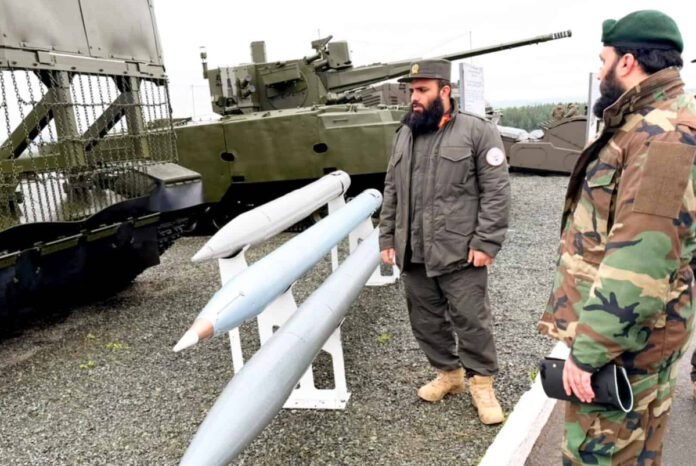
At the Center-2026 (Tsentr-2026) war games in Russia’s Chelyabinsk region, Taliban officers stood among the foreign observers. Reports say it was the first time Moscow had invited a Taliban military delegation since the movement returned to power in 2021.

Days earlier, Pakistani jets had struck Kunar and Helmand provinces. The UN mission confirmed at least 10 civilians dead, most of them children.

Set side by side, the two events invite a theory of a Russian plot against Pakistan. I don’t buy it. What I see is messier and, for Islamabad, harder: Kabul is becoming a military partner that others want to be seen with, and Pakistan no longer holds a special place in Afghan strategy.

From pariah to partner

Russia once banned the Taliban as a terrorist group. Its Supreme Court suspended that ban in April 2025, and by July Moscow had become the first government to recognize Taliban rule.

On May 27, Sergei Shoigu, the secretary of Russia’s Security Council, and Mohammad Yaqoob Mujahid, the Taliban’s defense minister, signed a military-technical agreement. Its text has not been made public. Zamir Kabulov, Moscow’s envoy for Afghanistan, has described it as mostly about refurbishing equipment Kabul already owns.

On the public record, then, Russia has agreed to keep an old Soviet-era arsenal running, not to build a new one. Afghanistan International, a London-based outlet that is no friend of the Taliban, claims that Kabul has asked for much more, including air defense and help reviving fighter jets and helicopters. I can’t verify that. If accurate, it would suggest the Taliban sees the pact as a first step.

The Center-2026 exercises ran from September 28 to October 3. The South China Morning Post reported more than 47,000 personnel and named troops from Russia, Belarus, China, Pakistan, Kazakhstan, Kyrgyzstan, Mongolia and Tajikistan.

Russia’s defense minister, briefing President Vladimir Putin, put the number at about 6,000 for the final stage, so the headline figure depends on who is counting.

The Taliban were not among the troops. They were observers, one of dozens of delegations, in the same category as India, North Korea and Vietnam. That still matters: an invitation signals that Kabul counts.

But it doesn’t make the Taliban part of a Russian bloc, and it is hard to call an exercise anti-Pakistan when Pakistani soldiers took part.

An unconfirmed lead

Another story has run harder than its evidence supports. Afghanistan International, citing five sources, says the Taliban is buying weapons and drones from Belarus with Indian money.

Taliban ministers have visited Minsk. Beyond that, there is nothing: India, Belarus, Russia and the Taliban have confirmed none of it, and the report names no contract or system.

I keep the two stories apart for a practical reason. Russian-Taliban military contact is documented; the Belarus channel is a lead. Merge them, and if the lead collapses, it takes the solid story down with it.

Russia doesn’t need to dislike Pakistan to want a stronger Taliban. Its real fear is Islamic State Khorasan Province, or ISIS-K, and it wants whoever rules Kabul to be able to fight it. Afghanistan also borders Central Asian states that Moscow regards as its southern flank, and with the Americans gone, it would rather not cede that space to others.

A Taliban army that can keep its existing equipment running suits Moscow fine. One with modern drones and air defense would be a different matter, and nothing public says that is on offer.

Pakistan’s shrinking leverage

Islamabad once counted the Taliban’s return as a win. Then the Pakistani Taliban, formally the Tehrik-e-Taliban Pakistan, changed the mood. Pakistan says Kabul lets the group operate from Afghan soil; Kabul denies it. The dispute has moved from protests to air raids.

The latest raids came a week after earlier strikes in Kandahar, Paktia and Khost. Pakistan says it killed 22 militants on October 1. The UN has counted more than 1,100 civilian casualties from cross-border violence this year, and a Taliban official has promised a “calculated” response.

What worries me is the cycle of violence. Every strike hardens Afghan opinion, strengthens Kabul’s case for better weapons and burns goodwill that Pakistan will need later. Dead children are a diplomatic cost that no tactical gain repays.

None of this means Russia has dropped Pakistan. Moscow has widened its defense and counterterrorism contacts with Islamabad too, and Pakistani troops drilled at the same exercise the Taliban watched. That is balancing. What should unsettle Pakistan is that even good ties with Moscow no longer guarantee agreement on Afghanistan.

The same caution applies to India. Not every Indian move in Kabul is aimed at Pakistan, and a long Pakistan-Afghanistan conflict would create problems for New Delhi, too.

China’s cautious road

China is making its own bets. The Taliban is pushing ahead with a road through the Wakhan Corridor, Afghanistan’s only border with China, and analysts see it as a way to reduce reliance on Pakistan. Beijing has moved carefully.

It established a new county on its side of the frontier in March and wants joint patrols against militants, but it has not rushed to pay for the road. China also has investments in the China-Pakistan Economic Corridor to protect, and it would rather see Kabul and Islamabad repair ties than see Afghanistan bypass Pakistan.

Everyone with a stake in Afghanistan is hedging, and Pakistan is no longer the only way in.

The real change is not a secret weapons deal. It is the Taliban’s evolution from an insurgency that leaned on Pakistan into a government that collects partners. Russia wants help against ISIS-K, China wants a quiet border, India wants access, and Pakistan wants the attacks to stop.

Those aims sometimes overlap and sometimes collide, and drones raise the stakes of the collisions. The same technology that helps the Taliban hunt ISIS-K could make the next clash with Pakistan deadlier.

What I fear most is miscalculation. Capitals can pursue their own interests with no appetite for war and still read one another’s precautions as preparation.

I would watch for three things: whether Russian cooperation becomes clearer than a closed text and a maintenance briefing; whether anyone ever produces paper behind the Belarus claim; and whether Pakistan, Russia, China, Iran and the Central Asian states can agree that Afghanistan must not become a proxy arena.

For Pakistan, the lesson is plain: it can no longer manage Afghanistan through the Taliban alone. Border security and counterterrorism must now run alongside patient diplomacy in Kabul, Moscow, Beijing, Tehran, New Delhi and the Central Asian capitals.

The task is no longer to keep the Taliban close but to stay relevant as they build a network of their own.

Mansoor Qaisar is an independent writer based in Islamabad, writing on foreign and public policy and social issues shaping Pakistan and the region. He can be reached at mansoor.qaisar@gmail.com and on X at @MansorQaisar.

Ex-FBI Profiler Claims O.J. Simpson ‘Had Help’

0
ex-fbi-profiler-claims-oj.-simpson-‘had-help’
Ex-FBI Profiler Claims O.J. Simpson ‘Had Help’


More than three decades after the brutal murders of Nicole Brown Simpson and Ron Goldman, a former FBI profiler is raising a provocative question about one of America’s most infamous criminal cases: Was there another person at the crime scene?

Former FBI profiler and prosecutor Jim Clemente says he believes evidence from Goldman’s injuries could support a theory that O.J. Simpson had an accomplice during the June 12, 1994, killings.

Clemente laid out his theory during a recent appearance with media personality Tom Zenner and Kato Kaelin, the former Simpson houseguest who became a prominent witness during the 1995 murder trial.

Simpson was acquitted of murdering his former wife, Nicole, 35, and Goldman, 25, after a sensational eight-month criminal trial.

A different jury reached a different conclusion in 1997, finding Simpson civilly liable for the deaths and awarding the victims’ families $33.5 million in damages.

Simpson continued denying responsibility until his death from cancer in 2024 at age 76.

Now Clemente says certain details surrounding Goldman’s final struggle deserve another look.

He focused in particular on cuts found in Goldman’s clothing and injuries to his legs.

According to Clemente, the location of some of those wounds led him to theorize that Goldman’s legs may have been raised as he desperately kicked at an attacker.

“With the cuts in his jeans, in his pants that he was wearing at the time, the knife wounds could only have been made if both of his legs were elevated and bent and straightened out like he was kicking,” Clemente said.

From there, Clemente proposed a disturbing scenario.

He believes Goldman could have been restrained from behind by one person while another attacked him from the front.

“The only way that we behaviorally could figure out how that could happen is if somebody has him in a bear hug from behind and he’s being stabbed by somebody in the front,” Clemente said.

“He’s kicking, he’s fighting for his life.”

Clemente also questioned why, under his interpretation of the evidence, Goldman did not suffer the type of extensive wounds to his arms that he would expect if Goldman had been freely punching and defending himself against a knife.

He suggested Goldman’s arms could have been restrained.

The theory is dramatic, but it is important to note that it has not been established as fact.

Investigators who worked the original case reached a different conclusion.

During Simpson’s 1995 criminal trial, lead LAPD detective Tom Lange testified that he believed a single attacker killed both Nicole and Goldman. Lange said Goldman’s injuries suggested he was desperately trying to protect himself but did not necessarily show that another person was restraining him.

Los Angeles County’s chief medical examiner also testified that Goldman could have suffered his fatal injuries while trapped in the narrow, enclosed area near the walkway outside Nicole’s Brentwood condominium.

The coroner said Goldman may have had little room to escape as an attacker wielding a knife cornered him.

Still, the possibility of more than one killer is not entirely new.

During Simpson’s 1996 civil trial, defense pathologist Dr. Michael Baden testified that he believed Goldman’s prolonged struggle could indicate that at least two attackers were involved.

That argument ultimately did not persuade the civil jury, which unanimously found Simpson liable for the deaths.

Clemente is now approaching the evidence from a behavioral-profiling perspective.

He also believes the attack was planned rather than an uncontrolled, spontaneous explosion of rage.

“Whoever committed this crime had an extreme amount of rage and anger in them,” Clemente said.

He argued that the killer had been thinking about the attack beforehand and described the murders as an “organized crime” in the behavioral sense — meaning he believes the perpetrator planned the attack and considered when Nicole would be vulnerable.

Clemente theorized that Nicole was the intended target and Goldman arrived unexpectedly.

Goldman had worked at the Mezzaluna restaurant, where Nicole and her family had eaten earlier that evening. He went to her condominium to return a pair of eyeglasses that Nicole’s mother had accidentally left behind.

Clemente believes that unexpected arrival may have changed whatever plan had been made.

“Of course, he thought she would be alone at that moment, but because she left the glasses there at the restaurant, somebody else showed up,” Clemente said. “That is an unexpected result.”

He also suggested Nicole and Simpson’s two young children, who were inside the home that night, could potentially explain why someone planning an attack might have wanted another person present.

“What if the kids aren’t in bed yet?” Clemente asked. “What if the kids wake up and come down?”

Again, there is no established evidence proving that scenario occurred.

The original prosecution’s case centered on physical evidence it argued connected Simpson directly to the murders.

Blood evidence became a major focus of the criminal trial. Prosecutors presented testimony that blood consistent with Simpson and both victims was discovered inside Simpson’s Ford Bronco, while additional evidence included a bloody glove, shoe impressions and blood recovered along the pathway outside Nicole’s home.

Simpson’s attorneys aggressively challenged the collection, handling and reliability of much of that evidence, helping create the reasonable doubt that resulted in his acquittal on Oct. 3, 1995.

Clemente nevertheless believes investigators and the public should consider the possibility that the crime involved another person.

Asked whether he had an idea who that alleged accomplice could have been, Clemente offered perhaps his most tantalizing answer.

He said he had a “pretty good idea.”

He did not name anyone.

And there is currently no publicly confirmed finding from law enforcement identifying a second killer in the Brown-Goldman murders.

The accomplice theory has nevertheless resurfaced repeatedly during the 32 years since the killings, with investigators, forensic experts, authors and filmmakers continuing to debate how the bloody crime scene should be interpreted.

Even Nicole’s family has encountered the theory before. Nicole’s sister has publicly expressed skepticism about claims that Simpson had help, dismissing versions of the accomplice theory that have circulated for years.

That leaves Clemente’s comments as exactly what they are for now — a veteran profiler’s interpretation of one of the most dissected crime scenes in American history, rather than proof that a second killer has finally been identified.

But his refusal to reveal who he believes may have been there is certain to keep one of the O.J. Simpson case’s longest-running mysteries alive.

Susan Collins’s Committee Bought Trucks the Army Didn’t Want. Then Campaign Donations Poured In.

0
susan-collins’s-committee-bought-trucks-the-army-didn’t-want-then-campaign-donations-poured-in.
Susan Collins’s Committee Bought Trucks the Army Didn’t Want. Then Campaign Donations Poured In.


The U.S. Army announced last year that it had enough of a specific model of armored vehicle and that any more deliveries would be “excess.” But even so, Congress found a way to keep funding alive for the vehicle — and executives at the company that produces the vehicle found a way to flood key members of Congress with campaign donations.

In the weeks after this year’s appropriations bill passed, employees of AM General or its parent company donated tens of thousands to key appropriations committee members in both chambers, Sen. Susan Collins, R-Maine, and Rep. Ken Calvert, R-Calif.

Collins is separately facing scrutiny over a report from ProPublica that the FBI investigated an alleged pay-to-play scheme involving a major donor, an ex-defense contractor. Collins’ office denied that there was any kind of pay-to-play arrangement and said she fully cooperated with the FBI. There is no indication that AM General’s donations were part of such a scheme, but the giving nonetheless demonstrates how Collins’s campaign account has grown with help from employees at defense contractors doing business with the government.

Before the Army put the future of the vehicle in jeopardy, Collins was not a frequent beneficiary of contributions from the company’s workers. She last received campaign funds from AM General or its parent company’s employees more than a decade ago. But after the Army’s “excess” announcement last year, employees and the company’s PAC donated over $58,000 to committees associated with Collins.

One observer of money in politics said that appropriators receiving money from government contractors is a long-standing problem.

“Government contractors today routinely try to leverage a broken campaign finance system to their advantage.”

“Members of the appropriations committees in Congress are extremely powerful. These lawmakers can steer huge sums of money to private companies. Government contractors today routinely try to leverage a broken campaign finance system to their advantage,” said Michael Beckel, money in politics reform director at Issue One.

The revival of the Army’s order was supported by lawmakers in both parties, including the top Democrat on the House Appropriations defense subcommittee, Rep. Betty McCollum, D-Minn. Collins’s office said that in the Senate, decisions on the program were made not by her but by defense subcommittee chair Sen. Mitch McConnell, R-Ky., and vice chair Sen. Chris Coons, D-Del. McConnell did not receive donations from employees at AM General or its parent company this election cycle. Coons received $2,500 from its employee PAC.

“Sen. Collins was not involved in this decision. The final decision was made by the Chairs and Ranking Members of the House and Senate Defense Appropriations Subcommittees,” said a Collins spokesperson, Phoebe Keller.

AM General’s CEO, John Chadbourne, said in an email that the company does not comment on campaign donations, “all of which fully comply with FEC rules and regulations.”

He added, “AM General’s focus is on the Warfighter and providing the best light tactical vehicle capabilities to the Joint Forces.”

Congress Steps In

AM General is most famous for producing the Humvee, the iconic military vehicle that trawled the streets of Baghdad during the Iraq War. In 2023, the Army selected the company to produce 20,000 units of a more heavily armored successor known as the Joint Light Tactical Vehicle. The company was ramping up its production line in Indiana when then-Army Secretary Dan Driscoll announced in May 2025 that he would cancel its order, saying the additional deliveries would result in an “excess.”

Driscoll’s announcement was part of a larger effort to “eliminate waste and obsolete programs.”

“Yesterday’s weapons will not win tomorrow’s wars,” he said.

The military does not always have the last say on its contracts, however.

Congress has for decades swooped in to save pricey programs with political appeal. Soon after the Army moved to kill the vehicle contract, Congress mobilized to save it.

AM General had backing from members of Congress in Indiana, thanks to the jobs on its production line there. It also found backing from legislators in states far from its home.

The House moved first: In June 2025, the House Appropriations Committee’s subcommittee on defense proposed spending hundreds of millions on the vehicle for the Army. By the time the final version of the defense spending bill passed this February, the Army had been provided with $345 million for procurement of a vehicle it said it did not need.

A joint statement from the House and Senate, which Collins’ office said was produced by the defense subcommittees, sounded a skeptical note about the Army’s decision to cancel further orders of the vehicle. The statement said that the Army had provided “inadequate supporting analysis.” One concern was that without the efficiencies from a larger order that included the Army, the cost-per-unit price of vehicles that the Marines still wanted would rise.

McCollum, the House Democrat with an influential role in the process, said in a statement that she was one of numerous members of Congress to question the Army’s decision.

“Appropriators felt the Army failed to do adequate due diligence to justify their rash budget decision to cut the JLTV program and explain the full impacts on the Army, and especially the Marine Corps, which had not been consulted,” she said.

By the time the final version of the defense spending bill passed this February, the Army had been provided with $345 million for procurement of a vehicle it said it did not need.

Collins’s campaign committees had received some money after the Army announced that it wanted to cancel the project.

In the weeks after Congress passed the appropriations bill on February 3, Collins and one of her counterparts in the House, Rep. Ken Calvert, both received a burst of donations from AM General employees and the company’s political action committee.

After the appropriations bill went through, donors associated with AM General gave a total of $50,000 to Collins’s fundraising committees.

The donors included Chadbourne, the company’s CEO, and two of KPS Capital’s managing partners. (Private equity firm KPS Capital Partners acquired AM General in 2020.) All gave money to a committee raising money on Collins’s behalf at the end of February or start of March.

Calvert, the California representative with the defense appropriations post, has also benefited from similar donations. Both AM General employees and KPS Capital employees have given $14,285 in direct contributions to Calvert for Congress this election cycle.

The AM General employee PAC has given a combined $20,000 to Ken Calvert for Congress and Eureka Political Action Committee, Calvert’s leadership PAC.

Most of the donations to Calvert associated with AM General came in the weeks immediately after Congress passed the appropriations bill. His office did not respond to a request for comment.

Those contributions put Collins and Calvert in the same league as the Hoosier politicians who were natural supporters of AM General. A fundraising committee associated with Republican Sen. Todd Young received $36,000 from AM General or KPS Capital employees. The AM General employee PAC donated another $10,000 to his main campaign committee. A Marine Corps veteran, Young has been a vocal proponent of the Joint Light Tactical Vehicle.

His Republican colleague Sen. Jim Banks’s leadership PAC received $14,375 total from AM General’s employee PAC and Chadbourne, the executive. Meanwhile, Rep. Frank Mrvan, a Democrat representing northwest Indiana, received $33,050 from AM General or KPS Capital employees, and another $10,000 from the AM General employee PAC, according to FEC filings.

A Ban That Isn’t

On her campaign website, Collins notes that she serves as chair of the “powerful” appropriations committee.

“This committee decides how federal dollars are spent each year, from national defense and infrastructure to medical research, education, and public safety. Susan’s position gives Maine an outsized voice at the table when critical decisions are made which allows her to deliver serious results for Maine,” her website states.

Collins’s office said that in the case of the AM General vehicle, she had nothing to do with the funding decision. A spokesperson said the decision-making in the Senate was up to McConnell, the defense subcommittee chair, and its vice chair Sen. Chris Coons, D-Del.

McConnell announced his pending retirement in February 2025. His campaign committee and leadership committee have not received donations from either KPS Capital or AM General employees this election cycle, FEC records show. His office did not immediately respond to a request for comment.

Coons’s campaign committee received a $2,500 donation from the AM General employee PAC on March 5, according to FEC records. His office did not immediately respond to a request for comment.

McCollum’s leadership PAC received $5,000 from the company’s employee PAC last October, according to FEC records.

Government contractors have been banned from donating directly to candidates for decades. In practice, however, that ban does nothing to prevent company PACs or individual employees from giving to campaigns — even if they serve as company executives.

The contributions associated with AM General represent a sliver of the $15.8 million Collins had raised this election cycle through July, according to data compiled by the watchdog group OpenSecrets. Yet every dollar could help her in what is expected to be a tough fight with Troy Jackson, the Democratic Senate candidate with a slight lead on her in recent polls, in November.

The contributions also illustrated a trend among the top contributors to her campaign. Many of them are from people affiliated with government contractors, according to OpenSecrets. Two defense contractors, General Dynamics and RTX, are also on the list of her top organizational contributors.

AM General’s owner, KPS Capital Partners, is the sixth-largest organizational donor to Collins’s campaign committee and leadership PAC, according to the group’s data.

Although AM General has cultivated connections in Congress, members appear to be growing increasingly skeptical of the JLTV vehicle program. In June, House appropriators signaled that they wanted to find a new contractor for the vehicle, citing production delays. AM General was 2,000 vehicles behind on orders from the Marines, the defense subcommittee said.

Chadbourne, the company’s CEO, issued a statement in June defending its performance and blaming a previous contractor for delays.

“Healthy competition, transparency, and accountability strengthen America’s defense industrial base,” he said. “AM General remains fully committed to continue earning the trust placed in us by the Army, the Marine Corps, Congress, and the American taxpayer through performance, quality, and disciplined execution.”

How ProPublica Reporters Became Private School Owners in 24 Hours

0
how-propublica-reporters-became-private-school-owners-in-24-hours
How ProPublica Reporters Became Private School Owners in 24 Hours

It began as a casual question — and a flicker of curiosity — uttered during a meeting of ProPublica journalists who this year are reporting on publicly funded private schools. We were discussing how, in many states, basically anyone can open a private school wherever they want. No experience, no training, no curriculum required.

One of our editors jumped in and asked: What if ProPublica tried to establish a private school?

We were intrigued. We are longtime education reporters, not educators. Would that matter? Where, if anywhere, do states draw the line on who is fit to run a school — and in some cases, collect public money to fund their ventures? 

We decided that testing the thesis that anyone can open a school would be valuable to our ongoing reporting, particularly at a time when we have found that private schools are growing rapidly across the country — in barns, farms, co-working spaces, people’s homes and parks. These new schools are fueled by taxpayer-funded vouchers and other programs, and our reporting has revealed states have little interest in monitoring them. 

We had some inspiration to draw from: In 2015, comedian John Oliver founded a tax-exempt church to show how easy it was for televangelists to avoid paying taxes while soliciting millions of dollars. 

Some of us live in Chicago and are well aware of the lore of the Mirage Tavern, a real bar that undercover reporters operated in the 1970s to expose corruption in the city. While that investigation had a substantial impact, and led to a new city oversight agency, it also drew criticism for its deceptive practices.  

We drew lessons from that reporting and set some ground rules at the start of our experiment. To be clear, we had no intention of operating schools. We won’t enroll any students. 

Most importantly, it would be critical for us to be transparent about who we were in our applications, using our newsroom phone numbers and email addresses. In one state, we even disclosed that we were “journalists exploring opening a microschool.” We also decided we would stop the experiment if it would require doing something illegal or using public resources for our own benefit.

Help ProPublica Report on Education

Have you had trouble finding a school or using a voucher-style program? Do you have concerns about schools — public or private — in your area? Help us understand how families across the country are navigating their school options.

Here’s how we went about the experiment in Arkansas, West Virginia and North Carolina: 

First, we partnered with newsrooms in the three states — the Arkansas Times, Mountain State Spotlight in West Virginia and The Assembly in North Carolina — and pursued creating the schools together. No one knows their states better than reporters who live there, so we wanted to work with the experts. Plus, the school applications required local addresses and we reasoned that newsroom addresses, which state officials could easily look up, would be extra transparent. 

Then, we came up with names for the schools. We aimed to call them Curiosity Academies to reflect our curiosity as journalists. We succeeded with the ProPublica-Arkansas Times Curiosity Academy and ProPublica-Mountain State Spotlight Curiosity Academy. A word-count limit required us to scrap curiosity for our school in North Carolina. We simply called it the ProPublica-Assembly Academy.  

Next, we filed paperwork with each state. That turned out to be easier than working through the legal and ethical questions with our editors, our legal team and our standards editor to design our experiment in the first place. 

In Arkansas, we didn’t need permission from the state Education Department, which does not regulate private schools. All it took was filling out a form on the Arkansas secretary of state website, $45 and an American flag to be recognized as a private school business (yes, Arkansas requires all schools to have an American flag — but only public schools also are required to have the Arkansas flag). The secretary of state’s office even emailed us a certificate.

A document that reads: “State of Arkansas. Secretary of State. Cole Jester. Arkansas Secretary of State. To All to Whom These Presents Shall Come, Greetings: I, Cole Jester, Arkansas Secretary of State of Arkansas, do hereby certify that the following and hereto attached instrument of writing is a true and perfect copy of Certificate of Organization of ProPublica-Arkansas Times Curiosity Academy LLC filed in this office June 16, 2026. In Testimony Whereof, I have hereunto set my hand and affixed my official Seal. Done at my office in the City of Little Rock, this 16th day of June 2026.”
The official certificate acknowledging our school Secretary of State/State of Arkansas

But when it came to applying for our private school to become eligible for public funds, a process that does add some guardrails, we didn’t think we could do it. In Arkansas, private schools participating in the voucher-like program have to be accredited or working toward it, which often requires creating curriculum and school handbooks. That seemed like a step too far since we weren’t actually opening schools. 

However, we discovered that Arkansas allows a subset of schools called microschools to use public money with fewer requirements. So, we decided to apply for public funds as a microschool. That process also took only about 10 minutes. We didn’t need to provide our credentials or a background check, prove our fiscal stability or assure that the newsroom was a safe place for students. (If approved, we would not take the next step and register to receive public money.)

A state employee who reviewed our application, which we submitted in early September, said we missed the deadline for this school year but could apply for next school year. He also suggested another way we could tap into public money.

Kaelin Clay, the Arkansas Department of Education spokesperson, said the agency reviews applications to the voucher-like program to determine if the schools meet state requirements. She said microschool families have the “freedom to choose” where and how their children learn.

In West Virginia, we spent little time handwriting the required information on notebook paper and submitting it to the state Education Department. We eventually established our school as a microschool after a state employee shared that, unlike the regulations for private schools, we would not need an inspection. 

We did need proof of at least a high school diploma, and we shared one of our real college transcripts from the late 1990s with the local school district, which then notified the state of our new school. (We couldn’t find the high school transcript; does anyone keep them?) 

In an official statement, a spokesperson for West Virginia’s Department of Education said it “does not approve or deny the operation of microschools for any reason, including the qualifications of the owner/operator.” State law includes no mechanism for oversight of microschools.

A close-up of a notebook with handwritten words. Hands hold the edge of the notebook and a pen.
ProPublica reporter Jennifer Smith Richards handwrites an application to found a private middle school in West Virginia. Laura Bilson for ProPublica

In North Carolina, our project’s own rules and ethics — not the state’s determination of the quality of education we would (or wouldn’t) provide — prevented us from completing the process there. Instead of using the address of The Assembly’s newsroom on our application, our editors let us use the address of a brewery for our school. We needed a property with fire and sanitation inspections. The co-working space that houses the newsroom had a fire inspection but wasn’t required to have one for sanitation. But the brewery, which has a partnership with the newsroom that led to the creation of a light and lemony ale called Tell the Truth, did have one. They let us use their inspection reports for the project. 

But when a state official told us that, in fact, we needed to get school-specific fire and sanitation inspections, we abandoned our quest. This crossed our line of straining public resources, as we didn’t want inspectors, whose salaries are paid by tax dollars, to devote their time to our experiment. 

The rest, as they say, is history. A bunch of journalists are now school owners, administrators and heads of schools. And though we plan to close down the academies we opened to ensure no potential students mistake us for a proper school, we did want some mementos of our brief school experience. So we snagged ProPublicaAcademy.com and designed some fun pencils to show our school spirit. 

And that’s not all. Now that we’ve told you about our journey opening private schools, do you think you have what it takes to open one, too? Find out by taking our quiz. Let us know how you did by replying to this email or tagging @ProPublica on your favorite social platform.

Read More

AI glasses face their first major government crackdown

0
ai-glasses-face-their-first-major-government-crackdown
AI glasses face their first major government crackdown

Norway has become the first major country to propose a temporary ban on the use of AI glasses in selected public places amid growing privacy concerns over wearable technology.

The rich Scandinavian country’s center-left government said on Monday that it would introduce a law to parliament soon on a temporary ban for places such as parks, beaches, schools and kindergartens. It will also set up an expert group to propose permanent national rules.

“I am concerned about the introduction of powerful new technology where people risk being photographed, filmed or recorded without their knowledge,” said Torgeir Micaelsen, Norway’s digitalisation minister. A temporary ban “will give us time to conduct a thorough assessment and hold an informed debate that can lay the foundation for permanent regulation”, he said.

Governments around the world are grappling with how to regulate AI glasses —including those from Facebook owner Meta and cheaper copycat devices—amid worries that they are being used to film people without their consent, including children and women in settings such as changing rooms.

Parts of Norwegian society have already reacted with their own bans including schools in the capital Oslo and the country’s biggest company, oil and gas major Equinor, which has banned them from its offices and offshore facilities.

Australia is considering a ban on smart glasses in certain public spaces while courtrooms in several countries have issued bans as the use of wearable technology increases.

Norway’s government said it did not want to propose a total ban. It said that appropriate use could be where there was no risk of filming people without their consent.

It added that the proposed ban was a “high priority” and that a draft law would soon be presented to parliament.

“We do not want a society where people are concerned about hidden audio recordings, photography and filming in places and situations where they are used to being without being monitored. Such a society can be experienced as unsafe and cause us to withdraw,” said Micaelsen.

US tech companies such as Meta, Google and OpenAI believe wearable technology, such as smart glasses, has the potential to replace mobile phones as our main gateway to AI. They believe that talking to AI—which will listen to people’s conversations and daily life—is easier than opening an app and typing in queries. Analysts at Counterpoint Research estimate consumers will spend more than $1 trillion between 2026 and 2032 on wearable devices.

But that has raised widespread privacy concerns about what such smart glasses could see or hear, and led to them being dubbed “pervert technology” by some campaigners.

© 2026 The Financial Times Ltd. All rights reserved Not to be redistributed, copied, or modified in any way.

Daily doses of ‘digital ibuprofen’: how burnt-out Chinese youth soothe their anxieties

0

In China, young people are encountering myriad challenges, from societal pressures around success to existing in a highly surveilled society, that have made them turn to the internet in search of a balm to soothe their pain. What has emerged is a host of content called digital ibuprofen – viewed as a way to numb the anxieties of modern living.

The most popular digital ibuprofen at the moment is the Japanese webcomic Chiikawa (2020), a portmanteau of the Japanese words small (chiisai) and cute (kawaii). Set within what has been called a “post-apocalyptic gig economy”, Chiikawa follows the daily lives, jobs (like weeding and monster hunting) and struggles of small, emotional creatures. The appeal of the sweet, strange world to a disaffected youth becomes apparent as darker themes emerge.

These animals face challenges like sitting exams to get higher pay, doing menial labour to survive, and suffering burnout. Along the way they try to avoid scams and monsters that want to eat them. But amidst it all they manage to maintain positivity by cultivating friendships and enjoyment, especially by sharing delicious food.

Rather than the explicit cynicism of western cartoons such as The Simpsons and South Park, much of digital ibuprofen represents a distinctly East Asian approach to social satire that uses cuteness and surrealism to disguise its message. Chiikawa is part of a lineage that includes characters like Aggretsuko (2016) – a cute red panda who de-stresses from office life by singing death metal at karaoke – and Gudetama (2013) – an apathetic, depressed egg yolk.


Quarter life, a series by The Conversation

No one’s 20s and 30s look the same. You might be saving for a mortgage or just struggling to pay rent. You could be swiping dating apps, or trying to understand childcare. No matter your current challenges, our Quarter Life series has articles to share in the group chat, or just to remind you that you’re not alone.

Read more from Quarter Life:


Pay attention and you’ll see that these characters are trying to navigate many of the same issues that Chinese youth face. This is a group who spends their school years frantically studying for highly competitive high school final exams called gaokao.

They are then faced with entering a brutalising work environment where 996 has become a shorthand for the normalisation of working 9am till 9pm, six days a week. Such unrelenting demands of work have been widely documented as China emerged from its rapid development in the early 21st Century.

Burnout has become common and the Chinese dream seems to have receded in the face of economic downturn. In response, movements such as “lying flat” (tang ping), meaning doing the bare minimum, or becoming a full-time child – taking a career break to live at home and help parents – have emerged.

Then there’s the impact of the explosion of China’s digital landscape. Following huge infrastructural investment, China has become a technology powerhouse with widespread engagement with Chinese social media and innovations in goods and services online.

Yet this growth has come with other issues. There are more online scams and a constant awareness of government surveillance and control over public speech. These young people are living a world where online comments are monitored, deleted or worse. In some instances, a thoughtless post could lead to an invitation for “a cup of tea” (informal questioning) at the police station.

So digital ibuprofen becomes an apt analogy for the psychological desire to be numbed in the face of all these daily challenges – even if the internet simultaneously feels like a dangerous place.

The cuteness inherent in these soothing products has a significant history in East Asia, not only in sweet characters such as Sanrio’s Hello Kitty, but also in the late 1990s and early 2000s Japanese healing boom (iyashi).

In response to economic recession and the resulting loss of stability for many, new goods and services, such as cat cafes, massage and aromatherapy, became popular ways for workers to de-stress. Japanese media also promoted manga and anime that focused on peaceful environments and low-conflict daily life to comfort their audiences.

For instance, Aria (2001), a show about a young woman training as a gondola tour guide on a futuristic, water-covered Mars, focuses on the small, everyday joys of life.

Digital ibuprofen is just the latest evolution of this tendency to seek comfort from media that promise to heal and understand us in the face of modern pressures.

As the darker themes in Chiikawa attest, within this cuteness is what has become a uniquely East Asian type of protest – that of soft rebellion. This is where extreme passivity and retreat into childhood things is used to articulate a dissatisfaction with the demands of the adult world to grow up. There is a quiet resistance through non-engagement.

From 1960s Japanese university students openly reading manga comics in class to the childlike clothes of Lolita fashion subcultures, extreme cuteness has signalled a resistance to becoming mature, responsible producers in an economic system stacked against them.

Also, in a conservative society based on traditional Confucian principles of order and hierarchy, soft rebellion neatly circumvents restrictions and limitations without the need for open confrontation, which can invite real risks and consequences from an uncompromising state.

But, while digital ibuprofen may look like it merely numbs the pain rather than deals with the root cause, it also allows youth to explore their dissatisfaction safely, without inviting trouble. Although you have to earn a living, the message of Chiikawa is that goodness is present wherever you find it, and you don’t need a lot in life. There’s friends to share good times, to help each other through hard times. And at the end of the day there’s always cake.

0FansLike
0FollowersFollow
0FollowersFollow
0SubscribersSubscribe
- Advertisement -
Google search engine

Recent Posts