20 C
London
Friday, October 2, 2026
Home Blog

Mahmoud Khalil: “We Can’t Afford to Stay Silent”

0
mahmoud-khalil:-“we-can’t-afford-to-stay-silent”
Mahmoud Khalil: “We Can’t Afford to Stay Silent”


Three years into Israel’s genocide in Gaza, the U.S. government is still targeting pro-Palestine student activists. 

Even before federal immigration agents descended on communities around the country, killing immigrants and protesters, unmarked agents were abducting students who had voiced criticisms of Israel. 

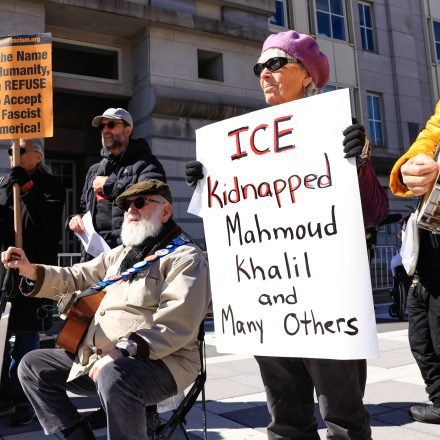
Mahmoud Khalil was the first. After federal agents detained him at his alma mater, Columbia University, he spent more than 100 days in an Immigration and Customs Enforcement detention facility in Louisiana. It’s been over a year since he was released and returned to live with his family in New York City. The Trump administration is still trying to deport him. 

“Part of why I’m doing this right now rather than waiting 10 years or 20 years is because what’s happening now in ICE detention is a stain on the U.S. conscience,” Khalil tells The Intercept Briefing. “I don’t want to look back in 20 years and reckon with what’s happening. I want to stop the killing now. I want to stop the disappearances now. I want to stop the cruelty now.”

This week on the podcast, Khalil speaks with host Akela Lacy about what he’s learned about how he became President Donald Trump’s top target, the role Columbia University played in that campaign, and his new book, “No Land to Stand On,” which chronicles Khalil’s experience in ICE detention, missing the birth of his first child, his ongoing saga to stay in the U.S. with his family, and more.

“It’s been so difficult just to have that conversation with my wife Noor about what would happen,” Khalil says. “What are we doing? Is it worth the fight? Should we just leave? But to me, this fight isn’t only about whether I get to stay in this country.”

“It’s about whether anyone — whether they are citizens or non-citizens — are able to speak out against government policies and against the support of Israel in this country. It goes down to a very basic thing: If they are able to deport someone for their views on Palestine, they would be able to deport anyone on their views, whether it is pro-Palestine or pro-Israel or anything.”

For more, listen to the full conversation of The Intercept Briefing on Apple Podcasts, Spotify, YouTube, or wherever you listen.

Transcript

Akela Lacy: Welcome to The Intercept Briefing, I’m Akela Lacy, senior politics reporter at The Intercept.

It’s been almost three years since the October 7 attacks in Israel that preceded the ongoing genocide in Gaza. In that time, Israel has destroyed an entire region, killed more than 70,000 people and injured scores more, launched attacks on surrounding countries, and drawn the U.S. into a full-blown war with Iran. 

Over the last three years, at home in the U.S., something else fundamentally shattered. If anything is different now, it’s the honesty of it all. Free speech, civil rights, and equal protection under the law — of course, with all the appropriate exceptions. 

What started as a bipartisan commitment to suppressing criticism of Israel led to flagrant abductions of pro-Palestine students by unmarked immigration agents. 

Since the crackdown on students escalated in the early months of Trump’s second term, ICE’s war has spread even further. 

Since Trump reentered the White House, ICE has detained more than half a million people and says it’s deported almost twice that. More people are dying in ICE custody or at the hands of federal agents, who have killed at least eight people since January 2025, including two protesters in Minneapolis. 

Our guest today lives at this nexus: how the siege on Gaza fueled a reckoning at home and fused America’s anti-immigrant push with its battle over speech on Palestine. 

Mahmoud Khalil was the first person taken by ICE over student activism for Palestine last year. Khalil, who was born in a Palestinian refugee camp in Syria, fled the country at 18. He later moved to the U.S. to attend graduate school at Columbia University, where he emerged as a leader during student protests against Israel’s war on Gaza. After being released from ICE detention last year, Khalil returned to living in New York, where he continues to fight against the threat of deportation. He joins me now. 

Mahmoud Khalil, welcome to The Intercept Briefing. 

Mahmoud Khalil: Thank you so much for having me.

AL: To start, I want to ask about your family. You were being held at a remote ICE detention center in Louisiana when your son, Deen, was born last year. How is Deen now? 

MK: He’s a wonderful, wild 17-month-old. So he’s walking all over now, and it just feels so rewarding really to have him in our life right now, especially in a very difficult moment in our family.

I get so much inspiration from him and that pushes me to continue to work because this is not only about my family. It’s a story of so many families who this administration separated and inflicted violence upon them. It’s also a story of so many Palestinian families in Palestine whose fathers are in Israeli prisons [who] can’t meet their families, or even the ones in Gaza who are disappeared right now.

AL: I’m sure you and Noor talk about this, how you will tell Deen your story, and when. What are those conversations like?

MK: I try to push it as much as possible because usually you tell a story that already happened, but my story is still happening. Every day there’s something new.

And that’s what made writing the book difficult for me, because usually you write a memoir about a memory about something that has already happened to you. While, to me, I am now living it. So how would I write about it? That was like so difficult for me.

The same way about telling Deen about it: Would it be a happy story or a sad story? Would it be a story that, in fact, the legal system stood up for the unlawful detention of his father and the attempts to deport him — or it did not? Is it that the people in this country advocated for his father and the rights of so many other people in this country — or not? That’s still to be told, so I don’t want to really jump to conclusions at all. 

Part of why I’m doing this right now, rather than waiting 10 years or 20 years, is because what’s happening now in ICE detention is a stain on the U.S. conscience. So is the Palestine exception: the fact that freedom of speech, rule of law, basic dignities are afforded to everyone except for Palestinians. I don’t want to look back in 20 years and reckon with what’s happening. I want to stop the killing now. I want to stop the disappearances now. I want to stop the cruelty now.

“I don’t want to look back in 20 years and reckon with what’s happening. I want to stop the killing now. I want to stop the disappearances now.”

AL: You were released from ICE detention last summer. What have the last 16 months in your life been like? 

MK: It’s been a saga with courts but also just as a family, with a new family now, like trying to really live our life. Try to build our future in a country that at least promised me some sort of stability and safety after living in Syria and then in Lebanon. So it’s been difficult to find that stability and that permanence in our lives. It is a fight to me, like it’s been since then.

It’s been so difficult, of course, just to have that conversation with Noor, my wife Noor, about what would happen. What are we doing? Is it worth the fight? Should we just, like, leave? But to me, this fight isn’t only about whether I get to stay in this country. It’s also about whether those speaking out for Palestine have the right to do so without being punished by the administration or by the government, whether it’s the Trump administration or another. So that’s why I feel like it’s a bigger fight than just about me or about our family.

But at the end of the day, we are people. I want to go to Bryant Park and just watch the movies there, but I can’t do that easily. There’s several precautions I have to do to be able to actually do this very normal activity that any couple would do on a normal day. But it is the cost, unfortunately, that was imposed upon me by ICE and the Trump administration.

“To me, this fight isn’t only about whether I get to stay in this country. It’s also about whether those speaking out for Palestine have the right to do so without being punished.”

AL: To your point, this is something that’s happening at multiple levels. And you write in the book that you were given the option to “self-deport” — to where, we don’t know. But you say that you felt like if you did that, you wouldn’t just be succumbing to this false smear campaign, but you would be giving the federal government the blueprint for how to silence dissent. You also talk about this being a story about the horrors of the broader immigration detention system in the United States.

As of early July, more than 65,000 people are currently being held in immigration detention. You write in your book about your experience in Louisiana at LaSalle and the relationships you built with other people being held there, trading noodles. What was that like for you? You talk a lot about the psychological effects of some of the things: constant bright lights so you can’t sleep, constant freezing cold air. Can you describe the conditions of the facility that you were in?

MK: As I’ve mentioned, what’s happening behind ICE detention walls is a stain on the U.S. conscience. The fact that you have over 65,000 people at any moment detained in what’s called civil detention. That’s what they call ICE detention. And there’s nothing civil about detention. Even if it was a five-star condition, it’s still detention. You’re still separated from your family.

But I met in ICE detention so many incredible fathers and workers who came here seeking safety only to be snatched off the street, only to be told that they are criminals and they do not belong here.

“They want to make these conditions so bad you don’t fight for your case.”

I remember, and I talk in my book about, Najib, a man who was snatched off his immigration hearing — leaving behind his wife battling cancer with four little kids. Or Alexander, who came here begging for safety, begging for a place to stay, only to be told, “No, you should be safe where you’re from.” And when he was deported, he got killed.

They want to make these conditions so bad you don’t fight for your case, because you can fight your case, but that could take six months to two years, three years.

AL: Even if you win.

MK: Even if you win. That’s the fact. That’s how they weaponize the immigration system against you. Even if you win, you lose. They can appeal multiple times — not once or twice. Because it’s a kangaroo court. The system is so favorable to the administration, and the administration can change at any time.

That’s why you rarely find now anyone who would win in the immigration system, because it’s fully controlled by this administration. To me, it doesn’t make sense that you call it courts, or an impartial system, or a neutral system. It’s a very partial system to the administration.

That’s why they keep the lights on all the time. That’s why the temperature is down; it’s always cold. The food is pretty bad. You only have a thin blanket. Because they don’t want you to feel comfortable or have the basics to fight your case.

“To me, it doesn’t make sense that you call it courts, or an impartial system, or a neutral system. It’s a very partial system to the administration.”

AL: You’re very much still in limbo. It’s been almost six months since the Board of Immigration Appeals issued a final ruling in one of your cases ordering your removal. Last week, that same body denied a request to reopen your case.

I know your team is looking at bringing your case to the Supreme Court. What’s the latest there? And when will you know if you have to leave the country? 

MK: So 18 months since my arrest, the Trump administration has never brought any piece of evidence that I committed any crime. They haven’t even charged me with any crime because they know they control the immigration system.

“What they’re trying to do now in immigration is the total opposite: You are guilty until you are proven innocent — but you might be deported before then.”

So now we’re appealing our case to the Supreme Court — an Article III court — to look into the matter. Because what the Trump administration’s trying until now is to prevent me from even looking into the merits of the case that they are bringing against me. What they are claiming is that this case is purely an immigration case, and only immigration judges should be able to look at it. Then if you want to go to a federal court, it should go to the 5th Circuit or the courts in Texas and Louisiana, who are pretty much favorable to the administration as well.

So they are trying to prevent a federal court from looking into this matter. We are now taking it to the Supreme Court because no government should have the power to detain someone without any independent judgment into it.

Usually, the basics in criminal law are that you are innocent until proven guilty. What they’re trying to do now in immigration is the total opposite: You are guilty until you are proven innocent — but you might be deported before then. So it is a long fight. But once again, this fight is not only about my ability to stay in this country. It’s more than this.

It’s about whether anyone — whether they are citizens or non-citizens — are able to speak out against government policies and against the support of Israel in this country.

It goes down to a very basic thing: If they are able to deport someone for their views on Palestine, they would be able to deport anyone on their views, whether it is pro-Palestine or pro-Israel or anything.

“If they are able to deport someone for their views on Palestine, they would be able to deport anyone on their views, whether it is pro-Palestine or pro-Israel or anything.”

AL: You and your team have expressed concerns that any ruling at the Supreme Court could backfire and further curtail the rights of pro-Palestine students. I wonder if you can you talk more about that? 

MK: For now, what we’re taking to the Supreme Court is only whether a federal court has jurisdiction to look into constitutional claims. For me, my constitutional claim is that the Trump administration wanted to deport me because of my activism on Palestine.

That’s what we’re bringing right now to the Supreme Court. This wouldn’t necessarily directly impact or have a larger impact on the movement as a whole. But already the government is doing everything in its power to chill the speech of whether students or citizens who are speaking out for Palestine. So what we’re trying is actually to prevent that. 

But the other part is, we seek accountability also from the public themselves. You don’t get accountability only through courts. You get accountability through the people who are now voting in progressive candidates into Congress who may be able to change the law.

That’s how I get accountability. I get accountability when I see that my book is out and people are reading what this administration tried to silence — that they want to make an example out of me, but they failed. That’s how we seek accountability. It’s not only from the court itself, because at the end of the day, people who create the law actually push for the law.

Because everything we got right now, the rights that American citizens or anyone on this land have, it was a product of a fight. Whether it’s a fight during the civil rights movement or the anti-slavery movement before then. It did not happen because a judge woke up and decided to do what’s right. It’s because, actually, people pushed for that to happen, and that’s my part of the fight right now.

AL: Mahmoud, you were not a random target. We know now that ICE took names from the pro-Israel doxing group Canary Mission to create a list of targets. Far-right pro-Israel groups like Canary Mission and the USA chapter of the militant, ultra-Zionist group Betar — considered by even the Anti-Defamation League as an anti-Muslim hate group — targeted you. 

Betar later claimed credit for ICE’s abduction of you and other students and said it shared “thousands” of — we know now it was about 5,000 — names of pro-Palestine students with the Trump administration for further action. In the lead-up to your abduction, Betar targeted you by name, as did actors at your alma mater, Columbia University: another group, Documenting Jew Hatred on Campus at Columbia, and a professor, Shai Davidai, who called specifically for the Trump administration to deport and arrest you in the days leading up to that abduction and tagged Secretary of State Marco Rubio.

You write in the book: “What I did not anticipate was the U.S. government would one day consider the recommendation of hostile Zionist groups to target me, and then act on it.”

You sued for communications between these groups and the Trump administration. What more have you found out about how much they coordinated to target and arrest you and other students? 

MK: The targeting of me and other pro-Palestine protesters was written in a document called Project Esther that was produced by the Heritage Foundation. In there, what they said [was], for this plan to work, we need a friendly administration that would listen to us and work with us to implement it.

That’s what happened after, because Stephen Miller was part of the Heritage Foundation or consulting for them, and then he became part of this administration, and actually worked on implementing this plan from A to Z.

From the discovery that the case in Massachusetts — AAUP v. Rubio— 

AL: This is the American Association of University Professors lawsuit against Secretary of State Marco Rubio.

MK: Secretary Rubio.

AL: Yes.

MK: A Reagan appointee found that the government officials conspired between themselves to deprive us from our freedom of speech. 

“We’re hoping to really expose these networks that pushed anti-Palestinian bigotry to be institutionalized within the U.S. government itself.”

One of the ICE agents or one of the DHS agents testified that, “I’ve never seen something like this happen in our department, that such a request would come from really senior individuals in the administration.” So now what we are suing for is to see this communication between between these private actors, whether it is Canary Mission, the Heritage Foundation, Betar, and others as well, what we call Zionist hate groups, and these administrators, whether it’s Rubio, Stephen Miller, or DOJ, and the attorney general.

Because it was all in public. Betar went out and said, “We take credit for that. We actually communicated with the administration about that.” That’s what we know publicly. So now we’re asking for these communications. This case, we filed it in July, takes some time, but we’re hoping to really expose these networks that pushed anti-Palestinian bigotry to be institutionalized within the U.S. government itself.

I got used to smear campaigns and doxing before my arrest. To me, that was part of an intimidation campaign to terrorize me not to speak out about Palestine.

To me, back then, the thought process was, usually they target your employer, they target your university, your father’s employers. I’m like, “Why would I work for anyone who doesn’t agree with my views on Palestine or who sees them as extreme? I don’t want to work for them.” 

You know, I never wore a mask [at Columbia] to hide my identity because the risk to me wasn’t that high. In Syria, I wore masks, because the risk back then was getting shot by [Bashar al] Assad forces or getting disappeared by mukhabarat, or intelligence officers.

I never imagined that what I fled from would happen to me in the U.S., the land of the free.

AL: After a quick break, more from Mahmoud Khalil, who has a new book, “No Land to Stand On.” We’ll be right back.

Welcome back. We’re speaking with Mahmoud Khalil, the first pro-Palestine student taken by ICE last year. 

You’ve filed three other lawsuits against the federal government and Columbia, and you are waiting for a response from the most recent suit which alleges a historical pattern of discrimination and retaliation against Palestinian students and pro-Palestinian activists, as well as a failure to address “coordinated harassment” against pro-Palestine students at your alma mater, the School of International and Public Affairs at Columbia University.

You’ve said that Columbia didn’t only ignore your concerns or documented harassment, but that the university facilitated your targeting and arrest by the Trump administration. 

Of the suit, you said: “Columbia laid the groundwork for my targeting by the Trump administration through its deliberate indifference and discrimination aimed at intimidating Palestinian students.”

For listeners who might not be familiar with how Columbia handled protests against the genocide in Gaza, or its history trying to crush and later celebrate other student protest movements, against the Vietnam War or to divest from apartheid South Africa, can you tell us a little bit more about the role the school played here?

MK: When I applied to come to Columbia, I applied to come to an institution that had a long history of student activism, of standing up, at least the students of that institution standing up for human rights, whether it was during the ’60s and the civil rights movement or in the anti-apartheid South Africa, but also most recently, against private prisons, against fossil fuels. So it goes beyond that. 

That’s the institution I came to. But I was surprised — even before October 7 — the level of the anti-Palestinian racism on campus. For example, when we tried to bring Human Rights Watch to our school [in 2023], the school put so many hurdles in front of us to be able to host a 70-person event. I was shocked. Why would you prevent us from hosting such a reputable human rights organization to come and talk about apartheid in South Africa? The same happened when we tried to bring BDS — the Boycott, Divestment, and Sanctions movement — virtually on campus.

So on October 7, Columbia had a choice of being an example for other institutions around the country, of being a place where difficult conversations would be held, where they would stand up for human rights, where they would actually listen to their own students.

Instead, Columbia employed surveillance systems against their own students, brutalized them. They called in the police about four times or more than four times in less than two years. Provided that, the last time Columbia called the police on campus was during the ’60s — like 60, 70 years ago.

They couldn’t contain the movement; they established a Gestapo-like office called the Office of the Institutional Equity that investigated every single Palestinian advocacy on campus, going after them with investigations. They brought private investigators; I remember being called by a private investigator that Columbia hired just to intimidate us.

AL: I spoke to students who got those calls, too, and they’re like, “What is this?”

MK: Exactly. Instead of just listening to their students, to their own students. These students were, most of them, 17 to 20 years old, watching a genocide happening in real time. 

So that was the climate at Columbia. At the same time, they harbored these actors who were doxing us. As a Palestinian, I pleaded so many times to get protection from the university up until the day of my arrest.

AL: Right. The day before.

MK: The day before my arrest, March 7, I emailed the president. I knew she wouldn’t answer. But I wanted to keep the record because I emailed her before then in January when the first wave of doxing happened, and they did not do anything. 

A year later, when another student was kidnapped by ICE from Columbia, non-Palestinian, non-related-Palestinian student was detained by ICE — Columbia immediately issued a statement, immediately called lawyers, immediately called elected officials because that student did not have to do anything with Palestine.

I’m so glad that Columbia did that, but that’s what they should have done to me, to Mohsen [Mahdawi] and to Yunseo [Chung], to the other students who were targeted by ICE.

But that’s again the Palestine exception in these institutions, where you have ideologues on the board of trustees of Columbia whose protection of Israel for them is much more important than protecting freedom of speech, than actually listening to their students, than the normal decency of just being board of trustees who have responsibility toward these institutions, but their loyalty was somewhere else.

AL: You’ve also mentioned future plans to sue other individuals at Columbia. In your suit against Trump, DHS, ICE and Rubio, your legal team cited reporting by me and my colleague Natasha Lennard on a network of faculty, alumni and other people at Columbia who were active in trying to target pro-Palestine students for deportation and arrest. You write in the book about coordination between Columbia students and faculty and some of these groups that smeared and doxed students. You write: “Those who fed our names to the machine continued to attend the school.”

What else have you learned about those people and those efforts? 

MK: I will continue to seek accountability until everyone who actively participated in me missing the birth of my child and me losing 104 days of my life, until they are all held accountable.

I will not stop until I achieve that. I’m doing this up until now, with first suing the federal government, then the federal government and private actors. And the private actors also included some of the Columbia actors who were feeding our names to Canary Mission.

Because we have to think about this — Canary Mission and Betar, or the Heritage Foundation — they did not have people on the ground. The people on the ground were Columbia’s own students and faculty, who were not hiding that they were doxing us.

AL: They were sending billboard trucks all over New York.

MK: Exactly. So we got records about communication between some of the students at Columbia and Leo Terrell, the chief of the antisemitism task force in the DOJ, pushing them to target us, but also providing talking points that we later saw on Terrell’s own social media.

“It was a very coordinated effort to demonize our movement.”

So that network goes beyond just random actors. It was a very coordinated effort to demonize our movement, to vilify the student movement that was rooted in human rights and equality and dignity. That’s why so many students joined this movement, not only Palestinians.

Palestinians at Columbia were barely 20, 30 students. But the movement that was built, it was built by Black students, by Asian students, by Jewish students. The coalition that was created as well, it had groups ranging from dancing groups, cultural groups, to the Young Democrats.

More than 100 groups joined together to call for Palestinian freedom, to call for the end of Columbia’s complicity in supporting Israel.

“Palestinians at Columbia were barely 20, 30 students. But the movement that was built, it was built by Black students, by Asian students, by Jewish students.”

AL: Mahmoud, you mentioned this already, the logic of exception regarding Palestine. You write in the book about the logic of exception regarding Palestine, the idea that only certain categories of Palestinians are deserving of rights. You talk about how you’ve internalized that in some ways as well. 

This comes up in what I’ve noticed as attempts, even by well-meaning people, to paint you as “one of the good ones” among university students that have been portrayed otherwise, as an unruly mass of student protesters on a rampage in protesting this genocide. There was a similar effort around your Columbia colleague Mohsen Mahdawi, who was also targeted and abducted by ICE for his pro-Palestine activism. 

During the Columbia encampments, you were active in the protests, and you also worked as a negotiator between protesters and university administrators, one of whom told the New Yorker that you stood out from other protesters for your levelheadedness, which I found very interesting.

What is the effect of trying to separate you from the rest of the pack as the “right” kind of protester”? How do you overcome that?

MK: That really enraged me that you have to be a perfect victim to be worthy of people’s sympathy, to be worthy of the rule of law. Because what we protested is a genocide. That’s what we protested, and that’s the right thing to do. It shouldn’t be criminalized. Unfortunately, we internalized that. 

“That really enraged me that you have to be a perfect victim to be worthy of people’s sympathy, to be worthy of the rule of law. Because what we protested is a genocide.”

I talk a little bit about how I myself would highlight the numbers of women and children just to appeal to more people that like, “Look, young women and children are being killed by Israel.” But what about the men? Because that’s the level of the dehumanization of Palestinians in this country, that it only took the Trump administration to mention my name as “Mahmoud Khalil” and Palestinian for people to paint a certain image of me.

But in reality, I’m a Palestinian who believes in a free Palestine, where everyone from the river to the sea deserves safety, dignity, and freedom.

Just like the fact that I had to be that perfect victim. Because I’m not perfect. No one is perfect. Palestinians are, you know —

AL: Human. 

MK: Humans, the same as any other, any other nation. We have our aspirations. We have our culture. We have our deficiencies. We’re not out of this planet. But yet the media insists on treating Palestinians on a different standard, when they ask me about condemning or not condemning all of that, I’m like, you’re not interested in my views about Hamas. 

If you’re interested about my views about Hamas, you would ask me what are my views about Hamas, or a different question. But they use that question as a litmus test: If you say yes, then maybe you are a human worthy of talking to. If not, then you are that villain that this administration is talking about. That’s why we refuse the premise of the question as a whole. It’s not about the question itself. The whole premise of the question we refuse. 

I think it’s for Americans to reckon with why we are here, why we are treating Palestinian stories differently from any other story. Whether it’s the Zionist lobby that for tens of years has fed this hate, whether it’s the media itself or Hollywood or just the institutions themselves that fed that hate and fed the image of the Palestinian as violent, rather than just a human being.

Or recently just how, it’s not only the Trump administration. It’s before them, the Biden administration, before them, the Obama administration. It goes back to every administration this country had dehumanizing Palestinians. Because Trump wouldn’t have had the power to do what he did with me were it not for what Colombia portrayed or said about the movement, or the Biden administration as well. 

“It’s for Americans to reckon with why we are here, why we are treating Palestinian stories differently from any other story.”

AL: And as we’ve written about a lot at The Intercept the beginning of this crackdown on campuses started under Biden.

MK: Absolutely.

AL: I want to deviate quickly just because you mentioned this question, and I had written a question that I wasn’t sure we would have time to get to about being asked about Hamas because this comes up in The New Yorker article, and I was curious what you thought of how — I don’t know if you read the latest one from last month.

MK: The profile?

AL: Yeah. Because I was curious about how it was framed, because he says that you push back on the framing of the question, right? He asked you about your views on Hamas and that you protested the premise of the question. And then it said what your explanation was. But I thought it was interesting to print your defense of why you reject the premise, but still print your answer to the question.

MK: To me, Hamas is a political faction that has a military wing that got most of its popularity because of the failures of the Palestinian Liberation Organization, the PLO, in bringing peace after the Oslo Accords, where a lot of Palestinians were excited about the prospects of peace.

But when they saw that Israel is undermining any prospects of a Palestinian state, a lot of Palestinians turned to Hamas as that resistance movement that may bring something.

And as I explain in my book, Palestinians supported Hamas not because of ideological reasons as much as because they wanted a way forward. For me, I’m against all Palestinian political factions because not one of them — whether it’s Hamas, Fatah, or PFLP — rose up to the aspirations of the Palestinian people, unfortunately.

“I’m against all Palestinian political factions because not one of them — whether it’s Hamas, Fatah, or PFLP — rose up to the aspirations of the Palestinian people, unfortunately.”

That’s why I’m a strong believer in international law. I’m a strong believer in the fact that Palestinians have the right of self-determination, have the right to resist under international law, and have the right to really tell the world what they want. That’s what I want my answer about such a questions to be. 

AL: That’s not what people want to hear. 

MK: Yeah, exactly. They want just a yes or no, it’s a black and white.

I can’t tell people how to resist. That’s from being in the United States. For someone who’s going through bombardment, who’s going through checkpoints, whose house is being raided at night by the Israeli army, who the drones are above their heads all the time — I can’t, from here, tell them how to resist.

But for me, I’m a firm believer of international law, and that’s how I see the way forward. Again, I’m a Palestinian. I believe in a free Palestine, where everyone, from the river to the sea, have the right to live with dignity, with justice, with freedom, with equality. That’s what we’re asking for.

AL: This fight, when it comes down to it, is fundamentally over First Amendment rights for you and everyone in this country and the fight for freedom in Palestine.

A new report from Uncivil, a consortium of scholars and researchers, audited five years, going back to 2020, of publicly listed grants to 77 university centers, initiatives, and nonprofits doing “civility” work to promote pluralism and viewpoint diversity. The group found that almost all of the top funders, responsible for $82 million in grants, were groups and foundations deeply invested in conservative and/or “pro-Israel” networks. 

Unsurprisingly, these funders donated more to groups that mirrored and promoted their viewpoints over progressive groups by a ratio of more than 6 to 1. Just to underscore this point, the top five grantees who have received funding for “civility discourse” work include: Turning Point USA, the Heritage Foundation, the American Legislative Exchange Council — which does model bills for state legislatures — the Anti-Defamation League, and Project Veritas. This is essentially a list of the most right-wing groups in the country at the moment. The top groups. 

While many of those groups present this civility discourse as politically neutral, Uncivil found that 70 percent of the campuses they looked at had been accused of suppressing pro-Palestine speech. This is now roughly a $200-million-a-year industry. 

In the book, you talk about how this movement at Columbia backfired: in trying to suspend or shut down pro-Palestine groups, it ended up creating a 100 or more new pro-Palestine groups.

But given how strong this “civility discourse” push still is, where do you see the student Palestine solidarity movement going from here? 

MK: The fact that the president of the United States felt the need to go after a random student means that this movement changed the mainstream, means that we are winning. Otherwise, they would leave it to, I would say, covert racism and discrimination because it was always happening at Columbia, as I’ve mentioned these attacks against Palestine. But it wasn’t very obvious. Because they did not need to.

I don’t think there’s an amount of money that would stop the Palestine movement for freedom, because we can see that people now feel betrayed by their institutions, feel betrayed by their representatives, feel betrayed by the establishment that hid from them the endless support to Israel.

“The fact that the president of the United States felt the need to go after a random student means that this movement changed the mainstream.”

Because now if you’re a politician who’s supporting Palestine, that means you’re also good on other things. Because a lot of people, Palestine may not be their single issue or their first. But if you’re good on Palestine, that means you are good on other things.

That means that you are not bought by corporations and by AIPAC and by the oligarchs. That’s how it came right now. That’s why in Zohran’s race —

AL: Zohran Mamdani, New York City mayor. 

MK: Tens of millions were spent against him, and Abdul El-Sayed, the Senate candidate, the Democratic candidate, also over $60 million were spent against him, and still he won [the primary]. But that doesn’t mean to me that we should stop. That means that we should continue until that dome breaks. And it will break. Sooner or later, it will break.

We need change. We need to stop sending 2,000-pound bombs to Israel, or any arms to Israel, or anything to Israel, really. Israel should be isolated, should be the pariah state that it is. That’s why I keep pushing now. I keep working on advocating for Palestine. That this did not stop. The genocide’s still happening. Every day there is a Palestinian getting killed by Israel, whether in Gaza or in the West Bank. 

But also we must acknowledge the violence that was inflicted upon students, upon this movement in this country. It’s not only universities that suspended and expelled these students, not only that the police also brutalized their students, but you have a big attack on this movement that’s happening across the country, whether from the federal government itself. But you can see across the country, whether it is in the South or even small counties also still trying to attack this movement.

My position as a Palestinian is, how can we really face this level of violence or this level of coordinated and well-funded attacks against the movement?

AL: Though the Trump administration has claimed repeatedly that your case is not about free speech or the First Amendment, they have not necessarily been arguing that your speech wasn’t constitutionally protected or that you are here illegally. Just to be clear, for anyone who’s confused, you are a green card holder, a lawful permanent resident. 

We’ve been talking about this New Yorker piece, as Andrew Marantz wrote last month. The government is arguing that none of those things — the legality of your actions, or your presence here — outweigh Trump’s power to detain you on whatever grounds it sees fit. In this case, claiming that your presence is a threat to American foreign policy interests.

You’ve talked about this fundamental contradiction in the American story of democracy and liberty, that the only real rights we have are those the government sees fit to enforce. You talk about the suspension of principles, depending on the circumstance. And this is a long-standing criticism of the American government, particularly if you’re a minority, a woman, a trans person, or if you’re poor.

You’ve shared your unique perspective on this issue, having lived under a dictatorship in Syria under Bashar al-Assad. You have said at least in Syria, the government wasn’t telling you it was upholding your rights. [laughs] They were open about it. And since your abduction, we’re seeing the government be in many ways more open about its intentions here. But what happens after that? 

MK: It’s fascism. It is authoritarianism. What we’re seeing within my case or other cases is authoritarian practices. The government is trying their luck. For the government now, the worst thing that could happen is a court telling them, “No, maybe you shouldn’t do this.”

“For the government now, the worst thing that could happen is a court telling them, ‘No, maybe you shouldn’t do this.’”

But for me, I lost 104 days of my life. For others, they lost their entire lives. I’m not an expert on authoritarianism or dictatorships, but I lived under dictatorship. As I said, in Syria, I hid my face because I knew the risks. It wasn’t Assad was going out and saying, “We have freedom of speech, and we have all of that.” It wasn’t like that. You knew the consequences.

Here, they would gaslight you into “No, you have rights. You have all of this.” But you have rights because it’s convenient for them. As long as you’re not damaging or impacting the structures of power, you have freedom of speech, you have rule of law, the Constitution applies to you. But the moment that your speech or your actions threaten that structure of power, you would see the opposite — which is authoritarianism at the end of the day.

Trump is not hiding it. When they arrested me, they said, “This is a blueprint to go after everyone who’s speaking out for Palestine.” It’s not like they hid their intentions at all. 

Part of me, like years from now, America would look back on ICE detention, on Palestine, and say, why did we let this happen? And that’s part of my fight. That’s why I’m doing this right now, because we need to stop it now. We can’t afford to wait 20 years from now because people are being killed. People are being disappeared. 65,000 at any moment are in ICE detention separated from their families.

“You have rights because it’s convenient for them. As long as you’re not damaging or impacting the structures of power, you have freedom of speech.”

AL: Mahmoud, are there any final thoughts you would like to leave our listeners with?

MK: I wrote this book to raise the alarm that we can’t afford to stay silent. That in our backyards, there are ICE detention centers. In our backyards, there are weapon manufacturers who are shipping weapons to Israel to kill people. We must act now, and we can’t just afford to wait.

AL: Mahmoud Khalil, we’re gonna leave it there. Thank you so much for joining us on The Intercept Briefing.

MK: No, it’s my honor, Akela. Thank you so much.

AL: That does it for this episode. 

We want to hear from you. Tell us what you’re following or want to see more coverage of. Email us at podcasts@theintercept.com, or leave us a voice mail at 530-POD-CAST. That’s 530-763-2278.

This episode was produced by Laura Flynn. Video editing by Sean Turner. Jordan Uhl is our social media producer. Ben Muessig is our editor-in-chief. Maia Hibbett is our managing editor. Nara Shin is our copy editor. William Stanton mixed our show. Legal review by David Bralow. And a special thank you to our recording engineer David Herman at Good Studio. Slip Stream provided our theme music.

This show and our reporting at The Intercept do not exist without you. Your donation, no matter the amount, makes a real difference. Keep our investigations free and fearless at theintercept.com/join. 

And if you haven’t already, please subscribe to The Intercept Briefing wherever you listen to podcasts. Leave us a rating or a review, it helps other listeners to find our reporting. 

Until next time, I’m Akela Lacy.
The China factor behind the Iran war

0
the-china-factor-behind-the-iran-war
The China factor behind the Iran war

The war between the United States and Iran is no longer just a confrontation between Washington and Tehran. A second contest is taking shape alongside and behind it.

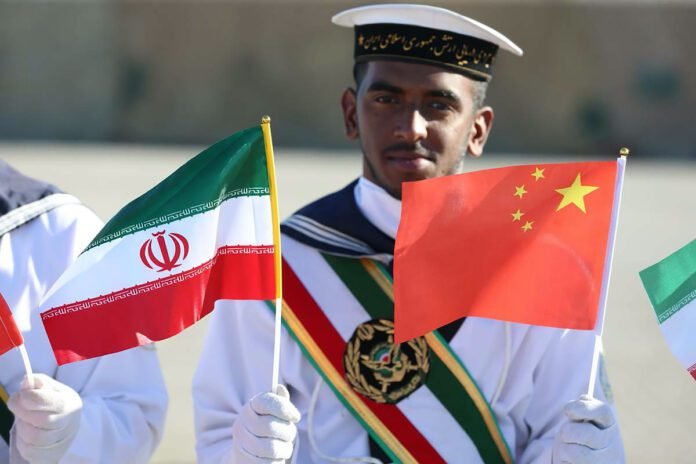
China is not fighting the United States directly, but its economic, technological and diplomatic links to Iran are complicating Washington’s strategy and ability to win the conflict.

This raises a larger, crucial question: Is the Iran war becoming another indirect front in the wider US-China rivalry?

Nothing in the evidence suggests that Washington is at war with Beijing. Indeed, the two powers professed their fondness for each other at the recent Trump-Xi gala summit in Washington.

But the Iran conflict is putting the two powers in direct competition over energy, sanctions, technology, maritime security and, perhaps most crucially, the future balance of power in the Middle East.

China is Iran’s economic lifeline

China occupies a special position in Iran’s wartime economy. It is Iran’s largest oil customer, accounting for 13-14% of China’s oil imports before the war, and has remained one of Tehran’s most important economic partners throughout the conflict.

Those purchases have given Iran a crucial revenue source amid US-led sanctions. Independent Chinese refineries have played an outsize role because they are less exposed to the Western financial system than China’s major state-owned oil companies.

Washington has responded by widening sanctions against Chinese companies, traders and logistics networks tied to Iranian oil and sensitive technology. It has also targeted China-linked procurement networks accused of helping Iran acquire technology potentially relevant for nuclear research and missile development.

That puts Washington in a tightening strategic bind. Sanctioning Iranian companies is one thing; punishing major Chinese financial institutions could turn the Iran conflict into a broader economic confrontation with China.

Recent reporting has described shipments of dual-use components from Chinese suppliers to Iran, reportedly including electronics and other items that can support military systems and drone production.

US officials are also examining allegations that Chinese entities supplied satellite imagery connected to an Iranian strike on a facility in Jordan hosting American troops. China has rejected the accusations, while President Donald Trump has publicly played down the issue.

But the line between commercial technology and military assistance is getting harder to hold. Modern warfare depends on navigation systems, satellite imagery, communications gear, electronics and advanced manufacturing.

A country need not send missiles or soldiers to influence or even decide a war; it can supply components that make another state’s military more potent and resilient while under attack. For that reason, Washington is now watching China closely.

Hormuz as shared vulnerability

China depends heavily on Middle Eastern oil, so Iran’s ability to disrupt shipping through the Strait of Hormuz poses a direct economic problem for Beijing.

Washington also wants the waterway open, but for broader economic and strategic reasons. In earlier talks, Trump and Xi Jinping agreed that the strait should remain open to the free flow of energy. Beijing has opposed the waterway’s militarization and urged de-escalation.

The result is an unusual overlap of interests. China does not want Iran to collapse, but neither does it want a long war that destabilizes the Gulf and threatens energy supplies. Beijing therefore has an interest in both protecting Tehran’s economic survival and containing the war.

Beijing’s support, however, has hard limits. It has not entered the war as Iran’s military ally, has repeatedly called for negotiations and has cast itself as a possible diplomatic mediator.

Chinese Foreign Minister Wang Yi recently told his Iranian counterpart that Beijing was willing to safeguard Iran’s “legitimate rights and interests,” even as he urged both Tehran and Washington to show restraint and return to negotiations.

China also has substantial economic ties to Saudi Arabia, the United Arab Emirates and other Gulf states, which make an open-ended commitment to Iran costly. Iran is strategically valuable to Beijing, but it is not China’s only route to energy, influence or regional access.

War within a rivalry

The larger competition extends well beyond Iran. Washington is trying to demonstrate that American sanctions, military power and control of the international financial system can still painfully isolate a hostile state.

Beijing is showing that those punitive tools have limits when another major power keeps trading with the sanctioned target. Each Iranian barrel that reaches China blunts US sanctions, and each shipment of Chinese technology to Iran weakens US export controls.

Disputes over Hormuz, meanwhile, expose both powers’ dependence on and vulnerability to the same regional energy system. The Iran war is thus testing the limits of American power and Chinese economic resilience at the same time.

To be sure, calling this an undeclared US-China war goes too far. The two powers are not directly fighting each other in Iran. But dismissing China as irrelevant to the conflict would be equally misleading.

The Iran war has become yet another arena in which the US and China test each other’s ability to dictate and shape events beyond their borders. Washington relies on sanctions, military pressure and financial clout to exercise power; Beijing uses trade, energy purchases, diplomatic influence and economic networks and supply chains.

The question is less whether China will openly join the war on Tehran’s side than whether the war will push the US-China rivalry beyond trade and technology into a wider struggle over who has the power to shape the evolving new international system.

That may prove the most consequential China factor of them all.

Altaf Moti is a distinguished journalist, columnist and geopolitical analyst specializing in international security and global finance. He contributes to various international media outlets, including The Arab Weekly, Eurasia Review and Middle East Online.

US military ends long-running program to spot nuclear missile launches

0
us-military-ends-long-running-program-to-spot-nuclear-missile-launches
US military ends long-running program to spot nuclear missile launches

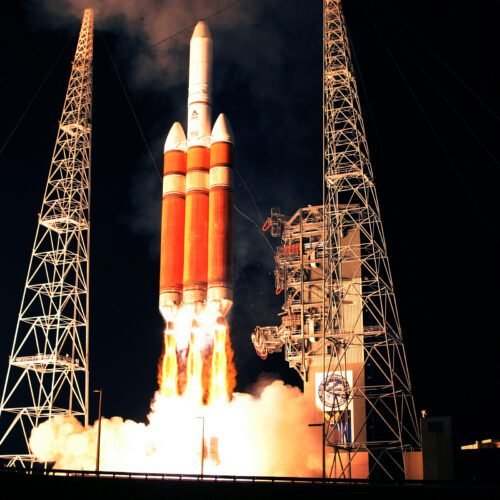
In late 1970, a Titan IIIC rocket launched from Space Launch Complex 40 at what was then called Cape Canaveral Air Force Station. It carried a top-secret payload for the US military.

Much has changed in spaceflight since then. The Titan IIIC would bow out in 1982 after dozens of launches. Various Titans continued launching from Space Launch Complex 40 until 2005, at which point the US Air Force—in a competitive process hotly opposed by United Launch Alliance—turned the pad over to a small, largely unknown startup called SpaceX. And Cape Canaveral is now a “Space Force” station.

But those unspecified payloads? Until last month, some of them were still flying operationally.

They were looking for missile launches

The US government would later disclose that the top-secret payload that launched in November 1970 was a “Defense Support Program” satellite. The initial block of these satellites, launched from 1970 to 1973, had a mass of about 1 metric ton, and each carried about 2,000 infrared detectors. They were essentially very sensitive telescopes, and each satellite was launched into geosynchronous orbit.

For a time, these were among the most important satellites flown by the US, as they served to detect the launch of a nuclear warhead at the country. As a result, the Defense Support Program would become one of the primary elements of American military space power during the Cold War.

These initial satellites transformed experimental infrared observations into an operational program that continuously monitored the globe for missile launches. Initially built to identify Soviet ICBMs, they were essential for nuclear deterrence; later, they also became useful in conventional warfare, such as detecting Iraqi Scud missile launches.

Over time, the military added to the constellation, improving reliability and expanding their capabilities. Each satellite ended up having more than 6,000 infrared detectors and a mass of about 2.5 tons. Satellites in the Defense Support Program kept on flying into space until 2007. One of them, DSP-16, even launched on a space shuttle (Atlantis) in 1991.

The program finally comes to an end

For more than 55 years, at least a handful of these satellites have been flying as silent sentinels—until last month.

On Thursday, the US Space Force said that the final two surviving Defense Support Program satellites (presumably DSP-20 and DSP-22) participated in an on-orbit maneuvering exercise in early September. Independent orbital tracking showed that these satellites subsequently both raised their orbits by a few hundred kilometers, a move typically associated with disposing of them into graveyard orbits above geostationary space. The Space Force statement confirmed this marked the program’s official retirement.

“The DSP constellation was foundational to the defense of our nation,” said US Space Force Col. Brandon Davenport, Mission Delta 4 Commander. “These last two satellites were the culminating end to over a half century of space-based early warning. The DSP constellation ensured deterrence during the Cold War and protected our deployed warfighters from the Gulf War until their retirement last month.”

Two replacement programs

The program had a remarkable run in longevity. It began when such observations were still experimental, and satellite manufacturing largely produced bespoke spacecraft. Their launch extended across a range of rockets from various Titan rockets to the Delta IV Heavy program and even NASA’s Space Shuttle.

The United States is not flying blind in the absence of the Defense Support Program, of course. In 2011, the military began launching a new generation of infrared satellites, known as the Space Based Infrared System. Because these satellites have better sensors, they can generally detect dimmer events and provide a longer warning time.

More recently, the military is developing its Next-Generation Overhead Persistent Infrared satellites. The first of these satellites could launch within the next 12 months on a Vulcan rocket.

We’re Reporters, Not Teachers. We Were Able to Start Private Schools Anyway.

0
we’re-reporters,-not-teachers-we-were-able-to-start-private-schools-anyway.
We’re Reporters, Not Teachers. We Were Able to Start Private Schools Anyway.

Reporting Highlights

  • An Easy Process: In Arkansas, all it took to establish a school was filling out a form on a state website, $45 and the purchase of an American flag.
  • No Qualifications Needed: Having no experience running a school — or even teaching — didn’t stand in the way of founding schools.
  • Fewer Barriers: We discovered that opening microschools, which are proliferating nationwide, offer an even easier route.

These highlights were written by the reporters and editors who worked on this story.

We have no business running a private school.

We’re reporters, not teachers. That doesn’t matter. Inexperience has hardly been a barrier for those who want to start their own schools, as we have reported this year. And it didn’t stop us, either. 

Over the last few months, to test the process, reporters from ProPublica partnered with local journalists in three states to establish private schools. None required much effort.

In Arkansas, all it took was a few clicks on the Arkansas secretary of state website, $45 and an American flag to form a bona fide private school with the Arkansas Times.

We established a school with Mountain State Spotlight in West Virginia after filing our new school’s name and location with authorities on a piece of notebook paper, then exchanging a few emails.

And with The Assembly in North Carolina, we filed an online notice of intent to open a private school at Ponysaurus Brewing Co. in Durham, while perched on its metal bar stools, eyeing glasses of a crisp kolsch.

We used our names and news organization email addresses, following each state’s rules for starting private or microschools, a type of private school intended for just a few students. Experience running a school wasn’t needed. No one from any of the states asked us about our backgrounds or qualifications, though West Virginia did ask for proof of a high school diploma. No one questioned what we plan to teach or how we would measure whether students are learning.

And yet we could enroll students in two states right now, if we wanted to. Arkansas even suggested ways our school could accept public money through the state’s voucher-style program.

For the record, we are not enrolling students and have no intention of operating our new schools. We did, however, register a website for our new school ventures, ProPublicaAcademy.com, and even designed some fun pencils to show our school spirit.

This year, a team of ProPublica reporters has been documenting how the American education landscape is shifting dramatically as states use public money to help fund private schools. With few regulations, hundreds of new private and microschools have proliferated.

Our reporting has shown the relative ease with which people — some with questionable backgrounds — founded their own schools in unusual places. They’ve popped up in barns and on farms, in strip malls between an antique shop and an ax-throwing business and in churches, where lighting and sound for worship services is part of the curriculum.

All of this led to a clear reporting question: If the hurdles to open a private school are so low, could we do it? And what would we learn along the way?

Inside a flag shop in Little Rock, we surveyed our options. There were handheld American flags on skinny sticks, midsize ones to display on a wall and majestic formal flags adorned with silky gold fringe.

State law in Arkansas doesn’t require much to open a private school, nothing about teacher skills or what kids learn. But it does require that all schools display an American flag, and we wanted to follow the rules. So, at the Arkansas Flag and Banner store, we decided on a smallish one that could fit in a circular base atop a newsroom cubicle. We also bought an Arkansas flag — even though only public schools are required to have those. Total cost: $49.45. 

Picking the flags for our new school was the hardest part of an astoundingly easy process.

Early in our reporting in Arkansas, we tried to figure out what steps we’d need to take to make a private school. We couldn’t find all the answers online, so we called the state.

“We don’t have rules for opening a private school,” Kaelin Clay, an Arkansas Department of Education spokesperson, told us earlier this year.

In fact, we didn’t even have to file anything with the Education Department. All it took was a few clicks on the Arkansas secretary of state’s website, where we registered the ProPublica-Arkansas Times Curiosity Academy LLC as a business, listed ourselves as agents and officers, and paid a fee. 

“We picked a name. We paid 45 bucks,” a ProPublica reporter noted after we submitted the application. With that, we had created a private school.

The secretary of state’s office approved our new business the same day. We even got a certificate. 

The Arkansas Department of Education does not regulate private schools once they’re open, and no one from the state inspected the Arkansas Times newsroom, the location we chose for our school. As far as we know, nobody checked our backgrounds, either.

A document that reads: “State of Arkansas. Secretary of State. Cole Jester. Arkansas Secretary of State. To All to Whom These Presents Shall Come, Greetings: I, Cole Jester, Arkansas Secretary of State of Arkansas, do hereby certify that the following and hereto attached instrument of writing is a true and perfect copy of Certificate of Organization of ProPublica-Arkansas Times Curiosity Academy LLC filed in this office June 16, 2026. In Testimony Whereof, I have hereunto set my hand and affixed my official Seal. Done at my office in the City of Little Rock, this 16th day of June 2026.”
The official certificate acknowledging our school Secretary of State/State of Arkansas

Arkansas adopted a private school funding plan in 2023, and back then there were fewer than 100 private schools on record. With the state in the fourth year of its Education Freedom Accounts program, which provides vouchers that can be spent on private schools, there are now more than 220. 

In addition, 143 microschools, which are a different category in Arkansas, were approved this year to accept tax dollars. That’s up from about 100 last school year.

Establishing the Curiosity Academy was so simple — and, frankly, a bit anticlimactic — that reporters then applied to become eligible to receive public funds. (Again, we applied with our names, work email addresses and a note that this was a journalistic exercise. We had no intention of actually ever taking any public money.) 

We wanted to see how far our curiosity could take us. 

Accessing public funds as a microschool in Arkansas is easier than it is for other types of private schools, even though there is no limit to the number of students one can enroll. Unlike private schools, we didn’t need to seek accreditation or show proof of financial solvency to accept state funding. 

It took about 10 minutes to fill out the required information in early September. Other than our contact information, we had to upload just two documents — one detailing our proposed tuition and fees, and the other with our refund policy. 

We said that — “should we open a school” — our tuition and fees per student would not exceed $7,208 per school year, the exact amount of Education Freedom Account money that each student in Arkansas is eligible for this year. We said tuition “would be collected only if education is delivered, and it would be the policy of the school to refund all tuition payments for educational services that are not provided.”

When more than two weeks passed and we hadn’t heard back, we reached out to the state Education Department. An employee called back that afternoon and explained that the department had decided not to accept any more because the school year was underway.

But he didn’t reject us outright. He looked up our application and invited us to keep pursuing the public money. He said we still could apply to receive public money this school year, but as a vendor providing educational services such as tutoring. He also said we could apply as a microschool next year and even suggested a tweak to the language in our tuition policy should we decide to do that.

After we hung up, he emailed us the vendor application (which we will not pursue) and let us know the microschool application for next school year will open in the spring.

We asked the state Education Department whether it would be OK with us operating a publicly funded microschool. Clay, the spokesperson, said the agency’s role is to decide if schools meet state requirements. Microschool families, she said, “have the freedom to choose the educators and learning environments that best meet their children’s needs.”

Hunched over a desk in the Mountain State Spotlight newsroom in Charleston, West Virginia, pen in hand, we scrawled out official notice of our new school in a spiral-bound notebook. We wrote that we would serve middle school students and listed our first day as TBD.

Leaving the crunchy, ragged edges on the paper, we stuffed our notice of intent into an envelope. We’d seen other new operators file similarly casual ones as they sought to register private schools in West Virginia. 

Then we drove over to the state Education Department to deliver the request. Our group — two reporters, a photographer and a video journalist — went through security and, camera rolling, wound our way through the maze of the midcentury building. We got lost once, and our entourage received several perplexed glances from workers, but otherwise it was smooth sailing. The person we needed to deliver the letter to was out, but a friendly employee agreed to place it on his desk.

Dozens of new private and microschools have set up shop in the state in recent years, fueled by the roughly $5,400 the Hope Scholarship offers each student to pay tuition. New private schools all go through Dustin Lambert, a manager in the Office of Student Enrichment and Support at the West Virginia Department of Education.

We heard back from Lambert the next day. Our notice was received. (Hooray!) He said now we needed a letter from the fire marshal that our school building was safe for children. (Oh no.)

This was a problem. Our school would be housed in the Mountain State Spotlight newsroom, which had not been inspected as a school site. We didn’t want to usurp public resources to undergo a new inspection. It felt like the end of our Mountain State school experiment.

But it wasn’t.

After we followed up to ask whether all schools, including virtual schools, need safety clearance to register with the state, Lambert told us that though all brick-and-mortar private schools do, we “may want to consider the microschool route.” 

In that case, we later learned, the department wouldn’t be involved because state law doesn’t include any mechanism for oversight.  

West Virginia defines microschools as schools that charge tuition and are started by one or more teachers. In practice, there’s no real difference between a microschool and private school — neither has a limit on enrollment. (Yes, a micro can be macro.) He forwarded us the rules for starting a microschool, which involve providing proof of a high school diploma, at least. We notified the local school district of our new microschool venture and sent a college transcript.

The Kanawha County school district, in turn, notified the state of the existence of a new microschool.

And with that — bypassing the building health and safety requirements — we established the ProPublica-Mountain State Spotlight Curiosity Academy. Officials at the Department of Education said they were aware that journalists were establishing a school. But they had to just watch us do so — they have no authority over the state’s microschools.

In an official statement, the department’s spokesperson said it “does not approve or deny the operation of microschools for any reason, including the qualifications of the owner/operator.”

By law, should we open our microschool — and we won’t — we could enroll an unlimited number of students.

On Friday evenings, hundreds of people gather at Ponysaurus Brewing Co., a trendy spot in Durham, North Carolina, to savor its craft beers and cocktails, hardly the place you’d expect a school to open. But why not? 

On a recent Tuesday morning, the brewery was quiet and closed to customers. Behind the bar, yeast busily converted sugars into alcohol inside giant stainless steel fermentation tanks. Two journalists settled onto barstools beneath signs for pilsners and cherry sours. Icy cold glasses of Tell the Truth, a light and lemony ale, sat before them on a high-top table beside a stenographer’s notebook and a laptop. 

The brewery created the craft ale in partnership with The Assembly, which also is ProPublica’s journalistic partner in this private school endeavor, so it all felt very symbiotic. Ponysaurus’s owners had agreed to let us use their building and its fire and sanitation inspections, which are required to open a private school in the Tar Heel State.

Reporters from The Assembly and ProPublica scanned a state of North Carolina website that details how to file a notice of intent to open a private school. 

First, it explained the state’s statutory requirements for opening a private school, things like reporting the school’s name and address. We also would have to administer a standardized test in certain grades, if we were going to open an actual school, and maintain annual records about student attendance and immunizations. 

Then, we watched a four-minute, 39-second video explaining how to file the required notice of intent. 

From there it seemed simple. We created a login, then filled in the address of our school (Ponysaurus’s building), noted its owner and chief administrator (our reporters), and named it the ProPublica-Assembly Academy. We’d hoped to include the word Curiosity in the name, but the field in the form didn’t allow enough characters. In North Carolina, our curiosity would have to be implied.

We filled in a few more fields, including the grades we would serve (high schoolers), whether we would open a religious school (no) and the dates of our academic year. 

Then we needed to upload fire and sanitation inspection reports. This step is what brought us here, to Ponysaurus, filling out the online notice to the tune of a hissing compressor that kept clean air moving through the brewing system.  

“You will need to secure inspections for the building where the school will be housed. You will need a fire inspection from the local fire marshal and a health and sanitation inspection from the local health department,” the video said. 

Just that morning, a City of Durham Fire Department inspector had visited the brewery and provided Ponysaurus with a fresh business occupancy inspection. We uploaded the new report, along with the brewery’s current food establishment inspection (on which it received a 99, an excellent score, we felt, for a school).

The screen flashed a confirmation. “Thank you. We have received your request to open a private school.” If approved, the page said, we should receive a school identification number in three to five business days. 

We hoped to join the at least 169 other new private schools that have opened in North Carolina since the 2021-22 school year, which marked the start of a series of expansions to the state’s publicly funded vouchers for private school tuition.

If we wanted our school to tap the voucher money, we’d have to go through some additional steps such as getting criminal background checks. We weren’t doing that.

The following day, we hit a snag. It came in a brief and garbled email. It said only: “Good morning and thank you for submitting a Notice of Intent to operate a private school. To complete the process we need to fire and sanitation inspections to” and then ended abruptly like that, no explanation or period. We emailed back, asking for clarity and noting we had already uploaded the inspection reports.

An official from the state Division of Non-Public Education then called. The school’s name needs to be on the inspection reports, she said, something we had not seen in any of our research. We also had not found any state statutes or rules that would preclude us — or anyone else — from opening a private school wherever we saw fit, be that a church or a brewery, as long as it passed “reasonable fire, health and safety inspections.” 

In a follow-up call, she clarified that her division checks only to be sure the building has passed inspections specifically for a school. A spokesperson for the agency later added that state statute does not allow them to deny a private school application, but they won’t process an incomplete application — notably one without the proper inspections.

We hadn’t expected we would need a school-specific inspection at this point. The video explainer referred to inspections only generally, and the state’s written guidance indicated only that this would need to happen before occupancy. 

Given we had no intention of actually opening a school, we had decided ahead of time that we wouldn’t consume any additional public resources — such as fire or health inspectors’ time — in our journalistic pursuit. 

Perhaps Ponysaurus could pass the school-specific inspections. But the ethical red line would be our stop sign. Our curiosity would have to end in North Carolina.

Help ProPublica Report on Education

Have you had trouble finding a school or using a voucher-style program? Do you have concerns about schools — public or private — in your area? Help us understand how families across the country are navigating their school options.

Mecca pact strategic political defense committee to meet ‘soon’: Pakistan’s foreign minister

0
mecca-pact-strategic-political-defense-committee-to-meet-‘soon’:-pakistan’s-foreign-minister
Mecca pact strategic political defense committee to meet ‘soon’: Pakistan’s foreign minister

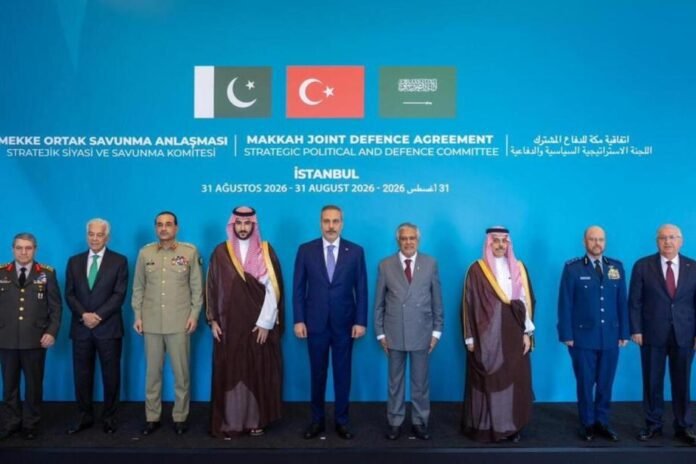
Turkish Foreign Minister Hakan Fidan, Turkish National Defense Minister Yasar Guler, Turkish Chief of General Staff Gen. Selcuk Bayraktaroglu, Pakistani Foreign Minister Muhammad Ishaq Dar, Pakistani Defense Minister Khawaja Muhammad Asif, Pakistani Chief of Army Staff Field Marshal Asim Munir, Saudi Foreign Minister Faisal bin Farhan, Saudi Defense Minister Khalid bin Salman and Saudi Chief of General Staff Gen. Fayyadh bin Hamed Al-Ruwaili attend the first meeting of the Strategic Political and Defense Committee, established under the Mecca Joint Defense Agreement, in Istanbul, Turkiye, on August 31, 2026. [Turkish Foreign Ministry/Handout - Anadolu Agency]

Turkish Foreign Minister Hakan Fidan, Turkish National Defense Minister Yasar Guler, Turkish Chief of General Staff Gen. Selcuk Bayraktaroglu, Pakistani Foreign Minister Muhammad Ishaq Dar, Pakistani Defense Minister Khawaja Muhammad Asif, Pakistani Chief of Army Staff Field Marshal Asim Munir, Saudi Foreign Minister Faisal bin Farhan, Saudi Defense Minister Khalid bin Salman and Saudi Chief of General Staff Gen. Fayyadh bin Hamed Al-Ruwaili attend the first meeting of the Strategic Political and Defense Committee, established under the Mecca Joint Defense Agreement, in Istanbul, Turkiye, on August 31, 2026. [Turkish Foreign Ministry/Handout – Anadolu Agency]

Pakistani Foreign Minister Ishaq Dar said Friday that the Strategic Political Defense Committee (SPDC) established under the joint defense pact between Pakistan, Türkiye and Saudi Arabia will meet “soon” in the Saudi capital Riyadh, Anadolu reports.

Dar said the committee has three members from each country – the foreign ministers, defense ministers and chiefs of General Staff.

The three military chiefs met in Riyadh on Sept. 25 for a special meeting, while the foreign ministers met in New York on Sept. 24.

“Very soon, a meeting of the whole SPDC … has been agreed to in principle, to take place in Riyadh,” Dar said amid Houthi attacks on Saudi Arabia.

Later, according to the daily Dawn, he said that the meeting would take place “next week”.

Recalling his meeting with Iranians in New York last week, Dar said they had suggested in “good faith” that the Houthis should be engaged politically.

Both the Iranian president and foreign minister “wish” for the Houthi-Saudi conflict “to conclude,” Dar said.

He said he “sensitized” the Iranian side about the trilateral pact signed in Mecca in August, adding that “as Muslims we have to honor it.”

Dar stressed, however, that any decision would be taken by all three members of the pact.

The Iranians “disassociate themselves from both Houthis as well as Iraqi militia,” Dar said.

Asked whether the Mecca pact would expand, Dar said: “At least more than six countries are keen to join the Mecca, which is defensive in nature.”

Turkish President Recep Tayyip Erdogan, Saudi Crown Prince Mohammed bin Salman and Pakistani Prime Minister Shehbaz Sharif signed the Mecca Joint Defense Agreement in August.

The agreement stipulates that an attack against any one of the signatory states will be considered an attack against all parties.

India’s missile shield invites a false sense of security

0
india’s-missile-shield-invites-a-false-sense-of-security
India’s missile shield invites a false sense of security

In July, India tested two new interceptors meant to destroy missiles at ranges up to 5,000 kilometers, the latest step toward one of the few layered missile shields in the world. New Delhi calls the program defensive.

But a neighboring rival rarely sees a shield that way. India’s expanding defenses could embolden its leaders in a crisis, push Pakistan and China to build weapons that overwhelm the shield and leave South Asia less stable than before.

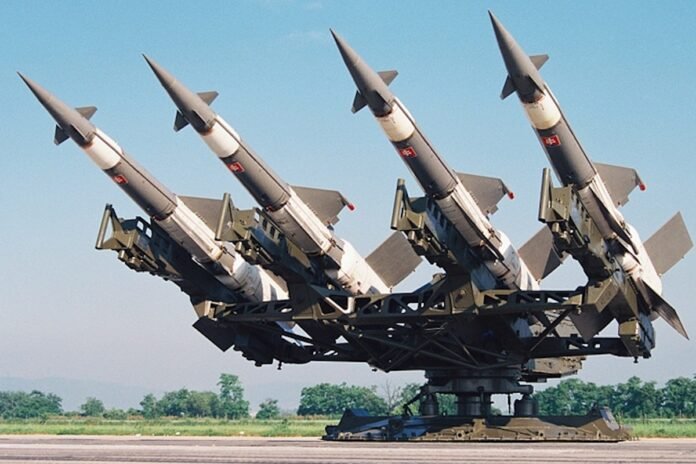
India has two known systems. The Prithvi Air Defense (PAD) is an exo-atmospheric interceptor that tracks and destroys incoming missiles at altitudes of 50 to 80 kilometers. The Advanced Air Defense (AAD) is an endo-atmospheric interceptor that engages missiles up to 30 kilometers.

India has also built the Prithvi Defence Vehicle (PDV), which will replace the PAD and engage missiles at longer range. The July tests, part of the program’s second phase, involved two new-generation interceptors, AD-1 and AD-2.

New Delhi says the systems are meant to protect major cities, leadership and strategic assets from decapitation and preemptive strikes. In the third phase, it expects to field faster, larger interceptors aimed at hypersonic missiles.

Whether India can stop hypersonic missiles is unclear. So is whether it can handle multiple independently targetable reentry vehicles (MIRVs), which carry several warheads aimed at widely separated targets. Nor is it clear how India could defeat a barrage of sophisticated missiles arriving at high speed across the country, which it likely cannot fully protect.

That raises hard questions. Does a growing missile shield give India a “shield and sword,” or a false sense of security? What does it mean for the South Asian rivalry, especially after the military crisis between India and Pakistan in May 2025? And how can India manage the offense-defense paradox?

Like many countries, India is investing heavily in modernizing its interceptors to track, target and destroy short-, medium- and long-range missiles, up to ICBMs. Later phases will add interceptors meant to stop hypersonic missiles from land, sea and space.

The United States is already developing a Glide Phase Interceptor to counter hypersonic missiles, and others are likely to follow. A deepening India-US partnership could help India build a similar capability, but it would also complicate strategic stability in South Asia.

The offense-defense paradox holds that a sophisticated defense can look defensive to its owner and offensive to its rival. A state that believes it is shielded may grow confident enough to strike first. Some argue that “where there is a spear, there must be a shield.”

This has two consequences. First, a state with missile defenses may adopt a more offensive, escalatory posture. Second, it creates a security dilemma, pushing its rival to build countermeasures that defeat those defenses.

A good offense tends to beat a good defense. An adversary with sophisticated countermeasures can destroy the sensors, interceptors and command-and-control networks that a missile defense depends on, and knocking out one element can cripple the whole system.

Defense is also almost always costlier than offense. Since 1957, the United States has spent at least $400 billion on missile defense. A single Patriot battery costs $1.1 billion to deploy, and it has been used against Shahed-136 drones, flown by Russia and Iran, that cost $20,000 to $50,000 each.

India’s spending is hard to pin down. Some sources put it at $1.2 million to $2.5 million per unit, and at about $3.2 billion for ballistic missiles, a category that may include missile defense. Other estimates run from $4.5 billion to $7 billion, counting the Russian S-400 air-defense system.

Critics argue that missile defenses can foster a false sense of security, because no system, India’s included, can guarantee protection against a barrage of hypersonic missiles.

Estimates suggest most systems stop 75% to 80% of incoming missiles, and even that may be optimistic. A leak of 20% to 25%, whether the warheads are conventional or nuclear, would be unacceptable to the state under attack.

In practice, that false confidence means Pakistan, armed with effective countermeasures, could saturate India’s defenses. It might use MIRVs, cruise missiles, drones and hypersonic missiles, where speed and precision would matter most.

Many South Asian security analysts warn that India’s steady buildup heightens the security dilemma, the arms race and crisis instability while alarming both China and Pakistan. Each may develop offensive capabilities to defeat such defenses in a serious crisis.

No evidence shows that Pakistan is developing missile defenses, though it is upgrading its air defenses. China, for its part, has already built countermeasures against US systems, could turn some of them against India and is developing its own missile defenses, such as the HQ-29.

Future systems will reach into space. India and other countries will likely put defensive weapons in orbit, particularly to counter hypersonic missiles, and that would erode the Outer Space Treaty of 1967, which calls for the peaceful use of space and bans weapons of mass destruction in orbit.

Many countries already have anti-satellite weapons that could serve as countermeasures against space-based defenses. No arms-control efforts currently address missile defense, India’s included. The major powers might share an interest in such talks, and India could be brought in.

But the obstacles are steep. Arms control agreements have grown more complex, been abandoned or been suspended amid the war in Ukraine, the US-Iran war, India-Pakistan conflicts and the race to modernize arsenals among the major powers.

India and Pakistan are thus unlikely to agree on any arms-control regime that covers missile defense in the foreseeable future. That includes the Strategic Restraint Regime that Pakistan proposed and India rejected.

Dr. Zafar Khan is the executive director of the Balochistan Think Tank Network (BTTN) at Balochistan University of Information Technology, Engineering and Management Sciences (BUITEMS), Quetta. He is also a professor of international relations at BUITEMS. He holds a master’s in international politics from the University of Glasgow, UK, and a PhD in strategic studies from the University of Hull, Yorkshire, UK.

The 7-year-old Nvidia Shield TV is now $100 more expensive thanks to AI

0
the-7-year-old-nvidia-shield-tv-is-now-$100-more-expensive-thanks-to-ai
The 7-year-old Nvidia Shield TV is now $100 more expensive thanks to AI

The era of generative AI has upended technology supply chains, and there is one ironclad rule in 2026: If it has memory or storage, it’s getting more expensive. Even devices with years-old tech inside are still apparently subject to that unwritten rule. Nvidia has just announced that the Shield TV Pro is getting $100 more expensive, effective immediately.

The most recent version of the Shield streaming box debuted in 2019, running Android TV with AI upscaling and hardware decoding for almost any type of media. While it ran an aging Tegra X1+ processor, that was (and still is) fast for a TV media streamer. The device launched at $199.99, with a non-Pro variant at $149.99. The non-Pro Shield has since been discontinued, but the Shield TV Pro lives on at the new $299.99 price.

Nvidia has confirmed that you can blame AI for the higher Shield TV pricing. “Starting October 2, SHIELD Pro will be priced at $299. The cost of components, including memory, has increased substantially across the industry,” a spokesperson told Ars.

When we talked to Nvidia’s Andrew Bell earlier this year, he framed the Shield as a passion project, but it looks like passion projects still have to pay the bills at Nvidia. In that interview, Bell explained that the Shield is still being actively manufactured and that the company sells every unit it makes. Without a stockpile of pre-AI hardware to sell, new Shield TV units are subject to the same supply chain constraints as today’s smartphones and computers.

Nvidia isn’t a victim here, though. As one of the key players in AI hyperscaling, the company is more responsible than most for the sky-high cost of components. It has also become one of the most valuable firms in the world thanks to its market-leading AI accelerators and GPUs. As a consequence, we’re seeing new products launch at higher prices than their predecessors, and many end up getting more expensive during their lifetimes. Game consoles have been particularly affected, with Nintendo, Microsoft, and Sony all bumping the prices of their current-gen hardware. The PS5 Pro, for example, has gone from $699.99 at launch in 2024 to $899.99 today.

Shield controller

There are much cheaper ways to get your Netflix fix in 2026.

There are much cheaper ways to get your Netflix fix in 2026. Credit: Ryan Whitwam

Stock of the Shield TV Pro has been slim for the last few months, probably because it became too expensive to manufacture new units with component prices rising so quickly. At $300, it will make sense for Nvidia to churn out more devices. However, this higher price will cause an already niche set-top box to be even less appealing to people who just want to stream Netflix.

Unless you need the Shield’s extensive codec support or Plex server capability, it makes more sense to get a cheaper streamer. The Shield is still out of stock on Nvidia’s store, but it’s available at the new price from Best Buy.

Pete Hegseth creates Pentagon Office of Religious Affairs

0
pete-hegseth-creates-pentagon-office-of-religious-affairs
Pete Hegseth creates Pentagon Office of Religious Affairs


U.S. Defense Secretary Pete Hegseth is launching an Office of Religious Affairs at the Pentagon, the latest in a series of faith-related changes he has made at the department.

Hegseth announced the office in a speech Wednesday, saying it will help offer “first-class religious support” and will report directly to him. “Our department is, you might say, putting on the full armor of God, because while we wage physical war, we all know the real battle is spiritual,” he said.

According to a Pentagon statement, the office will advocate for military chaplains and religious support “at the highest level of the Department.” The statement said it will not “compel religious participation, favor one faith, or diminish the rights of personnel of any faith or lack thereof.”

The office’s leader has not been named. A Pentagon memo said the religious affairs director will coordinate spiritual resources, including “faith-based homeschool support for military families.” The memo also mentions “faith-based initiatives supporting Department-wide suicide reduction.”

Criticism

Criticism surfaced quickly. Rachel Laser, head of Americans United for Separation of Church and State, which has sued the Pentagon over its worship services, said the department “owes it to the nation’s service members to defend religious freedom.” She said the announcement “violates that promise by elevating Christianity to an even higher role in shaping US military policy.”

Other federal agencies have had religious or faith-based offices, which were established under President George W. Bush and continued in different forms under the Obama and Biden administrations. President Donald Trump created a White House Faith Office and had a similar effort in his first term.

Shaun Casey, a religion scholar who led the State Department’s Office of Religion and Global Affairs under Obama, said that office did not promote religion or spiritual well-being. “It was there to understand what were the political implications of lived religion in the various hot spots around the world,” he said.

Hegseth’s earlier changes

Hegseth has infused his evangelical Christianity into his leadership of the Pentagon, hosting worship services for employees and often speaking of the United States as a Christian nation. He has also pushed the military school system to add coursework drawing from conservative and Christian influences.

The military has become increasingly dependent on chaplains in recent years to help address growing numbers of troops in mental health distress. Hegseth has said he wants chaplains to focus more on God and less on therapeutic “self-help and self-care.”

He ordered chaplains, who are commissioned officers, to stop wearing rank on their uniforms and instead be identified by religious insignia. The Defense Department also cut the number of religious affiliations it officially recognizes to 31, from more than 200 previously. The list no longer includes atheists, Unitarian Universalists, pagans and Wiccans.

Speaking directly to chaplains at Marine Corps Base Quantico in Virginia, Hegseth said: “Live your calling. Stand firm. Preach truth. Minister to the flock.” He then quoted the Bible: “The Lord is on my side; I will not fear. What can man do unto me?”

UAE Clears Repatriation Flights for 1,800 Stranded Israelis After Overnight Reversal 

0
uae-clears-repatriation-flights-for-1,800-stranded-israelis-after-overnight-reversal 
UAE Clears Repatriation Flights for 1,800 Stranded Israelis After Overnight Reversal 


Around 1,800 Israelis stranded in the UAE are expected to begin returning home aboard Israeli carriers after the UAE restored permission for repatriation flights following overnight security discussions, the Transportation Ministry said. 

Flydubai’s suspension of Israel service following the cockpit attack and attempted hijacking aboard flight FZ1073 from Dubai to Tel Aviv left the passengers without their scheduled flights. 

Plans to bring them back were thrown into uncertainty when the UAE withdrew its authorization overnight. Officials from the Shin Bet, Civil Aviation Authority and Transportation Ministry, along with Israeli Ambassador to the UAE Yossi Shelley, held talks before approval was restored. 

“It was agreed that flights operated by Israeli airlines from Dubai to Israel would begin on Friday,” the Transportation Ministry announced. 

Departures nevertheless faced delays while security arrangements were completed. 

“Due to the need to complete the necessary preparations and coordination with security authorities for the operation of the flights, a delay is expected in the departure of repatriation flights from Dubai,” the ministry said. 

Arkia secured approval and put tickets on sale beginning at $279. The carrier said it would operate one flight Friday and another Saturday. 

“Following extensive discussions and intensive efforts by all parties involved, Arkia has received the necessary approvals to operate flights from Dubai and will operate one flight today and another tomorrow,” the airline said. 

Israir is also expected to participate in Saturday’s operation, with tickets priced at $299 one-way. Five flights operated by the two carriers are expected to leave the UAE that day. 

El Al’s plans were disrupted by the delay. Two Friday departures scheduled for 11:00 a.m. and 1:00 p.m. were canceled, and another flight is likely Saturday night. Service is also scheduled for Sunday, Monday, Wednesday and Thursday next week. 

Demand quickly exhausted El Al’s available seats. Its $249 Lite fares sold out within five minutes. 

Passengers returning on the special flights may take only a small bag aboard. Their checked luggage will follow separately on cargo flights, and carry-on suitcases are prohibited in the cabin. 


Arrest Finally Made in Child Star’s Death

0
arrest-finally-made-in-child-star’s-death
Arrest Finally Made in Child Star’s Death


More than eight months after former Nickelodeon child star Kianna Underwood was killed in a devastating Brooklyn hit-and-run, police say they have finally made an arrest.

Michael Griffiths, a 72-year-old Brooklyn resident, was taken into custody Tuesday in connection with the Jan. 16 crash that killed the former “All That” actress at just 33 years old.

Griffiths has been charged with leaving the scene of an accident resulting in death and leaving the scene of an accident with injury, according to New York City police.

The arrest marks a major development in a case that had remained unresolved since Underwood was struck by two separate vehicles on a Brooklyn street early this year.

Police said Underwood was attempting to cross Pitkin Avenue near Mother Gaston Boulevard in the Brownsville neighborhood when she was hit by a black Ford Explorer.

Investigators say the SUV was traveling westbound on Pitkin Avenue when its driver crossed over the double yellow line while attempting to pass another vehicle that was beginning to turn right.

Police said Underwood was in the crosswalk at the time, although authorities have also said she was crossing against the pedestrian signal.

After the initial impact, Underwood was left lying in the roadway.

That was when tragedy struck a second time.

Police said another vehicle, described as a black-and-gray sedan, then struck Underwood while she was still in the street.

Neither driver stopped after the crashes, according to investigators.

Emergency crews were called to the scene, but Underwood could not be saved. She was pronounced dead at the scene.

Police have identified Griffiths in connection with the SUV, but authorities have not announced an arrest involving the driver of the second vehicle.

Griffiths’ charges involve allegedly leaving the scene following the collision. The charges are allegations, and he has not been convicted.

Underwood was once a familiar face and voice to children who grew up watching Nickelodeon in the late 1990s and early 2000s.

She voiced Fuchsia Glover, Little Bill’s cousin, on the animated Nick Jr. series “Little Bill,” appearing in numerous episodes between 1999 and 2004.

She later joined Nickelodeon’s long-running sketch comedy series “All That,” appearing in seven episodes during the show’s later years.

“All That” became one of Nickelodeon’s best-known programs and helped introduce young viewers to performers who would later become major stars, including Kenan Thompson, Amanda Bynes and Nick Cannon.

Underwood also found success onstage.

She spent roughly a year playing Little Inez during the first national tour of the Broadway musical “Hairspray.”

Her acting career, however, eventually faded from the public spotlight.

In the years before her death, police said Underwood had experienced homelessness.

People who worked near the area where she was killed remembered seeing her in the neighborhood. One local store employee told CBS News New York after her death that he would sometimes give the former actress food or money.

Years before the fatal crash, one of Underwood’s former Nickelodeon co-stars had publicly expressed concern for her.

Angelique Bates, an original cast member of “All That,” posted about Underwood in 2023 in an effort to bring attention to the difficulties she was reportedly facing.

Following Underwood’s death, Bates reflected on how much the former child star had cared about the people who remembered her from television.

“As much as she loved her supporters, as much as she loved the franchise, I think she would have loved to know that that love was reciprocated,” Bates told CBS News New York earlier this year.

Underwood’s death prompted an outpouring of sadness from viewers who remembered her from childhood and were stunned by the circumstances surrounding her later years.

Now, more than eight months after the crash, the arrest gives investigators their first publicly announced suspect in the case.

But unanswered questions remain.

Police have not announced that the driver of the second car has been identified or arrested, meaning the investigation into exactly what happened on Pitkin Avenue that morning may not be over.

Griffiths’ case will now move through the New York criminal justice system as prosecutors pursue the charges stemming from the fatal crash.

0FansLike
0FollowersFollow
0FollowersFollow
0SubscribersSubscribe
- Advertisement -
Google search engine

Recent Posts