21.1 C
London
Friday, October 2, 2026
Home Blog

India’s missile shield invites a false sense of security

0
india’s-missile-shield-invites-a-false-sense-of-security
India’s missile shield invites a false sense of security

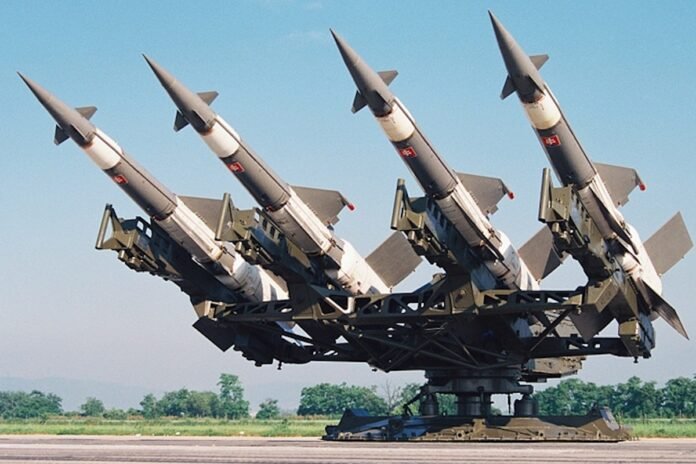
In July, India tested two new interceptors meant to destroy missiles at ranges up to 5,000 kilometers, the latest step toward one of the few layered missile shields in the world. New Delhi calls the program defensive.

But a neighboring rival rarely sees a shield that way. India’s expanding defenses could embolden its leaders in a crisis, push Pakistan and China to build weapons that overwhelm the shield and leave South Asia less stable than before.

India has two known systems. The Prithvi Air Defense (PAD) is an exo-atmospheric interceptor that tracks and destroys incoming missiles at altitudes of 50 to 80 kilometers. The Advanced Air Defense (AAD) is an endo-atmospheric interceptor that engages missiles up to 30 kilometers.

India has also built the Prithvi Defence Vehicle (PDV), which will replace the PAD and engage missiles at longer range. The July tests, part of the program’s second phase, involved two new-generation interceptors, AD-1 and AD-2.

New Delhi says the systems are meant to protect major cities, leadership and strategic assets from decapitation and preemptive strikes. In the third phase, it expects to field faster, larger interceptors aimed at hypersonic missiles.

Whether India can stop hypersonic missiles is unclear. So is whether it can handle multiple independently targetable reentry vehicles (MIRVs), which carry several warheads aimed at widely separated targets. Nor is it clear how India could defeat a barrage of sophisticated missiles arriving at high speed across the country, which it likely cannot fully protect.

That raises hard questions. Does a growing missile shield give India a “shield and sword,” or a false sense of security? What does it mean for the South Asian rivalry, especially after the military crisis between India and Pakistan in May 2025? And how can India manage the offense-defense paradox?

Like many countries, India is investing heavily in modernizing its interceptors to track, target and destroy short-, medium- and long-range missiles, up to ICBMs. Later phases will add interceptors meant to stop hypersonic missiles from land, sea and space.

The United States is already developing a Glide Phase Interceptor to counter hypersonic missiles, and others are likely to follow. A deepening India-US partnership could help India build a similar capability, but it would also complicate strategic stability in South Asia.

The offense-defense paradox holds that a sophisticated defense can look defensive to its owner and offensive to its rival. A state that believes it is shielded may grow confident enough to strike first. Some argue that “where there is a spear, there must be a shield.”

This has two consequences. First, a state with missile defenses may adopt a more offensive, escalatory posture. Second, it creates a security dilemma, pushing its rival to build countermeasures that defeat those defenses.

A good offense tends to beat a good defense. An adversary with sophisticated countermeasures can destroy the sensors, interceptors and command-and-control networks that a missile defense depends on, and knocking out one element can cripple the whole system.

Defense is also almost always costlier than offense. Since 1957, the United States has spent at least $400 billion on missile defense. A single Patriot battery costs $1.1 billion to deploy, and it has been used against Shahed-136 drones, flown by Russia and Iran, that cost $20,000 to $50,000 each.

India’s spending is hard to pin down. Some sources put it at $1.2 million to $2.5 million per unit, and at about $3.2 billion for ballistic missiles, a category that may include missile defense. Other estimates run from $4.5 billion to $7 billion, counting the Russian S-400 air-defense system.

Critics argue that missile defenses can foster a false sense of security, because no system, India’s included, can guarantee protection against a barrage of hypersonic missiles.

Estimates suggest most systems stop 75% to 80% of incoming missiles, and even that may be optimistic. A leak of 20% to 25%, whether the warheads are conventional or nuclear, would be unacceptable to the state under attack.

In practice, that false confidence means Pakistan, armed with effective countermeasures, could saturate India’s defenses. It might use MIRVs, cruise missiles, drones and hypersonic missiles, where speed and precision would matter most.

Many South Asian security analysts warn that India’s steady buildup heightens the security dilemma, the arms race and crisis instability while alarming both China and Pakistan. Each may develop offensive capabilities to defeat such defenses in a serious crisis.

No evidence shows that Pakistan is developing missile defenses, though it is upgrading its air defenses. China, for its part, has already built countermeasures against US systems, could turn some of them against India and is developing its own missile defenses, such as the HQ-29.

Future systems will reach into space. India and other countries will likely put defensive weapons in orbit, particularly to counter hypersonic missiles, and that would erode the Outer Space Treaty of 1967, which calls for the peaceful use of space and bans weapons of mass destruction in orbit.

Many countries already have anti-satellite weapons that could serve as countermeasures against space-based defenses. No arms-control efforts currently address missile defense, India’s included. The major powers might share an interest in such talks, and India could be brought in.

But the obstacles are steep. Arms control agreements have grown more complex, been abandoned or been suspended amid the war in Ukraine, the US-Iran war, India-Pakistan conflicts and the race to modernize arsenals among the major powers.

India and Pakistan are thus unlikely to agree on any arms-control regime that covers missile defense in the foreseeable future. That includes the Strategic Restraint Regime that Pakistan proposed and India rejected.

Dr. Zafar Khan is the executive director of the Balochistan Think Tank Network (BTTN) at Balochistan University of Information Technology, Engineering and Management Sciences (BUITEMS), Quetta. He is also a professor of international relations at BUITEMS. He holds a master’s in international politics from the University of Glasgow, UK, and a PhD in strategic studies from the University of Hull, Yorkshire, UK.
The 7-year-old Nvidia Shield TV is now $100 more expensive thanks to AI

0
the-7-year-old-nvidia-shield-tv-is-now-$100-more-expensive-thanks-to-ai
The 7-year-old Nvidia Shield TV is now $100 more expensive thanks to AI

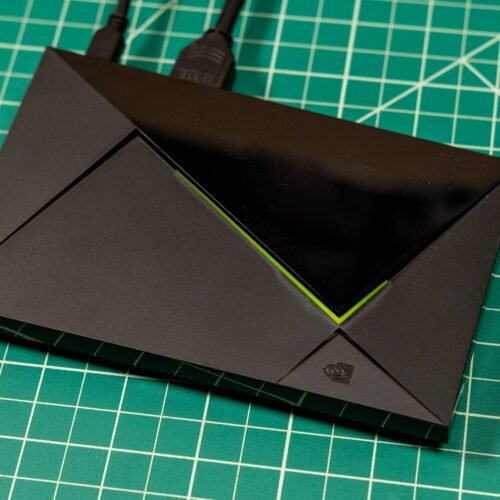
The era of generative AI has upended technology supply chains, and there is one ironclad rule in 2026: If it has memory or storage, it’s getting more expensive. Even devices with years-old tech inside are still apparently subject to that unwritten rule. Nvidia has just announced that the Shield TV Pro is getting $100 more expensive, effective immediately.

The most recent version of the Shield streaming box debuted in 2019, running Android TV with AI upscaling and hardware decoding for almost any type of media. While it ran an aging Tegra X1+ processor, that was (and still is) fast for a TV media streamer. The device launched at $199.99, with a non-Pro variant at $149.99. The non-Pro Shield has since been discontinued, but the Shield TV Pro lives on at the new $299.99 price.

Nvidia has confirmed that you can blame AI for the higher Shield TV pricing. “Starting October 2, SHIELD Pro will be priced at $299. The cost of components, including memory, has increased substantially across the industry,” a spokesperson told Ars.

When we talked to Nvidia’s Andrew Bell earlier this year, he framed the Shield as a passion project, but it looks like passion projects still have to pay the bills at Nvidia. In that interview, Bell explained that the Shield is still being actively manufactured and that the company sells every unit it makes. Without a stockpile of pre-AI hardware to sell, new Shield TV units are subject to the same supply chain constraints as today’s smartphones and computers.

Nvidia isn’t a victim here, though. As one of the key players in AI hyperscaling, the company is more responsible than most for the sky-high cost of components. It has also become one of the most valuable firms in the world thanks to its market-leading AI accelerators and GPUs. As a consequence, we’re seeing new products launch at higher prices than their predecessors, and many end up getting more expensive during their lifetimes. Game consoles have been particularly affected, with Nintendo, Microsoft, and Sony all bumping the prices of their current-gen hardware. The PS5 Pro, for example, has gone from $699.99 at launch in 2024 to $899.99 today.

Shield controller

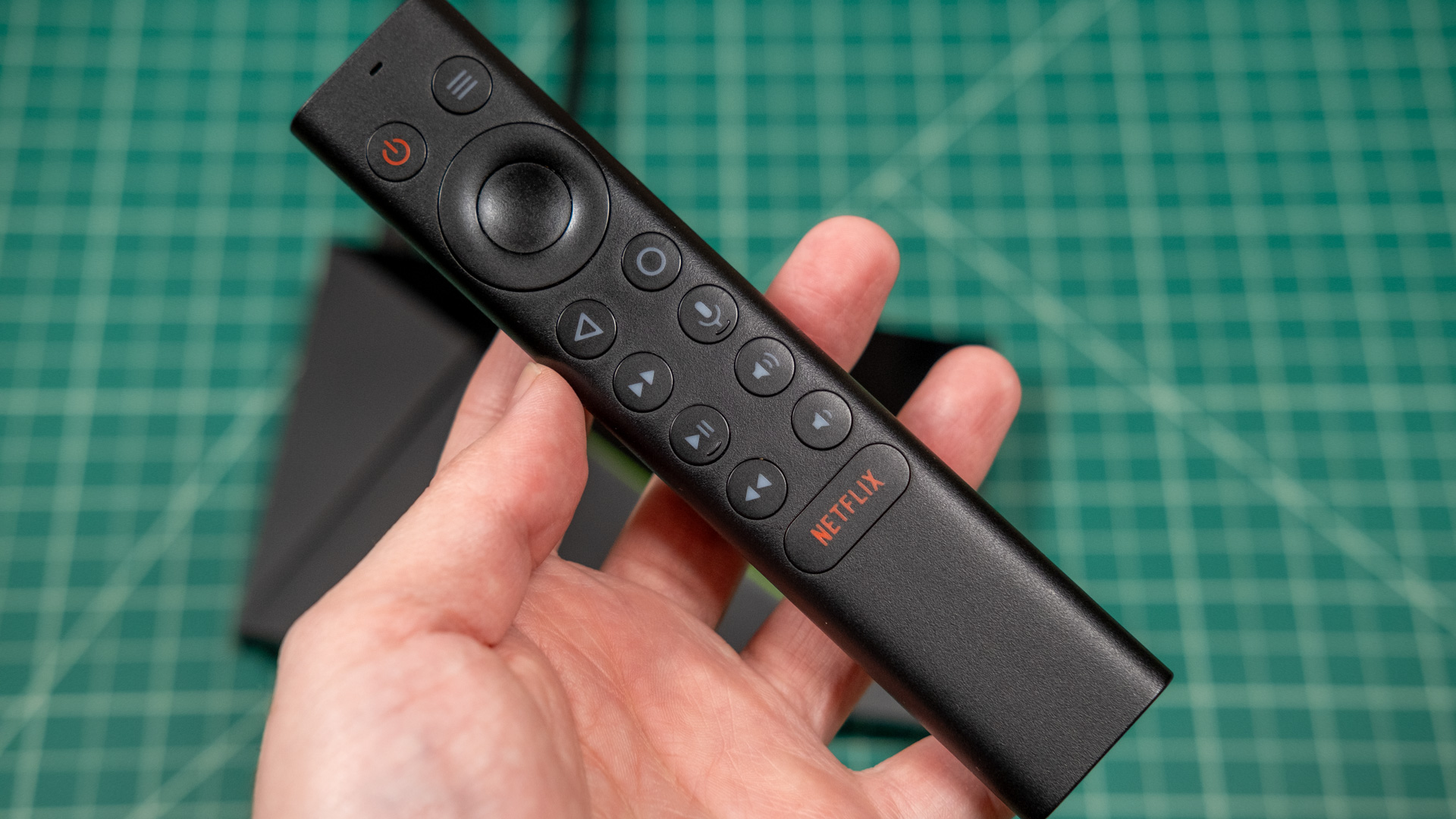
There are much cheaper ways to get your Netflix fix in 2026.

There are much cheaper ways to get your Netflix fix in 2026. Credit: Ryan Whitwam

Stock of the Shield TV Pro has been slim for the last few months, probably because it became too expensive to manufacture new units with component prices rising so quickly. At $300, it will make sense for Nvidia to churn out more devices. However, this higher price will cause an already niche set-top box to be even less appealing to people who just want to stream Netflix.

Unless you need the Shield’s extensive codec support or Plex server capability, it makes more sense to get a cheaper streamer. The Shield is still out of stock on Nvidia’s store, but it’s available at the new price from Best Buy.

Pete Hegseth creates Pentagon Office of Religious Affairs

0
pete-hegseth-creates-pentagon-office-of-religious-affairs
Pete Hegseth creates Pentagon Office of Religious Affairs


U.S. Defense Secretary Pete Hegseth is launching an Office of Religious Affairs at the Pentagon, the latest in a series of faith-related changes he has made at the department.

Hegseth announced the office in a speech Wednesday, saying it will help offer “first-class religious support” and will report directly to him. “Our department is, you might say, putting on the full armor of God, because while we wage physical war, we all know the real battle is spiritual,” he said.

According to a Pentagon statement, the office will advocate for military chaplains and religious support “at the highest level of the Department.” The statement said it will not “compel religious participation, favor one faith, or diminish the rights of personnel of any faith or lack thereof.”

The office’s leader has not been named. A Pentagon memo said the religious affairs director will coordinate spiritual resources, including “faith-based homeschool support for military families.” The memo also mentions “faith-based initiatives supporting Department-wide suicide reduction.”

Criticism

Criticism surfaced quickly. Rachel Laser, head of Americans United for Separation of Church and State, which has sued the Pentagon over its worship services, said the department “owes it to the nation’s service members to defend religious freedom.” She said the announcement “violates that promise by elevating Christianity to an even higher role in shaping US military policy.”

Other federal agencies have had religious or faith-based offices, which were established under President George W. Bush and continued in different forms under the Obama and Biden administrations. President Donald Trump created a White House Faith Office and had a similar effort in his first term.

Shaun Casey, a religion scholar who led the State Department’s Office of Religion and Global Affairs under Obama, said that office did not promote religion or spiritual well-being. “It was there to understand what were the political implications of lived religion in the various hot spots around the world,” he said.

Hegseth’s earlier changes

Hegseth has infused his evangelical Christianity into his leadership of the Pentagon, hosting worship services for employees and often speaking of the United States as a Christian nation. He has also pushed the military school system to add coursework drawing from conservative and Christian influences.

The military has become increasingly dependent on chaplains in recent years to help address growing numbers of troops in mental health distress. Hegseth has said he wants chaplains to focus more on God and less on therapeutic “self-help and self-care.”

He ordered chaplains, who are commissioned officers, to stop wearing rank on their uniforms and instead be identified by religious insignia. The Defense Department also cut the number of religious affiliations it officially recognizes to 31, from more than 200 previously. The list no longer includes atheists, Unitarian Universalists, pagans and Wiccans.

Speaking directly to chaplains at Marine Corps Base Quantico in Virginia, Hegseth said: “Live your calling. Stand firm. Preach truth. Minister to the flock.” He then quoted the Bible: “The Lord is on my side; I will not fear. What can man do unto me?”

UAE Clears Repatriation Flights for 1,800 Stranded Israelis After Overnight Reversal 

0
uae-clears-repatriation-flights-for-1,800-stranded-israelis-after-overnight-reversal 
UAE Clears Repatriation Flights for 1,800 Stranded Israelis After Overnight Reversal 


Around 1,800 Israelis stranded in the UAE are expected to begin returning home aboard Israeli carriers after the UAE restored permission for repatriation flights following overnight security discussions, the Transportation Ministry said. 

Flydubai’s suspension of Israel service following the cockpit attack and attempted hijacking aboard flight FZ1073 from Dubai to Tel Aviv left the passengers without their scheduled flights. 

Plans to bring them back were thrown into uncertainty when the UAE withdrew its authorization overnight. Officials from the Shin Bet, Civil Aviation Authority and Transportation Ministry, along with Israeli Ambassador to the UAE Yossi Shelley, held talks before approval was restored. 

“It was agreed that flights operated by Israeli airlines from Dubai to Israel would begin on Friday,” the Transportation Ministry announced. 

Departures nevertheless faced delays while security arrangements were completed. 

“Due to the need to complete the necessary preparations and coordination with security authorities for the operation of the flights, a delay is expected in the departure of repatriation flights from Dubai,” the ministry said. 

Arkia secured approval and put tickets on sale beginning at $279. The carrier said it would operate one flight Friday and another Saturday. 

“Following extensive discussions and intensive efforts by all parties involved, Arkia has received the necessary approvals to operate flights from Dubai and will operate one flight today and another tomorrow,” the airline said. 

Israir is also expected to participate in Saturday’s operation, with tickets priced at $299 one-way. Five flights operated by the two carriers are expected to leave the UAE that day. 

El Al’s plans were disrupted by the delay. Two Friday departures scheduled for 11:00 a.m. and 1:00 p.m. were canceled, and another flight is likely Saturday night. Service is also scheduled for Sunday, Monday, Wednesday and Thursday next week. 

Demand quickly exhausted El Al’s available seats. Its $249 Lite fares sold out within five minutes. 

Passengers returning on the special flights may take only a small bag aboard. Their checked luggage will follow separately on cargo flights, and carry-on suitcases are prohibited in the cabin. 


Arrest Finally Made in Child Star’s Death

0
arrest-finally-made-in-child-star’s-death
Arrest Finally Made in Child Star’s Death


More than eight months after former Nickelodeon child star Kianna Underwood was killed in a devastating Brooklyn hit-and-run, police say they have finally made an arrest.

Michael Griffiths, a 72-year-old Brooklyn resident, was taken into custody Tuesday in connection with the Jan. 16 crash that killed the former “All That” actress at just 33 years old.

Griffiths has been charged with leaving the scene of an accident resulting in death and leaving the scene of an accident with injury, according to New York City police.

The arrest marks a major development in a case that had remained unresolved since Underwood was struck by two separate vehicles on a Brooklyn street early this year.

Police said Underwood was attempting to cross Pitkin Avenue near Mother Gaston Boulevard in the Brownsville neighborhood when she was hit by a black Ford Explorer.

Investigators say the SUV was traveling westbound on Pitkin Avenue when its driver crossed over the double yellow line while attempting to pass another vehicle that was beginning to turn right.

Police said Underwood was in the crosswalk at the time, although authorities have also said she was crossing against the pedestrian signal.

After the initial impact, Underwood was left lying in the roadway.

That was when tragedy struck a second time.

Police said another vehicle, described as a black-and-gray sedan, then struck Underwood while she was still in the street.

Neither driver stopped after the crashes, according to investigators.

Emergency crews were called to the scene, but Underwood could not be saved. She was pronounced dead at the scene.

Police have identified Griffiths in connection with the SUV, but authorities have not announced an arrest involving the driver of the second vehicle.

Griffiths’ charges involve allegedly leaving the scene following the collision. The charges are allegations, and he has not been convicted.

Underwood was once a familiar face and voice to children who grew up watching Nickelodeon in the late 1990s and early 2000s.

She voiced Fuchsia Glover, Little Bill’s cousin, on the animated Nick Jr. series “Little Bill,” appearing in numerous episodes between 1999 and 2004.

She later joined Nickelodeon’s long-running sketch comedy series “All That,” appearing in seven episodes during the show’s later years.

“All That” became one of Nickelodeon’s best-known programs and helped introduce young viewers to performers who would later become major stars, including Kenan Thompson, Amanda Bynes and Nick Cannon.

Underwood also found success onstage.

She spent roughly a year playing Little Inez during the first national tour of the Broadway musical “Hairspray.”

Her acting career, however, eventually faded from the public spotlight.

In the years before her death, police said Underwood had experienced homelessness.

People who worked near the area where she was killed remembered seeing her in the neighborhood. One local store employee told CBS News New York after her death that he would sometimes give the former actress food or money.

Years before the fatal crash, one of Underwood’s former Nickelodeon co-stars had publicly expressed concern for her.

Angelique Bates, an original cast member of “All That,” posted about Underwood in 2023 in an effort to bring attention to the difficulties she was reportedly facing.

Following Underwood’s death, Bates reflected on how much the former child star had cared about the people who remembered her from television.

“As much as she loved her supporters, as much as she loved the franchise, I think she would have loved to know that that love was reciprocated,” Bates told CBS News New York earlier this year.

Underwood’s death prompted an outpouring of sadness from viewers who remembered her from childhood and were stunned by the circumstances surrounding her later years.

Now, more than eight months after the crash, the arrest gives investigators their first publicly announced suspect in the case.

But unanswered questions remain.

Police have not announced that the driver of the second car has been identified or arrested, meaning the investigation into exactly what happened on Pitkin Avenue that morning may not be over.

Griffiths’ case will now move through the New York criminal justice system as prosecutors pursue the charges stemming from the fatal crash.

As US relations fray, Canada gets serious about its own launch industry

0
as-us-relations-fray,-canada-gets-serious-about-its-own-launch-industry
As US relations fray, Canada gets serious about its own launch industry

A year or two ago, a few Canadian launch companies were trying to develop small rockets, but if we’re being frank, the industry was not particularly notable. Sure, something interesting might eventually happen, but no one outside of a few Canadian space geeks was paying much attention.

But then the Trump Administration started threatening and instituting tariffs. There was talk of making Canada the 51st state. And pretty much every Canadian I know began telling me how enraged they were at their neighbors to the south. It’s hard to blame them.

This has led the Canadian government to reassess all manner of areas where it had previously been happy to rely largely on the US government and American companies for goods and services. This included sovereign access to space. So this spring, the government announced the first awards to three companies—NordSpace, Reaction Dynamics, and Canada Rocket Company—to support work on rockets with “light lift” capability.

Decision to go bigger

The initial awards as part of Launch the North were modest, $8.33 million CAD, but the government has signaled larger awards in the future. Accordingly, one of these three companies, Toronto-based Canada Rocket Company, decided it would skip the small-rocket phase and move directly into a more ambitious medium-launch vehicle.

“The advice we got from having spoken with about 150 engineers, from the director of Starship engineering all the way down to some entry-level folks, is that you’re not going to be able de-risk a rocket development program by building a smaller rocket,” said Hugh Kolias, chief executive of the Canada Rocket Company, in an interview.

“From a technical perspective and an infrastructure perspective, essentially 90 percent of everything you do on that light lift piece gets thrown out the window, and it’s almost like a net new program,” Kolias said. “And everyone said, if you’re not going to try to commercialize light lift, then why even do it in the first place? And that kind of hit us relatively hard.”

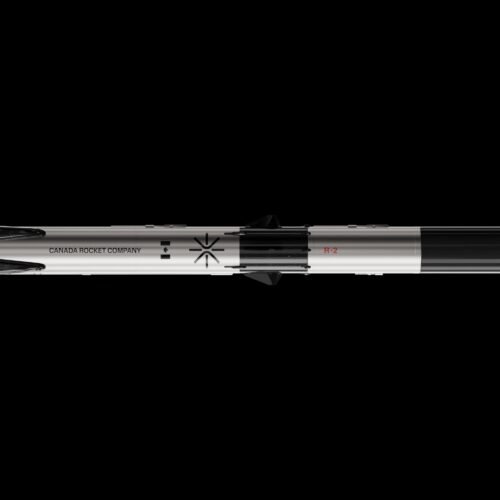
So the company set its sights higher: developing the R-2 rocket, a fairly standard medium-lift vehicle that in renderings somewhat resembles SpaceX’s Falcon 9 rocket. There are nine methane-fueled engines, a gas-generator engine cycle, and landing legs that signal a future path toward reuse of the first stage. It could carry up to 12.5 metric tons to low-Earth orbit. If all goes well, Kolias said, the company could be ready to launch by 2032.

That would be fantastic, but is any of this realistic?

Canada goes defensive

Maybe so, because the mood in Canada is angry. For decades, Canada has relied on the United States, broadly, for defense. Famously, in 1959, the Canadian Prime Minister canceled the Avro Arrow interceptor aircraft under development in the country. Since then, Canada’s aerospace industry has largely languished. The country’s satellites typically go to space on American rockets.

But sovereignty is back in vogue. Earlier this year, Canada unveiled a Defense Industrial Strategy that would ensure the country has a strong industrial and technological base to support defense readiness. Space is one of the 10 capabilities outlined in the report, which includes “space launch” as a priority.

“I think the geopolitics has actually created a fantastic opportunity, not just for us, but for other Canadian industries to finally build real ambitious industries,” Kolias said. “We’re pulling a little bit away from the globalist movement and realizing that there are some core aspects, both economically and from a sovereign or defense and military perspective, that you should own your own destiny.”

Eventually, Kolias said, the Canadian government might put as much as half a billion dollars on the table for a sovereign launch capability, along with some guarantee of launch contracts.

Canada Rocket Company remains small for now with about 30 people—a core of which are Canadian rocket scientists who left to work at places like SpaceX, Blue Origin, and Rocket Lab but have now returned north. But the company has raised $22.5 million to date and is going to market with a Series A fundraise. So growth is coming.

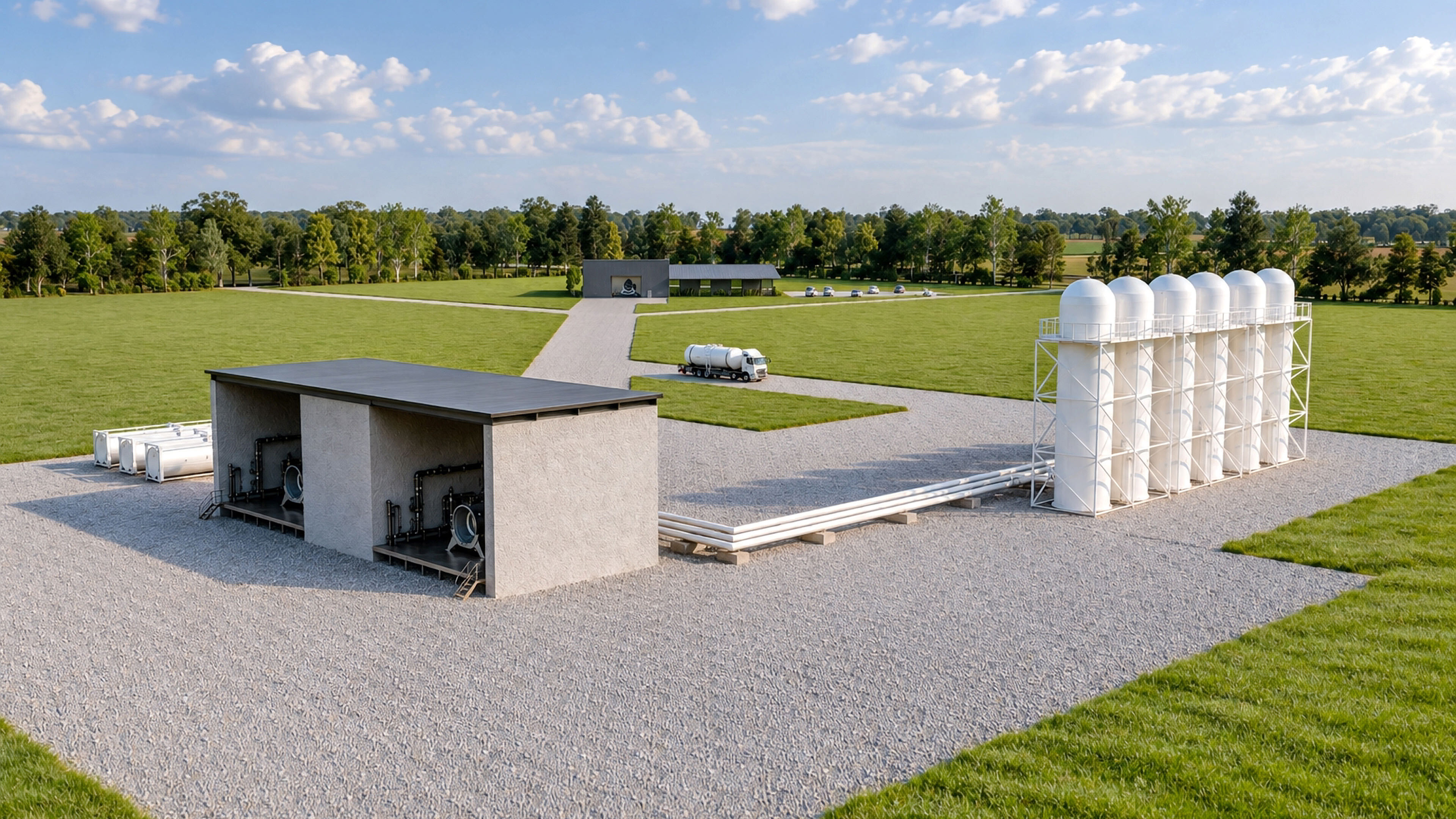
A rendering of the Jeremy Hansen Test Stand.

A rendering of the Jeremy Hansen Test Stand. Credit: Canada Rocket Company

An Artemis-named test stand

After his participation in Artemis II, becoming the first non-American astronaut to fly into deep space, Canadian astronaut Jeremy Hansen became a national hero. Kolias tapped into this space patriotism by naming the company’s rocket engine test facility, near London, Ontario, after Hansen.

On Thursday, the company announced that the $30 million Jeremy Hansen Test Facility will be sited on 50 acres leased from the Greater London International Airport Authority and will include an engine test area with up to three vertical and horizontal test stands for static engine testing, capable of testing engines with more than 1MN in thrust (225,000 pounds of thrust). Kolias said he intends to begin testing the E-1 engine there in about two years.

Hansen has played an interesting geopolitical role over the last year. His flight on Artemis II was an unqualified success, raising the prestige of Canada’s space agency. At the same time, Canada’s achievement came on the wings of America’s space program. So how to feel about this at a time of tension between the two nations? Perhaps it offers some hope that they can remain good neighbors, with warm relations resuming in the future—while Canada also has the capability to launch its own rockets.

Takaichi bends to Washington as Japan’s yields rise

0
takaichi-bends-to-washington-as-japan’s-yields-rise
Takaichi bends to Washington as Japan’s yields rise

Subscribe now with a one-month trial for only $1, then enjoy the first year at an exclusive rate of just $99.

Takaichi’s economic agenda runs into the bond market

Scott Foster reports that Sanae Takaichi is retreating from reflationary policy as US pressure over the weak yen converges with rising JGB yields and domestic fiscal constraints. Her agenda is shifting toward greater prudence even as defense demands, inflation dissatisfaction and AI-driven corporate borrowing keep pressure on rates.

Germany’s recovery is increasingly bought on credit

Diego Faßnacht reports that Germany’s improving headline data masks a recovery increasingly powered by large orders, fiscal expansion and borrowing rather than broad industrial strength. With municipal finances deteriorating and global borrowing costs rising, weak private investment and a shrinking tax base risk becoming fresh drags on growth.

Russia losing faith in a political reset with Europe

James Davis reports that Moscow is increasingly preparing for a prolonged rupture with Europe, reflected in tougher treatment of Western assets and fading hopes that European politics will produce a negotiated reset. With diplomacy yielding little, the Kremlin views battlefield trends as favorable and is widening pressure on Ukraine’s infrastructure and exports.

TCL is right to question Samsung’s use of the term “Mini LED”

0
tcl-is-right-to-question-samsung’s-use-of-the-term-“mini-led”
TCL is right to question Samsung’s use of the term “Mini LED”

What makes a display a Mini LED display?

It’s a question that sounds like it should have a simple answer. But it’s now at the center of a lawsuit between two of the biggest names in TVs, with TCL accusing its longtime competitor Samsung of falsely advertising budget LCD-LED TVs as Mini LED sets.

TCL may have a point. Samsung’s M-series TVs, which range from $300 for a 43-inch model to $2,300 for a 100-inch model, do raise some legitimate questions about what should qualify as Mini LED. More broadly, though, the dispute highlights a problem for shoppers: Without agreed-upon standards for what “Mini LED” actually means, manufacturers have plenty of room to define the technology for themselves.

TCL accuses Samsung of Mini LED “fraud”

In a lawsuit (PDF) filed in the US District Court for the Central District of California in late August, TCL accused Samsung of resorting to “fraud” to compete with TCL’s QM-series of Mini LED TVs. Samsung’s M70H, M80H, and M90H are “merely recycled… pre-existing, low-end, standard LED televisions, [which are Samsung’s entry-level] Crystal UHD line… re-labelled… as ‘Mini LED,’” TCL’s suit says.

“Samsung’s M Models contain none of the technological advancements associated with Mini LED technology, including [full array local dimming],” the complaint reads.

Samsung didn’t respond to questions I sent about specific claims in TCL’s lawsuit. Instead, a spokesperson shared a statement noting that it intends to vigorously defend against the lawsuit.

The FALD debate

TCL argues that M-series TVs don’t have backlights capable of true full array local dimming, or FALD, the most advanced type of backlighting technology available in LCD-LED displays.

A FALD backlight uses dozens to thousands of small LEDs, or Mini LEDs, grouped into different zones, each with individually controllable brightness levels. This helps boost contrast, which is critical for image quality and essential for delivering quality HDR on an LCD-LED display.

According to a specification line titled “Micro Dimming” on the M-series TVs’ product pages, the devices use “Supreme Mini LED Dimming.” The spec sheets (PDF) available for download from those pages include a tiny footnote that clarifies: “Supreme Mini LED Dimming is Software-based (not full-array hardware-based) technology.”

Samsung also uses the term “Supreme Mini LED Dimming” on product pages for its Neo QLED TVs, which TCL accepts as true Mini LED TVs. The Neo QLED spec sheets don’t include the footnote, though.

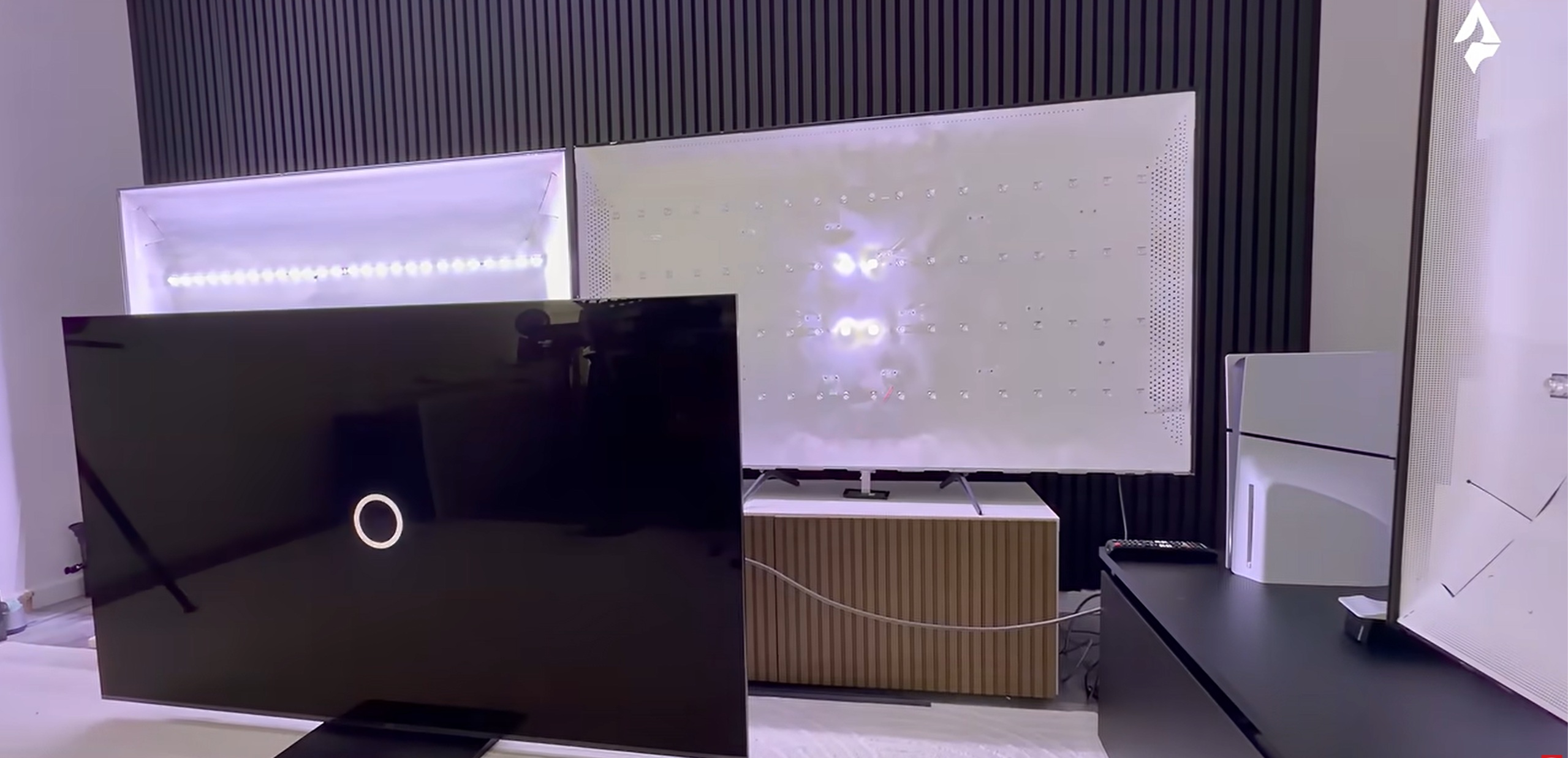
Software-based dimming without individually addressable LED zones differs from the FALD technology described above. With software-based dimming, a TV typically analyzes each frame of a video, breaking it into different zones and determining each zone’s ideal brightness level. Using that information, the display modifies the frame’s brightness to boost perceived contrast. Critically, though, the display’s brightness level remains uniform across the panel, unlike in a display using a FALD backlight.

In this shot from AP Tech's video, you can see the differences between how the backlights of the M80H (left) and TCL (right) manage the image shown on the TV in front.

In this shot from AP Tech’s video, you can see the differences between how the backlights of the M80H (left) and TCL (right) manage the image shown on the TV in front.

In this shot from AP Tech’s video, you can see the differences between how the backlights of the M80H (left) and TCL (right) manage the image shown on the TV in front. Credit: AP Tech/YouTube

Software-based dimming was more common on TVs from the 2010s, such as TCL’s P6-series and LG’s UH8500-series. But even then, software-based dimming paled in comparison to FALD, as Reviewed noted in 2016.

Software-based dimming “will never be as effective as a well-designed, hardware-based local dimming solution, especially in scenes that are more susceptible to blooming artifacts,” Guillaume Chansin, associate director of displays and XR at Counterpoint Research, told me.

“However, the software plays an important role to get the most out of the hardware, with some brands able to achieve comparable image quality with fewer LEDs or dimming zones,” he said.

Because displays that support software-based dimming work differently from those that use a backlight with individually addressable LED zones, they’re not what people typically think of when describing “FALD.”

Eric Virey, principal displays analyst at Yole Intelligence, considers FALD a hardware feature first and foremost. It requires a “2D array of LEDs uniformly distributed across the entire area of the display,” along with a good algorithm to help reduce blooming, he said, adding, “To me, a ‘software-based’ Mini LED dimming just doesn’t make any sense if you don’t have that full, 2D-array of LEDs or Mini LEDs in the backlight.”

An LED display with FALD should have better contrast than an equally specced display without it. But experts I spoke with took things further, suggesting that a display shouldn’t be considered Mini LED if it doesn’t support FALD.

“I think that is broadly agreed across the industry that FALD is a key and mandatory feature in Mini LED backlights,” Virey told me via email.

Bob O’Brien, Counterpoint’s research director, also equates Mini LED with FALD.

“Mini LED was originally introduced as an improved FALD technology, with more dimming zones. So among those in the industry, it has always been assumed that a Mini LED TV has FALD capability,” he told me.

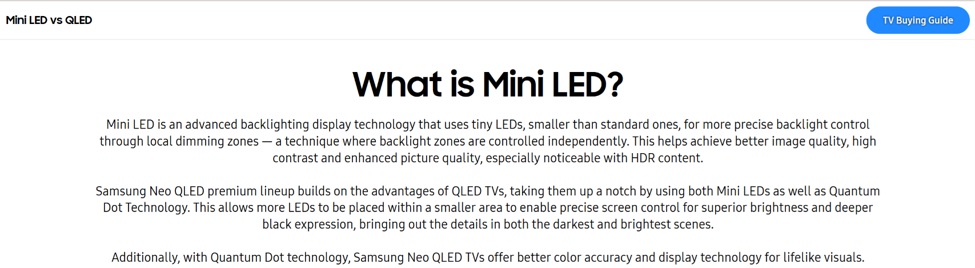
Even Samsung’s own website describing Mini LED suggests that local dimming is essential. “Mini LED is an advanced backlighting display technology that uses tiny LEDs, smaller than standard ones, for more precise backlight control through local dimming zones—a technique where backlight zones are controlled independently,” it says.

A screenshot from Samsung’s website explaining Mini LED.

A screenshot from Samsung’s website explaining Mini LED. Credit: Samsung

In its complaint against Samsung, TCL says it disassembled an M70H and M80H, both Samsung sets, and confirmed they can’t perform local dimming because they lack the necessary LED control chip and circuitry and use the same processor as Samsung’s entry-level Crystal TVs.

How mini should Mini LEDs be?

Although FALD support is key to TCL’s argument, a more obvious question might be whether M-series TVs use actual Mini LEDs. Again, though, there’s no industry-wide rule for what makes an LED “mini.”

I’ve seen Mini LEDs referred to in various size ranges over the years, including 50-300 µm (0.05-0.3 mm), 100-200 µm (0.1-0.2 mm), 100-300 µm, and “typically below 200 µm.”

TCL’s lawsuit claims that Mini LEDs “are generally .1 mm to .3 mm” and that the LEDs in Samsung’s M-series TVs are 0.5 mm. I’ve been unable to find a reputable source that refers to an LED as large as 0.5 mm as a Mini LED. I have even seen LEDs measuring more than 0.2 mm or 3 mm be considered a traditional LED in some cases.

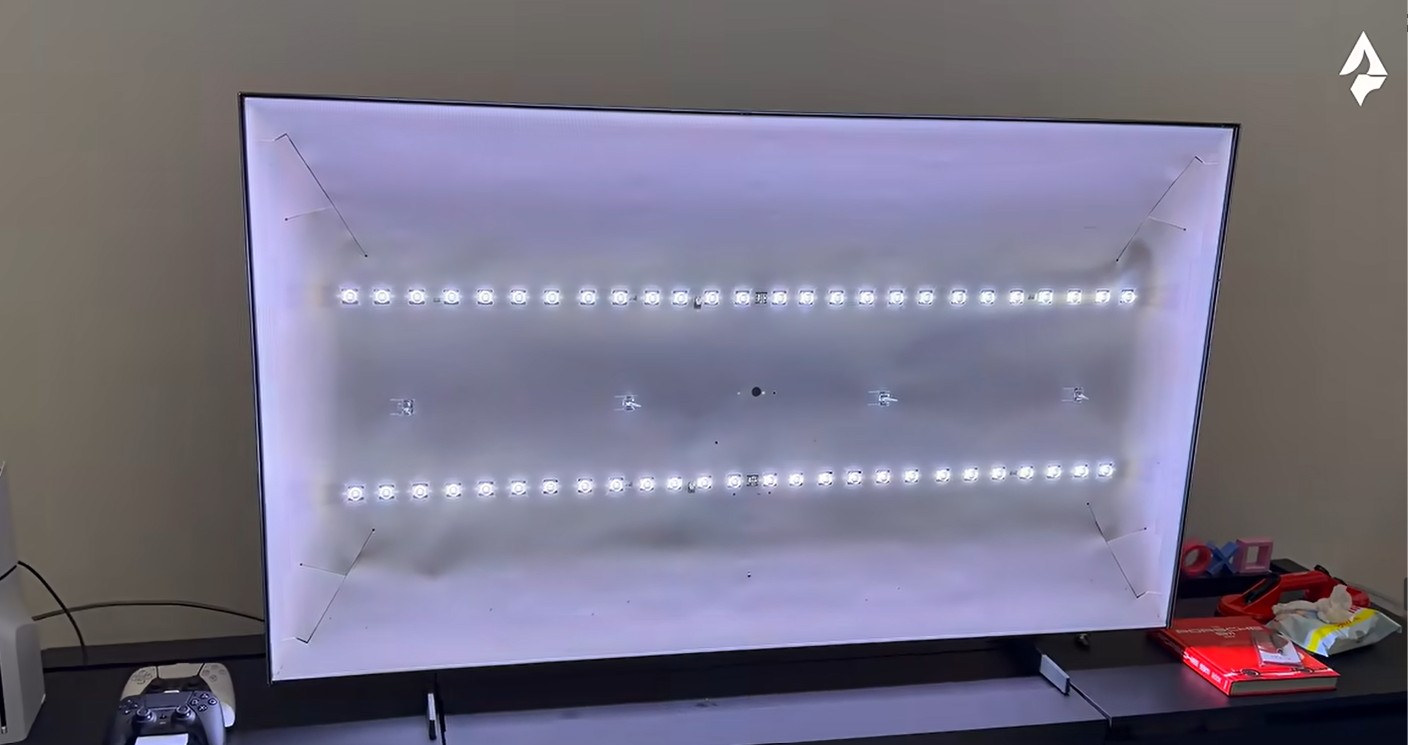
TCL further alleges that M-series TVs have a few dozen LEDs, while some Mini LED displays have thousands. Those LEDs aren’t arranged in an array on a panel; instead, they’re “arranged on two aluminum strips,” the filing says.

A teardown video from YouTube channel AP Tech also shows an M-series TV’s backlight consisting of two rows of LEDs.

M80H's backlight its with two rows of LEDs lit up.

The M80H’s backlight has two rows of LEDs.

The M80H’s backlight has two rows of LEDs. Credit: AP Tech/YouTube

The industry hasn’t established standards for how many LED zones or Mini LEDs a display needs to qualify as Mini LED. That can leave shoppers confused about what they’re actually buying. It also creates a gray area where manufacturers can set their own standards.

“There are no organizations with authority to make and enforce such standards. TV brands have historically exploited the lack of clear standards to be more creative in their marketing,” O’Brien said.

“I think that [TCL’s] claims are legitimate and raise some important question[s] for the entire industry, which lacks a clear definition of what a Mini LED display is,” Virey told me.

The problem can be seen elsewhere in the display panel industry with technologies like QLED.

The industry could try to create standards, but Virey thinks it would lead to  “an endless race.”

“Each time there are new technologies, new marketing terms are invented and can easily be abused,” he said.

M-series performance

While enthusiasts may delight in digging into the complex underpinnings of backlight technology, most people just care about performance. So how are Samsung’s M-series TVs?

There aren’t many reviews. RTINGS found that the M80H had “low” contrast (6,440:1, according to the review site’s testing) that makes “dark scenes look washed out in a dark room.” Regarding HDR performance, RTINGs said, “Content mastered at 600 or 1,000 nits, which is most HDR content, cuts off rapidly at the TV’s peak brightness. This lets the TV get as bright as it can, but there’s less gradation in bright parts of the scene, so highlights can seem to blend together.”

By comparison, Samsung’s $1,200 Mini LED Neo QLED QN80H, which uses individually addressable dimming zones, reached a contrast of 80,000:1 after calibration, according to RTINGs. That translated into visible improvements during actual use. RTINGs reported that the QN80H “looks good in a dark room thanks to its high contrast ratio and great black uniformity, making it a good choice for a home theater room.”

The AP Tech video below shows how an M-series TV and one with FALD handle dimming differently.

TCL’s budget QM6K ($550 MSRP as of this writing), meanwhile, reached a contrast ratio of 118:059:1 after RTINGs’ calibration. But even this set falters in areas where you might expect Mini LED to shine. Its HDR performance, for example, is reportedly lacking.

“Visually, the TV doesn’t impress, although its black levels are quite good due to its impressive contrast and good black uniformity. Unfortunately, there’s more haloing around bright highlights than you’d like, but it’s alright. Its HDR brightness is mediocre at best, so the TV doesn’t provide an impactful HDR experience overall,” RTING’s review says.

Mini LED muddied

TCL has an obvious stake in challenging Samsung’s marketing. The companies are longtime rivals, and casting doubt on Samsung’s claims could help TCL sell more TVs. But the underlying question is still worth asking: What should consumers expect when a TV is marketed as Mini LED?

I’d argue that a TV with slightly smaller LEDs than average but without local dimming shouldn’t be considered Mini LED with local dimming. The important distinction isn’t simply the size of the LEDs; it’s how they’re used to deliver improved contrast and HDR performance.

But even that definition has limits, as small LEDs and local dimming zones aren’t enough to guarantee good performance. TCL’s own budget line of Mini LED TVs can disappoint in areas where the technology should have an advantage, such as HDR support. And compared with Samsung’s more expensive Mini LED TVs, the M-series has worse HDR performance and black levels and is harder to use in a dark room, according to RTINGs’ testing.

That leaves shoppers in an awkward position. Terms like “Mini LED” or “QLED” are now used liberally, but they don’t always tell you how a TV will perform. Manufacturers often fail to disclose basic details, like the size of the LEDs, the number of dimming zones, or accurate contrast and brightness measurements.

For shoppers, then, it’s important to remember that comparative pricing and independent testing are ultimately much more useful than a label on a box.

Authentic Brands approaches Mattel in takeover bid that could top $6 billion

0
authentic-brands-approaches-mattel-in-takeover-bid-that-could-top-$6-billion
Authentic Brands approaches Mattel in takeover bid that could top $6 billion


Authentic Brands Group has approached Mattel about a takeover that could value the Barbie maker at around $6 billion or more, a source familiar with the matter told Reuters.

Authentic Brands was discussing takeover interest of more than $20 per share, the source said. Mattel shares closed up about 18% at $15.04 after the news, which The Wall Street Journal reported first. The company has a market capitalization of about $3.62 billion.

There is no guarantee Mattel will be open to the offer, and no formal sale process is under way, the source said. Mattel declined to comment. Authentic Brands did not immediately respond to a Reuters request for comment.

Leadership change

Mattel shares had closed down about 4% on Wednesday after the company said CEO Ynon Kreiz would leave to become co-CEO of Paramount Skydance and run its combined business with Warner Bros.

Roger Lynch, the former CEO of Conde Nast, the owner of The New Yorker, will succeed Kreiz on or before November 2026. According to the Journal, Lynch’s transition could complicate any deal as he works on his strategy.

Pressure on the toy maker

Consumer goods companies and retailers are battling weak spending as U.S. households face higher fuel costs and interest rates. Mattel has struggled this year with tariff-related costs, even as it continued building an entertainment portfolio around its brands after the success of the 2023 “Barbie” movie. Its shares have dropped 33% so far this year.

In May, Mattel investor Southeastern Asset Management urged Kreiz to explore options, including going private or being acquired by rival Hasbro or a large media company that would value Mattel’s intellectual property more highly than the public market does.

Authentic Brands bought Dockers from Levi Strauss earlier this year, adding to a portfolio that includes Guess and Van Heusen. The company licenses the intellectual property of its brands to partners and has been broadening its acquisition strategy to include kids’ entertainment brands and hospitality.

Turkey, Syria reject claims of meeting between Syrian government, Hezbollah officials

0
turkey,-syria-reject-claims-of-meeting-between-syrian-government,-hezbollah-officials
Turkey, Syria reject claims of meeting between Syrian government, Hezbollah officials

Turkey and Syria on Thursday rejected claims that Syrian government officials and representatives of the Lebanese group Hezbollah had met in Turkey, describing the reports as false, Anadolu Agency reported.

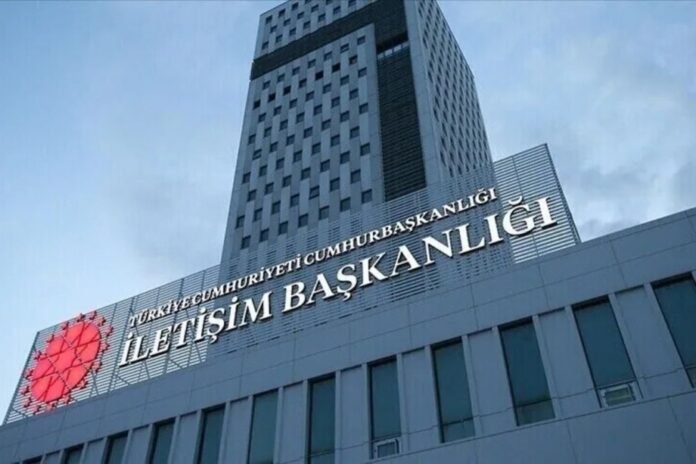
In a statement, the Turkish Communications Directorate’s Center for Combating Disinformation said claims that “Syrian government officials and Hezbollah officials met in Turkey, hosted by the National Intelligence Organization (MIT)” were entirely unfounded.

It said allegations concerning the date, venue, content and participants of the purported meeting “do not reflect any reality and are entirely fabricated and speculative.”

READ: Turkish defence ministry says Israeli actions at Al-Aqsa threaten regional stability

The center urged the public to rely only on statements issued by official authorities and warned against claims circulating through unofficial channels.

The Syrian government also denied that the meeting took place.

“These claims are false, and no such meeting took place,” said the Syrian Information Ministry’s Foreign Media Directorate, according to state-run Alikhbariah TV.

READ: Syria says it arrests Hezbollah cell near Golan

0FansLike
0FollowersFollow
0FollowersFollow
0SubscribersSubscribe
- Advertisement -
Google search engine

Recent Posts