12.2 C
London
Friday, October 2, 2026
Home Blog

Withdrawal and non-withdrawal: The naivete of comparing Iraq to Afghanistan

0
withdrawal-and-non-withdrawal:-the-naivete-of-comparing-iraq-to-afghanistan
Withdrawal and non-withdrawal: The naivete of comparing Iraq to Afghanistan

The prevailing media tendency to draw parallels between the exit of U.S. forces from Iraq and the humiliating, chaotic collapse in Afghanistan reveals a profound analytical naivete—one that is perhaps intentionally cultivated. Such comparisons overlook a crucial structural distinction: the difference between a shattered military campaign and the institutionalization of indirect hegemony.

Years ago, Paul Bremer, the former U.S. civilian administrator of Iraq, offered an almost grotesque counterpoint to the Afghan tragedy when he flatly rejected any comparison between the two conflicts, insisting that Iraq was making “steady political progress.” Yet the harsh reality remains as the British analyst Matthew Parris once framed it: Washington’s strategy in Afghanistan failed catastrophically, wasting countless American and allied lives in a war that culminated in a panicked exit.

In Iraq, however, the situation is anything but a final departure. What we are witnessing is not a withdrawal, but a strategic re-engineering of control—replacing overt military presence with mechanisms of financial and political leverage.

Washington did not truly abandon Iraq; it merely staged a theatrical exit. Political elites in Baghdad gathered to listen to an American general offer patronizing advice in Arabic, warning Iraqis to “prepare for the attacks of jackals as they would for lions.” Yet on the ground, Washington remains deeply entrenched. It no longer needs thousands of boots on the ground when it holds the master key to Iraq’s economic lifeline and financial decision-making.

READ: Al‑Zaidi and the age of the unqualified politician

Washington’s contemporary strategy shifts power from the barrel of a gun to the strength of the dollar.

The U.S. administration does not require forward operating bases to dictate terms in Baghdad as long as Iraq’s national treasury is managed through the corridors of the Federal Reserve Bank of New York. Because Iraq’s oil revenues are deposited into accounts overseen by the U.S. Department of the Treasury, the Iraqi dinar, state payrolls, and basic import capacity remain perpetually dependent on a green light from Washington.

This structural financial leverage renders any rhetoric about “full sovereignty” or a “complete withdrawal” little more than political theater. A sovereign state that does not hold the keys to its own vault possesses only ceremonial authority.

Politically, Washington exercises its influence in Baghdad through a silent veto. A striking example of this leverage occurred when an explicit U.S. veto derailed Nouri al-Maliki’s bid for the premiership, prompting Iraqi political factions to swiftly fall into line. The ability to draw red lines around cabinet formations and dictate who may or may not hold power demonstrates that American influence has not waned; it has simply become more concentrated and effective behind closed doors.

Against this backdrop of financial dependence, the Green Zone government’s celebratory declarations of “restored national sovereignty” ring hollow.

What sovereignty exists for a political system that stands paralyzed before armed militias operating outside state control and taking operational cues directly from Tehran?

The notion of sovereignty becomes a farce when influential political factions openly pledge allegiance to Iran, surrendering Iraq’s national security decisions and reducing its territory and airspace to a transit corridor for regional proxy strategies.

Perhaps the most tragic symptom of this eroded sovereignty is the structural inability of any Iraqi prime minister to confront the corrupt oligarchic class plundering state resources. The executive branch remains bound by the armaments and financial cartels that reinforce one another within Iraq’s ethno-sectarian power-sharing system. A state cannot claim national sovereignty when it is incapable of bringing high-level corruption to justice or safeguarding public funds from systematic embezzlement. Sovereignty is not a speech delivered at a podium or a flag raised at an official ceremony; it is the monopoly on legitimate violence, the enforcement of the rule of law, and the protection of public treasury.

What Washington terms a “withdrawal” is fundamentally a restructuring of presence—substituting combat troops with diplomats, security contractors, intelligence networks, and financial levers. In Afghanistan, the machinery of statehood collapsed instantly as planes departed Kabul. In Iraq, Washington constructed an institutional ecosystem engineered to remain incapable of functioning without American oversight. Political elites in Baghdad understand that any genuine breach with Washington risks immediate economic paralysis that could unravel the regime within weeks.

American commentator Kathleen Parker summarized the arc of U.S. foreign policy failure from Iraq to Afghanistan in a single observation: the United States cannot invent nations in its own image under the guise of exporting democracy. Similarly, Paul Rogers, emeritus professor of peace studies at Bradford University, noted that the Afghan war was merely the first of four failed interventions—alongside Iraq, Libya, and Syria—that left behind a “broken windows world” defined by shattered statehood, displaced populations, ruined infrastructure, and systemic corruption.

Despite attempts by Western think tanks to frame current troop reconfigurations as a transition toward a “bilateral security partnership,” Washington’s strategic posture remains ambivalent. Talk of an “organized exit” repeatedly collides with regional realities that force the U.S. back into active crisis management.

The ultimate contrast between Kabul and Baghdad lies not in victory or defeat, but in the nature of American power. In Afghanistan, the state building experiment collapsed entirely as the last aircraft departed. In Iraq, armored vehicles were simply replaced by the Federal Reserve, and military outposts by financial and political leverage.

There can be no genuine withdrawal from a state that remains financially tethered, security-compromised, and politically constrained.

What Iraq experiences today is not the reclamation of national destiny, but an enduring state of non-withdrawal—one in which the former occupying power retains the keys to the treasury while local elites divide the remnants of the state.

The views expressed in this article belong to the author and do not necessarily reflect the editorial policy of Middle East Monitor.

Roasted Garlic Cheddar Potato Soup

0
roasted-garlic-cheddar-potato-soup
Roasted Garlic Cheddar Potato Soup
Roasted Garlic Cheddar Potato Soup topped with bacon, cheddar, sour cream, and fresh chives.
Roasted Garlic Cheddar Potato Soup combines tender potatoes, mellow roasted garlic, sharp cheddar, bacon, and a creamy finish.

Print Friendly, PDF & Email

Roasted Garlic Cheddar Potato Soup is thick, creamy, and full of cozy flavor without needing to blend the whole pot. Yukon Gold potatoes simmer until tender, then a portion gets gently mashed right into the broth to give the soup natural body while leaving plenty of soft potato pieces in every spoonful.

The roasted garlic is what makes this version different. Roasting mellows the cloves and brings out their sweeter, deeper flavor before they are stirred into the soup with sharp cheddar, sour cream, and a little Dijon. Bacon adds a smoky, salty contrast without taking over the potatoes.

Freshly shredded cheddar melts in after the pot comes off the heat, keeping the broth smooth instead of grainy. Finish each bowl with crisp bacon, chives, a little extra cheddar, and a spoonful of sour cream. It is familiar potato soup with one extra layer of flavor that makes it especially good for the first cool nights of fall.


Roasted Garlic Cheddar Potato Soup topped with bacon, cheddar, sour cream, and fresh chives.
Roasted Garlic Cheddar Potato Soup combines tender potatoes, mellow roasted garlic, sharp cheddar, bacon, and a creamy finish.

Recipe Yield: 6 servings

INGREDIENTS

4 cups low-sodium chicken broth
2 1/2 lbs Yukon Gold potatoes, cut into 3/4-inch pieces
6 slices thick-cut bacon, chopped
1 medium yellow onion, finely diced
2 celery ribs, finely diced
1 whole garlic bulb
2 cups freshly shredded sharp cheddar cheese, divided
1/2 cup sour cream, plus more for serving
1 cup whole milk
1/2 cup heavy cream
3 tbsp unsalted butter
1 tsp olive oil
1/4 cup all-purpose flour
1 tsp kosher salt
1/2 tsp black pepper
1/2 tsp dried thyme
1 tsp Dijon mustard
3 tbsp chopped fresh chives, divided

INSTRUCTIONS

1. Roast the garlic:
Preheat the oven to 400°F. Slice about 1/4 inch from the top of the garlic bulb to expose the cloves. Drizzle with olive oil, place cut-side up in a small covered baking dish, and roast for 35–40 minutes, until the cloves are very soft and lightly golden.

2. Cook the bacon:
Meanwhile, add the bacon to a large Dutch oven or heavy pot over medium heat. Cook for 7–9 minutes, stirring occasionally, until crisp. Transfer the bacon to a paper towel-lined plate, leaving about 1 tbsp bacon drippings in the pot.

3. Soften the vegetables:
Add the onion and celery to the pot. Cook over medium heat for 5–6 minutes, stirring occasionally, until softened but not browned.

4. Build the soup base:
Add the butter. Once melted, sprinkle in the flour and cook for 1 minute, stirring constantly. Slowly whisk in the chicken broth until smooth.

5. Simmer the potatoes:
Add the potatoes, salt, black pepper, and thyme. Bring to a gentle boil, then reduce the heat to medium-low. Cover partially and simmer for 15–18 minutes, stirring occasionally, until the potatoes are completely fork-tender.

6. Add the roasted garlic:
Squeeze the softened roasted garlic cloves from their skins into a small bowl and mash until smooth. Stir the roasted garlic into the soup.

7. Thicken naturally:
Use a potato masher to gently mash about one-third of the potatoes directly in the pot, leaving the remaining pieces intact. Stir until the broth becomes naturally creamy and slightly thickened.

8. Finish the soup:
Reduce the heat to low. Stir in the milk, heavy cream, and Dijon. Heat gently for 2–3 minutes without boiling, then remove the pot from the heat.

9. Add the cheddar:
Stir in 1 1/2 cups cheddar a handful at a time until completely melted and smooth. Fold in the sour cream, half of the cooked bacon, and 2 tbsp chives.

10. Serve the soup:
Ladle into bowls and finish with the remaining 1/2 cup cheddar, bacon, remaining 1 tbsp chives, and a small spoonful of sour cream.


Helpful Tips to Perfect This Recipe

  • Roast the garlic until completely soft: The cloves should squeeze easily from their skins. Properly roasted garlic tastes mellow and slightly sweet rather than sharp.
  • Mash only part of the potatoes: Breaking down about one-third naturally thickens the broth while keeping plenty of tender potato pieces for a hearty texture.
  • Take the pot off the heat before adding cheddar: High heat can make cheese separate or become grainy. Adding freshly shredded cheddar off heat keeps the soup noticeably smoother.
  • Keep the dairy below a boil: Once the milk, cream, and sour cream are added, gentle heat protects the creamy texture and prevents separation.

Rate This Recipe

Tried this recipe? Your rating helps others and means so much.

A Different Standard for Israel? Questions Raised by This Year’s UN General Assembly

0
a-different-standard-for-israel?-questions-raised-by-this-year’s-un-general-assembly
A Different Standard for Israel? Questions Raised by This Year’s UN General Assembly


From António Guterres’s comparison of Gaza with other conflicts to sweeping condemnations from world leaders, the speeches in New York revived a long-running debate over whether Israel is judged by standards applied consistently elsewhere

Listen to some of the speeches at this year’s UN General Assembly in New York, and a question quickly arises: Is Israel being judged by a standard applied to no other country?

In his final address to the General Assembly as secretary-general, António Guterres made an extraordinary comparison. Speaking about Gaza, he said the war had produced “a scale of killing and destruction unlike anything I have witnessed in all my years as secretary-general.” Really?

In the same speech, Guterres called Russia’s full-scale invasion of Ukraine a brutal war in violation of the UN Charter and spoke of continuing attacks on civilians and infrastructure. He also condemned the war in Sudan.

So what standard was he using to make that comparison? The total number killed? The proportion of civilians? The speed of the destruction? The percentage of buildings damaged or destroyed? He did not say.

His years at the UN offer plenty of grim comparisons. The Syrian civil war continued through much of his tenure, leaving hundreds of thousands dead. The United Nations Development Programme estimated that Yemen’s war had caused 377,000 direct and indirect deaths by the end of 2021. The 2020-2022 Tigray war killed hundreds of thousands, with African Union mediator Olusegun Obasanjo citing an estimate of roughly 600,000 deaths.

Sudan is another catastrophe. A study published in The Lancet Global Health estimated more than 61,000 deaths from all causes in Khartoum state during the first 14 months of the war, with evidence that the nationwide toll was far higher.

Nigeria belongs in the conversation as well. Years of jihadist and communal violence have killed Christians and Muslims alike. Christian advocacy organizations put the number of Christians killed over the past decade and a half in the tens of thousands, although independent analysts dispute attempts to characterize all of that violence as the targeted killing of Christians.

Gaza’s suffering is real and immense. But against that record, Guterres’s comparison deserves to be questioned.

And Guterres is hardly alone.

French President Emmanuel Macron told the UN General Assembly: “Hamas has never been active in the West Bank.” That was simply wrong. Hamas has long maintained cells and carried out attacks in the West Bank, although it does not govern there. A French diplomatic official later said Macron had meant to say that Hamas does not rule the West Bank.

Turkey’s President Recep Tayyip Erdoğan has repeatedly attacked Israel in equally sweeping terms. Under Erdoğan, Turkish forces have carried out repeated military operations inside Syria and Iraq, while Turkish troops remain in northern Cyprus decades after Turkey’s 1974 military intervention. Yet at the General Assembly he accused Israel of possessing a “genocidal mindset that can never get enough of killing.”

Brazilian President Luiz Inácio Lula da Silva likewise used his UN address to accuse Netanyahu’s government of “genocide” in Gaza. Lula has repeatedly used that term to describe Israel’s conduct while also condemning Hamas’ terrorist attacks.

Spanish Prime Minister Pedro Sánchez declared before the same General Assembly that his government “condemns without qualification” what he described as the genocide that Netanyahu “continues to perpetrate” in Gaza.

Jordan’s King Abdullah II went further, declaring: “This Israeli government’s expansionist appetite is now a regional threat.” Claims like that should face the same scrutiny that Israel’s statements about its enemies and its security face.

Other leaders directed their anger at the institutions themselves.

Argentine President Javier Milei delivered perhaps the harshest critique of the United Nations. He called it a “useless organization” that had become a vehicle for “a caste of fatally arrogant parasites masquerading as well-intentioned bureaucrats.” He accused the UN of allowing chaos, violence and terrorism to flourish, sheltering dictatorships and systematically voting against Israel while remaining silent about other abuses.

President Donald Trump turned his fire on the International Criminal Court. In his Sept. 22 address, President Trump called the ICC an “out-of-control institution” and urged its member countries to withdraw. His administration has imposed sanctions on court officials and has sharply opposed the ICC’s actions against Israeli leaders and its previous investigations involving American forces.

Neither Milei’s criticism nor President Trump’s proves that Israel is being treated unfairly. But they are not alone in arguing that international institutions have become selective about the standards they enforce and the language they use.

That leaves the basic question: Why does Israel so often appear to be judged by a different standard?

Criticism of Israel is not antisemitism. The suffering of Palestinians in Gaza is immense and deserves serious scrutiny. Israel’s actions, like those of any other state, should be examined, criticized and, where appropriate, condemned.

What should not change from one conflict to another is the standard being applied.

The UN has documented atrocities in Syria, Sudan, Ethiopia, Nigeria, Ukraine and elsewhere, and Guterres himself has condemned many of them. Yet he still placed Gaza beyond every other catastrophe he has witnessed during his decade in office without explaining the measure behind that judgment. If the standard changes depending on the country being judged, people are right to ask why.

That is where moral clarity can turn into moral inversion. Selective outrage can leave some victims feeling that their suffering counts for less. And when criticism of the Jewish state rests on standards applied nowhere else, it gives antisemites an opportunity to dress an ancient prejudice in the language of international law, human rights and diplomacy.

Judge dismisses Chegg and Penske antitrust lawsuits targeting Google AI search

0
judge-dismisses-chegg-and-penske-antitrust-lawsuits-targeting-google-ai-search
Judge dismisses Chegg and Penske antitrust lawsuits targeting Google AI search

In a setback for publishers worried about the effects of AI search, a US federal judge has dismissed lawsuits filed by Chegg and Penske Media against Google. The companies accused Google of antitrust violations in products like AI overviews, which have led to decreasing traffic at numerous sites. However, US District Judge Amit Mehta has ruled that Google’s conduct is not illegal under antitrust law.

The lawsuits were filed in 2025, and Google requested a dismissal earlier this year. Chegg, an education and learning platform, claimed in its lawsuit that Google illegally scraped its educational content. This allowed Gemini models to essentially recreate that content and reduce the site’s traffic. Penske, which owns publications like Rolling Stone and Variety, filed a similar case that alleged lost traffic. Specifically, the publisher claimed it was unfair that sites indexed for organic search would also have their content harvested for AI answers, with no way to opt out.

These arguments did not sway the judge, who noted that Google’s implicit agreement with websites is not legally relevant. “Plaintiffs have pleaded only that they have an ‘expectation’ that Google will send them search ​traffic if they make their content available for free,” wrote Mehta. “But an expectation is not an agreement. It is simply how a general search engine works.”

Since Google never had a formal arrangement with either Chegg or Penske, antitrust law doesn’t apply. And Mehta is aware of the legal issues surrounding search. He also heard the DOJ’s long-running search antitrust case against Google, eventually finding that Google violated the law. However, the government didn’t get the harsh penalties it wanted in that case.

Not unsympathetic

While Google is getting the dismissal it wanted, it doesn’t come away looking particularly good. Mehta recognizes that Google’s approach to AI search may be unfair to web publishers even if it’s not illegal.

“The court does not treat Plaintiffs’ alleged harms lightly,” he wrote. “Nor is it unsympathetic to the situation publishers now find themselves in, and the knock-on consequences to journalists, educators, and other online creators whose content Google takes and repurposes without compensation.”

This case essentially comes down to the nature of innovation. Google is changing the way search operates, and that may come with economic harm. However, not all economic harm that may befall a company is the product of an illegal act. Mehta says that antitrust laws cannot be applied in place of legislative action just because something feels unfair: “The court is bound to apply the law only as it is written, not how the court or any party believes it ought to be.”

Google will undoubtedly face more legal challenges over AI search, but it’s going to be an uphill battle in US courts absent new legislation, and lawmakers have been slow to adapt to the AI era. Publishers may have more luck overseas. The European Commission is currently considering these same questions, and it tends to take a dimmer view of Big Tech’s conduct. The UK has also ordered Google to provide an AI opt-out for sites that want to remain in organic search results.

Google is exploring ways to pay sites directly for contributing to AI answers, but its pilot program is reportedly not going over well with publishers.

Oil prices rise for second session on continued Middle East supply concern

0
oil-prices-rise-for-second-session-on-continued-middle-east-supply-concern
Oil prices rise for second session on continued Middle East supply concern


Oil prices rose for a second successive session on Tuesday as lingering concern over Middle East supply ​disruption brought about by US-Iran conflict outweighed signs of recovering crude exports ‌from the region.

Brent crude futures had risen $1.49, or 1.4%, to $106.77 a barrel by 0326 GMT while US West Texas Intermediate crude was at $93.94, up $1.34, or 1.5%. Both benchmarks closed the previous session at nearly $1 ​a barrel higher.

“A clearer picture is emerging of higher oil export volumes leaving ​the Gulf, but much of that increase still relies on workarounds such ⁠as ship-to-ship transfers. Those methods are less efficient and more costly than normal operations, which ​is why crude prices remain elevated,” said KCM Trade chief analyst Tim Waterer.

Crude exports from major ​Middle Eastern producers climbed to 12.8 million barrels a day in September, the highest since February, preliminary figures from data provider Kpler showed on Monday, helped by increased shipments from Saudi Arabia and the ​United Arab Emirates.

US and Iranian officials spoke separately with mediators in a renewed effort to end ​seven months of war, officials of both countries said. Further talks are widely expected to focus on ‌an ⁠amended version of a seven-day proposal that Iran presented last week on the sidelines of the United Nations General Assembly.

“The dominant risk remains the US-Iran standoff and its implications for energy prices and inflation expectations,” said UOB analysts in a client note.

“Iranian officials have reportedly ​expressed pessimism about reaching ​a deal before the ⁠Strait of Hormuz situation escalates further, keeping oil supply uncertainty elevated.”

The war, which began in late February with US and Israeli attacks on ​Iran, has focused attention on the Strait of Hormuz, a crucial ​shipping lane ⁠for oil and gas supplies, the disruption of which has upended energy markets.

Meanwhile, the US is considering regulatory relief to allow broader sales of red-dyed diesel to help lower prices, action ⁠that could ​allow some buyers to avoid federal fuel tax, people ​familiar with discussions told Reuters. The proposal emerged from days of deliberation as a leading alternative to a diesel export ​ban.

Source:  Reuters

AI’s apparent danger is its best selling point

0
ai’s-apparent-danger-is-its-best-selling-point
AI’s apparent danger is its best selling point

Just weeks before its scheduled November IPO, Anthropic is facing growing attention over the potential dangers of its technology.

The resignation of former Anthropic researcher Jacob Coxon on September 8, who wrote on X that AI could “kill us all by the end of the decade,” preceded the company’s threat report on September 10.

According to the document, Anthropic’s Claude software was used in Houthi-controlled Yemen for missile guidance and in cyber operations linked to Iran, Russia, and China, as well as for research into potentially dangerous pathogens.

Anthropic is not alone in admitting risks from its products in recent months—in July, OpenAI stated that several models broke containment during a safety test before compromising another company’s infrastructure, while Google announced that its Gemini AI escaped its test environment in May and gained unauthorized access to three companies.

The incidents have renewed calls for industry regulation. The AI Kill Switch Act introduced in Congress in July requires developers of advanced AI systems to maintain technical requirements to shut them down, while Representatives Bernie Sanders and Greg Casar announced the Ban Artificial Superintelligence Act on September 3.

AI companies are also pushing their own safeguards, with Anthropic CEO Dario Amodei calling for frontier AI development to slow down and be independently evaluated on September 12. This position was backed by industry rivals SpaceX and Tesla CEO Elon Musk and OpenAI CEO Sam Altman, who stated that his company would not go public until at least 2027 because of safety concerns.

Unease over AI has been evident for years. Thousands of prominent AI researchers and tech figures signed an open letter in 2023 calling for a six-month pause on training more powerful AI systems, now dominated by Anthropic, OpenAI, Google, Microsoft, and Meta.

“As these types of systems become more sophisticated, they could destabilize labor markets and political institutions, and lead to the concentration of enormous power in the hands of a small number of unelected corporations. … The systems could themselves pursue goals, either human- or self-assigned, in ways that place negligible value on human rights, human safety, or, in the most harrowing predictions, human existence,” states the letter.

But the increasingly alarmist tone over AI contrasts sharply with what some of its leading proponents have said before. In 2023, Sam Altman stated that AI is “wildly overhyped in the short term.” Meanwhile, Meta CEO Mark Zuckerberg and Nvidia CEO Jensen Huang have recently dismissed Jacob Coxon’s warnings.

Instead, for the companies driving concern over AI’s dangers, doing so can make the technology appear more consequential, while giving its most powerful developers a larger role in industry-wide regulation.

Fear as a promotional tool

Using fear as a marketing tool dates back decades. A 1996 experiment in the Journal of Experimental Psychology: Applied, for example, found that warning labels for violent television programs increased viewer interest.

Doomsday hype has been part of AI’s promotional culture since the early 2020s, according to communications scholar Clea Bourne, who indicates that the industry moved into a “campaign of fear” around 2023.

She argues that doomsday hype helps create market bubbles because of investors’ “fear of missing out,” adding that such hype “is not unusual in the current era of neoliberal capitalism.”

Argentinian data scientist Marcelo Rinesi, who worked on external testing for OpenAI’s DALL·E, has made a similar point. Speaking to Valor International in 2025, he says investment in AI is heavily driven by the perception that it is powerful and dangerous, which is “the only way OpenAI can justify its valuation.”

Major AI companies’ descriptions of their capabilities also set them apart from smaller firms, which can market themselves only as useful tools rather than as powerful and potentially dangerous technology.

For individuals, companies and governments, staying out of these partnerships can mean missing the economic benefits and influence over AI’s future.

Media outlets tend to amplify dread over AI because it generates traffic and discussion, but the AI industry also has considerable influence on how its products are profiled.

Research from the Reuters Institute found that nearly 60% of AI articles across six major UK news outlets focused on products, announcements, and initiatives, with a third of these outlets relying on industry sources—mostly senior executives—and describing the coverage as largely industry-led.

Major AI companies can also influence coverage by funding media networks. Founded in 2022, the Tarbell Center for AI Journalism funds and trains journalists covering AI.

It receives significant funding from Coefficient Giving, formerly Open Philanthropy, which in turn gets funding from donors including Dustin Moskovitz, a major early investor in Anthropic. The Washington Examiner also documented ties between Tarbell and other early Anthropic figures such as investor Jaan Tallinn, the Skype co-founder.

Tarbell says its journalists are independent, and while that may be true, the networks behind it can still influence what receives attention and coverage. Similar ties exist across the AI industry and media.

Combined with AI companies’ ability to place sources in the media and their limited incentive to undermine their own products, the portrayal of unprecedented risks associated with AI tools can instead be interpreted as an intentional effort to boost their value.

Regulatory capture

Companies like Anthropic can also use the same philanthropic networks it indirectly supports, and other means, to influence institutions shaping AI regulation.

Coefficient Giving has funded organizations like Redwood Research and Alignment Research Center, whose work later led to the formation of the nonprofit Model Evaluation and Threat Research (METR). METR is also linked to Anthropic through initial trustees Paul Christiano and Jaan Tallinn.

Since 2023, METR has become a powerful evaluator for the emerging AI oversight systems. Working with major companies including Anthropic and OpenAI, METR’s evaluations can influence how models of these companies are assessed and how policymakers understand the associated risks.

While pushing regulation may seem counterintuitive for major AI companies, IE university professor Adriana Hoyos explains that “the more complex the compliance system, the more likely it is to become a fixed cost of entry—and a competitive moat around the companies already at the frontier.”

Security requirements may have legitimate justifications, but as government certification, restrictions on model weights, and controls on advanced chips become standardized, compliance costs may become too much for smaller rivals and startups to absorb.

Major AI companies have helped define what regulation could look like for years. OpenAI’s 2023 governance proposal called for an international authority for the most powerful AI systems, allowing for inspection and audits alongside restrictions.

Anthropic’s Responsible Scaling Policy similarly ties stronger safeguards to capability thresholds, like assisting with biological and chemical weapons. Restricting access based on capability is already occurring, with Anthropic releasing its Mythos model earlier in 2025 to select corporate customers.

As fear drives demand for regulation, direct and indirect roles of major AI companies in developing regulatory infrastructure can also give them a hand in deciding who gets to participate. Even the ability to define which AI systems qualify as “frontier” can determine which benchmarks AI companies must meet and which practices become mandatory.

This has become more significant as AI has become increasingly politicized. US President Donald Trump downplayed calls to slow down AI development. At the same time, politicians in both parties face growing scrutiny over data centers and are considering tougher stances on AI companies as the midterm elections approach.

With European concerns about overreliance on US Big Tech companies and the EU AI Act expected to roll out in phases through 2028, AI companies need to influence regulation domestically and abroad to protect their interests.

Costs of misunderstanding

In 2023, Politico reported that Open Philanthropy, “in concert with its web of affiliated organizations and experts, is shifting the policy conversation away from more pressing issues — including topics some leading AI firms might prefer to keep off the policy agenda.”

Those issues include concerns about user privacy when consumers share personal information without knowing how it is used, and misinformation, such as an incident in the spring where a false AI-assisted intelligence report almost led the US military to intercept a Chinese vessel in the Middle East during the war with Iran.

Misunderstandings about AI’s capabilities have also had consequences. Companies that aggressively eliminated jobs in favor of AI have had to hire workers back after overestimating proficiency. Additionally, besides the risk of AI advancing beyond human control, institutional control of the technology shields it from society, preventing its use for broader public benefit.

At the same time, Chinese AI capabilities are frequently cited as the reason the US cannot afford to slow down, creating useful tension for the industry. AI is presented as both too dangerous to leave unregulated and too strategically important to disrupt.

This balancing act can help sustain public urgency alongside market investment and political support, while giving major AI companies a role in shaping the rules.

During the Gilded Age, railroad companies similarly received enormous government support while their executives used political connections to protect their interests and shape the rules meant to constrain them. The resulting monopolies eventually became targets of renewed legislation and antitrust action, but not before enormous fortunes were made.

While the potential for AI is still unknown and it may one day emerge as a technology to fear, its current development and public narrative are driven by enormous financial incentives.

Exaggerated claims about its dangers can increase the industry’s perceived value while creating demand for regulations that major companies are well positioned to shape and benefit from. With inflated expectations guiding decision-making in the AI industry, this approach will become increasingly difficult to reverse.

John P. Ruehl is an Australian-American journalist living in Washington, DC, and a world affairs correspondent for the Independent Media Institute. He is a contributor to several foreign affairs publications, and his book, “Budget Superpower: How Russia Challenges the West With an Economy Smaller Than Texas”, was published in 2022. Follow him on X @john_ruehl.

This article was produced by Economy for All, a project of the Independent Media Institute, and is republished with permission.

Jennifer Aniston Takes Shocking ‘Swipe’ at Brad Pitt

0
jennifer-aniston-takes-shocking-‘swipe’-at-brad-pitt
Jennifer Aniston Takes Shocking ‘Swipe’ at Brad Pitt


Jennifer Aniston is reportedly happier than ever with boyfriend Jim Curtis — and a new claim about how he compares with her famous exes is raising eyebrows.

The 57-year-old Friends star has become increasingly open about her romance with Curtis, 50, after years of keeping much of her dating life away from the spotlight.

Now, an unnamed source is claiming Aniston considers her relationship with the wellness author and hypnotherapist different from anything she experienced with her former partners — including ex-husband Brad Pitt.

The source’s most personal claims, however, should be taken with some caution. Aniston herself has not publicly made the comments attributed to her, and there is no indication that Pitt has responded.

According to the insider, Aniston and Curtis still have the excitement of a new romance despite being together for more than a year.

The source claimed the couple remains firmly in the “honeymoon stage” and suggested their chemistry has not cooled since they began dating.

More provocatively, the insider alleged that Aniston has compared Curtis with some of the men from her past and considers him the best romantic partner she has had.

The source specifically brought Pitt into the conversation, claiming Aniston now looks back on that marriage differently.

According to the report, there was plenty of passion between Aniston and Pitt, but the insider alleged that Aniston felt much of their relationship centered on Pitt’s needs.

Those are claims from an anonymous source, not comments Aniston has made publicly.

What is clear is that Aniston’s current relationship has become much more serious over the past year.

Aniston and Curtis were first romantically linked in the summer of 2025 after they were spotted together during a trip to Mallorca, Spain. Reports at the time said they had been friends for months before their relationship turned romantic.

Their romance gradually became more public.

In November 2025, Aniston shared a cozy photo with Curtis while celebrating his birthday and affectionately referred to him as “my love.” By 2026, the couple was appearing together more regularly and sharing glimpses of their relationship on social media.

Curtis has also begun talking openly about what makes their relationship work.

In a September 2026 interview, he said their friendship developed for months before they became a couple and described what they now share as a relationship filled with joy, calm and a genuine sense of partnership.

That public description gives considerably more weight to reports that the couple has grown serious than the anonymous claims about Aniston’s former relationships.

Aniston also supported Curtis professionally in September when she joined him onstage in New York for an event tied to his book, The Book of Possibility.

Their increasingly public relationship marks a notable change for Aniston, whose personal life has been the subject of intense scrutiny for decades.

Her marriage to Pitt remains one of Hollywood’s most talked-about relationships.

The actors began dating in the late 1990s and married in Malibu in July 2000. They announced their separation in January 2005, and their divorce was finalized later that year.

Pitt subsequently began a relationship with his Mr. & Mrs. Smith co-star Angelina Jolie. Pitt and Jolie married in 2014 before separating in 2016.

Aniston eventually moved on as well.

She dated actor Vince Vaughn after the two worked together on the 2006 romantic comedy The Break-Up. Their relationship ended later that year, with representatives for the pair saying at the time that the split was mutual.

Years later, Aniston spoke warmly about Vaughn and credited his humor and energy with helping her through the difficult period following her divorce from Pitt.

The latest anonymous source similarly claimed Vaughn was one former boyfriend whom Aniston remembers particularly fondly, alleging he was the only ex who came close to Curtis when it came to making her feel prioritized.

Again, Aniston has not publicly confirmed that particular comparison.

She later began a relationship with actor and screenwriter Justin Theroux. The pair married in 2015 before announcing their separation in 2018.

Theroux has since moved on with actress Nicole Brydon Bloom. They married in 2025 and welcomed their first child, a baby boy, in 2026.

Aniston, meanwhile, appears to be enjoying a particularly settled chapter with Curtis.

Recent photographs shared by the actress have even shown Curtis spending time with her beloved rescue dogs, another indication that he has become part of her everyday life.

While the racier claims about how Curtis supposedly measures up against Pitt and Aniston’s other exes remain unverified celebrity gossip, the couple’s increasingly public appearances and their own comments leave little doubt that the relationship has become significant.

And after more than a year together, Aniston and Curtis appear far beyond the stage of a secret Hollywood fling.

SpaceX describes surgical intervention before launch of latest crew mission

0
spacex-describes-surgical-intervention-before-launch-of-latest-crew-mission
SpaceX describes surgical intervention before launch of latest crew mission

A four-person crew rocketed into orbit Thursday from Cape Canaveral Space Force Station, Florida, heading for a six-month expedition on the International Space Station.

Riding a Falcon 9 rocket and Dragon spacecraft, the four crew members departed from Space Launch Complex-40 at Cape Canaveral at 11:10 am EDT (15:10 UTC) Thursday. Nine minutes later, they were in orbit to begin closing in on the space station for docking Thursday evening.

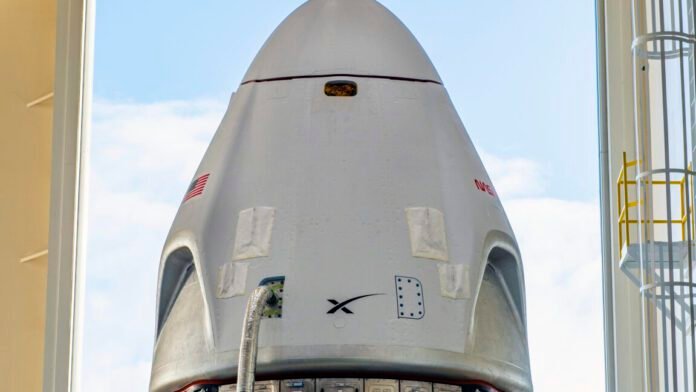
The launch was delayed from mid-September to replace a balky valve in the Dragon spacecraft’s propulsion system, a task that involved cutting into a propellant line inside the ship to swap out a faulty component.

Jessica Watkins, a 38-year-old geologist turned astronaut, leads the four-person crew sent into orbit Thursday, becoming the first Black woman to command a spacecraft. Watkins is the only veteran astronaut on the mission—designated Crew-13—after spending 170 days in orbit on a long-duration spaceflight in 2022.

Pilot Luke Delaney, a Marine Corps veteran, was seated next to Watkins for the Dragon spacecraft’s ascent into orbit. Two international crew members rounded out the Crew-13 team: Canadian astronaut Joshua Kutryk, a former pilot in the Royal Canadian Air Force, and Sergey Teteryatnikov, a Russian cosmonaut who served as a naval engineer before his selection to the Roscosmos Cosmonaut Corps in 2021.

Kutryk and his wife Heather are expecting their third child later this year. It’s rare, but astronauts have been off the planet for their child’s birth before. Most recently, NASA astronaut Randy Bresnik, set to command the Artemis III mission next year, was flying aboard the Space Shuttle Atlantis in 2009 when his wife gave birth to their daughter, Abigail Mae, in Houston.

“Leaving these three (plus one on the way) is the hardest thing I’ve ever done. But that has always been the nature of exploration,” Kutryk wrote on X.

Watkins and her crewmates were on course to reach the International Space Station (ISS) about eight hours after launch, the fastest-ever launch-to-docking transit to the ISS by a US spacecraft.

NASA astronaut Jessica Watkins, commander of the Crew-13 mission, arrives at Kennedy Space Center, Florida, ahead of launch.

NASA astronaut Jessica Watkins, commander of the Crew-13 mission, arrives at Kennedy Space Center, Florida, ahead of launch. Credit: NASA/Kim Shiflett

“What an epic ride. What an epic ride it was,” Delaney radioed mission control soon after reaching orbit. “Today, we proudly continue the streak of humans living and working in orbit, building on the legacies of yesterday to pave the way for the future of space exploration.”

The ISS has been permanently staffed since 2000, with crews flying to and from the orbiting outpost on NASA’s Space Shuttles, Russian Soyuz spacecraft, and most recently, SpaceX’s Crew Dragon. NASA and its international partners plan to keep the space station operating through at least 2030. SpaceX’s plans to retire the Crew Dragon vehicle around 2030 have prompted NASA to work more closely with Boeing to bring its troubled Starliner crew capsule into service.

Honing their craft

Thursday’s flight was the 13th crew rotation mission launched by SpaceX under a multibillion-dollar contract with NASA, and SpaceX’s 21st human spaceflight overall, including test flights and fully commercial missions.

The company’s success with the Crew Dragon spacecraft restored the country’s ability to launch astronauts into orbit after a nine-year gap following the Space Shuttle retirement in 2011, ending NASA’s sole reliance on Russia for crew transportation. NASA’s other commercial crew provider, Boeing, has repeatedly stumbled on a series of test flights with its Starliner spacecraft.

SpaceX’s plans to retire Crew Dragon and the Falcon 9 rocket mean the fleets are now well beyond halfway through their operational life. SpaceX has nine more Crew Dragon flights in its backlog, including three additional crew missions to the ISS that NASA recently secured in a $946 million contract extension, bringing NASA’s total contract for 17 SpaceX crew missions to $5.92 billion.

That figure is a drop in the bucket next to SpaceX’s projected revenues from its ever-growing Starlink broadband service, the Starship/Super Heavy rocket, and orbital data centers. SpaceX, now a publicly traded company, is prioritizing its most lucrative lines of business, and flights to the ISS aren’t among them.

Canadian Space Agency astronaut Joshua Kutryk poses for a photo with his wife, Heather, and children after walking out from the Neil Armstrong Operations and Checkout Building at Kennedy Space Center, Florida, ahead of his launch aboard a SpaceX Falcon 9 rocket.

Canadian Space Agency astronaut Joshua Kutryk poses for a photo with his wife, Heather, and children after walking out from the Neil Armstrong Operations and Checkout Building at Kennedy Space Center, Florida, ahead of his launch aboard a SpaceX Falcon 9 rocket. Credit: Paul Hennesy/Anadolu via Getty Images

Bill Gerstenmaier, SpaceX’s vice president of build and flight reliability, declined to say in a prelaunch press conference Wednesday if there is a “hard cutoff” for when the company will no longer offer Crew Dragon flights to NASA. The recent contract extension may be the last.

“We were just awarded Crew flights 15, 16, and 17, so I think our real focus is to make sure we get the most out of those flights,” Gerstenmaier said. “So we’re working really super hard to make sure that our vehicles are ready, things are ready to go fly, and we’ll keep moving forward.”

Notably, SpaceX is winding down Crew Dragon and Falcon 9 at the top of their game. Gerstenmaier pointed to the valve replacement inside the Crew Dragon spacecraft for the Crew-13 mission as evidence of SpaceX’s commitment to fulfilling its contract with NASA.

NASA announced a postponement for the Crew-13 launch in late August to give ground teams time to resolve an oxidizer leak inside Dragon’s propulsion system detected during launch preparations at Cape Canaveral. SpaceX traced the leak to a valve. The spacecraft was already loaded with nitrogen tetroxide, or NTO, the volatile, toxic oxidizer used by Dragon’s control thrusters in combination with hydrazine fuel.

Teams devised an unprecedented bit of spaceship surgery to replace the valve without draining the propellant and disassembling the spacecraft, steps that would have triggered a much longer delay. The fix involved cutting into the propellant line, removing and replacing the valve, then welding the line together again. It was the first time SpaceX has performed such a repair with a fully assembled Dragon spacecraft loaded with propellant.

A SpaceX Falcon 9 rocket carrying the company’s Dragon spacecraft lifts off on the Crew-13 mission to the International Space Station.

A SpaceX Falcon 9 rocket carrying the company’s Dragon spacecraft lifts off on the Crew-13 mission to the International Space Station. Credit: NASA/John Kraus

“By cutting it out, we physically went in and actually cut the valve out of the line,” Gerstenmaier said. “It was welded in place, and then we actually re-welded a new valve in place.”

Engineers are testing the bad valve to diagnose the cause of the leak, but NASA officials were pleased with the fix. No leaks were detected during final preparations for launch Thursday, and Dragon’s propulsion system appeared to be functioning well after arriving in orbit.

“We looked at the plans, all of the data coming out of that, the welds, the leak, everything looks great,” said Dana Weigel, NASA’s program manager for the International Space Station. [We’re] really happy with how that repair was done.”

SpaceX’s preference to cut out the valve in place, rather than take a longer stand-down, kept the Crew-13 mission on track to arrive at the space station in time to replace Crew-12, which will return to Earth in mid-October after eight months in orbit.

The Crew Dragon spacecraft was inside SpaceX’s fueling and hazardous processing facility, known as Area 59, at Cape Canaveral Space Force Station, not at the company’s usual maintenance hangar a few miles away.

“I actually went down and looked at the vehicle itself, got in the clean room, and took a look to see where they actually had to cut the valve out,” Gerstenmaier said. “There was not a lot of room, but there was good access up on the platform. I think the unique aspect of this was the location where it was being done.

“We also did it with oxidizer onboard the vehicle, and the oxidizer tank was full, so we made sure that was all clear,” Gerstenmaier said. “We had to get special permission from the [Space Force’s Eastern] Range to do these activities, to do ‘hot work’ with NTO, with nitrogen tetroxide on the vehicle.”

As Baltic states face Russian hybrid aggression, our research shows what Europe can do

0
as-baltic-states-face-russian-hybrid-aggression,-our-research-shows-what-europe-can-do
As Baltic states face Russian hybrid aggression, our research shows what Europe can do

EU defence ministers assembled in Brussels on September 28 to try to formulate a response to increasing Russian aggression in Europe. The talks focused on Russia’s strategy of hybrid warfare – that is, hostile acts that fall below the threshold of actual war.

These tend to include sabotage, disinformation, airspace violations, political interference and cyberwarfare. One part of Europe that has become familiar with these kinds of actions in recent years are the Baltic states – Estonia, Latvia and Lithuania. Quite apart from being nervous because of their physical proximity to Russia, these countries have had to deal with regular acts of hybrid warfare for some years now.

These tactics fall into what is often called the “grey zone” – they generally fall shy of the criteria needed to invoke Nato’s Article 5 clause of mutual self defence, which considers an attack on one member state as an attack on all. The increased use of hybrid actions has intensified in recent years, and the question of how to react to these grey zone threats has become a matter for debate inside Nato. The agreement is that a “game-changing” cyberattack could theoretically merit such a move.

One of the difficulties is that these grey zone tactics come with a degree of plausible deniability. We saw this in 2014, when Russian troops entered parts of Ukraine, including Crimea, with no insignia (sometimes referred to as the “little green men”).

Russia has also claimed that its aircraft and drones violating other countries’ airspaces have done so accidentally. And it’s often hard to determine who the malign player behind a serious cyberattack is and whether there are any links to a hostile government.

The use of cyberattacks is a serious threat. Malicious cyberattacks can disable governance systems and telecommunications, and interfere with air traffic control and energy supplies. They can also be maliciously combined with real world conditions to amplified affect, for example, targeting heating systems in the winter.

On occasions where attacks have been traced to Russia in the past, the Kremlin has blamed “online activists” and “non-state actors”. It is difficult to definitively confirm or disprove this in real time.

A man in military uniform and a face mask stands in parkland holding a rifle.

‘Little green men’: unidentified troops in Crimea in 2014. Russia initially it had deployed forces to the Ukranian penisula. EPA/Artus Shvarts

Russia has been conducting cyberattacks against the Baltic nations for decades. But since the Russian invasion of Ukraine in 2022, these have formed part of a wider campaign of hybrid aggression – not only against the Baltic states but against a broader range of European states which have supported Ukraine.

Geography suggests that the Baltic states would be the most vulnerable to a conventional military invasion in the event Russia wanted to challenge Nato’s resolve. But there is no particular evidence that Russia either intends to do so, nor is capable of doing so, given it remains bogged down in a heavily attritional conflict in Ukraine.

But Russia’s hybrid actions have become bolder, including drone incursions, arson, and violent sabotage. There are signs that this is being increasingly recognised, such as in the speech to the United Nations general assembly by the UK prime minister, Andy Burnham on September 22.

Estonia’s ‘Bronze night’

My ongoing research project in collaboration with partners in the region has been exploring scenarios where hostile states can fuel hybrid crises and how democratic states can respond to them. One of the incidents we have examined in detail was what is known as the “Bronze night” in Estonia in 2007.

This early example of hybrid conflict featured both cyberattacks and various other hostile acts, including the incitement of rioting, disinformation campaigns and economic pressure.

The episode began after city authorities in Tallinn moved a Soviet-era statue, the Bronze Soldier, commemorating the soldiers of the Red Army. The statue was relocated from the centre of the city to a cemetery on the outskirts. While a symbol of pride to Estonia’s Russian-speaking minority, it symbolised Soviet occupation and oppression to many Estonians.

The 'Bronze Soldier' statue in Tallinn, Estonia.

The Soviet-era ‘Bronze Soldier’ statue was moved from the centre of Tallinn to the outskirts of the city. EPA/stringer

The statue’s removal prompted outrage from many Russian speakers and a campaign of misinformation from Russia. News bulletins claimed the statue – and Russian war graves – had been destroyed. Two nights of rioting ensued. In Russia the Estonian embassy was besieged and the ambassador attacked.

At the same time, Estonia was hit by a concerted campaign of cyberattacks, knocking out banks, media outlets and government departments through a series of distributed denial-of-service (DDoS) attacks. These events prompted Estonia’s government to set up a cyber defence unit. Estonia also now hosts Nato’s cooperative cyber defence centre of excellence.

Baltic defence

Nearly two decades on, what is remarkable is how consistent these hybrid attacks have remained. But as technology continues to develop and expand, so do the grey zone opportunities – whether they are cyberattacks or social media powered disinformation campaigns.

Our ongoing research is developing war-gaming scenarios to support decision-makers in responding to these hybrid threats and the crisis events they can trigger. Through our work, we highlight the multiple ways that Moscow has, and continues to exploit the grey zone, drawing upon Baltic experience, while also highlighting similar hostile Russian tactics elsewhere in our scenarios.

The project explores how policymakers, local and national governments, and organisations can better prepare for such campaigns. The aim is to develop an open-access tool which will be supported by detailed guidance and case studies which will help in training policy development and operational planning.

The Baltic way of dealing with these crises is broadly speaking defined through recognition of the problem, unflinching attribution to Moscow, outspoken support for Ukraine, and a refusal to be intimidated by the Kremlin.

This was perhaps best summed up by the Latvian president, Edgars Rinkēvičs, in May. Responding to what he called “absolutely clear lies,” from Moscow that his country was allowing Ukraine to launch drone attacks against Russia, with the implicit threat that Russia could attack Latvia in response, Rinkēvičs told the state broadcaster that: “We are in a new reality. Such attempts in these anxious times – both internationally and domestically – will and must be treated with a cool head.”

US bans Chinese data center gear as Beijing grounds its AI talent

0
us-bans-chinese-data-center-gear-as-beijing-grounds-its-ai-talent
US bans Chinese data center gear as Beijing grounds its AI talent

The artificial intelligence (AI) race between the United States and China has accelerated in model protection, supply chains and talent controls, even as the two nations’ leaders agreed last week to open a new dialogue on AI safety.

A string of moves announced or uncovered this week shows that both sides are now guarding their models, hardware and engineers more tightly than ever. The rivalry has spread from chips to the data center equipment and the people behind the technology.

OpenAI said Wednesday that it had disrupted a coordinated campaign of adversarial distillation, the unauthorized use of one model’s outputs to train another. It attributed a core cluster of the activity to individuals associated with Moonshot AI, the Beijing-based developer of the Kimi K3 chatbot, and said it had shut down related activity across more than 15,000 users by July 28.

Amid the intensifying AI race, Chinese authorities have started requiring the spouses and children of top AI talent to obtain official approval before traveling abroad, even for short trips, Bloomberg reported on Tuesday, citing people familiar with the matter. The move comes as new exit and entry rules, effective September 15, allow authorities to stop anyone deemed a threat to national technological security from leaving the country.

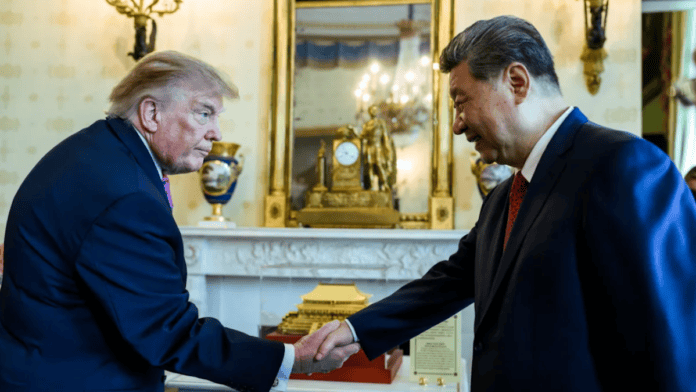
These moves have intensified despite a three-day summit between US President Donald Trump and Chinese President Xi Jinping in Washington last week. The two sides agreed to set up a communication channel for AI-related incidents and to hold a bilateral AI dialogue, with senior officials set to gather in Shenzhen in November during the Asia-Pacific Economic Cooperation (APEC) summit.

On August 26, Trump signed an executive order banning foreign-made transformers, high-voltage circuit breakers and other grid equipment linked to China and 23 other countries. The order took effect immediately, but no purchase is barred until the Department of Energy identifies risky equipment and publishes implementing rules, due by December 24.

Earlier this year, some global equipment suppliers prepared to run their data center supply chains regionally.

Legrand, a French electrical and digital building infrastructure group, bought Kratos Industries, a Colorado-based switchgear maker for data centers, in February to serve the US market. In April, it acquired TES Group, a Northern Ireland-based power distribution specialist serving Europe, and Keydak, a Guangzhou-based rack maker serving the Chinese market. Data centers accounted for 26% of Legrand’s revenue at the end of 2025.

Lucie Daudigny, a press officer at Legrand, told Asia Times that it was too early for the company to comment on Trump’s executive order, as many details of the measures had not yet been finalized.

TES Group Chairman James Peacock says the company now mainly serves the European markets. Photo: Asia Times/ Jeff Pao

“From a manufacturing point of view, the components we use are made by global companies such as ABB and Schneider,” James Peacock, chairman of TES Group, said in an interview in Northern Ireland. “I don’t perceive anything we put into our products that would stop us from delivering them to the US market.”

“The North American market is a great opportunity. The challenge for TES right now is that we’re so busy scaling in Europe. Have we got enough bandwidth to scale in North America at the same time?” he said.

He added that Legrand buys strategic businesses that fill gaps in its portfolio and lets them operate as standalone businesses in their own silos, though he would not rule out future collaboration.

On September 25, four US senators introduced a bill to bar federal agencies from buying for national security systems any Chinese optical transceivers, which move data across AI networks. Optical transceivers are modules that convert electrical signals into light pulses to move data between servers, and large AI data centers need millions of them.

The Coalition for a Prosperous America (CPA), a Washington-based lobbying group, pointed out that Chinese firms control roughly 70% of the global optical module market. It said Zhongji Innolight, the world’s largest manufacturer of high-speed optical transceiver modules, still has its hardware inside America’s data centers and national security systems, although it was added to the Department of Defense’s list of Chinese military companies in June.

Beyond the chip ban

Since 2022, Washington has used chip export controls to slow China’s AI progress. China has fought back with Southeast Asian data centers, smuggled Nvidia chips, homegrown Huawei processors and AI models partly distilled from US ones.

This year, Washington began allowing exports of more advanced chips such as Nvidia’s H200. Beijing approved some H200 purchases this summer and is reportedly now weighing imports of Nvidia’s RTX PRO 5500.

The US-China AI race is now being fought at the data center level.

On Tuesday, Trump hosted a White House lunch with 31 technology executives, including Elon Musk and Nvidia’s Jensen Huang. Recalling a meeting with Xi that Musk also attended, Trump said the Chinese leader was keen to attract AI data centers to China.

“He would love to have every single one because they’re smart. They want every data center. They want it because that’s great for China,” Trump told reporters after meeting dozens of technology executives on Tuesday.

He said he wanted global firms to build AI data centers in the US rather than in Nordic countries or China, as they would bring investment, jobs and tax revenue to America.

Attendees at Tuesday’s lunch signed a voluntary accord on “superintelligence” (the term that Trump prefers instead of artificial intelligence) that includes internal and external reviews of the technology. Trump said the self-policing agreement was morally binding but stopped short of backing new government guardrails. He ruled out working with Xi on governing AI. 

“A lot of people say, let’s do it together with China, but then they’re going to be able to immediately gain access to things that we know that they don’t know,” he said. “We’re leading now over China and everyone else, and I want to keep it that way.”

Chinese commentators criticized Trump for sending mixed signals on global AI governance.

“Before the Xi-Trump summit, US Treasury Secretary Scott Bessent led the AI dialogue between the two sides, and media reports said they had reached some consensus on joint AI regulation,” Peter Qiu, the founder and president of the Hong Kong Center for Globalization (CGHK), says in an article. “Trump’s sudden opposition to working with China on AI regulation suggests that his team is willing to cooperate with Beijing, while he himself wants a strategic rivalry.”

“As long as Trump is opposed, it will be hard for China and the US to reach any substantive cooperation on joint AI regulation, a highly sensitive and dangerous field,” he says. “The US-China AI dialogue is in some ways comparable to the US-Soviet nuclear disarmament talks of the 1970s and 1980s.”

He adds that Beijing should make good use of whatever room for maneuver it has during the more than two years left in Trump’s term, a balancing act that will be a major challenge for China’s diplomacy and foreign strategy.

“The US intends to keep a firm grip on high-end chips, advanced algorithms, computing platforms and industry standards so that China stays in a catch-up position, turning [the American] technological edge into a bargaining chip,” says a Henan-based columnist using the pen name, Yimei Technology. “What makes the US think it can stay ahead forever by closing the door on cooperation?” 

“For Trump, whether to cooperate depends first on how much the US can gain. If cooperation would help a rival catch up, he blocks it, and when the US needs overseas markets, supply chains or manufacturing capacity, cooperation is repackaged as an opportunity,” she says.

She says that China’s strengths in AI lie in the country’s complete industrial system, huge market and fast deployment and that US containment will only push China to speed up its own AI development.

“China’s innovation never seeks a monopoly. Chinese open-source AI models have been downloaded more than 10 billion times worldwide, helping to bridge the global intelligence divide,” Fu Cong, China’s permanent representative to the United Nations, said at a National Day reception in New York on Tuesday. 

He said China had launched the World AI Cooperation Organization to help reform global governance and was willing to work with all countries to uphold multilateralism and share development opportunities.

Read: After Trump-Xi summit, Nvidia RTX PRO 5500 gains export prospects

Follow Jeff Pao on X at @jeffpao3

0FansLike
0FollowersFollow
0FollowersFollow
0SubscribersSubscribe
- Advertisement -
Google search engine

Recent Posts