18.6 C
London
Monday, September 28, 2026
Home Blog

Trump-Xi summit bade farewell to ‘China plus one’

0
trump-xi-summit-bade-farewell-to-‘china-plus-one’
Trump-Xi summit bade farewell to ‘China plus one’

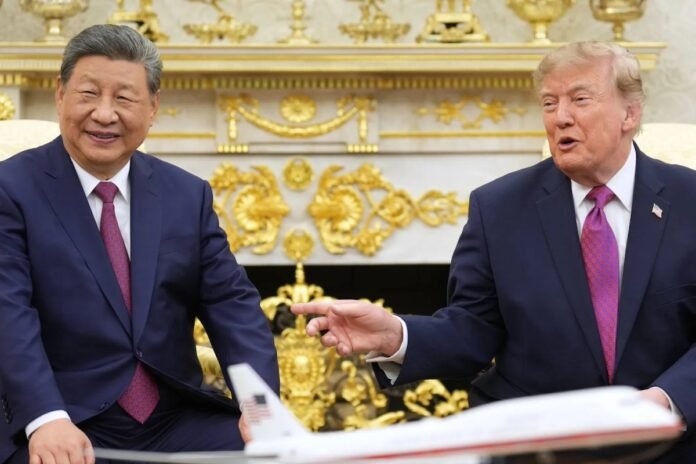
President Donald Trump rolled out the red carpet for Chinese President Xi Jinping’s state visit to Washington, greeting him in person at Joint Base Andrews, a rare gesture for an American president.

Critics in both parties warned that the pageantry would reward a rival. However, the red carpet, the state dinner with its exquisite menu, the cannon salute and the bald eagle sculpture as a gift for Xi were just the surface. Beneath them, the bilateral relationship has begun to take a new direction.

At their Beijing summit in May, the two leaders agreed to build a “constructive China-US relationship of strategic stability.” Each word carries weight. “Constructive” commits both sides to a positive agenda, not just damage control. “Strategic” places the relationship at the level of leaders and long horizons. “Stability” sets a direction and boundary for the relationship.

This week this new formula began to look like a working plan, sharply different from the language used to describe US-China relations since 2018.

During Trump’s first term, Washington launched a trade war, imposed tariffs on Chinese goods and placed Huawei and other firms under technology sanctions. Washington urged multinational companies to quickly adopt “China+1,” moving out of China and building a second supply base in Vietnam, India or Mexico. It trumpeted “decoupling” as the goal.

Since 2018, Beijing has gradually diversified its trade across Southeast Asia, Latin America and Africa. US-China trade fell by around 30% in 2025 alone, according to the McKinsey Global Institute’s 2026 update on the geometry of global trade. Meanwhile, China built a complete and strategically critical supply chain, from basic materials to advanced equipment.

China is now the only country with all 41 industrial categories and 666 sub-categories in the United Nations classification. It sells advanced machinery, components and critical materials to other countries’ factories. McKinsey calls it the factory to the world’s factories, and the Wall Street Journal has reported on the same shift.

India, Vietnam and Mexico have become assembly lines of Chinese products. In many ways, China+1 did not remove China from the global supply chain. Instead, it has helped China move up the value chain.

The most telling change is in Washington’s vocabulary. In August 2023, Commerce Secretary Gina Raimondo said that China was “uninvestable.” This was a deliberate act of talking China down and became the talking point of politicians and China hawks across Washington.

For years, “de-risking,” “de-coupling,” “friend-shoring” and “China+1” filled congressional hearings, cable interviews and opinion pages. However, China+1 has nearly vanished in Washington. No one among the administration’s senior officials and business executives uses the term anymore. Washington has effectively bid China+1 au revoir.

This is easy to see from who sat at the head table at the Trump-Xi gala dinner. Beside the two presidents were titans of American tech, including Apple’s Tim Cook, Nvidia’s Jensen Huang, AMD’s Lisa Su and Tesla’s Elon Musk. All of them understand how critical China is to their businesses, both as a market and as the base of their supply chains.

Apple’s first foldable phone, the iPhone Duo, was developed, trial-produced and assembled exclusively in China, according to Apple’s vice-president for Asia procurement and operations. It was not built in India or Vietnam.

Tesla announced to phase Chinese suppliers out of its American-built cars. Now it is seeking multiple suppliers in China for its Optimus humanoid robot, and orders have already been placed. Huang has argued for months that export controls are backfiring on American competitiveness. Su has pledged to deepen AMD’s engagement in China. These executives all know that China+1 and decoupling from China are not working.

Smaller firms follow the same logic. EnerVenue, a California battery startup, announced last week that it began mass production in Changzhou after abandoning plans for a US$264 million factory in Kentucky.

Its chief executive cited China’s skilled workforce and supply chain strength, and called China the “factory of factories.” Chinese business media have also reported cases of American manufacturers that moved orders to India or Southeast Asia to avoid tariffs, struggled with quality and delivery, and returned the work to their original Chinese suppliers.

The toasts at the Trump-Xi dinner affirmed the new direction, especially in people-to-people and business-to-business ties. Both leaders reached back into history. Trump spoke of a foundation of commerce and mutual respect, and of ties between the two peoples that endure.

Xi recalled the trade that began soon after American independence and the Hump airlift over the Himalayas during the war against Japan. He recalled Ping-Pong Diplomacy, and the redwoods Richard Nixon gave China that now grow in Zhejiang. He praised Ronald Sakolsky, an American teacher who donated US$5,000 to fund a Chinese woman’s desert tree-planting two decades ago and recently returned to China to see a forest in the desert.

Xi’s most strategic move was his remark that Trump’s Make America Great Again and China’s pursuit of national rejuvenation “can surely be mutually reinforcing.” This strategic discourse targets the idea that dominates Washington’s thinking about the US-China relationship: the Thucydides Trap, which holds that a rising power and an established one inevitably head for war.

Xi’s remark rejected that premise and offered an alternative frame. Two great projects of national renewal need not collide. He called for “a new approach for major countries to get along.”

None of this means rivalry and competition between the two great powers have or will slow down. In July, the Federal Communications Commission added foreign-made humanoid and industrial robots to its covered list, a move Beijing condemned.

Chip export controls remain unchanged. China’s rare earth magnet shipments to the US fell 21% in August to 512 tons, heading toward their lowest level since 2021. Taiwan, Iran and AI safety will test the newly coined constructive relationship of strategic stability. But both leaders have endorsed its guardrails.

While Trump 1.0 started decoupling and China+1, Trump 2.0 now regards China as an equal partner in deals, a critical supplier the American economy cannot easily replace, and the other half of the only G2 that matters.

The festivities at Andrews and in the East Room will soon fade from the headlines. But the story that matters is that Washington has stopped talking about leaving China while corporate America never really left.

Xin Wang is professor of Chinese Studies and director of Asian Studies at Baylor University.

Climate disasters are getting worse – risks escalate when authoritarian regimes keep neighbours in the dark

0
climate-disasters-are-getting-worse-–-risks-escalate-when-authoritarian-regimes-keep-neighbours-in-the-dark
Climate disasters are getting worse – risks escalate when authoritarian regimes keep neighbours in the dark

Authoritarian regimes have a history of keeping information about escalating disasters secret, even when it could harm their own citizens.

With more weather-related disasters caused by climate change predicted, the issue of whether governments are willing to act faster to share information with neighbouring nations is an increasing concern.

The signs are not positive. After the recent massive floods on the Nepal-Tibet border, Chinese state media tightly controlled reporting with a focus on rescue attempts, rather than devastation. It also heavily censored unofficial accounts.

Handheld and security camera footage that showed the destruction at the border appears to have vanished from Chinese media platforms.

On this occasion and in the past, Nepal has accused China of not sharing information quickly about escalating dangers. But Beijing denied there was any disinformation, and said information was released in a “timely” way in this recent incident.

A new report says the Himalayas are approaching a tipping point in terms of the speed and risks of glacier melting and lack of monitoring – with millions of lives and livelihoods at risk. So this issue could not be more urgent.

The recent behaviour of another world power, Russia, cast doubt on its willingness to be transparent during a disaster. When floods caused Siberia’s Ishim River to overflow in 2025, local officials hid much of the damage.

The severe consequences of such secrecy is apparent throughout recent history. In 1984, Ethiopian military dictator Mengistu Haile Mariam concealed and downplayed the catastrophic drought which led to a famine, in order to protect the country’s image. A strict media blackout was enforced, as Mengistu’s government refused to share data regarding the scale of the crisis or even acknowledge there was one.


Read more: Nepal-Tibet disaster linked to climate change – a glaciologist explains


Instead, he prioritised spending over US$100 million (£87 million) on celebrations to commemorate the 10th anniversary of Ethiopia’s Marxist revolution.

Mengistu ignored the ongoing mass starvation crisis in speeches. He also blocked international aid workers and journalists from entering the starving regions. An estimated one million people died due to this lack of action.

Another potential issue is the impact on shared water sources. If autocracies hide prolonged droughts, they may secretly over-extract shared resources, potentially drying out neighbouring territories.

Nepal’s recent devastating floods are linked to melting glaciers caused by climate change.

Chernobyl’s cover-up

History shows that lack of warnings about escalating dangers caused by a disaster can have devastating effects in nearby countries.

The nuclear power plant disaster in Chernobyl in the former Soviet Union in 1986 was also covered up. KGB archives revealed that classified information on the extent of the radiation and contamination were kept secret.

Critical information was not released to the Ukrainian people and inhabitants of western Europe until months, and even years, later. Advocacy group Greenpeace estimated that there were potentially between 100,000 and 250,000 additional deaths – mostly due to radiation in Belarus, Ukraine and Russia – because of this lack of transparency.

Myanmar’s quasi-military government has regularly hidden valuable information from journalists, aid workers and other countries after each disaster in that country.

A 7.7-magnitude earthquake that hit central Myanmar in April 2025 killed thousands of people, causing bodies to pile up. Rather than facilitate the support of aid workers, supplies were blocked and confiscated by the military.

Not allowing humanitarian aid to come through in a timely fashion can also accelerate a refugee crisis, as desperate populations may flee in search of help.

Censorship and repression

Autocracies are more likely to censor and monitor media platforms than democracies. For instance, China recently stopped non-official content being shared about the August 2026 floods.

Some autocracies also restrict access for international aid workers, independent scientists and observers.

There’s another example from 2019. When Zimbabwe was hit by tropical cyclone Idai, its government restricted the involvement of international aid workers, which reduced recovery efforts.

Research has also shown that authoritarian regimes can escalate repression against their own citizens during disasters.

What happened at Chernobyl?

Greater levels of secrecy has implications for disease. Natural disasters frequently lead to infectious disease outbreaks. A government’s refusal to report a climate-driven outbreak could prevent neighbouring states from taking protective measures.

Authoritarian regimes also frequently suppress or delay data regarding extreme weather, glacial melts or industrial accidents to protect the regime’s image. This can compromise the safety, stability and economy of their own citizens and, potentially, neighbouring countries too.

Ecosystems and disasters do not respect political borders. Information censorship and the suppression of data will make us all more vulnerable as climate change-driven incidents escalate.

Netanyahu Denies Media Reports Alleging Egypt Warned Him Before Oct 7 

0
netanyahu-denies media-reports alleging-egypt-warned-him-before-oct-7 
Netanyahu Denies Media Reports Alleging Egypt Warned Him Before Oct 7 


Prime Minister Benjamin Netanyahu denied that he received a warning from Egyptian intelligence about Hamas’ impending October 7 attack, rejecting media reports that he had prior knowledge of the assault. 

“In the months preceding October 7, Prime Minister Netanyahu did not meet or speak with Abbas Kamel, who was then head of Egypt’s General Intelligence Service, and no Israeli intelligence source conveyed an Egyptian warning to the Prime Minister,” Netanyahu wrote. 

He added, “The Prime Minister instructed to file a libel suit on this matter as well.” 

“Prime Minister Netanyahu has never met or spoken with the head of intelligence of a foreign country without their Israeli counterparts,” he emphasized. 

Egyptian officials issued a similar denial days after the October 7 attack, disputing reports in Israeli media that Egypt had alerted Israel to a major Hamas operation 10 days before the war. 

The reports claimed Intelligence Minister Abbas Kamel had contacted Israel to warn that Hamas was planning a “terrible operation.” Egyptian officials explicitly rejected those claims after the attack. 

Netanyahu said articles alleging that he knew about Hamas’ plans before October 7 were part of “a vile and false campaign aimed at pinning all of Ronen Bar’s failures and crimes on the eve of October 7 on Prime Minister Netanyahu.” 

He accused Bar of having information about the threat before the attack but failing to inform him or take sufficient action. 

“Ronen Bar decided not to call and update the Prime Minister, not to alert the readiness squads and IDF forces in the field, not to evacuate the Nova festival,” Netanyahu wrote, alleging that Bar instead dispatched a small team to address the threat. 

Bar, the former head of Israel’s Shin Bet security agency, was dismissed by Netanyahu in March 2025 over what the prime minister described as a loss of trust. The dismissal prompted mass protests and was temporarily blocked by the Supreme Court. 

After accepting responsibility for the agency’s failures surrounding the October 7 attack, Bar resigned in June 2025. 

The large robotic arm on the International Space Station has stopped working

0
the-large-robotic-arm-on-the-international-space-station-has-stopped-working
The large robotic arm on the International Space Station has stopped working

Recently, the astronauts on board the International Space Station performed a routine “walk-off” maneuver with the large, 58-foot-long robotic arm attached to the orbiting laboratory.

The robotic arm, known as Canadarm2 because it was supplied by the Canadian Space Agency, is something of a modern engineering miracle—it can effectively move around the exterior of the large space station like an inchworm because both ends are essentially identical.

However, after this particular walk-off maneuver, the robotic arm, along with the mobile transporter that guides it along the main truss of the space station, could no longer be moved.

As of Sunday evening, according to two sources, work was underway to determine whether this problem was due to a data or software issue or the robotic arm or mobile transporter hardware itself. Asked for more information, a NASA spokesperson did not offer a comment by late Monday morning.

Working past its design lifetime

Designed and developed by the Canadian space corporation MDA, the Canadarm2 launched to the International Space Station in April 2001 on Space Shuttle Endeavour, and it has since served as a critical component of the orbiting laboratory. Its nominal design lifetime was 15 years, so it has been operating for more than a decade beyond this point.

The arm has a mass of nearly two metric tons and can handle payloads of up to 116 tons.

For much of its lifetime, the arm was essential in getting supplies to the International Space Station. The first version of SpaceX’s cargo vehicle, as well as Northrop’s Cygnus and Japan’s HTV-X transfer vehicles, was designed to be grabbed by the arm when it got close to the station and then be moved into a berth at the facility.

Modern versions of Dragon, both crew and cargo, now undergo autonomous docking, as does Boeing’s Starliner crewed spacecraft.

Can an armless space station survive?

It’s too early to determine whether the robotic arm and/or its transporter can be repaired, but if NASA were unable to use it to berth spacecraft, there could be serious implications for cargo missions, especially with SpaceX planning to retire the Dragon vehicle within four years. NASA’s other principal cargo supply vehicles, Cygnus and HTV-X, cannot dock with the station.

The robotic arm is also used for moving large hardware around the exterior of the station, such as large cooling pumps, in preparation for astronaut spacewalks. NASA and its partners could probably work around this loss of functionality, but it would certainly make operations more difficult.

The loss of the robotic arm, even if temporary due to software issues, serves as a reminder that the space station is approaching its 30th anniversary. Much of the facility has been operating in orbit for decades, in hard vacuum, beyond its planned lifetime. So far, most of the aging process has been graceful, but that does not necessarily mean this run of good fortune (and preparation) will continue.

NASA plans to eventually replace the International Space Station with one or more privately developed space stations, but this contracting process has not gone particularly smoothly. What happens if the bedrock of NASA’s space-based operations for the last quarter of a century suddenly becomes a bedrock no longer?

The Untold Origins of Trump’s Plan to Sharply Restrict Mail-In Voting

0
the-untold-origins-of-trump’s-plan-to-sharply-restrict-mail-in-voting
The Untold Origins of Trump’s Plan to Sharply Restrict Mail-In Voting

Earlier this month, the Supreme Court blocked an executive order from President Donald Trump restricting voting by mail in ways that could have thrown the upcoming midterms into chaos. But the White House originally had far more disruptive plans, ProPublica has learned. 

According to several people knowledgeable about the discussions, the administration initially floated an idea that would have virtually shut down mail voting: requiring all ballots to be delivered exclusively through certified mail. The proposal — which would have required voters to be home and sign for delivery of their ballots — was ultimately abandoned, after vehement Postal Service objections that it would have been impossible to execute. 

Even after the idea fizzled, Postal Service officials were cut out of crucial conversations as the Trump administration moved forward with what became the final executive order, two people familiar with the matter said. Issued in March, its contents came as a shock even to the Postal Service’s lawyers.

Trump’s order would have forced postal workers to serve as gatekeepers, deciding which ballots would be delivered and which wouldn’t. Beyond that, it would have inexplicably handed authority over the plan’s execution to Commerce Secretary Howard Lutnick, who has no formal oversight over the Postal Service. 

Inside the Postal Service, which is overseen by a bipartisan Board of Governors, deliberations on whether to comply with the order stretched on for weeks. Some board members found it alarming but feared Trump would respond to a direct challenge by trying to fire them, sources familiar with their concerns told ProPublica. Instead, they remained silent, counting on the courts to block the measure. 

“The board was being careful how or when it took action, knowing that it might be its last action,” one source said. 

ProPublica previously detailed postal officials’ deep concerns with the Trump order. Now our reporting reveals how the order came to be and who was involved in crafting it, as well as the extent to which the White House tried to dictate how mail-in ballots would be processed.

The White House team leading the mail-in voting discussions included J. Brian Sikma, a special presidential assistant who has been involved in other administration election initiatives,

including identifying noncitizen voters for prosecution and seeking to ban voting machines. (Sikma didn’t respond to a request for comment.)

The commerce secretary, Lutnick, served in “an advisory and coordination capacity” in drafting the order, a department spokesperson confirmed to ProPublica.

“President Trump values Secretary Lutnick’s advice on many matters,” the spokesperson said.

In an emailed statement, White House spokesperson Lauren Bis denied the administration had interfered improperly with the Postal Service, an independent agency whose governance structure is specifically designed to protect it from political influence. She said the executive order “added important safeguards to vote-by-mail. These were commonsense measures to protect the security of mail-in ballots and to ensure only Americans vote in American elections.” 

Bis also rejected the idea that the certified-mail proposal was “unworkable,” saying this played no part in the administration’s decision “to go in another direction.”

A Postal Service spokesperson declined to comment on the agency’s internal deliberations about the executive order and said it was the Board of Governors’ policy not to discuss them.

He referred ProPublica to an earlier statement by Postmaster General David Steiner that said: “Postal employees take great pride in their responsibility to support the democratic process. We will continue to approach that responsibility with the care, professionalism, and dedication that voters and election officials expect from the United States Postal Service.”

In an interview, Jonathan Smith, president of the American Postal Workers Union, called the Trump administration’s push to revamp mail voting problematic and baseless. 

“The ultimate goal was to create chaos and doubt in the vote-by-mail process,” he said. “You’re creating a rule to solve a problem that doesn’t exist.” 


The White House first reached out to the Postal Service in the fall of 2025, saying the administration wanted to explore how to improve mail voting. 

Trump has long claimed without evidence that mail voting is riddled with fraud, though he frequently votes by mail himself. He’s said the process is “inherently corrupt” and contributed to his defeat in the 2020 presidential election.

Postal Service leaders responded to the administration’s late 2025 overture with recommendations they had been making to local election officials for years. Nearly a third of all ballots in the 2022 and 2024 elections were cast through the mail. Mostly, independent audits showed, the system worked reliably. But at times, ballots got lost or delayed. 

Officials with the Postal Service had long wanted election offices to use standardized ballot envelopes with scannable barcodes, logos and other features that would make it easier to separate election mail from other first-class mail. In 2024, a bipartisan bill to turn those recommendations into requirements stalled in the Senate.

When Trump retook the Oval Office, it soon became obvious the White House had other ideas, including requiring ballots to be sent by certified mail.

Doing this could, in theory, erase some security concerns, but local governments would have to pay a higher fee to send each envelope and postal workers would have to conduct millions of identity checks, crippling timely delivery. 

“It was just, for many reasons, a terrible idea,” one top Postal Service official said.

The White House backed down, but when the final order was unveiled, postal officials said they were surprised to see it demanded that they implement the envelope changes and ballot-tracking measures they’d recommended in time for the midterms.

The directive also required states to provide the Postal Service with lists of eligible mail voters, which workers would then try to match with ballots before sending them out. Designing a new ballot-tracking system would normally take about a year, postal officials said.

They were particularly concerned with the order’s requirement that Postal Service workers reject ballots for an array of reasons, ranging from outdated voter information to unscannable bar codes. All mail ballots from a state could be rejected if the state refused to provide its voter list. 

“That’s not what we do,” a former official involved with the discussions said. “We deliver mail. We don’t decide what goes and what doesn’t.”

Postal Service officials were taken aback that the final order put Lutnick in charge of coordinating with other agencies and the postmaster general in “effectuating all relevant aspects of the implementation.”

Lutnick’s involvement came after Trump had discussed putting the Postal Service under the Commerce Department. At Lutnick’s February 2025 swearing-in, Trump said he thought Lutnick’s “great business instinct” was just what the Postal Service needed. (The postal board fought back, and Trump’s idea of merging the agency into the Commerce Department is apparently no longer on the table.)

Almost immediately after the executive order became public, four separate lawsuits challenging it were filed by states led by Democrats and political and civil rights groups. Democratic members of Congress and postal union leaders urged the Postal Service and its Board of Governors, which had long defended the agency’s independence, to resist. A June 2026 Supreme Court decision allowing Trump to remove leaders of many agencies long considered independent gave the governors pause, however.

Steiner, appointed at Trump’s behest in mid-2025, directed Postal Service leaders to prepare to implement the order. In public statements, he defended the measure and said he would leave it for the courts to decide. At his direction, postal officials began establishing procedures to comply with Trump’s order. 

As they started to craft rules, career postal officials, concerned about voter privacy and disenfranchising legitimate voters, attempted to do as little as they could to comply, three people knowledgeable about their deliberations said. They looked for ways to protect workers from having to step out of their traditional lanes.

For example, they proposed having states turn over their voter lists but not requiring Postal Service workers to use them to decide which ballots to send out. When the Postal Service’s lawyer took the idea to the White House counsel, however, it was rebuffed as “not enough,” the former official said.

Read More

The White House team made clear that if even one ballot envelope in a batch mailing didn’t match the state list, the entire mailing should be rejected and election officials should be notified. “That means if four addresses don’t align in a mailing of one million, 999,996 other people don’t get their ballot tomorrow,” the former official said.

As ProPublica has reported, staffers found these issues highly troubling. A whistleblower complaint released in August warned that the system designed to carry out the executive order was rushed into being, untested and error-prone. 

The final rule — 95 pages spelling out how the agency would carry out Trump’s order — was issued on Aug. 21, less than a month before the first mail ballots were due to go out.

It left many questions unanswered: How would lists of voters be kept updated? How would the Postal Service ensure local officials were able to upload voter information to the agency’s new portal? How could postal officials approve the new ballot envelope designs required by nearly 10,000 voting jurisdictions in just weeks? 

“This was going to be a disaster,” the former postal official said.

The Sept. 14 Supreme Court ruling provided a reprieve, but Smith, the postal union president, criticized agency leadership for not stepping in more forcefully. Counting on the courts to halt the order, said Smith, was “a dangerous calculation, and showed a clear lack of courage and integrity.”

Far-right Le Pen and hard-left Melenchon seen reaching French presidential run-off, poll shows

0
far-right-le-pen-and-hard-left-melenchon-seen-reaching-french-presidential-run-off,-poll-shows
Far-right Le Pen and hard-left Melenchon seen reaching French presidential run-off, poll shows


French far-right candidate Marine Le Pen and far-left contender Jean-Luc Melenchon are seen reaching a run-off vote in next year’s presidential election in each of five scenarios polled, according to a survey published on Monday.

The results of the poll suggest that French voters may face a contest between extremes in the election, set for next April and May, with centrists falling behind at a time of rising prices, a sluggish economy and geopolitical instability.

Le Pen, who leads the far-right National Rally (RN), is seen winning 35% to 36% in the first round, the Toluna Harris Interactive poll showed, up from 33% in an earlier poll published on September 14.

Melenchon, of the France Unbowed party, would join Le Pen in the second round, winning between 17% and 18%, according to the survey, which was conducted from September 22 to 24 for French TV channel M6 and Luxembourg-based media group RTL.

Leading centrist hopeful Edouard Philippe was seen winning 13% to 16%, not enough to reach the run-off.

Le Pen is seen beating both Melenchon and Philippe in the second round. She would win 69% of votes against Melenchon and 57% against Philippe, according to the survey.

US attempts to control Ukraine’s attacks on Russia reflect a fundamental strategic disconnect

0
us-attempts-to-control-ukraine’s-attacks-on-russia-reflect-a-fundamental-strategic-disconnect
US attempts to control Ukraine’s attacks on Russia reflect a fundamental strategic disconnect

In a recent phone call, Donald Trump urged Volodymyr Zelensky to stop Ukrainian attacks on Russian oil refineries. Whether a request or a demand, this appears, certainly at first glance, fundamentally different from the Biden administration’s policy of restricting the use of US long-range missiles to hit targets inside Russia.

The US president has justified his position primarily on economic grounds. He argues that the regular attacks on Russian refining capacity were contributing to disruptions in diesel supplies and rising fuel prices. The International Energy Agency has estimated that Ukraine hit one Russian oil refinery every three days over the first eight months of 2026.

Biden’s restrictions, by contrast, were justified by the US largely over concerns about military escalation and the possibility that strikes deep inside Russia could provoke a wider confrontation between Moscow and Nato.

But focusing solely on these stated justifications hides a deeper continuity. Both policies reflect an effort by Washington to shape the boundaries of Ukraine’s military response to suit broader American interests.

The significance of this becomes clear when considering Ukraine’s refinery approach. Kyiv’s systematic campaign to target Russian oil infrastructure is about reducing Russia’s economic and military capacity. Ukrainian officials have described the attacks as part of a calculated strategy to reduce Russia’s economic potential.

These attacks were not symbolic. Refineries produce the gasoline, diesel and aviation fuel that support both military and civilian activity. It makes them a logical target within a strategy of economic warfare. And the strategy has borne fruit. The IEA report found that “gasoline output is down by 20% compared with 2025 levels, while diesel production is estimated to have fallen by nearly 30%”.

From a Ukrainian perspective, these refinery strikes are a strategically valuable means of imposing costs on Russia without requiring costly and large-scale offensive operations along the front.

This context is important because it highlights what is actually at stake in Trump’s efforts to halt the campaign. It was not directed at an ineffective or indiscriminate form of violence. It was aimed at one of Ukraine’s more successful campaigns against Russian infrastructure.

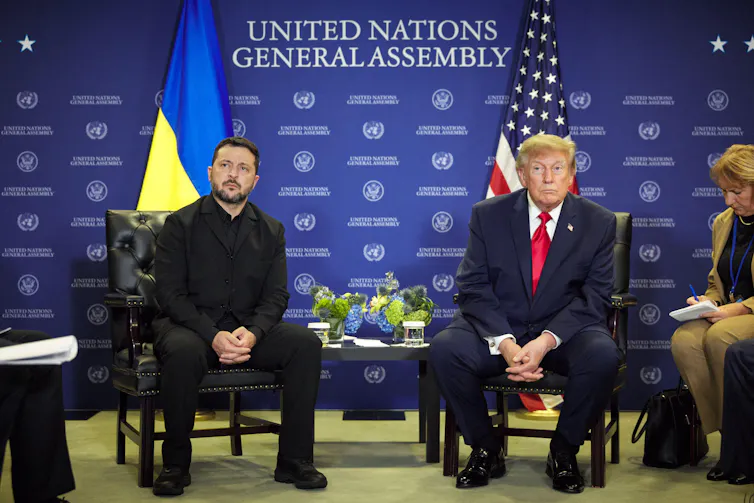
Zelensky reportedly rejected Trump’s request, telling the Wall Street Journal’s editor-in-chief, Emma Tucker, on the sidelines of the United Nations general assembly meeting on September 23, that “our lives are more important than the price of energy”.

Wall Street Journal editor-in-chief, Emma Tucker, interviewing Ukrainian president, Volodymyr Zelensky, at the UN general assembly.

The disagreement between the two leaders reflects their competing conceptions of strategic success. For Zelensky, disrupting Russian refining capacity weakens the economic foundations of Russia’s war effort. For Trump, the same attacks allegedly generate undesirable consequences in the form of higher energy prices and fuel shortages.

The question is not whether the strikes matter – but which effects should be prioritised: pressure on Russia or stability in global energy markets?

What this tells us about US foreign policy

This reveals an important theoretical point about escalation and restraint. Biden’s restrictions reflected a traditional understanding of escalation rooted in military interaction between major powers.

For Biden, the danger lay in provoking Russian retaliation against a backdrop of Russian threats to retaliate with nuclear weapons – or creating the perception of direct US involvement in attacks on Russian territory.

Trump’s position points to a broader conception of escalation by not being limited to Russia itself, but rather where economic interdependence constitutes its own pathway of strategic risk. Refinery attacks may not increase the likelihood of direct military confrontation. But they can create consequences that spread through global energy markets and generate political costs for governments far removed from the battlefield as they are threatening to do by raising fuel costs for consumers shortly before a crucial election.

Donald Trump and Volodymyr Zelensky meet on the sidelines of the UN general assembly,

Donald Trump fears that Ukraine hitting Russian oil refineries will force up world energy prices. dpa picture alliance

The comparison therefore suggests that the Biden and Trump administrations differ less in their desire to constrain Ukraine than in the risks they prioritise. Biden sought to manage military escalation with a nuclear-armed adversary. Trump seeks to manage the economic consequences of a protracted conflict.

But both positions stem from the same underlying reality: Ukraine’s military objectives are not identical to those of the US.

The refinery campaign demonstrates this particularly clearly. What Ukraine sees as a highly effective means of degrading Russian capacity can simultaneously be viewed in Washington as a source of broader strategic risk.

Ultimately, the refinery strikes reveal that the politics of support is inseparable from the politics of restraint. Whether through restrictions on long-range strikes or pressure to avoid targeting Russian energy infrastructure, successive US administrations have attempted to shape not only how much support Ukraine receives but also how that support is used.

The real continuity between Biden and Trump lies not in their specific policies. It’s about their shared assumption that Washington retains a legitimate role in defining the acceptable limits of Ukrainian military action.

And this is the challenge for American foreign policy, particularly in the Trump era. The more the US withdraws from a shared understanding of interests with its allies, the more it will find that it becomes harder to control them.

The Mirage of “Greater Israel” and the Structural Mechanics of Imperial Collapse

0
the-mirage-of-“greater-israel”-and-the-structural-mechanics-of-imperial-collapse
The Mirage of “Greater Israel” and the Structural Mechanics of Imperial Collapse

The expansionist Zionist project has entered its terminal, self-devouring phase. What the global community is witnessing in the aftermath of the devastating campaign in Gaza is not the consolidation of an invincible regional power, but the structural, compounding decay of an aggressive settler-colonial enterprise. Blinded by decades of unchecked ideological hubris, racial supremacy, and Western imperial protection, Tel Aviv’s political and military establishment has pushed the state into an irreversible strategic dead end. In attempting to forcefully realize a biblically inspired territorial maximalism spanning from the Jordan River to the Mediterranean Sea and into the broader Levant, the Zionist state has succeeded only in rendering itself a global outcast while systematically destroying its own internal political, economic, and social viability from within.

Nothing captures this diplomatic eviction more starkly than the hall of the 81st Session of the United Nations General Assembly. When Prime Minister Benjamin Netanyahu steps forward to address the world body, he faces an ocean of empty seats as delegations representing the vast majority of the global population across the Global South – including Latin America, Africa, and Asia—stand up and walk out in a unified, sweeping rejection.

This global snub is far more than a symbolic protest; it marks a formal, historical expulsion from the consensus of civilized nations. The moral authority the state long claimed in Western capitals has completely dissolved, exposing a militarized garrison state reliant solely on raw industrial violence and American diplomatic coercion to project its presence on the world stage.

From a structural perspective, the conduct required to maintain this expansionist project represents a complete, systematic repudiation of the international legal architecture constructed after World War II. The expropriation of land and the expansion of over 700,000 illegal settlers across the occupied West Bank and East Jerusalem stand universally codified as an ongoing war crime under Article 49 of the Fourth Geneva Convention, which strictly prohibits an occupying power from transferring its civilian population into occupied territory. Furthermore, the institutionalized regime of racial enclosure, military checkpoints, land confiscation, illegal annexations, and dual legal systems—civil law for Israeli settlers, brutal military law for Palestinians—meets every technical and legal criterion established by the 1973 International Convention on the Suppression and Punishment of the Crime of Apartheid.

By weaponizing forced starvation, targeting health infrastructure, denying access to potable water, and systematically flattening entire urban centres, the state operates in direct violation of the Genocide Convention and the Rome Statute.

The binding provisional measures issued by the International Court of Justice investigating genocide, alongside the International Criminal Court issuing arrest warrants for top political and military figures, signify a permanent shift. Israel is no longer viewed by the vast majority of the world as a normal state actor navigating a defense crisis, but as an outlaw ethnostate operating far outside the boundaries of international legal order.

Ethno-Nationalist Ideology and Western Imperial Complicity
At the root of this crisis lies the ideological concept of Eretz Yisrael Hashlemah – “Greater Israel.” This expansionist vision treats the territory between the Jordan River and the Mediterranean Sea, and historically portions of the wider Levant, as an exclusive ethno-religious domain, framing indigenous Palestinians not as human beings with equal rights, but as demographic threats to be managed, displaced, or eliminated. Political theory classifies this structure as a classic settler-colonial state: a system that does not merely exploit indigenous labour, but operates on the logic of elimination to replace the indigenous population on their ancestral land.

This apparatus has survived primarily through the brazen complicity of the Western geopolitical bloc. European powers exhibit a deep, structural hypocrisy, lecturing the Global South on human rights and the “rules-based international order” while maintaining lucrative economic, diplomatic, and military ties with Tel Aviv. Europe issues empty rhetorical statements calling for “restraint” while actively suppressing domestic pro-Palestinian dissent, criminalizing resistance solidarity, and continuing to trade in lethal military components.

Concurrently, the United States acts as the explicit imperial guarantor of the Zionist project. Washington regularly bypasses domestic oversight to ship heavy munitions, deploys naval strike groups to shield Israel from regional accountability, and uses its UN Security Council veto to neutralize international enforcement. Yet even this level of superpower backing cannot override the physical and economic limits of imperial overextension.

The Collapse of Absolute Deterrence and the Multi-Front War
The foundational premise of Israeli security doctrine has historically rested on absolute deterrence: the belief that inflicting catastrophic kinetic destruction would terrorize surrounding populations into permanent submission, fracture regional resistance, and permanently erase Palestinian national existence.

Under Prime Minister Benjamin Netanyahu, the political establishment locked the country into a multi-front struggle—an attempt to simultaneously project power against Gaza, the West Bank, Lebanon, Syria, Iraq, Yemen, and Iran.

As analyst Robert Inlakesh incisively observed in the Palestine Chronicle, Israeli officials frame these multi-front operations as a defensive response to an “existential ring of fire.” In reality, Tel Aviv chose to wage expansionist, colonial wars on multiple asymmetric fronts to enforce regional hegemony, secure territorial ambitions, and perpetuate colonial dominance. Rather than establishing dominance, this strategy has exposed the profound limits of high-tech warfare against decentralized resistance networks.

The old deterrence model has broken down completely across every operational theatre. In Gaza, despite an apocalyptic campaign of destruction designed to erase human life and render the territory physically uninhabitable, the Palestinian spirit of Sumud – steadfastness – remains completely unbroken. Families continue to organize, survive, and rebuild their lives amidst the ruins, proving that military violence cannot eradicate an indigenous people’s connection to their ancestral land. Demographics and human willpower have permanently voided the dream of an exclusively dominated ethno-religious domain.

In Lebanon, resistance forces have maintained operational cohesion and strategic depth under heavy bombardment, demonstrating that territorial dominance cannot be achieved through aerial supremacy alone. Farther south, Ansar Allah in Yemen introduced an unprecedented strategic variable into the equation by enforcing an effective maritime blockade in the Red Sea against Israeli-linked shipping. Utilizing low-cost drones and ballistic missiles, Yemen exposed the severe limitations of both Israeli air defense networks and Western naval coalitions, imposing immense economic costs on global trade routes tied to the state.

Most decisively, direct military exchanges with Iran shattered the psychological bedrock of the garrison state: the illusion that its civilian population and core infrastructure were invulnerable to direct retaliation. When ballistic volleys penetrated layered air defense systems to strike heavy military installations, the strategic equation changed forever. The historic era in which Tel Aviv could strike its neighbours at will without facing high-yield, high-precision counter-strikes on its own soil is over.

Furthermore, Israeli strategists made a fatal miscalculation regarding the Arab and Muslim world. They operated under the delusion that top-down diplomatic normalization deals—such as the Abraham Accords – could bypass the Palestinian issue and secure regional quiet. However, the street across the Arab and Muslim world has reawakened in overwhelming solidarity with Palestinian resistance. This grassroots reality has exposed those autocratic regional regimes that quieted their opposition or sold out as fragile houses of cards, unable to integrate Israel into the region while its colonial violence remains on full display. Even in places like Syria, where state apparatuses remain constrained by complex internal recoveries and foreign pressures, the underlying geopolitical dynamics mean that top-down arrangements are temporary at best, leaving Israel permanently exposed to unpredictable internal setbacks across its northern perimeter.

The Mechanics of Domestic Disintegration
While the military state struggles on its periphery, its domestic foundation is disintegrating under compounding economic, social, and demographic pressures. The garrison state model required to enforce territorial conquest is actively devouring its own political, economic, and demographic foundation.

First, the state is experiencing an unprecedented state of economic paralysis and structural capital flight. Mobilizing tens of thousands of reservists for prolonged, multi-year deployments has stripped the civilian workforce of vital labour, gutting local enterprises, wrecking small businesses, driving national debt to unsustainable levels, and triggering consecutive credit rating downgrades from major global agencies. Foreign direct investment has plummeted as international capital flees an environment defined by continuous instability and legal exposure. Government rhetoric regarding the creation of a fully self-sufficient domestic armaments industry represents an economic fantasy; a small domestic economy cannot maintain high-tech military production without continuous access to foreign supply chains, global financial markets, and massive foreign subsidies.

Second, the state is suffering from an irreversible high-tech brain drain. The very core of the modern Israeli economy – its software engineers, technology founders, venture capitalists, medical specialists, and senior academics – is quietly emigrating. Driven by intense political polarization, authoritarian judicial reforms, and the reality of endless conflict, the secular professional class is leaving for North America and Europe. A society increasingly dominated by messianic religious nationalism, continuous warfare, and rising economic volatility offers no viable long-term future for its educated youth. The loss of this critical human capital permanently undermines the technological superiority and tax base upon which the state depends.

Third, this mass emigration has drastically accelerated an unbridgeable secular-religious social fracture over the issue of military conscription. The endless demand for active-duty manpower has intensified a bitter domestic crisis regarding long-standing draft exemptions for the ultra-Orthodox (Haredi) population. As secular and national-religious units face severe physical exhaustion, casualty rates, and prolonged deployments, public demands to end Haredi exemptions have reached a boiling point. Conversely, ultra-Orthodox political parties and religious leadership explicitly threaten to collapse any governing coalition that attempts to enforce military service upon their community. These irreconcilable dynamics pits secular nationalists, religious fundamentalists, and military pragmatists against one another in an escalating internal struggle over the core identity and governance of the state.

Transformation or Catastrophe: The Only Path to Peace
Israel now stands at an unavoidable, fatal historical impasse. Its internal political architecture, deeply rooted in ethno-nationalist supremacy and colonial conquest, makes it structurally incapable of accepting a genuine, equitable peace. Yet, it lacks the physical, economic, demographic, and military capacity to sustain an endless war of attrition against an entire region that completely rejects its presence. Halting its military operations exposes the absolute failure of the Zionist garrison model, triggers immediate domestic political accountability, and unleashes internal ideological conflict. Continuing the war accelerates economic ruin, military exhaustion, and total global isolation as an international outcast.

While military analysts remain divided on whether these compounding strains pose an immediate existential collapse or a prolonged decay, the direction of history is clear.

Militarized settler-colonial projects do not survive when their internal economic model breaks, their military deterrence evaporates, and their international legitimacy vanishes.

For decades, the diplomatic framework of the “two-state solution” served as a convenient illusion—a diplomatic stalling tactic utilized by Western powers and Israeli leadership to project the appearance of a peace process while illegal settlements, land seizures, and apartheid infrastructure expanded rapidly across the West Bank and East Jerusalem. That illusion is now completely dead. The physical reality created on the ground by decades of settlement expansion has made a sovereign, viable, and geographically contiguous Palestinian state alongside an expansionist ethnostate physically impossible.

The collapse of the “Greater Israel” project leaves the region with a stark choice between continuous, violent decay or a total transformation of its political architecture. The only moral, logical, and lasting alternative to endless destruction is the total dismantling of the apartheid apparatus and the establishment of a single, secular, democratic state for all people living between the Jordan River and the Mediterranean Sea.

True security, stability, and peace can never be constructed upon blockades, racial supremacy, mass displacement, or military occupation. It can only be realized through full decolonization, equal civil and political rights, the right of return for Palestinian refugees, and the complete recognition of Palestinian national and human rights.

By abandoning the destructive mirage of “Greater Israel” and embracing a shared democratic framework where Muslims, Christians, and Jews hold equal standing under the law, the region can finally dismantle the machinery of colonial violence and build an enduring, shared future.

About the author
Ranjan Solomon is an author, researcher, and freelance writer focused on global and national justice. Over a 58-year career beginning at age 19, he has worked closely with oppressed and marginalized groups. A central pillar of his human rights advocacy has been his steadfast solidarity with the Palestinian struggle against occupation and apartheid. A regular commentator on socio-political issues, his articles frequently appear in major digital and print media, including Counter currents, Tehran Times, The Palestine Chronicle, Middle East Monitor, The Wire, Clarion India, Janata Weekly, The Rift, Muslim Mirror, and The Print. Contact: [email protected].

The views expressed in this article belong to the author and do not necessarily reflect the editorial policy of Middle East Monitor.

Microsoft goes quiet after church groups ask for 1% of data center costs

0
microsoft-goes-quiet-after-church-groups-ask-for-1%-of-data-center-costs
Microsoft goes quiet after church groups ask for 1% of data center costs

Microsoft has spent all year telling communities that when it brings a new data center into their area, it is committed to being a “good neighbor.” It will pay local property taxes that support local hospitals, schools, parks, and libraries, and it will invest in “vital services the community cares about,” the company promised. And it has sent liaisons into those communities to learn what those needs are.

But ask those liaisons how much the company is willing to invest, and the answers can be hard to come by.

At community meetings, Microsoft representatives have seemed unprepared to answer questions that go beyond the company’s “good neighbor” campaign materials, Ars has learned. The company has acknowledged in public-facing documents that simply matching its employees’ charitable donations—which totaled $229 million across 29,000 nonprofits in 2024—isn’t enough. But it has been vague about what more substantial local investments might look like. And to critics, Microsoft’s local investments seem especially small compared with the estimated hundreds of millions in state-level tax breaks that data center developers get in 38 states—exemptions that often last more than a decade.

In Georgia, a recent audit found that the state “gave up $474 million in sales taxes in one year—and got back just $41 million from the industry,” journalist Ronan Farrow reported. Why Georgia is willing to give away so much in tax breaks is unclear, Farrow noted, since “by the state’s own estimate, 70 percent of the data center construction would have happened anyway.”

Some communities are starting to question that logic. In Indiana, for example, big firms like Microsoft can buy data center equipment without paying the state’s 7 percent sales tax. The exemption could apply to as much as $13.2 billion in projected equipment purchases. Without the exemption, up to $900 million could have been added to the tax base supporting state programs, Indy Mirror estimated. And the exemption can last for 50 years, which has some residents wondering how much their communities are giving up to attract data centers.

While Microsoft stands to benefit enormously from such tax breaks, the community living around a 900-acre Granger data center in St. Joseph County is suffering, according to We Make Indiana, a local nonpartisan group of about 25 congregations and community organizations.

Last year, the state passed a property tax savings bill that reportedly hamstrung local governments’ ability to raise revenue for community services. As vital services deteriorated, We Make Indiana spent the past six months trying to alert Microsoft to the most urgent community needs in areas like health care, child care, elder care, transportation, and affordable housing.

Recently, it became clear that Microsoft was not prepared to meaningfully help address the bigger issues plaguing South Bend. We Make Indiana was disappointed to learn from a company liaison that Microsoft will only approve a series of one-time nonprofit donations totaling up to $1 million. We Make Indiana believes that maximum budget is not proportionate to the tax savings or improved profit margins Microsoft will get from operating the Granger hyperscaler.

When it comes to community investments, Microsoft appears to be no better or worse than other companies building data centers. Amazon, another big player in the field, may not have offered environmental commitments as strong as Microsoft’s, but it has also provided one-time grants of hundreds of thousands of dollars to a handful of local charities, We Make Indiana members told Ars.

If Microsoft really wants to become a role model for responsible data center development, it could do much more with its “community-first AI” platform to benefit its neighbors over the long term, We Make Indiana argues. The group has even offered a vision for how that could work. In May, it sent the company a proposal calling for Microsoft to negotiate directly with community members on a binding agreement under which Microsoft would agree to donate a small portion of its data center costs to the county each year.

“Microsoft has publicly stated that it wants to be a good neighbor,” the group’s proposal said. “This is an opportunity to demonstrate what that means.”

How much should Microsoft share?

Through the proposed “Fair Share Agreement,” Microsoft would establish a fund to address social and environmental impacts from its $1 billion data center. An independent board would oversee payouts from the fund to ensure maximum community impact. Over the lifetime of the data center, including during construction, Microsoft would be expected to contribute a fair percentage of its annual costs to the fund, We Make Indiana proposed.

Their idea is not new, but it hasn’t caught on widely yet.

Most prominently, US Sen. Bernie Sanders (I-Vt.) has introduced a plan for a national “sovereign wealth fund” that would force AI firms to donate as much as $7 trillion to benefit Americans. But Sanders’ proposal is far broader than what We Make Indiana is asking for. A closer parallel is the Data Center Fair Share Act, a bill introduced in Pennsylvania by Democratic state Sen. Lindsey M. Williams.

That bill would require data center developers to enter into legally binding “community benefits agreements” with community organizations. Those agreements would require firms to share “at least 10 percent” of the project’s total cost with a fund prioritizing investments in areas like workforce development, environmental improvements, public safety, infrastructure, affordable housing, energy consumption, or other beneficial uses.

Ryan Juskus, a leader with We Make Indiana, told Ars that his group believes asking for 10 percent “is very much on the high end.”

Initially, We Make Indiana planned to ask for as little as 1 or 2 percent, as the group estimated that even a 1 percent share could add approximately $30 to $40 million annually to community programs. But instead of approaching Microsoft with a firm offer, their proposal asked Microsoft to assess what percentage might be fair.

Additionally, they asked Microsoft to agree to meet higher environmental standards, particularly on issues related to water/energy use, air quality, sustainability, and workforce protections.

In South Bend, such binding commitments from Microsoft would make a substantial difference and set a high bar for other data center developers negotiating with local governments in the state, We Make Indiana suggested.

“It’s kind of like asking Microsoft to help us solve our challenges when the state has abandoned us,” Juskus told Ars.

“We would love to see Microsoft show leadership in an area that needs real leadership right now around doing data centers better, and who better to do that than Microsoft in partnering with a community like ours that has been a very struggling community for a long time?” he added.

Microsoft silent on paying “fair share”

But Microsoft has gone silent since receiving the proposal, despite the company’s bold promises to support “the entire community.” A spokesperson told Ars that the company considers the proposal an important part of its community listening process but said it’s too early to discuss it because Microsoft is still engaging other community leaders.

“Microsoft remains committed to developing our data center project in Granger in partnership with the community,” Microsoft’s spokesperson said. “This process will include investments in areas that reflect local priorities. We appreciate the community’s efforts to share their priorities with us—their input, including the community proposal we received, is an invaluable part of this process. At this early stage of development, investment decisions have not yet been made.”

Still, the company has approved some initial grants. Microsoft’s announcement did not detail how much each group will receive, but so far, the company has prioritized educational nonprofits and a community college, with the goal of building digital skills and helping people feel more comfortable with using AI. The company has also set up a land trust that “preserves and restores natural lands and waters in northwestern Indiana” while donating to groups dedicated to hunger relief and community volunteering.

These donations, Juskus told Ars, are “completely not proportional, not ongoing,” and “entirely” on Microsoft’s terms. Accepting these one-time investments when the community knows developers are extracting much more value from building in their location seems short-sighted, he suggested.

“It frankly just kind of buys silence,” Juskus said.

To Juskus’ group, which is built on community relationships, it seems “easy to be a ‘good neighbor’ when you get to set the criteria and evaluate your progress all by yourself. A real neighbor discerns what’s to be done through relationships and accountability,” Juskus said.

Responding to Microsoft’s statement, Juskus expressed doubts that the data center investments will help South Bend residents where they need it most.

“Efforts by County Council members and the community to get binding commitments related to water, energy use, and decommissioning plans to reduce the harm of this project are met with vague and noncommittal public relations responses from Microsoft,” Juskus said. “The community enhancement donations that Microsoft is pledging to nonprofits in our county are miniscule, given the project’s scale.”

To drum up local support for their proposal, We Make Indiana is planning a series of public demonstrations to highlight the contrast between the tax breaks data center developers stand to receive and the cuts to basic services like bus lines and health care the community faces. They hope to make enough noise to convince county officials to use upcoming negotiations over additional tax incentives as leverage to secure a binding commitment from Microsoft to invest in community well-being over the long term. They also expect such messaging could make it harder for officials seen as favoring corporate interests to win elections as data center backlash mounts nationwide.

“In a fast-changing local and national environment, we will continue to organize our community and elected leaders to use every piece of leverage we have to bring Microsoft to the table for real conversation and negotiation,” Juskus said. “Microsoft claims to want to be a good neighbor, but the jury is still out.”

Microsoft likely ignoring “real dissent”

We Make Indiana first presented its proposal at a meeting with Microsoft’s liaison in a church.

“What we have is a concept,” the group told Microsoft’s representative. “And what we want is for Microsoft to enter into negotiation,” Juskus said. That way, “we could work out something that isn’t just imposed from above.”

The rep—whom Microsoft declined to connect Ars with despite a month of back-and-forth—promised We Make Indiana that she would check back in after admitting that the group’s request was “way beyond her or even her boss’s purview,” Juskus said.

The next week, Microsoft held an open house, and We Make Indiana showed up with 75 community members to prove there was community support for their proposal. But the open house seemed more like a PR campaign than a sincere attempt to engage the community, attendees told Ars.

“The specialists Microsoft brought out to the open house here in the county had talking points with little substance,” Juskus said.

For example, when a We Make Indiana team member with expertise in environmental policy asked how Microsoft planned to recycle all decommissioned materials, Microsoft’s rep “did not have any answers to those questions,” Juskus said.

During an interview with a local radio station, a different Microsoft rep confirmed that the proposal was not on his radar, said Andre Stoner, a former pastor and peace activist who leads We Make Indiana. He is not optimistic that Microsoft will ever directly address their proposal.

“We have very little confidence that there’s been any robust conversation inside,” Stoner told Ars.

Nathan Taft, a senior campaigner for the nonprofit environmental advocacy group Stand.earth, has been working with We Make Indiana, as well as groups in other areas where Microsoft is building data centers. He told Ars that each community must negotiate its own deals to fulfill local needs but that the fair share agreement in Indiana offers one way to ensure that environmental safeguards and community investments continue over the long term.

Taft told Ars that communities are “specifically looking at Microsoft because, to be fair to them, they’ve been a big leader in the climate space and community benefit space. They’ve done a good job in the past, and we want them to be that leader again. But increasingly, there’s been a big gap between what Microsoft is saying and what Microsoft is actually doing in public spaces and in communities.”

At town hall meetings, Microsoft seems to rely on “diffusion techniques” to avoid answering residents’ questions transparently, Taft told Ars. Rather than host a single speaker or panel addressing all questions in the room, “we’ve seen in multiple different places, they’ll have five or six different reps scattered across a room, and people come up and talk in little clusters,” Taft said. “And they’ll be like, ‘That’s a good question. Let me write this on a sticky note and put it on the wall.’ And it seems very rote and kind of like they’re ticking a box. It doesn’t seem like they want to hear real dissent.”

“It seems like what’s most important to them is getting as much compute online as quickly as possible,” Taft said. “And the communities are an afterthought.”

Stoner thinks other communities should consider pressuring data center developers to enter fair share agreements. The Better Data Center Project provided key assistance to his group when crafting their proposal, he said.

A plan to get Microsoft to the table

Juskus worries that northern Indiana may be developing “a unique significance in Microsoft’s eyes” after the company recently broke ground on a second data center there.

“As I understand it, we’re in a data center sweet spot, with abundant land and water, state-level tax incentives, and our location at a junction point in the electrical power grids,” Juskus told Ars.

Stoner told Ars that We Make Indiana is working to convince local officials to back the fair share agreement, potentially by using a county economic development director’s plan to create a “tax increment financing” (TIF) district around the Microsoft site as leverage. Microsoft has not publicly supported the TIF, but locals believe the company would benefit from the additional incentives and worry that it could use the TIF to expand the site.

“We are exploring whether the TIF can be leverage with Microsoft, with a message like ‘No TIF without a Fair Share,’” Stoner told Ars.

Microsoft seems to think that We Make Indiana shouldn’t speak for the entire community. But Stoner told Ars that engaging decision-makers on issues affecting the wider community is what his group does. Developing the fair share agreement involved “many, many, many conversations with our community leaders, with people in our congregations, with our leaders, to think about what it is we’re asking for and how and why,” Stoner said.

Some group members oppose AI, while others are neutral, but We Make Indiana has already won at least one major battle since entering the fight. A rumored Meta data center was blocked after the group rallied hundreds to pressure officials to vote against it at a public meeting that lasted until 4 am. The fight with Microsoft is not about stopping the data center, which is set to begin construction this fall and could be operational by 2029. It’s about building it better, Stoner said.

“We want development that doesn’t threaten our environment and our electric bills and that invests in a decent way, a proportional way,” he said.

Microsoft may be underestimating We Make Indiana. Stoner said the group has been organizing since 2024, building on work from a 2018 group called Faith in Indiana and using its community connections to secure bipartisan support for policies it favors. The Microsoft fight is the first time that We Make Indiana has engaged a corporate partner, Stoner said, and if they refuse to listen, the group stands ready to “mobilize hundreds of people from faith communities.”

“Basically, this is a question of power: Do they need to talk to us or not?” Stoner said. “Or do they think they don’t need to?”

To Stoner, giving tax breaks to AI firms while cutting funding for buses and childcare amounts to elected officials taking from the poor to benefit the wealthiest corporations. In the long term, he hopes to put an end to sales tax exemptions in his state. But in the meantime, he wants the fair share agreement to “be one of the big issues that’s debated in this election this fall,” Stoner said.

Erdogan playing East and West, winning room to maneuver

0
erdogan-playing-east-and-west,-winning-room-to-maneuver
Erdogan playing East and West, winning room to maneuver

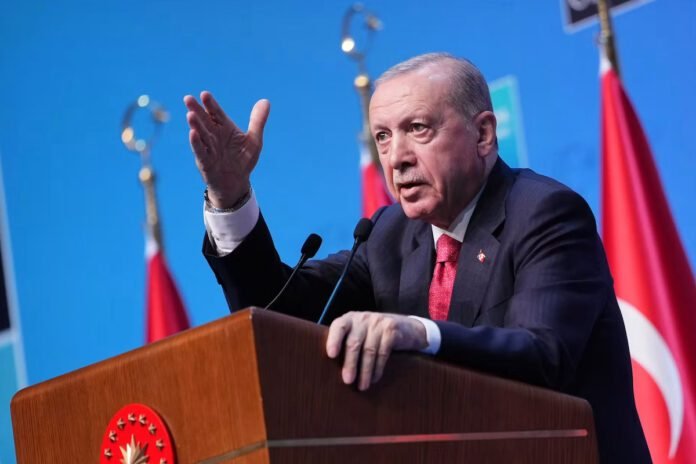
Less than two months after his government hosted the NATO summit — which was framed as proof of Turkey’s pivotal role in transatlantic security — President Recep Tayyip Erdogan has proposed full Turkish membership in the Shanghai Cooperation Organisation, an entity that has been described as being anti-NATO or a “rogue NATO.”

The apparent contradiction was striking. Turkey has belonged to NATO since 1952 and remains a European Union candidate. In contrast, the China- and Russia-led Shanghai Cooperation Organisation, which has included Iran since 2023, projects an alternative, non-western vision of international order.

This revives a familiar question: is Turkey pivoting from West to East?

The question assumes a world divided into coherent blocs. In reality, partially overlapping and competing international orders co-exist, each with its own institutions, rules and visions of global authority. Turkey is simply asserting its autonomy by moving across their boundaries.

A world of overlapping orders

The post-Cold War vision of a single global order centred on western institutions is increasingly difficult to sustain. NATO co-exists with emerging power coalitions and regional or issue-specific partnerships.

These orders overlap but are not easily reconciled. Their rules and political visions often conflict, allowing emerging and existing middle powers to participate in several of them without fully accepting the authority of any.

While remaining embedded in NATO and economically connected to Europe, Turkey has cultivated deeper ties with Russia and China. A dialogue partner in the Shanghai Cooperation Organisation since 2012, Turkey has also sought a larger role across the Middle East, Africa, the Caucasus and Central Asia.

This can appear inconsistent or merely tactical. But, as I argue in my new book “Turkey, Geopolitics, and the Age of Populist World-Making,” the country’s stance reflects a broader objective. It seeks to expand its freedom of action by preventing any single alliance from defining its international role.

Erdogan presents Turkey not as a peripheral country caught between rival worlds, but as a power capable of shaping the global system. This extends his domestic populist strategy onto the international stage.

Just as the Turkish people are portrayed as having been silenced by entrenched elites at home, Turkey is represented as a nation denied its rightful status by Western-dominated hierarchies globally.

In my book, I call this “populist world-making” — an effort to recast international politics as a struggle between those who have historically controlled the global order and those whose agency and status have been repressed.

‘Forum shopping’

Erdogan does not regard the Shanghai Cooperation Organisation as an alternative to NATO. He sees it as another arena for pursuing economic, political and strategic relationships without the West being the sole source of international authority.

Turkey effectively shops among institutions, coalitions and diplomatic processes. It crosses supposedly fixed boundaries whenever this can expand its influence or reduce external constraints.

The Shanghai Cooperation Organisation is the latest expression of this approach. In Libya, Turkey militarily supported the internationally recognized government and sharply criticized France and other NATO allies for backing its opponents.

By contrast, the country pursued what I call “competitive co-existence” with Russia, which also supported the opposing faction: Turkey moderated its rhetoric and avoided direct clashes with Russian forces.

Turkish-French rivalry extended into the African Sahel region, where Turkey boosted trade, aid and defense cooperation — including drone sales — by stoking the flames of the growing resentment of governments in the region about France’s military presence and post-colonial influence.

In the eastern Mediterranean, Turkey aggressively challenged the French-supported co-operation among Greece, Cyprus and Israel on maritime jurisdiction and energy co-operation that it regarded as exclusionary.

Syria provides an even clearer example of Turkey’s penchant for forum shopping. Turkey, in line with other NATO members, opposed Bashar al-Assad. But it worked with Russia and Iran through the exclusive Astana process to manage their conflicting objectives and de-escalate armed conflict in Syria.

Despite supporting opposing entities and pursuing incompatible objectives, the three states created a diplomatic forum outside the Western-led Geneva framework because it served their respective interests.

Turkey’s complex relationship with Russia is part of the same trend. It opposed Russia’s invasion of Ukraine, armed Kyiv and closed Turkish waters to Russian warships.

Yet it refused to join Western sanctions and maintained close economic and diplomatic relations with the Kremlin. This enabled Turkey to help broker the Black Sea grain agreement and claim a diplomatic role — one that any state firmly aligned with one side or the other could not do.

The message is clear: Turkey will not blindly align with NATO on every issue. Instead, it uses its positions across different alliances to maintain strategic autonomy and prevent any single bloc from dictating its actions.

An ambition with limits

Nonetheless, Turkey’s room to maneuver is constrained. Its economy depends heavily on European markets and Western finance, and its security relies on NATO. Russia, China and Iran are partners in some arenas but competitors in others.

Forum-shopping can expand Turkey’s autonomy, but also generate friction, mistrust and strategic over-extension.

“Populist world-making” is therefore not a master plan but a political orientation — an attempt to convert diplomatic flexibility into status.

Erdogan rejects the premise that others should define Turkey’s choices. He’s seeking a better position within an existing order — and recognition as a power entitled to shape what comes next.

Spyros A. Sofos is assistant professor in global humanities, Simon Fraser University

This article is republished from The Conversation under a Creative Commons license. Read the original article.

0FansLike
0FollowersFollow
0FollowersFollow
0SubscribersSubscribe
- Advertisement -
Google search engine

Recent Posts