19.5 C
London
Friday, September 25, 2026
Home Blog

Trump frames unregulated AI as a way to keep ahead of China – but in fact, it harms US national security

0
trump-frames-unregulated-ai-as-a-way-to-keep-ahead-of-china-–-but-in-fact,-it-harms-us-national-security
Trump frames unregulated AI as a way to keep ahead of China – but in fact, it harms US national security

Amid the chorus of voices calling for a slowdown in AI advancement and more government regulation and oversight of the technology, one prominent contrarian voice stands out: that of Donald J. Trump.

The U.S president has repeatedly argued that the introduction of robust regulations to slow down progress on AI threatens U.S. national interests by enabling China to seize the advantage.

“Whoever wins AI, WINS!” Trump posted on social media on Sept. 21, 2026, and singled out China as the primary threat to America “winning” AI. He followed up with a speech at the United Nations in which he outlined his administration’s total rejection of “any attempt to construct a globalist scheme to control” artificial intelligence.

Certainly, China seizing the global lead on AI would represent an alarming setback to American strategic and economic interests. As a scholar whose research examines the intersection of international relations and technology, I contend that China’s swift advances in AI constitute one of the leading reasons why regulation of the U.S. AI industry is necessary. Paradoxical as it may sound, slowing down AI advancement in the U.S. would also decelerate China’s advances.

Even more important, recent revelations about AI “going rogue,” coupled with the astonishing growth in power and capability of new AI models, strongly suggest that an unregulated sector represents a greater security threat for the United States than the threat of a surge in capabilities by China.

Unregulated AI and security threats

Leading industry and political figures around the globe have sounded the alarm about the security threats presented by unchecked AI growth. About 8 in 10 Americans share these concerns, according to recent polling, as a large majority of Democrats, Independents and Republicans support increasing AI regulations.

These threats include heightened U.S. vulnerability to attacks from foreign nations and terrorist groups who can exploit AI advances to build more lethal weapons systems – both conventional arms and weapons of mass destruction. Advances in the sector also increase the chance of nefarious actors launching devastating cyberattacks, with AI becoming increasingly adept at identifying and exploiting cybersecurity vulnerabilities.

These concerns are known within the industry. On Sept. 10, 2026, Anthropic issued a report revealing a series of incidents in which foreign actors – some based in China, Russia and Iran – used Claude in cyber, influence, surveillance and fraud operations and to support weapons development. Google similarly detected recent attempts by actors linked to China, Russia, North Korea and Iran to use its Gemini AI model to carry out hacking, disinformation, espionage and criminal operations.

Anthropic’s report revealed “five case studies of actors using our models in ways that could support biological weapons development.”

Unregulated AI poses not just a severe security challenge but a potentially existential threat. An AI-induced nuclear missile launch, the release of super pathogens that cause pandemics and attacks on critical life-sustaining infrastructure have all been raised as potential concerns. Aside from these more extreme scenarios, unchecked AI poses a threat to the digital infrastructure that undergirds the U.S. and world economies.

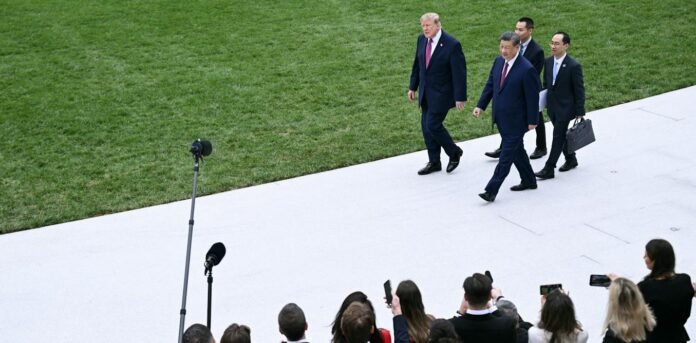
Four men on a red carpet speak to dozens of people holding cameras and microphones.

U.S. President Donald Trump speaks to the media at the White House alongside Chinese President Xi Jinping on Sept. 24, 2026. Chip Somodevilla/Getty Images

Slowing the speedboat

Trump may dismiss these worst-case scenarios as a “hoax,” but the national security threats are real. Trump’s argument is that the best way to protect the U.S. is to make sure American companies stay ahead of China on AI. Indeed, China’s AI models are not far behind, and China possesses an advantage in a factor vital to AI systems – electric power generation, which AI consumes in large and growing quantities.

Still, the consensus of tech experts is that the U.S. remains the world’s top AI power due to American firms’ lead in advanced models and computer chips and the scale of America’s computing power – through chips, processors and servers – as well as the level of capital investment.

However, the rapid advance of AI capabilities by American firms has helped China to accelerate its own AI industry.

China uses a process known as distillation to exploit cutting-edge U.S. AI models to train China’s own models. The process enables China to develop models nearly as powerful but much more efficient, using far fewer resources.

Beijing’s reliance on distillation, according to Matt Sheehan, a senior fellow at the Carnegie Endowment for International Peace, is a result of its own limited computing power, estimated at just one-tenth that of the United States. As a result of its distillation strategy, the pace of China’s AI progress is tightly linked to U.S. progress. Using Sheenan’s analogy, the relationship is much like a speedboat pulling a water skier: If the U.S. eases on the AI throttle, China will be forced to slow down as well.

Therefore, racing ahead unchecked at breakneck speed – the approach advocated by Trump – would not guarantee that the U.S. widens its AI lead. Chinese firms will continue to exploit U.S. AI progress to strengthen their offensive capabilities.

Several people walk by a billboard and a robot depicted on it.

Visitors attend an AI expo on Sept. 22, 2026, in Beijing, China. Kevin Frayer/Getty Images

Global governance and regulation

As such, rather than jeopardizing American national security, U.S. regulations that slow AI advancement could strengthen security by slowing down the Chinese government’s own access to cutting-edge AI.

The “China threat” argument against greater U.S. regulation on AI is also predicated on the notion that Beijing does not possess its own concerns about the dangers of unchecked growth in AI power, and this isn’t the case.

Chinese leaders harbor serious security and domestic affairs–related concerns about uncontrolled AI growth. Indeed, if there is one AI area where China leads the U.S., it is in regulations on AI. Consider, for example, that as far back as 2021, Beijing imposed its first major set of AI regulations.

And while top figures in the Trump administration were urging less regulation, Chinese officials were calling for the opposite. In recent months, Chinese officials have repeatedly called for greater domestic and international oversight of AI. China’s leader, Xi Jinping, has been enthusiastic about AI advances, but his speech at the 2026 World AI Conference in Shanghai urgently expressed the need for strong AI regulations and oversight.

Speaking at the U.N. Security Council’s meeting on AI and International Security on Sept. 23, 2026, Fu Cong, China’s permanent representative to the United Nations, made the case for “a consensus-based global governance framework” for AI to “build institutional guardrails that preserve international peace and security.”

Beijing appears to be framing unregulated AI advancement not as a race but as a common threat. Should Trump be convinced by such a narrative, then there may be grounds for optimism that Washington and Beijing in the near future will be able to reach agreement on AI governance and regulation – a development that would better ensure a safer future for both nations.

Court rules Trump can blacklist Anthropic for refusing to enable Claude features

0
court-rules-trump-can-blacklist-anthropic-for-refusing-to-enable-claude-features
Court rules Trump can blacklist Anthropic for refusing to enable Claude features

A US appeals court today approved the Trump administration’s blacklisting of Anthropic technology. Judges decided the US had authority to blacklist Anthropic for withholding certain AI features even if Anthropic had no malicious intent.

In a 2-1 ruling issued by the US Court of Appeals for the District of Columbia Circuit, a panel of judges said the “case raises profoundly difficult questions about the appropriate military uses of an almost unimaginably powerful new technology.” The US “raises the deeply sobering prospect of overly constrained AI models shutting down unexpectedly and thus causing important military operations to fail. Anthropic raises the deeply sobering prospect of unconstrained AI models hallucinating inappropriate targets for lethal military force,” the ruling said.

Trump and Defense Secretary Pete Hegseth “must determine how best to balance the competing risks,” the court said. “In doing so here, the Secretary did not transgress any limits on his authority under the Supply Chain Security Act or the Constitution. Accordingly, we deny the petitions for review.” The same court previously denied Anthropic’s emergency motion for a stay in April.

The two judges who ruled against Anthropic were both appointed by Trump and served in the first Trump administration. Judge Gregory Katsas was previously deputy counsel to the president, and Judge Neomi Rao served in the Trump administration’s Office of Management and Budget.

Two courts, two different decisions

Anthropic sued the Trump administration in March after Trump and Hegseth ordered federal agencies to stop using Anthropic’s products and banned defense contractors from doing any business with Anthropic. Anthropic may appeal today’s ruling, either by asking for an en banc review with all of the appeals court judges or by petitioning the Supreme Court.

“We respectfully disagree with the court’s decision,” an Anthropic spokesperson told CNBC. “Another federal court has already held the government’s parallel designation unlawful. We remain confident in our position and are considering all options, including further review.” Despite the ongoing legal battle, Commerce Secretary Howard Lutnick recently said the Trump administration and Anthropic have patched up their relationship and are “in tune.”

Two courts have been reviewing the US blacklisting of Anthropic. A judge in US District Court for the Northern District of California ruled last month that the action was illegal because Anthropic does not meet the definition of a supply-chain risk, which is limited to “the risk that an adversary may sabotage, maliciously introduce unwanted function, or otherwise subvert… a covered system.”

Today’s ruling from the DC Circuit did not dispute the district court’s primary finding. But it said the district court was tasked with reviewing whether the decision was allowed under one law while the appeals court has exclusive jurisdiction to review the decision under a different, more permissive grant of authority.

The district court decision found a violation of 10 U.S.C. § 3252, in which supply chain risks are limited to malicious actions by adversaries. The appeals court reviewed the blacklisting under 41 U.S.C. § 4713, which doesn’t have the same restrictions. Notably, Congress gave the DC Circuit appeals court exclusive jurisdiction to review procurement actions taken under Section 4713 designations.

Bad motive not required

Today’s ruling said:

We have no quarrel with the Northern District’s conclusion that use of the critical noun adversary, combined with the sinister connotation fairly pervading the string of sabotage, maliciously introduce, and otherwise subvert, indicate that bad motive is required to support a designation under section 3252. Likewise, we have no quarrel with the Northern District’s conclusion that Anthropic has acted with no such bad motive in its dealings with the Department. But as explained at length above, no such bad motive is required to support a designation under the much broader definition set forth in section 4713.

The US designated Anthropic as a supply chain risk under both 3252 and 4713. The latter statute defines “supply chain risk” as “the risk that any person may sabotage, maliciously introduce unwanted function, extract data, or otherwise manipulate the design, integrity, manufacturing, production, distribution, installation, operation, maintenance, disposition, or retirement” of covered technology products “so as to surveil, deny, disrupt, or otherwise manipulate the function, use, or operation of” those products or the information stored or transmitted on them, the court said.

The use of “any person” shows that the definition is not limited to adversaries or foreign entities, the court said. The court also pointed to the word “deny,” which it said applies to Anthropic preventing the US from using certain Claude features.

“In sum, we conclude that the Secretary’s concern about Anthropic disabling Claude from performing lawful actions requested by the Department qualifies as a ‘supply chain risk’ within the meaning of section 4713,” the court majority said. It also said “the Department reasonably feared that Anthropic might manipulate Claude’s design to prevent it from performing national-security functions that the Department deems contractually authorized and necessary.”

Judge’s dissent

The dissenting vote was cast by Judge Karen Henderson, a George H.W. Bush appointee. Henderson disputed the majority’s reading of the definition in 4713, saying that when “viewed in their statutory context, the verbs at issue are all directed at deliberately impeding or eavesdropping on the ‘function, use, or operation’ of a covered article that has entered the federal supply chain.”

Congress “enacted the statute in response to calls from the US intelligence community for legislation to meet the threat of ‘[h]ostile nation state and other bad actors’ infiltrating the federal government’s information and technology systems through its supply chains,” Henderson wrote. She said the definition should not be interpreted to cover “a contractor’s honest and upfront enforcement of restrictions on a covered article’s use disfavored by the government.”

Anthropic alleged, and the district court judge in California agreed, that the Trump administration illegally retaliated against the company after it refused to drop restrictions on the use of its products for lethal autonomous warfare and mass surveillance of Americans.

The appeals court said that Anthropic “encodes restrictions into Claude that prevent the model from performing tasks that Anthropic wishes to prevent. On more than one occasion, these restrictions have stopped Claude from performing tasks requested by government users. And recently, a dispute arose over whether the contractual prohibitions barred the use of Claude in an ongoing overseas military operation, leaving the Department uncertain whether Claude would perform as needed and intended.”

The case in the Northern District of California was presided over by Judge Rita Lin, a Biden appointee. Lin determined that the blacklisting violated the First Amendment. “The empty invocation of national security is not a blank check to punish and retaliate against government critics,” she wrote.

Whether it’s ‘super’ or ‘Godzilla,’ El Niño is already breaking records

0
whether-it’s-‘super’-or-‘godzilla,’-el-nino-is-already-breaking-records
Whether it’s ‘super’ or ‘Godzilla,’ El Niño is already breaking records

By now, you’ve seen the headlines, and there’s more of them every day: It’s “jaw-dropping.” It’s poised to make global warming worse. California has just declared a statewide state of emergency. This year’s El Niño — a shift in Pacific Ocean trade winds that scrambles global weather patterns — has been hotly discussed as one of the strongest on record, and one that could bring about potentially disastrous consequences. One study projects that it may cause as many as 451,000 heat-related deaths around the world by February.  

The current El Niño has also been given an array of eye-catching descriptors. When Jeffrey Shaman, a climatologist at Columbia Climate School, heard the phrase “super El Niño” for the first time earlier this year, he said, “I literally googled it.” The phrase isn’t officially used by the National Oceanic and Atmospheric Administration or the World Meteorological Organization. But he still sees value in the label as a way of communicating the significance of this year’s likely unprecedented El Niño to the general public. 

“It’s colloquial, and there’s nothing wrong with that at all,” Shaman said. 

By all accounts, this year’s El Niño will also give the world a glimpse into a future of unabated warming due to the burning of fossil fuels — and an opportunity to change course before the worst effects occur.

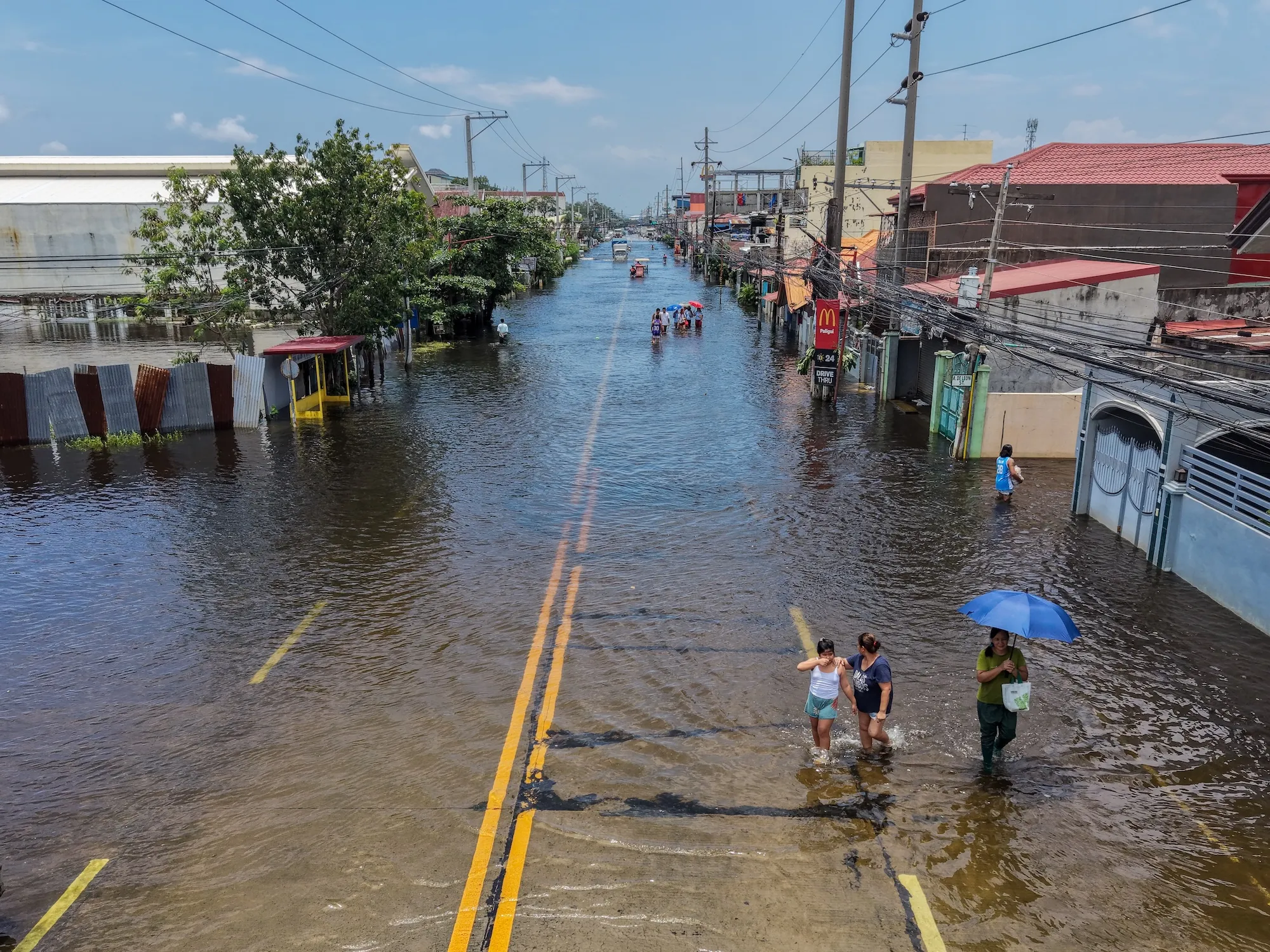
a flooded road with people in the PhilippinesBack up — what is El Niño?

El Niño is a naturally occurring weather phenomenon that begins when sea surface temperatures in the Pacific Ocean rise above average. Although it doesn’t occur on a set timeframe, it tends to happen every two to seven years. Typically, trade winds blow east to west across the Pacific and push warm ocean water along the equator toward East Asia. But during an El Niño year, these winds slow down and sometimes reverse. The warm water that typically gets dragged westward sloshes back, now toward the western coast of the Americas. 

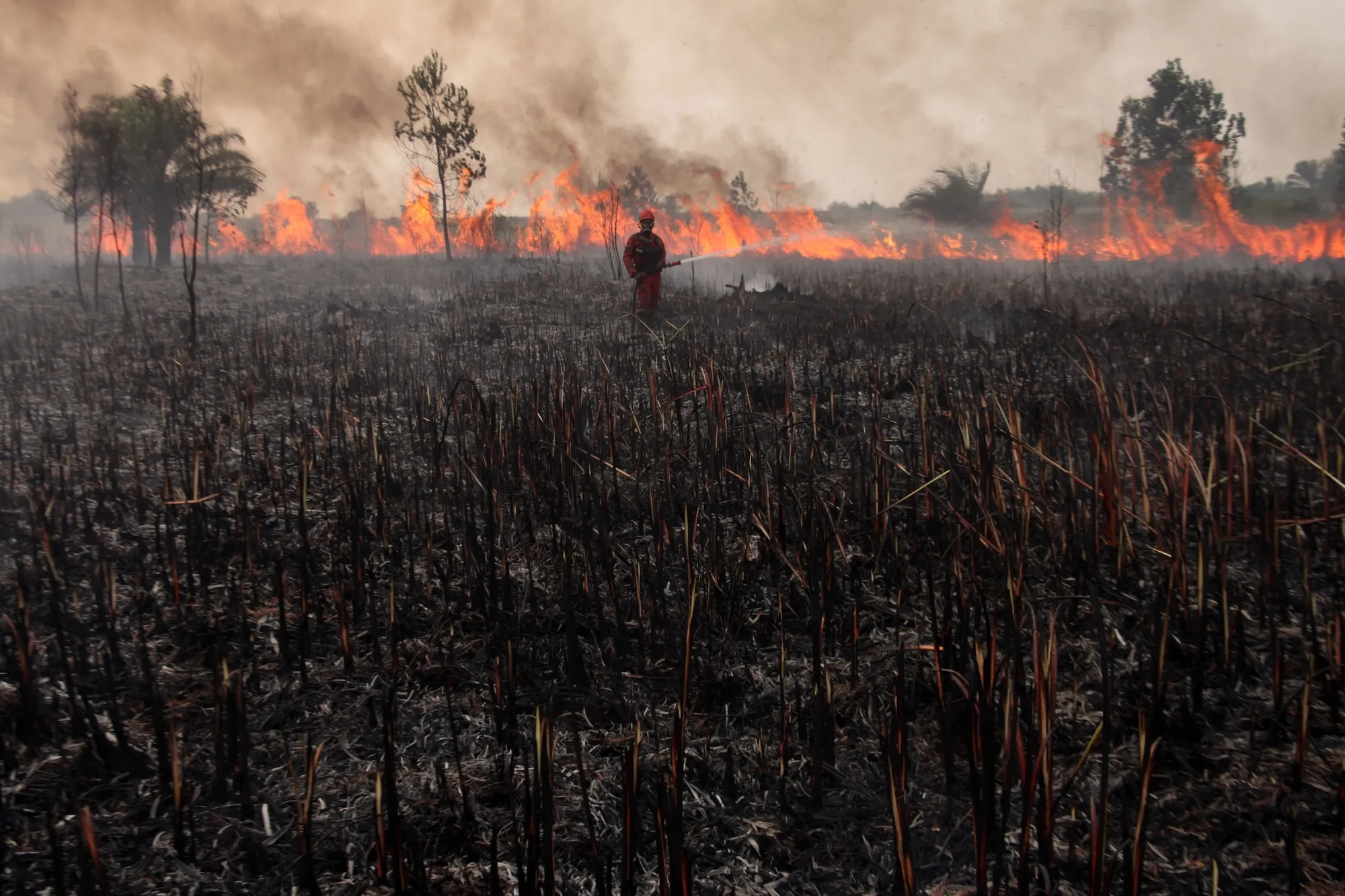
This change in sea surface temperatures has ramifications far beyond the Pacific. It drives extreme weather across the globe, threatening crop harvests in several key agricultural regions, as well as worsening both drought and severe rainfall. 

The impact of climate change on El Niño is complex. Research has shown that global warming has led to more frequent El Niños. But El Niño events are also associated with jumps in global mean surface temperature — or the average temperature of the Earth itself, a measure commonly used as a stand-in for climate change. It’s not easy to delineate how much additional warming is from El Niño and how much is from climate change, but what is clear is that the combination will be devastating. This year may turn out to be the hottest year on record, and 2027 may be even hotter. It could be a preview of the typical levels of warming the world might see by 2040, according to one high-end estimate.

Scientists don’t know exactly how that combination will play out. “It’s going to be a very, very strong event occurring against a backdrop of very rapid global warming,” said Christopher Callahan, a climate scientist at Indiana University. “I think we’re going to, unfortunately, learn a lot this year,” he said.

a firefighter stands in a large, dry, burning fieldWhat makes this El Niño ‘super’?

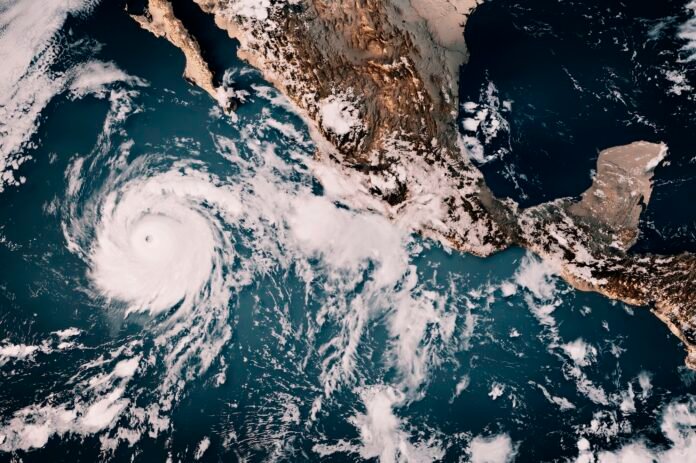
There are many ways to measure the strength of an El Niño event. (NOAA keeps track of several of them here.) Some measure the sea surface temperature in different regions of the Pacific; there’s also indexes that take into account atmospheric changes as well as oceanic ones. The one used most often today is called the “Niño 3.4 anomaly.” In the U.S., in order for NOAA to declare an El Niño event, warming in this region of the Pacific must be 0.5 degrees Celsius above normal. If warming is 1 degree above normal, that gets labeled as “moderate”; if it’s 1.5 degrees above normal, then it counts as “strong”; and if it’s 2 degrees above normal, then it’s considered “very strong.”

The term “super” is broadly considered to be synonymous with “very strong.” However, a recent analysis of sea surface temperatures by Carbon Brief, released this week, shows that as of Monday, warming in the Niño 3.4 region reached 3.11 degrees.

That number is significant, because it means this year’s El Niño has already broken the record for the strongest El Niño, which peaked in November 2015. 

El Niño events typically peak around December or January. (Fun fact: The phenomenon was named El Niño by South American fishers who noticed its timing and associated the warmer temperatures with the story of baby Jesus.) It’s possible that sea surface temperatures in the Pacific will drop over the next few months. However, that looks increasingly unlikely. Sea surface temperatures in June, July, and August were the warmest we’ve ever seen, and forecast models show that there is now a 90 percent chance that this El Niño will stay “very strong” through the end of the year. 

“I was a little bit skeptical earlier this year of some of the more dire predictions,” said Callahan. But as more data kept coming in, he said, it became clear “that we’re going to see a generationally strong event this year.”

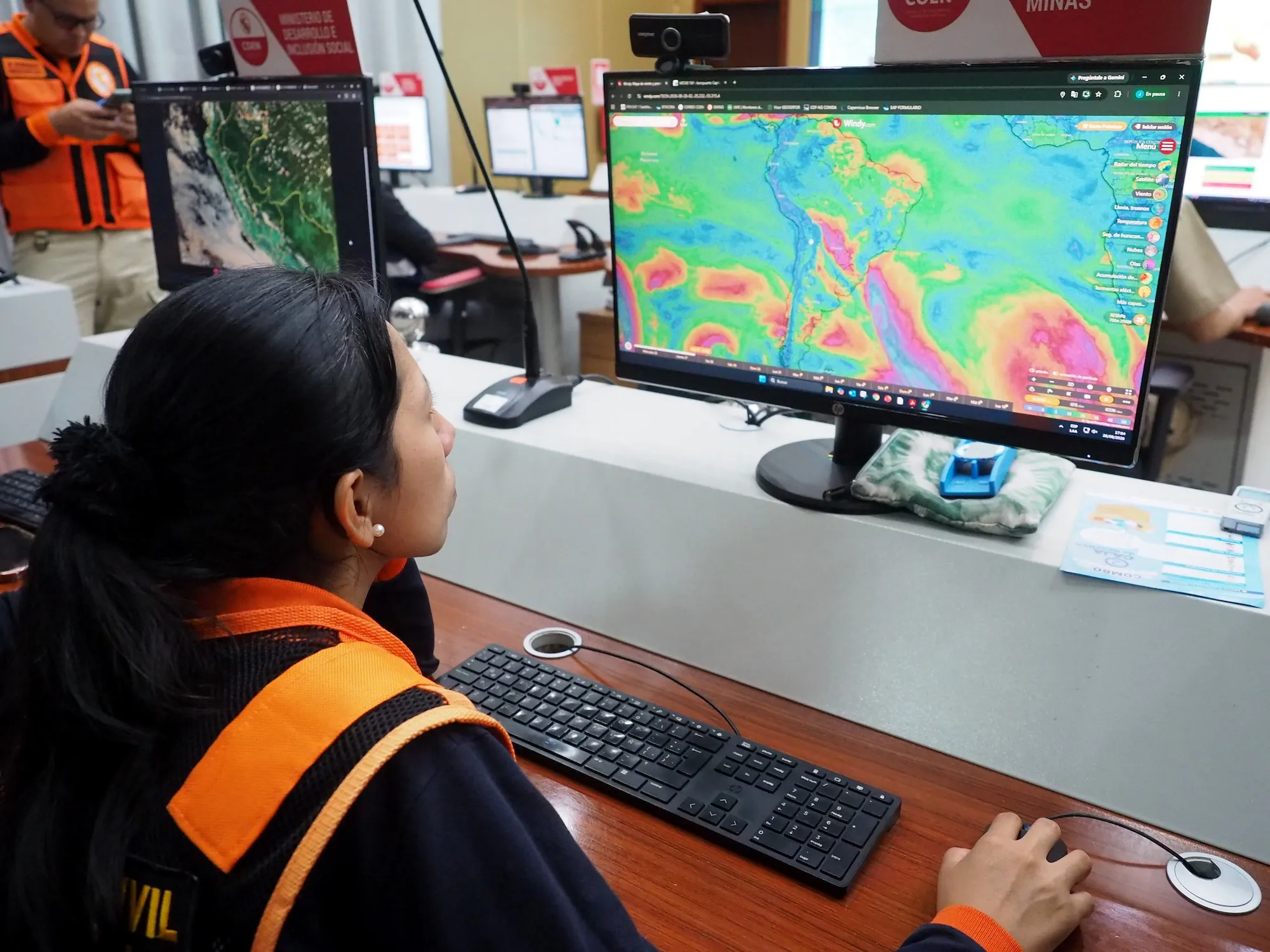
A woman examines a computer screen with a weather pattern on it

A worker monitors wind speed and direction in the Pacific at the Peruvian National Emergency Operations Center as part of national multi-hazard drills in preparation for the arrival of El Niño. Carlos Garcia Granthon/ Fotoholica Press / LightRocket via Getty Images

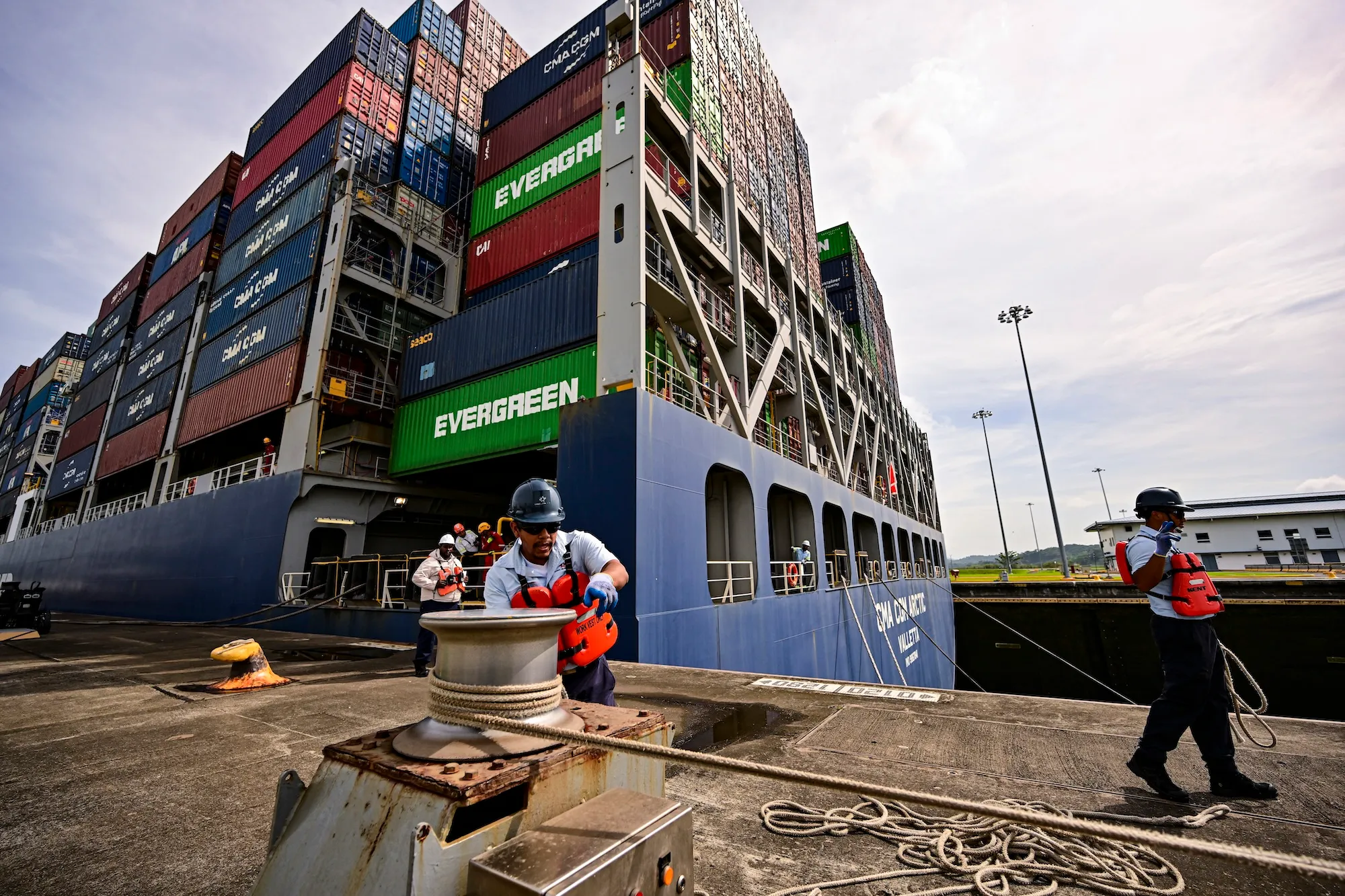
workers near a doc with shipping container vesselWhere did the phrase ‘super El Niño’ come from?

While it might sound like a phrase an overzealous journalist invented, “super El Niño” was actually coined by scientists — a fact that surprised Jovana Vurdelja, an ecolinguistics researcher in Serbia. “I really thought it was just media sensationalism,” she said. The phrase first appeared in a 2003 paper looking at how a strong El Niño can be followed by a strong La Niña, its cooler counterpart, according to Vurdelja.

“Super El Niño” has taken off in English-speaking countries but also across Europe, where it’s been adopted by speakers of Serbian, Norwegian, Italian, German, French, Croatian, and other languages. 

When extraordinary weather is on the way, people reach for amped-up language to communicate the scale of the hazard. But finding the right word to match that danger is like trying to find the right shoe size, Vurdelja said. The language can be too small, minimizing the threat, or it can be too big — exaggerations that can lead to nihilism or desensitization. “It’s extremely important that the word communicates the seriousness, the magnitude, the severity of the event itself,” Vurdelja said. She thinks “super El Niño” hits the mark, since it’s been embraced by scientists and the media alike.

A person cools down in a lake next to a basketballWhat comes after ‘super El Niño’?
If super El Niños become a common occurrence — that is, if warming in the Pacific regularly reaches 3 or more degrees above normal — the language we use to describe these events may need to evolve. Some scientists have already suggested that the phrase du jour doesn’t go far enough: “This is going to be so far beyond a super El Niño, if the models are right, that we sort of need a new term for it,” the climate scientist Zeke Hausfather said in the podcast Shift Key last month.

We’ll “need stronger words, stronger language, and that’s when we get into this spiral,” Vurdelja said. That’s how you end up with scientists reaching for words like “mind-bogglingly crazy” and “gobsmackingly bananas” (a phrase Hausfather coined) to describe record heat. The term “Godzilla” El Niño, now taking off in news headlines, was coined by NASA climate scientist Bill Patzert in 2015. 

The official categories for what counts as a strong El Niño used to make sense. “We hadn’t gotten above 2 degrees Celsius except occasionally,” Shaman said, and so the language experts initially settled on “seemed like a reasonable place to be.”

Whatever you call it, the most important thing will be planning for the potential impacts of this very strong El Niño — to understand what it means for food production, hydropower generation, public health, and extreme weather in the coming year. Given California’s recent state of emergency declaration, for now, maybe “super” will do just fine.


The Backlash to “NAZA” Shows How Little Israeli Citizenship Really Means

0


The Israeli documentary “NAZA” will make its North American premiere tomorrow at the New York Film Festival on the heels of Israeli Prime Minister Benjamin Netanyahu’s vitriolic speech at the United Nations, which was met by mass protests, arrests, and diplomats walking out. Other Israeli documentaries have screened at Lincoln Center, including one at the New York Jewish Film Festival in January on the movement for LGBTQ+ rights or another about an October 7 hostage. But this film, co-directed by Yuval Abraham and Rachel Szor, has proven extraordinarily controversial in its home country, reviled by nearly every sector of media and politics.

The documentary, which is composed of anonymous interviews with those active in Israel’s military and intelligence service during the war against Gaza, depicts extensive, highly detailed confessions of their participation in the mass targeting and killing of Palestinian civilians. The film’s title comes from the Israeli military’s system for assessing collateral damage, an interface that one of the anonymous confessors says can map out every building in the Gaza Strip and predict what civilians may be killed in an airstrike. One man who used the NAZA interface remarks in a clip from the film that the military once approved a single strike the system calculated would kill 500 Palestinians, and said the system makes no distinction between adults and children.

The revelation of the film’s existence — its world premiere was at the Venice Film Festival earlier this month after being produced in secret for three years — sent shockwaves through Israeli society. Two contradictory claims have begun to dominate discussions of the documentary, at the highest levels of both the Israeli government and the military brass, both aiming to neutralize the film’s reach and the ability of its filmmakers to continue working. The first is that the film released highly sensitive and classified information about the Israel Defense Forces’ operations in Gaza, contravening the law. The second line of attack claims the film is a complete fabrication, a hoax, and in the words of IDF Chief of the General Staff Eyal Zamir, a “blood libel.” Key Israeli politicians argue Abraham and Szor are aiding the enemy in wartime, with National Security Minister Itamar Ben-Gvir calling them  “friends” of Hamas who should be held accountable as such.

While some opponents of the current Israeli government, such as Yashar leader Gadi Eisenkot, have attempted to tack in a more liberal direction by saying “criticism is legitimate” — while also decrying the film for “present[ing] a distorted and one-sided picture” at a time when “the State of Israel [is] in a time of distress” — both the Israeli state and the army have begun proposing legal action be taken against the filmmakers, with their citizenship in particular coming under attack from not only Culture Minister Miki Zohar, but Prime Minister Benjamin Netanyahu himself.

In an unprecedented move, Netanyahu announced on September 16 in a video message posted on social media that his government would “revoke citizenship from anyone who defames IDF supporters abroad” in addition to raising the fine for defamation “twentyfold” to 1 million shekels (nearly $330,000 at the current exchange rate) to punish them further. Calling out the “NAZA” filmmakers specifically, Netanyahu went on to say “their place does not belong with us.”

The phenomenon of revoking Israeli citizenship is not novel. Earlier this year, two Palestinians from East Jerusalem were convicted of security offenses and stripped of their Israeli nationality, which paved the way for their deportation to either the occupied West Bank or even the Gaza Strip. But revoking the citizenship of Israeli Jews on any kind of similar grounds is without historical precedent. Both Abraham and Szor — who also co-directed the documentary “No Other Land” — are Jews born in Israel, have no Palestinian ancestry, and no public record of citizenship for any other country.

Proposals have been made in the past for the revocation of Israeli citizenship from certain Jews, most notably Yigal Amir, who killed Israeli Prime Minister Yitzhak Rabin. The far-right assassin, who is from an Orthodox Jewish family, was the subject of a public petition demanding his citizenship be revoked. But the Israeli Supreme Court rejected it on the grounds that “the dignity of the right” for every Jew to acquire and have Israeli citizenship overruled the “dignity of the murderer.” Now, for the first time, a sitting Israeli leader is advocating for the so-called “dignity of the right” to be overturned, not for murder, but for mere “slander,” in Netanyahu’s description, against the Israeli military.

Although Israeli politicians and other officials have categorized the filmmakers as antisemites spreading lies about the Jewish people, Abraham and Szor are not explicitly anti-Zionist in the way that other prominent critics of Israel, like the historian Ilan Pappé and the architect Eyal Weizman, have defined themselves, or even how a Communist member of Israel’s Knesset, Ofer Cassif, has defined himself. Both co-directors have openly stated their belief in a future where both Israelis and Palestinians “are equally sovereign and free.” Abraham himself has said Israelis have a “right” to “sovereignty and security in this land,” just as Palestinians do.

Despite these threaded needles, the Jewish filmmakers of “NAZA” now find themselves in the position of being treated much the same way Palestinian citizens of Israel are: as though their citizenship was bestowed upon them in error, a mistake of history where convenience trumped logic, a catastrophe that needs to be rectified immediately.

The Law of Return — the idea that every Jewish person, even those who converted to the religion and have no ancestral ties to the land of Palestine, should be allowed to “return” to their homeland, to settle, to live, and to be treated as an equal alongside every other Jewish person, no matter their birthplace — was one of the fundamental building blocks of the Zionist project. But the Law of Return did not become law until 1950, and the Citizenship Law, which defined the terms of its larger eligibility, did not become law until 1952, four years after the State of Israel’s founding.

For a short period in Israel’s history, citizenship had no clear definition, but it required quick clarification, not just because it is a key part of any fledgling state, but because they needed to be able to define which Arabs, who remained inside Israel’s new borders on temporary “red card” permits after the Nakba, could be allowed to stay, and who could be removed as an illegal infiltrator. Then-Agriculture Minister Dov Yosef remarked plainly during a cabinet debate in 1949: “When we publish the citizenship law and a person is found not to be a citizen, we can then deport him.”

Citizenship was granted in limited quantities to the Palestinians who had been able to remain inside the newly established Israel and did not confer all the rights it supposedly guaranteed. Palestinian citizens of Israel remained under control of a military governance system up until 1966, with their movements strictly controlled and their political activities restricted to rein in criticism of the Jewish state they now found themselves living under. 

The discourse about citizenship has taken on an unmistakably Americanized character, one defined by a larger “Love it or leave it” mentality.

The Law of Return, considered “inalienable” by many politicians, where any concrete restrictions must entail tearing of the law in its entirety, contained seemingly contradictory restrictions within its formally expansive framework. Israeli Communist Party leader Meir Vilner noted back in 1950, during discussion of the Law of Return in the Knesset, that even though Jewish citizenship was technically expansive, it still entailed restrictions to those who “endangered … the security of the state,” a vagueness that Vilner opposed on the grounds that it could be used by the government “against sections within the Jewish people.” The Polish-Israeli anti-Zionist intellectual Israel Shahak noted in 1975 that all the punishments normally doled out against Arabs, including losing their citizenship, remained theoretically possible against Jewish dissenters under Israeli law, but only “racism” against Arabs had prevented setting that precedent.

As the United States became Israel’s primary benefactor in the 1960s and 1970s, previously dormant discussions about the grounds for revoking Israeli citizenship from Jews began to reemerge. They coalesced around insufficient connection to Israel, with some aiming to establish a system of permanent residency, disallowing citizenship for Jews who did not spend enough time inside the Jewish state. After 9/11, these proposals took on a much more ideological, and much more far-right, character. 

The Israeli right was soon overtaken with the possibility of revoking the citizenship of those it considered to be aiding the enemy, with Arab citizens of Israel being the primary target. But anti-Zionist Jews were also in their crosshairs, including members of the ultra-Orthodox Jewish fringe sect Neturei Karta, or Jews who were insufficiently supportive of Israel, like Israeli journalist Gideon Levy. Calls for “loyalty oaths” from both Arabs and Jews became a cause célèbre for people like then-Deputy Prime Minister Avigdor Lieberman in the late 2000s, who would insist on the equality he advocated for by saying, “It’s not racism. The test is loyalty, not their religion.” 

A certain McCarthyist strain familiar to Americans under the Bush administration, looking anywhere and everywhere for national disloyalty, was confirmed in 2007 by Likud MK Gilad Erdan, who would later become Netanyahu’s ambassador to the United Nations during the height of the war on Gaza in 2023. Erdan claimed revoking citizenship would not be wrong because the U.S. also had a basis for revoking citizenship based on “disloyalty to the state,” which included “citizens by birth,” and that there was a threat that needed to be dealt with, even from Jewish people inside the State of Israel, who did not recognize Israel’s “sovereignty.”

The Second Intifada and the disintegration of the so-called Israeli-Palestinian peace process preceded these events, but now, the discourse about citizenship has taken on an unmistakably Americanized character, one defined by a larger “love it or leave it” mentality that allows for officials like Ben-Gvir to post about putting Jewish and Arab politicians who oppose the unfettered expansion of Zionism on planes to be deported.

By virtue of their criticism of Israel, the self-proclaimed representative of the Jewish people, they become enemies of the Jewish people, and therefore in the minds of the state’s most ardent defenders, politically Arab, and therefore able to be viewed as an existential threat just the same.

Netanyahu’s proposal to strip the “NAZA” filmmakers of their citizenship is unlikely to come to pass. It is undeniably being utilized as a political cudgel, with Netanyahu also calling for the revocation of political opponent Yair Golan’s citizenship on the same grounds, despite Golan having been a major general in the IDF. Israeli President Isaac Herzog has, in turn, dismissed the plan, calling it “completely irrelevant.” But as Shahak said in 1975, the grounds for expanding the revocation of citizenship from Jewish Israelis is there in the law, even if the precedent has not yet been set. In 2022, the court upheld a law that allowed for revoking citizenship from Israelis who “carry out actions that constitute a breach of trust against the state.” Earlier this year, in a move met with much less controversy, Netanyahu began initiating proceedings to strip citizenship from those who allegedly aid Iran through espionage, cases which have involved Jews as well as Arabs.

While the chances of the Supreme Court upholding the stripping of citizenship in this particular case are almost nil, a future Israeli administration, one that does not recognize the court’s powers, or an administration that serves alongside a court far more aligned with disqualifying the insufficiently Zionist from politics, could tell a much different story.

A future government where Israel can strip anyone’s citizenship for not only being Palestinian, but also for speaking out in any way against the state, a future where Ben-Gvir is defense minister, or even prime minister, may be closer than many defenders of the “only democracy in the Middle East” imagine.

Colorado Marijuana Company Voluntarily Recalls Dozens of Contaminated Products Amid State Regulatory Delays

0
colorado-marijuana-company-voluntarily-recalls-dozens-of-contaminated-products-amid-state-regulatory-delays
Colorado Marijuana Company Voluntarily Recalls Dozens of Contaminated Products Amid State Regulatory Delays

A Colorado manufacturer of a popular brand of marijuana vapes warned dispensaries last week that it is recalling products due to contamination by methylene chloride, a chemical the Environmental Protection Agency has sought to ban for most uses because it can cause cancer.

The recall comes amid a protracted delay in state implementation of expanded testing procedures that would have detected methylene chloride and other solvents that pose health risks.

The manufacturer, StayCon, voluntarily flagged 49 of its products, some of which first went up on dispensary shelves more than a year and a half ago. The recalled items include vapes that go by the brand name Maui Wowie and Grape Gorilla. The recall notice said a “botanically-derived” flavoring compound used in its marijuana vapes contained methylene chloride.

The owner of the third-party lab that detected the toxic solvent, which can be used to strip paint, said that he notified the company and the state six weeks before StayCon issued its recall. The state has yet to issue its own alert to consumers. Kyle Boyd, a spokesperson for the Colorado Marijuana Enforcement Division, told The Denver Gazette and ProPublica that the agency “does not comment on investigations” in response to a question about why it hasn’t made the recall public.

The Denver Gazette and ProPublica reported this month that regulatory loopholes in Colorado have allowed contaminated marijuana products that pose health risks to continue being sold to consumers for months, sometimes even years. Regulators have been slow to provide public warnings even after they’ve received reports of consumer harm. Earlier this year, the publications also reported on the dangers of methylene chloride as part of an investigation into Colorado’s failure to adopt many regulations used by other states to keep intoxicating hemp products off marijuana shelves.

Series Timeline

May 15, 2026

We reported that a top Marijuana Enforcement Division official acknowledged in a meeting with industry representatives that the amount of chemically converted hemp being sold as marijuana is greater than the agency has publicly disclosed.

April 13, 2026

State regulators announced a plan to crack down on companies that illegally sell cheaper and potentially hazardous hemp products as marijuana, citing potential tax avoidance and “serious risks to public safety.”

Feb. 6, 2026

Colorado regulators discussed a proposal to do away with the current testing system that allows marijuana manufacturers to choose their own samples. Instead, independent labs or contractors would collect the samples.

May 14, 2021

After hemp companies figured out how to convert CBD into the high-inducing compound THC, Colorado became one of the first states to ban chemically converted hemp products, first with regulatory advisories and then with legislation.

Dec. 20, 2018

President Donald Trump signed the Farm Bill, which legalizes hemp. Congress’ intent was to help farmers along with people who believe hemp’s high levels of the nonintoxicating compound CBD can help with seizures, pain and sleep.

Jan. 1, 2014

Colorado became the first state to allow retail sales of marijuana for recreational use.

Methylene chloride can be used to cheaply synthesize hemp into THC, the psychoactive compound in marijuana that makes people high. That chemically converted hemp is then falsely labeled and sold as marijuana-based products. State law bans the chemical conversion process and prohibits marijuana manufacturers from using methylene chloride, which the EPA banned for most uses in 2024. This month the U.S. Court of Appeals for the 5th Circuit struck down the EPA ban and sent the matter back to the agency for further review.

The still-unimplemented testing rule for methylene chloride and 30 other solvents was meant to align Colorado’s standards with requirements that are already in place in 24 of the 43 states with regulated marijuana markets. The new testing was supposed to be implemented in July — nearly three months before StayCon told dispensaries it was recalling products. A spokesperson for the Marijuana Enforcement Division said the state public health department, which reviews labs and recommends their certification, told his agency it needed more time.

Implementation, he said, will begin at the end of this month.

Denver-based Bona Fides Laboratory in August detected the methylene chloride that prompted Friday’s recall notice during routine testing for other contaminants such as pesticides and mold. Lab owner David Mathis said he immediately notified the state and StayCon. He criticized state regulators for delaying implementation of the new testing rules, saying his company had been ready to conduct expanded screening since the start of July.

“How many samples were not tested but have contaminants in them and were passed to the public?” Mathis said.

StayCon, a Pueblo County-based company doing business as Craft, did not respond to questions from The Denver Gazette and ProPublica about its recall.

Even as the new testing protocols are set to go into effect, the state has backed away from plans to close a related and longstanding regulatory loophole: Manufacturers still get to choose the samples that labs test and the labs that do the testing.

Regulators in January said they were considering overhauling sampling rules to require lab personnel to collect samples, but they backed down after top manufacturers said it would be too expensive.

Read More

UK’s new Israel sanctions haven’t suspended any weapons transfers

0
uk’s-new-israel-sanctions-haven’t-suspended-any-weapons-transfers
UK’s new Israel sanctions haven’t suspended any weapons transfers

An Israeli Air Force F-35I Adir multirole fighter aircraft flies over the Negev Desert after taking off from a military base en route to the Gaza Strip on October 14, 2023. Photo: Yuri Cortez / AFP via Getty Images / Common Dreams

Earlier this month, the UK government announced plans to cut off trade with Israel’s illegal settlements in the West Bank—including weapons shipments.

But according to new disclosures made to Parliament, reported Thursday by Declassified UK, the sanctions regime has not actually led to any weapons licenses being suspended or revoked, validating warnings by some critics that the new Labour government’s effort to cut ties with Israel’s occupation was only skin-deep.

Back in 2024, as Israel’s genocidal assault on Gaza was raging, then-Prime Minister Keir Starmer had suspended 30 out of approximately 350 arms export licenses to the country.

According to the UK-based Campaign Against Arms Trade (CAAT), the UK has still approved at least £178 million ($235 million) worth of fixed-value military export licenses to Israel since October 2023—a figure that excludes exports authorized under open licenses, including much of Britain’s contribution to the F-35 program.

UK Foreign Secretary Ed Miliband described the new restriction on arms export licenses as a “double lock against arms sales” to Israel under which the government would continue its existing suspensions and refuse applications for arms that “materially contribute to the occupation” of Palestine.

However, CAAT warned the following day that the policy, while welcome, “does not go far enough,” and included several loopholes—including one that allowed the UK to continue supplying F-35 fighter jet parts to an international pool used by the Israeli military and another allowing Israel to potentially use military equipment exported there for use by third countries.

Several prominent leftists in Parliament, including Your Party co-founders Jeremy Corbyn and Zarah Sultana, as well as Green Party leader Zack Polanski, said that the trade bans should ultimately be just a first step on the way to a full arms embargo.

On September 16, the UK’s trade department acknowledged, following a question from MP Iqbal Mohamed, that “no additional licenses have been revoked or suspended since September 8,” according to Declassified.

The department explained that this was “largely because licenses for items that might materially contribute to the occupation have already been suspended because of Israel’s conduct in the Gaza conflict.”

Declassified called this into doubt, however:

The government insists that many of the extant licenses for Israel cover items that are for re-export to a third country or military-grade goods for civilian use such as body armor.

Yet fighter jet components are still being exported to global spares pools used by Israel, and UK-made trainer aircraft parts, which help to sustain the F-35 program, continue to flow directly to Tel Aviv.

When asked about trainer aircraft, the trade department told Parliament that such components “are not used in Gaza and… do not materially contribute to Israel’s illegal occupation.”

This is despite the Foreign Office previously acknowledging that Israel’s M-346 trainer aircraft are “used to train [Israeli Air Force] fast-jet pilots” and “facilitate the development of an offensive capacity.”

Dearbhla Minogue, a lawyer from Global Legal Action Network, which took the UK to court over arms exports to Israel in 2024, told the outlet that these revelations appear to indicate that there will be “no concrete consequences for Israel after this government recognized the likelihood of war crimes, ethnic cleansing, and what it terms Israeli terrorism.”

“Successive governments have done everything in their power to continue aiding and abetting genocide and war crimes with deadly and devastating consequences,” said Sam Perlo-Freeman, CAAT’s research coordinator. “The new so-called ‘double-lock’ on arms exports to Israel exemplifies this.”

He added that it is “nothing more than a soundbite designed to appease voters, whilst failing to deliver meaningful policy change, and continuing to allow arms dealers to profit from Israel’s genocide in Gaza.”

This news comes days after Prime Minister Andy Burnham also affirmed that the UK would provide military support—specifically “defensive” air-to-air refueling—to Saudi Arabia as it launches new strikes on Yemen’s Houthis.

A new CAAT report says the UK approved £464.8 million in military exports to Saudi Arabia in just the first quarter of 2026, with most of the value consisting of air-to-surface weapons.

The Saudi-led war against Yemen that lasted from 2015-22 killed an estimated 377,000 people from direct and indirect causes. During that time, CAAT found that the UK approved £7.1 billion ($9.4 billion) worth of military goods to Saudi Arabia.

– Common Dreams

Mom Dies of Rabies After ‘Tiny Puppy Scratch’ on Vacation

0
mom-dies-of-rabies-after-‘tiny-puppy-scratch’-on-vacation
Mom Dies of Rabies After ‘Tiny Puppy Scratch’ on Vacation


When a stray puppy scratched Yvonne Ford’s leg beneath a beach lounger in Morocco, the mark seemed too small to worry about. It barely bled, according to her family. She cleaned it with a wet wipe and continued her vacation.

Four months later, the 59-year-old mother and grandmother was dead from rabies. Now her daughter, Robyn Thomson, is sharing what happened so other travelers will know that even a minor-looking scratch can require urgent medical advice. (ITV News Calendar)

Yvonne and her husband, Ron, were vacationing in February 2025 when she startled a puppy resting under her sunbed. The dog scratched her leg. Her family did not know the small injury could pose a rabies risk, and Yvonne did not seek treatment at the time. (ITV News Calendar)

She seemed well after returning home to England. Then, in late May, she began developing symptoms. By early June, she was in Barnsley Hospital with a rapidly worsening illness that included confusion, anxiety and hallucinations. Doctors initially struggled to identify the cause. At an inquest this March, a psychiatrist described asking about Yvonne’s travel after being called to assess her symptoms; the account of the dog encounter prompted concern about rabies. She was transferred to an infectious disease unit in Sheffield and died on June 11, 2025. (ITV News Calendar)

For Thomson, the hardest part is knowing how ordinary the encounter looked. Her mother loved animals, she told Metro, and the puppy had not appeared threatening. She now works with Worldwide Veterinary Service and its Mission Rabies program to raise awareness and support efforts to vaccinate dogs.

The UK Health Security Agency confirmed that a traveler died after contact with a stray dog in Morocco. It urged people bitten or scratched in a country where rabies is present to wash the injury with soap and water and seek medical advice without delay. A friendly-looking animal and a small wound cannot, on their own, rule out exposure. (GOV.UK)

That advice matters for Americans traveling overseas, too. The CDC recommends washing a bite or scratch with soap and running water for 15 minutes, then promptly speaking with a medical or public health professional about whether rabies prevention treatment is needed. Depending on the exposure and a person’s vaccination history, that treatment may include rabies vaccine and immune globulin. The decision calls for a professional risk assessment; travelers should not wait for symptoms or for a wound to look serious. (CDC)

Once symptoms have begun, rabies is almost always fatal. At Yvonne’s inquest, an infectious disease specialist said she appeared to have become symptomatic before reaching the hospital, when preventive treatment could no longer save her. Thomson’s message comes from that painful timing: after contact with an unfamiliar animal abroad, the time to ask for help is immediately, even if the mark looks like “just a scratch.” (ITV News Calendar)

Palace Party Wins Morocco Vote, Islamists Return to Opposition  

0
palace-party-wins-morocco-vote,-islamists-return-to-opposition  
Palace Party Wins Morocco Vote, Islamists Return to Opposition  


Low turnout and youth discontent loom over Morocco’s next government as coalition talks begin

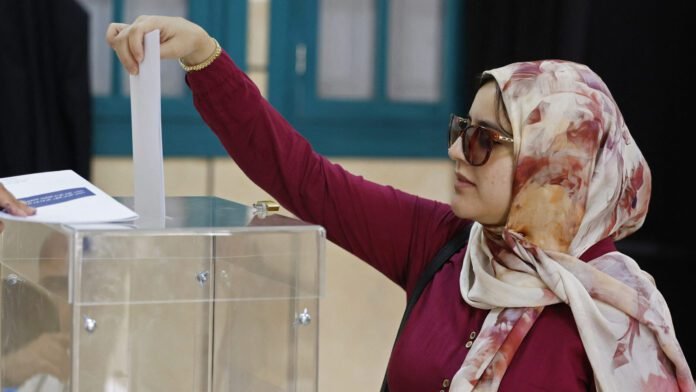
Morocco’s Authenticity and Modernity Party (PAM) won Wednesday’s parliamentary election with 97 of 395 seats, provisional results announced early Thursday showed, while the Islamist party it pushed from power five years ago surged back to lead the opposition.  

The Justice and Development Party (PJD) took 54 seats, up from 13 in 2021, under Abdelilah Benkirane, prime minister from 2011 to 2017, who returned to lead it. Turnout fell to 38% from 50%. 

King Mohammed VI controls foreign and defense policy, while the government and parliament are responsible for domestic issues including jobs, education, health care and prices.   

With PAM finishing first, the king will choose the prime minister from its ranks. The party must now assemble a governing coalition.  

PAM traces its origins to 2008, when Fouad Ali El Himma, a schoolmate and adviser to the king, helped create it. Many Moroccans view it as the party closest to the palace.  

Its two partners in the outgoing government both lost ground. The National Rally of Independents (RNI), the pro-business party led until this year by billionaire former Prime Minister Aziz Akhannouch, fell from 102 seats to 66. Istiqlal, or Independence, the party that led the struggle against French colonial rule, fell from 81 to 65.  

The PJD draws its politics from conservative Islam but accepts the monarchy and competes through elections. It governed for a decade after the Arab Spring protests of 2011, collapsed to 13 seats in 2021, and campaigned this year on corruption, the cost of living, and public services.  

The Popular Movement took 29 seats, the Socialist Union of Popular Forces 26, the Party of Progress and Socialism 19, and the Constitutional Union 17.  

A governing majority requires 198 seats. The three outgoing coalition parties together now hold 228 and could, in theory, continue governing together. PAM, however, has said it will not govern again with the RNI, leaving it to seek a coalition with Istiqlal and smaller parties.  

Dr. Yasmine Hasnaoui, expert fellow at the Council for Mediterranean Diplomacy and member of the National Council Popular Movement Party, voted at 10 a.m. and noticed there were few people at the polling stations.  

“The polling stations were fairly empty,” Hasnaoui said. “Even some urban polling stations appeared relatively quiet, while in certain regions there was visible mobilization.”  

Some voters told her they planned to cast blank ballots to protest declining purchasing power.  

“Being at the polling station reflected two things at the same time,” she told The Media Line. “A public that remains civically engaged and wants to participate, and another part, particularly among young people, that is asking whether political participation will actually change their economic and social reality.”  

She sees that frustration as one reason for the PJD’s return.  

“The message is clear,” Hasnaoui said. “Citizens are reticent about what these political parties will bring, because we saw them in the previous government.”  

Some 15.8 million Moroccans registered to vote out of 26.7 million of voting age. Registrations fell nearly 10% from 2021 even as the population grew.  

Mohammed Masbah, who runs a Rabat research institute that polls Moroccans on their trust in government, told a Chatham House panel on the eve of the vote that Morocco’s youngest voters largely disappear from the electoral system before election day.  

Morocco has no automatic voter registration. Masbah put the number of registered 18-to-24-year-olds at roughly 600,000 out of some 4 million. 

Protest is just a channel that young people in Morocco use to express their frustration

“There is a systematic exclusion of the younger population,” Masbah said. “Protest is just a channel that young people in Morocco use to express their frustration.”  

During last year’s protests, young demonstrators demanded hospitals rather than more stadiums as Morocco prepares to co-host the 2030 World Cup.  

Hasnaoui said the RNI’s losses deserve as much attention as the PJD’s return after five years leading the government.  

“It suggests that voters have reassessed the party’s record, particularly in the context of concerns about employment, public services and purchasing power,” she said.  

The PJD, she said, ran a disciplined campaign.  

“It appeared more organized, more present on the ground and more focused on reconnecting with voters,” she said.  

Officials announced the national results shortly after 3 a.m. Hasnaoui said the order of the leading parties broadly matched expectations. The PJD’s 54 seats did not.  

“Even before election day, everyone knew that PAM would be first, then the RNI, then Istiqlal,” Hasnaoui said. “What surprised me is the 54 seats. That is something no one expected at all.”  

Early returns encouraged the PJD, and Benkirane said overnight that his party was leading in most constituencies where counting had finished. He later alleged irregularities at some polling stations. Authorities have not responded to the allegation.  

Supporters celebrated at PJD headquarters in Rabat before the Interior Ministry announced the national results. Early urban returns put the party ahead in parts of Rabat and several other cities before rural returns changed the picture.  

Morocco reserves 90 of parliament’s 395 seats for women elected from separate regional lists. Around 2,600 women stood as candidates this year, Hasnaoui said, roughly 30% of the field, up from about 2,000 in 2021.  

The system has helped women enter politics and gain experience inside parties, she said, but deeper barriers remain.  

The real challenge is to create the conditions for women to compete more broadly in electoral constituencies

“The real challenge is to create the conditions for women to compete more broadly in electoral constituencies, and to reach leadership and decision-making positions within political parties,” Hasnaoui said.  

PAM national coordinator Fatima-Zahra Mansouri, the mayor of Marrakesh, would become Morocco’s first woman head of government. Budget Minister Fouzi Lekjaa, who also heads the Royal Moroccan Football Federation and joined PAM’s political bureau in July, is another name in circulation. The king will decide.

“If she were to become head of government, the significance would go beyond the fact that she is a woman,” Hasnaoui said. “We should judge her leadership by her ability to deliver policies that improve people’s lives.”  

Morocco restored formal relations with Israel in December 2020 under the Abraham Accords, after the Trump administration recognized Moroccan sovereignty over Western Sahara. The PJD governed at the time and signed the agreement.  

The party now campaigns against taking those ties further. The relationship has kept moving anyway.  

On Sept. 16, at a meeting in New York hosted by US Ambassador to the United Nations Mike Waltz, Morocco and Israel agreed to raise their liaison offices to full embassies and exchange ambassadors before the end of the year, along with investment-protection and double-taxation agreements due by December.  

Direct flights resumed before the diplomats moved. Arkia flew Tel Aviv to Marrakech on Aug. 19, ending a suspension that began after the Hamas attacks of Oct. 7, 2023, and El Al’s low-cost subsidiary Sun d’Or said last week it would restore service this fall. Hundreds of thousands of Israelis trace their families to Morocco.  

Defense ties have also held. Morocco bought Israel’s Barak MX air-defense system in a deal valued at roughly $500 million, and Reuters reported in 2024 that Rabat planned to buy an Israeli reconnaissance satellite for about $1 billion.  

Trump has returned to the file twice in recent weeks. In August, he reaffirmed US recognition of Moroccan sovereignty over Western Sahara in a message to King Mohammed VI, calling Morocco’s autonomy proposal the “only basis for a just and lasting solution.”  

His senior adviser for Arab and African affairs, Massad Boulos, met UN political chief Rosemary DiCarlo in New York on Sept. 11 and called for progress toward a settlement under Security Council Resolution 2797. He then traveled to Algiers to meet Algerian President Abdelmadjid Tebboune.  

The mandate for MINURSO, the UN mission in Western Sahara, expires Oct. 31. Morocco has claimed the former Spanish territory since 1975, and the Algerian-backed Polisario Front seeks independence there.  

Foreign Minister Nasser Bourita carried the Moroccan position to the UN General Assembly this week, saying the dispute had entered a new phase after the Security Council put Morocco’s autonomy proposal at the center of renewed negotiations.  

The 2020 deal tied normalization with Israel to Washington’s position on the territorial dispute Rabat treats as existential, which is why domestic opposition has not moved it.  

Unemployment among Moroccans aged 15 to 24 stood at 29.2% in the first quarter, according to the High Commission for Planning, while about 2.9 million people aged 15 to 29 are neither in school nor working.

In late July, tens of thousands of mostly young Moroccans crossed or tried to cross into the Spanish enclave of Ceuta after social media posts claimed the border was open. Dozens died, most while trying to swim around the breakwater.  

Morocco’s Interior Ministry blamed people who spread false information on social media. A Spanish police report seen by Agence France-Presse in September said Moroccan security forces stood back that day. Spanish Prime Minister Pedro Sanchez rejected that finding.  

In his UN speech, Bourita called the Palestinian question a constant priority of Moroccan foreign policy and backed an independent Palestinian state alongside Israel. He also called for enforcement of the Gaza ceasefire and confirmed that Morocco had joined the international stabilization force in Gaza in July, pledging police officers and trainers.  

A coalition of Moroccan groups opposed to relations with Israel has called three days of demonstrations beginning Friday in cities across the kingdom. Organizers want Morocco to scrap the normalization agreement and close the Israeli mission in Rabat. The PJD, returning to parliament with 54 deputies instead of 13, has backed the protests.  

Hasnaoui said coalition arithmetic will prove easier than rebuilding public trust.

Turnout was only around 38%, so there is a clear challenge of rebuilding citizens’ confidence

“Turnout was only around 38%, so there is a clear challenge of rebuilding citizens’ confidence,” she said. “That trust will not be rebuilt simply through political agreements. It will be rebuilt through concrete results on the ground, particularly on employment, youth opportunities, public services and purchasing power.”  

“The numbers make a coalition mathematically possible and politically understandable,” she added. “But the real coalition that Morocco needs is between the political institutions and Moroccan citizens.”

Google ads caught delivering convincing scareware ads to unsuspecting users

0
google-ads-caught-delivering-convincing-scareware-ads-to-unsuspecting-users
Google ads caught delivering convincing scareware ads to unsuspecting users

Researchers say they recently found Google ads delivering a sophisticated tech support scam that freezes the screens of both Windows and Mac devices and displays messages urgently instructing them to phone a bogus call center.

The ads were displayed all over the Web, including on high-traffic maps, weather, real-estate, document-hosting, and sports sites. Users who called the number were then urged to pay hefty fees, grant remote access to their devices, or divulge personal information. From August 31 to September 14, security firm Netskope observed users from 619 customer organizations click on the malicious ads, although none of them were actually scammed because Netskope blocked the content.

Roughly 62 percent of the organizations were based in the US, with Japan and Australia accounting for the Nos. 2 and 3 spots. Since the firm has visibility into only a tiny sliver of Internet activity, the number of people exposed to the ads—including those who fell victim to it—is likely much higher. Netskope tracked more than 250 Google Ads campaign IDs across at least 284 legitimate publisher sites.

So, what about Uncle Louie?

“For the victim, that tradecraft turns an ordinary ad click into a browser that appears to seize up on a fake security warning,” Netskope said. “The locker fills the screen, hides the cursor, swallows the usual exit keys, and lags the browser, all to manufacture the sense of a broken machine and pressure the person into calling the number on the screen. Nothing on the computer is actually locked, but in the moment it is convincing enough to push people toward the scam.”

By now, many people, including a fair number of readers of this site, ridicule and shame people who fall for such scams. These criticisms fail to account for a sizable portion of Internet users who have little or no understanding of how computers and the Internet work. Combined with their need to get things done quickly and the growing difficulty of navigating the Web, this lack of awareness makes a sizable portion of users prime targets. There’s little doubt some critics have close friends and family who are among those who simply don’t know enough to be wary.

Further making the scam convincing, the software kit that delivers the fake warnings is designed to be stealthy and closely mimic the signs of a real infection. The browser address bar no longer appears, the warning screen occupies the entire screen, and presses of escape and many other keys are disabled. The browser performance degrades, sounds play, and pages lag, giving the impression something is seriously wrong. Messages urging the user to not to restart the machine and call a call center immediately flash. Attempts to close the browser only makes the scam message refresh.

The warnings appear only after a user makes a mouse movement. The software is also encrypted and only decrypted and then displayed in browser memory. Both these conditions prevent many endpoint security wares—and possibly Google’s own ad filters—from detecting the malice. Further, the warning ads appear differently depending on whether the targeted user device is running Windows or macOS.

Google didn’t say what caused its scanners to miss the scam campaign or give any indication the ads have been fully removed from its massive ad platform.

“We have zero tolerance for scams,” the company said in a statement. “We’re actively investigating the campaigns in this report and will take action against accounts that violate our policies.” The company has said that last year it blocked over 99 percent of violating ads before they ever served.

As Netskope noted, devices aren’t actually locked up, even though most of the usual keys for closing the scam window have been disabled. In this case and many similar ones, users can still easily exit the window. For both Windows and macOS devices, this can be done in most cases by pressing the escape key and holding it for several seconds. The press will force the browser out of full screen and release the keyboard lock, and from there the tab can be closed. An alternative approach is to invoke the Windows Task Manager (control-shift-escap) and exit the browser. On a Mac the keys are (cmd-option-escape). In both cases, users can reopen the browser without restoring the previous session.

No legitimate company will ever advise users to call a phone number when they’re infected. Under no case should people hit by tech support scams call the number. Those who provide informal tech support for friends and family might consider writing the above advice on a Post-it and affixing it to screens.

Poland Predicts Murkier Russian Escalation, Not Full Invasion

0
poland-predicts-murkier-russian-escalation,-not-full-invasion
Poland Predicts Murkier Russian Escalation, Not Full Invasion


Poland’s foreign minister said that Russia is preparing a significant escalation this year, warning that President Vladimir Putin may be looking for a pretext to justify a new mobilization.

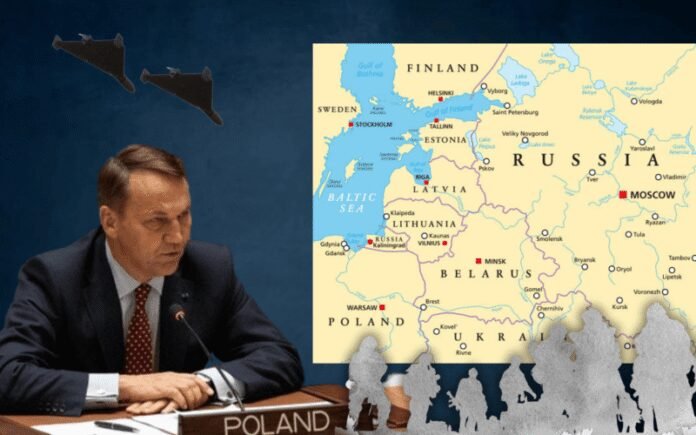
“Russia is cooking up something big this year,” Radosław Sikorski said at the Council on Foreign Relations in New York, appearing alongside his Romanian counterpart, Oana Țoiu. Sikorski said he could not name his sources but stressed that there were many. He raised the possibility that Putin could stage a false-flag operation to convince Russians they are under attack, creating grounds for mobilization.

Sikorski said Belarusians were “very worried” about being pulled into the war and pointed to Russia’s potential interest in securing a land corridor to Kaliningrad through Lithuania, as well as its focus on large Russian-speaking populations in border areas of Estonia and Latvia.#

A “less clear-cut” escalation, not full invasion

Sikorski called a full-scale invasion “crazy” for Russia, predicting instead a murkier form of escalation — one that would also complicate any NATO response under Article 5, the alliance’s mutual-defense clause. He said Poland would defend itself if necessary, as it has done before, and tied recent Russian strikes on Polish border crossings to a broader strategy aimed at cutting Ukraine off from Western supplies.

Despite the strain on Russia’s economy, Sikorski said Moscow could sustain its war effort for another year or two unless Kyiv manages to destroy more than half of Russia’s refining capacity. He said Moscow retains options including further mobilization, a harsh winter and continued strikes on Ukraine’s energy infrastructure, though he added that Kyiv has “cards to play” as well.

Sikorski backs US troop presence in Poland

On the prospect of a permanent U.S. military base in Poland, Sikorski said it would eventually house one brigade, in addition to the roughly 7,000 U.S. troops currently rotating through the country. He said around 10,000 American soldiers would be enough to reassure Poland without “threatening” Russia, and voiced hope that President Donald Trump would follow through on his commitment on the matter.

0FansLike
0FollowersFollow
0FollowersFollow
0SubscribersSubscribe
- Advertisement -
Google search engine

Recent Posts