20.7 C
London
Saturday, September 19, 2026
Home Blog

US-Saudi F-35 fighter deal runs into a China-sized problem

0
us-saudi-f-35-fighter-deal-runs-into-a-china-sized-problem
US-Saudi F-35 fighter deal runs into a China-sized problem

A potential multi-billion-dollar transfer of advanced US stealth fighters to Saudi Arabia has thrust US Middle East policy into a delicate balancing act between regional deterrence, Israeli air superiority and rising geopolitical skepticism.

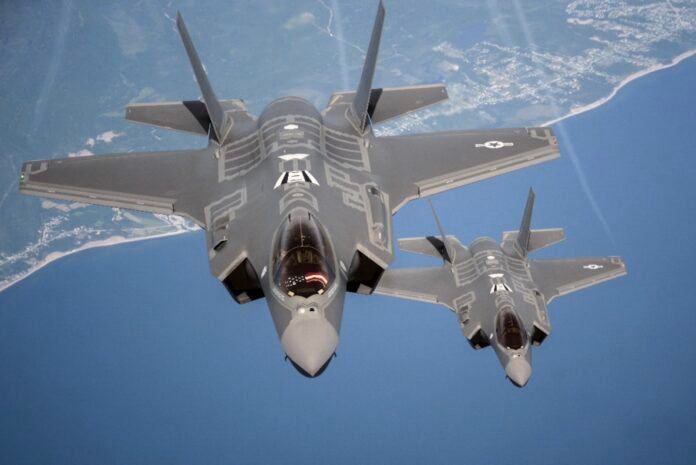
The US State Department approved a potential US$24.3 billion Foreign Military Sale (FMS) of 48 Lockheed Martin F-35 Lightning II fighter jets to Saudi Arabia, issuing a formal Congressional notification for a landmark transaction intended to bolster Saudi Arabia’s deterrence against recurring Iranian drone attacks and heightened combat with Yemen’s Houthi forces, multiple media outlets reported.

This possible transfer follows a November 2025 US-Saudi strategic defense pact that authorizes the latter to acquire F-35 stealth fighter jets directly from US manufacturers.

Under the proposed defense package, Saudi Arabia would acquire 48 conventional takeoff and landing stealth aircraft, 49 Pratt & Whitney F135 engines, precision navigation components, cryptographic devices and comprehensive logistical and weapons support to modernize its frontline air fleet.

While the Trump administration contends the procurement will reinforce partner interoperability without altering the Middle East’s regional balance of power, the initiative has faced immediate pushback from US legislators.

Skeptical US lawmakers warned that Saudi Arabia’s commercial and defense ties with China could expose sensitive US stealth aviation technology to Chinese intelligence exploitation, echoing past disputes that stalled similar arms proposals to the United Arab Emirates.

The transfer additionally tests the US’s statutory commitment to preserve Israel’s qualitative military edge, given Israel’s status as the region’s sole F-35 operator. US Congress now holds authority to review the agreement before prime defense contractors can negotiate final procurement contracts.

If the US F-35 sale to Saudi Arabia pushes through, it may enable the latter to operate more effectively in heavily defended airspace over Iran and Yemen, operational areas wherein older 4th-generation fighters such as F-15s were shot down.

Notable F-15 losses during the Iran war include the first US F-15 combat loss in April 2026 and a claimed Houthi shootdown of a Saudi Arabian F-15 over Yemen this month.

In an October 2025 Business Insider article, Royal Air Force (RAF) Director of Capabilities and Programs Air Vice Marshal James Beck stated that 5th-generation stealth fighters are now the baseline minimum and the entry requirement for any effort to control the skies against basic threats temporarily.

As The War Zone (TWZ) pointed out in April 2025, an eclectic mix of radar-guided surface-to-air missiles, repurposed air-to-air infrared-guided missiles, and loitering munitions pose serious threats through mobile “shoot-and-scoot” tactics paired with passive infrared seekers and electro-optical targeting that produce no telltale radar emissions before launch.

But even 5th-generation fighters such as the F-35 may not be invulnerable to such threats. In March 2026, a US F-35 was damaged by Iranian anti-aircraft fire, forcing it to make an emergency landing at an undisclosed US base.

To address the strategic balance, the US must also navigate statutory requirements. While the US sale of F-35s to Saudi Arabia may undermine Israel’s assured qualitative military superiority, Reuters reported in November 2025 that the aircraft supplied to Saudi Arabia will lack the advanced features of Israeli units.

Reuters says that Israel has special authorization to modify its F-35 aircraft, including integrating its own weapons and equipping them with radar-jamming systems.

In addition to those permissions, the report states the US is unlikely to sell Saudi Arabia advanced weapons such as the AIM-260 Joint Advanced Tactical Missile (JATM), which would likely be sold to Israel. Also, it states that the US may equip Saudi Arabia’s F-35s with an inferior software suite to keep them qualitatively behind those of Israel.

Simultaneously, technology security concerns remain paramount on Capitol Hill. As for China obtaining sensitive F-35 data via Saudi Arabia, Defense Security Asia notes in a November 2025 article that the close defense ties between the two countries, spanning ballistic missiles, drones and military cooperation with Pakistan as a proxy for the former, increase the risk of data leakage.

The report notes that China could access sensitive F-35 data through shared workshops, integrated production lines, or via Pakistani engineers rotated through Saudi Arabia’s facilities.

However, the question remains whether Saudi Arabia actually needs the F-35. John Ferrari and Dillon Prochniki mention in an April 2026 War on the Rocks article that while the F-35 performed brilliantly during short, pre-planned strikes against Iran, relying predominantly on the platform creates a brittle force unsuited for a protracted conflict.

Ferrari and Prochniki point out that the F-35’s heavy ground footprint, reliance on vulnerable forward bases, fragile aerial refueling requirements, and low mission-capable rates make it exceptionally difficult to sustain under sustained missile salvos.

They add that the F-35’s US$ 80 million-per-plane cost and low annual production ceilings mean combat losses cannot be easily replaced, necessitating an urgent pivot toward cheaper, attritable uncrewed systems. Still, the US sale of F-35s to Saudi Arabia may be driven more by political than by military considerations.

Authors such as Vali Nasr, in a September 2026 Center for Strategic and International Studies (CSIS) article, and Marc Lynch, in an August 2026 Foreign Affairs article, note that Gulf monarchies may have lost confidence in the US security umbrella, as Iranian strikes exposed the limits of US primacy and destroyed its basing architecture, leaving installations viewed as existential liabilities rather than defensive assets.

Furthermore, Azeema Cheema and Mohanad Hage Ali mention in an August 2026 Diwan article that Saudi Arabia, Turkey, and Pakistan, recognizing a deepening regional security vacuum, formed an autonomous defense pact – the Mecca Agreement – replacing traditional reliance on an unraveling US umbrella with collective deterrence and expanding indigenous military-industrial cooperation.

Amid that rupture with the US, the US decision to approve F-35 sales to Saudi Arabia may aim to ensure strategic alignment and secure obedience. While Saudi Arabia might gain access to cutting-edge fighter technology if it proceeds with its F-35 purchase, the US could quickly neutralize foreign-operated F-35s by cutting off access to proprietary sustainment and digital ecosystems.

Because the F-35 relies heavily on centralized US supply chains and contractor-operated maintenance for sealed critical components, fleets deprived of spare parts quickly face severe cannibalization and grounding.

Cutting an operator off from the centralized ALIS/ODIN cloud networks, which generate vital, US-compiled Mission Data Files for threat emitter routing and survivability, and from US satellite communications renders surviving airframes functionally degraded and highly vulnerable.

Ultimately, whether this multi-billion-dollar transaction materializes into a durable instrument of US leverage or accelerates Saudi Arabia’s sovereign pivot toward autonomous regional alliances will be pivotal in shaping the Middle East’s future security architecture.


Learning another language may be one of the best ways to keep your brain healthy

0
learning-another-language-may-be-one-of-the-best-ways-to-keep-your-brain-healthy
Learning another language may be one of the best ways to keep your brain healthy

Learning another language is a highly complex mental activity. It requires people to remember words, distinguish unfamiliar sounds, recognize patterns, work out grammatical rules, and retrieve the right expression at the right moment. All of this happens while listening, interpreting, and preparing a response.

Could all this mental activity also help keep an aging brain healthier? Research suggests it can.

Concerns about memory and dementia can send aging adults looking for ways to exercise their brain and maintain cognitive function, whether it is solving crossword puzzles or playing a musical instrument. Language learning might not seem like the same kind of brain exercise, but it is a complex activity that engages several mental processes at once.

I am a linguist who studies language acquisition, use, and loss. My new book, Beyond Words: How We Learn, Use, and Lose Language, examines language and the mind across people’s lifespans.

Research increasingly suggests that language learning and bilingualism can offer cognitive benefits—including for older adults. Learning another language can also create opportunities for communication and social connection.

A workout for the brain

A person’s brain remains capable of change throughout their life. This ability to adapt in response to experience is known as neuroplasticity.

Learning unfamiliar sounds, vocabulary, and grammatical patterns requires the brain to form and strengthen connections. Language learning engages several mental processes at once, requiring people to absorb and retrieve information, notice when something does not work out, and adjust. This sustained mental effort makes language learning a particularly rich form of cognitive exercise.

Research on bilingualism has found differences in both the brain’s gray matter, which contains neurons and their connections, and white matter, which consists largely of nerve fibers linking different parts of the brain.

Studies have shown greater gray matter density or stronger white matter integrity in bilingual people, compared with people who speak one language. These findings suggest that language experience can be reflected in the brain’s structure, as well as its activity.

But brain differences are only part of the picture.

The brain as it ages

One reason researchers are interested in language and aging is the idea of cognitive reserve. This term refers to the ability to maintain cognitive function despite age-related changes or damage to the brain.

Bilingualism has been proposed as one factor that can help the brain cope with the effects of aging, because managing two languages places ongoing demands on people’s attention and cognitive control—ultimately helping to strengthen cognitive reserve.

Some studies have found that bilingual people who develop dementia show symptoms at a later age than people who speak one language. This suggests that bilingualism may provide some protection against the effects of brain aging, although it does not necessarily prevent dementia or the brain changes associated with it.

The potential benefit may therefore be greater resilience in the face of those changes, rather than prevention of the underlying disease.

Learning later in life

This raises another question: If lifelong bilingualism may help protect the brain as we age, can people gain similar benefits by learning a language later in life?

Age changes the way languages are learned, but adults remain capable of learning new languages throughout life. Adults and kids bring different strengths to the task. Children tend to have advantages with pronunciation and some aspects of grammar, while adults bring larger vocabularies and better-developed strategies for learning.

Research involving older adults suggests that learning a language can produce cognitive benefits, although the findings are mixed. The potential benefit may come less from achieving fluency than from the process of learning itself. Language learning is a sustained challenge that keeps people learning, practicing, and adapting.

There are social benefits, too. Learning another language can deepen cultural understanding, improve interpersonal communication and encourage people to empathize with other people’s perspectives and experiences. It can also connect people with others from different linguistic and cultural backgrounds, creating opportunities for conversation and friendship.

There is no established formula for how much language learning is needed to provide these benefits. Studies have used everything from intensive classroom instruction to short daily sessions with language-learning apps, over periods ranging from weeks to months, to see whether language learning can improve cognitive function. Rather than a magic number of hours, what matters may be sustained engagement in a challenging activity like learning a new language.

Building cognitive resilience

Learning another language is not a miracle cure for aging, and it cannot guarantee protection against Alzheimer’s disease or other forms of dementia.

But it is an unusually rich form of mental activity.

Perhaps the most useful way to think about language learning is not as a way to keep the brain young, but as a way to support cognitive resilience—the ability to keep learning, adapting and functioning despite the changes that come with age.

Aging inevitably changes the brain, but people retain the capacity to learn throughout life. Keeping our brains engaged in demanding new activities may contribute to that resilience.

Karen Stollznow, Senior Research Fellow of Linguistics, University of Colorado Boulder; Griffith University; University of New England. This article is republished from The Conversation under a Creative Commons license. Read the original article.

Israeli fire kills 3 more Palestinians in latest Gaza ceasefire violations

0
israeli-fire-kills-3-more-palestinians-in-latest-gaza-ceasefire-violations
Israeli fire kills 3 more Palestinians in latest Gaza ceasefire violations

Three Palestinians, including the son of Gaza Health Ministry Director-General Munir al-Bursh, were killed by Israeli army fire in the enclave on Saturday, as Tel Aviv continues its violations of a truce in place since October 2025, a medical source said.

Basir al-Bursh was killed in a strike targeting him in the al-Zahra neighborhood west of the Jabalia refugee camp in northern Gaza, the source told Anadolu Agency.

Another Palestinian was killed in an Israeli drone strike on the Shujaiya neighborhood east of Gaza City, the source added.

A Palestinian girl also died of wounds she sustained earlier from Israeli army fire north of the Nuseirat refugee camp in central Gaza, the source said.

READ: Red Cross spokesperson: ‘Death and destruction for Palestinians in Gaza continues every day’

Meanwhile, Israeli military vehicles intermittently opened fire east of the Jabalia refugee camp in northern Gaza, witnesses said. No injuries were reported.

Israeli army forces also opened fire in the al-Shakoush area southwest of Khan Younis in southern Gaza, while drones dropped bombs in the area. Israeli helicopters opened heavy fire south of the al-Mawasi area west of Khan Younis and in adjacent areas of Rafah, witnesses said.

According to the latest figures from Gaza’s Health Ministry, Israeli violations of the Oct. 10, 2025 ceasefire agreement have killed 1,386 Palestinians and injured 4,784 others.

Since October 2023, the Israeli army has killed nearly 74,000 Palestinians and injured over 174,000 others in a genocidal war that has also destroyed about 90% of Gaza’s civilian infrastructure.

READ: Gaza refugee committee alarmed over service, staff cut in UN agency for Palestinian refugees

Is NATO ready to fight? The Ukraine war is raising doubts among military analysts

0
is-nato-ready-to-fight?-the-ukraine-war-is-raising-doubts-among-military-analysts
Is NATO ready to fight? The Ukraine war is raising doubts among military analysts


Russia’s full-scale invasion of Ukraine has killed hundreds of thousands of people. It has also served as a proving ground for new weapons systems and raised an uncomfortable question for the North Atlantic Treaty Organization: ​Is the alliance prepared for the next war it might have to fight?

Five Ukrainian and Western defense officials told Reuters that developments on ‌the battlefield are moving so quickly that some NATO weapons and tactics risk becoming outdated. While Ukraine – which is not an alliance member – adapts in weeks, NATO buys and develops systems over years, sometimes decades.

The Ukraine war and U.S. President Donald Trump’s haranguing of European allies have prompted many NATO members to dramatically increase their defense spending. The Pentagon is currently reviewing its military presence in ​European countries, which Trump has accused of sponging off U.S. protection and refusing to help prosecute his unpopular war against Iran.

Denys Shtilerman, the co-owner and ​chief designer of Fire Point, a leading Ukrainian missile and drone builder, told Reuters that tanks are now “worthless” because a drone ⁠costing about $5,000 can destroy one. Yet Europe still spends heavily on tanks – which, say many military analysts, still have a key role to play in future battles.

Cheap ​drones have also transformed warfare in other ways. Troops gathering in groups or large vehicle convoys all become far easier targets.

“They are good at storming positions,” Oleksandr Pivnenko, Commander ​of the National Guard of Ukraine, said of the international troops his units trained with last year. “But if there’s a drone overhead and you don’t even look up, what do you think will happen to your squad?”

In June, Reuters attended a NATO military exercise near Paldiski in Estonia – a small Baltic country now fortifying its 210-mile border with Russia – in which American and European troops ​treated dozens of simulated casualties at wartime field hospitals. But the exercise took place with the assumption that NATO would command the airspace above the hospitals – no ​longer a given in the age of cheap, stealthy, long-distance drones.

Rather than simply receiving NATO training and assistance, Ukrainian officials described a growing role for Ukraine in teaching the alliance lessons drawn ‌from the ⁠war with Russia. Yet they also said NATO’s military bureaucracy struggles to absorb those lessons. A Ukrainian officer who underwent NATO psychological operations training in Romania told Reuters that some alliance training materials still relied on case studies from World War Two. NATO didn’t respond to questions about the officials’ criticism of its training and bureaucracy.

The Ukraine war has also exposed a vulnerability that NATO officials say is far harder to solve: air and missile defense. Russia’s relentless barrages against Ukrainian cities have highlighted Europe’s dependence ​on sophisticated U.S. anti-missile systems such as ​the Patriot, first used in the ⁠1991 Gulf War. Ukraine has a critical shortage of Patriot interceptors – the missiles fired to destroy incoming threats.

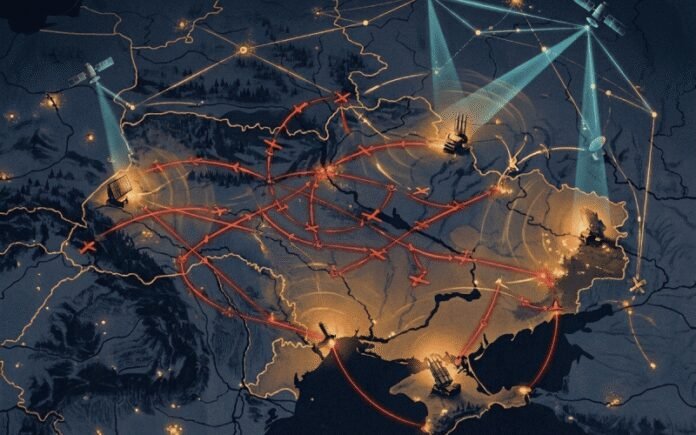
Fearing that its reliance on Patriots might become a strategic vulnerability, Europe is building non-U.S. alternatives. Ukraine is awaiting delivery of the new French-Italian SAMP/T-NG ​air-defense system, designed to intercept ballistic missiles. France has promised to accelerate its deployment to Ukraine, and European diplomats previously told ​Reuters it was expected ⁠to arrive by next spring.

In a statement, the Ukrainian defense ministry said its soldiers and NATO’s had much to learn from each other, hailing Ukraine’s use of drones and radioelectronic warfare as “globally unmatched” and praising European efforts to help tackle Russia’s drone and missile bombardments.

In July, Ukraine and nine European allies launched an air-defense coalition that includes plans to jointly develop ⁠a new anti-ballistic ​missile system. Known as Freyja, the project is a consortium of about a dozen companies with ​Fire Point as the lead private-sector partner. The goal is to build a system that is cheaper and faster to produce than the Patriot, while ensuring that Europe, not the U.S., controls its manufacture.

“If you ​spend $20 billion on your air defense system, you must be independent in your security,” said Fire Point’s Shtilerman.

Source:  Reuters

“Our Dear Friend Umar”: How We Uncovered That a Russian Oligarch Bankrolled Donald Trump Jr.’s Wedding

0
“our-dear-friend-umar”:-how-we-uncovered-that-a-russian-oligarch-bankrolled-donald-trump-jr.’s-wedding
“Our Dear Friend Umar”: How We Uncovered That a Russian Oligarch Bankrolled Donald Trump Jr.’s Wedding

My colleagues and I had been digging for days. We’d heard a rumor that a Russian oligarch close to President Vladimir Putin named Umar Kremlev had attended Donald Trump Jr.’s wedding this past May in the Bahamas. But to confirm that, we needed visual proof. 

First, we scoured everything the Trumps had released from the event, held on a pair of private islands. On social media and in the pages of tabloids such as Page Six and Hello! magazine, official photos from the weekend showed an intimate chapel ceremony alongside lavish beach parties. Several photos depicted guests, including Jared Kushner and Eric Trump, and we scanned them all for signs of Kremlev. Still, nothing had turned up yet.

We then turned to Kremlev’s social media profiles on the off chance that he’d posted about the wedding. Incredibly, on Telegram, Kremlev had posted videos over the same weekend as Trump Jr.’s wedding that appeared to be from someplace tropical. In one, a single detail caught our attention: As Kremlev speaks in Russian to the camera, the frame gives a partial view of an outdoor patio setting. It wasn’t palm trees or crystal water we noticed, but the wicker furniture.

A screenshot of a Telegram post by Umar Kremlev shows him talking into a camera in front of a wicker chair with a white bow.
The wicker patio furniture in the background of a video posted by Russian oligarch Umar Kremlev the same weekend as Donald Trump Jr.’s wedding provided a clue as to his whereabouts. Via Umar Kremlev’s Telegram account

The chair and its affixed cushion in Kremlev’s post matched what we’d seen in photos of the private islands elsewhere online, such as the promotional image below:

A set dining table with wicker chairs in a tropical setting.
A promotional photo taken at one of the islands that was the site of Trump Jr.’s wedding events depicted the same wicker patio furniture as seen in Kremlev’s video background.

But of course, we couldn’t hang such a big claim — that this Russian oligarch had attended the president’s son’s intimate wedding weekend — on a wicker chair analysis. The Trump family appeared to be curating the wedding’s visual footprint, and not much seemed to exist outside of its control. 

So when my colleagues Justin Elliott, Brett Murphy, Joshua Kaplan and I finally found a photo that confirmed what we’d been looking for, we were floored. The proof had been hiding in an Instagram gallery posted months earlier by a swimsuit model and friend of the bride, nestled among glamour shots and lifestyle photos.

The sunset group shot on a white sand beach shows wedding guests, barefoot and smiling against a backdrop of palms. One guest throws up a shaka. Front and center is the president’s eldest son and his bride, Bettina Trump, surrounded by close friends and family.

An Instagram post of a group photo shows about 35 people, including Donald Trump Jr.; his wife, Bettina Trump; Ivanka Trump; Jared Kushner; Tiffany Trump; and Russian oligarch Umar Kremlev.
A group photo posted on Instagram by a swimsuit model and friend of the bride shows wedding guests. Instagram

But in the back row, just behind the newlyweds, the top half of a man’s shaved head is visible.

We recognized him instantly: Kremlev.

That photo was at the center of our story this week, in which we revealed that Kremlev secretly bankrolled much of Trump Jr.’s wedding weekend, paying to rent out a private island, among other big-ticket items, according to records reviewed by ProPublica and interviews with three people familiar with the events. The photo also showed two others associated with Kremlev, part of a larger group of Russians whose presence puzzled some attendees. That made their absence from all other official wedding photos all the more noteworthy — especially for a gathering of only 50 or so guests.

A group photo shows Donald Trump Jr.; his wife, Bettina Trump; and Russian oligarch Umar Kremlev. An arrow points toward Kremlev with the words “Don Jr.’s secret benefactor.”
Kremlev is visible in the back of a group photo from the wedding weekend. Laura Gordon Photography via Instagram

The story spread quickly. Within hours of publication, the top Democrat on the House Oversight Committee opened an investigation into Trump Jr.’s relationship with Kremlev, asking for communications between the two and records of “all purchases made for your wedding by foreign nationals.” (Trump Jr. did not respond to a request for comment on the investigation.) It also prompted Bettina Trump to post a joint statement with Trump Jr. on her Instagram, which included even more photos from the wedding weekend.

In response to detailed questions, a spokesperson for Trump Jr. did not dispute the wedding payments from Kremlev. “Umar is a personal friend of Don,” he said. The spokesperson said that Kremlev is “not someone he has a business relationship with.” In a statement, Kremlev’s press office said, “Mr. Kremlev and Mr. Trump Jr have a friendly relationship,” and they first met “a couple of years ago.”

Other than the photo we’ve shared, the images from that weekend remain tightly curated and don’t seem to tell the full story. So we thought we’d share a few examples with the added context from our findings. Sometimes, what — or, in this case, who — isn’t pictured is just as important as what is.

The Setting

An aerial view of tropical islands surrounded by turquoise water.
The island where the reception party was held can rent for about $100,000 per night. Kremlev paid for multiple nights. Little Pipe Cay/Lux Hospitality Bahamas

The weekend festivities were spread across two ultra-exclusive private islands in the Exumas, a chain of storybook Caribbean destinations with white sand beaches and brilliant turquoise water. Islands there have been owned by the likes of Johnny Depp, David Copperfield and LVMH CEO Bernard Arnault. People arrived by helicopter and seaplanes to infinity pools and oceanfront villas. 

The island where Trump Jr. and his bride exchanged vows on Friday was featured in “Pirates of the Caribbean” and “Casino Royale.” (Kremlev was not present for the Friday ceremony, which involved an even smaller group.) 

On a second nearby island, about 10 minutes by boat from where the ceremony took place, a reception party was held. This island can rent for around $100,000 per night, and Kremlev paid for multiple nights. 

The Caribbean-Themed Party

Donald Trump Jr. wears a multicolored Junkanoo headpiece while dancing with Bettina Trump.
The magazine Hello! shared an image of Trump Jr. wearing a Junkanoo headpiece while dancing with his new bride. Laura Gordon Photography via Hello!

On the second night, more guests arrived for a party on the same island where the ceremony took place. The evening was Caribbean themed, with a beachside DJ and a performance by a Junkanoo band. On Instagram, Bettina Trump described the night as “an unforgettable night of pure joy, music, sunset, and dancing barefoot in the sand, surrounded by nothing but love in paradise…It was everything we dreamed of and more… pure magic.”

“Paper Trail” Podcast

Learn more about this story on ProPublica’s podcast “Paper Trail.”

Among the guests was Kremlev, arriving just days after accompanying Putin in China as part of a Russian delegation, according to Chinese state media. (Kremlev’s press office said that he was not part of Putin’s “official delegation” in China.) Kremlev’s ties to Putin and the Russian security services prompted the Ukrainian government to impose sanctions on him personally. 

In their joint statement on Instagram, the couple said that Kremlev paid for the parties on both the second and third night of their wedding weekend, but they drew a distinction between the ceremony itself and the rest of the events. 

“Our dear friend Umar very generously hosted two incredible nights of celebrations for us AFTER our wedding. It was an extraordinarily generous wedding gift from a friend, and something for which we were and remain incredibly grateful,” the couple wrote.

The First Dance

A photo of Donald Trump Jr. and his wife, Bettina, kissing on a dance floor.
Kremlev paid for the Sunday night wedding party during which the couple shared their first dance. Kremlev paid for the Saturday night party, too. Laura Gordon Photography via Hello!

On Sunday, the newlyweds shared their first dance to Elvis Presley’s “Can’t Help Falling in Love.” Photos published in Hello! magazine showed the couple on the dance floor underneath disco balls strung up among palm trees. They embraced as guests watched. Bettina Trump wore her wedding dress. The night was nautical themed, complete with a seafood boat buffet, an illusionist and scantily clad dancers in stilettos and sailor outfits.

Lobsters, mussels and other seafood displayed in a boat labeled “Bettina & Don.”
The Sunday night party that Kremlev paid for featured a seafood boat buffet. Laura Gordon Photography via Hello!
A photo of women dancing in revealing sailor outfits.
Scantily clad dancers in stilettos and sailor outfits perform for guests at the Sunday night party, which Kremlev paid for. Laura Gordon Photography via Instagram

The wedding payments came from a Dubai entity affiliated with the International Boxing Association, a scandal-plagued sports group that Kremlev heads. The IBA has been financed by the Russian state-owned energy giant Gazprom. Kremlev picked up the tab for the festivities on Saturday and Sunday.

Kremlev’s press office described him as a businessman and philanthropist, adding, “Mr. Kremlev has never discussed political matters with any of his American friends and acquaintances,” including Trump Jr. It said the boxing organization itself did not incur expenses for the wedding but did not comment on the payments from the Dubai entity.

The Fireworks

A man and woman stand on a beach as fireworks explode above the water.
Trump Jr. and his wife, Bettina Trump, watch fireworks paid for by Kremlev. Laura Gordon Photography via Lewis Miller Design

At the Sunday reception, Trump Jr. and his new wife stood on the beach, gazing out as a barge launched a spectacular fireworks display over the ocean. It was an extravagant cap off the wedding weekend. 

Kremlev picked up the tab for the fireworks display. The company that put it on typically charges around $70,000 for such shows.

There are still lingering questions we didn’t get to the bottom of. Among the most pressing: Why did a Russian oligarch who is close to Putin pay for much of the president’s son’s wedding? What is the nature of Trump Jr.’s relationship with Kremlev, and, importantly, how might it change over time? Frank Montoya Jr., a retired career FBI official who held senior counterintelligence roles, put it this way:

“If I’m paying for your wedding, at some point, you’re going to owe me something.”

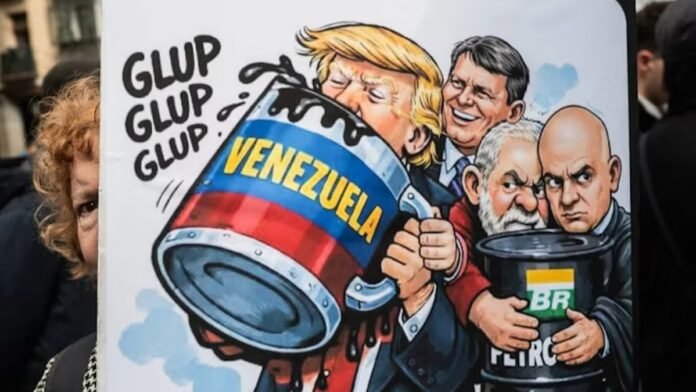
Where is the oil money Trump stole from Venezuela’s people?

0
where-is-the-oil-money-trump-stole-from-venezuela’s-people?
Where is the oil money Trump stole from Venezuela’s people?

At any other time in American history, it would end the career of somebody like Scott Bessent, our limited-intelligence Treasury Secretary.

It came out yesterday when Illinois Congressman Sean Casten was questioning him about the “billions of dollars” that Trump keeps claiming America is “getting” from selling Venezuelan oil.

Bessent agreed with Trump, saying the oil and oil money we’ve seized from that country is “one of the largest assets to ever go on the US balance sheet.” Billions and billions of dollars.

So Casten asked him a simple question: Can you tell us who controls that money and where it is? Can you confirm “whether or not those [funds] are flowing to US persons?”

Bessent’s answer was a shocking single word: “No.” He ain’t talkin…

Did Trump take the oil and the money from the oil? Bessent refuses to say. Trump refuses to say. Nobody, in fact, in the Trump regime will tell us where that money is or who controls it or even who’s making the money accrued on its interest.

Here’s what we do know:

Three days after Trump kidnapped President Maduro and his wife, he went on his Nazi-infested social media site and wrote that Venezuela’s oil revenues would be controlled by him personally “as President of the United States.”

Three days after that, he signed an executive order declaring a “national emergency” involving that oil so no court or creditor could touch the money, screwing the bondholders and oil companies to which Venezuela owed roughly $150 billion.

Then Trump started selling the oil we’d seized from Venezuela. The first load, according to Reuters and Semafor, went to commodity trading companies Vitol and Trafigura for about $500 million, groups that the Washington Post said both carry histories of bribery schemes tied to oil sales.

And that money didn’t go to the Treasury account that was described in Trump’s own executive order. Instead, it went to a bank account in Qatar, right after that country’s leaders gave him a $400 million jet. A senior official explained to Semafor that Qatar was chosen as a “neutral location” where money “can flow freely” without risk of seizure.

Senator Elizabeth Warren was outraged, and told the world what most of us were thinking at the time:

“There is no basis in law for a president to set up an offshore account that he controls so that he can sell assets seized by the American military. That is precisely a move that a corrupt politician would be attracted to.”

In January, Secretary of State Marco Rubio testified to the Senate that $300 million had been sent to Venezuela to cover government payroll needs and another $200 million was “still sitting” in Doha. He referred to the entire operation as “novel” and “a short-term mechanism.”

But a month later, Energy Secretary Chris Wright said on CNBC that the account had been closed and no more money would be flowing to or through Qatar…and nobody has identified where it went, or where it is, since then.

Where’s the money?

House Foreign Affairs Committee ranking member Gregory Meeks called it “an offshore slush fund.” Bessent, questioned by Casten back in February refused to say which accounts the Treasury Department was even using, even though Trump’s executive order had named him/Treasury as the custodian for the funds. Casten and Senator Chris Van Hollen again demanded to know where the money was in March, and were again stonewalled. And then again this week.

Meanwhile, the pile of money is growing, particularly given the oil crisis provoked by Trump’s idiotic war against Iran. Using Bloomberg tanker-tracking data, the Council on Foreign Relations published an April estimate that:

“In the first four months of the United States exerting control over Venezuela’s oil exports, almost one hundred million barrels of oil worth an estimated $8 billion have flowed through a process marked by no transparency and minimal oversight.”

A State Department official testified to Congress back in April that around $3 billion had gone back to Venezuela, but Trump boasted in July that the US had sold more than $13 billion in stolen Venezuelan oil and suggested he could divert those funds to the American military or anywhere else he wanted.

Back in June, Marco Rubio tried to assuage Congress’ concerns by saying that accounting firm KPMG “audits every disbursement.” But when the libertarian Reason Magazine dug into it in August they found that neither the agreements nor the audits have been published.

And the so-called “Transparent Sovereignty” website the Venezuelan government set up to show the world its oil transactions only lists one single sale. Apparently, Trump is not even telling them what he’s done with their oil, or where their money went.

And it’s not just oil. In March, Interior Secretary Doug Burgum flew a planeload of American mining executives to Caracas and came home bragging about having made off with over $100 million in gold. He set up a deal to sell it to reportedly bribe-friendly Trafigura with the proceeds going into, well, nobody knows where.

This is an old script that Trump appears to be following here, one many corrupt petrostates pioneered long ago.

For example, in 2014 Nigeria’s central bank governor, Lamido Sanusi, accidentally revealed to his Senate that roughly $20 billion in oil revenue had never made it into the national treasury.

President Goodluck Jonathan’s response was to fire him and call the money a “phantom.” When PriceWaterhouseCoopers finally audited the books, it found at least $1.48 billion was simply gone.

I’ve done international relief work in some of the most corrupt nations in the world, been offered bribes and threatened for not taking them, and the pattern I’m seeing here is eerily familiar.

They never announce the looting; they just stop letting you know where anything went or who ended up with it. Most people figure that it must be okay since it’s not being reported or discussed, and the conversation dies away.

So, here we are. Trump:

— announced that he’d taken the oil,
— then that he’d taken the money from the sale of the oil and put it in a bank with the country that had given him a free 747 jet,
— hired traders with bribery records,
— refused to publish the contracts,
— put his own hand-picked cabinet members in charge of both the disbursements and oversight, and
— then sent Bessent to Congress to say, “No” when asked if we could please, please know where it’s all gone.

Meanwhile, Republicans in Congress seem to have developed a sudden case of lockjaw.

Congressmen Casten and Joaquin Castro have introduced into the House the Venezuela Oil Proceeds Transparency Act to force the GAO to audit the Qatar account and whatever’s followed it. Republicans refuse to let it out of committee, and Mike Johnson won’t give it a chance on the floor.

Thom Hartmann is a talk show host and author of “The Hidden History of Monopolies: How Big Business Destroyed the American Dream” (2020), “The Hidden History of the Supreme Court and the Betrayal of America” (2019), and more than 25 other books in print.

– Open Dreams

President Trump Weighs Renewed Iran Strikes Ahead of Gulf Leaders Meeting 

0
president-trump-weighs-renewed-iran-strikes-ahead-of-gulf-leaders-meeting 
President Trump Weighs Renewed Iran Strikes Ahead of Gulf Leaders Meeting 


President Donald Trump said he faces a “big decision” over whether to renew military strikes against Iran as the midterm elections approach and he prepares to meet Gulf leaders next week to discuss negotiations with Tehran and possible military action. 

“I have a big decision coming up. Do I want to go in and annihilate them [the Iranian regime] or do I not? It’s a big decision. Anything could happen with me,” President Trump told Axios. 

The president is scheduled to meet leaders from six Gulf countries, including Saudi Arabia, the UAE, Qatar, Bahrain, Kuwait and Oman, on the sidelines of the UN General Assembly in New York. The talks will focus on whether negotiations with Iran should continue or military action should be pursued. 

Speaking about the Gulf countries ahead of the meeting, President Trump said, “I want to find out where they are and how they are doing. We have been very protective of them.” 

Asked about the timing of a decision on Iran, President Trump declined to say whether he would determine the next course of action before or after the midterm elections. 

The president has previously indicated that the military conflict could wind down or enter a different stage before the elections. Vice President JD Vance has also said the conflict with Iran would reach a “much different phase” after the midterms in November. 

In recent weeks, the Trump administration has concentrated on increasing economic pressure on the Iranian regime through sanctions while maintaining other measures against Tehran. 

His administration has also continued a naval blockade on Iranian ports while directing US military efforts toward reopening the Strait of Hormuz and increasing the flow of oil to the global energy market. 


Joy Behar Takes Over ‘The View’ as Whoopi Goldberg Steps Away

0
joy-behar-takes-over-‘the-view’-as-whoopi-goldberg-steps-away
Joy Behar Takes Over ‘The View’ as Whoopi Goldberg Steps Away


Whoopi Goldberg is temporarily stepping away from much of her usual schedule on The View, handing longtime co-host Joy Behar the moderator’s chair while she works on a new Netflix movie.

Goldberg revealed the change during the Sept. 16 episode of The View’s official Behind the Table podcast with executive producer Brian Teta. She is expected to miss the Tuesday, Wednesday and Thursday broadcasts for roughly the next two weeks, while continuing to appear on Mondays. (Apple Podcasts)

During those absences, Behar will take over moderating duties, while several familiar faces from the show’s past return to the Hot Topics table.

Teta said former co-hosts Lisa Ling, Star Jones, Sherri Shepherd and Debbie Matenopoulos will rotate through the program during Goldberg’s reduced schedule. Ling and Jones are expected to make multiple appearances, while Shepherd and Matenopoulos will also return as guest co-hosts. (EW.com)

Goldberg even joked about whether her longtime colleague was ready for the assignment, prompting Teta to assure her that Behar was more than willing to step in.

The temporary shakeup comes just days after The View launched its milestone 30th season on Sept. 8 with Goldberg, Behar, Sunny Hostin, Sara Haines, Alyssa Farah Griffin and Ana Navarro all returning to the table. ABC says the show ended its previous season as the most-watched daytime talk program among total viewers. (ABC)

Goldberg’s absence is not connected to trouble at the show. Instead, the 70-year-old actress is heading back in front of the movie cameras.

She is filming Women Like Us, an upcoming Netflix comedy co-starring Jenifer Lewis, Vanessa Williams and Vivica A. Fox.

Netflix says the movie follows a recently widowed woman who is taken to the Hamptons by her sister and lifelong best friends on what would have been her 30th wedding anniversary. What begins as a getaway turns into a weekend centered on grief, marriage, friendship and starting over later in life. (Netflix)

Goldberg described the project on Behind the Table as a story about women growing older while still finding joy and surrounding themselves with people who understand them.

The film is being directed by Tasha Smith. MACRO Film Studios and Higher Ground are producing, while Michelle Obama is serving as an executive producer through Higher Ground. Netflix has not yet announced a release date. (Netflix)

Viewers can hear Goldberg discuss the movie and her temporary schedule directly on the Sept. 16 episode of The View: Behind the Table. Listen to the official Behind the Table episode

The timing also puts Behar back in the spotlight during an already notable season for the 83-year-old comedian.

Behar was part of The View when it debuted in 1997 and has appeared during 28 of the program’s 30 seasons, missing only the period after her 2013 departure before returning in 2015. During the Season 30 premiere, Goldberg noted that Behar had now hosted more seasons of an American talk show than any other woman. (TV Insider)

Goldberg has also reached a milestone of her own. She joined The View in September 2007 and is now marking her 20th season at the table. (People.com)

For now, the change appears to be exactly what producers have described it as: a short-term reshuffling designed to let Goldberg continue filming while keeping The View running with a mixture of current personalities and recognizable former hosts.

And for longtime fans, Goldberg’s movie shoot comes with an unexpected bonus — a brief reunion with several women who helped shape earlier eras of the show.

The careful calculus behind Vietnam’s BRICS hedge

0
the-careful-calculus-behind-vietnam’s-brics-hedge
The careful calculus behind Vietnam’s BRICS hedge

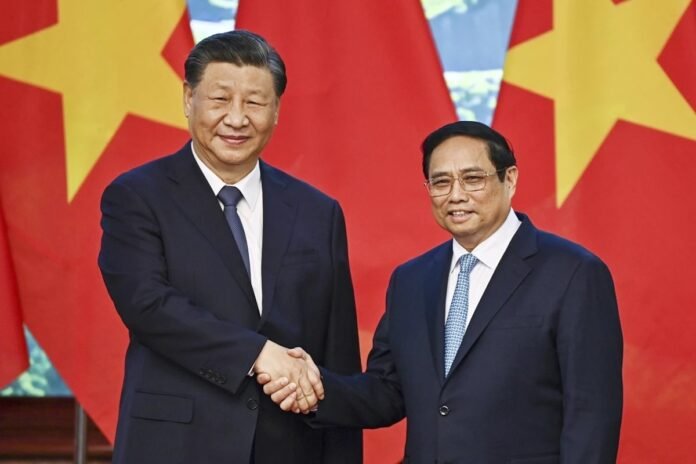
Vietnam’s Prime Minister Le Minh Hung traveled to New Delhi for the 18th BRICS Summit, where he met bilaterally with Narendra Modi and laid out Hanoi’s vision for international cooperation.

The visit drew heavy coverage at home, but it did little to change an underlying reality: BRICS remains a peripheral thread in Vietnam’s broader diversification strategy, not a pivot point.

The BRICS partner-country category was created at the Kazan summit in October 2024. Vietnam was invited to join that tier but took eight months to formally accept, doing so only in June 2025.

Both the delay and the choice itself point to deliberation: Indonesia moved straight to full membership, while Vietnam opted for the outer ring — a track designed for states unwilling to take on the commitments, and the signaling costs, that full membership carries.

BRICS now counts 11 full members and accounts for roughly 41% of global GDP at purchasing power parity. But the bloc’s heft is concentrated almost entirely in one country: China alone generates about half of total BRICS output. Excluding China, the remaining members’ combined share of world goods exports has actually declined since 2011.

The real question is whether BRICS gives Vietnam anything it doesn’t already have. On trade, the answer starts with the Comprehensive and Progressive Agreement for Trans-Pacific Partnership (CPTPP), which binds Vietnam to enforceable rules eliminating tariffs on 95% of goods, along with investment protections and digital trade provisions.

The World Bank estimates the CPTPP alone will lift Vietnam’s GDP by at least 1.1% by 2030 under conservative assumptions — with larger gains still when paired with the Regional Comprehensive Economic Partnership (RCEP), whose simplified rules of origin and trade facilitation cover a market spanning China, Japan, South Korea and Australia.

Add the EU-Vietnam Free Trade Agreement, and Vietnam has already institutionalized trade ties across every major market. BRICS offers no equivalent: no enforceable tariff schedules, no dispute-settlement mechanism, no binding commitments.

Bilaterally, Vietnam has built 15 comprehensive strategic partnerships, including with China, Russia, India, the United States, Japan, South Korea and the EU. Since To Lam became general secretary, that number has roughly doubled, with 12 more countries added across lower partnership tiers.

The relationship with India was upgraded to an Enhanced Comprehensive Strategic Partnership during To Lam’s state visit in May, encompassing defense, rare earths and a $25 billion trade target by 2030. In other words, Vietnam already conducts its most consequential business with BRICS members through these bilateral channels — not through the BRICS forum itself.

The trade figures bear this out. China-Vietnam trade reached about $153 billion in the first half of 2026; Russia-Vietnam trade totaled $4.77 billion in 2025; India-Vietnam trade has crossed $16 billion — all managed through bilateral channels, with the China relationship additionally supported by RCEP and the ASEAN-China Free Trade Agreement.

Exports to India, Russia and South Africa still make up less than 3% of Vietnam’s total trade, and whatever marginal diversification BRICS might offer simply hasn’t materialized in the numbers.

Institutional finance tells a similar story. The BRICS New Development Bank has approved roughly $42.9 billion across 139 projects, and the $100 billion Contingent Reserve Arrangement offers a liquidity backstop — both potentially useful, except that partner status confers access to neither.

Vietnam isn’t an NDB member, and the Asian Development Bank and Asian Infrastructure Investment Bank already perform the same functions, with deeper institutional roots in the country.

What partner status delivers is diplomatic positioning, not economic substance: a seat in the Global South reform conversation outside ASEAN-centered mechanisms, and optionality on the alternative payment and settlement systems BRICS is developing, should the dollar-denominated order come under further strain. India, notably, has been moderating the bloc’s ambitions on that front, framing the agenda as de-risking rather than de-dollarization.

It also functions as a venue for advancing bilateral ties: the Modi-Le Minh Hung meeting on the summit’s sidelines covered defense, energy, critical minerals and the proposed 2+2 mechanism. None of that required a BRICS summit — but the summit made for an efficient occasion to get it done.

That calculus could shift. If the CPTPP loses enforcement credibility, if RCEP’s rollout stalls, or if U.S. tariff actions intensify, alternative frameworks gain relative value. China’s 2027 BRICS chairmanship adds another variable: India’s tenure suited Vietnam well, staying economics-focused and steering clear of anti-Western posturing, but Beijing is likely to push a more assertive agenda on payment systems and institutional expansion — leaving partner countries under pressure to engage.

For now, Vietnam’s engagement with BRICS is supplementary, not a strategic realignment. The serious institutional work still runs through trade agreements with enforceable rules and bilateral partnerships with real operational weight. BRICS simply adds a forum where Vietnam can be present without being bound.

As multilateral forums multiply, one challenge facing middle and smaller states is sorting out which ones carry real weight and which are merely supplementary. Vietnam’s choice of the partner tier — and its use of the summit’s margins to conduct bilateral business — suggests Hanoi has already drawn that distinction with some clarity.

Lam Duc Vu is a Southeast Asia-based risk analyst writing on Indo-Pacific security and regional affairs.

A dolphin named Bubbles makes other fish vomit, then eats it

0
a-dolphin-named-bubbles-makes-other-fish-vomit,-then-eats-it
A dolphin named Bubbles makes other fish vomit, then eats it

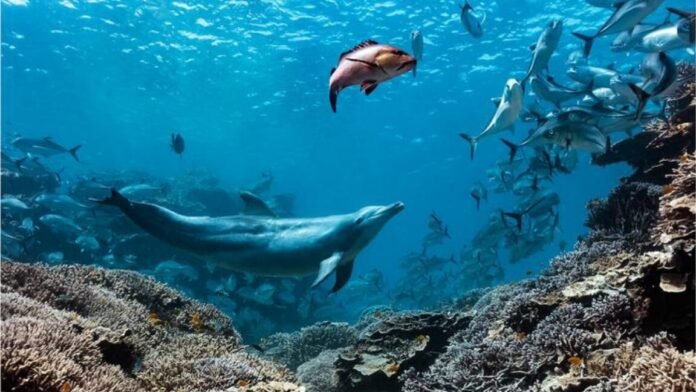
Staff at the Lady Elliott Island Eco Resort off the southern Great Barrier Reef in Australia are well acquainted with the shenanigans of a male bottlenose dolphin they’ve nicknamed Bubbles. Bubbles has been around since at least 2017 and regularly harasses local bigeye trevally, chasing a fish around and stressing it so much that the fish throws up what it has consumed. Bubbles then devours the regurgitated food. The dolphin’s unusual behavior is the focus of a new paper published in the journal Ecology and Evolution.

If you’re thinking that Bubbles sounds like kind of a jerk and Flipper would never behave like this, think again. “This perception of dolphins as the ‘good guys of the sea’ has more to do with anthropomorphism—our tendency to assign human characteristics to them—and perhaps that’s because dolphins appear to be smiling,” said co-author Asia Haines of the University of the Sunshine Coast. “Dolphins are predators and actively hunt their prey, whether it has been stolen from another species or not.”

The technical term is kleptoparasitism, and it usually involves one species taking food away from another, often via aggressive confrontation. Bees and wasps are common culprits, such as the cuckoo wasp, which lays its eggs in the nests of other wasp species. The behavior is often opportunistic across many species, including bears, coyotes, and wolves. Raptors, gulls, terns, and bald eagles have been known to attack other birds and take their food. Skuas and frigatebirds steal from other seabirds; masked shrikes steal food from wheatears; and Eurasian blackbirds have been seen stealing smashed snails from thrushes. Hyenas and jackals steal food all the time.

When it comes to marine mammals, there have been reports of Risso’s dolphins charging at sperm whales, and if the whales vomit, the dolphins then consume the regurgitated food. But it’s exceedingly rare among aquatic species, which is why Bubbles’s kleptoparasitism piqued the interest of Haines and her co-authors. Between June 2021 and October 2025, the authors collected 20 documented foraging sightings of Bubbles, 11 of which involved kleptoparasitic behavior.

A novel foraging strategy

First, Bubbles would scan the environment using echolocation to identify a suitable target fish. The dolphin would then chase after that individual fish, ignoring the rest of the school. Bubbles mirrored the direction movement of his target, often following quite closely. The fish only escaped pursuit when it vomited, likely a stress response; Bubbles would then ingest the regurgitated food as the target fish swam away. Bubbles would repeat this process as much as 10 times in half an hour, and he only seems to do this with bigeye trevally. Nor does Bubbles eat the actual fish.

While dolphins usually forage in groups, and Bubbles has occasionally been spotted with other dolphins, he prefers to forage alone. This seems to be learned behavior, according to Haines; Bubbles developed a novel feeding strategy that requires less energy-intensive effort than chasing after fast-swimming prey. “We observed him repeating this behavior over several years, which suggests he may have learnt to target the fish with the fullest bellies, providing the most rewarding meals,” she said.

How can Bubbles even tell which fish have just eaten a satisfying meal? The authors think it might be related to echolocation during the scanning phase of the dolphin’s feeding strategy. Other species are known to use echolocation to tell the difference between species of fish, since different shapes will return differently structured echoes. The team did sample Bubbles’s vocalizations from the video footage and noted an intense sequence of clicks and low-frequency tones when engaged in kleptoparasitism. But it’s unclear whether he uses them to identify targets or to increase the target’s stress response.

This is also a small sample size (N=1) and a limited dataset, so more evidence is needed, preferably from other dolphins in the region, before one could conclude such behavior is common among the species, or whether Bubbles is just special. Haines and her co-authors believe this kleptoparasitic foraging behavior could be underestimated, given how difficult it is to capture occurrences on video in the wild.

“The use of technologies such as animal-borne video camera tags and unmanned aerial vehicles (drones) are likely to generate new insights into the cryptic behaviors of these elusive marine predators,” they concluded.

DOI: Ecology and Evolution, 2026. 10.1002/ece3.74270  (About DOIs).

0FansLike
0FollowersFollow
0FollowersFollow
0SubscribersSubscribe
- Advertisement -
Google search engine

Recent Posts