17.8 C
London
Thursday, September 17, 2026
Home Blog

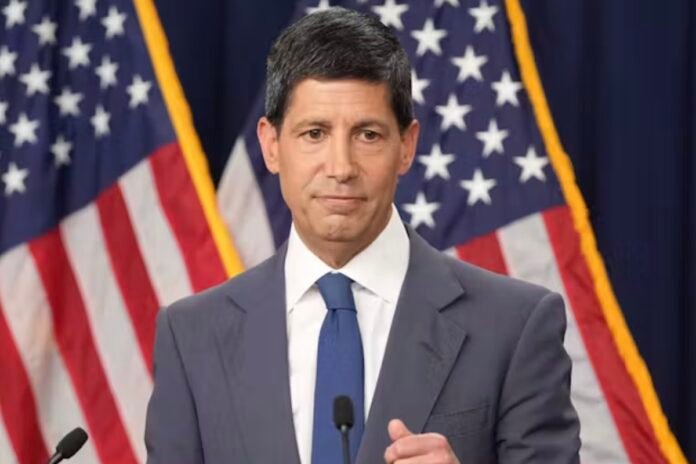
Warsh’s rate hike a crapshoot for an already uneven US economy

0
warsh’s-rate-hike-a-crapshoot-for-an-already-uneven-us-economy
Warsh’s rate hike a crapshoot for an already uneven US economy

From mortgages to auto loans to credit cards, borrowing is set to get even pricier.

But the Federal Reserve’s decision on September 16, 2026, to hike its baseline interest rate also highlighted an increasingly confounding dilemma: It can raise the price of money across the economy, but it can’t determine which sectors are most affected.

That means the rate increase may further slow the weaker parts of the economy, such as housing, while barely affecting the strongest, namely the relentless investment in artificial intelligence.

In its statement summarizing its unanimous vote, the Fed’s policymaking committee said it was raising its benchmark rate by a quarter percentage point so that it now stands at a new target range of 3.75% to 4%. It described inflation as still “elevated” and noted that other economic indicators remain strong, from productivity to investment, to domestic spending.

As a scholar of public finance, I believe the Fed probably had little choice but to raise rates given its commitment to maintain inflation-fighting credibility. Markets had already expected the hike, and if the Fed had failed to deliver, it might have pushed longer-term interest rates even higher amid concerns it was becoming less wedded to that target.

But the Fed’s action also underscores that the US increasingly looks like an economy moving at two very different speeds. Investment in AI – whether through data centers, computing capacity or related infrastructure – has been booming, while it’s crowding out other kinds of investment.

Meanwhile, the housing market is getting crushed by high mortgage rates and diminishing affordability, while consumers are carrying ever more expensive credit card and auto debt.

Many small and traditional businesses are also in a bind as they face substantially higher financing costs than they did several years ago. Those costs reflect the rising yields on longer-term US government debt, which have been going up for months on a mix of factors: Longer-term inflation concerns due to soaring US government debt, geopolitical risks driving up energy costs, and ongoing financing demand for AI.

On September 14, the yield on the 10-year Treasury crossed 5% for the first time since 2023.

An elusive inflation target

When the Fed hikes short-term interest rates, it slows down economic activity by making borrowing more expensive and saving more attractive.

That mechanism works particularly well when consumers are deciding whether to finance a house, purchase a car or take on additional debt. It also discourages businesses from making investments when the expected return is only modestly above their financing costs. As demand slows, businesses have less room to raise prices, easing inflationary pressures.

In this case, the Fed justified its move by citing “elevated” inflation and noting that it “will support a timelier return” to its goal of an annual inflation target of 2%. It also suggested the economy would be able to absorb the tightening and described economic activity as “expanding at a solid pace.”

The decision aligns with Fed Chairman Kevin Warsh’s recent comments that restoring price stability is central to the Fed’s credibility. In a key speech in August, he underscored his commitment to bringing annualized inflation back down to 2%, an objective he called a “firm, fixed target” – a turnaround from his more ambiguous comments in July.

But in recent months, the economic data has shown that the 2% annual target remains elusive. Consumer prices rose 0.4% in August and 3.4% over the past year. Meanwhile, the war with Iran has pushed oil prices back above US$100 a barrel, adding a new source of inflation pressure through gasoline, diesel, transportation and production costs.

At the same time, the labor market isn’t faltering. The economy added 162,000 jobs in August, while the unemployment rate remained at 4.1%. The one notable concern is the persistence of long-term joblessness despite the strong headline numbers. More than one-quarter of unemployed Americans have now been out of work for at least six months.

Taken together, those numbers suggested there was room for the Fed to hike rates, given that the economy isn’t sliding into recession. So investors overwhelmingly expected the Fed’s rate increase.

An uneven economic hit

However, tighter monetary policy carries a risk: It falls disproportionately on sectors that are already struggling and highly sensitive to interest rates, while having less effect on one of the economy’s strongest sources of demand – the booming AI investment cycle.

Housing provides the clearest example. Persistently high mortgage rates are reinforcing the “lock-in” effect for current homeowners. Millions of homeowners financed their houses when mortgage rates were 3% or 4%, so they’re staying put, with little incentive to sell their home and purchase another at much higher rates.

Mortgage rates are mostly influenced by longer-term factors, including Treasury yields, inflation expectations and market expectations about the future path of interest rates. But the Fed’s decision still matters.

Markets increasingly expect today’s hike to be followed by additional increases, signaling that it views inflation as a more persistent risk and putting upward pressure on longer-term interest rates.

That expectation will keep mortgage rates high – probably resulting in fewer home sales, less mobility and continued headwinds for prospective buyers. It’s also likely to make renting relatively more attractive for potential homebuyers who are priced out of buying.

A red and white 'for sale' sign is displayed outside a home in Portland, Ore.
The U.S. housing market continues to languish, with mortgage rates nearing 7%. Photo: AP / Jenny Kane

Higher-for-longer rates also change how consumers save.

When interest rates were near zero, they earned almost nothing on safe assets. Today, Treasury securities, money market funds and other relatively safe assets offer meaningful returns. Higher rates therefore tend to shift incentives throughout the economy away from borrowing and spending and toward saving.

With consumers stretched by inflation and increasingly dipping into their savings, however, this effect may be less pronounced.

The AI sugar high

When it comes to the AI investment boom, it’s a different picture. Warsh noted in August that more than half of recent capital-spending growth could be attributed to the AI buildout.

The companies that are spending billions of dollars on computing infrastructure are doing so because they expect potentially enormous returns from AI. If those expected returns on investment are exceptionally high, a modest increase in borrowing costs may do little to alter their investment decisions. That stands in sharp contrast to a prospective homebuyer getting sticker shock from mortgage rates nearing 7%.

The federal government, for its part, faces a slower adjustment. A Fed rate hike doesn’t immediately increase the interest rate on all outstanding federal debt. Most Treasury notes and bonds carry fixed rates until they mature.

But as the Treasury issues new debt and refinances maturing securities, today’s higher rates gradually become tomorrow’s higher federal interest expense. That rise in interest costs is a main reason some economists are sounding alarms about the national debt, which recently topped $40 trillion.

In effect, the US economy is facing a reality in which both short- and long-term rates stay higher for longer. The federal government, households and businesses are all adjusting to a borrowing environment that looks substantially different from the one that prevailed for much of the previous decade.

John W. Diamond is director of the Center for Public Finance at the Baker Institute, Rice University

This article is republished from The Conversation under a Creative Commons license. Read the original article.


Trump threatens to impose ‘serious tariffs’ on Europe if Canada joins EU as associate member

0
trump-threatens-to-impose-‘serious-tariffs’-on-europe-if-canada-joins-eu-as-associate-member
Trump threatens to impose ‘serious tariffs’ on Europe if Canada joins EU as associate member


Trump threatens to impose ‘serious tariffs’ on Europe if Canada joins EU as associate member

President Donald Trump pulled out one of his favorite words as he threatened retaliation if the European Union were to admit Canada as an associate member.

Trump told reporters Wednesday that he might respond with “serious tariffs” if Canada were to become integrated with the 27-member EU to a degree that he perceived would be hostile to the U.S. amid a trade war with its northern neighbor.

He called it “laughable” that Canada would become an associate member, as European Commission President Ursula von der Leyen proposed earlier in the day during her State of the Union speech.

“Canada’s been a terrible trade partner,” Trump told reporters at the airport in Charlotte, North Carolina, when asked about the proposal. “If I think it’s at all a hostile act, I will put very serious tariffs or stop trading with Europe on many things,” he added.

Trump left open the possibility that he would accept the arrangement if he believed it was made with “a good intention,” but warned that the U.S. could otherwise impose “very heavy tariffs on Europe.”

Von der Leyen first floated the idea of making Canada the first associate member of the EU with Canadian Prime Minister Mark Carney in attendance.

“I would like to work with you on opening the door for Canada to be the first associate member of the EU,” von der Leyen said. She also announced a broader “Alliance for the Future” built on the already existing EU-Canada trade deal.

The proposal caught European capitals off guard, and Canadian leaders appear to be distancing themselves from the idea. It also remains unclear what associate membership would entail, considering no such status currently exists under EU law.

Canada’s incoming ambassador to the EU, Jonathan Wilkinson, quickly downplayed the prospect. “We’re not there,” he told reporters in Strasbourg when asked about it. “What we’re focused on is actually driving results.”

Trump’s Wednesday comments come as Canada seeks to reduce its economic dependence on the U.S. amid the escalating trade war between the two countries. Carney has called for a “unique alliance” with the EU but has stopped short of fully endorsing an associate membership.

Carney is set to address the European Parliament on Thursday.

Via Politico

Researchers swap in human brain cells for a mouse’s cortex

0
researchers-swap-in-human-brain-cells-for-a-mouse’s-cortex
Researchers swap in human brain cells for a mouse’s cortex

In recent years, there has been a lot of excitement about the potential for studying human diseases in what are called “organoids.” These small patches of tissue, formed using stem cells, appear to produce many of the same cell types and at least some of the structures normally formed in actual organs, and thus can provide a better model for diseases that rely on the sometimes complex interactions among multiple specialized cell types that are a feature of the human body.

But even the most sophisticated organoids lack a lot of the features of a real human body. This is especially true for brain organoids, which don’t form any of the connections with specialized brain structures needed to behave “normally.” On Wednesday, a research group at Stanford University described a possible way to study brain organoids in a somewhat more natural context: They genetically wiped out a large portion of the mouse brain and replaced it with human brain organoid cells.

The replacements

Organoids, because they adopt a three-dimensional tissue structure and consist of various specialized cells, provide a much better model for an intact tissue than simply having a bunch of disassociated cells lying flat on a culture dish. But they still have a lot of limitations—they’re not hooked up to a circulatory system that allows the liver to process chemicals the organoid produces and don’t have immune cells moving through them, to give just a couple of examples.

This is especially limiting for studies of the brain, where any specialized structures are surrounded by structures that may exchange information with them, and often have long-range connections. An organoid is better than nothing, but it may not be a lot better if you’re interested in a disease that impacts communication among multiple brain regions.

One alternative has been to implant human neural stem cells into the brains of another species, where they’ll generally integrate into the nervous system and actively signal to their neighbors. But, given that those human cells are surrounded by the normally functioning neurons of their hosts, it’s not clear how much you can learn from this.

The obvious solution there is to get rid of the host cells and try to have the human cells take over their functions. But that option runs into all sorts of problems, largely related to the fact that the organism you’re implanting them into (generally a mouse) actually needs its brain cells. Human neurons mature much more slowly than those of mice and may not form the connections that are needed quickly enough for an animal that only requires 21 days of gestation. In the absence of normal mouse tissue, nothing would provide the human cells with the signals that help organize them into functional units.

The Stanford team decided to test a compromise and delete a portion of the mouse’s brain and put human brain organoids in its place. But they took a bold step and chose the cortex as the portion they would delete. The cortex handles many of the complex features of the nervous system, such as decision-making and memory, and its disruption would be expected to have dramatic consequences. Still, the researchers found a gene that is active in almost all cortical cells and used it to drive the deletion of a key gene that’s needed to separate chromosomes during cell division.

Amazingly, despite killing off most of the cells that should go on to form the mature cortex and cutting the brain’s volume in half, it was possible for the mice to survive this. The researchers had to eliminate most of the other pups to ensure the cortex-free mice got enough nursing. They left them with their mothers to nurse longer and then provided them with very high-calorie food. But these steps allowed nearly full survival of mice without much in the way of a cortex. (The mice were also immunocompromised to avoid an immune reaction to human cells, but this is less of an issue in a sterile mouse care facility.)

With that in place, the researchers then started implanting human cortex organoids into the area where the mouse’s cortex was no longer developing.

Partial recovery

A bit over 85 percent of the animals that were implanted with a human organoid successfully incorporated the graft tissues. Those went on to contribute 92 percent of the cells found in the cortex of these animals. So, it wasn’t a complete replacement, but the human cells largely took over the space normally occupied by the cortex. Once there, they formed all the major types of neurons that are known to be present in the cortex. So, all that is good.

The human cells also formed some long-distance connections, as evidenced by the fact that processes from human cells were detected as far away as the spinal cord. And the neurons did engage in synchronized activity spikes, suggesting a degree of coordination.

The less good is a general lack of structure. There is some indication of local organization, in that specific cell types that form within distinct layers of a normal cortex tended to be near each other in the cortex of these animals. But there was no sign of those distinct layers being formed, suggesting that larger-scale organization is lacking.

What does this mean for the mice? Overall, it appears that having a disorganized human replacement cortex was better than having no cortex at all, but not as good as having a normally structured one.

The researchers set them loose in an area with video monitoring and then used a machine-learning classifier to group similar behavior patterns. Normal mice and the mice that had their cortex eliminated showed distinct patterns of behavior. The mice with a humanized cortex formed a third cluster, distinct from the other two. Similar things were true with body weight: mice that lacked a cortex were much lighter than normal mice, but the ones with the humanized cortex were intermediate between the two.

Tested for memory in a simple maze, the mice without a cortex performed at a level consistent with random chance. Mice with the humanized cortex did better than chance, but not as well as normal mice. But on a test of the ability to form associative memories, the mice with a humanized cortex did no better than the mice with no cortex at all. On tests of fine motor coordination, the mice with the human implants were again somewhere between the normal and cortex-free mice.

What’s needed

The research team hasn’t described the sort of careful study of anatomy and development needed to draw any conclusions about what structures may be formed by the human cells once they’re within the mice, much less tried to quantify any variation among individuals that might give us some hints of what sort of capacity these animals might be expected to have. As a result, it’s impossible to associate the mild improvements that come from having the human cells present with any specific function they’re providing.

As a result, this isn’t yet the sort of model system that can help us understand the sorts of complex neural diseases that we might ultimately be interested in using this for. They do show that the human cells respond differently to brief periods of hypoxia, consistent with what we see in normal human cells. But that’s quite a bit different from showing that this is a great model for something like ALS.

There remains a chance that it ultimately won’t be—that the sorts of disorganized connections that do get formed in these brains will never make them a good model for human neural processing. But without further characterization of what the cells are doing in these humanized cortexes, it’s going to be difficult to know.

Nature, 2026. DOI: 10.1038/s41586-026-11032-2 (About DOIs).

Resistance airbase hit heralds a wider drone war in Myanmar

0
resistance-airbase-hit-heralds-a-wider-drone-war-in-myanmar
Resistance airbase hit heralds a wider drone war in Myanmar

It was an operation far too long in the making, but even if late in the fight, Myanmar’s armed opposition finally achieved the coup their supporters had almost despaired of seeing: a concerted drone attack on one of a network of air bases that for nearly six years have served as launchpads for thousands of lethal strikes on defenseless civilian communities and struggling resistance fighters across the country.  

Providing a badly needed fillip to sagging opposition morale, both at home and abroad, the September 10 attack on Tada-U airbase, co-located with Mandalay International Airport 35 kilometers south of Myanmar’s second largest city, was not just payback that deflated the near-total impunity enjoyed by the Myanmar Air Force (MAF).

It was also a first with potentially significant implications for the future of the conflict that relied crucially on fiber-optic first-person view (FPV) technology – guidance by means of a hair-thin wire spooling out from a drone that enables operators to evade electronic jamming measures around key installations.

The pressure on resistance leadership from grassroots People’s Defense Force (PDF) units across central Myanmar to provide them with the means to replicate the FPV successes demonstrated both at Tadu-U and in recent battles along the Ayeyarwady River waged by their allies of the Kachin Independence Army (KIA) will now inevitably rise sharply. So too will the potential for increased financial donations to opposition coffers from re-energized diaspora and domestic supporters.

But while the technical know-how is now demonstrably in resistance hands, the details of the airbase attack highlighted operational and political questions about how far and how fast fiber-optic drones can impact Myanmar’s broader battlespace over the coming months and into 2027.

Involving six small quad-copter drones flown from a village to the southwest, the attack unfolded in the late morning and appears to have primarily targeted hangars in the base area at the southern end of the runway, well over two kilometers from the civilian terminal building of the international airport.

Video footage from cameras mounted on the drones, released the following day by the Myingyan District Drone Strike (MDSS) under the Myingyan District Military Command of the opposition National Unity Government (NUG), showed drones descending toward a row of hangars housing Yakovlev Yak-130 jet-trainer and light attack aircraft.

Whether by happenstance or good planning, the target was well chosen. Before the attack, the MAF is understood to have operated 24 of the heavily armed Russian-built jets, which, since the induction of an initial tranche of six in 2017, have emerged as its most lethally effective ground-attack platform.

The extent of the damage to the jets was impossible to discern from the footage, which blacked out as the drones struck briefly visible protective netting draped across the hangar openings – a defensive measure indicating that the military already took the resistance’s drone threat seriously. However, an image later posted on social media showed one of the drones flown in the attack lying unexploded on a nearby taxiway.

In addition to a fiber-optic spool, the quadcopter carried a relatively small explosive device, which one Myanmar military analyst later assessed was comparable to a 60mm mortar bomb, a munition with a lethal radius of around 15 meters. The proximity of the netting where the explosion occurred to the aircraft’s nose sections means the drones almost certainly damaged one or more jets. But the available footage does not indicate that the aircraft were destroyed.

A statement later released by the NUG noted that drones accurately targeted areas where the Yak-130 fighters were parked, but notably did not claim that they had been destroyed. And on the regime side of the reporting ledger, the state-run Global New Light of Myanmar daily claimed that the drones had been “successfully intercepted …using counter-drone measures.”

Beyond the hangars, the raid was harder-hitting. Additional footage released by the MDDS showed one drone descending directly towards ground personnel running for cover across a nearby open area where a vehicle was parked.

A NUG statement later claimed that five MAF personnel had been killed in the operation, including Colonel Myo Hlaing Oo of Air Defense Unit No. 7. It also added that three opposition fighters had also been killed – in a response by security forces that appeared to have unfolded with notable alacrity and precision.  

The attack was not the first operation in the current civil war using FPV drones to target a MAF airbase. On December 4, 2025, PDF fighters used at least two unmanned combat air systems (UCAS) to attack Toungoo Airbase in eastern Myanmar, apparently targeting the air traffic control tower and an adjacent electronic jammer installation. No MAF aircraft were seen in footage later released by the PDF.

The Tada-U operation was, however, the first evidently well-planned drone attack deploying multiple fiber-optic FPVs to effect and, to this extent, crossed a watershed in opposition capability that, despite the decisive impact of the technology on battlefields in Ukraine and south Lebanon in 2025, has been slow to reach Myanmar.

The challenge now facing resistance forces will be to translate one tactical success into strategic impact capable of disrupting not merely MAF air operations but also critical infrastructure including fuel and ammunition dumps and supply lines countrywide – not all of which can be covered by netting.

Achieving that level of strategic saturation will hinge crucially on the extent to which the opposition alliance, the Steering Council for the Emergence of a Federal Democratic Union (SCEF) – formed earlier this year to include the NUG and major Kachin, Karen and Chin ethnic factions – can prioritize both the sourcing and assembly at scale of component parts required for one or two standardized FPV models and train the personnel needed to pilot them.

Given the logistical challenges of cross-border supply chains and the SCEF’s still-untested capacity to translate press statements into real-world operations, this will not be simple. It implies a level of joint planning and coordination that in central Myanmar is still embryonic at best. The good news for the federal opposition is that a template for success is evidently already in operation.

In recent weeks, the KIA has relied heavily on FPV drones in a largely successful effort to block military flotillas sailing over 330 kilometers up the Ayeyarwady from Mandalay to relieve the embattled city of Bhamo near the Chinese border.

In decisive battles from late August into September, KIA drones repeatedly sank and disabled supply barges and the gunboats escorting them through narrow defiles between the river port of Shwegu and Bhamo.

The KIA’s rainy season Ayeyarwady campaign clearly did not unfold reactively. There can be no doubt it hinged crucially on strategic planning aimed at severing the military regime’s riverine lifeline to Bhamo and the north of Kachin State beyond and developing a drone capability commensurate with the mission that notably was not evident last year. That, in turn, implied industrial-scale production and operational distribution that achieved striking results.

Whether part of that KIA distribution reached south to PDFs on the flatlands around Tada-U, an important launchpad for air raids across Kachin State, remains unclear. But against the backdrop of evolving battlefield connectivity across resistance ranks, it is far from impossible.  

IOM says 2,776 Yemenis crossed into Djibouti amid west coast fighting

0
iom-says-2,776-yemenis-crossed-into-djibouti-amid-west-coast-fighting
IOM says 2,776 Yemenis crossed into Djibouti amid west coast fighting

More than 2,700 Yemenis have crossed into Djibouti since the beginning of September amid escalating fighting along Yemen’s western coast, while more than 104,000 people have been displaced within Yemen during the same period, the International Organisation for Migration (IOM) said on Wednesday.

According to the UN agency’s latest figures, 2,776 people have crossed from Yemen to Djibouti as the humanitarian impact of the renewed fighting continues to grow.

The IOM said it was providing emergency assistance to the new arrivals in Djibouti, including 1,500 hot meals twice a day.

Fighting between forces aligned with Yemen’s internationally recognized government and the Houthi movement has intensified in recent months following a prolonged period of comparatively lower levels of hostilities.

Within Yemen, the IOM said 104,796 people, representing 17,461 families, had been internally displaced since the beginning of September as fighting continued along the country’s West Coast.

READ: 117 journalists displaced from Yemen’s western coast amid escalation: Report

“Yemen is a country torn apart by war, displacement, poverty and climate impacts,” IOM Director General Amy Pope said. “It is unacceptable to ignore the suffering of civilians as needs continue to rise.”

Humanitarian workers cited by the organisation said displacement was occurring so rapidly that aid agencies were struggling to track movements in real time. Some families were reportedly fleeing at night with few belongings because of the fighting.

Taiz governorate has recorded the largest number of newly displaced people, with more than 63,000, according to the IOM figures.

Around 26,400 people have been displaced in neighbouring Lahj governorate, while more than 3,500 have been recorded in Aden.

The IOM said displacement was also increasing in Abyan, Hadhramaut and Marib governorates as the effects of the fighting spread to additional parts of the country.

READ: Saudi Arabia warns of Houthi threats to Red Sea navigation

US Restricts Visas for Abbas, Palestinian Officials Ahead of UN General Assembly 

0
us-restricts-visas-for-abbas,-palestinian-officials-ahead-of-un-general-assembly 
US Restricts Visas for Abbas, Palestinian Officials Ahead of UN General Assembly 


The US State Department has restricted visas for Palestinian officials ahead of the UN General Assembly in New York, including Palestinian Authority (PA) President Mahmoud Abbas, saying Palestinian leaders have failed to meet commitments to the United States and are taking steps that undermine prospects for peace. 

Abbas, who was scheduled to speak on September 24, was not named in the State Department statement but is included in the restrictions. 

The move follows a State Department determination that the Palestinian Authority and Palestine Liberation Organization (PLO) had again failed to comply with commitments under the PLO Commitments Compliance Act of 1989 and the Middle East Peace Commitments Act of 2002. 

Washington cited Palestinian actions at international organizations, including efforts involving the International Criminal Court and International Court of Justice, which it said sought to “internationalize the Israeli-Palestinian Conflict.” It also accused Palestinian officials of trying to bypass negotiations by seeking unilateral recognition. 

Other concerns cited by the State Department included continued payments of stipends to terrorists and the glorification of terrorism and terrorists in public statements and school textbooks. 

“As a consequence of their failure to reform, contrary to their commitments to the United States, and their ongoing activities that undermine the prospects for peace, the United States will extend sanctions that deny visas to PLO members and PA officials in accordance with section 604(a)(1) of the MEPCA,” the statement said. 

An existing waiver will remain in place for personnel assigned to the PLO Observer Mission to the United Nations. 

The State Department said the restrictions were intended to impose consequences for Palestinian actions rather than prevent the UN mission from operating. 

“It is in our national interest to impose consequences and hold the PLO and PA accountable for glorifying terrorism,” it said. 

Former Football Star Reveals Stage 4 Cancer Diagnosis

0
former-football-star-reveals-stage-4-cancer-diagnosis
Former Football Star Reveals Stage 4 Cancer Diagnosis


Former South Carolina quarterback Stephen Garcia is opening up about the warning signs that led doctors to discover stage 4 colorectal cancer at just 38 years old.

Garcia revealed that what initially seemed like relatively minor stomach and bathroom problems eventually became impossible to ignore — especially to his wife, Masha.

“I had some sporadic stomach pain,” Garcia told Craig Melvin during a Sept. 14 appearance on Today. “I was going to the bathroom often. Just wasn’t ever fully emptied.”

Watch Stephen Garcia discuss his cancer diagnosis on Today

Garcia said the frequent trips to the bathroom became noticeable enough that his wife began questioning what was going on and pushed him to get medical attention.

That decision eventually led to a devastating diagnosis: stage 4 colorectal cancer.

“It was definitely a shock,” Garcia said. But rather than dwell on the diagnosis, the former Gamecocks quarterback said his immediate reaction was to focus on a treatment plan.

Garcia’s family says the diagnosis came after several days in the emergency room and a battery of testing, including CT scans and MRIs.

A GoFundMe launched on his behalf in May says doctors started Garcia on chemotherapy and planned consultations with liver and colon specialists as part of his treatment. The fundraiser has since brought in roughly $249,000 from about 1,800 donations.

Read the Garcia family’s fundraiser and treatment updates

Garcia has also been sharing his cancer journey publicly on social media, giving longtime football fans a look at the difficult months since his diagnosis.

His wife said that openness has been especially meaningful because many men are reluctant to discuss serious health problems.

“He’s brave being this open with his diagnosis,” Masha said during the Today interview.

Garcia credited her persistence with helping him take the symptoms seriously, saying she “probably did save my life.”

The former quarterback’s symptoms also line up with several warning signs identified by the Centers for Disease Control and Prevention.

The CDC says colorectal cancer can cause changes in bowel habits, ongoing abdominal pain, blood in the stool, unexplained weight loss and the feeling that the bowel does not completely empty. The agency also cautions that colorectal cancer can sometimes develop without noticeable symptoms.

Garcia’s age makes his story particularly striking.

Routine colorectal-cancer screening for adults at average risk generally begins at age 45, according to current federal recommendations. People with symptoms, however, should speak with a doctor regardless of age because testing used to investigate symptoms is different from routine screening.

Garcia was a familiar face to college football fans during his years at South Carolina, where he played quarterback for the Gamecocks from 2008 through 2011.

Now, more than a decade after leaving the field, he is facing a battle far different from anything he encountered in the SEC.

Garcia said the response from fans since he publicly revealed his diagnosis has been overwhelming.

“The fact that fans still care means a lot,” he said. “It means the world to me.”

His family has also used his diagnosis to encourage others not to dismiss persistent symptoms.

The fundraiser warns that colorectal cancer can be difficult to detect early and urges people to pay attention to their health and discuss appropriate testing with their doctors.

For Garcia, the message is especially personal.

What began with stomach discomfort and repeated trips to the bathroom ultimately uncovered stage 4 cancer — and he is now hoping that speaking publicly about those warning signs could push someone else to seek help sooner.

California may gut state net neutrality law to comply with Trump admin demand

0
california-may-gut-state-net-neutrality-law-to-comply-with-trump-admin-demand
California may gut state net neutrality law to comply with Trump admin demand

California is on the verge of accepting $1.86 billion in federal broadband grant funds, despite the Trump administration telling states they cannot enforce net neutrality rules on any Internet service provider that gets a piece of the grant money.

When the Trump administration overhauled the $42 billion Broadband Equity, Access, and Deployment (BEAD) program last year, it ruled that states must agree not to enforce any rate regulation or net neutrality rule on ISPs that receive funding. This is particularly problematic for California, which previously won a yearslong court battle to defend its state net neutrality law.

Similar to federal net neutrality rules repealed during the first Trump administration, California’s law prohibits ISPs from blocking or throttling lawful traffic and says ISPs may not require fees from websites or online services to deliver or prioritize their traffic to Internet users. While the first Trump administration lost its attempt to preempt state net neutrality laws, the second Trump administration is trying to achieve a similar result by making federal broadband money conditional on whether states agree not to enforce net neutrality.

Trump’s National Telecommunications and Information Administration (NTIA) says each state participating in BEAD must exempt ISPs from net neutrality rules and price regulations in all parts of the state, not just in areas where the ISP is given funds to deploy broadband service. The exemption from state laws and rules would apply for up to 14 years.

Under BEAD, each US state and territory receives an allotment that it can distribute to ISPs in exchange for deploying broadband to unserved and underserved areas. California and Illinois are the only states that haven’t finalized their funding, according to the BEAD progress dashboard maintained by the National Telecommunications and Information Administration (NTIA). Tomorrow, the California Public Utilities Commission (CPUC) is scheduled to vote on a resolution to ratify the state’s final BEAD plan.

Vote is “beginning of the end”

California could try to continue enforcing its net neutrality law even while accepting the federal funding, a strategy that would involve another long court battle over its right to regulate broadband providers. This would be difficult, as the Trump administration is requiring states that accept grant funding to commit that they won’t enforce net neutrality rules.

A CPUC spokesperson told Ars that tomorrow’s vote is a “procedural requirement” to ratify the state proposal submitted to the federal government in December 2025. But nearly 30 advocacy groups that focus on access to technology are treating the vote as a significant milestone and urged state leaders to defend California’s net neutrality law in a letter yesterday.

One of the letter signers is Paul Goodman, legal counsel for the Center for Accessible Technology. He told Ars in a phone interview that tomorrow’s CPUC vote is much more than a procedural step.

“It’s the beginning of the end,” Goodman said. Winning a court battle would become much more difficult after the state accepts the money, he said. Goodman said the CPUC should delay the vote and that California should file a lawsuit arguing that the NTIA-imposed condition is illegal.

In addition to net neutrality, Goodman said California may be giving up other regulatory authority over companies, like AT&T and Verizon, because the NTIA requirement forbids rate regulation and “utility-style rules on broadband Internet service” in general.

US forbids enforcement anywhere in the state

The advocacy groups’ letter was sent to Governor Gavin Newsom, Attorney General Rob Bonta, CPUC President John Reynolds, and the other CPUC commissioners.

“While our organizations recognize the significance of BEAD funding—and the role it will play in advancing critical broadband infrastructure buildout across the State—we strongly stand against allowing for the presumption of preemption of the State’s net neutrality laws in order to accept BEAD funds,” the groups said.

The NTIA’s BEAD rules say each state:

shall commit that it will not enforce any law, regulation, order, contracting requirement, or other enforceable obligation that directly or indirectly regulates the rates, terms, and conditions of broadband Internet service… or imposes net neutrality rules, open access, or other utility-style rules on broadband Internet service, against a Subgrantee or its affiliates anywhere it provides service within the State (i.e., both BEAD and non-BEAD locations), while that Subgrantee has any subgrant that is still within its period of performance, extended period of performance, or federal interest period.

The NTIA said the exemption from state laws must extend statewide, because “applying net neutrality and rate regulation at non-BEAD locations could raise compliance costs and threaten the overall financial viability of the Subgrantee, increasing the risk of default for the Subgrantee at BEAD locations and jeopardizing the success of the entire BEAD program.”

Goodman said the exemption from state laws would last for up to 14 years. This is because ISPs receiving grants would have four years to deploy the required broadband networks, and the extended period of performance lasts another 10 years.

Groups: Accepting US terms would set dangerous precedent

The letter to state leaders said the California decision to accept BEAD money under these conditions “would set a dangerous precedent for the federal government to use federal funding as a cudgel that forces states in line with its agenda… If California were to allow this funding to be used as leverage, there is no telling what other resources the administration would confidently seek to exploit.”

The groups urged California leaders to “defend the hard-won protections that have brought us this far” and pledged “to support California leadership in defending our state’s values and the progress it has made on closing the digital divide.”

Goodman told Ars that upon receiving BEAD money, AT&T could tell California that it can’t regulate the price of AT&T’s copper landline phone service or require AT&T to serve everybody who wants phone service, Goodman said. AT&T is already trying to get out of state obligations related to its basic phone service in California, as we’ve reported.

Goodman said the BEAD money could also jeopardize a merger condition that requires Verizon to offer $20-per-month broadband service to people with low incomes in California. Goodman said the savings for people with low incomes from those required Verizon plans would dwarf the money California is due to receive for BEAD.

Of the $1.86 billion in BEAD money for the state, California is slated to spend about $1.4 billion to deploy broadband to 270,571 locations.

Law professor: US is overriding Congress’ intent

The NTIA-mandated exemption to state laws throughout the country would also apply to any other ISP receiving BEAD funding, such as SpaceX’s Starlink satellite division.

“Roughly 69 percent of California’s BEAD funding flows to five large, national providers: Comcast ($400 million), AT&T ($331 million), Verizon/Frontier ($173 million), Amazon’s Kuiper satellite service ($55 million), and SpaceX’s Starlink ($22 million),” Stanford Law professor Barbara van Schewick wrote today.

According to van Schewick, another casualty of the BEAD restriction would be a 2019 California law that prohibits mobile providers from throttling first responders during emergencies. The law was passed after Verizon throttled an “unlimited” data plan used by Santa Clara County firefighters during a wildfire.

“Those protections exist for a reason: left to their own devices, Internet providers have put profits over public safety before. California is now being asked to sign away those protections for fourteen years,” she wrote.

California would have a good case because the federal BEAD law says funded providers must follow state and local laws, van Schewick wrote. “A federal agency can’t use fine print in a grant to override what Congress wrote into the statute,” she wrote, adding that Newsom “should refuse to sign away California’s net neutrality, affordability, and public-safety protections and go to court to get the money the way Congress intended: with every state protection intact.”

State agency: Vote is “procedural”

In a statement to Ars, a CPUC spokesperson said the resolution to be voted on tomorrow is a “procedural requirement to ratify the Dec. 19, 2025 CPUC draft California Final Proposal submitted to the Federal Government.” The NTIA approved the plan on July 17, 2026, after multiple rounds of revisions, the statement said.

“The Resolution adopts the now-approved California Final Proposal only. It does not address subgrantee agreements, or the conditions the NTIA requires be included in subgrantee agreements,” the CPUC told Ars.

We contacted the offices of the governor and attorney general yesterday afternoon and will update this article if we get any response. We also contacted Democratic State Senator Scott Wiener, who authored the net neutrality bill that was enacted by California in 2018, and haven’t heard back.

The BEAD law enacted by Congress and President Biden in 2021 requires ISPs that receive grants to offer “low-cost” plans to people with low incomes, but the Trump administration told states that they cannot set the rates of those plans. That means ISPs themselves get to pick the price of the mandated low-cost broadband offerings.

Last year, California Assemblymember Tasha Boerner proposed a bill requiring ISPs to offer $15 broadband plans to people with low incomes. But she dropped the proposal after Trump administration officials warned that setting rates would jeopardize the state’s access to broadband grants.

Suing US would be “enormously” difficult

Goodman said that once California accepts the money, the state attorney general would only be able to challenge the Trump administration’s requirements in the US Court of Appeals for the District of Columbia Circuit. The DC Circuit court “can really only review that decision for basically fraud or corruption, which is a really high bar to prove,” he said.

Goodman said that if California takes legal action before finalizing the agreement with the Trump administration, it could sue the US in the Ninth Circuit Court of Appeals.

“Right now, the California AG could sue saying, ‘Hey, these general terms… are illegal. You can’t require us to do that.’ [The state] could sue here in California and the Ninth Circuit has a sort of favorable view of that claim, so [the state would have a] pretty good view of success,” Goodman said.

In the DC Circuit, “it’s a much, much harder push,” he said. “Not impossible, but enormously more difficult.” He said the CPUC has a deadline at the end of this month to sign the agreement with the NTIA, but the state “can get a 30-day extension and then challenge the case in court.”

On the other side of the country, New York may have to stop enforcing an affordable broadband law that requires ISPs to offer $15- or $20-per-month service to people with low incomes. New York defended the law in court against broadband industry lobby groups and won that battle less than two years ago but has agreed to take $664.6 million of BEAD money from the Trump administration.

New York Governor Kathy Hochul said in an April 2026 press release that closing the digital divide requires bringing broadband to every household in the state and ensuring “that it remains affordable when it gets there. New York is showing the rest of the nation that both are possible through its landmark Affordable Broadband Act and commitment to reaching the final 1 percent of unserved or underserved households.”

But with New York having accepted the BEAD funding, it may be unable to enforce the Affordable Broadband Act on ISPs that receive grants. We contacted the offices of Hochul and New York Attorney General Letitia James yesterday and will update this article if we get a response.

US strips millions in military aid from Europe and Mideast to back Trump-aligned nations in Americas

0
us-strips-millions-in-military-aid-from-europe-and-mideast-to-back-trump-aligned-nations-in-americas
US strips millions in military aid from Europe and Mideast to back Trump-aligned nations in Americas


The Trump administration is stripping tens of millions of dollars in U.S. military assistance from countries in Europe and the Middle East to support conservative-leaning governments in Central and South America.

The State Department on Tuesday notified Congress that it will reprogram $52 million in foreign military financing from Slovakia, North Macedonia, Tunisia and Iraq to Panama, Peru, Ecuador and Colombia.

Secretary of State Marco Rubio visited Colombia, Ecuador and Peru last week and pledged to them additional support as the Trump administration has prioritized the Western Hemisphere in its foreign policy with an emphasis on combating drug trafficking and illegal immigration.

It is just the latest in a series of moves that have reduced either money or troop deployments to Europe in response to President Donald Trump’s complaints about NATO allies not spending enough on their defense budgets and other matters. Both North Macedonia and Slovakia are NATO members.

But it also comes as the administration has put particular attention on the Western Hemisphere, aligning deeply with right-wing governments as Trump celebrates a renewal of the 19th century Monroe Doctrine establishing Washington’s dominance in the Americas.

Foreign military financing provides recipient countries with U.S. taxpayer dollars to allow them to purchase military equipment from American defense contractors.

The State Department said the funds would be used to “combat narcoterrorism in our backyard and help continue to secure the Panama Canal,” adding that the Western Hemisphere has been historically neglected in U.S. military assistance.

“These funds will prevent adversaries from establishing strategic footholds in our hemisphere,” the department said in a veiled jab at China, which has increasingly sought to boost its presence in Latin America.

The shift of money does not eliminate foreign military financing for Tunisia, Iraq, North Macedonia or Slovakia, although the exact amount remaining for those countries was not immediately clear.

The State Department said, though, that the current distribution of financing does “not align with the administration’s prioritization of” the Western Hemisphere.

Source: AP

Should China really be teaching Indonesia how to negotiate?

0
should-china-really-be-teaching-indonesia-how-to-negotiate?
Should China really be teaching Indonesia how to negotiate?

Last week, Indonesia’s Coordinating Ministry for Economic Affairs sent 32 officials to China for a 14-day training course on how to negotiate international economic deals.

The Academy for International Business Officials, a school under China’s Ministry of Commerce, is running the program and Beijing is paying for it as a grant. Officials studied everything from tariff cuts and free trade agreement talks to dispute resolution and e-commerce rules, and took part in mock diplomatic negotiations.

Ministry secretary Susiwijono Moegiarso explained the rationale: Indonesia needs sharper negotiators to attract quality investment, open new markets and push its downstreaming agenda. More striking was his framing of the exchange.

In China, he said, negotiation is not just a technical skill but a cultural habit rooted in history and tradition. That may be true. But it raises an obvious question: why is Indonesia asking China to teach its officials how to negotiate, when so much of what Indonesia most urgently needs to negotiate is with China itself?

Start with the trade numbers. Indonesia continues to post a healthy overall trade surplus, but its bilateral position with China has moved sharply into deficit.

A small surplus in 2023 swung to a US$11.4 billion deficit in 2024, and by 2025 the gap had widened further, with one estimate putting the shortfall near $20.5 billion and Indonesia’s own statistics agency reporting a similarly deepening trend.

Indonesia’s trade minister has downplayed the numbers, but every dataset points the same way: the deficit with China roughly doubled in a single year.

Look at what’s inside that gap. Indonesia mostly buys high-value manufactured goods like machinery, electronics and vehicles from China. What it sells back is dominated by iron, steel, palm oil and nickel, resource-based products near the bottom of the value chain.

That pattern is precisely what an Indonesian trade negotiator should be worried about, and it has not improved despite a free trade arrangement between China and Southeast Asia that has been running for 16 years.

Nickel is the clearest example of how this imbalance took root. In 2020, Jakarta banned exports of raw nickel ore, hoping to force investors to build smelters at home and capture more value locally. The policy attracted enormous investment and made Indonesia the source of roughly 60% of the world’s nickel supply.

However, ownership of that processing capacity did not diversify across several countries. Chinese firms, led by Tsingshan Holding Group and Jiangsu Delong, now control an estimated 70% to 75% of Indonesia’s nickel-smelting capacity. Indonesia supplies the ore and the land; China supplies the capital and keeps most of the profit.

To attract that capital, the government offered generous terms: corporate income tax holidays running as long as 15 to 20 years, access to nickel ore at government-regulated prices well below market rates and subsidized energy.

Tsingshan alone has invested close to $10 billion in Indonesia since 2015 while enjoying two decades of tax exemption. Indonesian miners, by contrast, must sell their ore domestically at controlled prices, leaving them little incentive to expand.

Jakarta has begun walking some of this back, cutting tax holidays for new nickel pig iron projects earlier this year and pushing investors toward higher-value, battery-grade processing instead. That is a welcome correction, but it came late – the legacy deals already signed are not going anywhere.

A third negotiation is unfolding on a parallel track. Since 2023, Indonesia has been trying to restructure debt behind the Jakarta-Bandung high-speed rail line, known as Whoosh, after cost overruns pushed total financing over $7.2 billion, three-quarters of it borrowed from the China Development Bank.

Talks dragged on for over a year, with Ambassador Wang Lutong repeatedly saying discussions were progressing well without disclosing terms. This month, Indonesia’s finance ministry finally announced a deal: annual installments of about 1 trillion rupiah, roughly $56.7 million, spread across an 80-year term.

That may look manageable on paper, but an 80-year repayment schedule on a single infrastructure loan is itself telling of how much leverage sat on China’s side of the table.

None of this makes the China-sponsored negotiation training itself sinister. It is reasonable for any civil service to want to learn how professional negotiators from a major trading power think and prepare. Rather, the problem is the framing.

Indonesia is heading into a string of consequential talks, including the technical review of its OECD membership bid that began this year, ongoing tariff negotiations with Washington and the long-running effort to diversify export markets away from overreliance on a single buyer.

If the negotiating instincts Indonesian officials bring into those rooms were shaped by a program designed and delivered by the very government they most need leverage against, it is fair to ask whose interests that shapes over time.

It is worth noting that Wang Lutong is not a bystander here. He is the same ambassador who said the point of the negotiator-training program was to build trust for a long-term strategic partnership, and the same envoy fielding questions about the Whoosh debt talks. Trust, in this context, is easier claimed than earned.

Indonesia can judge whether the cooperation was worth it by a simple test: Does the trade deficit shrink? Does ownership of the nickel supply chain diversify? Does the Whoosh repayment schedule actually hold? And are future fiscal incentives negotiated on terms that favor Indonesia as much as they favor whoever is lending or investing?

Indonesia holds real cards: a large market, vast mineral reserves and a strategic location. The question isn’t whether Indonesia can or should take negotiation lessons in China. Rather, it’s whether it can afford to take instruction from the one country it most needs to negotiate with and where necessary against.

Muhammad Zulfikar Rakhmat is the director of the China-Indonesia and MENA-Indonesia desks at the Center of Economic and Law Studies (CELIOS). Bhima Yudhistira Adhinegara is the executive director of CELIOS.

0FansLike
0FollowersFollow
0FollowersFollow
0SubscribersSubscribe
- Advertisement -
Google search engine

Recent Posts