The climate bill is due. Big Oil needs to pick up the tab
Big Oil needs to pay up for the environmental harm caused by burning fossil fuels. Photo: Asia Times Files / NurPhoto / Giorgos Georgiou
A new report from the UN has concluded that world-changing levels of global heating are now guaranteed.
If we do end fossil fuels in the coming years, we can still avert potentially civilization-ending levels of heating, but no matter what we do, dangerous global warming is here to stay.
Given that 6,000 people are dead or disappeared following the recent climate disaster in Nepal, this shouldn’t come as a shock. It should, however, be a wake-up call.
Deadly climate change is here, and in addition to ending fossil fuels as quickly as possible, we’re going to have to spend a ton of money refitting society so that it’s fit for our new climate era.
Stormwater systems, dams, and sea walls will need to be upgraded to withstand more intense flooding. Schools, hospitals and offices will need to be refitted to withstand punishing heatwaves.
Early warning systems giving people a hope of surviving extreme weather events will need to be installed across the world. (Such a system could have saved hundreds of lives in Nepal.)
But building this new world is going to run up a bill of trillions of dollars. In the long run, these investments will pay off massively, both in avoided suffering and economically. But the initial investments need to be made. The question is: who is going to pick up the tab?
This question has vexed global climate talks for years. Low-income nations have done the least to cause global warming. Yet, they’re being hit hardest by punishing climate extremes.
In response, Global South leaders have pushed the world’s wealthiest nations to create (the still shamefully underfunded) financing mechanisms, such as the Loss and Damage Fund and the Least Developed Countries Fund, to move money to the world’s poorest countries to support climate adaptation.
Much more needs to be done to ensure nations that have benefited the most from fossil fuel-driven development are financially supporting those nations hit hardest by climate change. Indeed,
will likely underpin the fight for global justice for much of the remainder of the century.
Within wealthy nations, too, however, the question of who’s going to pay the upfront costs of adapting to a hotter, harsher world is also becoming a burning question.
In New York State, the cost of climate adaptation is projected at
by 2050. It was this observation that propelled the passage of New York’s Climate Superfund Act in late 2024: the legislation requires fossil fuel corporations to pay $75 billion to New York State over a 25-year period to support projects that would make New York’s public infrastructure more resilient in the face of climate change.
New York’s Climate Superfund Act makes perfect sense. After all, somebody’s going to have to pick up that $519 billion tab―and the industry that has done the most to cause the problem should pay its fair share.
Unfortunately, New York’s efforts experienced a recent setback when a federal judge
that it cannot enact the legislation. While the case will likely be appealed, it’s a frustrating development.
But a single court ruling in a single court can’t stop a movement. Climate superfund legislation has been introduced in 16 states and one ruling in a single court district does nothing to stop other states from implementing their own Climate Superfund laws.
And across the world, additional efforts to make fossil fuel polluters pay for the climate crisis are proliferating.
In July, Portugal passed a 33% windfall tax on profits earned by oil companies due to the Iran war. A bill to that end has also been introduced in the US Senate, and been championed by French campaigners and leading UK politicians.
Legislation introduced in California, Hawaii, and New York would enable state attorneys general to sue fossil fuel companies for economic losses from climate disasters. In Connecticut, a bill that would place a 5% surcharge on fossil fuel companies’ insurance policies, raising millions for climate resilience programs, is expected to advance in 2027.
The fossil fuel industry clearly sees these attempts for accountability as a serious threat. Big Oil’s puppets in Congress have introduced legislation that would provide the fossil fuel industry with near total immunity from these kinds of lawsuits and legislation.
This front of the climate fight will enter a new phase next month, as the US Supreme Court hears arguments in the case between the City of Boulder and ExxonMobil. No matter the outcome of the Supreme Court case though, the question of who is going to fork out trillions of dollars for essential climate adaptation is only going to become more salient in the years ahead.
Our job is to make it clear: Fossil fuel corporations should pay for the harm they have caused.
Alec Connon is the coordinator of the Stop the Money Pipeline coalition, a coalition of over 160 organizations working to stop the flow of money from Wall Street to the fossil fuel industry. He is also a writer. His first novel, “The Activist”, was published in 2016.
Apple reportedly building server packed with M-series Ultra chips for AI
Apple is working on an AI server that would use Apple’s high-performance M-series Ultra chips found in Mac desktops. The potential product’s expected release in 2029 would mark the first Apple server to hit the market in nearly two decades—and could capitalize on the surging popularity of Apple hardware among AI developers.
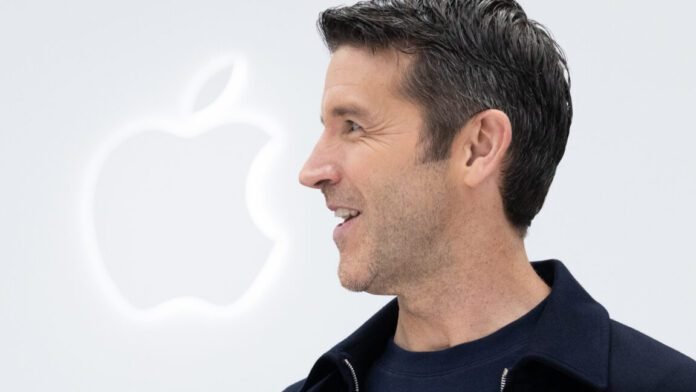
The enterprise server would come in two configurations that include either two or four of Apple’s future M8 Ultra chips, according to The Information. The project reportedly received support from new Apple CEO John Ternus when it began a year ago, back when Ternus led Apple’s hardware engineering efforts.
This revelation coincides with booming sales for Apple’s Mac mini and Mac Studio as AI developers and companies snap up the Mac computers to run AI workloads. The popularity of such computing devices that rely on Apple’s M-series Ultra chips has undoubtedly encouraged Apple’s pursuit of an enterprise server using the same chips.
The Information reported that AI companies such as OpenAI have bought “tens of thousands” of Mac minis and Mac Studios to train AI agents through trial-and-error reinforcement learning, while Anthropic has also rented Mac minis from Amazon Web Services.
Apple is also considering connecting its M8 chips using data center networking equipment from Nvidia. The potential use of Nvidia’s NVLink Fusion technology comes as sources told The Information that Apple and Nvidia have been holding conversations about how Apple could leverage Nvidia’s technology for the company’s AI push.
The Information cautioned that the project could still be canceled or go ahead without incorporating Nvidia’s technology. But if it moves ahead, it would mark a notable return for Apple to the enterprise server market following the retirement of Apple’s Xserve in January 2011.
If Apple’s AI server eventually comes to fruition, it could be a notable part of John Ternus’ legacy. Ternus officially took over as Apple CEO from Tim Cook on September 1, after the latter had served in the leadership position for 15 years.
But Apple’s server plans and the growing popularity of Mac computers during the AI boom also face a notable supply chain challenge shared across the tech industry—the ongoing shortage of memory chips because of companies rushing to build AI data centers.
Rabbi Attacked by 3 Men While Waiting for Bus in Milan
A 60-year-old rabbi was assaulted by three men while waiting for a bus in Milan, in an attack that reportedly began after they identified him as Jewish by his religious clothing, Italian newspaper Il Giornale reported.
The attack took place in the city’s Bande Nere district. The three men, described as being of North African origin, allegedly insulted the rabbi before punching and kicking him. They also threw his hat to the ground, trampled on it and spat on him.
“He was simply waiting for the bus, and they recognized him from the way he was dressed,” said Walker Meghnagi, president of the Jewish Community of Milan.
Meghnagi described the attack as unusually severe.
“A thing this violent has never happened before,” he said, according to Il Giornale.
Police are investigating and have reportedly identified three people suspected of involvement. Authorities are conducting further checks to establish their roles and determine how the attack should be legally classified.
The assault follows another attack on visibly Jewish people in the Bande Nere district earlier in 2026. In that case, two Jewish tourists from Argentina wearing kippot were attacked by a group they described as North African. The tourists said the confrontation began with antisemitic insults before becoming violent.
Following the latest incident, Meghnagi raised concerns about the safety of visibly Jewish residents in public places.
“I am ashamed of what is happening,” he said.
Political figures have also condemned the attack and expressed solidarity with the rabbi and Milan’s Jewish community.
Turkey raises alarm over Greece’s military presence on Aegean islands
Ankara considers Greece’s militarization of the Aegean Islands a security threat, Turkish Foreign Minister Hakan Fidan said, as tensions between the two neighbors rise.
“We don’t want Greece to become a tool in the hands of those who wish to destabilize the region and plunge it into chaos; we want to maintain good neighborly relations,” Fidan said during a visit to Azerbaijan on Tuesday.
But he added that Athens is in breach of international treaties in maintaining a military presence on some of the islands.
“The militarization of the islands that have a demilitarized status constitutes a threat for us … We invite our neighbor and ally to implement its obligations that derive from international treaties in a more mature manner, in the spirit of the alliance,” Fidan said. “Greece must not add another provocation to the numerous security challenges our region faces.”
Despite being NATO allies, Greece and Turkey have been at odds for decades over a number of bilateral squabbles, including quarrels over maritime boundaries, overlapping claims to their continental shelves and the long-running Cyprus dispute.
Tensions between Athens and Ankara have seen a recent uptick, particularly following a recent strengthening of ties between Greece and Israel, which Turkish President Recep Tayyip Erdoğan sees as a bid to “encircle” his country.
Earlier this month, Greece delivered a formal complaint to Ankara over Turkey’s declaration of “national” marine parks, which Athens considers “invalid and lacking legal effect” as they extend into areas outside Turkish jurisdiction and within the Greek continental shelf.
Greek Prime Minister Kyriakos Mitsotakis raised the issue in a meeting with European Council President António Costa in Athens.
“My country is a peaceful country that poses no threat to anyone. However, it will not accept instructions from anyone on how to strengthen its defense capabilities,” Mitsotakis said.
Rapid Houthi advances in Yemen pose massive strategic risks for Saudi Arabia in the Gulf
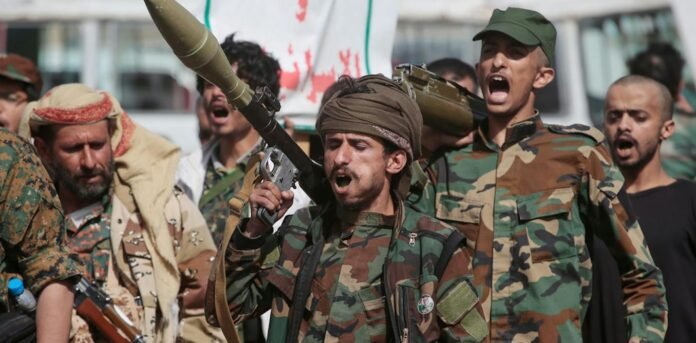
An advance by Yemen’s Houthi rebels, which has included the targeting of Saudi citiesand infrastructure, has quickly complicated a widening Middle East war.
Not only has it all but unraveled a 2022 truce putting a lid on Yemen’s civil war – in which the Iran-aligned Houthis were fighting a Saudi-led coalition – but the seizure of territory next to the Red Sea has further threatened Saudi energy exports. On Sept. 13, Saudi Arabia and other Arab Gulf nations were due to take part in crucial Omani-hosted talks with Iran in a bid to reopen the Strait of Hormuz. But they were called off, seemingly over attacks by both the Houthis and Iraqi groups aligned with Tehran.
The Conversation spoke with Gulf analyst Kristian Coates Ulrichsen to help make sense of the dizzying array of intersecting news developments.
Oman and Iran are the two coastal Gulf States through which the waterway passes, despite Iranian rhetoric about securing and maintaining control over the strait. The challenges facing the negotiators is that Oman will need to build consensus among the other Gulf States for any agreement, as well as the United States, given that one Iranian demand is for passage to be limited to civilian vessels, which would effectively bar U.S. naval ships from the Gulf, including the U.S. Navy’s 5th Fleet, which is headquartered in Bahrain.
Gulf officials – and their U.S. counterparts – would strenuously resist any Iranian attempt to convert their wartime leverage over the strait into a postwar deal that formalizes and regularizes that control.
The postponement of the planned meeting in Oman’s capital Muscat illustrates that the time is not yet right for the talks to proceed and that further dialogue is needed in order to build a consensual framework that can best enable them to succeed.
How serious are the new attacks on Saudi assets?
The uptick in attacks on Saudi energy infrastructure has put in jeopardy the viability of the work-around to Hormuz that enabled the kingdom to maintain oil exports at about half their prewar levels.
Saudi vessels have already started to avoid transiting the Bab el-Mandeb Strait and taking the far longer route through the Suez Canal into the Mediterranean and around the coast of Africa. That adds weeks and associated costs to oil exports to predominantly Asian markets.
While the damage to a pumping station that led to the temporary closure of the Saudi’s East-West Pipeline was reportedly done by a drone launched from Iraq, the kingdom faces attacks from both its northern and southern neighbors with the range, intent and capability to hit critical energy targets.
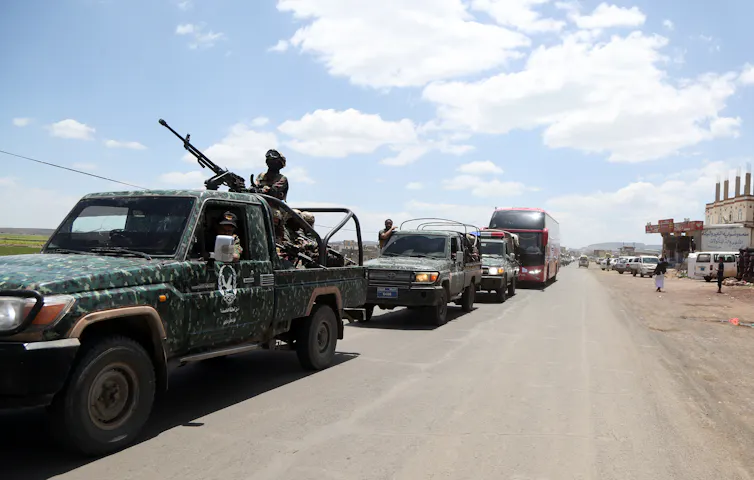
Yemeni security forces escort buses carrying released Houthi detainees as they arrive in Sanaa on Sept. 12, 2026.Mohammed Hamoud/Getty Images
Saudi officials may respond to the latest attacks by rerouting oil back to its east coast facilities on the Persian Gulf, and there has been a steady increase in the volume of oil making its way through Hormuz in recent days and weeks. This return to using the Saudi port at Ras Tanura nevertheless makes oil transportation remain vulnerable to Iranian attacks on shipping in the strait.
Moreover, should the Saudis face a “double choke point” crisis whereby the Strait of Hormuz and the Bab al-Mandeb Strait are both effectively shut, there will be no safe and secure way to continue Saudi oil and other industrial exports, or the import of non-oil goods and commodities by ship.
What options does Saudi Arabia have to respond?
Saudi Arabia intervened militarily in Yemen in March 2015 at the head of an Arab coalition but quickly got bogged down in an unwinnable conflict. In fact, the major successes in ground operations against the Houthis and other adversaries in Yemen were achieved by the United Arab Emirates rather than Saudi forces.
There is very little appetite in Riyadh for a new military operation in Yemen, especially since the Houthis are skilled in asymmetric combat and have far more advanced drone and other technological capabilities than they possessed during the previous rounds of conflict with Saudi Arabia.
The fact that the Houthis outlasted the two-month U.S. Operation Rough Rider between March and May 2025 indicates that bombing from the air will not force the Houthis into submission. And the rapid advance made by the Houthis to take Mokha and other positions in southwestern Yemen since Sept. 3 suggest that Saudi-trained forces on the ground are insufficient.
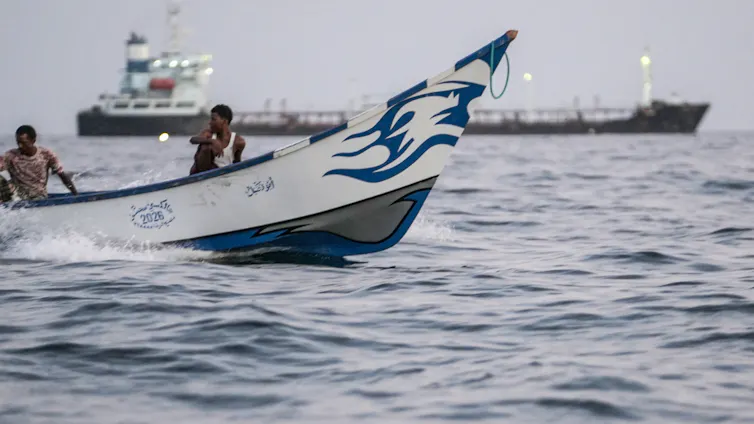
Fishermen motor past a commercial vessel anchored off Yemen’s coast at Bab al-Mandeb, in the straits connecting the Red Sea with the Gulf of Aden and the Indian Ocean, on Sept. 12, 2026.AFP via Getty Images
The Saudi leadership, led by de facto ruler Crown Prince Mohammed bin Salman, is instead seeking to put together a multilateral coalition of states that may be able to contribute, in different ways, to ensuring maritime and regional security in and around the Red Sea. This will include the recent signatories Pakistan and Turkey, alongside Saudi Arabia, to the Mecca Joint Defense Agreement and may also include Egypt, which Crown Prince Mohammed visited on Sept. 15.
Egypt and Turkey may be able to contribute naval assets to assist with maritime patrols in the Red Sea, while Pakistan has long provided Saudi Arabia with soldiers to help protect the kingdom.
How could this all affect US-Saudi relations?
Saudi officials, along with counterparts in other Gulf States, urged the U.S. and Iran to reach a diplomatic resolution prior to the launch of the war on Feb. 28 and have found themselves caught in the middle of a conflict they sought to avoid.
The perception that the U.S. began the war without a “Plan B” has intersected with the feeling that the U.S. has done little to protect Saudi Arabia and the other Gulf States.
If the White House continues to struggle to make progress in negotiating an end to the war and a resumption of unrestricted passage through the Strait of Hormuz, it may be that regional states step in to make a deal of their own. The postponement of the Oman meeting suggests we are not yet at that point. Yet patience may certainly be wearing thin in Riyadh.
Fed, battling persistent inflation, ups rates 1st time in 3 years
WASHINGTON — The Federal Reserve raised interest rates Wednesday for the first time in three years as inflation continues to dog the economy, largely driven by soaring gas and fuel oil prices while the war in Iran drags on.
The central bank’s Federal Open Market Committee voted 12-0 to increase its benchmark interest rate by a quarter of a percentage point, reaching the new range from 3.75% to 4% and making the cost of borrowing more expensive for Americans.
The committee released an upbeat statement touting economic growth at “a solid pace.”
“While uncertainty remains elevated owing, in part, to geopolitical developments, domestic spending has been resilient. Productivity growth is strong, and capital investment is robust. Job gains have kept pace with the workforce, and the unemployment rate has changed little,” according to the statement released Wednesday afternoon.
“Inflation remains elevated. Today’s policy action will support a timelier return to the Committee’s 2 percent goal. The Committee will deliver price stability,” the statement continued.
Federal Reserve Chair Kevin Warsh, four months into his tenure, described Wednesday’s unanimous decision to raise rates as “sober.”
“The plain fact is that inflation is too high, and has been for too long,” Warsh said during a press conference following the Fed’s meeting.
“This summer’s inflation readings do not tell me that underlying trends have meaningfully improved,” Warsh said. “Too many categories are still posting increases above 3 percent on both a six and 12-month basis.”
Trump campaign for lower rates
President Donald Trump publicly pressured and name-called Warsh’s predecessor Jerome Powell for months for not lowering interest rates.
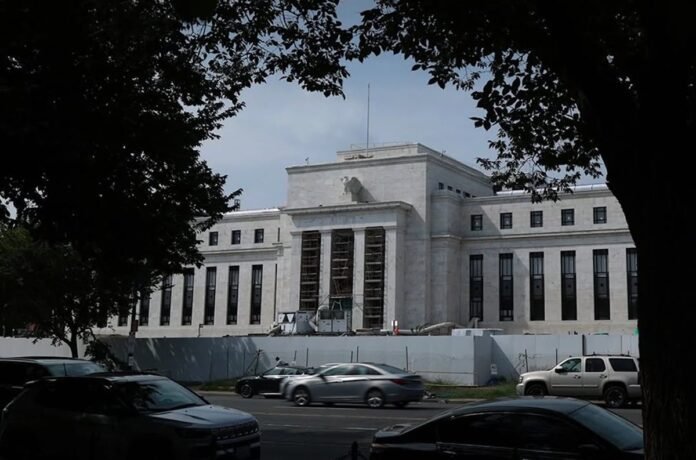
The public attacks escalated into a federal probe of Powell and the Fed for costly renovations at the Fed’s headquarters in Washington. The administration eventually dropped the investigation.
The White House did not immediately respond to a request for comment.
Warsh declined to answer questions from reporters about Trump’s previous calls for lower interest rates.
“Part of the independence of the Federal Reserve is we stay in our lane,” Warsh said.
The interest hike comes less than a week after the government’s latest consumer price index revealed the cost of food, energy, housing and other goods and services rose 0.4% from July to August. The cost of all items over the past year has risen 3.4%.
Rep. Jason Smith, the Republican chair of the tax-writing House Ways and Means Committee, criticized the decision, saying in a statement that “interest rates should be coming down, not going up.”
The Missouri Republican praised the Trump-led “big beautiful bill” tax law passed last summer for delivering “larger paychecks” to Americans, and he blamed former President Joe Biden for past higher inflation.
“After years of elevated borrowing costs, a rate increase is the opposite of the relief families and small businesses need. As President Trump works to restore stability in the Middle East and bring down energy prices, the Fed should recognize the progress,” Smith said in a written statement Wednesday afternoon.
Soaring gas prices
Spiking energy prices caused by the war in Iran were the main driver behind higher costs. Gasoline alone rose 3.9% over the month of August.
As of Wednesday, Americans were paying an average of nearly $4.37 a gallon at the pump, according to AAA. Diesel prices reached a record high of $6.31.
The price of a barrel of oil surged above $100 in recent days, including Wednesday afternoon, when it reached $105, as fighting flared in the Middle East.
The United States and Iran continue launching rockets in the Strait of Hormuz, where one-fifth of the world’s petroleum traveled prior to the war. US Central Command claimed Sept. 8 that it “destroyed” five Iranian crude oil carriers as part of its naval blockade aimed at damaging Iran’s economy.
The conflict spilled over in July into another key waterway for Saudi Arabian oil exports. Iran-backed Houthi rebels restarted an assault on commercial vessels in the Red Sea for the first time since 2024, and are fighting for control of the Bab al-Mandab strait. The group also directly struck targets in Saudi Arabia, a U.S. ally, beginning in July, and is threatening more strikes, according to Houthi spokesman Yahya Saree. The United Nations Security Council is warning of the likelihood of a humanitarian crisis.
When asked by a reporter at Wednesday’s press conference how incremental rate hikes will help when geopolitical events do not show signs of improvement, Warsh said the Fed “cannot affect any individual price, whether it be oil prices, whether it be foodstuffs at the grocery store.”
“But what we can do and will do is ensure that any change in relative prices don’t broaden out, don’t have second and third order effects on the economy. That’s what we’re tasked to do, and that’s what we will do,” Warsh said
Nonprofit that tracks meteors taken down by “critical blow” from a cyberattack
The International Meteor Organization, the nonprofit that coordinates and publishes amateur and professional observations of meteor phenomena, said its infrastructure has suffered a “critical blow” from a cyberattack.
“We recently suffered a cyberattack that dealt a critical blow to aging infrastructure, taking much of our site offline,” a static page on its website on Wednesday said. “We expect several weeks of partial downtime as we transition to new infrastructure and services.”
“I am very sad to see the site down”
In the meantime, the IMO said it’s prioritizing the reporting of fireball observations, which can be reported here. The organization is also providing some information on its Facebook page.
The IMO has helped forge unified standards for reporting meteor observations. Its databases of reported meteor and fireball observations—made up of text, photos, and videos—are also considered essential by many in the field. The IMO also publishes the bimonthly WGN journal, which in English is short for Working Group News. The body was formally founded in 1988.
It’s unclear why an organization that tracks large, fiery space objects hurtling toward Earth would be the target of a damaging cyberattack. It’s equally unclear why someone would want to steal its data (assuming that was the motive), which is mostly public.
“I am very sad to see the site down,” Sam Lawler, an associate professor of astronomy at Campion College, told Ars. “It’s really useful. I don’t have any personal connections there.”
Attacks on organizations connected to space travel, observation, and research are rare, at least when compared to those targeting other industries. That said, they have occurred before. Examples are:
A cyberattack on the Atacama Large Millimeter Array observatory in Chile.
US agencies warned in 2023 that private- and public-sector space organizations may be targets of nation-state-sponsored hackers. The Russian government has also said that commercial satellites may be legitimate military targets. In 2023, Russia was reportedly tracking communications satellites used by NATO.
The American Meteorological Society was hit by a ransomware attack in 2023. Unlike that case, there are no known reports of groups or individuals claiming responsibility for the IMO attack or seeking a ransom.
She governs a US territory. But she has no say in who mines its waters.
Lou Leon Guerrero, the governor of Guam, learned about the government’s plan to mine her people’s waters the same way everyone else did: by reading the news.
It was November 12, and her advisor had sent her an article link — apparently, a journalist had inquired about it. She opened the page, and was stunned by what she read. The Trump administration planned to lease millions of acres of seafloor around the island to mining companies.
“I’ll never forget the date,” Leon Guerrero said from her office overlooking Agaña Bay. “I had not heard anything about it.”
She immediately called David Apatang, the governor of the Commonwealth of the Northern Mariana Islands, a neighboring U.S. territory.
“We were both very upset that we didn’t get any kind of warning,” she said. Shortly after, she rang Bill Hague, an official in the Department of the Interior, an agency that handles federal relations with territorial leaders and tribal nations.
“I know we are a U.S. territory,” Leon Guerrero recalls saying to him. “I know that you as the federal government can just come in and say, ‘I don’t care about what you guys say. We’re going to do it anyway.’” But still, she said, “I want you to know I don’t support this.” Hague reassured her, she said, that mining would never proceed without the community’s support.
Nearly a year later, that’s exactly what’s happening.
Read Next
The Trump administration is moving forward with plans to lease vast swaths of seafloor to mining companies. It is part of a broader push to secure critical minerals and counter China, which dominates the global supply. These resources — including copper, manganese, nickel, and rare earth elements — are essential to military technologies and batteries.
First up are America’s Pacific island territories. In July, the Marine Minerals Administration said that it would auction access to 31 million acres of the continental shelf around American Samoa in mid-November. A month later, the agency announced plans to do the same in December across more than 67 million acres on either side of the Marianas archipelago, which includes the Commonwealth of the Northern Mariana Islands and Guam. About half of those acres border a national marine monument established by President George W. Bush.
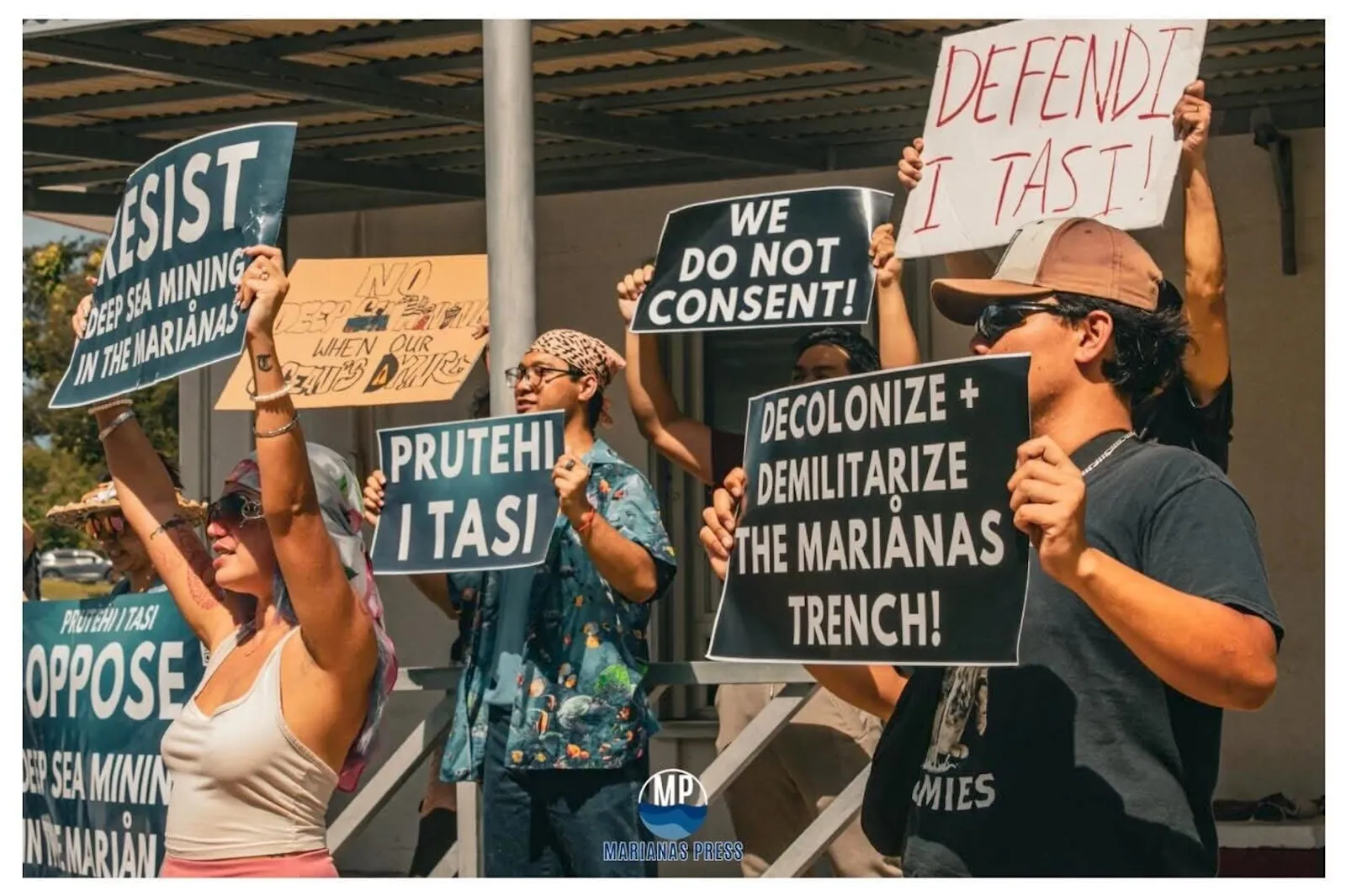
Local leaders and environmentalists staunchly oppose these plans. Recently, Earthjustice, an environmental law nonprofit, filed lawsuits against the Trump administration on behalf of conservation groups in American Samoa and the Mariana Islands, arguing that the government does not yet know if seabed mining would harm animals that are protected by the Endangered Species Act, like whales and sea turtles.
The Marine Minerals Administration declined to comment on the ongoing litigation. Brent Lawrence, a spokesperson who responded to Grist’s questions, said that the department would continue “to closely coordinate with territorial leadership” as well as community members in American Samoa, Guam, and the Mariana Islands.
Unlike neighboring Pacific nations, which can decide for themselves whether to allow mining, Guam, American Samoa, and the Northern Mariana Islands are subject to federal decisions often made without their approval. Under international law, the Indigenous peoples of these islands have the right to free, prior, and informed consent to projects affecting their lands and waters. The Trump administration, however, says it has the authority to proceed under U.S. law.
That decision is the latest example of how the United States has for more than a century denied the residents of these islands a meaningful voice in decisions that affect them, said Adi Martínez-Román, co-director of Right to Democracy. They cannot vote for president, have no voting representation in Congress, and their right to self-determination is generally ignored, she said.
“The territories are practically invisible to the general U.S. society and to public officials,” said Martínez-Román. “It is an insidious result of the colonial framework.”
Lourdes “Lou” Aflague Leon Guerrero, governor of Guam, attends a a full committee hearing in Washington, DC, alongside other leaders of U.S. territories on June 17, 2026. Ken Cedeno / AFP via Getty Images
On July 16, while staying with family in Manuʻa, American Samoa, J.V. Langkilde awoke at 2 a.m. It was Manuʻa Flag Day, a holiday commemorating the islands’ chiefs signing a treaty that brought Manu‘a under U.S. sovereignty more than a century ago.
The family had agreed to cater the day’s festivities, which included a cricket tournament, a parade, and a competition to determine who could make the best oka, a Samoan raw fish dish similar to ceviche. His favorite dish of the day was lobster with coconut sauce, but there was also pig, and smokey Samoan taro cooked in an umu, or earthen oven, he said.
The early start meant Langkilde immediately noticed when his phone screen lit up the darkness with a text message alerting him to the news: On a day marking the anniversary of the United States agreeing to respect Samoan property rights, the Trump administration had announced it was proceeding with a plan to allow deep-sea mining in the waters of American Samoa.
The subject came up again and again during his time at home. The first concern people in Manuʻa have is, “Shouldn’t there be a full understanding of impacts before someone gets a property interest in our ocean floor?” said Langkilde, an attorney at the environmental nonprofit Earthjustice. During the rest of his visit home, his fellow Samoans repeatedly expressed their unease.
“They think it’s a little bit backwards that some company who has no stake in the community here will have property interest on our ocean floor without a full understanding of impacts,” he said.
Deep-sea mining has not yet occurred on a commercial scale, and scientific understanding of the consequences is scant. One recent study suggests mining could create sediment plumes that harm large fish like tuna, which makes up more than 99 percent of American Samoa’s exports. Mining companies dispute these claims, but locals and environmentalists remain unconvinced.
“The throughline of concern I hear is becoming a test site with no kind of guarantees for money being reserved, not just for revenue share, but even for environmental protection,” Langkilde said. “There could be some sort of bond or fund imposed upon the company should things go wrong.”
The governor of American Samoa, Pula’ali’i Nikolao Pula, has expressed similar concerns. In June of 2025 he announced that the government was united in its opposition to mining “in line with the express will of the people and the protection of American Samoa’s natural resources.”
A field of manganese nodules on the Pacific sea floor as seen during NOAA’s 2015 Hohonu Moana expedition. NOAA Office of Ocean Exploration and Research
Because American Samoa is a U.S. territory, its ban on seafloor mining only extends three nautical miles from shore, a fraction of the 200-mile radius around the islands that the federal government claims jurisdiction over.
By contrast, Samoa, which lies just 40 miles to the northwest, has complete control over its waters, of which it plans to protect at least 30 percent. The nation has also joined others calling for a moratorium on deep-sea mining in international waters. It was the first of a dozen Pacific island nations that have achieved independence from colonial powers in the modern era, an autonomy that allows them to determine how their waters are managed.
Read Next
Some, like the Republic of Naoero (which was until this month known as Nauru) and the Kingdom of Tonga, are eager to see the industry move forward. The two countries sponsor deep-sea mining companies, allowing them to apply for exploration contracts in international waters through an international body in exchange for financial benefits. “For Nauru, seabed minerals represent more than economic diversification. They are a pathway to resilience and a pathway to contribute to global solutions,” said David Adeang, the president of Naoero, at the United Nations General Assembly in September 2025.
Earlier this year, Tonga’s prime minister, Lord Fatafehi Fakafānua, signed an agreement with the Trump administration for mining research and exploration. Fakafānua called it an “exciting development.” Others, like the Republic of Kiribati, are considering similar moves.
But the majority of Pacific nations support an international moratorium on the industry. Palau has banned the practice in national waters, while others like Papua New Guinea and the Solomon Islands have taken similar stances amid concerns about its effects on fisheries and cultural practices.
a vote in international negotiations over seabed mining. More than 45 countries have called for an international moratorium or ban.
A 1994 United Nations treaty created the International Seabed Authority to oversee mining in international waters, which lie beyond any country’s jurisdiction and cover about half the globe. That body holds biannual meetings to develop potential rules for the industry. This mining code has been under debate for more than a decade, and commercial extraction has not yet been approved.
The Trump administration isn’t waiting. The president ordered federal regulators to begin processing applications for mining in international waters under a decades-old U.S. law. That prompted outcry from other nations, which say the United States is circumventing international law. As with mining in U.S. waters, it could also leave Indigenous Pacific peoples with little say over industrial activity in the seas they have long stewarded.
More than 170 nations have ratified the treaty establishing the seabed authority, allowing them to attend meetings and cast votes. But territories without independence are excluded. The federal law extending U.S. citizenship to the people of Guam explicitly grants Congress the right to overturn any law passed by the island’s legislature.
“A decision about our islands is going to be made at a desk,” said Sabrina Suluai-Mahuka, a fellow at Right to Democracy from American Samoa. “It does not make sense that we can’t have any say in how our futures go.”
Four months after the Trump administration announced plans to lease the seabed around Guam, Lou Leon Guerrero met with officials in Washington, D.C. to share her concerns. Three days later, back on Guam, she learned that the Bureau of Ocean Energy Management had doubled the area that might be mined, including waters closer to Guam than initially proposed. Again, she called Hague at the Interior Department. The department had not told Leon Guerrero that they were days away from making the change.
“You guys don’t include us in your discussions,” she told him. “We’re the ones that’re going to be impacted.
“He said he made it very clear to everybody to make sure that the governor and the leaders are apprised about what’s happening,” she recalled Hague assuring her.
“We hear it only in the media or in the CFR announcements,” Leon Guerrero told him, referring to federal regulatory notices.
Lou Leon Guerrero gestures in her office in Adelup, Guam as she describes her efforts to block seabed mining off of her island’s shores. Anita Hofschneider / Grist
Hague did not respond to Grist’s request for comment. A department spokesperson, Alyse Sharpe, clarified that while the agency facilitates support for tribal people and nations, “Mr. Hague does not have a role in that,” and that the department regularly communicates with U.S. territory leadership and will continue to do so. In an emailed statement, she declined to comment on or verify the conversations with Leon Guerrero, “due to the often confidential and deliberative nature of these conversations.”
The statement also said, “The Department of the Interior is committed to maintaining a transparent process as the possibility of mining critical minerals from the seafloor is explored,” and noted that a signed lease does not necessarily grant permission to mine and that any lease holder would be subjected to a feasibility, safety, and environmental assessment.
A remotely operated vehicle, Deep Discoverer, images the seafloor off American Samoa during an expedition in 2017. NOAA OER
Neildino Taisacan, an Indigenous Carolinian-Chamorro environmental advocate in the Marianas, said the community submitted extensive comments opposing the proposal despite the short notice. The governors had requested a 120-day extension which would give residents until after the holidays to leave a public comment. The Trump administration instead approved a 30-day extension. In the end, when the proposed area was eventually doubled, many residents were left wondering whether their concerns had been heard, Taisacan said.
“All we can do is just scream at the top of our lungs and say, ‘No, we don’t want this,’” he said.
The administration is also pursuing seabed mining in the waters of Alaska and Virginia. But residents of those states can vote and have representatives with sway in Congress. Those rights are not extended to residents of the territories, giving lawmakers little motivation to take their concerns seriously.
That hasn’t stopped territorial leaders from trying. In June, Pula’ali’i Nikolao Pula, the governor of American Samoa, flew to Washington, D.C. to testify before the Senate. There, wearing a black suit and yellow tie, he reaffirmed his opposition to deep-sea mining.
“However, should the federal government move forward,” he said to senators, “we would like to have basically a seat at the table.” If mining is done in an environmentally friendly way, he said, “our little territory would very much appreciate revenue sharing.”
Kimberlyn King-Hinds, who is the U.S. House delegate for the Commonwealth of the Northern Mariana Islands, plans to introduce legislation that would give the commonwealth half of all seabed mining revenue. “If they’re going to shove this down our throats,” she said, “I want to be able to ensure that we have a backup plan, we have insurance and that we actually benefit from the waters that surround us.”
Still, what happens next remains to be seen, because she, as a delegate, cannot vote on bills.
One company interested in mining in the region, Impossible Metals, has suggested a benefit-sharing agreement that would give territories a small percentage of their profits, as a gesture of goodwill. But these promises are not yet legally binding.
And with decision-making power consolidated in Washington, D.C., there is little incentive for companies to approach territorial leaders like Pula. The Metals Company, for example, has instead spent about $800,000 lobbying federal officials to permit seabed mining.
If the nascent industry becomes profitable, even a small share of the windfall could provide a significant boost to Pacific island economies.
In American Samoa, a single StarKist tuna cannery employs about 2,000 people and accounts for 80 percent of the private-sector jobs. The Commonwealth of the Northern Mariana Islands has endured a prolonged tourism downturn and was battered by two super typhoons earlier this year. In Guam, fewer people have visited since the pandemic, leaving the island increasingly reliant on military investment. Without stable economies at home, many residents leave their island communities for jobs abroad.
That’s one reason some Pacific governments with more autonomy than U.S. territories are in favor of mining. The Cook Islands, for instance, supports the industry and has used government funds to explore nearby waters for mineral deposits.
Prime Minister Mark Brown has described that exploration as part of the islands’ “journey of sovereign independence.” Mining companies have been courting the islands’ communities for years, sponsoring local cultural organizations and sporting events. Brown has said the industry could boost revenue significantly.
But some mining analysts and environmentalists doubt that. A recent study found that mining near American Samoa would carry steep operating costs and might not generate enough revenue to be profitable. It also concluded that demand for some targeted minerals — including cobalt, manganese, and nickel — may not hold, while other analyses found that proposed financial arrangements would return little revenue to developing countries.
Langkilde, the Earthjustice attorney from American Samoa, said his community was shocked by how the latest lease proposal doesn’t include revenue sharing. And while the federal notice suggests that deep-sea mining companies invest in training a local workforce and upgrading public facilities like ports, neither is mandated.
Seeing it in black and white is, he said, “very discouraging to people here who might have otherwise been like, ‘Maybe the federal government will do right by us.’”
In April, Sheila Babauta hid with her parents and her 2-month-old son in a storage room for hours, listening to 150-mph winds moan and rattle the windows as Typhoon Sinlaku battered her home island of Saipan.
They had no running water or electricity for weeks afterward. While cleaning up flood damage, collecting water for baths, and caring for her newborn son, Babauta received a group chat message about the federal government’s latest push to accelerate seabed mining.
Five weeks after Typhoon Sinlaku hit the Marianas, Sheila Babauta lives without electricity in her home in northern Saipan while caring for her newborn son. She feels grateful that her family kept their house when so many others lost theirs. Anita Hofschneider / Grist
“I didn’t have capacity to even think about it,” she said. “All of the immediate needs definitely took priority over keeping track of what was happening with seabed mining.”
Babauta, a former member of the Commonwealth of the Northern Mariana Islands House of Representatives, is a longtime Indigenous Chamorro-Pohnpeian environmental advocate who has been vocal about opposing seabed mining. But even she has found it difficult to keep track of what the federal government is doing and find the time and energy to weigh in as her community recovers from two climate-fueled typhoons.
“After the typhoon, I definitely felt overwhelmed, especially with a baby, because he’s my priority, right?” Babauta said of her son, whom she envisions growing up and living on the island.
“Deep-sea mining is also important to me because I want to protect our home for future generations,” she said. “All of that is going on in my head while outside of me, in reality, you see destruction all over.”
Pacific islands are on the front lines of climate change, with rising seas and worsening storms already impacting residents. But as the Trump administration pushes seabed extraction while undermining climate action, those immediate crises leave many territorial residents with less time and energy to influence whether mining proceeds.
Companies like the Metals Company have spent hundreds of millions of dollars exploring deep ocean ecosystems. Scientists who conducted that research later published some of their findings independently in peer-reviewed journals, concluding that these habitats are fragile and slow to recover.
Any risk to fishing, an essential part of culture and identity in American Samoa, looms large.
“The people of American Samoa have a profound connection to the ocean, relying on it for sustenance, cultural practices, and economic activities, particularly through fisheries and tourism,” then-Governor Lamanu Peleti Mauga wrote in his 2024 moratorium on seabed mining.
Other Indigenous Pacific Islanders, including John Castro, worry about how mining would impact traditional seafaring.
John Castro sits under a damaged canoe house on Saipan, reflecting on what seabed mining might mean for traditional navigation. Anita Hofschneider / Grist
On an afternoon in May, Castro sat beneath a damaged canoe house in Susupe, Saipan. Its thatched roof had been partially destroyed by Typhoon Sinlaku, and Castro had joined others in repairing it. He is a fisher who coordinates a program that helps pass down the knowledge required to navigate canoes across the Pacific using the stars and waves.
Traditional seafarers rely on marine life to determine where they are, he said. “If deep-sea mining happens, and that thing kind of drives whales in a different course, then we’re going to get lost, too.”
This knowledge was once widespread across the Pacific but was lost to colonization in many places, including the Marianas and Hawaiʻi. It has recently returned with the help of expert navigators from the Federated States of Micronesia. Disrupting that revival would be an enormous loss.
Still, Castro is resigned to what feels like an inevitable consequence of his communityʻs status as a U.S. territory. “We do have a say-so, but it’s not going to be entertained,” he said. “We’re small compared to Uncle Sam, who makes the rules.”
Earthjustice is an advertiser with Grist. Advertisers have no role in Grist’s editorial decisions.
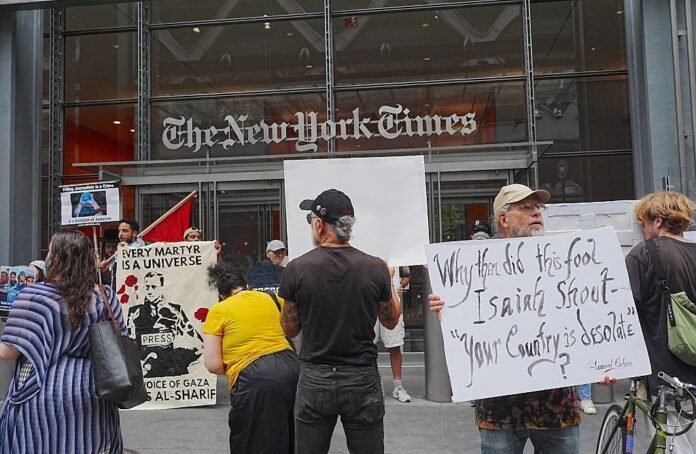
The New York Times Conveniently Forgets the Real Stakes of Attacks on Free Speech
Alain Stephens is an investigative reporter covering gun violence, arms trafficking, and federal law enforcement.
The New York Times recently published a sweeping accounting of President Donald Trump’s campaign against the American press: FBI agents arriving at reporters’ homes, subpoenas for journalists’ records, Pentagon access restrictions, regulatory pressure on television networks, numerous lawsuits against news organizations, and an increasingly politicized Federal Communications Commission.
“Almost 20 months into Mr. Trump’s second term, his long-running media clashes have grown into a sweeping campaign to control speech in America that stands out for applying so many levers, so fast, all at once,” Times reporters Maggie Haberman and Jim Rutenberg wrote. “Each time the president assails what has long been considered protected speech … he is eroding norms and undercutting the role of an independent press.”
All told, it is a damning inventory.
It is also difficult to read without noticing who occupies almost every frame: Us.
Reporters. Editors. Television hosts. Networks. Publishers. Their lawyers. And the access our industry has become so reliant upon.
The Times is right about the threat. Trump has indeed weaponized government agencies and private litigation against news organizations in ways that seriously threaten the First Amendment, although judges have repeatedly rebuked parts of the administration’s legal strategy. But Trump’s attacks on free speech have extended well beyond the journalism, from ICE protesters in Los Angeles to faculty in solidarity with Palestine on college campuses. But somewhere along the way, the American press began conflating two things: press freedom, with the conditions under which the press had become accustomed.
Those are not the same thing.
Free speech was never free.
It was wrested loose. Sharpened and stretched, stifled and reborn, often on the backs of those who put the pain and personal safety of others ahead of their own.
Somewhere along the way, the American press began conflating two things: press freedom, with the conditions under which the press had become accustomed.
In 1892, a little more than two decades after the nation wrenched itself back together from war, Ida B. Wells challenged the lies white Memphis terrorists used to justify lynching Black men in her newspaper, the Memphis Free Speech and Headlight. In retribution, a mob ransacked her office and destroyed the paper’s printing equipment. Wells happened to be away. Threatened with death if she returned, she continued her investigation from the North. There was no White House Correspondents’ Dinner, no presidential press core podium to be invited to, no shining press awards. As a Black woman, she couldn’t even vote; in her isolation, her best job security was to carry a pistol.
“It is with no pleasure I have dipped my hands in the corruption here exposed. Somebody must show that the Afro-American race is more sinned against than sinning, and it seems to have fallen upon me to do so,” she wrote in her book on the excruciating personal trade-off she made to pursue her work: perspective. Her fear, exhaustion, and isolation existed beside something larger: actual bodies, tangible violence, and lived injustice.
I will be candid: Melancholy abounds. I write this as a journalist who has grown depressed while slinking through the yearly industry conferences, newsrooms, and brown bag luncheons. There is a palpable dread to most discussions, with an acknowledgment that the world is less fair, less stable, and overwhelmingly more difficult.
We talk about everything. Except the necessity to win, and most importantly, for who.
Israeli airstrikes and other attacks are still killing and displacing Palestinians in Gaza, where the United Nations reported last month that medical shortages and restrictions on critical supplies continue to undermine an already devastated health system. In the West Bank, settler violence, backstopped by the Israeli military, is a daily and growing threat. Israel’s war on Gaza has now killed nearly 300 journalists — more news gatherers than in both world wars, Vietnam, Yugoslavia, and Afghanistan combined.
The Times in particular has done more than almost any other media outlet to launder the justification for this ongoing death and destruction, and to police the language we’re allowed to use when discussing it, which didn’t warrant any mention in its attacks-on-free-speech roundup.
In the U.S., ICE arrests reached nearly 51,000 in August alone as the Trump administration dramatically expanded immigration enforcement. Many of those being detained had no criminal record, while courts continue battling out the administration’s detention practices. A Department of Homeland Security watchdog reported on Monday that immigrants at Florida’s now-defunct “Alligator Alcatraz” prison were confined for more than an hour at a time in outdoor metal cages known as “calming areas” that were barely larger than a phone booth.
Government coercion and obfuscation is difficult; it doesn’t hold a candle to death, subjugation, and the powerlessness of victimization.
As Wells put it, I’ve had the displeasure of covering a national violence, I’ve also had the displeasure of living it.
There is nothing in my day job that can match the pain, or permanence, of a loved one ripped from your household, the lifelong inequity of being racially outcast, or the haunting mental anguish those events leave behind as an inheritance.
As a result, there is a vibrating dis-ease — something close to nausea — in listening to tales of journalists ground under the boot of power, only to hear complaints of our own injury grow so loud that it begins to obscure the suffering beyond us. Maybe that is part of the point of these attacks in the first place: Hurt us until our wounds become the horizon. Hurt us into forgetting those hurt more.
We need to fight even harder for truth, not because journalists are the principal victims of its erosion, but because the people paying a far higher price outside the newsroom’s walls are the reason we do this work at all.
We need to fight even harder for truth, not because journalists are the principal victims of its erosion, but because the people paying a far higher price outside the newsroom’s walls are the reason we do this work at all.
That discrepancy may also help explain why Americans increasingly roll their eyes when journalists describe threats to journalism as threats to democracy.
In 2025, Gallup found that only 28 percent of Americans trusted newspapers, television, and radio to report the news fully, accurately, and fairly — the lowest level ever measured. When Gallup began asking the question in the 1970s, the figure ranged between 68 and 72 percent.
There are many reasons for that collapse, from deepening partisanship and a fragmented information ecosystem to the hollowing out of local news.
But I understand some of the suspicion.
I understand why nobody wants to invest in a product from an industry that refuses to admit it wants to win.
And by “win,” I mean something journalists have become strangely embarrassed to admit it we want: to make it harder to abuse human beings without anybody knowing.
There is nothing neutral about that mission.
And there never was.
Perhaps the mistake comes from imagining freedom, and by proxy freedom of press, as a possession rather than a practice.
Perhaps the mistake comes from imagining freedom, and by proxy freedom of press, as a possession rather than a practice — a right handed down and intact, rather than a capacity that must be worked, tested, and fought for when the cost of exercising it rises.
In his 1951 book “The True Believer: Thoughts on the Nature of Mass Movements,” writer Eric Hoffer captured the appeal of fascism in five unsettling words, uttered by an ardent young Nazi: “to be free from freedom.” He used the quote to examine an uncomfortable possibility — that freedom may not be innate to the human mind, but something closer to muscle — strengthened under strain, grown through resistance, and, if left unused, atrophied.
Press freedom lives under the same rule. Its value is not measured by how easily journalists can exercise it, but by what survives when power becomes hostile.
Our charge is to comfort the afflicted and afflict the comfortable. Journalists’ own comfort was never part of the equation.
What to Know About Mail-In Voting for the 2026 Midterms
This week, the Supreme Court rejected the Trump administration’s plans to impose new rules for mail-in voting for the midterm elections in November.
In a March executive order, President Donald Trump had instructed the U.S. Postal Service to create rules for election officials sending mail-in ballots to voters. If a state didn’t comply with the new rules, the Postal Service wouldn’t deliver the ballots to voters. State officials said it would have been impossible to comply in time, and two federal judges blocked the rule for the November elections. Lawyers for the Trump administration asked the Supreme Court to intervene.
In a brief, unsigned order on Monday, the court’s majority denied the administration’s request, writing that the “Government is unlikely to succeed on the merits of its challenge.” Justice Samuel Alito wrote an eight-page dissent, joined by Justice Clarence Thomas, saying he would have allowed the rules to go into effect. The court has not yet decided whether the rules can move forward after the November election.
Trump criticized the Supreme Court’s order in a Truth Social post on Tuesday, calling it “a big loss for Republicans, and America itself.”
The result of the Supreme Court order is that nothing has changed for states.
“State and local election administrators all across the country will continue to do what they always do, which is run safe, secure and transparent elections,” said Barbara Smith Warner, a senior adviser for the Institute for Responsive Government, a think tank working on election issues. “Everyone can and should be sure that they can vote in this election.”
We’ve been reporting for months on the Trump administration’s efforts to issue new regulations on mail-in voting, gather state voter data and investigate voter eligibility ahead of the November elections. We spoke with experts on mail-in voting to answer practical questions about voting by mail.
Why is Trump trying to restrict mail-in voting?
Mail-in voting has become more common over the decades. Roughly a third of Americans cast their ballots through the mail nowadays, according to the Brookings Institute. Trump himself voted by mail twice this year. But mail-in voting varies dramatically from state to state. While more than 95% of voters cast their ballots by mail in Oregon and Washington state, which have all-mail elections, less than 3% of voters vote by mail in West Virginia and Tennessee.
Trump has attacked mail-in voting for years, calling it “cheating” and “corrupt.” And as Trump has tried to exert more federal control over elections, he’s also sought to impose new restrictions on mail-in voting and voter eligibility. The president has claimed, without evidence, that voting by noncitizens is rampant. He’s pushed Congress to create stricter voter identification requirements, and with legislation stalled on Capitol Hill, he set out to regulate mail-in voting through an executive order.
White House spokesperson Olivia Wales said in a statement that the president wants “commonsense exceptions” for Americans to vote by mail because of an illness, a disability, travel or service in the military. And she said Trump’s use of mail-in ballots to participate in Florida elections while living in the White House “is a nonstory.” But “universal mail-in voting should not be allowed because it’s highly susceptible to fraud,” she added.
Trump’s order instructed the Postal Service to set criteria for mail-in ballots. The USPS finalized the rule in August. If it went into effect, the Postal Service wouldn’t mail ballots for states that failed to comply.
The USPS rule set design standards that required envelopes for mail-in ballots to include the official election mail logo and a unique bar code. States were required to upload lists of their eligible voters’ names and mailing addresses to a portal that’s still being built. (On Sept. 1, the Postal Service said the portal would be available soon.) The bar codes on the envelopes needed to match the voter information in the lists states uploaded to the portal. If the ballot envelope failed to fit the criteria, USPS would reject and return the mail to election officials.
In August, an anonymous federal employee filed a whistleblower disclosure with U.S. Sen. Richard Blumenthal, a Connecticut Democrat, calling the Postal Service’s new system untested and error-prone. The employee described the process as “secretive, rushed, chaotic, and fundamentally flawed.”
According to a September audit by the agency’s Office of Inspector General, some Postal Service facilities failed to properly handle ballots during this year’s primary elections. (In a response included with the findings of the audit, USPS wrote that “overall ballot mail performance is strong,” while acknowledging “we can always reinforce and amplify our internal processes and procedures.”) As ProPublica’s Jen Fifield reported, top USPS officials expressed concerns in meetings about how the new rules could delay or block ballots from reaching large swaths of eligible voters.
The rule change would’ve affected the people who rely on mail-in voting the most: older people, people with certain disabilities, and people who live in remote or rural areas, said Richard Hasen, a UCLA law professor and director of the school’s Safeguarding Democracy Project, in an interview before the Supreme Court order. On Sept. 3, a bipartisan group of 99 current and former state and local election officials said in a court brief that it would have been impossible for states to comply with the rules ahead of the midterms.
The Trump administration said in its filing to the Supreme Court that the Postal Service rule “imposes only modest envelope-design and addressee-information requirements” on mail-in ballots.
A spokesperson for the U.S. Postal Service did not respond to a request for comment.In a previous statement, a spokesperson said the agency had spent months developing its system, in a manner consistent with federal court orders. The spokesperson added that the agency’s goal is to ensure “that Americans can have confidence that their election mail will be handled securely and delivered reliably.” In response to concerns raised by the whistleblower, Postmaster General David Steiner said in a statement that the agency “takes these concerns seriously” but added that “our standards for quality, security, and system integrity were not compromised.”
In a concurring opinion with this week’s decision blocking the new mail-in ballot rules, Justice Brett Kavanaugh acknowledged that state and local election officials didn’t have enough time to implement the Postal Service changes before the November midterms. But Kavanaugh added that the rules may fall within the Postal Service’s authority, not ruling out that they could be implemented for future elections.
Can I vote by mail?
State laws vary on who can vote by mail, and when. Your eligibility depends on the law in your state.
Every state offers some version of voting by mail, but your state may require you to have a reason to vote absentee, such as an illness, a disability or travel out of state.
Check the rules for mail-in voting in your state. Take note of whether your state requires you to request a mail-in ballot ahead of the election and what the deadlines are for those requests, as well as when ballots must be returned in order to count. Before you request a mail-in ballot, make sure you’re registered to vote and the local election office has your address.
Eight states and the District of Columbia proactively mail ballots to every registered voter. In 29 states, voters can request a mail-in ballot without providing a reason. The other 13 states require voters to provide an eligible excuse when they ask for an absentee ballot.
How do I make sure my mail-in ballot counts?
We asked experts what voters should know if they plan to vote by mail. Keep in mind that the rules for mail-in voting depend on where you live.
Read the directions carefully, Smith Warner said. Make sure you fill out the ballot completely and don’t leave any stray marks.
Sign the ballot with your typical signature. Use the same signature you have on other government documents, such as your driver’s license, experts say. That signature is printed on your license, and you can pull it out to refresh your memory.
Don’t miss the deadline to turn in your ballot. Deadlines for turning in absentee ballots vary by state. The U.S. Postal Service recommends voters mail their completed ballot at least a week before their state’s deadline to ensure it arrives in time.
The Postal Service’s routes may have changed, so delivery of your mail-in ballot may take longer, said Tammy Patrick, the chief programs officer at the Election Center. “So, make sure you get your ballot back as early as possible,” she said.
Consider dropping off your ballot at a local election office. Election experts we spoke to recommend voters return their completed ballots to a ballot drop box or their local election office. Drop boxes are often found at city halls, libraries and schools. Check with your local election office to find locations near you.
Track your ballot. State and local election officials often have online portals where you can check to see whether your ballot has been received, approved or rejected.
What if I change my mind and prefer to vote in person?
It’s not unusual for people to vote at the polls after requesting a mail-in ballot, said David Becker, the executive director of the Center for Election Innovation & Research, a nonpartisan nonprofit based in Washington that works with election officials and conducts research to build trust in the voting process. States have systems in place to prevent people from voting twice.
Some states allow voters to bring completed mail-in ballots to polling places, but check with your local election office before relying on that method. If you decide you want to vote in person instead, experts recommend you bring your mail ballot and envelope so the poll workers can cancel or spoil it (mark it or rip it up).
We also asked experts what to do if a voter has already sent in their mail-in ballot but wants to make changes. Experts said to avoid this if possible. Depending on where you live, if the mail-in ballot hasn’t yet been accepted and cast by election officials, voters may be able to change their mind and vote in person, Patrick said.
“As long as it hasn’t gotten back to the elections office and it hasn’t been accepted,” she said, “then the voter can usually still be provided another ballot.”








 a vote in international negotiations over seabed mining. More than 45 countries have called for an international moratorium or ban.