King Charles Left Fuming as Queen Camilla Walks Away with Umbrella (Video)
King Charles III was caught in an embarrassing royal meltdown when a tropical downpour left him soaking wet while Queen Camilla hurried away with an umbrella, leaving her visibly frustrated husband scrambling for help.
The 77-year-old monarch appeared furious as cameras captured him throwing his arms into the air and repeatedly demanding an umbrella during a ceremonial appearance in Antigua and Barbuda on Sunday, November 1.
The absolute INDIGNITY of it all. Camilla is classless. Doesn’t check in with her husband…just completely walks off in her own clueless world. Charles RAGING at her is the cherry on top. The Windsor temper on full display. Well, I guess these two ended up with the marriage they deserved.
The awkward moment unfolded at Sir Vivian Richards Stadium, where Charles and Camilla were attending celebrations marking the Caribbean nation’s 45th anniversary of independence.
Just as the royal couple arrived, the skies opened, unleashing a torrential downpour that quickly disrupted the carefully planned ceremony.
Camilla, 79, was promptly handed her signature transparent umbrella and made her way toward covered seating. Charles, however, wasn’t so lucky.
Instead, the king was left standing in the pouring rain, his tan suit becoming increasingly soaked as he desperately tried to catch his aides’ attention.
“Where’s the umbrella?” he repeatedly asked, gesturing toward his entourage and even mimicking the motion of holding one above his head.
The scene grew more awkward as Camilla continued toward shelter while her husband remained exposed to the storm. Once safely seated, the queen appeared amused by the unexpected chaos, smiling and laughing as the situation unfolded.
Footage of the incident quickly spread across social media, with viewers weighing in on the king’s visible frustration and Camilla’s decision to seek shelter without him.
Some criticized the queen for apparently leaving her husband behind, while others found humor in the spectacle of Britain’s monarch being unable to get an umbrella during a royal engagement.
There is no indication that Charles was angry with Camilla herself, however, or that the incident reflected any disagreement between the couple.
An aide eventually arrived with a black umbrella, allowing the drenched king to continue his duties. Charles proceeded to inspect members of the armed forces and police taking part in the independence parade.
Fortunately, the storm lasted only about five minutes, and the king soon appeared to regain his sense of humor.
While speaking with Antigua and Barbuda’s Prime Minister Gaston Browne, Charles joked about his soaked clothing, saying, “I’ve started growing watercress on my trousers.”
Camilla also laughed off the experience, reportedly joking about her damp appearance after the sudden storm.
The incident wasn’t the first time Charles’ frustration has been caught on camera.
Shortly after becoming king in September 2022, he famously lost his patience with a leaking pen during an official signing ceremony in Northern Ireland. The video became an internet sensation, with the monarch complaining about the troublesome writing instrument before handing it off.
Charles later demonstrated that he could laugh at himself, joking about his notorious struggles with pens during another public appearance.
The latest mishap came during the royal couple’s Caribbean tour, which included visits connected to the Commonwealth and renewed discussions about Britain’s colonial history.
Despite the soggy interruption, Sunday’s ceremony continued, and Charles received cheers from the crowd as he completed his inspection.
But the image of the king standing helplessly in a downpour while Camilla disappeared beneath her umbrella may prove difficult for royal watchers to forget.
After all, Charles may wear the crown, but on this occasion, Camilla got the royal treatment first.
How China accidentally broke the West’s arms trade monopoly
As Russia has intensified its attacks on Ukraine’s energy infrastructure in recent months, the deployment of fiber-optic drones has proven devastatingly effective.
The drones use hair-thin cables to maintain direct connections with operators, making them highly resistant to electronic jamming and essential to both sides on the front line. The Kremlin’s use of these drones faced a major setback in 2025, when a long-range Ukrainian drone struck the country’s only fiber optic plant, forcing it to shut down.
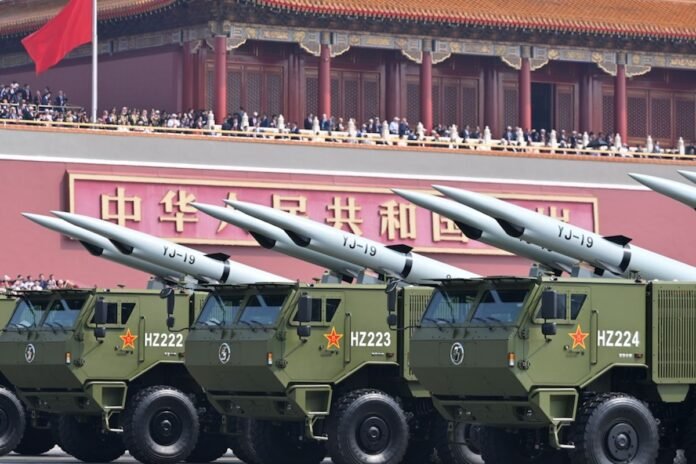
Fiber optic cables are one of many types of dual-use specialized Chinese equipment found in Russian drones. Beyond supplying finished commercial drones that can later be weaponized, Chinese manufacturers also provide many components in Russian-built drones, including microchips, engines, lithium-ion batteries, 5G tech, mesh modems used for communication, and other essential parts.
With global military spending continuing to rise, the US has further consolidated its dominance of the major arms market, as Ukraine and European allies increase purchases and Russia, its traditional rival, diverts more of its own weapons to the war.
According to the Stockholm International Peace Research Institute (SIPRI), the US accounted for 42% of global major-arms exports in 2021–2025, up from 36% in 2016–2020.
Together, the US and Western Europe accounted for 74% of global major arms exports between 2021 and 2025. Beyond finished products, Western influence extends to the technology used to manufacture high-performance military electronics.
Advanced lithography equipment from the Netherlands-based ASML, the world’s sole manufacturer of extreme ultraviolet (EUV) lithography machines, enables chipmakers to mass-produce the most sophisticated semiconductors that power cutting-edge military computing and artificial intelligence systems. American allies such as Taiwan, South Korea, and Japan also occupy important positions in international electronics and manufacturing supply chains.
This concentration of arms production and critical technology among US and Western companies gives them “significant economic and political power, which enables them to drive the strategic interests of states in exporting arms to conflict zones,” explains arms control expert Hiruni Alwishewa.
This provides them with considerable influence over access to advanced weapons and the ability to sustain military operations. China, while accounting for just 5.6% of global arms exports in 2021–2025, is nonetheless reshaping modern industrial warfare in ways that traditional measures of the arms trade struggle to fully capture.
The ease with which commercial products can be repurposed for military use is transforming the arms business, even if much of this is a byproduct of Beijing’s drive to become a global manufacturing leader.
China’s growing role in these supply chains challenges the dominant Western position in the global arms trade. By supplying the components and equipment other countries and armed groups need to wage war, Beijing is gaining greater influence over their military capabilities and campaigns. This, however, complicates China’s stated neutrality in foreign conflicts.
From arms buyer to industrial lifeline
The war in Ukraine has transformed the Russia-China weapons relationship.
During the 1950s and again in the 1990s and early 2000s, China’s armed forces relied heavily on Russian imports for combat aircraft, tanks, submarines, and advanced technology, states the Center for Strategic and International Studies. China’s growing domestic capabilities have since turned it into an international arms exporter and a competitor to Russia, even in markets Moscow once dominated.
Interestingly, China remains an important customer for Russia’s official arms industry, according to SIPRI. But the flow of goods from China to Russia in support of the war is harder to quantify since much of it consists of civilian goods moving through opaque trading networks and intermediaries.
While a substantial number of Western products are rerouted through China, Chinese-made equipment and components play an increasingly large role in sustaining Russia’s war effort and, to a lesser extent, Ukraine’s.
The full scale of Russian dependence on China is difficult to establish, but multiple analyses point to Beijing’s significant role as a supplier. The Jamestown Foundation estimated that in 2023, up to 90% of Russia’s “metalworking machine tools” came from China.
Analysis by the Kyiv School of Economics has found that China accounted for roughly three-quarters of Russia’s reported imports of Common High-Priority goods, including integrated circuits, microelectronics, communication hardware, and optical devices.
By 2024, “Chinese exports to Russia reached $27 billion in machinery, $16 billion in electronics and $5 billion in telecom equipment—all well above pre-sanction levels,” according to Bob Savic, head of international trade and sanctions consulting at the Global Policy Institute.
Given how extensively the Russian economy has been reoriented toward its war effort, much of these imports likely supports military production.
China’s global reach and unintended consequences
China’s centrality in the global arms market has created issues for US security interests elsewhere. North Korea, for example, has expanded arms cooperation with Russia while maintaining extensive trade with China, offering Pyongyang the means to sustain and upgrade its own weapons production.
This dynamic can also be seen in Iran. After US and Israeli attacks on Iranian missile infrastructure throughout 2026, “Russia has coordinated rebuilds using Chinese CNC machining centers and inertial guidance gyroscopes,” according to Savic, while Russia also serves as a conduit for Chinese microchips used in drones and other military equipment.
Since 2015, the Houthis have meanwhile faced Saudi Arabia and UAE military forces—both major recipients of American arms—as well as US and Israeli strikes. A new Saudi-led coalition involving Turkey and Pakistan to combat the Houthis was announced in October after a major Houthi offensive. Egypt later decided to extend military support to Saudi Arabia.
Access to Chinese components has helped the Houthis develop more capable weapons and sustain their attacks. The Middle East Research Observatory states that “[b]etween 2021 and 2025, roughly 35% of military items captured en route to the Houthis originated in China, up from 5% between 2015 and 2018.”
In 2024, the US Treasury Department singled out Chinese companies Shenzhen Jinghon Electronics, Ltd.; Shenzhen Boyu Imports and Exports Co., Ltd.; and Shenzhen Rion Technology Co., Ltd. for supplying dual-use and military-grade components to Houthi networks involved in drone and missile development.
In October 2026, the Wall Street Journal reported that Conflict Armament Research had identified Chinese-sourced motor parts, airframe sections, and solid-propellant materials in an advanced Houthi ballistic missile.
These transfers do not establish that Beijing intended to support Houthi attacks. The armed groups’ missile and drone strikes on Saudi Arabia, a major Chinese trading partner, run counter to Beijing’s economic interests and show how difficult it is to control the end use of goods moving through global markets.
Meanwhile, “Saudi Arabia is signaling its displeasure, but it is unlikely to risk a confrontation with China, its largest trading partner and a major buyer of its oil, even as those weapons threaten its security,” stated Al-Monitor.
Chinese-made equipment has also appeared in other conflicts where Beijing has little obvious interest in escalation. In Sudan, Chinese drone jammers, surface-to-air missiles, and other equipment have been observed, including in the hands of the Rapid Support Forces, with reported supply links to the United Arab Emirates. Chinese-made drones have also reportedly appeared in Libya despite a UN arms embargo.
China’s efforts to refine and cement its leverage
China’s growing ability to influence conflicts and compete asymmetrically with US-led military power will likely lead it to refine its approach.
The ongoing evolution of China’s export controls, including another round in 2026, points to efforts to exert greater control over how its exports are used, translating into more direct geopolitical leverage rather than simply accepting that its exports may be used in ways that do not serve its interests.
Countries and armed groups that rely on Chinese equipment and components will therefore become more vulnerable to changes in Chinese export policy. This will, however, help Beijing gain greater insight into the military capabilities and supply needs of its direct and indirect customers.
Despite Washington’s continual dominance of official major arms exports, China’s industrial reach extends into the US defense sector. A report by defense analytics firm Govini found that Chinese-made components feature in more than 1,900 military platforms, and warned that the US is “fundamentally dependent on China for essential components of its weapon systems.”
Additionally, China’s grip on critical mineral production and processing has left 78% of the US arsenal potentially exposed to Chinese mineral supply dependencies. As China’s leverage grows, the Western alliance that has dominated global weapons production for decades faces mounting internal divisions.
Disputes over continued support for Ukraine, lingering unease over Trump’s pressure on Denmark over Greenland, and trade tensions between Washington and its European allies have strained the trust underpinning their longstanding security partnership.
The war in Ukraine has exposed how China, while not displacing the US as the leading exporter of traditional major arms, is increasingly capable of challenging Western control over the industrial foundations of modern warfare.
Google dismantles botnet secretly running on 1.3 million Android TV boxes
Google’s Threat Intelligence Group says it has shut down a massive botnet called x.cpe. At its height, x.cpe ran on more than 1.3 million Android TV devices, and unusually, these were Google-certified boxes. Google says its screening process missed the malware due to “obfuscation techniques” employed by Shenzhen-based Videostrong Technology.
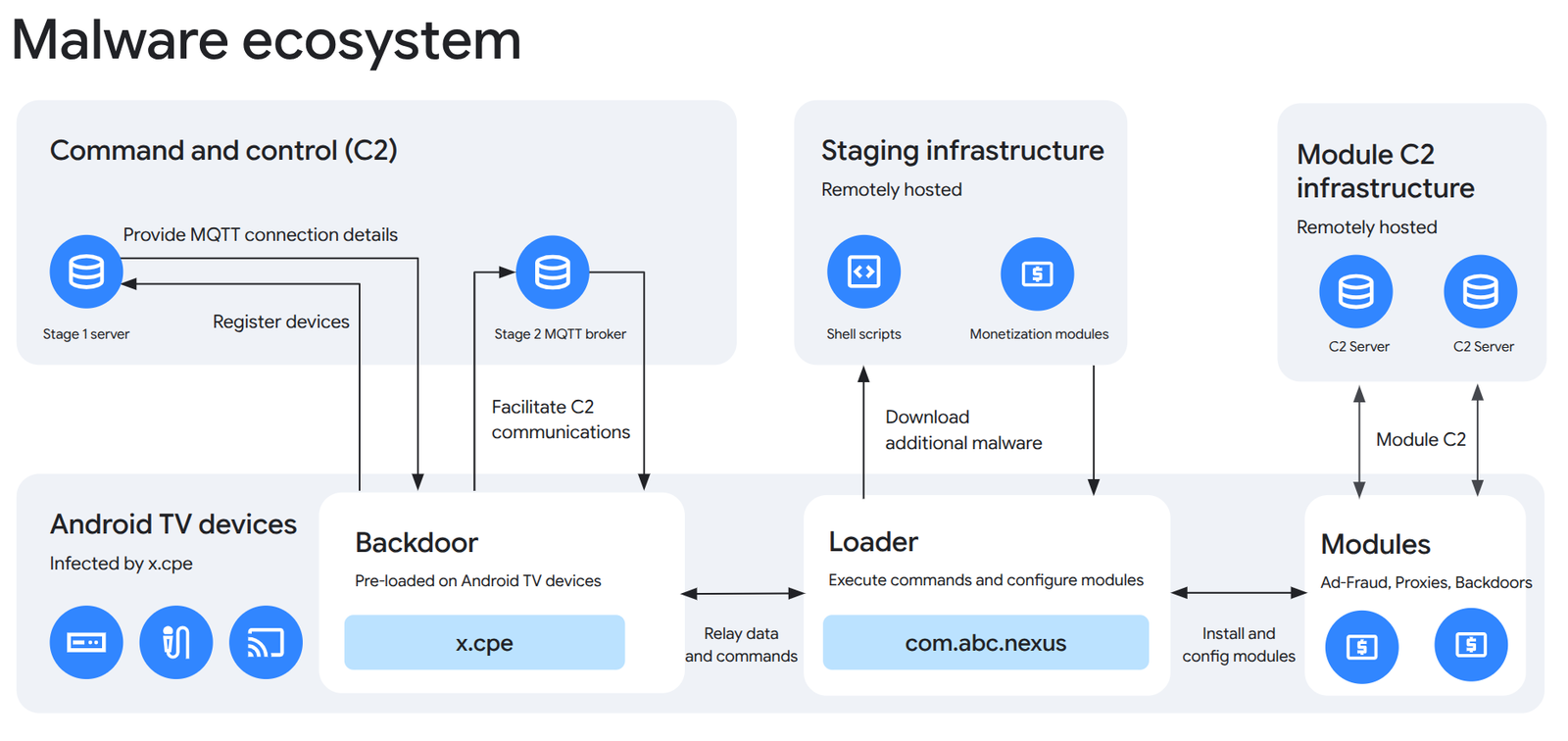
In a detailed blog post, the Threat Intelligence Group explains how the x.cpe botnet evolved quickly from a single-stage dropper into a modular three-stage malware platform that sold access to third parties. Manufacturers must have their devices certified if they want access to Google apps and branding, a process that is supposed to catch threats like this. However, Videostrong’s compromised boxes, mostly sold under the MECOOL brand, evaded detection by using a backdoor to remotely install the malware after the devices were set up and online.
After devices appeared online, a stub application called x.cpe or com.oemservice would phone home. This package did not have any malicious capabilities of its own, but it had the system-level permissions necessary to install malware modules at the operator’s behest. It also disabled Play Protect, which would have otherwise flagged the silently installed packages as malicious.
Overview of x.cpe malware.
Credit: Google
Overview of x.cpe malware. Credit: Google
Google found most of the boxes were running residential proxies for routing large volumes of nefarious traffic or modules that engaged in ad fraud schemes. Selling access to this botnet was probably a big business. Videostrong also had full access to the devices, allowing operators to run terminal commands, capture the screen, and probe other devices on the local network. Google reportedly observed Videostrong doing this in real time.
Smashing the botnet
Google worked with several other organizations to disrupt the x.cpe network, including Japan’s National Police Agency, Synthient, and Trend Micro. Google says it has taken legal action to shut down the domains and servers Videostrong used to operate and install its malware. It also went after command-and-control servers operated by Videostrong that were connected to other malware campaigns. Google estimates Videostrong has been cut off from about 10 million compromised devices.
This action should make the affected devices safe to use, but probably not as safe as they should be. Play Protect is still disabled, and the inert malware modules are still installed. Since they are loaded as system apps, users cannot easily remove them.
Synthient has published a list of 182 device model names known to be included in the botnet. Anyone who has purchased a MECOOL or white label Android TV box of unknown origin should check it. Trend Micro counted a total of 1,472,554 infected devices, somewhat higher than Google’s estimate. The overwhelming majority were in Brazil, Malaysia, Iraq, Mexico, and Taiwan, but tens of thousands were also online in the US, Germany, the UK, Australia, and Canada.
Google determined the operation was not the work of a rogue actor, so it has ended its relationship with Videostrong. The company, as well as any subsidiaries, will not be permitted to use Google’s Android apps and services.
Google also notes that it is updating its certification process to close the loophole that allowed Videostrong to operate its botnet on certified devices. Android is open source, though, and there are countless uncertified Android-based TV boxes out there. Videostrong could continue to sell malicious hardware under other brands without Google apps. But it would still have to rebuild its malware operation from scratch.
Donald Trump’s Republicans suffer landslide defeat – what this means for the world
Donald Trump’s Republican Party has received a stunning rebuke in the US midterm elections. Republicans went into the evening hoping that the polls might be wrong and that they could at least cling on to control of the Senate. But by midnight in Washington, the GOP was staring down what looked like its worst defeat in 50 years.
Republican losses were not just confined to the type of swing districts that parties usually worry about on election night. The scale of the losses was staggering. They lost Senate seats in deep red states such as Texas and South Carolina. They lost districts they had gerrymandered and in which they were supposed to be unbeatable. They lost seats that even the sharpest analysts thought were safe.
Why? For months, surveys have shown that voters are fed up with high prices, with the war in Iran, and with what is increasingly being talked about as the Trump administration’s corruption. A president who was narrowly elected on the promise of a steady economic hand instead spent two years pursuing an extreme ideological agenda favoured only by a minority of Americans. He ignored what voters were saying, and now they have delivered a harsh verdict.
But these results have implications beyond just the remainder of Trump’s presidency. They break some of the patterns that have defined American politics for decades. Democrats are suddenly winning in places where they have been counted out for a generation. Suddenly, the American political map looks different.
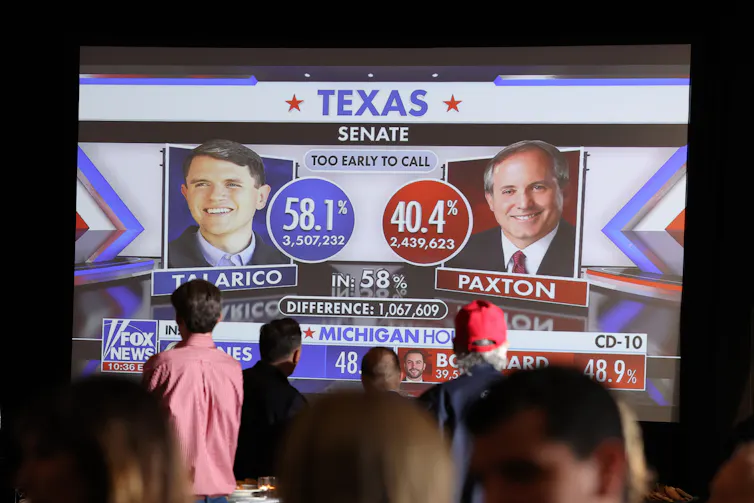
Take Texas. The last time a Democrat won election as a senator there was 1988. Democrats have not won a presidential election in Texas since Jimmy Carter in 1976. Yet last night, Democrat James Talarico powered to a convincing victory. If elections in Texas become politically competitive on a permanent basis, it will become much harder for Republicans to take the presidency in the future.
The Republican Party will now be looking nervously towards the 2028 election. For the first time since 2016, there is likely to be a serious debate within the party about whether to move on from the aggressive nationalism and bigotry of Trump’s “Make America Great Again” movement. Democrats, meanwhile, face their own questions about how to capitalise on their victories.
Foreign policy futures
But for the rest of the world, change might not come so quickly. Despite the fact that his party has suffered this electoral setback, Trump remains president until 2028. And because despite its constitutional role in declaring war and ratifying treaties, Congress tends to be less involved in foreign policy, there is still a lot that he can do with that power.
Indeed, US presidents whose parties perform badly in midterm elections often become more active in foreign policy than they had previously. With the chance of passing a significant domestic agenda mostly beyond their reach, they have a more time on their hands to think about America’s relations with the rest of the world. The same is likely to be true of Trump.
The fact that the midterms are over also means that Trump no longer has to be so careful about the political consequences of his actions. As the midterm elections got closer, the president has backed down from major military confrontation with Iran and sought a truce in his tariff wars. Now, with political constraints lifted, he could become more erratic and unpredictable.
James Talarico became the first Democrat to win a senate seat in Texas since Lloyd Bentsen in 1988.EPA/Richard Rodriguez
Congress would not be completely powerless to stop him, at least in theory. But most actions it can take – such as cutting off funding for the war with Iran or seizing tariff power back from the president – require margins of control in both chambers that Democrats are unlikely to have, despite their formidable victories.
They would need to have a two-thirds majority to override an almost certain presidential veto on any attempt to pass laws to achieve these outcomes. So a key question is whether this midterm drubbing was serious enough to make some Republican members of Congress get serious about joining Democrats in restraining Trump.
Something that Democrats will definitely be able to do is launch all manner of investigations into the conduct of the Trump administration and some of its officials. Their efforts are likely to focus on the war with Iran, Trump’s personal financial dealings with foreign leaders, and the management of the Pentagon by secretary of defence Pete Hegseth.
Hegseth, indeed, could be an early casualty of these efforts – there is speculation that he will resign or be fired rather than face possible impeachment.
But ultimately a change of direction in US foreign policy depends on the decisions of Trump himself. A changing of the guard among his advisers, or in Congress, can only do so much to influence a president who has never willingly submitted to constraint.
The world should prepare itself for the possibility that a politically wounded and angry Trump could now decide to vent his frustrations abroad.
Democrats Secure Control of Congress in Midterm Election Sweep
cde.news desk · 2 min read
Democrats have secured control of both chambers of the US Congress in the 2026 midterm elections, delivering a major setback to President Donald Trump and the Republican Party.
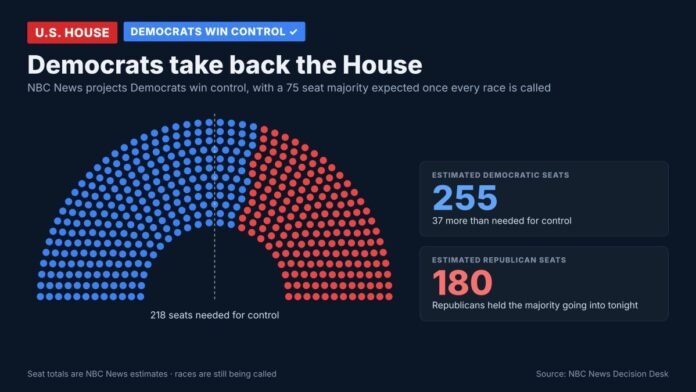
With 348 of the 435 House races called, Democrats had won 220 seats, a net gain of 25, against 128 for Republicans, who lost 25 seats. The party passed the 218-seat threshold required for a majority, officially clinching control of the House of Representatives.
In the Senate, Democrats were leading with 53 seats, including independents, compared with 42 for Republicans, representing a net gain of seven seats. Thirty of the 35 Senate races had been called, with several contests still outstanding. The results would give Democrats control of Congress when the new legislature convenes in January, although Trump will remain in the White House.
The Democratic gains extended across several states, with candidates defeating Republican incumbents in traditionally competitive and Republican-leaning districts. In Indiana, JD Ford flipped the fifth congressional district, which Trump had carried by 17 percentage points in 2024. Christina Bohannan defeated Republican Mariannette Miller-Meeks in Iowa, while Sarah Trone Garriott won the state’s third district. Wisconsin Democrats Rebecca Cooke and Mitchell Berman also unseated Republican incumbents.
Democrats achieved significant victories in state elections. Minnesota Senator Amy Klobuchar won the governorship with more than 55% of the vote, becoming the state’s first woman governor. In Arizona, Democratic Governor Katie Hobbs secured re-election by double digits, while the party was also seeking control of the state legislature.
Wisconsin Democrats claimed a political trifecta, winning the governorship, state Senate and state Assembly for the first time since 2010.
In Minnesota, Peggy Flanagan won the Senate race with more than 54% of the vote, defeating Republican Michele Tafoya. Flanagan presented the result as a rejection of Trump’s policies, including immigration enforcement, healthcare cuts and the war in Iran.
Iowa Democrat Josh Turek also won a Senate seat, pledging to address affordability, tariffs and corruption.
The Mississippi Senate race remained exceptionally close, with Democrat Scott Colom leading Republican incumbent Cindy Hyde-Smith by just 28 votes with 97% counted. If successful, Colom would become the state’s first Democratic senator since 1982 and its first Black senator since Reconstruction.
Trump blamed Fox News for Republican losses, while Senate Republican leader John Thune vowed to oppose what he described as Democratic extremism.
The results reflected widespread voter dissatisfaction with Trump’s administration and gave Democrats a strong mandate to challenge his agenda during the final two years of his presidency.
Trump goes meekly as Democrats take Senate and House
<
article id=”post-952309″>
Some key US Senate races haven’t yet been called, but as of late Tuesday, Democrats have flipped enough seats to secure majorities in both chambers of Congress—a clear rejection of President Donald Trump’s Republican Party by voters across the country.
The decisive wins in the US Senate, according to various decision desks, were by Josh Turek in Iowa, Roy Cooper in North Carolina, Annie Andrews in South Carolina, Adam Hamilton in Kansas, Troy Jackson in Maine, Sherrod Brown in Ohio, and James Talarico in Texas.
So far, Democrats have not lost any Senate seats they currently hold. As of press time, Democrats are projected to control enough seats to not need support from Sen. John Fetterman (D-Pa.), who continues to buck his party on issues including war.
Watching the calls come in one after another, MS NOW anchor Chris Hayes said the results were not “just an eke out” win with an “11,000-vote margin or a 20,000-vote margin” in the races that Democrats are winning. “This is a total shellacking,” he said, specifically referring to the Senate and governor races in Texas, but also in the context of the other races called.
Texas, Hayes said, “has been run as a one-party state for a generation—for 30 years,” and now “Talarico may win the [seat] by seven or eight points when all is said and done. It’s not even close. They’re getting their clocks cleaned.”
From the Lone Star State, Talarico declared that “we just took back Texas,” and “we just sent a message to every billionaire megadonor… In this state, in this country, power belongs to the people.”
Earlier in the night, after decision desks determined that Democrats had won enough seats to control the House of Representatives, Congressional Progressive Caucus Chair Greg Casar (D-Texas) said that “working people came together to change the course of American history. From coast to coast, Americans are demanding a country that works for all of us, not just corrupt politicians and billionaires.”
After his party picked up the necessary number of seats to also control the Senate, Casar said, “Abolish the filibuster.”
Sen. Ron Wyden (D-Ore.), who’s expected to chair the Senate Finance Committee, identified another priority: “Subpoenas.” Sen. Ed Markey (D-Mass.) similarly said that “they are going to need to plant new forests for all of the subpoenas we’ll be printing.”
The looming majorities give Democrats critical opportunities not only to thwart Trump’s legislative agenda for the latter half of his second term, but also to exercise oversight of him and his administration—and could even lead to a historic third impeachment of the president.
As Trump often does, he took to his Truth Social platform late Tuesday. The president—who faces historically low approval ratings as his policies, including an illegal war on Iran, fuel a nationwide affordability crisis—wrote that “I wasn’t on the Ballot and if I was, we would have won IN A LANDSLIDE!”
While there have been serious fears that Trump would not accept a Democratic tsunami, given his refusal to concede after losing in 2020, The New York Timesspoke with him by phone shortly before 10:30 pm Eastern Time.
Despite his hallmark hostility toward elected Democrats, he said: “We’ll, you know, look forward to working with them… We’ll probably work something out.”
Meanwhile, the Democratic National Committee chair, Ken Martin, pledged the kind of accountability Democrats campaigned on when his party officially reclaims both chambers.
“Thanks to Democrats going on offense throughout the country, we have held Republicans accountable for their harmful policies, elected real champions for working families, and flipped control of the US Senate,” Martin said.
“Congratulations to our incredible candidates, our hardworking state Democratic parties, and all of the organizers who put in the work to protect our incumbents, flip seats from red to blue, and put Republicans on defense while expanding the map.”
“With Democrats back in the Senate majority,” he added, “we will fight to lower the cost of groceries and gas, expand access to healthcare, make housing and childcare more affordable, stand up for workers, end Republicans’ costly war with Iran and their reckless tariffs, put a check on Trump’s corruption, and invest in communities across America.”
Another child dies of measles as CDC reportedly holds up health alert
A child in New York has died of measles, health officials in the state announced late Monday. It marks the first reported measles-associated death in New York in more than 30 years. It is the seventh measles-linked death reported in the US this year; all six of the other deaths were reported in Pennsylvania, which is experiencing a dramatic measles outbreak that has stricken over 1,430 people this year. Prior to the deaths, Pennsylvania hadn’t seen a measles-related death in 35 years.
The boom in vaccine-preventable outbreaks, cases, and tragic deaths is being fueled by slipping vaccination rates nationwide as health misinformation and anti-vaccine sentiments have taken hold. One of the most prominent anti-vaccine activists in the US currently serves as the US health secretary; Robert F. Kennedy Jr. spent decades prior to taking office attacking vaccines and spreading misinformation. He and his anti-vaccine organization, Children’s Health Defense, have been one of the most prolific sources of anti-vaccine content.
In a statement, New York Governor Kathy Hochul directly tied the state’s death to Kennedy’s policies and anti-vaccine activism. She called the child’s death “a devastating reminder of what’s at stake when Washington deliberately erodes decades of progress in protecting Americans from preventable illnesses.” She also said she was “heartbroken” by the death, sending her condolences to the family. “As a mother and grandmother, I cannot imagine what this family is going through,” Hochul said. Overall, New York has reported 170 measles cases in over a dozen counties.
In a statement emailed to Ars Technica after publication, a spokesperson for the Department of Health and Human Services (HHS) said that “Secretary Kennedy and CDC Director Dr. Erica Schwartz continue to make clear that the MMR vaccine is the most effective way to prevent measles.”
Blocked alert
Days before the seventh preventable measles death, The Washington Post reported on Kennedy’s latest push to thwart public health efforts: Career scientists at the Centers for Disease Control and Prevention—which is under Kennedy’s control—were blocked from publishing an urgent health alert to clinicians regarding the risk and management of measles cases during pregnancy.
Given the previous success of vaccines and vaccination campaigns, many clinicians have never seen such cases in their careers. But measles infections during pregnancy pose severe, life-threatening risks to both pregnant people and fetuses. As such, CDC scientists wanted to issue an informational advisory through the CDC’s Health Alert Network.
But the CDC Director’s Office declined to provide the required approval for the alert, sources told the Post. The scientists have since moved to trying to publish the information in the CDC’s publication, The Morbidity and Mortality Weekly Report (MMWR). But the peer-review process for the publication is longer than that of an advisory. Further, vaccine-related studies already approved for publication in MMWR have been suspiciously delayed, the Post reported. The scientists are now considering publishing the information outside the agency to avoid onerous clearance.
In response to the Post’s reporting, the HHS spokesperson told Ars Technica that CDC is closely tracking measles and “providing clinicians and public health officials with guidance to protect mothers and babies.” Information on measles is “moving through CDC’s scientific review and clearance process, which informs publication decisions and timing.”
New York has not released the age of the child who died or any other details about the case. The other sixth deaths reported this year have included babies, including one with congenital measles. The six deaths in Pennsylvania included a newborn with congenital measles, whose mother was severely ill at the time of birth; a 6-week-old who was too young to be vaccinated; a “perfectly healthy” 18-year-old; a 20-year-old with leukemia; a 40-year-old with underlying conditions; and a 39-year-old with underlying conditions. All the deceased were unvaccinated.
The CDC, meanwhile, has reported only three of the seven deaths this year. Kennedy reportedly ordered the CDC to delete some of the early deaths and has since changed how the CDC counts deaths. Instead of the long-standing practice of relaying reports from states, the CDC now relies on federal death records, which can take weeks to come through and are not designed to capture the real-time data needed to respond to an active outbreak.
Overall, the CDC reports over 4,850 measles cases across 47 states and jurisdictions. At least 511 people have been hospitalized. This year’s tally is more than double the total from all of 2025, which was 2,289 cases with three deaths. The 2026 tally is also the largest the country has seen since 1991, prior to measles being declared eliminated from the US in 2000 amid high vaccination rates.
This story was updated on November 3 to include statements from an HHS spokesperson.
In California’s Central Valley, ICE Might Swing a Red District Blue
In California’s Central Valley, some surprising voters are lining up behind a progressive upstart: A law enforcement officer who calls for the abolition of ICE. A millennial who once voted for a Republican congressman.
They found themselves among supporters of Randy Villegas, a Democrat poised to oust longtime incumbent Republican Rep. David Valadao in a district dominated for decades by conservatives in California’s Central Valley.
With Democratic victories across the nation, California’s 22nd Congressional District is the kind of historically red stronghold where progressive policies may find new purchase.
Villegas’s path to the general election mirrors that of other progressive candidates charting a new identity within the party. Running on policies such as Medicare for All, addressing affordability, rejecting corporate donations, and halting the flow of weapons to Israel, the 31-year-old defeated a moderate Democratic state assembly member backed by the party’s establishment in the June primary.
Villegas’s opposition to ICE in a district that is 70 percent Latino or Hispanic marked the sharpest point of contrast with Valadao, who defended the Trump administration’s anti-immigrant campaign and famously uttered “It is what it is” on the debate stage last month when pressed on the issue. Valadao claimed “a lot” of the individuals captured by ICE in the Central Valley in recent weeks have criminal records, despite research showing the majority of those detained by ICE lack criminal convictions.
It was Valadao’s stance on immigration that most animated Central Valley voters who spoke with The Intercept.
“I’ve never seen him stand up to something I feel is egregious,” said Raul Castro, 53, a Fresno County probation officer who is upset with Valadao’s lack of willingness to oppose Trump on the ICE raids surging through the area in recent weeks. “I just don’t respect people like that.”
While standing on the front porch of his house in a middle-class suburb in northwest Fresno, Castro lamented ICE’s targeting of immigrants based on their appearance, language, or jobs. He spoke out against immigration agents pulling people from the street and into labyrinthine detention centers where civil rights advocates have reported a lack of access to basic necessities such as clean water and adequate healthcare. Though Castro once supported ICE, when asked whether he would support abolishing the agency altogether, he said yes.
“If you asked me that same question, ‘Hey would you abolish ICE?’ I’d say, ‘No, ‘cause they’re doing things to make sure our country is safe. I want to live in a safe Fresno, safe county, safe city,’” Castro told The Intercept. “But now, wait a minute, maybe that’s not what I thought it was going to be.”
Villegas told The Intercept he wasn’t surprised to hear he had won the support of an anti-ICE law enforcement officer.
“I don’t find it surprising because I think ICE has made it much more difficult for local law enforcement to carry out their jobs and their work — and everybody is seeing the indiscriminate profiling going on,” Villegas said at a Fresno park rally to support last-minute canvassing efforts.
Villegas himself does not support abolishing ICE but instead has called for wide-ranging reforms of the agency. The policy position makes Villegas somewhat an anomaly among his progressive peers, who are riding a wave of leftist energy into Congress, some of whom include “Abolish ICE” among their campaign platforms.
While holding key endorsements from high-profile democratic socialists Sen. Bernie Sanders, I-Vt. and Rep. Alexandria Ocasio-Cortez, D-N.Y., Villegas has also rejected the socialist label, preferring “populist,” despite attempts by the Republican national party to weaponize the term against him. Unlike many of his fellow progressives, Villegas is also one of the few who is running in a historically red district. And he’s confident voters are not caught up in the ideological nuances and hopes to instead cut through them.
“People are fed up with an agency who is unaccountable, people are fed up with a member of Congress who is unaccountable, who doesn’t even have public town halls,” Villegas said. “We deserve better than that in the Central Valley, and I think that’s why our messaging is resonating across the political spectrum.”
Such reach across the political spectrum is also evidenced in voters like Aram Easter, 33, who was born and raised in Fresno. He doesn’t vote in every election, but cast a ballot for Valadao a decade ago when his district previously covered Fresno, largely because he bought the vision of someone with local Central Valley roots (Valadao was born and raised in the nearby Hanford). He also agrees with some aspects of Trump’s agenda, such as building the border wall. But he drew the line on immigration enforcement.
“You got people tearing people’s families apart,” Easter said. “My family immigrated here — I have Black and Mexican family — I’m not with them overly-aggressively doing it.”
Since early October, ICE raids have become more prevalent in the region, with more than 200 people detained by authorities throughout the surge, according to the local newsroom Fresnoland. Similar upticks in ICE have taken place recently throughout the state, including Los Angeles and San Diego. Voter rights organizations in the Central Valley have taken notice and are viewing the raids as an effort by the Trump administration to suppress the vote, especially in a key race in the 22nd District.
“This timing of the uptick in ICE is not a coincidence,” said Marisa Moraza, political director at PowerCA Action, which is doing independent expenditure work to support Villegas’s campaign. “It’s not a coincidence that this started at the beginning of October when voters received their ballots in the mail.”
The raids have also suppressed get-out-the-vote efforts, Moraza said. Last month, the group had to pause in-person canvassing operations for several days amid the surge in ICE activity, electing to instead do phone banking.
The ICE activity is also keeping would-be voters from dropping off their ballots, as recent arrests of U.S. citizens struck fear among voters, said Cirilo Ordaz, a canvasser with PowerCA supporting Villegas.
“With going out to vote, I think a lot of them haven’t done it yet because of that fear,” said Ordaz, who was one of dozens of Villegas supporters who fanned out across the region on the Monday before Election Day to urge residents to vote.
Sylvia Ramirez, another Fresno native canvassing with PowerCA said she’s noticed far fewer people outside in recent weeks, including a lack of crowds at the popular annual event Big Fresno Fair. For voters, she and her group offer to drop off people’s ballots for them if the fear is keeping them inside.
“Offering the services of dropping off a ballot for somebody really helps out with the fear that people have of leaving their houses,” she said, adding that she has told her family to stay at home as much as possible in recent days to avoid interactions with ICE.
The Central Valley, known for its significant agriculture production, has been the seat of high-profile Republican lawmakers, such as former Rep. Devin Nunes and former House Speaker Kevin McCarthy.
But after a Democrat-led redistricting in the state last year in response to Texas’s partisan redistricting effort, the district now includes the northwest sections of Fresno, a city with more Democrats.
Early voting across the state has outpaced recent midterm elections, according to a recent survey. It’s unclear how much of that is anti-Trump animus or having a candidate voters are excited to support.
Castro, the probation officer, was among those who voted early. In recent weeks, he said he noticed residents looking at him with concern while on the job in uniform, showing up at areas where ICE had previously conducted raids. It’s a fear he acutely understood. As a child, he lived in labor camps with his mother and father, who were both undocumented immigrants working in Fresno as farm laborers. He recalled similar indiscriminate sweeps by Border Patrol in the 1970s.
“When I was small, back then it was Border Patrol, and they used to show up in a van,” Castro recalled. “All the agents used to get out and run after these guys. And they used to round them up and take them out,” he said.
Seeing video and hearing of recent ICE raids targeting farmworkers in the area conjured such painful memories.
Voting Experts Feared “Chaos” on Election Day. So Far, It Hasn’t Materialized.
As Americans cast ballots on Tuesday, voting experts’ deepest concerns largely didn’t materialize on a mostly routine Election Day.
Tuesday’s relative quiet followed an anxious run-up in which the Trump administration pressed forward with unprecedented efforts to assert more federal control over elections.
The president has justified these steps by claiming, without evidence, that American elections are beset by fraud and that illegal voting is tipping the scales in favor of Democrats.
Courts have thwarted most of the administration’s plans, but Trump and his top deputies have kept up the pressure. In the days before the midterm, they threatened to prosecute election officials who didn’t reject ballots from people that the federal government has identified as likely noncitizens.
The administration didn’t explicitly rule out sending federal agents to the polls or seizing ballots or voting machines.
Election experts told ProPublica the cumulative effect of these steps was to ramp up anxiety about the vote and to erode voters’ trust in the system.
“The administration has been creating a lot of noise, a lot of confusion, a lot of doubt,” said Ben Hovland, whom Trump fired as a commissioner for the bipartisan Election Assistance Commission earlier this year. He said he worried that this would make voters “sit it out” and “throw their hands up.”
In an emailed response to questions before Election Day, a DHS spokesperson said Immigration and Customs Enforcement was “not planning operations targeting polling locations,” adding that the agency would only arrest people at the polls to address a safety threat as part of “intelligence-driven targeted enforcement.”
“Paper Trail” Podcast
Learn more about this story on ProPublica’s podcast “Paper Trail.”
The DHS and the Justice Department “are laser focused on identifying, prosecuting and removing aliens who vote and dilute the votes of U.S. citizens,” the spokesperson added. “Our message to aliens who vote in American elections is clear: we will find you, arrest you, and you will face the consequences — including criminal charges and deportation.”
Before and on Election Day, it’s typical for the major political parties to mount poll-watching operations, but both Democrats and Republicans said they’d expanded these activities in this pressurized midterm.
Republicans said they would focus on issues such as voter eligibility and voter-roll accuracy, according to Ally Triolo, the Republican National Committee’s election integrity communications director. Democrats planned to concentrate on voter intimidation and other hurdles to voting, said Angelo Fernández Hernández, a Democratic National Committee spokesperson.
Here are five issues that voting rights experts said they were watching in this year’s election:
People arrive to vote early on Oct. 27 in Coral Gables, Florida.Lynne Sladky/AP Images
1. Will There Be Federal Interference?
As clocks hit 5 p.m. on the East Coast, there’d been no confirmed reports about federal law enforcement at the polls. Homeland Security Secretary Markwayne Mullin told reporters at the White House that he hadn’t sent immigration agents to the polls.
Still, an incident during early voting in Leon County, in the Florida Panhandle, illustrates how widespread such fears have been.
Mark Earley, the county’s supervisor of elections, told ProPublica he was “furious” when two marked U.S. Customs and Border Protection vehicles parked outside the county’s busiest voting location last month, after he’d been repeatedly reassured by the administration that agents would not do this.
He reported the sighting to the FBI, then learned that the agents, who were headed out of state, had just stopped by to try to vote themselves. The episode generated a flurry of newscoverage.
“Given the negative media coverage regarding federal agents at the polls, it shows pretty bad judgment that they showed up in their official vehicles,” Earley said.
It’s against the law for federal law enforcement to be near polling places.
Nick Brown, Washington’s attorney general, leads a group of Democratic state officials and voting rights advocates who have been planning how to respond if, indeed, there were real federal interference. The group has “war-gamed” how to react if government agents attempted to commandeer voting equipment or ballots.
“We’ve seen the tension and chaos that’s in the air,” Brown said. He called the federal government “the biggest challenge to smooth elections right now, which is not the way it’s supposed to be.”
A DOJ spokesperson said “the best preparation for any election official is following federal law.”
As is routine in federal elections, DOJ monitors were watching over polling places Tuesday. The agency had assured states that its observers would follow the law and not interfere with voting or election administration. In Michigan, the state attorney general’s office said it received reports of monitors requesting training materials in Dearborn. A similar report came in about monitors’ interaction with election workers in Flint. The DOJ team overseeing Michigan later told state officials that this was inconsistent with the training they received.
Similarly, in New Mexico, the secretary of state’s office received reports of Justice Department monitors “asking some unusual questions and questioning voters” in Bernalillo County, a spokesperson told ProPublica, adding that the office later received reassurance from the Justice Department that “it would be addressed.”
This issue also surfaced in August during the primary election in Wyoming, where poll workers reported feeling uneasy when DOJ monitors asked about their training and to inspect voting systems. The state’s governor criticized these actions as “a bit aggressive” and “irregular.”
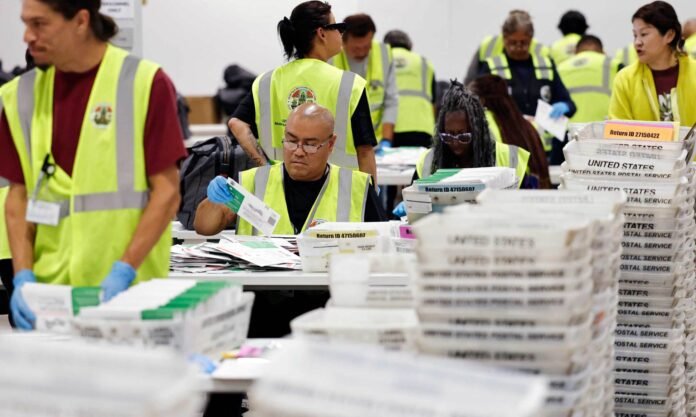
Workers prepare ballots to be scanned for counting in Orange County, California, on Oct. 28.Apu Gomes/Getty Images
2. What Effect Will Noncitizen Voter Challenges Have?
The Trump administration’s multipronged effort targeting alleged noncitizen voters has already led to eligible voters being improperly removed from the rolls. Voting rights groups feared this would block some U.S. citizens from being able to vote when they showed up Tuesday, but it’s not yet clear whether this happened.
Federal officials have made clear they plan to go after anyone they think is committing voter fraud.
On the first day of early voting in Texas, Aaron Reitz, the U.S. attorney for the Southern District of Texas, posted a YouTube video announcing his intentions. “If you violate federal election law,” he warned, “I will hunt you down and prosecute you.”
This threat came days after the DOJ sued California, seeking to block the state from counting mail ballots from more than 20,000 voters it claims are “likely” noncitizens. The administration had obtained the state’s public voter rolls, which the DHS had blended with its own immigration information and third-party data.
In a court filing, California called the claim that there are 20,000 noncitizens on its voter rolls “specious.” Los Angeles County analyzed a sampling of the likely noncitizen voters that the federal government claimed were registered there. Many weren’t registered in the county or had never voted, the analysis showed. Some said on their voter registration forms that they were born in the United States.
Asked about the case, the DOJ told ProPublica, “Federal law prohibits noncitizens from voting in federal elections, and the Department has a duty to enforce it.”
After lower courts rejected the DOJ’s motion for an emergency order that would have barred California from counting the 20,000 voters’ ballots, the U.S. Supreme Court declined the Trump administration’s request to intervene in the dispute. On Thursday, the administration also sent grand jury subpoenas to California officials demanding records about their response to allegations of noncitizens on the state’s rolls. Late Friday, a federal judge issued a restraining order blocking those DOJ demands, calling them an “intimidation plan” that would interfere with legal voting.
Last week, the DOJ wrote a letter threatening to sue Washington state if officials there refused to review a list of 400 voters it believes to be noncitizens within 24 hours. U.S. Attorney General Todd Blanche told reporters late last month that the department was considering additional actions, saying there were “a number of states that we’re looking at.”
In a letter responding to the DOJ, Washington Secretary of State Steve Hobbs called the government list of 400 names “not reliable,” saying it included U.S. citizens, people who aren’t registered to vote and duplicate entries. “Time and time again,” Hobbs wrote, “DHS claims about noncitizen voter registration turn out to be greatly exaggerated or false.”
Sam Trepel is Rule of Law program director at States United Democracy Center and a former attorney for the DOJ’s Civil Rights Division. She said the agency’s actions involving California and Washington were a “disturbing use of prosecutorial authority.”
Trepel worried that the DOJ would try to seize ballots cast by voters identified as likely noncitizens, before or after the election, which would “put their votes at risk and undermine trust more broadly.”
Voting rights advocates also were concerned that the government’s efforts to target noncitizen voters could frighten eligible voters to the point that they wouldn’t show up.
“A voter could say, ‘Well, maybe I don’t want to put myself on the target list here, maybe I won’t register, or maybe I won’t vote,’” said David Janovsky, acting director of The Constitution Project at the watchdog group Project on Government Oversight.
Equipment for early voting is prepared at the Travis County Clerk’s Office in Austin, Texas, on Oct. 14.Jay Janner/The Austin American-Statesman via Getty Images
3. Will There Be Problems at the Polls?
By late afternoon, voters and election officials had reported an array of delays and ballot-scanning problems.
That includes in New York, where the State Board of Elections said a programming error in Westchester County made it impossible to scan ballots using on-site machines, causing voter concern. Officials have said that all ballots would be counted.
States often change laws and rules related to voting.
Since 2024, Republican-led states have taken a number of steps that experts say will make it more difficult for some of their residents to cast ballots and have them count.
A North Carolina law, for example, required voters to provide proof of identification when sending mail-in ballots. Under new rules, ballots now come with two envelopes, both of which must be sealed. Ballot rejections had skyrocketed, Democracy Docket reported, because voters weren’t sealing the inner envelope.
Texas and other states cut back on the number and location of polling places, especially in areas favoring Democrats. In hotly contested Tarrant County, which includes Fort Worth, the number of polling sites was slashed by almost a third. This prompted fears of long lines and voter confusion on Election Day. But seven of the 10 voting sites a reporter visited had waits of less than 15 minutes, and the three with longer lines were each within a couple of miles of a site with a short wait. In Tarrant, like many Texas counties, voters can cast a ballot at any location.
Voting rights groups such as the Texas Civil Rights Project are tracking two issues involving the state’s voter registration systems. A software error at the Texas Department of Public Safety stopped several hundred thousand new voter registrations from being forwarded to local election officials, preventing them from being added to the rolls. A separate state system for updating registration information wasn’t processing changes for several weeks, leading to more backlogs.
Texas Civil Rights Project attorney Sarah Chen said the group received more complaints than usual from voters this Election Day who said they had to cast provisional ballots because registrations had not been processed. How much of a jump is unclear, Chen said, because counties have six days to report provisional ballots.
Every election features some issues with voting equipment.
During early voting, there were isolated complaints involving touch-screen voting machines — including one from Dolly Parton’s sister in Tennessee — spawning fears that machines had been “rigged” to switch votes.
ES&S, the company that makes the machines garnering the complaints, told ProPublica that the company hadn’t received widespread reports. Election experts say occasional problems with touch-screen machines don’t signify tampering or manipulation. Any attempt to tamper with programming would surface during testing by election officials and be corrected, they said.
A poster at the King County elections headquarters in Washington. Last month, officials in several states, including Arizona, received envelopes with an unknown white powder. Arizona eventually deemed the material nontoxic, but Secretary of State Adrian Fontes said “the fear it caused was real.”David Ryder/Getty Images
4. How Secure Will the Election Be?
Incidents in the run-up to the midterms had ratcheted up election officials’ concerns about the potential for both cyber and physical attacks.
On Tuesday, bomb threats were made at polling places in at least two states, Ohio and Michigan. In Ohio, a threat at a Toledo elementary school caused the polling place to be evacuated, but the site was later cleared and voting resumed. In Michigan, the threat involved a polling place in Gibraltar, and an investigation similarly determined the threat was unfounded, according to the Michigan Department of State.
Last month, officials in several states, including Arizona, received envelopes with an unknown white powder. Arizona eventually deemed the material nontoxic, but Secretary of State Adrian Fontes said “the fear it caused was real.”
In 2024, false bomb threats, thought to be from foreign actors, caused widespread evacuations of vote-counting sites across the country. The disruptions were brief, however, in part because a message board funded by the federal Cybersecurity and Infrastructure Security Agency, or CISA, alerted election officials that the FBI had deemed the threats not credible.
Trump, however, has dismantled CISA since retaking the presidency, leaving states and local election officials to grapple with both physical and cyber threats on their own. Electionnonprofits have stepped up to try to fill the gap, and states, with CISA’s help, have enhanced their own cyber defenses.
Derek Tisler, counsel and manager for the elections and government program at the Brennan Center for Justice, said the federal government’s absence has weakened the defenses.
“States acting on their own just do not have the same power,” he said.
A voter at a polling site in Anchorage, Alaska, on Oct. 27. The Justice Department has sued the state, seeking to block it from certifying the result of its Senate race if the Republican incumbent doesn’t win. The suit claims the system is unfairly rigged against Sen. Dan Sullivan, because another Alaska man named Dan Sullivan also qualified for the general election ballot.Nathaniel Wilder/Bloomberg via Getty Images
5. Where Will Postelection Challenges Come From?
Election lawyers fear that actions by the Trump administration in the run-up to the midterms suggest the government will aggressively pursue postelection challenges if the results are not to the president’s liking.
Late last month, the DOJ sued Alaska, seeking to block the state from certifying the result of its Senate race if the Republican incumbent doesn’t win. A federal judge threw out that lawsuit on Sunday, but the administration is expected to appeal.
Trump has said he personally ordered the lawsuit to be filed. It claims the system is unfairly rigged against Sen. Dan Sullivan, because another Alaska man named Dan Sullivan also qualified for the general election ballot. The New York Times reported last week that campaign aides to Democratic Senate nominee Mary Peltola orchestrated the candidacy of the second Dan Sullivan after a monthslong, statewide search to recruit someone with the same name. (The Justice Department has also reportedly sent 20 letters to Democrats, including a prominent elections lawyer who has represented Peltola and other candidates, warning that they might be targets of criminal investigations.)
Nonetheless, the DOJ’s case is unusual, both because federal law prohibits the government from interfering with an active election and because challenges typically come after voting is complete. Postelection challenges are most often brought by losing candidates in state courts.
“This is using the federal government to interfere with our election process in a way that I think is pretty troubling on multiple levels,” said Brown, the Washington attorney general.
In response to ProPublica’s questions, the DOJ pointed to Blanche’s statement about the lawsuit on social media, which said the agency “does not seek to stop any ballot from being cast or to stop the certification of Alaska’s election.” (The lawsuit calls it “vital” that the state not certify “any election result that may be impacted by voter confusion” and asks the judge to prevent Alaska from doing this.)
Some election lawyers have suggested that if the GOP suffers significant losses, Trump could try to pressure Republicans in Congress to block new members from being seated. Several lawyers, including Derek Muller, a law professor at the University of Notre Dame, say that the incoming Democratic majority would be able to fend off such an effort; courts, too, are likely to stymie it, though it might cause a short delay, according to Muller.
Brown said he and other attorneys general are also planning how to respond if local election officials or boards refuse to certify election results, based on their own claims of fraud or claims by the administration.
“I worry tremendously about what they might do,” Brown said.
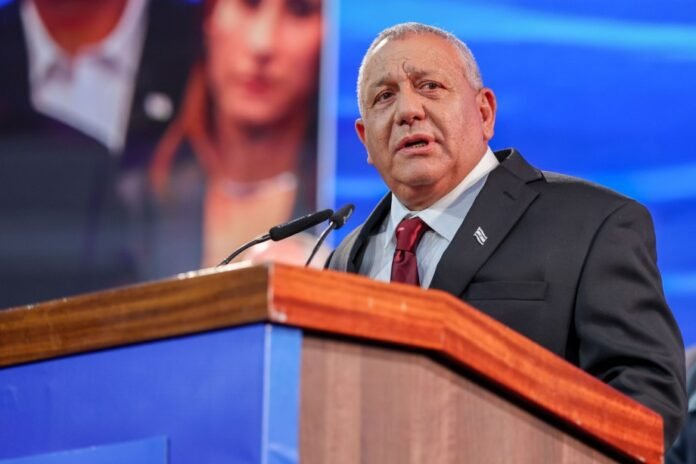
Israeli opposition leader vows to ‘act quickly’ to form ‘national emergency government’
Israeli opposition leader Gadi Eisenkot said Tuesday that the “change bloc” would “act quickly” to form a “national emergency government,” elect a new parliament speaker and advance legislation, Anadolu reports.
Eisenkot, leader of the Yashar party, made the remarks following a meeting of opposition leaders, Israeli news outlet Ynet reported.
He said the bloc’s legislative priorities would include “important legislation and repealing laws that endanger democracy.”
“The negotiating teams of the parties will begin working soon on common principles and on implementing the moves in the Knesset,” Eisenkot added.
READ: Israel’s Arab Joint List, Democrats agree to coordinate efforts to replace Netanyahu government
Tuesday’s gathering marked the first joint meeting of opposition leaders since the Oct. 27 parliamentary elections.
The meeting brought together Eisenkot, former Prime Minister Naftali Bennett of the Together party, Yisrael Beytenu leader Avigdor Lieberman, Yair Golan of the Democrats and opposition leader Yair Lapid, according to The Jerusalem Post.
The elections left Prime Minister Benjamin Netanyahu’s bloc with 53 seats in the 120-member Knesset, while opposition parties secured 48 seats and Arab parties won 19.
The opposition remains short of the 61 seats needed for a parliamentary majority on its own, making support from Arab lawmakers potentially decisive in efforts to form a government.
READ: Trump pledges end to US aid for Israel by year’s end