22.4 C
London
Saturday, September 12, 2026
Home Blog

Could United Launch Alliance’s money problems finally force its owners to sell?

0
could-united-launch-alliance’s-money-problems-finally-force-its-owners-to-sell?
Could United Launch Alliance’s money problems finally force its owners to sell?

Pretty much every rocket company in the United States, save one, has embraced two fundamental tenets: reusability and diversification.

Most famously, SpaceX branched out from reusable rockets to pursue and dominate a growing spectrum of space services: cargo delivery, human spaceflight, satellite production, broadband, and, perhaps soon, orbital data centers and in-space manufacturing. Blue Origin is evolving from a pure rocket company into a satellite manufacturer, robotics developer, and, most recently, a potential competitor for SpaceX’s Starlink network.

Rocket Lab used a different approach to diversify after achieving success with its small Electron launch vehicle. The company relocated its headquarters from New Zealand to Southern California, started building spacecraft and payloads, and then went on a spree of corporate acquisitions to expand into satellite communications and take on a new role as a merchant supplier of satellite components and sensors. It’s now in a stage of advanced development of its partially reusable next-generation Neutron launch vehicle.

The list goes on. Firefly Aerospace started as a launch company and now builds Moon landers and space tugs. Relativity Space is already looking beyond rockets before ever putting anything into orbit.

They all realize an enduring truth in the space business. Launch is a low-margin business. SpaceX’s financial statements, now open to inspection after the company went public earlier this year, shine a light on this fact. Just 8 percent of the company’s $12.5 billion in revenue during the first half of this year came from launch services. Another 5 percent came from “launch and development” activities, which include SpaceX’s work on things like NASA’s lunar lander program.

SpaceX attributes the rest of its revenue to Starlink and AI. The potential of the latter is almost solely responsible for SpaceX’s post-IPO valuation of approximately $1.8 trillion.

Rocket Lab’s financials paint a similar picture. It reported $434 million in revenue for the first half of 2026 and credited a quarter of it to launch services.

Pigeonholed

Given all this, what are we to make of the company that SpaceX supplanted as the country’s leading launch provider?

United Launch Alliance, founded in 2006, was born in an era when the US government was the dominant force in the domestic launch market. Commercial launch demand was on the wane, and what demand there was often went to launch providers in Europe or Russia. Executives at the two leading US launch companies—Boeing and Lockheed Martin—knew they were in trouble. Boeing’s Delta IV rocket program, in particular, was in danger of going out of business.

The situation jeopardized the US government’s policy of ensuring two separate rocket types are available to launch national security payloads into orbit. With the government’s blessing, Boeing and Lockheed entered into a 50-50 joint venture, merging their Delta and Atlas rocket programs under one roof. The merger all but erased competition from the US launch market. However, the sole-source paradigm proved lucrative for ULA’s corporate parents, which each reported hundreds of millions of dollars in earnings from ULA per year in the first decade of the company’s existence.

SpaceX sued the US Air Force in 2014 for the right to compete for military launch contracts, and the Pentagon relented the following year, making SpaceX eligible to bid against ULA. SpaceX won its first high-priority military launch contract in 2016, a few months after the company landed its reusable Falcon 9 booster for the first time.

This moment was a turning point for ULA and the start of a long slide from dominance for the Boeing-Lockheed venture. Around the same time, ULA kicked off development of a new rocket, the Vulcan, to replace the legacy Atlas V and Delta IV rockets. But officials did not prioritize reusability in Vulcan’s design, with no plans to reuse the rocket’s booster stage and only tentative plans to eventually recover and reuse Vulcan’s main engines. A decade later, ULA’s half-hearted stab at reusability hasn’t gone anywhere.

Two BE-4 engines, made by Blue Origin, power the first stage of United Launch Alliance’s Vulcan rocket. ULA says it eventually plans to recover and reuse the engines, but the company did not prioritize reusability during the development of the Vulcan rocket.

Two BE-4 engines, made by Blue Origin, power the first stage of United Launch Alliance’s Vulcan rocket. ULA says it eventually plans to recover and reuse the engines, but the company did not prioritize reusability during the development of the Vulcan rocket. Credit: United Launch Alliance

Aside from ULA’s initial design decisions, the company faltered in its execution of the Vulcan rocket’s development, which was co-funded by the Pentagon. Vulcan’s first launch was delayed more than four years from ULA’s original target of 2019. Boeing and Lockheed Martin at first provided only tentative funding for Vulcan’s development, then ULA waited until 2018 to select an engine for Vulcan, deciding on Blue Origin’s BE-4 over Aerojet Rocketdyne’s AR1. Until then, engineers pursued two different designs for the Vulcan rocket—one with a methane-fueled first stage and another, narrower rocket for kerosene.

In the meantime, ULA shelved plans for an advanced, long-duration upper stage, a feature that, at least on paper, appeared to be one of the Vulcan rocket’s advantages over SpaceX’s Falcon rocket family. Delays in testing and qualifying Blue Origin’s BE-4 engine and an explosion of the rocket’s Centaur upper stage during a ground test in 2023 eventually pushed Vulcan’s first test flight into early 2024.

Still, ULA’s stellar track record for reliability proved a key selling point for the Pentagon, which awarded the company more than half of the military’s next batch of launch contracts in 2020, 27 missions worth some $4.5 billion. SpaceX got the rest of the contracts, with 22 launches booked on Falcon 9 and Falcon Heavy rockets for a total value of $4 billion. The situation flipped with the Pentagon’s next round of launch procurement in 2025, when SpaceX won the lion’s share.

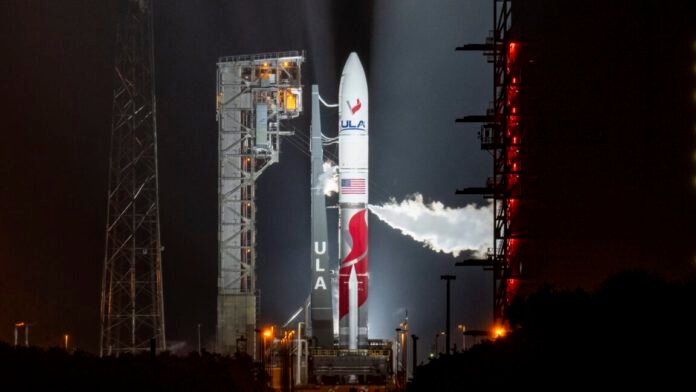
A Vulcan rocket from United Launch Alliance lifts off from Cape Canaveral Space Force Station, Florida, on August 12, 2025.

A Vulcan rocket from United Launch Alliance lifts off from Cape Canaveral Space Force Station, Florida, on August 12, 2025. Credit: Manuel Mazzanti/NurPhoto via Getty Images

Grounded and struggling

ULA’s streak of reliability continued with a near-flawless debut launch of the Vulcan rocket. But ULA ran into trouble on the rocket’s second flight in October 2024 when the exhaust nozzle on one of its Northrop Grumman-built solid rocket boosters shattered moments after liftoff. The rocket kept flying after the anomaly and still reached orbit. An investigation concluded that the nozzle failed due to a “manufacturing defect” in an insulator, leading to the melting and burn-through of the booster nozzle.

But the nozzle problem wasn’t actually fixed. A similar failure on the fourth Vulcan launch last February has grounded the rocket for more than six months. ULA aims to return to flight with the Vulcan rocket soon, perhaps by the end of this month, on a commercial flight with a batch of Amazon Leo broadband satellites. The US Space Force has not cleared Vulcan to resume launches with military payloads, and the program’s cumulative delays have forced military officials to reassign several missions from ULA to SpaceX. Military officials aren’t happy, and they’ve let Boeing and Lockheed know.

A ULA spokesperson said the investigation into the solid rocket booster anomaly is “ongoing” and did not confirm a target launch date for the next Vulcan flight. “We will share the Vulcan Leo 1 mission launch date upon the completion of the investigation and coordination with our customer,” the representative said.

Vulcan’s technical issues are cropping up as launch prices rise at United Launch Alliance. It’s not surprising that the Vulcan rocket, with a fully expendable design, is on average more expensive than SpaceX’s mostly reusable Falcon rocket. But ULA’s launch prices have increased significantly over the last few years—from $112 million to more than $200 million per Vulcan mission—while SpaceX’s prices have remained relatively stable.

At the same time, the financial situation at ULA is not great. Lockheed Martin said its earnings “primarily” attributable to ULA dipped from $325 million in 2016 ($436 million in 2025 dollars) to $100 million in 2022 ($109 million in 2025 dollars). Double that to get an idea of ULA’s net income. Last year, Lockheed reported its share of earnings from ULA was “not significant.” ULA was responsible for a quarter of the operating profit in Lockheed’s space business a decade ago. It dropped to less than 10 percent over the last five years, then to virtually nothing in 2025.

It isn’t as easy to parse ULA’s financial situation from Boeing’s financial statements, which lump ULA’s earnings with several other Boeing joint ventures. But the overall trajectory at Boeing has also trended down.

Boeing and Lockheed’s shareholder equity in United Launch Alliance in 2025 was half of what it was 10 years ago, adjusted for inflation. Shareholder equity, or book value, is a measure of a company’s assets minus liabilities. It’s the amount of money a company’s shareholders would receive after liquidation. The chart below shows the change in how Boeing and Lockheed have valued their equity stakes in ULA since 2016.

United Launch Alliance’s shareholder equity, or book value, adjusted for inflation, dropped from approximately $2.28 billion in 2016 to $1.11 billion in 2025.

United Launch Alliance’s shareholder equity, or book value, adjusted for inflation, dropped from approximately $2.28 billion in 2016 to $1.11 billion in 2025.

Book value isn’t the same as market value, an unknowable figure for an equity-based joint venture like ULA. Market value is typically higher than book value for profitable companies, but Boeing and Lockheed’s earnings suggest that ULA’s finances are, to put it delicately, fragile.

The concerns from ULA’s corporate owners became public in July, when Boeing and Lockheed Martin revealed they guaranteed a loan to sustain ULA through the grounding of the Vulcan rocket. In SEC filings, Boeing and Lockheed wrote that the suspension of Vulcan launches is “negatively affecting ULA’s financial condition and results of operations.”

Lockheed revised down this year’s profitability forecast for its space division by $45 million in July, citing “lower ULA equity earnings.” United Launch Alliance opened 2026 with a forecast of 18 to 22 launches this year. Eight months later, the company has launched five times, and just once with the Vulcan rocket. The lull in launches means fewer customer payments and lower revenue.

ULA’s owners “each agreed to guarantee $500 (million) of certain ULA credit facilities” in May, Boeing said. “We and Lockheed expect to provide additional financial support and could incur losses if ULA is unable to resume Vulcan launches consistent with ULA’s assumptions.” In a footnote, Boeing added that it “generally” issues such credit guarantees on behalf of “parties with less than investment-grade credit.”

Bloomberg reported last month that ULA was looking to raise $1.5 billion, three times the original amount. It’s a remarkable turnabout for Boeing and Lockheed Martin, which have long tapped ULA for a steady flow of revenue.

“ULA’s financial position has been impacted due to the performance challenges associated with the anomaly with the solid rocket booster nozzle experienced on two of the Vulcan launches,” a ULA spokesperson told Ars. “While this is a challenging time bringing our Vulcan rocket up to its optimal launch rate, ULA is well positioned for the future and continues to be laser-focused on our customers’ needs and achieving a reliable and sustainable manifest.”

“Our board continues to view ULA as a national asset providing critical launch capability supporting key government and commercial customers and is supportive of ULA’s continued growth and innovation,” the spokesperson said. “We already have strong commitments from our customers, with more than 80 launches on contract, ULA’s manifest is nearly sold out for the foreseeable future.”

Caveat emptor

Boeing and Lockheed’s efforts to shore up ULA’s finances come after a multiyear sales pitch shopping ULA to potential buyers. None agreed to pay the sum of roughly $5 billion that ULA’s owners were originally asking. Speculation in the launch industry at the time was that a fairer selling price might be $2 billion to $3 billion.

Blue Origin, Jeff Bezos’ space company and a key supplier for the Vulcan rocket, appeared for a time to be the leading contender for buying up United Launch Alliance. That was when ULA was riding high, soon after the successful first flight of Vulcan in 2024. Industry chatter about the potential sale quieted after Vulcan’s recent booster woes.

Other candidates for taking over ULA included Amazon, Vulcan’s biggest commercial customer. Amazon has already funded a significant expansion in ULA launch capability to support the Amazon Leo constellation. Two other ULA suppliers, Northrop Grumman and L3Harris, could also be interested, as could a private equity firm or even a buyout by one of ULA’s current owners. The list of prospective buyers is largely conjecture. Company officials usually don’t speak publicly about mergers and acquisitions until they’re ready to announce them.

A Boeing spokesperson responded to questions from Ars, saying, “Consistent with our corporate practice, we don’t comment on potential market rumors or speculation about financial activities.” Lockheed Martin and ULA did not provide a statement by late Thursday.

It would also be foolish to rule out the US government taking a stake in ULA amid a rush of state-backed investments under the Trump administration.

Engine-builder Aerojet Rocketdyne, now split into separate companies, submitted an unsolicited offer to buy ULA for $2 billion in 2015. Boeing and Lockheed dismissed the bid. $2 billion was probably below market value at the time.

Today, the sale price for any potential acquisition of ULA is almost certainly lower than it was a few years ago, but ULA still has a strong pedigree, with a rocket that is actually (kind of) flying, something many US launch companies can’t say. This could open the possibility of new dark-horse contenders for purchasing United Launch Alliance.

AST SpaceMobile has launched 13 BlueBird satellites for its direct-to-device satellite broadband constellation. The company aims to have 45 satellites in orbit next year.

AST SpaceMobile has launched 13 BlueBird satellites for its direct-to-device satellite broadband constellation. The company aims to have 45 satellites in orbit next year. Credit: AST SpaceMobile

One company to watch is AST SpaceMobile, a Texas-based firm in the early stages of deploying a network of broadband satellites to beam signals directly to smartphones from low-Earth orbit. SpaceX’s Starlink network already does this, and Amazon is pursuing the direct-to-device connectivity market with its Amazon Leo constellation.

AST officials hinted last month that they are interested in getting into the launch business. The company raised more than $1 billion in a convertible bond sale in July, and AST executives wrote in their most recent quarterly earnings report that they are looking for ways to spend it. The company said it is pursuing an “expanding universe of growth initiatives” to “further vertically integrate our business and mitigate risks associated with third-party launch providers.”

AST’s primary launch providers are SpaceX and Blue Origin. Both are potential competitors in the satellite broadband business. The growth initiatives AST said it was interested in would allow it to “secure additional access to orbit” for its own constellation. AST listed “partnerships and/or acquisitions” as possibilities. A company spokesperson did not respond to questions on the matter.

The balance sheet in AST’s latest quarterly filing with the Securities and Exchange Commission showed the company had approximately $2.3 billion in cash and cash equivalents on hand at the end of June, equal to or more than ULA’s publicly traded subcontractors, Northrop Grumman and L3Harris. That was before AST closed its $1 billion bond sale in July.

There are reasons to question AST’s long-term business outlook, especially as it goes head-to-head against SpaceX and Amazon, two of the most well-capitalized US tech firms. However, vertical integration has served most space companies well, and the same may be true with AST. But there’s a catch. ULA itself is not vertically integrated, with suppliers providing key parts, like engines, payload fairings, and avionics.

AST would surely improve its position with more control of its own access to space. AST already builds its own satellites—each with enormous 2,400-square-foot phased-array antennasand manages much of its frontend connectivity service, working alongside mobile phone telcos like AT&T and Verizon. T-Mobile is SpaceX’s largest domestic partner on Starlink direct-to-cell.

A buyer for ULA outside of the launch business would also maintain competition in the US launch market. Any sale would have to be approved by the Federal Trade Commission and Department of Justice to ensure it does not substantially reduce competition. Some companies in other sectors are aiming to complete mergers and acquisitions under the Trump administration, which they see as providing a favorable regulatory environment for such transactions.

The launch market would lose a competitor if a company like Blue Origin, with its own heavy-lift rocket, acquired ULA. This would be unwelcome news for the US military as SpaceX prepares for the retirement of its workhorse Falcon 9 and Falcon Heavy rockets in favor of the newer, more powerful Starship rocket. Starship is unlikely to be certified any time soon for the US government’s most critical national security missions.

The core stage for United Launch Alliance’s fifth Vulcan rocket was raised on its launch platform in May inside a new Amazon-funded integration building at Cape Canaveral Space Force Station, Florida. The mission could launch before the end of the month.

The core stage for United Launch Alliance’s fifth Vulcan rocket was raised on its launch platform in May inside a new Amazon-funded integration building at Cape Canaveral Space Force Station, Florida. The mission could launch before the end of the month.

Burning down the backlog

United Launch Alliance boasts a substantial order book, a backlog of approximately 80 missions with its Vulcan rocket and the soon-to-retire Atlas V, a number only rivaled by SpaceX.

ULA hopes to resume burning down its backlog in the coming weeks, with the return-to-flight of Vulcan slated for as soon as the end of September. This will be the first of 38 launches Amazon has reserved on the Vulcan rocket and comes as the company faces a bottleneck in launch capacity due to Vulcan’s grounding and the explosion of Blue Origin’s New Glenn rocket on the launch pad in May.

The upcoming launch will be ULA’s first under the direction of its new CEO, Mark Peller, who was named to the position last month. Peller replaces Tory Bruno, who retired from ULA last December to take a job overseeing national security business at Blue Origin. Peller is a 36-year veteran of the launch industry, including 20 years at United Launch Alliance, where he led development of the Vulcan rocket from its inception through its certification for US government missions in 2025.

“ULA has a tremendous history of launching some of the nation’s most important national security and exploration missions, and the future is limitless with the new capabilities and performance of our Vulcan rocket,” Peller said in a statement announcing his new role as CEO.

In the near term, this “limitless future” is in the hands of the engineers preparing to return the Vulcan rocket to flight. The next launch of Vulcan will require the thrust from six solid rocket boosters, the most ever on a Vulcan flight to date. That means six data points to show ULA and Northrop have a path to overcoming the booster nozzle problem.

Upon clearing that hurdle, ULA needs a buyer willing to invest in innovation. It would help if the presumed new owner had some skin in the game as an anchor customer for the Vulcan launch vehicle, and more importantly, for what should undoubtedly come next—a reusable rocket.

Story updated to add comments from United Launch Alliance.

NFL Slammed Over Pearl Jam’s National Anthem

0
nfl-slammed-over-pearl-jam’s-national-anthem
NFL Slammed Over Pearl Jam’s National Anthem


Pearl Jam guitarist Mike McCready kicked off the Seattle Seahawks’ season opener with a soaring electric-guitar version of the National Anthem — but plenty of NFL fans were not impressed.

McCready took center stage at Lumen Field before the Seahawks faced the New England Patriots, performing “The Star-Spangled Banner” without a singer and leaning into a dramatic guitar arrangement reminiscent of Jimi Hendrix.

The performance came in front of a sold-out Seattle crowd as the Seahawks opened their season in a rematch of February’s Super Bowl.

But almost immediately, viewers took to social media to tear into the unusual rendition.

One angry fan called it a “stupid presentation” of the anthem, while another blasted the NFL and Commissioner Roger Goodell.

“I’ve seen better National Anthem performances at my son’s elementary school field day, played on a recorder,” the viewer wrote, telling the league to “get your act together.”

Another fan questioned whether the performance was simply bad or whether they were “just getting old.”

Others were even harsher, with one viewer calling McCready’s guitar solo during the anthem “disgusting.”

The backlash also spilled into a separate controversy surrounding the NFL’s entertainment choices.

Some fans brought up the league’s decision to select Puerto Rican superstar Bad Bunny for the Super Bowl, using McCready’s performance as another opportunity to criticize Goodell and the NFL.

McCready, however, made clear before taking the field that he viewed the performance as a major honor.

“It’s incredibly special, it’s incredibly poignant, it’s intense,” he said. “You want to do it right. It’s Seattle.”

The Pearl Jam rocker said performing in his hometown added even more pressure.

“We want to play as well as we can for Seattle, because we’re from here, this is our home,” he said. “It’s a big deal, and that’s an exciting pressure to be part of.”

Pearl Jam has long been closely tied to Seattle, making McCready a natural hometown choice for the high-profile opener.

Still, the reaction online showed just how risky it can be to put an unconventional spin on one of the most closely watched traditions in American sports.

The Seahawks, meanwhile, quickly had a much bigger problem.

Quarterback Sam Darnold suffered a brutal start to the season when he was forced out on the opening drive and was seen heading toward the locker room with a noticeable limp.

For Seattle fans, it turned an already controversial opening night into an anxious one before the game had barely begun.

Honey’s Health Benefits: Why Israelis May Want To Eat More Honey This Rosh Hashana

0
honey’s-health-benefits:-why-israelis-may-want-to-eat-more-honey-this-rosh-hashana
Honey’s Health Benefits: Why Israelis May Want To Eat More Honey This Rosh Hashana


Medical-grade honey dressings can form part of care for certain chronic wounds, while Israel’s honey industry faces broader challenges

As Israelis prepare to dip apples in honey for Rosh Hashana, the familiar symbol of a sweet new year is taking on a role far beyond the holiday table. In hospitals, medical-grade honey is used in some clinician-supervised treatments for difficult wounds; in orchards and fields, honeybees remain vital to crops whose value far exceeds the honey they produce.

The season also offers a window into Israel’s changing honey landscape—from the decline of citrus-blossom honey and the rise of avocado varieties to concerns about counterfeit honey and the mounting pressures on bee colonies.

Medical-grade honey and store-bought honey are not one and the same. Regular honey may contain microorganisms or other contaminants, while medical-grade honey is sterilized for use on open wounds and specially prepared for clinical use.

Clalit Health Services explained that patients with certain health conditions, including diabetes, pressure injuries, and chronic medical conditions, can develop wounds that heal slowly and are therefore more vulnerable to infection. Medical-grade honey can help create an environment that makes it harder for certain microorganisms to grow while maintaining the moist conditions that support wound healing. According to Clalit, some types of medical-grade honey can also help remove damaged tissue.

“The goal is not simply to put honey on a wound,” said Alona Benjamin, a clinical specialist nurse at Clalit Health Services’ Sharon-Shomron District. “It is about using a medical product as part of a comprehensive treatment plan, according to the patient’s condition and the characteristics of the wound.”

“There is something beautiful about seeing a substance that has such a deep place in Jewish tradition also having a place in modern healthcare. It reminds us that sometimes, nature gives us tools that we continue to discover new ways to understand and use,” she added.

According to Arnon Dag from the Volcani Institute, citrus blossom honey was once the country’s most popular and widespread variety. Around 40,000 dunams of citrus orchards served as a major source of Israeli honey, and beekeepers would move their hives to the orchards in the spring, particularly in the Sharon region, producing large honey yields.

“This honey is high-quality, tasty honey,” Dag said. “Very light in color and pleasant.”

Over the years, however, many of those citrus orchards were uprooted to make room for the country’s growing population. “We are no longer the citrus powerhouse that Israel was when the state was established,” Dag said. In addition, the varieties of citrus grown in Israel have changed, with newer varieties producing less nectar.

Avocado trees have replaced many of those orchards, and today, beehives are often moved to avocado orchards for pollination. The result is avocado honey, which Dag said differs greatly from citrus honey. It is darker and more aromatic, and richer in minerals.

“That gives avocado honey another dimension in terms of its potential health value,” Dag told The Media Line. “If someone consumes avocado honey as part of their diet, it can provide some of the minerals the body requires.”

Another honey associated with Israel is produced from the jujube tree, known in Hebrew as the sheizaf tree. In Christian tradition, the jujube is associated with the crown of thorns placed on Jesus’ head before his crucifixion. The tree flowers during the summer and grows primarily on the slopes of the Golan Heights and in northern Israel, Dag said.

“Its honey is very highly valued, particularly among people in Arab countries,” Dag noted, adding that the plant also appears in the Quran. He said that tests at the Volcani Center found that the honey showed potentially beneficial properties, including stronger antioxidant activity than some other types of honey.

The growing demand for jujube honey prompted Dag and his team to study it. As honey became more sought after, concerns emerged that some sellers were marketing products as jujube honey even when they were not genuine or pure. The institute’s research therefore focuses on identifying markers that can establish the authenticity of jujube honey.

“We are trying to create a kind of ‘seal’ that would allow a consumer buying the honey to know that it really is honey produced primarily from the flowers of the jujube tree, rather than honey from another source that someone simply labeled jujube honey,” Dag explained.

Eucalyptus is another important source of honey in Israel. Dag said that many eucalyptus trees were planted during the British Mandate period, and the tree has since become an important source of nectar for Israeli honey production.

In the Negev, tamarisk—known in Hebrew as eshel—offers another source of nectar. The honey it produces is generally darker, with a wider range of flavors and colors shaped by Israel’s varied climates and vegetation.

Many hives are simply placed in areas where a variety of flowers grow. In the international honey market, the resulting honey is generally called “multifloral honey.” In Israel, it is usually known as “wildflower honey.” Because it does not come from a single plant species, its characteristics can vary from batch to batch.

Israel also produces clover honey, which tends to be very light, as well as smaller quantities of more distinctive varieties made from plants such as thyme, lavender, and even za’atar.

Dag said that, generally, darker honeys tend to be more aromatic. In some cases, they can also contain higher levels of certain beneficial compounds. However, he cautioned against making a blanket assumption that darker honey is necessarily “better” than lighter honey.

The demand for raw honey is on the rise internationally, and the product has become especially popular in the United States. The primary difference between raw and regular honey, Dag explained, is that raw honey does not undergo the same heating and fine-filtration processes to remove particles that contribute to honey crystallization. Because many consumers hesitate to buy honey once it has crystallized, producers may use mild heating and fine filtration to keep it liquid longer.

According to Prof. Sharoni Shafir of the Hebrew University of Jerusalem, the most common bee in Israel is the Western honeybee, also known as the European honeybee, although Israel was also previously home to the Syrian honeybee. “That’s almost extinct because it was more aggressive and produced less honey and was harder to deal with,” he told The Media Line. “So, most of the honeybees we have now are European-based, mostly the Italian-based honeybee, with a few other European subspecies, and it’s kind of an Israeli mix.”

In recent decades, as in many other parts of the world, Israel has faced a honey shortage. This is partly because the Israeli population has grown while production has decreased, Shafir said. But another, more fundamental challenge remains. “To make honey, you need nectar. For nectar, you need flowers and open spaces, and that is becoming more and more difficult to find in Israel,” Shafir said.

To make honey, you need nectar. For nectar, you need flowers and open spaces, and that is becoming more and more difficult to find in Israel.

More broadly, he said, bees worldwide are under significant stress, and their populations are declining. Fewer bees mean a smaller workforce to produce honey.

Israel also faces challenges from the Varroa mite and the viruses it carries, requiring beekeepers to use treatments to protect their colonies. But Dag said that when beekeepers repeatedly use specific treatments against Varroa, the mites can eventually develop resistance. “That means we continually need to find alternative solutions. That is a major challenge,” Dag said.

The stakes extend well beyond whether Israelis have enough honey into which to dip their apples on Rosh Hashana. From an economic perspective, Dag said, the pollination services provided by honeybees are far more important than the honey they produce.

We have more than 20 crops that are completely or almost completely dependent on honeybee pollination.

“If the honeybee were to disappear because of Varroa mites or something else, the direct loss for the Israeli economy would be 2.8 billion shekels. We have more than 20 crops that are completely or almost completely dependent on honeybee pollination.”

Trump pledges $5,000 to all US adults if Republicans win the midterms

0
trump-pledges-$5,000-to-all-us-adults-if-republicans-win-the-midterms
Trump pledges $5,000 to all US adults if Republicans win the midterms


“I will issue a dividend to every adult citizen in the United States of America for $5,000, very much like a successful company will do a cash distribution to its shareholders or like last year when I gave our great members of the military $1,776,” he said.

It was not immediately clear how the checks would be financed, but the president said it would be made possible from what he called the nation’s “tremendous economic success.”

A GOP operative, granted anonymity to discuss the idea, expressed skepticism, calling it “a desperate attempt to change the political mood.”

Also skeptical was Republican Rep. Chip Roy of Texas. “Well — I would like to know how they would plan to pay for … back of envelope … well over $1 trillion,” he said when asked about it.

There are approximately 240 million adult citizens in the U.S., according to the U.S. Census Bureau, meaning that the payments could cost about $1.2 trillion.

If the president followed through on such a plan, it would likely worsen inflation by further boosting consumer spending and supporting higher prices, which are already elevated due to the war in Iran. The dividend, if not paired with revenue-raising measures, would also exacerbate a rise in longer-term borrowing costs for the U.S. government, which have been rising partially on fears that the federal debt is growing unsustainably.

Offering to hand out checks is a strategy that Trump has turned to in the past to win over the American public. In 2025, Trump endorsed a proposal by Elon Musk to send Americans rebate checks representing money ostensibly saved through the DOGE initiative. In his first term, his administration distributed stimulus checks to Americans during the pandemic.

Via Politico

I spent $4,000 on a robot dog from China

0
i-spent-$4,000-on-a-robot-dog-from-china
I spent $4,000 on a robot dog from China

On a sunny morning in June, I walked to work with a quadruped robot beside me. I’ve never gotten more attention from strangers.

A bunch of people snapped pictures of my robot dog. Several people asked me questions. Was it mine? (Yes.) Did I build it? (No.) Was it being used for surveillance? (No.)

Biological dogs kept a safe distance from my mechanical companion. Some growled or barked at it.

Children were fascinated. I paused and had it do tricks for several of them: “shake hands,” do a handstand, or leap into the air.

I live in a leafy Washington, DC, neighborhood called Mount Pleasant. The neighborhood lives up to its name, so my morning commute is mostly downhill. My robot companion, manufactured by the Chinese company Unitree, walked the two miles to my office near the White House with battery capacity to spare.

I recharged the battery during the workday, but it still struggled on the afternoon walk home. We were now mostly walking uphill, and the temperature had risen to 87°F (30°C). The robot’s steps seemed increasingly labored as the path got steeper.

As I entered my own neighborhood, I glanced at two indicators in the corner of my phone screen. One showed that the robot’s battery was at 5 percent—dangerously close to empty. The other showed the internal temperature was 84°C (183°F).

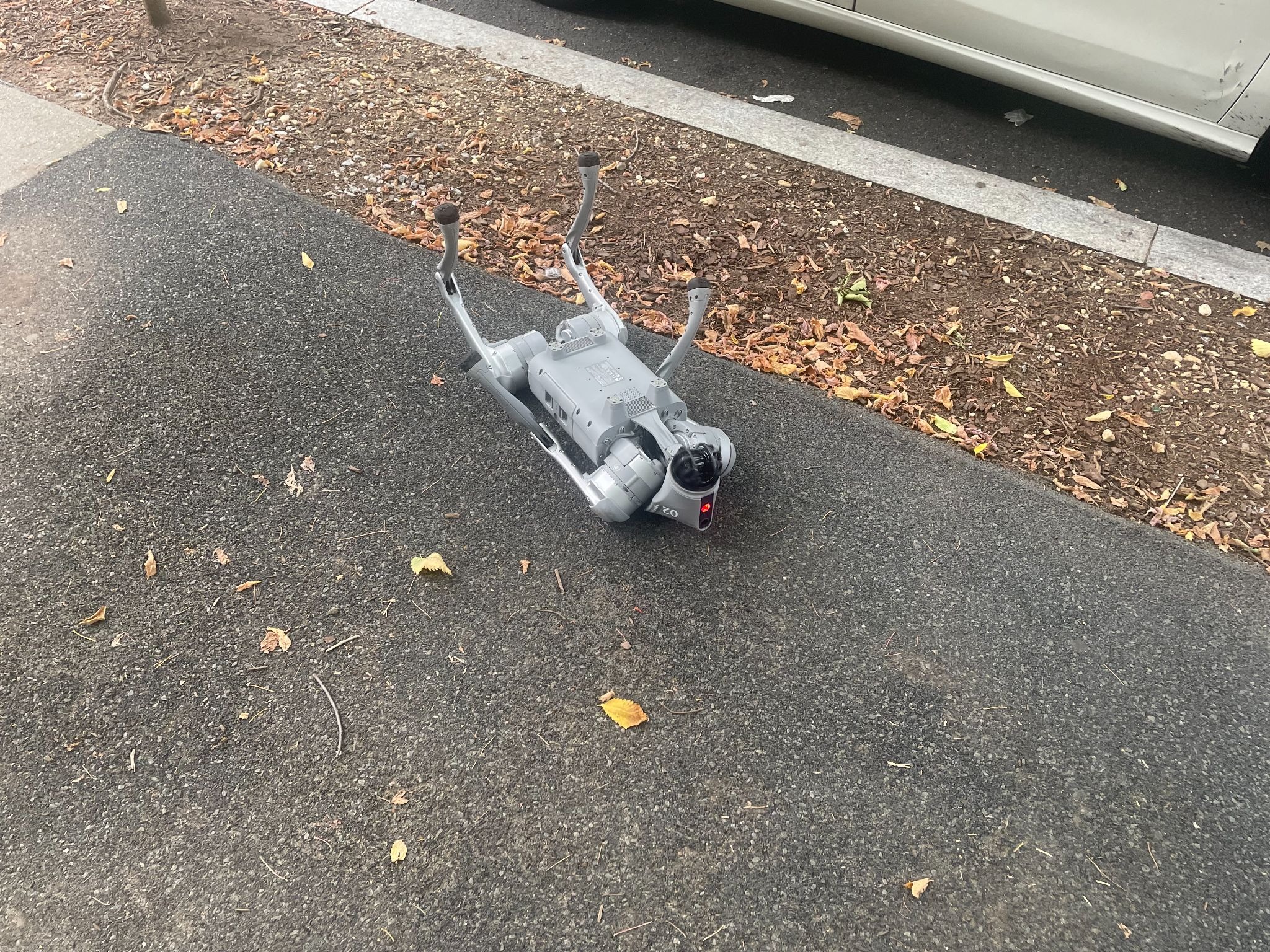
We were within sight of my front door when the robot suddenly collapsed. I’m not sure if it ran out of power or overheated, but either way it didn’t shut down gracefully—it rolled onto its back with its legs in the air.

My robot dog after it collapsed steps from my home. The light on its “face” was blinking red, and the lidar sensor on its “nose” was still spinning.

My robot dog after it collapsed steps from my home. The light on its “face” was blinking red, and the lidar sensor on its “nose” was still spinning. Credit: Timothy B. Lee

Several people have asked me what my robot is useful for, and the honest answer is not much.

Unitree quadrupeds are widely used for academic research, and they are sometimes used for entertainment. But there don’t seem to be a ton of practical applications.

Wheeled robots are faster and more energy-efficient, making them better for deliveries. Flying drones are a better choice for a lot of surveying and inspection work. My robot has no arms or hands, making it mostly useless around the house.

But my robot did have one big thing going for it: It was astonishingly cheap.

I paid $4,017. That’s more money than I’ve ever spent to review a product. But it’s also far less than I would have had to pay for this type of robot a few years ago. And it’s cheap enough that people may find uses for it that wouldn’t have made sense at higher prices.

Sometimes what changes the world isn’t the invention of a new technology; it’s figuring out how to make it affordable enough for a mass market. Xerox built the first personal computer with a graphical user interface, but companies like Apple, IBM, and Microsoft made the technology mainstream. Perhaps Unitree will play a similar role for quadruped robots—though, as I’ll discuss later, Unitree’s robots now face legal restrictions in the United States.

Unitree has also used quadruped robots as a stepping stone to another market that could be much more important—humanoids. Unitree launched its first humanoid robot in 2023. Leveraging its experience making cheap quadrupeds, Unitree is able to sell humanoid robots for as little as $13,500.

That’s still way out of my price range, which is why I bought a robot dog instead. But it’s dramatically cheaper than any humanoid you could buy a few years ago. And the low cost has made Unitree a global leader in humanoid robots.

Financial markets are bullish. Unitree debuted on the Shanghai stock market on August 19. On its first day of trading, shares shot up more than fivefold. It has lost some altitude since then, but at Monday’s closing price, the company was still valued at $34 billion—more than triple its valuation before the IPO.

How Unitree democratized legged robotics

Prof. Xuesu Xiao standing in front of four Unitree quadruped robots in his lab in Arlington, Virginia.

Prof. Xuesu Xiao standing in front of four Unitree quadruped robots in his lab in Arlington, Virginia. Credit: Timothy B. Lee

Earlier in June, I visited Professor Xuesu Xiao, a roboticist at George Mason University.

“Ten years ago, only a very small set of research groups were working on quadruped locomotion because they were the only people on the planet who could build a quadruped,” Xiao told me. “Then Unitree came onto the market. And it basically democratized the entire world of quadruped locomotion research.”

Xiao gave me a tour of his lab, which had four Unitree quadrupeds. Each cost around $15,000. The lab also had a quadruped robot called Spot. It was made by Boston Dynamics—widely seen as the industry leader before Unitree came along. But Spot is expensive, starting around $75,000.

Unitree founder Wang Xingxing developed a crude quadruped robot called XDog for his master’s thesis at Shanghai University.

Marc Raibert from Boston Dynamics is my idol,” Wang told IEEE Spectrum in March 2016. “Their papers helped me to design XDog.”

Early Boston Dynamics prototypes—with names like BigDog and WildCat—had gasoline engines and hydraulic actuators. This made them too large, noisy, and polluting for practical use.

In that 2016 interview, Wang said that his goal was to “make quadruped robots simpler and smaller, so that they can help ordinary people with things like carrying objects or as companions.”

Boston Dynamics officially unveiled an electric quadruped called Spot in June 2016. But Spot didn’t become commercially available until 2020.

That created an opening for Unitree, which Wang founded in May 2016. The company’s first quadruped products—Laikago in 2017 and AlienGo in 2019—were powered by electric motors. Designed for research labs, they cost tens of thousands of dollars.

In 2021, Unitree launched the Go1 line, which started at $2,700 for the “Air” model. In 2023, Unitree unveiled the Go2, which was even cheaper—$1,600 for the Air and $2,800 for the more capable Pro.

Today, Unitree’s cheapest robot—the Go2 Air—is more than 97 percent cheaper than Spot. But this is not an apples-to-apples comparison; Spot is larger than Unitree’s Go2 line and can carry heavier payloads.

Still, the fact remains that Unitree made quadruped robots affordable to many people who could never afford Spot—including me! My wife never would have let me spend $75,000 or even $15,000 on a robot dog. But I convinced her to let me spend $4,017 (after tariffs and shipping costs) on a Go2 Pro.

Why are Unitree robots so cheap?

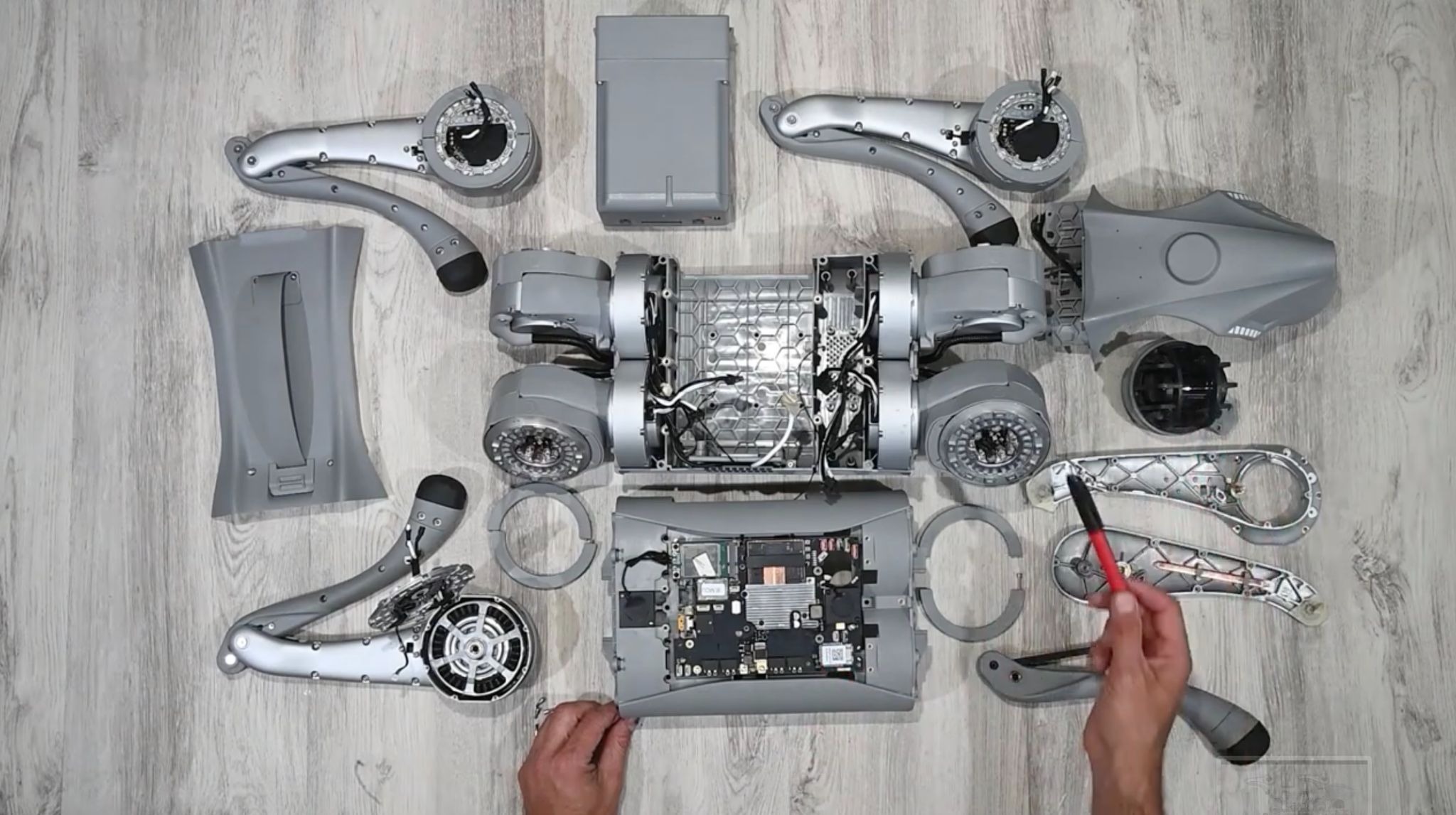
Last year, the firm Simplexity tore a Go2 robot dog apart and made a video showing what they found.

Simplexity took a Unitree Go2 Air robot apart to understand its components, including the 12 identical motors that keep costs down while giving the legs a “really dynamic range of motion.”

Simplexity took a Unitree Go2 Air robot apart to understand its components, including the 12 identical motors that keep costs down while giving the legs a “really dynamic range of motion.” Credit: Simplexity

Each of the robot’s four legs is powered by three motors. There’s a motor in the shoulder that controls the angle of the legs and a motor driving each of the two leg segments. “With three motors, you get a really dynamic range of motion,” said Luis Elenes, a mechanical engineer at Simplexity.

“They use all the same motors throughout,” Elenes added. “All four shoulders are identical in arrangement. There’s tons of benefit to that. There’s reduced cost, there’s reduced part count. The more you can reuse motors and reuse parts, the simpler your design gets, and the more robust overall your design will be.”

Jakub Bartoszek, an expert on motors and legged robots at the startup MAB Robotics, argues that Unitree also saved money by using low-quality components. The motors in Unitree robots—many of which are made in-house—tend to wear out more quickly than those in some other robot brands, he told me. But the cost savings make the robots affordable to more people.

Unitree seems to have designed its robots for easy repairs when they wear out.

“They want these legs to be serviceable in the field,” Elenes said. Thanks to the simple way the robot’s legs are attached to its body, “you can swap out a leg pretty easily. I would guess it would take you less than a minute.”

Unitree also gets significant support from the Chinese government, including tax credits and large-scale purchases by public institutions. It’s hard to quantify the scale of this support because the Chinese system blurs the line between public and private, military and civilian. But a supportive policy environment clearly helped Unitree to scale up its manufacturing operations and thereby drive down the cost of each robot.

How powerful motors enable cheap actuators

My 5-year-old daughter enjoys steering my Unitree robot.

My 5-year-old daughter enjoys steering my Unitree robot. Credit: Bethany Lee

Unitree has another counterintuitive cost-saving strategy: using large and powerful motors. More powerful motors aren’t inherently cheaper, of course. But they allow Unitree to save money on another component called the reducer that can be even more expensive

Suppose you have a lever where one side is five times longer than the other. If you push the long side down by five inches, the short side goes up by just one inch. But force is magnified: 10 pounds on the long side becomes 50 pounds on the short side.

Many robots use gear systems called reducers that serve the same function; they convert the fast, relatively weak movement of an electric motor into a slower but stronger movement of a robot’s body parts.

Traditional industrial robots require extreme precision, so they tend to have large reduction ratios.

A page on the Boston Dynamics website, for example, indicates that two of the motors in Spot’s legs are paired with reducers that have gear ratios of 51 to 1. In other words, the motor would need to do 51 full rotations in order to produce one full rotation of a leg joint.

This enables Spot’s movements to be very precise while magnifying the power of Spot’s motors. But it also has some disadvantages. One is cost. Reducers with 51:1 ratios are complex and—as a result—tend to be significantly more expensive than reducers with lower ratios.

Another is rigidity. When a robot’s arm encounters physical resistance, it should yield gracefully—a property called backdriveability. It’s also helpful if a robot can sense this kind of physical resistance electrically. Robots with higher gear ratios perform badly on both these fronts; their limbs feel stiffer and they are less sensitive to physical resistance.

In contrast, Unitree uses large motors combined with a simple 6.33-to-1 gearbox. This makes its robots more nimble and dynamic while reducing costs. The simpler design is also easier to simulate, making Unitree robots easier to train.

Unitree’s decision to use a lower gear ratio is part of an industry-wide trend. High gear ratios made sense for industrial robots that were programmed to perform simple, repetitive motions. In contrast, many modern robots perform complex actions in unpredictable environments. This requires sophisticated control software that can respond flexibly to changing conditions. The software is constantly making small corrections anyway, so it can compensate for less precise hardware.

The humanoid pivot

My Unitree robot doing a handstand.

My Unitree robot doing a handstand. Credit: Bethany Lee

One of the most impressive and crowd-pleasing capabilities of my Go2 Pro robot dog is handstands. The robot can balance on either its front or hind legs indefinitely, and can even move forward, backward, or side to side while doing so.

So it was natural for Unitree to expand into humanoids. Unitree first debuted a humanoid called the H1 in 2023. The next year, Unitree unveiled a cheaper and more capable robot called the G1.

I got to see one when I visited Xiao’s lab in June. He paid around $50,000 for a research-grade EDU version. The consumer version starts at $13,500. This is shockingly cheap given the robot’s capabilities.

A Unitree G1 humanoid robot in the Xiao robotics lab.

A Unitree G1 humanoid robot in the Xiao robotics lab. Credit: Timothy B. Lee

A humanoid robot is more than a quadruped standing on its hind legs. My Go2 quadruped robot has three motors per leg, for a total of 12. The cheapest G1 humanoid has five motors in each arm, six in each leg, and one in the torso, for a total of 23. The leg motors in a humanoid robot also need to be more powerful, since it’s more work to balance on two legs than to stand on four.

Still, I suspect that Unitree’s experience with quadrupeds gave it a leg up on humanoids. By the early 2020s, Unitree had been shipping quadruped robots for several years. The company had deep expertise in actuator design and an extensive network of suppliers.

According to filings connected to Unitree’s August stock offering, the company’s quadruped revenue tripled between 2024 and 2025—from RMB 230 million ($34 million) to RMB 697 million ($104 million). The comparable figures for Unitree’s humanoids were RMB 107 million ($16 million) and RMB 867 million ($129 million)—an eightfold increase.

Humanoids accounted for 51 percent of Unitree’s revenue in 2025. I expect this figure to be even higher for 2026.

Unitree could have a durable advantage

Me with my Unitree robot outside the Understanding AI office.

Me with my Unitree robot outside the Understanding AI office. Credit: Nat Purser

“We are witnessing the birth of another Chinese hardware giant,” wrote a team at SemiAnalysis in June. “Three years ago, Unitree was a quadruped company. By last year, they parlayed quadruped dominance into creating and leading the humanoid market.”

The SemiAnalysis authors draw a parallel to DJI, the Chinese company that dominates the global drone market.

“DJI’s Phantom 1 shipped January 2013 at $679, and was not a fully-fledged product at the time,” the SemiAnalysis team writes. “It had no built-in camera, no gimbal (stabilizer), ten minutes of flight, no live video feed, but it was roughly half the cost of the build-it-yourself drone.”

Like DJI in 2013, Unitree’s robots today have a lot of rough edges. Certainly mine does.

The app to control the robot is buggy. Features Unitree showcased in its launch video—like climbing stairs and following a human owner—don’t work well in real life. If I turn the robot on with its legs slightly out of place, they will often thrash around wildly and the robot will wind up on its back.

Then there was the time my robot collapsed just feet from my house. A more polished product might have detected the low battery (or high temperature) and shut itself down gracefully.

But for bleeding-edge technologies, this kind of polish may not be very important. Far more important is getting costs down.

“DJI chose to inhouse the most expensive and technically difficult component first: the flight controller,” SemiAnalysis writes. “Later on, DJI brought inhouse the gimbals, motors, and ESCs.”

DJI figured out how to make these components more cheaply than they could be purchased from external suppliers, which in turn allowed it to undercut other drone makers. And that expanded the market for DJI’s drones.

Before DJI came along, “professional aerial photography was the domain of helicopters and Hollywood second-unit teams, but now, small businesses could perform this on their own. As such, whole new markets were unlocked for DJI, like real estate listings, wedding videos, local news, agricultural surveying.”

There’s a flywheel here: The more units a company sells, the better deals it can negotiate with suppliers and the more money it can spend optimizing its manufacturing process. Larger sales volumes also allow a company to bring more components in-house. This allows the company to push costs even lower, which will mean more sales and even more money to invest in improving the production process.

Over a few years, this flywheel helped DJI to dominate the global drone market. SemiAnalysis argues that Unitree is on track to do the same thing for legged robots.

According to SemiAnalysis, Unitree has developed its own motors, gearboxes, lidar sensors, and cameras. “Unitree’s self-produced motors can run as low as 30-40% of equivalent Western motors,” SemiAnalysis reports. “They now make some of the cheapest humanoid gearboxes in the world.”

This could enable Unitree to take over the global market for quadruped and humanoid robots in much the same way that DJI took over the global drone market.

Of course that’s not guaranteed to happen. Unitree has a number of Chinese rivals. Unitree is the global leader in quadrupeds, but a Chinese rival, AgiBot, has sold more humanoid robots than Unitree in recent months. There are also many smaller robot companies in China that could challenge Unitree and AgiBot in the coming years.

But Unitree does not face much competition in the United States or the West more generally. Boston Dynamics sells excellent robots, but they tend to be significantly more expensive. There are a number of American startups aiming to build humanoid robots, including Tesla, Figure, and 1X, but consumers cannot buy a robot from any of these companies today.

That has alarmed some American policymakers. In June, a bipartisan group in the House introduced a bill to restrict importation of Chinese robots. The official press release for the legislation mentioned Unitree by name. Then in July, the FCC imposed broad new regulations on foreign-made robots that are likely to impact Unitree and other Chinese companies.

However, the robot market is global. Even if Chinese companies get locked out of the US market, Unitree or one of its Chinese rivals could still come to dominate the global market for humanoid robots.

There’s an obvious parallel here to electric vehicles, where Chinese companies like BYD are effectively banned from the US but are making rapid gains in the rest of the world. There’s a risk that a ban on Chinese robots could have a similar impact: rather than hampering the growth of companies like Unitree, it could make the US a robotics backwater.

Tim Lee was on staff at Ars from 2017 to 2021. He recently launched a new newsletter, Understanding AI. It explores how AI works and how it’s changing our world. You can subscribe to his newsletter here.

Qasem Basir missile’s combat debut escalates Iran war dangers

0
qasem-basir-missile’s-combat-debut-escalates-iran-war-dangers
Qasem Basir missile’s combat debut escalates Iran war dangers

Iran’s reported combat debut of a new anti-ship ballistic missile marks a potentially consequential shift in the Gulf conflict, where increasingly sophisticated targeting networks could turn US naval superiority into a more contested — and more escalatory — proposition.

Iranian forces have recently escalated regional maritime clashes by targeting US warships near the Strait of Hormuz with Qasem Basir electro-optically guided ballistic missiles, prompting retaliatory US strikes that destroyed multiple Iranian crude tankers, multiple media outlets reported.

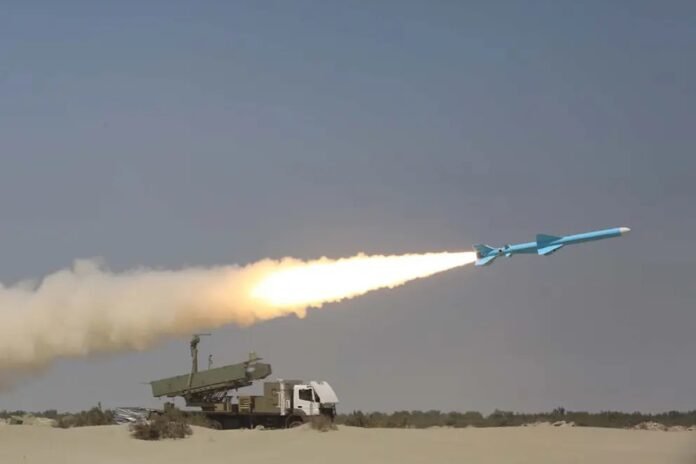
The solid-fuel Qasem Basir, a 1,200-kilometer-range missile carrying a 500-kilogram maneuverable warhead and terminal optical sensors, made its reported combat debut against the carrier USS George Washington and escort destroyers.

Iran framed the offensive as a shift to “active deterrence” to challenge US sea control and break regional naval pressure, though US Central Command (CENTCOM) asserted all incoming attacks failed without causing US casualties.

In response, US forces enacted an asymmetric economic deterrence policy by disabling and destroying exposed commercial tankers linked to the Islamic Revolutionary Guard Corps (IRGC) off Kharg Island and Jask, underscoring how precision maritime missile strikes and targeted economic retaliation are heightening operational risks and driving volatility across critical global energy corridors.

What makes Qasem Basir’s introduction potentially consequential, however, is not simply its range or warhead, but how it seeks and strikes a moving target in the final moments of flight.

The missile’s electro-optical sensor sets it apart from traditional ballistic missiles. A ballistic missile aimed only at pre-designated coordinates is poorly suited to striking a warship that may have moved significantly by the time the weapon reaches its terminal phase.

In contrast, an electro-optically guided missile gains “eyes” during the terminal phase, comparing imagery of the target area with stored reference data and correcting its flight path as the target moves, which can make conventional electronic jamming less effective.

Electro-optical sensors are also passive because they do not emit any detectable signature, unlike active radar, which uses a transmitter that emits signals the target could detect, making the seeker harder to detect or disrupt through conventional electronic warfare. 

Yet terminal guidance solves only the last part of the targeting problem: Iran must first locate, identify and continuously track a moving warship across hundreds of kilometers of ocean.

The Qasem Basir missile, equipped with electro-optical sensors, may be the final link in a kill web that integrates complementary Russian and Chinese intelligence, surveillance and reconnaissance (ISR) capabilities.

While the Qasem Basir’s electro-optical sensor guides the missile to the target in its terminal phase, Iran’s coastal radar stations and dual-use space platforms, such as the Khayyam satellite, supported by Russia’s ISR satellites, electronic intelligence and specialized signals data, may enable more precise targeting.

China, meanwhile, may provide wide-area tracking through dense commercial imaging constellations, offering high-revisit, sub-meter monitoring over large maritime areas with plausible deniability.

Together, these capabilities could form a tiered kill chain: Chinese systems search broad maritime areas and maintain track continuity, while Russian and Iranian assets narrow the target location, feed updated coordinates into the strike complex and assess the results afterward. Qasem Basir would sit at the sharp end of that network.

While no US warship has reportedly been hit by ballistic missiles from Iran or its proxies since the start of the Iran War in February 2026, a notable close call occurred in November 2024, wherein a Houthi ballistic missile fell just 200 meters away from the carrier USS Dwight D. Eisenhower.

US carriers rely on high-speed maneuvers, Aegis destroyers and cruisers, electronic warfare and decoys, close-in weapons systems (CIWS) and offensive operations targeting Iran’s entire reconnaissance-strike kill chain. They also feature resilient construction, making it nearly impossible for an adversary to sink them without resorting to nuclear weapons.

Yet sinking a carrier is not necessary: a single hit could still force one out of combat. Destroyers and cruisers could be similarly vulnerable, as a saturation attack could deplete their finite interceptor missiles and leave them open to subsequent strikes.

Iran could increase the chances of successfully hitting a US warship by escalating tensions in the Middle East beyond the Strait of Hormuz in ways that force the US to deploy additional naval forces.

Closing the Strait of Hormuz has effectively cut off 25% of global oil supplies, making alternative shipping routes, such as the Bab Al-Mandeb, even more critical. That creates an opportunity for Iran to stretch US naval forces across two geographically separated chokepoints rather than confront them only in the Gulf.

While 12% of global oil supplies pass through the Bab Al-Mandeb, those supplies are threatened by escalation between Iranian-backed Houthis and the Saudi-backed Yemeni government. As the Houthis have captured Perim Island, which sits right at the center of the Bab Al-Mandeb chokepoint, the US may have to deploy more warships in the Middle East to reopen the critical waterway.

An increased US presence in the Gulf of Aden just outside the Bab Al-Mandeb could concentrate US warships in a constrained battlespace with limited room to maneuver, improving Iranian or Houthi chances of scoring a successful hit.

A successful strike on a carrier could also push the conflict into a qualitatively more dangerous phase, particularly if the US responded by expanding attacks beyond military targets to infrastructure supporting the Iranian state.

However, Iran could retaliate in kind against US Gulf allies by striking desalination plants across the Strait of Hormuz, threatening to plunge the water-poor Gulf States, which rely on desalination plants for virtually all their water supply, into a devastating humanitarian crisis. In contrast, Iran relies on desalination plants for only 3% of its water supply, making it far more resilient than its Gulf neighbors.

More consequentially, Iran has retained the ability to sustain its missile campaign and regenerate parts of its arsenal despite sustained US and Israeli strikes since February 2026.

The Wall Street Journal (WSJ) reported this month that Iran has resumed producing ballistic missiles in greater quantities than before the Iran war began. The report runs counter to statements made by US Secretary of Defense Pete Hegseth early in the conflict, saying that Iran had no way of regenerating its missile program.

Citing US and Middle Eastern officials, WSJ reports that Iran has been producing liquid- and solid-fuel missiles in underground facilities using stockpiled parts, as US and Israeli strikes have destroyed key aboveground production sites. The WSJ report says Iran may have enough parts to make hundreds or even thousands of ballistic missiles, on top of thousands of existing ballistic missiles. 

Production depth is crucial because even basic missiles can become strategically powerful when fired repeatedly: defenders must succeed every time, but attackers need only a few hits to impose costs.

If Iran sustains this missile network, the strategic question may no longer be whether US warships can defeat individual attacks, but whether the US can preserve freedom of action without dispersing its fleet, exhausting scarce interceptors and accepting ever-greater escalation risks.

Saudi Arabia ends ‘potential danger’ alert for southern, southwestern areas

0
saudi-arabia-ends-‘potential-danger’-alert-for-southern,-southwestern-areas
Saudi Arabia ends ‘potential danger’ alert for southern, southwestern areas

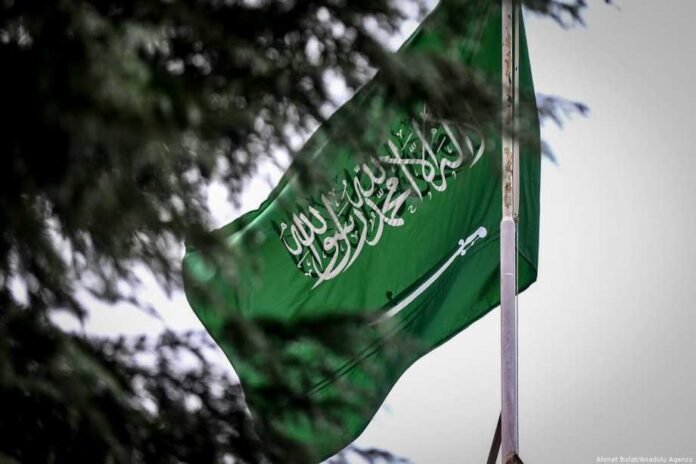
Flag of Saudi Arabia  [Ahmet Bolat/Anadolu Agency]

Flag of Saudi Arabia [Ahmet Bolat/Anadolu Agency]

Saudi Arabia announced early Saturday that a “potential danger” alert issued for Sharurah, Taif and Khamis Mushait in the south and southwest of the kingdom has ended, Anadolu reports.

Saudi Arabia’s Civil Defence said on US social media company X that residents should continue to follow instructions for their safety, urging them to strictly avoid gathering in crowds or filming incident sites, even though the alert has ended.

The alerts had urged residents of the three areas to follow official instructions, move to a safe location, stay away from windows, and remain indoors until the danger passed.

The warnings came after Saudi Arabia announced Friday that several attacks on its East-West oil pipeline in the Riyadh and Medina regions had caused injuries and prompted a precautionary shutdown.

The Saudi Press Agency cited an official Energy Ministry source as saying the pipeline was targeted several times on Thursday morning.

The Saudi Foreign Ministry said separately that the pipeline was attacked by several drones launched from Iraq, causing injuries and material damage.

The National Early Warning Platform on Thursday had issued “potential danger” alerts for the southern cities of Abha and Khamis Mushait

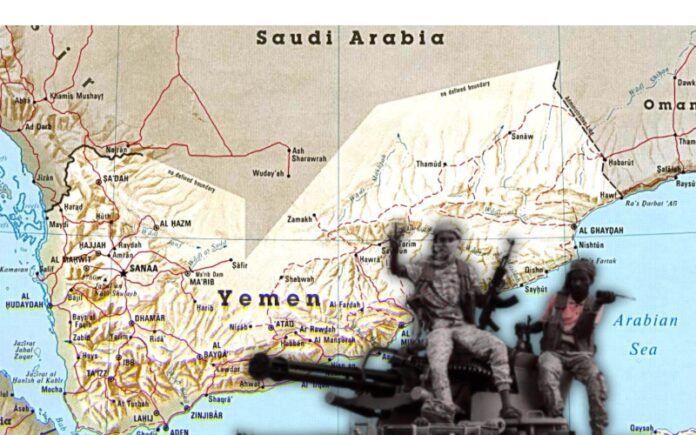
The latest alerts followed amid rapidly escalating fighting in neighboring Yemen, where the Houthis have announced taking control of strategic areas near the Bab al-Mandab Strait, including the districts of Hays and Al-Khawkhah in the western Al-Hudaydah province.

Fighting between Yemeni government forces and the Houthis has also intensified on several fronts, particularly in the Taiz, Al-Jawf, and Al-Bayda provinces, amid airstrikes targeting Houthi positions.

​​​​​​​Yemen has been engulfed in conflict since the Houthis seized the capital Sanaa and several provinces in 2014. A Saudi-led coalition intervened in 2015 in support of Yemen’s internationally recognized government.

What happens when quantum mechanics and relativity meet?

0
what-happens-when-quantum-mechanics-and-relativity-meet?
What happens when quantum mechanics and relativity meet?

Almost a hundred years ago, physicists theorized out what free fall should do to a quantum wave. If the solution they came up with is wrong, quantum mechanics and Einstein’s theory of gravity flatly contradict each other. But testing it has been impossible because nobody has managed to build an interferometer that could perform the necessary measurement.

Now, a team led by Ron Folman, a physicist at Ben-Gurion University of the Negev, with collaborators in Germany, the UK, and the US, including Nobel laureate Roger Penrose, has done it. They built a new interferometer that gives a single atom two possible paths at once: one that involves a free fall, and another where it is held perfectly still. Both paths end at the same place at the same moment, allowing the team to measure what the fall does to a wave-like property of the atom.

Long time coming

Ever since Galileo, physicists have known how to describe a falling object—where it is, how fast it goes, or how quickly it accelerates. Quantum mechanics, though, insists that every object is also a wave. “Every particle, doesn’t matter if it’s a car or a spaceship or an atom, is a wave,” Folman says. “Everything that is a wave, like sea waves or sound waves, goes up and down. And if you’re up or down, this is measured by something called a phase. A phase just tells you if you are at the top of the wave or at the bottom.”

The wave nature of an atom shows itself only when the atom is barely moving, which only happens when it is cooled down to nearly absolute zero. For many years after theorists had first looked at this problem, this sort of temperature wasn’t an option—cooling atoms down to such temperatures only became possible in the late 1990s. “But this was just the start of the journey of this experiment,” Folman says.

The second obstacle is that a phase cannot be measured on its own—it appears only when you perform a comparison. “It can only be a relative measure done by splitting a single particle into two trajectories, and then bringing the two trajectories together,” Folman says. He told Ars that this is the same logic behind the double-slit experiment, where particles fired through two narrow slits toward a background screen form an interference pattern that reveals their phase.

Measuring the same thing in free fall adds another layer of complexity. “Drop a stone and after one second it is 5 meters below you,” Folman says. The question asked by the team was how to bring a wave packet that has fallen back into contact with the one that stayed behind—the same atom on the other path—so that the two can interfere. Finding the solution took his team years, even though in hindsight it sounds rather obvious.

The cannon and the parachute

Grabbing a falling particle and somehow bringing it back to where it started was out of the question. “Even if you could do it with some tweezer or some trap, this very violent action would create so much noise that we wouldn’t have known what is fake news and what is really the effect that we want to measure,” Folman joked. So the team figured the right way to do it would be to put an atom into a superposition of paths, where one path sees the atom thrown upward and has gravity return it to its original location. The other path isn’t really a path at all; the atom just stays where it started. “You have to shoot one with a cannon, into a ballistic motion like artillery,” Folman says. But that was just the start of the problems.

The challenge, obviously, is designing a cannon that may or may not affect an atom (technically, it only affects one wave packet of the atom without affecting the other one).

Then there is the issue of keeping the system in a quantum state. Interference only occurs when there is no way, even in principle, to tell which path the particle took—every measurement destroys the quantum superposition and forces the particle to behave like a localized classical object. Unfortunately, a particle returning from a ballistic flight is moving fast, while its stationary twin is not. That difference in speed is itself information about its path, so no interference pattern would appear.

Atom interferometers have existed for 30 years, but none could accomplish what Folman and his colleagues wanted to do. So, they built a new one called the Quantum Galileo Interferometer (QGI).

Atoms under a chip

The QGI is rather tiny and relies on microwave and magnetic pulses. It uses about 20,000 rubidium atoms maintained as a Bose-Einstein condensate, held by currents in microscopic wires on a chip that hangs upside-down roughly 113 micrometers above them. A microwave pulse puts every atom into superposition of two states, where one state feels magnetic forces, and the other is blind to them. A magnetic pulse then plays the role of the cannon, kicking any magnetically sensitive atoms upward.

This converts the superposition of states into a superposition of trajectories.

Immediately afterward, a second microwave pulse flips the atom into the opposite state, so the superposition that’s flying upward changes into a magnetically blind one and starts falling under gravity, with no other forces influencing it. At the same time, its stationary twin becomes sensitive to magnetism, but the field is tuned so its upward force exactly cancels the atom’s weight, effectively making it hover motionless with respect to the Earth.

As one of the trajectories falls back, a second magnetic pulse acts as a parachute, killing its speed just as it returns to where it started. In Folman’s experiment, at their farthest apart, the two trajectories were about 7.5 micrometers apart, and the longest flight lasted two-thousandths of a second.

At the end of each run, the atoms that landed in one of the interferometer’s two exits were sorted by the phase accumulated by the falling path. As the researchers lengthened the fall, this phase increased—a behavior in line with the theory.

“When somebody falls in free fall, he doesn’t feel his weight. He has no weight. Sometimes we feel [a bit of this] in an elevator that goes down very fast,” Folman says. In the quantum world, the falling path from the atom’s point of view experiences no gravity or any other force, and its wave should not pick up any extra phase. At the same time, from the laboratory’s point of view, gravity is pulling the same falling phase down, so its wave should pick up a specific amount of phase predicted by the theory. That phase difference did show up in the data.

“We were able to show that the behavior of a quantum system still follows the principle of equivalence,” Folman says. “This has never been shown before—that the equivalence principle can work in a quantum system in a superposition.”

In the end, the measured phase of the quantum wave sits 2.5 percent from the theoretical prediction. The result, the team argues, is a checkpoint on the border between Einstein’s relativity and quantum mechanics—two great theories in physics that stubbornly refuse to work together.

“This [incompatibility] is such a problem for physicists that very smart people say that it hints that at least one of the two theories is fundamentally wrong,” Folman says. Unfortunately, the QGI did not bring us much closer to figuring out which one it might be. But Folman and his lab already have a road map they hope will get us there one day.

The diamond experiment

The place to look for the answers, Folman argues, is in heavier masses. Today, his lab is building a larger version of the QGI experiment that puts nanodiamonds into the same superposition—objects 10 orders of magnitude heavier than atoms, massive enough to warp spacetime around themselves. “If we put the same nanodiamond in two places, we actually have a superposition of two different curvatures of spacetime,” Folman says. And this, according to Penrose’s hypothesis, developed independently by the Hungarian physicist Lajos Diósi, is where quantum mechanics should break down.

“Roger Penrose says that the Universe cannot sustain a superposition of curved spacetime. That this should collapse,” Folman says. Watching that collapse happen, or fail to, he says, would be the most direct test yet of whether gravity is quantum. The team hopes that putting nanodiamonds in superposition will become possible within the next four or five years. “It’s a very, very challenging project,” Folman says.

Science Advances, 2026. DOI: 10.1126/sciadv.aec8045

Houthis advance along Yemeni coast, threaten Saudi oil exports in the Red Sea

0
houthis-advance-along-yemeni-coast,-threaten-saudi-oil-exports-in-the-red-sea
Houthis advance along Yemeni coast, threaten Saudi oil exports in the Red Sea


Iran-aligned Houthis seized control of Yemen’s port city of Mocha on Thursday and advanced down the Red Sea coast to strategic islands, military sources said, hours after President ​Donald Trump said he expected the Iran war to end after the U.S. midterm elections.

Yemeni government military sources said the Houthis had gained further leverage over the Bab el-Mandeb Strait, the southern ‌outlet of the Red Sea and one of the world’s most important shipping routes, and had reached the islands of Hanish.

If the Houthis were to gain control of the waterway on the opposite side of the Arabian Peninsula from the Strait of Hormuz, it could give their backer Iran a critical advantage in the war with the United States, reducing supplies through a second major transit corridor and sending oil prices surging.

It could also make it harder for Trump to find an exit from a war that has ​hurt his Republican Party’s electoral prospects ahead of the November midterms.

Yemen’s Houthi-run humanitarian operations coordination centre said in a statement that Red Sea navigation is safe for all shipping companies except for Saudi ​vessels.

Saudi Arabia, the world’s largest oil exporter, has relied on the Red Sea route since the Iran conflict effectively closed Hormuz, through which a fifth of global oil used ⁠to flow.

Yemeni government forces and their allies are relocating south along the Red Sea coast to Dhubab on the Bab el-Mandeb Strait, across from Perim Island, government military sources said. Control of Dhubab and the island is ​key to gaining hold of the strait, they said.

U.N. Special Envoy for Yemen Hans Grundberg told a U.N. Security Council meeting about Yemen on Thursday that the international community must act to address “a new and more dangerous phase” ​in the Yemen war.

The Houthis’ gaining control of Mocha gave them “a direct presence on the approaches to one of the world’s most vital straits,” raising serious concerns about freedom of navigation, he said.

Jenifer Neidhart de Ortiz, the U.S. representative at the meeting, accused the Houthis of acting as “agents and tools of Iran.”

“This escalation is unacceptable, and those who enable it bear responsibility for its consequences,” she said.

Iran’s foreign ministry said in a statement that the Yemen conflict could not be solved by blockade or military action ​against the Houthis and called for dialogue, without addressing Iran’s own role.

Yemeni government, Iranian and regional sources told Reuters the Houthi advance down the coast this week came with direct guidance from Iran’s Revolutionary Guard Corps.

Houthi spokesperson Mohammed ​Abdulsalam said, without elaborating, that the group’s operations were defensive and would stop once attacks on Yemen stopped.

OIL PRICES JUMP

Brent crude prices jumped as much as 4% on Thursday above $105 a barrel on concern over disruption to supply routes, and the ‌U.S. national ⁠average price of diesel surpassed $6 a gallon for the first time ever, according to price tracker GasBuddy.

After joining the war with an attack on Israel in March, the Houthis declared a naval blockade against Saudi Arabia in July and escalated attacks this month.

Tensions in the region remained high, with Saudi civil defence authorities issuing emergency alerts in the southwestern city of Khamis Mushait for the fourth time in 24 hours, as the Houthis attacked.

Pakistan has delivered a Saudi warning to Iran to rein in the Houthis to try to prevent the crisis from spiralling, Saudi, Pakistani and Iranian sources said. A senior Iranian official said Tehran’s response was: “Iran does not control the Houthis”.

The fighting comes during ​the biggest declared wave of U.S.-Iran tit-for-tat attacks on ​Gulf shipping since the war began in late ⁠February.

The U.S. Treasury Department on Thursday announced new sanctions against firms and individuals aiding Hezbollah and other Iranian proxies as part of “Operation Economic Outcast,” which aims to cut off Tehran’s war funding.

TRUMP SEES WAR ENDING AFTER MIDTERMS

The war and subsequent increase in fuel prices have helped drive Trump’s popularity to record lows, according to polls. He said Iran ​was trying to influence the midterm elections, which will determine whether his Republican Party retains control of Congress.

“I don’t believe in the word ‘regret.’ You can always ​question yourself a little bit,” Trump ⁠said in an interview with Fox News host Laura Ingraham broadcast on Thursday, when asked if he regretted the Iran war due to the impact it may have on the elections. “If I had it do again, I would do exactly as I did,” he added.

Trump also reiterated his thinking that the war will end immediately after the midterm election, a comment he also made on Wednesday.

In recent weeks Washington had cited increasing success guiding tankers through the Strait of Hormuz, ⁠which carried ​about a fifth of global oil supplies before the war.

But a resumption of fighting this month appears to have set back any such ​gradual reopening. Just seven vessels transited the strait on Wednesday, half the 10-day average, preliminary ship-tracking data showed.

Iranian state media said on Thursday the Revolutionary Guards Navy had struck a U.S. unmanned vessel at the entrance to Hormuz.

Sky News’ museum report does Taliban propaganda a service

0
sky-news’-museum-report-does-taliban-propaganda-a-service
Sky News’ museum report does Taliban propaganda a service

Sky News published a video this month that opens on a rigged explosive device and a pickaxe under a stark title card, “Inside the Taliban’s Museum of Death.”

Three seconds pass before a voice explains anything. By the time special correspondent Alex Crawford appears on screen, the viewer has already absorbed the image the Taliban built the display to produce: violence, spectacle and the mythology of terrorism turned into history.

The problem is not that Sky News entered the museum. The Taliban’s transformation of wartime violence into curated exhibits is itself newsworthy. The problem is what happens when the visual language of an extremist movement is placed at the center of a short-form news report before the audience has enough context to understand what it is looking at.

Crawford’s report, in fact, does something considerably more nuanced than simply pointing a camera at weapons. She travels to graves near Kabul and allows villagers to explain, in their own words, why some eventually supported the Taliban.

Their explanations are rooted less in ideology than in grief. Residents describe British troops killing relatives and say those losses pushed them towards the very movement they had once resisted. The report ultimately suggests that years of war, civilian suffering and unresolved grievances helped turn parts of a generation towards the Taliban.

That reporting rightly draws attention to the human consequences of war and to the grievances that terrorist organizations exploit. Yet the irony is difficult to ignore: the report’s most powerful images come from a space deliberately designed by the Taliban to frame its own violence as heritage.

Suicide-vest components, weapons and other objects are arranged behind glass. Placards give them meaning. The museum does not simply preserve history; it interprets history through the worldview of the movement that created it.

In that sense, journalists visiting such sites in Balkh, Wardak and elsewhere are not necessarily discovering raw historical material. They are entering a carefully constructed environment in which violence has already been selected, arranged and narrated.

Accounts from Afghan residents and researchers have underscored this concern. KabulNow reported that such exhibits are intended to honor the group’s suicide bombers and project fear rather than simply preserve historical memory.

Amu TV has separately reported families in Balkh and Daikundi viewing such museums not as symbols of triumph, but as reminders of tragedy because similar weapons and objects were connected to the deaths of people they loved.

This distinction is important. A museum created by a terrorist organization is not a neutral archive simply because its objects are displayed behind glass. The glass does not remove the propaganda; it institutionalizes it.

That is why the framing of the Sky News report deserves scrutiny. Calling it the “Museum of Death” may sound critical, but the dramatic language also risks reproducing the Taliban’s theatrical instinct, take the machinery of war, place it in a striking setting and turn it into an image powerful enough to command attention.

In an era of short-form video, that distinction matters more than ever.

The Taliban’s record of violence cannot be separated from the objects now placed on display. Behind weapons and suicide-bombing equipment are the casualties of a long conflict, including dead civilians, fallen soldiers, mutilated bodies, orphaned children and families whose lives were permanently altered.

This is particularly striking given that the same Taliban fought British forces in Afghanistan and killed British servicemen and women. An uncomfortable moral contradiction arises when the machinery of that war later appears on international television primarily as dramatic visual content.

The danger, therefore, is not simply “glorification” in the crude sense of praising the Taliban. A newsroom does not have to endorse an ideology to amplify its preferred imagery inadvertently. Propaganda can travel through exposure as well as endorsement.

Access journalism makes this problem more complicated. The deal a reporter strikes to get inside a place like this, accompanied by minders, filming what is permitted, on a timeline shaped by the hosts, can influence what ultimately enters the frame long before the script is written.

Sky’s team did not fabricate the museum. Nor does Crawford’s reporting amount to an endorsement of Taliban ideology. But when a terrorist movement curates material for a platform that rewards the first few seconds of attention, framing decisions take on their own importance.

Newsrooms covering the Taliban’s second act will face this tension repeatedly, including at museums, military parades, government buildings and official press tours. Refusing access altogether may accomplish little beyond allowing the Taliban to control the narrative without scrutiny. The better answer is not necessarily less reporting, but more context and more deliberate framing.

Imagine, for example, beginning with the graves Crawford visits and the families who describe what the war cost them. Establish the human consequences first. Then show the objects in the museum.

The same suicide vest would suddenly mean something different. It would no longer arrive as an arresting piece of terrorist imagery. It would arrive as evidence of a history that produced victims, grief and political consequences.

That is ultimately the editorial responsibility when war museums become content. Journalists cannot prevent terrorist groups from constructing their own monuments to violence. They can, however, refuse to let those monuments dictate the emotional architecture of their stories.

The Taliban may curate the museum. The newsroom must curate the context. Without that context, international television risks giving an extremist movement something it has always sought – not necessarily agreement, but attention; not necessarily legitimacy, but spectacle.

And when the machinery of terror becomes television spectacle, the question is no longer simply whether the story was reported. It is whether the reporting allowed the people who built the spectacle to decide what the audience saw first and what they were meant to feel when they saw it.

Farwa Imtiaz is an independent academic researcher with a Master’s degree in Peace and Conflict Studies from National Defence University, Pakistan. Her work has been featured in The Friday Times, Paradigm Shift, South Asia Times, Voice of Germany, Global Connectivities, Stratheia, EcoAsiaNews, International Policy Journal, South Asia
Journal, Sri Lanka Guardian, Global South Forum and Middle East Monitor.

0FansLike
0FollowersFollow
0FollowersFollow
0SubscribersSubscribe
- Advertisement -
Google search engine

Recent Posts