12.3 C
London
Wednesday, September 9, 2026
Home Blog

I Wrote About His Wrongful Conviction. He Got Only 13 Years of Freedom Before Cancer Took His Life.

0
i-wrote-about-his-wrongful-conviction-he-got-only-13-years-of-freedom-before-cancer-took-his-life.
I Wrote About His Wrongful Conviction. He Got Only 13 Years of Freedom Before Cancer Took His Life.

I’d like to tell you about Fred Steese, who died in August of cancer at 62. When I first met Fred, he was living hand to mouth in a seedy motel on the outskirts of Las Vegas. He had been released from prison a couple of years earlier and struggled to find stable housing and a job, because — on paper, at least — Fred appeared to be a convicted murderer. 

In 1995, Fred was wrongfully convicted of the murder of Gerard Soules — a former trapeze artist who had a dancing poodle show at a Las Vegas casino — even though prosecutors had evidence that he was hundreds of miles away at the time. He then spent 21 years in prison before a judge declared him innocent. 

I wrote about Fred in a 2017 ProPublica and Vanity Fair story. It was part of a series that investigated how an obscure type of plea deal was shaping innocence cases and giving cover to district attorney offices that didn’t want to admit wrongdoing — or examine prosecutorial misconduct. 

In Fred’s case, he told me he thought his ordeal was finally ending when the judge uttered the words “factually innocent” during a court hearing in 2012. Instead, Las Vegas prosecutors insisted he was guilty, that they had not made a mistake all those years ago and that they would retry him for Soules’ murder. 

But then they dangled a deal: Fred could walk away now, if only he would agree to plead guilty. 

The offer was something I, and a lot of lawyers I talked to, had never heard of. It’s called an “Alford plea,” and it allows someone like Fred to assert for the record that they are innocent but agreed the state might be able to convict them anyway. Experts told me some prosecutors around the country were using the obscure plea as a tool to thwart exonerations. 

Fred took the deal. He felt he couldn’t face the uncertainty of another trial and the additional time it would rob from him.

Fred had only 13 years of freedom before he died.

Three people sit in a red velvet booth with bright white decorations behind them and large plastic cups filled with brown liquid. The man in the center and woman on the left smile, while the woman on the right puts her hand on the man’s shoulder.
Steese and his lawyer, Lisa Rasmussen, left, and Kathy Nasrey, before his pardon hearing in 2017. Steese served more than 20 years for the murder of Nasrey’s brother, a crime Steese didn’t commit. David Calvert for ProPublica

In June, he went into the hospital for a hernia operation, and when he wasn’t healing like he should, the doctors discovered a large mass on his liver and another on his pancreas. It was stage 4 cancer. By August, he was in hospice, and he died on Aug. 8.  

When I heard, it felt like the universe had dealt Fred yet another injustice. Fred did see a measure of accountability, and I can appreciate as an investigative reporter the rarity of that being the case at all. But I’m sobered that his death means he spent more time fighting to clear his name than he got to enjoy his freedom. He deserved 40 more years.

In late 2017, with the help of a tireless pro bono lawyer who worked his case for years, Fred was fully and unconditionally pardoned by the state of Nevada. His record was finally cleared after 22 years. 

The pardon cleared the way for the state to pay Fred $1.4 million for his wrongful conviction

Fred bought a pickup truck, a Mustang and his very own big rig; his lifelong dream was to be a long-haul trucker.

He didn’t manage to keep the money for long, though. Fred, who’d been in and out of foster homes as a child, spent much of his life outside prison without reliable structure, much less a budget. He was a drifter. He also struggled with drug use. At one point, Fred was swindled out of upward of $15,000 when someone pretended to be the owner of a house for sale that Fred wanted to buy. 

Fred’s most marked characteristic was his cheerfulness. He was an easy laugh, and his good-humored resourcefulness quickly endeared him to those he met. 

“He’d give you the shirt off his back, even if he didn’t have another one,” his sister, Lynn Myers, told me. 

Ryan Norwood, the federal public defender who proved Fred’s innocence, told me he wished Fred had had more time. “But he got to live his dream of being a truck driver and to live his life on his own terms for better or worse.”

Myers hadn’t seen Fred since childhood, but the two reunited after he was exonerated, and the relationship was a rare touchpoint in Fred’s otherwise transient life. Fred’s ashes will rest in a handmade wooden box at Myers’ home in California. 

“Maybe now,” she said, “he’s driving big rigs for God.”

An aerial view of a large staircase with manicured lawns and trees. A man wearing a mustard coat and gray tie stands in the center, with his shadow cast before him.
Steese following his pardon hearing in 2017. “He’d give you the shirt off his back, even if he didn’t have another one,” his sister said. David Calvert for ProPublica

Top chipmakers embrace ASML’s $400M machines, agree to crucial chipmaking change

0
top-chipmakers-embrace-asml’s-$400m-machines,-agree-to-crucial-chipmaking-change
Top chipmakers embrace ASML’s $400M machines, agree to crucial chipmaking change

Leading chipmakers Samsung Electronics and Taiwan Semiconductor Manufacturing Co. announced plans to adopt ASML’s latest chipmaking machines in the next several years—and they also joined Intel in agreeing to a crucial technology change that could boost chip production on the new machines by 40 percent.

This signifies the semiconductor industry’s broader embrace of high NA EUV photolithography technology that can cost up to $400 million per machine and is only provided by the Dutch technology company ASML, Bloomberg reports. The technology would allow chip designers to implement even smaller features in potentially more powerful and efficient next-generation chips produced for AI data centers and consumer electronics such as smartphones, tablets, and laptops.

ASML’s EUV (extreme ultraviolet) lithography machines enable chipmakers to use powerful laser light to imprint patterns in silicon wafers, layer by layer, and gradually form the computer circuitry that makes silicon chips work. Compared to older deep ultraviolet lithography, EUV technology harnesses a more powerful source of light with a shorter wavelength to create even smaller features on silicon wafers.

This has necessitated development of an incredibly complex system of lasers that is continually zapping molten tin into plasma with temperatures around 200,000° C, along with mirrors collecting light from the plasma and redirecting it into a “bus-size” lithography tool for projecting the intricate circuitry patterns onto the silicon wafers, ASML researchers wrote for IEEE Spectrum. ASML’s newest high-numerical-aperture (high NA) EUV machines use bigger mirrors and an improved optical system to more precisely collect and focus light.

South Korea’s Samsung plans to use ASML’s high NA EUV machines in producing memory chips by 2028. Meanwhile, Taiwan’s TSMC aims to use the technology for manufacturing the most advanced chips for its customers—including companies like AMD, Apple, Nvidia, and Qualcomm—starting in 2030.

Intel has already begun adopting high-NA EUV machines in chip manufacturing. The US company has used the technology in high-volume manufacturing of Panther Lake processors for mobile computing devices starting in July 2026.

Industry moves on as China races to catch up

Samsung and TSMC are also now working with Intel and ASML to change the chipmaking standard for photomasks—the stencils that provide the intricate circuitry patterns imprinted onto silicon—from 6-inch photomasks to 12-inch photomasks. That shift could eventually improve the chipmaking productivity of high NA EUV machines by 40 percent, ASML chief technology officer Marco Pieters told Bloomberg.

The South Korean memory chipmaker SK Hynix is also considering joining the industry consortium overseeing the switch to the larger 12-inch photomasks, a spokesperson told Bloomberg. Like Samsung, SK Hynix is also aiming to start making memory chips using the high NA EUV technology starting in 2028.

Improved production of chips has become a business imperative for as long as the AI bubble continues to inflate. Tech companies’ rush to construct new AI data centers has also contributed to a global shortage of memory chips that has increased the prices of smartphones, laptops, and gaming machines.

Meanwhile, the importance of ASML machines for advanced chipmaking has also become a key issue in the ongoing tech competition between the United States and China. ASML still supplies Chinese companies like Semiconductor Manufacturing International Corporation (SMIC) with older-generation deep-ultraviolet lithography machines but has been blocked from exporting most of its chipmaking machines to China under Dutch government restrictions and US political pressure.

Despite unproven US government allegations that China managed to obtain one of ASML’s EUV lithography machines, Chinese companies face an uphill battle in developing a homegrown version of the technology and the supply chain necessary to support production of such machines. An executive at Germany’s Zeiss Group, the exclusive supplier of the mirrors and optical systems used in ASML machines, recently predicted that China would need 15 years to develop EUV lithography machines.

This story was updated on September 8, 2026, to correct the description of EUV technology in comparison with older technologies such as deep ultraviolet lithography.

UK flights delayed after hundreds cancelled by air traffic control glitch

0
uk-flights-delayed-after-hundreds-cancelled-by-air-traffic-control-glitch
UK flights delayed after hundreds cancelled by air traffic control glitch


Flight delays will continue on Wednesday after an air traffic control problem in the UK cancelled hundreds of journeys.

Tens of thousands of passengers were affected by the disruption and tracking website FlightRadar24 said up to 1,000 flights were cancelled after a glitch affecting air traffic control provider Nats.

Nats boss Martin Rolfe apologised, telling the BBC there would be a full investigation into what had gone wrong, after the firm said resolving the issue had taken “longer than hoped”.

The BBC understands Transport Secretary Heidi Alexander has summoned Rolfe to a meeting on Wednesday to answer questions about the disruption and response.

She is also expected to tell MPs that a cyber attack was “categorically” not the cause of the fault.

With few aircraft able to take off, it is understood landings were restricted, leading to some flights being unable to depart overseas airports.

The fault was widespread across the UK and beyond, with airports in Ireland also reporting disruption. EasyJet made 200 cancellations and British Airways more than 100.

It is not the first time disruption has blighted Nats’ control system. In 2023, a computer shutdown over the August bank holiday weekend caused chaos for 700,000 passengers.

It took an engineer, who had been unable to correct the fault from home, three hours to get to work.

Ryanair and Wizz Air have called for an overhaul of Nats, with Wizz Air saying it was “not fit for purpose” in its current form.

When asked whether he was considering his position, Rolfe said there would be “lots of time for that later” but his focus now was on making sure the problem was solved.

Alexander said that “it will take time to fully resume flights, so continue to check with airlines”.

“I am seeking assurances that lessons will be learned and systems that support aviation are up to the job,” she wrote on X.

Ryanair reported on Tuesday that more than 65,000 passengers had been delayed by up to eight hours.

At Heathrow, one of the busiest airports in Europe, departures were initially paused around lunchtime. Traffic then resumed, before facing further disruption in the afternoon.

It is understood the airport ran out of space for incoming flights during the afternoon because planes had not been departing – 13 Heathrow-bound flights were diverted to other sites in the UK and Europe.

According to FlightRadar, the worst affected airports were Heathrow, Gatwick, Manchester and Birmingham.

Passengers have been advised to contact their airlines to check the status of their flights.

British Airways said it was anticipating knock-on effects.

“We were forced to cancel or divert more than 100 flights on Tuesday afternoon,” a spokesperson said.

“We’re doing everything we can to keep our customers updated and make arrangements for them to continue their journeys.

“We ask customers whose flights have been cancelled not to travel to the airport and to bear with us if they’re trying to get in touch, as our call centres are incredibly busy at the moment.”

Ryanair said affected passengers would be notified.

Phil White from Bexhill told BBC Your Voice that his flight to Lanzarote boarded on time but he was left sitting on the tarmac at Gatwick for hours.

“We’ve been told the radar is down and we can’t take off,” Phil said.

“It’s comfortable enough but the pilots been on every 20 minutes saying they are waiting for information from air traffic control and when he finds anything out he will let us know.”

Even if Nats has resolved the issue with its flight processing system, the disruption is likely to persist due to backlogs.

Rolfe said the issue was in Nats’ flight data processing system. He said it was not the same system that failed during the incident in 2023.

Although the technical issue affected departures, arrivals were also hit as space on the ground became increasingly restricted.

Via BBC

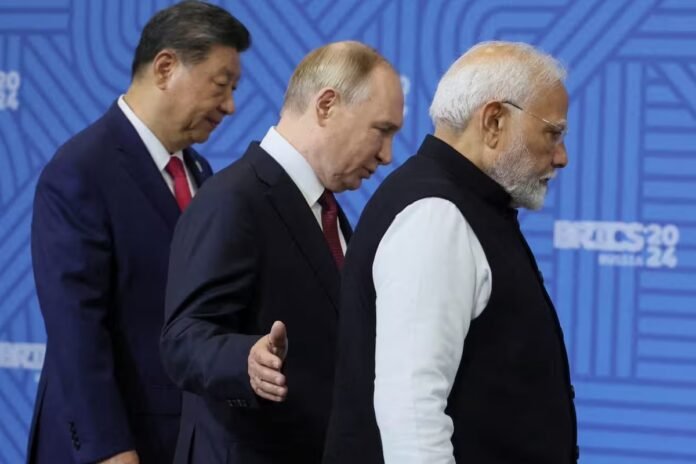
How Asia is redefining what BRICS really means

0
how-asia-is-redefining-what-brics-really-means
How Asia is redefining what BRICS really means

Washington will watch this week’s BRICS summit through the lens of China, Russia and de-dollarization — and miss the more consequential story: Asian priorities on development, technology, energy and connectivity are quietly reshaping what BRICS has become.

India has long argued for looking past BRICS’ “anti-Western” rhetoric to see how the bloc’s expansion has shifted its focus — toward what it now considers urgent, and the institutional alternatives it wants to offer.

Start with the numbers. Six of BRICS’ 11 members — China, India, Indonesia, Iran, Saudi Arabia and the United Arab Emirates — are Asian. By purchasing power parity, they account for roughly 83% of BRICS’ GDP, or 90% including transcontinental Russia, with China alone supplying 58%.

China and India together account for 71% of the bloc’s population and 74% of its GDP. Together, BRICS represents about 40% of global GDP and nearly half of humanity.

Even those figures understate Asia’s pull. These six members sit at the intersection of manufacturing, consumption, energy, shipping, finance and technology. China is the world’s largest crude-oil importer; India is a close second and the fastest-growing major energy consumer.

Saudi Arabia and the UAE are pivotal oil exporters, Iran remains a major hydrocarbon producer, and Indonesia brings Southeast Asia’s vast resource and consumer economy into the fold.

Energy changes everything

BRICS’ expansion has created an extraordinary energy producer-consumer architecture.

Saudi Arabia, the UAE and Iran bring enormous hydrocarbon reserves that are lifelines for Asian members — China and India alone account for a 44% share of their exports. In 2025, the UAE exported about 3.2 million barrels a day of crude, with 99% going to Asia and Oceania; China imported a record 11.6 million barrels a day that year.

Gas sharpens the picture further. Qatar isn’t a BRICS member, but the UAE is, and the two countries’ combined LNG exports account for nearly 20% of the global LNG trade — almost 90% of it bound for Asian markets as of 2025. The implication is clear: energy security within BRICS is now inseparable from the safety of Gulf chokepoints and Indian Ocean sea lanes.

This is where India’s 2026 chairmanship could prove decisive. New Delhi is attempting something subtler, and potentially more durable: making BRICS known for delivery rather than debate.

Its theme — “Building Resilience, Innovation, Cooperation and Sustainability” — places energy security, technology, development, climate, trade, connectivity and institutional reform alongside traditional geopolitics.

The energy track, framed around “Energy for All,” ties security to affordability, sustainability and innovation. India’s foreign ministry has put global-governance reform at the center of BRICS deliberations — a distinctly Asian political vocabulary that fuses geopolitics with development rather than abandoning it.

The China-India paradox

This Asianization of BRICS carries its own contradictions. China and India, the bloc’s largest economies, are simultaneously collaborators, competitors and strategic rivals. Their combined weight gives BRICS its heft; their differences complicate it. But BRICS’ institutional culture allows members with radically different alignments to cooperate selectively.

India can engage Washington through the Quad while working with China and Russia in BRICS. Saudi Arabia and the UAE can deepen ties with the US while sitting in a forum that includes Iran. Indonesia can preserve its non-aligned tradition while joining a grouping increasingly shaped by China, India and Russia. This isn’t incoherence — it’s Asian strategic pluralism.

Indonesia’s membership makes that pluralism even clearer. Its entry has pulled Southeast Asia into BRICS’ institutional core, breaking the old assumption that the bloc is essentially a China-India-Russia-Brazil-South Africa conversation. Indonesia adds another Asian developmental model: an enormous archipelagic economy straddling some of the world’s most consequential maritime routes.

Its presence makes supply chains, critical minerals, maritime connectivity, food security and the Global South’s industrial transformation harder to treat as peripheral. Increasingly, BRICS’ geography mirrors the Indo-Pacific.

De-dollarization, reconsidered

The next Asian rewiring is technological. Asian economies have aggressively experimented with digital public infrastructure, instant payments, digital identity, artificial intelligence and technology-enabled welfare delivery. India, in particular, has shown how such infrastructure can become a developmental tool rather than merely a commercial one.

These experiences give BRICS an agenda beyond its familiar fixation on dollar alternatives. The more consequential question is whether the bloc can build interoperable digital systems, AI governance principles, cross-border payment networks and technology standards that reduce dependence on institutions designed elsewhere. That shift makes the BRICS story less about resisting the West and more about building alongside it.

The dollar remains the hardest piece of the puzzle — though here, too, Asian influence is pushing BRICS toward pragmatism. China and India have expanded local-currency trade. Gulf states have incentives to diversify their reserves.

Western sanctions have pushed Russia to develop alternative payment channels. Few of these countries want to replace the dollar overnight; the more realistic strategy is financial redundancy — more currencies, more payment routes, more settlement mechanisms, and fewer single points of vulnerability. That’s not revolution. It’s rewiring.

West Asia moves to the center

The inclusion of Iran, Saudi Arabia and the UAE has also redrawn BRICS’ strategic map. West Asia is no longer external to the bloc; it now sits at the center of its economic and security bloodstream, where oil, gas, shipping lanes, terrorism, maritime security and regional conflict all converge.

The weaponization of the Strait of Hormuz has shown how tightly Gulf producers are bound to major Asian economies, making any prolonged disruption a global event. For strategists accustomed to viewing the Middle East through a US security lens, this marks a conceptual shift: increasingly, it is Asian demand pulling West Asian energy eastward.

Asia is also broadening what “security” means inside BRICS. Terrorism, food security, energy resilience, supply-chain disruption, critical minerals, climate vulnerability and maritime connectivity now sit alongside traditional questions of war and peace.

Asian powers have long experienced security less as a discrete military category than as a continuum linking economic vulnerability to strategic vulnerability — a blocked shipping lane can trigger inflation, a disrupted semiconductor supply chain can become a national-security emergency, an energy shock can become a diplomatic crisis. BRICS has gradually absorbed this more comprehensive, Asian conception of security.

The real rewiring

The deepest transformation is institutional. BRICS is not becoming an Asian organization — Brazil, Russia, Egypt, Ethiopia and South Africa remain indispensable, and Asia itself doesn’t speak with one voice. China and India disagree; Iran, Saudi Arabia and the UAE have competing regional priorities; Indonesia guards its own strategic autonomy.

What has changed is that BRICS’ deliberations are now shaped by Asia’s developmental ambition, strategic autonomy, energy interdependence, technological experimentation, maritime consciousness and institutional pluralism. The result isn’t an Asian BRICS — it’s something more interesting: a BRICS increasingly defined by the problems and possibilities of the Asian experience.

The real question is whether a grouping once built around five emerging economies is being quietly rewired by Asia’s extraordinary concentration of population, production, energy, technology and connectivity. If so, BRICS isn’t simply expanding – it’s rewiring its circuitry.

The author is former professor of diplomacy and disarmament, School of International Studies, Jawaharlal Nehru University, New Delhi

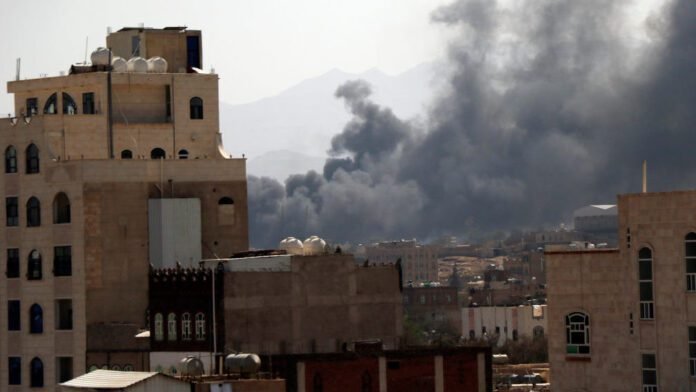
Saudi Arabia Launches Over 30 Airstrikes Across Yemen After Houthi Attacks 

0
saudi-arabia-launches-over-30-airstrikes-across-yemen-after-houthi-attacks 
Saudi Arabia Launches Over 30 Airstrikes Across Yemen After Houthi Attacks 


Saudi warplanes carried out 32 airstrikes across four Yemeni governorates Wednesday morning, according to Houthi-affiliated Al-Masirah television, following Yemeni strikes on southern Saudi energy facilities and targets that wounded at least 73 civilians. 

The Saudi strikes hit areas in Marib, Al-Jawf, Taiz, and Hodeidah, Al-Masirah reported. 

“Saudi enemy aircraft launched 32 airstrikes on various areas across the governorates of Marib, Al-Jawf, Taiz and Hodeida over the past few hours,” the Houthi-affiliated television channel said. 

The airstrikes followed attacks from Yemen on several energy facilities in southern Saudi Arabia that temporarily halted operations, as well as strikes on targets in Abha, Khamis Mushait, and Najran. At least 73 civilians were wounded in the attacks. 

Fighting between the Houthis and opposing forces continued following a major Houthi campaign launched last week to capture territory near the Bab el Mandeb strait. 

More than 500 people have been killed in the renewed fighting, according to an AFP tally compiled from sources on both sides. Most of those killed were combatants. 

The Houthis seized Sanaa and large parts of Yemen in 2014. Government forces, backed by a Saudi-led coalition, subsequently fought the Iranian-backed group in a war that lasted nearly 12 years.  

A ceasefire had been in place since April 2022, but the truce began to break down after a direct confrontation at a Houthi-controlled airport. The confrontation developed into ground offensives and maritime blockades by late summer.  

Queen Elizabeth Banned Charles and Camilla from ‘Getting Frisky Around Her’

0
queen-elizabeth-banned-charles-and-camilla-from-‘getting-frisky-around-her’
Queen Elizabeth Banned Charles and Camilla from ‘Getting Frisky Around Her’


Queen Elizabeth II reportedly laid down some very strict rules when it came to King Charles and Queen Camilla’s romance — especially when the couple was staying anywhere near her.

Four years after the late monarch’s death, resurfaced claims reveal Elizabeth allegedly wanted Charles and Camilla to keep their affection firmly under control during royal family gatherings at Balmoral.

According to a source who spoke out in 2000, Charles and Camilla had developed quite a reputation among Britain’s upper crust for their passionate relationship.

“Charles and Camilla are notorious among the aristocrats and upper-class people they mix with for their raucous love play,” the source alleged.

That apparently did not sit well with the famously reserved queen.

Senior palace officials reportedly told the couple there should be “no overt displays of affection” around Elizabeth. And whenever Charles and Camilla spent the night under the same roof, they were allegedly expected to keep the noise down after 11 p.m. unless the royal family was attending a late-night event.

At the time, Charles and Camilla were still several years away from getting married.

The pair first met in the 1970s and later became involved in an on-again, off-again affair while Charles was married to Princess Diana. Charles and Diana divorced in 1996, and Diana died in a Paris car crash the following year.

As Charles and Camilla became increasingly open about their relationship, Elizabeth reportedly remained deeply uncomfortable with any discussion of their private life.

During one planned visit to Balmoral, Camilla was reportedly permitted to accompany Charles, Prince William and Prince Harry to Scotland — but she and Charles were expected to sleep at nearby Birkhall rather than stay with the queen inside Balmoral Castle.

“If they don’t keep everybody awake, then on future occasions they will probably be allowed to share the same accommodation as the queen,” a source claimed at the time.

Another insider said Elizabeth simply was not someone who openly discussed intimate relationships with her children.

“The queen has never spoken to her children about matters such as sex, affection and love,” the insider claimed, adding that hearing Charles and Camilla being intimate would have been “torture” for her.

The alleged Balmoral rules may not be surprising considering the embarrassment the royal family had already endured over one of the most infamous scandals involving Charles and Camilla.

In 1993, the contents of a private phone conversation recorded in 1989 were published, revealing an extremely intimate exchange between the future king and Camilla.

During the conversation, Charles joked that he wanted to “live inside” Camilla’s trousers and made a now-infamous comment about being reincarnated as a tampon.

The scandal exploded across Britain and became widely known as “Tampongate.”

Palace insiders claimed Elizabeth was “absolutely horrified” by the crude conversation.

Despite years of controversy surrounding their relationship, Charles and Camilla eventually married in 2005.

Elizabeth gradually became more publicly accepting of Camilla. In February 2022, the queen announced that it was her “sincere wish” that Camilla would be known as Queen Consort when Charles became king.

Queen Elizabeth died at Balmoral Castle on September 8, 2022, at age 96.

Charles, Camilla and Princess Anne were among the family members who were at or near Balmoral during the queen’s final hours. Princes William and Harry also traveled to Scotland, but both arrived after their grandmother had died.

Charles immediately became king following his mother’s death, bringing his decades-long journey with Camilla — from one of the monarchy’s most controversial romances to the throne itself — full circle.

Supreme Court forces TV stations to sell more election ads at steep discounts

0
supreme-court-forces-tv-stations-to-sell-more-election-ads-at-steep-discounts
Supreme Court forces TV stations to sell more election ads at steep discounts

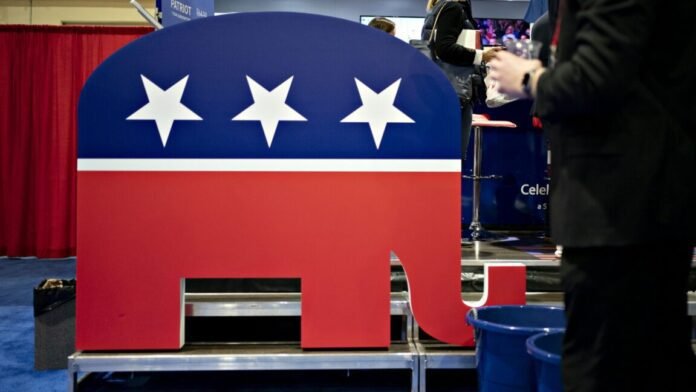
In a victory for Republican campaign committees, the Supreme Court issued an order on Friday that forces broadcast TV stations to cut the prices of election ads purchased by political parties and joint fundraising committees. The September 4 ruling came in response to a petition filed by the National Republican Congressional Committee and National Republican Senatorial Committee.

The Supreme Court order was issued just in time for the start of a 60-day period before the election, in which broadcasters are required by US law to offer ad discounts to individual candidates. Because of the top court’s order, TV stations must also give their lowest ad rates to political parties and joint fundraising committees, which face fewer limits on how much money they can raise and spend.

The legally required discount is known as the “lowest unit charge,” or LUC. A US law that applies to any licensed station that airs election ads requires that the lowest price be charged for “the use of any broadcasting station by any person who is a legally qualified candidate for any public office in connection with his campaign.” The main legal question is whether “use… by” a candidate can refer to ad time purchased on a candidate’s behalf by parties and joint fundraising committees.

The Federal Communications Commission this year issued a public notice ordering broadcast TV stations to give the discounts to parties and joint fundraising committees. While both major parties could take advantage of the discounted ads, the Trump administration has pushed for the change, and four Democratic candidates contested it in court. The Democratic candidates won at the US Court of Appeals for the Fourth Circuit, where a judges’ panel found that the FCC public notice contradicts the plain language of US law that limits the discount to individual candidates.

The Republican campaign committees then filed an emergency motion for a stay that would block the Fourth Circuit ruling, and the Supreme Court granted the stay on Friday. The Supreme Court didn’t rule on the merits of the case but said the Fourth Circuit should not have intervened because the FCC hasn’t made a “final” decision on a challenge filed by the Democratic candidates. See this article for a more in-depth description of the legal issues in the dispute.

Coordinated spending

The stay could have a major impact during this election-ad season, in part because of a previous Supreme Court decision that struck down related limits on campaign spending. That case also involved the National Republican Senatorial Committee.

“Just months ago, the Supreme Court lifted all limits on how much political parties can spend in direct coordination with candidates. Now that same money can also buy campaign ads at the lowest price the law requires broadcasters to charge only to individual candidates,” Federal Communications Commission Commissioner Anna Gomez, the commission’s only Democrat, said on Friday.

Gomez was referring to the Friday ruling and a June decision in which the Supreme Court struck down federal limits on how much a political party can spend in coordination with candidates. Gomez said the latest ruling “opens the door to a flood of dark money that will let a handful of wealthy donors pool unlimited contributions,” while broadcasters that are already struggling financially “are the ones absorbing the cost.”

The Supreme Court order on TV ad prices was unsigned, with a dissent from Justice Ketanji Brown Jackson. The ruling was per curiam, meaning at least five of the nine justices agreed, but the court didn’t say how each justice ruled. “For the foregoing reasons, the application for stay presented to the Chief Justice [John Roberts] and by him referred to the Court is granted,” the order said.

The order said, “the Communications Act makes clear that an aggrieved party must wait for the Commission to resolve its application for review by order before filing a petition for judicial review.” The four Democratic candidates did file an application for review with the FCC on April 29, but the commission has not rendered a decision.

SCOTUS says courts must wait for FCC ruling

The Fourth Circuit panel decided in a 2-1 ruling that the FCC’s inaction amounted to a “constructive denial.” The panel also found that the FCC public notice to TV stations constitutes a final order, giving the court jurisdiction to review it.

The Supreme Court disagreed. “Because the candidates’ application for review was pending when they filed their petition for review, the Fourth Circuit likely lacked statutory jurisdiction to address their challenge. Its holding to the contrary splits with every other Circuit to have considered the issue,” the Supreme Court said.

The word “likely” is key, because under the standard to win a stay, the Republican committees had to show “a fair prospect that a majority of the Court will vote to reverse the judgment below” and “a likelihood that irreparable harm will result from the denial of a stay.” It thus appears likely that the Supreme Court will take up the case and issue a more substantial ruling in the Republican committees’ favor.

The court majority also found that Republican Party committees “will likely suffer irreparable harm absent a stay” because having to pay more for advertising space “hamper[s] their efforts to reach the electorate in the critical weeks leading up to the midterms” and “implicates their First Amendment rights to speak and coordinate their political activities freely.” This part of Friday’s decision cited the Supreme Court’s previous ruling that limits on coordinated spending violated the First Amendment.

Jackson’s dissent favorably quoted Fourth Circuit Judge James Wynn’s opinion that “an agency may not reserve to itself the power to defeat judicial review through delay or inaction.” Jackson also quoted a previous Supreme Court ruling, which she herself authored, that said the court “routinely” treats threshold requirements that claimants must complete before filing a lawsuit as “nonjurisdictional” and has “yet to hold that any statutory exhaustion requirement is jurisdictional.”

Ad discount for “ever-expanding number of groups”

The Democrats who challenged the FCC order to TV stations are former senator and current candidate Sherrod Brown (D-Ohio); Sen. Jon Ossoff (D-Ga.); Senate candidate Roy Cooper (D-N.C.), the former governor of North Carolina; and US Rep. Kristen McDonald Rivet (D-Mich.). They told the Supreme Court that “the Fourth Circuit reasonably held that the Commission constructively denied the Candidates’ Application by failing to resolve it despite clearly having decided to reject it, and there is no circuit split on that question.”

The US Justice Department and FCC filed a brief supporting the Republican committees’ case. In addition to saying the Fourth Circuit lacked jurisdiction, the US said the FCC got the law right in its directive to TV stations.

“It makes no difference that the political party helped fund the advertisement,” the US brief said. “Section 315(b) asks whether the candidate is making ‘use’ of a broadcast station, not whether he is ‘funding’ the broadcast. When a candidate works with his party to run an advertisement and announces in the advertisement that he approves it, he uses the broadcast station, even if the party helps him foot the bill.”

The Trump administration’s argument was disputed by the Campaign Legal Center, a nonprofit group founded by Republican Trevor Potter, a former Federal Election Commission chairman. The group filed an amicus brief saying the FCC “interpretation grossly distorts the plain meaning of the Communications Act, as well as Congress’s clearly expressed intent,” and “has no limiting principle.”

“According to applicants, any move by a candidate to include a group in their joint fundraising operation or to otherwise ‘authorize’ or bless an independent committee would potentially entitle this committee to the LUC, stretching the LUC provision—and broadcasters’ financial obligations thereunder—to cover an ever-expanding number of groups,” the Campaign Legal Center said.

They Tried to Make Charlie Kirk a Saint. They Made Him a Meme.

0
they-tried-to-make-charlie-kirk-a-saint-they-made-him-a-meme.
They Tried to Make Charlie Kirk a Saint. They Made Him a Meme.


Charlie Kirk will live forever — at least online. 

In the year since he was gunned down at an event at Utah Valley University, the Turning Point USA founder has gone from a man cut down in his prime to a recurring internet meme, complete with an AI-generated song, “We Are Charlie Kirk,” which hit No. 1 on Spotify’s Viral 50 U.S. ranking. Audio of his killing became a TikTok sound for girlie outfit transformation videos; he’s been inserted into movies like “Avatar” and “The Odyssey”; he’s been AI’d into Studio Ghibli-style art, the final scene of “The Sopranos,” and the video game “Grand Theft Auto.” Even the moment of his death has gotten the meme treatment, with parodies depicting him with Jeffrey Epstein and Benjamin Netanyahu

The ridicule comes as a product of the American right’s insistence that Kirk’s violent death be taken seriously. They fought back hard against the meme-making and serious critique alike, weaponizing the conservative college-whisperer’s death to broadly crack down on free speech.

President Trump and his allies almost immediately blamed Democrats and “the radical left,” without evidence, for Kirk’s assassination. At the Department of Defense, Secretary Pete Hegseth promised to investigate whether members of the armed forces were inadequately mournful and terminate them. The State Department revoked visas of noncitizens who “celebrated” Kirk’s death. Local cops got in on the civil rights-bashing fun, too: A Tennessee man was arrested for posting a meme in the wake of Kirk’s death, amid a wave of firings in the state on similarly unstable grounds.

No sector of society was untouched by the rising tides of brain-dead McCarthyism: Dozens of educators were terminated for having their say about the killing; an MSNBC political analyst as well as a Washington Post columnist were fired (an arbitrator has since ordered the latter be rehired); workers at Office Depot, the major airlines, and a prominent law firm were axed; ABC suspended Jimmy Kimmel for his on-air remarks.

Kirk’s legacy has also been consecrated in the public square. An artist plans to unveil a busted statue of the TPUSA founder in New York City’s Times Square on the anniversary of his death. His legacy of ire for basically any oppressed group you can name has been enshrined by changing the names of roads to “Charlie Kirk Memorial Highway” in Naples, Florida, and outside Nashville — displacing Vietnam Veterans Boulevard — and “Charlie Kirk Way” in the red part of California. As I was writing this, a pickup truck with a sticker that reads “In Loving Memory of Charlie Kirk” passed me on the highway outside Chappaqua, New York.

All of these efforts have failed spectacularly. One year after Kirk’s killing, the conservative movement has descended into in-fighting, and although Kirk’s wife, Erika, took the reins at Turning Point, there is no heir apparent to energizing young conservatives (although the antisemitic streamer Nick Fuentes would like to throw his hat in the ring). Rifts have quite publicly opened between some of the movement’s most recognizable figures — Ben Shapiro, Candice Owens, Steve Bannon, and Tucker Carlson among them.

Many of Kirk’s disciples have descended into the realm of conspiracy theory, variously blaming Israel, the left, or even Erika for his demise instead of Tyler Robinson, the 23-year-old suspect who will soon stand trial for his killing. Owens, who by all appearances actually was close friends with Kirk, has actively stoked these flames of division, pushing the conspiracy theory that Israel had him killed while waging open war on his widow.

MAGA conservatives expected Kirk’s death to be a kind of Reichstag fire that would galvanize and consolidate the right to move against the supposed threat of an organized — and politically violent — left. But to stick with Germany, Kirk is no Horst Wessel, and by insisting on total deference to the notion that the “Change My Mind” guy was a sainted national hero, they’ve given up the game entirely and opened themselves up to be relentlessly mocked.

When you center your political movement on cruelty and your online presence on dunking on the most vulnerable, your critics will respond by delighting in your misfortunes.

Conservatives routinely post their pleasure at videos of families being torn apart by ICE agents. When Renee Good and Alex Pretti were killed in cold blood by Trump’s occupying immigration forces in Minneapolis, conservatives celebrated and blamed the victims — for driving a car and carrying a legal firearm, respectively — to defend the deportation regime. They got many, many months of mileage out of laughing at Rep. Nancy Pelosi’s husband nearly being bludgeoned to death with a hammer in their San Francisco home, and everyone from Elon Musk to the president himself stirred up innuendo about the true motive behind the attack — because it certainly couldn’t be the case that the suspect was radicalized by the far-right internet.

When you center your political movement on cruelty, your critics will respond by delighting in your misfortunes.

Conservatives still, in the year 2026, deploy their “no angels” line to defend the police killings of George Floyd — who, they claim, was killed by a fentanyl overdose — and Trayvon Martin, who they argue shouldn’t have been in that neighborhood in the first place.

By elevating Kirk to a martyr beyond criticism or reproach, with serious personal and professional consequences enforced by the state, you make getting off a snarky tweet or a video dancing to a sappy AI song a logical reaction to repression. You transform the death of a man, one you claim to have loved very much, into a blinking red button that your enemies are itching to press.

The first rule of the internet holds that the second you get mad or declare a sentiment out of bounds, you’ll get laughed at to hell and back. In effect, conservatives have turned their own departed hero into a laughingstock and, worse, a meme.

Kirk is no longer able to spread his gospel on campuses across the country, but his image — of his life and of his death — will reign forever, filtered through a heavy layer of internet-infused irony.

When weddings become battlefields, the laws of war begin to fail

0
when-weddings-become-battlefields,-the-laws-of-war-begin-to-fail
When weddings become battlefields, the laws of war begin to fail

On September 1, a US airstrike hit a family compound in Kuhestak, southern Iran, as women and children gathered for a wedding celebration. At least five people were killed and dozens more injured.

Associated Press reporters who visited the town documented extensive damage and civilian suffering. Reuters later reported that imagery, debris, and weapons assessments were consistent with a direct hit by a US munition, while US officials said the incident was under review. The immediate facts matter. But the larger question is already unavoidable: What happens to the laws of war when civilian spaces repeatedly become part of the battlefield?

The significance of Kuhestak extends beyond the number of casualties or the identity of the weapon. The deeper danger is what incidents like this can do to the norms meant to limit warfare. If homes, schools, hospitals, wedding gatherings, or refugee sites are repeatedly treated as tolerable consequences of military necessity, the distinction between battlefield and civilian life begins to lose practical meaning.

International humanitarian law was designed precisely to prevent that erosion. Its rules do not make war safe, and they do not prohibit every attack that may harm civilians. They do, however, require parties to distinguish between civilians and military objectives, prohibit attacks expected to cause excessive incidental civilian harm in relation to the concrete and direct military advantage anticipated, and require feasible precautions to minimize civilian loss.

The principles of distinction, proportionality, and precaution are not political preferences. They are the legal architecture intended to preserve a minimum boundary between military necessity and human life.

That distinction matters when assessing the US position as well. Washington says it does not target civilians and that its operations in southern Iran were aimed at military infrastructure, including air-defense, communications, and maritime assets. The Associated Press reported those stated objectives alongside the civilian toll in Kuhestak. Under the laws of war, the existence of a legitimate military objective can matter greatly.

Civilian casualties, by themselves, do not automatically prove an unlawful attack. But that is precisely why transparent investigation is essential: Was the target properly identified? Were the expected civilian risks assessed? Were feasible precautions taken? And was the anticipated military advantage sufficient to justify those risks?

Kuhestak is especially troubling because it follows another catastrophic episode in the same province. On February 28, a strike hit a school in Minab.

In March, Amnesty International said its investigation found US forces responsible for the attack, which killed 156 people, including 120 children, and concluded that the United States had failed to take all feasible precautions to avoid civilian harm. Amnesty called for a transparent and thorough investigation and accountability for those responsible. Minab therefore cannot simply be treated as an unresolved rumor in the background of the current war.

Seen together, Minab and Kuhestak raise a deeper concern. One catastrophic civilian strike may be explained as a failure of intelligence, targeting, weapon performance, or judgment. A pattern of incidents, however, raises a different question: whether civilian protection is being pushed too far to the margins of operational decision-making. The danger is not only the immediate loss of life. It is the gradual normalization of exceptions.

International law rarely collapses in a single dramatic moment. More often, norms weaken when exceptional conduct is repeated, defended, or left without meaningful scrutiny. Each time a serious civilian-harm incident is absorbed into the routine language of war without transparent findings or accountability, the practical force of the rule diminishes. What is described today as an exceptional mistake can become tomorrow’s accepted risk.

Some will argue that this concern overstates the implications of incidents that occur in a high-intensity conflict. War is chaotic. Military assets may be located near civilian areas. Information can be incomplete, and even precision weapons cannot eliminate human error or unintended harm. Those points are real, and international humanitarian law itself recognizes that civilian casualties can occur even in attacks directed at lawful military objectives.

But acknowledging the realities of war is not the same as accepting the erosion of its limits. The law matters most precisely when military pressure is intense and operational decisions are difficult.

If the protections owed to civilians become flexible whenever the strategic stakes are high, then their universality becomes conditional on power, geography, and political convenience. A rule that constrains only weak states, while powerful ones receive the benefit of endless exceptions, is not a universal rule for long.

The consequences would reach far beyond Iran. The laws of war function only if states expect them to apply across conflicts and regions. A standard weakened in the Middle East will not remain neatly contained there.

Future belligerents in Europe, Africa, or East Asia can point to conduct tolerated elsewhere and demand the same latitude for themselves. Selective enforcement does more than produce unequal justice; over time, it changes what governments believe they can do.

The appropriate response, therefore, is not to prejudge every disputed strike or to assume that every civilian death proves a war crime. It is to insist on independent, transparent, and verifiable investigations; publication of meaningful findings; and accountability wherever violations are established.

The United States should be held to the same standards it expects other states to observe. The same standard must apply to Iran, Israel, and every other party to an armed conflict. Universality is the point.

The question raised by Kuhestak is ultimately larger than one wedding, just as Minab was larger than one school. It is whether the international community still believes that even in war there are people, spaces, and rules that military necessity cannot simply sweep aside.

If civilian protection becomes a principle honored only when convenient, the damage will not stop with one town or one conflict. What will have been weakened is the boundary that keeps war from becoming limitless — and once that boundary disappears, no nation can assume that its own civilians will remain safely on the other side of it.

Greg Pence is an international studies graduate of University of San Francisco whose articles have been published on websites like Middle East Monitor.

– Common Dreams

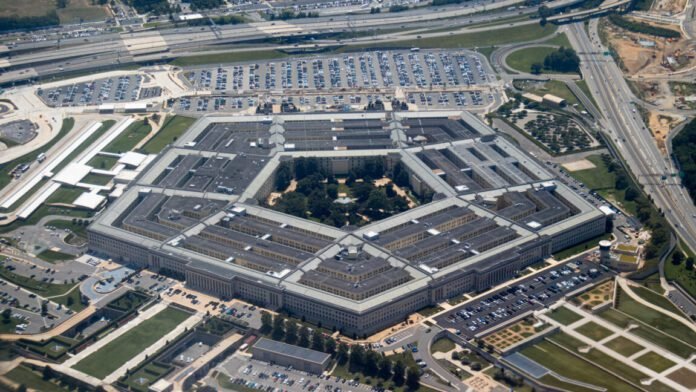
NIH to use part of its budget to pay for Department of Defense research

0
nih-to-use-part-of-its-budget-to-pay-for-department-of-defense-research
NIH to use part of its budget to pay for Department of Defense research

Late last week, word started leaking that the National Institutes of Health (NIH) had reached an agreement with the Department of Defense that would see part of the NIH’s budget used to fund research at the Department of Defense. So, on the Friday just prior to a US holiday weekend, the Department of Defense released a copy of the agreement and confirmed that it had been signed roughly a month earlier. The move is striking for a number of reasons, ranging from the existing budget disparities between the two parties involved to the fact that the money would be used for projects that the current NIH leadership has explicitly rejected.

The agreement itself sets up a system where the NIH would transfer money to the Department of Defense to fund staff and projects that would “support the advanced development of medical countermeasures against pandemic influenza, chemical, biological, radiological, and nuclear (CBRN) threats, and emerging infectious diseases.” The money would come out of the budget for the NIH’s National Institute of Allergy and Infectious Diseases, or NIAID, to which Congress has allocated $6.6 billion in 2026. The agreement is set to run for a decade.

Left unspecified is just how much of the NIAID budget will be spent on Defense projects. Reporting by Nature suggests that the Department of Defense was looking for up to a third of its total budget but was being told to settle for about 10 percent. There’s obviously an enormous disparity between the budgets of these two agencies, given that the 2026 Defense budget is roughly $1 trillion. That budget is under considerable strain, however, due to the open-ended nature of the conflict with Iran. The deal has also been announced at a time when the NIH has been struggling to issue sufficient grants to use the money that Congress allocated to it.

That has led some, including Sen. Patty Murray (D-Wash.), to accuse the parties of simply using the agreement as a way to transfer money to the Pentagon without congressional approval. Others are suggesting that this is part of a longer-term effort to shift any biosecurity research out of the NIH and into the Pentagon.

One of the striking aspects of the deal is that it will involve the use of NIH money to fund research that the NIH leadership has explicitly rejected. Prior to the Trump administration, NIAID funded a lot of work directed toward studying the biology of emerging diseases and developing potential defenses. In a commentary published early this year, the Heads of NIAID and the NIH explicitly called for dropping biodefense research from the agency’s remit and rejecting things like pandemic preparedness in favor of a focus on “the most impactful infectious diseases that Americans currently face.”

Yet the new agreement includes money that will be spent to “protect the United States from future pandemic strains, CBRN [chemical, biological, radiological, and nuclear] threats and other emerging infectious disease.” In other words, the NIH will be giving money to the Department of Defense to fund research its leadership doesn’t want to see happen.

Very little of this makes any sense, and the agreement itself is remarkably vague, so it will be difficult to determine its consequences until spending data becomes available. That’s assuming future Congresses don’t simply prohibit this sort of spending, something that its recent actions have suggested it might be willing to do.

0FansLike
0FollowersFollow
0FollowersFollow
0SubscribersSubscribe
- Advertisement -
Google search engine

Recent Posts