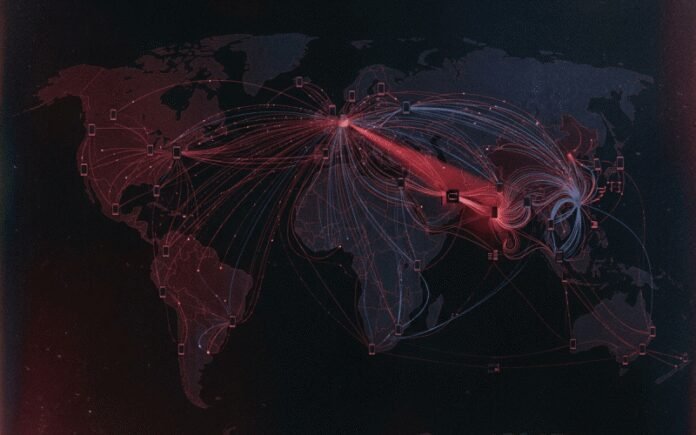
China overcapacity or Western protectionism? What the numbers say
As Chinese exports keep surging, Western tariffs increasingly blur the line between defending fair competition and protecting industries from superior global competitors.
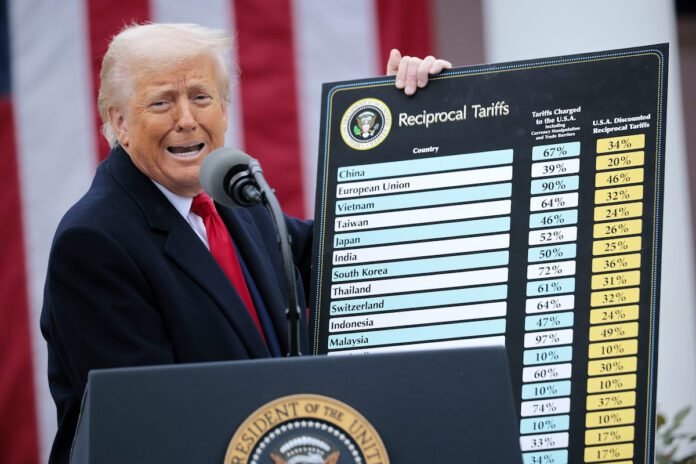
The European Union has threatened “harsher measures” as it approaches an October 2026 deadline to conclude a deal to rein in China’s trade surplus with the bloc. Meanwhile, the United States has threatened a 7.5% industrial overcapacity tariff on Chinese goods.
This increasingly frequent invocation of “overcapacity” to justify restrictions on imports from China deserves considerably more critical scrutiny than it has generally received.
While there may be legitimate concerns about Chinese state support and excess investment in particular sectors, describing Chinese export strength simply as the product of “overcapacity” risks becoming a convenient political justification for protectionism.
In particular, the argument becomes substantially less persuasive when you consider the ownership structure of production in China.
A significant proportion of goods exported from China are produced not by Chinese state-owned enterprises, but by private Chinese companies and foreign-invested enterprises, including companies headquartered in Europe, the United States, Japan and elsewhere.
The scale of foreign participation in China’s trade is substantial. China’s General Administration of Customs reported that total goods trade reached US$6.8 trillion in 2025. Foreign-invested enterprises accounted for $1.97 trillion of the total, which is about 30% of China’s total merchandise trade.
The historical trend is even more revealing. According to data reproduced in the World Openness Report 2025, foreign-invested enterprises accounted for 45.9% of Chinese exports in 2014, 38.7% in 2019, 34.8% in 2021, 28.6% in 2023 and 27.4% in 2024.
In 2024, foreign-invested enterprises exported approximately $979 billion of China’s total exports of $3.58 trillion. Thus, although the foreign-invested share has fallen considerably as Chinese domestic companies have become more competitive, it remains very large.
This distinction matters greatly when considering the political language surrounding “Chinese overcapacity.” The geographical location of a factory does not necessarily correspond to the nationality of the capital, technology, management, intellectual property or ultimate beneficiaries involved.
A vehicle manufactured in China by a European or American company is statistically a Chinese export, but economically it may represent the internationalization of a Western company’s production system.
The European Commission’s anti-subsidy investigation into Chinese battery-electric vehicles (EVs), in 2023, provides a clear illustration of this. Its investigation explicitly identified imports into the EU associated with Renault, BMW, Mercedes-Benz, and Tesla, alongside Chinese manufacturers and brands.
These Western companies plan to keep EV production in China, motivated by access to local innovation and economies of scale.
This creates an important contradiction in the overcapacity argument. If production in China is intrinsically evidence of unfair Chinese industrial excess, then Western multinational corporations that deliberately established highly competitive Chinese manufacturing operations become beneficiaries of precisely the supposedly objectionable system.
Conversely, if these companies are rationally locating production in China because Chinese engineering capabilities and economies of scale make them competitive, then the resulting exports cannot automatically be interpreted as evidence of predatory Chinese overproduction.
They may instead show the international division of production working effectively. The EU’s own evidence also suggests that the situation is more complicated than a simple narrative of Chinese goods flooding Western markets.
In its anti-subsidy investigation, the Commission found that Chinese EVs were subsidized and sold at prices substantially below those of EU producers. These are legitimate grounds for investigating subsidies and possible injury under trade law.
They do not, however, establish that the broader concept of “overcapacity” itself is an adequate justification for unilateral tariffs. Subsidization, dumping, competitive advantage and excess productive capacity are different economic phenomena and should not be treated as interchangeable concepts.
The United States has taken an even more protectionist approach. In 2024, the Biden administration increased the US tariff on Chinese electric vehicles from 25% to 100%, explicitly citing “substantial risks of overcapacity.”
Such a tariff prevents American consumers from accessing many competitively priced Chinese EVs, regardless of whether each vehicle has benefited from a subsidy. The measure functions not merely as a correction of a particular trade distortion but as a powerful industrial-policy instrument designed to shield domestic producers.
A further problem arises when applying the term “overcapacity” to industries in which global demand is expanding exceptionally rapidly.
Electric vehicles and batteries are not conventional mature commodities whose demand is stagnant while China indiscriminately produces unwanted output. They are central technologies in the global transition towards lower-carbon transport and electricity systems.
The International Energy Agency estimates that almost 22 million electric cars were produced globally in 2025, more than 25% above 2024 levels. China accounted for approximately three-quarters of global electric-car production and about 40% of global electric-car trade.
Chinese electric-car exports exceeded 2.5 million units in 2025, approximately doubling from the previous year. This enormous Chinese production base undoubtedly creates competitive pressure on European and American manufacturers. But competition should not automatically be equated with overcapacity.
Indeed, the fact that consumers in numerous countries are purchasing Chinese EVs suggests genuine international demand for the products.
The technological dimension is equally important. China has developed exceptionally sophisticated capabilities in batteries, electric drivetrains, power electronics, manufacturing automation and integrated EV supply chains.
It is therefore reasonable to argue that at least part of the Western “overcapacity” narrative is actually a narrative about technological competitiveness. European and American manufacturers have struggled to reproduce the combination of battery scale, cost efficiency, supply-chain integration and rapid product development achieved in China.
Rather than confronting this competitiveness through greater investment and domestic productivity improvements, tariffs provide governments with a comparatively simple political response.
This does not mean that every Chinese industrial policy is benign or that allegations of subsidies should be dismissed. China has undoubtedly used industrial policy aggressively, and concerns over state-directed investment are legitimate subjects for investigation.
The stronger argument, however, is that these issues should be addressed through evidence-based anti-subsidy and anti-dumping procedures and negotiated international rules rather than through broad unilateral tariffs justified by an elastic concept of “overcapacity.”
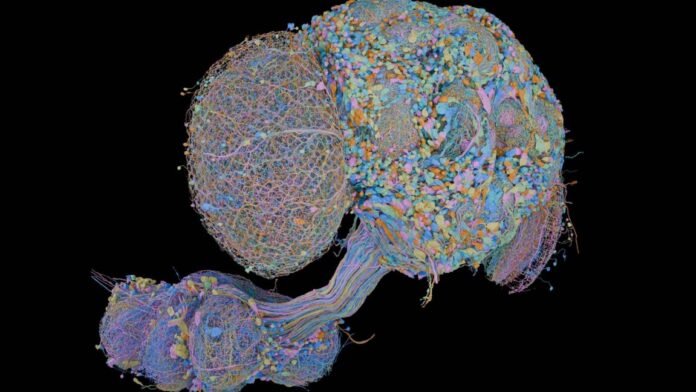
Second complete map of a fruit fly brain completed
On Friday, researchers announced the completion of a map of every neuron in the brain of a male fruit fly. The “connectome” provides a tool that can accelerate neurobiology research. But it also provides an opportunity to do some science on its own, as the connectome of a female Drosophila had been completed earlier this year. The work also provided the team behind it the opportunity to refine tools that are likely to be applied to ever-more complex nervous systems, including (potentially) those of vertebrates.
The new work involved a collaboration between biologists at the Howard Hughes Medical Institute’s Janelia Research Campus and computer scientists at Google—both acknowledge that neither could have done the project without the other. Preparation of an entire brain for imaging at the necessary resolution requires a distinct set of skills, as does interpreting what those images indicate. But building a complete picture of the hundreds of millions of synapses in a brain as small as the fruit fly’s is a task that can’t be achieved by humans in a manageable amount of time.
The people behind the effort expect that in the long term, the effort will be worth it, as the connectome could give neurobiologists a valuable tool for understanding how the brain works.
Establishing a connectome
Our interactions with the world begin with sensory input—the neurons that register sound, light, touch, and more. From there, most brain activity involves neurons communicating with each other. This communication transforms the inputs into signals the rest of the brain can interpret, routes information to relevant processing centers, and often produces some kind of output, from forming a memory to moving a muscle.
All that processing is dictated by which neurons have connections to others. For example, the visual system does some basic recognition of its own before passing the results to the brain’s visual processing centers. If those centers detect something like text, they can use connections to the language centers to interpret it, and so on.
To understand how a brain works, then, we need a catalog of the connections in the brain, since those dictate how information flows through its various systems. That catalog is a connectome.
In practical terms, a connectome is the list of every neuron in a brain, including its location in three-dimensional space, and the connections (termed synapses) it forms with other neurons. That’s more complicated than it may sound. Each neuron can form multiple, branched processes called axons, allowing it to form hundreds of connections to other neurons. So while the nervous system of the fruit fly consists of only roughly 150,000 neurons, and the brain contains only a fraction of those, the new work discovered over 300 million synaptic connections in the fly brain.
So how do you go about mapping something like that? Gerry Rubin, a senior group leader at the Janelia Research Campus and one of the senior authors on the new paper, described how things have changed considerably based on the complexity of the system. “I was a graduate student at the [UK’s Laboratory of Molecular Biology]… and when I got there in 71, they already bought this giant computer, and they had the idea that they were going to use machine vision and computers to assemble the C. elegans connectome,” Rubin said.
C. elegans is a small, transparent worm with just over 300 neurons and would seem to be a tractable system. “It took them about two years to realize that the computers were nowhere near powerful enough,” Rubin said, “and so they went with printing everything out on photographic prints and colored magic markers and circling neurons and tracing it by hand.”
That level of attention would simply not work for something as complex as the fruit fly, which is also very much not transparent, making its nerves difficult to image. Fortunately, computers have advanced considerably, as have the algorithms we’re able to run on them.
For the new work, the biologists took a dissected fruit fly brain (along with part of its ventral nerve cord) and cut it into a huge series of evenly spaced slices. By knowing the exact order of the slices, the researchers were able to maintain the three-dimensional architecture of the brain even while converting it into a series of roughly two-dimensional objects that could be imaged using electron microscopy, provided the resolution needed to identify small cellular structures. From there, computers become essential to processing the images.
Putting AI to work
Michal Januszewski, a staff scientist at Google Research, told Ars that the first step is to use a form of generative AI to ensure that the areas at the site of each slice are linked up properly. No matter how carefully you slice, there will be some distortions and a bit of material lost when you make a cut.
“When you take those blocks and you stitch them back together computationally, there’s a little bit of a gap in between them so the tissue doesn’t completely smoothen,” Januszewski said. “We use [a generative] model to make the tissue look as if the seams were not there, and that then makes all the downstream processing easier because you can basically ignore the problem to a large degree.”
A separate model acts by filling in the spaces defined by cellular membranes, allowing the system to track individual cells across 3D space. “It is different in a number of ways from what people commonly think when they talk about AI,” Januszewski told Ars. “One is that it is actually a recurrent process, so it literally moves through space as it makes the outline of the neurons, and it is a visual model, so it converts voxels out of the images from the microscope, [converting them] into a 3D presentation of the neurons.”
Still, other models are used to recognize synapses and classify the type of synapse once it’s spotted. These models can be fine-tuned using different levels of sensitivity, or “greediness”—basically, adjusting the probability that they’ll call something a synapse. And here, feedback from human proofreaders plays a major role.
“This has to be tuned by going back and forth between the proofreaders and Mikhail to say, ‘Oh, give us a version where you were less greedy because it’s harder to disassemble than it is to assemble,’” Rubin said. “So it’s an iterative process between the humans giving feedback and the algorithms getting tuned.”
All of this took roughly four years to go from an intact fly brain to the complete connectome. But Rubin said the techniques the team developed along the way, along with the growing sophistication of the software, will hopefully be critical as connectomics work moves up the complexity scale.
“Our view is we did Drosophila with a team of 50 people,” Rubin said. “The hope is, by the time someone does a mouse, they’ll also need a team of 50 people, even though there are a thousand times more neurons in there. The people will never go away, but the people will not need to scale with the number of neurons, which would be economically not feasible.”
Managing this complexity is also what drew Google to the challenge. “The reason I think Google and we were interested in this is because this is this type of grand challenge that just cannot be done in any other way,” Januszewski said. “We knew we need AI for this. This cannot be solved by having more humans or by any other technology. And it’s important.”
Sex on the brain
Due to the extensive history of research on Drosophila, we already knew a great deal about the fly nervous system, including the functional regions of the fly brain and an assortment of individual neurons that had been identified by a combination of function and/or gene activity. But it was at best a partial picture, one that we can use the connectome to fill out in more detail. Combined with the completion of the connectome of a female fly that was completed by university-based researchers earlier this year, we’re able to understand a bit more about how sex determination feeds into specific brain differences.
And as with so many things in biology, the basic numbers look simple but the details are fairly complex. The researchers identified 289 male-specific neurons, 71 female-specific ones, and 138 that were present in both sexes but formed a different shape and connections in males and females. Their relationship to the genes mentioned above was not always direct. Ninety percent of the male-specific neurons were making dsx and fru, but that leaves 10 percent that weren’t. Rubin suggested these had likely picked up a sex-specific identity by interactions with those that were.
That may also be true for the neurons that were present in both sexes but which had different shapes and connections. Nearly 40 percent of these neurons did not have active dsx or fru genes. And about 7 percent of the neurons that were identical in the two sexes did have dsx and fru activity, suggesting that they may have some other difference in neural activity despite forming a similar shape and connections.
There were also some oddities. For example, two neuron types that control the female’s physical response to mating also showed up in males and had the same basic shape, even though the tissue that they indirectly control doesn’t even exist in males. The neurons instead differed in the connections they made in males and females.
The research team also identified a general pattern in where these sex-specific neurons act in neural pathways: They tended to be removed from immediate sensory processing or motor control, instead acting in concert with neurons engaged in higher-level neural processing. There are a handful of exceptions, such as sensory neurons that register the presence of sex-specific pheromones. But for the most part, the neurons appear to act after basic sensory processing is complete, potentially bridging that processing with relevant behaviors.
In keeping with this, the sex-specific neurons tend to cluster together, suggesting that they may act together to enhance the intensity of the signals they convey. As the paper puts it, the location and connections of the sex-specific neurons “suggests a hierarchy in which sex differences primarily modify integrative and decision-making areas while sensory detection and the highly tuned motor interface remain more constant.”
What’s next?
In some ways, the completion of the male and female Drosophila connectomes will be a bit like the completion of the fly genome: It will accelerate a lot of work that was already underway. If a study identifies an interesting neuron, researchers can simply open a browser and determine which other neurons and brain structures it connects to. In difficult-to-quantify ways, that should lead to more informed hypotheses while saving researchers the work needed to understand the neural connections.
Rubin also suggested it’s having a big impact on theoretical neuroscience. “Before this, most neuro theorists were very much like, ‘How could a brain work?’” he said. “And they didn’t have a constraint. Once they had the connectome, they could say, ‘The brain does this and here’s the wiring diagram. How can this wiring diagram allow this function?’ So this has been a major. I’d say this is the biggest change in having the connectome.”
Other work will depend on whether completing connectomes follows the trajectory seen in genomics, where the cost drops precipitously as techniques are refined and further automated. One of this work’s most intriguing findings is that a specific neuron seen in the female connectome was absent from one of the two hemispheres of the male fly, presumably due to a developmental glitch. With only two connectomes complete, it’s impossible to get a good sense of how common this sort of variability is. The same applies to subtler differences in the trajectories taken and connections made by individual neurons.
To say anything meaningful about this kind of variability with statistical confidence, we’ll need dozens of examples. That means we’ll also need to make the process much faster than the four years it took to go from dissecting a fly brain to the final connectome.
25 Years After 9/11, Muslims Are Still Politicians’ Favorite Scapegoat
A quarter century after the September 11 attacks emboldened then-President George W. Bush to launch the “war on terror,” many Americans might like to think they’re wiser than the politicians and pundits who unleashed a flood of anti-Muslim hatred and eroded civil liberties through warrantless wiretaps and racist deportation campaigns.
But some of the most notorious Bush-era advents — like the Department of Homeland Security and the prison colony at Guantánamo Bay — don’t appear to be going anywhere. Nor does the phenomenon of Islamophobia, which is playing a major role in the current political cycle. Michigan Democratic Senate nominee Abdul El-Sayed — who, if elected, would be the first Muslim U.S. senator — has been called a terrorist, a radical Islamist, and a threat to national security, as pro-corporate and pro-Israel super PACs spend millions on ads that paint him as a terrorist sympathizer. In New York City, meanwhile, local media has suggested that the city’s first Muslim mayor, Zohran Mamdani, should not attend the commemoration of the World Trade Center attacks, as if to do so would be an insult to the victims and their families.
“Islamophobia actually becomes more rampant during election season — not necessarily after a terrorist attack, but actually during election season in the U.S.,” journalist Rozina Ali tells The Intercept Briefing. “What’s happened over the last three decades is that Islamophobia has become a feature of American politics. … When you can’t actually discuss the policies, when we’re not willing to engage in facts, it’s really easy to throw racist rhetoric at people.”
“The fight that we’re seeing now is whether we are willing to accept all forms of religion in this country. And as much as I want to say this is just more of what we’ve seen in the past, I think what does frighten me is how quickly we are moving to a place where some governor or some local official might try to outlaw Islam altogether. And mind you, this is even a policy shift from 10 years ago when Trump called for a Muslim ban,” says Ali. “What has been happening recently is that the rhetoric … has been shifting toward, ‘Islam is not a religion, it’s a political ideology.’ This is not a new talking point, but it is becoming institutionalized. There are efforts to make it into law, which is a frightening place to be.”
This week on the podcast, host Akela Lacy speaks to Ali about how anti-Muslim rhetoric and policies are on the rise and have endured, or even worsened, in the post-9/11 world, as well as her new book, “Seasons of Fury: Four Families and the Rise of Islamophobia in America.” Ali shares the first case in which the NSA admitted to spying on a U.S. citizen, Arab American attorney Abdeen Jabara, as well as the story of imam Yassin Aref, a victim of a controversial sting operation who served 15 years in federal prison due to the ambiguous “material support” for terrorism law first passed in the ’90s. It was the same charge used to convict anti-ICE protesters at Prairieland Detention Center to decades in prison this year.
“This was something lot of civil rights lawyers and activists were warning about even back then, because they recognized that this law and this war on terror can be used to attack dissidents and eventually will be used to attack a lot more people than the Muslim community. And that is what we’re seeing now,” says Ali.
“Because we’ve given so much power to the executive branch, because we’ve given so much power to the government over the last 25 years, the government gets to decide who they consider enemies, who they consider terrorists, and what they consider support for terrorism,” says Ali. “The Trump administration can say, ‘I now consider leftists terrorists,’ and unfortunately, there are laws in the books that allow him to do that.”
For more, listen to the full conversation of The Intercept Briefing on Apple Podcasts, Spotify, YouTube, or wherever you listen.
Transcript
Akela Lacy: Welcome to The Intercept Briefing, I’m Akela Lacy, senior politics reporter at The Intercept.
Jessica Washington: And, I’m Jessica Washington, politics reporter at The Intercept.
AL: Jessie, it’s Labor Day weekend. Unless you’re a summer-truther like me, this marks the end of summer for most people. And accordingly, things are taking a hard pivot toward November.
I’m going to run through a few things that caught my eye in the last few days: ICE is planning to pay $5 million to create a national voter database, per reporting from Wired. Nothing to see there, I’m sure.
The Trump administration is also deploying hundreds of Department of Homeland Security agents to conduct a witch hunt for unspecified voter fraud, despite lacking evidence that that’s a real issue.
In Congress, Democrats are considering whether to punish two lawmakers who sided with Republicans this week to advance a key procedural vote. And they’re weighing new rules for the caucus that worry progressives and several other caucuses across the ideological spectrum. But progressives in particular are worried that these new rules, if passed, could ice out the new class of socialists who are on track to take office in January. Separately, but perhaps most importantly, the United Nations said we’ve basically lost any chance to stop the worst of global warming.
JW: OK, I’m really going to avoid making a heat joke. But I will say that August in Washington is officially over and that means not only is the weather getting a little bit cooler, although, I guess, we’ll see. It also means there is a lot more news to cover. Although, I would say it is hard to argue we’ve gotten much rest this last month.
In Massachusetts on Tuesday night, Democratic Sen. Ed Markey easily defeated his challenger, Democratic congressman Seth Moulton. Moulton had run on his relative youth, but was hamstrung by people’s perception that he was both inauthentic and far too conservative for the state. After the 2024 presidential election, Moulton had made this very public appeal to the right, arguing that protecting transgender children had harmed Democrats electorally and that it made them seem out of touch. But as it turned out, from Tuesday night, Moulton ended up being the one who seemed out of touch with his voters in Massachusetts.
In some more somber news, this week marks one year since the Trump administration began carrying out strikes on civilians in the Caribbean Sea and Pacific Ocean. The Intercept’s Nick Turse reported that the United States has killed 227 civilians in the more than 65 attacks that have been carried out in the name of defeating so-called narco terrorists. There’s this one passage from Nick’s piece on the anniversary that really sticks with me.
“It’s been a year of murders,” said a defense official who was horrified by the first strike and has remained so as the U.S. has targeted scores of so-called “drug boats” in the year since. “The Trump administration has normalized murder.” The official added: “It’s absolutely criminal.”
And then of course, next week marks the 25th anniversary of September 11, so there’s a lot to reflect on when it comes to the legacy of that attack and how it fundamentally reshaped our society.
AL: Yes, and while so much has changed in the last 25 years since 9/11, it also feels like a lot has stayed the same — or, in many cases, gotten worse.
One of the major effects of 9/11 we’re reminded frequently of is the sprawling surveillance apparatus spawned by those attacks as we see its power put to use on almost a daily basis against immigrants, political dissidents, U.S. citizens, and particularly Muslim and Arab communities. We probably know only a small percentage of the destruction the post-9/11 wave of Islamophobia wrought not just in wars around the world, but here at home.
Today, Islamophobia is seeing its own grotesque renaissance, particularly in this year’s midterms. We’re going to get into all of this with our guest today, journalist Rozina Ali. But first, I wonder if you could tell us the latest here, Jessie.
JW: We got a really great example of what you’re talking about this week from CBS News, perhaps unsurprisingly.
AL: The shade. [Laughter]
JW: On Monday, the outlet, now led by conservative commentator Bari Weiss, published a story on Senate candidate Abdul El-Sayed saying “Deleted tweets on Sept. 11 attacks invite scrutiny of past remarks.”
Now, the tweets were very innocuous; as many people pointed out, this is a non-story. In two of them, he asked Americans to take Covid-19 as seriously as the terror attacks. But it’s a familiar playbook from the right and their media apparatus: Weaponize 9/11 to stoke Islamophobic fear about a Muslim candidate, rinse, repeat.
You discuss the legacy of 9/11 and how Islamophobia has been weaponized with journalist Rozina Ali. Let’s hear that conversation now.
AL: Yes, joining me now is Rozina Ali, a journalist and contributing writer at New York Times Magazine, a fellow at Type Media Center and at New America, and previously a senior editor at the Cairo Review of Global Affairs. Ali writes primarily about the war on terror, Islamophobia, the Middle East, and South Asia. She has a new book out called, “Seasons of Fury: Four Families and the Rise of Islamophobia in America.”
Rozina, welcome to The Intercept Briefing.
Rozina Ali: Thank you so much for having me. It’s really nice to be here.
AL: Rozina, unfortunately, we are going to start with midterms. We’re approaching the 25-year anniversary of 9/11. You’ve covered the subsequent war on terror and the rise in Islamophobia. A quarter of a century later, Islamophobia is still not just alive and well, but playing a major role in our current political cycle. Why do you think that is?
RA: Over the last 25 years, Islamophobia actually becomes more rampant during election season — not necessarily after a terrorist attack, but actually during election season in the U.S.
What we’re seeing now isn’t unusual. Actually, what’s happened over the last three decades is that Islamophobia has become a feature of American politics.
That said, what we’re seeing now is so rampant, and the anti-Muslim vitriol is just so stark and prevalent, that it is shocking to people who’ve been following this for three decades, like myself.
AL: It feels, as you said, in some ways, like the Islamophobia of 2026 is even more explicit, in some cases, than it was in the post-9/11 world.
We’re seeing a rise in Islamophobic attacks in communities around the country. Three people were killed in an attack on a mosque in San Diego in May. And as you noted, all of this has taken a particularly ugly turn in midterms — specifically the Michigan Senate race, where Democratic candidate Abdul El-Sayed has been called a “terrorist,” a “radical” Islamist, and a threat to national security.
But we also saw a lot of similar rhetoric aimed at Zohran Mamdani in the New York City mayoral race last year. At The Intercept, this cycle, we reported on the record-breaking spending from pro-corporate and pro-Israel super PACs against El-Sayed amounting to about $60 million, much of which paid for ads that painted him as a terrorist sympathizer.
How are you seeing Islamophobia take shape this cycle, and how are people responding?
RA: What’s being thrown at Abdul El-Sayed is actually, again, not unusual. It’s the same playbook that we’ve been seeing. But what is interesting is the way in which the Islamophobic rhetoric somewhat differs between Zohran Mamdani and Abdul El-Sayed.
What’s interesting with Zohran is that a lot of the vitriol against him was that he was not American. That he was not born in the U.S., and there was a lot of anti-immigration rhetoric thrown at him too. There were calls to denaturalize him, suggesting that he was too foreign in many ways to be mayor of New York City.
You can’t quite do that with Abdul El-Sayed. He was born in Michigan. He was raised there; he went to school there. You can’t actually call for his denaturalization. But what Islamophobes have been doing and what the right-wing has been doing has been suggesting that he has alliances with foreign groups.
Specifically, that his family members have alliances with the Muslim Brotherhood or affiliations with them. The problem is that this has been a strategy that has been used over the past 25 years — suggestions that there are sleeper cells in the U.S., or that there are people who have affiliations with scary groups abroad.
Oftentimes, what the media did was just blare those headlines without really delving deeper into what does it mean to have such an affiliation, if it is true.
I think it’s really interesting that you brought up the San Diego mosque shooting that happened earlier this year, because one of the things that happened soon after was the New York Post did — and I know the New York Post has its flaws, and we should not take it seriously! But their headline when covering this tragic incident was saying, actually, the mosque had affiliations with some of the 9/11 hijackers. They chose to focus on that — as if the anti-Muslim attack was justified in some ways.
Earlier when you asked why is Islamophobia so rampant now, one reason is because for 25 years, anti-Muslim sentiment and rhetoric has been justified over and over again, both by policymakers and media and the public in general.
The New York Post “ chose to focus on that — as if the anti-Muslim attack was justified in some ways.”
AL: Your book touches on this, how the era that we’re living in right now with the attacks — particularly on pro-Palestine students, or surveillance of pro-Palestine activity in response to the genocide in Gaza — echoes the rise of the post-1967 surveillance state targeting Arab communities in the U.S.
A lot of this is encapsulated in the current obsession with leftist Twitch streamer Hasan Piker. We just can’t seem to get away from him being a prominent feature in the news cycle. But I’m going to ask you about this anyway, because I think it’s relevant to the discussion.
In response to a segment on CNN’s State of the Union with Dana Bash that spent six minutes on El-Sayed and Piker, Piker posted on X:
it sounds unbelievably stupid but i have become this media cycle’s “trans athletes” or “migrant caravan.” wild how much supposedly liberal outlets let fox news play the role of news desk editor.
odd how none of these outlets will have me on to interrogate my beliefs directly.
Over recent months, Piker, who has endorsed and campaigned with progressive candidates, has become a prime target of Democrats and Republicans and mainstream news.
Here, he’s pointing out this feature, as you’re describing it, Rozina — a feature, not a bug of our politics. Where rather than focusing on the issues actually impacting people’s lives, there’s this effort to distract attention and channel anger toward a minority group, stoke unfounded fears, and spread lies and disinformation.
I want to talk more about how you think about this dynamic and particularly why something that is such an obvious distraction can be so effective?
RA: This is what American media does, right? I will say I am part of the American media. We both are.
AL: We all are, yeah.
RA: We all are. There are journalists who are doing incredible work and trying to cut through the noise and trying to actually report on what’s happening.
But what I do find is that a lot of media coverage that revolves around conversations or opinions or talking points becomes so much about one thing.
“ A lot of the reason [Hasan Piker is] getting such vitriol is because of what he says regarding Palestine and Israel.”
This obsession with Hasan Piker actually reflects something that has been a long-standing issue, which is a lot of the reason he’s getting such vitriol is because of what he says regarding Palestine and Israel. Again, not something new.
This has been a problem for decades that the space to have a nuanced conversation about U.S. policy toward Israel and Palestine has contracted over many, many years. Certainly after the 1970s, definitely after the Oslo Accords in the 1990s.
But we really saw that much more after 9/11 — that any space to criticize U.S. foreign policy abroad, whether it be in Israel–Palestine, or Iraq, or Afghanistan, or even critique the war on terror in general, that space was just contracted, and certainly for Muslims and certainly for Arabs. I think what we’re seeing now is basically a continuation of that.
I do wonder what would happen — if we would be obsessed with Hasan Piker and what he says — if there were more opportunities to actually discuss some of the things that he was bringing up, rather than shut it down.
“The space to have a nuanced conversation about U.S. policy towards Israel and Palestine has contracted over many years.”
AL: The space for this conversation on Israel and Palestine is getting smaller at the same time that it should theoretically be getting wider, right?
Because American sentiment is historically on the side of Palestinians for the first time in recent history. The number of elected officials campaigning on this issue and who have entered Congress over the last six or seven years is at a record high. And yet you see the space not just contracting, but being astroturfed at levels that we’ve never seen when it comes to political spending.
And I think that conversation is often really lost because we are so apt to talk about the historic achievements of this movement in the zeitgeist or public opinion, if you want to call it [that]. But the forces that are working to undermine that movement are stronger than ever at this point.
RA: Absolutely. It is fascinating to me the ways in which the pro-Palestine movement has gained steam over the last decade. Obviously, what happened after October 7 has really changed the momentum and increased the momentum, but there were a lot of attempts to actually shift the conversation from even a decade ago or a decade and a half ago.
A lot of these groups were working on the ground for much longer. It’s just become such a huge part of the public conversation, one, because of what Israel has been doing in Gaza; two, because of the U.S.’s — both Biden and Trump administration’s — full-hearted support for that; and three, because there have been a lot more politicians speaking out about it. There’s actually challenges to this.
One thing to remember is that, yes, basically the pro-Israel lobby has had a lot of money for a long time, but they’ve been throwing money at local elections for the past decade while this movement has been ramping up.
What is interesting to me now compared to 10 years ago, or even, let’s say, after 9/11, is that there is such a discrepancy between what policymakers want or what these interest groups want versus public opinion on the ground, to your point.
“There is such a discrepancy between what policymakers want or what these interest groups want vs. public opinion on the ground.”
That discrepancy is actually something that we need to be paying more attention to. I wish that [the] media would be talking about that a lot more, because if we continue the same policies we have been that the U.S. population does not agree with, we are going to continue to basically worsen distrust in the government, which has been a problem for the last three decades.
There has been waning trust in the U.S. government by the American public, and we have seen how that can be catastrophic. We have seen what happens when people stop losing faith in institutions and in their government. Obviously, this is one policy matter among many, but I do think that gap is something worth paying attention to.
Speaking of the lack of nuanced discussion about Palestine and Israel among U.S. policymakers, a few years ago, I did a profile of Rashida Tlaib for the New York Times Magazine, and I was surprised to learn that the House has about over 300 different caucuses. There is not one that is dedicated to Palestine or Palestinian rights.
That just illustrates how little we are willing to actually talk about this as a policy matter. It’s not shocking to me that the vitriol thrown at Abdul El-Sayed, or even Zohran Mamdani last year, had a lot to do with Islamophobia.
When you can’t actually discuss the policies, when we’re not willing to engage in facts, it’s really easy to throw racist rhetoric at people.
[Break]
AL: I want to talk about what’s been happening in Texas, because I think this is a poignant example of how this has spiraled out of control and seeped into a new form, almost, in 2026. Last year, a promotional video about a Muslim-friendly planned community went viral and sparked a wave of Islamophobic vitriol.
Since then, Gov. Greg Abbott signed a law, “Banning Sharia Compounds.” He and Attorney General Ken Paxton, who is also the Republican Senate candidate in Texas, ordered investigations against the development and other Muslim institutions across the state. The Department of Justice even launched an investigation, but closed it without finding wrongdoing, according to reporting from PBS. Now, Republican candidates in the state have been campaigning on “The Islamification of Texas.”
What has been your reaction to all of that?
[Rozina Ali laughs]
AL: You can have a range of reactions. [laughs]
RA: I did! I did go through a range of reactions, which was, “Oh, this is Texas doing its thing again.” Or, “Oh, people hate CAIR. That’s not new.” I hate to say it, but there’s a humor about it, too, because this anti-sharia sentiment is so absurd. One of the first times I heard sharia being used — and I grew up in a Muslim household — the first time I heard the word sharia was through Islamophobes in like 2009. I truly did not know what it meant.
“I don’t think that Greg Abbott or any of the other Republicans who are so staunchly against visible Muslims in Texas can explain what sharia means.”
I don’t think that Greg Abbott or any of the other Republicans who are so staunchly against visible Muslims in Texas can explain what sharia means. They can say it’s Islamic law, which is against Western civilization.
But one, they have not been able to show what it means on a very practical level; and two, they haven’t been able to show how that differs from the ways in which other religious communities practice their own religion in the U.S., or how they seek moral guidance.
Ultimately, what it comes down to, what the fight that we’re seeing now is whether we are willing to accept all forms of religion in this country. And as much as I want to say this is just more of what we’ve seen in the past, I think what does frighten me is how quickly we are moving to a place where some governor or some local official might try to outlaw Islam altogether. And mind you, this is even a policy shift from 10 years ago when Trump called for a Muslim ban.
So within even 10 years, there’s a dramatic shift. We’re not even just saying ban Muslim immigrants from coming into the United States. We are now having conversations where officials want to ban Muslims or Islam altogether.
“We are now having conversations where officials want to ban Muslims or Islam altogether.”
Just a little background: There have long been suspicions about Islamic institutions in this country. Islamic institutions have been surveilled going back to the ’80s and ’90s, and I mean mass surveillance, informants showing up at meetings, talking to and interrogating leaders.
After 2001, there was even an investigation into Muslim chaplains who would visit prisons because some policymakers were worried that they were radicalizing the prison population. There wasn’t really any criminal wrongdoing found actually, but this sense of Muslim institutions are suspicious has been, again, a feature of America for a long time.
But what does worry me is what has been happening recently is that the rhetoric in Texas has been shifting toward, “Islam is not a religion, it’s a political ideology.” This is not a new talking point, but it is becoming institutionalized. There are efforts to make it into law, which is a frightening place to be.
Texas has a huge Muslim population, and I wonder, what does that mean? Does that mean you shut down all the mosques? Does that mean that no Muslim can practice in public?
I have conflicted feelings about the Muslim neighborhood that was being built, and I know it was open to non-Muslims. But I do think what it suggests and what we are seeing more and more in the U.S. is a desire to live in pockets and to live in silos because people feel more comfortable with their community.
That actually is a marked difference from what we decided in the U.S., that we wanted to be a society of pluralism and tolerance, and that’s not what we’re seeing in Texas. You can blame the Muslim community, but very much so I blame a lot of the Islamophobes who not only suggest but say outright that Muslims do not belong in this country.
AL: As you’re talking, I can’t help but think about the irony of trying to frame Islam as a political ideology, while the rise of the Christian far-right as an actual political ideology is completely undergirding the Trump administration and its policy priorities across disciplines — and redirecting attention away from what is a very real manifestation of religion as a political ideology toward this scapegoated community that is not just a distraction, but is causing actual harm.
I wonder, has that come up in your reporting? The parallel between the attacks on Islam and this attempt to paint it as this radical, growing tendril that’s seeping into the American political ideology — while the far-right is actually doing that.
RA: So one of the things I wanted to do in my book is really place this history of Islamophobia in the larger context of what’s happening in American politics and what’s happening in the country. And those two things don’t live in a vacuum.
What was happening to the Muslim community in the U.S. directly affected what was happening in the rest of the country and was affected by it. One of the things that was happening was that even as the media — for years after 9/11, for decades after 9/11 — even as the media covered cases of terrorism convictions or anyone who was charged with terrorism that was related to Muslims, covered the rise of ISIS, covered the rise of Islamic terrorism, it focused much less on the rise of right-wing extremism.
One study put it at over 300 percent more media covered Muslim terrorists than the far-right. What that did was really lull us into thinking that the biggest national security threat we are facing in this country comes from Islamic terrorists, rather than right-wing elements in this country.
It lulled “us into thinking that the biggest national security threat we are facing in this country comes from Islamic terrorists, rather than right-wing elements in this country.”
The other thing that’s happened is that a lot of rhetoric and policies over the past 25 years have actually tried to make Islam different. What’s ironic about what we’re seeing today versus 25 years ago is that after 9/11, the Bush administration tried in rhetoric — and I want to make that clear, in rhetoric, at least — tried to make this a not religious war. They really wanted to resist that this was a clash of civilizations. But the policies and the rhetoric that came out of those initial months after 9/11 actually suggested otherwise.
What happened was that the U.S. government and U.S. authorities and U.S. law enforcement and then eventually “experts” and anti-Muslim hate groups kept positioning Muslims as different or as a group to be suspicious of.
Ultimately, you are creating a religious war by stating the reality of the country in those terms. It’s a natural byproduct of that that Christian fundamentalism would rise as a response to what is considered “foreign elements,” like Islam.
AL: Your new book, “Seasons of Fury,” documents the rise of Islamophobia in the U.S. Can you tell us why you wanted to write this book, and how you started your work on it? Obviously, you’ve been covering this for a long time.
RA: So I was living in Egypt for a couple of years, and I was very much focused on wars abroad and how the war on terror has affected communities around the world. When I returned from Egypt, I was actually thinking a lot about terrorism convictions and how Muslims whose fathers or sons had been sent away to prison for decades, how they were faring.
I wasn’t actually trying to question these terrorism convictions, but while I was looking into these cases and speaking to families — this was around the time of the rise of Trump on the political stage, and I started noticing that there was a lot of anti-mosque activity around the country, not just in New York, but in New Jersey and Tennessee and Chicago, and it was shocking to me that it was happening in both blue and red states.
At the same time, after Trump was elected, people started calling his the most Islamophobic administration in U.S. history. I thought there was already a lot of anti-Muslim sentiment long before Trump came into power. I realized that all those threads that I was observing and starting to look into were actually connected.
One thing I wanted to do with this book is, one, reclaim the history that I think we too often forget about how the Muslim community in the U.S. was targeted and what it went through. But two, I really wanted to situate the Muslim story in the wider American story to explain how we’ve changed.
I really approached this book as an investigative journalist because one of the questions I was really trying to interrogate is: Why is Islamophobia worse now than it was even after 9/11? Why has our country changed so much that we have elected a president who is willing to say, “Let’s ban all the Muslims”? I wanted to really present a history that could explain why we are where we are today.
“Why has our country changed so much that we have elected a president who is willing to say, ‘Let’s ban all the Muslims’?”
AL: Through the stories of four families across eight decades in “Seasons of Fury,” you portray a range of Muslim experiences shaped by relentless suspicion and prejudice.
You write about Arab American attorney Abdeen Jabara, who “learned that the government had amassed an extensive file, covering his organizational affiliations, his travels through the country and abroad, transcripts of phone conversations, and notes from interviews with more than a hundred acquaintances, bank transactions, and summaries of speeches.”
It turned out that the U.S. government had been spying on him since 1967. Tell us more about Abdeen and how he became a target of the government.
RA: Abdeen’s history is so fascinating to me. One of the things that I wanted to do when I started this book was really actually situate Muslims as already part of America.
There’s such a predominant narrative that Islam and Muslims are foreign and they came into this country. I wanted to actually show the opposite, and it was very important to me to begin the book in the United States, rather than with someone’s arrival to the United States. Abdeen was born in 1940 in small-town America, in Michigan.
“There’s such a predominant narrative that Islam and Muslims are foreign and they came into this country. I wanted to actually show the opposite.”
His father, who came from Greater Syria, he was a staunch Republican. He joined the U.S. Army and fought during World War I. He was so patriotic that every Memorial Day he would march in a parade through town. Abdeen became really obsessed with his parents’ homeland; he became obsessed with the Middle East. But what really shook him was what was happening both in the United States and in Israel–Palestine.
So he really came of age during the 1950s and ’60s. He moved to Detroit, and what he saw was an uprising — the 1967 uprising — and he saw police brutality against Black Americans. That same year, there was a war in which Israel basically grabbed more land, more Palestinian land, and those two things really shook Abdeen, and he became very politically active.
He started going to socialist meetings to talk about Palestine. He started to speak at rallies and forums. He helped start a group in the United States that was focused on Palestinian rights. He even took many trips to the Middle East. He was part of the progressive network of National Lawyers Guild. He took a lot of members to the Middle East to meet with Palestinian activists and prisoners and really try to capture what was happening on the ground, bring those facts back to the U.S. to really help shape and influence public opinion and policymakers’ opinion about Palestine, because the U.S. government at that point had backed Israel.
So in 1972, the Munich massacre happens, in which a Palestinian militant group kidnaps and kills the Israeli Olympics team. It caused a huge sensation. It was tragic, and it was blared across national headlines in the U.S. Almost immediately after, Abdeen started to notice that his colleagues, his friends, people he knew in the community were being visited by the FBI.
What immediately came to light was that the U.S. government had started a surveillance program to monitor what it thought were radical elements within the Arab community. This is an operation they called Operation Boulder. Now, ostensibly, the U.S. government said that they were only tackling immigrants, visa holders. It became very clear that it was not just them; it was actually also U.S. citizens of Arab heritage that people were targeting.
He was a U.S. citizen, born, obviously, in the U.S. When Abdeen decided to sue the U.S. government to figure out exactly what they knew and how much they knew because he was suspicious that they had also surveilled him, what he eventually found was that they had been surveilling him since after 1967. So not even since after Munich, but long before then. And that they had shared his information not just with other federal agencies, but also with foreign governments.
AL: This is the first case where the NSA admitted to spying on someone, right?
RA: It was the first case in which the NSA admitted to spying on a U.S. citizen, yes. And it was against an Arab.
“It was the first case in which the NSA admitted to spying on a U.S. citizen.”
One thing that I find also interesting about Abdeen’s case and the entire surveillance program at that time is, Abedin grew up in a Muslim household. FBI and police notes noted that he was Muslim, that his family was Muslim.
They did not surveil him because he was Muslim. They surveilled him because he was Arab — which was the case for his other colleagues, too. They surveilled them because even if they happened to be Muslim, they were surveilled because they were Arab.
After 9/11, it was a similar sort of surveillance — except law enforcement surveilled Muslims because they were Muslims. And that really is a fascinating and damning shift that we see.
When I was doing this reporting and research, I was thinking to myself, I think this might be the first time in U.S. history that the government has targeted a religious group so widely and so systematically, which is, honestly, quite astonishing. And it is something that I wish we would talk about more and really reckon with.
AL: You said you started thinking about this book by thinking about convictions for terrorism charges, and we’ve seen the expansion of charges for “material support” for terrorism in a variety of protest spheres in recent years. I just want to zoom out a little bit because I think most of our listeners are familiar with the way that this apparatus exploded after 9/11.
We know that 9/11 gave way to George W. Bush’s so-called war on terror, the Department of Homeland Security, Guantánamo Bay, the erosion of civil liberties with the Patriot Act and warrantless wiretaps, and the acceleration of the unitary executive theory — resting more unilateral power in the hands of the president.
All of that — all of those institutions — now rest in the hands of Donald Trump and his administration, who, as we know, have proven willing to push the bounds of government surveillance, extrajudicial killings, unilateral wars, and detention of perceived enemies of the state even further. You wrote for The New York Times recently about the Prairieland activists that the government charged with “material support” of terrorism.
I wonder if you could talk a little bit more about how we got there, and how what constitutes terrorism and support for terrorism has evolved over the years.
RA: A lot of the structures and the laws that the Bush administration used to target terrorism were already in place in the United States. They were really expanded and founded during the Clinton administration in the ’90s.
This one specific law that you mentioned, the material support for terrorism, was actually passed in 1994, and then was expanded in 1996, ironically after the Oklahoma City bombing.
What it did was allow the U.S. government to prosecute anyone charged with support for terrorism, either a foreign terrorist organization or support a terrorist activity. The problem was that even in 1996, what “support” meant was so broad and vague.
It was so broad that even some senior administration officials asked the State Department, “Does that mean $25 in dues can be considered material support for terrorism?” The State Department official said, “Yes, actually. I don’t think anyone would prosecute for that, but yes.” So basically, by 1996, we had a really vague and powerful law on the books.
After 2001, prosecutors recognized that they had this really useful law to go after terrorists. One thing to remember is that after 9/11, the guiding star for the U.S. government across the board was prevention. “We have to prevent another attack before it happens,” which means that law enforcement were looking for not just terrorists before they could do something, but potential terrorists, anyone who could become a terrorist. It was a broad mission.
That plus the material support for terrorism law, which was already vague, allowed the U.S. government to basically put a lot of people in jail who were not even connected to a terrorist group or who did not even commit an act of violence or who did not even have particularly detailed plans for violence.
One of the cases I mentioned in the New York Times piece was the case of Yassin Aref, who was an imam in Albany, Kurdish imam. He came as a refugee. This is what’s so fascinating to me about the U.S. war on terror, is that when Yassin Aref came as a refugee, the U.S. considered Kurds their allies. After 2003, they were suspicious of Kurdish militants.
It was during that era, the post-9/11 era, that the U.S. government targeted Yassin Aref using an undercover informant. It’s not that Yassin Aref said, “I want to blow up something,” or “I have a plan,” or “I have a desire to kill someone.”
What actually happened was that the informant loaned money to one of Yassin Aref’s friends. Yasin Aref witnessed that loan. The informant said, “This money came from a foreign terrorist organization.” Yassin Aref did not really understand what this man was talking about and just nodded along. That was one of the pieces of evidence — the strongest piece of evidence — that U.S. prosecutors used to charge him with material support for terrorism.
Yassin Aref ended up in prison for 15 years. This is a case that illustrates, one, that material support was so vague and so broad, it really could mean anything and continues to mean anything. But two, what we consider terrorism has just broadened dramatically. We really have no good definition of what terrorism is.
And this was something that a lot of civil rights lawyers and activists were warning about even back then, because they recognized that this law and this war on terror can be used to attack dissidents and eventually will be used to attack a lot more people than the Muslim community. And that is what we’re seeing now.
We are seeing that because we’ve given so much power to the executive branch, because we’ve given so much power to the government over the last 25 years, the government gets to decide who they consider enemies, who they consider terrorists, and what they consider support for terrorism. And unfortunately, we have the legal backing in the books to back that mission. The Trump administration can say, “I now consider leftists terrorists,” and unfortunately, there are laws in the books that allow him to do that.
AL: They basically said as much claiming that all the socialists are heralding communism, et cetera, et cetera.
RA: Yes, it is one of the more, again, funny if not scary bits about the vitriol thrown at Abdul El-Sayed, is calling him an “Islamic communist.”
It’s so interesting to me that now it’s — I think especially because of the rise of the DSA and socialists in office — basically the right wing is throwing everything at him. And Abdul El-Sayed is not a socialist; he’s said it himself.
AL: He’s not. [laughs] On this show, he’s said that, yes.
RA: Yes. And Zohran Mamdani is a socialist, but it’s the same vitriol thrown at both of them. I think it’s really interesting and actually quite chilling that the rhetoric is starting to join the word “Islamic terrorist” with leftists or with socialists or communists. That actually spells something a lot more nefarious and dangerous for wider American society than just the Muslim community.
“It’s really interesting and actually quite chilling that the rhetoric is starting to join the word ‘Islamic terrorist’ with leftists or with socialists or communists.”
AL: Rozina, we’re going to leave it there. Thank you so much for joining us on The Intercept Briefing.
RA: Of course. Thank you so much for having me.
AL: I want to remind everyone that Rozina’s new book is out now. “Seasons of Fury” documents Islamophobia in the U.S..
We want to hear from you. Tell us what you’re following or want to see more coverage of. Email us at podcasts@theintercept.com, or leave us a voice mail at 530-POD-CAST that’s 530-763-2278
That does it for this episode of The Intercept Briefing.
This episode was produced by Laura Flynn. Ben Muessig is our editor-in-chief. Maia Hibbett is our managing editor. Nara Shin is our copy editor. William Stanton mixed our show. Legal review by David Bralow.
Slip Stream provided our theme music.
This show and our reporting at The Intercept do not exist without you. Your donation, no matter the amount, makes a real difference. Keep our investigations free and fearless at theintercept.com/join.
And if you haven’t already, please subscribe to The Intercept Briefing wherever you listen to podcasts. And leave us a rating or a review, it helps other listeners to find us.
Regulators Knew This Marijuana Product Was Harming People. It Stayed on Shelves for More Than a Year.
Reporting Highlights
Not an Anomaly: In the cases we reviewed, Colorado marijuana regulators took over seven months, on average, to warn the public after receiving a complaint or starting an investigation.
Open Loopholes: Colorado lacks measures adopted in many other marijuana markets to improve testing procedures that prevent contaminated marijuana from going to stores.
Multiple Chances: Even when the state discovers problems with a product that’s in dispensaries, manufacturers say they often continue selling the product while challenging the findings.
These highlights were written by the reporters and editors who worked on this story.
In March 2022, Colorado public health officials started getting startling reports of liver damage tied to a new marijuana-based sleep aid that had quickly become a top seller in the state.
But it wasn’t until June 2023, nearly 15 months later, that the state’s Marijuana Enforcement Division would warn consumers that the danger had become so serious that the manufacturer had halted production of the sleep pills, called 1906 Midnight Drops, after more reports of “acute liver injury.”
The delay highlights a slew of weaknesses in the system for protecting consumers from hazardous products in the nation’s first regulated recreational marijuana market.
The health complaints had prompted the division to investigate, but the agency decided it didn’t have the power to pull the drops from the stores in this situation. If the agency had dug deeper, it might have found what the state attorney general’s office later discovered: The manufacturer, Sima Sciences, began receiving complaints of harm shortly after it launched 1906 Midnight Drops and two years before health officials ever did.
Instead, the enforcement division took four months after the first report of liver damage to the state to post a notice on its website. But the agency didn’t call it a health and safety warning, which would have advised people not to consume the product. It released a more neutrally named “informational notification.” While there had been reports of “adverse health events,” the notice said, regulators didn’t find any violations. The manufacturer had reformulated the product, the notice added, and no additional issues had surfaced.
Jenifer Chatting didn’t even see it.
A surgical assistant at an oral surgeon’s office, Chatting wanted a safe, natural alternative to pharmaceuticals to treat her insomnia. So she was relieved when a local marijuana dispensary suggested a sugar-free option made of cannabis and herbal extracts that the manufacturer touted as the “the best sleep aid on the market.” She began taking the Midnight Drops nightly the same month that the state health department received its first complaint.
Unaware of the enforcement division’s notification, she didn’t worry when she started having full-body cramps and became lactose intolerant in September 2022, about six months after she started taking the drops. She thought she just needed to drink more water.
She continued taking the drops for nine more months until her dispensary stopped stocking them. Now, despite never having liver problems before, according to her medical records, she has liver damage at age 53; her doctor says she will ultimately need a transplant.
Series Timeline
May 15, 2026
We reported that a top Marijuana Enforcement Division official acknowledged in a meeting with industry representatives that the amount of chemically converted hemp being sold as marijuana is greater than the agency has publicly disclosed.
April 13, 2026
State regulators announced a plan to crack down on companies that illegally sell cheaper and potentially hazardous hemp products as marijuana, citing potential tax avoidance and “serious risks to public safety.”
Feb. 6, 2026
Colorado regulators discussed a proposal to do away with the current testing system that allows marijuana manufacturers to choose their own samples. Instead, independent labs or contractors would collect the samples.
May 14, 2021
After hemp companies figured out how to convert CBD into the high-inducing compound THC, Colorado became one of the first states to ban chemically converted hemp products, first with regulatory advisories and then with legislation.
Dec. 20, 2018
President Donald Trump signed the Farm Bill, which legalizes hemp. Congress’ intent was to help farmers along with people who believe hemp’s high levels of the nonintoxicating compound CBD can help with seizures, pain and sleep.
Jan. 1, 2014
Colorado became the first state to allow retail sales of marijuana for recreational use.
Colorado’s failure to get Midnight Drops off the market or to warn consumers to stop taking it despite repeated reports of harm was not an anomaly, The Denver Gazette and ProPublica found.
The division has limited authority to force companies to recall products. The agency instead relies on posting health and safety advisories on its website to warn the public, and on sending news releases to local media outlets.
Yet, in the cases for which the news organizations were able to identify the date of a complaint or the start of an investigation, it took regulators an average of more than seven months to issue a warning. That’s an incomplete snapshot because the division refused to release data on when investigations began. Complaint dates were private, it said, because the probes were ongoing — even years after the warnings were issued and some companies had surrendered their licenses.
Still, The Denver Gazette and ProPublica were able to identify initial complaint or investigative start dates for 23 of the 83 advisories the agency issued over the past five years by reviewing other licensing violation records.
Seven months is a long time for products that are typically smoked or ingested within days of purchase, industry insiders and consumer safety experts said. In comparison, federal investigators have criticized the U.S. Food and Drug Administration for taking an average of two months after learning of a potential hazard to not just warn consumers but to get companies to recall contaminated food.
Kimberly Anzarut, a former Denver marijuana regulator and now an industry consultant, said the delays mean Colorado consumers aren’t getting vital warnings while products are still on shelves.
“When you take a really long time to get a bulletin out to tell people about these issues, a lot of time, people have already consumed the product,” she said.
Sima Sciences’ production facility in Henderson, Colorado, in November 2018. After the launch of sleep aids in 2019, Sima began receiving complaints that Midnight Drops were seriously harming consumers’ livers.Carl Bower
Lab directors said it generally takes only three days to return test results identifying contaminants, and if there’s an emergency, they can do so in a day.
But MED spokesperson Heather Draper said in a statement that it’s more complicated than just getting test results and that it takes time to build a case that leads to a health and safety advisory.
“This most often requires investigative resources to evaluate the scope of concerns, gather evidence of potential product safety concerns, and receive test results that indicate a contaminated product has been sold to consumers,” she said.
Thuy Vu, Denver’s former head of marijuana inspections and enforcement, said regulators should act more quickly and that “time is of the essence,” because the safety problems reported to regulators are almost always a fraction of the harm a product is causing.
“Seven months, eight months, that’s ridiculous,” she said.
The delays mean contaminated marijuana products often remain on sale for a long time, with no public warning. In addition to complaint dates, The Denver Gazette and ProPublica were able to get sales start dates for nearly all the health and safety advisories and found that Colorado regulators also take, on average, more than seven months from the first sale of a contaminated marijuana product to warn the public.
The news organizations found that warnings take a long time in part because Colorado lacks measures adopted in many other legalized marijuana markets to improve testing procedures and prevent contaminated marijuana from going to stores.
And when the state does discover a problem in a product already on shelves, it gives manufacturers multiple chances to disprove the agency’s finding. Though the MED can require companies to stop distributing flagged products, industry lawyers and manufacturers said manufacturers often continue selling them while challenging the findings.
Chatting’s husband, Luke, is now fearful of losing his wife and critical of what he calls insufficient warnings about Midnight Drops. The couple is suing the company, which has denied their claims. The lawsuit is pending.
“Why weren’t there big banners in front of the dispensaries about these things?” he asked. “The state makes millions and millions and millions of dollars off of the taxes for the marijuana, but they don’t do any regulation at all.”
“My Patients Were Swearing by These”
Sima co-founder Peter Barsoom, right, displays the molds used to make THC- and CBD-infused peanut butter cups on a tour of his production facility.Carl Bower
The person behind Midnight Drops is Peter Barsoom, a wunderkind of Wall Street finance who left New York in 2014 to co-found a recreational marijuana company called Sima Sciences.
Soon he was turning up in splashy magazine profiles. The 1906 product line was a nod to the year the U.S. government enacted the Pure Food and Drug Act, which he said led to the first federal regulation and eventual prohibition of cannabis.
His initial focus was high-end marijuana-infused truffle chocolates.
“Our competitors are chardonnay, Xanax and coffee, not other edibles,” he said during an interview in 2017.
In 2019, he branched out into the sleep tablet line and also manufactured other “drops” meant to help with sex, anxiety, energy, focus and bliss.
By 2023, his company, based in Henderson, Colorado, was manufacturing 81% of the pills sold in dispensaries in the state, according to the cannabis analytics firm BDSA.
Vu, the former Denver regulator, worked for about a year as Barsoom’s head of regulatory compliance and said Barsoom wanted her to bend the rules on inventory reporting and product safety, though she stressed that she was unaware of the problems with the Midnight Drops, which were made after she left. They clashed, and he fired her in 2016, she said.
Barsoom declined interview requests and did not respond to detailed questions. His company’s lawyers also did not respond to requests for comment. But in court filings in response to personal injury lawsuits, they stated that “injuries, damages and losses, if any, may have been caused by plaintiff’s own comparative negligence.”
To promote the Midnight Drops, the 1906 website said the pills were infused with corydalis, an herbal extract, which, it said, “has been used for millennia.” It claimed the extract had sedative qualities and would help people stay asleep because it targeted body pain and tension.
A relative of the poppy, corydalis also contains a compound that researchers have linked to severe and potentially fatal liver injury.
Following reports about liver problems, the company reformulated Midnight Drops and added a warning label stating the product should be taken in consultation with a physician. But the new herbal supplement was also primarily composed of a compound with the same chemical makeup as the one in corydalis that had been tied to liver risks, regulators eventually concluded.
One doctor reported to the enforcement division in December 2022 that he continued to “see an uptick in patients with elevated liver enzymes,” which he believed was caused by Midnight Drops. He warned the agency that he had seen four such patients in the past two months and knew of other doctors treating more, state records show.
Dr. David Cristin, a gastroenterologist, said he was exasperated because patients kept using Midnight Drops despite his concerns. He said he registered a complaint through the company’s website, detailing the issues he had found, but was never contacted.
“The thing that was frustrating was my patients were swearing by these,” he said.
As late as May 26, 2022, months after the state started getting reports about liver damage, the 1906 website still advertised corydalis as the key ingredient in Midnight Drops, though it contains a compound linked to liver injury.Screenshot by ProPublica via the Internet Archive. Highlights added by ProPublica.By Aug. 17, 2022, the company started highlighting Stephania instead of corydalis while keeping the marketing language and plant image the same. Stephania contains a compound with the same chemical makeup as the one in corydalis that had been tied to liver risks, regulators eventually concluded.Screenshot by ProPublica via the Internet Archive. Highlights added by ProPublica.
By May 2024, the Colorado Department of Public Health and Environment would receive 52 reports of harm involving Midnight Drops, at least 20 severe enough to require medical care. Of those reports, 25 occurred before the MED’s second notification. While the health department often does the initial review, records show it typically finished gathering information within days, which would trigger an automatic referral to the MED.
Nearly a year after issuing its first “informational notification,” the MED and the health department issued the second one in June 2023, warning that Midnight Drops had continued generating reports of “acute liver injury.”
At that time, Sima announced it was stopping production. But Barsoom and his companies continued marketing Midnight Drops for several more months and did not adequately warn dispensaries to stop selling them, according to a Colorado attorney general’s office investigation.
Chatting didn’t see the second MED notification either. A couple of weeks after it was posted, she went into a dispensary but learned the drops were no longer in stock. She said a dispensary staffer told her they had been pulled because consumers had been abusing the product. She hadn’t been, so she didn’t worry.
But that summer, bloodwork during a routine checkup revealed Chatting’s liver enzymes had soared to abnormal levels, indicating potential damage.
The MED’s lawyers have refused to release any of the agency’s investigative files about Midnight Drops, making it difficult to assess why the agency didn’t act sooner. Draper, the spokesperson, said that when regulators were fielding complaints about Midnight Drops, their powers were limited: They could put a hold on products and require companies to issue recalls only for specific violations. She said because of a 2023 statute change, regulators can now place holds on products over safety concerns to prevent their sales, even without a violation.
Still, even with that change, the time it takes to warn consumers after the first complaint as well as after the date when a product goes on sale have both gotten longer, according to the news organizations’ analysis. Draper said the agency “has improved its Health & Safety Advisory processes and this work continues.” She added that agency officials do not believe that the newsrooms’ analysis is “an accurate representation of our process and progress in these areas,” but she did not say why or provide any evidence disputing it.
Loopholes in Safety Rules
The continued time lag in public warnings from regulators is another blow to consumer safety for Colorado’s marijuana industry, which has loopholes in safety rules other states have closed to make it less likely that contaminated products end up in dispensaries.
In one of the longest cases, it took regulators three years to warn consumers from the date of the first sales of marijuana products made by Pueblo County-based Boone Farms that were contaminated with yeast, mold and aspergillus, which can damage lungs and cause asthma, fungal infections and, in rare instances, death. Draper said she could neither confirm nor deny if there was any other investigation. The owner of the company declined to comment but previously said it was a small amount of product and that some of it sold before the state set standards for aspergillus.
An MED investigator had similar suspicions about contamination in products made by Boulder-based Range Street, but “due to other priorities and bandwidth,” had to put the investigation on the “backburner,” according to the investigator’s synopsis obtained through a public records request. The MED eventually found yeast, mold and aspergillus. But it didn’t warn the public until 410 days after the first sales. Range Street, whose former owner declined to comment, has since surrendered its medical marijuana cultivation license.
Unlike other states, Colorado operates largely on an honor code, with manufacturers free to choose the samples and the labs that conduct contaminant tests required before products can be sold. Colorado regulators in January said they were considering requiring lab personnel to collect samples, which would bring Colorado in line with 26 of the 42 state marijuana markets. But the agency backed away from the proposal after top manufacturers argued it would increase costs.
Colorado also allows marijuana manufacturers to test their products far less frequently if they can show consistent compliance, something only one other state does. And the time frame for demonstrating that compliance can be as little as a few weeks.
Colorado’s regulators acknowledged at a 2023 industry forum that the reduced testing program “potentially poses risks to public health and safety,” as problems with the program were “a common occurrence” in investigations.
This January, the enforcement division noted in an industry bulletin that problems with that program persist, leading to recalls and advisories for unsafe levels of pesticides. The division told manufacturers in July that it is reviewing the reduced testing program as it considers a broader overhaul of testing rules.
Colorado also has historically relied on complaints to identify tainted marijuana once it is actually in the marketplace, rather than randomly sampling products on shelves. The Cannabis Regulators Association recommends random sampling, and other states like Oklahoma have such programs. Colorado only this year launched a pilot program to randomly sample dispensary products, but the program has run into delays, and the state hasn’t identified a long-term funding source.
Once a contaminated product gets to dispensaries, Colorado regulators face challenges in getting the product off the shelves. Colorado expects manufacturers to voluntarily recall products. Regulators in Colorado can only force products to be recalled in a public health emergency, but regulators can encounter hurdles to quickly establishing that one exists.
Even when testing finds contaminants, manufacturers say marijuana that’s already in dispensaries often remains for sale. That’s because Colorado allows the manufacturer to retest the marijuana, and the rules don’t specify a time frame for when those tests have to be done. The rules state that the MED “may” require manufacturers to refrain from selling items during retesting.
In contrast, Missouri immediately puts a hold on all marijuana products that fail mandatory contaminant testing. Manufacturers there can have the products reanalyzed, but dispensaries can’t sell those products until retesting shows the original analysis was incorrect.
In an industry bulletin in January, Colorado regulators said the agency had seen “increased instances” of marijuana manufacturers taking advantage of the retesting rule to cover up the use of banned pesticides.
“Health Isn’t Really Their Primary Concern”
Tess Eidem, a research professor at the University of Colorado who has a federal grant to analyze the division’s health and safety bulletin process, said she worries the state prioritizes protecting the financial viability of the marijuana market over consumer safety.
She pointed out that the MED isn’t part of the state’s health department but instead is in the state’s revenue department.
“So health isn’t really their primary concern,” she said.
Draper said that “consumer safety has been and remains a top priority for the Division.”
Since her diagnosis, Chatting spends most of her time at home, caring for her and her husband’s rescue pug mixes. Her doctor has warned that her liver will continue to deteriorate and will eventually require a transplant.Stephen Swofford/The Denver Gazette
In September 2024, a little over a year after Chatting stopped taking Midnight Drops, she and her husband went on a dream vacation to England, where they lived on a houseboat. The trip was such a success that they began planning to retire there, projecting that in about a decade they could downsize and spend their golden years traveling the canals through the English countryside where Luke was born.
A month later, Jenifer got a call from a doctor. Because she’s a former smoker, she had gone in for a routine lung screening. Her lungs were fine, but the X-ray detected something suspicious with her liver. A follow-up ultrasound detected cirrhosis.
Chatting’s gastroenterologist ruled out alcohol consumption, noting in her medical records that Chatting had always been a light drinker, and instead cited an herbal sleeping aid as a likely factor. After she stopped taking the drops, her liver enzymes came back into normal ranges, but the damage was already done, her medical records show.
Two days before Thanksgiving, Luke couldn’t sleep and rose about 2 a.m. to Google information about cirrhosis. He said it was then that he finally discovered the MED’s notifications about Midnight Drops.
He started slamming his fists on the armrests of his desk chair. One armrest broke, and his fist hit jagged plastic, fracturing his left hand.
“Jen, they killed you,” he recalled shouting.
She has few symptoms now, other than body cramps, but her gastroenterologist has warned that her condition will inevitably deteriorate and she will require a liver transplant in as little as five years.
Struggling to come to terms with the diagnosis, Jenifer now stays mostly indoors, building elaborate Lego artwork and spending time with their rescue pug mixes.
“It’s hard because you think you’re doing something good for yourself and healthy and all natural,” she said. “And then it ends up being, you know … .” She stopped and gathered herself. “Just because something’s all natural doesn’t mean that it’s good for you.”
Last September, Barsoom and his companies settled with the attorney general’s office to resolve the office’s investigation. Barsoom and his companies denied that they had violated consumer protection laws. But they agreed to pay $400,000 in fines, and the settlement bars them from selling cannabis products in Colorado until at least 2027.
Barsoom also agreed to issue an apology.
“We’ve always believed that great products should improve people’s lives,” his statement read. “When we learned that Midnight Drops wasn’t meeting that standard for everyone, we realized we had let our customers down. We are sorry that we didn’t act faster and communicate better with both our customers and regulators.”
The Chattings said Barsoom’s apology doesn’t amount to much for them, and they wish Colorado regulators had acted faster and communicated better with consumers.
“How are people supposed to know this?” Luke asked. “The only way I found this stuff was by digging and digging and digging on the internet.”
Rocket Report: Engines installed for Artemis III; Long March 6C breakup in LEO
Welcome to Edition 9.09 of the Rocket Report! This edition includes an update from Blue Origin on the groundbreaking of a new Payload Processing Facility in Florida. It has been about a month since the company offered any meaningful news on its heavy-lift New Glenn rocket, which remains grounded after an on-pad explosion at Cape Canaveral Space Force Station in May. The official line from Blue Origin is that the company is targeting a return to flight with New Glenn by the end of the year, but there’s good reason for skepticism.
As always, we welcome reader submissions. If you don’t want to miss an issue, please subscribe using the box below (the form will not appear on AMP-enabled versions of the site). Each report will include information on small-, medium-, and heavy-lift rockets, as well as a quick look ahead at the next three launches on the calendar.
Isar Aerospace is ready to try again. Isar Aerospace is about to make the next attempt to launch the Spectrum rocket into orbit, with a weeklong launch window set to open Friday at Andøya Spaceport in Norway, the Norwegian Broadcasting Corporation (NRK) reports. The German launch company aims to deliver several small CubeSats to orbit with the two-stage Spectrum rocket. A test flight of the privately funded launcher failed shortly after liftoff last year, and Isar has attempted to launch the second Spectrum rocket several times since January, only to be thwarted by technical problems and the unavailability of the launch range in northern Norway.
Mourning period… This launch window comes as Norway is in a period of national mourning following the death of King Harald V. Isar’s founder, Daniel Metzler, told NRK he hopes to launch before the late king’s funeral on September 9, but the Norwegian government says the mission can go ahead normally during the mourning period. Isar Aerospace won a 200 million euro ($230 million) contract from the European Space Agency last month to support further development of new launch vehicles.
The Ars Technica Rocket Report
The easiest way to keep up with Eric Berger’s and Stephen Clark’s reporting on all things space is to sign up for our newsletter. We’ll collect their stories and deliver them straight to your inbox.
Europe’s other launch startups announce new funding. Spanish launch services provider PLD Space has secured an additional 108 million euros ($126 million) in funding as it prepares for the inaugural orbital launch attempt of its small Miura 5 rocket, European Spaceflight reports. The most recent fundraising was led by Japan’s Mitsubishi Electric Corporation and came less than a week after PLD Space won a 159 million euro ($185 million) contract from the European Space Agency’s European Launcher Challenge program, alongside Isar Aerospace and Rocket Factory Augsburg.
HyImpulse, too… German launch services provider HyImpulse announced Wednesday that it had extended its Series A funding round by more than 50 million euros ($58 million), bringing its total funding to date to 125 million euros ($145 million), European Spaceflight reports. The company is currently preparing for the second flight of its suborbital SR75 rocket and the inaugural launch attempt of its larger orbital-class SL1 rocket. HyImpulse was not among the European companies that won contracts through the European Launcher Challenge.
NASA weighs new ways of buying rockets. NASA is consolidating many of its launch programs into a single office that is considering block buys of launches, Space News reports. NASA officials at the recent Small Satellite Conference discussed the creation of a new Commercial Access to Space office within NASA’s Human Spaceflight Mission Directorate, established earlier this year as part of an agency reorganization. The new office would be responsible for all launch activities at NASA except those for human spaceflight. Pete Wilczynski, the NASA official responsible for science missions in the Commercial Access to Space office, said one reason to combine separate launch activities is to aggregate launch demand and enable bulk buys of launches.
Following the Pentagon’s lead… The US Space Force employs a bulk buying scheme with its launch procurement office, guaranteeing its top launch providers—SpaceX and United Launch Alliance—a certain number of launch contracts over a period of several years. Proponents of this strategy say it results in lower launch prices for the government and assured business for launch providers, a factor that is especially important for new entrants in the market. “We’re looking at a new strategy that will entail an all-of-NASA approach, which means we may procure five, 10, 15, 20 rockets in a procurement,” Wilczynski said.
Galactic Energy’s Pallas-1 launches on first flight. Chinese commercial launch company Galactic Energy announced it successfully launched its first Pallas-1 rocket Monday, with future flights to attempt first stage recovery, Space News reports. The Pallas-1 is the sixth new Chinese rocket to debut this year, and the fifth with a potentially recoverable and reusable booster stage. Galactic Energy’s first rocket, the expendable, solid-fueled Ceres-1, has flown 23 times on missions carrying small satellites into low-Earth orbit. Pallas-1 is a medium-class rocket with a maximum payload capacity of about 15,400 pounds (7,000 kilograms) to low-Earth orbit.
Some doubt?… While Galactic Energy and Chinese state media heralded Monday’s launch as a success, the US Space Force had not added the Pallas-1 rocket’s upper stage or any payloads to its catalog of space objects as of late Thursday. This is highly unusual for a successful orbital launch. Jonathan McDowell, an expert tracker of spaceflight activity, noted on X that Galactic Energy has not announced the orbital altitude or inclination achieved by the Pallas-1 rocket. “I must regard success of the launch as not confirmed at this point,” McDowell wrote.
China’s Long March 6C can’t keep it together. A Chinese Long March 6C rocket upper stage has fragmented in orbit, just days after the stage delivered a seven-satellite rideshare mission, Space News reports. LeoLabs, a commercial space surveillance company, confirmed the breakup. The rocket launched August 24, but LeoLabs’ Multi-Object Detection tool flagged the fragmentation of the rocket’s upper stage less than two days later. “We estimate tens to hundreds of fragments were generated,” LeoLabs stated in an August 28 post on social media platform X.
An unenviable track record… The good news is that the rocket’s orbit is low enough that the debris should reenter the atmosphere within a few years. The bad news is that this breakup is the latest in a series of fragmentations afflicting the Long March 6 series, most notably the Long March 6A, which uses a slightly larger-diameter second stage than the 6C. Both rockets use a single YF-115 engine powered by kerosene-liquid-oxygen propellant. The Long March 6A breakups have been especially troubling, with more than 1,200 pieces of debris cataloged by the US Space Force from two upper stages in 2022 and 2024.
Ariane 6 aces first GTO mission. Arianespace has completed the first Geostationary Transfer Orbit (GTO) mission with an Ariane 6, deploying the MTG-I2 weather satellite for European meteorological agency Eumetsat, Aviation Week and Space Technology reports. This was the rocket’s farthest mission so far. The two-booster Ariane 62 rocket took off August 27 from Kourou, French Guiana, and released its weather satellite payload about 30 minutes later. The spacecraft, soon to be renamed Meteosat-14, will use onboard propulsion to circularize its orbit more than 22,000 miles (nearly 36,000 kilometers) over the equator to begin providing continuous weather observations over Europe, Africa, and the Middle East.
Back to Europe… This launch marks Eumetsat’s return to European launch services after the weather agency launched its previous Meteosat weather satellite on a SpaceX Falcon 9 rocket in 2025. Delays in the debut and ramp-up of Ariane 6 launches forced several European customers to look overseas for launch services after the retirement of the Ariane 5 rocket in 2023. Doubts about Ariane 6’s competitiveness remain top of mind in Europe, but the rocket has proven fairly reliable. The Ariane 6 has notched eight flawless missions in nine launches since its first test flight in 2024.
India launches high-altitude Earth imager. India’s space program achieved another successful rocket launch Thursday, placing an Earth observation craft into orbit as New Delhi works to sharpen its satellite-based surveillance capabilities, Bloomberg reports. The Geosynchronous Satellite Launch Vehicle lifted off from the country’s main spaceport at Sriharikota, an island in southern India, and reached the designated orbit 18 minutes later. The payload was the Indian government’s EOS-05 satellite, a roughly 2.5-ton spacecraft with an Earth-facing telescope to provide near-continuous views of the same region of the world from a perch in geosynchronous orbit.
A do-over for ISRO… The EOS-05 satellite is a replacement for GISAT-1, which was lost in a GSLV launch failure in 2021. Geosynchronous orbit is an unusual location for a dedicated Earth observation satellite due to its high altitude, but it has the benefit of providing a constant vigil over a fixed geographic area. The Indian Navy is reportedly interested in geosynchronous surveillance of Earth. The mission of EOS-05 is different from a conventional weather satellite in that its telescope will capture optical images with a maximum resolution of 42 meters (138 feet). Modern geosynchronous weather satellites, such as NOAA’s GOES satellites, have weather instruments that cover wider areas at a resolution of about 500 meters (1,640 feet).
NASA launches next great observatory. NASA’s $4.3 billion Nancy Grace Roman Space Telescope, equipped with a 300-megapixel camera sighted through a refurbished spy mirror, launched Sunday from Kennedy Space Center in Florida on a mission to reveal the mysterious forces driving the Universe, Ars reports. The new mission will extend the vision of NASA’s other famous observatories, providing a field of view 100 times wider than the Hubble Space Telescope and complementing the groundbreaking work of the James Webb Space Telescope. Roman is just the second NASA-led astrophysics mission to launch this century, following the launch of Webb in 2021. Unlike Webb, which suffered many years of delays before reaching space, Roman arrived at the launch pad nine months before NASA’s commitment to send it skyward by May 2027.
Riding Falcon Heavy… SpaceX’s Falcon Heavy rocket gave the Roman Space Telescope a ride toward a final operating post around the L2 Lagrange point nearly a million miles from Earth. This was the 13th flight of SpaceX’s Falcon Heavy, a rocket most commonly used by NASA and the US military for strategic space science and national security missions. The rocket’s two side boosters returned to Cape Canaveral Space Force Station, Florida, for reuse on another Falcon Heavy flight later this year.
Super Heavy static fire at Starbase. SpaceX took another step toward the highly anticipated next test flight of its Starship mega-rocket, Space.com reports. The rocket’s enormous first-stage booster, known as Super Heavy, lit its 33 engines on the launch pad at Starbase, Texas, on Friday, August 28. The static fire on Super Heavy followed a test-firing of the six-engine Starship upper stage earlier in August. This is the rocket that will power Flight 14 of Starship, scheduled for launch later this month. Flight 14 is expected to be the first Starship flight to low-Earth orbit after the previous 13 test flights targeted suborbital trajectories.
Unleashing Starlink V3… The orbital flight will allow SpaceX to deploy operational payloads. A batch of SpaceX’s next-generation Starlink “Version 3” satellites will launch on Flight 14. The new Starlink V3s are too large to fit on SpaceX’s Falcon 9 rocket, and they offer significant performance upgrades over the Starlink V2s that currently populate the network. SpaceX has not said how many Starlink V3s will launch on Flight 14. The company deployed 20 Starlink V3s on the previous Starship flight in July, but those satellites did not enter orbit. They reentered the atmosphere over the Indian Ocean, as intended, as Starship headed for a controlled splashdown northwest of Australia.
Blue Origin breaks ground on satellite hangar. While Blue Origin plows ahead with its reconstruction of its New Glenn launch pad at Cape Canaveral, damaged in a massive explosion earlier this year, it is also moving forward with new construction of an adjacent facility that will help the US Space Force, the Orlando Sentinel reports. Jeff Bezos’ company was awarded a $78 million contract last year by Space Systems Command to construct a space vehicle processing facility on Florida’s Space Coast by 2028. The hangar won’t be just for Blue Origin, though, but will support any launch provider flying national security payloads.
Thinking big… The Payload Processing Facility (PPF) will cover 120,000 square feet and will be large enough to accommodate Blue Origin’s planned 25.5-foot-diameter (8.7-meter) payload fairing for the company’s upgraded New Glenn rocket. Dave Limp, Blue Origin’s CEO, said the facility will house four payload processing bays, two encapsulation bays, and a multi‑manifest area supporting National Security Space Launch, civil, and commercial missions. Blue Origin is on a building spree at Cape Canaveral, with the rebuild of its partially destroyed launch pad at Launch Complex 36, the construction of a second launch pad, and now the PPF.
Next three launches
September 4: Spectrum | Onward and Upward | Andøya Spaceport, Norway | 20:00 UTC
September 6: Falcon 9 | Starlink 15-24 | Vandenberg Space Force Base, California | 10:59 UTC
September 9: Long March 2D | Unknown Payload | Jiuquan Satellite Launch Center, China | 09:00 UTC
Tennis Star Collapses on Court and Covered with Towels (Video)
Tennis fans watched a frightening scene unfold in China after Swedish star Elias Ymer suddenly collapsed twice during a match and was surrounded by officials, medics and ball kids holding up towels.
Ymer, the No. 2 seed at the Zhangjiagang Challenger, was battling Hsu Yu-hsiou on Tuesday when his body appeared to give out during a grueling second set.
The 30-year-old Swede had already lost the opening set in a tiebreak but was fighting to force a deciding third set. He was serving at 5-3 when the match took a scary turn.
During an exhausting service game packed with deuces, break points and missed set points, Hsu sent a lob over Ymer’s head.
Ymer turned and began walking back toward the baseline — then suddenly dropped to the court.
The chair umpire immediately rushed over as Hsu brought his opponent an ice towel.
Ymer managed to get back to his feet, but the relief didn’t last long.
Moments later, he collapsed again.
More officials raced onto the court as medical personnel were summoned. Ball kids gathered around the fallen player and held up towels to shield him while he was treated.
The urgency could be heard over the umpire’s radio.
“Call the doctors and physios,” the official said, adding that Ymer was “still conscious.”
Medics eventually reached the court, and a three-minute medical timeout was called.
About nine minutes after his first collapse, Ymer remarkably got back on his feet.
He stumbled toward his bench before attempting to continue the match.
But it quickly became clear that something was still seriously wrong.
Hsu eventually broke Ymer’s serve, bringing an extraordinary ninth game of the second set to an end roughly 26 minutes after it began, including the lengthy medical stoppage.
Ymer repeatedly doubled over between points and appeared to be struggling just to stay upright.
Hsu then held serve to make it 5-5.
Ymer could barely move along the baseline, allowing several balls to sail past him without making a serious attempt to chase them down.
When it was his turn to serve again, he struggled to generate any power.
Finally, trailing 0-15 at 5-5, Ymer decided he could not continue.
Even getting to the net proved difficult.
Hsu jumped over the net to help his stricken opponent make his way toward the bench, while the chair umpire also came down to assist him.
“Ladies and gentlemen, unfortunately Mr. Ymer has to retire due to injury,” the umpire announced before awarding the match to Hsu.
Ymer appeared to be suffering from severe cramping or a possible leg problem, though the exact nature of the issue was not immediately clear.
Medical staff returned to his side after the retirement, and a rolling stretcher was brought next to the court.
The match broadcast ended before viewers could see whether Ymer ultimately needed to be taken away on the stretcher, bringing a disturbing end to an already alarming afternoon on the court.
Russia’s war in Ukraine has generated one of the largest labour supply shocks in recent history. From an estimated pre-war population of 41 million people, close to 6 million have now left Ukraine. This outward migration alone has reduced the country’s worker population by roughly 3 million people.
It has been compounded by the mobilisation of more than 700,000 Ukrainian citizens into the army. At least 55,000 Ukrainian soldiers had been killed in combat by July 2026 (this is likely to be an underestimate as many soldiers are missing in action), with 400,000 more wounded. Most of these people are working-age men.
By conservative estimates, Ukraine’s civilian casualties amount to almost 70,000 people, with the rate increasing over the past few months because of Russia’s extensive use of ballistic missiles. Millions of Ukrainian citizens in the east and south of the country also remain under Russian occupation.
In total, there has been a contraction of about 25% of the initial labour force in areas still under Ukrainian government control. This is a labour supply shock of extraordinary scale.
The shock to labour demand has been similarly severe. A massive, multidimensional reallocation has taken place as a result of the war, with most economic activity shifting to the western part of Ukraine, which is less exposed to air attacks.
In a wartime economy experiencing such massive displacement and reallocation, can workers and firms still find each other? To answer this question, we analysed data from Work.ua, a Ukrainian online platform where companies post jobs and job seekers upload their resumes.
We estimated the efficiency of matching between workers and firms – in other words, given a certain number of vacancies and job seekers, how often supply and demand actually meet.
Imagine there are ten companies, each with one open position and ten unemployed people. If matching efficiency is maximal, up to ten hires can be generated; if it is minimal, there will be none. The more frictions there are in the market, the more this efficiency decreases.
We traced how matching efficiency has evolved before and after the 2022 full-scale invasion, across Ukraine’s regions and economic sectors.
Labour market resilience
Three facts emerge from the data. First, matching efficiency has declined by about 15% since 2022. It has become more difficult for firms in Ukraine to find workers to hire and for job seekers to find employers willing to hire them.
This decline is significant, but not catastrophic. It is, for example, less than was estimated during the 2008 financial crisis in the US.
Second, the situation is varied. In the regions most exposed to the war, such as Sumy and Kharkiv oblasts in north-eastern Ukraine, the reduction in matching efficiency reaches about 20%.
But in the western regions of Ukraine, the picture is significantly better. In Lviv and Ivano-Frankivsk oblasts, the number of resumes and vacancies both increased compared with before the full-scale invasion – despite the overall decrease in Ukraine’s population and labour force. Matching efficiency in these areas decreased by just 5-7%.
We found similar variation across sectors. Many blue-collar occupations involving manual labour or skilled trades, from cleaning services to drivers, have experienced relatively modest declines. Non-essential personal services, like travel agencies, have suffered the most.
Finally, direct exposure to conflict – measured using data on air-raid alarms independent of proximity to the frontline – makes it significantly harder to match labour supply and demand. These daily disruptions, which generate fear, uncertainty, damage to infrastructure and blackouts, can severely hamper the labour market.
Overcoming wartime disruption
We also identified mechanisms that may have helped Ukraine compensate for its wartime labour market frictions. Many women have taken on traditionally male job roles, from mining to truck driving. Older people and those with disabilities are also playing a greater role in the labour force.
Many firms have adopted remote working and more flexible schedules. This has been especially important for displaced people and refugees, allowing many to stay connected to their employers in Ukraine and continue to provide services, despite the physical distance.
Ukrainian firms have also benefited from greater contractual flexibility. The minimum wage did not increase between the start of the full-scale invasion and 2026, while inflation eroded its real value. This means firms have been able to hire less-productive workers without experiencing profit losses.
Worker shortages are affecting many sectors of Ukraine’s economy – most notably in professions such as construction, transport and engineering. A continuation of the war will require more mobilisation in the labour market of people so far inactive, as well as a bigger contribution from those who left the country.
When the war finally ends, mobilising workers at all levels will be the next hurdle. Veterans will need to be reintegrated into the workforce, while refugee return, immigration and worker retention will all have to be encouraged.
Continuing to nudge higher participation among groups underrepresented in the labour market will also be important. But this all represents a sizeable challenge.
NEW YORK – America’s trade deficit just widened to US$88.6 billion, its largest since March 2025 — and the political reflex in Washington is almost certain to be more, not fewer, tariffs and trade restrictions.
The irony is that the number doesn’t mean what US President Donald Trump will likely claim. July’s spike reflects a surge in AI‑related tech and semiconductor imports, not a collapse in American competitiveness.
A booming domestic appetite for chips and computing hardware is pulling in more foreign goods than exports can offset. That’s not a losing trade war — it’s an economy investing aggressively in the next technology cycle.
But nuance rarely survives contact with tariff politics. Washington is poised to treat the widening gap as proof that tougher measures are needed, setting up yet another round of retaliatory duties and non‑tariff barriers just as businesses were adjusting to the last one.
He immediately pivoted to Section 122 of the 1974 Trade Act. When that authority expired in late July, he pivoted again — this time to Section 301, slapping 10%–12.5% tariffs on more than 60 countries.
That’s three legal-system workarounds in under a year. As Deutsche Bank strategist Jim Reid notes, tariffs are becoming a permanent fixture of US economic policy — and the striking part is how little the underlying economics change each time.
The data tell the story. The trade gap jumped 24.4% in July. Imports rose 2.8% to $399.3 billion, goods shipments climbed 3.7% to $320.6 billion, and capital‑goods imports hit a record $140.3 billion, driven by computers, components and semiconductors feeding the AI buildout.
Now the rising political fallout from Trump’s poor trade track record even has Canada in harm’s way. “Americans have zero interest in picking a fight with Canada,” says Eurasia Group’s Ian Bremmer — which hasn’t stopped the administration from aiming at it anyway.
Raymond James analyst Edward Mills expects this to open “the next chapter” in Trump’s effort to rebuild the tariff regime the Supreme Court ruling dismantled, noting that despite midterm anxieties and inflation fatigue, “the US has not yet reached peak tariff.”
The consequences are already apparent: rising inflation pressure, 30‑year Treasury yields at 20‑year highs, and a Federal Reserve now weighing a rate hike as soon as this month. Higher borrowing costs threaten growth and confidence — undercutting the very economic legacy tariffs were meant to protect.
The deeper problem isn’t any single tariff; it’s the worldview behind them. Trump entered office thinking like it’s 1985, and that mindset keeps misfiring in a global economy that no longer operates on those gears.
Beijing, meanwhile, has little reason to complain. Xi Jinping’s Communist Party is likely pleased to see Washington roiling markets, straining alliances and eroding the soft power the US spent decades building. Watching Trump’s inner circle disrupt institutions and mishandle sensitive data only deepens mistrust at home and abroad.
Trump has blinked so many times on his big trade war that it’s become easy to dismiss. Though he imposed 30%‑range tariffs on China, that’s a fraction of the 100%‑plus levies he threatened. For all the bluster, many on Wall Street are betting he will ultimately back down.
Fears of tanking the stock market, pushback from the oligarch‑adjacent figures orbiting Trump 2.0, or advisers warning that threatening a massive trade war is one thing. Detonating the global economy, and Wall Street with it, is another.
Trump’s not alone in using tariffs. Biden quadrupled tariffs on Chinese EVs to 100% in 2024 and raised duties on batteries, solar cells, cranes, medical equipment, aluminum, and steel — borrowing the same playbook despite promising a more competitive American economy.
Japan has spent 14 years trying to revive Reagan‑era trickle‑down economics through Abenomics, with little to show in real wage growth. South Korea has flirted with similar strategies, with similarly thin results.
If the 1985 model still worked, Russia’s economy would be thriving. It isn’t.
Xi, by contrast, is playing a different game — pouring money into renewable energy, automation and high‑value industries to position China for 2030 and beyond. Trump’s approach, by contrast, is trying to drag America back to an industrial model globalization retired decades ago.
The mental template is the 1985 Plaza Accord, negotiated at Trump’s former Plaza Hotel, where Washington pressured Japan and Europe into currency moves that suited US interests. Trump wants that leverage again, aimed at China.
But China in 2026 isn’t Japan in 1985. The US and Chinese economies are too intertwined to separate cleanly, and Beijing has ample leverage to dump Treasuries, tax US exports, devalue the yuan, cancel Boeing orders, choke off soybean purchases, or restrict imports from pharmaceuticals to beef.
Even a “successful” currency squeeze wouldn’t fix what actually ails the US economy: crumbling infrastructure, unstable health care, an opioid crisis, or a workforce unprepared for automation and AI — forces likely to eliminate more American jobs than China ever will. It wouldn’t lift productivity, narrow inequality or push corporations to raise wages or innovate faster.
Instead, the fixation on tariffs distracts from the challenges that matter — from the shift to solar and wind to automation timelines Treasury officials still dismiss as “50 or 100 more years” away.
Even the administration’s flagship “wins” reflect outdated logic. In 2017, the Trump 1.0 White House offered Taiwan’s Foxconn roughly $3 billion to build a Wisconsin plant projected to create 13,000 jobs — about $15,000 in public subsidy per job, per year, for a company whose profits depend on mainland Chinese labor.
It was a small but telling example of 1985‑style industrial thinking applied to a 2026 economy that no longer runs on those terms — and a reminder of how tangled the US–China relationship really is. It’s highly unclear whether Trump 2.0 has learned from any of its former mistakes.
America’s edge has always come from looking forward. Pulling policy back to 1985 risks losing exactly that. And as Trump focuses on tripping up rivals rather than strengthening the US economy, China has every incentive to maintain its trade surplus as long as possible, argues economist Michael Pettis of the Carnegie Endowment.
Writing in Foreign Affairs, Pettis notes that protectionism is usually a symptom of long‑standing imbalances, not their cause — and removing it doesn’t make the eventual adjustment less painful. Today’s global imbalances are unusually large, and the coming correction is likely to be difficult.
China, too, looks vulnerable: its debt burden is among the world’s highest, much of it tied to investments with diminishing or negative returns — excess housing, underused infrastructure and manufacturing capacity that far outstrips demand.
Given those pressures — a massive property crisis, near‑record youth unemployment, weak local‑government finances, and soft consumer demand — Xi has every incentive to keep China’s export engine running hot and heavy.
And to thank his lucky stars that he’s facing off against an American leader whose 40-year-old toolkit is failing in real time.
US military turns off ad trackers on devices amid Middle East targeting reports
U.S. military officials say they have disabled advertising trackers on a range of phones and computers, according to letters, released on Friday by U.S. Senator Ron Wyden and statements given to Reuters, a development that follows reports that commercially available location data had been used to target American forces in the Middle East.
The Air Force told Wyden it disabled the advertising identifiers on computers and mobile phones two months ago. U.S. Special Operations Command said in a separate letter that it had “recently” disabled them on its Windows devices. The Army told Reuters that advertising IDs tied to mobile devices had been disabled since earlier this year.
Wyden, an Oregon Democrat, has pressed the Pentagon on the issue for months.
The disclosures highlight a growing national security concern: that location data collected by the advertising industry and sold by data brokers — companies that collate and resell personal data — can be used to track and target military personnel deployed to war zones.
The Air Force and Special Operations Command declined further comment. Similar letters from the Army and Navy to Wyden said they disabled advertising IDs on military devices but gave no indication of when the restrictions were imposed. The Army said in a statement that advertising IDs had been blocked on Windows computers “since before 2021” but that Android and Apple mobile devices had only had it disabled by default “since at least February 2026.”
Messages seeking comment from the Navy went unreturned.
The effort to reduce the location data generated by smartphones comes as military officials weigh increasingly strict restrictions on phone use overall. In July, Reuters reported that some deployed personnel in the Middle East could be ordered to surrender their phones amid concerns that mobile videos they were posting to the internet were helping Iran target American bases in the region.
Wyden and U.S. Representative Pat Harrigan, a North Carolina Republican, sent a letter to the Pentagon on Friday asking for an investigation into whether the military had properly countered the dangers of the location data trade. The letter included the updates from the various service branches on their efforts to disable advertising IDs on military devices.
Wyden said in a statement that it was clear that the military’s efforts “have not been effective at neutralizing this threat.” Harrigan said that U.S. enemies “should not be able to pull out a credit card and buy information that helps them track American troops.”
The Pentagon said in an email it would respond to the lawmakers directly.
Mobile advertising IDs, often abbreviated MAID, are unique identifiers tied to specific devices that can be used to track a person’s activity across mobile apps and pinpoint their physical location.
Zach Edwards, co-founder of privacy ad tech company Decryptads, said that efforts to disable MAID on military-operated devices were “definitely a positive thing.”
The restrictions “will essentially ensure their location isn’t being included in bulk data sales being done by numerous vendors,” although he cautioned that personnel might still be tracked through apps in other more complicated ways, for example by triangulating technical device details with network data or location information.
The Mecca Pact: Threat to Iran or an Opportunity to Reshape Regional Security?
The signing of the Mecca Joint Defence Agreement by Saudi Arabia, Türkiye, and Pakistan on 7 August 2026 has introduced a new element into an already changing regional security environment. The agreement stipulates that an armed attack against one signatory will be considered an attack against all three, creating a collective-defence commitment broadly comparable in principle to Article 5 of the NATO Treaty. Given Iran’s longstanding rivalry with Saudi Arabia and the involvement of three major regional powers, the agreement has naturally generated speculation about whether it represents the emergence of a new anti-Iran coalition. Yet this interpretation remains premature. The more consequential question for Tehran is whether the agreement will become part of a broader regional security architecture that develops without Iran.
The pact emerged amid a profound transformation in the security environment of West Asia. Recent conflicts, uncertainty over external security guarantees, and growing regional interest in developing indigenous mechanisms of deterrence have encouraged states to diversify their security partnerships.
Saudi Arabia, Türkiye, and Pakistan are responding to this environment by seeking closer political, military, and defence-industrial coordination.. The agreement therefore reflects not only bilateral or trilateral relations but also a wider search for new forms of regional security cooperation.
Its significance has increased considerably since its signing. On 31 August, the three countries held the first meeting of the Strategic Political and Defence Committee in Istanbul, bringing together their foreign and defence ministers and chiefs of staff. The meeting addressed the development of defence capabilities, military interoperability, counterterrorism, and cooperation in defence industries, including joint production and research and development. More importantly, the three governments agreed to establish a permanent secretariat in Saudi Arabia, initially headed by a Pakistani secretary-general for three years, and to develop a roadmap for future cooperation.
This development marks a transition from a political agreement toward an institutionalized framework. It does not yet make the Mecca Pact a fully operational military alliance, but it makes the agreement considerably more relevant to Iran than it appeared immediately after its signing.
Permanent coordination mechanisms, military interoperability, and defence-industrial cooperation can gradually transform political commitments into durable strategic capabilities.
Nevertheless, there is insufficient evidence to characterize the pact as explicitly anti-Iranian. Neither the agreement nor the subsequent institutional steps have identified Iran as a common enemy. On the contrary, the three countries have emphasized de-escalation, restraint, peaceful conflict resolution, respect for sovereignty, and regional ownership of security.
Turkish officials have also stressed that the arrangement is based on cooperative regional security rather than confrontation with a particular state.
For Iran, however, the absence of an explicit anti-Iranian clause does not mean the agreement is strategically irrelevant. The key issue is its potential role in reshaping the regional balance of power. Iran has traditionally been one of the major military and geopolitical actors in the Gulf and wider West Asia. Any institutional arrangement involving Saudi Arabia and Türkiye—and supported by Pakistan’s military capabilities— is likely to affect Tehran’s strategic calculations, even if its declared purpose is defensive.
The Mecca Pact should also be understood alongside earlier attempts to reshape the regional order, particularly the Abraham Accords. The two initiatives represent different approaches to regional alignment.
The Abraham Accords sought to integrate Israel more deeply into a network of political, economic, and security relationships with Arab states, potentially creating a regional structure in which Israel became increasingly connected to the security calculations of its Arab partners. The Mecca Pact, by contrast, brings together three major Muslim powers around a collective-defence framework while explicitly emphasizing regional ownership. Together, these arrangements show that the region is experimenting with different security frameworks, some centered on Israel and others on cooperation among Muslim powers.
This comparison is particularly important for Iran. Tehran’s strategic concern should not be reduced to the possibility of facing a new military coalition. A deeper concern is the possibility that regional security institutions will increasingly be constructed around Iran rather than with Iran. If the Mecca framework expands, develops stronger operational mechanisms, or becomes connected with other regional security arrangements, Iran could find itself confronting a more institutionalized network of security cooperation in which it has limited influence.
At the same time, the pact should not be viewed solely as a threat. Its emphasis on regional ownership and cooperative security could potentially create space for a broader regional dialogue. Iran’s geographical position, military capabilities, energy resources, and political influence mean that a durable regional security architecture is difficult to construct while permanently excluding Tehran. The question is therefore not whether Iran can simply ignore the new arrangement, but whether it can influence its evolution.
For Tehran, this may require moving beyond passive observation toward more active diplomatic engagement.. Iran could strengthen its diplomatic relations with Saudi Arabia and Türkiye, deepen security dialogue with states such as Oman and Qatar, and promote the principle that regional security mechanisms should be inclusive rather than organized through competing blocs. Engagement with the members of the Mecca framework would not necessarily require Iran to endorse the agreement; rather, it could provide Tehran with an opportunity to understand, shape, and potentially constrain its future development.
The Mecca Pact is neither an immediate strategic threat to Iran nor an insignificant diplomatic arrangement. Its importance lies in the direction it is beginning to take. The creation of permanent institutions and deeper military coordination suggests that it may acquire greater strategic weight.
For Tehran, the central question is whether it remains outside while other actors shape the emerging regional order. Treating the pact solely as a hostile coalition could reinforce Iran’s exclusion; engaging diplomatically with its members may offer Tehran a chance to influence the architecture taking shape around it.
The views expressed in this article belong to the author and do not necessarily reflect the editorial policy of Middle East Monitor.