11.8 C
London
Thursday, October 29, 2026
Home Blog

Meloni condemns judge’s decision to free man accused of inciting violent protests

0
meloni-condemns-judge’s-decision-to-free-man-accused-of-inciting-violent-protests
Meloni condemns judge’s decision to free man accused of inciting violent protests


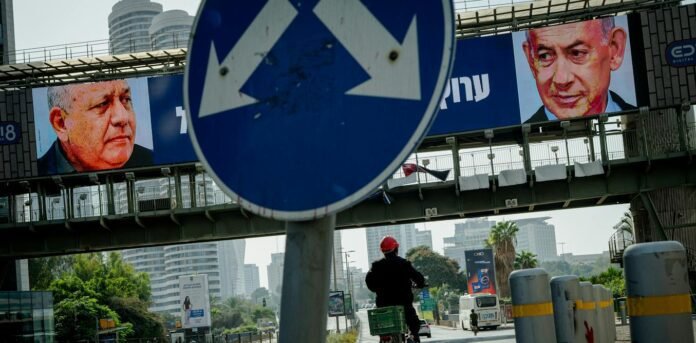
Italian Prime Minister Giorgia Meloni has condemned a judge’s decision to release a university researcher accused of helping organise violent protests in Milan, describing the ruling as “shameful”.

Youssef Siher, a 30-year-old Italian freelance journalist of Moroccan origin, was detained on 24 October on charges of incitement to commit crimes, aggravated by alleged terrorist motives.

However, Milan judge Tiziana Landoni ordered his release, saying the investigation appeared deeply flawed and there were no serious grounds to believe he had committed the alleged offences or posed a flight risk.

Police had identified Siher as the administrator of a Telegram group called “October 17 Movement”, which was created after violent demonstrations in Milan. Investigators alleged that messages posted in the group encouraged protesters to gather and commit offences against public order.

Landoni said, however, that the comments in question had been posted by other group members and that Siher had not been found to have encouraged or supported their calls for violence. Siher has denied wrongdoing.

Meloni said the decision was an “unbearable humiliation” of the work of police and investigators.

The case comes as the government steps up its law-and-order measures. A security decree introduced this month provides prison sentences of four to 12 years for organisers of groups that endanger public safety or cause damage during demonstrations.

via Reuters

Whoopi Goldberg Reveals Her Paycheck Would ‘Shock’ Fans

0
whoopi-goldberg-reveals-her-paycheck-would-‘shock’-fans
Whoopi Goldberg Reveals Her Paycheck Would ‘Shock’ Fans


After nearly two decades of heated debates, political showdowns and countless controversies on The View, Whoopi Goldberg is finally revealing what keeps her coming back to the ABC talk show — and her answer has everything to do with money.

The 70-year-old television veteran made no attempt to sugarcoat her motivation during a revealing interview with W Magazine, admitting that her lucrative paycheck is the biggest reason she continues occupying her familiar seat at the table.

Asked why she has remained on the program for so long, Goldberg delivered a refreshingly blunt two-word answer: “Good check.”

And when pressed on whether money really was her primary motivation, the Oscar-winning actress doubled down.

“That’s really what it is,” Goldberg declared. “I’m well-paid, and I do a good job. I earn my dough, and sometimes people like it, sometimes they don’t.”

The admission comes as Goldberg celebrates her 20th season on the daytime television powerhouse, where her outspoken opinions and frequent political clashes have made her one of the show’s most recognizable — and polarizing — personalities.

But despite her decades of Hollywood success, Goldberg suggested that the entertainment industry still isn’t offering women the same financial opportunities as their male counterparts.

“No one is going to pay me guy money to be in a movie,” she explained, acknowledging that her steady television paycheck provides an attractive alternative to chasing film roles.

And while Goldberg has refused to reveal her exact ABC salary, she has already hinted that the figure would leave viewers stunned.

During an August appearance on Keke Palmer’s Baby, This Is Keke Palmer podcast, the longtime host was asked what she enjoyed most about working on The View.

Her answer was immediate: “The check. I love the check.”

When Palmer suggested she could only imagine how much Goldberg was earning, the actress insisted the reality was even more surprising.

“Trust me. You can’t. You would be shocked,” Goldberg teased.

Although various reports have placed her annual earnings in the multimillion-dollar range, Goldberg has not publicly confirmed her exact salary. She has also acknowledged that The View isn’t necessarily the highest-paying job of her extraordinary career.

For Goldberg, however, the financial security carries particular significance.

The Sister Act star joined the program in September 2007 after legendary broadcaster Barbara Walters offered her a position following Rosie O’Donnell’s departure. Despite having already won an Oscar and established herself as one of Hollywood’s most successful entertainers, Goldberg has admitted she desperately needed work at the time.

Nearly 20 years later, she remains the show’s longest-serving uninterrupted co-host, having watched numerous television personalities come and go while continuing to lead its often explosive discussions.

Goldberg has also acknowledged that she has considered leaving the program numerous times over the years. Yet her latest comments make clear that the financial rewards remain a powerful incentive to stay.

Still, she insists her commitment goes beyond collecting a paycheck.

The entertainer has spoken openly about feeling fortunate to have steady employment when so many Americans are struggling to find work, explaining that seeing her family each morning reminds her of the importance of having a job.

She also defended her willingness to express controversial opinions, regardless of whether viewers agree with them.

Goldberg said she takes her responsibilities seriously because Walters specifically hired her to speak her mind — something she has never been particularly shy about doing.

And after 20 seasons of arguments, backlash and headline-making television moments, Goldberg appears perfectly comfortable with the arrangement.

Viewers may love her or dislike her, but as long as ABC continues signing those substantial checks, Goldberg has made it clear why she has little reason to walk away.

Lula can’t decouple from China, whatever Trump may want

0
lula-can’t-decouple-from-china,-whatever-trump-may-want
Lula can’t decouple from China, whatever Trump may want

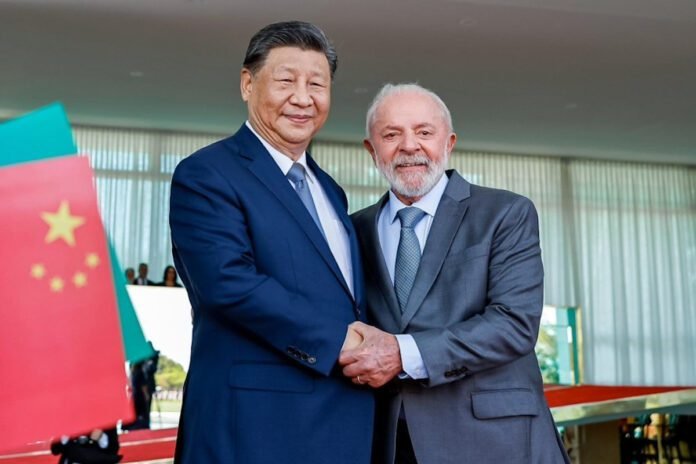
Luiz Inacio Lula da Silva’s re-election on October 25 may have frustrated Donald Trump’s ambitions in Latin America, but the more consequential story lies beyond the ballot box on China.

Brazil’s relationship with Beijing is now so deeply embedded in its economy that even a president more sympathetic to Washington would struggle to unwind it. Political loyalties can change overnight, but trade routes, industrial investments and commercial dependencies cannot.

Lula secured 51.79% of valid votes against Flavio Bolsonaro’s 48.21%, according to Brazil’s electoral authority. His victory preserves a government committed to maintaining relations with competing global powers.

Nevertheless, the election exposed a deeper reality. Brazil’s economic relationship with Beijing is increasingly sustained by interests that extend well beyond presidential preferences.

Between January and September 2026, Brazilian exports to China reached US$84.7 billion, up 12% from a year earlier. China absorbed 29.75% of Brazil’s exports, compared with just 9.65% destined for the United States.

Meanwhile, exports to America declined 6.5%. For Brazilian producers, these figures represent customers, revenues and investments that cannot simply be redirected by diplomatic decree.

Nor is China merely purchasing Brazilian commodities. Chinese companies are increasingly involved in the country’s electricity networks, mining operations, automobile manufacturing and energy transition.

Consequently, the relationship is evolving from a conventional exchange of raw materials for manufactured goods into something more consequential: an economic partnership deeply woven into Brazil’s productive infrastructure.

That means Washington’s strategic preferences increasingly collide with Brazil’s commercial realities. American policymakers may regard Chinese influence in the Western Hemisphere as a geopolitical vulnerability.

Brazilian exporters, manufacturers and infrastructure operators, however, calculate their interests differently. For them, disengagement would require alternative markets, financing and technology, not simply a change in political allegiance.

Unbreakable relationship

China’s importance to Brazil begins with the extraordinary scale of its demand. Brazilian soybeans feed Chinese livestock, iron ore supports its steel industry, and crude oil supplies its refineries. These exchanges have created powerful domestic constituencies whose commercial interests transcend ideological divisions.

Indeed, Brazil’s dependence is not confined to the political left. Agribusiness, historically associated with conservative political forces, benefits enormously from Chinese demand. Mining companies and commodity exporters operate according to similarly pragmatic calculations. A government seeking to distance Brazil from Beijing would therefore confront resistance not only from China but also from powerful interests at home.

Bilateral trade reached approximately $143.3 billion in the first nine months of this year, generating a Brazilian surplus of $26.1 billion. That accounted for roughly 42% of Brazil’s overall merchandise trade surplus.

To be sure, the relationship has vulnerabilities. Brazil predominantly exports agricultural products, minerals and energy commodities while importing manufactured goods, machinery and increasingly sophisticated technologies.

This pattern generates substantial revenues but does not necessarily strengthen domestic technological capabilities. Indeed, commodity dependence can coexist with and even promote industrial stagnation.

The emerging lithium trade illustrates the dilemma. During January-September, Brazilian exports of spodumene, a lithium-bearing mineral, rose 339% in value to $172.3 million. China purchased approximately 97% of those exports.

Brazil possesses the resource, while China commands much of the downstream battery-processing and manufacturing ecosystem. The commercial opportunity is considerable, but so is the risk of remaining confined to the least technologically sophisticated stages of production.

Still, Brazil’s dependence should not be confused with helplessness. Brazil supplies commodities that Chinese industries need, and alternative markets exist for some of the products.

The real question is how quickly exporters could replace Chinese demand, at what price and with what consequences for employment and investment. Economic vulnerability depends not merely on the size of a relationship but on the cost of replacing it.

Investment as strategic infrastructure

According to the Brazil-China Business Council, Chinese investment in Brazil reached $6.1 billion in 2025, up 45% from the previous year. Brazil attracted 10.9% of Chinese overseas investment tracked by the council, making it the largest destination in its assessment. Crucially, the money was not concentrated exclusively in commodity extraction.

Electricity projects received approximately $1.79 billion, while mining attracted $1.76 billion. Automotive investment reached about $965 million. Chinese companies are consequently participating in sectors that shape Brazil’s future industrial capacity, particularly electricity infrastructure, electric vehicles and strategic minerals.

Still, Chinese investment is not automatically beneficial to Brazil. China’s factories may create jobs and introduce technology, but they also make Brazil reliant on imported components, limiting domestic value creation. Likewise, mining investment may increase exports without developing Brazilian processing capabilities.

Washington faces a corresponding challenge. If American policymakers want Brazil to reduce its exposure to China, trade restrictions and diplomatic pressure will likely accomplish little.

They must offer credible alternatives involving market access, financing, industrial cooperation and technology. Otherwise, Brazil would be expected to absorb the economic costs of advancing another country’s geopolitical objectives.

While Washington introduced additional tariffs on Brazilian products in July, both governments established a working group in September to explore a possible trade agreement.

Brazil has continued engaging the United States even as its commercial relationship with China expands, reflecting Brasilia’s effort to preserve economic options rather than accept an exclusive alignment.

Brazil’s real choice

Lula’s challenge, therefore, is not whether Brazil should choose Washington or Beijing. It is whether the country can transform relationships with both into greater productive independence.

Brazil’s Nova Indústria Brasil program provides one potential instrument. Initially backed by $300 billion real (US$55 billion) in planned financing, the initiative received an additional $70 billion real commitment in February 2026.

Its ambitions include industrial modernization, technological development and stronger domestic production chains, though clearly financing commitments alone won’t guarantee industrial transformation.

The relevant measures are domestic value added, productivity growth, technological learning, supplier development and the ability to export sophisticated products. Chinese investment should be assessed against these benchmarks, just as American or European investment should.

Diversification nevertheless remains essential. During the first half of 2026, Brazilian exports to India expanded by more than 88%, while sales to the European Union, Mexico and Singapore also increased. These developments suggest that alternative commercial relationships can grow alongside Chinese demand rather than replacing it outright.

Washington may try to influence Lula’s new government’s strategic calculations, but it cannot erase the commercial incentives sustaining relations with Beijing. Brazil’s strategic autonomy will be measured neither by its distance from Washington nor by its closeness to Beijing.

It will depend on whether the country can convert access to competing powers into domestic capabilities that neither power can monopolize or control.

Lula’s objective won’t be decoupling from China at America’s behest. Rather, it will be to make external dependence less costly, less concentrated and, above all, less able to dictate Brazil’s choices.

Ronny P Sasmita is a senior international affairs analyst at the Indonesia Strategic and Economic Action Institution, a Jakarta-based think tank. He holds a PhD from the University of Tokyo.

4 Ways Out of Israel’s Election Deadlock—and None Is Easy

0
4-ways-out-of-israel’s-election-deadlock—and-none-is-easy
4 Ways Out of Israel’s Election Deadlock—and None Is Easy


Israel has elected a parliament, but not necessarily a government. With 85.6% of votes counted Wednesday, Prime Minister Benjamin Netanyahu’s right-wing and ultra-Orthodox bloc was projected to win 53 seats, eight short of a majority. A four-party opposition bloc led by Gadi Eisenkot had 48, while two predominantly Arab parties were projected to hold a combined 19. The arithmetic suggests a way to unseat Netanyahu. The politics are another matter.

Keren Setton examines four possible outcomes of Tuesday’s election, beginning with the prime minister’s familiar skill at finding coalition partners where none seem available. Strategic adviser Roni Rimon believes Netanyahu may approach political adversaries, including former Prime Minister Naftali Bennett. Yet Bennett has ruled out joining a Netanyahu government, and crossing that line would require a spectacular reversal.

The opposition’s alternative looks stronger on paper. Its 48 seats, combined with 19 for the Joint List and Ra’am, would give Netanyahu’s opponents 67 lawmakers. Arab turnout reached an estimated 80%, helping deliver what could be their parties’ strongest combined representation. Joint List leader Yousef Jabareen has signaled willingness to help replace Netanyahu, while Ra’am leader Mansour Abbas is open to joining an Eisenkot-led coalition.

But Bennett and Yisrael Beitenu leader Avigdor Liberman oppose depending on Arab parties. Eisenkot has also imposed conditions on potential partners. A minority government backed by Arab lawmakers from outside the coalition remains possible, as Israeli parliamentary precedent shows.

A unity government presents a third option, though opposition leaders reject serving under Netanyahu. His far-right partners, disputes over military conscription, and the prime minister’s corruption trial add further complications. University of Haifa professor Eran Vigoda-Gadot dismisses a Netanyahu-Eisenkot deal outright.

Then comes the fourth possibility: another election, potentially in early 2027. Israel held five between 2019 and 2022. Roughly 600,000 special ballots still awaited counting Wednesday, and official results are due by November 4.

In Setton’s interviews, the competing forecasts expose how much hinges on decisions rather than numbers. President Isaac Herzog has urged party leaders to approach coalition talks with an open mind. Failure would leave Netanyahu governing as caretaker, and Israelis facing yet another trip to the polls.

Google announces Gemini 4 Carbon, its latest frontier AI model that you can’t use

0
google-announces-gemini-4-carbon,-its-latest-frontier-ai-model-that-you-can’t-use
Google announces Gemini 4 Carbon, its latest frontier AI model that you can’t use

It’s almost like Google’s got something to prove after taking a break from releasing new frontier AI models earlier this year. Just two weeks after rolling out Gemini 4 Argon, Google has announced Gemini 4 Carbon. This isn’t the Flash model equivalent we’ve been waiting for but, rather, is an improvement on Argon, and like that model, Google is working on a staged release that could take a while.

Stop me if you’ve heard this one before: Google says its latest AI model reaches a new threshold in coding, agentic tasks, and scientific analysis. It’s so capable, in fact, that Google can’t let you use it just yet.

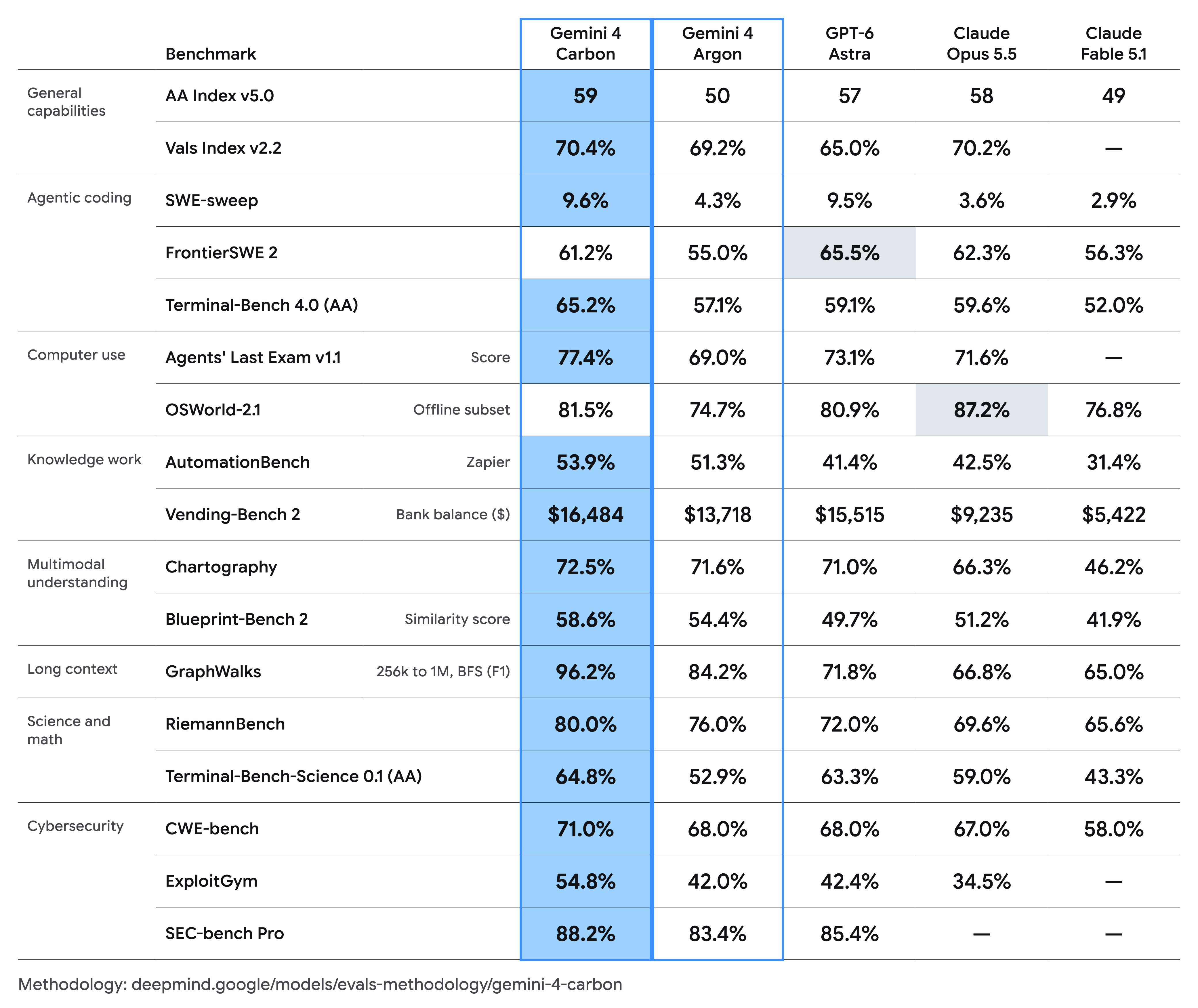
Gemini 4 Carbon reportedly makes big gains in cybersecurity applications. Google says the model shows a “significant leap” in vulnerability detection, validation, and remediation. Carbon is also apparently twice as likely to generate code that is free of vulnerabilities versus Argon. Meanwhile, the Chrome team claims that Carbon is 10 times better at generating “high-quality” patches compared to non-Google models. Google also notes that Carbon has increased its score by 89 points on WebDev Arena, now ranking at number four on the leaderboard.

Google has some numbers to support these vague assessments (below), showing Carbon at the top of the charts. Google positions Carbon as a totally new model, but for all we know, it could be a post-training upgrade of Argon. The two models have a lot in common, but Carbon does best Argon by slim margins in every test Google has given it. Its new model also beats GPT-6 Astra, Claude Opus 5.5, and Claude Fable 5.1 in almost every test. Benchmarks don’t tell the whole story, of course, and it’s notable that every frontier model scores in the same neighborhood in these tests. The gap between Carbon and the competition is just a few points.

Credit: Google

By Google’s reckoning, Carbon is the most capable frontier AI model right now, and its improved capabilities come with more rigorous safeguards. In the Grey Swan evaluation, Carbon resisted every attempted prompt-injection attack. That 0 percent score is better than Argon (0.7 percent), Opus 5.5 (1 percent), and GPT-6 Astra (8.5 percent).

The release plans for Gemini 4 Carbon mirror those for Argon. According to Google, the model’s strong performance in agentic coding and cybersecurity means that it has to take a “deliberative approach.” The company is working within the voluntary testing framework established by the US government, and it plans to roll the model out through its Fairwinds cyber defense program once that’s done. Google does not make any promises about the timeline for a wide release of Gemini 4 Carbon, but if it’s anything like Argon, the model could be available in a couple of weeks.

Carbon will probably arrive first for AI Ultra subscribers and developers using the Gemini API. Like Argon, Google will temporarily offer a discounted API rate of $2 per million input tokens and $10 per million output tokens. That price will double once the introductory period expires. Argon’s discounted rates are only good through the end of November, but Google doesn’t specify a date for Carbon. Google has declined to provide an end date when asked, suggesting it hasn’t decided when the price will increase.

Kuwait summons Iranian ambassador after Tehran denies assassination plot

0
kuwait-summons-iranian-ambassador-after-tehran-denies-assassination-plot
Kuwait summons Iranian ambassador after Tehran denies assassination plot

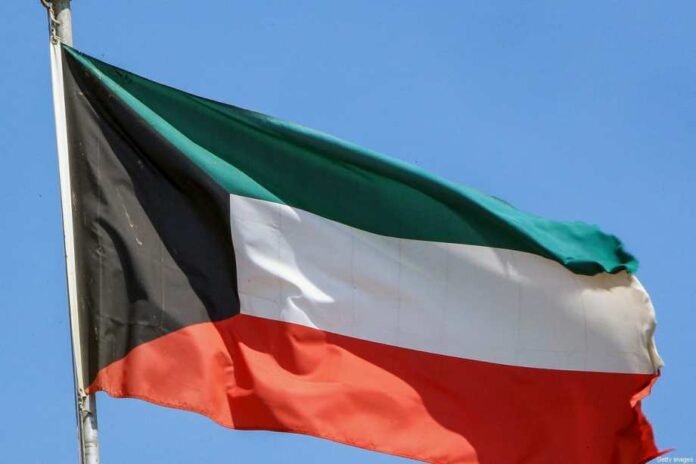
Kuwait summoned Iranian Ambassador Mohammad Totonchi on Wednesday to protest against Tehran’s denial that an Iranian citizen was involved in an alleged plot to assassinate senior Kuwaiti officials.

Iran’s embassy rejected the allegation, saying the individual concerned had not been in Kuwait for 10 years and describing the accusations as false.

The dispute follows a Kuwaiti court ruling on Monday sentencing three defendants to death for alleged espionage for Iran and Hezbollah and plotting to assassinate senior officials, including First Deputy Prime Minister and Interior Minister Fahad Al-Yousef. Eight other defendants received five-year prison sentences, Kuwaiti media reported.

READ: Egypt, Kuwait and Arab League condemn Colombian Embassy opening in Jerusalem

Lebanon’s Al Mayadeen television identified one of those sentenced to death as Iranian national Abdulreza Haidar Dehqani. Kuwaiti authorities have not disclosed the identities or nationalities of all 11 defendants.

Kuwait’s Foreign Ministry said it had delivered a formal protest note to the Iranian ambassador, accusing Tehran’s embassy of interfering in Kuwait’s internal affairs and undermining its judicial independence.

Relations between the two countries have deteriorated since the Israeli-US war against Iran began in late February. Kuwait condemned Iranian strikes on what Tehran described as US targets in Kuwait, saying they had hit civilian sites and infrastructure.

Iran had not immediately commented on Kuwait’s protest.

READ: Kuwait sentences three to death over plot to assassinate interior minister, alleged links to Iran and Hezbollah

Time for the West to plan ahead for post-Trump 2029

0
time-for-the-west-to-plan-ahead-for-post-trump-2029
Time for the West to plan ahead for post-Trump 2029

America’s mid-term congressional elections on November 3rdwill mark the beginning of the final two years of the Trump administration and thus the nearing of a potentially historic moment of reckoning for that country’s estranged allies.

The reckoning may seem like a long way ahead, but in what historians will see as just the blink of an eye those members of the former West will face an awkward choice: Will they greet whoever is elected as his successor in November 2028 as a friend, as if nothing had changed in the previous four years? Or must the bitter, painful experience of Trump’s hostility mean that they must hold their former friend at arm’s length, believing that something has changed permanently in their country’s relationship with the United States?

Much could happen during those two years to affect this calculation, whether in America, the world, or in the internal politics of each of the allies, be they Japan, the United Kingdom, Canada, France or any of the others. But now is nonetheless the time to start planning for that moment.

Whether a government feels optimistic or pessimistic about its country’s future relationship with the United States, it must work to get itself into the strongest possible position for dealing with that new president and his or her administration. In fact, many are doing so already.

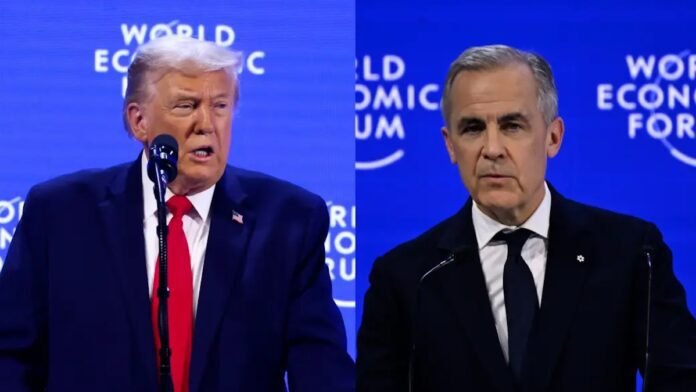
Canada’s Prime Minister Mark Carney has spoken eloquently of the need to accept that there has been a “rupture” in the international order and has outlined ambitious plans to diversify his country’s trading, technological and defense relationships away from the United States and towards closer collaboration with what he called Canada’s fellow “middle powers.”

European leaders, led by France’s outgoing president, Emmanuel Macron, speak of the need to develop “strategic autonomy.”

Yet, admirable and bold though such ambitions undoubtedly are, they should be taken seriously but not literally, to borrow a phrase that has often been used about Trump himself.

Carney knows that two years is too short a time for him to have any chance of fulfilling his declared ambitions for Canada. His long-term strategy is in truth a short-term maneuver designed to make such a plan possible but, he hopes, not actually necessary.

His first objective in following this course is to make sure that he will still be Canada’s prime minister in two years’ time, for by talking proudly and patriotically about Canada’s sovereignty he hopes to maintain his popularity and keep his job.

His second objective will, however, be more important: to provide himself and Canada with as much leverage as he can for the moment when he takes his first call from, or holds his first summit with, the new American president in 2029.

It is the same for European leaders. They have known since Vladimir Putin attempted his full-scale invasion of Ukraine nearly five years ago that they needed to take more responsibility for the defense and security of their own continent, which is why the European members of NATO have increased their annual defense spending by more than 90% in the ensuing period, according to the International Institute for Strategic Studies.

They have also taken over the full financial and military burden of supporting Ukraine, given that Trump brought such American support to an end in early 2025. They know that, to borrow a term from the financial markets, the transatlantic relationship has been “repriced.” But they still want that relationship to continue and to be restored to something close and co-operative rather than the insulting, bullying relationship under Trump.

To paraphrase a traditional saying from the European monarchies: the West is dead; long live the West.

European and North American allies are, in effect, converging on Japan’s approach. Japan knows that it has no “plan B” that can substitute for its security alliance with America, in the face of pressure from China, Russia and North Korea, so it must work to make sure that “plan A” can work as well as possible with hopefully less gangster-like US presidents than Trump and to Japan’s benefit, not its detriment.

Europe and Canada are not quite in the same position, as they do have alternatives. But they also know that those alternatives would be much worse than working alongside the world’s biggest economy and most powerful military force. They want to recreate the collaborative traditions of the West, but on new terms.

One important element of those new terms will be a more equitable sharing of the burdens of collective activities, most notably defense. Japan, Canada and the Europeans are already making big strides toward that goal. In fact, with America’s own public debt burden likely to put constraints on its own ability to spend more on defense, constraints its allies have already been feeling for years, the Western partners’ situations are converging.

What Canada and the Europeans also want, however, is to ensure that America cannot just take them for granted and push them around.

One interesting idea for how the European Union could do this was published recently by two scholars at the Institute for European Policymaking at Bocconi University in Italy, Daniel Gros and Nathalie Tocci. They propose that the EU should invite other likeminded countries, which would generally be democracies with open economies such as Japan, Canada and Australia but could include others, to come together to sign what they call CORE – the “Compact for Open and Resilient Economies.”

Under this compact, members would pledge to consult each other before taking trade, industrial policy or other major decisions that might affect other signatories. This would not involve binding treaty commitments but would instead involve a political commitment towards collaboration, a bit like an enlarged, more open version of the G7 – or the old Western world.

The aim, rather like Carney’s plans for Canada, would in theory be to open the way towards greater autonomy from the United States. In practice, however, CORE would make participating countries harder for a post-Trump America to push around while also making them look like a more attractive and potent bloc that America itself might benefit from aligning itself with.

The dream scenario would be for America to join CORE, but even if that will remain unlikely CORE could still serve as a powerful influence on American decision-making.

The strangest element of Trump-era geopolitics has been that while America has been treating its allies with contempt, China has been working to reinforce and widen its own partnerships with Russia, Iran and North Korea, however troublesome those allies may be. The lesson will not be lost on whoever takes over as US president in 2029: Just like during the Cold War, allies will again be a vital instrument through which to achieve American goals at a lower cost than going it alone.

So when the moment comes to re-create the western partnership after the Trump estrangement, Japan, Europe, Canada and others must aim to be in the best positions possible to negotiate what will be the geopolitical equivalent of pre-nuptial agreements. Looked at in that light, those two years will look to be too short, not too long.

This is the English original of an article published in Japanese by the Mainichi Shimbun. It is republished with permission.

Touchscreen MacBook Pro hands-on: OLED looks great on a Mac

0
touchscreen-macbook-pro-hands-on:-oled-looks-great-on-a-mac
Touchscreen MacBook Pro hands-on: OLED looks great on a Mac

LOS ANGELES—For about five minutes on an extremely crowded showroom floor, I got to take pictures of the new MacBook Pro and test out some of its new features. First impressions: It’s not as much of a departure from the previous design as I expected, but the outstanding OLED display steals the show regardless.

The first thing I noticed was that it’s lighter. My daily driver is a 14-inch MacBook Pro (M1 Max), and it’s a bit weighty for a 14-incher. Picking up the new model, I could immediately tell it was lighter. It’s not like it’s in a different general weight class, but it’s a noticeable difference.

The next thing I noticed was the Dynamic Island. Given the larger screen real estate of a laptop, it’s much less dominant on the screen than it is on an iPhone. I do worry about what will happen with fullscreen games, which I wasn’t able to test today. The notch MacBook Pro has an option to maximize apps or games to just below the notch, so it doesn’t cut into the image. I’m curious to test in the full review whether that remains the case with this little cutout.

A small black hole near the top of the screen

This is how the Dynamic Island looks when it’s not doing anything…

A music player on the Dynamic Island

…and this is a live activity, expanded by tapping on it. (It’s smaller before you tap on it.)

And lastly, the Apple logo on the back glows again! Some find this tacky, some find it essential. I just think it’s a little bit nostalgic.

The logo glowing on the back of an open 14-inch MacBook Pro.

The logo glowing on the back of an open 14-inch MacBook Pro.

The logo glowing on the back of an open 14-inch MacBook Pro. Credit: Samuel Axon

Of course, you might make the case that the most notable thing about this laptop is not its weight or the Dynamic Island. For years, people have debated whether Apple should introduce a touchscreen laptop. Steve Jobs was famously against it. A few years ago—there were reports that under Tim Cook and now John Ternus—Apple decided to move ahead with the idea.

I played with it a bit, and it works just about exactly as you expect for a laptop touchscreen.

A few of the things I did with the touchscreen during my brief time with the laptop:

  • Swiped between desktop spaces with three fingers on the screen
  • Pinched, zoomed, and scrolled on both images and the Maps app
  • Dragged windows around and resized them—including a quick flicking gesture that attaches a window to the left or right side of the screen
  • Dragged files between applications
  • Launched and closed applications
  • Drew with my finger in a painting and illustration app
  • Sketched in colors on a 3D model
  • Scrubbed through video playback

All of that is nice to have, I guess, but there’s not much you can do with it that you couldn’t already do with trackpad gestures, at least at the OS level; some creative apps, like finger painting on the screen, seemed to offer a bit more.

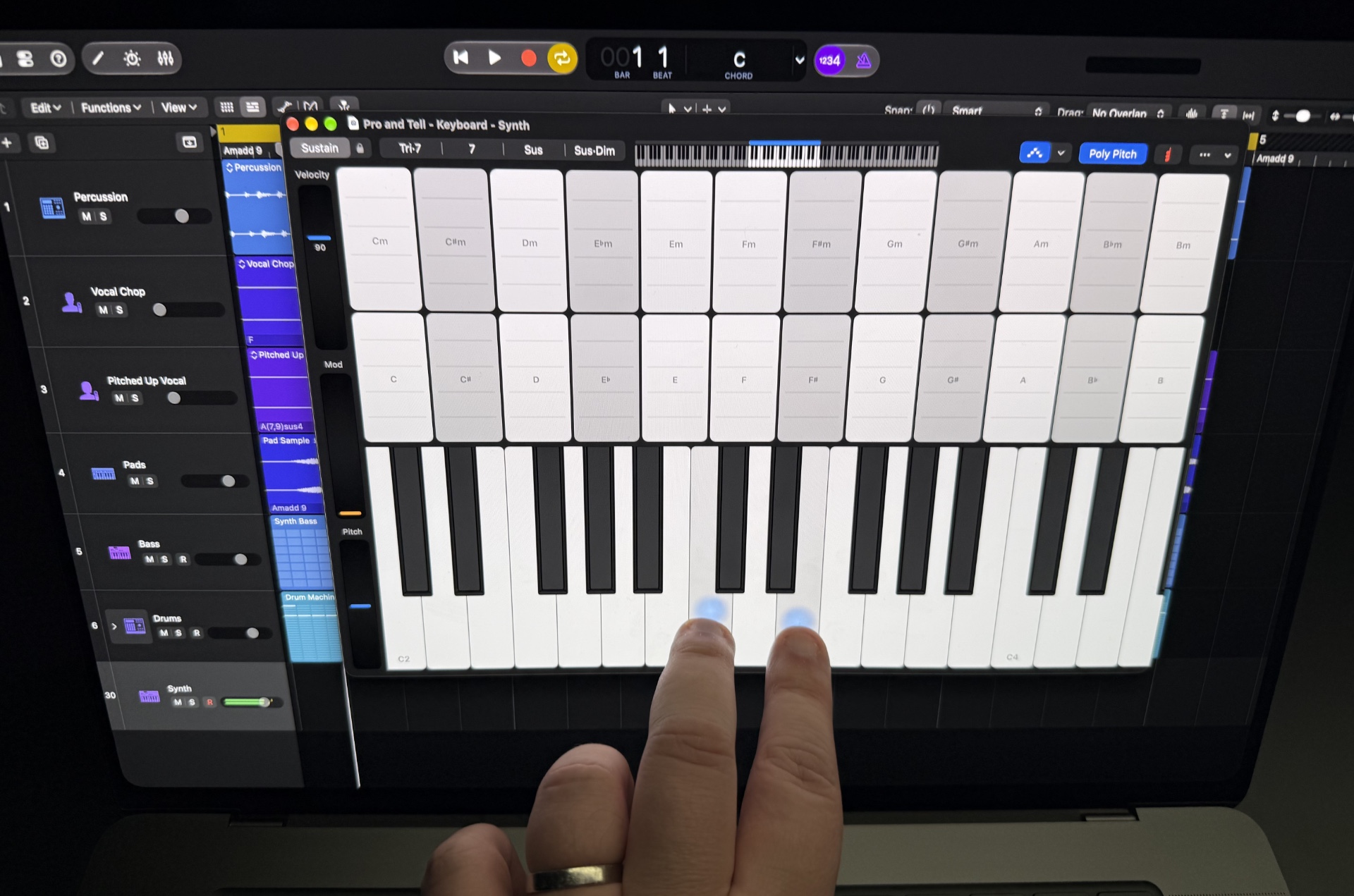
Fingers pressing virtual keyboard keys on the screen

You can play a musical instrument like a keyboard on the screen with your fingers, but it’s a little awkward, since the laptop does not convert into a tablet mode.

You can play a musical instrument like a keyboard on the screen with your fingers, but it’s a little awkward, since the laptop does not convert into a tablet mode. Credit: Samuel Axon

When the credible reports emerged that the MacBook Pro would get a touchscreen, I imagined a convertible with Apple Pencil support—something you could use as a large iPad or drawing tablet, essentially. That’s not what this is; it only takes the usual laptop shape, and I was told it does not support the Apple Pencil. It’s just a MacBook Pro, in its normal form factor, but you can use your fingers on the screen to do things like drag files around, swipe between desktop spaces, or pinch-to-zoom on maps or images.

But while it’s not about the touchscreen capability for me, I was impressed by the OLED screen itself—and I’m quite the display snob, if I’m being honest. The peak brightness, absolute blacks, well-balanced color, and dynamic range were genuinely remarkable. It’s an enormous upgrade over the MiniLED screen in the previous MacBook Pro.

It took far too long for OLED to come to the MacBook Pro, but unsurprisingly, Apple spared no expense and cut no immediately obvious corners on quality.

I was also happy to see that the cutout near the top of the screen that has replaced the camera notch is what Apple calls a Dynamic Island; it can resize to show live activities and other information on the fly. That’s one of my favorite features on the iPhone, as I’ve been impressed with Apple’s ability to turn something that should be an albatross into an appealing feature.

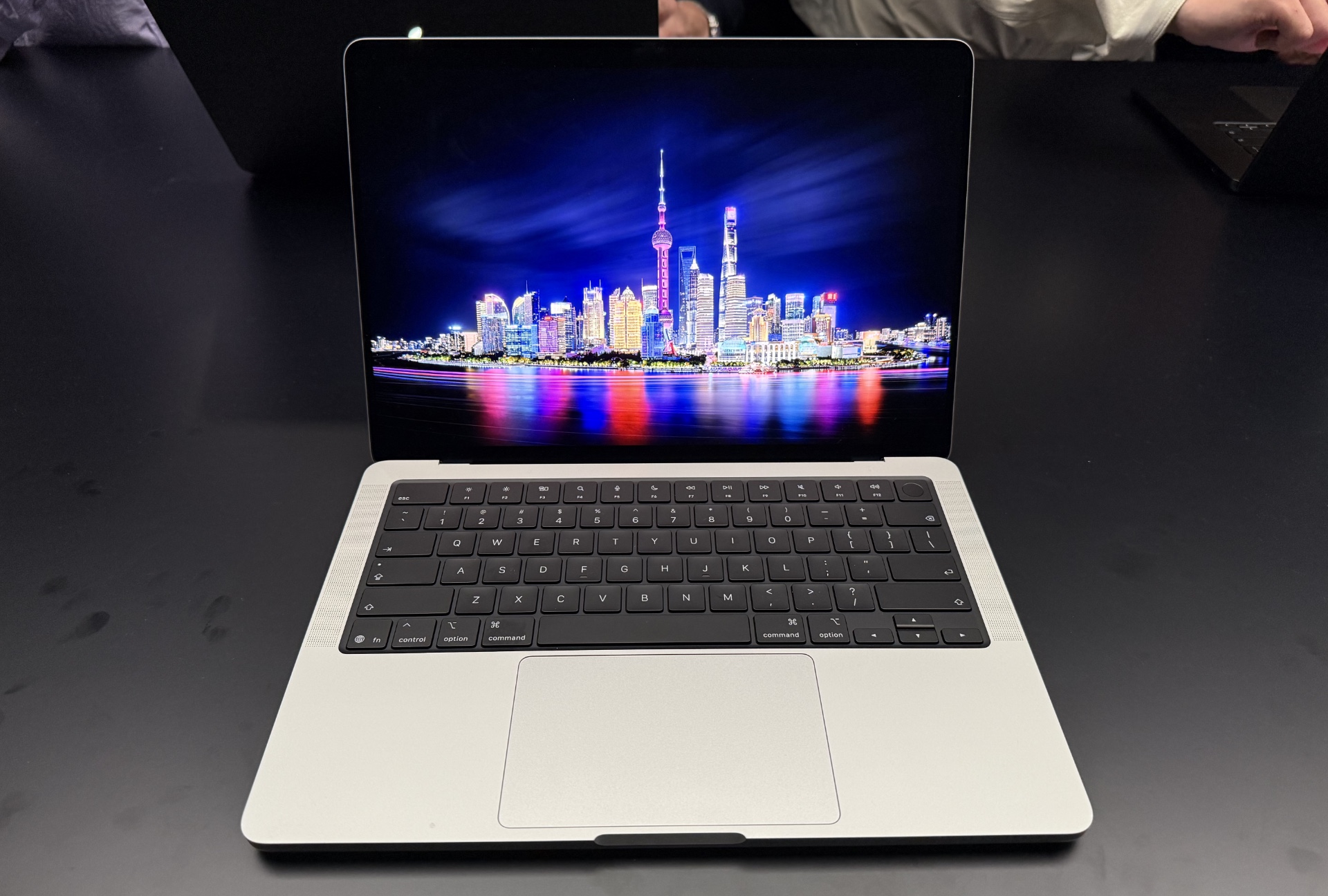
A laptop on a table

The 16-inch MacBook Pro.

A laptop on a table

The 14-inch MacBook Pro.

A standard Apple laptop keyboard and trackpad

The keyboard and touchpad are the same as before. (Pictured here on the 16-inch.)

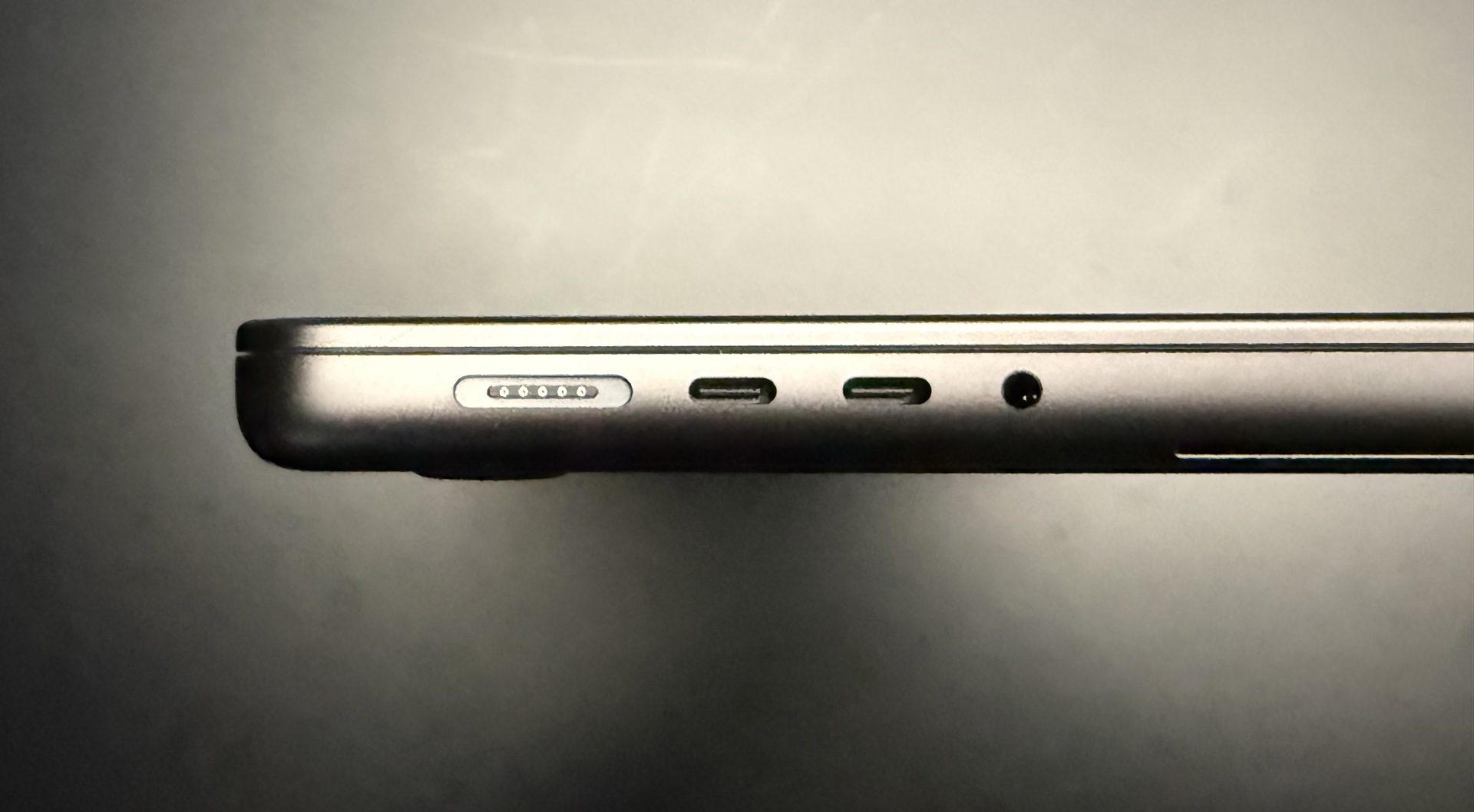
MagSafe, two Thunderbolt ports, and one headphone jack on one side of the 16-inch MacBook Pro

Same goes for ports; no changes here.

Based on my time with the device and today’s announcement, the screen seems to be the main draw (though it’s nice that it noticeably weighs less, too), but the price is the real barrier. A 16-inch model with an M5 Max, 64 GB of RAM, and 2 TB of storage is currently priced at $5,799. Sure, that’s a high-end spec, but that’s some serious cash. Much of that is due to the storage and memory; upgrading from 64GB to 128GB adds a whopping $1,600 to that.

Sure, most people don’t need anywhere near that much RAM—but some might for future-proofing for local AI workflows.

I’m looking forward to spending more time with the new MacBook Pro, but for right now, it seems to follow in the lineup’s existing tradition: impressively high-end components like an outstanding OLED panel, but a very steep price to match. No surprises here! Though after well over a decade of speculation and back-and-forth, you’d be forgiven for being surprised that the touchscreen thing actually finally happened.

Flavio Bolsonaro escapes to US after Brazil election defeat

0
flavio-bolsonaro-escapes-to-us-after-brazil-election-defeat
Flavio Bolsonaro escapes to US after Brazil election defeat


Brazilian senator Flávio Bolsonaro has arrived in the United States with his wife and two daughters following his defeat in Sunday’s presidential election, amid concerns that he could face arrest in Brazil.

Television footage showed the family arriving at Opa-locka airport in Miami, later leaving the airport beneath umbrellas. A source close to Bolsonaro said he feared arrest over ongoing investigations into alleged corruption and money laundering, which he denies.

US President Donald Trump approved Bolsonaro’s entry, according to a presidential adviser, while US officials confirmed that visas were being issued to the family. Trump said he considered them “fine people” and described Brazil’s election as “very strange”.

Brazil’s Supreme Court had ordered Bolsonaro to surrender his passports within 24 hours on Monday. Although there was no arrest warrant against him when he left, legal analysts said defying the court’s order could provide grounds for one.

The senator’s departure follows his defeat by left-wing President Luiz Inácio Lula da Silva in Sunday’s runoff. Bolsonaro is among several Brazilian conservatives now living in the US, including his brother Eduardo.

via CNN

Israel has voted, but what comes next? Dissecting a messy ballot and coalition-building process

0
israel-has-voted,-but-what-comes-next?-dissecting-a-messy-ballot-and-coalition-building-process
Israel has voted, but what comes next? Dissecting a messy ballot and coalition-building process

The Israeli election of Oct. 27, 2026, was among the most highly anticipated votes in the country’s history. It was consequential, if not yet conclusive.

With nearly all the votes counted, it is still unclear who will lead the country following the first national ballot since the Oct. 7, 2023, Hamas-led attack, and the devastating wars in Gaza, Lebanon and Iran that Israel has launched since.

The Conversation turned to Dov Waxman, an expert on Israeli politics at the University of California, Los Angeles, to walk us through the main takeaways and the process and difficulties facing anyone trying to form a coalition government following a divided vote.

What can we take away from the election results?

The first thing to note is simply the massive turnout – with a 77.7% turnout of those eligible voting, the highest turnout in more than two decades. That in itself is significant. It underscores how much importance Israelis attached to this vote.

Before the election, many observers were saying that it was one of the most consequential – if not the most consequential – votes, and clearly many Israelis felt the same way.

What drove this high turnout was different types of fears. Israelis of all persuasions were worried about how the outcome would affect what kind of country Israel becomes.

The second big takeaway is that the ruling coalition, formed by Prime Minister Benjamin Netanyahu after the 2022 election, was resoundingly rejected by the majority of Israeli voters – well over 50% cast their vote for parties opposed to the current government.

A man in a white hat takes a picture of someone on a stage.

Likud supporters at an election night event in Jerusalem, Israel. Alexi J. Rosenfeld/Getty Images

The five parties that make up Netanyahu’s right-wing and religious coalition went into the election with 68 seats in the 120-seat parliament. That same bloc will now have 53 – and that is a significant loss, no matter how Netanyahu tries to spin this as a victory.

It means that those five parties will not be able to form the next government, and as such, the vote stands as a repudiation of the Netanyahu government.

Netanyahu’s Likud party will still be the largest in parliament. But its share of the national vote declined, and it looks like it will have six fewer seats in the next parliament, another blow to Netanyahu.

Netanyahu’s far-right coalition partners fared worse than expected, too. In part, this was due to “wasted votes” going to a new far-right party that failed to make it above the 3.25% of the national vote needed to be represented in parliament. Also, Likud drew some voters away from these far-right parties who had voted for them in the last election.

What drove the Arab parties’ surprise showing?

The performance of the Arab majority parties – the more secular and left-wing Joint List and the more religious and conservative United Arab List – is very important.

Combined, they currently look to have increased their representation by nine seats, bringing their total to 19, a historic high for them.

The reason for that is the massive turnout of Arab voters – much higher than the last election. But also, a less noticed trend is the increase in Jewish votes that those parties received. It is important to note that these are Arab-majority parties, not simply Arab parties.

Protesters hold placards and a loudspeaker.

Israeli left-wing protesters call for the formation of a government including Arab parties. Ilia Yefimovich/AFP via Getty Images

Aside from Netanyahu, it was also a disappointing result for the main opposition party, Yashar; its leader, Gadi Eisenkot; and the anti-Netanyahu Change Bloc it was part of. The preelection polls suggested that the Zionist opposition bloc would do slightly better than the ruling coalition bloc.

But Yashar ended up with over 200,000 fewer votes than Likud, winning a projected 21 seats compared to Likud’s 26, and the “Change Bloc” is heading to 48 seats, far short of a parliamentary majority.

Ultimately, what is clear is that the Israeli public remains deeply divided. And the fact that there is still a good chance that Netanyahu will emerge as prime minister is remarkable given that many observers had already written his political obituary after the Oct. 7 attack.

Was the vote a referendum on Netanyahu?

Certainly many saw this as a referendum on Netanyahu, Israel’s longest-serving prime minister.

For his supporters, Netanyahu is the only person to be trusted with Israel’s security, especially given the threat from Iran. They credit him for weakening – albeit not defeating – the two non-state actors that most threaten Israeli security, Hezbollah and Hamas, and they praise him for ensuring President Donald Trump’s support for Israel.

But for those who voted against Netanyahu, the fact that he has refused to take any personal responsibility for the Oct. 7 security failure – amid reports that he had advance warning of a major planned Hamas attack – factored into his poor election showing, as did his government’s refusal to establish a state commission of inquiry to investigate the Oct. 7 security failings.

Many also blame Netanyahu for not prioritizing the release of the Israeli hostages held in Gaza and prolonging the war there. He is also held responsible by many for the precipitous decline in Israel’s international standing and for jeopardizing Israel’s crucial alliance with the United States.

But it was domestic issues, rather than external ones, that motivated many of those who voted for anti-Netanyahu parties. Many fear that democracy in Israel is under attack, and they particularly oppose the effort by Netanyahu’s government to weaken the power and independence of the Israeli judiciary, which sparked massive street protests in 2023. They also strongly resent that Netanyahu’s government has allowed ultra-Orthodox men to avoid military service, despite the Israeli military’s growing manpower shortage. And on a personal level, Netanyahu is widely perceived as self-serving and dishonest – he is still on trial for corruption.

Arab voters have other, more specific concerns that drove them to vote in record numbers, in addition to the Netanyahu government’s policies in Gaza and the West Bank, which they strongly oppose. Chief among them is the soaring rates of violent crime in their communities, which the government – particularly the far-right Itamar Ben-Gvir, who oversees the police – has done nothing to address, say his critics. More broadly, many Palestinian-Arab citizens of Israel fear that if the far-right parties remained in power, their civil rights would be under threat.

What should we expect next?

The key thing to underline is what happens on election day in Israel is just the first stage in the process of forming a new government. Since no party ever receives a majority of seats in the parliament, what really matters is what happens after the election when the coalition building begins. This can take weeks, if not longer.

The party with the largest number of seats typically gets the first chance to assemble a governing coalition, but not always. Israel’s president, Isaac Herzog, will choose who gets the first chance to form a government based on who is most likely to succeed.

Right now, it looks like Eisenkot will get the first opportunity, but his only real option is to form a minority government that would depend on the parliamentary support of the Arab-majority parties – which some members of his Change Bloc adamantly oppose.

A man waves a large blue and white flag.

Former Israeli military chief and Yashar party leader Gadi Eisenkot waves an Israeli flag as he addresses supporters on Oct. 28, 2026. Tomer Neuberg/Middle East Images/AFP via Getty Images

Despite the success of the Arab-majority parties in the election, it is unlikely they will be invited to be formal members of any coalition – although that has happened once in the past, when the United Arab List joined the short-lived government of 2021-22 led by Naftali Bennett and Yair Lapid.

If Eisenkot is unable to form a government, then Netanyahu will get the chance. He could try to entice some leaders of the parties in the Change bloc to defect and join a right-wing government under his leadership, or a broader “national unity” government with a rotating leader. Netanyahu did that in the past with Benny Gantz, but then he later prevented Gantz from becoming prime minister – so I doubt Eisenkot would agree to do this with Netanyahu.

There are reports in the media that the Trump administration would like a national unity government in Israel, so that might increase the pressure on Eisenkot to accept this outcome. And should war with Iran heat up again, that would increase the pressure.

The most likely scenario, I believe, is that neither Netanyahu nor Eisenkot will be able to form a government, and a new election will be called, with Netanyahu as caretaker prime minister until that vote. Netanyahu has reason to hope that his bloc will do better in another election, so that may well be his game plan. In which case, it will be many months until Israel has a new government.

0FansLike
0FollowersFollow
0FollowersFollow
0SubscribersSubscribe
- Advertisement -
Google search engine

Recent Posts