By almost every explanation on offer for the bond selloff underway treats it as a familiar story wearing a new coat. Too much debt, too much deficit, inflation refusing to die down. All are true.
But none of it fully explains why yields are climbing this fast and this broadly at the exact moment the US Federal Reserve is signaling a rate rise that openly contradicts what Donald Trump’s White House wants.
Clearly, investors are starting to price something markets have not had to price seriously in decades: whether the world’s most important central bank, the US Federal Reserve, still makes its decisions independently of the people running the country where it resides.
For as long as most people working in markets today have had a career, Fed independence was simply assumed – a fixed, not variable, input. Rates moved on economic data and committee judgment, not on political pressure from the Oval Office.
This assumption is now being tested in public, with the new Fed chair, Kevin Warsh, striking a hawkish tone at Jackson Hole that puts the institution directly at odds with a sitting president who has made his preferences on rates unusually clear.
As such, markets are watching to see who blinks. My own expectation is that the Fed does not actually raise rates on September 16, whatever the hawkish tone out of Jackson Hole suggested.
Tough talk ahead of a vote is not the same thing as a tough vote itself, and a pause dressed up as toughness sends a very different signal to markets than genuine independence exercised in the open.
If the meeting delivers a hold rather than a hike, watch closely how that gets explained, because the explanation will tell you more about where real independence sits right now than the decision itself.
This matters more than any single rate decision because independence is not something you price once and move on from.
It’s a discount baked into every future Treasury auction, every corporate bond issued against the government’s credit, every pension fund modeling out decades of returns.
Take a meaningful bite out of that assumption, and you do not just move yields today; you raise the baseline cost of borrowing for years for a government already carrying more than $40 trillion in debt and running a deficit close to $2 trillion a year.
As ever, none of this is confined to Washington. And it shouldn’t read as distant news from another continent for anyone based in Asia.
Central banks and institutional investors across the region hold an enormous share of the Treasury market among them, including reserve managers in Tokyo, Beijing and elsewhere who have spent decades treating US government debt as the deepest, most reliably apolitical asset on earth.
A credibility discount on Fed independence runs through every Asian balance sheet holding dollars, precisely because those dollars were supposed to be boring in the first place.
Indeed, I’d put it more bluntly than most commentary. A central bank that looks politically pressured is a more expensive central bank to lend to permanently, not just for the news cycle it happens in.
To be very clear, global investors do not need to believe the Fed has actually been captured to demand a higher return for the risk that it might be.
Uncertainty about independence prices exactly the same way real interference does, namely through a persistently higher rate on every dollar the government needs to borrow.
A second thread runs underneath this that gets almost no attention and deserves far more. The US Treasury itself has been quietly running expanded buyback operations, effectively becoming a buyer of its own long-term debt to keep yields from running away entirely.
The government borrowing the money is also now managing the market it borrows in, stepping in as demand when private buyers hesitate.
Clearly, a healthy market doesn’t need its own borrower stepping in as buyer. This looks a lot more like active life support, and life support is rarely a story that ends well.
None of this means a crisis is imminent. Central banks have weathered political pressure before without losing independence in practice.
But investors pricing bonds today are not just betting on future inflation; they are judging institutional credibility that used to be background noise and is now front and center on every yield chart in the world.
Watch two things closely over the coming weeks, not the rate decision that gets all the coverage, but what happens around it.
First, does the Fed hold its position under visible political pressure, or does language start softening in ways that look coordinated with what the White House wants to hear?
And second, does the Treasury need to lean harder on buybacks to keep long-dated yields contained? If so, that would tell you private demand is waning exactly when the government can least afford it.
The US debt, the deficit and the inflation numbers are the story everyone is already covering. The one worth watching closely is quieter, and it’s not about economics at all.
It’s about whether one of the last genuinely independent institutions in global finance stays that way under direct pressure. Rightly, markets are not waiting for the answer before they start placing their bets.
US Targets Banque Misr UAE in New Iran Financial Crackdown
The US campaign to squeeze Iran’s economy has opened a new front in the Gulf’s banking system, with the Treasury Department proposing to cut Banque Misr UAE from key dollar-banking services over allegations that it processed transactions for companies tied to Iranian shadow-finance networks.
In her report for The Media Line, Giorgia Valente explains why the action is both narrower than a full sanctions designation and potentially far-reaching in its commercial effect. The target is Banque Misr’s five UAE branches, not the Egyptian parent bank or its operations elsewhere.
The Treasury Department’s Financial Crimes Enforcement Network, known as FinCEN, issued a Notice of Proposed Rulemaking on August 28 under Section 311 of the USA PATRIOT Act. If finalized, the rule would prohibit US financial institutions from maintaining correspondent accounts for Banque Misr UAE and require protections against indirect dealings involving its branches.
That matters because correspondent accounts are the plumbing of international finance. They allow foreign banks to clear dollars, process cross-border transfers and support trade. Losing access does not freeze a bank’s assets, but it can make international business markedly harder.
FinCEN alleged that Banque Misr UAE handled about $1.8 billion between January 2024 and June 2026 for 103 companies it identified as possible fronts for Iranian financial networks. Banque Misr said its UAE branches remained open, while Egyptian and Emirati central banks said they were coordinating a response.
Nick Turner, a sanctions lawyer, said the rulemaking route leaves Washington room to revise or abandon the proposal. “It’s possible that FinCEN might decide not to finalize this rule, or they might decide to modify it, make it more narrow,” he told The Media Line.
A US State Department adviser described the approach as carefully targeted. “Choosing the correspondent-banking mechanism over designating the whole Egyptian parent bank reflects a proportionality calculation,” he said. “The Section 311 measure is surgical by design; it only reaches the UAE branches.”
Yet narrow legal scope does not guarantee narrow consequences. Banks often reduce exposure beyond what regulations formally demand, fearful that any Iran-linked transaction could threaten their own access to dollar clearing.
The proposal arrives as Tehran faces high inflation, shrinking oil exports and sustained US economic pressure. It also accompanied sanctions against a Bank Melli Dubai branch manager and a Hong Kong trading company accused of helping an Iranian exchange house move funds.
As Valente reports, the case offers a revealing look at Washington’s strategy: squeeze Iran’s financial routes without inflicting unnecessary damage on a formal US ally. Read the full article for the legal and diplomatic stakes behind that calculation.
Nvidia buys Hugging Face, the GitHub of AI, for $13 billion
Nvidia has agreed to buy AI model platform Hugging Face for $13 billion, in the latest step by the $5.4 trillion chip giant to use its financial might to accelerate the technology’s boom while exerting greater control over the industry.
Hugging Face, which only last year turned down a large investment from Nvidia at a $7 billion valuation to maintain its independence, serves as a repository for millions of models and data sets and has become a champion of “open” AI systems.
Nvidia said the goal of the deal was to speed up the spread of open models. Unlike proprietary models from labs such as OpenAI and Anthropic, the design of open-weight models is public and users can download, customize and run them on their own hardware.
“Open weights enable start-ups, established businesses, universities, and public institutions to build on advanced capabilities without training every model from scratch or paying frontier-model prices for every task,” Nvidia chief executive Jensen Huang said in a statement.
“That is how AI can scale sustainably into billions of everyday tasks across factories, hospitals, farms, classrooms, and Main Street businesses,” he added.
Nvidia, the world’s most valuable company, is the largest designer of the advanced chips used to train and run AI models. It has committed hundreds of billions of dollars in start-up investments, loan backstops, and financial guarantees in the name of expanding the ecosystem, thereby generating more demand for its products.
Thursday’s deal is the largest outright acquisition of a company by Nvidia, far eclipsing its $6.9 billion purchase of networking technology company Mellanox in 2020—a deal that laid the foundations for Nvidia’s move beyond chips into offering full data center infrastructure.
Nvidia hopes to close the Hugging Face takeover by 2027, although the transaction is likely to face scrutiny from competition regulators.
It will give Nvidia, which has developed its own family of models, control of one of the key distribution channels that influences how widely certain AI applications are adopted around the world.
“We will have to get through all the regulatory review. But we think overwhelmingly they’re going to see this as really a positive outcome,” said Justin Boitano, vice president of enterprise AI at Nvidia.
Nvidia pledged that Hugging Face “will remain an open platform for the entire AI ecosystem,” with the more than 18 million developers who use the platform able to choose which models, cloud providers, and chips they use.
The platform, named for the “hugging face” emoji, hosts 3 million primarily “open” AI models, about 500,000 datasets, and 1 million AI applications. More than 200,000 companies use it to discover AI features, Nvidia said.
The proliferation of open-weight models would also create new channels of demand for Nvidia’s chip business, easing its reliance on a handful of customers, including OpenAI and Anthropic, who are also developing their own AI processors. Huang has thrown his company’s financial muscle behind groups developing open models, such as Reflection AI, and the infrastructure underpinning them, backing so-called neoclouds including CoreWeave and Nebius.
New York-based Hugging Face was recently at the center of a high-profile hacking incident when OpenAI models escaped human control during testing and broke into the platform.
The 10-year-old company, which has taken venture capital funding from Nvidia in the past alongside Google, Amazon, Intel, and others, makes money from premium subscriptions and enhanced services for corporate users. Nvidia plans to maintain the Hugging Face brand.
It turned down a $500 million investment from Nvidia late last year, in part to avoid having a single dominant investor, the FT reported.
Nvidia has recently stepped up its advocacy for open models amid a political tussle in the US over whether Chinese developers of increasingly advanced open systems should be sanctioned in relation to claims they have stolen technology from American labs.
Huang put his name to a letter in July calling for the US to support the open models. “AI leadership will be judged not by one frontier AI model, but by whether the United States builds a strong, open ecosystem that diffuses into every sector,” the letter said.
Hollywood legend Liza Minnelli is opening up about the private battle that has followed her for decades — and why she considers herself lucky to still be here at 80.
The Oscar-winning entertainer shared an emotional message marking National Recovery Month, telling fans she is “grateful to be alive” after years of struggling with substance use disorder.
“Yes, even at 80…we can still be kids,” Minnelli wrote. “I feel damn childlike on days that make me vulnerable to my disease…Substance Use Disorder.”
Minnelli, the daughter of screen icon Judy Garland, has never hidden the painful addiction struggles that have shadowed her extraordinary career.
The EGOT winner has previously spoken openly about her battles with alcohol, prescription drugs and cocaine, and has said she believes her addiction issues may have been inherited from her famous mother.
Garland herself endured a highly publicized struggle with drugs before her death in 1969 at just 47 years old.
Now, Minnelli says the love and support surrounding her helped her reach a milestone she might otherwise never have seen.
“Thank God I have so much support,” she wrote.
The Cabaret star singled out her sister, actress and singer Lorna Luft, longtime friend Michael Feinstein and celebrity physician Dr. Lawrence Piro as some of the people who have helped her along the way.
But Minnelli isn’t simply looking back.
The Hollywood survivor revealed she is also working on a new initiative that will share what she has learned during a lifetime filled with incredible highs, devastating lows and years of recovery.
She said the upcoming program will serve as a “companion” to her memoir, Kids, Wait Till You Hear This!, which was released in March.
Minnelli’s deeply personal message comes during an emotional period for longtime entertainment fans following the deaths of two other beloved 80-year-old stars, Dolly Parton and Rocky Horror Picture Show actor Tim Curry.
Parton died Aug. 25 following what her family described as a “short” battle with cancer.
Curry died the same day after years of health problems stemming from the severe stroke he suffered in 2012. An official cause of death has not been announced.
The back-to-back losses even sparked dark jokes online from worried fans suggesting someone needed to keep the “Grim Reaper” away from Minnelli.
Minnelli herself was devastated by Parton’s death and posted a heartbreaking tribute to the country music superstar.
“No. It can’t be true. @dollyparton joined the celestial choir,” Minnelli wrote.
“This is devastating for so many reasons. I love Dolly. And she was always a truly supportive friend. We cheered each other on many times. When I was in trouble? Dolly knew it.”
Despite the recent heartbreak, Minnelli made one thing clear in her latest message: she is still here, still working and still fighting.
At 80 years old, one of Hollywood’s most enduring survivors appears determined to keep going.
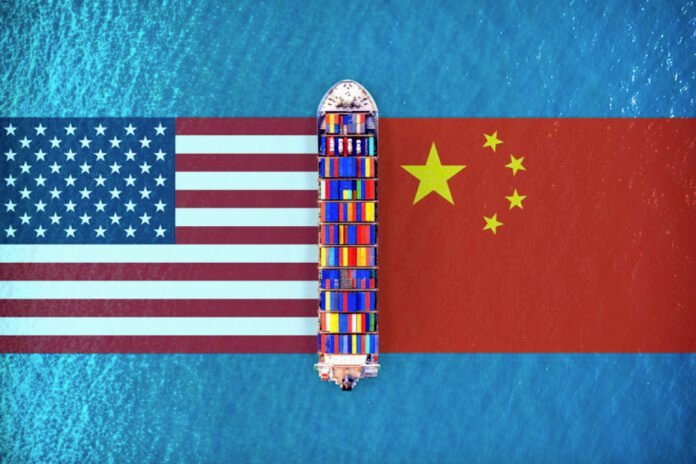
US-China economic rivalry transforming into a battle for leverage
Several Chinese tech companies, including Alibaba, ByteDance and Tencent, have reportedly accessed compute power from GB300 chips remotely through data centers in Asian countries including Thailand, Malaysia and Japan. Less than a week after another Chinese company, Moonshot AI, released a new model, a White House official accused the firm of using one of Nvidia’s most advanced processors.
Regardless of whether it is legal or exposes loopholes in the US export control regime, the episode shows that restricting direct access cannot prevent Beijing from tapping America’s advanced computing power. As technology networks become more global, controlling the physical movement of chips doesn’t necessarily mean controlling their use, too.
In recent years, Beijing and Washington have pursued strategies to reduce their respective vulnerabilities to each other. The United States has raised tariffs and restricted China’s access to advanced technologies, coordinating with allies on export controls targeting strategically sensitive industries.
Beijing, in turn, has sought greater financial and technological autonomy to reduce dependence on US-dominated payment systems and leverage its role in critical supply chains, including rare earths to safeguard its economic and security interests.
China has made rapid technological progress. According to the 2026 Stanford AI Index, the performance gap between leading US and Chinese AI models has narrowed, with America still producing more top-tier AI models and high-impact patents and China leading in AI publication volume, citations, patent output and industrial robot installations.
The finding points to China’s growing ability to develop its AI sector indigenously and the limits of US efforts to contain China’s technological development.
The US hosts an estimated 5,427 data centers, more than 10 times any other country; almost every leading chip is fabricated by the Taiwan Semiconductor Manufacturing Company (TSMC), making it dependent on a single foundry. America’s own ambition to lead AI development, thus, relies heavily on international production networks.
Donald Trump’s authorization to resume the sale of Nvidia’s H200 AI chips to “approved customers” in China was a calculated gamble. By giving Chinese tech giants access to a less advanced generation and embargoing the cutting-edge Blackwell chips, he intended to exert US influence on China’s AI ecosystem and strengthen his bargaining position against Beijing in broad trade negotiations.
But by capping H200 deployment in the mainland and using them to train AI models, China continues to support domestic AI growth while benefiting from American technology and avoiding long-term dependence on Washington, effectively blunting the leverage Trump is seeking.
Beijing’s perception that the US is trying to constrain China’s technological advancement has only accelerated its determination to build a self-reliant semiconductor industry. Nvidia CEO Jensen Huang himself has blamed US withdrawal from the Chinese market for helping fuel China’s semiconductor industry.
A White House report, released in August and entitled “The Great Transshipment Scam”, accuses Chinese exporters of routing goods through more than 40 countries to evade US tariffs.
The report reflects the limits of Washington’s efforts to reduce its economic dependence on China, revealing that while the United States may erect barriers to curtail the influx of Chinese goods into the country, it cannot prevent China-linked supply chains from adapting.
The report itself acknowledges that some of the shift stems from “legitimate changes” in production, investment and sourcing. This indicates that not every China-linked product reaching the United States through a third country represents tariff evasion and that companies are genuinely moving production in response to geopolitical risks.
Recent research by the Peterson Institute of International Economics, a Washington-based think tank, demonstrates that Chinese goods and services, despite years of US tariffs, remain deeply woven into US imports from third countries.
While tariffs have reduced direct bilateral trade, they haven’t eliminated Chinese inputs across global supply chains. A Nikkei Asia survey also found that Chinese companies had expanded their global market share despite tariff barriers.
At the same time, China remains connected to American demand. Even as US tariffs and trade barriers have curtailed bilateral trade, Beijing’s exports of electronics, computers and circuit-board assemblies to neighboring Asian countries have increased.
As much of this production is tied to the US AI boom, it has allowed Chinese manufacturers to benefit indirectly from Washington’s AI investments. This does not necessarily mean that Chinese goods are being illegally routed into the United States; rather, it emphasizes that the underlying trade relationship remains intact.
With studies already showing that Chinese inputs enter the US through intermediaries such as Vietnam and Mexico, the Trump administration appears to have realized that complete commercial divorce between the world’s two biggest economies in the foreseeable future isn’t realistic.
Its new approach appears to move away from outright decoupling toward extracting economic concessions from China, such as securing its commitment to address US concerns regarding critical minerals supply chains, purchase Boeing aircraft and restore market access for US farm produce.
This does not mean that the United States has abandoned economic pressure tactics. Washington is pursuing selective commercial engagement with China while continuing to restrict its access to technologies deemed critical to US national security.
The emerging strategy suggests that the Trump administration is focusing on increasing trade with Beijing in non-sensitive sectors to retain economic leverage over China. Beijing, meanwhile, is doubling down on efforts to build domestic capabilities, reduce exposure to foreign suppliers, and establish its own leverage against Washington.
The Trump administration’s policy has clearly shifted from decoupling to selective economic engagement. While Washington is deploying tariffs and technology curbs to secure benefits for domestic manufacturers and farmers, China continues to draw on its dominance in global supply chains and limited reliance on American semiconductors to strengthen its position in future trade negotiations.
In this heated but contained brinkmanship, both sides are playing to their respective advantages to prevail over the other: Washington by applying economic pressure and Beijing by finding ways to blunt it. Whether this sets the stage for a major bilateral trade deal when Xi Jinping and Trump hold a summit in Washington later this month is yet to be seen.
Meloni marks record tenure as Italy’s longest-serving government
Italian Prime Minister Giorgia Meloni will mark a political milestone Friday, Sept. 4, when she joins senior members of the governing majority at Bari’s new cruise terminal.
Her government has reached 1,413 days since being sworn in on Oct. 22, 2022, surpassing the previous record held by Silvio Berlusconi’s second government. According to Pagella Politica, Berlusconi’s government lasted 1,409 days in full operation and 1,412 days including caretaker administration.
Nearly four years with the same coalition is significant in Italy, where governments have traditionally been short-lived. Meloni’s Brothers of Italy, League and Forza Italia have remained together despite predictions that the coalition would fracture.
But longevity raises the question of what that stability has produced.
According to Istat, Italy’s public administration deficit fell from 8.1% of GDP in 2022 to 3.1% in 2025, although public debt reached 3,095.9 billion euros, or 137.1% of GDP.
Employment has also improved. In July 2026, Italy had 24.37 million employed people, 307,000 more than a year earlier. The employment rate reached 63.2%, while unemployment fell to 5.8%. Permanent employment accounted for most of the increase.
The European Commission nevertheless continues to flag low labor participation among women and young people and wide regional disparities.
Spread, PNRR and migration
The government can also point to a sharp decline in the bond spread, from about 220 basis points in autumn 2022 to around 80 basis points ahead of the Bari event. The improvement reflects greater market confidence, although the spread is influenced by factors beyond government policy, including European Central Bank decisions and wider market conditions.
The PNRR remains a major test. By May 4, 2026, Italy had received 153.2 billion euros, about 79% of its allocation, after completing 366 milestones and targets. Brussels has also positively assessed Italy’s ninth payment request worth 12.8 billion euros.
The European Commission continues to call for faster reforms, reduced bureaucracy and more effective public spending.
Migration is another area where the government points to progress. Arrivals fell from 157,651 in 2023 to 66,316 in 2025. Between Jan. 1 and Aug. 31, 2026, arrivals stood at 19,497, compared with 42,693 during the same period in 2025. However, 127,321 people remained in the reception system at the end of August.
Meloni has succeeded in maintaining coalition stability for almost four years. But stability alone does not resolve Italy’s longstanding challenges in public administration, health care, justice, productivity and labor participation.
As the 2027 election approaches, the central question will be whether the government has used its record time in office to deliver lasting reforms.
The 1,413-day milestone may be celebrated in Bari as a political achievement. In 2027, voters will decide whether that longevity deserves a reward — or whether the government should instead be judged on what remains unfinished.
“Board of Peace” Billionaire Backs AIPAC Fund Targeting Pro-Palestine Candidates
Marc Rowan has a vision for Gaza. “The potential here is tremendous,” he said at a February gathering of President Donald Trump’s so-called Board of Peace, where Rowan described land devastated by Israeli bombing with a developer’s zeal. “This is not a problem of money or collateral. This is a problem with peace.”
In the U.S., Rowan is simultaneously helping ensure a pro-Israel political project has no problem with money. Since the start of this year, according to Federal Election Commission filings, the billionaire CEO of Apollo Global Management has donated $1.5 million to the United Democracy Project, a super PAC for the American Israel Public Affairs Committee, spending a fraction of his vast wealth to preserve a foreign policy defined by support for Israel’s genocide and the flow of U.S. weapons to Israel.
“Palestinians did not choose him, and neither did American voters.”
Rowan — who is worth more than $8 billion and reportedly consulted on his business with convicted sex offender and disgraced financier Jeffrey Epstein — is an executive member of Trump’s “Board of Peace,” a United Nations-approved body tasked with carrying out Trump’s stalled plan for Gaza.Hemade his first donation to UDP of the year in early March, giving $1 million, filings show, just as the group began spending aggressively against the now-ousted Rep. Thomas Massie, R-Ky., a loud critic of U.S. support for Israel.
A second donation for $500,000 arrived on July 23. The same day, the AIPAC super PAC shelled out nearly $50,000 in campaign mailers in Michigan to attack the progressive pro-Palestine candidate for U.S. Senate, Abdul El-Sayed. In Missouri, it dropped another $100,000 for phone banking services against former Democratic Rep. Cori Bush in her race against pro-Israel incumbent Rep. Wesley Bell.
It’s not clear which specific UDP efforts have been backed by Rowan’s largesse, and neither Rowan nor UDP responded to requests for comment. But Raed Jarrar, advocacy director with Democracy for the Arab World Now, connected Rowan’s position on Trump’s Gaza board and his major part as a donor to AIPAC’s super PAC as a matter of transparency.
“Now he sits on a board that will decide Gaza’s future,” Jarrar told The Intercept. “Palestinians did not choose him, and neither did American voters. Americans and Palestinians alike deserve to know whose interests are actually being served.”
Rowan, a major donor to Trump’s failed 2020 presidential campaign, has long made his animus toward critics of Israel known. In recent years, he has been a fierce advocate against student protesters calling for an end to the genocide in Gaza, broadly mischaracterizing their anti-genocide calls as “antisemitic,” and played a key role in ousting leadersat his alma mater, the University of Pennsylvania, over their handling of the protests. In 2025, he served as a consultant to the White House in its recent attacks on higher education. He donated an initial $250,000 to UDP in 2022, the year the AIPAC super PAC was founded, and more than quadrupled his giving by 2024. Trump appointed him to the Board of Peace this past January.
“Marc Rowan has used his position to try to silence Palestinians and smear students protesting Israel’s genocide,” said Margaret DeReus, executive director of Peace, Accountability, and Leadership PAC, which launched this cycle as a pro-Palestine counterweight to the pro-Israel lobby. PAL PAC backed both El-Sayed and Bush, who have committed to cutting military aid to Israel. (El-Sayed prevailed in his Democratic Senate primary against Michigan Rep. Haley Stevens, while both Bush and Massie lost their races.)
Rowan “gives millions to fund the now-fringe idea that billions of our tax dollars should fund the Israeli military and targets candidates who are calling to stop sending U.S. tax dollars to Israel’s genocide,” DeReus said. She added that his presence on “Trump’s corrupt board” lays bare the actual goal of the governing body: “the continued genocide and ethnic cleansing of the Palestinians living in Gaza.”
As support for Israel among the American people has plummeted, and more leftist candidates run on promises to enact an arms embargo on Israel, AIPAC has broken its own spending records and set new ones, helping make El-Sayed and Massie’s primaries among the most expensive ever. In Congress, the lobbying giant has also worked to consolidate power among its pro-Israel base. In July, AIPAC lobbied members for the passage of a Pentagon program that further enmeshes military technological sharing between the U.S. and Israeli militaries. Last week, Democratic leadership appointed three hawkish, pro-Israel, and AIPAC-backed Democrats to the House Foreign Affairs Committee.
In addition to his AIPAC super PAC spending, Rowan has also directly given to a host of pro-Israel candidates this cycle, including New Jersey Democrats Rep. Josh Gottheimer and Sen. Cory Booker, as well as Minnesota Rep. Angie Craig in her failed Senate bid.
The majority of Rowan’s spending, however, has been in favor of Republicans, including Mike Rogers, who is facing off against El-Sayed; Florida Sen. Ashley Moody, a vocal opponent of the Boycott, Divestment, Sanctions movement; and Rep. Brian Mast, R-Fla., chair of the House Foreign Affairs Committee and former Israeli Defense Forces volunteer who famously wore his IDF uniform to Congress.
AIPAC has long championed Trump’s plan for Gaza, which has included overt calls to displace Palestinians, and supports Israel’s hard line in its negotiations with Hamas leaders. Israel, which occupies nearly 70 percent of Gaza, has refused to withdraw its military from the Strip. Israel blames Hamas for refusing to disarm, though the Palestinian militant and political group has said it would only surrender its weapons in exchange for a full Israeli withdrawal and the establishment of a Palestinian state — conditions the Israeli government has refused.
AIPAC also regularly celebrates the ongoing bombardment of the Strip, where more than 1,000 Palestinians have been killed in Israeli strikes since the so-called ceasefire was brokered, including this week when bombing killed two children.
In Rowan’s view, there’s money to be made from the carnage. At the meeting in Washington, D.C., this past February — when Trump also pledged $10 billion in public funds to the board — Rowan fired off property value estimates in Gaza, more than 80 percent of which lies in ruins. He cited a coastline valued at $50 billion; a housing stock, if rebuilt, worth $30 billion; and infrastructure projects worth another $30 billion. Rowan spoke next to generic renderings of glistening high-rise apartments, palm tree-laden highways, solar power plants, and coastal oil depots. Consolidating all of these assets under the supervision of Trump’s Board of Peace, Rowan said, would allow for “conflict-free management of the resources to benefit the Gazans.”
“One hundred fifteen billion of value,” he promised. “It just needs to be unlocked and financed.”
These Judges Take Months to Decide If Immigrants Have Been Unlawfully Detained
Reporting Highlights
Delayed Decisions: Amid a national surge in habeas petitions, federal courts in Mississippi and Louisiana have typically taken three months or more to rule on detainees’ freedom.
How Others Adjusted: Federal courts with more cases, such as in California and Florida, have closed cases at a faster rate, usually within weeks, according to a ProPublica analysis.
Waiting in Detention: Advocates say the delays leave people waiting in prisonlike detention facilities. Some are asking to be deported rather than wait.
These highlights were written by the reporters and editors who worked on this story.
When President Donald Trump returned to the White House, he pushed for a seismic shift in immigration enforcement resulting in mass detention. Immigrants with no criminal convictions, who under previous administrations would have been released on bond or not detained in the first place, would now be held while their immigration cases were pending.
In an effort to gain their freedom, tens of thousands of detainees have filed what are known as habeas petitions, asking federal judges to rule that they have been unlawfully held by the government. But their chances of a speedy ruling have varied dramatically. For some, freedom came within days. Others have waited months for a decision. Some were deported before a judge could rule.
A ProPublica analysis of court records from the more than 70,000 habeas cases filed since January 2025 found that some judges take far longer than others to resolve cases as federal courts have adjusted unevenly to the unprecedented flood of filings.
The waits have been particularly long in parts of Mississippi and Louisiana, where federal judges have usually taken three months or more to decide whether a detainee should be released. Among the cases that have been resolved in Mississippi, half took 92 days or more — the longest of any state.
How Long Habeas Cases Take to Close, by District
Source: ProPublica analysis of court records, as of Aug. 25, and Deportation Data Project. Districts with fewer than 10 cases closed not shown.CARLA ASTUDILLO/PROPUBLICA
While new habeas petition filings have slowed somewhat in recent months, they remain far higher than before Trump began his second term.
The massive caseload has inundated the already overwhelmed federal courts and overburdened judges who suddenly have had hundreds more cases on their already crowded dockets. District courts with staffing shortages have struggled to keep habeas cases moving.
The delays have left many detainees waiting in prisonlike facilities overseen by U.S. Immigration and Customs Enforcement that advocates say are substandard and unsafe, riddled with allegations about spoiled food, beatings and medical neglect, though federal officials dispute those claims. Some immigrants have been deported or accepted the government’s offer to leave the country rather than wait for a federal judge to rule on their freedom.
Read More
“The amount of food they are being given is simply not enough, and people are left hungry,” said Liudmila Nafikov, whose husband has been detained in a large Mississippi facility for nearly two years and is awaiting a decision on his habeas case. “For three days, they have had no hot food or hot water.”
“I do not believe it is fair or humane to keep people in these conditions for such a long time, especially people who have committed no crime and people who are sick.”
A Department of Homeland Security spokesperson acknowledged an Aug. 22 fire outside the Natchez, Mississippi, facility that affected “all hot water, kitchen services, and laundry operations,” adding, “No one was injured as a result of this incident and as of August 24, the facility is back in 100% operation with hot water and meals.” The spokesperson called claims of substandard conditions in federal detention facilities false, adding, “All detainees are provided with 3 meals a day, clean water, clothing, bedding, showers, soap, and toiletries.”
Federal courts elsewhere have adjusted to the new reality and closed cases at a faster pace. In Texas, California and Florida, courts have handled thousands more habeas petitions and typically have made decisions in about a month and a half or less, according to ProPublica analysis.
Courts in Minnesota, which experienced a surge in habeas petitions during an immigration enforcement push earlier this year, have reached decisions and closed cases even faster, with a median of about 12 days.
One commonality across districts: The vast majority of judges have ruled against the Trump administration in habeas cases, Politico found. Lawyers say that judges who are more receptive to habeas relief often issue decisions relatively quickly.
“A Completely Unresponsive Black Hole”
Habeas corpus, which means “you should have the body” in Latin, gives anyone in the United States a chance to challenge their detention in court. It is intended to be adjudicated quickly because a person’s liberty is at stake.
“Delay is undesirable in all aspects of our justice system, but it is especially to be avoided in the sensitive context of habeas corpus,” the U.S. Court of Appeals for the D.C. Circuit wrote in a 1988 decision.
The habeas statute directs judges to give the government three days to initially respond with justification for the detention but allows for that deadline to be extended up to 20 days.
In practice, however, judges have broad discretion to set their own deadlines as they balance habeas petitions alongside other civil litigation and criminal trials that can tie up a court, lawyers told ProPublica. They have the power to order the parties to respond, grant extensions and determine the priority of cases before them.
The U.S. courts’ rules governing non-immigration habeas cases are less specific, saying only that judges must order the government to respond “within a fixed time.”
California-based immigration attorney Bonita Gutierrez has seen swift movement on her habeas cases in the state, leading to the release of her clients — some within days.
But after the adult son of a longtime client was detained in August 2025 and sent to a detention center in Mississippi in November, she filed a habeas petition in that state in February. Both sides presented their arguments, and the case sat for about a month with no decision from the judge. Gutierrez received “radio silence” when she emailed the court deputy about it, she said.
“It’s just like your petition has gone to a black hole, a completely unresponsive black hole.”
The man was deported in late April, rendering his habeas case moot after he spent eight months in ICE custody. The case was closed on May 1, according to electronic records reviewed by ProPublica.
Almost all cases in the Mississippi Southern District are assigned to one longtime judge, David C. Bramlette III, who was appointed by George H.W. Bush, and referred to two magistrate judges. Bramlette presides over a division within the court district where Adams County Correctional Center, one of the country’s largest ICE facilities, is located.
A total of 747 habeas cases have been assigned to Bramlette during the second Trump administration, as of Aug. 25. (Only 14 federal judges around the country have been assigned more.) A total of 539 of his cases, about 72%, remain active, according to electronic court records.
A spokesperson for Bramlette did not answer questions from ProPublica about case wait times, instead pointing to a page tracking his habeas caseload.
Lawyers who practice in Mississippi told ProPublica that many of their cases were languishing after the parties filed briefs and were waiting on a judge’s response. One case involved Aidar Nafikov, a Russian asylum seeker hoping to be reunited with his family. Nafikov filed his habeas petition in April after being detained in Adams County Correctional Center for over a year and a half. His case was argued before Bramlette in June of this year with no response.
Meanwhile, his health has deteriorated in detention, where he has suffered repeated bouts of strep throat and developed kidney problems, his wife, Liudmila, said.
“Getting medical help is very difficult because even if you complain, they don’t provide medical help right away,” she said.
A DHS spokesperson did not comment on Nafikov’s case but denied claims of medical neglect at ICE facilities, saying that it is “longstanding practice to provide comprehensive medical care” for anyone in ICE custody.
The harm caused by the delays spurred immigration attorneys and advocates in the state to send a letter to Chief Judge Sul Ozerden in March about the habeas bottleneck. The letter recommends distributing habeas cases among other judges in the district, noting that a district in Pennsylvania had recently done the same.
Other than adding an option to file habeas cases electronically, officials have not addressed the other suggestions in the letter, according to Korbin Felder, a Mississippi attorney at the Center for Constitutional Rights, one of the organizations that signed it.
Ozerden did not respond to a request for comment.
More than 2,600 habeas cases have been filed in Louisiana, which has the second-largest immigrant detainee population after Texas. Over half of the resolved cases there have taken 89 days or more to be decided, according to ProPublica’s analysis.
Louisiana attorneys say that it’s hard to get a habeas case moving in the first place. Until recently in Louisiana’s Western District, petitioners had to formally deliver the lawsuit and summons to government defendants in person and through certified mail. Deadlines set by the judge for the government to respond would then begin after the U.S. attorney’s office received a suit. In other states, this process, carried out by the court, is faster.
In addition, attorneys say judges in Louisiana have been giving the government generous deadlines to respond to a habeas petition — sometimes up to 60 days, treating the cases like ordinary civil litigation. By contrast, judges in Minnesota have ordered responses within three or four days.
Through a spokesperson for the Administrative Office of the United States Courts, the Western District of Louisiana declined to answer questions about the backlog.
Steep Learning Curve
ProPublica’s analysis also found that judges within the same district can take vastly different amounts of time to resolve habeas cases.
Seven judges in Oklahoma’s Western District have been assigned more than 150 habeas cases each during the second Trump administration. Two Trump-appointed judges, Charles Goodwin and Patrick R. Wyrick, have taken a median of 144 and 91 days, respectively, to resolve their cases. (Around 67% of Goodwin’s cases and 80% of Wyrick’s cases remain unresolved.) Meanwhile, their fellow Trump-appointed colleague Jodi W. Dishman has taken about 49 days to close her cases. (Only 26% of Dishman’s cases remain open.)
The court clerk of Oklahoma’s Western District declined to comment on behalf of the district and the judges.
How Long Do Habeas Cases Take in Different Judges’ Courtrooms?
Among judges who have been assigned at least 50 habeas cases during the second Trump administration, the median time for a case to be closed varies widely.
Source: ProPublica analysis of court records, as of Aug. 25. Judges who have been assigned fewer than 50 cases not shown. Some districts have allowed habeas cases to be initially assigned to magistrate judges.CARLA ASTUDILLO/PROPUBLICA
Maggie Kopel of the National Immigration Litigation Alliance points out that rapid expansion of ICE facilities in states like Oklahoma has led to a steep learning curve for courts that did not have a history of dealing with habeas cases. In Oklahoma, cases have taken a median of 63 days to close.
“That’s not an excuse,” Kopel said. She notes that New Hampshire and the Eastern District of Pennsylvania, which have closed habeas petitions faster than Oklahoma, also did not have a history of detention centers. “Both those districts got up to speed extremely quickly.”
Out of the 130 completed cases Elissa Stiles, an Oklahoma immigration attorney, has filed, nearly 1 in 5 ended before her client received an answer. In four of those cases, the detainee was deported, and in 15 of them, they chose to return to their country.
Most of her clients want to fight their cases, she said.
“It’s rare that a client is immediately interested in voluntary departure because their entire lives are here,” said Stiles, adding that the conditions inside the detention centers are so dire that leaving the country becomes a better option. “If their cases had been adjudicated more quickly, they would not be taking voluntary departure.”
A spokesperson for the Department of Homeland Security said that the department is “working rapidly and overtime to remove these aliens from detention centers to their final destination — home.” Detained immigrants can request “a free flight home and a $3,000 exit bonus,” the spokesperson said.
“Judicial Emergency”
Many federal courts answered the upsurge in habeas cases by issuing standing orders shortening briefing schedules and assigning public defenders to certain detainees without lawyers. Some courts, like those in California, have temporarily assigned judges from other districts to help cut the backlog.
Courts in other states have established ways to standardize certain habeas proceedings.
In the Georgia Middle District, home to the Stewart Detention Center, the majority of the roughly 1,500 cases filed since Trump retook office have been assigned to Judge Clay D. Land and two magistrate judges. Land has the most habeas cases of any judge in the ProPublica analysis.
To address the backlog, Land directed magistrate judges that if a habeas petition falls under certain parameters, they can use preapproved language ordering the government to provide a bond hearing without the district judge’s approval.
“The volume of these petitions has created an administrative judicial emergency which requires the Court to consider novel solutions to assure that these cases are handled expeditiously,” Land wrote in the directive.
His district takes a median of 29 days to close a case and has cleared nearly 80% of its habeas docket.
The spokesperson for the Administrative Office of the United States Courts, which provides a range of support services and collects statistics about the federal judiciary, said the agency and the Judicial Conference do not “impose directives on judges to manage their dockets differently.” The spokesperson pointed to an “unprecedented number” of habeas petitions and a shortage of federal judges.
In 2025, the Judicial Conference recommended that Congress create 71 new judgeships to address increasing caseloads. The list, however, did not ask for any new judges in Mississippi, Louisiana or the Western District of Oklahoma, where habeas cases have been delayed the longest.
New district judgeships have not been authorized for more than two decades, the spokesperson said.
Congress did pass a bill in December 2024 that would have added 66 new federal judges, but then-President Joe Biden vetoed the legislation a month before leaving office.
In July, the Western District of Louisiana issued an order authorizing the court, instead of the habeas petitioners, to serve defendants copies of the lawsuit. The court can also issue a standard scheduling order rather than wait for a clerk or magistrate judge to review it.
While the order doesn’t require judges to set shorter deadlines, Carley Tatman, a Louisiana immigration lawyer, is cautiously optimistic. In practice, it’s still taking several days or even weeks for the courts to issue scheduling orders.
In addition, Mississippi lawyers have said they have seen movement recently in some of their long-delayed cases. Bramlette has closed over 90 of his cases since July.
However, Liudmila Nafikov is still waiting for a decision in her husband’s case before the judge.
Being apart from her husband of 20 years has been “physically and emotionally taxing,” she said. She is the family’s sole caregiver and has been struggling to pay for basic necessities in addition to her husband’s legal expenses. She adds that her three children are also traumatized after being separated from their father.
All they can do is what they’ve been doing for almost two years now: wait.
“The kids always ask me when Dad will come back home,” Nafikov said. “And I can’t give them an answer because I don’t have it myself.”
China’s pressure campaign against Japan is backfiring badly
A few days ago, the Chinese government had the opportunity to reverse the current downturn in China-Japan relations, the worst in years.
A delegation of Japanese lawmakers representing the ruling Liberal Democratic Party and the opposition parties Komeito and Centrist Reform Alliance met with Lu Kang, deputy head of the Chinese Communist Party’s (CCP) International Department.
Lu rebuffed their appeal for reconciliation, demanding that Tokyo first “honestly and earnestly handle the Taiwan issue in accordance with the one-China principle.”
What Lu meant is that China intends to maintain its package of punishments against Japan until Prime Minister Sanae Takaichi fulfills the Chinese demand that she withdraw her remarks about Taiwan made in November 2025.
After 10 months of a policy that is largely ineffective and in important ways counterproductive, Beijing is hunkering down. While some bilateral crises have passed after a decent interval, China-Japan relations today appear trapped in a persistent negative spiral, with each side refusing to accommodate what it sees as unreasonable and aggressive action by the other side.
This all started when, under pointed questioning from a Diet member, Takaichi said a Chinese military attack against Taiwan might “constitute a survival-threatening situation” for Japan, and therefore could lead to intervention by Japanese forces.
This assessment by Tokyo was already well-known to the Chinese and everyone else. Japanese prime ministers before Takaichi, however, had avoided publicly specifying a Taiwan scenario as a possible cause of Japan going to war.
Beijing seized on the opportunity to overreact with a collection of responses that included a Japan-based Chinese diplomat threatening to cut off Takaichi’s “filthy head”; cancellation by the PRC of cultural exchanges with Japan and restrictions on Chinese tourism to Japan; reduced Chinese imports of Japanese seafood; and a Chinese ban on the supply of dual-use exports to Japan, including rare earth elements.
China also stepped up its military activity near Japan — patrols by PRC ships and aircraft, including within Japan’s EEZ; Chinese research ships conducting an underwater survey off the coast of Okinawa; and in July, a Chinese live-fire exercise inside what Japan claims is a Japanese EEZ in the vicinity of Okinotori Island.
Beijing played on Japan’s fears by exercising jointly with Russia, such as when Chinese and Russian bombers flew together over the Sea of Japan in June 2026. Japan’s perception of Russia as a potential security threat has greatly increased since Vladimir Putin invaded Ukraine in February 2022.
Diplomacy has mostly dried up, with few meetings between high-level officials. That made Lu’s cold reception of the visiting Japanese lawmakers an authoritative statement of the state of play.
The effect of the Chinese punishment on Japan has been minor. Most importantly, Takaichi has refused to retract her remarks about Taiwan, and there is little to no chance she will do so. It would run counter to her own ideology, destroy her political career and tarnish her legacy.
Nevertheless, China maintains its pressure on Japan despite Beijing not getting its desired outcome. There are several possible reasons why.
The Taiwan issue is unparalleled in importance in Chinese domestic politics. Given the history of Japan occupying Taiwan for 50 years after defeating China in the Sino-Japan War of 1894-95, and of Japanese attempts to make the Taiwanese think of themselves as Japanese subjects rather than Chinese, the idea of Japan now trying to obstruct the PRC’s annexation of Taiwan outrages Chinese nationals whose worldview is based on CCP historiography.
For the more nationalistic segment of PRC public opinion, pressuring Japan until it disavows Takaichi’s words is an appropriate stance, and anything less would subject the PRC leadership to criticism for insufficient patriotism.
Meanwhile, Beijing has a reasonable hope that Takaichi will not enjoy a long tenure as prime minister. Her mandate is far from overwhelming, and achieving the agenda she has laid out — addressing affordability issues by allowing higher budget deficits to stimulate growth, while at the same time strengthening Japan’s military capabilities — will be challenging, to say the least.
Takaichi losing popularity and giving way early to a new prime minister would allow Beijing to claim victory and start fresh (including dropping the sanctions) with Takaichi’s successor. Even if Takaichi refuses to accommodate Beijing, the Chinese pressure on Japan serves as a warning to other countries that might express support for Taiwan, such as South Korea, the Philippines, Australia or NATO member states.
Beijing can tolerate the downturn in relations with Japan. Some Chinese companies are losing business, and Chinese tourists who want to visit Japan are making other plans. But crowds of PRC citizens will not riot in the streets over their government sticking it to Japan on the Taiwan issue.
A final possible reason Beijing has stayed with a seemingly ineffective policy is the lack of US backing for Japan. Washington initially declined to make a public statement of support for Japan against China’s economic coercion campaign.
During the week in which a house editorial in China’s government-controlled People’s Daily called on Washington to “firmly oppose. . . . Japan’s dangerous strategic trajectory,” US President Donald Trump reportedly told Takaichi to avoid further antagonizing China.
Washington’s interest in making a bilateral economic deal with China in 2026 incentivizes the US to minimize possible obstacles. For example, when US Treasury Secretary Scott Bessant announced in August a US policy of levying secondary sanctions against the banks of Iran’s trading partners, he immediately indicated that China, which buys up to 90% of Iran’s exported oil, would be spared. Relatively good relations with the US have given China an opening to press Japan harder.
Beijing’s decision to plunge the relationship into permanent crisis has consequences that are mostly bad for China. Chinese pressure on Japan — especially military pressure in the form of greater numbers of PLA vessels and aircraft operating close to Japanese territory — increases the risk of an incident that could escalate into an unintended conflict.
In December, two Chinese fighter aircraft locked their fire-control radar onto Japanese aircraft that were monitoring the PRC aircraft carrier Liaoning. In June, the Chinese government accused Japanese aircraft surveilling the Liaoning of simulating attack runs.
China already accepted a permanently elevated level of risk in 2012 when it began frequent patrols near the disputed Senkaku Islands, which continue up to this day. Now the dial is turned up even higher.
Beijing exhibits a dangerous expectation that military units of other countries will back down when confronted with aggressive Chinese behavior. The Chinese have a well-documented history of using dangerous maneuvers and other actions to intimidate foreign aircraft and ships into vacating areas — including international waters and airspace — where China decides they are not welcome.
Yet China apparently aims to normalize military activity in areas near Japanese territory. As a Chinese Defense Ministry spokesman said in 2017, Japan should “get used to it.”
The increased tensions with China are pushing Japan toward deeper defense cooperation with other countries in the region. Since Takaichi’s remarks, Japan has expanded its participation in military exercises with the Philippines, Australia, India and Indonesia; loosened the restrictions on exporting Japanese-made weaponry; discussed co-production of weapons systems with Australia, India and the US; reached a Framework for Strategic Defense Coordination with Australia; and finalized the sale of Japanese-built frigates to Australia.
These are further steps toward a regional anti-China military coalition, a nightmare for the PRC. Meanwhile, Tokyo’s desire to cooperate with Taiwan has, if anything, increased, even if the Japanese are now more careful to keep it quiet.
Tokyo is now thinking more seriously about optimizing Japan’s armed forces for a potential armed conflict against China. Japan’s 2026 white paper, “Defense of Japan”,noted dramatically that Japan is “entering a new period of crisis” and “facing its greatest trial since World War II.”
The Japanese Defense Ministry announced on August 31 that it would “drastically strengthen its deterrence and response capability” by mass-producing drones, developing submarine-launched hypersonic missiles, and implementing an AI-powered combat management system.
China’s punishment has spurred more determined Japanese efforts to reduce Japan’s dependence on China for critically important supplies, including reaching agreements with other countries to establish supply chains that bypass China and building domestic capacity to extract and refine rare earth elements.
To a large extent, China’s exploitation of its economic leverage is a one-shot weapon. In this case, Beijing seems to have squandered its temporary leverage.
The new crisis with China has forced Japanese society to confront and think through the possibility of Japan entering a war to defend Taiwan and to question whether it is acceptable for Beijing to have a veto over Japanese security policy. Consequently, ordinary Japanese are more psychologically prepared for war.
China is linking the issue of Japan’s possible involvement in a Taiwan scenario with the broader accusation of revived Japanese militarism. This narrative already lacks credibility with most countries. Certainly, it falls flat with Americans, who have wanted a militarily stronger Japan for decades.
In Southeast Asia, victimized last century when Japan actually was a militarist aggressor, Japan is now the most trusted outside major power, ahead of the US, the European Union, and, of course, China. Beijing’s attempt to paint Japan as the aggressor in a Taiwan scenario doesn’t resonate either within or outside the region.
Forcing the Takaichi government to apologize would be a big win for Beijing, possibly deterring future Japanese governments from expressing support for Taiwan. Unfortunately for Beijing, however, there is no realistic hope of this happening.
In the meantime, Beijing’s punishment policy stokes bilateral resentment and heightens tensions in the region between the authoritarian and democratic blocs.
Denny Roy is a senior fellow, East-West Center, Honolulu.
Katz says Gaza solution requires mass ‘emigration’, accuses Egypt of blocking departures
Israeli Defence Minister Israel Katz said there could be no lasting solution for the Gaza Strip without what he described as the “genuine emigration” of Palestinians from the territory, while accusing Egypt of preventing such departures.
Speaking at the “Time for Decision” conference, organized by Yediot Aharonot and the Israel Democracy Institute, Katz said: “There is no real solution without a genuine emigration from there.”
Katz claimed that 80 percent of Gaza’s population wants to leave, but did not provide evidence for the figure.
“Everything is ready for emigration by air, sea and land, but Egypt is not prepared for it,” Katz said. He added that departures were currently being delayed because potential receiving countries were unwilling to accept Palestinians without US support.
Egypt has repeatedly rejected the displacement of Palestinians from Gaza into Egyptian territory and has warned against measures that could lead to their permanent removal from the enclave.
READ: Netanyahu says Israel will not withdraw from Gaza’s ‘Yellow Line,’ plans to expand control
Katz also addressed violence by Israeli settlers against Palestinians in the occupied West Bank, rejecting the term “Jewish terrorism” to describe such attacks.
“I have abolished this concept. Terrorism is defined as acts committed against the State of Israel,” Katz said.
Asked by journalist Moran Azulay about attacks by settlers on Palestinian villages, Katz instead characterized them as “violence” and said those responsible should be punished. “They are now in prison,” he added.
Turning to Iran, Katz said he believed the likelihood of an Iranian attack on Israel could increase as economic and political pressure on Tehran intensifies.
He said Israel remained prepared both defensively and offensively and was coordinating with the United States over the potential threat from Iran.
READ: Over 55,000 urge new UK premier to hold Israel accountable over Gaza genocide