This article first appeared in Pacific Forum and is republished with permission. Read the original here.
There are multiple interpretations of where the India-China relationship stands today. Is there a thaw? Are the two sides gradually moving toward a reset? Or are ties still tense?
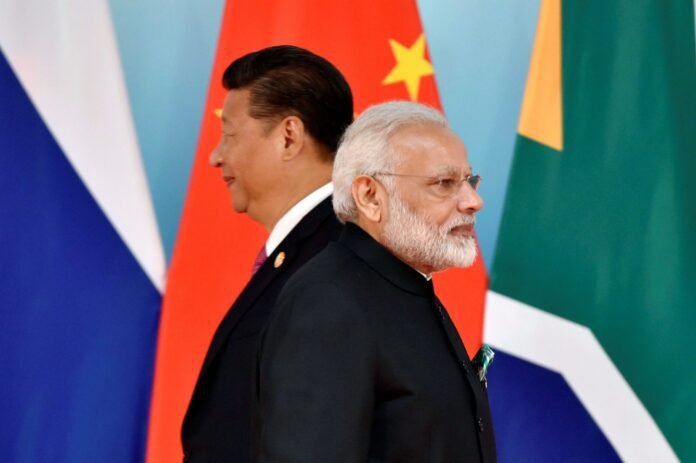
The reality lies somewhere in between. Since the Galwan Valley clashes in 2020, India has sought to manage ties with China, and there has been some momentum. The August 2025 meeting between Xi Jinping and Narendra Modi, along with some easing of restrictions on Chinese investment, suggests that both sides are now inclined toward preventing bilateral tensions from escalating further.
However, stabilization should not be confused with a reset. The fundamental sources of tension, including the boundary dispute, trade imbalance, security competition in South Asia, and broader strategic contest in the Indo-Pacific remain.
The disengagement along parts of the border has reduced the immediate risk of another confrontation but has not resolved the underlying differences and strategic mistrust that has deepened since 2020.
The developments of recent years have created a sense of normality, but not normalization. In this context, the current situation could only be described as fragile stabilization alongside continued strategic competition.
That competition, however, is not confined to the land border. The boundary dispute remains at the core of India-China tensions, but both countries have also strengthened their maritime capabilities and expanded their presence in the Indian Ocean Region (IOR), where their interests increasingly intersect.
Maritime competition between the two is not new, but its implications for regional security and stability are growing. This matters, particularly for India, because the IOR is part of its immediate neighborhood and a region in which it has longstanding interests.
As China’s military presence expands, India needs to consider not only how to respond, but what kind of role it wants to play in the Indian Ocean.
Maritime contestation in the IOR
India’s interests in the IOR span geography, economics, strategy, and civilizational connections.
Its geographical position offers it a direct stake in the security and stability of the region, while its economic dependence on the Indian Ocean makes the security of maritime routes particularly important. A large part of India’s trade and energy supplies pass through the maritime trade routes and sea lanes of communication of the Indian Ocean.
India’s strategic interests in the region also translate into a greater maritime role. India has sought to establish itself as a net security provider in the IOR and expanded its naval engagement with countries across the region. Its role as a first responder has helped consolidate this image.
India has strengthened its role through humanitarian assistance and disaster relief (HADR), naval exercises, capacity-building, and other forms of maritime cooperation. There is also a strong civilizational dimension to India’s relationship with the Indian Ocean. India has had longstanding connections with countries across the region through trade, migration, religion and cultural exchange.
China, though not an Indian Ocean littoral state, has rapidly expanded its economic, diplomatic, and naval presence in the region over the past decade. Its interests include energy security, trade, maritime routes, anti-piracy, and the protection of its growing overseas interests.
The scale and nature of this expansion raise a broader question: Does China seek only to secure its interests in the IOR, or to shape the maritime regional order in its favor? Undoubtedly, China has clear economic and security interests in the region, but its activities suggest ambitions beyond securing trade routes, energy supplies, and overseas interests.
Its growing military and dual-purpose presence give China greater capacity to sustain operations in the Indian Ocean and project power farther from its shores. Gwadar Port, China’s 99-year lease of Hambantota Port, and its first overseas military base in Djibouti illustrate that its economic and strategic presence increasingly intersect.
For India, the concern is that China’s growing capabilities could allow it to translate its interests into sustained maritime power and influence. Over time, this could give China a greater role in determining the regional balance and potentially allow it to dominate parts of its maritime sphere.
Its expanding military and dual-purpose presence in India’s neighborhood consequently add a maritime dimension to an existing security challenge and has become an important part of India’s assessment of the regional environment.
From China’s perspective, India’s position and capabilities are also central to its calculations in the IOR, allowing New Delhi to monitor and potentially constrain China’s regional maritime activities. India’s presence also forms part of the strategic environment that China must account for as it expands its Indian Ocean presence.
The competition extends beyond naval capabilities. Both India and China seek to build relationships with Indian Ocean states through political outreach, development, connectivity, maritime cooperation and security partnerships.
India has given greater attention to the IOR, particularly under the Modi administration. Modi’s consequential visits to Indian Ocean littoral states, including Maldives, Seychelles and Mauritius over the past decade signal a more sustained political outreach to the region.
India has also supported regional mechanisms and dialogues, including the Indian Ocean Rim Association, the Indian Ocean Dialogue, and the Indian Ocean Conference. Initiatives such as SAGAR, Samudra Manthan, Project Mausam and the Indo-Pacific Oceans Initiative also point to India’s effort to give greater strategic depth and coherence to this engagement.
This has been accompanied by regular naval deployments and port visits across the region, making naval diplomacy an important part of India’s engagement with Indian Ocean states.
China pursues its own regional outreach, establishing the China-Indian Ocean Region Forum in 2022 and expanding its naval engagement, including port visits, exercises, maritime security cooperation, and HADR, among other forms of cooperation.
A more proactive Indian Ocean strategy
India’s response to China’s growing presence cannot be to match China ship for ship. China has a much larger industrial base, much greater shipbuilding capacity, and substantially greater resources available for sustained naval expansion.
India is unlikely to close this gap in the foreseeable future. The objective should instead be to build a maritime strategy suited to India’s own geographic advantages and regional interests.
India has already begun to move in this direction. Attention to the IOR under the Modi government represents a departure from India’s traditionally more continental strategic focus. But India’s outreach remains spread across a number of initiatives rather than a clearly defined long-term IOR strategy.
First, India needs to move from individual initiatives toward a more coherent and institutionalized IOR framework. Rather than treating maritime security, HADR, connectivity, capacity-building and development partnerships as separate strands of engagement, India should find a way for different tools to serve its broader regional objectives. A clearer coherent framework would also help provide greater continuity across governments and institutions.
Second, India should use this coherent framework to build on the partnerships it has already established. Modi’s outreach to countries in the region has already created the much-needed political momentum, while India already has a range of development, connectivity, HADR, capacity-building and maritime security initiatives across the region. The priority now should be to make sure of the implementation of the initiative and that these engagements more reliable, sustained and predictable.
This means following through on existing commitments, strengthening institutional mechanisms with partner countries and ensuring that India’s engagement responds to their priorities. India does not need to match every Chinese initiative, and it cannot, but it needs to focus on building a reputation as a consistent and dependable long-term partner.
Third, India needs to strengthen the security component of its regional engagement. India’s broader developmental engagement in the Indian Ocean is an advantage, but it needs to be complemented by a stronger security-oriented presence if India is to fulfil its ambition of becoming a net security provider.
This could involve expanding logistical support agreements, coastal surveillance, information sharing, and joint operations. India should also make greater use of partnerships with countries that share an interest in a stable and open Indian Ocean.
France is particularly important in this regard, given its territorial presence and military capabilities in the region. Closer cooperation with France, as well as other partners, can expand India’s maritime reach and capabilities without requiring India to replicate China’s scale of naval deployment.
Finally, India needs to be more confident in articulating what kind of regional role it wants to play. India does not need to choose between being a security provider and a development partner. It needs to strengthen the mechanisms and partnerships it already has rather than continually creating new initiatives.
Its geographical position, naval capabilities, development partnerships and longstanding relationships with Indian Ocean states give it a strong foundation on which to build. China’s growing military presence in the IOR is likely to remain a feature of the regional security environment and will continue to pose a direct challenge to India.
India’s response should not be limited to reacting to Chinese moves. Instead, Beijing’s growing presence should push New Delhi to sharpen and strengthen an Indian Ocean strategy that builds on its existing interests, partnerships, initiatives and capabilities.
India’s greatest advantage is also its most obvious one: It is a resident Indian Ocean power with the geographic position and maritime capabilities to shape the regional order and safeguard stability.
Sana Hashmi, PhD, (sanahashmi2@gmail.com) is a fellow at the Taiwan-Asia Exchange Foundation. She is an affiliated scholar with the Research Institute for Indo-Pacific Affairs. She has also served as a consultant with India’s Ministry of External Affairs’ Southern Division. The views expressed here are personal.