Australian judge says IHRA definition ‘does not reflect’ true meaning of anti-Semitism
An Australian court has dealt a major blow to the global campaign to redefine anti-Semitism along political lines, after the Supreme Court of New South Wales ruled that a young man’s “F**k Israel” graffiti amounted to political protest, not anti-Semitism.
The court rejected a government bid to keep the man under strict supervision after his release from prison. Although the ruling was delivered in July, the court’s reasons for the judgment were only published last month.
The judgment undermines years-long efforts by pro-Israel lobby groups to weaponise allegations of anti-Semitism against critics of Israel. As part of its bid to keep the man under supervision, the New South Wales government had sought to invoke the highly controversial International Holocaust Remembrance Alliance (IHRA) definition of anti-Semitism — the same definition Israel’s advocates have pushed governments, universities and institutions worldwide to adopt as law.
It was that definition prosecutors tried to apply to Mohammed Farhat, convicted of a vandalism and arson spree in Sydney. He pleaded guilty to 15 offences after spray-painting and setting fire to vehicles and buildings in Woollahra, in Sydney’s eastern suburbs, in November 2024. The damage exceeded $100,000. Among the graffiti he sprayed was “F**k Israel” and “PKK is coming”.
Farhat was sentenced in November 2025, in the lower court that handles most criminal cases in New South Wales, to one year and eight months in prison, due to expire in October 2026. As his release approached, the New South Wales government sought what is known in Australia as an extended supervision order — a court order used to keep monitoring a released prisoner considered to pose an ongoing risk, typically reserved for terrorism or serious violent offenders.
READ: Controversial IHRA definition and anti-constitutional BDS orders overturned by New York mayor
The New South Wales government’s application, brought under the Terrorism Act, sought to place Farhat under 55 separate conditions for a year after his release. Such orders can require an offender to live only at an approved address, wear an electronic monitoring device, report regularly to authorities, avoid contact with named individuals, and allow police to inspect or seize his phone and computer at any time. Prosecutors argued the conditions were justified because Farhat’s graffiti showed anti-Semitic motivation and that he posed an ongoing risk of committing a serious terrorism offence.
Justice Desmond Fagan, of the Supreme Court of New South Wales, rejected the application. His judgment was delivered on 30 July 2026 and an explanation of the verdict was made public a month later. Fagan found that Farhat had not intended to express hatred of Jews.
Central to the ruling was Fagan’s rejection of the IHRA’s working definition of anti-Semitism, which prosecutors had relied on to characterise the graffiti as hate speech. The IHRA formulation, he found, “does not reflect the established usage and understanding of the term ‘antisemitic’ in Australia,” and its core text “is so verbose and imprecise that it could not realistically be attributed to the ordinary, reasonably informed member of the Australian public.”
Adoption of the definition by some institutions, Fagan added, “does not change the established meaning of a word that has been in use in the English language for 150 years”; instead, the IHRA formulation “propounds a concept different from that which ‘antisemitism’ has long been understood to describe and appropriates that word to the novel concept.”
On the graffiti itself, Fagan ruled that the words “Fuk Israel” “are not antisemitic according to the ordinary understanding of that concept in the Australian community,” and found that the defendant “did not intend to express hatred of Jews.” The label, he concluded, “has been wrongly applied, injustice to the defendant has followed and the misconception has led to the State bringing these proceedings.”
READ: UK, Australia, Canada call Israel’s decision to close World Central Kitchen strike probe ‘shameful’
US court rules Google will not have to sell ad exchange after losing antitrust case
A US federal judge has sided with Google, ruling that the company will not have to sell its online advertising exchange (previously known as AdX). The US Department of Justice (DOJ) sought this remedy in the long-running ad tech antitrust trial, which Google lost in 2025. However, the remedies imposed upon Google for that loss are shaping up to be minimal.
In this case, the DOJ and a coalition of states sought to prove that Google leveraged its immense market power in online display ads to reduce the reach of competitors. Government lawyers argued that Google had “rigged” ad auctions to give itself an advantage. While the court agreed that Google illegally locked publishers into using its exchange, it did not agree that Google had broken the law when it came to the tools used by advertisers.
Despite the mixed ruling, the DOJ argued during the remedy phase that forcing Google to sell its ad exchange, which facilitates connections between ad buyers and sellers, was the best way to level the playing field. But that won’t happen. While the ad exchange represents a relatively small part of Google’s revenue, forcing the company to sell may have sent ripple effects through the rest of its ad business. It would also have been a powerful message to Big Tech firms, which have successfully knocked back a recent wave of antitrust cases.
That doesn’t necessarily mean Google gets off scot-free. While divesting the ad exchange would have been the most serious penalty, the government also asked for fines and court-ordered changes to Google’s business practices. It’s likely that the DOJ will get a lot of that, but we don’t know the specifics yet. Judge Leonie Brinkema has sealed the order for 14 days, giving the parties a chance to request redactions. So we’ll know the exact nature of the remedies in two weeks, but Google’s legal team will undoubtedly be celebrating today.
Three losses, little consequence
This is the third of three Google antitrust cases to reach a conclusion. While there still may be some legal wrangling over the exact nature of the advertising remedies, Google is emerging from this era of legal uncertainty largely unscathed.
The DOJ’s other case against Google, which was focused on search, resulted in another loss for the company. The case wrapped up last year when the government failed to convince a judge that Google should have to sell off its Chrome browser. In that case, Google was ordered to make search data available to competitors and stop requiring its partners to distribute Google apps on mobile devices. Google, of course, objected to all of this, but that’s not a bad outcome when the company was looking at the possibility of losing control of the world’s most popular browser.
The other antitrust case was brought by Epic Games, which alleged that Google had used its control of Android and the Play Store to suppress alternative app stores and keep prices high for consumers. Google lost this one, too, but Epic didn’t get everything it wanted. The remedies are limited to the US, and Google maintains control over app vetting. Still, of the three antitrust cases, this may lead to the biggest changes in how Google does business.
After attempting to settle with Epic to avoid distributing third-party app stores, Google had to follow through with that part of the judge’s order several weeks ago. It has also lowered Play Store fees and permitted developers to use alternative payment platforms.
After all these years of hearings, appeals, and decisions, Google’s market power will remain largely unchanged going forward. That frees the company up to try to build new monopolies in AI, and the current DOJ doesn’t seem very interested in standing in the way of Big Tech.
New Mail Voting Rules Moved Forward Despite USPS Officials’ Concerns About Mass Disenfranchisement
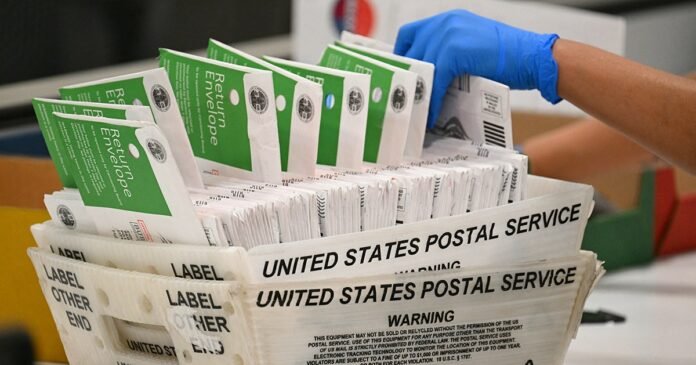
Top U.S. Postal Service officials tasked with issuing new regulations on mail voting expressed concerns in internal meetings about how the rules they were drafting could delay or block ballots from reaching large swaths of eligible voters for the upcoming midterms, but the rules moved forward anyway, ProPublica has learned.
The revelations about the discussions, from someone familiar with the rulemaking process, come as a separate anonymous federal employee filed a whistleblower disclosure with U.S. Sen. Richard Blumenthal, warning that the new system is untested and error-prone, and could lead to mass disenfranchisement in the upcoming election. The whistleblower described the entire process as “secretive, rushed, chaotic, and fundamentally flawed.”
In a March executive order, President Donald Trump directed the Postal Service to create the new rules, including requiring states to give USPS a list of all voters eligible to receive a ballot in the mail and requiring USPS to use those lists to determine which ballots get sent to voters. USPS officials were tasked with crafting the details of how the new system would work, including the creation of a new portal for states to upload their voters’ information and the back-end software that would allow mail delivery sites and local post offices to track, and potentially block, ballots entering into the mail on their way to voters.
Voting rights organizations, state officials and Democratic political groups filed lawsuits challenging the new rules, and a federal court has temporarily blocked the requirements for states. The merits of the new rule are expected to reach the Supreme Court before the November election. Even if the Supreme Court allows the plan, though, election officials and experts say that the new system could not be ready in time for this election, given that ballots for people who are in the military or overseas must be sent out this month.
During meetings in which top USPS officials discussed how to comply with the executive order, there was much discussion about the controversial nature of what they needed to do, according to the person familiar with the discussions who spoke on the condition of anonymity for fear of reprisals. The focus was on limiting the impact to voters while also complying. One repeated concern regarded how to avoid invalidating an entire batch of ballots if one voter among thousands couldn’t be confirmed as eligible. Some in the meetings recommended trying to limit harm to voters by not rejecting the entire batch, according to the person familiar with the discussions. Despite that, according to the whistleblower who contacted Blumenthal, the directive to reject entire batches if they included just one unverified ballot moved forward.
“As presently designed, if even one bar code on one single ballot in a bulk-mailing of 10,000 ballots fails to properly scan during the verification process, the entire batch is rejected and sent back to the state — effectively stopping the ballots from being mailed to voters,” the whistleblower wrote.
Election clerks raised similar concerns directly to USPS officials just days before the final rule was issued, at a mid-August National Association of Election Officials conference in Kansas City, Missouri, ProPublica has learned.
There, an example was given of Maricopa County, Arizona, which often sends out more than 2 million ballots at a time in its initial mailing. USPS officials confirmed it was possible that one ballot with a bad barcode or wrong voter information within the more than 2 million ballots could delay the entire mailing, according to two people who attended the related committee meeting.
The Postal Service has defended its final rule in court, stating that it does not intend to seize control of administration of elections and that the rule “need not and should not prevent a single voter from voting by mail.”
In a statement to ProPublica, a Postal Service spokesperson said the agency is carefully reviewing the Blumenthal whistleblower’s concerns and that USPS has spent months developing its system, in a manner consistent with court orders, and will soon provide instructions for how election officials can use it.
“Regardless of political party or perspective, we share a common goal: ensuring that Americans can have confidence that their election mail will be handled securely and delivered reliably,” the spokesperson said.
Lauren Bis, a White House spokesperson, said in a statement to ProPublica that the process of building software to carry out the new mail ballot checks “is neither complex nor unique for USPS since the Postal Service regularly uses bulk mailing and intelligent mail barcodes for a wide variety of large customers.”
“Under President Trump, the federal government is working to ensure safe, transparent, and honest elections,” Bis wrote.
Blumenthal, the Connecticut Democrat who received the whistleblower disclosure, asked the postmaster general for detailed info about the plan in a letter this week. He told reporters on a call Monday that the new USPS rule puts all mail voters at risk, and he accused the administration of being “hellbent on changing the framework of casting ballots in this country, clearly for political reasons.”
Election officials and printing experts have told ProPublica that errors in the system are likely, given how difficult it is to design envelopes with a clear barcode for scanning and to keep voter information up to date. Seemingly small details have yet to be worked out that could throw the entire system into chaos, they said, such as what file format to use when uploading voter lists and whether to provide mailing or residential addresses to USPS.
“These are trivial things that create massive problems,” said Jeff Ellington, CEO of Runbeck Election Services, which prints ballots and ballot envelopes for counties. Beyond that, he said, most of the counties in the country don’t have the type of barcodes needed to make the system function. And the Postal Service hasn’t told local election officials how to design new ballot envelopes and get them approved by USPS in this short of a timeframe.
The Blumenthal whistleblower said the idea that entire batches will be delayed by one mistake is especially concerning because of significant operational problems that exist with the portal that will contain information about eligible voters and the lack of testing of the system. The whistleblower is concerned about how, while systems typically have a known error rate, there has been no internal acknowledgment that errors will occur in the new mail ballot system, and instead the USPS has adopted a “zero-percent failure policy.”
The whistleblower also alleges that the administration moved forward with steps to create the new system during two initial injunctions from the court, which would have violated the court’s order. USPS had stated when issuing its final rule that it was adhering to the injunctions and would not take actions to implement the rule for the 2026 election unless the injunctions were lifted.
Both the whistleblower and the person familiar with discussions about the executive order’s implementation said that the timeline for creating a sophisticated tracking system would typically be at least nine months. The whistleblower’s disclosure says that workers began to work on the system in mid-June and had only weeks before being given a Sept. 1 deadline. The person familiar with the discussions said it was common for priority projects within USPS to have crunched timelines. The internal goal, the person said, was to try to implement the new system by that deadline or to show why it couldn’t happen — which was typical of other directives the agency had faced in the past.
The whistleblower disclosure described confusion as the staff attempted to develop the systems without enough direction, within weeks, and without proper communication, and said several employees referred to the situation as a “shit show.”
The lesson Canada’s prime minister learned from Brexit is helping in its trade rift with US
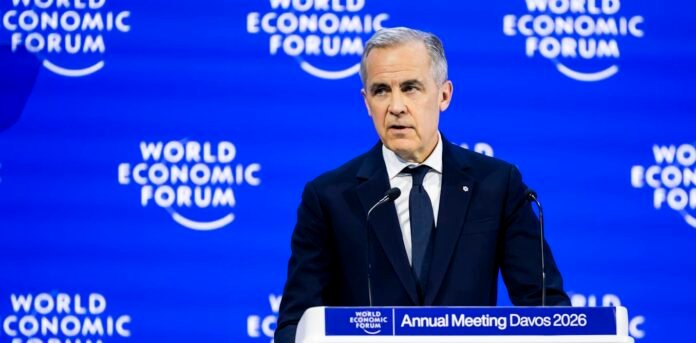
The trade conflict between Canada and the United States is heating up and has moved beyond rhetoric. After the latest round of negotiations failed, the US imposed 50% tariffs on around C$27.6 billion (£14.68 billion) of Canadian goods on August 22. Canada is responding swiftly with dollar-for-dollar retaliation to take effect on September 8.
Two other events in September give this confrontation wider significance. The first is that from September 1 Britain and Canada can trade with each other under the Comprehensive and Progressive Agreement for Trans-Pacific Partnership (CPTPP) trade framework. And on September 17, the Canadian prime minister Mark Carney is due to address the European parliament seeking an ever closer relationship with the EU.
Having sent 75.9% of its merchandise exports to the US as recently as 2024, Canada now sees such close trade integration with its nearest neighbour as a vulnerability, yet it cannot discard the benefits to its economy. This raises a longer-term question: how can Canada reduce its economic dependence on its more powerful neighbour?
Britain has been wrestling with a version of the same question since Brexit. Its experience offers Canada both a warning and, perhaps surprisingly, an opportunity.
There are obvious differences. Britain chose to leave the EU – Canada did not choose the current disruption of its trading neighbour. But both cases demonstrate the same uncomfortable economic reality: we can’t change geography.
Canada’s response has been rapid and has sought to diversify without decoupling. According to the government’s Global Affairs Canada, the share of Canadian goods and services exports going to markets outside the US rose from 29.7% in 2024 to 32.8% in 2025 – its highest level in more than four decades.
Canada’s exports to the EU increased by 16.4% in 2025, with goods exports rising by 23.5%, driven partly by higher crude oil exports.
Statistics Canada estimates that Canadian domestic goods exports to non-US markets rose by C$27.6 billion in 2025, but C$13.5 billion of that impressive growth was led by gold exports to Britain. Even excluding precious metals, non-US merchandise exports still increased by C$14 billion.
When Canadian gold producers increased exports beyond the US, the UK offered a ready alternative: a “friend” with an established global gold-trading infrastructure capable of absorbing them.
This focus on markets able to absorb specific Canadian exports has been a hallmark of Canada’s response to the escalating trade rift with its muscular neighbour. Carney is not simply promoting “middle powers” working together, he is attempting to implement it.
Europe, Britain and the Indo-Pacific offer different channels, allowing Canadian sectors to target whichever market can absorb their exports. So the Carney government’s trade diversification strategy is less about replacing America than building alternatives around it.
Brexit: different circumstances, useful lessons
With Brexit, Britain left a highly integrated, low-friction economic relationship with its largest trading bloc and sought to expand trade elsewhere – where there was considerably more friction.
But geography proved a major barrier to decoupling. In 2015, the EU accounted for 44% of UK exports and 53% of its imports. A decade later, in 2025, those shares were still 41% and 50% respectively. Despite Brexit and Britain’s subsequent efforts to expand trade elsewhere, the geographical concentration of UK trade has not shifted the needle meaningfully.
Nor did the comprehensive US trade deal once envisaged after Brexit materialise: talks began in 2020 but stalled. The subsequent Economic Prosperity Deal offered only sectoral concessions – a reduced-tariff quota for cars, exemptions for aerospace parts, and mutual agricultural quotas.
Canada by contrast, already has 15 free trade agreements covering 51 countries and around 61% of the global economy, including CETA with the EU, CPTPP with major Indo-Pacific economies and existing arrangements with Britain.
Canada’s response to the US dispute therefore looks less like a search for somewhere else to go and more like high-speed crisis management. It aims to protect as much access to US markets as possible while urgently making greater use of alternatives that already exist. That difference in sequencing may matter.
Britain increased friction with its largest market before knowing how much additional trade could realistically be generated elsewhere. Canada is trying to reduce friction elsewhere while resisting increased friction with its largest market.
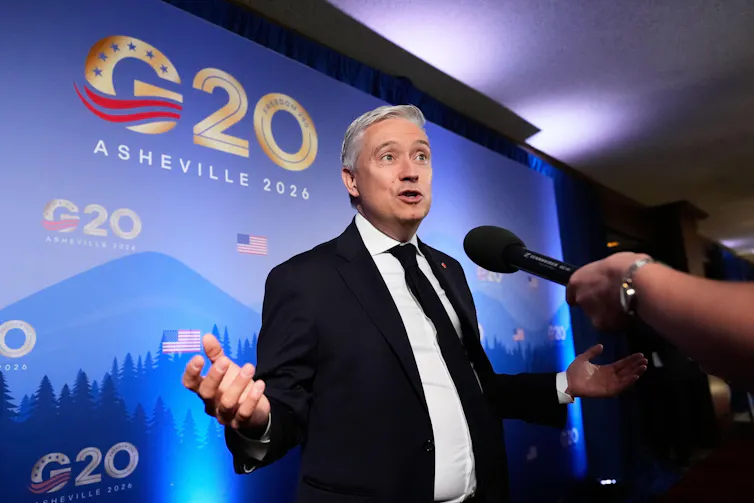
‘Trusted partner’: Canadian finance minister, Francois-Philippe Champagne, addresses the G20 at Asheville in North Carolina, September 1 2026.AP Photo/Gerald Herbert
Yet the wider economy has proved surprisingly resilient. Statistics Canada reported on August 28 that real GDP grew by 0.8% in the second quarter of 2026 after growth of 0.1% in the first quarter.
This does not mean that Canada has defeated economic geography. Around 71.7% of Canada’s merchandise exports still go to the US. But it does suggest that reducing concentration risk may be possible without attempting complete economic decoupling.
Can sharing a king help Canada and UK?
It is not only a king that Canada and the UK share. They share a language and membership of NATO, Five Eyes (the intelligence-sharing agreement between the UK, UK, Australia, New Zealand and Canada), the G7, the G20, while Britain is already Canada’s largest European trading partner. According to UK government figures, trade in goods and services between the two countries rose from £27.6 billion in 2024 to £33.7 billion in 2025.
CPTPP won’t revolutionise bilateral trade overnight, most bilateral goods trade is already tariff-free under the existing agreement. But it opens opportunities in services, investment, government procurement and integrated supply chains across its wider membership.
The lesson from Brexit is not that diversification is impossible. But the UK’s experience tells us that the opportunities presented by alternative markets are unlikely to simply replace the economic advantages of geography.
Canada’s experience so far suggests a different approach. It is aiming to maintain as much access as possible to its dominant neighbouring market while moving as fast as it can to reduce dependence on it.
For Britain and Canada, closer economic relations cannot provide a complete treatment for their respective dependence on the EU and US. But they may provide some pain relief.
Xi’s Egypt visit hints at China’s larger African vision
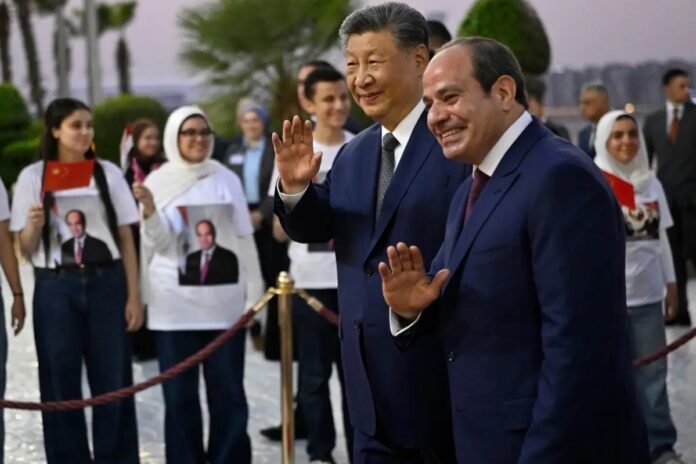
Chinese President Xi Jinping arrived in Egypt today for his first state visit in a decade. There, he will find a relationship that no longer fits neatly on the Middle East’s map.
China’s Middle East policy has long been read through Gulf oil, trade with Saudi Arabia and the United Arab Emirates, and its careful balancing of Iran and the Arab states. Those relationships still matter.
But Xi’s upcoming visit shows how the strategy is spreading westwards and southwards, with Egypt linking the region to Africa’s markets, ports and politics.
Ahead of Xi’s visit, Chinese J-16 fighters, aerial tankers and early-warning aircraft flew more than 6,000km to Egypt for the second Eagles of Civilization exercise. The deployment tested reach as much as friendship.
It would be easy to read the drill as evidence that China wants to replace the United States as the region’s security power. That goes too far. Washington maintains bases, commands and defense relationships Beijing does not possess, while Egypt continues to operate American, French, Russian and Chinese equipment.
What China is building is narrower and, in some ways, arguably more durable: a network of economic, technological and selective security ties that does not ask Cairo to abandon its other partners.
The physical center of that network lies east of Cairo, around the Suez Canal. Chinese involvement there is moving beyond construction contracts towards manufacturing. The China-Egypt TEDA zone at Ain Sokhna hosted nearly 200 companies by the end of 2025, with more than US$3.8 billion invested and around 10,000 jobs created, according to figures published in January.
The list of products matters more than the ribbon-cuttings. Fiberglass, electrical equipment, household appliances and chemicals are already made there. A major tire factory is due to begin production in stages, while solar cells, batteries and electric vehicles sit high on Cairo’s investment agenda.
This gives Beijing something its Gulf partnerships cannot offer on their own: an industrial base inside Africa, beside the shortest maritime route between Asian factories and European consumers. Egypt also belongs to the African Continental Free Trade Area and has commercial access across Arab and African markets.
Egypt sells manufactured goods and food across the continent. Chinese firms producing in Suez are not simply closer to markets south of the Sahara; they can plug into commercial networks Cairo has spent years building and now hopes to expand under AfCFTA.
For Egypt, the appeal is equally practical. Cairo needs foreign currency, jobs and export capacity. It does not want to remain a large destination for Chinese goods while selling little in return.
That imbalance is stark. China was Egypt’s biggest single non-oil trading partner in 2025, but published figures put Chinese exports at $19.9 billion and Egyptian exports at only $819 million.
A bigger trade number is not automatically a healthier relationship. Local production, Egyptian suppliers and access to China’s market will determine whether the partnership changes the structure of Egypt’s economy or merely bloats its import bill.
Technology transfer is the next test. Huawei has offered to build AI data centers for the Egyptian government using 2,008 Ascend chips, while the US State Department has sought a rival proposal involving Nvidia, AMD and Microsoft. The tender turns Cairo into a live contest between two rival super power technology systems just as Xi arrives.
Huawei has already put forward a 12-month construction plan. A US-backed consortium could counter with stronger chips and a deeper software ecosystem. Cairo is in the strongest position while both sides believe they still have a chance.
The same instinct shapes Egypt’s military ties and wider diplomacy. Its pilots fly American F-16s, French Rafales and Russian MiG-29s, and now train alongside Chinese aircraft. Cairo has joined BRICS and moved closer to Beijing, but it still receives substantial American military assistance and maintains strong economic ties with Europe and the Gulf.
Beijing benefits from that flexibility. This looser approach lets China deepen its presence without assuming responsibility for every crisis, from Gaza to the Red Sea. Chinese firms can build industrial capacity, sell technology and strengthen defense ties, while Cairo retains responsibility for local security and regional mediation.
There are, however, limits to the cooperation. The factories in TEDA have created jobs and expanded production, yet Egypt still buys far more from China than it sells. If Beijing wants to present the relationship as a development partnership, it will have to show that more of the value stays in Egypt.
The air drills should also be kept in perspective. They give Chinese pilots experience in the region and offer Egypt another military partner, but they do not amount to a new security order.
China’s presence remains far smaller than America’s, while its ships and companies continue to benefit from sea lanes guarded largely by a security system Beijing criticizes but has yet to replace.
That is why Xi’s visit should be judged less by the warmth of the statements than by what Egypt can produce after he leaves. New factories are useful if they develop local suppliers. Technology agreements matter if Egyptians can operate, maintain and govern the systems. More trade helps if exports grow on both sides.
The Gulf will remain central to China’s Middle East policy. Yet Egypt also gives Beijing a route into Africa. Cairo can use that position to secure investment on better terms. Once Xi leaves, the real test will be how much of the relationship is built, managed and produced in Egypt.
As-Suwayda Students Face a Political Roadblock to Their Future
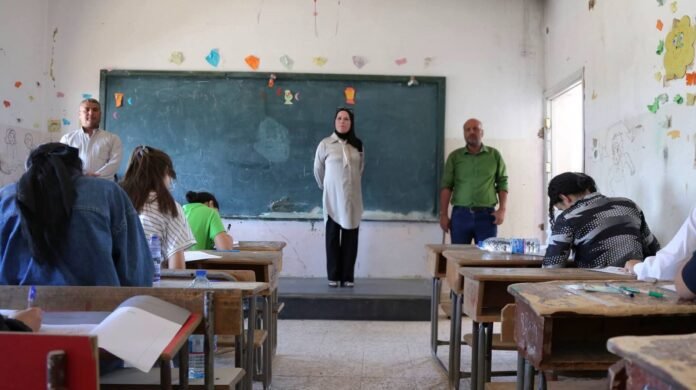
In Syria’s southern As-Suwayda province, the route to an examination hall has become a political fault line. As Rizik Alabi reports, thousands of students who spent months preparing for national exams have found that their future now depends less on what they learned than on who controls the road ahead.
One student, identified as Sally for security reasons, left her home before the tests began and stayed with relatives in a government-controlled part of the province. She feared she would otherwise be unable to reach the official examination center. Her calculation was grim but simple: move early, or risk losing an academic year.
She was among more than 13,000 students registered for basic and secondary certificate examinations in As-Suwayda. Only about 2,000 reached the first round of testing. Damascus then arranged a special session beginning August 29, but only around 150 students made it to designated centers in northern rural parts of the province. The exams are scheduled to run through September 10; thousands remain shut out.
At issue is more than transport. Syria’s Education Ministry insists that official examinations must be managed at state-approved centers. Local forces aligned with Druze spiritual leader Sheik Hikmat al-Hijri have demanded locations nearer to students’ homes and cited security risks in traveling into government-held territory.
The National Guard has denied blocking students, describing the disruption as a response by families unwilling to send their children through contested areas. Yet an earlier statement by the National Guard-affiliated Shahba Operations Room said it would close roads to vehicles carrying students to ministry-designated sites and impound vehicles that defied the order.
Damascus says armed groups are preventing access to a service it organized to protect students’ rights. Its critics ask why, given the province’s tense conditions, the government did not establish centers closer to the affected communities. Each side charges the other with weaponizing education. The children, as usual, are left holding the short end of the timetable.
The dispute grows out of unresolved authority in As-Suwayda after deadly fighting in July 2025. Local armed groups retain control over As-Suwayda city and other areas, while Damascus seeks to restore state institutions across Syria.
Political activist Muhannad Sharrouf warns that the consequences will outlast the present confrontation. “They are not merely depriving them of an exam; they are threatening their future and pushing another generation toward further loss, chaos and collapse.”
Alabi’s full report captures how a dispute over exam centers has become a measure of Syria’s wider failure to keep public life separate from political conflict. Read it for the human cost behind the numbers.
The Army just used a 20-kilowatt laser to take out three drones
This week, the US Army used a high-energy multipurpose laser to shoot down three drones near the US-Mexico border, which official reports claimed were “posing a physical threat to US military personnel and CBP partners,” referring to Customs and Border Patrol.
The operation took place between the night of August 25 and the early morning of August 26 in the vicinity of the Rio Grande Valley in Texas and was led by the Joint Task Force Southern Border (JTF-SB), which operates under US Northern Command. Authorities confirmed that, during the operation, agents used technology derived from the Army’s High-Energy Multipurpose Laser (AMP-HEL) system, a military program focused on implementing high-energy lasers for new defense capabilities.
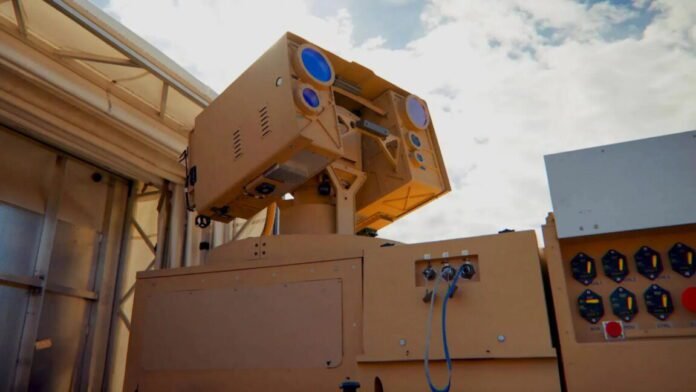
Available information suggests that this initiative began in September 2025, when AeroVironment, a company specializing in defense technology, delivered the first two functional prototypes of these laser-based weapons to the US Armed Forces. Two new, improved systems were delivered as the program was expanded in December of the same year. According to the manufacturer, this particular platform, called the Locust Laser Weapon System, is designed to be mounted on military vehicles, as the Army has done with the versions it has received.
Operating at 20 kilowatts, the Locust system relies on an extremely concentrated beam of light that, in various phases, allows for the detection, tracking, illumination, damaging, or destruction of targets at a distance. Locust and other high-energy laser (HEL) systems typically use sensors, cameras, radars, or other means to locate an object. Once identified, the system focuses the light beam on the target with great precision, even when it is moving. It then uses an additional electrical energy charge to increase the beam’s power and convert it into heat. This ultimately damages or disables the drone, the exact outcomes depending on factors such as distance, exposure time, and the target’s characteristics.
In addition, Locust’s most recent versions—such as the one delivered to the military last December—include radar and command-and-control systems. These make it easier to integrate the weapon into a more complex mobile defense platform, rather than using it as a standalone device.
The exact location of the operation remains unknown. Nor is there any concrete information regarding the origin of the neutralized drones or the entities responsible for their operation. However, Curtis Taylor, commander of JTF-SB, suggested that the aircraft could be linked to criminal cells involved in drug trafficking and operations in Mexican territory.
“Cartel networks are increasingly employing unmanned aircraft systems to facilitate illicit human smuggling and actively spy on our personnel and law enforcement partners. By integrating layered countermeasures alongside advanced directed-energy capabilities like this laser system, we have made it clear that we will not tolerate hostile surveillance. We also greatly appreciate the support of our Mexican Army partners as we work together to combat this threat to the border region,” the major-general stated in a press release.
The official statement also does not specify the exact models from the AMP-HEL program that were used in the operation. However, the international press has linked the action to the campaign against illegal immigration and drug cartels that President Donald Trump has been waging since he began his second term.
During his election campaign, Trump promised to combat both issues by implementing drastic measures, especially along the US-Mexico border. To that end, his administration has deployed a wide variety of technologies, HEL systems being just part of the growing toolkit.
This story originally appeared onWIRED en Españoland has been translated from Spanish.
How China’s censoring coverage of the Tibet flood disaster
As rescue efforts have continued on both sides of the border following the devastating floods in Nepal and Tibet, a fight over how the disaster is being reported has been growing in intensity on social media.
The dispute centers on the claims and counterclaims following a story by the BBC’s China correspondent, Laura Bicker, about how China is censoring videos of the floods.
Bicker said videos of the landslide and flood surge sweeping through Gyirong Port on the border was scrubbed from the internet, in part, because Beijing fears instability in the politically sensitive region of Tibet.
Some social media users, however, have posted screenshots of the footage used by the BBC, pointing out it had actually been shown in the Chinese media. One Chinese journalist put it bluntly: “Never seen the BBC spread rumors so blatantly.”
The Chinese government has long complained about what it sees as Western media “bias” in reporting on Tibet. Its supporters seem to have doubled down on this narrative this week on social media, zeroing in on the BBC.
But Chinese social media users, both inside and outside China, have long dealt with the authorities exercising control over information. This has certainly been the case in the aftermath of the floods, too.
As Bicker noted in her report, the most concrete example is the deletion of videos showing the massive wave of mud and water swallowing Gyirong Port. The footage was initially circulated on the platforms Weixin and RedNote, but users later could not access it.
Another form of control has been the restricted access for independent and foreign journalists. Allyson Horn of the Australian Broadcasting Corporation said she had made repeated requests to travel to Tibet, but was denied. Other foreign journalists have similarly been blocked.
This makes it difficult, if not impossible, for foreign media to independently verify the Chinese government’s account of what happened there. The absence of independent reporting, combined with the removal of footage from social media, has allowed the Chinese state media to dominate the narrative.
How Chinese media are covering the disaster
This reflects a longstanding tendency in Chinese media to avoid material that could cause social instability or public panic.
Coverage of the Tibet floods by the state-controlled media has focused heavily on the People’s Liberation Army rescue operations, President Xi Jinping’s leadership during the crisis and Premier Li Qiang’s visit to the disaster zone.
Chinese media coverage of Li Qiang’s visit to the disaster site.
There has also been some coverage of efforts to reopen roads and the delivery of disaster-relief supplies to affected residents.
But as the Guardian has noted, there has been much less reporting about how the disaster has affected local villagers, their homes and communities.
On the Nepali side of the border, meanwhile, foreign journalists have been able to interview survivors without restrictions.
Critics also say the Chinese government is hiding the true number of casualties. The problem with these contested claims is that no outsiders – whether they be critics or not – have been able to verify the death toll due to the restricted access to the disaster site.
How openness was briefly tolerated
China’s media environment has, at times, been less controlled than it is today.
On May 12 2008, an earthquake measuring 8.0 on the Richter scale struck Sichuan province, killing more than 70,000 people and leaving millions homeless.
Chinese state media provided extensive live coverage almost as soon as the quake struck. This continued for weeks, with China Central Television regularly updating the death toll and reporting extensively on rescue efforts.
Foreign media did raise questions about whether lives had been unnecessarily lost due to the collapse of poorly constructed school buildings. Foreign journalists also questioned whether justice would be served for the families of the victims.
Chinese media reported on some of these controversies, including questioning whether the local government had done the proper quality control checks on school construction.
At the beginning, the coverage represented a major breakthrough in Chinese media reporting of emergencies and natural disasters. Its “unprecedented openness” was widely observed by Western media.
But within weeks, the government had begun to clamp down on information about the schools for fear the issue could drive anti-government sentiment.
Only positive news
As a general practice, China’s state media outlets are instructed to emphasize “positive reporting” during times of crisis, while censors remove criticisms of government responses or culpability online.
The media coverage of a fatal train accident in the city of Wenzhou in 2011 was a good example.
Research shows that, unlike the Sichuan earthquake, the government kept a tight control on what was permissible in the media. The authorities ordered media outlets not to send reporters to the scene, limited the frequency of their reporting, and instructed them not to link the story to high-speed rail development.
Journalists were also told not to investigate the accident’s causes or impact, or circulate personal microblogs on the incident.
Instead, they were urged to seek “moving” stories of bravery and sacrifice, such as local blood donations. The aim was to evoke love and compassion in the wake of the disaster.
When Xi came to power in 2012, the government’s concerns over potential challenges to its rule led to even more tightening on Chinese media and social media.
The media’s handling of the Tibet floods is now following this pattern of restricted coverage and emphasizing positive news.
The disaster has also occurred at a time of growing distrust between China and the West. This seems to be adding to the perceptions of biased coverage. None of this is helped by the logistical difficulties in accessing both the disaster site and first-hand sources of information.
Chinese restrictions are making it harder for Western journalists to independently verify what is happening. The resulting information gap is raising suspicions in the West and criticism of censorship and biased coverage in Chinese media.
And that criticism, in turn, may reinforce Beijing’s belief that Western reporting on Tibet is inherently biased, giving it another reason to restrict information.
Uber Technologies will cut 3,300 jobs, or roughly 10% of its global workforce, as part of an overhaul, as it looks to reduce the number of managers, the company said on Wednesday.
The cuts will reduce the number of managers in the company by 20%, CEO Dara Khosrowshahi said in an email to employees.
Uber had about 34,000 employees globally at the end of last year, according to its annual report.
The ride-hailing firm’s stock rose 2% on the news, which was first reported by Bloomberg News.
The U.S. Has Killed 227 Civilians in Boat Strikes During “A Year of Murders”
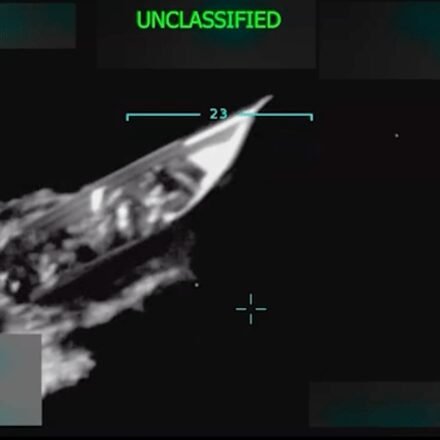
Top military officers from a secretive command watched a speedboat cut through the waters of the Caribbean Sea, early last September. A plane above provided live video of the vessel and the 11 men on board. In the early morning hours, Adm. Frank Bradley sought the counsel of his top legal adviser, Col. Cara Hamaguchi. Then he ordered SEAL Team 6 operators to attack the packed boat.
After the vessel exploded, two helpless survivors pulled themselves onto a fragment of the overturned hull, drifting with the current for roughly 45 minutes. Bradley — then the head of the Joint Special Operations Command and now the four-star chief of Special Operations Command — again turned to Hamaguchi for guidance. Soon, a second missile screamed down, killing the survivors. Two more missiles followed in rapid succession, sinking the remnants of the boat.
That strike, carried out on September 2, 2025, began a campaign of attacks that has never ceased.
“It’s been a year of murders,” said a defense official who was horrified by the first strike and has remained so as the U.S. has targeted scores of so-called “drug boats” in the year since. “The Trump administration has normalized murder.” The official added: “It’s absolutely criminal.”
“The Trump administration has normalized murder.”
In all, the U.S. has conducted more than 65 attacks, resulting in over 225 civilians killed in the Caribbean Sea and Pacific Ocean in the last year. The most recent strike, in the Caribbean on August 25, killed four people.
A classified opinion from the Justice Department’s Office of Legal Counsel — drawn up by an interagency lawyers working group including representatives of the CIA, State Department, White House, Department of Justice, and Defense Department — claims that narcotics on supposed drug boats are lawful military targets because they generate revenue for cartels whom the Trump administration claims are engaged in a “non-international armed conflict” with the United States. Attached to that secret memo is a similarly secret list of “designated terrorist organizations.”
A second government official who has reviewed the OLC opinion called it “flimsy yet expansive,” but said the Trump administration had “nonetheless managed to overstep” its bounds. The official said that despite being crafted to “excuse what is clearly murder,” the U.S. had killed people beyond those the OLC opinion claimed were legal targets.
U.S. Southern Command pushed back on the allegation. “Each operation is planned and executed within the full bounds of our legal framework,” said spokesperson Steven McLoud, “ensuring that every target meets the legal criteria established by our Office of Legal Counsel.”
“There is no plausible legal justification for the strikes.”
Experts in the laws of war, as well as members of Congress from both parties, say the strikes are illegal, extrajudicial killings because people are deliberately slain outside the law. The strikes may also constitute crimes against humanity, violating fundamental rights to life and due process. “There is no plausible legal justification for the strikes. They’re obviously not occurring in the context of an armed conflict and outside of armed conflict, the term for premeditated killing is murder,” Brian Finucane, a former State Department lawyer and specialist in counterterrorism issues and the laws of war, told The Intercept.
The Intercept broke the story of the September 2 double-tap strikes, within days of the attack. Months later, follow-up reporting by the Washington Post, The Intercept, and others resulted in a public firestorm that forced the Pentagon to admit the survivors were killed while shipwrecked — a clear breach of international law — and provide members of Congress additional briefings and access to classified footage of the attack.
The Intercept was also the first outlet to report on Hamaguchi’s identity and role in the attack, as well as an admission in a classified briefing by Rear Adm. Brian H. Bennett — a military officer overseeing Special Operations for the Pentagon’s Joint Staff — that some of the 11 people aboard the boat could have been human trafficking victims. Sen. Tim Kaine, D-Va., who serves on both the Senate Armed Services and Foreign Relations committees, sent a letter to President Donald Trump last month pressing for accountability and referencing The Intercept’s reporting on Bennett’s disclosure. Kaine found, after reviewing highly classified materials, that the “available evidence suggests that the United States has killed individuals who are not involved in narcotrafficking.”
Even a year later, much about the attacks and the victims remains unknown. “This is probably one of the hardest U.S. campaigns to track — searching an area double the size of the continental U.S. for clues, with limited satellite imagery, few witnesses and little physical aftermath. The ocean swallows up all the information we would usually rely on,” said Emily Tripp, the executive director of Airwars, a U.K.-based group that monitors conflicts all across the globe. “The more than 200 people killed across these waters have a right to be remembered — and their loved ones have a right to know what has happened.”
“The ocean swallows up all the information we would usually rely on.”
Twenty-six of the 227 total killed have been identified by name, according to an Airwars analysis. All are apparently men and, for those whose ages are known, were between 24 and 46 years old. Of 41 victims identified by nationality, 18 were from Venezuela, 13 from Mexico, three from Colombia, three from Ecuador, two from Trinidad and Tobago, and two from Saint Lucia. Among those identified by a consortium of journalists from Venezuelan outlets were a bus driver, a mototaxi driver, men involved in fishing or the seafood trade, and a futsal player. They hailed from poor communities, and their ties to the drug trade were at the very lowest levels.
Reporting by The Intercept also found that claims by the White House and Defense Department about the boat strikes stopping the flow of fentanyl and saving more than 1 million American lives are baseless, phony, or both.
“The administration is killing for online content and spectacle,” said Finucane, referencing the Trump administration’s use of highly edited snuff-film footage of attacks on social media. At the same time, the Pentagon has consistently withheld basic information about the strikes, the legal justifications for them, the “designated terrorist organizations” being targeted by the campaign, and the victims. The administration has been so secretive that the bipartisan 2026 annual defense policy bill withholds 25 percent of travel funds from Hegseth’s office until overdue reports on execute orders and unedited video footage of strikes are delivered to Congress.
The boat strike campaign, dubbed Operation Southern Spear, hit its peak intensity just over a year ago. October 2025 was its deadliest month with 12 boats attacked and 44 declared deaths. December was the most active period, with 14 vessels struck. In almost all the attacks, between one and four people were killed. In only one strike did the death toll of a single boat reach double digits: the first attack on September 2, 2025.
While all September 2025 strikes took place in the Caribbean, the attacks moved west. By December, all 14 were conducted in the Pacific Ocean. The Intercept’s boat strike tracker counts 50 strikes in the Pacific out of a total of 68 attacks in the past year.
In almost every month of the campaign, the U.S. failed to immediately kill all crew members in its initial strike. But of the 28 survivors, only three were successfully rescued and remain alive. In nine of 11 survivor announcements, the U.S. Coast Guard was named as the primary responder. The Intercept revealed that the U.S. rescue strategy was leaving survivors to drown. Eight men leapt into rough seas on December 30, 2025, for example, after the U.S. rained down a barrage of munitions, sinking three vessels. They required immediate rescue; chances were slim that they could survive even an hour. In announcing its strike, SOUTHCOM said it “immediately notified” the Coast Guard to launch search and rescue protocols to save the men. But an investigation by The Intercept and Airwars found that it took the Coast Guard almost 45 hours to begin searching the attack zone for survivors.
Strikes slowed dramatically in January 2026 — with just one strike that killed two people — during the same month that the U.S. invaded Venezuela and abducted its president, Nicolás Maduro. In late June, U.S. forces took a hiatus from attacks. Officials offered conflicting reasons for the pause, with some reports centering on equipment and personnel being used for earthquake relief in Venezuela. After 63 days, the U.S. resumed strikes on August 23, in the Pacific, quickly followed by the Caribbean attack on August 25.
The boat strike campaign was, in many respects, the opening salvo of an aggressive military and diplomatic effort in the Americas — dubbed the Donroe Doctrine — that has spawned more violence, increased impunity by local security forces, and heightened danger from cartels across the Western Hemisphere, according to the Armed Conflict Location & Event Data project.
In addition to the war in Venezuela, the U.S. also launched or ramped up numerous initiatives and interventions. This includes the now 19-member Americas Counter Cartel Coalition — also known as the Shield of the Americas — which Hegseth recently christened with the motto: “We do bad things to bad people.” The U.S. also launched a CIA campaign — which may involve private contractors and authorities from other countries — targeting boats near the Galápagos Islands; covert CIA operations in Mexico; a military airstrike inside Venezuela in June that allegedly killed Hector Rusthenford Guerrero Flores, the head of the Tren de Aragua street gang; and joint counter-cartel operations in Ecuador dubbed “Operation Total Extermination,” which include ground operations by elite U.S. troops.
“I also want to commend Honduras and Guatemala for inviting the United States to partake in combined operations against narco-terrorists in their countries,” Hegseth announced recently, adding: “We look forward to working with you in killing bad guys.” Jamaica also signed a status of forces agreement with the U.S., which sets terms for troop deployments, including joint operations. Hegseth said the partnership would “cripple narco-terrorists that transit through the Caribbean.” Beyond this, the Trump administration has also repeatedly bullied Panama and threatened Canada, Colombia, Cuba, Greenland, and perhaps also Iceland.
Last month, SOUTHCOM chief Gen. Francis L. Donovan announced the creation of Joint Task Force Western Hemisphere, which the command called an “evolution from Operation Southern Spear.” JTF-WHEM will, said SOUTHCOM, “provide unified command and control at the tactical and operational levels, integrating military capabilities with the … partner nations of the Americas Counter Cartel Coalition.” SOUTHCOM failed to clarify if so-called A3C partner troops were under the operational control of U.S. officers, as is the case under other low-profile proxy-war programs.
Hegseth told coalition partners that the new task force would “continue the targeting and killing of narco-terrorists,” whom he dubbed “the ISIS and Al Qaeda of the Western Hemisphere.” Days later, the boat strikes resumed. And on Friday, JTF-WHEM and Ecuadorean forces interdicted what SOUTHCOM claimed was “a floating refueling station in support of illicit at-sea drug trafficking” linked to “the Los Choneros violent narco-terrorist organization” in the Pacific. Marines and sailors “boarded, searched, and cleared the vessel without incident,” turned the crew over to Ecuador, and then sank the vessel.
Acting Pentagon press secretary Joel Valdez did not reply to a request for comment on whether the U.S. had killed people beyond those the Office of Legal Counsel opinion claimed were legal targets.
“The boat strikes are, perhaps, the most stark testament to the lawlessness of the Trump administration,” Finucane told The Intercept. “It’s essentially serial killing at sea — murder under federal law — being carried out as a matter of state policy.”