18.6 C
London
Wednesday, August 26, 2026
Home Blog

Conservative Groups Side With Minneapolis Protesters Against Trump Crackdown

0
conservative-groups-side-with-minneapolis-protesters-against-trump-crackdown
Conservative Groups Side With Minneapolis Protesters Against Trump Crackdown


A trio of conservative and libertarian-leaning groups have asked a federal judge to force the disclosure of confidential files about undercover agents from U.S. Immigration and Customs Enforcement infiltrating left-wing protest groups in Minneapolis.

The Cato Institute, the Foundation for Individual Rights and Expression, and the Society for the Rule of Law filed a friend-of-the-court brief on Tuesday arguing that the Trump administration illegally targeted protesters based on their ideology.

A wide-ranging ICE investigation in the Twin Cities resulted in the June indictment of the protesters, widely known as the Minneapolis 15, for allegedly using criminal methods to try to block the administration’s crackdown on immigrants.

The defendants were “members and associates” of Direct Action Minnesota, a protest group that used aggressive actions to disrupt the crackdown, according to the indictment.

Yet a court filing from the defense earlier this month revealed that ICE sent undercover agents to spy on a much broader array of groups, including mainstream organizations such as local labor unions and the youth-led Sunrise Movement.

The defendants filed a motion asking the judge overseeing the case to force the disclosure of even more files, alleging that they will show that the government illegally targeted left-wing protesters for their politics rather than their alleged crimes.

On Tuesday, the right and libertarian-leaning groups came to the left-wing protesters’ aid with the friend-of-the-court brief. The groups, which are represented by the legal nonprofit Protect Democracy, argue that the facts revealed so far support the defendants’ claims.

The groups pointed out that some of the government’s own files say the origins of the investigation into left-wing protesters lies in a memo that President Donald Trump issued after the assassination of right-wing activist Charlie Kirk.

Known as National Security Presidential Memorandum 7, or NSPM-7, the memo called for a crackdown on groups espousing “anti-Americanism, anti-capitalism, and anti-Christianity,” accusing the groups of terrorism and political violence.

“The limited public disclosures here confirm the investigation for this case originated under NSPM-7,” the groups said. “Those disclosures also indicate the investigation was part of a larger strategy to target those who espoused views opposed to immigration enforcement and engaged in associational activity disfavored by the government. NSPM-7 effectively uses the domestic terrorism label to justify criminal investigations into disfavored groups that would not otherwise be targeted.”

U.S. Magistrate Judge David Schultz is set to consider the defendants’ request to force the government to hand over more confidential files at a court hearing on Thursday.

Federal prosecutors filed a motion opposing the release of more files last week, arguing that they have already turned over more evidence than legally required and the defendants have not met the high legal burden of showing that they were the targets of selective prosecution.

Prosecutors argued that the actions of alleged members of Direct Action Minnesota, or DAMN, who are accused of blockading a federal building and tailing federal agents to their homes, were a far cry from the thousands of “peaceful” protesters who took to the streets earlier this year after the killings of Renee Nicole Good and Alex Pretti.

“In this case, the defendants actively conspired to shut down a federal facility and they were successful on at least two occasions,” prosecutors said. “In fact, DAMN members were openly hostile and critical of individuals who advocated for peaceful, nonviolent protests.”


World humanoid robot games show runners breaking records, bursting into flames

0
world-humanoid-robot-games-show-runners-breaking-records,-bursting-into-flames
World humanoid robot games show runners breaking records, bursting into flames

Viral videos of the World Humanoid Robot Games show sprinting robots beating the human 100-meter record held by Usain Bolt—but also feature running robots crashing into barriers and falling down because they cannot readily stop running. A few fallen robots even break at the waist in a shower of sparks or catch on fire.

That demonstration of both robotic prowess and limitations came from the second edition of the World Humanoid Robot Games hosted in Beijing from August 22–26. Like the inaugural event held in 2025, this year’s event challenged humanoid robots to run fast, perform kung fu or dance moves, fight one another in kickboxing, and play soccer or table tennis.

This year’s games also tested robots in more humdrum practical scenarios like washing and hanging laundry, where they appeared to lag behind typical human working speeds. That suggests the event organizers, including Chinese state media and the Beijing city government, are keen to showcase the commercial potential of humanoid robots at a time when China’s robotics industry is rapidly developing and testing such robots.

Endless runner

The fact that humanoid robots went from lagging behind human record-holders last year to surpassing human world records in the 100-meter sprint and standing high jump events this year suggests significant progress in robotic whole-body control for accomplishing specific tasks, Dipam Patel, a PhD candidate in computer science at Purdue University and a research assistant at the US Army DevCom Army Research Lab, told Ars.

“All of that does display whole body control, because you need to move all the joints, hands, legs, arm, body, everything to accomplish that task,” said Patel, who is also a graduate student member of IEEE. “So there has definitely been a huge push in engineering from where they were last time to this time.”

However, the robots on display in the World Humanoid Robot Games are still very far from general-purpose autonomous robots capable of handling practically any task. Instead, these robots were engineered to accomplish just one task, as shown by the fact that the running robots sprinted in a straight line and could not even slow down by continuing around the track after the finish line.

“If you cross the finish line, that’s the goal—it doesn’t matter if you stop and it doesn’t matter if you fall into different pieces,” Patel told Ars. “Some companies had different types of robots for different games or different tasks, because they were engineered for that task to be the best in that.”

Humanoid robot stumbles.

The robotic races and other flashy events provide for an entertaining spectacle that can lead to easy news headlines and viral video clips. They also give robotics companies an opportunity to attract more publicity and investor money by potentially standing out from the competition, Patel said.

One type of humanoid robot developed by the Beijing-based company X-Humanoid gained viral online fame for winning the small-group 400-meter race with an unusual “shy person hiding behind their hands” posture. The robot’s developers told the Global Times that the robot learned through reinforcement learning trials in simulation to shift from a human-style runner’s arm swing to holding its arms up near its face and swinging them back and forth through hip rotations.

Measures of robotic progress at the games could prove even more meaningful if, for example, they challenged robots to run the same race 10 times, Patel suggested. That would require the robots to demonstrate they have the software and hardware to perform reliably over multiple trials—and maybe even learn to slow down safely without endangering themselves or any bystanders.

Boring is more useful

The less flashy events that debuted during the World Humanoid Robot Games this year may ultimately prove more useful benchmarks for robotic progress. Such scenario competitions included household chores, like washing laundry, folding clothes, and cleaning up living rooms, according to the Chinese state media publication the Global Times.

Robots were also challenged by an unscheduled interruption when they had to bring a delivery package inside. That required them to switch tasks from the household chores to deal with receiving the delivery.

The Beijing Continental Grand Hotel provided robots with a different set of timed challenges, including moving wheeled luggage to assigned hotel rooms, cleaning up beds and restocking supplies. The Global Times also reported that a separate library shelving event challenged robots to collect book returns and put them in the correct place as a test of visual recognition and reasoning.

One of the livelier practical scenarios involved an outdoor firefighting and rescue event. Robots had 30 minutes to identify hazardous substances, locate and shut off three open valves of different types, spot a fire, and then find a fire extinguisher to put it out. Only three out of 12 competing robot teams completed the entire challenge, according to the Global Times.

Robots even participated in six events challenging hand dexterity, including picking up beans and driving screws. They also competed to precisely hammer nails into a corkboard without driving them in at an angle.

But Patel observed that many of the robotic competitors were still being teleoperated by human operators who directly controlled the robots’ actions. The World Humanoid Robot Games allowed for human teleoperation of robots in certain events, but penalized the final score if robots were being remotely controlled rather than performing autonomously.

Limits of robot autonomy

The fact that many events still permitted humans to directly control robotic motions shows that autonomous robot systems still have a long way to go, Patel said. Whereas humans can quickly learn many tasks on the fly, robots require much more training through repeated trial-and-error attempts either in simulation or in real-world scenarios.

“You need to have all possible edge cases for a robot to learn from interaction, which is not really feasible,” Patel told Ars. “You can simulate something like 100,000 scenarios for hammering a nail, but that’s just one task from millions of tasks in the world.”

The AI models powering many robots can also learn from huge amounts of visual data involving human demonstrations. But gathering such task demonstration data for robots has proven time- and resource-intensive, despite various companies’ efforts to pay ordinary people to strap cameras on their heads.

“We would have to push the algorithmic development a lot to actually see a robot being able to generalize and do eight-hour work shifts in any random environment,” Patel explained.

Even the more autonomous robots competing in the World Humanoid Robot Competition still rely heavily on cloud computing to help run intensive AI models, rather than running the AI computing directly on their own onboard hardware, according to the South China Morning Post. It described robots being equipped with 5G modules to transmit data to an “embodied-intelligence system” and then receiving instructions on what to do next.

The real test for humanoid robots’ capabilities will necessarily take place in the real world beyond the demonstrations at the World Humanoid Robot Games. Investors have poured more than $6 billion into humanoid robot companies in 2025 alone, with Chinese companies being especially aggressive in testing and deploying such robots.

Meanwhile, US companies like Boston Dynamics and Agility Robotics are also ramping up their own commercialization and deployment plans in factories and warehouses. The US government has even banned the import of foreign-made robots, including China’s most popular humanoid robots.

But not all robotics researchers are convinced that humanoid robots are necessary, especially when the most useful robots currently doing productive work usually come in other shapes and sizes. For his own part, Patel is focused on developing software algorithms that allow many different types of robots to seamlessly switch between tasks.

EU Steps Up Climate Adaptation as Weather Hits Crops

0
eu-steps-up-climate-adaptation-as-weather-hits-crops
EU Steps Up Climate Adaptation as Weather Hits Crops


Persistent heat and lack of rainfall in the past two months are affecting summer crops and fodder supply across western and central Europe, according to the latest MARS bulletin of the European Commission’s Joint Research Centre (JRC).

The strongest impacts are being reported in France, southern Germany, northern and central Italy, Austria, Czechia, Slovakia, Hungary and western Romania. High temperatures combined with a lack of rain have affected crops and fodder supply, and limited irrigation water has further intensified the stress in several regions.

Commissioner for Agriculture and Food, Christophe Hansen, said: “This summer has been particularly difficult for farmers across the EU. Drought and extreme heat are putting crops, fodder, livestock, and farmers’ incomes under increasing pressure. We are closely and actively monitoring the developments, gaining insights of the impact directly from the ground. These events are a reminder that we must prepare for a future in which extreme weather becomes more frequent. We need to support farmers today while making European agriculture more resilient for tomorrow.”

In Benelux countries, Slovenia and Croatia, hot and dry conditions reduced yield expectations for summer crops, particularly maize. Meanwhile, fodder supply is a concern across large parts of western and central Europe, with persistent heat and drought having reduced pasture availability and biomass accumulation.

Published every month, the JRC MARS bulletin assists the Commission in monitoring agricultural conditions and responding to the difficulties farmers are facing. The Commission remains committed to supporting farmers so they can continue to provide affordable, high-quality food. This is where the Common Agricultural Policy (CAP) plays a key role to make agriculture more resilient and better adapted to climate change by supporting farming practices that strengthen resilience and more sustainable methods. The CAP supports investments in efficient irrigation, climate-resilient infrastructure, water-saving technologies and better water management, and supports the shift to more climate resilient crops.  More information on how the Commission is helping farmers can be found online.

Syrian Druze Leader Says Community Is ‘Inseparable Part of Israel,’ Hints at Developments in As-Suwayda  

0
syrian-druze-leader-says-community-is-‘inseparable-part-of-israel,’-hints-at-developments-in-as-suwayda  
Syrian Druze Leader Says Community Is ‘Inseparable Part of Israel,’ Hints at Developments in As-Suwayda  


[DAMASCUS] Hikmat al-Hijri, a spiritual leader of Syria’s Druze community, sparked widespread controversy Tuesday after describing the Druze as an “inseparable part of the State of Israel,” marking a significant escalation in his rhetoric toward Israel amid continuing tensions between forces aligned with him in the southern province of As-Suwayda and the Syrian government in Damascus.  

Speaking during a gathering in As-Suwayda on Monday, in remarks that circulated widely on Tuesday, August 25, al-Hijri said the Druze were an “inseparable part of the State of Israel,” adding that there was common ground with Israel “even in faith.” He also spoke positively about Israel’s model of state-building and its approach to protecting its interests.  

Al-Hijri also suggested that developments concerning As-Suwayda could emerge “within days,” without elaborating on their nature, as the province remains the focus of intensifying regional and international diplomatic activity.  

The remarks come amid a gradual hardening of al-Hijri’s position on As-Suwayda’s political future. In recent months, he has repeatedly spoken about the right to self-determination and the possibility of establishing an entity separate from the central government in Damascus. He has also raised the possibility that the province could eventually come under the protection of another country or join another state.  

In his latest remarks, al-Hijri also addressed the situation in As-Suwayda over the past several months, saying the province’s residents were “in one trench” and pointing to the losses resulting from the clashes that have gripped the area.  

He said that before the outbreak of violence, the demands of As-Suwayda’a residents centered on establishing a democratic, civil state that would guarantee the rights of all communities and refrain from discriminating among Syrians on religious or sectarian grounds.  

At the same time, however, al-Hijri stressed the need for international involvement in reaching a solution for As-Suwayda, arguing that regional developments and understandings among international powers would help shape the province’s future.  

Relations between al-Hijri and Damascus have remained tense, while conflicting reports have emerged in recent weeks over whether negotiations are underway between the two sides. Media reports have pointed to contacts aimed at reaching an arrangement governing security and administrative relations between As-Suwayda and the Syrian government.  

Sources close to al-Hijri, however, have denied that direct negotiations are taking place, while acknowledging US-mediated efforts concerning specific issues, including the fate of detainees.  

The timing of al-Hijri’s remarks adds to their significance. They came days after a Syrian-Israeli meeting in Jordan mediated by the United States, part of efforts to deescalate tensions between Damascus and Israel and discuss security arrangements in southern Syria.  

The comments also come amid growing Israeli involvement in issues concerning Syria’s Druze community. Israel intervened militarily during clashes in As-Suwayda in July 2025, carrying out strikes in Damascus and elsewhere while saying that protecting the Druze was among the objectives of its intervention.  

Al-Hijri has repeatedly thanked Israel for its position. His rhetoric has since evolved from calls for international protection and self-determination toward more explicit references to Israel as a potential player in determining As-Suwayda’s future.  


Brad Pitt’s Friends ‘Worried’ After Star Reveals He’s Drinking Again

0
brad-pitt’s-friends-‘worried’-after-star-reveals-he’s-drinking-again
Brad Pitt’s Friends ‘Worried’ After Star Reveals He’s Drinking Again


Brad Pitt is drinking alcohol again after seven years of sobriety — and some of the people who reportedly stood beside him during his Alcoholics Anonymous journey are said to be worried about what could happen next.

The 62-year-old Hollywood star has revealed that he returned to drinking after years of staying completely sober following the bitter collapse of his marriage to Angelina Jolie.

Pitt insists things are different now. Rather than returning to his old habits, the Fight Club actor says he keeps his drinking under control and limits himself to a few drinks.

But according to sources, not everyone in his former AA circle is convinced that moderation is worth the risk.

“There are people Brad met through AA who are genuinely concerned,” one Hollywood insider claimed.

“They remember how seriously he approached sobriety and what his life looked like before he stopped drinking. For them, the worry is that somebody with that history cannot necessarily assume moderate drinking will remain moderate forever.”

Pitt Admits He’s Drinking Again

Pitt recently opened up about his relationship with alcohol, revealing that his seven-year stretch of sobriety eventually came to an end.

“I was sober for seven years. And then I got back off the wagon,” Pitt told Esquire.

The Oscar winner said he now approaches alcohol in a much more restrained way.

Pitt acknowledged that he had become “over-confident a couple times” before realizing he needed firm boundaries.

“I can have a few,” he said. “I have to be professional about it.”

His girlfriend, jewelry executive Ines de Ramon, 33, is reportedly aware of Pitt’s difficult history with alcohol and has become an important source of stability in his life.

Sources claim Pitt’s return to drinking did not happen overnight. Instead, friends gradually noticed that he had begun having alcohol socially while spending time with de Ramon and others.

“Brad believes he understands himself much better now and has established boundaries,” a source said.

But some of the people who knew him during his AA years reportedly remain uneasy.

“They supported him through a period when complete abstinence became incredibly important to him, so naturally this is difficult for them to see,” the insider added.

Pitt Previously Said He Hit Rock Bottom

Pitt has been remarkably open in recent years about how badly he was struggling before getting sober.

Speaking on Dax Shepard’s Armchair Expert podcast, the actor admitted he reached a point where he knew something in his life had to change.

“I was pretty much on my knees, and I was really open,” Pitt said. “It was a difficult time. I needed rebooting. I needed to wake the f— up in some areas.”

Pitt has also credited fellow actor Bradley Cooper with helping him during his sobriety journey.

While presenting Cooper with an award in 2020, Pitt told him: “Every day’s been happier ever since. I love you and I thank you.”

Drinking Became Part of Bitter Jolie Split

Pitt stopped drinking following the infamous September 2016 incident aboard a private plane that came shortly before Jolie filed for divorce.

Jolie later alleged in court documents that Pitt had been intoxicated and became physically aggressive toward her and some of their children during the flight.

Pitt was investigated by federal authorities but was never criminally charged. Child welfare officials also did not bring abuse charges against him.

The highly publicized incident became a major turning point in Pitt’s life.

His relationships with several of his children have since deteriorated, with some reportedly dropping “Pitt” from their surnames.

However, sources insist Pitt’s decision to begin drinking again was not triggered by his family estrangement.

Friends Hope He Knows What He’s Doing

Despite the turmoil in his personal life, Pitt’s career has continued to soar.

His Plan B Entertainment helped produce the Oscar-winning Moonlight, while Pitt won an Academy Award for his performance in Once Upon a Time in… Hollywood. More recently, he took the lead in F1: The Movie.

Those close to Pitt also reportedly see de Ramon as a calming influence as the actor enters this new chapter.

“Ines knows his history and understands why people are concerned,” a source said.

For Pitt, the belief is that seven years of sobriety gave him a much clearer understanding of himself and his limits.

His worried AA friends, however, reportedly see the situation differently.

After watching him rebuild his life without alcohol, they are said to be hoping one of Hollywood’s biggest stars is not taking a gamble that could undo years of progress.

Relentless heat and drought take a toll on herders’ physical and mental health, in Kenya and the US

0
relentless-heat-and-drought-take-a-toll-on-herders’-physical-and-mental-health,-in-kenya-and-the-us
Relentless heat and drought take a toll on herders’ physical and mental health, in Kenya and the US
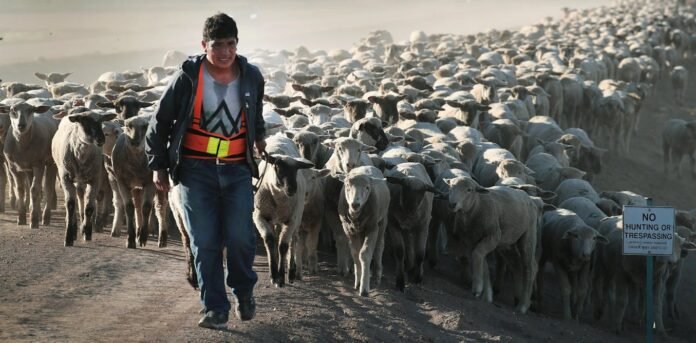
A young man on a dusty road with many sheep behind him.

A herder helps to move a flock of sheep near California’s border with Mexico to graze on alfalfa in 2025. Scott Olson/Getty Images

If being outside in the heat for even a few minutes felt miserable this summer, imagine what it’s like for herders who are always out walking with their livestock and rarely get a break.

“We have never experienced such hot days,” a woman herder in northern Kenya told our research team in 2024. “It is difficult to [do things] outside [with] the high temperatures.”

Her experience is echoed by herders in both the U.S. and Kenya, where we study health and climate. Our team’s recent data from Kenya suggests that when drought and heat are particularly bad, herders suffer heat-related illness and symptoms of anxiety and depression.

A herder and a young boy sit next to a shelter and goats.

Kenya’s mobile herders have adapted to harsh environments for generations, but they are dealing with hotter conditions now than they’re accustomed to. Gerald Anderson/Anadolu via Getty Images

While there is less data about herders in the U.S., there is reason to be worried about them, as global temperatures rise.

People on the move – in the sun

In northern Kenya, herders spend much of their lives outdoors with their animals. During dry seasons, herders can move 100 miles (roughly 160 kilometers) with their livestock, sleeping under the stars or in makeshift shacks along the way.

In the U.S., shepherds on the open range often live similar lives. Most hold temporary visas and are paid by their employers to spend 24 hours a day, 7 days a week with flocks of sheep. They often live in portable trailers with no air conditioning, and they spend long hours in the direct sun in states like Colorado and California.

PBS takes a look at the living conditions of sheepherders working in Colorado.

Herding is a livelihood designed for high temperatures – the animals can be moved to where there’s food and water as needed.

However, drought and extremely hot summers can mean less food and water for livestock – and more extreme temperatures. As herders search for water and pasture, they may walk with the animals for almost 12 hours a day in the sun, one Kenyan herder told our team.

In Kenya, pastoralists have a higher risk of dehydration at high ambient temperatures, which have become more frequent. In California, extreme temperatures have become more common too. A state report warned that herders can die from heat-related illness and underscored that employers must have heat illness prevention plans with precautions like prompt emergency responses.

The effects of heat on herders’ bodies

Because they are so isolated, herders may only go to the doctor when badly injured or very sick, so researchers usually only get brief glimpses into herders’ health and how it’s affected by heat exposure. In the U.S., often only herders’ employers know where they are and may visit them only once every couple of weeks.

Four people stand together with sheep in a field.

Herder and researcher Abdulai Galmagar Magarre, second from right, with three participants in a health-tracking project. Blue temperature loggers are visible on Magarre’s lanyard and a participant’s hip. Sylvester Jackson Leruk

In northern Kenya, thanks to reliable cellphone coverage, we’ve been able to study herders’ health in two ways:

  • We visit herders in person. Some of our colleagues are herders themselves; they call participants to get their location and ride to them on motorcycles.

  • We also have herders measure heat exposure and heat-related illness and mental health symptoms in real time using smartwatches, smartphones and temperature loggers the size of matchboxes.

From 2020 to 2023, northern Kenya was hit with an extreme drought that killed 13.2 million livestock across the Horn of Africa and left millions of people with too little food. Some herders moved 100 miles (about 160 kilometers) with their cattle in search of water and grazing land; others stayed closer to home with sheep and goats.

When we asked dozens of herders how they were physically affected by the drought, the majority reported experiencing headaches, breathing abnormalities and extreme sweating – all symptoms of heat-related illness. They also reported stress and feelings of hopelessness. These symptoms likely relate to the drought itself – many herders lost animals – and to heat exposure, which is often associated with anxiety and depression.

In 2026, we used smartwatches to collect real-time heat exposure and heat-related illness symptoms to better understand the physical stress herders were facing. Thirty herders wore these devices every day for three months, charging the devices with solar power banks. Across the study, we recorded daytime temperatures peaking between 88.7 and 97 degrees Fahrenheit (31.5 and 36.1 Celsius).

Looking at herders’ step counts, we first saw that herders walked about the same amount on warm days as cool days. Like herders in the U.S., herders in Kenya don’t have the luxury of not working when it’s hot.

We found a small correlation between a day’s average temperature and the number of heat-related illness symptoms reported by herders: As the temperatures go up, the number of symptoms seem to go up too.

These preliminary results underscore how heat, behavior and health all come together in real time for herders. Not walking on the hottest days is not an option, and the effects on herders’ bodies can be immediate – effects they remember years later.

Making the effects of climate change visible

As temperatures rise, the real-time impacts we’re seeing on herders may lead to chronic health conditions like cardiovascular disease, which agricultural workers can experience. But because herders are difficult for healthcare workers to reach, we researchers know less about how their heat exposure translates into chronic conditions.

Through a combination of interviews and wearable data, we are working to understand the immediate and long-term effects of heat and drought on herders’ health. Studies spanning years, without gaps in funding, will be key to making this happen.

Heat exposure can be dangerous to everyone, but especially to those working outside and without air conditioning that might allow them to cool off – like herders on the open range.

Want to write?

Write an article and join a growing community of more than 231,800 academics and researchers from 5,593 institutions.

Register now

The world’s busiest spaceport is about to get a lot quieter, at least for now

0
the-world’s-busiest-spaceport-is-about-to-get-a-lot-quieter,-at-least-for-now
The world’s busiest spaceport is about to get a lot quieter, at least for now

SpaceX made Florida’s Space Coast home to the world’s busiest spaceport for a decade, but that will change this year. The company is significantly cutting the number of launches from Florida until Starship arrives, a senior SpaceX official confirmed Tuesday.

The Falcon 9 rocket has been SpaceX’s workhorse, routinely launching batches of satellites for the company’s Starlink network, primarily from launch pads at Cape Canaveral Space Force Station and NASA’s Kennedy Space Center in Florida. There were 165 Falcon 9 launches last year—about three flights per week—and about 75 percent of them carried Starlink satellites.

This year is different. SpaceX has launched more missions from its West Coast launch pad at Vandenberg Space Force Base in California since January, and this trend will amplify for the rest of the year.

The upper stage of SpaceX’s Falcon 9 rocket flies over Lower Manhattan in New York City on Tuesday morning.

The upper stage of SpaceX’s Falcon 9 rocket flies over Lower Manhattan in New York City on Tuesday morning. Credit: Gary Hershorn/Getty Images

All-in on Starship

A Falcon 9 launch early Tuesday was the last planned Starlink mission from Cape Canaveral until SpaceX begins flying Starship missions from Florida, according to Kiko Dontchev, the company’s vice president of launch. For at least the rest of the year, and maybe longer, this means the launch rate at the Florida spaceport will drop from eight or nine per month to perhaps two per month.

It wasn’t long ago when two launches per month was the norm, an indication just how quickly SpaceX’s launch cadence has grown. Cape Canaveral and Kennedy Space Center sit on adjoining property and share the same range on Florida’s east coast, so it is worth considering them a single spaceport. The last time the Florida spaceport did not lead the world in space launches was in 2015.

“From here on, Starlink missions out of Florida will fly on Starship,” Dontchev wrote on X. “The West Coast team will continue regularly launching Starlink from Vandenberg.”

Tuesday’s launch was noteworthy for a couple of other reasons. First, it marked the 37th flight for SpaceX’s fleet-leading Falcon 9 first stage booster, a new record. The timing of the launch shortly before sunrise also allowed skywatchers up the East Coast to catch a glimpse of the Falcon 9 as it rocketed northeast from Cape Canaveral.

SpaceX’s launch team poses with a Falcon 9 rocket at Space Launch Complex-40 on Cape Canaveral Space Force Station in Florida.

SpaceX’s launch team poses with a Falcon 9 rocket at Space Launch Complex-40 on Cape Canaveral Space Force Station in Florida. Credit: SpaceX

“Super proud of this incredible team,” Dontchev continued. “You’ve made Falcon 9 the most reliable launch vehicle in history. You also helped build the largest low-Earth orbit satellite constellation providing connectivity to millions around the world, and you’ve set the foundation for what’s next.”

SpaceX launched around 260 Starlink missions on Falcon 9 from Florida, but all future Falcon 9 and Falcon Heavy launches from Florida will carry customer payloads. The next one is scheduled for August 30, when a Falcon Heavy rocket will lift off from Launch Complex 39A at Kennedy Space Center with NASA’s Nancy Grace Roman Space Telescope. Next will be a Falcon 9 launch in mid-September to deliver the next four-person crew to the International Space Station.

Officials eventually plan to phase out the Falcon 9 in favor of Starship, at least for commercial missions, raising concerns among SpaceX customers about the availability of reliable launch services after 2028.

SpaceX is still holding to plans to begin launching Starship and Super Heavy boosters from Launch Complex 39A by the end of this year. That is unlikely, given the amount of work remaining to prepare the site, and little indication of any imminent plans to transport Starships from SpaceX’s operational factory in South Texas to Florida. A Starship debut from Kennedy Space Center by mid-2027 seems more likely.

Starship is sized to launch up to 60 Starlink Version 3 satellites, which are larger, heavier, and more powerful than the Starlink V2s flying on Falcon 9. SpaceX plans to use the next test flight of Starship, designated Flight 14, to launch the first Starlink V3s into low-Earth orbit from Starbase, Texas, as soon as next month.

US lawmakers demand release of American student held in Israel

0
us-lawmakers-demand-release-of-american-student-held-in-israel
US lawmakers demand release of American student held in Israel

A group of 40 US lawmakers, including six senators, demanded the immediate release of a 20-year-old American on Tuesday who is being held in an Israeli military prison, Anadolu reports.

In a letter to Secretary of State Marco Rubio, the legislators demanded the release of Sama Safi, citing her “severe chronic health condition.”

Safi, a student at Birzeit University, was reportedly taken from her family’s home in the occupied West Bank during late-night military raids June 2.

“You have a duty to secure the safety and security of US citizens abroad,” the lawmakers wrote, urging the State Department to prevent “further irreparable harm.” They emphasized that it is Washington’s responsibility to ensure the safety of all Americans overseas, asserting that Safi’s life is “at risk on your watch.”

READ: More than 100 US organisations urge release of Palestinian-American student Sama Safi

Medical crisis neglect

The letter revealed that Safi suffers from a complex chronic condition known as Familial Mediterranean Fever (FMF). Legislators warned that her condition has “rapidly deteriorated” and doctors have cautioned she faces “life-threatening damage to her internal organs” if she remains in custody. Since returning to detention Aug. 16 following a brief medical release, Safi has reportedly “not once received her daily medication” nor been evaluated by medical professionals.

Lawmakers detailed harrowing accounts of mistreatment, characterizing the environment as a “de facto State policy of organized and widespread torture.” Safi’s testimony included being shackled, blindfolded, and denied food or water for the first 24 hours of her custody. The letter also described the use of “shackling and the throwing of gas and stun grenades” into poorly ventilated cells, noting that “stress positions” have caused the student severe chest pain.

“These inhumane conditions and violence towards detainees are not unique to one facility,” said the legislators. They labeled her transfer from the occupied West Bank to the Damon military prison near Haifa a “blatant violation of the 4th Geneva Convention.”

In June, a State Department spokesperson told Anadolu Agency that the administration is “aware of the detention of an American in the West Bank.”

The official said the Trump administration takes its commitment to assist Americans abroad seriously and is “monitoring the situation,” although no details were shared due to privacy considerations.

Approximately 23,000 individuals have been detained in the occupied territory since the current war in the Gaza Strip began, according to Palestinian records.

READ: Another 6 Palestinians killed by Israeli strikes across beleaguered Gaza Strip

Obstacles will prevent wider use of China’s new Arctic trade route

0
obstacles-will-prevent-wider-use-of-china’s-new-arctic-trade-route
Obstacles will prevent wider use of China’s new Arctic trade route

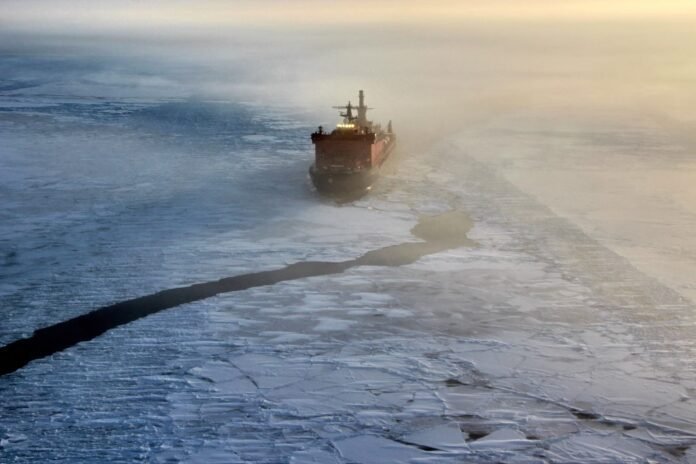
Sea Legend, a Chinese shipping line, recently announced it was launching a regular container service between China and Europe via the Arctic. The announcement follows a trial crossing in 2025 that saw a container ship travel from the port of Ningbo-Zhoushan in eastern China to Felixstowe in the UK in 20 days.

This will not have gone unnoticed in the west. While the Iran war has not halted shipping traffic through the Suez Canal, it has sharply elevated risks around the Red Sea, complicating travel between Europe and Asia. The Arctic’s northern sea route, which shaves up to 40% off the journey, could present a solution. But various obstacles remain.

The northern sea route has stirred the imaginations of policymakers for centuries. During the 1904-05 Russo-Japanese war, Russia was unable to take Japan by surprise by making use of icy Siberian waters. Instead, its Baltic Fleet travelled around southern Africa and across the Indian Ocean to East Asia, where it was crushed by the Japanese Navy in the Tsushima Strait.

With this in mind, Soviet planners after the 1917 revolution set about conducting surveys along Russia’s northern coast. The Soviets came to see the route as necessary for the industrial expansion of Russia’s extreme north and, as the cold war set in from 1945, vital for the construction of military installations.

By Susie Harder - Arctic Council - Arctic marine shipping assessment
Map: Susie Harder / Arctic Council – Arctic marine shipping assessment

As cold war tensions wound down, Soviet leader Mikhail Gorbachev suggested in a 1987 speech that the passage be opened for use by foreign ships for the first time. And shortly thereafter the International Northern Sea Route Program – a collaboration between Japanese, Norwegian and Russian institutions – sought to create a base of scientific and technical knowledge to inform commercial shipping in the region.

The program’s findings were clear: despite its potential, the northern sea route faced severe physical and technical bottlenecks. Shallow straits along eastern parts of the route and floating ice led to the imposition of size restrictions on the ships that could use it.

At the time, it was calculated that vessels would need to be capped at roughly 20,000-50,000 deadweight tonnage, a measure of the maximum weight a vessel can safely carry. This was considerably less than the 70,000 to 80,000-ton container ships that were being introduced on other global routes in the late 1990s.

Changing climate

Over the past 30 years, however, climate change has had a severe effect on the Arctic. Warming there has taken place at almost three times the global average, with scientists estimating the Arctic Ocean could have its first ice-free day as early as 2030.

This is devastating news for Arctic wildlife, infrastructure, the global climate and sea levels, as well as the way of life for the region’s 400,000 to 500,000 indigenous inhabitants. But various countries are being drawn to the more “open” northern sea route.

China, Japan and South Korea have all made some reference to the use of the northern sea route in their official Arctic policies. Each is also capable of building the icebreaker vessels that are currently necessary to navigate the Arctic – something the US has struggled with in recent years following decades of declining American shipbuilding capacity.

Earlier in 2026, South Korea passed ambitious legislation to turn its southern port city of Busan into a major Arctic shipping hub. On August 19, it also announced its intention to runa a trial on the route using a container ship in September. This has caused a minor stir among European diplomats, because such a test would involve the coordination of Russian authorities.

China has been the most proactive non-Arctic nation in developments related to the northern sea route. For Beijing, the route offers a crucial alternative to the Malacca Strait. China currently relies on the Malacca strait for about 80% of its imported oil and a vast share of its trade, and therefore sees it as a major strategic vulnerability.

In 2018, China introduced the Polar Silk Road initiative, linked to its vast Belt and Road initiative. After dozens of test transits on Chinese vessels, primarily between China and Russia, the introduction of Sea Legend’s route represents a turning point from isolated trial voyages to regular services to Europe.

Japan also views the Arctic passage as a vital energy shortcut. Deep-water ports on the islands of Hokkaido and Honshu are geographically primed to serve as major entry points for liquified natural gas from the Arctic. However, Japan maintains a far more cautious approach than its neighbours, reflecting its historically frosty relations with Russia.

Several operational and economic obstacles prevent the Arctic from becoming a mainstream alternative to more conventional shipping routes.

Currently, the northern sea route remains open only during a narrow late-summer window, with ice conditions and weather varying drastically year-to-year. The ships themselves require reinforced hulls, specialized crews and permits. Escorts from Russian icebreakers are also a legal requirement for part of the northern sea route.

At the same time, ships using this route face steep insurance premiums, in part because there is sparse emergency infrastructure if anything goes wrong. While climate change may be expected to ease some of these operational constraints, it will not eliminate the region’s inherent hazards entirely.

Then there is the matter of reputation. Association with Russia is a key reason for European absence from these developments. In that way, the northern sea route remains less of a Suez alternative and more of a seasonal gambit – defined as much by geopolitical ice as the physical kind.

Edward Rhys Jones is a DPhil candidate in area studies, University of Oxford.

This article is republished from The Conversation under a Creative Commons license. Read the original article.

Preserving glow-in-the-dark art and fashion for future generations

0
preserving-glow-in-the-dark-art-and-fashion-for-future-generations
Preserving glow-in-the-dark art and fashion for future generations

Fashionistas of a certain age no doubt remember the late designer Stephen Sprouse, who gave Blondie’s Debbie Harry her distinctive Bowery punk style. Sprouse’s first collections in the mid-1980s made a major splash, melding graffiti prints, a playful ’60s aesthetic, and bright Day-Glo colors that won admirers such as Andy Warhol.

Several examples of Sprouse’s work are preserved in the textiles collection of the Indianapolis Museum of Art at Newfields, where conservationists are trying to learn more about the phosphorescent and fluorescent pigments the designer used in his creations in order to keep the colors from dulling over time. They described recent advances in that research at a meeting of the American Chemical Society (ACS) held this week in Chicago.

Scientists began describing minerals that glowed in the dark as phosphors in the Middle Ages. Typically, such materials take on a charge when exposed to light, storing the absorbed energy and releasing it gradually as re-emitted light. Henri Becquerel discovered radioactive decay in 1896 because of his work with phosphorescent uranium salts: He left the salts in a closed drawer with photographic plates, which fogged up even without a light source. DayGlo paints and similar materials exploit the related phenomenon of fluorescence. DayGlo pigments fluoresce in daylight by essentially converting UV light into visible light to produce brighter, more vibrant colors.

Sprouse is not the only one to find inspiration in DayGlo and similar phosphorescent and fluorescent materials. All glow-in-the-dark toys, stickers, paint, coatings in fluorescent lamps, cathode-ray tube TVs, and some clock dials rely on phosphorescence. (By contrast, glow sticks rely on a chemiluminescent process.) They’re also commonly used for traffic signage and on safety gear.

DayGlo pigments were used extensively during World War II to make fluorescent fabric panels for US ground troops, while DayGlo’s black light paints were used on Navy aircraft carriers to enable planes to land at night. Artists have used both phosphorescent and fluorescence materials extensively from the mid-20th century on, most notably for psychedelic art and Sprouse’s designs.

A question of preservation

Attention-grabbing DayGlo orange shirt and pants with Stephen Sprouse’s trademark graffiti pattern

Attention-grabbing DayGlo orange shirt and pants with Stephen Sprouse’s trademark graffiti pattern.

A pantsuit adorned with phosphorescent paillettes appears white in normal, visible light but glows green in the dark.

A pantsuit adorned with phosphorescent paillettes appears white in normal, visible light but glows green in the dark.

“For artists, the effect isn’t simply cosmetic, because they intentionally use these colors for their visual impact,” said Sarah Schmidtke Sobeck, a photochemist at The College of Wooster who spoke at the ACS meeting.

Sobeck and Gregory Smith, a conservation scientist at the Indianapolis Museum of Art, have been collaborating on researching such materials for the last decade after meeting at a cultural heritage science conference. Their partnership has already produced a two-part study on the composition, spectral properties, and light stability of daylight fluorescence artists’ pigments.

That earlier work showed that the optical brightener compounds that give fluorescent pigments their brightness degrade more quickly than the pigment dyes. Thus, even when there is no degradation in the pigments, the colors can appear to darken. That poses a unique challenge for conservationists responsible for long-term restoration of these works. Not only must they match colors under both visible and UV light, but the pigments will also change subtly over time. Gaining a better understanding of the unique photochemistry of such materials is critical for this purpose.

During her talk, Sobeck reported on the group’s most recent work, extending their research to glow-in-the-dark phosphorescence pigments, with particular focus on the museum’s Sprouse collection. Among the early findings: Such materials have a markedly different composition from fluorescent colorants, which typically use organic dyes. The phosphorescent materials contain mineral-based pigments and inorganic compounds.

Also, humidity turns out to be a significant factor in the breakdown of phosphorescent pigments—as much if not more so than prolonged exposure to light, which will help the museum improve its storage and exhibition practices for such artworks. The next step in this ongoing project will focus on the white pigment powder lithopone, testing how long phosphorescent materials containing that pigment will glow after each charge.

0FansLike
0FollowersFollow
0FollowersFollow
0SubscribersSubscribe
- Advertisement -
Google search engine

Recent Posts