14.4 C
London
Monday, August 24, 2026
Home Blog

Insurance shows Hormuz is a balance sheet, not just a battlefield

0
insurance-shows-hormuz-is-a-balance-sheet,-not-just-a-battlefield
Insurance shows Hormuz is a balance sheet, not just a battlefield

Here’s the number that tells you more about this crisis than any missile count:

War-risk insurance on a tanker passing through Hormuz used to run about 0.15 percent of the vessel’s value. Barely worth mentioning on a shipping company’s books. At the height of the fighting this year, that same premium climbed to somewhere between 5 and 10 percent and briefly, by some accounts, thousands of times higher than pre-war levels.

Do the math on a $100 million tanker and you’re looking at the gap between a $150,000 line item and one closer to $5-10 million, per single voyage. Daily transits, which used to average around 178 ships, reportedly dropped by as much as 95 percent at the worst points.

That’s the part of this story that doesn’t get enough attention. Iran doesn’t have to close the strait. It just has to make the insurance market flinch.

A problem the Navy can’t actually solve

For decades, American strategy in the Gulf rested on one assumption: Overwhelming force keeps everyone in line.

For a long time, it worked. But Iran never tried to match the US Navy hull for hull. It built up mines, fast boats, drones and missiles – not to win a fight outright but to generate exactly enough uncertainty that Lloyd’s underwriters end up doing Tehran’s work for it, repricing risk and pulling coverage until owners simply stop sailing.

Which is part of why it feels like treating a symptom when the US Navy escorts ships through, or the Trump administration directs the International Development Finance Corporation to backstop war-risk coverage reportedly up to $40 billion in reinsurance capacity.

A convoy gets one ship through. It doesn’t convince an underwriter in London that the Gulf is safe again. A Crisis Group analyst put it plainly: there’s no military fix here, the strait reopens through negotiation, not escort.

That’s the asymmetry in a sentence. Iran can’t beat the US Navy and isn’t trying to. It just needs the insurance markets rattled long enough that “freedom of navigation” starts costing more than Washington’s partners are willing to pay.

Every option costs something different

Not a one of Washington’s choices is free. More strikes risk pulling Gulf infrastructure into the crossfire and pushing premiums even higher. Sanctions have had decades to prove they can grind an economy down without necessarily producing surrender.

Negotiation is on the table. There’s reporting that Iranian President Masoud Pezeshkian has pushed internally to end the confrontation from a position of strength, against factions arguing for continued resistance.

But neither side wants to be the one seen backing down first – which is probably the real reason the Islamabad Memorandum’s ceasefire fell apart as quickly as it did. It managed the politics of a pause. It never touched the economics underneath the fact that every fresh tanker attack resets the risk pricing all over again.

What Pakistan has at stake here

Most of the commentary on Pakistan’s role in this stops at the obvious: It shares a border with Iran, has Gulf security ties, leans on China, still deals with Washington so naturally it hedges. Fine, as far as it goes. But it misses the more interesting question, which is what a Hormuz-shaped insurance shock actually does to Pakistan’s own books.

Three things are worth saying plainly. Pakistan imports its oil through the Gulf, so a war-risk premium tacked onto every tanker bound for Karachi or Port Qasim isn’t some faraway geopolitical curiosity. It shows up in fuel prices and the current account. That’s not abstract for whoever’s managing the macro numbers in Islamabad right now.

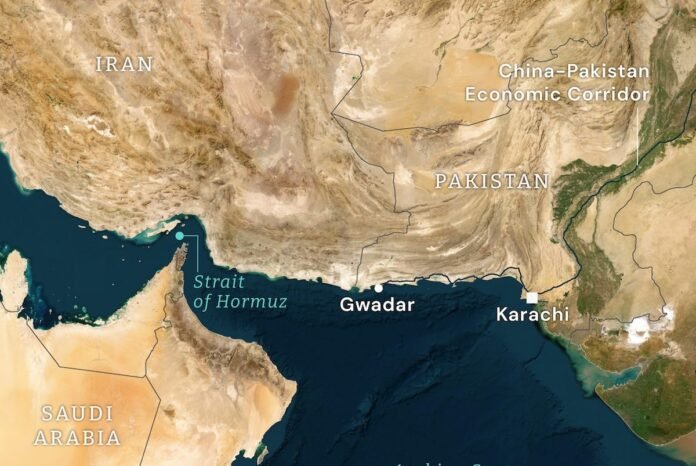
Then there’s Gwadar. It sits on the open Arabian Sea, outside the strait entirely, usually framed as a CPEC talking point and not much else. But in a Hormuz-disrupted world, that location means something more specific: it’s one of the few Gulf-adjacent ports that don’t force shippers to run the same insurance gauntlet everyone transiting Hormuz is now stuck with.

Guadar port. Photo: Liu Tian / Xinhua

Few advocates have really pitched that to shippers or energy traders looking to de-risk their routing. More probably should.

And then there’s the Makkah Joint Defense Agreement with Saudi Arabia, plus the financing moving through Reko Diq and the Project Vault minerals framework. These aren’t side stories to Hormuz. They’re Pakistan’s actual insurance policy against a shock exactly like this one. A Gulf security relationship paired with a minerals-and-connectivity stake with both the Gulf and China gives Islamabad something more useful than a neutral posture.

Which is the trap, honestly: treating “active neutrality” as a stance rather than a plan. Neutrality without an economic strategy attached to it is just exposure dressed up as diplomacy. The version worth pursuing turns geography – Gwadar’s position outside the strait, the border with Iran, ties to both Riyadh and Washington – into contracts and financing, not just praise for staying out of the crossfire.

The bigger pattern

Step back from Pakistan and there’s a wider mechanism at work here, and it isn’t unique to the Gulf. The Red Sea saw something similar during the Houthi campaign: premiums up roughly fivefold, shipping collapsing without a single mine actually detonating near most vessels.

Analysts who study this stuff point out the formula applies anywhere you get a narrow chokepoint, few alternative routes and a functioning private insurance market: Malacca, Taiwan, the Turkish Straits. Pricing risk has become its own coercive tool, one that doesn’t need a shot fired, and the reinsurance backstops that Washington is now building for Hormuz might turn out to be less of an emergency measure and more of a template.

For the US, that’s an uncomfortable lesson: You can dismantle an adversary’s military assets and still lose the argument that actually matters to a shipowner deciding whether to route through the Gulf at all. For Pakistan, the lesson is more useful than uncomfortable. Few countries sit this close to the chokepoint without being direct parties to the war, and few hold the kind of assets – Gwadar, Gulf security ties, Chinese capital – that can turn that proximity into real leverage if Islamabad actually treats this as an economic opening rather than just another tightrope to walk.

The strait will probably reopen eventually, through talks rather than force, as most people expect. But the insurance markets that just repriced the entire Gulf aren’t going to forget this in a hurry. Whoever understood that shift early is going to be in a better position than whoever only understood the politics of it.

Mansoor Qaisar is an independent writer based in Islamabad, writing on foreign and public policy and social issues shaping Pakistan and the region. He can be reached at mansoor.qaisar@gmail.com and found on X at @MansorQaisar.
Israel-Turkey Rivalry Moves Into Syria as Washington Tries To Prevent a Wider Clash  

0
israel-turkey-rivalry-moves-into-syria-as-washington-tries-to-prevent-a-wider-clash  
Israel-Turkey Rivalry Moves Into Syria as Washington Tries To Prevent a Wider Clash  


The strike on Abu al-Duhur has exposed a deeper contest over Syria’s sovereignty, Israeli freedom of military action and Turkey’s regional reach, even as Turkey, Syria and Israel appear to have little appetite for a direct confrontation

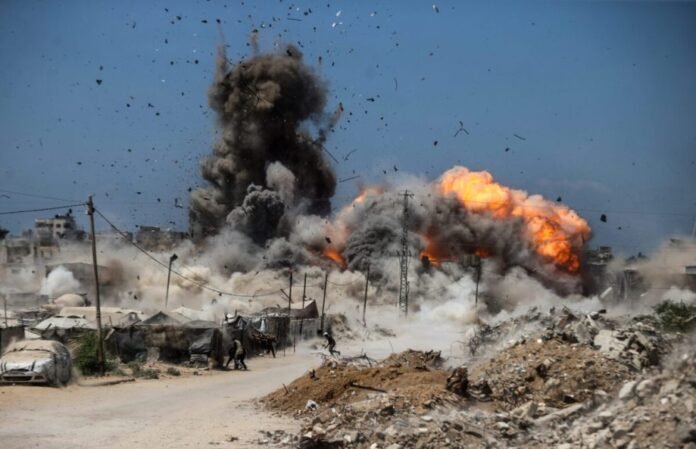
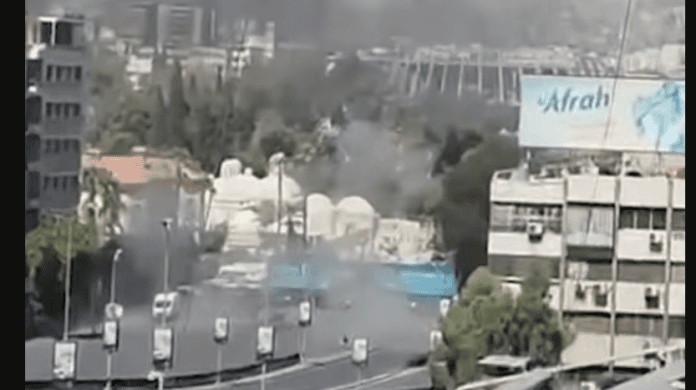
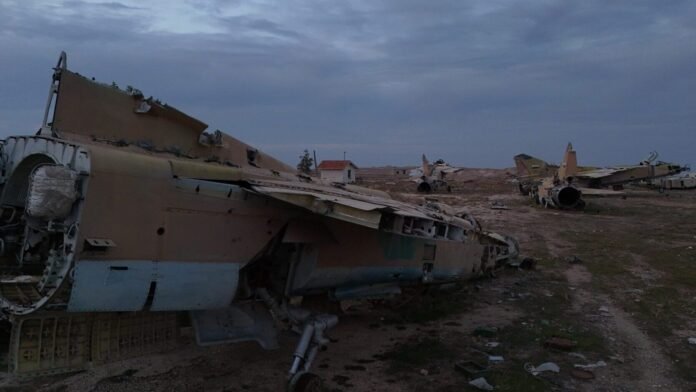
Israel’s strike on the Abu al-Duhur military airbase in northwestern Syria has pushed an increasingly difficult Israeli-Turkish relationship into one of its most sensitive arenas yet, raising the prospect that Syria could become not only a point of competition between the two regional powers, but also the place where their respective security red lines overlap.  

The Israeli strike on August 18 targeted the airbase in Idlib province amid Israeli concerns that Turkey could expand its military presence there. Turkey and Syria have not publicly confirmed reports that Ankara was preparing the type of deployment described by Israel.  

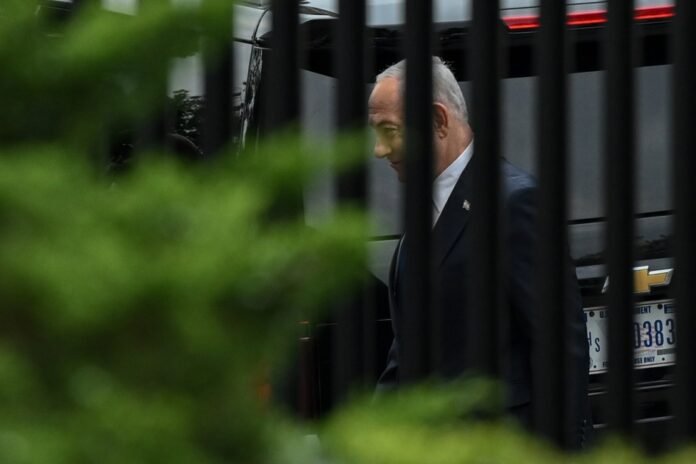
Israel warned against any expansion of Turkey’s military footprint in southern Syria following an airstrike on the Abu al-Duhur airbase, with Prime Minister Benjamin Netanyahu saying such a move would threaten Israeli security and alter the existing regional balance. Syrian Foreign Minister Asaad al-Shaibani rejected claims that Turkey intended to establish a military base at Abu al-Duhur, saying the site was being restored for use by the Syrian Air Force. 

US Ambassador to Turkey and Special Envoy for Syria and Iraq, Tom Barrack, publicly criticized the attack as an unnecessary escalation and said Washington is working on a deconfliction mechanism involving Israel, Turkey, and Syria.  

The episode has exposed a contradiction now shaping Syria’s postwar position. Turkey wants a stable and increasingly functional Syrian state closely tied to Ankara. Israel, meanwhile, wants to ensure that a stronger Syrian central government—and particularly deeper Turkish military involvement—does not restrict its freedom of action over Syrian airspace or create new security threats along its northern front.  

For Syria, the immediate priority appears to be avoiding being turned once again into the battlefield where regional powers settle their disputes.  

Al-Shaibani said on Aug. 23 that Damascus expects security negotiations with Israel to resume soon despite the latest escalation. Syria is seeking an end to Israeli strikes and an Israeli withdrawal from Syrian territory as part of a possible security arrangement, while maintaining its growing defense relationship with Turkey.  

The diplomatic channel therefore remains open even as military friction increases.  

Professor Kobi Michael, a senior researcher at the Institute for National Security Studies and the Misgav Institute for National Security and Zionist Strategy, described the situation as already constituting direct friction between Israel and Turkey, although he stressed that neither government appears to want that competition to develop into war.  

“First of all, unfortunately, this is a direct friction or collision between Israel and Turkey. Both sides do not wish to have such direct friction between them, certainly not currently,” Michael told The Media Line.  

Unfortunately, this is a direct friction or collision between Israel and Turkey. Both sides do not wish to have such direct friction between them.

From the Israeli perspective, Michael said, the central concern is not simply Turkish political influence in Damascus but the possibility of Turkish military infrastructure eventually restricting Israeli operations in Syrian airspace.  

“Israel cannot accept Turkish military deployment in Syria because Israel must preserve full freedom of action, particularly aerial freedom of movement over Syria. We have not finished with Iran yet,” he said.  

The Iranian dimension is central to Israel’s calculations. Syria has for years served as a corridor through which Israel has conducted operations against Iranian and Iran-linked targets, while Syrian airspace also forms part of the wider geographic route toward Iran.  

Michael argued that this makes the potential installation of Turkish radar or air-defense capabilities particularly sensitive.  

“Once the Turks are able to deploy in Syria, at airbases or elsewhere, they could establish air-defense missiles, radars or other systems that would complicate the situation for the Israeli Air Force,” Michael said.  

Once the Turks are able to deploy in Syria, at airbases or elsewhere, they could establish air-defense missiles, radars or other systems that would complicate the situation for the Israeli Air Force

“If, for example, Israel had to reach Iran and the Turks tried to intercept an Israeli jet, Israel would attack those batteries—the Turkish batteries. That would be a direct military clash between Israel and Turkey,” he added.  

That remains a hypothetical scenario, and Ankara’s response to the Abu al-Duhur strike has so far remained relatively restrained.  

Barın Kayaoglu, chair and assistant professor of American Studies at the Institute for Area Studies at the Social Sciences University of Ankara, said Turkey has given little indication that it wants to transform the current dispute into an open confrontation.  

“Regarding deescalation, we’ll see. The Americans, particularly Ambassador Tom Barrack, have said they will work on it. Turkey is clearly not interested in escalating, as can be seen from its toned-down reaction. Whether that also interests Israel, we’ll see,” Kayaoglu told The Media Line.  

That restraint is noteworthy because the Israeli-Turkish dispute is increasingly less about bilateral relations alone and more about the kind of Syrian state that will emerge from the country’s political transition.  

For Ankara, a unified Syrian state offers the possibility of greater border stability, the consolidation of a friendly government in Damascus, and the expansion of Turkish political, economic, and security influence. For Israel, however, the strengthening of Damascus could gradually reduce the permissive military environment Israel has operated in since the fall of the Assad government.  

Kayaoglu argued that this longer-term change is part of what is driving Israeli concern.  

“Netanyahu is using Turkey and President Erdogan as an election tool,” he said. “In the long term, Israelis worry that Turkey will help Syria hold together and that Syria will cease to be a player they can easily bully or simply fly over on the way to Iran.”   

The argument that electoral politics may be influencing Israeli rhetoric has also entered the diplomatic debate. Barrack has suggested that the timing and nature of the Abu al-Duhur strike could have been influenced by Israel’s approaching elections, although Israeli officials have rejected his characterization of the events and defended the strike as based on legitimate security concerns.   

Michael, while taking a sharply different view of Turkey’s intentions, also criticized the way the Israeli government publicly handled the confrontation.  

“I think Israel was wrong when it made this public and began with unnecessary declarations, mainly by the defense minister, fighting with the Turks through tweets and the media,” he said. “I think this is a problem.”   

His wider assessment of Turkish policy, however, is considerably more skeptical than Kayaoglu’s.  

Michael sees Ankara’s expanding role in Syria alongside its activities elsewhere in the region as part of a broader effort to increase Turkish regional power.  

“They have hegemonic aspirations in the broader Middle East, and they see Israel as the main obstacle to the realization of those aspirations,” he said. “They want a weak Israel; they do not want a strong Israel.”   

It is precisely this difference in perception that makes Syria dangerous.  

From Ankara’s perspective, helping Damascus rebuild functioning state institutions and security capabilities is part of the effort to stabilize a neighboring country after years of fragmentation. From the Israeli security perspective presented by Michael, the same process risks creating a Turkish-supported military architecture directly to Israel’s northeast.  

Damascus, meanwhile, is attempting to avoid choosing exclusively between the two sides.  

President Ahmed al-Sharaa has previously said Syria is working toward a security agreement with Israel that could eventually open the way to something broader, while insisting such an arrangement would not mean abandoning Syrian claims to the Golan Heights.   

Michael said those negotiations remain significant but argued that Turkey’s influence inevitably constrains Damascus’ room for maneuver.  

“I think all of them, together with the Americans, are now working on a deconfliction mechanism,” he said. “This is an American interest, an Israeli interest, and mainly a Syrian interest, because all of them have an interest in bringing things down.”   

I think all of them, together with the Americans, are now working on a deconfliction mechanism

But he added that deeper Turkish military, political, and economic involvement would make Syria increasingly dependent on Ankara.  

Kayaoglu sees the equation differently. For him, the pressure on Damascus may eventually come not from Turkish involvement but from continued Israeli action inside Syrian territory.  

“Syria’s preference will be to maintain domestic order,” he said. “But if Israel continues making a mockery of Syrian sovereignty, Damascus will be forced to join the Mecca Pact.”   

That possibility introduces another layer into the regional competition.  

Saudi Arabia, Turkey, and Pakistan signed the Mecca Joint Defence Agreement on August 7, establishing a framework under which an armed attack against one member is to be regarded as an attack against all three. The governments have described the agreement as defensive and have stressed that it is not directed against any particular country.  

Michael questioned how far that collective-defense language would translate into actual military commitments. “The importance of this alliance, or this pact, is more symbolic than operational,” he said, pointing to existing regional security crises in which Turkey and Pakistan have not automatically intervened militarily on Saudi Arabia’s behalf.  

“The idea of the alliance was supposed to be something similar to Article 5 of NATO: if one member is attacked, it is considered as though all members were attacked, and they come to defend the attacked member. This is not the situation today, and I doubt it will become the situation in the future,” Michael said.  

Kayaoglu similarly cautioned against reading the agreement as a replacement for Turkey’s existing Western security commitments.  

Do not take seriously anyone who says Turkey will leave NATO for the Mecca pact. It won’t happen unless NATO somehow ceases to exist.

“Do not take seriously anyone who says Turkey will leave NATO for the Mecca pact,” he said. “It won’t happen unless NATO somehow ceases to exist.”   

The more immediate significance of the pact may therefore be political rather than the creation of an alternative NATO-style military command. It gives Ankara, Riyadh and Islamabad an additional framework for coordinating defense policy at a moment when regional states are seeking greater strategic autonomy.  

For Syria, joining such an arrangement remains hypothetical. But even the possibility illustrates how continued Israeli-Turkish friction could push Damascus further into emerging regional security structures, rather than leaving Syria as a neutral space between its neighbors.  

For now, however, the clearest signals from all three capitals point toward containment rather than direct confrontation.  


Princess Eugenie Using Newborn to Win Over King Charles?

0
princess-eugenie-using-newborn-to-win-over-king-charles?
Princess Eugenie Using Newborn to Win Over King Charles?


Princess Eugenie’s newborn daughter may have arrived at exactly the right moment for the embattled royal family — and some critics are questioning whether the baby’s deeply personal name was chosen with King Charles in mind.

Eugenie, 36, recently welcomed her third child and first daughter with husband Jack Brooksbank, 40, in Lisbon, Portugal.

The little girl, Adelaide Elizabeth Annina Brooksbank, was born on August 3 at 6:20 p.m., weighing 6 pounds, 9 ounces.

But it is her middle name, Elizabeth, that is now getting attention inside royal circles.

The name is a clear tribute to Eugenie’s beloved grandmother, the late Queen Elizabeth II. Yet one royal source claimed the emotional gesture could also strike a particularly powerful chord with King Charles, who lost his mother in 2022.

“Elizabeth is a name carrying enormous emotional significance for the entire family,” the source said, adding that it would likely touch Charles “particularly deeply.”

Eugenie was famously close to her grandmother, and naming her daughter after the late queen appears to be a touching way of keeping that bond alive for another generation.

Still, some royal watchers are taking a more cynical view.

According to the source, critics believe the tribute could also help Eugenie strengthen her relationship with Charles at a time when her immediate family remains surrounded by controversy because of her father, Andrew Mountbatten-Windsor.

The source claimed some skeptics see the baby’s name as a way for Eugenie to “curry favor” with the king while bringing some much-needed happier news to a family that has endured years of scandal.

There is no evidence Eugenie chose the name for political reasons, and the princess herself made clear that the name honors people she and Brooksbank deeply admire.

Announcing her daughter two weeks after the birth, Eugenie shared adorable photos of the newborn on Instagram.

“2 weeks ago today we welcomed our girl to the world,” she wrote. “And since then we’ve had the most special, cosy and love-filled time.”

She then revealed the full name: Adelaide Elizabeth Annina Brooksbank.

Eugenie explained that her daughter was “named after three people we love and admire, past and present,” including her great-grandmother Queen Elizabeth, “who we hold close in our hearts.”

Adelaide’s first name also comes with a long royal history.

Queen Adelaide was the wife of King William IV in the 19th century, and Eugenie has another connection to the former queen. When she married Brooksbank at St. George’s Chapel in Windsor Castle in 2018, Eugenie wore a wheat-ear brooch originally commissioned for Queen Adelaide.

The princess also said the name reflects “English and Portuguese history,” fitting for a family that now divides its time between Britain and Portugal.

Baby Adelaide joins older brothers August Philip Hawke Brooksbank, 5, and Ernest George Ronnie Brooksbank, 3.

She is Queen Elizabeth’s 15th great-grandchild and is now 15th in line to the British throne, pushing Prince Edward, Duke of Edinburgh, one spot lower in the line of succession.

Buckingham Palace officially announced the birth on August 4, saying King Charles, Queen Camilla and other members of the royal family had been informed.

“Her Royal Highness Princess Eugenie and Mr Jack Brooksbank are delighted to announce the safe arrival of their daughter,” the palace said.

The joyous announcement comes as Eugenie continues to build a life increasingly separate from the troubles surrounding her father.

Andrew has spent years engulfed in controversy over his former friendship with convicted sex offender Jeffrey Epstein. According to the report, Andrew was also arrested earlier this year on suspicion of misconduct in public office over allegations involving sensitive information from his time as Britain’s trade envoy. He was released under investigation and has denied wrongdoing.

Eugenie, meanwhile, has maintained her own career outside full-time royal duties. She works as a director at the contemporary art gallery Hauser & Wirth and co-founded The Anti-Slavery Collective.

For now, however, the newest Brooksbank has given the family something far more cheerful to talk about.

And whether the name Elizabeth was simply a loving tribute or carries an added royal message, one thing is certain: it is a name King Charles is unlikely to forget.

2 Palestinians including child killed in Israeli attacks on Gaza despite ceasefire

0
2-palestinians-including-child-killed-in-israeli-attacks-on-gaza-despite-ceasefire
2 Palestinians including child killed in Israeli attacks on Gaza despite ceasefire

Two Palestinians, including a child, were killed and 14 others injured in Israeli attacks in central and southern Gaza Strip on Sunday, marking another violation of a ceasefire in force since Oct. 10, 2025, Anadolu reports.

A medical source at Al-Aqsa Martyrs Hospital told Anadolu that the two victims were killed and seven others injured when Israeli forces struck areas in the town of Az-Zawayda.

The warplane struck a site in the town shortly after the Israeli army issued an evacuation warning.

Civil defense crews rushed to the area to extinguish a fire caused by the attack.

In southern Gaza, seven Palestinians were injured in an Israeli airstrike targeting a gathering of civilians near Al-Albani Mosque, west of Khan Younis, a medical source at Nasser Medical Complex said.

Israeli warships also fired shells toward the Rafah coastline, while military vehicles opened heavy fire on Palestinian homes in Hamad City, northwest of Khan Younis. No casualties were reported.

In Gaza City, Israeli warships fired bullets and shells toward fishing boats and the coastline, witnesses told Anadolu. No injuries were reported.

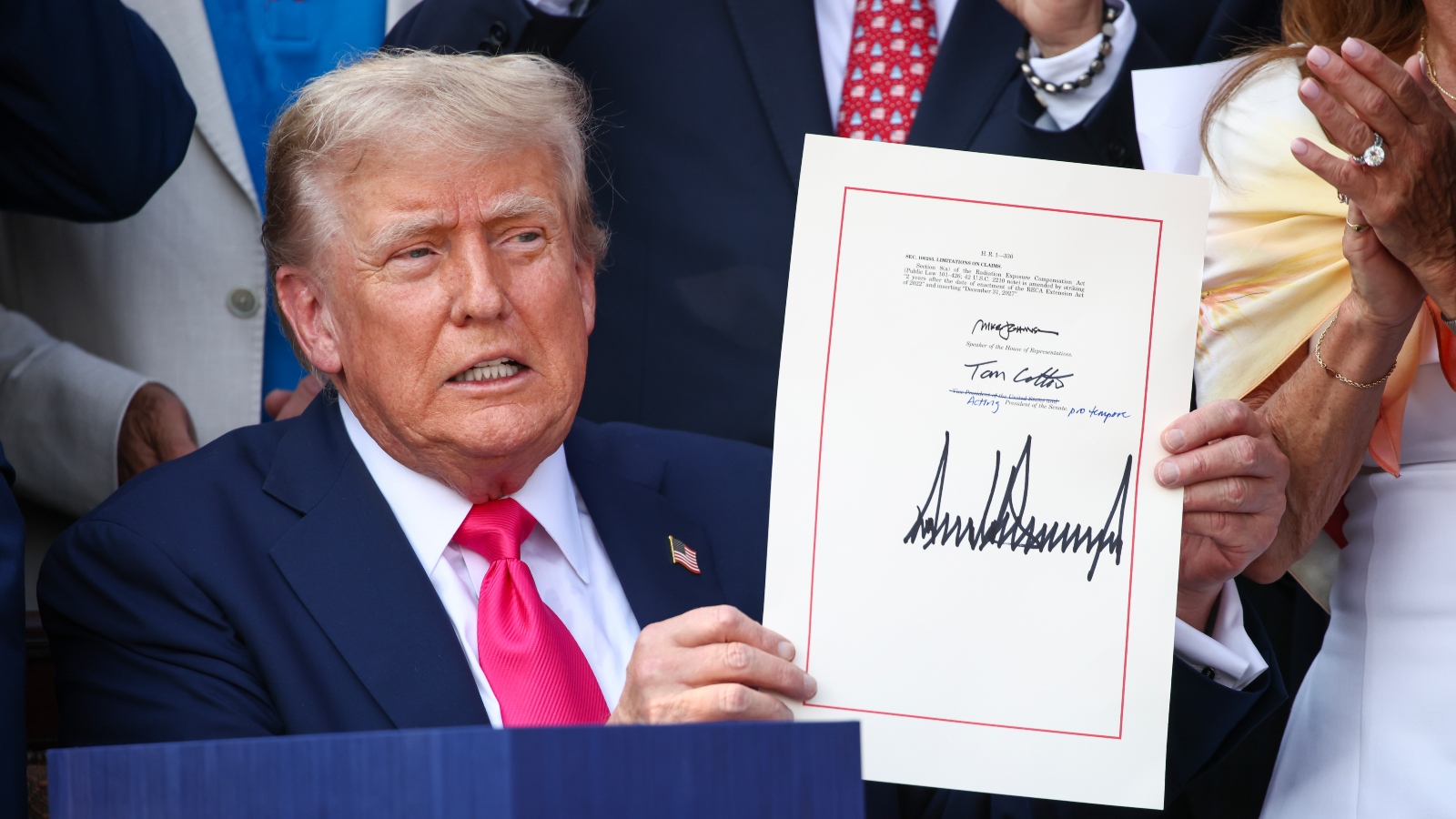
The attacks came despite US President Donald Trump’s call for an end to Israeli strikes on the Gaza Strip.

The Israeli army has killed more than 73,000 Palestinians and injured over 174,000 others in a brutal offensive since October 2023.

Lebanon Pushes To Extend UNIFIL as Hezbollah Disarmament Stalls 

0
lebanon-pushes-to-extend-unifil-as-hezbollah-disarmament-stalls 
Lebanon Pushes To Extend UNIFIL as Hezbollah Disarmament Stalls 


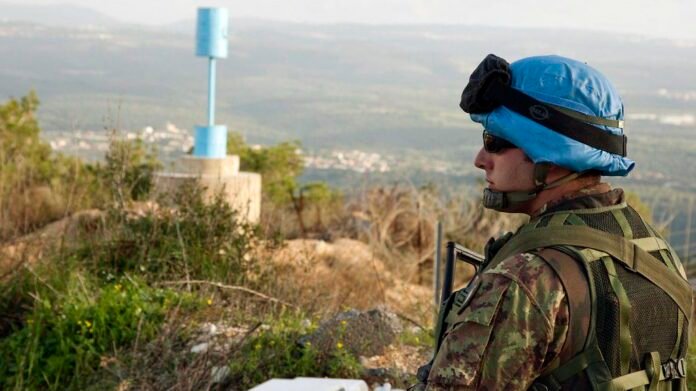
Lebanese officials, including President Joseph Aoun, are seeking to extend the mandate of the UN Interim Force in Lebanon (UNIFIL) as efforts to reach an agreement with Israel limiting Hezbollah are stalled. 

Lebanon wants UNIFIL to remain in the country until stability is restored, regarding the peacekeeping mission as an “international umbrella supporting the Lebanese Army in implementing Resolution 1701.” 

UNIFIL’s future and security arrangements in southern Lebanon were among the issues discussed during negotiations with Israel in Rome earlier this month. 

The seventh round of US-brokered negotiations between Lebanon and Israel began in Rome on August 4, 2026. Discussions centered on implementing a framework agreement that calls for expanding southern “pilot zones,” coordinating phased Israeli military withdrawals and deploying the Lebanese army, as well as disarmament of Hezbollah. 

Lebanese officials are also considering alternatives if UNIFIL’s mandate is not extended. One option involves forces from Italy, France and Spain, which have expressed willingness to maintain a presence in Lebanon. Those forces could be deployed through agreements directly between Lebanon and the participating countries or under a UN arrangement. 

Aoun discussed the situation during meetings in Italy. The Lebanese presidency’s media office said he met Italian President Sergio Mattarella and held talks Friday night with Prime Minister Giorgia Meloni to discuss the plan.  

Israel has maintained that its continued military presence and strikes in Lebanon are necessary to secure its northern border, dismantle Hezbollah infrastructure and respond to immediate threats posed by the group. 

Hezbollah Secretary-General Naim Qassem has rejected the framework and ruled out disarming the organization. Qassem characterized the agreement as a surrender to Israel and declared it “null and void.” He said Hezbollah would not surrender its weapons and would continue fighting Israel. 

Trump ordered to release billions in climate grants meant for Black communities

0
trump-ordered-to-release-billions-in-climate-grants-meant-for-black-communities
Trump ordered to release billions in climate grants meant for Black communities

This story was originally published by Capital B and is reproduced here as part of the Climate Desk collaboration.

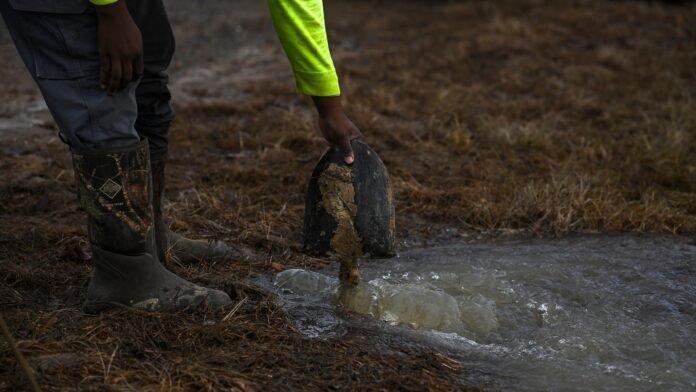
Dominika Parry never stopped fighting for Jackson, Mississippi, residents even after the Trump administration terminated a multibillion-dollar program last year meant to help the Black city still reeling from a water crisis. 

For years, if water did flow out of Black households’ faucets in Jackson at all, it was often brown. It left elders and babies with rashes and caused a slew of health problems across the city.

Parry and other community leaders and organizations got some semblance of hope in 2023 with a federal grant. Yet, two years later — before any funds could be distributed — President Donald Trump entered office and terminated a $2.8 billion program meant to help mitigate the harm from climate change and environmental issues in Black, low-income, and disadvantaged communities. 

More than a year later, federal courts stepped in and rebuked the administration’s effort to dismantle climate funding. The case centers on the administration’s effort to roll back climate investments authorized by Congress under the Inflation Reduction Act, President Joe Biden’s cornerstone economic policy.

Read Next

Last month, a South Carolina federal judge ordered the Environmental Protection Agency to resume distributing funds designed to address environmental and health challenges in underserved communities.

The July ruling came just before the Washington, D.C. Circuit Court blocked the EPA from rescinding nearly $20 billion in Greenhouse Gas Reduction Fund awards. That program is different from the environmental justice grants promised to Jackson and other overburdened communities. 

That means that over $22 billion meant for climate and environmental projects in disadvantaged communities may soon be distributed. 

Parry did not respond to requests for comment after the ruling, but Matt Sedlar, climate analyst at the Center for Economic and Policy Research, said the outcomes of these lawsuits are “sending a message to the administration that the separation of powers exists and that it must follow the law.”

What the billions could be spent on in Black communities

In 2023, a $20 million federal grant offered a life-saving chance for Jackson’s poorest. The money was for a resilience hub that would offer year-round access to housing where the lights would stay on with clean drinking water in the time of disaster by funding a micro electric grid. It would also include backup generators, an independent water well, showers, and overnight shelter for up to 150 people at a time facing water issues in their home.

The goal was building “a place where people can come, stay overnight, have access to energy, be in healthy conditions,” Parry said last year. Parry founded the recipient group 2C Mississippi, a Ridgeland-based nonprofit focused on climate resilience in Mississippi.

Since February 2025, the billions made available through the Environmental and Climate Justice Block Grant Program have languished as the Trump administration has moved to gut a historic number of environmental rules and protections. The Associated Press estimates that the EPA programs and rules cut were projected to prevent roughly 30,000 deaths per year, particularly in Black and disadvantaged communities. 

A man sits at a desk looking contempative

After prison, Leon Dillard participated in a solar installation program for formerly incarcerated people in Houston. The program no longer exists. Adam Mahoney / Capital B

The Greenhouse Gas Reduction Fund was designed as a $27 billion national clean-energy financing program. Its goal was also to make clean-energy investments like home-energy upgrades, solar installations, and electric vehicles more accessible in low-income and disadvantaged communities that have historically been shut out of affordable green financing.

The Trump administration has already moved to legally appeal the judge’s ruling regarding the environmental and climate justice grant program, claiming that the EPA now lacks the money and staff to implement the program. (The Trump administration has fired 25 percent of EPA workers since 2024, bringing the agency to its lowest staff total ever.) 

Already, some of the programs that received the initial approval for funding in 2024 have ceased to exist, including a solar installation program for formerly incarcerated people in Houston. 

Last year, Leon Dillard, a formerly incarcerated man who was a part of the program before it was cut, said the climate-friendly work gave him a “sense of purpose.” 

“I really just needed to be a part of [the program], be a part of something,” he said. “You have to make a choice to take a chance, or your life will never change. But you need other people with you on that journey.”

It is likely that the administration will attempt to appeal the Greenhouse Gas Reduction Fund ruling as well. 

Environmental and Climate Justice Block Grant Program projects include

  • More than $14 million to install wastewater systems in Alabama’s Blackbelt communities where failing septic systems and untreated sewage have long sickened Black residents.
  • A $500,000 micro electric grid project in Gentilly, a historically Black New Orleans neighborhood that has faced chronic flooding, heat, and power-outage risk, particularly during hurricane season.
  • A $20 million grant for four connected disaster hubs in Florida’s historically Black areas of Lee County. The hubs would include cooling centers and, during disasters, sites for electricity, communications, water and food distribution, and emergency health support. The project also included money for stormwater treatment, new shade trees, and workforce training.
  • $500,000 for solar-workforce training for formerly incarcerated Texans, illegal-dumping cleanup, and environmental education in a Black community in Houston overburdened by pollution. 
  • $20 million to weatherize, electrify, repair, and improve air quality in 500 homes in East Alabama and West Georgia. The plan also included 10 solar-and-battery resilience hubs for residents during outages and extreme weather. 

Greenhouse Gas Reduction Fund projects include:

  • Mississippi Solar for All: Hope Enterprise Corporation received $62 million to expand residential solar access for low-income and disadvantaged Mississippians.
  • Arkansas Solar for All: Hope Enterprise Corporation received $94 million for a companion program bringing solar benefits to low-income households across Arkansas.
  • Georgia BRIGHT Communities Coalition: Capital Good Fund received $156 million to expand access to clean energy and related jobs in Georgia.
  • EnergizeNC: The North Carolina Department of Environmental Quality received $156 million for its statewide low-income solar initiative.
  • Industrial Heartland Solar Coalition: Growth Opportunity Partners received $156 million for a multistate solar effort serving Midwestern industrial communities.

Legendary Rocker Reveals Heartbreaking Cancer Update

0
legendary-rocker-reveals-heartbreaking-cancer-update
Legendary Rocker Reveals Heartbreaking Cancer Update


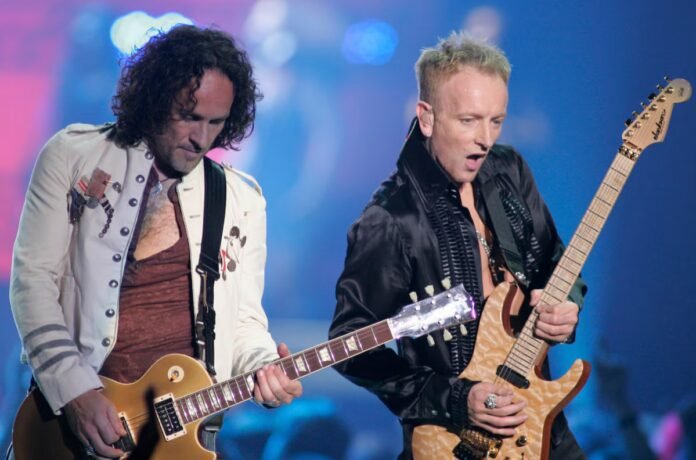
Def Leppard guitarist Vivian Campbell has delivered a heartbreaking update on his long-running cancer battle, revealing the disease has returned despite undergoing a donor transplant he once described as his “only hope to survive.”

Campbell, 63, shared the news during an Aug. 12 interview with El Salvador-based radio station YSKL, more than a year after receiving the transplant in January 2025.

“Unfortunately, it didn’t stick,” Campbell said. “So the cancer has returned, and I’m continuing treatments to manage it.”

The rock veteran has been battling Hodgkin lymphoma for more than a decade.

Campbell first publicly revealed in 2013 that he was undergoing chemotherapy for the rare blood cancer. Looking back, he said there was one point when he truly feared the disease could kill him.

“There’s only been one time that I felt it was gonna kill me,” Campbell said. “In the winter of 2013, I got really scared about what was happening and the pace at which it was happening.”

That frightening period eventually led Campbell to conclude that a donor transplant was his best chance of staying alive.

“It was my only hope to survive,” he said.

Campbell has not publicly specified exactly what type of transplant he received. Bone marrow and stem cell transplants can be used in some patients with Hodgkin lymphoma, with healthy stem cells administered to help rebuild the body’s blood-producing system.

Despite the disappointing outcome of his 2025 transplant, Campbell is not giving up.

He said another transplant could potentially be in his future as doctors continue trying to keep the cancer under control.

For Campbell, one of the biggest things helping him through the ordeal has been music.

The guitarist said touring and performing give him a reason to keep moving and stop him from dwelling on his illness.

“The fact that I could still continue to work, that gives me something to live for,” he said. “Something that you enjoy, that you’re passionate about, that you can wake up in the morning and look forward to.”

And Campbell certainly has not been slowing down.

He continues performing with Def Leppard and is also working on new music with Last in Line, the band he formed with fellow musicians connected to his earlier days with Dio.

Campbell has also played with Whitesnake during his decades-long career.

“I’m certainly not slowing down,” he said. “I’m doing as much with my life as possible.”

The guitarist said his cancer diagnosis has actually made him more determined to experience everything he can.

Rather than allowing the disease to dictate what he does, Campbell said he has tried to live even more fully since being diagnosed.

He has watched other cancer patients become afraid to travel, eat certain foods or leave their beds because of their illness.

“I’ve never felt that way,” Campbell said. “I’ve always felt like I’m going to continue to live my life as much as possible. In fact, even more so after getting a cancer diagnosis.”

Campbell also acknowledged how fortunate he was that his cancer was discovered relatively early.

A persistent cough ultimately helped lead to his diagnosis, and he said his journey has largely been about controlling the disease rather than allowing it to take over his life.

“It’s always been more about managing my cancer,” he said.

Campbell joined Def Leppard in 1992 following the death of original guitarist and songwriter Steve Clark, who died in 1991 at just 30 years old.

He has remained a key member of the legendary British rock band ever since, performing alongside Joe Elliott, Rick Savage, Rick Allen and Phil Collen.

Def Leppard has spent decades as one of rock music’s biggest acts, earning induction into the Rock and Roll Hall of Fame and receiving a star on the Hollywood Walk of Fame in October 2025.

Campbell was still onstage earlier this year, performing with the band at The Colosseum at Caesars Palace in Las Vegas in February 2026.

And even as his cancer battle enters another difficult chapter, Campbell made clear he has no intention of stepping away from the life he loves.

For the rocker, the diagnosis has only made him more determined to “tick all the boxes” while he still can.

Israeli newspaper slams Netanyahu over Syria strikes, warns of ‘pointless conflict’ with Türkiye

0
israeli-newspaper-slams-netanyahu-over-syria-strikes,-warns-of-‘pointless-conflict’-with-turkiye
Israeli newspaper slams Netanyahu over Syria strikes, warns of ‘pointless conflict’ with Türkiye

The Israeli newspaper Haaretz criticized Prime Minister Benjamin Netanyahu over his decision to strike targets in Syria, warning that the escalation could drag Israel into a “pointless conflict” with Türkiye, Anadolu reports.

“While we were wondering whether, ahead of the election, Benjamin Netanyahu would choose to wage war in Gaza or Lebanon, or perhaps ignite the West Bank, he decided to make a move in northern Syria, expanding a front with Türkiye,” the daily said in an editorial on Sunday.

It said Israel’s anti-Türkiye rhetoric in recent months had evolved into an attack on a military airfield in northern Syria on Tuesday.

The paper cited Netanyahu’s claim that the attack allegedly targeted the expansion of the Turkish presence in the region. Ankara and Washington have denied the Israeli claim and accused the Israeli prime minister of acting for electoral reasons.

On Tuesday, Israeli aircraft carried out eight strikes on the runway of the Abu al-Duhur military airfield in Idlib province, northwestern Syria, damaging its infrastructure.

Following the attack, sources at Türkiye’s Defense Ministry confirmed that there was no Turkish military mission at the Abu al-Duhur airbase, either before or during the Israeli attack.

Haaretz cited the warning of Thomas Barrack, the US ambassador to Türkiye and special envoy for Syria and Iraq, that the Israeli attack “could have escalated into a direct military confrontation” between Israel and Türkiye, hinting that this may have been Israel’s actual objective.

Barrack stressed that Türkiye “has no intention of attacking Israel or of entering into a military confrontation with it,” warning that Israel may be “acting irrationally” since it is in an election period.

Haaretz warned that the Israeli military action comes at a time when international powers are seeking to stabilize Syria, while Israel “is acting in a way that contradicts this logic.”

“Thus, Israel is distancing not just Syria, but all the other players involved there, chiefly the US.”

Haaretz called on Israel to formulate a new policy to address the multiple and new challenges in the Middle East.

“While Netanyahu was bragging about the pinpointed operation in northern Syria, a dangerous and pointless one, new alliances are being formed under his nose, and Israel is not a part of them,” the paper said.

“One cannot create security and foil threats only by bombing. This is no substitute for diplomacy and a well-thought-out policy, something which in the Netanyahu era has become devoid of any meaning. Israel must listen to the warnings sounded by envoy Barrack and beware of getting entangled with Türkiye.”

Following the attack on the Abu al-Duhur airbase, Syria said in two identical letters addressed to the UN and the UN Security Council that Israel’s continued attacks, including airstrikes, incursions and abductions, “hinder stabilization efforts and threaten the region with further tensions.”

Israel has expanded its assaults across Syria since the ouster of the Bashar al-Assad regime in December 2024.

Bomb Attack Wounds Syrian Security Forces Near Damascus 

0
bomb-attack-wounds-syrian-security-forces-near-damascus 
Bomb Attack Wounds Syrian Security Forces Near Damascus 


An explosive device detonated on a bus carrying Syrian internal security personnel north of Damascus on Saturday, wounding several members of the force in what authorities described as a terrorist attack. 

The bombing occurred on the Maarounah-Al-Tal road in the Damascus countryside, state news agency SANA reported. State-run Al-Ikhbariya TV also reported the attack, citing a security source. 

Authorities did not disclose how many security personnel were wounded. No organization immediately claimed responsibility for the bombing. 

Images published by SANA showed extensive damage to the bus after the explosion. Windows had been shattered and one of the vehicle’s doors was blown out, while broken glass could be seen scattered across the front seat. 

“Authorities are investigating the attack and working to identify those responsible,” SANA reported. 

The bombing was the latest in a series of explosions to hit the Damascus area as Syria’s new authorities contend with continuing security challenges. 

Earlier this month, an explosion aboard a bus in Jaramana wounded 14 people. The town, located near Damascus, is home to Christian and Druze communities. 

In July, two explosions occurred near a hotel where visiting French President Emmanuel Macron had been staying. Macron was not at the hotel when the blasts occurred. 

One person was killed and 36 others were wounded in that attack. 

Due to need for ‘absolute success,’ China delays critical Moon launch to 2027

0
due-to-need-for-‘absolute-success,’-china-delays-critical-moon-launch-to-2027
Due to need for ‘absolute success,’ China delays critical Moon launch to 2027

China’s “Manned Space” program issued a terse announcement on Sunday regarding its much-anticipated Chang’e 7 lunar exploration mission.

The agency stated: “In keeping with the principle of proceeding prudently and reliably, and ensuring absolute success, after a comprehensive assessment it has been determined that the Chang’e 7 mission does not meet the conditions for launch and therefore cannot be carried out during the planned launch window this year.”

The Chinese message offered no explanation for the cause of the delay from the Wenchang Space Launch Site, located on an island in the South China Sea. Consisting of a lunar orbiter, lander, rover, and a mini-hopper of a probe, the mission was due to launch as early as Sunday on a Long March 5 rocket. It is intended to land at the South Pole of the Moon.

Weather and launch windows

Most likely, Sunday’s delayed launch was due to Typhoon Narra, which has 45-mph winds (equivalent to a moderate Tropical Storm) and continues to meander around in the waterway separating Hainan island, where the spaceport is located, and mainland China.

According to the Joint Typhoon Warning Center, this storm is expected to continue tracking in this general area for the next two or three days, likely providing inclement weather at the Wenchang launch site. Plausibly, then, Chinese forecasters determined that the weather would not break before the current launch window to reach the lunar pole from Wenchang closes.

Although official Chinese sources have provided no confirmed information, there has been social media chatter indicating that another suitable launch window may not open until next February or March. Why so long? It likely is a combination of factors, including sunlight conditions in polar landing zones as well as the mission plan that requires a 90-day lunar orbit reconnaissance before landing.

Another, lesser possibility, is that some technical issue was discovered at the last minute with either the complex Chang’e 7 payload, or the rocket. The large Long March 5 rocket shares an engine, the YF-100, with the Long March 7A vehicle that was lost during ascent two weeks ago. This engine issue seems unlikely to be the cause of the delay, however, as China had been proceeding toward launch in recent days.

Latest twist in the second space race

The delay comes amid a tight contest between China and the United States to establish a meaningful presence at the South Pole of the Moon. Robotic missions such as Chang’e 7 are precursor flights for human missions that could follow in the next two to four years.

Chang’e 7 is planned to land near one of the most compelling regions of the Moon, Shackleton Crater, very nearly at the South Pole. Much of the lunar surface is pretty barren, but the South Pole, and Shackleton Crater in particular, offers some of the most coveted real estate there. This is because the high rims of the crater create permanently shadowed regions known as “cold traps,” where it’s thought that water (in the form of ice, of course) and other useful materials may have accumulated over billions of years. In all of NASA’s and China’s plans for long-term settlement on the Moon, relatively few square miles at the South Pole of the Moon matter the most.

No country has softly landed a spacecraft at the lunar poles, which are more difficult to reach than equatorial regions of the Moon. The delay of Chang’e 7 opens up the possibility that NASA could reach this terrain first, with the initial launch of Blue Origin’s Blue Moon Mark 1 vehicle. This large lander will carry two NASA probes to the South Pole.

Blue Moon was on track to launch this year before the loss of the New Glenn rocket, and its launch pad, at Cape Canaveral, Florida during a static fire test in May. Blue Origin has been hustling to rebuild its Launch Complex 36A facility in Florida, and aims to return New Glenn to flight before the end of this year. That is probably ambitious, but Blue Moon could plausibly launch during the first half of 2027, making for a close race with Chang’e 7 if it were to launch in February, and spend three months in lunar orbit before landing.

0FansLike
0FollowersFollow
0FollowersFollow
0SubscribersSubscribe
- Advertisement -
Google search engine

Recent Posts