21.5 C
London
Saturday, August 15, 2026
Home Blog

Inside Trump’s Failed Hunt for Noncitizen Voters

0
inside-trump’s-failed-hunt-for-noncitizen-voters
Inside Trump’s Failed Hunt for Noncitizen Voters

Reporting Highlights

  • Inflated Claims: HSI deployed its tech platform to find noncitizens on voter rolls, despite warnings from agency insiders that it would lead to an “ungodly” number of false positives.
  • Privacy Concerns: DOJ leaders ignored internal concerns that transferring voter lists to HSI for criminal investigation might not be legal.
  • Scant Results: Despite intense White House pressure, the effort has produced only a few dozen noncitizen voter prosecutions nationwide — and even fewer convictions.

These highlights were written by the reporters and editors who worked on this story.

It was late March when Joe Teirab, the second-in-command at Minnesota’s U.S. attorney’s office, received an urgent email from Washington.

The federal government was scrambling to find criminal cases to back up President Donald Trump’s claims that illegal voting by noncitizens was tipping the scales in American elections. Agents from Homeland Security Investigations, a massive federal law enforcement agency, had been dispatched to work leads across the country, including hundreds in Minnesota.

Teirab was already under pressure. In an earlier missive, Nick Davis, a high-ranking Justice Department appointee helping to lead the election fraud crusade, had reminded him the cases were so high priority that Teirab and his staff couldn’t decline to move forward on them without express approval from agency higher-ups. On March 24, Davis demanded a status report — within hours.

Teirab, a former Marine and a Harvard Law graduate who’d run unsuccessfully for Congress as a Republican, responded with a blunt reality check.

“Bottom line up front,” he replied in an email reviewed by ProPublica. After subpoenaing records on about 130 people, only one had been referred for prosecution, his staff had told him. Agents had deluged local election offices with calls and demands for voting histories, demonstrating “a complete lack of understanding” of illegal voting investigations.

“The HSI task force has been disjointed and disorganized,” Teirab wrote. The entire process, he said, had been “dysfunctional.”

Since Trump regained the White House, his administration has launched a series of unprecedented initiatives to find and prosecute voting by noncitizens, which he’s long claimed, without evidence, is rampant.

He’s stepped up this push in recent weeks, saying in a nationally televised speech that the American election system was “so vulnerable that no one can possibly defend it.” To support that assertion, the Department of Homeland Security, HSI’s parent agency, released documents asserting it had found more than 250,000 noncitizens on voter rolls in just four states, all led by Democrats. The documents included no explanation of how that number was calculated.

It’s well known the administration has tasked HSI — a force established to combat drug cartels, terrorism and other cross-border criminal enterprises — with leading the campaign to find election fraud cases in the United States.

But an investigation by ProPublica reveals for the first time how the Trump administration came to harness HSI’s personnel, technology and sweeping legal authority in service of its election agenda — and how meager the results have been, despite the prodigious resources sunk into the effort.

According to interviews and internal emails reviewed by ProPublica, career staffers at the Justice Department warned that transferring voter rolls to HSI to enable it to search for noncitizen voters could violate federal privacy laws. Similarly, longtime HSI insiders cautioned that using the agency’s databases and tools to search these lists would yield mismatches and wildly inflated results.

The administration plowed forward anyway.

HSI’s involvement in the hunt for election fraud traces at least to summer 2025, when agency supervisors embraced a proposal from a midlevel agent who’d publicly echoed Trump’s claims about elections. He argued the agency’s powerful databases and tools could find noncitizens even on the voter lists that states make publicly available, from which the most confidential information has been redacted. Under Trump, the Justice Department had collected many public voter rolls as part of a controversial effort to compel states to turn over the unredacted versions.

Those searches went forward, ProPublica’s reporting shows, helping to generate tens of thousands of leads regarding illegal voting across the country. But when HSI agents were sent to investigate them, the results were similar to what Teirab reported from Minnesota.

Between January 2025 and May 2026, a ProPublica analysis of Justice Department data shows, fewer than 150 alleged noncitizen voters were referred for prosecution. Even fewer — 41 — were charged with voting illegally or other election-related crimes. (More than 150 million people voted in the most recent presidential election.)

In response to questions from ProPublica, administration officials insisted the effort spearheaded by HSI was producing meaningful results.

“President Trump is committed to ensuring that Americans have full confidence in the administration of elections, and that includes totally accurate and up-to-date voter rolls free of errors and unlawfully registered non-citizen voters,” Abigail Jackson, a White House spokesperson, said in response to ProPublica’s request for comment. “Noncitizens voting is a crime. Anyone breaking the law will be held accountable.”

A DHS spokesperson didn’t answer questions about why so few prosecutions have resulted from HSI’s work. The agency wouldn’t specify what tools or techniques HSI had used, but confirmed it had cross-referenced “publicly available data” from state voter rolls with information on “known illegal aliens” in its systems. “It’s not rocket science,” the spokesperson wrote of this initiative in a response to ProPublica’s questions. “It’s an easy step to secure our elections.”

Teirab and the U.S. attorney’s office in Minnesota declined to comment.

There’s an array of reasons why Trump’s campaign to document claims of widespread voter fraud hasn’t succeeded. Most obviously, it’s exceedingly rare, as countless studies and state audits have found. Noncitizens often get on voter rolls by accident or when government officials make errors. Last month, New Jersey disclosed that a mistake involving its Motor Vehicle Commission caused 6,600 noncitizens to be registered (fewer than 400 voted).

The administration’s critics say its hunt for noncitizen voters aligns with Trump’s attempts to seek more federal control over elections while stoking doubt and fear about the voting process. Since taking back the Oval Office, Trump has tried to impose new restrictions on voter registration, mail-in ballots and voting machines, though judges have shut down most of these efforts.

Former officials at DHS and the Justice Department called the move to involve HSI a further escalation and questioned the propriety of aiming the agency’s muscle and technology at individual cases of illegal voting.

“It’s one thing if you’re going after Pablo Escobar,” said Steve Bunnell, a former DHS general counsel and senior intelligence adviser who handled voting fraud prosecutions during more than a decade at the Justice Department. “It’s another thing if you’re going after some cleaning lady who’s been working in the United States for 20 years and taking care of her 80-year-old mother and taking her little kids to church.”

An illustration of a row of armed personnel in tactical gear and helmets sitting at computer desks in front of glowing cyan monitors.
Matt Rota for ProPublica

“The Swiss Army Knife of Federal Law Enforcement”

Trump’s enlistment of HSI in his election fight is no accident. Cobbled together in the aftermath of 9/11, the agency has 7,100 armed, highly trained agents and another 800 criminal analysts, as well as access to troves of confidential data about hundreds of millions of Americans.

Though part of Immigration and Customs Enforcement, the agency has historically stayed out of immigration cases. During the first Trump administration, leaders of 19 HSI regional offices — virtually its entire top field hierarchy — signed a letter calling for HSI to become a standalone agency, arguing that ICE’s deportation work dissuaded people from cooperating with its investigations. But when Trump returned to the White House, it swiftly became clear that the agency would play a central role in investigations related to the president’s twin obsessions, illegal immigration and noncitizen voting.

Trump picked his field general for repurposing HSI even before taking the oath of office. In December 2024, he named Anthony Salisbury, a 50-year-old career agent who’d run the agency’s Miami office, as a deputy homeland security adviser, reporting to White House policy chief Stephen Miller. He was also given a dual appointment as head of HSI.

Salisbury was colorful: A mixed martial arts enthusiast, he once appeared at the agency’s headquarters with his face bruised and eye blackened from a recent bout. He’d sometimes entertain colleagues by pulling out a bridge that covers his missing front teeth.

To agency veterans, however, he was forever linked to a 2011 operation he’d overseen in Mexico in which one agent was killed and another wounded in a highway ambush by a drug cartel. An agency review submitted to Trump in April 2020 concluded that errors by HSI supervisors, including Salisbury, contributed to the outcome; it urged the administration to consider disciplinary action. None was taken against Salisbury, however.

Salisbury did not respond to requests for comment from ProPublica. A White House official called him “a critical member of the Trump administration” who was “cleared” in every review of the Mexico incident and was subsequently “promoted six times under multiple administrations.”

“It’s one thing if you’re going after Pablo Escobar. It’s another thing if you’re going after some cleaning lady who’s been working in the United States for 20 years and taking care of her 80-year-old mother and taking her little kids to church.”

Steve Bunnell, a former DHS general counsel and senior intelligence adviser

Once elevated to his new posts, Salisbury took charge of carrying out the second Trump administration’s agenda for HSI, personally issuing staffing directives, reassignments and promotions, current and former agency officials told ProPublica. (A number of them spoke on condition of anonymity out of fear of retribution.) 

Starting in early 2025, Salisbury oversaw the unprecedented reassignment of more than 6,000 agents to immigration enforcement, diverting most of the agency from its normal duties. He then also pointed HSI at noncitizen voting, presiding over multiple meetings with officials at DOJ and Homeland Security focused on election fraud, according to emails reviewed by ProPublica and agency supervisors who worked with him.

“Stephen Miller has an HSI deputy for a reason,” said Eric Balliet, a high-level HSI manager who retired in 2024 after 23 years with the agency. (Like many HSI veterans, Balliet has remained in close contact with former colleagues.) “Salisbury is going to salute and execute, and he is going to make sure that from the HSI side, they fall in line, and there’s going to be no resistance or pushback. HSI has been turned into the Swiss Army knife of federal law enforcement.”

In early July 2025, Frank Quiñones, an HSI special agent who’d worked under Salisbury in Florida, approached leaders at the HSI Innovation Lab with an idea for using the agency’s technology to find noncitizen voters on state voter rolls, sources at the agency told ProPublica. Quiñones had been transferred to Washington to oversee a unit that had previously handled cases involving the theft of government benefits but that had been enlisted into voting investigations.

The lab, housed in an unmarked office in a D.C. suburb, had access to the government’s most sensitive databases, from suspicious activity reports to arrest records. Staffed by a combination of HSI experts and outside consultants, it developed software tools to comb the data for information that could help agents pursue criminal suspects.

Quiñones was a true believer in Trump’s claims about election fraud: In multiple Facebook posts and reposts, ProPublica found, he promoted claims that the 2020 presidential vote had been stolen. At a meeting with the Innovation Lab’s overseers, according to sources who worked in the lab, he pitched using the lab’s technology to identify illegal voters — even though the agency lacked voter rolls that included identifiers such as partial Social Security numbers. (Quiñones did not respond to ProPublica requests for comment.)

For proof of concept, Quiñones proposed using a February 2021 public voter list he’d obtained for New Jersey and running it through HSI’s databases. The lab staff viewed his idea as “a little insane,” one recalled — both unreliable and improper. Since the public rolls don’t include voters’ unique identifiers, people at the lab also knew linking them to HSI’s data would produce mismatches — what the staffer called an “ungodly” number of false positives. The lab team also worried about violating longstanding safeguards limiting use of private citizen data. They “didn’t want to touch this,” the staffer added. Quiñones defended his idea, repeatedly declaring: “The president wants this!”

Tom Hodge, an HSI data analyst at the meeting, proposed running the voter information through the Athena Toolbox, an analytical platform developed by the Sandia National Laboratories that had access to all of HSI’s databases. (Hodge did not respond to ProPublica requests for comment. Sandia referred ProPublica’s questions to the facilities’ parent agencies, including the Department of Energy, which did not respond to our requests.)

Hodge and the Sandia team spent the next six weeks on the project, reporting they’d found large numbers of noncitizens on Quiñones’ 2021 New Jersey list. According to one former HSI official, they said they’d found “5,000 high-confidence illegal voters” in just a single New Jersey county. (Officials at the New Jersey secretary of state’s office, which oversees the state’s voter rolls, declined to comment on the claim. Beth Thompson, head of a group for local New Jersey election officials, called the number impossibly high, even accounting for the mistake disclosed by the state.)

The apparent breakthrough couldn’t have come at a better time.

The Trump administration’s other efforts to identify noncitizens on state voter rolls were running into a variety of roadblocks.

The administration had hoped to persuade states to check their voters’ citizenship status using a system called the Systematic Alien Verification for Entitlements, or SAVE, but many didn’t. Most states also refused the Justice Department’s demands to turn over their unredacted voter rolls, including partial Social Security numbers, which thwarted the agency’s plan to run them through SAVE. Courts have stymied the DOJ’s attempts to sue for the records, citing the Constitution, which gives primary control over elections to the states.

In an Aug. 21 email to a half dozen administration officials, Quiñones touted the solution he’d brought to the HSI Innovation Lab: using HSI’s platform to search voter rolls. The results, Quiñones noted, could fuel both criminal and immigration investigations.

By the end of the month, those in top election-related roles at DHS and the Justice Department were actively promoting what they dubbed the “HSI Tool” as a preferred alternative to SAVE, according to people familiar with the matter. Among them was Heather Honey, the prominent election denier appointed as a senior counselor at DHS, who is helping lead the government’s efforts to identify noncitizens on voter rolls. (Honey did not respond to ProPublica’s requests for comment. In an email responding to questions to her, DHS said Honey’s “expertise in election administration” was “invaluable to the Department’s efforts to protect critical infrastructure.”)

The White House, too, got behind the idea. In a November email, J. Brian Sikma, special assistant to the president, excitedly noted that the New Jersey trial cross-checking voter rolls with DHS data appeared to have identified a “very significant number” of “potential non-citizens.” (Sikma didn’t respond to a request for comment.)

The DOJ, Sikma reported, had already obtained public voter rolls for many other states. He included a list of them, adding: “It is of paramount importance that these also be reviewed expeditiously.”

An illustration features a framed portrait of a man in a suit on the left hanging next to a large display board showing a red map of the United States crisscrossed with white dotted paths.
Matt Rota for ProPublica

Running “Roughshod” Over Privacy

As the push to use HSI’s tech to search voter information gained momentum, a new problem emerged.

Career attorneys at the Justice Department, including specialists on privacy law, raised concerns that transferring voter rolls wholesale from the agency to DHS might not be legal, according to internal emails reviewed by ProPublica and interviews with several former officials.

The voter rolls the DOJ had collected contained sensitive information on millions of Americans. Even the public versions, which political parties and candidates routinely obtain to target ads and messages, included voters’ addresses, birth dates and party affiliations. For the 16 states that have agreed to share their unredacted voter lists, the DOJ had citizens’ partial Social Security numbers or driver’s license information, too.

Federal laws, particularly the Privacy Act, dictate what data government agencies can collect, what it can be used for, how it can be shared, and how it must be protected. Agencies have to disclose their plans in advance, gathering public comment. A person’s information can’t be released or shared without their consent, subject to limited exceptions.

From the outset, the Trump administration’s effort to combine data across federal agencies has repeatedly drawn criticism from courts and whistleblowers for failing to adhere to restrictions meant to keep data private and secure. In June, for example, a judge prohibited the government from using SAVE for mass searches, ruling the administration had violated federal privacy laws by giving DHS access to Social Security data to enhance the tool. The administration has appealed that ruling.

In July 2025, as word got around that the DOJ might hand over voter data to DHS, a half dozen career attorneys who had been reassigned into the voting section voiced their unease to supervisors, according to two former DOJ lawyers. Their concerns were disregarded, prompting most to resign.

Instead, the DOJ’s office of legal counsel pushed forward with plans to share the public voter rolls, claiming a Privacy Act exception allowed HSI to receive such data without public notice as long as it was for law enforcement purposes. DHS just needed to submit a letter officially requesting the data for those purposes, an attorney in the legal counsel’s office explained, according to internal emails.

But this exception was meant to be used to get information on individual criminal suspects, not to gain mass access to data on people suspected of no wrongdoing, according to Nikhel Sus, chief counsel for Citizens for Responsibility and Ethics in Washington, which has sued the Trump administration on behalf of voter and pro-privacy groups, filing the case that eventually limited SAVE’s use.

“[Anthony] Salisbury is going to salute and execute, and he is going to make sure that from the HSI side, they fall in line, and there’s going to be no resistance or pushback. HSI has been turned into the Swiss Army knife of federal law enforcement.”

Eric Balliet, a former high-level HSI manager

Peter Winn, a 29-year Justice Department veteran who had served as the agency’s acting privacy chief for nearly a decade, drafted a letter to set out the data-sharing agreement between the DOJ and DHS, according to internal documents reviewed by ProPublica.

In a Feb. 12 email to two top DOJ officials, he said he’d rewritten an initial draft memo to “make the information sharing arrangement far easier to defend, if and when it is challenged in court.”

Rather than simply handing over the voter rolls, Winn proposed having DHS request “pertinent and relevant” information about specific people from the DOJ, then having technical staff at Justice and Homeland Security “coordinate” to fulfill the requests.

“Having slept on it,” Winn wrote, “I ended up deciding that our initial idea of sending a huge amount of raw unprocessed voter registration data to DHS, involved taking far too much unnecessary legal risk, given that 99% of the data would implicate the privacy and civil liberties of United States Citizens, and would risk adding to the false narrative in the establishment press of DOJ and DHS being unconcerned with the privacy and civil liberties of Americans.”

Winn attached his proposed letter, to be signed by Todd Lyons, then the acting director of ICE.

Winn’s suggested restrictions were quickly abandoned, however. A second draft of the letter, dated March 4, contained altered language providing that the voter information would be “transferred” to HSI, with one exception: Voters’ party affiliation would be redacted, if possible, it said.

The final letter, signed by Lyons and sent to the DOJ just two days later, abandoned even that limitation. Just three paragraphs long, it permitted HSI to use the voter rolls to pursue any “appropriate investigation of potential violations of federal election law.”

In response to questions from ProPublica, Winn said “I can’t really comment on internal drafts of correspondence.”

A Justice Department spokesperson defended the government’s actions, saying “no one should oppose intergovernmental data sharing and coordination that enable swift investigations and prosecution of illegal alien voting.” DHS echoed the DOJ’s view, calling such information sharing “essential to protecting America’s election process by keeping noncitizens off voter rolls” and “an easy step to secure our elections.”

Sus said that by pooling voters’ sensitive personal identifiers, along with their party and voting histories, the administration has “run roughshod” over privacy laws and is creating a “1984-style database” that could be used to surveil political participation.

CREW filed a lawsuit in April on behalf of the nonprofit advocacy group Common Cause that argues it’s illegal for the administration to use the law enforcement exception to justify mass sharing of voter information.

Balliet, the former HSI agent, expressed similar concerns, saying that handing over voter rolls to run through DHS’ systems amounted to “a mass data-collection effort by the government against its own citizens in a non-criminal setting.” On a practical level, he added, the data sharing increased the risk of breaches that can open law-abiding citizens up to identity theft.

“As a citizen, I want the government to take seriously the protection of my private data,” he said. “If it falls into the wrong hands, it’s not the government that suffers. It’s me.”

Matt Rota for ProPublica

Collapsing Claims

By January 2026, scores of HSI agents were fanning out across the country to investigate thousands of leads about illegal voting.

About 25,000 of them involved people SAVE had identified as potential noncitizens on state voter rolls. Another 15,000 were given to HSI’s cross-border financial crimes unit, which was told to prioritize them over money laundering and fraud cases, a former high-level HSI official said. Quiñones’ unit led a separate effort to find additional cases by reviewing whether people who’d recently become citizens had voted before they were naturalized, then lied about it in naturalization interviews.

Still more leads came from running public voter rolls through the HSI lab’s databases, though it’s not clear how many. Agency sources told ProPublica that the rolls of New Jersey and Pennsylvania were searched using the Athena Toolbox. When DHS announced it had found more than 250,000 noncitizens on the registered voter lists of four Democrat-led states, it said that included “as many as” 35,152 in New Jersey and 14,576 in Pennsylvania. Both states have asked DHS to provide the source of the numbers.

Once federal investigators started digging into these cases, however, they often fell apart.

Through May, prosecutors had charged fewer than four dozen people with crimes related to noncitizen voting, ProPublica’s analysis of DOJ data and federal court filings shows, getting convictions or guilty pleas in 14 cases.

The largest cluster of cases was brought in the Southern District of Florida, headed by Jason Reding Quiñones (no relation to the HSI agent), a staunch Trump ally who has led investigations of the president’s political opponents. Voters have been sentenced in eight of the office’s cases; seven others are pending.

Prosecutors have initiated a total of seven noncitizen voting cases as of May in the four states where DHS claimed to have found more than a quarter million noncitizens on the rolls. Collectively, these states have more than 40 million registered voters.

Overall, the paltry numbers reflect the realities HSI investigators confronted on the ground as they tried to convert leads into cases, a ProPublica review of records obtained by voting-advocacy groups Campaign Legal Center and Democracy Forward shows.

Emails between agents and local election officials in Texas and Ohio indicate much of the federal information on purported noncitizens was inaccurate, the consequence of flawed data matching. When agents demanded voting histories and registration forms, they often discovered people weren’t registered in the counties where HSI thought they were. When voters register, they must attest that they are U.S. citizens; agents found some, however, who’d been put on voter rolls in error after disclosing they weren’t citizens. Many had never voted.

“Our initial idea of sending a huge amount of raw unprocessed voter registration data to DHS, involved taking far too much unnecessary legal risk, given that 99% of the data would implicate the privacy and civil liberties of United States Citizens.”

Peter Winn, a Justice Department veteran, in an email urging limits on data sharing that were not adopted 

Most HSI agents, steeped in pursuing complex international crimes, had no experience in pursuing voting fraud. In his email to Nick Davis at the Justice Department, Teirab, the top deputy in Minnesota’s U.S. attorney’s office, described the chaos that ensued when the state and at least six counties got subpoenas for voters’ records. The demands “presented a host of issues,” Teirab wrote to Davis. (Davis did not respond to a request for comment.)

“An unknown number of agents are constantly arriving in Minnesota without any knowledge of the investigation, the issues already discussed and decided, and the processes they need to follow,” Teirab complained. “Instead of getting up to speed and learning, they have demanded many calls and subpoenas, most of which demonstrate a complete lack of understanding of the investigation.”

In Stearns County in central Minnesota, HSI agents subpoenaed voting histories on 13 people, county officials told ProPublica. Only six turned out to live there.

Minnesota Secretary of State Steve Simon, a Democrat, said the effort revealed federal investigators’ ignorance about “the nuance of elections administration.” The rate of purposeful election crime is “microscopic,” he said. “The very human errors that can happen are not some sort of plot or scheme to dirty up the voting rolls, but are just everyday human beings making mistakes, not intending at all to violate any law.”

As of May, only one illegal voting case has been referred for prosecution in Minnesota. The state has more than 3.8 million registered voters.

Even Republican-led states like Ohio, which has shared its unredacted voter rolls with the DOJ and run them through the SAVE system, have struggled to meet Trump administration demands to deliver cases.

In October, the Ohio secretary of state referred more than 1,000 voters identified as possible noncitizens to the federal government, claiming 167 had voted at least once since 2018. At least nine HSI agents in Cincinnati and Cleveland began to investigate, emails obtained by Campaign Legal Center and shared with ProPublica show.

The agents bombarded local election officials with requests for voting histories and other records, some dating back decades. “Sorry again for piecemealing these to you,” one agent wrote to an official in Butler County, outside Cincinnati, after making five separate requests over two weeks. Mohamed Al-Hamdani, a Democratic member of Montgomery County’s Board of Elections, which received similar inquiries, said they amounted to “witch hunts” that ate up staff time.

In February, Davis sent an email pressing Ohio’s two U.S. attorneys’ offices for an “election integrity” update, asking: “How close are we to complaints/indictments, how many subjects, what issues you’ve run into, how many referrals have been closed and why, how helpful HSI has been.”

As of May, just two voting cases had been referred for prosecution in Ohio and no one had been charged, federal data shows. The state has nearly 8 million voters.

In the past, it was uncommon for federal prosecutors to pursue charges against noncitizen voters who didn’t understand that it was against the law for them to vote. Without evidence of a coordinated effort or plot, it didn’t make sense to put resources into such prosecutions, a former DOJ official who oversaw election cases said.

Now, however, U.S. attorneys’ offices are taking a different approach, pursuing prosecutions that could result in prison terms or deportation.

In May 2025, federal prosecutors in Florida filed illegal voting charges against a mother and daughter, both Ukrainian citizens, who’d registered after becoming permanent U.S. residents, then voted in the 2024 presidential election. They’ve pleaded not guilty, with the mother saying in an interview with investigators that she thought having a green card meant she could vote. They and their attorneys didn’t respond to requests for comment from ProPublica. The prosecutor handling the case for the Southern District of Florida also didn’t respond to questions. The mother and daughter are scheduled to go to trial in September.

An illustration of a person leaning over a voting booth to cast a ballot, closely watched by a guard in tactical gear and a helmet standing beside the booth.
Matt Rota for ProPublica

“Far-Reaching Consequences”

Experts on both elections and national security warn there may be profound longer-term costs to unleashing the federal government’s investigative and prosecutorial might to try to prove the president’s claims about noncitizen voting.

Current and former HSI agents say critical investigations — including task forces aimed at drug rings, human trafficking and money laundering — have languished as the agency has pivoted to take on noncitizen voting and immigration enforcement.

In February 2026, according to court files and emails reviewed by ProPublica, an HSI agent in Ohio who’d been leading a multistate child sex abuse investigation was abruptly assigned to pursue dozens of leads on suspected noncitizen voters, work that took months. It wasn’t until May that he made an arrest in the other case. Prosecutors have filed child exploitation and pornography charges against the man, 38, in connection with acts involving at least five 14-year-old girls.

Cases like this “don’t just stop,” said Balliet, the 23-year HSI veteran. “When you pull people off them for an extended period of time, those criminal networks will adapt, and people get killed and kidnapped.”

Federal data hints at a broader slowdown in what had been HSI’s most urgent work. According to an annual government report, the number of wiretaps obtained by DHS — often to investigate drug trafficking — plummeted to 23 in 2025, from 133 the previous year. In the report, DHS attributed the decline to several factors, including “changes in administration enforcement and prosecutorial priorities.”

“It’s never been a better time to be involved in transnational organized crime,” said John Tobon, a high-ranking HSI official who retired in early 2025.

“The very human errors that can happen are not some sort of plot or scheme to dirty up the voting rolls, but are just everyday human beings making mistakes, not intending at all to violate any law.”

Minnesota Secretary of State Steve Simon

In its statement, DHS denied HSI has neglected its core mission, saying the agency has increased its efforts to combat criminal cartels, gangs and drug traffickers in response to multiple Trump executive orders.

Though HSI’s voting-related investigations have yielded only a small number of prosecutions, voter advocacy groups worry the Trump administration will use them to justify more extreme interventions.

Its latest tactics include threatening to withhold funds from states it says are refusing to check their voter rolls for noncitizens and saying it will prosecute state election officials who “knowingly” fail to remove noncitizens. Trump has also continued to press Congress to enact the SAVE America Act, which would require people to provide proof of citizenship when registering to vote, a measure advocates have criticized as a barrier to voting. Democrats are preparing for the prospect of federal troops being sent to the polls to intimidate voters.

“Those concerns are playing out in real time, with far-reaching consequences,” said Dax Goldstein, a director at the States United Democracy Center, a nonprofit group that works to build confidence in elections. “When federal agencies are misused and weaponized, people lose trust in government itself.”


Flags, Field Marshals, and foreign masters: Pakistan’s independence pageant

0
flags,-field-marshals,-and-foreign-masters:-pakistan’s-independence-pageant
Flags, Field Marshals, and foreign masters: Pakistan’s independence pageant

Every August 14, Pakistan performs sovereignty like a state auditioning for the role of itself. Flags breed on rooftops. Fighter jets carve patriotism into the sky. Politicians discover freedom for twenty-four hours. Generals appear beneath enough ribbons to upholster a sofa and assure 250 million people that Pakistan bows before no one.

Then the ceremonies end, the bunting droops, and the rulers return to asking Washington, Riyadh and assorted creditors what sovereignty should look like this quarter.

Seventy-nine years after 1947, Pakistan’s problem is not that it lacks the legal furniture of independence. It has borders, embassies, nuclear weapons and an anthem thunderous enough to frighten colonialism retroactively. Its problem is that the ruling order has repeatedly treated sovereignty not as power to be exercised, but as an asset to be rented.

The British departed. Dependency merely changed accents.

SEATO, CENTO, Afghan jihad, the War on Terror: Pakistan discovered early that geography could be monetized more easily than industry could be built. Thus emerged the governing genius of the postcolonial state: sell strategic usefulness abroad, manufacture patriotic mythology at home, and call the difference national interest.

Washington supplied weapons. Gulf monarchies supplied deposits and patronage. China supplied infrastructure and strategic ballast. The IMF periodically arrives to explain, with accountant’s precision, that flags cannot service debt.

The patrons change. The posture survives.

Pakistan’s deeper tragedy is institutional. It inherited a formidable colonial bureaucracy and military but no comparably powerful tradition of popular sovereignty capable of subordinating them. The state was stronger than society; the cantonment better organized than the citizen.

From that imbalance came coups, managed elections, palace conspiracies and the enduring conviction that the public may periodically vote but must never be permitted to rule.

The political tendency associated with Imran Khan became dangerous because it popularised two ideas Pakistan’s establishment finds almost indecent: that social justice should matter at home, and that sovereignty should mean conducting foreign policy without permanently seeking permission abroad.

These propositions are hardly revolutionary elsewhere. In Pakistan, apparently, they require tear gas.

The crisis of 2022 and the repression that followed transformed a political dispute into a civic education. Whatever judgment one makes about the competing accounts of Khan’s removal, millions began asking the question every postcolonial elite dreads:

Who actually governs Pakistan — and for whom?

By 2026, the establishment’s answer has become almost magnificent in its absurdity.

Field Marshal Asim Munir and Prime Minister Shehbaz Sharif celebrate Pakistan’s renewed “geopolitical relevance.” Trump is friendly. Vance is friendly. Washington takes Munir’s calls. Islamabad appears at important tables.

Behold independence: powerful Americans know our names.

This is not sovereignty. It is social climbing with nuclear weapons.

Access is not autonomy. Relevance is not independence. Being useful to Empire does not mean one has escaped it.

A valet may be indispensable to the banquet. He still does not own the house.

Nothing illustrates this confusion better than Pakistan’s enthusiasm for Trump’s cartoonishly titled “Board of Peace.” Islamabad treats membership as proof that Pakistan has returned to the diplomatic high table. But sovereignty is not measured by the quality of the chair one receives at somebody else’s table.

If Pakistan cannot materially shape the terms, defend Palestinian rights, and resist arrangements designed to domesticate resistance while accommodating Israeli power, then its seat is not evidence of influence. It is decorative Muslim upholstery.

The same applies to defense arrangements with Saudi Arabia. Regional security cooperation could advance genuine autonomy if it reduced dependence on outside powers. But supplying Pakistani military competence to protect a fabulously wealthy monarchy from the consequences of its own asinine strategic behavior, while Pakistan remains financially dependent upon Gulf largesse, is not independence.

It is subcontracting with a crescent attached.

Yet Pakistan’s unfinished decolonization is not a counsel of despair. It is precisely where the promise of Pakistan survives.

That promise lies in constructing a republic whose independence is social as well as diplomatic: where sovereignty belongs to citizens rather than cantonments; where the exploited majority receives justice rather than sermons; where foreign policy is neither American nor Gulf-owned, but Pakistani; where solidarity with Palestine means confronting Zionism rather than inventing ever more sophisticated mechanisms for accommodating it.

Pakistan could still become something far larger than the strategic rental property its rulers have made of it: a genuinely sovereign, socially just leader of the Global South, capable of cooperating with great powers without kneeling before them and confronting Empire without searching first for permission from Empire.

That would be decolonization completed.

Until then, August 14 remains less a commemoration than a reminder.

Pakistan became a state in 1947.

The struggle to become free is still underway.

The views expressed in this article belong to the author and do not necessarily reflect the editorial policy of Middle East Monitor.

Italy fines businesses after water safety violations found in nationwide sweep

0
italy-fines-businesses-after-water-safety-violations-found-in-nationwide-sweep
Italy fines businesses after water safety violations found in nationwide sweep


More than half of the inspections carried out at bars and restaurants across Italy last month found irregularities involving the bottling and serving of treated water, Italy’s NAS Carabinieri health and hygiene police said Thursday.

The nationwide campaign, conducted from July 1 to 31 in agreement with the Health Ministry, was aimed at checking compliance with rules governing the bottling and serving of treated water.

The NAS conducted 272 inspections and collected 53 samples for laboratory analysis. Authorities found 147 non-compliant situations, representing 54% of the inspections, and reported 126 people to the relevant administrative and health authorities.

Investigators identified 256 violations overall.

One criminal offense was reported for the sale of food products bearing false markings, while 255 administrative fines were issued for irregularities involving instructions for the sale and serving of non-prepackaged products, as well as hygiene, structural, procedural and authorization deficiencies. The fines totaled about 175,000 euros.

Authorities also seized 2,000 liters of unfiltered drinking water and seven pieces of equipment that failed to meet requirements.

Ten businesses were suspended because of hygiene, structural and/or authorization deficiencies. Their estimated market value was about 4.7 million euros.

US anti-satellite push revs up space arms race with China, Russia

0
us-anti-satellite-push-revs-up-space-arms-race-with-china,-russia
US anti-satellite push revs up space arms race with China, Russia

US Space Command is putting offensive satellite-killing weapons at the top of its future requirements as China and Russia expand their ability to threaten satellites in orbit.

This month, The War Zone (TWZ) reported that US Space Command (SPACECOM) Commander General Stephen Whiting announced that developing offensive kinetic and non-kinetic anti-satellite (ASAT) weapons is now a critical military priority to ensure space superiority.

Speaking at the Space & Missile Defense Symposium in Huntsville, Alabama, Whiting outlined SPACECOM’s top requirements for Fiscal Years 2029 to 2033, specifically emphasizing “integrated space fires” and counter-proliferated low Earth orbit (pLEO) capabilities.

The push comes amid China’s rapid expansion of military space capabilities, including remote-sensing satellites, ground-based lasers, jammers and maneuverable co-orbital systems such as the SJ-21.

US defense officials stressed that merely defending satellites is no longer sufficient; the joint force must possess a credible, acknowledged ability to attack and degrade adversary space assets.

While the specific nature of future US space weapons remains classified, the public demand signals a shift from passive defense toward active readiness for orbital warfare.

The key question, then, is whether the US possesses the offensive counterspace capabilities needed to turn this new emphasis on space superiority into a credible warfighting posture—particularly against the broader ASAT arsenals attributed to China and Russia.

Although the Counter Communications System (CCS) remains the only publicly acknowledged US offensive ASAT capability, it has significant limitations. In a June 2023 report for the Mitchell Institute for Aerospace Studies, Charles Galbreath mentions that while the ground-based jammer can temporarily deny adversary signals without creating debris, it only provides localized, partial disruption of enemy communications.

Crucially, Galbreath says the CCS lacks the capacity to hold China’s rapidly expanding space architecture at risk and cannot independently protect US space assets. He adds that effectively employing the CCS requires strategically deploying these ground systems near targeted areas, a maneuver deemed extremely challenging in highly contested battlespaces dominated by China’s formidable anti-access and area-denial (A2/AD) military networks.

Notably, the US imposed a unilateral moratorium on direct-ascent ASAT (DS-ASAT) weapons tests in April 2022 due to concerns about space debris. Beyond the debris problem, Matt Korda and Nivedita Raju argue in a Federation of American Scientists (FAS) article this month that such weapons offer limited strategic and military benefits.

Space debris, including spent rocket stages, satellite parts, fragments and even paint flakes, travels at thousands of meters per second and can cause catastrophic damage to spacecraft and satellites.

According to Korda and Raju, the resulting orbital debris can threaten the testing state’s own space assets, while destructive ASAT tests offer limited practical utility and risk alienating space-reliant allies. They also say that such tests make poor strategic signals because responsibility is readily attributable, potentially producing political backlash rather than coercive leverage.

Korda and Raju argue that kinetic destruction is redundant for validating ASAT capabilities, since states can demonstrate operational proficiency through non-destructive simulations or standard missile defense intercepts, rendering debris-generating demonstrations entirely unnecessary.

Still, Kathleen Brett points out in a June 2026 Secure World Foundation report that the US operates midcourse interceptor missiles with an inherent ASAT function.

She mentions that in February 2008, the US tested an SM-3 interceptor fired from the USS Lake Erie against a defunct reconnaissance satellite; the test created significant amounts of orbital debris even if it was conducted at a relatively low altitude.

Compared with the publicly acknowledged US arsenal, China and Russia possess a broader range of known ASAT capabilities. In an August 2024 article in the peer-reviewed Journal of Strategic Studies, Jonas Vidhammer Berge and Henrik Stalhane Hiim mention that China is building an offensive counterspace posture designed to deter, coerce and fight while limiting escalation.

According to Berge and Hiim, China’s arsenal combines soft-kill systems—satellite jammers, cyber capabilities, directed-energy weapons, laser dazzling, and attacks on data links—with hard-kill options, including direct-ascent ASAT missiles and co-orbital satellites capable of rendezvous, proximity operations, and grappling.

They note that China prioritizes reversible, attribution-difficult soft-kill effects in early stages of conflict, while reserving kinetic attacks for higher escalation thresholds.

They add that China’s counterspace posture emphasizes “limited responses,” multiple escalation rungs, and targeting vulnerable US systems, especially GPS for conventional warfare and SBIRS early-warning satellites primarily to strengthen nuclear deterrence against missile-defense threats during major crises.

China’s approach therefore presents the US with not just more counterspace tools, but more options for applying pressure at different levels of escalation.

Likewise, Jaganath Sankaran, in a June 2022 article in the peer-reviewed journal Contemporary Security Policy, notes that Russia is developing a diversified offensive counterspace arsenal that combines kinetic, co-orbital, directed-energy, and electronic-warfare systems.

Sankaran says Russia has repeatedly tested the Nudol direct-ascent ASAT missile; demonstrated rendezvous, proximity, projectile release, and potential satellite interception capabilities with Olymp-K/Luch and Kosmos-series spacecraft; pursued the Rudolph and Burevestnik interceptors; and developed the Peresvet and Sokol-Echelon lasers alongside the Murmansk-BN, Krasukha, and Tirada-2S jammers.

According to Sankaran, Russia’s counterspace posture is primarily hedging and offsetting: maintaining counterspace options to deter perceived Western space dominance and, if war occurs, selectively disabling satellite targeting, navigation, reconnaissance, and communications that underpin US-NATO precision aerospace warfare, thereby offsetting conventional military inferiority and controlling escalation.

Taken together, these asymmetries help explain why US planners are looking beyond a narrow set of dedicated ASAT systems.

Despite the CCS being the only publicly acknowledged US offensive ASAT system, other planned US space systems could offer substantial counterspace potential through their dual-use capabilities.

For instance, Henry Sokolski, in his 2025 book “Golden Dome: What’s Its Story?” notes that the proposed space-based missile defense system possesses inherent and inescapable ASAT capabilities.

Sokolski notes that because Golden Dome’s architecture relies on thousands of space-based interceptors designed to defeat fast-moving ballistic missiles, these same interceptors can easily be reoriented to target adversary satellites or terrestrial military assets. He emphasizes that this dual-use reality cannot be engineered out and will fundamentally alter strategic deterrence dynamics, spurring adversarial countermeasures.

As such, he says the US must structure the system recognizing that it functions simultaneously as a defensive missile shield and a formidable offensive ASAT weapon that redefines global space superiority.

If this trajectory continues, the greater strategic risk may not be an ASAT capability gap but rather an action-reaction cycle in which the pursuit of space superiority makes satellites increasingly vulnerable in crises and lowers the threshold for attacks on the space infrastructure that underpins both military operations and civilian life.

PBS station fears losing 50TB of data after being ghosted by cloud storage provider

0
pbs-station-fears-losing-50tb-of-data-after-being-ghosted-by-cloud-storage-provider
PBS station fears losing 50TB of data after being ghosted by cloud storage provider

After its cloud storage provider went defunct, a PBS affiliate decided to sue a data center provider to regain access to 50TB of TV shows, videos, and other data dating back 70 years.

As reported this week by Current, a trade newspaper covering public broadcasting, St. Louis affiliate Nine PBS filed a lawsuit against Iron Mountain Data Centers on July 28, seeking access to the data. In the litigation filed in Denver District Court, Nine PBS says that its cloud storage provider, Open Source Storage (OSS), used one of Iron Mountain’s Denver data centers to store the channel’s data. However, OSS is being unresponsive, and Nine PBS says Iron Mountain has refused to release its data.

The data in question includes the station’s coverage of the COVID-19 pandemic, East St. Louis’ history, The Great Flood of 1993, and over 11,000 files, The Denver Post reported in July. The lawsuit claims that “most” of the data is “unique and irreplaceable,” according to the Post.

Last month, a judge blocked Iron Mountain from deleting or modifying the data.

In a hearing on Wednesday, a judge ruled that Iron Mountain must hand over any physical devices holding the data, Current reported today. The judge also said that Nine PBS must find a third party, such as a former OSS worker, who can help retrieve the data within 30 days and without sharing or corrupting data belonging to other OSS clients.

Nine PBS is already communicating with a former OSS employee “who is willing to help,” the report said. If complications arise, such as from the data being encrypted, another hearing will be scheduled. Nine PBS and Iron Mountain must provide updates by September 14.

When reached for comment, an Iron Mountain spokesperson told Ars Technica via email:

Iron Mountain has acted appropriately and responsibly at every step to safeguard customer data and honor our contractual commitments to OSS. Throughout this process, we have been transparent with Nine PBS about our role in this dispute, that we do not have access to their data, and we have made consistent efforts to help them resolve the issue.

OSS defunct

According to the complaint, Nine PBS initially hired a company, eventually known as OSS, for “hardware, software, and cloud storage services” for its data, including archival materials.

Nine PBS’ most recent contract with OSS ended on March 6. Nine PBS says it couldn’t get a response from OSS about renewing the contract in February. The station claims its contract gave it 30 days to retrieve data at the end of the contract. However, Nine PBS says it abruptly lost access to the data when the contract expired. The channel says it then learned that OSS had delinquency status with the Colorado Secretary of State and had ceased operations. As of this writing, the Colorado Secretary of State’s business database says that OSS formed in 2021 and is delinquent.

James Tramel, who the complaint describes as a “managing partner of the group that officially acquired” OSS’s assets, reportedly told Nine PBS that Iron Mountain held its data. Eventually, Tramel reportedly stopped responding to Nine PBS after telling the station via phone that he “had been defrauded” into buying OSS and was no longer affiliated with the company.

On March 13, Nine PBS reportedly sent a letter to Iron Mountain stating that it would “pay any reasonable costs associated with” accessing the data.

After allegedly being unable to communicate with OSS, Nine PBS eventually won a default judgment against the company in the St. Louis Circuit Court, which found that Nine PBS had the “immediate right to possess the data,” according to the complaint. The court also ruled that OSS must return the data “and/or facilitate its transfer to a new vendor,” the complaint says.

However, Iron Mountain refused to give Nine PBS the data because it only has a contract with OSS and, according to Nine PBS’ complaint, because OSS owns “the physical services housing the data.”

Iron Mountain’s spokesperson told Ars that the company only provides physical infrastructure, such as the building, network connectivity, power, and environmental controls.

“Our customers rent space for their servers and other hardware. These are the client’s assets. We don’t have access to the data on the hardware/servers because they belong to our customers,” the company said.

Iron Mountain said the company would violate basic data privacy protocols, breach its contract with OSS, and “potentially [expose] confidential data belonging to other clients of OSS” if it granted “unauthorized access to third-party hardware without a court order.”

Ars asked Nine PBS if it had any backups of the data and what the station would do to prevent this from happening again, but we didn’t receive answers as of publication time.

Nine PBS VP and chief communications officer Leah Freeman shared a statement reading:

We appreciate the Court’s thoughtful decision establishing a path forward to access and recover our archival materials, which the Court confirmed that Nine PBS rightfully owns. These archives represent an important part of our region’s history, and we look forward to ensuring their preservation and protection through the Court-approved process.

State judge orders Kalshi to stop offering sports bets and other wagers

0
state-judge-orders-kalshi-to-stop-offering-sports-bets-and-other-wagers
State judge orders Kalshi to stop offering sports bets and other wagers

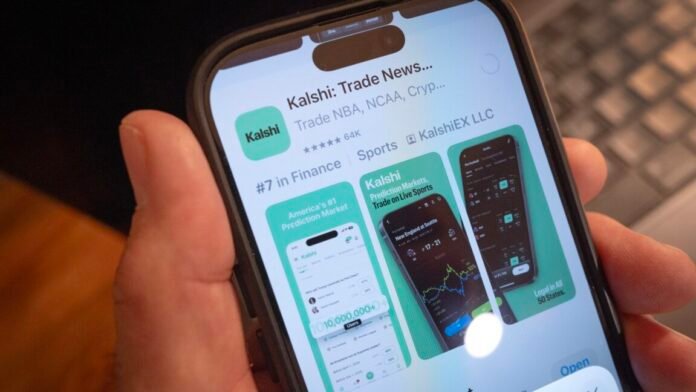
A state court in Washington this week ordered Kalshi to stop offering sports gambling and a variety of other wagers on its prediction market. King County Superior Court Judge John McHale issued a preliminary injunction in response to a lawsuit filed against Kalshi by the state of Washington.

“The order requires Kalshi to stop offering, accepting, or facilitating wagers on sports, elections, politics, entertainment, culture, tech and science, or mentions in Washington,” said a press release yesterday from Washington Attorney General Nick Brown. “Kalshi must implement an IP address and residency-based geofence by August 19 and a multi-source geofencing solution by September 2. This does not include all the wagers offered on Kalshi, but it includes a substantial part of their business, which in recent years has been increasingly driven by sports wagers.”

Kalshi is not licensed by the state Gambling Commission and is not registered to conduct business in Washington, the court order said. McHale found that Kalshi ads claiming “that it offers ‘legal betting’ in Washington state are likely to mislead a reasonable consumer that such gambling activities are legal under state law.”

Under the court order, Kalshi could face penalties of up to $120,000 per day if it fails to complete the implementation of the ordered geofencing by September 2. “Kalshi will not prohibit users from exiting positions they already hold. The State reserves, and does not waive, the right to seek recovery for fees and losses incurred by Washington consumers on or after September 2, 2026,” the order said.

Kalshi claims it doesn’t have to follow state laws

To get a preliminary injunction, a plaintiff must show they are likely to succeed on the merits of their claims. McHale found that Washington is likely to succeed in proving its claims that Kalshi violated state laws on gambling and consumer protection.

“Kalshi operates an online betting platform that it advertises as a ‘prediction market’ and that allows consumers to bet on thousands of topics ranging from sports, political elections, entertainment, popular culture, and whether public figures will utter specific words or phrases (mentions’),” McHale wrote.

The judge found that “Kalshi’s provision, marketing, and advertising of illegal gambling activities constitute unfair and/or deceptive acts or practices in trade or commerce” under Washington law.

Brown hailed the court ruling, saying that “Kalshi has gotten rich promoting wagers on sports, elections, natural disasters, events related to the Iran War, and more. Under this order, Kalshi is banned from offering wagers on most of those topics in Washington.”

Kalshi argues that it doesn’t have to follow state laws because the US Commodity Futures Trading Commission (CFTC) has exclusive jurisdiction over prediction markets. The Trump administration has repeatedly made the same argument and sued states that try to regulate the platforms. The battle involving states, the US government, and Kalshi is being litigated in state and federal courts throughout the country.

“Kalshi is regulated by the CFTC, which has exclusive jurisdiction over our exchange,” a Kalshi spokesperson said in a statement provided to Ars today. “We respectfully disagree with the court’s decision and are considering all legal options.”

The spokesperson added that Kalshi has never offered markets on wildfires “because they create perverse incentives” and has never offered markets on war, death, or terrorism.

Kalshi could get help from Trump admin

One of Kalshi’s legal options is asking the Trump administration for help. The CFTC this week declared a “market emergency” in New York in an attempt to stop the state from enforcing its gambling laws against Kalshi. The CFTC took the action after a request from Kalshi and ordered the company to continue operating in the state.

“Congress did not intend for derivatives exchanges to be regulated under a patchwork of state gaming laws,” CFTC Chairman Michael Selig said.

Various courts are grappling with just what Congress intended. McHale concluded that the US Commodity Exchange Act does not preempt Washington state gambling law.

The US law gives the CFTC exclusive jurisdiction over certain transactions on designated contract markets (DCMs), but it “does not contain express preemption language,” McHale wrote. The judge pointed to a portion of the US law that says the following:

Except as hereinabove provided, nothing contained in this section shall (I) supersede or limit the jurisdiction at any time conferred on the Securities and Exchange Commission or other regulatory authorities under the laws of the United States or of any State, or (II) restrict the Securities and Exchange Commission and such other authorities from carrying out their duties and responsibilities in accordance with such laws. Nothing in this section shall supersede or limit the jurisdiction conferred on courts of the United States or any State.

“The language referenced above indicates that Congress did not intend to supersede or limit States in regulating gambling or in superseding or limiting the jurisdiction of any court of any State in addressing such regulation,” McHale wrote.

Trump vows to declare Strait of Hormuz a US territory

0
trump-vows-to-declare-strait-of-hormuz-a-us-territory
Trump vows to declare Strait of Hormuz a US territory

President Donald Trump delivers remarks at the General Motors Proving Ground in Milford, Michigan, on July 27, 2026. Photo: Daniel Torok / White House

In yet another remark that triggered alarm around the world, President Donald Trump said Friday that he planned to declare the Strait of Hormuz – which Iran has blockaded for much of the past five months over his and Israel’s illegal war – a US territory.

Just two days after the latest inflation figures demonstrated, in the words of one expert, “Trump’s catastrophic mismanagement of our economy,” the president ignored the economic fallout from his war, which led Iran to restrict ship traffic through the strait, driving up fuel prices worldwide.

“We’re bringing the prices way down,” he told a Long Island crowd. Trump also said that “after we finish defeating Iran, which is being very badly defeated, pretty soon, I’ll be declaring the Hormuz Strait a territory of the United States.”

Some critics responded to clips of the comments on X by mocking Trump, who is infamous for his lies. Representative Ted Lieu (D-Calif.) quipped, “Awesome! And the Easter Bunny is real.”

Ryan Costello, policy director at the National Iranian American Council, said that “this jingoism rings a bit hollow when most of the US bases near the strait have been essentially abandoned due to danger from Iranian missiles and drones.”

Progressive political commentator Kyle Kulinski declared that “he absolutely needs to be impeached, removed, and locked up. He’s a completely unhinged lunatic, and he’s a sadistic violent menace to the world.”

After high initial claims about lower prices, Trump admitted that gasoline has soared due to his war, but said: “For you to pay a tiny little bit more for your gasoline, just remember, you’re doing it so that a very evil country cannot have a – a country, really it’s the No. 1 state sponsor of terror in the world – we don’t want to have them have a nuclear weapon. So, remember that when you have to pay a little bit more, you’re at $4, it’s OK. I’ll never apologize. I did the right thing.”

Trump’s threat over the strait between the Persian Gulf and the Gulf of Oman came just before a monthlong ceasefire between the US and Iran is set to expire on Monday. A senior White House official told Politico that the situation is “static.”

“It doesn’t matter how close or how far we are,” said the official, who has heard no mention of a potential extension of the ceasefire. “What matters is if Iran wants to come to the table and agree to a deal. Right now, they haven’t done that.”

The Associated Press reported Friday that “the Trump administration appears to be reaching out to a broader swath of countries that might be able to help pressure Tehran,” and Ali Vaez, Iran project director at the International Crisis Group, told the outlet that “everyone is just urging both sides to stop this reckless game of chicken.”

In addition to launching a war on Iran in February, and invading Venezuela in January to abduct its president, Trump has made threats against various other nations during his second term, including CanadaCubaColombiaGreenland, and Mexico. He’s also threatened to seize the Panama Canal and killed hundreds of people by blowing up boats allegedly smuggling drugs.

-Common Dreams

Katz Orders Shift of West Bank Enforcement to Police as IDF Investigates Qusra Violence

0
katz-orders-shift-of-west-bank-enforcement-to-police-as-idf-investigates-qusra-violence
Katz Orders Shift of West Bank Enforcement to Police as IDF Investigates Qusra Violence


Defense Minister Israel Katz ordered the Israel Defense Forces on Friday to develop a plan transferring responsibility for civilian law enforcement involving Israeli communities and residents in the West Bank to the Israel Police, saying the military should concentrate on fighting terrorism and protecting Israel’s security.

The directive followed discussions with IDF Chief of Staff Eyal Zamir and other senior officers. Under the proposal, police would receive the authority, funding, and personnel needed to assume the additional responsibilities.

Katz said dealing with Israeli violence in the West Bank “is not the role” of the IDF “nor is it capable of handling the enforcement of civil issues” there, citing the “expected welcome increase in the number of settlers” following government approval of new West Bank settlements. The defense minister said the military’s responsibility was to combat terrorism and defend Israel rather than “chase youth in the hilltops.”

The decision comes as the IDF prepares to investigate its response to recent unrest in the Palestinian village of Qusra, where settlers established an illegal outpost that was evacuated by the military and subsequently rebuilt. The investigation will examine delays in removing the outpost and the conduct of IDF troops at the scene.

Tensions escalated Tuesday when dozens of settlers entered and took control of Palestinian homes in the Qusra and Jalud areas. The IDF later declared the area a closed military zone.

Settlers also clashed with IDF forces following the military’s evacuation of an outpost built around Qusra.

The US has asked Prime Minister Benjamin Netanyahu to publicly condemn the violence, N12 reported. US Ambassador to Israel Mike Huckabee described an attack targeting the home of a family with American citizenship as “a shocking act of terrorism intended to frighten and harass this family.”

Leicester City owners looking to sell club for more than £200m

0
leicester-city-owners-looking-to-sell-club-for-more-than-200m
Leicester City owners looking to sell club for more than £200m


Leicester City’s owners King Power, who have been in charge of the ​Midlands club since 2010, are looking ‌to sell the third-tier outfit for more than £200 million ($270 million), the BBC reported on ​Thursday.

Leicester, whose Premier League triumph in ​2016 was a major upset, have dropped ⁠to League One after finishing second-from-bottom ​in the Championship last season.

Thai travel retail group King Power founder Vichai Srivaddhanaprabha bought Leicester from Milan ​Mandaric after the company signed a ​shirt sponsorship deal with the club.

Leicester, founded in 1884, ‌were ⁠promoted to the Premier League in 2014 and secured their first top-flight title two years later. The club won ​their only ​FA Cup ⁠in 2021.

Srivaddhanaprabha died in 2018 when his helicopter crashed outside ​the club’s stadium.

Leicester have struggled ​to ⁠manage their finances in recent years and have been relegated in successive seasons. They ⁠were docked ​six points last term ​for breaching EFL spending rules.

Source:  Reuters

Meghan Using King Charles Reunion for ‘Money and Power’

0
meghan-using-king-charles-reunion-for-‘money-and-power’
Meghan Using King Charles Reunion for ‘Money and Power’


Meghan Markle may have more than family peace on her mind as Prince Harry attempts to repair his fractured relationship with King Charles, according to a royal commentator who claims a reconciliation could hand the Sussexes a major boost in money, influence and attention.

The explosive claim comes after Meghan, 45, and Harry, 41, reportedly joined Charles, 77, and Queen Camilla, 79, for a highly secretive family meeting at Highgrove House last month.

Their children, Prince Archie, 7, and Princess Lilibet, 5, were also reportedly present, making the gathering an especially significant moment after years of bitter tension between the Sussexes and the royal family.

But royal biographer Angela Levin has poured cold water on suggestions the meeting was simply about healing old wounds.

“It’s not a dream reunion,” Levin wrote on X. “It is a pathway to gather money, power, and give Meghan all she wants.”

The stinging accusation comes as speculation grows that Harry would like his father to publicly appear alongside him at the 2027 Invictus Games in Birmingham.

Such a moment could be enormously valuable for Harry and Meghan, one source told RadarOnline, instantly putting the California-based couple back at the center of the royal spotlight.

“If Harry and the King were eventually seen standing together at Invictus, it would be an enormously powerful image,” the source said.

The insider added that the sight of Charles publicly supporting his estranged son could dramatically change the narrative surrounding the Sussexes and generate massive international attention.

For Harry, the Invictus Games remain one of his biggest and most respected projects. He founded the competition for wounded and sick military personnel and veterans in 2014.

Harry returned to Britain last month for an event marking one year until the Birmingham Games. Meghan did not initially accompany him and was reportedly staying away because of security concerns.

During the trip, Harry even took part in goat yoga in Warwickshire before the visit took a far more serious turn.

Meghan later joined Harry and their two children for the private meeting with Charles and Camilla at Highgrove.

The reunion was reportedly the first time Archie and Lilibet had seen their grandfather since Queen Elizabeth II’s Platinum Jubilee celebrations in 2022.

According to Vanity Fair, the roughly hour-long encounter was organized with extraordinary secrecy.

One source described the arrangements as “completely cloak-and-dagger” and said the King himself was heavily involved in making sure the meeting stayed private.

“The King wanted to see Harry and the children,” the source said, adding that the gathering was arranged unusually late and that those involved were sworn to secrecy.

No official details about what was discussed have been released.

The private nature of the meeting was particularly striking considering how publicly Harry and Meghan’s royal feud has unfolded since they quit as senior working royals in 2020 and moved to California.

Their relationship with the family deteriorated further following their bombshell interview with Oprah Winfrey, their Netflix documentary series and Harry’s bestselling memoir, Spare.

Harry used the book to reveal deeply personal details about his relationships with Charles, Prince William and other members of the royal household, sending tensions to new lows.

Now, however, signs of a possible thaw are emerging.

And if Charles were to appear beside Harry at Invictus, it could become one of the most closely watched royal moments in years — while potentially giving Harry and Meghan the kind of global exposure they have struggled to replicate since leaving royal life.

Harry is also expected to return to Britain in September for the annual WellChild Awards, another event he has regularly attended as a patron.

Whether the Highgrove reunion marks the beginning of a genuine family reconciliation — or, as Levin alleges, something far more calculated — remains to be seen.

0FansLike
0FollowersFollow
0FollowersFollow
0SubscribersSubscribe
- Advertisement -
Google search engine

Recent Posts