17.7 C
London
Tuesday, August 11, 2026
Home Blog

New allied trio militarily moves on from faltering US and Trump

0
new-allied-trio-militarily-moves-on-from-faltering-us-and-trump
New allied trio militarily moves on from faltering US and Trump

The deadlocked Middle East war gave birth last week to a defense alliance among Saudi Arabia, Turkiye and Pakistan that represents a vivid backlash to the failures of heavy American bombing of Iran and President Donald Trump’s spasmodic diplomacy to end the conflict.

The agreement was signed Friday in Saudi Arabia, which is among fossil fuel-rich Persian Gulf countries hardest hit by the physical and economic force of Iran’s counterattacks. Tehran justifies its attacks on the basis of the Saudi foreign policy alignment with the US.

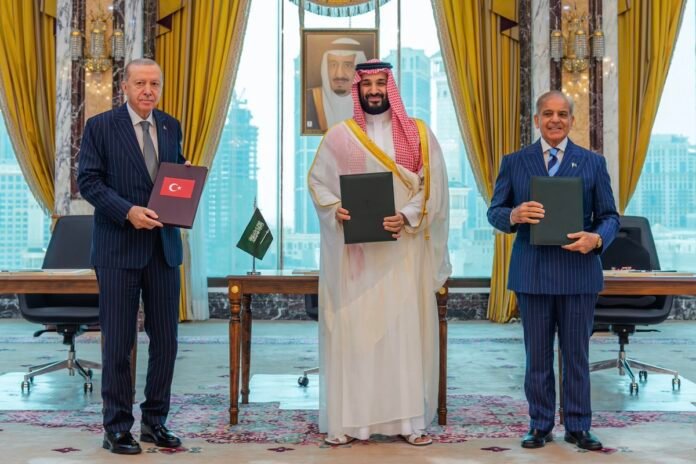
Saudi leader Mohammed bin Salman, Turkish President Recep Erdogan and Pakistan’s Prime Minister Shehbaz Sharif signed the agreement. The key phrase echoed the pledge of NATO allies to defend each other: “The agreement is intended to strengthen collective deterrence against any act of aggression, and stipulates that any armed attack against any one of the three states shall be regarded as an attack against them all.”

The locale for the signing ceremony embedded in the document’s name – it’s called the Mecca Joint Defense Agreement – provided a non-subtle sign that this was no Western-adjacent grouping. Rather, it marks a departure from a key feature of Persian Gulf security for decades: United States leadership.

A prime example was the 1990 Americans led libration of Kuwait from the invading army of Iraq’s Saddam Hussein. Ever since, Saudi Arabia and other Gulf States have hosted US ground, naval and air force personnel on their territory.

In this alliance, Riyadh supplies economic heft while Turkey provides NATO’s second biggest army and neutral Pakistan a nuclear arsenal. Their agreement seems to mark a breaking point.

“The political symbolism of the summit is significant,” said Abdulaziz Sager, who heads the Gulf Research Center, an institute based in Saudi Arabia. “Three of the Muslim world’s most influential states are convening at a moment of heightened uncertainty, demonstrating a growing willingness among regional and middle powers to coordinate ​more closely on security matters.”

Faltering confidence in the supposed deterrence provided by the US military presence is an important motivation, observers say. Iran has bombed US-allied states and brought parts of the world economy to a near standstill. The strategic message: US protection is worthless and American allies ought to persuade Trump to call of the war.

There was perhaps a misperception among Gulf Arab rulers about the level of defense the US would provide. When Iran began bombing allied territory, Washington withdrew hundreds of its military personnel from Gulf bases, leaving leaders there wondering whether US deterrence was a mirage.

“A lot of these Gulf states are looking at us and thinking: Wait. We thought you built those bases to protect us,” Harvard University economist Ken Rogoff mused, during a Wall Street Journal TV talk show about the possible impact the war might have on global US influence. “I didn’t know you built those various military complexes in our countries so we could be target practice.”

The accord does not indicate creation of a ready-for-action “mutual defense pact,” said Ozgur Unluhisarcikli, an expert on Turkish foreign policy in the Ankara office of the German Marshall Fund, an American think tank.

Rather, he told Qatar-based al-Jazeera television, this is a modest “framework for closer strategic, military, and defense-industrial coordination.”

In any event, a full divorce is unlikely: all the countries buy key armaments from the US, a dependence that can’t evaporate overnight.

Iran’s formal response was both dismissive and avuncular. Foreign Minister Abbas Araghchi said the Mecca group’s search for security was misguided. Iran’s armed forces had displayed “readiness, capability and might” in fighting off “the world’s most expensive military,” Araghchi boasted.

“When Muslims stand together, we can face every challenge by malicious outsiders head-on. It’s time to rely only on ourselves and embrace true brotherhood,” he wrote online.

Ebrahim Rezaei, a member of Iran’s parliament, added a more belligerent tone. “Saudis must know that a paper agreement with Turkey and Pakistan will not bring them security, just as years of one-sided dependence on the Americans did not bring them security,” he wrote online. “Reform your policies so that you do not need to beg for security from others.”

Beyond the immediate searrch for a new securty architecture, as Western military observers put it, the war reflected ancillary needs and opportunities for the partners:

Saudi Arabia

For several years, Saudi Arabia has been trying to perusue diplomacy to pacify its region and also extend its influence globally.

In 2023, top Iranian and Saudi officials met in Beijing and announced resumption of diplomatic relations that had been broken off in 2016 when an Iranian mob stormed the Saudi embassy in Tehran. That pact not only signaled reduced tensions, but also suggested that the Saudi’s might look beyond Washington for new diplomatic friendship: The agreement was brokered by Wang Yi, China’s foreign minister.

The Saudis had already long collaborated with Russia to keep oil prices high even as various US administrations wanted them lower.

There had also been disillusion with Trump during his first term in office. In 2019, he failed to punish Iranian attacks on Saudi-flagged oil tankers in the Gulf even as an Iranian-sponsored drone attack fromYemen hit a Saudi oil processing facility.

Saudi Arabia now finds itself in a vastly different geopolitical landscape: China and Russia are allied with Tehran – and the US is, so far, unable to defeat Iran. Can Turkey and Pakistan prove more reliable security partners?

Pakistan

Pakistan is trying to escape the twin straitjacket sewn together by its long border dispute with India and its interventions in Afghanistan, so as to better engage the world beyond.

Like Saudi Arabia, Pakistan had already turned to China to increase its geopolitical value. It signed onto China’s global Belt and Road Initiative – letting Beijing construct a highway from far western China to Pakistan’s Indian Ocean coast, where China manages a port close to the entrance of the Persian Gulf.

Islamabad’s effort to mediate a US-Iran peace deal has failed so far, but it keeps friendship with Washington intact. A partnership with Turkey provides access to Ankara’s military production, and technology.

Grabbing a role in Middle East diplomacy provides a role for Pakistan in an area where it had little influence or impact.

Turkey

Erdogan regards his country as a kind of Ottoman Empire-lite with important interests to protect and historic responsibilities to assume in the Middle East as well as Central Asia. (The Ottomans had been expelled via World War I: See “Lawrence if Arabia.”)

The alliance with Saudi Arabia puts Ankara at the center of regional geopolitics; the Islamic reference adopted by the Mecca trio also provides an aura of historical redemption.

There are economic benefits. Saudi Arabia already invests in Turkish high-tech industry. Turkey is a major planning, construction and security player in the development of NEOM, a Saudi five-hundred billion dollar high tech “mega-city” currently being built near Saudi Arabia’s northwest Red Sea coast

Turkey is likely to earn reductions in tariffs on its exports to Saudi Arabia, opening beneficial market for Turkish consumer exports.

In the military realm, Turkey offers Saudi Arabia advanced drone and naval modernization equipment. In addition, it could possibly help in unblocking Iran’s Yemen proxy ally’s closure of the entrance to the Red Sea.

Turkey has a naval base in Somalia near Mogadishu, the capital. It is constructing a missile base on the Indian Ocean coast to accommodate rockets with ranges of up to 1,250 miles. That puts Turkish projectiles in range of the whole Arabian Peninsula, Red Sea shipping lanes and the Strait of Hormuz, where the Iranians currently block access to the Persian Gulf.

Turkish ambitions challenge Israel’s ambitions. In the wake of the Gaza war, the Israelis appeared bent on establishing a Pax Israeliana across the Middle East via military conquest. Turkey sees Israel’s efforts to take over all Palestinian areas, dominate the Lebanese and bring down Islamic rule in Iran as elements of a single scheme.

“As Turkey deepened its involvement in regional affairs, its interests increasingly collided with Israel’s,” writes the Jazeera Center for Studies, a think-tank associated with the Jazeera TV news network. Thus, Israel’s military moves “have direct consequences for Turkish security and economic interests.”

Valve slowly expands SteamOS support on non-Valve hardware

0
valve-slowly-expands-steamos-support-on-non-valve-hardware
Valve slowly expands SteamOS support on non-Valve hardware

SteamOS is continuing its slow march to fuller support on a wider variety of non-Valve hardware. This weekend’s release of the SteamOS 3.8.25 Beta includes “initial gamepad support” for a few recent gaming handhelds and improved support for a few others.

Those newly supported handhelds include MSI’s Claw 8 EX AI+, the extremely expensive, extremely powerful handheld built around Intel’s Arc G3 processor that launched this summer. While SteamOS has long included beta support for “other AMD powered handhelds,” Valve has only recently been working on offering compatibility with Intel-based handhelds like the MSI Claw line. This weekend’s update suggests the company hasn’t abandoned those efforts and that Intel chips aren’t being left out of the SteamOS conversation.

SteamOS 3.8.25 also newly supports the controllers built into Ayaneo’s Android-focused Pocket S2 and the more recently released Windows-based Konkr Fit. Valve also says the new OS offers “improved support” for older MSI Claw devices and the OneXPlayer line of portable gaming PCs.

This weekend’s update follows June’s SteamOS 3.8 update, which stressed “improved compatibility with recent Intel and AMD platforms.” That update specifically called out improved controller support on handhelds from the likes of GPD Win, Anbernic, and OrangePi, as well as improvements for various Lenovo Legion Go, MSI Claw, and OneXPlayer devices.

So far, the Lenovo Legion Go S remains the only non-Valve device to sport the full “powered by SteamOS” branding, indicating full compatibility with Valve’s take on Linux. But these kinds of updates suggest the company is still interested in getting its bespoke OS working well on plenty of other devices.

Elsewhere in the new SteamOS update, Valve has updated the Linux driver powering the new Steam Controller, allowing it to work with “native controller applications” even when Steam is not running. That should be welcome news to SteamOS players who like to launch into Desktop mode to run emulators or other Linux-native non-Steam games.

Deadly drone crash sparks new Moldova-Russia tensions

0
deadly-drone-crash-sparks-new-moldova-russia-tensions
Deadly drone crash sparks new Moldova-Russia tensions


Moldovan President Maia Sandu has blamed Russia’s war in Ukraine for a recent drone crash in the southeast of her country.

A drone crashed and exploded in the village of Crocmaz on Sunday, causing a fire that damaged several properties but caused no casualties. After conducting preliminary analysis on the fragments, local police said it could be a “missile-like drone.”

“I strongly condemn the latest violation of our airspace,” Sandu wrote on X, adding: “This is a direct consequence of Russia’s war, and it endangers us all.”

Sandu said that the “risk to human life in our region is real and growing. It must stop.”

The affected village is close to southwestern Ukraine, particularly the Odesa region, which came under a heavy missile and drone attack by Russia on the same day.

Moldovan police said that to date, no other aircraft of this type have been found on Moldovan territory and research is continuing to establish “the exact type and origin of the aircraft as well as the circumstances of the incident.”

Last week, local police discovered wreckage from a Russian Geran-2-type drone near the village of Văleni in southern Moldova.

After the incidents, Moldova’s foreign ministry recalled its ambassador from Russia for consultations.

Why Japan is stalling on Trump’s Gaza rebuild offer

0
why-japan-is-stalling-on-trump’s-gaza-rebuild-offer
Why Japan is stalling on Trump’s Gaza rebuild offer

On July 30, Donald Trump said his Board of Peace had reached what he called a monumental step toward disarming Hamas. The weapons are not the part Tokyo should study. The gate the deal opens is.

Disarmament is conditions-based, and the conditions are already contested. Israel has not signed on to the terms. Hamas says it will surrender nothing until Israeli forces withdraw.

However that standoff ends, the agreement pushes Gaza toward the phase every party has circled for two years: reconstruction. Whoever controls the rebuild will control tens of billions of dollars in contracts. The body that controls the rebuild is Trump’s board. And on that board sits an empty chair with Japan’s name on it.

Japanese Prime Minister Sanae Takaichi holds an open invitation from Trump to join. Tokyo has not said yes, and because it cannot easily tell Washington no, it has not said no either.

It sent an ambassador to the board’s first meeting as an observer and postponed the decision. That decision is about to get harder, because reconstruction is now the live question. This is what the invitation actually buys.

Start with the price list. A three-year seat on the Board of Peace is free. A permanent one costs a billion dollars, payable in the first year, according to the charter the Times of Israel obtained and published in January. Governance over a territory has a sticker price, and it is denominated in cash up front.

Look at who holds the executive seats. Next to the diplomats sit Jared Kushner, Apollo Global Management’s Marc Rowan, and World Bank president Ajay Banga, each handed a portfolio covering reconstruction, investment or the raising of capital.

That is not the staffing of a relief agency. It is the staffing of an investment committee, and this one has been handed a territory to rebuild from zero.

Now the arithmetic. At the first meeting in February, Trump pledged US$10 billion in American money, a sum that needs a congressional authorization it never received, for a body critics in Congress say has no basis in law.

Nine other governments put up $7 billion more. In April, an EU-UN assessment priced the actual rebuild at $71.4 billion. By late spring, the board’s official reconstruction fund, the one the World Bank set up, sat empty.

The Financial Times reported zero dollars deposited four months after launch, with contributions moving instead through a private JPMorgan account. The distance between what was promised, what arrived, and what is needed is the space the billion-dollar seat is built to fill. Governments that want a permanent hand in how the money is spent are asked to finance the rebuild directly, and rewarded with a vote over it.

Consider what that does to incentives. In an ordinary aid arrangement, however flawed, the population being helped is at least the nominal client, and the money moves toward need. Here the money moves toward a seat, and the seat carries a portfolio and a vote. The donor becomes less a benefactor than a shareholder, with the say a shareholder expects in proportion to its stake.

Gaza’s residents hold no stake, because they have no way to buy one. The charter, by the Carnegie Endowment’s reading, does not mention Gaza once, an odd silence in a document written to govern it.

The committee that will run the strip is appointed, not elected, 15 Palestinian technocrats with no political role. The board that met in February seated Israel and a row of Arab states and not a single Palestinian. On the balance sheet this body keeps, the people of Gaza are the asset under management, not the investors managing it.

Here is the part that should make Tokyo pause. The charter does not stop at Gaza. Its language reaches well beyond the territory, and at the February meeting Trump said the board would end up looking over the United Nations to make sure it runs properly. This is the body Japan is being asked to help capitalize.

Weigh what that asks. For 70 years, Japan has staked its security and much of its diplomacy on the postwar order the UN anchors. It has been among the organization’s largest funders for most of that time. It spent two decades campaigning for a permanent Security Council seat it never got.

Now a rival body run by one man offers permanent seats to anyone who writes a billion-dollar check, and it is asking Tokyo to help pay. The system Japan bought into for a permanent voice is being rebuilt next door, and this time the voice is simply for sale.

The obvious defense is that the fee is dead. After the charter drew fire, the accompanying UN resolution called membership free and contributions voluntary. Read the two documents together, and the softening is cosmetic.

The board runs on its charter, not the resolution, and the charter keeps the billion-dollar threshold. The UAE, Qatar, Saudi Arabia and Kuwait have each already put up a billion or more. Voluntary in name, priced in practice.

The other defense is that weighted influence is how international finance already works.

The IMF and the World Bank scale votes to contributions, and the Bank’s own president sits on this board. That comparison convicts the arrangement rather than clearing it. Those institutions run published quota systems, near-universal membership, and decades of external audit.

This board attaches a flat billion-dollar fee to a permanent seat its chairman personally approves, over a single occupied territory, under a charter that reaches well past the mandate the Security Council actually granted. A vote at the World Bank buys a share of a system. Here a check buys a share of a nation’s future.

What that share becomes is still inference. The documented facts are the price, the appointees, the empty fund, and the charter’s silence. The contracts steered toward national firms, the ports and power grids and telecoms parceled among the paying members, are what the structure rewards, not yet what it has done. Boards behave the way their incentives point, and these incentives point at returns.

Japan has already started to hedge. Rather than commit to the board, it joined the EU-UN “Team Gaza Initiative,” the multilateral track built around the same Security Council resolution the board is drifting away from. That instinct is the right one. The test is whether Tokyo holds to it when Trump asks Takaichi to her face.

Japan can keep faith with the multilateral system it helped build and fund for generations, or it can help capitalize the body designed to make that system optional. It cannot do both with the same check.

Colombia recognises Israeli sovereignty over occupied Golan Heights

0
colombia-recognises-israeli-sovereignty-over-occupied-golan-heights
Colombia recognises Israeli sovereignty over occupied Golan Heights

Colombia on Monday officially recognised Israel’s sovereignty over the Golan Heights, a strategic Syrian territory that has been under Israeli military occupation since 1967, Anadolu reports.

“The Government of Colombia recognises Israeli sovereignty over this territory, as well as the right of that state to protect itself against external threats,” the Colombian Foreign Ministry said in a statement.

The ministry claimed that maintaining control over the plateau is an “essential component” of Israel’s national defence, particularly following the escalation of regional security challenges.

Israeli Foreign Minister Gideon Saar expressed gratitude to Colombian President Abelardo de la Espriella and Foreign Minister Omar Bula Escobar for the shift in policy, labelling the move a “historic decision.”

The diplomatic move comes as Israel has expanded its military footprint in Syria following the collapse of the Assad regime in December 2024. Tel Aviv declared the 1974 disengagement agreement void and moved into UN-monitored buffer zones, despite Syria’s new administration affirming its commitment to existing treaties.

The Golan Heights, which Israel unilaterally annexed in 1981, remains a focal point of international dispute. In 2019, during President Donald Trump’s first term, the US became the first country to recognise the Golan Heights as part of Israel.

Espriella, Colombia’s new pro-Israel leader who received strong backing from Trump during his campaign, recently ordered the suspension of a planned embassy in Palestine.

Amazon backs power plant that may become top source of US climate pollution

0
amazon-backs-power-plant-that-may-become-top-source-of-us-climate-pollution
Amazon backs power plant that may become top source of US climate pollution

Amazon’s artificial intelligence ambitions will soon be partly fueled by a natural gas-burning power plant in Texas that “could become the largest single source of climate pollution in the United States,” The New York Times reported.

These gas-burning plants are increasingly lumped into data center projects. They produce harmful pollutants, which can accelerate climate change impacts and harm public health—contributing to conditions like asthma, heart disease, lung cancer, and strokes. Some communities are demanding more stringent environmental reviews, but the Trump administration favors fast-tracking that can include skipping the permitting process entirely.

Since Elon Musk’s xAI controversially began relying on gas turbines last spring to power its biggest AI data center, Colossus, there has been public backlash to off-the-grid data centers like the one Amazon is building.

Notably, the National Association for the Advancement of Colored People (NAACP) in Mississippi sued xAI to get Musk’s gas turbines turned off in June. That spurred the Trump administration to join the fight, backing xAI and arguing that citizens have no power to enforce the Clean Air Act.

However, as xAI and Trump pushed to dismiss the lawsuit, reports show that other AI giants have largely ignored mounting public criticism since it was filed. They’ve increasingly invested in various ways to avoid permitting discussions and supply their own power—including Anthropic, Google, Meta, Microsoft, OpenAI, and Oracle. Together with Amazon’s investments, these alternative power plant projects swiftly securing approvals have become a harbinger that, unlike other data center fights that have successfully blocked $130 billion in projects so far this year, resistance against gas-burning plants may be futile. A potential loss in the xAI fight could devastate momentum in communities hoping to keep up the fight for more transparency.

Dozens of firms have begun sourcing their own power supplies in the past year, but the Texas project is reportedly Amazon’s first big investment in an off-the-grid data center.

After Amazon confirmed that it’s investing in the power plant to supply the energy needed for a massive planned data center project in Pecos County, the company boasted this ensured its project avoided straining the grid or raising electricity costs for neighbors. But the company did not respond to Ars’ questions about the power plant backlash, making it seem clear that the discussion it’s willing to have is over the cost of utilities, not the potentially mass-polluting impacts from its center’s reliance on gas turbines.

Amazon power plant clashes with climate pledge

In a statement provided to Ars, Amazon said that it “believes in paying the full costs of powering our operations,” and it plans to do so by relying on “new on-site generation that won’t raise electricity costs for Texas families and is designed to transition to grid-connected service as interconnection timelines allow.” Over time, Amazon expects its power plant will possibly add energy supply for local customers, which could eventually make the grid more reliable and affordable. That’s the vision for the future that Amazon and likely other AI firms want the public to focus on.

However, it’s unclear if neighbors would ever see those future benefits. And any spike in emissions once the Texas power plant comes online seems to clash with Amazon’s voluntary commitments to reach net-zero carbon emissions by 2040, critics suggested.

Amazon told Ars that it remains committed to its Climate Pledge. But under Amazon’s current plan, the Texas power plant would be permitted to release 33 million tons of carbon dioxide a year, which the NYT flagged as “more planet-warming gases than any other power plant in the country.”

Amazon knows that its data center plans could obstruct its climate goals at a time when its emissions have already been steadily rising, the NYT reported.

But Amazon’s bottom line might take precedence over that 2040 deadline. For companies like Amazon, gas-burning plants offer a fast lane to avoid years of delays associated with connecting to the grid and launching data centers quickly to meet ever-rising demand, just as AI becomes more mainstream. Any delay at all is viewed as money left on the table, and Amazon CEO Andy Jassy said on a July 30 earnings call that demand is particularly exploding for its AI and chips businesses amid the AI boom. Looking forward, Amazon expects supply may lag behind demand well into 2027.

Margaret Callahan, an Amazon spokesperson, suggested that the 2040 deadline remains a priority but also noted that “the world looks different now than when we co-founded the climate pledge,” the NYT reported.

Amazon to burn gas while exploring renewables

Amazon’s Pecos County plan was first exposed by Cleanview, a company closely tracking environmental concerns with off-the-grid data center developments.

At the start of August, Cleanview discovered that the tech giant had filed three construction permits in Texas near the power plant that were “beginning immediately” and wondered if the projects were linked.

Thoroughly documenting the paper trail and taking satellite images, Cleanview got Amazon to confirm its suspicions, then released a report Friday warning that “Amazon is backing what could be the largest natural gas power plant ever built in the United States.”

Specifically, one permit showed the power plant “would use 35 turbines to generate up to 7.65 gigawatts of power,” Cleanview reported.

Although it’s rare for any facility to emit as much as its permits allow, Cleanview is concerned that Amazon’s rush to fulfill Amazon Web Services cloud orders will tempt the company to blast more and more emissions into more areas each year without adequately weighing public harms. On top of the Texas power plant, Amazon is also “in talks with the developers of a 4.5 GW gas power plant in Homer City, Pennsylvania,” Cleanview reported.

That Pennsylvania power plant, Cleanview noted, was supposed to be the largest in the US, but clearly that bragging right wouldn’t have stuck for long. Spiraling demand for AI is now rapidly escalating the size of the power plants, Amazon’s plans suggest. And although one survey of data center developers earlier this year suggested that the majority think the “ideal energy mix” should predominantly rely on renewables and battery storage that are only complemented by natural gas, nuclear power, and other low-carbon sources, Donald Trump has predictably panned renewable energy while insisting that “rapidly building more fossil-fuel-burning power plants was essential to America’s AI race with China,” the NYT reported. At least one electric company, El Paso Electric, suggests Trump is right at least in the short-term, telling the NYT that “renewable generation alone cannot provide the continuous power required at this time” by the biggest data centers.

Stoking additional backlash, the president also recently rolled back environmental protections to make it even easier for AI firms to build their own power plants at a time when his Environmental Protection Agency head, Lee Zeldin, has declined to set nationwide standards, Politico reported.

Amazon told Ars that it’s exploring the use of solar energy and battery storage at the Texas data center but plans to rely on gas turbines in the meantime.

xAI’s head start on gas-powered data centers

In a recent report, Cleanview flagged 59 data centers “with a combined capacity of ~90 GW that plan to build their own power ‘behind-the-meter.’” That represents about 25 percent of all planned data center projects in the US and suggests that xAI’s Colossus strategy “has gone from niche to mainstream,” Cleanview said.

“Speed to power is all that developers care about,” Cleanview reported, since “bringing a data center online even a few years early could result in tens of billions in revenue that would otherwise be forgone.”

The communities most likely to be impacted by the rush to build off-the-grid data centers tend to be located near “major natural gas production regions,” in typically red states where regulatory frameworks “favor rapid development,” Cleanview reported. Currently, Texas is attracting the most projects, trailed by a large margin by Utah, Pennsylvania, Ohio, New Mexico, Wyoming, and Florida.

On top of using “mobile gas generators strapped to semitrucks”—as xAI did in Memphis—firms are also scouring for other quick-fix solutions. Popular alternatives include “aeroderivative turbines originally designed for aircraft and warships,” “reciprocating engines that ramp fast, but are less efficient,” and “refurbished turbines acquired from industrial operations,” Cleanview found. Perhaps most problematic are some gas turbines with simpler designs, the NYT reported, which pollute more than standard turbines.

For communities monitoring off-the-grid data centers, it can be hard to determine how big the pollution threat really is.

The NAACP has argued that xAI’s reliance on gas turbines has only grown the longer the facility has operated, “growing from 18 to 27 to 33 to, now, 60 unpermitted gas turbines,” while “Memphis area communities were left to piece together the pollution threat for themselves.”

So far, despite being the supposedly fast and easy solution, gas turbines aren’t widely used yet. According to Cleanview, xAI accounts for most of the 2 GW behind-the-meter generation capacity running as of mid-2026.

Some of these projects can be approved in days, without any public notice, the NYT reported. One nonpartisan research group, the Environmental Integrity Project (EIP), recently estimated that “at least 82 gas-burning power plants are being built or have been proposed” to power US data centers—most within the last 18 months.

But not every project gets a rubber stamp. Permitting delays have set back other attempts to move forward with off-the-grid data centers from OpenAI and Oracle, as well as Microsoft, Cleanview reported. And if nothing changes to end those delays by 2027, out of 13 GW in possible projects that could be online, only 5 GW of power may be added, the company forecasted.

AI firms are doing their best to ensure there’s as much power as possible, avoiding delays by breaking up larger power projects into smaller phases that require less rigorous rules, the NYT reported. To stop that, the EIP is planning a lawsuit that could force US data center developers to adhere to stricter pollution rules.

As Amazon’s data center plans expand, Jen Duggan, the EIP’s executive director, told the NYT that Texas remains a hotspot to watch for fast-tracked projects from the biggest tech companies.

That’s troubling Texans, she said, who seem unlikely to simmer down since gas-burning plants “carry significant environmental footprints,” and “weak air pollution control permits that don’t protect public health are a systemic problem” already in that state.

At Least 111 Killed as Magnitude 7.4 Earthquake Strikes Colombia 

0
at-least-111-killed-as-magnitude-7.4-earthquake-strikes-colombia 
At Least 111 Killed as Magnitude 7.4 Earthquake Strikes Colombia 


A magnitude 7.4 earthquake that struck western Colombia on Monday has killed at least 111 people, prompting the government to declare a state of national disaster and deploy soldiers to affected areas, President Abelardo de la Espriella said. 

The earthquake was centered in San José del Palmar in the northwestern department of Chocó, approximately 240 kilometers, or 149 miles, west of Bogotá. The quake was the strongest recorded in Colombia in the past decade, Colombian Geological Service Director Julio Fierro Morales said. 

President Abelardo de la Espriella said the earthquake left at least 87 people injured and caused damage to roughly 1,600 buildings, with at least 61 structures destroyed. He announced emergency measures to speed the release of recovery funds and said he planned to travel to the affected area. 

“We aren’t going to leave people alone. They are in our hearts and we are going to tend to people with our full determination,” he said. 

Effects extended to Bogotá, where the shaking was strongly felt. Alarms sounded across the capital, and residents left buildings and gathered in the streets as a precaution. 

Videos from areas affected by the earthquake showed buildings collapsing and power lines swaying during the tremor. 

The government declared a national disaster as authorities began responding to the destruction. Soldiers were being sent to earthquake-hit areas to assist with the response. 

De la Espriella announced Tuesday that the confirmed death toll had reached at least 111, while dozens of other people had been injured. 


Eighties Movie Star Dies at Oregon Home

0
eighties-movie-star-dies-at-oregon-home
Eighties Movie Star Dies at Oregon Home


Jon Cypher, the veteran actor who charmed millions as Prince Charming opposite Julie Andrews in the historic live TV production of Cinderella before becoming a familiar face on Hill Street Blues and Major Dad, has died. He was 94.

Cypher died Aug. 3 at his home in Central Point, Oregon, his family announced.

Over a career that stretched across television, movies and Broadway, Cypher appeared alongside some of Hollywood’s biggest stars and built a résumé that included everything from police dramas and nighttime soaps to superhero cartoons and cult fantasy films.

But for generations of television viewers, he may be best remembered as the ambitious and often frustrating Chief of Police Fletcher Daniels on NBC’s Hill Street Blues.

Cypher appeared in 71 episodes of the acclaimed series between 1981 and 1987, regularly butting heads with Daniel J. Travanti’s Capt. Frank Furillo. Daniels was the type of bureaucrat viewers loved to hate — frequently more concerned with politics, money and protecting his own position than simply doing what was right.

Years earlier, however, Cypher had introduced himself to a massive American television audience in one of the biggest TV events of the 1950s.

A relative unknown at the time, Cypher was chosen to play Prince Charming opposite a rising Julie Andrews in Rodgers & Hammerstein’s Cinderella.

The lavish musical aired live and in color on CBS in March 1957 and became a television sensation. More than 107 million people reportedly watched, with over 60 percent of American households tuning in.

The role gave Cypher the breakthrough that would launch a career lasting decades.

Born in New York City on Jan. 13, 1932, Cypher attended Erasmus Hall High School on Flatbush Avenue before graduating from Brooklyn College in 1953.

Three years later, he appeared in summer stock productions at the Elitch Theatre in Denver.

Following Cinderella, Cypher made his Broadway debut in 1958 in Harvey Breit’s The Disenchanted.

He returned to Broadway in 1961 as an understudy for Patrick O’Neal in the original production of Tennessee Williams’ The Night of the Iguana before eventually taking over the role of the Rev. T. Lawrence Shannon.

His Broadway career also included major parts in some of the theater’s best-known productions.

Cypher played Don Quixote in Man of La Mancha, performed several roles in The Great White Hope and portrayed Thomas Jefferson in 1776.

When once asked how he prepared to play Jefferson, Cypher joked that his research consisted of looking at a nickel.

His film career included a memorable turn in the 1971 Western Valdez Is Coming, where he played a ruthless rancher opposite Burt Lancaster and Susan Clark.

A new generation of fans discovered him in 1987 when he played the heroic Man-at-Arms in the cult fantasy movie Masters of the Universe, starring Dolph Lundgren as He-Man.

Cypher later proved he could handle broad sitcom comedy as Brigadier Gen. Marcus Craig on Major Dad.

He appeared in 69 episodes during the CBS comedy’s final three seasons from 1990 through 1993 alongside Gerald McRaney.

Soap opera and nighttime drama fans knew him well, too.

Cypher played record producer Jeff Munson on Knots Landing in 1982 and 1983. His character listened to aspiring singer Ciji Dunne, played by Lisa Hartman, and also offered Kenny and Ginger Ward — played by James Houghton and Kim Lankford — jobs in Nashville that gave them an opportunity to leave the infamous Seaview Circle cul-de-sac.

He later appeared as attorney Dirk Maurier on Dynasty between 1983 and 1987, playing a lawyer whose ethics were often questionable.

Cypher also racked up appearances on daytime soaps including As the World Turns, General Hospital and Santa Barbara.

His long list of television credits included Nanny and the Professor, The Doris Day Show, Mannix, Bonanza, McMillan & Wife, The F.B.I., Bronk, The Rockford Files, Police Woman, Hunter, JAG and Law & Order.

He also entered the world of animation, providing the voice of the villain Spellbinder on Batman Beyond.

Despite his impressive body of work, Cypher never pretended acting was an easy way to make a living.

In a 2014 interview, he warned younger performers that the profession came with constant rejection and criticism.

Acting, he said, meant always being judged by critics and audiences, and he advised aspiring performers to prepare themselves because they would have to pick themselves back up “many, many, many times.”

Cypher’s talents went far beyond acting.

His family said he could sing opera in four languages and was known for suddenly bursting into song and entertaining those around him.

He also became an author later in life.

In 2019, Cypher published a book of limericks titled If You’re Not Depressed You Oughta Be in Therapy.

His family said the actor also held some unconventional beliefs and was outspoken about what he viewed as the need to acknowledge the truth surrounding “non-threatening extra-terrestrials and their crafts.”

Cypher’s final resting place will also reflect the distinctive way he chose to live.

He is scheduled to be buried Tuesday at Forest Conservation Burial Ground in Ashland, Oregon.

According to his family, Cypher wanted to be laid to rest beneath tall trees in a meadow while wrapped only in a natural, biodegradable shroud — fulfilling his wish to ultimately “return to nature.”

From playing a fairy-tale prince opposite Julie Andrews to battling bureaucracy on Hill Street Blues and stepping into the fantasy world of Masters of the Universe, Cypher spent more than half a century becoming one of those unmistakable faces American television viewers seemed to encounter everywhere.

He was 94.

History shows why the Makkah Agreement could fail

0
history-shows-why-the-makkah-agreement-could-fail
History shows why the Makkah Agreement could fail

Time is a stern teacher of nations. It changes the character of alliances, reshapes national priorities and repeatedly reminds states that geography is destiny only when political wisdom knows how to use it.

Countries may differ in ideology, resources and ambitions, yet history repeatedly brings them to the same conclusion: In an uncertain world, security and prosperity are rarely achieved in isolation.

Sixty-two years ago, Pakistan, Iran and Turkey confronted a similar question. In July 1964, the three regional members of the Central Treaty Organization established the Regional Cooperation for Development, or RCD, through the Istanbul Agreement.

Unlike CENTO, the RCD was not conceived as a military alliance. Its principal purpose was economic, technical and socio-economic cooperation. It sought to turn geographical proximity into commercial opportunity and political understanding into practical development.

The three countries pursued joint ventures in industry, trade, transport and culture, and facilitated travel and postal exchanges. One of its most enduring physical legacies in Pakistan was the RCD Highway, now known as the N-25, which remains an important artery linking Sindh and Balochistan.

But RCD became a lesson in the difference between aspiration and achievement. Financial constraints, protectionist policies, administrative weaknesses and divergent national priorities slowed implementation. The organization never acquired the institutional depth needed for genuine economic integration.

Political upheaval in Iran brought its formal end in 1979. Yet the idea survived. In 1985, Pakistan, Iran and Turkey revived it through the Economic Cooperation Organization, later expanded to include Central Asian states and Afghanistan. The history of RCD contains a paradox; its institutional record was modest, but its strategic vision was ahead of its time.

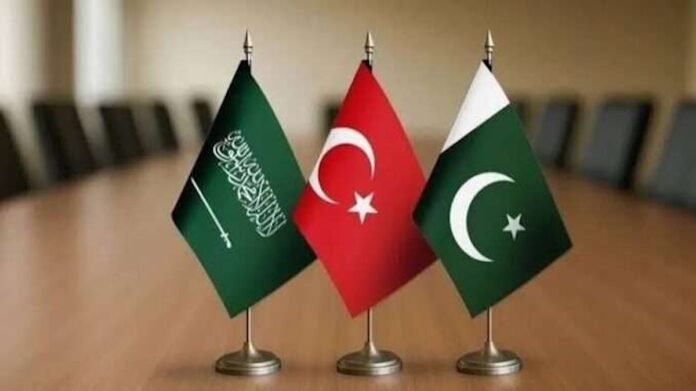
Today the region is witnessing another attempt to convert shared interests into collective strength—this time principally through security. On August 7, 2026, Pakistan, Saudi Arabia and Turkey signed the Makkah Joint Defense Agreement, declaring that an armed attack against one would be regarded as an attack against all.

Signed in Makkah, also known as Mecca, amid extraordinary regional uncertainty, it aims to strengthen collective deterrence and defense cooperation. The governments have emphasized that the arrangement is defensive and not directed against any particular country.

The agreement did not emerge from a vacuum. Pakistan and Saudi Arabia had already signed their Strategic Mutual Defense Agreement in September 2025. The Makkah pact therefore widens an existing security relationship.

Turkey brings one of the region’s most capable armed forces and a sophisticated defense industry. Saudi Arabia contributes economic weight, strategic geography and an ambitious defense-localization program.

Pakistan offers decades of military experience, defense-industrial capacity and the Muslim world’s only established nuclear deterrent. Together they combine military capability, economic strength and technological capacity.

If wisely institutionalized, their cooperation could move beyond symbolism. Joint exercises, intelligence sharing, counterterrorism, maritime security, cyber defense, defense production and technological research could gradually create a functioning security architecture. That distinction is crucial.

The history of RCD teaches that agreements perish when institutions remain weak. The Makkah agreement will face the same test; its future depends not on the grandeur of its declaration but on the seriousness of its implementation.

For Pakistan, the arrangement carries particular significance. Islamabad gains a stronger regional security partnership with two states of considerable diplomatic, economic and military influence.

Saudi Arabia remains a vital economic partner; Turkey has become a trusted defense and technological partner. The combination offers greater strategic depth in a fragmented international system.

Yet Pakistan must approach the opportunity with confidence and prudence. A defense agreement should never substitute for economic strength. Sustainable national power rests on economic resilience, technological advancement, political stability and institutional capacity. Pakistan should therefore convert the relationship into industrial partnerships, technology transfer, investment, energy cooperation and increased trade.

There is also a danger of allowing outsiders to define the agreement. Some interpret it as a sectarian bloc directed against Iran. Others see an anti-Western arrangement or speculate about hidden nuclear dimensions. India and Israel seem particularly troubled by the trilateral understanding. Such conclusions are premature.

The signatories have rejected claims of a sectarian or nuclear alliance and described the pact as defensive. Nor is it a rejection of the West. Each country maintains important Western relations.

The pattern is better understood as strategic diversification: regional powers seeking the capacity to protect their interests without depending on a single external guarantor.

That is the most important change since the days of RCD. In 1964 cooperation was imagined through the language of development — roads, trade, industry and culture. In 2026, the vocabulary has shifted to deterrence, maritime security, terrorism, technological warfare, energy security and strategic autonomy.

Beneath the changing language lies the same idea: regional states must turn common interests into common strength. If current arrangements translate into permanent mechanisms, joint capabilities and sustained political will, the Makkah agreement could become a cornerstone of a more autonomous regional security architecture.

Pakistan must seize the moment without losing sight of wider responsibilities. Its relationships with Saudi Arabia, Turkey and Iran need not be mutually exclusive. History does not repeat itself exactly; it echoes. RCD began with the dream of regional development.

The Makkah agreement begins with the necessity of regional security. One sought to build roads across borders; the other seeks to build deterrence across frontiers. One faltered for lack of political will and institutional capacity. The other will face the same test.

The signatures in Makkah are not the end of a story; they are its opening line. Whether that sentence becomes another short-lived arrangement or the foundation of a durable regional order will depend on what the three countries do when the ceremony ends, and history begins to demand results.

For nations, as for men, the true measure of a promise is not the moment in which it is made, but the years in which it is kept.

Muhammad Mohsin Iqbal is Director General Research, National Assembly Secretariat, Parliament House, Pakistan.

Developer Cold Iron Studios shuts down cloud version of $60 game with no refunds

0
developer-cold-iron-studios-shuts-down-cloud-version-of-$60-game-with-no-refunds
Developer Cold Iron Studios shuts down cloud version of $60 game with no refunds

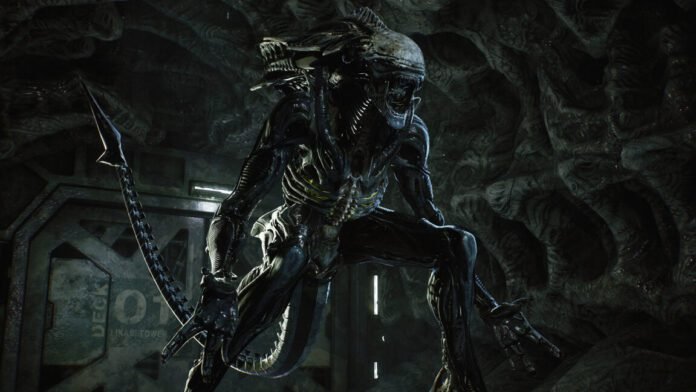
Following its announcement in March, game developer Cold Iron Studios has shut down the servers for the cloud version of Aliens: Fireteam Elite on the Nintendo Switch. The game originally cost $30 (or $60 for an “Ultimate” version with additional content).

Cold Iron Studios hasn’t offered customers refunds.

TheGamer reported that affected players are entitled to a discount for the Nintendo Switch 2 version of the game, which is a 2021 co-op, third-person shooter based on the Alien film franchise. However, that would mean paying money for a game that you have already paid money for once.

Cold Iron Studios told customers in March that the game would shut down on August 5, Delisted Games reported at the time. In a pop-up message in the game, the publisher reportedly told players:

Thank you for playing our game. We sincerely appreciate your support. The game will be accessible until August 5, 2026, 23:59 JST. After that, you will no longer be able to access the game. We apologize to our loyal customers for any inconvenience this may cause, and we appreciate your understanding. We hope you will continue to enjoy our other game titles.

With the game delisted, people who paid for the game cannot play at all, including online with other players or alone offline.

Perhaps by no coincidence, the game’s shutdown comes weeks ahead of the release of the game’s sequel, Aliens: Fireteam Elite 2, on August 25. Killing the Switch version of the original could push some people to buy the sequel.

Cold Iron Studios hasn’t revealed Aliens: Fireteam Elite sales numbers on the Switch. The game is also available as a physical copy and for download on the PlayStation 5 and 4 and for download on Xbox One and Xbox Series X|S. Those options likely deterred people from playing the game on the Switch, which was only available through the cloud. It’s possible that Cloud Iron Studios determined that killing the servers affects a limited number of people, and that the game’s audience wasn’t large enough to sustain the costs of keeping the game running.

We’ve seen this happen to other games numerous times over the years on various platforms. People could one day lose digital downloads that they paid for, too. It’s rare, but because buying a digital copy only gets you a license to play the game, which could be revoked, for example, if the store you bought it from loses the right to distribute the title.

Digital copies being erased from people’s libraries and making games harder to access has led to some uproar over a recent announcement that there won’t be physical discs made for PlayStation games as of January 2028.

The shutdowns of already-purchased games have previously led to failed lawsuits while bringing attention to the lack of true ownership that comes with digital purchases.

0FansLike
0FollowersFollow
0FollowersFollow
0SubscribersSubscribe
- Advertisement -
Google search engine

Recent Posts