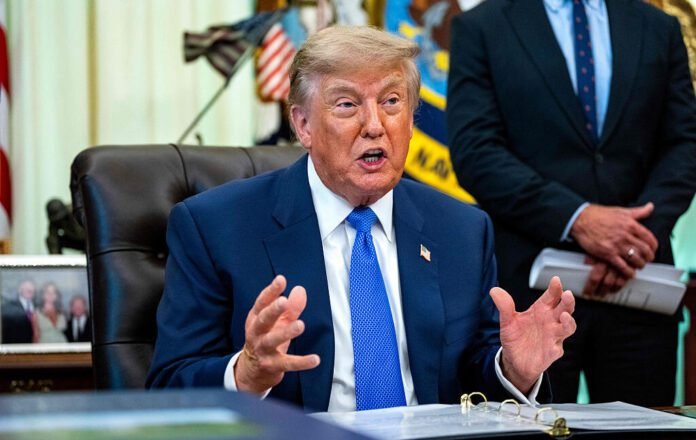
On July 30, Donald Trump said his Board of Peace had reached what he called a monumental step toward disarming Hamas. The weapons are not the part Tokyo should study. The gate the deal opens is.
Disarmament is conditions-based, and the conditions are already contested. Israel has not signed on to the terms. Hamas says it will surrender nothing until Israeli forces withdraw.
However that standoff ends, the agreement pushes Gaza toward the phase every party has circled for two years: reconstruction. Whoever controls the rebuild will control tens of billions of dollars in contracts. The body that controls the rebuild is Trump’s board. And on that board sits an empty chair with Japan’s name on it.
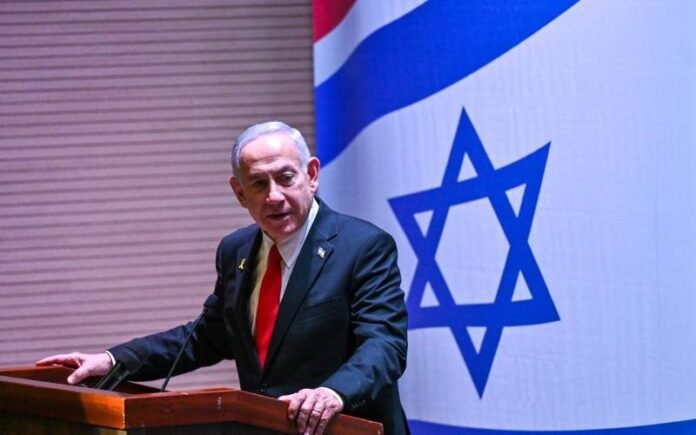
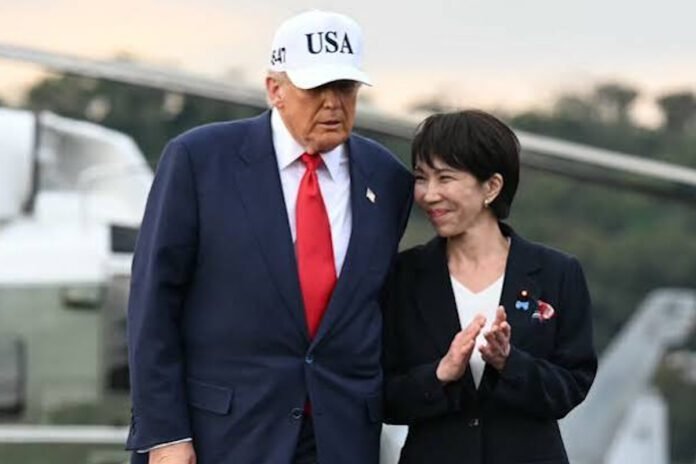
Japanese Prime Minister Sanae Takaichi holds an open invitation from Trump to join. Tokyo has not said yes, and because it cannot easily tell Washington no, it has not said no either.
It sent an ambassador to the board’s first meeting as an observer and postponed the decision. That decision is about to get harder, because reconstruction is now the live question. This is what the invitation actually buys.
Start with the price list. A three-year seat on the Board of Peace is free. A permanent one costs a billion dollars, payable in the first year, according to the charter the Times of Israel obtained and published in January. Governance over a territory has a sticker price, and it is denominated in cash up front.
Look at who holds the executive seats. Next to the diplomats sit Jared Kushner, Apollo Global Management’s Marc Rowan, and World Bank president Ajay Banga, each handed a portfolio covering reconstruction, investment or the raising of capital.
That is not the staffing of a relief agency. It is the staffing of an investment committee, and this one has been handed a territory to rebuild from zero.
Now the arithmetic. At the first meeting in February, Trump pledged US$10 billion in American money, a sum that needs a congressional authorization it never received, for a body critics in Congress say has no basis in law.
Nine other governments put up $7 billion more. In April, an EU-UN assessment priced the actual rebuild at $71.4 billion. By late spring, the board’s official reconstruction fund, the one the World Bank set up, sat empty.
The Financial Times reported zero dollars deposited four months after launch, with contributions moving instead through a private JPMorgan account. The distance between what was promised, what arrived, and what is needed is the space the billion-dollar seat is built to fill. Governments that want a permanent hand in how the money is spent are asked to finance the rebuild directly, and rewarded with a vote over it.
Consider what that does to incentives. In an ordinary aid arrangement, however flawed, the population being helped is at least the nominal client, and the money moves toward need. Here the money moves toward a seat, and the seat carries a portfolio and a vote. The donor becomes less a benefactor than a shareholder, with the say a shareholder expects in proportion to its stake.
Gaza’s residents hold no stake, because they have no way to buy one. The charter, by the Carnegie Endowment’s reading, does not mention Gaza once, an odd silence in a document written to govern it.
The committee that will run the strip is appointed, not elected, 15 Palestinian technocrats with no political role. The board that met in February seated Israel and a row of Arab states and not a single Palestinian. On the balance sheet this body keeps, the people of Gaza are the asset under management, not the investors managing it.
Here is the part that should make Tokyo pause. The charter does not stop at Gaza. Its language reaches well beyond the territory, and at the February meeting Trump said the board would end up looking over the United Nations to make sure it runs properly. This is the body Japan is being asked to help capitalize.
Weigh what that asks. For 70 years, Japan has staked its security and much of its diplomacy on the postwar order the UN anchors. It has been among the organization’s largest funders for most of that time. It spent two decades campaigning for a permanent Security Council seat it never got.
Now a rival body run by one man offers permanent seats to anyone who writes a billion-dollar check, and it is asking Tokyo to help pay. The system Japan bought into for a permanent voice is being rebuilt next door, and this time the voice is simply for sale.
The obvious defense is that the fee is dead. After the charter drew fire, the accompanying UN resolution called membership free and contributions voluntary. Read the two documents together, and the softening is cosmetic.
The board runs on its charter, not the resolution, and the charter keeps the billion-dollar threshold. The UAE, Qatar, Saudi Arabia and Kuwait have each already put up a billion or more. Voluntary in name, priced in practice.
The other defense is that weighted influence is how international finance already works.
The IMF and the World Bank scale votes to contributions, and the Bank’s own president sits on this board. That comparison convicts the arrangement rather than clearing it. Those institutions run published quota systems, near-universal membership, and decades of external audit.
This board attaches a flat billion-dollar fee to a permanent seat its chairman personally approves, over a single occupied territory, under a charter that reaches well past the mandate the Security Council actually granted. A vote at the World Bank buys a share of a system. Here a check buys a share of a nation’s future.
What that share becomes is still inference. The documented facts are the price, the appointees, the empty fund, and the charter’s silence. The contracts steered toward national firms, the ports and power grids and telecoms parceled among the paying members, are what the structure rewards, not yet what it has done. Boards behave the way their incentives point, and these incentives point at returns.
Japan has already started to hedge. Rather than commit to the board, it joined the EU-UN “Team Gaza Initiative,” the multilateral track built around the same Security Council resolution the board is drifting away from. That instinct is the right one. The test is whether Tokyo holds to it when Trump asks Takaichi to her face.
Japan can keep faith with the multilateral system it helped build and fund for generations, or it can help capitalize the body designed to make that system optional. It cannot do both with the same check.