ASEAN’s digital payment boom outrunning its scam defenses
Southeast Asia’s rapid economic integration has long been a celebrated success story, and nowhere is this more evident today than in its retail payment systems.
Across the region, central banks are linking their national QR code protocols under the ASEAN Regional Payment Connectivity initiative, enabling friction-free, cross-border digital transactions between citizens of Indonesia, Thailand, Malaysia and Singapore.
Yet, as the velocity and volume of cross-border capital flows accelerate, a troubling vulnerability has emerged: the infrastructure of crime is moving at the speed of light, while the architecture of enforcement remains tethered to national borders.
This gap is not merely a technical glitch; it poses an existential threat to the region’s broader digital economic ambitions. As multi-currency payment rails become frictionless, they simultaneously lower the barrier to entry for transnational financial cybercrime.
Unless regional regulators step in with joint enforcement now, rising cyber fraud will quietly gut the bedrock of any financial market: public trust. Once ordinary users write off cross-border rails as unsafe, ASEAN’s multi-billion-dollar push for seamless integration risks unraveling under its own structural flaws.
Connectivity paradox
Look no further than Indonesia, the region’s largest digital market, to see this contradiction in action.
However, rapid access has outpaced public understanding. Indonesia’s National Financial Literacy and Inclusion Survey 2026 reveals a stark structural vulnerability: while financial inclusion stands at a high 93.61%, financial literacy lags significantly behind at 69.57%. This nearly 24-percentage-point gap represents an expansive target surface for transnational cybercrime syndicates.
As highlighted in recent UNODC assessments on Southeast Asia’s criminal economy, criminal groups are exploiting low digital literacy through social engineering, phishing, and elaborate mule-account networks, criminal groups are siphoning vast sums out of legitimate financial channels.
This divide carries real human costs for ordinary users. Travelers making quick QR payments overseas often get caught by fake codes or phishing traps, with little to no legal help when they return home.
Worse yet, migrant workers sending remittances back to rural villages face targeted impersonation fraud — frequently watching life savings disappear with almost zero chance of cross-border recovery.
Meanwhile, micro-merchants engaging in regional e-commerce face fraudulent account takeovers and unauthorized transaction reversals that directly threaten their cash flow and livelihoods.
Jurisdictional silos vs. real-time scams
The core challenge facing regulators is a profound structural asymmetry.
Today’s financial scams move money across borders in milliseconds. Law enforcement, on the other hand, stays trapped behind rigid borders, slow diplomatic channels, and mismatched national rules.
By the time a victim reports a scam to local authorities, the stolen capital has often been laundered across multiple borders and converted into unrecoverable digital assets.
This reality underscores a critical policy truth recently articulated by Bank Indonesia Deputy Governor Filianingsih Hendarta: “Technology can enable the growth of trust, but technology alone cannot create it. It is governance that creates it.”
Silicon Valley often pitches AI and blockchain as silver bullets for digital safety, but technology cuts both ways. Cyber syndicates build AI-driven phishing setups just as fast as banks build defense walls. Without clear cross-border rules, shiny digital rails simply scale up the threats instead of solving them.
Recognizing this threat, Bank Indonesia recently introduced Regulation No. 6/2026 on Consumer Protection, embedding risk-based oversight directly into its 2030 Payment System Blueprint.
Central to this strategy is the establishment of the Indonesia Anti-Scam Centre (IASC)—an integrated mechanism designed to accelerate real-time detection, reporting, and fund freezing in collaboration with domestic law enforcement and international bodies like Interpol, the OECD Financial Consumer Protection Task Force, and the Asian Development Bank (ADB).
Regional anti-scam architecture
While national initiatives like the IASC are a vital first step, a purely domestic defense is fundamentally inadequate against an international threat. To safeguard its economic ambitions, ASEAN needs to upgrade these local efforts—including multilateral architectures like BIS Project Nexus—into a binding regional security pact.
First, central banks and Financial Intelligence Units across the bloc must link up for real-time data sharing. A suspicious transaction flagged in Jakarta or Bangkok should trigger an immediate, automated alert across neighboring banking networks, enabling the instant freezing of compromised accounts before capital can be funneled into offshore havens.
Second, the region must move toward a harmonized regulatory framework for cross-border emergency asset recovery. Waiting months for traditional diplomatic channels to freeze stolen assets renders consumer protection meaningless. ASEAN needs an expedited administrative protocol dedicated specifically to digital financial crime.
Finally, the private sector—including payment system operators, commercial banks, and big-tech platforms—must be held to higher standards of ethical responsibility. Platforms that profit from facilitating high-velocity transactions must be mandated to integrate real-time anomaly detection and built-in consumer protection mechanisms as a condition of operating across ASEAN’s connected payment rails.
ASEAN’s interconnected payment ecosystem represents a monumental leap forward for regional economic integration. Yet speed without safeguards only speeds up the breakdown of public trust. If Southeast Asia fails to match fast payment rails with equally fast legal cooperation, its greatest digital success could end up derailed by the very speed that built it.
Rabiul Misa is a junior analyst at Bank Indonesia. His work focuses on monetary economics, payment systems, financial inclusion, MSME development, and public policy. His commentary has appeared in Asia Times, Modern Dyplomacy, Kompas.id, Kompas.com, Tribun News, ANTARA News and Kumparan, covering topics monetary policy, cross-border payments, digital finance, MSME development and regional economic development.
Why Trump is so helpful to Russia on the Ukraine war
The past week crystallized a number of things. When you add them all together, however, the key thing is that it demonstrated just how important the US has become, through the Trump administration, in aiding the Russian war effort.
This might have been hidden in all the distracting stardust being thrown in the air about the Graham Tariff Bill, or the recently announced (extremely weird) possible sale of some motley air defense capabilities to Ukraine (arrival uncertain and unknown).
However, behind the stardust which the press seems too out of its depth to properly interrogate the reality is that the war has entered into a fascinating contrast.
On the land, where the Ukrainians were less reliant on the US, it is the Ukrainians who are showing the initiative and dealing some substantial blows to Russian military strength. If what we are hearing about Operation Vivaldi is only partially true, the Ukrainians are continuing to advance in the combined operations of infantry and UAVs.
In the ranged war, relying on Ukrainian sources, the Ukrainians are also showing some important strengths — when they concentrate on the right targets. However, it is in their ranged campaign against the Ukrainians, aided enormously by the US starving Ukraine of air defense (a great example of why relying on the weapons of another power is always so dangerous) that the Russians are being most effective — and almost certainly will continue to be so for the upcoming winter.
Add it up, and what we see is that Russia’s area of initiative in the war has been enormously abetted by the US and Donald Trump.
Operation Vivaldi: Ukrainian initiative on the front line
For weeks now there have been unconfirmed reports of an ongoing Ukrainian operation to push Russian forces back from outside of Lyman and, possibly, back into Luhansk. I’ve referred to this a few times, including in last weekend’s update.
However, without formal Ukrainian confirmation, I did not want to say too much about it. At that point, we had some more general statements from Zelensky about Ukraine taking the initiative in the land war, but nothing specific.
This week, something changed and the Ukrainians started speaking specifically about their operation and even gave it a code name—Operation Vivaldi.
Vivaldi is being conducted, it seems, primarily by the 3rd Army Corps commanded by Gen Andrii Biletskyi. Biletskyi confirmed this publicly on Sept. 15, saying the corps had launched Vivaldi under conditions of “maximum information silence.” The name refers somewhat cheekily to Antonio Vivaldi’s The Four Seasons (shout-out to Baroque music).
That is because the Ukrainians are saying the operation has four stages—or “seasons” and we are only now in the first stage. Biletskyi also asked the public not to “give away the spoilers” because the operation still requires silence.
There was this excellent story in The Kyiv Independent, which quoted Biletskyi and which provides a good overview of what we know and, crucially, what we do not know about Vivaldi.
Since then there has been more information coming out from Ukrainian sources. Yesterday (September 19) there were some official statements released by the Chief of Staff and Deputy Commander of the Third Army Corps, Petro Horbatenko. You can read much of what he said in this report.
Horbatenko also described an ongoing operation making substantial progress:
“We will continue to make progress in a week. Accordingly, in the near future we will inform you about new details regarding the operation and new results regarding its success….We continue to move. What was announced is one figure, it will increase over time. New data on successes and liberated settlements will come, we just can’t reveal and talk about everything yet. The enemy on this section is broken, disorganized. He is trying to transfer special forces units there to close the breakthrough, simply grinding them into “meat”, without achieving any success.”
These latest reports also provided some detailed news about the military units involved, which are units of the 60th separate mechanized brigade, the 125th separate heavy mechanized brigade, the battalion tactical group of the 3rd assault brigade, the 3rd separate reconnaissance and 25th separate anti-tank battalions of the corps, the 66th separate mechanized brigade, the 85th tactical group of the 8th SSO regiment, the Artan special unit of the GUR, and the 10th border detachment “Dozor.”
That is important as it shows the preparation the Ukrainians have put into this. This is a range of specialized units, all of which have seemingly been specially prepared for the operation.
And, not to reinforce this point every week, but it shows how the Ukrainians have been adapting their forces for the land war for a long time. In the Kyiv Independent story there was this description of how the Ukrainians are advancing in the modern battlespace and not suffering massive casualties:
“Instead, territory is taken by small groups of infantry and assault teams that focus on concealment, while being supported constantly by drones that scan the battlespace, strike enemy targets and shelters, and drop supplies and ammunition to the teams on the ground.”
This kind of extremely close and precise action, only possible if highly trained and motivated troops and drone forces can operate extremely well together. This minimizes the amount of time the attacking forces need to spend in the open, allowing them to move swiftly from point to point, take cover, and still be supplied.
It’s exactly what General Havrylov laid out as the intention nine months ago—when the western media, led by its deeply flawed analytical community, was still saying Ukraine needed to draft more of its young population and send them to the front.
“In addition to the advance itself, we can say that during this operation a fairly large number of enemy officers were also destroyed and a fairly significant number of enemy personnel were taken prisoner. Perhaps, in recent years, this is the largest replenishment of the exchange fund that came from the Ukrainian side.”
Horbatenko was even more pithy on Russian losses, saying: “Russian tactics generally do not change. These are just meaty assaults.”
And Ukrainian claims of Russian casualties over the past week (this is for all fronts, not just Vivaldi) have spiked. The Ukrainian General Staff claimed 11,090 Russian personnel losses in the seven daily reports from 14 to 20 September 2026, an average of about 1,584 a day. Here is a breakdown.
This is a crushing casualty rate, btw. If it were maintained for a month (30 days) it would be equal to 47,529. For 31 days we are talking over 49,000.
We must obviously be careful about not over-reacting to this. I dislike it intensely when people talk about a Russian “collapse” which makes it seem like the Ukrainians can start making swift advances. That still seems very unlikely in this battle space. Even large gaps in the line can be closed with drone forces and humans cannot survive for very long out in the open. So please rein such talk in.
However, the reality of this summer’s fighting seems to be this. Ukraine is demonstrating the capacity to take the initiative with new and better ways of fighting, which keep Ukrainian casualties down and ratchet Russian ones up. And the best thing about it is that the US cannot help the Russians that much at this point—which is a major contrast to the next story.
Russia batters Ukraine at range
The last week was actually a lighter week than the one before when it came to Russian ranged attacks on Ukraine. They launched attacks every night, but with a smaller number of systems than the seven days previously. Here is a table of the number of units attacking—mostly drones (which means Geran/Shaheds) from Sept 14-19. We do not have last night’s figures yet.
The reality of the ranged war, even with these reduced attacks, remains the same, however. Ukraine can do little to intercept Russian ballistic missiles. The attack on September 17, for instance, the only example of the Russians making a large ballistic missile assault last week, saw the Ukrainians claiming that they could not intercept one of them. The Ukrainian Air Force listed only Shahed/Gerans and Banderols as being neutralized that night.
[Note: Banderols are cruise missiles, not ballistic missiles.]
Indeed, this slower week could be a sign of the Russians stocking up for larger attacks in the fall and winter. They have a track record of doing that.
This is the reality. Ukraine, because of the US depriving it of Patriots. Even in the announcement yesterday that the US might be selling some air defense capability to Europe to pass on to Ukraine, there was no mention of Patriots.
What was announced was some “possible” sale of deficient systems. Indeed, the press did not even know how to report what happened—as in this CBS report.
“In a congressional notification, the State Department said that it made “a determination approving a possible Foreign Military Sale to the Government of Ukraine” for buying air defense development upgrades and related equipment and services. According to the statement, the Ukrainian government requested to buy S-300 Clone missiles, GAM-67 missiles, Range-Extended Air Defense Laser Guided Rocket missile systems, as well as various launchers, counter-drone radars, trailers and spare parts.”
My guess is that this is a political stunt by the Trump administration to look like it is doing something, when it is not. It will make no difference this winter.
And there we have it. Confirmation that, even on a relatively less damaging week, the big advantage that the Russians have is the one provided by the USA—which is doing nothing to help Ukraine in this vital area, and indeed is stringing the Ukrainians along and leaving them exposed.
Without this help, Putin and the Russians would be deprived of the strongest military card that they can play.
Trump, diesel and Ukrainian energy strikes
Another area where the Ukrainians confirmed that they can be effective when not impeded in the US, is their ongoing campaign against Russian fuel production. We have confirmation of that this week because Donald Trump came out and pleaded with the Ukrainians to do Putin a favor and stop attacking Russian refineries.
Things were so bad that Trump begged once and lied twice — before the Ukrainians made it clear exactly what their position is. It was a fascinating “exchange” that started last Sunday (13 September). Then Trump said this to the press:
“Mr. Zelenskyy has to do one thing. He has to stop knocking out diesel fuel in Russia…We spoke to Mr. Zelenskyy about it. There are plenty of other targets. Don’t hit diesel fuel, because that’s hurting, that’s hurting the world.”
However, Trump decided to blame the Ukrainians and help Putin when discussing the issue publicly. And this was not all. On September 14, Trump doubled-down on his claim that the rise in diesel prices was Ukraine’s fault but, miraculously, claimed that he had gotten the Ukrainians and the Russians to agree to stop all energy attacks. He tweeted:
“Ukraine has agreed not to hit Russian Energy targets. Russia has agreed to do, likewise!…The World’s Diesel price rise is mostly caused by the Russia/Ukraine War, not Iran.”
It is still shocking how the President of the US can just make up nonsense, spew it out, and some people will believe him. We could see that this latest announcement was complete and total nonsense because on the subsequent days, both the Ukrainians and Russians went out and openly attacked energy targets.
The Yaroslavl Refinery (Northeast Of Moscow) Is Hit
Zelensky even openly contradicted Trump, in denying any deal had been reached. He said Ukraine might consider a deal, but as of now“Russia hasn’t stopped striking our energy sector… And our responses to them for this are tangible.”
It was a revealing exchange. As always for Trump, Ukraine is the baddies and Russia is to be protected. That will never change.
The more interesting thing is the confirmation of the seriousness of the Ukrainian campaign on Russian oil production. It is why this must be the key target of the Ukrainian ranged campaign.
If the Ukrainians have no ability to defend themselves against Russian ballistic missiles because of the US, the least they can do is not listen to the US when the American president pleads with them to stop their most effective strategic campaign. For now, they seem to have received the message.
Phillips O’Brien is professor of strategic studies at the University of St. Andrew.
Asia Times republishes the weekend update with permission from Phillips’s Newsletter, his reader-supported publication. Read the original weekend update here. Get his other posts throughout the week by subscribing here.
US Embassy Issues Israel Travel Warning Ahead of Yom Kippur
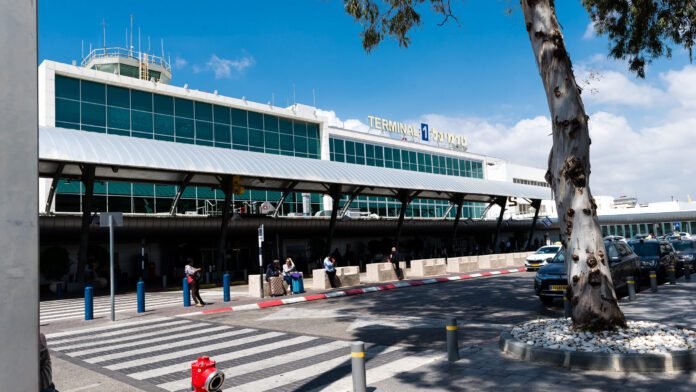
Americans traveling to and from Israel should prepare for possible flight cancellations and airspace closures with little warning, the US Embassy in Jerusalem said in a Sept. 19 security alert issued over concerns about a potential escalation.
The embassy advised travelers to confirm their flight status directly with their airlines and monitor official information from Ben Gurion Airport and Haifa Airport. Passengers were cautioned against relying on previously scheduled departure and arrival times because aviation operations could change quickly.
Concerns about a possible attack on the eve of Yom Kippur were cited against the backdrop of the warning. The embassy said the security situation remained complex and could change unexpectedly, potentially disrupting air travel.
Beyond aviation, US citizens in Israel were urged to prepare for possible security alerts by identifying their nearest protected space. The embassy recommended keeping water, food, medication, and other essential supplies accessible and ensuring mobile phones remain charged.
During an aerial attack or warning, Americans should stay clear of windows and glass doors and follow instructions from local authorities.
Additional precautions included avoiding demonstrations and large gatherings and staying away from locations with a significant police presence. US citizens were also advised to remain particularly vigilant around sites publicly identified with the United States.
The security notice also addressed potential threats beyond Israel and the Middle East. US diplomatic facilities have previously been targeted, the embassy said, warning that Iran and Iran-aligned actors could direct attacks against American interests in other parts of the world, including US-associated businesses and institutions.
Consular services have not been suspended. The US Embassy in Jerusalem and its branch office in Tel Aviv continue to provide both routine and emergency consular assistance despite the security alert.
Iran says US decided to resume strikes, vows retaliation
A huge anti-American billboard reading in Persian “The army of Satan will drown in the Persian Gulf” is unveiled at Enqelab Square amid heightened tensions between Iran and the United States as daily life continues in Tehran, Iran, on September 13, 2026. [Fatemeh Bahrami – Anadolu Agency]
Iran’s military said on Sunday that it has received information suggesting that the US decided to resume strikes against the Islamic Republic, Anadolu reports.
“According to the information received, the criminal America, has once again decided to resume measures against Iran, with the green light of some regional countries, at a joint meeting in a European country,” the Khatam al-Anbiya Central Headquarters said in a statement carried by state-run broadcaster IRIB.
It vowed retaliation against US interests and deployment areas in the region If Washington “makes a mistake.”
“We warn that if the countries of the region – by continuing their dual policy toward the Islamic Republic of Iran – align with the Great Devil’s aggression against a powerful and sovereign Iran they will all be considered complicit in this evil and can no longer expect restraint or decency from Iran’s powerful armed forces,” it said.
Tensions in the Middle East heightened after the US and Israel launched a war against Iran on Feb. 28, prompting Tehran to respond with strikes on regional countries hosting US assets. Iran also closed the Strait of Hormuz, one of the world’s most important waterways for oil and gas exports.
Washington and Tehran signed the framework deal in June, providing for a halt to military operations and arrangements to reopen the Strait of Hormuz to navigation. The deal later collapsed amid disagreements between the two parties over navigation in the strategic waterway.
Child Star Says He Hit Rock Bottom Weeks After Divorce Announcement
Frankie Muniz is opening up about one of the most difficult stretches of his life just weeks after announcing the end of his marriage to longtime partner Paige Price.
The 40-year-old Malcolm in the Middle star shared an emotional message on social media Friday, revealing that the previous six weeks had left him feeling overwhelmed and forced him into some serious self-reflection.
“The last 6 weeks of my life have been a nightmare I’m praying to wake up from,” Muniz wrote, adding that everything had felt “heavy, unclear” and as though it were falling apart.
But Muniz made clear that he does not view the difficult period as the end of his story.
Instead, the actor-turned-race car driver said the experience has forced him to confront parts of his life that he believes need to change.
Muniz said he had read that sometimes “hitting rock bottom” can serve as a wake-up call, pushing a person to make changes they may have avoided for years.
“This isn’t the end of the story,” he wrote, explaining that he now plans to begin what he described as the difficult and often uncomfortable work required to improve his life.
Muniz did not specify exactly what triggered the turbulent six-week period, so it would be speculation to attribute all of his comments directly to his marriage breakup. However, the timing comes shortly after he and Price publicly announced that they were ending their marriage.
The couple revealed their decision on July 1 after previously keeping a period of separation private.
In their announcement, Muniz said that after roughly a decade together, their relationship had evolved into what felt strongest as a friendship and co-parenting partnership.
The pair share 5-year-old son Mauz Mosley Muniz, who Muniz said remains the center of their lives.
Muniz also praised Price for supporting his career over the years and said the two planned to continue working together through Muniz Racing while raising their son.
Their relationship dates back to 2016. They became engaged in 2018, eloped in October 2019 and later held a formal wedding ceremony in February 2020. Their son was born in March 2021.
Despite Muniz’s emotional message, there are already signs that he and Price remain committed to the friendly relationship they described when announcing the split.
Just one day after his “rock bottom” post, Muniz shared new photos showing himself, Price and Mauz together following the boy’s soccer game.
“Post soccer shenanigans with the fam,” Muniz wrote, celebrating after Mauz received a medal for sportsmanship.
The family outing appeared consistent with the former couple’s earlier promise to remain a team as parents, although neither Muniz nor Price has suggested publicly that they are reconciling.
Price also publicly defended Muniz in July after he faced criticism over the lighthearted way their separation was initially announced.
She said divorce was obviously not something they were excited about, but argued that they were still two adults capable of remaining on the same team.
Muniz’s personal upheaval comes during an unusually busy period professionally.
He recently returned to the role that made him famous in Malcolm in the Middle: Life’s Still Unfair, the revival of the hit sitcom that originally ended in 2006. The new installment reunited Muniz with Bryan Cranston, Jane Kaczmarek and other returning cast members.
At the same time, Muniz has continued pursuing his racing career, including competition in NASCAR’s Craftsman Truck Series.
For now, Muniz appears focused on rebuilding rather than pretending everything is fine.
He ended his message by telling others going through their own difficult periods that reaching a low point does not necessarily mean their story is over.
For Muniz, at least, he appears determined to treat the past several weeks as a turning point rather than a final chapter.
Nepal isn’t the only disaster-struck country waiting for money from the global climate Loss and Damage Fund
As it faces the enormous task of rebuilding from a deadly flood that tore through communities in the Himalayas, Nepal is seeking compensation from the international Fund for Responding to Loss and Damage – meaning from countries that are major contributors to climate change, which it blames for the disaster.
Nepal Foreign Minister Shisir Khanal said it was not merely a request for aid or charity but a demand for justice and “legal and moral liability.”
“Nepal’s greenhouse gas emissions are virtually negligible. Yet, we are paying the ultimate price for a global crisis we did not create,” Khanal told the Kathmandu Post. “The rapid melting of glaciers and these catastrophic mountain tsunamis are direct consequences of global climate change.”
The New York Times compiled images from mountaineers and maps showing how the glacier collapsed on Aug. 26, 2026.
Nepal’s US$20 million request is small compared to the billions of dollars in damage, but it is an important test of the Loss and Damage Fund’s credibility. So far the fund, created during the U.N. climate conference in 2022 to respond to the impacts of climate change in developing countries, contains a fraction of the money major greenhouse gas emitters pledged to contribute, and it has paid out nothing despite requests from at least 119 nations.
Increasing greenhouse gas concentrations, largely from burning fossil fuels, have pushed global temperatures so high that sea levels are rising, and shrinking glaciers and thawing permafrost are leaving mountainsides less stable. A September 2026 U.N. Environment Program report determined that it is now inevitable that the planet will warm by at least 1.5 degrees Celsius (2.7 degrees Fahrenheit) compared to temperatures before the Industrial Revolution. Communities will have to adapt to increasing hazards.
The world committed under the Paris climate agreement to try to limit warming to 1.5 C in an attempt to avoid the worst effects of climate change. But it is not on track, and many countries are paying the price.
Is the fund just words?
At least 119 countries have submitted requests for money from the Loss and Damage Fund to help them respond to disasters or adapt to climate change.
About 93% of the requests as of June 2026 involved extreme events such as floods. Over three-quarters included slow-onset events, such as requests for help building the infrastructure, including sea walls, and the capabilities to adapt to sea-level rise.
Together, the requests totaled $2.8 billion – about 10 times the amount of money that had actually reached the fund.
The fund’s board, meanwhile, has yet to disburse money for any of the requests. At the most recent board meeting in June 2026, officials considered four requests for funding, but none were approved.
The board has a responsibility to ensure that the money will be used appropriately. But one analysis of comments countries made while negotiating the creation of the fund and decisions of the fund board suggested that the slowness of both the disbursals and the setting up of the fund had been deliberate – a practical evasion of a responsibility agreed to on paper.
The board is scheduled to meet next in December 2026. Eight of the 26 board members formally requested an emergency meeting to respond to the disaster in Nepal quickly. The co-chairs of the board acknowledged the request, but how the board might respond was unclear.
Nepal needs billions for recovery
Nepal is asking for about $20 million from the fund. However, the country’s finance minister, Swarnim Wagle, estimated that the country would need US$4 billion to $5 billion to rebuild from the flood damage – nearly a tenth of its national economy.
Nepal lost over 10% of its hydropower capacity when a glacier collapsed on Aug. 26, causing the landslide and flood. Mud, water and rock inundated several riverside communities near the border with China, killing more than 1,400 people and leaving thousands more missing. The flood also broke through several hydropower dams in the Bhote Koshi river basin.
The flood buried several riverside communities in mud and rock and damaged more than a dozen hydropower dams, knocking out about a tenth of Nepal’s power production.Daniel Ceng/Anadolu via Getty Images
In Nepal, many of the risks come from melting glaciers. The Himalayas and neighboring Hindu Kush mountains together contain one of the world’s largest volumes of ice, but studies show they have been losing that ice fast as temperatures rise, with the loss rate doubling since 2000. When glaciers retreat, the result can create glacial lakes prone to outburst floods and unstable slopes prone to landslides like Nepal experienced.
Nepal is receiving aid directly from other countries, but it wants support from the Loss and Damage Fund in part because of what that would represent.
Vulnerable countries fought through years of international climate talks to establish a principle of climate compensation and distinguish it from charity. Even if the amount that the fund disburses to Nepal is relatively small, it would represent compensation for harm caused by climate change.
The decision establishing the fund is very clear that contributions are voluntary and the act of contributing should not be interpreted as an acknowledgment of liability. Climate-vulnerable countries consented to that language in the hope that it would bring in much-needed help.
If the fund acts promptly and pragmatically on that shared responsibility, global efforts to establish liability for climate change through international tribunals and courts could ease.
Speed matters
To be effective, the Loss and Damage Fund needs to be more agile and responsive to the needs of the most climate-vulnerable countries. During negotiations to set up the fund, one negotiator emphasized the need for resources to be accessible within 24 to 48 hours of a climate disaster.
France 24 used amateur video from along the flood’s path to reconstruct the damage.
From response to anticipation
The Loss and Damage Fund could also use its symbolic and modest financial position to nudge the broader humanitarian, development and climate finance ecosystem toward what’s known as anticipatory action.
Anticipatory action involves moving resources into at-risk places before the disaster hits. It has been proven to speed up the response and recovery.
Emphasizing this approach could also lead to better forecasting, early warnings and planning that takes climate change into account to protect people in vulnerable regions around the world.
Ed Sheeran Calls Gaza War ‘Catastrophic and Unjustifiable’ Onstage After Macklemore Dispute
Ed Sheeran opened his solo concert in Philadelphia on Saturday by condemning the civilian suffering in Gaza while also addressing the Oct. 7 attack on Israel, following controversy over the removal of Macklemore from his tour after the rapper’s pro-Palestinian activism.
“This is a humanitarian issue, and I cannot hide how I feel about it anymore,” Sheeran told the crowd at Lincoln Financial Field. “What happened in Israel and at the Nova Music Festival on Oct. 7th was horrific and compounded centuries of Jewish pain. What is happening in Gaza is a catastrophic and unjustifiable and disproportionate.”
He continued: “My heart has been broken by the scale of devastation and loss of civilian lives, of children’s lives. And the systemic injustice we’re seeing unfold in the West Bank cannot be overlooked.”
Sheeran’s comments came after Macklemore was dropped from the tour following appearances at Sheeran’s September 4–5 New Jersey concerts. Macklemore shouted “Free Palestine,” displayed images of destruction in Gaza and performed “Hind’s Hall,” while describing Israel’s actions as genocide.
The performances divided fans and drew criticism, including from singer Pink, who said the imagery was offensive to Jewish audience members. New England Patriots owner Robert Kraft, whose group owns Gillette Stadium, where the tour was headed, also objected to Macklemore’s participation. The tour promoter removed Macklemore September 14 after venues threatened to cancel upcoming concerts.
Sheeran said the decision was the promoter’s rather than his. Finneas, Lukas Graham, Aaron Rowe and Irish band Beoga subsequently withdrew from the tour in solidarity with Macklemore.
Macklemore later pledged his entire $1 million in net tour earnings to six Palestinian aid organizations and challenged Kraft to match the donation for Israeli causes. Kraft said Sheeran had already contacted him and pledged $2 million toward humanitarian aid in the region.
Macklemore previously drew controversy in 2014 when he appeared onstage in Seattle wearing what many considered a broadly antisemitic, stereotypically Jewish costume.
Sheeran spoke for nearly four minutes Saturday, acknowledging mistakes in his handling of the dispute and saying he wanted his concerts to remain a safe space.
Nearly 147,000 Yemenis displaced in September amid escalating fighting, government says
A Yemeni governmental body said on Sunday that nearly 147,000 people have been displaced this month amid ongoing military escalation in the war-torn country, Anadolu reports.
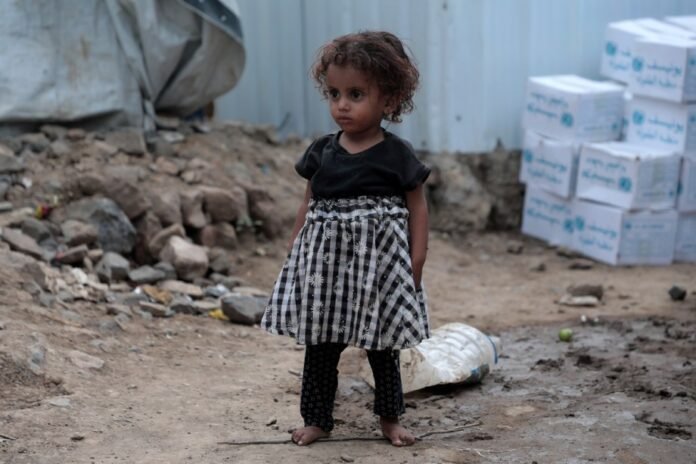
The Executive Unit for the Management of Displaced Persons Camps documented the displacement of 21,583 families, comprising 146,943 people, between Sept. 1 and 18 due to deteriorating security conditions.
It said the displacement was recorded in eight provinces: Taiz and Lahj in the southwest; Aden, Abyan and Shabwa in the south; Al-Hudaydah in the west; and Hadhramout and Al Mahrah in the east.
According to the report, Taiz received the largest number of displaced, with 11,534 families comprising 80,792 people, distributed across 15 districts. Lahj ranked second, receiving 5,472 families comprising 38,304 people across nine districts.
The government body also recorded the arrival of 1,622 families, comprising 7,162 people, in Aden, most of whom were hosted by local families in several districts.
It said 1,471 families comprising 10,297 people were displaced to the districts of Hays and Al Khawkhah in Al-Hudaydah, while another 1,278 families comprising 8,946 people arrived in Abyan.
The body also recorded 110 displaced families in Hadhramout, 70 in Al Mahrah and 26 in Shabwa.
It called on international and local organizations to provide “urgent, life-saving assistance” to displaced people, warning that delays in the response could “exacerbate the crisis and increase pressure on host communities.”
The rise in displacement comes amid a broad military escalation along Yemen’s western coast and in areas of Taiz province, where the Houthis have advanced and taken control of positions previously held by government forces.
Fighting has resumed on several fronts in Taiz, Marib and Al Jawf in the north, Al Bayda in central Yemen, amid a military escalation that began in early July, in the worst escalation since a UN-brokered truce in April 2022.
The fighting intensified in September, with the Houthis taking control of several strategic positions in Al-Hudaydah and Taiz provinces, including the strategic city of Mokha, extending as far as Mayun Island in the Bab al-Mandab Strait.
Yemen has been at war since the Houthis seized the capital Sanaa and several provinces in September 2014, before a Saudi-led coalition intervened in March 2015 in support of Yemen’s internationally recognized government.
Former EPA officials: Trump is letting data centers make people sick
This story was originally published by Mother Jonesand is reproduced here as part of the Climate Desk collaboration.
While tech oligarchs grandstand about the existential dangerAI superintelligence poses to humanity, former Environmental Protection Agency officials say we should be worried about a more immediate threat to our health: the data centers that power those AI models.
The former EPA researchers, now working with the nonprofit Environmental Protection Network, are warning in a new report that since January 2025, Donald Trump’s EPA has embarked on a systematic weakening of pollution safeguards, permitting processes, inspection norms, and other guardrails — at least 30 different actions — that could increase the health risks associated with the data center boom.
There are currently about 3,000 data centers in the United States, and more than 1,500 new centers are in the planning stages. But as developers build out this vast, energy-hungry infrastructure, the country is losing the government regulatory safeguards that are needed to ensure that expansion is done safely, the ex–EPA officials say.
Read Next
Dan Costa, who spent 35 years at the EPA studying air pollution, noted that for decades the environmental agency, which was established in 1970, had a large and committed cadre of researchers who investigated emerging sources of pollution and new environmental threats.
“Over the decades, toxicologists, chemists, atmospheric scientists, modelers, and engineers worked in concert with academic colleagues on behalf of the American people — not on behalf of industry,” Costa said in a press briefing last week. “We wanted to carry out EPA’s mission of protecting people’s health from industrial air pollution.”
Now, though, that workforce has been gutted. The Trump administration has dismantled EPA’s main research office, and the agency’s priorities have shifted away from strict enforcement of pollution standards. “Transforming the nation’s energy system, while diminishing its scientific capacity to understand what the impacts are going to be, makes no sense,” Costa said.
But that appears to be the direction the country is heading in. President Donald Trump is “positioning America as the global leader in AI,” EPA Administrator Lee Zeldin wrote in a memo last year. The agency is “committed to bolstering” those efforts, Zeldin said, by “cutting heavy-handed regulations to ensure America can build and power the data centers essential to Making America the AI Capital of the World.”
Read Next
Since Trump returned to the White House, data center developers have seized the opportunity to expand at a rapid pace, helped by the administration’s moves. In some cases, that deregulation has involved keeping old coal-fired plants online past their planned decommissioning times in order to power data centers; other times, it has meant easing regulations on the use of onsite fossil fuel-powered turbines to power hyperscale data centers like xAI’s Colossus.
The agency has proposed a rule change that would let developers begin constructing data centers and their associated power plants before they get air pollution permits. And it has directed the agency’s enforcement staff to avoid any action that could “unduly burden or significantly disrupt” energy production or power generation.
According to one study the former EPA researchers cited in their new report, pollution associated with the AI boom may lead to 1,300 additional deaths per year.
Physician and former EPA administrative official Lynn Goldman said some health impacts of increased data center pollution might be felt quickly — for example, heart attacks or premature births associated with particulate exposure. Others, such as cancer, might take years to emerge. “The AI industry’s race for advantage should not be a matter of life or death,” Goldman said at the press conference. “Families shouldn’t have to pay for the AI boom with their health.”
Gunfire Near Notre Dame During Packed Football Game
A shooting just outside the University of Notre Dame campus sent police scrambling and triggered an emergency shelter-in-place order Saturday night while more than 77,000 football fans packed Notre Dame Stadium for a prime-time rivalry game.
The frightening incident unfolded around 7:30 p.m. near Eddy Street Commons, a busy shopping, dining and entertainment district on the southern edge of the campus in South Bend, Indiana.
South Bend police said Notre Dame officers initially alerted them about a man who had reportedly been seen carrying a gun and pointing it at people in the area.
Officers located someone matching that description near the south end of Eddy Street Commons, but police said the man was not armed when they encountered him.
Then the situation escalated.
As roughly 20 South Bend officers were working in the area, police said a single gunshot rang out near the intersection of Eddy Street and Angela Boulevard.
Officers found a woman suffering from a gunshot wound to her leg. Her injuries were described as non-life-threatening, and she was taken to a hospital for treatment.
A South Bend police officer was also injured by the gunfire. Investigators believe the officer may have been struck by a ricochet or shrapnel. The officer was treated at the scene and was also expected to recover.
Police said another person suffered an injury during the incident that was not caused by gunfire and may have occurred during a fight surrounding the shooting.
The new information is important because initial reports said only one person had been injured. Authorities later clarified that the woman and police officer were both hurt by the gunfire, while a third person suffered a separate injury.
Notre Dame quickly activated its NDAlert emergency notification system.
People inside Notre Dame Stadium were told to remain there, while others around campus were instructed to shelter in place as officers searched for the suspected shooter.
The university’s emergency system is designed to send mass notifications by text, phone, email and campus loudspeakers during major emergencies, including incidents involving active violence.
Authorities described the person they were searching for as a heavyset Black male with dreadlocks who was wearing blue shorts, a black shirt with a red-and-blue design and one white shoe.
Police said the suspected shooter fled west from the area.
Notre Dame, South Bend and St. Joseph County officers worked together to secure the area around Eddy Street Commons and the university. Police also cleared parking garages and building entrances and temporarily closed businesses while investigators tried to determine exactly what had happened.
The shelter-in-place order was later lifted after officials determined there was no continuing threat to the campus.
South Bend Police Chief Scott Ruszkowski said authorities were unwilling to take chances with tens of thousands of people nearby, particularly with massive crowds expected to spill out of the stadium after the game.
Despite the emergency outside, the game itself continued.
Notre Dame Stadium had an official attendance of 77,622 for the matchup between No. 3 Notre Dame and Michigan State. The game marked the 80th meeting between the longtime rivals and their first matchup since 2017.
Notre Dame entered halftime with a 17-10 lead before shutting out Michigan State in the second half and winning 27-10.
The victory improved the Fighting Irish to 3-0 and kept the Megaphone Trophy at Notre Dame.
While fans inside the stadium watched the game continue, investigators outside were still working to identify and locate the person responsible for the gunfire.
As of Sunday, the South Bend Police Department’s Violent Crimes Unit was continuing the investigation. Police have asked anyone with information to contact Michiana Crime Stoppers anonymously at 574-288-STOP.
The shooting occurred in an especially sensitive location because Eddy Street Commons sits immediately adjacent to Notre Dame and becomes heavily congested with students, visitors and football fans on game days.
The university’s emergency website now lists the campus as operating under normal conditions.