Subscribe nowwith a one-month trial for only $1, then enjoy the first year at an exclusive rate of just $99.
Takaichi tries to have it both ways in Hiroshima Scott Foster reports that Sanae Takaichi is formally affirming Japan’s Three Non-Nuclear Principles while leaving room to revise the ban on nuclear weapons entering Japan. Public opposition remains strong, but her government has time and parliamentary power to push the debate forward.
Germany’s last growth industry is the state Diego Faßnacht argues that Germany’s modest GDP growth masks a deeper transformation, with industrial employment shrinking while public services, bureaucracy and debt-financed rearmament become the main sources of demand. Defense firms may prosper, but that does not amount to an economic recovery.
Ukraine’s drone war meets Russia’s war of economic attrition James Davis reports that Ukraine’s drone strikes are creating disruption inside Russia, but Moscow’s campaign against ports, railways and logistics is imposing far greater economic pressure on Ukraine. Russia retains the battlefield initiative while the war increasingly reshapes both Ukraine’s economy and Russia’s political system.
Mount Toba eruption doesn’t seem like it could nearly kill our species
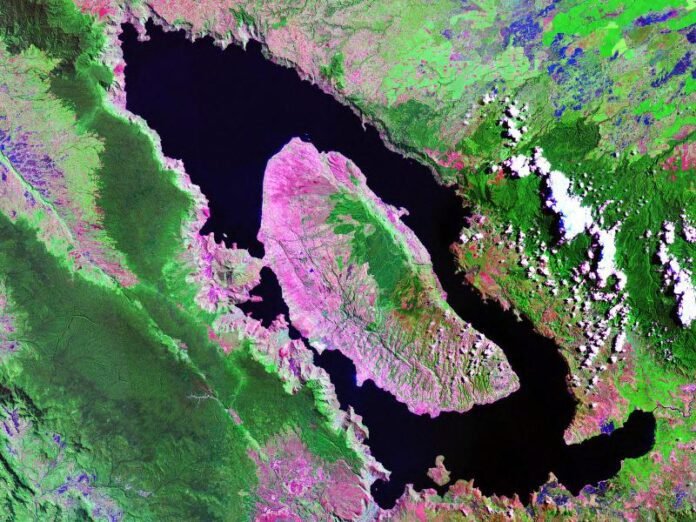
Mount Toba was the biggest volcanic eruption in the last 2.6 million years, and some have suggested it nearly wiped out humanity. Around 74,000 years ago, a caldera on what is now Sumatra emptied thousands of cubic kilometers of magma in about two weeks, roughly a thousand times more than Mount Pinatubo spewed out in 1991. “People thought it might have caused massive cooling of the planet, and hence threatened the survival of our ancestors,” says Jinheum Park, a geoscientist at Johannes Gutenberg University in Mainz, Germany.
Park and his colleagues went looking for the records of that catastrophe in the mud taken from the bottom of a small crater lake on the Kenya-Tanzania border. They found instead that the effects of the Mount Toba eruption lasted under two years and amounted to perhaps half a degree of cooling.
Muddy calendars
Volcanic eruptions inject sulfur dioxide into the stratosphere, where it becomes a haze of tiny droplets that reflect sunlight back into space. Bigger eruptions eject more sulfur dioxide and, in principle, cause more cooling. But this trend stops working when the eruption exceeds a certain magnitude. “Bigger sulfate aerosols settle quickly, because they are heavier,” Park explains. This quick settling makes them less effective in scattering incoming solar radiation.
Estimates of Toba’s sulfur output varied so widely that computer models had the eruption appearing as anything between a near-extinction-level event to a mild nuisance for our early ancestors, depending on the number we punched in. To settle this argument, scientists tried to look at geological evidence: Toba’s ash preserved in seafloor or lake cores. But this also proved tricky.
Underwater mud cores usually don’t work that well when it comes to dating and constraining abrupt, violent events like volcanic eruptions. When sediment settles at the lake or ocean bottom, materials from different years get a bit mixed. Even if we cut a mud core taken from the bottom of the sea into very thin slices and attempt to resolve climate changes at smaller intervals, our slices would reflect the mixed influence of yearslong climate signals. With most such records, we can track how past climates evolved decade by decade. A volcanic winter, even a severe one, would last one to three years.
“It’s really difficult to find any sedimentary archive which registers the regional climate at such high resolution,” Park says. Looking for traces of a Toba catastrophe in standard sediment cores was like timing a sprint with a calendar. But then scientists found a lake with sediment records that worked more like a stopwatch.
Stopwatch lake
Lake Chala is a small, steep-walled crater lake on the flank of Mount Kilimanjaro, fed by groundwater from the mountain’s forested slopes. Its deep water never fully turns over, leaving the bottom starved of oxygen and free of currents. This makes it a nearly perfect hi-res climate recorder, in which sediments are deposited as varves: annual couplets with a light-colored layer rich in silica skeletons from algae called diatoms and a dark-colored layer with fine-grained soils and clays. “It works just like tree rings,” Park says.
The couplets exist because from October through April, the water stays layered and still as the dark materials accumulate. Then, in the cool, dry, windy months from June to September, it mixes. “The lake is 90 meters deep, but during cool and dry conditions the water can be mixed down to about 50 meters,” Park explains. “In that case, the nutrients near the lake bottom come up to the surface, and then the diatoms can make use of them.” Diatoms, fed by that upwelling material, bloom, die, and sink as a pale layer of silica—a layer that’s thicker in cool, dry years when the mixing season runs long.
Invisible ash
Toba’s ash at Chala was identified by earlier work. It is invisible to the naked eye, its particles too sparse and small to form a visible layer. Scientists found them by dissolving away the mud and counting microscopic glass shards, remnants of the molten magma the eruption atomized into ultra-fine and rapidly cooling dust.
At Chala the shards spike abruptly, then vanish. “There is a sharp increase and a sharp peak, so we could rule out any significant influence by redeposition,” Park says. “We were quite sure that it was from direct ash fall.” In X-ray scans, the layer is a sliver 0.3 millimeters thick—thinner than a sheet of paper. Park’s team then worked through the 450 years of mud bracketing that sliver, layer by layer, combining microscope images with chemical scans, isotope readings, and diatom counts every two to three years.
For the 260 years before the ash fell, the team found that the lake was calm year-round, and the climate was warm and wet. Then comes the ash and, sandwiched inside and just above it, two green films a few hundredths of a millimeter thick. “We couldn’t exactly identify what those green layers were, but at least it was not from incompletely decomposed algae, because we couldn’t find any intact remains,” Park says. The team interpreted these layers as material diatoms secrete when they are badly stressed. “We thought the green layers came from the diatoms, as a stress response to the dimmed sky,” Park says. “Because they need light to grow.”
The next dry season after the eruption produced a pale layer 1.2 millimeters thick, with abundant diatoms—a bloom apparently driven by the unusually deep, prolonged mixing a chilled lake surface would cause. The dark layer above it is thin and faint, meaning the rains that followed were weak, probably due to a cooled Indian Ocean sending less moisture inland.
But by the third year, the Chala layers are back to normal. “The light lamina that was deposited nearly two years after the eruption is quite typical for Lake Chala,” Park says. The duration of the cataclysm that was thought might have almost eradicated early humans was likely about 18 months total.
And those 18 months apparently weren’t all that bad.
Half a degree
To figure out how cool and dry the region was, the team measured the ratios among some elements, specifically the silicon-to-aluminum and manganese-to-iron ratios. The silicon-to-aluminum ratio tracked how big the diatom bloom was each year, while the manganese-to-iron ratio tracked how much oxygen the annual mixing drove into the water.
If the climate around Chala cooled by 2°–3° Celsius, Park explains, Chala would stop keeping its neat annual records. Mixing would go so deep that the algae blooms would strip the lake of nutrients, which would prevent the bloom in the following year. “When nutrients would accumulate again, there would be another strong bloom,” Park says. In the sediment core, this should result in thick, irregular banding instead of regular couplets. That’s not what the post-Toba mud looks like.
To estimate by how much the Toba eruption cooled the region, Park’s team compared the changes in the two element ratios they measured to similar changes that occurred during the last ice age. “The amplitude of the change after Toba was nearly a quarter of that threshold,” Park explains. “That’s how we came up with our estimate of approximately 0.5 degrees Celsius.”
The sediment core also reveals the calendar date of the Toba eruption, something earlier models could only guess at. Because pale layers form between June and September and dark ones from October to April, the position of the ash inside a couplet enables relatively precise timing. “The Toba ash was contained within, but still close to the end of, a dark lamina,” Park says. This points to January or February, southern summer and northern winter. Earlier estimates, based on where the ash landed across Asia, had suggested the opposite season.
And this was half-bad, half-good news for early humans living in Africa.
Mild disaster
“Sulfate aerosols in the stratosphere are more effectively transported to the hemisphere that is experiencing winter,” Park says. For our ancestors, this meant the Toba’s sulfate veil drifted northwards and thinned over their heads slightly sooner than it would if the eruption happened in the northern summer. On the other hand, the Northern Hemisphere has far more land, which cools down faster and further than the ocean, so a northern-winter eruption must have cooled the globe a bit more than the same eruption in July. But overall, compared against the broader climate change trajectory, the Toba eruption was a rather mild disaster.
“The eruption did cool and dry the region, just not to such an extent as to significantly threaten the survival of humans,” Park argues. Across the 450-year window his team analyzed, eastern equatorial Africa was already sliding from a warmer, wetter regime into a cooler, drier one, tracking a natural cooling trend recorded in Greenland ice. Against that background, Toba’s impact looks tiny. “Our study shows that the magnitude of cooling and drying after Toba was much smaller, and within the natural range of variation in the last glacial–interglacial cycles,” Park says. “Humans had already experienced and survived that.”
The limitation in Park’s study is that Chala is just one lake. “It records the regional climate signals in eastern Africa, but it doesn’t show the impact on the whole globe,” Park explains. “There should be more studies using a similar approach, at more sites where the Toba ash is found.”
The team also hopes similar approaches will be used to learn more about other huge volcanic eruptions like Los Chocoyos in Guatemala and the Oruanui eruption in New Zealand 26,000 years ago. “They were not as big as Toba, but they were still super-eruptions. It would be interesting and exciting to see what happened,” Park says.
With a 2-1 vote Thursday, the Federal Communications Commission discarded the rule barring one company’s television stations from reaching more than 39% of US households, betting that larger broadcast groups can compete more effectively with streaming services and technology platforms. Future station deals will receive individual public-interest reviews instead of facing a fixed national ceiling.
Republican FCC Chair Brendan Carr and Commissioner Olivia Trusty approved the change; Democratic Commissioner Anna Gomez dissented. Carr portrayed the cap as a relic from another media age, when viewers had fewer alternatives and Google, Meta, Netflix, and other digital powers did not command national audiences.
“We should stop hamstringing this one segment of the broader market with outdated restrictions,” Carr said, warning that local broadcasting could follow newspapers into decline. The FCC says streaming services now reach more than 80% of US adults.
The old boundary dated to 2004, when Congress settled a bruising fight over broadcast ownership by setting the figure at 39%. That history is now the fuse for an expected court battle: Did Congress create a binding limit, or merely direct the FCC to revise its own regulation?
Opposition has scrambled familiar political lines. Senate Commerce Committee Chair Ted Cruz, a Texas Republican, said, “I am skeptical a change can be made absent an act of Congress.” Newsmax CEO Chris Ruddy was blunter: “The FCC actually claims allowing two or three TV companies to buy up their competitors creates competition. Anyone with a brain understands it does the opposite.”
Progressive groups reached much the same destination. Free Press Vice President Matt Wood said, “Brendan Carr cannot undo the limit that Congress set just because he feels like it.” Public Knowledge Legal Director John Bergmayer warned, “Consolidation does not serve local broadcast audiences or give them more local news and information.”
Gomez called the repeal “unlawful on its face” and said it could transfer more control over public airwaves to a small group of corporations.
The immediate backdrop is Nexstar’s acquisition of Tegna, a transaction that would give the combined operation access to roughly 80% of US television households. A federal judge has blocked the companies’ integration while an antitrust challenge proceeds.
Broadcasters see scale, investment, and survival. Critics see fewer owners, higher carriage fees, standardized news, and less room for independent voices. The regulators have voted. The judges are likely to speak next.
Angelina Jolie’s Brother ‘Comes Out’ After Splitting from Wife
Angelina Jolie’s older brother James Haven is opening up about a deeply personal part of his life, revealing publicly that he is gay just months after the end of his brief marriage.
Haven, 53, shared the news during a live appearance with his ex-wife, Romi Imbelli, on her Substack, where the former couple discussed their unusual journey from newlyweds to close friends.
Haven, the son of Oscar-winning actor Jon Voight and the brother of Angelina Jolie, said he came out to Imbelli after the two reconnected following their split.
During the livestream, Haven read an emotional letter about his sexuality and the years he spent hiding a part of himself.
“When I was a little boy, I was absolutely obsessed with the Disney princesses,” Haven wrote. “I would sneak glitter onto my cheeks, swipe mascara onto my lashes, and for those moments, I felt like magic.”
Looking back, Haven said he didn’t understand exactly what those feelings meant at the time.
He said he “didn’t have the language back then to explain why I just knew it made me feel more like me.”
“It was never about pretending to be someone else,” he continued. “It was about letting a part of myself shine that had always been there.”
But as Haven got older, he said he began to feel pressure to bury that side of himself in order to fit in.
“I started wondering if that sparkle was something I had to hide to be accepted by the ‘normal’ boys around me,” he wrote.
Haven said that, like many gay children, he began questioning parts of himself long before he learned to embrace them.
For years, he said, he effectively “dimmed” his own light to make others more comfortable.
Now, he says he is finished hiding.
“Coming out isn’t about becoming someone new,” Haven wrote. “It’s about allowing everyone else to meet the person who has been here all along.”
The emotional letter also appeared to address the possibility that some relatives or others close to him may struggle with his announcement.
“I hope my family and others can choose love over fear, understanding over judgment, and connection over the beliefs that may have kept us apart,” Haven said.
He added that he hopes those closest to him can look past labels and continue seeing “the same heart, the same laugh, the same soul they’ve always known.”
Haven said he is now proud of the man he has become and relieved that he no longer feels compelled to apologize for who he is.
He ended his letter by returning to the image of himself as a young boy experimenting with glitter and mascara.
“That little boy with glitter on his face and mascara on his lashes was never confused, broken, or something to be ashamed of,” Haven wrote. “He was simply gay. He was joyful. He was brave before he even knew it.”
The announcement comes after Haven’s whirlwind marriage to Imbelli.
The pair married in 2024 but separated just days later. Despite the stunningly short-lived union, the two have apparently remained close and are now collaborating professionally.
Haven and Imbelli are currently working to adapt her book into a television series, with Haven expected to direct the project.
For the famously private Haven, who has spent much of his life in the shadow of his Oscar-winning sister and their equally famous father, the announcement marks one of his most candid public revelations yet.
Netanyahu ‘quietly’ approves reconstruction in Gaza’s Rafah: Israeli media
Israeli Prime Minister Benjamin Netanyahu and Defense Minister Israel Katz “quietly” approved the reconstruction of an area under army control in eastern Rafah, southern Gaza Strip, according to Israeli media on Sunday, Anadolu reports.
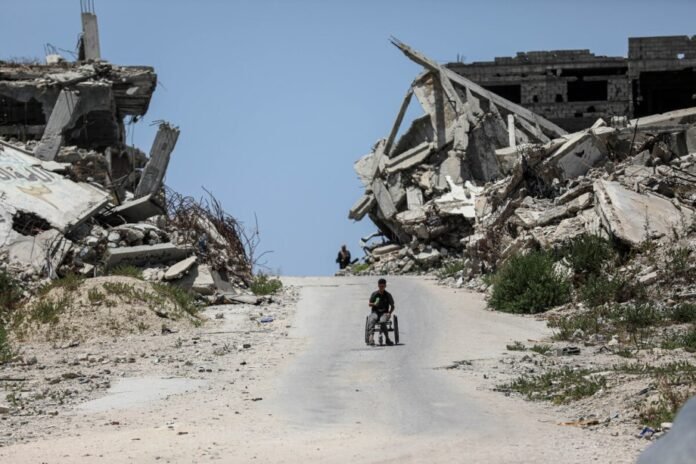
Without a public announcement, Netanyahu and Katz approved “infrastructure works in ‘Green Rafah,’ in eastern Rafah, to establish a residential project for Palestinians outside Hamas control,” Army Radio said.
“Green Rafah” is an area controlled by the Israeli army within the so-called Yellow Line separating areas occupied by Israel from zones where Palestinians are allowed to move.
The area has been “completely leveled and cleared and is currently empty” and will be “under the control of a multinational force,” the radio said.
“The infrastructure works that have now been given the green light will allow contractors and workers to enter the area and carry out excavation work and connect electricity, water and sewage systems,” the report said.
“The contractors and workers who will operate in the area are Palestinians from Gaza,” the outlet said, citing Israeli security sources.
“They are currently undergoing security screening by the Shin Bet security agency to obtain approval to enter areas along the Yellow Line. They are expected to begin work within weeks, or shortly thereafter,” the sources stated.
READ: Rights group files criminal complaint in Vietnam against Israeli soldier over war crimes in Gaza, Lebanon
Netanyahu’s office, however, told the radio that the report “distorts the facts and republishes outdated information.”
The project is a UAE pilot initiative that has been underway for several months, the office claimed.
“The electricity, sewage and water works will not be carried out by contractors from Gaza but will be supervised by the Israeli army,” it added.
The Israeli army has launched a genocidal war in Gaza since October 2023, killing more than 73,000 Palestinians and injuring over 174,000, most of them women and children, while devastating about 90% of the enclave’s infrastructure.
Artificial intelligence has already transformed industries such as finance and education, but one of its most important tests may come in medicine: discovering new drugs.
Pharmaceutical giant Pfizer recently signed a licensing agreement with AI biotechnology company Chai Discovery to incorporate generative AI tools into its drug discovery research. The partnership reflects a wider industry movement toward using AI to help scientists design and evaluate potential treatments more quickly and efficiently.
The agreement gives Pfizer access to Chai Discovery’s AI platform, including its Chai-3 model and a customised system built around Pfizer’s proprietary data and research processes. The technology focuses on antibody and biomolecule design, allowing AI models to predict and generate molecules with specific biological characteristics.
Traditional drug discovery is a lengthy and costly process. Developing a successful medicine can take more than a decade and billions of dollars, with researchers often testing thousands of compounds before finding promising candidates. Many potential treatments also fail during clinical trials.
AI could improve the early stages of this process by analysing large biological datasets, predicting molecular interactions and generating new designs for scientists to test. By identifying stronger candidates earlier, AI may help reduce wasted experiments and allow researchers to focus on the most promising therapies.
Douglas Williams, a biotech executive with four decades of industry experience, believes AI could significantly influence medicine over the next decade.
“I’ve been in this field for 40 years, and it’s remarkable what some of the young companies I’m involved in are doing with AI,” he said. Williams added that even small improvements in success rates could have a major financial impact because drug development has such a high failure rate.
Chai Discovery’s technology represents an ambitious use of AI because its models aim to create new antibodies from scratch rather than only analyse existing biological structures. However, AI-generated discoveries must still go through traditional laboratory testing to prove they are safe and effective.
Pfizer’s investment does not mean AI has solved drug discovery. Instead, it shows that major pharmaceutical companies increasingly view AI as a valuable research tool. Drug development still requires laboratory studies, animal testing, human trials and regulatory approval.
Experts emphasise that AI will support scientists rather than replace them. Williams noted that human expertise will remain essential because scientific creativity and decision-making cannot be fully automated.
The future of AI in medicine is therefore not simply about replacing human work but expanding what researchers can achieve. As our understanding of biology grows, AI could become one of the most powerful tools available for developing new medicines.
Pakistan Defense Minister Calls Israel ‘Common Threat’ After Signing Defense Pact With Turkey and Saudi Arabia
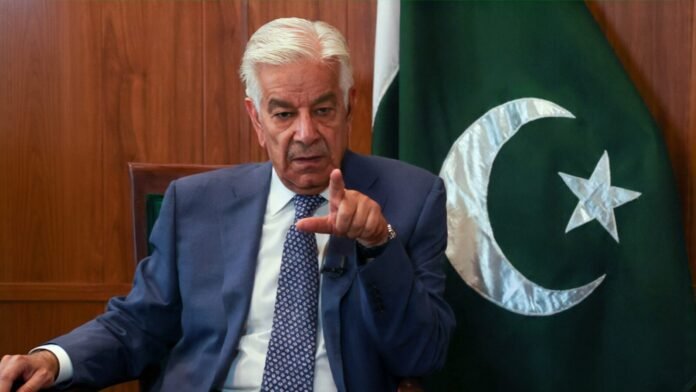
Pakistani Defense Minister Khawaja Asif called on Islamic countries to unite against Israel following the signing of a mutual defense pact between Pakistan, Saudi Arabia and Turkey that requires the three countries to respond collectively to an attack on any member.
“The Islamic world must unite to confront the common threat posed by Israel,” Asif said after the agreement was signed. “Israel poses a threat to all of us. Islamic countries must adopt a coordinated approach to address this threat.”
Asif’s latest comments on Israel follow similar statements he made in April 2026 that triggered a diplomatic dispute.
At the time, the Pakistani defense minister wrote on social media that Israel was “evil”, a “curse for humanity,” and a “cancerous state.” Asif later deleted the post.
The statements prompted sharp condemnation from Israeli leaders and complicated Pakistan’s diplomatic role.
The three countries signed the agreement in Mecca on Friday, bringing together Pakistani Prime Minister Shehbaz Sharif, Saudi Crown Prince Mohammed bin Salman and Turkish President Recep Tayyip Erdogan.
Pakistan’s Foreign Ministry said the pact establishes that an armed attack against any of the three countries will be treated as an attack against all of them. The agreement is intended to expand collective deterrence and defense cooperation among the three countries.
Turkish Foreign Minister Hakan Fidan said Saturday that the new arrangement effectively corresponds to NATO’s Article 5 collective defense commitment. However, he stressed that the agreement is not directed against Iran.
Fidan told Turkey’s state-run Anadolu news agency that the alliance will establish a ministerial committee similar to the structure used by NATO. A general secretariat for the three-country framework will be based in Saudi Arabia.
Egypt could also eventually join the alliance once outstanding technical issues are resolved, Fidan said.
Prince Harry Begging King Charles to ‘By His Side’ at Invictus Games
Prince Harry is reportedly hoping King Charles will stand beside him at next year’s Invictus Games in what could become the biggest public sign yet that their bitter family rift is finally beginning to thaw.
Sources claim the Duke of Sussex, 41, sees the 2027 Games in Birmingham as the perfect opportunity to show the world that his once-fractured relationship with his father is moving in a dramatically different direction.
And after years of explosive interviews, accusations and icy distance between Harry and the royal family, insiders say the prince is now dreaming of a very different image — father and son appearing together in public.
Harry and Charles, 77, reportedly reunited in person last month during a family gathering at the King’s Highgrove estate in Gloucestershire.
Harry’s wife, Meghan Markle, 44, and their children, Archie, 7, and Lilibet, 5, were also said to have attended, along with Queen Camilla, 79.
The gathering appears to have given Harry fresh hope that the long-running royal feud may finally be easing.
“The reunion last month gave Harry a huge amount of hope that the relationship with his father is finally moving in the right direction after years of distance and disappointment,” one source claimed.
According to the insider, Harry believes both sides now have a genuine chance to rebuild their relationship — and having Charles attend the Invictus Games could send an unmistakable message.
“Having the King attend the Invictus Games would represent far more than simply appearing at a public event,” the source said.
“For Harry, it would be a powerful symbol that they have turned a corner and are prepared to move forward together. He wants his father by his side as part of a full reunion.”
The moment would carry enormous emotional significance for Harry.
He founded the Invictus Games in 2014 to support wounded, injured and sick military personnel and veterans, and insiders say the competition remains one of his proudest accomplishments.
Seeing his father publicly support the athletes could make the Birmingham Games particularly meaningful.
Organizers are expected to invite Charles to attend either the opening or closing ceremony and potentially visit sporting events where he could meet competitors from around the world.
Although official royal invitations would come from Invictus organizers, Harry’s position as founder and patron means he is expected to have considerable influence over the event.
And Charles may be open to the idea.
Another royal source claimed there is growing optimism behind palace doors that the King wants to spend more time with Harry — and especially with grandchildren Archie and Lilibet.
“There is a growing sense within royal circles that the King would genuinely welcome more opportunities to rebuild his relationship with Harry and spend meaningful time with Archie and Lilibet after missing so much of their childhood,” the insider said.
The source added that Charles has long wanted a closer relationship with his grandchildren and that an event like Invictus could provide a relatively comfortable setting for the family to continue repairing old wounds.
It would also allow Harry and Charles to reunite publicly around a cause both men respect.
The potential royal appearance comes after Harry recently returned to Britain to mark the one-year countdown to the Birmingham Games at an event held at the National Exhibition Centre.
But even that trip was surrounded by fresh controversy.
Buckingham Palace said Harry had failed to accept an invitation to stay at a royal residence within the required timeframe, leading to questions about where he would stay during the visit.
The trip also came as Harry suffered a major legal setback when the High Court dismissed all 97 claims brought by the duke and six other claimants against Associated Newspapers.
Harry had reportedly hoped Meghan and their children would accompany him throughout the British visit.
Those plans changed, however, after he learned they would not receive taxpayer-funded security while in the country.
Meghan had initially been expected to appear alongside Harry on stage but ultimately reunited with him after he secured a private meeting with Charles.
Security remains one of the biggest unresolved issues for the Sussexes — and insiders claim Harry believes a public show of support from his father at Invictus could strengthen his position.
One source claimed Harry views the issues as increasingly connected.
“Harry believes his father’s presence at the Invictus Games would achieve much more than simply lending royal support to the event,” the insider said.
“In his view, it would underline the importance of the Games and the veterans they celebrate, while also strengthening his long-running argument that his wife and children should be able to travel to Britain with appropriate security.”
Harry reportedly wants Meghan, Archie and Lilibet to be able to join him for major moments in Britain without worrying about their safety.
And he apparently believes having Charles visibly supporting him could carry significant weight.
For now, there is no confirmation the King will attend the 2027 Games.
But after years of public warfare, bombshell accusations and deeply strained relations, even the possibility of Charles standing beside Harry would mark a stunning change.
Harry is expected back in London next month for the annual WellChild Awards, an organization he has supported for 15 years.
With another British visit already looming, royal watchers will be looking closely for the next sign that Harry and Charles’ once-frozen relationship really is beginning to thaw.
Iran security chief says Strait of Hormuz to remain closed until US meets Tehran’s demands
Iran’s top security official said Saturday that the Strait of Hormuz will remain closed until the US changes what he described as its hostile policies and meets a set of Iranian demands, Anadolu reports.
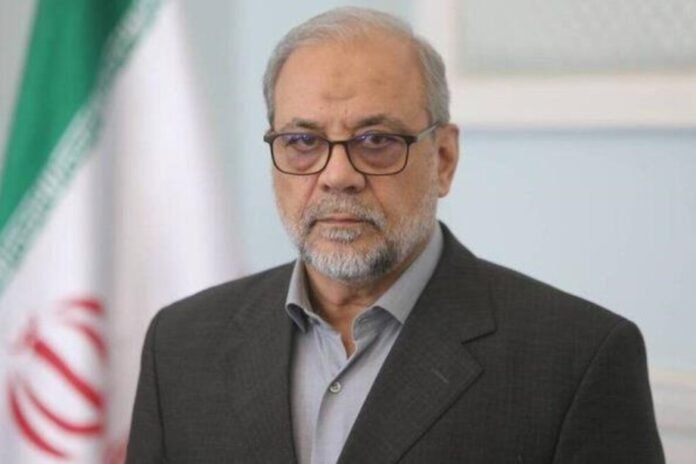
In a statement, Mohammad Bagher Zolghadr, secretary of Iran’s Supreme National Security Council, said Washington must “correct its behavior” before the strategic waterway can reopen.
He listed six conditions, including ending what he called threats against Iran’s supreme leader, permanently halting military action against Iran and its regional allies, withdrawing US naval and air forces involved in what he described as the blockade of Iran, compensating Tehran for damage caused during the recent conflicts, lifting US sanctions and releasing Iran’s frozen assets.
Zolghadr said the demands reflected the will of the Iranian people, citing nationwide rallies over the past six days.
READ: Oman says Strait of Hormuz talks progressing in ‘positive’ atmosphere
“The Supreme National Security Council will not retreat from these demands, whether in war or in negotiations,” he said.
Separately, Iranian army spokesman Brig. Gen. Mohammad Akraminia said the “Iranian order” governing the Strait of Hormuz was “irreversible,” adding that the US had “no choice but to accept the existing reality” or face “far greater costs than before.”
The remarks come as negotiations over the future of navigation through the Strait of Hormuz remain at an impasse.
Iran and the US signed a memorandum of understanding on June 18 through Pakistani and Qatari mediation, ending active hostilities and launching negotiations toward a broader agreement. The memorandum envisaged a gradual restoration of commercial navigation through the Strait of Hormuz, but implementation later stalled as both sides exchanged accusations of violating its terms.
READ: US expects Iran to ensure safe oil flow through Strait of Hormuz: Vance
Europe’s Biggest Firefighting Force Deployed as Wildfires Expose Prevention Gap
As wildfires sweep southern Europe, the EU has deployed its largest-ever shared firefighting force, but the escalating crisis highlights a widening gap between emergency response and long-term wildfire prevention.
Portugal and France activated the EU Civil Protection Mechanism, with France receiving four rescEU firefighting aircraft from Sweden and Cyprus. Portugal was reinforced with 118 firefighters, 45 vehicles from Spain, and three rescEU aircraft from Italy and Spain.
“We have regular wake-up calls, but this one is the biggest in the last couple of years,” said Commissioner Hadja Lahbib, stressing that “Europe stands together.”
According to the European Forest Fire Information System (EFFIS), the EU recorded 1,407 wildfires by 30 July 2026, scorching nearly 435,000 hectares and releasing an estimated 17.98 million tonnes of CO₂. While below last year’s record season, the figures remain above the 20-year average, with forecasters warning of “very extreme” fire conditions across Portugal, Spain, France, Italy and Greece.
The Commission says this summer’s operation is its largest since rescEU began in 2022, with 777 firefighters from 14 countries, 22 aircraft and five helicopters pre-positioned before fires erupted. However, while Brussels coordinates and funds the response, responsibility for tackling wildfires on the ground remains with national authorities.