15.8 C
London
Saturday, August 8, 2026
Home Blog

Media Mute After 71 Executions: Iranian Source Secretly Tells TML

0
media-mute-after-71-executions:-iranian-source-secretly-tells-tml
Media Mute After 71 Executions: Iranian Source Secretly Tells TML


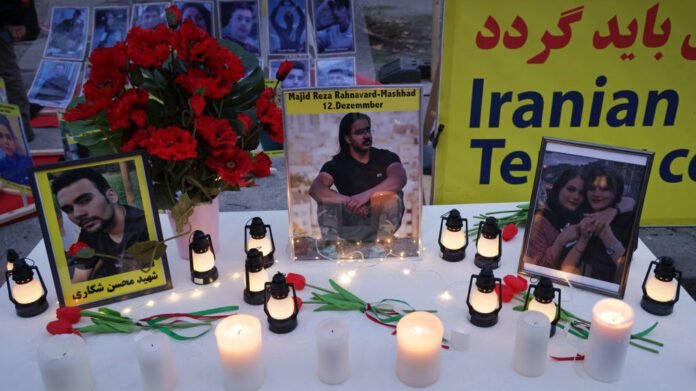
Iran executed at least 71 people in July, including six protesters, according to Iran Human Rights (IHR), a Norway-based monitoring group, which said it documented at least 444 executions from January 1 through July 31, while only 67 of those cases were announced by Iranian authorities.

This information emerges as international attention has focused on Iran’s military confrontation with the United States and Israel, leaving arrests, death sentences and alleged abuses inside the country less visible, rights advocates say. The organization said another 377 cases were independently verified through two sources, while reports of more than 400 additional executions have not been included because they could not yet be verified.

The figures present a parallel picture of Iran at a moment when international attention has overwhelmingly centered on military operations, the confrontation with the United States and Israel, the Strait of Hormuz, and the economic consequences of the conflict.

Inside the country, however, the machinery of capital punishment has continued.

Mahmood Amiry-Moghaddam, the director of Iran Human Rights, said executions have returned to an almost daily pace. “So, it seems that we are going back to the way it used to be, that we have daily executions. Most of them are for charges such as drug trafficking or murder. But the execution of protesters also continues,” he told The Media Line.

So, it seems that we are going back to the way it used to be, that we have daily executions

“Last month, we had six protesters who were executed. We know that there are many more on death row now. In one of the prisons in Isfahan, we have identified at least 70 people who are going to be executed,” he added.

Of the 71 executions recorded in July, the organization said 36 concerned murder charges, 26 drug-related offenses, eight security-related charges and one rape charge. During the first seven months of 2026, IHR documented the executions of 28 protesters—26 connected to the January 2026 protests and two to the “Woman, Life, Freedom” movement. It also recorded the executions of 13 political prisoners affiliated with banned opposition groups, and 12 people accused of espionage.

In total, 63 of the executions documented during the period involved national-security charges.

Iranian authorities describe such executions as lawful punishment for security-related crimes and have said swift enforcement of sentences is necessary to deter unrest.

The death penalty extends far beyond political cases. According to IHR, 227 people were executed after receiving qisas, or retribution-in-kind, sentences for murder, while 143 were executed for drug-related offenses. Twelve women, 17 foreign nationals, and at least 80 members of ethnic minorities were among those executed.

Only two of the 444 documented executions were carried out publicly.

For an anonymous source currently inside Iran, the continuation of executions itself is not regarded as something new. The deeper frustration, the source said, comes from the perception that what is happening inside the country is widely known but increasingly absent from the international conversation.

“Unjust executions without a fair trial have always been happening here. That’s not the shocking part to us. What we hate the most is that now almost everybody knows what’s going on in Iran—the crimes committed by the Islamic Republic. Every politician and news outlet is well aware [of] this, but they pretend it doesn’t exist because it doesn’t align with their interests. We don’t expect much from these people—the least is transparency,” the source told The Media Line.

The silence of the media is nothing new to us, but it’s definitely heartbreaking

“The silence of the media is nothing new to us, but it’s definitely heartbreaking,” the source added.

That loss of attention is also central to Amiry-Moghaddam’s assessment of the current moment. “So, of course the media, they go for the hottest news, and right now it’s war. This is one of the reasons why the Islamic Republic actually prefers the current situation, because everything else comes under the shadow of the war,” he noted.

He argues that international priorities have moved toward containing the conflict and preserving regional economic stability. “They prefer to have at least some level of tension with the United States because that takes all the attention. For Western countries, the highest priority is not the human rights situation of Iranian people. Right now, it is that the Strait of Hormuz is open, that the oil prices and gas prices are not increased anymore, that there is stability,” he said.

The effect of the war inside Iran is more complicated than a simple weakening of the state.

According to Amiry-Moghaddam, the authorities have been able to mobilize supporters during the conflict, while the structural problems that have repeatedly fueled discontent—inflation, shortages and economic mismanagement—remain unresolved.

“I would say that compared to the time before the war, probably the regime is in a better shape. However, they are not capable of solving people’s daily problems. There is still mismanagement in the whole country,” he said, highlighting electricity and water shortages alongside inflation. “Sooner or later, there will be new protests.”

At the same time, the conflict appears to have changed the immediate priorities of some Iranians. “Maybe seven months ago, they had much more hope of regime change. Now, it seems that because of the war, they are much more preoccupied with their life situation not getting any worse. But it is getting worse, unfortunately,” Amiry-Moghaddam said.

The anonymous source inside Iran described the continuing uncertainty in more restrained terms. “The weight of the ongoing uncertainty over the conflict, well it’s the same as before. Nothing has changed,” he said.

But executions are only one component of the domestic picture.

Amiry-Moghaddam also described widespread arrests since the beginning of the conflict and warned that national-security legislation has expanded the authorities’ ability to impose severe sentences over alleged cooperation with organizations or media outside Iran.

“There are always arrests, but there is a new law that was passed last year during the fall, after the 12-day war last summer. It gives the authorities much more opportunity to give harsh sentences to people. For example, if someone has a video or messages sending to Farsi media outside the country, they can even be sentenced to death,” he said.

According to Amiry-Moghaddam, the scale extends well beyond individual cases. “Inside the prisons there are thousands who have been arrested since the war began. And as I mentioned, we think hundreds are sentenced to death. Many of them are subjected to torture.”

What I’m concerned about is that as these military operations continue, the regime will use it even more to justify more arrests

“What I’m concerned about is that as these military operations continue, the regime will use it even more to justify more arrests, more harsh sentences, more executions under the pretext of national security,” he said.

Those estimates of arrests, death sentences and alleged torture come from Amiry-Moghaddam’s own account and are distinct from IHR’s independently documented execution statistics.

For him, the significance of capital punishment also goes beyond the individual prisoners who ultimately face execution. He argues that repeated executions create a broader climate of intimidation capable of affecting political activity and freedom of expression even among people who have never been detained. “I think we should not underestimate the importance of the executions for the regime. … Just seven months ago, people used to post on their social media channels; they were not so afraid,” he said.

“Now, I think, especially because of all these executions that they hear about every single day, we see the impact of the death penalty on the freedom of speech, on basically everything people do,” he asserted.

The contrast with previous waves of international attention is particularly significant.

The death of Mahsa Amini in custody in 2022 and the subsequent “Woman, Life, Freedom” protests generated demonstrations and widespread solidarity internationally. Amiry-Moghaddam says that level of public attention has not been replicated during the current period. “When we compare a situation with the time after the Women. Life. Freedom. Movement, we see that also the public opinion and the solidarity that the Iranian people used to have during that movement is not there anymore.”

He does not attribute the shift exclusively to Western governments or media. Part of the problem, he argues, stems from within the Iranian opposition, which is increasingly divided over the war and how foreign military intervention should be viewed. “And you probably have seen Iranians going out with the American flag, Israeli flag, and I don’t think it has a positive impact on the public opinion in Europe,” he said.

Amiry-Moghaddam was also explicit in separating opposition to the Islamic Republic from support for bombing Iran. “I don’t think it is morally right either. Although I understand it’s because of desperation, we cannot express happiness because Iran is being bombed. These past few months have been very strange.”

That distinction sits at the center of the human rights dilemma created by the current conflict. Military pressure on Tehran has not stopped executions or arrests. According to Amiry-Moghaddam, it may instead give authorities another justification for repression while shifting international scrutiny toward military and economic priorities.

His argument is therefore that human rights must return to the diplomatic agenda independently of how the military confrontation develops. He sees Europe’s potential role not as determining Iran’s political future but as increasing the external consequences of domestic repression.

“The change in the system, that must come from inside by the Iranian people, but what Europe can do is to raise the political cost of the repression, the executions, and that’s what we are hoping. The rest, I think, Iranian people will do,” he noted.

The change in the system, that must come from inside by the Iranian people, but what Europe can do is to raise the political cost of the repression

For now, however, the contrast is growing sharper.

Iran’s military confrontation has become an international security story. Inside the country, according to IHR and the accounts provided for this article, executions and arrests have continued alongside it—while receiving considerably less attention than the conflict surrounding them.

For Amiry-Moghaddam, that also explains why war should not automatically be interpreted as a pathway to change inside Iran. “We really should hope that the war ends, because this is an asymmetric war, and this is the expertise of the Iranian regime. That’s what they are good at. They do whatever it takes to hold on to power,” he said.

“The regime must answer to people why their daily issues are not solved, why do they have a shortage of everything, basically. I haven’t given up the hope for a change, but I think that the war is not helping it,” he concluded.

Flesh-eating screwworms feast on humans in Mexico; human cases top 500

0
flesh-eating-screwworms-feast-on-humans-in-mexico;-human-cases-top-500
Flesh-eating screwworms feast on humans in Mexico; human cases top 500

Since the flesh-eating screwworm fly reinvaded Mexico in 2024, human cases of the voracious parasite have been mounting. According to a July surveillance report from Mexico’s Ministry of Health, there have been over 500 human cases in 2025 and 2026. A study this week in the journal Emerging Infectious Diseases analyzed the information on over 200 confirmed cases reported between April 2025 and March 2026 and found that the infestation pace is increasing.

Among the 200 confirmed cases in the study, six deaths were reported. At least one of the deaths was directly caused by the fly’s maggots, researchers in Mexico reported in the study.

The New World screwworm (NWS) fly was once endemic in Mexico—as well as the US. The flies lay hundreds of eggs in the wounds, inflamed tissue, mucous membranes, and orifices of warm-blooded creatures. The resulting maggots hatch within a day and begin ravenously feasting on the living flesh of their victims. While the fly’s maggots generate ghastly, life-threatening wounds in a variety of warm-blooded species, including humans, they’re particularly devastating to livestock.

Amid a decades-long eradication effort, the fly’s populations were wiped out from the US, Mexico, and Central America. This was largely done with massive aerial releases of sterilized male flies, a technique that works because female NWS flies only mate once in their lifespans. Mexico declared NWS eradicated in 2003. Panama declared eradication in 2006 and kept an active, biological barrier along the Darién Gap at the border with Colombia. But in 2022, the barrier was breached, and Mexico began seeing cases in animals in 2024.

Mexico’s cases

Since the breach, there have been more than 36,000 animal cases of NWS in Mexico, with nearly 2,000 active as of August 5, according to the US Department of Agriculture. While human NWS infections—called myiasis—are a small fraction of the overall cases, the infestations can be severe and horrifying. The maggots can cause painful, rapidly enlarging deep wounds, which can destroy muscle, cartilage, and bone—even the skull—if not caught quickly. The wounds pose the risk of irreparable damage, secondary infection, sepsis, and, in extreme cases, death.

To better understand the human health impact of NWS’s reemergence in Mexico, researchers surveyed public health, epidemiological, and laboratory reports of confirmed NWS myiasis cases between April 2025 and March 2026. In 2025, the cases were being reported at a rate of about three per week. But in 2026, the pace increased to just over nine a week.

The study identified 204 cases in all, but two did not have sufficient data to be included in the analysis. Of the 202 remaining cases, researchers found 145 (72 percent) were in male patients. The age of fly victims ranged from 12 to 93 years, but skewed toward older adults, with a mean of 61. Most of the myiasis cases (77 percent) were in patients with one or more underlying health conditions, most commonly diabetes, alcoholism, cancers, and skin conditions.

When the flies infect humans, they seem to have the most success infesting the legs and feet, the study found; More than half (55 percent) of cases were in the lower limbs. But the flies are not picky. The next most common sites were reported as the head/neck, including the nose, mouth, and eyes. Fewer cases were seen in the upper limbs, trunk, ear, genitalia, and abdominal cavity.

Six deaths were reported among patients with confirmed NWS myiasis, but it’s unclear in most of the cases how much the infestation contributed to the deaths. Only one had NWS myiasis listed as the cause of the death. The other deaths were in patients with cancers, encephalitis, respiratory failure, and septic shock. The average age of patients with NWS-linked deaths was 79.5 years.

One Health approach

The geographic distribution of the human cases unsurprisingly mirrored the distribution of reported animal cases. But it remains unclear why men seem to be at higher risk of the flesh-eating maggots. They speculated that occupational exposure, outdoor activities, contact with animals, unattended wounds, or delayed healthcare seeking could be factors in the imbalance.

Overall, the researchers conclude that the cases highlight an important link between human and animal health.

“Because animal and human cases reflect northward spread of the NWS fly and that spread is expected to continue, surveillance, diagnostic preparedness, animal movement controls, and fly-suppression activities should be implemented proactively at the leading edge of expansion, rather than only after human cases are detected,” the researchers write. “Coordination between human health, animal health, wildlife, and agricultural sectors will be essential to guide prevention and control measures.”

The US reported its first animal cases in Texas in June amid the reemergence. Since then, the USDA has reported 45 animal cases. So far, no human NWS myiasis cases have been reported in the US from the fly’s resurgence. But there have been travel-related cases amid the reemergence in Central America and from people returning from other locations with endemic NWS populations.

​Out of bullets, US will have to adjust and change security policy

0
​out-of-bullets,-us-will-have-to-adjust-and-change-security-policy
​Out of bullets, US will have to adjust and change security policy

​While President Trump says the US is not short of weapons, he has told Ukrainian President Vladimir Zelensky that the US does not have Patriot interceptors to send to Ukraine because “we need them for ourselves.”

The best face to put on the situation is that some in the Pentagon leaked information that US stockpiles of critical weapons were dangerously depleted. The urgency in the leak came from the possible renewal of hostilities against Iran and the fear that it would become close to impossible to defend against Iranian missile and drone strikes if supplies ran out.

Others think the leaks were inspired by Iran war opponents trying to scuttle a decision to resume attacks against Iran.

In any case, the metrics are the metrics and they are not good.

This handout image, taken and released by the Ukrainian Presidential Press Service on July 28, 2026, shows Ukraine’s President Volodymyr Zelensky (L) and US President Donald Trump meeting in Washington, DC. Photo: Ukrainian government handout

The supply shortage in the Iran war took place because US production of weapons fell behind current needs. The US emptied its war supplies supporting Ukraine, without accounting for what would happen if the shelves were empty.

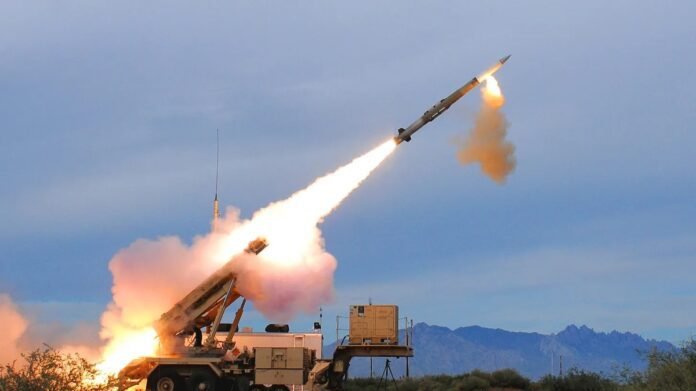
Two of the most important land-based air defense systems, THAAD and Patriot, reportedly are in dangerously short supply. US and allied forces have expended close to 80% of total US THAAD interceptor stocks relative to pre-war inventory levels.

At least two to three AN/TPY-2 X-band radars – the primary radar component for the THAAD system – have been confirmed damaged or destroyed in Middle Eastern host countries following Iranian targeted strike operations including those at

  • the Muwaffaq Salti Air Base (Jordan) where a US Army forward-deployed AN/TPY-2 radar was destroyed by a drone strike;
  • the Prince Sultan Air Base (Saudi Arabia), where high-resolution satellite imagery confirmed an AN/TPY-2 radar array and its support shelter sustained heavy fire damage from a precision strike, disabling the unit’s tracking capabilities; and
  • the UAE’s al-Ruwais where additional strikes targeted radar facilities tied to the regional THAAD network near al-Ruwais, causing operational degradation.
AN/TPY-2 radar from THAAD system destroyed in engagements with Iranian forces

Meanwhile, Patriot air defense systems operated by US and allied forces have sustained both physical damage and operational degradation.

In Bahrain, satellite imagery confirmed that Iranian precision strikes hit and destroyed key components of a US-supplied Patriot battery at Riffa Air Base, alongside damage to hardened structures at the site.

Defense assessments (including analysis by the Center for Strategic and International Studies) highlight that coalition forces expended approximately 65% of their total PAC-2 and PAC-3 interceptor inventories. The US entered recent operations in the Middle East with an estimated total of over 2,300 to 2,500 PAC-3 interceptors. Over 1,500 PAC-3 interceptors have been expended in defense against ballistic missiles and drone salvos, maybe more.

Distributed across active US Army Patriot batteries, 800 remaining rounds average out to roughly 13 PAC-3 interceptors per battery – enough to load only about two launchers out of a standard 6-to-8 launcher battery setup.

An additional 400 older PAC-2 interceptors remain in reserve, though these rely on blast-fragmentation rather than “hit-to-kill” kinetic impact, making them less effective against advanced ballistic threats.

PAC-3 Patriot interceptors are made by Lockheed in Camden, Arkansas. Lockheed produces around 600 rounds per year.

Under new US government contracts Lockheed is working to expand production. There are, however, a number of bottlenecks including production of the advanced seeker head for the missiles (made by Boeing) and manufacture and curing of the missile’s dual-pulse solid fuel rocket engines.

Boeing’s Huntsville, Alabama plant is the sole manufacturer of the active Ka-band millimeter-wave radar seeker for the PAC-3 MSE. The end-to-end lead time for a PAC-3 MSE interceptor is roughly 24 months for missile assembly and up to 30 months for component procurement and propellant curing. A seeker ordered today takes over two years to clear testing, integration at Lockheed Martin and field deployment.

Global demand for Patriot interceptors (including PAC-2 GEM-T and PAC-3) stands at a backlog of over 4,300 rounds—representing roughly 7 years of output at pre-surge production rates.

The US Army’s inventory of MGM-140 ATACMS (Army Tactical Missile System) is virtually depleted, following sustained operational expenditures in West Asia and military transfers to Ukraine. Reports based on internal Pentagon data indicate that U.S. forces have fired more than 1,300 ATACMS since early 2026, leaving the overall inventory at “virtually zero” or “rock bottom.”

ATACMS launch by HIMARS.

ATACMS production has been phased out and is being (slowly) replaced by PrSM, a longer range guided missile. PrSM is still in low-rate initial production.

From an operational point of view, until PrSM ramps up production, the army cannot support the precision-missile part of the HIMARS system. This means no more supplies whether for Ukraine, the Persian Gulf or other sensitive locations, especially Taiwan and Korea.

ATACMS forms a core component of South Korea’s Kill Chain and Korea Massive Punishment and Retaliation (KMPR) frameworks – part of the military’s “Three-Axis” strategy to conduct rapid, precision counterbattery strikes against North Korean long-range artillery, bunker complexes and missile sites near the DMZ.

The US Marines also thought they could use ATACMS to stop a naval invasion of Taiwan, but without supplies this isn’t possible.

155mm ammunition

The global supply of 155mm artillery shells remains under extreme strain. The 155mm artillery shell is widely considered the single most important heavy ground-fires munition in modern land warfare. Standardized across NATO and allied militaries, it serves as the backbone of tactical and operational fire support.

​Then-Secretary of the Army Christine Wormuth toured the Universal Artillery Projectile Line (UAPL) during the opening ceremony in Mesquite, Texas, on May 29, 2024. Photo: US Army / Sgt. 1st Class Nicole Mejia

Years of high-intensity consumption in Ukraine, operational usage in West Asia and multi-national stockpiling efforts have drawn down Western inventories to historic lows. Over the past four years, the US War Department has drawn down its 155mm reserves by over 3.6 million rounds – with over 3 million transferred to Ukraine, 112,000 used for internal training/testing, and 218,000 transferred via foreign military sales (FMS).

A new $469 million automated facility in Mesquite, Texas (operated by General Dynamics OTS) was intended to forge 30,000 projectile bodies per month. The OTS contract was halted after three years and the three new manufacturing plants in Mesquite failed to produce a single round. The US Army is trying to work with a new contractor for 155mm shells, but it is years away from expanding manufacturing much beyond what existing factories produce.

Implications

The 155mm debacle is just one of many roadblocks that will slow US rearmament. There are plenty of other problems including critical supplies, critical materials, sunset components, production bottlenecks and significant skilled labor-shortage issues.

Meanwhile the US is trying to patch up its procurement system and throw money at the shortages. If this ends up in another 155mm debacle, the implications are grave.

Optimistically, manufacturing adequate supply inventories will require around five to 10 years and in some cases for major systems (ships, submarines for example) a lot longer. On balance, the US will be in a weapons’ deficit for at least a decade.

The lack of enough military supplies will severely compromise US security policy in the years ahead. If key allies are unable, unwilling or too slow in building up their own stockpiles, critical alliances will be compromised to the point of becoming nonfunctional.

US potential adversaries will almost certainly test the United States, jacking up pressure along the fault lines of the international system. Results could include the complete collapse of Ukraine, a Chinese military operation against Taiwan, or efforts by North Korea to gain a stranglehold over South Korea. The US may find its presence on the peninsula too dangerous to be continued as US forces stationed there face a nuclear threat.

US potential adversaries will almost certainly test the United States, jacking up pressure along the fault lines of the international system. Results could include the complete collapse of Ukraine, a Chinese military operation against Taiwan, or efforts by North Korea to gain a stranglehold over South Korea. The US may find its presence on the peninsula too dangerous to be continued as US forces stationed there face a nuclear threat.

The US still has some significant assets. The US retains strong, superior airpower still unmatched by China and Russia. American command and control systems are significantly improved, and are being augmented by artificial intelligence and better sensors. The US leads most other countries in battlefield systems integration.

But, while trying to catch up, US land forces remain short on critical supplies such as anti tank weapons and artillery and are behind in fielding tactical and mid-range strike drones. The Navy looks capable on paper, but the fleet is aging, new construction is weak and slow and reliance on aircraft carriers remains an issue. If China proliferates its counter-carrier weapons to its allies and friends, the US fleet could find itself in real trouble. Even US carriers in far-distant Guam are at risk.

The US relies on a sea triad made up of carriers, Arleigh Burke class destroyers with AEGIS air defense systems, and nuclear attack and ballistic missile submarines (SSBNs). It takes 7 to 12 years to build a single nuclear submarine.

In addition, the US has failed in protecting US defense systems and technologies from compromise. Sloppy or non-existing security measures over the past three decades have left US systems at severe risk, and there is no sign whatsoever that Washington feels any incentive to plug the leaks and punish the transgressors.

This failure amounts to a massive scandal. There isn’t a Chinese military system that has not benefited from ripping off American technology. The only real differentiator is that China is much better at industrializing weapons than the United States, and light years ahead of Europe.

It is easy to forget that US power is mainly predicated on expeditionary forces, something like the UK in World War I and World War II. Expeditionary forces need to be constantly supported and supplied. In World War I, including the Battle of Mons and the Battle of Le Cateau, the small, professional force of roughly 80,000 men that comprised the UK expeditionary army was nearly exhausted by the end of 1914 – though it successfully helped stop the German advance at the First Battle of the Marne.

Britain paid a very high price, particularly in France and Belgium: 887,858 total military deaths and over 1.6 million wounded, with the vast majority of these European theater casualties occurring on the Western Front in France and Flanders.

Evacuation of Dunkirk, May-June 1940

In World War II Britain’s expeditionary force fared poorly.

During the 1940 Battle of Dunkirk and the campaign in France, the British Expeditionary Force (BEF) suffered roughly 66,000 to 68,000 total casualties – including around 11,000 killed, 14,000 wounded and over 41,000 captured or missing. They also abandoned nearly all their heavy equipment, trucks, and tanks.

The US does not have a separate expeditionary army or, looked at another way, the US Army, Marines, Navy and Air Force are almost entirely expeditionary by design. The US maintains troops in Europe, the Middle East, Korea and Japan and keeps bases outside the United States for land, air and naval forces.

In terms of fighting strength, the US has around 160,000 to 175,000 troops stationed outside the United States, with the most important located in Europe, South Korea and Japan. A significant setback at any of these locations would be, under any circumstance, extremely painful. The US would either have to try and reinforce deployed forces or rescue them. In an era of missiles and drones, getting supplies and reinforcements through would be a significant challenge.

Under current conditions, the US needs to redesign its defense posture, significantly improve defense production, augment vital stockpiles and evaluate how it can support US allies and US interests during the coming decade of supply shortages. At the same time, America’s allies have to do vastly more for their own security simply because the coming decade is fraught with risk and danger.

The next decade could be the most challenging for peace and security since the end of the Cold War.

Former US Deputy Under Secretary of Defense Stephen Bryen is a senior Asia Times correspondent. Read this and many other dispatches on his newsletter Weapons and Strategy.

Saudi Arabia, Turkey and Pakistan to sign joint defence deal

0
saudi-arabia,-turkey-and-pakistan-to-sign-joint-defence-deal
Saudi Arabia, Turkey and Pakistan to sign joint defence deal


Turkey, Saudi Arabia and Pakistan will sign a joint defence agreement on Friday, regional sources with direct knowledge of the matter said, ​at a time of regional turmoil with Gulf states coming under ​fire from Iran after it was attacked by the U.S. and ⁠Israel.

While the pact further cements a burgeoning grouping of major Sunni ​Muslim powers, there was no immediate clarity on each state’s commitments.

A Turkish ​official confirmed the agreement will be signed.

Turkey is a member of NATO. Saudi Arabia, another U.S. ally, is one of the world’s top oil exporters and the strongest ​Gulf state, while Pakistan is the only nuclear-armed Muslim country.

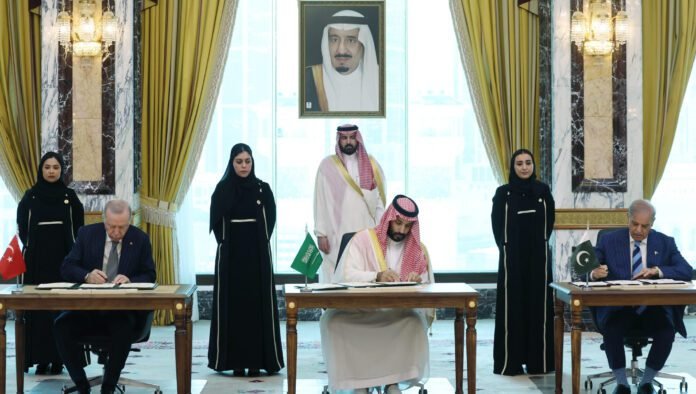
Turkish President Tayyip ​Erdogan and Pakistani Prime Minister Shehbaz Sharif, accompanied by powerful army chief Asim Munir, ‌will ⁠meet Saudi Crown Prince Mohammed bin Salman in Jeddah for the signing.

The pact follows nearly a year of negotiations, reported by Reuters in January, and as the Iran war exposes Gulf states’ security vulnerabilities and ​disrupts the shipping of oil ​and other ⁠key goods through the Strait of Hormuz.

Turkish Foreign Minister Hakan Fidan in January said that Ankara favoured a ​broader regional security platform to promote cooperation and stability.

An ​existing Saudi-Pakistani ⁠pact treats an attack on either as an attack on both and encompasses “all military means”, a Saudi official previously told Reuters.

The Pakistani military and ⁠government did ​not immediately respond to requests for comment.

Saudi ​Arabia’s government did not immediately respond to a request for comment.

Source:  Reuters

Hollywood Star Dead at 54 Just Hours After Falling Ill on Set

0
hollywood-star-dead-at-54-just-hours-after-falling-ill-on-set
Hollywood Star Dead at 54 Just Hours After Falling Ill on Set


Hollywood was left stunned when beloved Three’s Company star John Ritter died just hours after suddenly falling ill during rehearsals — and the shocking circumstances surrounding his death would later spark a bitter legal battle.

Ritter, one of television’s most recognizable comedy stars, was just 54 when he collapsed while working on his ABC sitcom 8 Simple Rules… for Dating My Teenage Daughter in September 2003.

What initially appeared to be a heart attack turned out to be something far more deadly.

The actor was actually suffering from an aortic dissection, a catastrophic tear in the body’s main artery that can become fatal within minutes or hours.

His wife, actress Amy Yasbeck, later argued that doctors failed to identify the danger quickly enough.

“John didn’t have a chance,” she said. “He was never given that chance.”

The tragedy unfolded on September 11, just days before Ritter was due to celebrate his 55th birthday.

He had been rehearsing at the Walt Disney Studios lot in Burbank, California, when he suddenly became nauseous and began sweating heavily.

Then came severe chest pain and vomiting.

Ritter was rushed across the street to Providence Saint Joseph Medical Center — the same hospital where he had been born decades earlier.

He arrived at around 6 p.m.

By 10:48 p.m., he was dead.

Doctors initially believed the sitcom star was suffering a heart attack and treated him accordingly.

But as Ritter’s condition rapidly deteriorated, physicians eventually discovered that he had an aortic dissection.

The dangerous condition occurs when a tear develops in the inner layer of the aorta, allowing blood to surge between the layers of the artery wall and force them apart.

Ritter was rushed into emergency surgery, but doctors were unable to save him.

The sudden death sent shockwaves through Hollywood.

Ritter had become a household name playing the hilariously accident-prone Jack Tripper on Three’s Company, which aired from 1977 to 1984.

His performance earned him both a Primetime Emmy Award and a Golden Globe and helped make him one of the most beloved sitcom stars of his generation.

But after his death, attention quickly turned to whether his fatal condition should have been detected sooner.

Yasbeck filed a negligence lawsuit involving the hospital and pursued wrongful death claims against two doctors.

One physician had treated Ritter on the night of his death.

Another had examined results from a body scan Ritter underwent in 2001, which the family alleged showed warning signs involving his aorta.

Several defendants eventually reached settlements with Ritter’s family totaling approximately $14 million.

The claims against the two doctors went before a jury.

Jurors ultimately ruled 9-3 in favor of the physicians, clearing both of wrongdoing.

But Yasbeck remained convinced that her husband might have survived if his condition had been identified earlier.

His devastating death came at a time when Ritter was enjoying a major television comeback.

After decades in Hollywood, he had landed another starring sitcom role in 8 Simple Rules, playing family patriarch Paul Hennessy.

The series continued after his death and addressed the loss of Ritter’s character on screen.

Ritter left behind four children, and several later followed him into Hollywood.

His son Jason Ritter became a successful actor in his own right, earning an Emmy nomination for Parenthood and appearing in Joan of Arcadia, Gravity Falls and Frozen 2.

Another son, Tyler Ritter, went on to appear in shows including NCIS, Modern Family and The McCarthys.

More than two decades later, Ritter’s shocking final hours continue to haunt fans — a beloved television star going from a normal day of rehearsals to an emergency operating room in the space of just a few hours.

For his family, the questions surrounding what happened that night made the loss even harder.

And for Yasbeck, one belief has never changed: her husband should have had more time.

From Manisa to Szeged: BYD’s shifting European investment strategy

0
from-manisa-to-szeged:-byd’s-shifting-european-investment-strategy
From Manisa to Szeged: BYD’s shifting European investment strategy

In June 2026, Chinese electric-vehicle manufacturer BYD confirmed that its planned $1 billion electric and plug-in hybrid vehicle factory in Manisa, western Turkiye, had been placed on indefinite hold. The project, signed with great ceremony in July 2024 in the presence of Turkish President Recep Tayyip Erdoğan, had been presented as a landmark investment. It promised annual production capacity of 150,000 vehicles, up to 5,000 jobs, a research and development center, and production by the end of 2026. Nearly two years later, construction had not begun and no foundation had been laid. BYD Executive Vice President Stella Li said the Turkish project had no timeline and that the company’s priority was its facility in Szeged, Hungary.

The decision left Ankara politically exposed. Turkiye had granted BYD substantial import-tax exemptions, allowing the company to sell tens of thousands of vehicles and generate hundreds of millions of dollars in additional profits.

Following the setback, Beijing intensified its media and diplomatic outreach in Turkiye to repair China’s damaged image and protect the broader bilateral relationship.

The Collapse of the Manisa Project

The Manisa investment was conceived as a mutually beneficial arrangement. For Turkiye, it offered an opportunity to become a regional electric-vehicle manufacturing hub and attract the first major new foreign automotive brand since the late 1990s. For BYD, it provided a potential production base that could take advantage of Turkiye’s Customs Union with the European Union and soften the impact of higher EU tariffs on Chinese-made electric vehicles. The factory was therefore more than a standalone industrial project: it was expected to anchor a wider supply chain, strengthen Turkiye’s export position, and demonstrate Ankara’s ability to attract high-value Chinese manufacturing. In practice, however, the arrangement unraveled. 

By early 2026, Turkish authorities had suspended the tax exemptions granted to BYD because of the lack of progress. Ministry of Industry and Technology officials maintained that the investment agreement, including its conditions, obligations, and guarantees, remained legally valid. They also warned that BYD could be required to repay the incentives if it failed to complete the project.

Parliamentary scrutiny intensified, with opposition lawmakers emphasizing that “not a single shovel had hit the ground.” Stalled construction, suspended fiscal benefits, and mounting political embarrassment effectively froze the project. That mismatch turned an industrial promise into a politically sensitive test of credibility.

READ: China electric car company BYD signs $1bn automobile factory investment deal in Turkiye

Why the Turkish Project Failed

The failure reflected a combination of commercial, regulatory, economic, and political factors. Commercially, BYD’s strategy shifted decisively toward manufacturing inside the European Union. EU tariffs on Chinese electric vehicles made vehicles assembled in Turkiye less competitive in the European market than those manufactured within the bloc. Although Turkiye’s Customs Union provides important advantages, it does not offer the same status or protection from tariffs as production inside an EU member state. Li made BYD’s priorities explicit in June 2026: Hungary came first, a second European facility ranked next, and Turkiye had no schedule.

Incentive-related disputes accelerated the breakdown. The Turkish government had suspended its additional 40 percent tariff on Chinese EV imports for BYD as an inducement linked to the company’s factory commitment. When the investment failed to materialize, those privileges were withdrawn at the beginning of 2026. The subsequent decline in BYD’s Turkish sales further weakened the commercial case for maintaining a large presence without local production. Analysts estimated that tax-advantaged imports generated an additional $500 million to $1 billion in profits for BYD. That short-term windfall, however, could not overcome the longer-term advantages of producing inside the EU once the Hungarian facility became operational.

Political mistrust also contributed. Reports pointed to Chinese caution arising from earlier cases in which Turkiye had reversed major contracts with Chinese companies under external pressure.

Meanwhile, some Turkish officials complained that Chinese negotiators reopened settled terms and made additional demands after agreements appeared final. These competing perceptions of unreliability weakened confidence on both sides. Combined with the stronger tariff and regulatory advantages offered by EU-based production, they made the Manisa project increasingly unattractive under existing conditions.

Beijing’s Image-Repair Campaign

The shelving of the investment damaged China’s standing in Turkiye and generated diplomatic friction at a time when Beijing continued to view Ankara as an important regional partner. Chinese authorities responded with what observers described as a propaganda blitz and charm offensive. The Chinese embassy in Ankara placed unsigned promotional articles in pro-government Turkish media outlets. These pieces highlighted cooperation between the Chinese Communist Party and Turkiye’s ruling Justice and Development Party while promoting the latest volume of Xi Jinping’s The Governance of China.

At the same time, the state-linked Turkey-China Friendship Foundation organized an eight-day, all-expenses-paid trip to Xinjiang for selected Turkish journalists. The resulting reports concentrated on economic development, infrastructure, and counterterrorism, while largely omitting concerns about human rights.

Beijing also expanded its outreach beyond the governing party by cultivating contacts with journalists and opposition figures. Its objective was to contain the reputational damage caused by the BYD episode, prevent the dispute from undermining wider bilateral relations, and preserve Chinese influence in Turkish public discourse.

By addressing both government-aligned and opposition audiences, Beijing appeared to be insulating its relationship with Turkiye from electoral change and growing public skepticism. The campaign demonstrated how a prominent commercial failure can carry broader strategic costs, particularly in a country important to China’s regional connectivity and diplomatic balancing.

READ: Regional countries welcome Saudi-Turkiye-Pakistan defense pact

Challenges for BYD in Hungary Under New Leadership

As the Turkish project stalled, BYD’s Hungarian operations advanced. The Szeged plant is scheduled to begin assembling vehicles in the fourth quarter of 2026 and forms the cornerstone of the company’s strategy to manufacture within the EU tariff wall. The previous Orbán government actively courted Chinese investment through infrastructure support, subsidies, tax advantages, and accelerated permitting. Former Foreign Minister Péter Szijjártó played a central role in negotiating the package and later accepted a senior external-relations position at BYD after resigning his parliamentary seat. The appointment immediately prompted allegations of a revolving-door conflict of interest.

Prime Minister Péter Magyar, whose government took office after elections earlier in 2026, ordered a broad review of the subsidies, tax breaks, permits, environmental exemptions, and state commitments associated with BYD’s investment. Officials cited hundreds of billions of forints in public support and infrastructure expenditure. Inspectors examined workers’ documentation at the Szeged site, while police investigated allegations involving the handling of contaminated soil, which BYD denied. The new government also signaled plans to introduce some of the EU’s strictest environmental regulations and reduce the generous tax incentives previously offered to large multinational projects.

These measures create several risks for BYD. A subsidy review and stricter environmental and labor standards could increase operating costs, delay the production ramp-up, or force the company to renegotiate existing terms. Political controversy surrounding Szijjártó’s appointment may restrict informal access to policymakers and intensify parliamentary and public oversight. A broader departure from the previous government’s accommodating approach to Chinese capital could also affect future expansion, additional incentives, and the recruitment of foreign workers.

Although the Magyar government has indicated that existing investments will not necessarily be cancelled, the policy shift has replaced a relatively predictable relationship with greater regulatory uncertainty and political accountability. The Szeged plant remains crucial to BYD’s European strategy, but its expansion can no longer be taken for granted.

Conclusion

The collapse of the Turkish project and growing complications in Hungary show how sensitive major Chinese electric-vehicle investments are to tariff regimes, commercial priorities, and domestic politics. Manisa lost its strategic appeal as BYD prioritized production inside the EU, while incentive disputes and mutual mistrust reinforced the shift. Beijing’s subsequent media campaign sought to limit the diplomatic fallout in Turkiye. In Hungary, production is moving forward, but tighter scrutiny of subsidies, labor practices, environmental compliance, and political relationships could constrain future growth.

BYD’s European success will therefore depend not only on manufacturing capacity but also on its ability to navigate changing political and regulatory conditions in host countries.

OPINION: From the Gulf to the Mediterranean: Energy infrastructure in the line of fire

The views expressed in this article belong to the author and do not necessarily reflect the editorial policy of Middle East Monitor.

Europe’s free satellite service just made it easier to track wildfires

0
europe’s-free-satellite-service-just-made-it-easier-to-track-wildfires
Europe’s free satellite service just made it easier to track wildfires

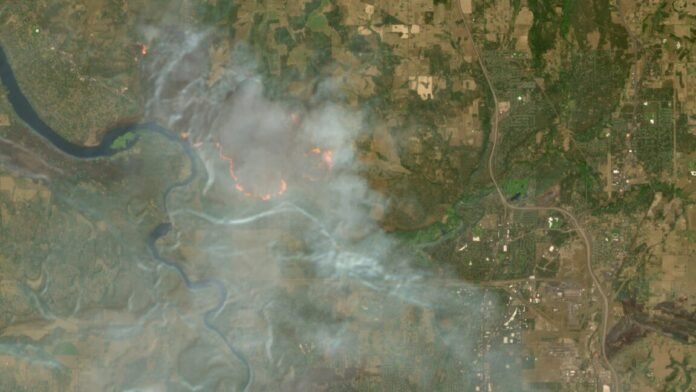
The wildfires afflicting communities across the world can now be tracked more easily by anyone using Europe’s free and open satellite imagery service—all thanks to a wildfire visualization script originating from nearly a decade ago.

The Copernicus Browser provides free access to the latest satellite imagery taken by the European Space Agency’s Sentinel satellites for the European Union’s Earth observation program. The three satellites of the Sentinel-2 mission have proven especially useful for wildfire monitoring by providing multi-spectral imaging at resolutions as granular as 10 meters in visible light and near-infrared bands—and the Copernicus Browser previously offered 10 default visualization layers using different combinations of spectral bands.

Now Copernicus Browser has also added a straightforward “wildfires” visualization layer for Sentinel-2 imagery that went live on August 4. Anyone clicking on this layer while looking at a wildfire location can see active fires in white or yellow, burning vegetation in red, and burned landscapes in dark brown or black.

That helpful wildfire visualization enhancement comes from a script written in JavaScript by remote sensing expert Pierre Markuse. As explained by Geovisualization, Markuse’s script combines the red visible light band, the narrow near-infrared band to highlight the differences between healthy and burned vegetation, and the short-wave infrared 2 band to reveal burned landscape by revealing moisture levels in the soil.

Users could previously add this script manually to Copernicus Browser sessions by copying and pasting it using the custom visualization option under the default layers.

But Simon Proud, mission scientist for Sentinel-2 at the European Space Agency, pushed to get the script integrated into Copernicus Browser as a default option. He announced that the integration had finally happened in a Discord channel on a server run by the investigative journalism group Bellingcat.

There are other existing and emerging satellite constellations capable of detecting and monitoring wildfires and wildfire smoke. NASA’s FIRMS tool provides free access to a global map of fires detected by NASA satellite sensors and is rapidly updated within several hours—although such NASA satellite imagery is only available in coarser resolutions down to 250 meters.

By comparison, the Sentinel 2 satellite imagery is updated every few days but provides much higher resolution imagery in certain bands down to a 10-meter spatial resolution. That makes it arguably the best free and publicly available tool for delivering higher-resolution satellite imagery of everything from wildfires to war zones.

Unfortunately, there is no shortage of wildfires to keep an eye on across the world as climate change exacerbates traditional wildfire seasons. Much of Washington and Oregon is experiencing wildfires and smoke, Canada’s wildfire season is on track to be one of the country’s worst, and firefighters continue to battle blazes in France and Spain, where hundreds of thousands of people have evacuated during a record-breaking wildfire season.

Judge rules Meta caused “public nuisance” and must fund mental health treatment

0
judge-rules-meta-caused-“public-nuisance”-and-must-fund-mental-health-treatment
Judge rules Meta caused “public nuisance” and must fund mental health treatment

A New Mexico judge yesterday ordered Meta to pay $567 million for a fund that would alleviate the “public nuisance” created by its social media services. The order to pay for youth mental health care is in addition to $375 million in civil penalties that a jury ordered Meta to pay earlier in the same case.

New Mexico Attorney General Raul Torrez sued Meta in a Santa Fe County court in 2023. A jury found in March 2026 that Meta’s social media platforms do not effectively protect kids from child exploitation and ordered the company to pay civil damages for violating state consumer protections and misleading parents about the safety of its apps.

The jury trial was just phase 1 of the case involving Meta, the owner of Facebook, Instagram, and WhatsApp. “The Phase 1 jury trial considered the State’s Unfair Practices Act claims and resulting civil penalties. The Phase 2 bench trial considered the State’s request for abatement based upon the State’s allegation that the Defendant, Meta, created a public nuisance,” Judge Bryan Biedscheid wrote yesterday in the $567 million judgment. Meta reported $60.8 billion in revenue and $15.85 billion in net income in Q2 2026.

Biedscheid concluded that “Meta is a cause of and has substantially contributed to a public nuisance in New Mexico and is required to abate that public nuisance.” He said the evidence shows “New Mexico is experiencing a youth mental health crisis” with increased rates of suicide and eating disorders.

The youth mental health crisis is “burdening public and community resources throughout the State,” and “overwhelmed the systems in place for addressing such harms,” he wrote. This is in part due to problematic social media use exacerbated by “Meta implement[ing] platform features that were designed to maximize engagement and time spent on its platforms, for all users and for teenage users in particular,” the judge wrote.

“Significant numbers of people in New Mexico experience harm from Meta’s products due to risks of sexual exploitation, interference with education, and adverse mental health outcomes,” he wrote. Biedscheid said this harm includes child sexual exploitation in which “an online predator threatens or coerces a child for financial gain, typically involving a threat to expose nude or exploitative imagery of that child.”

“In sum, the Court finds that New Mexico is in the midst of a teen mental health crisis affecting public health and public safety in and throughout the state, and that Meta’s platforms are a significant contributing cause to the crisis,” he wrote.

Fund to cover mental health care

The fund ordered by Biedscheid would include $420 million for treatment, $90 million for screening and assessment, $33 million for awareness and prevention, and $24 million for other costs. Biedscheid rejected a proposal from an expert witness that Meta fund new community-based health centers and said the treatment and related services should be funded for five years instead of the requested 15 years.

“Treatment is a necessary component of addressing harms to mental health and safety,” he wrote. “Any abatement fund must include funding for appropriate clinical or other behavioral health programs and professionals. However, requiring Meta to fund entire new physical facilities goes beyond what remedies are necessary to abate current harm.”

Biedscheid found that 15 years’ worth of funding would be excessive. Other social media companies share responsibility for the harm to New Mexico youth, so he considered Meta’s market share when deciding on an amount lower than what the state wanted.

Torrez called the ruling “a landmark victory,” and said the “case has always been about protecting children, standing up for families, and making sure that one of the world’s largest technology companies cannot profit from practices that endanger young people without consequence.”

Meta said it will appeal the ruling, telling media outlets, “We work hard to keep people safe on our platforms and have been transparent about the challenges of identifying and removing bad actors and harmful content. We remain confident in our record of protecting teens online and will continue to defend ourselves against claims that misrepresent the facts.”

Turkey, Saudi Arabia and Pakistan Sign Mutual Defense Pact in Mecca

0
turkey,-saudi-arabia-and-pakistan-sign-mutual-defense-pact-in-mecca
Turkey, Saudi Arabia and Pakistan Sign Mutual Defense Pact in Mecca


Turkey, Saudi Arabia and Pakistan signed a mutual defense agreement in Mecca on Friday that treats an armed attack on any one of the three countries as an attack on all, Pakistan’s Foreign Ministry reported, as the countries seek to expand collective deterrence and defense cooperation.

The agreement was signed during a closely watched summit attended by Saudi Crown Prince Mohammed bin Salman, Turkish President Recep Tayyip Erdogan and Pakistani Prime Minister Shehbaz Sharif.

Under the pact, the three countries committed to responding collectively if any member is attacked.

“The Agreement is intended to strengthen collective deterrence against any act of aggression, and stipulates that any armed attack against any one of the three States shall be regarded as an attack against them all. It further provides for the enhancement of all aspects of defence cooperation among the three States,” the agreement said.

The countries described the pact as reflecting “The three States’ shared commitment to further strengthening their collective security and to promoting peace, security, and stability in the region and beyond, in pursuit of a secure and prosperous future.”

A Turkish official told Reuters that the agreement was defensive and was not aimed at any particular country or other actor. The official said the arrangement was open to additional countries in the region and did replace existing bilateral or multilateral arrangements.

Discussions over the agreement had been underway before Friday’s summit, according to a source close to the Saudi government and military who spoke anonymously to Agence France-Presse.

“The agreement has been under discussion for a long time, but recent developments in the region accelerated the process,” the source said.

Saudi Arabia and Pakistan signed a joint defense pact last year, drawing considerable attention because Pakistan is the only Muslim country possessing nuclear weapons. In addition, in late July, Ankara also became one of 14 founding members of a Riyadh-led maritime defense coalition.

Portuguese man o’ war sightings prompt beach warnings across Spain

0
portuguese-man-o’-war-sightings-prompt-beach-warnings-across-spain
Portuguese man o’ war sightings prompt beach warnings across Spain


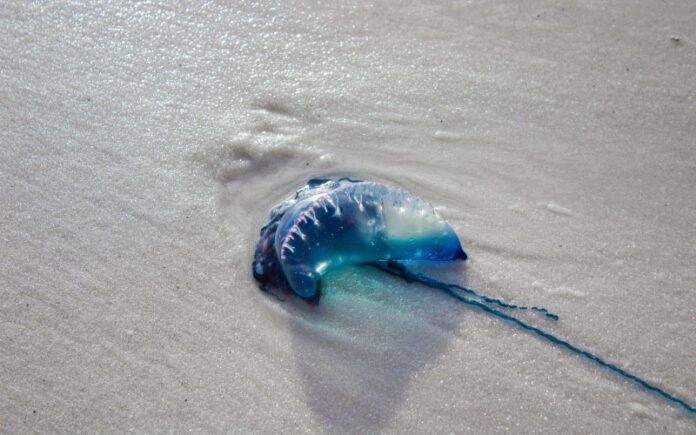
Spanish authorities have issued warnings after an increase in sightings of Portuguese man o’ war along parts of the country’s coastline, prompting temporary beach closures and renewed public health advice for swimmers.

The Portuguese man o’ war, often mistaken for a jellyfish, is a colonial marine organism whose tentacles can deliver painful stings and remain hazardous even after the animal has washed ashore.

Local officials have reported sightings in several coastal areas during the summer season. In some cases, beaches were temporarily closed as a precaution while lifeguards and emergency personnel monitored the affected waters.

Health authorities advised beachgoers not to touch the organisms, whether they are floating in the water or stranded on the sand. Contact with the tentacles can cause intense pain, redness, swelling and, in some cases, more serious reactions requiring medical attention.

If stung, experts recommend leaving the water immediately and seeking assistance from lifeguards or medical personnel. The affected area should be rinsed with seawater rather than fresh water, which can trigger additional venom release. Visible tentacle fragments should be removed carefully, preferably with tweezers or another object rather than bare hands.

Authorities also advised against rubbing the affected area and said medical care should be sought if symptoms become severe, spread beyond the sting site, or are accompanied by difficulty breathing, dizziness or other signs of a serious allergic reaction.

Marine specialists say Portuguese man o’ war sightings can increase during periods of favorable winds, currents and warm-water conditions that carry the organisms toward coastal areas. Officials are continuing to monitor conditions and update beach safety information as necessary.

Spain’s beach warning system relies heavily on local lifeguard services and municipal authorities, who can temporarily restrict access to affected areas when potentially dangerous marine life is detected.

0FansLike
0FollowersFollow
0FollowersFollow
0SubscribersSubscribe
- Advertisement -
Google search engine

Recent Posts