What we know about North Korean forces joining Russia’s war against Ukraine
North Korea has deployed troops, weapons and now, according to a Ukrainian intelligence official, a missile unit to support Russia’s war against Ukraine, marking Pyongyang’s most significant involvement in a war since the 1950s.
Here is what is known about the growing military ties:
WHAT ARE THE LATEST REPORTS?
A North Korean missile unit has begun deploying to western Russia and could be equipped with up to 120 ballistic missiles and six launchers for attacks on Ukraine, an official at Ukraine’s GUR military intelligence agency said.
The unit comprises about 90 North Korean personnel and is expected to be based in Russia’s Voronezh region, the official said.
Ukrainian President Volodymyr Zelenskiy said in July that Russia wanted to bring in another 30,000 North Korean troops and was preparing facilities in Voronezh to receive them.
Reuters could not independently verify the claims.
HOW MANY NORTH KOREAN TROOPS HAVE BEEN SENT?
Ukrainian, U.S. and South Korean assessments initially put the deployment at 10,000 to 12,000 troops in late 2024.
In January 2025, the U.S. deputy ambassador to the United Nations said more than 12,000 North Korean soldiers were in Russia.
Later Ukrainian and South Korean estimates put the number of troops in Russia’s Kursk region at about 14,000 to 15,000.
The Ukrainian official said this month that around 9,500 North Korean troops remained in Kursk, but were not then directly involved in operations against Ukraine.
Russia and North Korea confirmed in April 2025 that North Korean troops had fought Ukrainian forces in Kursk.
Russia’s top military commander praised their role after Moscow said it had retaken Kursk territory, while Pyongyang said the deployment was ordered by leader Kim Jong Un.
WHAT OTHER PERSONNEL HAS NORTH KOREA SAID IT WILL PROVIDE?
In June 2025, Russian Security Council Secretary Sergei Shoigu said North Korea would send 1,000 sappers and 5,000 military construction workers to Kursk to clear mines and help rebuild infrastructure damaged in the fighting.
That same month, South Korean lawmakers, citing a briefing by the National Intelligence Service, said that North Korea appeared to have begun recruiting personnel for an additional deployment to Russia, while continuing to supply Russia with artillery ammunition and missiles in exchange for economic cooperation and technical assistance.
It remains unclear how many engineers, deminers or additional troops have arrived in Russia, or whether they have been used in combat roles.
WHAT WEAPONS HAS NORTH KOREA PROVIDED?
North Korea has supplied Russia with millions of artillery and mortar rounds, ballistic missiles, long-range artillery and multiple-launch rocket systems, according to Ukrainian and independent assessments.
A Reuters analysis with the UK-based Open Source Centre found four Russian-flagged cargo ships made 64 voyages to North Korea’s Rajin port between September 2023 and March 2025, transporting nearly 16,000 containers of ammunition to Russian ports.
Ukrainian officials said North Korea was supplying about half of the munitions Russia needed on the front lines.
Ukraine’s GUR military intelligence agency said that North Korea had delivered 4 million artillery shells from mid-2023, excluding mortar rounds. It said North Korea had supplied 148 KN-23 and KN-24 ballistic missiles by the start of 2025.
WHY IS NORTH KOREA HELPING RUSSIA?
Russian President Vladimir Putin and North Korean leader Kim signed a comprehensive strategic partnership treaty during Putin’s June 2024 visit to Pyongyang. The pact includes a mutual assistance provision if either country faces external aggression.
North Korea has cast its deployment as assistance to a treaty partner. Kim said in May 2025 that participation in the war was justified as an exercise of North Korea’s sovereign rights in defence of a “brother nation.”
Analysts say Pyongyang stands to gain hard currency, oil and other economic support, as well as access to Russian military technology and battlefield experience for its forces and weapons.
North Korean soldiers have gained combat exposure to drones, electronic warfare, artillery coordination and modern battlefield tactics, while its missile and ammunition makers have been able to assess their equipment in wartime conditions.
WHAT HAS THE INTERNATIONAL REACTION BEEN?
The United States and its allies have said the troop deployments and arms transfers violate U.N. Security Council resolutions on North Korea.
Pyongyang has been subject to U.N. sanctions since 2006 over its nuclear weapons and ballistic missile programmes. The sanctions prohibit countries from hosting North Korean trainers, advisers or other officials for military, paramilitary or police training.
Washington imposed additional sanctions in December 2024 on North Korean and Russian entities connected to Pyongyang’s military and financial support for Moscow. South Korea also blacklisted individuals and entities linked to illicit military cooperation between the two countries.
NATO has said Russia’s growing military and economic ties with North Korea, China and Iran pose a threat beyond Europe, extending to the Indo-Pacific and North America.
Your gas car works fine. Consider an EV anyway, scientists say.
A few years ago, environmental scientist Elliot Campbell went around asking people why they would, or would not, switch to an electric vehicle. A surprising number of them asked him a question in return: Because building an EV generates emissions, isn’t it better for the planet just to keep my gas car running for as long as possible?
Campbell, a professor at the University of California, Santa Cruz, didn’t know the answer, so he set out to find it. Turns out the old adage that the greenest car is the one in your driveway is a myth. In fact, his study, published today in the journal Science, finds that swapping even a two-year-old gas car for an EV leads to a lifetime emissions savings of roughly 50 percent.
Not everyone can afford to ditch a nearly new car, of course. It’s simply the most extreme example of the broader point his study revealed: The emissions saved by driving an EV very quickly compensate for the planet-warming gases generated by building it. Campbell said that finding consistently surprises his students, and goes against his own instincts.
“I like to repair things and keep them going,” he said. But, “we found there is a big advantage to retiring the gas vehicles early.”
Campbell designed the study to give internal combustion vehicles every possible advantage. “We really tipped the scales in favor of the gas vehicle,” he said. Most notably, it ignored the emissions that went into making the gas car, treating them instead as a sunk cost. EV still came out ahead, which suggests that climate-conscious drivers should make the switch as soon as it’s feasible.
“You’re just delaying the benefits longer and longer,” he said, noting that sidelining gas guzzlers off the road can improve air quality as well. This is especially true for cars that were built to less stringent standards, added David Reichmuth, a transportation sustainability expert at the Union of Concerned Scientists. “The magnitude of the benefits for getting an older gasoline vehicle,” he said, “can be much higher in terms of the air pollution.”
Reichmuth was not involved with Campbell’s study, but said it aligns with his own work on the issue. His analysis found that EVs reach an emissions break-even point at around 18,000 miles, which the average driver travels in about 18 months. That, however, depends on where a person lives and the source of their electricity.
The benefit is greatest where the grid is greenest. In upstate NY, which generates a lot of hydroelectric power, getting around in an EV is like driving a gas car that gets 219 mpg. But even in the Rockies, where coal and natural gas are the norm, an EV is better than anything getting less than 68 mpg.
Campbell’s study identified few exceptions to the conclusion that replacing a gas car with an electric one significantly reduces greenhouse gas emissions. Even moving away from high-efficiency vehicles and hybrids, like the Toyota Prius, is a climate win in the long-run. One case where it wouldn’t make sense, Campbell and his co-author found, is with plug-in hybrid electric vehicles, which have larger batteries and travel farther on electric power before switching to an internal combustion engine. Another is low mileage situations, such as with a second car that doesn’t get used that often.
“To me, this is the biggest factor,” said Moaz Uddin, senior electric vehicle policy specialist at the think tank Great Plains Institute, about mileage. He gave the example of a retiree who only drives their Prius a few thousand miles a year. “It’s good that the study considers that.”
The new research finds that in order to repay the carbon debt of making a new EV, it must be driven 4,400 miles if it’s a car and 6,700 miles each year if it’s a truck. That’s already well below the 12,500 miles the average driver travels in a year, and the benefits to making the switch are likely to grow.
As the United States increasingly relies on renewables, for example, charging an EV becomes even more environmentally appealing. Campbell and his co-author also point to improvements in battery recycling as a way of reducing the emissions involved with making an electric car.
One hole in this latest study is that it doesn’t consider the cost of going electric. While previous research has shown that EVs come with higher upfront costs but lower operating expenses, it’s a thread that Campbell hopes economists pull on. He would also like to see someone better account for the emissions generated while extracting oil and getting gasoline to the pump, rather than simply the burning. But, for now, he believes the study sends a clear message.
“We’re trying to show that there’s not an environmental motivation for extending the lifetime of a gas vehicle,” he said. “Electric vehicles are a very clear winner.”
The most direct policy interpretation of the study would be to give people money to scrap gas cars. There have been some efforts to do this, such as the 2009 federal Car Allowance Rebate System, also known as “cash for clunkers.” That gave people $3,500 to $4,500 if they upgraded to more efficient vehicles, and blew through its $3 billion budget in only a month. Reichmuth, though, says that the issue could be tackled earlier in the process.
“The obvious policy implication is don’t sell the gasoline car to begin with,” he said, with the corollary being that EVs need to be as attractive an alternative as possible. “Make sure there are more options, more support, for people to make that initial choice.”
Black Residents Warned of Abusive Cops for Years. Then Police Shot and Killed a Toddler.
Outside the Walmart in Senatobia, Mississippi, where police shot and killed 1-year-old Kohen Wiley, a shrine of stuffed animals sits between the garden center and the pharmacy. There are teddy bears, elephants, and kangaroos with babies in their pouches. There is a Bluey plush toy — Kohen’s favorite cartoon — along with matchbox cars, a green plastic tractor, and an array of artificial flowers.
A banner frames the display, featuring a celestial image of baby Kohen wearing gingham overalls. A handwritten sign reads, “Justice Delayed is Justice Denied.”
In the parking lot, a cop pulled a gun on a gray Ford Fusion on a Sunday afternoon and fired while Kohen’s mother held him in the passenger’s seat. A bullet struck the child on his right side, tearing through his small body and exiting his left. The driver, who was also hit, sped to a hospital, but it was too late. At 19 months old, Kohen was dead.
The killing sparked anguish and rage in Senatobia, a small city some 40 miles south of Memphis, Tennessee. At protests and press conferences, people demanded answers, while officials stayed mostly silent. It took several days for the mayor to deliver a scripted video statement that did not even include the child’s name.
The Mississippi Bureau of Investigation announced a probe into the case. Speaking before an agitated crowd, state Department of Public Safety Commissioner Sean Tindell said this could take months, refusing to say when — or even whether — his agency would provide further updates.
Until then, the official narrative would be a version of a familiar tale told by those who kill under color of law: On June 14, Senatobia police got a shoplifting call from Walmart over baby clothes and a pack of Pampers diapers. According to an MBI press release, officers tried to stop “two subjects and a juvenile child fleeing from the store.” The suspects “drove in the direction of the officers, almost striking one.” That’s when an officer fired.
Police offered nothing to back the story. A witness video captured mostly chaos as the car drove off, while a woman who asked not to be named told a local TV station she saw police chasing the car before hearing gunshots. Nevertheless, the police narrative took off. On Facebook pages like “Senatobia Happenings UNCENSORED,” commenters blamed Kohen’s mother for his death.
The accusations escalated after famed civil rights attorney Ben Crump took the family’s case, with critics accusing him of stoking racial grievances for profit. When Crump released a video of Kohen’s mother, Vel’lesiya Wiley, telling her side of the story — saying she “raised my baby up” to warn officers that Kohen was with her — a wave of racist vitriol followed. Some demanded to know why Kohen wasn’t in a car seat. Others said she’d used him as a “human shield.”
The comments were shockingly cruel. They also ignored what Black residents of Senatobia, which is about 40 percent Black, had long insisted: Police treated them with contempt and brutality.
A year earlier, at the same Walmart where Kohen was killed, a police officer forced a woman from her car in front of her children for parking in a handicapped spot — part of a string of violent incidents that made national news. In the summer of 2025, Senatobia’s board of aldermen finally voted to dismiss the police chief.
By then, the department had already hired the officer who would later be identified in the local press as involved in killing Kohen Wiley – a police sergeant who’d been previously sued for misconduct while working at two different law enforcement agencies. Just two days before Kohen was killed, a Black officer filed a complaint against him for making a racist remark.
To racial justice activist Patrick Lumumba, the decision to hire such a man was emblematic of the city’s disregard for Senatobia’s Black community. “You think they didn’t know about his past?” he asked. “But who was he gonna hurt? If he hurt anybody it wasn’t gonna be white people.”
On the last Saturday in June, as the family laid Kohen to rest, the Senatobia Walmart was relatively quiet. A police car was parked across the shopping plaza, where protesters had gathered the day before. At an empty restaurant where a TV played “Leave It to Beaver,” a young white employee said no one had come in all day, blaming the “rioters” for keeping customers away.
At the memorial site, a white woman retrieved a bouquet of dried flowers blown away by the wind. She defended the protests, adding that they had been peaceful. For all the speculation and rumor, she said, no one really knew what had happened. But nothing could justify shooting a 1-year-old boy.
“The whole thing is very, very sad,” she said. “No mother should have to bury her child.” She did not wish to share her name. “I don’t want to stir any trouble.”
“Outside Agitators”
Senatobia, the seat of Tate County, sits on the northern tip of the Mississippi Delta, a mostly rural region famous as the birthplace of the blues. Downtown, historical markers boast connections to Black musicians like pioneering country singer O.B. McClinton. “Being in the small contingent of African-American performers in country music was never a cinch,” his marker reads, “but McClinton often dealt with the subject good-naturedly in shows and songs.”
Easier to miss are the places that once saw violent attacks on the civil rights movement. Just north of town, on Highway 51, a marker commemorating the site where James Meredith was ambushed and shot during a solo march from Memphis to Jackson has been knocked from its post; it currently sits on the ground. After Dr. Martin Luther King Jr. resumed the 1966 march alongside other civil rights leaders, they passed through Senatobia, in the same spot where the Walmart now stands.
The activists were widely depicted as radical outsiders — “Hard Core Civil Rights Militants,” as one headline read. But the march included locals; many offered their homes to the visitors at great personal risk. “Most people would sleep in the backyard of people’s homes because they were scared they would bomb the home,” recalled independent publisher Gloria Zuurveen, a Senatobia native whose aunt hosted activists. “But she said, ‘No, y’all ain’t sleeping in my backyard. Come on in this house.’”
The claim that protesters were “outside agitators” was a common refrain — a persistent way to dismiss any movement. When local pastor Michael Cathey, Senatobia’s first Black alderman, led boycotts of its public schools and businesses in 1987 — part of a wave of similar actions across Mississippi — some suggested they’d been orchestrated by the NAACP. “I’d like to see local people solve local problems without outside assistance,” the mayor told reporters.
In reality, “the whole community took a stand,” Cathey recalled. “The school buses ran empty. Nobody went to the store.”
“The city government is hiding behind the Mississippi Bureau of Investigation.”
Cathey has been outspoken about the killing of Kohen Wiley. His congregation, the West Gilmore Church of Christ, hosted the viewing for the toddler in June. “The city government is hiding behind the Mississippi Bureau of Investigation,” Cathey said. Their excuse is that they must wait on the state. “But that’s not true. The city can speak to the matter. … They need to be working to make sure we have transparency. But it’s not happening.”
Cathey said that the case had attracted many activists from outside Senatobia, making the protests easier for officials to ignore. But a bigger problem, Cathey and others said, is the refusal of elected leaders to represent their constituents.
Cathey served as an alderman for over 30 years, leaving office in 2017. In the decade since Donald Trump’s rise, he said, local conservatives have increasingly modeled themselves after MAGA politicians, shedding any pretense of concern for Senatobia’s Black community. Unlike the civil rights era, in which the federal government forced states like Mississippi to expand hard-fought legal rights, Trump is doing the opposite: weaponizing his office to turn back the clock on equal rights.
“What we see Trump doing on a national level, we have that same attitude locally,” he said. “And I don’t see it just being a Mississippi problem. It’s a national problem.”
Law and Order
Not that long ago, the South seemed poised toward progress.
In Mississippi, lawmakers did what once seemed impossible: Vote to replace the state flag, eliminating its Confederate iconography. Senatobia Republican Trey Lamar pushed the effort, calling it “something I knew in my heart for a long time was the right thing to do.”
Such symbolic gestures, however, did not translate to systemic change. Before long, Mississippi politicians were disenfranchising Black residents in sweeping new ways. Lamar became the chief sponsor of legislation to create a new, state-controlled court system in the majority-Black capital city of Jackson, usurping the power of the city’s elected judges and handing it to white state lawmakers. The measure was about crime control, Lamar insisted. It had nothing to do with race.
But “law and order” has long been a code for racial politics. In Senatobia, where a “Back the Blue and Trump” parade was held in 2020, the mayor and board of aldermen started making changes of their own. The city’s Black police chief, a 26-year department veteran, was replaced with a white man who had only recently joined the force.
The new chief, Richard Chandler, was given free rein to transform the department. Some moves seemed sensible enough. Senatobia police officers were paid as little as $13.75 per hour when Chandler arrived, and he successfully argued for better wages. But other decisions raised red flags. Despite the department’s small size — some 30 officers in a town of roughly 8,500 — Chandler formed a SWAT team and assigned a dozen officers to the unit. One was a 22-year-old recent recruit who described herself as “an adrenaline junkie,” as she told reporters. “I want to kick down doors and go in there and arrest the bad guy.”
“There was no consideration to how it affected the citizenry. It was just about making money.”
The stated goal was modernization; the city built a new police station, bought a fleet of new vehicles, and hired a grant writer to seek federal funds. Chandler also pushed aldermen to pass new ordinances aimed at increasing revenue. Between 2021 to 2025, according to city meeting records, the board voted to add financial penalties to punish misdemeanor drug charges, loitering, and “nuisance level gatherings.”
The fines, ranging from $25 to $1,000, would inevitably target those who could least afford it. “There was no consideration to how it affected the citizenry,” said Cathey, who attended many of the meetings. “It was just about making money.”
It wasn’t long before a string of shocking incidents were caught on video. In February 2022, police violently arrested a man named Rodney Rucker, who was warming up his car outside a local motel before an early shift at McDonald’s. Camera footage showed police accusing him of having white powder under his nose and, when he refused to leave his vehicle, smashing his window and breaking his phone. No drugs were found in the car.
In 2023, Senatobia police followed a teenager into the home of a local barber named Mark Lesure, ostensibly because the young man matched the description of a criminal suspect. Video showed Chandler choking Lesure before being accidentally tased by his own officer.
Senatobia police made national news that same year for jailing a 10-year-old boy for public urination, a move Chandler conceded was “an error in judgement.” But he defended the violent arrest of two sisters, 13 and 14, outside a public housing complex in 2024. According to the girls and their mother, Chandler personally ordered one of the girls to “get your Black ass out of the road” before forcing her to the ground.
Finally, on Mother’s Day 2025 — in the same Walmart parking lot where Kohen Wiley would be shot dead — a female officer forced a woman named Breshari Faulkner out of her car in front of her frightened young children for sitting in a handicapped parking space.
By then many people in Senatobia were fed up — including some members of law enforcement. One retired police officer echoed what many said for years: Chandler drove out officers who lived in the community and brought in cops who would prey on the community. A number were hired after being dismissed from other departments. “They want people like that,” he said. “They can get them to do any kind of dirty work they want.”
In the summer of 2025, over angry objections by the mayor, Senatobia’s board of aldermen voted to remove Chandler. It was supposed to restore trust, one alderman said. But as Lumumba, who recently founded the Senatobia Committee for Accountability and Transparency, said, “We removed Chandler. But the culture remained.”
A History of Violence
City officials have not identified the man who shot Kohen Wiley. But it’s considered an open secret in Senatobia. A Memphis news station obtained records from the MBI that identified the officer who responded to the shoplifting call at Walmart: Senatobia Police Sgt. Hunter Foster, who has been on paid leave since mid-June.
Foster, now 33, was hired by the Senatobia Police Department in March 2025 and quickly promoted to sergeant. Two days before Kohen’s death, a fellow officer filed an internal complaint against him. According to Mississippi Today, Foster entered the booking room at the station, saw School Resource OfficerDexter Smith, and said, “‘Who is this Black motherfucker back there?’”
“The room went silent,” Smith wrote in his complaint. “I have never had any one-on-one conversation with Sergeant Foster, nor do we have any outside relationship to be on a level for him to speak to me in that manner.”
Smith quit a month after filing the complaint. In his resignation email, he cited a lack of “meaningful response or resolution,” according to Mississippi Today.
Before coming to Senatobia, Sgt. Hunter Foster had been named in two federal lawsuits.
Several red flags might have prevented Foster from being hired to begin with. Before coming to Senatobia, he’d been named in two federal lawsuits, both of which were dismissed under the doctrine of qualified immunity.
In 2022, he was accused of providing a false narrative following the arrest of two men outside a Waffle House in neighboring Southaven. In a police report, Foster accused a driver of “almost running over” another responding officer, a description unsupported by video evidence.
After moving to the DeSoto County Sheriff’s Department, Foster was sued for participating in the brutal assault of a 29-year-old Black woman during a traffic stop. According to the 2024 complaint, the deputies tased her, “pulled her hair, kicked her multiple times in her stomach and ribs, called her a prostitute, stomped on her face breaking her jaw in three places and knocked out multiple teeth.”
A use of force report cited injuries on the woman — including “abrasion, puncture, lacerations, (and) swelling” — and confirmed that she was taken to the hospital in an ambulance. In an affidavit, Foster said his “only involvement” was to pin her down in order to handcuff her, while providing no video footage to confirm his account. According to Foster, he tried to activate his body-worn camera only to later “realize it had never activated.”
Foster did not respond to messages from The Intercept.
“Y’all Gonna Kill Somebody”
On July 1, Ben Crump returned to Senatobia to release a report from D.C. Medical Examiner Roger Mitchell, who was brought onto the case to conduct an external examination of Kohen Wiley’s body and assess photos from the scene. A photo of the sedan showed the passenger’s side window shattered and a bullet hole in the windshield.
The findings undercut the claim that police had fired in self-defense. On Kohen’s right side, where the bullet entered, were small cuts known as “pseudo stippling,” an injury pattern commonly found on victims shot through glass. According to Mitchell, the markings suggested the bullet had been fired through tempered glass — like that found on a car’s passenger window — rather than through a windshield’s laminated glass.
But the only way to learn what really happened, Crump said, was to see the body camera footage and surveillance video that the MBI still had not released.
“If it was your 1-year-old baby, what would your response be?”
The following week a crowd filled a room inside Senatobia City Hall. Lumumba, the local activist, had been given time to speak at the bimonthly board of alderman meeting, along with two women from the Building Bridges Coalition. He gave the aldermen copies of Kohen’s obituary. “Kohen brought joy to everyone he met,” it read. “He loved playtime with his mom, playing with his toys, and cutting the grass with his toy lawnmower.”
Lumumba reminded the aldermen of the history of police violence in Senatobia. He and his neighbors had urged the city to act. “We told y’all, ‘Y’all gonna kill somebody,’” he said. Now, police had gone too far. “This ain’t going away.”
Shatoya House reminded the officials that protesters are not “the enemy.” Yet that’s how they’d been treated. Police had deployed tear gas on one demonstration outside Walmart. And on the day the commissioner of public safety came to town, snipers had watched from the rooftops.
House also felt compelled to respond to an accusation about the activists. Many critics seemed convinced they were bigoted against white people. “I am not racist,” House said. “If it was your 1-year-old baby, what would your response be?”
When the speakers were done, no one said anything. With a placid air, Mayor Greg Graves simply moved on to the next agenda item.
“We must not be good enough for them to talk back to us,” one woman said loudly. Only one alderman had addressed them directly — to confirm that Foster was still collecting a paycheck. “Do the rest of y’all care?”
“No, they don’t care,” another replied.
A white lieutenant interrupted with a warning. “All right, that’s it,” he snapped.
“Let the mayor run the city,” the woman snapped back. “You a police officer, bro.”
He gave her a hard stare and nodded. “Yes, ma’am, I am,” he said. “Yes, ma’am, I am.”
Neither Graves nor individual aldermen responded to emails from The Intercept. Senatobia Police Chief Harold Vanderford said any questions should go to the MBI. “I can’t say anything or do anything until they do what they’re gonna do,” he said. In an email, the MBI wrote, “This remains an open and ongoing investigation, no further comment will be made.”
Activists are still showing up at city hall. At a meeting in late July, Lumumba introduced Kohen’s mother and grandmother to the aldermen, who again had nothing to say. Outside the most recent meeting on August 4, Lumumba passed out postcards urging people to join the cause. He was joined outside by community members wearing shirts that read, “Your baby is our baby.”
Elsewhere in town, others seem anxious for it all to go away. Last month, an anonymous woman posted in the Senatobia UNCENSORED group. Her family was moving to Senatobia but, based on what she’d seen on the page, she worried it was a mistake. “I’ve never seen so much drama and hatred,” she said. “Please tell me it’s a good place.”
Several people sought to reassure her. “I have rarely experienced any racism or hate,” one white woman wrote. The original poster thanked her. “This eases my heart.”
“You are so welcome,” the white woman replied. “I promise it’s peaceful here.”
“There will be some turmoil when the MBI releases their findings,” she added. “But it will be outside agitators. And it will be temporary.”
Blue Origin narrowing in on root cause of catastrophic rocket accident
Blue Origin provided its first substantive update this week on the cause of the catastrophic loss of the New Glenn rocket and most of its launch pad infrastructure at Cape Canaveral, Florida, in May.
The space company’s chief executive, Dave Limp, said investigative work is continuing into the anomaly that happened during a hot-fire test of the rocket during the evening of May 28, 2026. He confirmed, for the first time, widespread speculation that the problem started in one of the rocket’s seven BE-4 engines that power the vehicle’s first stage.
“The anomaly originated at the main oxygen valve on one of the BE-4 engines, which was later confirmed by hardware recovery and inspections,” he said. “Extensive component-level and engine hotfire tests have been conducted to understand the failure mode better and inform mitigations.”
No root cause found yet
Limp said the company’s path forward is “clear” as it works toward returning the New Glenn rocket to flight before the end of this year.
“We’re making small modifications to the valve that can be quickly retrofitted to existing engines,” he said. “We’re manufacturing the updated hardware, which will be ready by the end of this month. In parallel, we’re working through the remaining fault tree analysis.”
This is a positive update, and the transparency is appreciated. However, it also seems clear from Limp’s statement that the company has not yet identified the root cause of the issue.
The update was published 10 weeks after the hot fire test anomaly, and in parallel Blue Origin has rapidly been working to clear debris around the sprawling Launch Complex 36-A site in Florida and starting to rebuild a launch tower. Multiple sources have said the company is operating with a sense of urgency and sparing little expense in its efforts to resume launching the heavy lift rocket.
Combining urgency and funding
Blue Origin founder Jeff Bezos has made it clear that he wants to see New Glenn flying before the end of the year. Tory Bruno, the president of national security for Blue Origin, indicated on the social media site X that the next flight of New Glenn could carry the company’s “Blue Ring” spacecraft. “She’s in final build now for a flight this year,” Bruno said Wednesday of the spacecraft.
Despite the progress in both understanding the cause of the failure and rebuilding the launch site, the end-of-the-year timeline still seems to be extremely ambitious.
However, it is clear that Blue Origin, which historically has appeared sluggish and unfocused in its various efforts across the space ecosystem, is now laser-focused on getting New Glenn back into service. This is a new era for Blue Origin and suggests that Limp’s hire to lead the company has led to a significant transformation. In other words, the long-slumbering giant in the US space industry may finally be waking up.
And just in time. New Glenn is central to the company’s future success, of course. But beyond this, it is essential to NASA’s lunar ambitions to establish a Moon base and for the broader commercial space industry that is grappling with the difficulty of finding launch alternatives to the Falcon 9 rocket, which is increasingly difficult to procure for non-SpaceX missions.
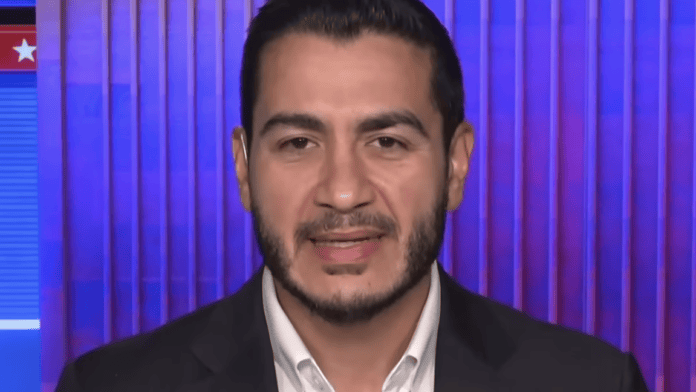
Anti-Israel Progressive Abdul El-Sayed Wins Michigan Democratic Senate Primary
Progressive Democrat Dr. Abdul El-Sayed won Michigan’s Democratic primary for the US Senate early Wednesday, narrowly defeating moderate US Rep. Haley Stevens in a race that will send him into a closely watched general election against former Rep. Mike Rogers, a Republican, with control of the Senate potentially at stake.
El-Sayed secured the nomination by less than a percentage point, a considerably tighter margin than pre-election polling had indicated. His victory represents a major breakthrough for the Democratic Party’s progressive wing in the battleground state after his unsuccessful 2018 gubernatorial bid, when he lost the Democratic primary to now-Gov. Gretchen Whitmer by 21 percentage points.
A former Wayne County health director, El-Sayed has been a prominent critic of Israel. He has accused Israel of “apartheid” and “genocide,” described the Israeli government as “evil” as Hamas, and called for an end to all US assistance to Israel. During the primary campaign, AIPAC’s political network spent $32 million backing Stevens.
The result quickly drew support from national Democratic leaders. Former Vice President and presidential candidate Kamala Harris urged Democrats to unite behind El-Sayed, sending a fundraising email asking supporters to donate. Harris said contributions would be split between El-Sayed’s campaign and her political action committee.
New York Mayor Zohran Mamdani criticized House Speaker Mike Johnson after Johnson said Democrats were displaying “disdain for America” and embracing “the failed, dangerous, deadly path of communism” following El-Sayed’s victory.
Mamdani rejected that characterization, saying Johnson’s comments showed “how deeply out of touch the Republican Party is with the concerns of working-class Americans.”
The Michigan Senate contest is expected to become one of the country’s most competitive races, with El-Sayed and Rogers competing for a seat that could influence which party controls the U.S. Senate after the November election.
Plane with President Trump Nearly Collides with Helicopter Over Washington
President Donald Trump was aboard Marine One when the military helicopter came dangerously close to a passenger jet over Washington, D.C. — triggering a federal investigation and raising chilling new questions about safety in the capital’s crowded skies.
The president’s helicopter reportedly came within just 0.8 miles of an Envoy Air jet taking off from Ronald Reagan Washington National Airport on Tuesday afternoon.
That distance was far below the required 1.5-mile safety buffer, according to reports.
The alarming incident unfolded as Trump was being flown to Joint Base Andrews to board Air Force One for a trip to the West Coast.
Now, aviation officials are scrambling to determine how two aircraft — including one carrying the president of the United States — were allowed to get so close.
The Federal Aviation Administration and the National Transportation Safety Board have launched investigations into the terrifying close call.
According to The New York Times, garbled communications between Marine One and the Reagan airport control tower delayed controllers from clearing nearby aircraft.
The Marine One crew reportedly tried three times to alert the tower that the president’s helicopter was preparing to lift off.
Those warnings apparently were not heard clearly.
At nearly the same moment, the Envoy Air passenger jet was cleared for takeoff — placing both aircraft inside the required safety zone.
The apparent communication failure has raised fears that Washington came frighteningly close to another aviation catastrophe.
White House Insists Trump Was Never in Danger
Despite the alarming distance between the aircraft, the White House insisted the president was safe at all times.
“Although the president was at no point in harm’s way during yesterday’s momentary loss of separation, the White House continues to work with relevant military, F.A.A. and other security personnel to ensure the president’s continued safety,” White House spokesperson Kush Desai said.
However, the incident has drawn intense scrutiny because commercial flights are usually stopped when Marine One is operating near Reagan National Airport.
Officials have not yet explained why the passenger jet was allowed to take off while Trump’s helicopter was nearby.
The close call brought back horrifying memories of the January 2025 midair collision that killed 67 people near the same airport.
American Airlines Flight 5342 was approaching Reagan National Airport when it slammed into a military Black Hawk helicopter and plunged into the icy Potomac River.
All 64 people aboard the passenger plane and all three crew members inside the helicopter were killed.
There were no survivors.
Investigators later found that the Black Hawk had been flying about 100 feet above its permitted altitude.
The helicopter was reportedly traveling between 251 and 349 feet, while the passenger jet was at approximately 325 feet when the two aircraft collided.
Flight-recorder data showed Captain Jonathan Campos and First Officer Samuel Lilley desperately tried to pull the jet’s nose upward moments before impact.
Their last-second maneuver was not enough.
Both aircraft crashed into the river below.
After the deadly collision, the FAA introduced sweeping new rules around Reagan National Airport.
Mixed helicopter and commercial jet traffic was restricted, and passenger flights were supposed to be halted whenever Marine One entered the area.
Air traffic controllers were also ordered to use radar to keep aircraft safely separated, while military helicopters were required to broadcast their exact locations.
The NTSB later uncovered a series of stunning failures behind the 2025 disaster.
A critical hotline connecting the Pentagon to the Reagan airport tower had reportedly been broken for more than three years.
Investigators also found that the air traffic controller handling the doomed aircraft had been performing two jobs during a busy period.
Tuesday’s close call is now raising disturbing questions about whether enough has changed.
Despite new rules, upgraded procedures and promises of reform, a helicopter carrying the president still came far closer to a passenger jet than federal safety standards allow.
Officials have not announced whether any pilots, controllers or federal agencies could face disciplinary action.
The EPA Spent Millions Cleaning Up a Massive Superfund Site. Our Tests Found Toxic Levels of Lead in Many Yards.
Reporting Highlights
Over the Limit: One in 10 Omaha yards we tested that the EPA cleaned up still has enough lead in the dirt to be over the agency’s threshold.
Nearby Toxins: Nearly all previously remediated homes the news organizations’ testing found to have excessive levels had a neighbor whose yard tested high but was never cleaned up.
New Levels: Nearly a quarter of east Omaha yards we tested surpass a new lead level set by Trump’s EPA that could trigger more cleanup.
These highlights were written by the reporters and editors who worked on this story.
Shortly after buying her house in 2022, Mary Royers learned from a man across the street that her Omaha, Nebraska, neighborhood was contaminated with lead. But her yard, like thousands of others, had been cleaned up, the neighbor said.
Royers wanted to be sure. So the 36-year-old educator checked a website where the city tracks the soil test results of every home in a 27-square-mile area surrounding the site of an old lead smelter. She saw “remediated” written in bright green letters. The federal government had completed the work two decades ago. An expert must have tested the dirt and determined the problem was solved, she thought.
Relieved, Royers set about sowing the garden of her dreams. Hours disappeared as she thrust her hands into the soil, tearing up the grass and planting purple coneflower for bees to harvest and prairie grass to sway in the breeze.
“You have the green light from the city. That means everything’s safe,” she said. “I remember thinking, ‘Thank God I don’t have to worry about that.’”
But a soil test conducted last fall by the Flatwater Free Press and ProPublica found otherwise: Royers’ yard still has more than 1.5 times the level of lead that the Environmental Protection Agency’s cleanup was supposed to have eliminated.
Reading the emailed results, she felt “gut-wrenching disbelief,” she said.
“All I could think about was the dirt under my nails and all over my face,” said Royers, who has largely given up gardening for now. She explained later, “It felt like a betrayal of that trust.”
Since 1999, the EPA has spent $273 million digging up and backfilling nearly 14,000 yards across east Omaha to address contamination left from the smelter and other factories downtown. It’s the largest residential lead cleanup in the country. And the agency’s Superfund program has repeatedly heralded it as a success.
But, it turns out, Omaha’s soil might not be as safe as officials have advertised. The news organizations tested soil from more than 600 properties, including 150 that the EPA said had been cleaned up. In those tests, 1 in 10 yards marked as remediated still had enough lead to qualify for cleanup under the original guidelines. And nearly a quarter of the properties we tested in east Omaha could qualify for further study under new guidance released by the Trump administration last fall.
The results suggest the EPA has more work to do, said Howard Mielke, a longtime researcher of lead-contaminated soil who’s considered one of the field’s foremost experts. Not only should the agency clean up the areas that tested above the remediation level, he said, but it also should test other homes.
“If you find a couple of high results, chances are many high results will be nearby,” said Mielke, an adjunct professor at the Tulane University School of Medicine.
Some experts and environmental advocates said our findings reflect weaknesses in the EPA’s approach to cleaning up residential lead sites, which can leave a lot of lead behind.
Series Timeline
Oct. 20, 2025
The Trump administration issued guidance tripling the amount of lead that has to be in soil to warrant potential cleanup. Before that, the EPA had been discussing expanding the Omaha cleanup, which could have included nearly 27,000 properties.
December 2015
The EPA finished the cleanup of more than 13,000 residential properties and passed the remaining work to the city of Omaha.
March 1999
The Environmental Protection Agency began testing soil from Omaha yards after concerns about elevated blood lead levels in children. The contamination was eventually tied to a smelter and factories that spewed lead dust for over a century.
Jeff Tittel, former director of the Sierra Club in New Jersey, the state with the most Superfund sites, said he repeatedly watched the EPA declare its work done after wrongly assuming everything had been cleaned up.
“On paper, everything’s wonderful,” he said, “but at the sites, there’s still chaos.”
Mary Royers washes her hands in her kitchen after being outside in her garden. She has largely stopped gardening after a Flatwater Free Press and ProPublica soil test found high levels of lead contamination.Rebecca S. Gratz for ProPublica
The EPA declined an interview request with senior officials overseeing the Omaha cleanup.
In an emailed response, spokesperson Kellen Ashford said the EPA is committed to cleaning up contaminated sites to protect residents and the environment. “The diligent cleanup efforts have led to a dramatic decrease in elevated blood lead levels” in Omaha, he said. (While the percentage of kids testing high for lead has dropped significantly, as it has nationally, kids in the Omaha site still test high for lead at rates above the national average.)
Ashford said the EPA could not assess the news organizations’ results without further investigation, but property owners can reach out to the EPA or the city of Omaha, which now manages the site for the federal government, if they have concerns.
“Because it would not be possible to completely remove all lead,” Ashford said, the EPA and the city also try to educate the community about lead risks and precautions.
The city is already responding to the news organization’s findings.
The day after receiving her results, Royers forwarded them to the city’s lead office, asking if anything could be done. An employee tested her dirt and found even higher levels than the news organizations did. The city plans to clean the yard up again in August, Royers said.
But the EPA and the city have refused to clean up or test properties of others who have reached out about their high lead results.
The agency has also not said what it plans to do about properties that are below the current cleanup level but above President Donald Trump’s new screening level, which could prompt further action. Any update would come after a new site study the agency plans to release in October 2027, Ashford said.
Royers and her partner, Stephen Matthews, are thankful for the new cleanup, but they wonder: How many other Omahans may be misled or unaware about lead contamination in their yards?
“We’re one house out of thousands,” Matthews said.
Stephen Matthews, Royers’ partner, in their wildflower garden. Though the soil outside their home was remediated years ago, a recent test by Flatwater Free Press and ProPublica indicated a high level of lead.Rebecca S. Gratz for ProPublica
What Might Have Gone Wrong
It’s difficult to identify why some cleaned-up properties still test high for lead.
That’s in part because Omaha’s lead problem is almost as old as the city itself. The American Smelting and Refining Company produced lead to make batteries, cover cables and enrich gasoline for more than a century. After the smelter closed in 1997, the EPA estimated the plant and other factories had dumped 200,000 tons of lead dust — enough to fill at least 1,600 rail cars — across Omaha’s east side.
At the time, the Superfund program, which had started only a decade before, was still trying to figure out how to clean up residential sites like Omaha’s, then home to 125,000 people. Old factory sites could be bulldozed and excavated, the contaminated material carted away. But the Omaha site involved people’s homes and yards.
The agency tested nearly every yard in east Omaha and came up with a plan: It would dig up and replace parts of yards that had a concentration of more than 400 parts per million of lead — the equivalent of a marble in a 10-pound bucket of dirt.
But that meant that some properties were cleaned up while neighboring ones that had only slightly lower levels of lead were not.
Hewing to that kind of strict standard doesn’t make sense, said Gabriel Filippelli, an Indiana University earth sciences professor and longtime lead researcher.
“From a scientific standpoint, a 390 is the same as a 410,” Filippelli said. “It’s the same as a 400. They’re all about the same value.”
Failing to clean up neighboring properties can also lead to recontamination over time. When it’s windy and the ground is dry, tiny lead particles in the dirt — generally about one-hundredth the width of a human hair — become airborne and spread, Filippelli said.
When the Superfund program started, the agency cleaned an entire yard if its average lead level among multiple samples was over the limit.
But by the time the Omaha cleanup started, the method had changed. In Omaha, it divided yards into five sections: two in the backyard, two in the front yard and a thin ring around the home’s perimeter called the dripline, which often contains the most contaminated dirt but can also contain remnants of lead paint.
The agency took multiple samples per section of yard and replaced a section’s soil only if the average was over 400 parts per million. This approach could lead them to miss hot spots or leave behind areas that have high lead levels but are just under the cleanup threshold. Contractors also did not dig up the driplines if another part of the yard wasn’t over the limit.
This could explain why the Flatwater Free Press and ProPublica’s testing found that about 1 in 20 homes that didn’t qualify for cleanup originally now tested above the cleanup threshold. In addition, the news outlets found several properties outside the Superfund site that were over the limit.
In the early days of the cleanup, Don Preister, a longtime Omaha lead advocate and former state senator, argued for the EPA to clean up entire yards and to lower the level of lead that would qualify for remediation, calling the agency’s solution a half-measure.
But the EPA decided that its approach made the most of limited money and prioritized the highest-risk areas. One EPA manager told Omahans in 2004 that the choice to remove only sections of yards was “economical,” according to meeting records.
“It brought out feelings of hurt,” Preister said of the EPA’s choice. “Children are likely to still be impacted, and their health affected.”
The EPA’s national guidelines did advise against “‘patchwork clean-up’ patterns which are prone to recontamination” when adjacent sections are high. But the agency didn’t give clear guidance on how to implement that, several former site managers said, and some felt they had to follow the rules strictly or risk violating federal law or agreements with companies paying to clean up their pollution.
Ashford acknowledged that the agency has to adhere strictly to its cleanup plans but said in some cases, like an industrial site near a residential area, the EPA may clean up to a lower level to prevent recontamination.
Another problem was that east Omaha was full of older homes that contained lead paint that could recontaminate cleaned soil over time. Following local pressure, the EPA agreed to test homes’ paint. If it contained lead, the agency repainted the outside. But the EPA did not repaint houses whose soil did not also qualify for cleanup. Studies in urban areas have found homes with deteriorating paint have contaminated nearby gardens.
Ashford said an EPA study found most lead-based paint contamination in Omaha was within 6 feet of the house.
Brenda González Rocha, who has lived in her south Omaha home since 2020, thinks both soil and paint are to blame for the lead that doctors found in her 4-year-old daughter’s blood. Her basement had lead paint, which she hired a company to fix.
But although the EPA cleaned up her yard in 2012, the Flatwater Free Press and ProPublica tests found levels of lead that are higher than before the agency remediated it. González is surrounded by properties with lingering lead. A yard down the street that had high lead levels was never remediated. The banks of the nearby highway were never dug up and replaced. The house next door has lead paint on it, according to the city lead website.
Ashford said it’s unlikely that wind-blown dust from one house to another would recontaminate cleaned areas with enough lead to surpass the cleanup level.
But nearly all the remediated properties the newsrooms tested that were over the cleanup threshold are within 100 yards of a property that originally qualified for remediation but wasn’t cleaned up. A third had two such neighboring properties.
González’s eight kids, between 8 months and 22 years old, love to play outside. They jump on the trampoline, ride bikes and play soccer. Now González is anxious whenever they’re in the yard.
“I worry that this could affect their quality of life,” she said. “I would feel bad if something happened to them during their development. I would feel responsible.”
González and her daughter Camila help feed soup to Isaías at home. González’s front yard tested high for lead, and she is worried about letting her children play outside.Rebecca S. Gratz for ProPublica
“Benign Neglect”
Once the EPA chooses a fix for a Superfund site, it is generally required to review the site every five years to update the public on the progress of the cleanup. But the ways those reviews are done leave unanswered questions about whether the solution is working and how much lead is in Omaha today, said experts who examined the reports for the Flatwater Free Press and ProPublica.
In their reviews, government officials in Omaha track how intact the grass is on top of the new soil. If it is exposed or has been disturbed, it could be a sign that any remaining lead is no longer safely underground and could blow around.
But they don’t retest a representative sample of properties.
Cleanups often take several tries to get right, said Tittel, the former New Jersey Sierra Club director, and recontamination or missed contamination can be a huge problem.
Tittel said he has seen similar patterns in New Jersey. In 1979, Tittel helped show EPA employees where the Ford Motor Company dumped industrial waste into abandoned mine pits. Since then, he has seen the mess declared a Superfund site, marked safe, become a Superfund site again and spawn a lawsuit that Ford settled in 2009 as locals continued discovering more hazards.
“It’s sort of a benign neglect when it comes to these sites,” Tittel said. “Government just wants to get it over with because it’s taking so long. They end up cutting corners or looking the other way.”
A Ford spokesperson said the company takes its environmental responsibility seriously and has been working with state and federal officials to clean up the site.
Retesting soil does not appear to be standard at other sites, according to reviews examined by the Flatwater Free Press and ProPublica. But it should be, said Debbie Chizewer, a managing attorney with the environmental law group Earthjustice. Without ongoing testing, the EPA can’t really know if its solution is working, she said, and residents won’t know how toxins in the environment are impacting their health.
“I think for the five-year review to be meaningful, you need to do testing,” she said.
Ashford said the EPA retests properties on a case-by-case basis, such as when construction disturbs the soil. The periodic reviews, which in Omaha have led to an ongoing reevaluation of the site’s cleanup level, allow the EPA to ensure these unique, complex sites protect people and the environment over time, he said.
Steve Zivny, who leads Omaha’s Lead Information Office, also said new testing and cleanup decisions depend on factors such as whether kids live at the home and whether they have tested for a high lead exposure.
Camila, Carolina and Isaías play together at home. Their mother keeps indoor toys inside and outdoor toys outside to avoid lead contamination inside the house.Rebecca S. Gratz for ProPublica
The EPA’s reviews of the Omaha site do point to some potential problems. In 2024, inspectors found 98% of the lawns had been disturbed, indicating a risk that buried lead could be exposed. That includes having weeds, bare soil or demolished buildings. But the EPA tested only 32 sites where homes had been demolished and found six exceeded the cleanup level. To them, that indicated the solution was “generally protective; however, more data should be collected to support this conclusion,” according to the report.
Those figures, however, trouble Ian von Lindern, who oversaw lead cleanup at an Idaho Superfund site for more than 30 years. He doesn’t doubt the federal government did a good job hauling away tons of toxins in Omaha. But he’s sure they couldn’t get all of it.
At the Idaho site, the EPA requires people to request permits from a local health district before digging in their yards. Local health employees can also test residents’ dirt, and, if it’s above the cleanup level, it may qualify for further remediation.
Without someone keeping a close eye on the fixes, recontamination can occur as people dig up lead-contaminated soil or unremediated soil is allowed to blow around.
“Those remedies are, I don’t want to use the word failing, but they’re becoming less effective,” he said.
Royers worries many homes in Omaha fit that description.
This summer, the educator is letting the weeds grow freely in her garden. Pretty soon, the city is going to replace it anyway.
The thought makes her feel guilty. More people should know about potential lead in their yard and have access to tests and cleanups. But that would require acknowledging that after decades and hundreds of millions of dollars spent, there are cracks in the cleanup. Royers isn’t sure that will happen.
“The priority is pretending like things are OK,” she said. “Clearly it’s not.”
Royers walks to her garage. She and Matthews wonder how many other Omahans may be misled or unaware about lead contamination in their yards.Rebecca S. Gratz for ProPublica
On July 30, 2026, President Donald Trump announced that Hamas had accepted to disarm and transfer security and civilian affairs in the Gaza Strip to a technocratic Palestinian administration – a key requisite of phase 2 of the U.S.-brokered peace plan for Gaza, along with the withdrawal of Israeli troops from the enclave. Trump’s Board of Peacepublished a road map the following day for how it is to be achieved.
Moreover, it is unclear how committed Hamas and Israel are to the next stage. For now, neither can agree on a sequence: Hamas says no disarmament without Israeli withdrawal; Israel insists no withdrawal until disarmament.
Strong-arming Hamas
With little progress in improving living conditions in Gaza and with Israel continuing to kill its operatives, Hamas has faced intense pressure in recent months to make further concessions. Amid a reportedly heated internal deliberation, Hamas decided that disarmament appears now as the least costly path for its movement – and for the 2 million Palestinians stuck in Gaza.
The breakthrough required intensive pressure by outside mediators from Egypt, Turkey and Qatar on Hamas to accept the Board of Peace High Commissioner Nickolay Mladenov’s road map to phase 2.
It also only happened after Hamas had completed its internal elections and elected Khalil al-Hayya chairman of its political bureau. The previous Hamas committee, established after the death of Yahya Sinwar, had no consensus among them and could not deliver on consequential issues.
And even then, the breakthrough could not have happened without the direct intervention of Mohammed Dahlan. Originally from Gaza, the United Arab Emirates-based exiled former Fatah leader is an influential businessman, powerbroker and top adviser to UAE President Sheikh Mohammed bin Zayed Al Nahyan. He has invested time and effort in helping Palestinians in Gaza by sending food and medical supplies, paid for by his host country.
Despite being a senior leader of a rival party, Dahlan has pledged to try to bridge the gap between Hamas and rival factions. At the same time, he also cuts a controversial figure due to his perceived closeness to the American and Israeli establishments, his falling out with current Palestinian Authority leadership and his heavy-handed tactics when he led security efforts in Gaza before Hamas took charge there in 2007.
Mohammed Dahlan has become a pivotal figure in the Gaza peace plan negotiations.Lior Mizrahi/Getty Images
Yet for the people in Gaza now, it appears the hope of relief and recovery supersedes political bickering. Dahlan – coordinating his efforts with Jared Kushner, Trump’s son-in-law and a member of the president’s Board of Peace – stepped in and used his leverage to convince Hamas to publicly accept the most contentious parts of the road map that deal with the handover of power in Gaza and Hamas’ disarmament.
Israeli defiance
Now, it appears that Hamas hopes the onus will be on the U.S. and the international community to ensure that Israel complies with phase 2.
Israeli Prime Minister Benjamin Netanyahu has yet to fully spell out his reaction to the road map. He remains in a delicate position domestically, especially among a cabinet that includes right-wing politicians who believe that even merely symbolic Israeli concessions in Gaza would be tantamount to surrender. Meanwhile, Israeli Knesset elections are scheduled for Oct. 27, and Netanyahu’s popularity has been souring of late.
While largely hewing to Netanyahu’s position, the Trump-sponsored phase 2 agreement still does not allow Netanyahu to declare total victory against Hamas. And anything less would resonate negatively with many Israelis.
But Netanyahu can’t publicly reject it, either, given that Trump has trumpeted the “breakthrough.” As such, Netanyahu has only said that there are disagreements between him and the Trump administration regarding Gaza.
Others in his cabinet go further. Finance Minister Bezalel Smotrich and Settlements Minister Orit Strook, both far-right politicians, have called on Netanyahu to revoke any approval of the plan and bring the matter to a cabinet vote.
Under the Board of Peace document, the parties have two weeks to finalize a schedule for an agreement that would achieve Hamas disarmament and cessation of Israeli attacks.
Yet Israel’s immediate reaction to the deal was the renewal of intense bombing in Gaza and the death of more than a dozen people, which prompted a rebuke from Mladenov.
The million-dollar question
Hamas’ reluctance and Israel’s defiance points to a key problem in implementing phase 2 of the peace plan for Gaza: a complete lack of trust, evidenced by the fact that post-ceasefire Hamas has remained the chief military force in Gaza, and Israel has never stopped its military campaign and occupation of the enclave.
So why were the Board of Peace and mediators insistent on moving forward with the plan now?
A number of issues appear to be at play. The implementation of the peace plan for Gaza is perhaps the only chance Trump has of burnishing his self-proclaimed image as a dealmaker on the world stage before the U.S. midterm elections. That’s especially true given the unresolved and politically unpopular war in Iran and little progress in finding a solution to the Russian-Ukraine war.
Yet implementing the terms of phase 2 is no easy task. It calls on Hamas to turn over both heavy weaponry such as missile launchers and light weapons, including all guns. It also demands the dismantlement of the militant group’s tunnel network and weapons manufacturing. That is some undertaking: It would require compliance from all members and factions of the group.
But it is more complicated than that. Israel has created and financed Palestinian militias operating in the yellow area under Israeli control. According to the plan, they also must disarm. All Palestinian clans and families in Gaza would also be a target for disarmament, which would have an impact on the future of Hamas and Palestinian armed struggle.
Meanwhile, Israel remains mum on how willing it is to actually withdraw from Gaza and cease its military campaign. To that end, the biggest hurdle facing the implementation of the latest deal is sequencing. Hamas sees the disarmament process as a parallel one to Israel’s gradual withdrawal from the entire Gaza Strip; Netanyahu has stated that there will be no withdrawal from Gaza before Hamas’ full and complete disarmament.
That Israeli position has now been adopted by Board of Peace chief Mladenov – putting Hamas and other Palestinian factions in a very difficult situation.
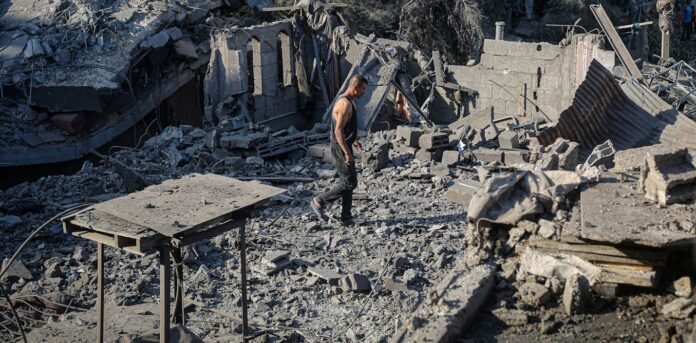
Behind all the negotiations and disagreements over sequencing are the Palestinians in Gaza themselves. Some are hopeful that the implementation of the plan would alleviate their daily miserable existence and improve conditions. But equally, many have lost hope in the Trump plan, as Israeli bombs continue to turn their homes into rubble.
And the latest road map makes only passing reference to Palestinian self-determination, stating that it aims to “facilitate launching a credible political path that achieves self-determination and Statehood.”
That seems some ways off. For now comes the difficult task of forcing reluctant parties to adhere to a road map with many potential bumps and potholes along the way.
Moderna’s mRNA flu shot earns FDA approval after rollercoaster review
Despite significant drama from Trump officials this year, the Food and Drug Administration has for the first time approved a flu vaccine that uses mRNA technology.
On Thursday, vaccine maker Moderna announced that its flu shot, mRNA-1010, aka mFLUSIVA, had earned approval for use in all adults ages 50 and up. The approval announcement follows a unanimous vote by FDA advisors in June to approve the vaccine. That vote was based on its superior efficacy to existing seasonal flu shots and a good safety record demonstrated in trials that included nearly 44,000 people. After that vote, the FDA set a goal of August 5 for a decision on the vaccine’s fate.
While the unanimous support from FDA advisors boded well for Moderna’s shot, the overall path to approval was treacherous and uncertain, even until the end. For one thing, current Health Secretary Robert F. Kennedy Jr. is a well-established anti-vaccine advocate who has worked diligently in his time in office to thwart vaccinations. One of his first acts as health secretary was canceling a federal campaign to encourage people to get flu shots in the midst of a bad flu season—despite the fact that the Centers for Disease Control and Prevention had already paid for the campaign and the flu season was killing relatively high numbers of children.
Kennedy is also openly hostile to mRNA vaccines, having called the mRNA COVID-19 vaccine the “deadliest vaccine ever made” and canceling hundreds of millions of dollars’ worth of federal research grants for mRNA technology.
In February, Trump appointee Vinay Prasad—a Kennedy ally—refused to even review the vaccine, a move he made despite objections from FDA staff and career officials, shocking Moderna and the larger biomedical community. Prasad defended his decision by arguing that the company didn’t compare its mRNA vaccine’s efficacy to the correct existing vaccine. But Moderna firmly and publicly pushed back, noting that FDA officials previously signed off on its trial designs. The FDA reversed Prasad’s rejection the following week, and Prasad was pushed out of the agency at the end of April amid a series of controversial and widely decried moves.
Remaining uncertainty
At the FDA advisory committee’s June meeting, experts expressed optimism about an mRNA-based flu vaccine. The platform—the same used in the company’s COVID-19 vaccines—is agile, easily allowing tweaks and updates to vaccine design, and it offers swifter vaccine production at scale compared to existing flu vaccines. Traditional flu vaccines are grown in fertilized chicken eggs, a process that requires six to eight months, compared to mRNA vaccines’ one to two months.
Moderna CEO Stéphane Bancel celebrated the approval in a statement Thursday, saying it “demonstrates the continued strength and versatility of our mRNA platform.”
“Flu remains a significant public health challenge, and mFLUSIVA provides an important new option for America’s seniors,” he said. “This approval also reflects the ongoing potential of our mRNA platform to help address important public health challenges through continued scientific innovation.”
Despite the approval, the vaccine still faces some uncertainty. The CDC advisory panel that makes recommendations for federal vaccine policy is effectively defunct. In March, a federal judge ruled that most of the anti-vaccine allies Kennedy had installed onto the advisory panel were unqualified. The judge thus ordered a temporary injunction reversing their appointments and undoing many of Kennedy’s changes to federal vaccine recommendations. The Trump administration is currently appealing the judge’s ruling. But amid the litigation, the CDC’s panel—the Advisory Committee on Immunization Practices—has not met.
Without an ACIP recommendation on mFLUSIVA’s clinical use for the quickly approaching flu season, doctors will face uncertainty about which adults over age 50 should be recommended to use the vaccine. It’s also unclear if mFLUSIVA will be covered by federal vaccine programs or private insurance companies, which are required to cover ACIP-recommended vaccines.
Moderna said it expects to have mFLUSIVA available for the 2026–2027 flu season. But The Wall Street Journal reported that Wall Street is not expecting meaningful sales until the 2027–2028 season.
The Washington framework agreement is discussed as a product of executive consensus. President Aoun signed. Prime Minister Salam endorsed. The cabinet approved. The institutional surface presents a unified Lebanese state negotiating with Israel under American sponsorship. The institutional reality is different. The framework was negotiated without the prime minister. Salam was not in Washington. He was not in Rome. The Minister of Foreign Affairs was not present at either venue. The Lebanese civilian government was excluded from the negotiations entirely. Salam’s later endorsement was not consent. It was capitulation to a fait accompli.
Understanding this requires understanding the structural position of the Lebanese prime minister within the confessional system. The presidency, reserved for a Maronite Christian, commands the armed forces. The speaker of parliament, reserved for a Shia Muslim, controls the legislative agenda. The prime minister, reserved for a Sunni Muslim, occupies the space between them: he leads the cabinet, manages international relationships, and provides the state with its diplomatic credibility. His authority depends on the cooperation of the president, the acquiescence of the speaker, and the compliance of the sectarian blocs whose ministers sit in his cabinet.
The framework agreement has systematically stripped each of these dependencies from the prime minister’s control while leaving him formally responsible for a policy he was excluded from creating. This is not accident. This is institutional design. Aoun has created a precedent that teaches every future actor in Lebanese politics how to govern without the prime minister.
Start with the negotiation sequence. The framework was negotiated through military channels between presidential delegations and American/Israeli counterparts. The civilian government had no seat at the table. No foreign minister. No prime minister. No cabinet representative. The negotiations happened as if the Lebanese state lacked a civilian government entirely. Salam learned of the framework’s terms after they were finalized. He then endorsed it retroactively. This is not how consensual governance functions. This is how a presidency moves to exclude the prime minister from consequential decisions by creating facts before he is invited to respond.
Now consider what Salam’s exclusion signals to other actors. The president can negotiate security agreements without the prime minister’s involvement. The president can bind the state to military commitments through channels the PM does not control. The prime minister’s authority over foreign policy is not real authority. It is nominal authority that operates only when the president permits it. Every security minister, every military commander, every future actor watching this sequence has learned that presidential preference trumps prime ministerial authority. The PM can be sidelined without formal confrontation.
The veto structure has collapsed. In normal Lebanese governance, the prime minister can constrain executive action through cabinet dynamics and diplomatic channels. The framework agreement eliminated this possibility by excluding him from negotiations entirely.
The cabinet’s role was reduced to retroactive endorsement of decisions made in rooms Salam did not enter. This matters strategically. Every actor in Lebanese politics is now learning that international security agreements, negotiated through military channels and finalized by external powers, bypass the prime minister completely. No cabinet consent is required. No parliamentary discussion occurs. The framework proceeds because the president authorized it and the Americans backed it. The prime minister’s approval is window dressing.
Hezbollah’s rejection of the framework reveals the true measure of Salam’s marginalization. The most powerful non-state actor declared the agreement “null and void.” Under conditions where the prime minister held real authority, opposition of this magnitude would force renegotiation. Salam responded with nothing. Implementation continued. The pilot zones deployed. The army moved into southern zones. The prime minister’s complete inability to respond to the country’s largest military force demonstrates that the framework operates in institutional space the PM does not control and never controlled.
What remains of the prime minister’s authority is representational. Salam provides diplomatic cover. He signs documents. He delivers statements. He represents the Lebanese state to foreign governments. This function cannot be eliminated without cost. But representational authority without operational control is a specific political position:
Salam is the legitimizer. He is not the decision-maker. He provides the appearance of civilian government while real authority operates through presidential-military channels that exclude him.
READ: Israel fired 113 projectiles into southern Lebanon Wednesday, highest since June 21: UN peacekeepers
The mechanism through which the prime minister was marginalized is available to any future president. No amendment is required. No constitutional transfer of power is necessary. The president simply conducts security negotiations through military delegations, finalizes agreements with external powers, and presents the prime minister with completed policy requiring endorsement. The framework was the prototype. Future executives will replicate it. The Lebanese presidency has discovered how to govern a confessional state without requiring the prime minister’s consent or even his presence.
The long-term consequence is already visible. If the pilot zones succeed and the army establishes control over the south, the precedent becomes institutional norm: security policy moves through presidential-military channels with international backing. The prime minister’s role is diplomatic representation, not decision-making. If the pilot zones fail, Salam absorbs the political cost of a policy he endorsed but never negotiated, while Aoun retains military authority and presidential precedent. Either way, the prime minister loses and the presidency gains a model for future governance that bypasses civilian government entirely.
The marginalization of the prime minister has structural consequences for Sunni political positioning in Lebanon. The Sunni community has never possessed military capacity equivalent to Hezbollah or the Druze militias. It has compensated through parliamentary representation and, critically, through the prime minister’s international credibility. The PM was the Sunni community’s access point to power. He managed international relationships on behalf of the sect. He brokered security arrangements through diplomatic channels rather than military force. This strategy worked as long as the prime minister controlled foreign policy and security diplomacy.
The framework has exposed that this strategy no longer functions.
The president now negotiates security agreements directly with international actors, excluding the prime minister entirely. This means the Sunni community’s traditional power mechanism has been dismantled. Salam’s marginalization is not a personal failure. It is a structural collapse of the political strategy the Sunni sect has relied on for decades.
The Sunni community now faces a choice with no good options. It can attempt to reassert parliamentary authority over security policy, but parliament has been revealed as irrelevant to security decisions. The framework proceeded despite parliamentary opposition. Any future Sunni attempt to constrain security policy through parliament will face the same outcome: executive-military decisions backed by international powers will override parliamentary objection. It can attempt to develop military capacity independent of Hezbollah, but that requires resources, regional backing, and time. Neither is available. It can accept permanent subordination to whoever the president’s international patron is at any given moment. Currently, that patron is the United States.
The deeper consequence is that the Sunni sect’s historical strategy of using international relationships as substitute for military power has been shown to be dependent on the prime minister’s institutional relevance. When the prime minister loses authority, the Sunni community loses its primary channel for translating international relationships into domestic power.
Salam’s diplomatic credibility in Washington and Rome did not prevent his exclusion from negotiations. His international relationships did not give him a seat at the table. His credibility provided cover, not authority.
This means the Sunni community must either find a new power mechanism or accept permanent marginalization. Finding a new mechanism requires either developing military capacity (strategically difficult and regionally dangerous) or finding an international patron willing to guarantee Sunni political relevance independent of the PM position (strategically difficult and diplomatically unlikely). The most probable outcome is acceptance of subordination to whatever actor controls the presidency and its international backing at any given moment. For now, that is Aoun and his American patron. The Sunni community will be the administered, not the administrator. And this arrangement will persist as long as the president maintains American support.
OPINION: The logic of staying: Why Hezbollah and Amal will not resign
The views expressed in this article belong to the author and do not necessarily reflect the editorial policy of Middle East Monitor.