16.1 C
London
Thursday, August 6, 2026
Home Blog

OPINION – The Missing Pillar in Israel’s Draft Debate:  Why Any Security Solution Must Recognize Torah Identity  

0
opinion-–-the-missing-pillar-in-israel’s-draft-debate:  why-any-security-solution-must-recognize-torah-identity  
OPINION – The Missing Pillar in Israel’s Draft Debate:  Why Any Security Solution Must Recognize Torah Identity  


Nearly three years after the October 7 Hamas attack, Israel’s national debate has been trapped in an exhausting and polarizing loop: how to address severe military manpower shortages while resolving the long-running dispute over military service for the Haredi community. Despite mounting Supreme Court intervention, economic sanctions, mass draft notices, and fierce political rhetoric, the country remains no closer to a functional or sustainable outcome.  

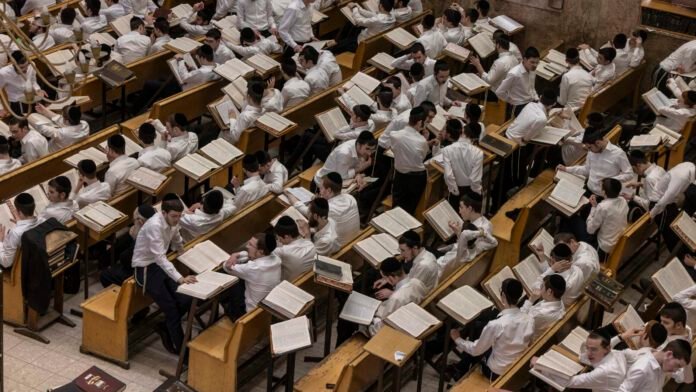
Haredim, often called ultra-orthodox Jews, are a religiously observant Jewish community for whom full-time Torah study—the study of Judaism’s foundational religious texts and traditions—holds exceptional religious and cultural importance. For decades, many Haredi men studying full-time in yeshivas (religious academies) received deferments from Israel’s compulsory military service.    

Perhaps the most overlooked reason for the ongoing stalemate is simple. The public and judicial debate has consistently framed the issue as a rigid, zero-sum struggle between legal equality and the continuation of these deferments. In doing so, policymakers, legal authorities, and commentators systematically overlook the primary defining value of Haredi society: the foundational, non-negotiable role of full-time Torah study. As long as state mechanisms fail to understand and respect this core reality, even the most aggressive pressure will produce social friction rather than a durable contribution to national security.  

To understand why legal coercion consistently backfires, one must look beyond Israel’s immediate political arena to the global Haredi community. Whether in Jerusalem, Lakewood, London, or New York, the fundamental defining value of the Haredi world—and the key distinction between it and other observant Jewish communities—is the absolute centrality of immersion in Torah study during a young person’s formative years. For Haredi society, intensive study in yeshivas between the ages of 14 and 22 is not an academic pursuit, a vocational stepping stone, or a social convenience. It is the spiritual pulse of Jewish continuity, the moral anchor of the community, and an irreplaceable value.  

While dedication to Torah study has defined the Jewish people throughout history, the intensity of the modern yeshiva ecosystem took on a distinct historical dimension following the Holocaust. Faced with the near-total destruction of European Jewry and its great centers of learning, alongside the rapid onset of secularization and modernity, the rebuilt yeshiva world was designed as a vital strategy for identity preservation and spiritual resilience.  

This historic revival was built upon a tacitly recognized duality: while one part of the Jewish people established physical sovereignty and military defense, another dedicated itself to rebuilding the decimated spiritual infrastructure of the Jewish world. Both missions were understood to be essential for the survival of the Jewish people.  

Over the decades, as a result of this foundational commitment, the State of Israel evolved into one of the world’s foremost centers of Jewish learning, drawing tens of thousands of young men and women from around the world each year to immerse themselves in Torah study and Jewish heritage in Israel.  

Crucially, this intensive religious education does not exist in a vacuum; it profoundly reinforces values of altruism, social responsibility, and human empathy. Far from being disengaged from the welfare of the broader public, Haredi society has developed an extraordinary culture of volunteerism and mutual aid, reflected both in individual participation rates and in institutional social innovation.  

On an individual level, Haredi adults volunteer at strikingly high rates. According to a comparison of Israeli government data and OECD figures, 34.3% volunteer at least once a month—about twice the OECD average of 17%, and higher than Finland’s 28.6%, the highest rate recorded among OECD countries.  

Beyond individual participation, Haredi society has effectively become a “Start-Up Nation” for social innovation, founding dozens of pioneering civil society organizations. These include landmark institutions like Yad Sarah, which revolutionized community medicine and home care across Israel; United Hatzalah, which developed groundbreaking, fast-response medical models now emulated across the Jewish world and globally; Matnat Chaim, which made Israel the world leader in altruistic living kidney donations per capita and recently entered the Guinness World Records; alongside dozens of other specialized charitable networks.  

The current friction surrounding military service is therefore not driven by a refusal to contribute, a lack of civic responsibility, or a fear of personal risk. The argument that Haredi men are unwilling to risk their lives for their fellow citizens is flatly disproved by facts. On October 7, while the fighting was still underway, Haredi volunteers from emergency organizations such as United Hatzalah and ZAKA rushed into active combat zones without military protection, risking their lives to rescue the wounded and recover the dead with dignity.  

Resistance to military service stems not from a fear of danger, but from a deep-seated resistance to externally imposed cultural assimilation, social engineering, and the dismantling of educational and cultural autonomy. When legal systems pursue a uniform approach without sufficient practical accommodation, they push an entire community into self-defense rather than partnership.  

Recognizing this distinction is not an argument against military service. It is a prerequisite for designing policies that can actually succeed.  

Instead of relying on rigid legal confrontation that achieves neither equality nor operational readiness, Israel’s leadership must adopt a strategy that respects social reality. Demanding total, immediate compliance from full-time yeshiva students who view their study as a sacred historical obligation merely guarantees perpetual gridlock.  

Israel’s security establishment cannot afford the luxury of prioritizing legal arguments over strategic success. A resilient, forward-looking national defense strategy must accommodate the reality of a diverse society.  

A durable national compromise must begin not by asking how to weaken the world of full-time Torah study, but by asking how to preserve it while expanding meaningful avenues of national contribution.  

Real progress will not come through economic warfare or legal threats. It will come when Israel’s leadership recognizes that protecting full-time Torah study and strengthening national security are not mutually exclusive goals—they are the two foundational pillars upon which the Jewish state was rebuilt. By establishing protected, adapted frameworks for those not engaged in full-time study, while simultaneously guaranteeing the continuity and dignity of the yeshiva world, Israel can build an inclusive security ecosystem capable of meeting the monumental challenges ahead.  

The Most Expensive Democratic Senate Primary Has a Winner

0
the-most-expensive-democratic-senate-primary-has-a-winner
The Most Expensive Democratic Senate Primary Has a Winner


Over the course of Donald Trump’s second term, Democratic voters have expressed dissatisfaction with their party over what many view as an inability to stand up to the president and his broader movement. That dissatisfaction with the establishment has manifested in primaries in coastal cities across the country, where the progressive movement appears to be ascendant. On Tuesday, that test played out in Midwestern states, Michigan and Missouri.

Within roughly two hours of polls closing, The Associated Press called the closely watched rematch between Cori Bush and Rep. Wesley Bell for the incumbent. In 2024, AIPAC and other outside groups spent more than $18 million to oust Bush from her Missouri district, and her defeat, along with New York Rep. Jamaal Bowman’s, has served as a warning sign for Democrats not to be too progressive or too pro-Palestine.

But by Wednesday morning, Abdul El-Sayed, who ran on Medicare for All and ending military aid to Israel for its continued genocide in Gaza, narrowly defeated Rep. Haley Stevens by less than 20,000 votes. According to AdImpact, the Michigan Democratic Senate primary saw $98 million in ad spending and reservations. At least $60 million was spent boosting Stevens or attacking El-Sayed, with more than $30 million from the American Israel Public Affairs Committee’s super PAC, United Democracy Project — its largest spend in a single race ever, nearly double the then-record-breaking amount spent on Bowman’s 2024 primary race.

This week on The Intercept Briefing, host Jessica Washington and colleagues Akela Lacy and Jonah Valdez discuss what results from Tuesday’s primaries signal for progressives and the broader left in the Democratic Party, especially in swing states and outside of coastal cities.

For more, listen to the full conversation of The Intercept Briefing on Apple Podcasts, Spotify, YouTube, or wherever you listen.

Transcript

Jessica Washington: Welcome to the Intercept Briefing. I’m Jessica Washington, politics reporter at The Intercept.

Akela Lacy: And I’m Akela Lacy, senior politics reporter.

Jonah Valdez: And I’m Jonah Valdez. I cover politics and U.S. foreign policy.

JW: We’re in your feed a bit early this week to talk about two major primaries we’ve been reporting on at The Intercept.

Over the nearly two years on this podcast, we’ve been covering voters’ dissatisfaction with Democrats over what many view as an inability to stand up to President Donald Trump and his broader movement. That dissatisfaction has manifested in primaries in cities across the country, from New York to Colorado and California, where the progressive movement appears to be ascendant.

That test came to the Midwest on Tuesday in Michigan and Missouri. In Missouri, former squad member Cori Bush lost her rematch against Representative Wesley Bell, who received the bulk of outside spending, primarily from the American Israel Public Affairs Committee. In 2024, AIPAC and other groups poured a collective $18 million into the race to defeat her.

In Michigan, Dr. Abdul El-Sayed narrowly defeated Representative Haley Stevens in a win for progressives after AIPAC-aligned super PACs and others poured close to $100 million into the race, according to Ad Impact. This week on the Intercept Briefing, you’ll hear what the results from Tuesday’s primaries signal for progressives and the broader left in the Democratic Party, especially in swing states and outside of coastal cities.

Jonah, Akela, I really want to get your reactions to El-Sayed winning the Democratic Michigan Senate primary.

JV: Well, it was a long night, and AP called it pretty early, at least here where I am on the West Coast. And I think my initial reaction is a win’s a win. I think results were a lot closer than what the polls had showed leading up to it.

I think it’s worth noting that Abdul El-Sayed was massively outspent in this race. Overall nearly $100 million in the Senate primary. It’s the most expensive Democratic primary ever, but the majority of which was spent in outside spending to either attack El-Sayed or boost the campaign of Stevens.

Yet, El-Sayed pulls off this, very close win with a vote-toll, I think it’s worth noting, that’s greater than the more moderate Elissa Slotkin got in her primary in 2024. More similar to closer margins we saw in the presidential primary between Bernie Sanders and Hillary Clinton in 2016.

JW: For our listeners at home, Elissa Slotkin is the senator who beat Mike Rogers in 2024. Mike Rogers is the presumptive Republican nominee who El-Sayed will be facing in the November election.

JV: And you’re already seeing online, all this talk from moderates as far as where El-Sayed may have failed as if to show progressive policies still don’t do well, or, all this talk of how can El-Sayed moderate more in the general. But I think if Dems are serious about getting a Senate majority, I think it’s more so on moderates to appeal to what the majority of voters in Michigan decided today, and that’s that it’s the politics of the El-Sayed campaign.

AL: My reaction, obviously NBC projected overnight that El-Sayed would win, and so his campaign claimed victory overnight, and everyone was waiting well into the morning for the final results.

But in that interim period, you basically saw the shift in conversation go from everyone having that election night anticipation to everyone, churning out takes about why the polling that showed El-Sayed up by double digits in the final weeks of the race had been so far off. Making conjectures about counties where Stevens outperformed him and extrapolating that to the November general election, making claims that El-Sayed is going to have to make up a lot of ground with, Black or working-class voters in counties that Stevens performed better in.

But I think that immediate pivot is really telling in a lot of ways because this was the most expensive Senate primary in history, and we saw the most spending ever from not just the American Israel Public Affairs Committee, but all of these other corporate PACs to boost Haley Stevens.

She came into this race in the first spot with backing from the Democratic Party and lost, and I think to ignore the massive failure on the part of the party in that vein and to instead put those failures on El-Sayed is a really backwards reading of what happened last night.

JW: Akela, to your point about the money, and Jonah, I want to bring you into this, did the money make a difference? It was the most expensive Democratic [Senate] primary in history, and did the spending here change the outcome? Obviously, El-Sayed won anyway, but, did this have an impact?

AL: I think it would be folly to argue that it didn’t have an impact. It’s still very early. We don’t have all of the information, but there’s anecdotal reports of voters saying that they thought that Obama endorsed Haley Stevens. I actually haven’t seen anyone talking about individual responses to the AIPAC attacks, but that narrative out there that Abdul El-Sayed is the biggest threat to the U.S.-Israel relationship or to American Jews or Jewish voters in Michigan, that’s been out there this entire race.

And so I think that certainly had an effect. But I’ve also seen some people saying, “Oh you can’t just make the argument that voters who voted for Haley Stevens or who were swayed by these ads are stupid.” I don’t think anyone’s saying they’re stupid. But it’s unrealistic to try to make an argument that this money had no effect in this race.

JV: Yeah, it absolutely made a difference. Speaking with people in Michigan throughout the summer and really starting, early July, just like a flood of attack ads against El-Sayed. They were pretty much omnipresent if you were watching TV. Mind you, this was around the World Cup, so people were seeing this on primetime television immediately after a game ended. 

Someone I spoke to said the second ad right after is an attack ad calling Abdul El-Sayed, I think hateful toward women, and other ones painted him as a terrorist sympathizer trying to tie him to Hasan Piker and comments he made. And so painting this whole vision that he is, too radical for Michigan. It is the outside spending propping that up, but on top of that, like trying to make this ideological argument. 

JW: And just for anyone who doesn’t know Hasan Piker is the popular Twitch streamer who’s been campaigning with progressives and who Republicans and Democrats have been weaponizing against progressives implying with, I would argue, pretty Islamophobic attacks that these candidates are anti-American and that they believe everything that Piker believes.

JV: I think it’s worth remembering that there was a point in this race when it was essentially a three-way tie between El-Sayed, Stevens, and Mallory McMorrow, who would eventually drop out. The conventional thinking at the time was that the more that voters see of Stevens the more it would consolidate around McMorrow and El-Sayed, that Stevens would back off and would drop off in the polls because of AIPAC being such a big issue in the race.

Around the same time as polls were reflecting that, that’s when AIPAC’s super PAC United Democracy Project dropped in tens and tens of millions of dollars. This is the correlated result that you get. 

Stevens also has this history with AIPAC as far as the why they spent for her. AIPAC and corporate groups saw Stevens as a candidate that aligns with their policy positions. Stevens of course in 2019 took that freshman trip sponsored by AIPAC to Israel. And worth mentioning in 2022 she received millions in support in her race against former Congressman Andy Levin, who was attacked over his support for a Palestinian state.

On the other side of that coin, of course, is AIPAC saw a candidate in El-Sayed who opposes their positions on Israel.

JW: Akela, I want to turn to you for a second. I know that the United Democracy Project, a super PAC backed by AIPAC as you both have mentioned, spent a ton of money in this race. I know that came up in your conversation with El-Sayed last week. Now that you’ve had some time to reflect on that conversation, were there any takeaways for you about how he was thinking about money and politics, and specifically the massive amount of money that was spent on his election?

AL: The core of El-Sayed’s argument this entire race was that he was the antithesis to big money in politics. Not just spending on a race, but talking about money in politics being the reason that we don’t have policies like Medicare for All, that we can’t change sort of the status quo on U.S. military support for Israel, that being a driving factor for why many voters ended up supporting somebody like Donald Trump.

Looking back on the way that El-Sayed messaged on these things he was right. The question was, like, how much do voters actually care about that thing? And I think the breakdown came between voters who support a candidate like Stevens and don’t necessarily care about the money coming in to support her. 

People talk a lot about the enthusiasm gap. That supporters of El-Sayed were much more enthusiastically supportive of him in a positive way than supporters of Stevens who might have been supporting her, because they were familiar with her, they felt like she was more of a predictable candidate or because they didn’t want to vote for somebody like El-Sayed. That enthusiasm gap is why you see that kind of money coming into the race. He made the point over and over again “If your candidate is so electable, why do you have to spend $60 million to put them in office?” Part of that is his campaign strategy, but I think it’s a pretty unimpeachable argument, right? If they didn’t need that kind of boost to put their candidate in office, and obviously it didn’t work, why would you make that kind of investment? 

Coming out of this, there’s all kinds of people trying to spin this to say, “Oh the money advantage has changed this cycle,” right? We’ve seen other candidates who had the money advantage lose, but I don’t think that discounts exactly how much money went into this race. I think there was almost $100 million spent in total on the Michigan Senate race. Which is crazy. Just on its face. If you’re on the opposite side of that spending the obvious question is, “OK if your candidate is so good, then why do you have to do all of this to help them win?” 

The takeaway that a lot of people have from this, whether they’re supportive of El-Sayed or whether they’re upset about Haley Stevens, is that, I don’t think the era of big money in politics is over, but obviously the ground is shifting.

JW: Jonah, I want to come back to the Islamophobia in the race that you reported on. Obviously, we saw these attacks both from Democrats and Republicans, and as we head into November, we can only imagine that these attacks are going to intensify and I would argue become more Islamophobic as Republicans pick up some of these attacks that Democrats had dropped in the primary.

What do you think is going to happen in the general election, and how are you anticipating Islamophobia to show up in this race? 

JV: We’re already seeing it this morning. The Senate Republicans’ campaign arm, they released their first ads this morning, and of course, they refer to Abdul El-Sayed by his full name, they are tying him again to Hassan Piker, using phrasing that El-Sayed is too radical. These are all out of the playbook from the primary that the Michigan GOP had rolled out that Mike Rogers had rolled out. 

And on top of that, I’m glad you noted that it’s not just the Republicans who have been weaponizing Islamophobia, it’s also the Democratic establishment and AIPAC through its, again, super PAC, [United Democracy Project], just pouring and pouring all these ads that are again painting Abdul El-Sayed, who is Muslim and Arab, as a sympathizer to terrorism. That on top of, these unfounded claims of his hatred toward women. Speaking to several leading experts in Islamophobia, they were identifying these as pretty troubling anti-Muslim and anti-Arab tropes that have been around in American politics for years now.

I think one person mentioned that it reminded them of the early attacks on Barack Obama’s campaign in 2008, and that leaked photo that Hillary Clinton’s campaign at the time put out showing him in traditional Somalian elder attire. And so, I think we could expect these kinds of attacks to only accelerate, especially at a time when, Islamophobia is pretty common in GOP rhetoric right now.

We saw it leading up to the campaign of Zohran Mamdani in New York for his mayoral seat. We see it very regularly from representatives in the House like Randy Fine, who folks like him in his part of the world essentially believe that no Muslims should serve in Congress at all.

They’re drawing these hard, very bigoted lines. They’re successful politically in a lot of spaces. Republicans are still betting that these old tactics can still work before a broader electorate. Today’s victory, though, in spite of all of the attack ads in the primary, shows that those older tactics may not be as effective as they were, say, a decade ago or 20 years ago.

What we’re seeing this morning with these new ads, is a preview of what’s to come. It’s only going to get worse as the GOP plays to its MAGA base. But El-Sayed has shown that he has the capacity to overcome this, and I think that boils down to just how far the electorate has evolved on this and just aren’t as susceptible to such blatant racism.

JW: One thing I’ve been wondering is whether or not as we head into November, the establishment Democrats are going to protect El-Sayed and actually stand up against these Islamophobic attacks.

We’ve seen Democrats dance around these attacks on Ilhan Omar, sometimes defending against them, but often adding fuel to the fire. So I think come November or before November even, it’ll be interesting to see if Democrats actually intervene and do something about these kinds of racist, Islamophobic attacks.

AL: It’s a good question, Jessie, and already this morning we’ve seen Senate Minority Leader Chuck Schumer and Senator Kirsten Gillibrand, who run the Democratic Senatorial Campaign Committee endorse El-Sayed. We saw the Senate Majority PAC come in and endorse him. Even Haley Stevens endorsed him. But lest we forget, four days ago, Haley Stevens was saying that El-Sayed blamed all of his problems on Jewish voters with the backing of many of these people in the party.

So yeah, I think the question of whether they will specifically address the Islamophobic attacks is a totally different question from whether they are going to consolidate around him, which they are, because they obviously need the seat.

[Break]

JW: Obviously this was a really interesting race, and we’ve all been watching it, but I want to talk about some other races that happened last night as well.

So Akela, I know you’ve been watching House District 7 in Michigan, where William Lawrence, founder of the Sunrise Movement, won the Democratic primary. Akela, can you tell us a little bit about him and the dynamics of that race?

AL: Will Lawrence many people may remember him because of the late breaking oppo story about him saying that the left had been defanged by Black members of Congress. But prior to that, Will Lawrence had run a pretty textbook progressive campaign from the left, but he really was one of the first candidates this cycle who we saw center their campaign around the issue of data centers.

And I think in some of the analysis that we’ve seen coming out of his win, which was one of the early calls last night is that that is a winning argument particularly for progressive campaigns, but also in states where communities are fighting data centers.

We’ve seen this, I don’t want to say people are treating the data center issue as like a panacea, but we have seen that come up in a lot of campaigns and a lot of analysis, suggesting that’s potentially a through line where progressives can overcome some of the obstacles that they might have faced, around other “controversial policies,” and that data centers is like this reasonable policy that progressives are adopting that’s helping to boost their campaigns.

I think that’s a narrative that’s really coming out of Will Lawrence’s race. I will also mention that the Democratic Congressional Campaign Committee backed Lawrence shortly after he won, which is a pretty big deal.

JV: And just to add with Lawrence, he is in the 7th Michigan district, which is considered a purple district, and it’s currently held by a Republican incumbent. So I think moving ahead to the general, I think similar to El-Sayed’s race against Mike Rogers, is that, a lot of people will be looking at this as a test of how these anti-corporate, anti-data center, and unabashedly pro-Palestinian politics play in a general election in a district that is very much considered a swing district

JW: Yeah. No, I can definitely see that. 

I want to turn to another state, Missouri. Within roughly two hours of polls closing, the Associated Press called the closely watched, for me at least, probably a little bit less for the rest of the news ecosystem, but the closely watched rematch between Cori Bush and Representative Wesley Bell in Bell’s favor.

So in 2024, AIPAC and other groups had spent more than $18 million to oust her from her Missouri district. Akela, we’ve both spoken to members of Congress who, have seen her defeat as a warning sign to not be so progressive, to not be so pro-Palestine. We’ve been chatting in the newsroom in our politics meetings about whether or not this race says anything about progressives and the progressive movement right now, or does it just say something about Bush and her campaign?

AL: I don’t think that this race says anything about the viability of pro-Palestine candidates. To make that argument, you would have to close your eyes to all of the last three months, basically. I think this was a race about Cori Bush and Wesley Bell. And for all the criticisms of Wesley Bell, people like him in this district. 

Turnout in St. Louis the city of St. Louis, Cori Bush’s base was pretty high. It was 30 percent. That was around the levels that we saw when she won re-election in 2022, and that was not enough to counteract the support that Wesley Bell got from St. Louis County, where more older Black voters who support him tend to live.

What I heard from supporters of Bush was that some people thought she was going to lose, but they didn’t think it would be by this much. A lot of people thought she was going to win and they were obviously wrong. I don’t think you can make the argument that the AIPAC money in this race is the only reason that she lost.

There was a pretty effective campaign to saddle her with baggage from these stories about what happened to the tornado relief money that she raised and her husband being probed over a pandemic loan fraud, and all of these things we talked about and she chalked up to political attacks.

But I think people in the district were not necessarily swayed by those issues — but it left a bad taste in their mouth, and it’s the kind of thing where — I’m not sure that Wesley Bell would’ve won if a different candidate was was challenging him, just given the frustration both with incumbents and with AIPAC money.

Bush’s campaign also suffered because she didn’t have the marquee progressive support that we’ve seen boost candidates in other races, like rallies with Bernie Sanders and AOC. Bernie Sanders endorsed her, but nobody came to campaign with her. Justice Democrats endorsed her, but they didn’t spend money on the race.

The money that was spent in favor of Bush was just around $200,000, that means that progressive groups didn’t take this race seriously. And for one reason or another, it’s kind of a chicken or the egg thing. Had they taken it seriously, could she have won, or did they not take it seriously because they didn’t think she was going to win?

At the end of the day, this was more of a race about Cori Bush and Wesley Bell than it was a bigger test of all these other issues. And Wesley Bell is the kind of person who has, aside from taking AIPAC money, you can’t really say a lot else about him because he doesn’t really do a lot, and I think that works in his favor for better or for worse.

JW: Yeah, and Jonah, I wanted to get your thoughts as well. If you’ve spoken to Cori Bush, she is unlike any other politician. She very much speaks and feels like an organizer. Just watching her navigate the political system and struggle to navigate the political system has been really interesting. But Jonah, I wanted to see if you had any thoughts about this race as well? 

JV: I think it’s worth noting that she was very much ahead of the curve on a lot of the politics that we’re seeing succeed in this midterm primary elections. And, I think to Akela’s point, seeing the success, like the massive success across the U.S. on, the same platform that she’s running on and something that she’s ran on since she was first elected and was among the early politicians to call the genocide in Gaza a genocide.

As yours and Akela’s reporting had noted in 2024, was very early with the ceasefire resolution, as we know there’s still no ceasefire in Gaza. These are things that she was very much ahead in the curve on and is still very much a leader in that space. Her losing in this election doesn’t necessarily mean that those values don’t do well before the electorate.

JW: Akela, to your point, I’ve seen some analysis suggesting that a lot of progressive attention was spent on Michigan. Do you think that played a role in why there wasn’t as much spending or attention or any on-the-ground mobilization from progressive groups? Was all of their focus on Michigan?

AL: I wouldn’t say there was no on-the-ground mobilization. DSA, the St. Louis DSA endorsed her, and the St. Louis chapter was canvassing for her, and they had a pretty well-run canvassing operation to what I understand. But that’s not enough. I think they potentially miscalculated because of the boost that DSA gave to other candidates in New York and Colorado, I think they assumed that would be enough to put her over the edge.

But yeah, in conversations with progressive strategists who work on these races, the reason that they didn’t put as many resources into this race is absolutely because they put all of them into Michigan. The caveat here is that even while groups like Justice Democrats or the new pro-Palestine PAC, American Priorities, are spending more than they ever have on these races, in part because of how much money corporate PACs and the pro-Israel lobby have spent against their candidates in previous cycles, is that there’s still only a handful of these groups.

They simply do not have the capacity to triage every race in a cycle or even every race in a week. People were like, “I wish another group, bucked up and came in and put more money in this race for her.” But it wasn’t going to be JD [Justice Democrats] because they had Donavan McKinney.

It wasn’t going to be American Priorities, probably because they didn’t want to sully their positive track record so far by making a massive investment in a race where the candidate already had a lot of problems. All of these calculations went into the fact that the focus on Michigan probably affected this race, but again, I don’t think you can say one way or the other if all these groups came in and spent a bunch of money for her that it would’ve changed the outcome. We just don’t have enough information right now to say that.

JW: I want to talk about Democratic Socialist Francesca Hong, who is currently having clips about her takes on Thanksgiving and raising a biracial child, taken, I would argue, a little bit out of context.

But I do want to talk about that race because she’s a Democratic socialist who is currently leading in the polls for governor in Wisconsin against the more moderate candidate, David Crowley, and that race is coming up next week. Akela, can you just briefly talk about the dynamics at play here?

AL: Francesca Hong, a Democratic socialist state lawmaker in Wisconsin who has been leading the polls in the Wisconsin gubernatorial primary.

This is a situation where, I mean, why is CNN asking this woman about a tweet about canceling Thanksgiving? That’s my question. I don’t care what she thinks about Thanksgiving. That’s not a policy that the governor of Wisconsin has power over. The fact that this is what this race has come down to at this point, is a reflection of how much these outlets and mainstream forces are working to tear down and poke holes in what is clearly a substantive movement against the Democratic establishment. I’m not saying Francesca Hong is perfect, but I think these interviews and these clips of her, making these comments are less about her than they are about how much fear she strikes in the heart of the establishment apparatus. 

I’ve talked to a lot of people in Wisconsin, people who are supporting Hong’s campaign and see this race as a real opportunity again to put this question of can progressive politics win in the Midwest? This is what Perry Bacon Jr. wrote about the New Republic earlier this week. I thought this was a really great piece, and we’ve talked about this, Jessie. Pointing to people like Tammy Duckworth and Barack Obama and Sherrod Brown who were progressives, prior to their races in the Midwest and then won those races, whether or not they fashioned themselves as a progressive or not.

The polling that has shown her ahead a lot of people have questions about that now given how blown out of proportion the polling was for El-Sayed. But I think, pairing that question with the criticisms of “Oh, she’s talking about her proximity to whiteness and marrying a white guy and having a biracial child and talking about canceling Thanksgiving.” There’s a reason they’re not talking about her actual policy platform. It’s frustrating because like what happens when you have real “working class” candidates or candidates who are running on policies to help the working class elevated to this level of national attention you don’t get the polished, you know, Abdul El-Sayed soundbite answers that we were seeing in the Michigan race. People take that and run with it in a way that is pretty hollow in a lot of cases, and that’s what we’re seeing with Francesca Hong.

JW: Yeah. No, I’d have to agree. What I think about, and I am a former debate kid, so this is no shade to debate people, but there is an extent to which our politics just feels like how good are you at giving a speech and essentially being a good debate kid, and has nothing to do with your policies.

I also don’t understand why we’re focusing on her attitudes about her child and how she’s planning on raising them or how she thinks about Thanksgiving and whether or not it should exist. It’s not like she said anything completely out of left field. 

But as we begin to pivot from primaries to midterm elections, what do you make of progressive’s chances in places outside of the coast in November? I know that we already talked about Perry Bacon’s piece, which, by the way, people should read. It’s called “Can Progressive Candidates Win in Swing States? They already have.” But what are you thinking about progressives’ chances? Jonah, I want to actually take this question to you and see what you’re thinking.

JV: Yeah, as Michigan has shown us and as possibly looking ahead to Wisconsin next week, the margins are still very close and these races are very embattled and bitter.

But I think the success that we’re seeing with Abdul El-Sayed, with Will Lawrence, who we talked about, and as well as Donavan McKinney, who we haven’t talked about yet. These are folks who are running on very progressive, unabashedly pro-Palestine campaigns. And I think it’s worth mentioning Donavan McKinney was also endorsed by the Detroit Metro DSA chapter as well, and, mobilizing for him.

DSA also mobilized very heavily for El-Sayed, even though he himself is not a member of DSA and has called himself a capitalist and someone who wants to regulate capitalism and not necessarily stands for socialist policies. But I think that’s proving the theory right that it’s not just confined to the coasts, and this is less of an ideological battle when it comes to voters. 

A lot of experts and analysts will say that people don’t vote based on ideological lines. They vote on their pocketbooks. Of course, the adage of it’s the economy. And, these progressive platforms are playing directly to that on top of people’s dissatisfaction with the establishment.

I think to Akela’s point, right-wing media, [and] corporate liberal media like CNN can play up all of these culture war questions constantly of Thanksgiving, holidays. For the case of El-Sayed, it was a question of why he felt the need to have sympathy for some of his Muslim constituents in Dearborn or would-be constituents in Dearborn. It’s questions like this that have nothing to do with actual legitimate policy questions. In that case, it’s like there was zero questioning, we’re talking about Iran and the killing of Iran’s leader. There were zero questions about should we be in this war with Iran? Should we have killed how many civilians we’ve killed in that war? Or backing Israel’s war in Lebanon and continued war in Gaza. These are the kind of policy questions that a lot of Americans are fed up with. Polling also shows total dissatisfaction with military spending and as opposed to spending it on healthcare and education.

Progressives, regardless of the coasts or in the Midwest are continuing to hammer that in of your taxpayer dollars can be spent and should be spent in way more effective ways that meet your needs and not the needs of, the greater American empire if you will.

JW: Yeah, and just for everyone listening you referred to State Rep Donavan McKinney, who defeated U.S. Rep. Shri Thanedar, the incumbent candidate in Michigan’s 13 district on Tuesday night. 

And that’s honestly all of the time that we have here. But thank you all so much for joining me on The Intercept Briefing, staying up late, waking up early, putting in the real work.

AL: Thank you, Jessie.

JV: Thank you.

JW: We want to hear from you. Tell us what you’re following or want to see more coverage of. Email us at podcast@theintercept.com or leave us a voicemail at 530-POD-CAST that’s 530-763-2278

That does it for this episode. This episode was produced by Laura Flynn. Ben Muessig is our editor-in-chief. Maia Hibbett is our managing editor. Fei Liu is our product and design manager. Nara Shin is our copy editor. Legal review by David Bralow.

Slipstream provided our theme music. 

This show and our reporting at The Intercept do not exist without you. Your donation, no matter the amount, makes a real difference. Keep our investigations free and fearless at theintercept.com/join. And if you haven’t already, please subscribe to The Intercept Briefing wherever you listen to podcasts.

Do leave us a rating or a review. It helps other listeners to find us. 

Until next time, I’m Jessica Washington.
After Ceuta, Europe is once again mired in migration chaos of its own making

0
after-ceuta,-europe-is-once-again-mired-in-migration-chaos-of-its-own-making
After Ceuta, Europe is once again mired in migration chaos of its own making

Europe is again embroiled in a contentious debate about immigration.

On Aug. 4, 2026, European interior ministers met for an EU-wide crisis meeting on borders. This followed days of accusations, recriminations and in-fighting among EU member states over an incident in which approximately 70,000 people crossed from Morocco to the small Spanish enclave of Ceuta on the North African coast.

Many swam several miles in the Mediterranean to avoid the heavily fortified border fence – leaving 88 people drowned in just 48 hours. While Spanish police escorted most of the individuals back to Morocco with the help of Moroccan authorities, the European far right quickly latched on to the episode as fodder to further fuel its anti-migrant policies.

While this is not the first time thousands of migrants have crossed into Ceuta, the moment has sparked a new diplomatic crisis in the European Union, hearkening back to the 2015 “crisis” when migration likewise threatened to destabilize the bloc. As in the earlier case, the latest episode was not merely a result of misinformation or vast numbers of people looking for safety in Europe, but a reflection of disagreements and lack of coordinated action in Brussels.

What explains last week’s sudden rise in migration

Moroccans, especially in the north, have long felt discontent at the disparity between their local communities and the Spanish enclaves that are only a few miles apart. Many cite the lack of jobs or educational opportunities as reasons to migrate. The GDP per capita in Morocco was only US$4,153 in 2024 compared to $26,774 in Ceuta. This inequality has led some Moroccan “mule women” to haul goods on their backs for sale in Ceuta under dangerous and even deadly conditions.

Under normal circumstances, several thousand migrants cross without documents to the Spanish enclaves of Ceuta and Melilla each year. From January to April 2026, 2,582 people crossed to Ceuta and roughly 1,000 people claimed asylum.

Observers have offered various theories as to why that number spiked so high last week.

Pedro Sánchez, the Spanish prime minister, blamed trafficking groups that spread rumors online about a recent Supreme Court decision that Spain could not return people if they arrived by sea. When journalists interviewed migrants, many said that social media posts sparked hope that they could swim to Ceuta and eventually travel to Europe for work and a better life.

The Spanish court decision was wrestling with a difficult legal question: How and when can migrants apply for asylum when they arrive at Spain’s borders? This echoes debates addressed by the U.S. Supreme Court in June when it supported the Trump administration’s pushbacks at the southern U.S. border, arguing that migrants could not apply for asylum because they had not technically crossed into U.S. territory. Of course, they were not in the U.S. because the border guards had pushed them back.

The Spanish decision was more narrow: It agreed that migrants cannot be pushed back if they arrive by sea because there were no physical elements to the maritime border. If the government installed a floating wall extending Ceuta’s border fence into the sea, which it has now done, then pushbacks would be legal.

Nevertheless, Spanish police have escorted nearly all migrants back to Morocco, with only some individuals from non-Moroccan nationalities allowed to apply for asylum and some unaccompanied Moroccan minors allowed to remain.

Morocco’s interests

Ceuta, along with Melilla, have been under Spanish control for four centuries, though Morocco considers the enclaves to be occupied Moroccan territory.

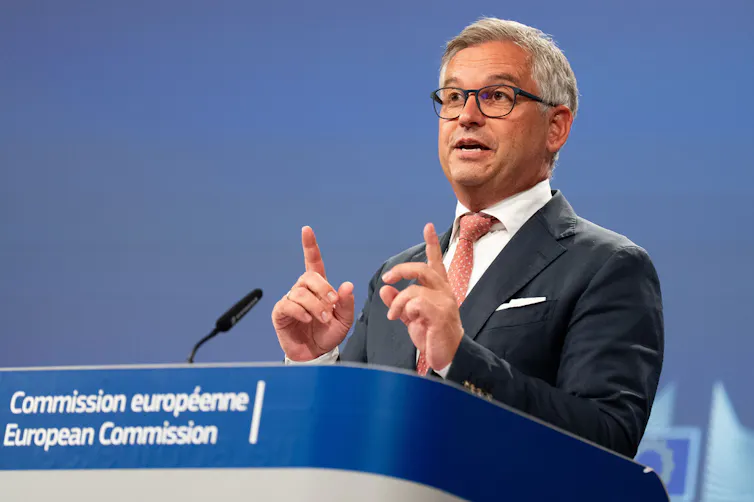
A man in a suit stands at a lectern.

European Commissioner for Internal Affairs and Migration Magnus Brunner speaks during a press conference at EU headquarters in Brussels on Aug. 4, 2026. AP Photo/Marius Burgelman

Beginning in the 1990s and increasingly throughout the 2000s, Spain took steps to strengthen the border fortifications between the enclaves and Morocco, primarily out of fear that migrants from sub-Saharan Africa would cross into Melilla or Ceuta en route to mainland Europe.

Morocco has largely cooperated with the EU to block migration in exchange for large financial inducements and diplomatic benefits, though that relationship briefly faltered in 2021 over issues related to the Moroccan-occupied territory of Western Sahara.

In retaliation over Spain’s decision that year to permit medical treatment for the leader of Western Sahara’s Polisario Front, a banned pro-independence group, Moroccan border guards allowed approximately 12,000 people to cross into Ceuta over two days. The dispute was overcome only after Sánchez made overtures to Morocco, acknowledging its rule over the territory.

This time around, it is similarly unlikely that tens of thousands of individuals would have been able to cross without the complicity of Moroccan border guards. That led some observers to speculate that the episode was once again Moroccan retaliation toward Spanish positioning on the issue of Western Sahara. The Spanish prime minister visited Algeria, the primary political and financial backer of the Polisario Front, days before the Ceuta episode.

The post-2015 paradigm

The July events also make clear that the EU is operating in the long shadow of the 2015 migration “crisis,” when more than 1 million people arrived in Greece and Italy from Turkey and North Africa, respectively.

Some countries suspended the Schengen zone, which allows for the internal free movement of goods and people across 29 European countries, and restarted border checks. The European Council adopted a mandatory quota to share the refugee burden more equitably across all member states, but it fell apart in acrimony and finger-pointing when Hungary, Poland and the Czech Republic refused to participate.

For years, legislation to reform EU migration policy stalled in Brussels, leaving the EU with one primary policy tool: migration management aid. The EU poured nearly $6 billion (more than 5 billion euros) in foreign aid to countries including Morocco to address the “root causes of migration,” but the aid did not stop migration. Instead, as our new book “Aiding Autocrats” shows, Europe’s migration aid has empowered authoritarian leaders and risks greater repression.

People walk onto a shore from makeshift boats.

Migrants and refugees arrive on land after crossing from Turkey to the island of Lesbos, Greece, on Sept. 9, 2015. AP Photo/Petros Giannakouris

While Morocco is often treated as a stable and reliable North African partner by both Europe and the U.S., Moroccans face an often repressive and dismissive government that has failed to address the economic concerns of its citizens. Over the course of the past decade, the government violently crushed popular protests focused on economic and political demands, such as addressing unemployment and reducing corruption. Those demonstrations were especially prominent in the north of the country near Ceuta.

In 2024, after years of trying, the EU finally agreed upon a much more strict continentwide immigration plan, helping to solidify the bloc’s move to the right. The EU Pact on Migration and Asylum, which emphasizes faster deportations and fewer rights of appeal for asylum-seekers, came into effect in June 2026.

Impact across Europe

Italian Prime Minister Giorgia Meloni, perhaps the EU’s leading right-wing immigration restrictionist, latched onto the Ceuta episode. She claimed that “uncontrolled illegal immigration poses a real threat to the security of Europe’s borders.” Italy, along with Finland, Austria, Sweden, Denmark and the Czech Republic, called for Spain to be suspended from the Schengen zone. Meloni also reintroduced border checks with Spain, even though Ceuta is not part of the free movement zone, and Spain and Italy do not share a land border.

The emergency summit on Aug. 4 continued the pattern of the 2015 political crisis, after which the EU held more than 20 summits on migration, attempting to corral member states into coordinated actions.

Ahead of the latest summit, European leaders argued that Spain’s plan to provide residency and work permits to 500,000 undocumented migrants had incentivized last week’s sudden increase in arrivals.

That would buck historical precedent, however. Both Italy and Greece had large campaigns to grant legal status to undocumented migrants in the 1990s and 2000s, and researchers found no evidence that so-called regularization processes led to further undocumented migration. U.S. President Ronald Reagan also oversaw an amnesty program that legalized nearly 3 million people in 1986 and decreased the number of undocumented migrants for decades afterward.

Following the EU summit, member states appeared to be placated, and the European Commission promised to double down on funding for border security, cooperation with African governments and increased deportations.

Realistically, however, as long as Europe continues using aid to enhance border security without addressing underlying issues such as economic disparities and poor governance in neighboring countries, there will likely be more incidents of sudden, chaotic, large-scale migration, not less.

Thousands of servers can be backdoored by exploiting buggy motherboard controllers

0
thousands-of-servers-can-be-backdoored-by-exploiting-buggy-motherboard-controllers
Thousands of servers can be backdoored by exploiting buggy motherboard controllers

Thousands of Internet-connected servers sold by the world’s biggest manufacturers can be remotely backdoored by exploiting critical vulnerabilities—some more than a decade old—that lurk deep inside system motherboards, according to research presented Wednesday.

Baseboard management controllers are miniature computers that are embedded into the motherboards of virtually every enterprise server. The microcontrollers, typically abbreviated as BMCs, run with their own operating system firmware, network stack, and IP address. Administrators rely on them to monitor the physical status of large fleets of servers and to perform a variety of tasks, including rebooting machines, installing updates, and even reinstalling operating systems. BMCs provide what’s known as “lights out” and “out-of-band” management because they work even when servers they’re attached to are turned off or are unresponsive.

A “pervasive, under-monitored, under-patched parallel attack surface”

Researchers have warned since at least 2013 that BMCs present a golden opportunity for hackers looking for ways to gain deep and persistent access to datacenters. The chief culprit was IPMI, the protocol that allows BMCs to operate independently of servers and to perform administrative tasks. Vulnerabilities in this firmware made it possible for attackers to remotely execute malicious code on the controllers and, from there, infect the servers they manage.

Research presented Wednesday at the Black Hat security conference in Las Vegas shows that little has changed since then. HD Moore, a firmware security expert and the CEO and founder of security firm runZero, uncovered more than a dozen new vulnerabilities in BMCs sold by HPE, Supermicro, Avocent, Huawei, Lenovo, Dell, and others. Moore has also found that some of the weaknesses he warned of in 2013 remain active, despite measures intended to fix them.

“The end result is a pervasive, under-monitored, under-patched parallel attack surface that is both Internet-exposed and widespread inside corporate networks, and is much more exploitable than many folks realize,” Moore wrote in an email ahead of his talk.

To highlight and quantify the threat, Moore oversaw two large-scale scans. One scanned Internet-connected BMCs at large, while the other internally surveyed the devices inside corporate networks. The external scan found more than 86,000 BMCs that exposed a management service to the public. More than 54 percent of those devices contained one or more critical vulnerabilities. As many as 75,000 of them remained vulnerable to CVE-2013-4786, a vulnerability in the IPMI 2.0 authentication protocol that enables off-line cracking of administrator-level BMC account passwords. The internal scan of 126,761 BMCs, meanwhile, found that nearly 29 percent of them had one or more critical vulnerabilities.

A vulnerability list that grows by the day

The number of new vulnerabilities Moore has discovered in the lead-up to this have grown by the day, making it hard to provide a specific number. Because the researcher is keeping vulnerability details confidential until the BMC makers have time to patch them, he’s also not at liberty to disclose many of them individually. Generally speaking, some of the bug classes are:

1. Flaws in the IPMI authentication handshake. Hackers can alter the prescribed sequence of message exchanges in a way that bypasses authentication requirements. This gives an attacker a limited toehold into the BMC. The attacker can then gain administrative access by exploiting other vulnerabilities. Affected products include HPE iLO, Supermicro, OpenBMC, and OpenBMC-derived products from H3C and Nvidia.

2. A failure of IPMI to enforce integrity and encryption protections in-session. “The device decides whether to authenticate and decrypt each packet from that attacker’s own header, and not from the algorithms the session negotiated, so an unsigned, unencrypted command is accepted on a secured session,” Moore said. A proof-of-concept exploit Moore developed uses such bugs to “chain otherwise-unexploitable issues into full sessions.” Affected vendors include HPE, Supermicro, and Intel (legacy).

3. Predictable session identifiers. Session tokens are generated from counters or from a clock rather than secure random sources. This allows an attacker to predict and take over another user’s live BMC session across both the IPMI service and browser-based KVM consoles. The two most significant bugs are both present in Supermicro systems.

4. Pre-authentication memory corruptions. A length-validation error in the management SSH service is reachable before authentication and can be driven to execute malicious code. Moore found the vulnerabilities in HPE iLO systems.

5. The existence of unsigned or attacker-controllable firmware and unenforced configuration integrity. An authenticated administrator can install a persistent implant or replace the key used to verify firmware. These can be chained to separate authentication bypasses and privilege escalation vulnerabilities. Affected vendors include Supermicro, H3C, and Dell.

6. The use of secrets recoverable from firmware as live credentials. Keys and constants that can be extracted from public firmware can be used to authenticate to, or decrypt traffic from, BMCs. Affected vendors include Supermicro, OpenBMC, Huawei, and Dell.

7. Default and factory-random credentials that can be compromised by hash disclosure made possible through CVE-2013-4786. Frequently, devices continue to use default credentials. Even when the credentials have been changed before shipping, the small keyspaces of factory-randomized passwords make them recoverable in offline cracking attacks. Affected vendors include HPE, Supermicro, and Dell. HPE was the worst (eight digits or alphanum), and Supermicro and Dell use slightly longer defaults, which increase the cost of the attack and may delay the cleartext recovery by hours or days, depending on available compute.

While many of the vulnerabilities must be exploited following authentication, that condition generally can be met by exploiting a smaller number of pre-authentication vulnerabilities Moore has identified. In other cases, hackers who gain limited access to a BMC can use it to install an old, unpatched, or backdoored firmware image. Then the hacker can use control of the OS to further tamper with the BMC.

Exploiting BMC vulnerabilities isn’t merely a hypothetical possibility. In 2021, researchers discovered ILObleed, a malicious implant that infected HPE servers with wiper firmware that destroyed data stored on hard drives. Even after administrators reinstalled the operating system, swapped out hard drives, or took other common disinfection steps, ILObleed would remain intact and reactivate the disk-wiping attack. The vulnerability the attackers exploited in that campaign had been patched in HPE BMCs four years earlier but hadn’t been installed in the compromised devices.

Last year, the Cybersecurity and Infrastructure Security Agency added a critical vulnerability in an AMI BMC to its known list of exploited vulnerabilities.

Moore has released an open source tool he called OOBscan. Administrators can use it to scan their entire fleet of servers to detect the growing list of BMC vulnerabilities he has cataloged. Beyond running OOBscan, admins can defend against most of these attacks by doing the following:

  • Set long, unique *usernames* and long, complex passwords
  • Disable IPMI wherever possible
  • Disable KCS wherever possible (block host-side access to the BMC)
  • Isolate each BMC NIC individually, avoid placing multiple on a shared VLAN

“BMCs are still an underrated risk,” Moore wrote. “This work points to the ecosystem being well behind the curve in terms of code quality and architecture.”

Turkey Moves to Formalize PKK Peace Process With New Draft Law

0
turkey-moves-to-formalize-pkk-peace-process-with-new-draft-law
Turkey Moves to Formalize PKK Peace Process With New Draft Law


Turkey’s ruling alliance is expected to submit a draft ‌law to parliament on Wednesday that would facilitate the disbandment of the Kurdistan Workers Party (PKK) by allowing the return of thousands of former militants, aiming to end a decades-old conflict, according to state ​media and a party leader.

The draft law, some details of which surfaced last November, opens new tab, is ​focused on managing the return of PKK fighters and civilians from ⁠hideouts in northern Iraq, setting out how they will be processed through the justice ​system and reintegrated into society.

Lawmakers are expected to approve the legal framework this week, ​marking a leap towards ending an insurgency that has killed more than 40,000 people since 1984, sown deep discord at home and fuelled violence across borders in Iraq and Syria.

The bill has broad ​support in parliament, even though polls show some scepticism that it will bring a ​lasting peace and sensitivities around the return to Turkey of former PKK members.

President Tayyip Erdogan’s ruling AK ‌Party (AKP) ⁠and its nationalist MHP allies have signed the draft legislation, dubbed “national solidarity and social integration”, while the pro-Kurdish DEM Party and most other parties, including the main opposition, have voiced support for it.

Abdullah Guler, the AKP’s parliamentary group head, told reporters the bill ​will be submitted on ​Wednesday.

The peace process ⁠between Turkey, which has NATO’s second-largest army, and the PKK began in late 2024, but earlier this year ​due to the Iran war and concerns about broader regional ​instability.

The PKK ⁠decided in May last year to disarm and disband after an appeal from its jailed leader Abdullah Ocalan. It is designated a terrorist organisation by Turkey, the United States and ⁠the European ​Union.

It launched its insurgency in 1984 and initially ​sought an independent Kurdish state in southeast Turkey, but later refocused on seeking autonomy and Kurdish political rights.

Source:  Reuters
 

Toddler Dies After Getting Her Head Trapped in Kitchen Play Set

0
toddler-dies-after-getting-her-head-trapped-in-kitchen-play-set
Toddler Dies After Getting Her Head Trapped in Kitchen Play Set


A 3-year-old Florida girl has died after her head became trapped inside a children’s kitchen playset while she was being cared for at a Palm Beach County home, authorities said.

The heartbreaking accident unfolded on the morning of July 23 in the Meadows of Boynton Beach community.

According to Boynton Beach Police, the young girl and her sibling had initially been under the supervision of a nanny. The nanny later left the home, placing the children in the care of her spouse.

Police said the spouse stayed upstairs while the children played alone in the living room downstairs, only coming down periodically to check on them and provide snacks.

During one of those checks, the caregiver made the horrifying discovery.

“The spouse came down to check on the children and located the three-year-old with their head stuck in a kitchen play set,” police said.

The caregiver quickly freed the girl and began performing emergency life-saving measures while waiting for first responders.

The toddler’s sibling reportedly told investigators that some toys had fallen inside the play kitchen. The 3-year-old apparently tried to retrieve them and became trapped.

Officers were called to the home shortly after 11 a.m. after a frantic caller reported that the child was unresponsive and not breathing.

“Upon arrival, officers located the toddler and immediately began life-saving measures,” police said.

Boynton Beach Fire Rescue rushed the critically injured girl to a nearby hospital. Despite efforts to save her, she died four days later on July 27.

Authorities have not publicly disclosed the toddler’s official cause of death.

No criminal charges have been filed, and the circumstances surrounding the tragedy remain under investigation.

The devastating loss has sent shockwaves through the normally quiet neighborhood.

One neighbor, identified as Michelle, described the child’s relatives as a “great family” and said the little girl’s death had cast a shadow over the entire street.

“I just can’t imagine how she’s going to deal with this for the rest of her life,” Michelle said of the toddler’s mother. “It’s just tragic.”

She added that there has been “a heaviness on the whole street” since the accident.

The tragedy has also sparked a renewed warning about the importance of closely watching young children, even when they appear to be safely playing inside the home.

Kathy Wall, president of Safe Kids Palm Beach County, urged parents and caregivers to remain actively involved and alert.

“Our kids are our greatest assets, they’re our future, and we have to be present for them, day to day,” Wall said.

“We have to have active supervision in keeping them safe.”

Boynton Beach Police are continuing to investigate the child’s death.

Schwartz confirmed as CDC director after bungling confirmation hearing

0
schwartz-confirmed-as-cdc-director-after-bungling-confirmation-hearing
Schwartz confirmed as CDC director after bungling confirmation hearing

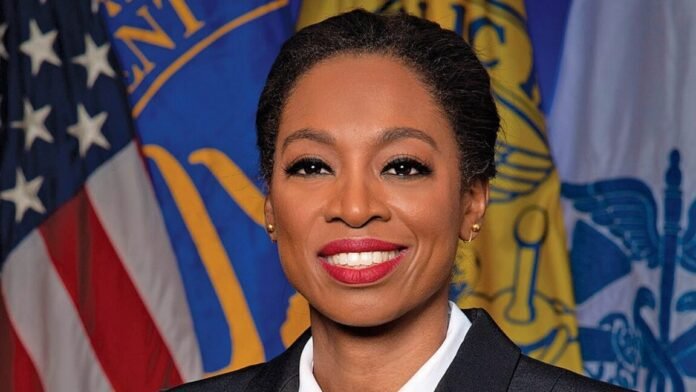
In a 51–44 vote Wednesday, the US Senate confirmed Erica Schwartz as director of the Centers for Disease Control and Prevention, despite failing miserably to convince senators last month that she could stand up to anti-vaccine Health Secretary Robert F. Kennedy Jr.

The confirmation ends a near yearlong vacancy for the position since Kennedy fired the previous CDC director, Susan Monarez, last August. Monarez was ousted after she refused to rubber-stamp vaccine recommendations from a panel of Kennedy’s hand-selected advisors, who hold similar anti-vaccine views to his own.

Schwartz is highly qualified for the role, coming to the CDC with a medical degree, a master’s degree in public health, and a law degree. She previously had a long stint as a Navy officer and held leadership roles including chief medical officer for the US Coast Guard and deputy surgeon general in the first Trump administration. Notably, she has been a public advocate for vaccines and outbreak preparedness.

As such, outside health experts were surprised by her selection and cautiously optimistic about her taking up the role. While Kennedy’s close anti-vaccine ally, Aaron Siri, blasted her nomination over her support for vaccines, those in the health community held out hope that Schwartz could stabilize and restore the flagging agency, demoralized and hampered by harsh staff reductions, budget cuts, and relentless scorn from Kennedy and his political appointees.

“Really?”

Those hopes were dashed during Schwartz’s confirmation hearing last month when she repeatedly failed to answer questions directly and say with conviction that she would push back on Kennedy’s anti-vaccine and anti-science agendas.

Perhaps the most disturbing aspect of Schwartz’s testimony came when senators repeatedly asked her what she would do if (or when) she’s put in the same position as Monarez. Schwartz responded as if it hadn’t happened and would never happen. “I do not believe that the president or the secretary would ever do what you just mentioned,” she told Sen. Bernie Sanders (I-Vt.) at one point, prompting him to reply: “Really?”

While senators expressed their disappointment with her responses, health experts dropped their endorsements.

Shortly after the hearing, the National Public Health Coalition, a nonprofit founded by former federal health workers, released a statement opposing her confirmation. “The public and Congress deserve a CDC Director who will follow the law, defend science, protect public health workers, and rebuild the systems that keep communities safe,” the organization said. “Based on what we saw during the Senate HELP Committee hearing on July 15, 2026, NPHC cannot support Dr. Schwartz’s nomination.”

Critical to Schwartz’s confirmation was support from self-proclaimed vaccine advocate Sen. Bill Cassidy (R-La.), who also cast a critical vote to confirm Kennedy as health secretary. While Cassidy called Schwartz’s performance in the confirmation hearing “disappointing,” he later said he had been reassured. He said he had spoken with her more after the hearing as well as with her former colleagues. “I’m confident that she knows what she is doing,” he said, according to Stat News.

Bangladesh’s economy stable on the surface, fragile underneath

0
bangladesh’s-economy-stable-on-the-surface,-fragile-underneath
Bangladesh’s economy stable on the surface, fragile underneath

Bangladesh Bank is beginning to loosen monetary policy from an unusually favorable position on the currency front. Despite persistent inflation and deep strains in the banking system, the taka has been among the most stable currencies in South Asia and neighboring economies over the past year, while foreign exchange reserves have recovered sharply.

Yet that stability masks a more difficult domestic problem: cheaper money may end up financing the government rather than reviving private investment.

For nearly two years, Bangladesh’s central bank treated high interest rates as its primary weapon against persistent price pressures, raising its benchmark policy rate from 8.5% to 10%.

Last week, the central bank finally relented, trimming its policy rate by 50 basis points to 9.5%. The overnight Standing Lending Facility rate was dropped to 11%, while the deposit rate was kept steady at 7.5%.

This asymmetric adjustment reflects a delicate balancing act: how central bankers want to lower funding costs for distressed lenders without encouraging them to hoard excess cash with the regulator. Yet, in an economy constrained by structural bottlenecks and mounting bad debts, loosening monetary policy resembles pushing on a string.

The immediate impetus for easing is an alarming slowdown in private investment. Credit to private firms expanded by just 4.98% year-on-year in May, down from 7.17% twelve months earlier—a sluggish pace for a country aspiring to rapid industrialization.

In response, the central bank slashed its December private credit growth target to 6.8%. Meanwhile, public-sector credit surged by 20.78%, revealing that state borrowing has effectively become the primary engine of domestic credit creation.

Lowering central-bank funding costs is intended to reduce commercial lending rates and render stalled capital projects viable once again. However, the true impediment to expansion is not the price of money, but a dearth of viable corporate demand.

Bangladesh industry is visibly faltering. Large-scale manufacturing output shrank by 1.42% in the first ten months of the 2025-26 fiscal year, reversing a 6.97% expansion recorded during the same period a year prior.

Annual export growth stalled at a negligible 0.17%, while import letters of credit registered only modest gains. Crucially, monetary policy cannot fix infrastructure failures. Factories across the country endure chronic interruptions to gas and electricity supplies.

For a factory owner unable to run production lines reliably, a modest half-point reduction in borrowing costs does virtually nothing to alter prospective returns. The financial penalty of idle capacity, backup diesel generators, and missed export deadlines far outweighs minor savings on bank loans.

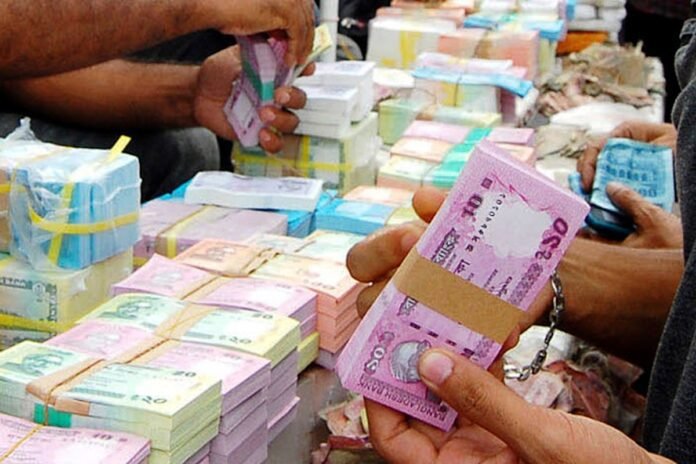
Furthermore, the domestic financial system is deeply fragmented. On paper, Bangladeshi banks sit on substantial aggregate liquidity, holding 3.28 lakh crore taka ($27 billion) in excess liquid assets at the end of May, including 16,373 crore taka ($1.33 billion) in surplus cash above mandatory reserves.

But this capital is concentrated in a handful of well-capitalized private institutions that lack credible corporate borrowers. Conversely, troubled state-owned and Islamic lenders face severe capital deficits and decaying balance sheets.

Aggregate liquidity masks deep institutional fragility, leaving weak banks incapable of extending productive credit regardless of central bank policy.

This fragmentation severely impairs monetary transmission. Non-performing loans climbed to roughly 5.89 lakh crore taka ($47.65 billion) by late March, exceeding 32% of total outstanding loans.

The World Bank estimated that the system’s capital-to-risk-weighted-assets ratio sank to negative 2.6% by the end of 2025. Lenders burdened by bad debts do not respond to policy cuts by funding new industrial ventures. Instead, they hoard capital, restrict lending to a narrow tier of safe blue-chip clients, or buy government securities.

High Treasury yields offer commercial banks a lucrative, risk-free shelter, effectively crowding out private firms exposed to volatile energy costs and sluggish consumer demand.

Inflation presents a secondary barrier to sustained monetary easing. Although headline inflation moderated to 9.16% in June from 9.42% in May, it remains well above the government’s target of 7.5%. With nominal wage growth trailing at 8.18%, households continue to suffer real income losses.

Much of the remaining inflationary pressure stems from non-food items, including elevated transport and service costs, which are largely immune to interest-rate tweaks. Simultaneously, underlying monetary indicators are flashing warning signals.

Broad money grew by 12.45% in May, reserve money rose 21.74%, and currency held outside the banking system jumped 18.92%. This surge in physical cash reflects a troubling loss of public trust in the banking system, further eroding the deposit base required for sustainable credit creation.

One factor working in the central bank’s favor is the remarkable stability of the taka.

According to Bangladesh Bank’s quarterly report, the currency depreciated by just 0.59% against the US dollar between March 2025 and March 2026, making it one of the most stable currencies among South Asian and neighboring economies. Only Cambodia performed slightly better, with its currency weakening by 0.44%.

The contrast with regional peers is striking. The Indian rupee depreciated by 8.94% over the period, the sharpest decline among the economies compared, while the Sri Lankan rupee lost 5.11%, the Philippine peso 3.70%, and the Indonesian rupiah 2.67%. The Chinese yuan, by contrast, appreciated by 5.14%, while the Pakistani rupee gained a modest 0.39%.

Bangladesh Bank officials attribute the taka’s relative stability to tighter monetary and foreign exchange management and the shift towards a more market-based exchange-rate regime. Bangladesh adopted the new regime in May last year as part of its commitments to the International Monetary Fund.

The dollar-taka exchange rate consequently remained within a narrow range of roughly 122 to 123 taka for much of the past year. That stability matters for monetary policy because a relatively steady currency helps contain imported inflation by limiting increases in the local-currency cost of fuel, food and industrial raw materials.

There are, however, signs that pressure is returning. Increased demand for foreign currency to settle import bills has pushed the dollar gradually higher in recent months. On August 4, the interbank exchange rate stood at 123.81 taka to the dollar, compared with 123.69 taka only a few days earlier, according to Bangladesh Bank data.

Bangladesh’s external balance nevertheless offers brief respite. Robust foreign remittances, which climbed by more than 30% to reach $35.59 billion over the past fiscal year, combined with stronger export earnings, have allowed the central bank to rebuild reserves and ease pressure on the taka.

Remittance inflows accelerated after the fall of the Awami League-led government in August 2024, strengthening Bangladesh Bank’s ability to accumulate foreign currency, according to central bank officials.

As of July 30, foreign exchange reserves measured under the IMF’s BPM6 methodology stood at $31.60 billion, up sharply from $24.86 billion at the same point last year. Gross foreign reserves had reached $37.58 billion, helping Bangladesh generate a $4 billion balance-of-payments surplus.

Nevertheless, international observers remain unconvinced. S&P Global Ratings recently revised Bangladesh’s sovereign credit outlook to negative, echoing an earlier precautionary move by Fitch in May.

Ratings agencies highlight the toxic combination of banking sector vulnerability, fiscal strain, energy vulnerability, and mounting political uncertainty. The relative stability of the taka and recovery in reserves provide the central bank with greater room to maneuver, but neither addresses the fundamental weaknesses preventing liquidity from reaching productive businesses.

Last Thursday’s modest rate cut provides temporary relief for prime corporate borrowers, but monetary easing alone cannot engineer an economic revival.

Unless the government curtails its own bank borrowing, decisively resolves the banking sector’s enormous mountain of non-performing loans and restores reliable energy supplies to factories, central bank rate cuts will merely circulate liquidity between commercial banks and the treasury, leaving the broader real economy stranded in the doldrums.

Faisal Mahmud is a Dhaka-based journalist.

Israel’s Netanyahu hints at unilateral military action against Iran amid regional de-escalation efforts

0
israel’s-netanyahu-hints-at-unilateral-military-action-against-iran-amid-regional-de-escalation-efforts
Israel’s Netanyahu hints at unilateral military action against Iran amid regional de-escalation efforts

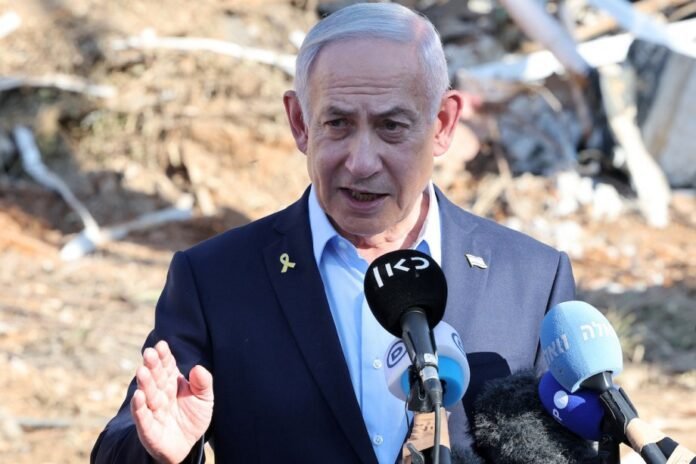
Israeli Prime Minister Benjamin Netanyahu on Wednesday hinted that Israel could take unilateral military action against Iran as diplomatic efforts continued to secure an agreement aimed at ending the conflict between Tehran and Washington, Anadolu reports.

“We heard today the commander of Iran’s Islamic Revolutionary Guard Corps, Ahmad Vahidi, declare that Iran intends to continue developing a nuclear weapon,” Netanyahu said.

“As Israel’s prime minister, I am determined to prevent Iran from obtaining a nuclear weapon,” he added.

Describing the US as “Israel’s greatest ally,” the Israeli premier said, however, that he was “determined to do whatever is necessary to ensure” Israel’s security.

On Tuesday, Qatari Foreign Ministry spokesperson Majed Al-Ansari said mediation efforts between the US and Iran had reached “advanced stages,” with the two sides exchanging draft proposals.

READ: Netanyahu: US sent Israel draft Gaza Agreement but ‘we have not approved it’

Speaking at the ministry’s weekly press briefing, Al-Ansari said efforts remained underway with all parties to reach a diplomatic solution.

On Feb. 28, the US and Israel launched a war against Iran that, according to Iranian authorities, killed more than 3,000 people.

Iran responded with attacks on regional countries hosting US assets.

In June, Qatar joined Pakistan as part of a mediation team between Washington and Tehran, leading to the signing of a memorandum of understanding on June 18 and the start of negotiations toward a final agreement.

The talks later stalled over disagreements related to maritime security and freedom of navigation in the Strait of Hormuz.

Between July 8 and July 24, tensions escalated again as the US carried out attacks on Iran, prompting Tehran to target what it said were US military facilities and equipment in several Arab countries, particularly Jordan, Bahrain and Kuwait.

READ: Iran, Oman reached ‘preliminary understandings’ on Hormuz transit, says Iranian official

Italy Orders Israeli Companies Removed From Rome Airport Counter-Drone Project

0
italy-orders-israeli-companies-removed-from-rome-airport-counter-drone-project
Italy Orders Israeli Companies Removed From Rome Airport Counter-Drone Project


In a decision carrying significant diplomatic as well as legal implications, Italy’s Council of State has ordered “Aeroporti di Roma” (ADR) to replace the Israeli consortium responsible for the counter-drone protection system at Rome Fiumicino Airport with the Italian electronic warfare company ELT (Elettronica S.p.A.).

According to the Italian newspaper Il Messaggero, the ruling effectively removes two Israeli defense companies—Altintech and Rafael Advanced Defense Systems, the manufacturer of Israel’s renowned Iron Dome air defense system—from one of Italy’s most strategically important civilian infrastructure projects. The decision could attract attention well beyond the procurement dispute, as it affects a high-profile Israeli defense presence in a major European airport.

A ruling was overturned in a May 2024 ruling by the Regional Administrative Court of Lazio, which had previously upheld the award of the contract to the Israeli consortium. ADR has now been given 60 days to finalize a contract with ELT.

The court also ordered that the case file be transmitted to the Rome Public Prosecutor’s Office, which will evaluate whether criminal investigations are warranted regarding the procurement process.

Central to the judgment is the classification of the radar installed at Fiumicino (Rome International Airport). Technical experts from Italy’s Ministry of Defense concluded that the system qualifies as military equipment, citing its technical characteristics, its classification under the International Traffic in Arms Regulations, and its registration in Italy’s national registry of military equipment. According to the ruling, the necessary authorizations for importing and operating such military material were not in place.

ADR has maintained that the radar is a dual-use system already employed at other European airports and for protecting major public events. The airport operator stated it will fully comply with the ruling while ensuring that airport security and counter-drone operations continue uninterrupted.

0FansLike
0FollowersFollow
0FollowersFollow
0SubscribersSubscribe
- Advertisement -
Google search engine

Recent Posts