18.3 C
London
Thursday, September 10, 2026
Home Blog

Empty Seat: U.S. Absent as Western Powers Meet on Wartime Protections for Civilians

0
empty-seat:-us.-absent-as-western-powers-meet-on-wartime-protections-for-civilians
Empty Seat: U.S. Absent as Western Powers Meet on Wartime Protections for Civilians

Three years ago, the Defense Department led an ambitious international effort to better protect civilians during combat, a movement built on the bloody lessons of Afghanistan and Iraq.

The Pentagon created a network with European partners, driving the creation of shared standards. Civilian harm experts described the moment as a “unique opportunity” for American leadership by example.

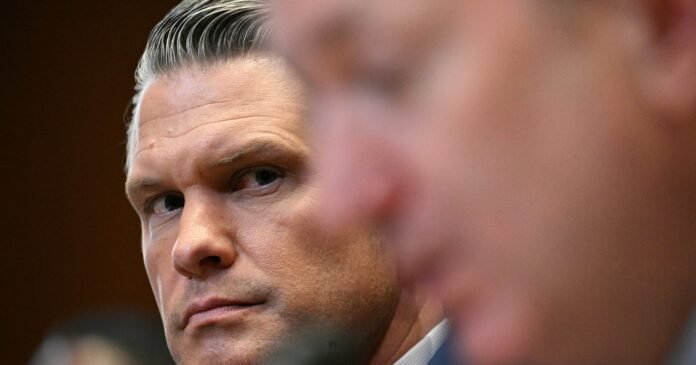
Today, those efforts continue — without the United States, after Defense Secretary Pete Hegseth dismantled the civilian protection mission.

And Thursday, no U.S. delegation will be in the room when the international forum the U.S. cofounded meets at NATO headquarters in Belgium.

The country’s absence from the International Contact Group on Civilian Harm Mitigation and Response summit reinforces the abandonment of a mission the Pentagon had encouraged partners to embrace, said current and former officials. Most spoke to ProPublica on condition of anonymity for fear of retaliation from President Donald Trump’s administration.

They called the step back “humiliating” and “dangerous,” pointing to reports of rising civilian casualties in Iran following strikes on schools and homes.

“There will be a day when people who care about mitigating civilian harm can come back and say, ‘OK, are we ready to solve this problem?’” said Jenny McAvoy, a former Defense Department official who helped shape the U.S. civilian protection program. “But there are already enormous consequences of abandoning this work.”

The Pentagon declined to comment about the lack of U.S. participation in the Brussels talks. A spokesperson previously told ProPublica that the Defense Department factors civilian protections into all phases of operational planning and “remains committed to fulfilling its civilian harm mitigation and response responsibilities.”

The Pentagon adopted the civilian harm mitigation and response mission in 2022 after years of bloodshed in the post-9/11 “forever wars.” Known as CHMR and pronounced “chimmer,” the framework called for a specialized center to collect strike data and for advisers embedded with regional commands to help mitigate the risk to noncombatants.

Not long after, the U.S. teamed up with the Netherlands to coordinate efforts internationally. The two countries had been frequent partners in recent military campaigns, including the fight against the Islamic State group, and were both coming to terms with high-profile civilian casualty incidents. For the United States, years of harm in Iraq and Afghanistan had drawn international outrage and pledges from commanders to better collect data and learn from deadly mistakes.

The Dutch were still addressing the fallout from a 2015 operation in Iraq in which air strikes targeting a car-bomb factory ignited a nearby munitions depot, setting off an enormous explosion that killed at least 70 civilians and wounded hundreds. Dutch responsibility wasn’t revealed until 2019, causing a national scandal and accusations of a cover-up.

In 2023, the U.S. and the Netherlands formed the loose coalition on CHMR. Participants described a small, informal group that has met half a dozen times since 2023 to share best practices and hear briefings on civilian casualty trends.

Advocacy groups said it had taken years to get the U.S. military to think of civilian casualties as more than “collateral damage,” showing commanders how the deaths of innocents were anathema to their morals and strategically harmful to their missions. The eventual adoption of CHMR guidelines by American defense officials helped their counterparts abroad make the case for programs in their own countries.

“By the U.S. putting itself out there and saying, ‘We learned, we can do better,’ it gives permission and makes it OK for other governments to similarly acknowledge, ‘Yeah, we can do better too,’” said McAvoy.

As participants gather this week in Brussels to discuss how to continue strengthening CHMR, however, the early momentum from the U.S. side has evaporated.

Hegseth, who derides rules of engagement as “woke,” gutted the CHMR program over the objections of the nation’s top commanders, ProPublica reported last month. Staff plunged from nearly 200 to about two dozen.

Days before the latest summit in Brussels, the United States wasn’t listed as a participant and there was no sign anyone from the Defense Department would attend. Current and former officials predicted either a no-show or, at most, a single delegate from one of the commands showing up.

To experts, the message was clear: The era of U.S. leadership on civilian protection was over.

Photos of men, women and children sit on easels in front of the ruins of a residential building.
Foreign ambassadors and heads of diplomatic missions visit Resalat Square in Tehran, Iran, on April 20, 2026, where photos of civilians killed in recent U.S.-Israeli strikes are displayed. Fatemeh Bahrami/Anadolu via Getty Images

“The U.S. stopped participating in this group last year and people assumed that meant the group would die,” said McAvoy. “But the group continued to exist and to meet — without the U.S. — under the leadership of the U.K. and the Netherlands.”

The two-day summit opens with a broad discussion of CHMR, such as how it applies in coalitions or in operations at sea, that includes advocacy groups and academics, a draft agenda reviewed by ProPublica shows. Day 2 is a closed-door session for more intimate talks among senior representatives of member states. The meeting wraps with a “looking ahead” panel.

Past attendees included Austria, Australia, Belgium, Denmark, Finland, Germany and Norway. The nations represent a wide variation in approaches and needs when it comes to CHMR, participants said.

Read More

The U.K., for example, doesn’t have a formal framework for civilian harm mitigation and response, and advocates have spent years pushing the British Ministry of Defense to adopt policies similar to those of the United States. Though humanitarian groups generally regarded the American CHMR enterprise as nascent and imperfect, the overall framework provided a worthy standard, said Mae Thompson of the Ceasefire Centre for Civilian Rights, a London-based advocacy group.

Advocates have framed the Pentagon’s rollback as an opportunity for the U.K. to step into a leadership role, Thompson said, and they’ve been encouraged by a recent internal report by the defense ministry that calls for formalization of a program in Britain, including systems to track civilian harm, investigate, and make amends and offer post-harm response.

NATO boasts a civilian protection policy that predates the American model, but the organization is now incorporating elements of the U.S. approach, said Andrew Hyde, who studies U.S.-European relations at the Stimson Center, a nonpartisan foreign policy think tank.

Hyde said international talks are important for sorting out how CHMR applies in joint operations when the United States, NATO and European nations all have different interpretations of harm mitigation. The diminished U.S. role, he said, means NATO and other partners must step up on coordination.

The shift in leadership could end up shielding civilian protection work from the whims of whichever U.S. administration is in power and leading to more enduring reforms, Hyde said.

“NATO has continued to push forward without U.S. support or participation, keeping up the momentum and ready for U.S. re-engagement,” Hyde said.

The questions China won’t answer about the Tibet-Nepal flood disaster

0

Floodwaters crash through Gyirong Port in Tibet. Image: YouTube Screengrab

For years, analysts and observers have warned about the dangers of China’s relentless infrastructure push in Tibet, particularly its dam-building ambitions on the Brahmaputra River, known in China as the Yarlung Tsangpo.

Beijing has repeatedly waved away such concerns, insisting it has conducted feasibility studies and environmental impact assessments. But its actions on the ground in the Himalayas have told a different story.

For India, the concern is not merely that it sits downstream. Rather, it is the sheer scale of infrastructure being built in one of the world’s most ecologically fragile and sensitive regions.

The Himalayas were never meant to be another frontier for construction, development and militarization. India has long understood that disrupting such a delicate ecosystem can have devastating consequences downstream. That warning can no longer be dismissed as hypothetical.

On August 26, flash floods on the Nepal-Tibet border thrust the ecological consequences of China’s Himalayan infrastructure expansion into devastating view. The floods have since claimed thousands of lives across multiple countries, including more than 350 Indians, most of them pilgrims on the Kailash Mansarovar Yatra, a Hindu holy pilgrimage.

The full toll — in lives and economic damage — remains unknown. But the immediate question is whether this can be dismissed as a natural disaster triggered solely by natural causes. The answer is far more complicated than a straightforward yes.

This is not an attempt to politicize a tragedy. It is precisely because lives have been lost that hard questions must be asked. What role did human intervention play? Did infrastructure development alter the landscape or worsen the consequences? And, most importantly, what can be done to prevent similar tragedies?

Is China culpable?

Dismissing the floods, which video reports show crashing dramatically at Tibet’s Gyirong Port, as purely a natural disaster would be a disservice both to those who lost their lives and to the fragile environment of the region. There is little doubt that China should accept some level of accountability.

For years, Beijing has pursued the so-called development and modernization of Tibet through an aggressive infrastructure buildout. Dams, highways, tunnels and railways are rising across Tibet, while similar projects are being pushed into Nepal. One particularly consequential example is the $167 billion hydropower system now under construction in Tibet.

The international community, however, has failed to respond to these developments or adequately assess their consequences. But Tibet is too fragile to be relentlessly reshaped by Chinese military and infrastructure ambitions.

The common official narrative emerging from China, as reflected in the state-run Global Times, is that “today’s natural disasters are chain reactions driven by the superposition of climate change, geological vulnerability, cross-border watershed risks and infrastructure exposure.”

There is also the issue of information control. Reports say Chinese authorities are censoring videos of the floods online, and many accounts on the Chinese internet have cast calls for accountability as information warfare against China.

That is hardly a constructive response. Beijing’s message after the tragedy was “people first, life first” — but such rhetoric means little without transparency and accountability.

What’s the solution?

The straightforward solution is to halt further infrastructure development in Tibet. But this is not an issue confined to Tibet — its consequences extend to every country that shares a border with it.

Treating the floods as a one-off tragedy would be a mistake; they may be only an initial warning of what lies ahead. Once again, Tibet has returned to the world’s attention — a region whose religious and cultural suppression the international community has long chosen to ignore.

But can it afford to ignore the ecological damage that so-called infrastructure development may cause or worsen?

Even if China blames climate change, human activity is known to accelerate climate-driven risks. Addressing disasters of this nature requires collective effort — and collective effort, in turn, requires transparency and respect for the Himalayas and their natural environment.

The lesson here is that some places must be left alone — particularly the ecologically sensitive and fragile Himalayas. When nations refuse to respect nature’s limits, nature eventually responds, sometimes in the form of a disaster that could have been averted.

The still largely unexplained floodwaters that crashed through Tibet’s Gyirong Port and then downstream through Nepal, leaving behind a still unknown number of casualties in their wake, are a warning the world must take seriously.

Rahul Mishra is an Associate Professor at the Centre for Indo-Pacific Studies, School of International Studies, Jawaharlal Nehru University, New Delhi, and a Senior Research Fellow at the German–Southeast Asian Center of Excellence for Public Policy and Good Governance, Thammasat University, Thailand. He tweets @rahulmishr_.

Dr Rahul Mishra is Senior Research Fellow at the German-Southeast Asian Center of Excellence for Public Policy and Good Governance, Thammasat University, Thailand, and Associate Professor at the Centre for Indo-Pacific Studies, Jawaharlal Nehru University, New Delhi. He tweets @rahulmishr_

Hebrew report: Syrian group attacking Israel linked to Muslim Brotherhood and Hezbollah

0
hebrew-report:-syrian-group-attacking-israel-linked-to-muslim-brotherhood-and-hezbollah
Hebrew report: Syrian group attacking Israel linked to Muslim Brotherhood and Hezbollah

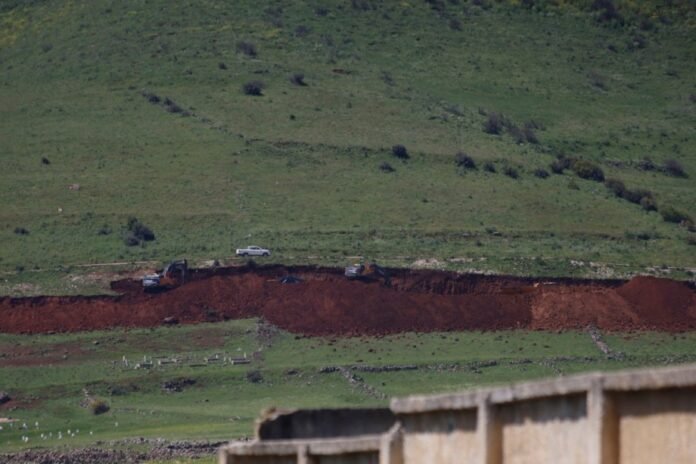
The Israeli news channel i24NEWS has reported that the group Uli al-Baas, which has claimed attacks against Israel, is a joint arrangement involving networks linked to Hezbollah and figures associated with the Muslim Brotherhood. However, there is no conclusive public evidence to prove this.

In a special investigation, the channel said the name “Islamic Resistance Front in Syria – Uli al-Baas” had re-emerged in southern Syria after claiming operations targeting Israeli military positions. This came as a security report circulated alleging that the group was linked to media and funding networks that reportedly bring together figures associated with the Muslim Brotherhood and others who had ties to Lebanon’s Hezbollah.

The channel said the group denies the allegations and insists that its decisions are independent and Syrian, and that its activities are aimed at resisting Israeli incursions. However, it said the group’s political and religious rhetoric, its logo’s similarity to Hezbollah’s visual identity, and its declared adherence to the concept of “unity of the fronts” raise questions about its project and the regional environment in which it operates.

The investigation stressed that there is still no conclusive public evidence or documents proving that Hezbollah and the Muslim Brotherhood have a joint leadership or a fully established institutional partnership to form the group. Available information currently points to an overlap in rhetoric and alleged relationships rather than conclusive evidence.

The investigation concluded that Uli al-Baas is “one of the most secretive groups in the new Syrian scene”.

Uli al-Baas first appeared officially on 9 January 2025, when it announced on Telegram that it had been established under the name “Southern Liberation Front” and gave Israel 48 hours to withdraw from Syrian territory.

Apple debuts $129 AirPods 5 with better noise cancellation and transparency mode

0
apple-debuts-$129-airpods-5-with-better-noise-cancellation-and-transparency-mode
Apple debuts $129 AirPods 5 with better noise cancellation and transparency mode

Apple has debuted the new AirPods 5 with improved active noise cancellation and sound quality—aiming to provide improved listening and user features at a lower launch price than the predecessor AirPods 4.

The newest AirPods will go on sale for $129 in stores starting on September 18, according to an Apple press release accompanying the company’s “Surprise and Shine” event. Customers can also purchase AirPods 5 with a wireless charging case that provides longer battery life and on-stem volume control for $149. Preorders are already open.

This is looking like a solid deal compared to the predecessor AirPods 4. The older AirPods debuted in 2024 with a starting price of $129, but users had to pay $179 for the version with active noise cancellation.

The new AirPods 5 come with active noise cancellation that supposedly removes up to 50 percent more noise in comparison with the AirPods 4—an improvement that Apple credits to a new multiport acoustic architecture and better computational audio algorithms.

Improved transparency mode for the AirPods 5 also allows users to more naturally hear nearby sounds in their immediate vicinity, like people’s voices.

The device’s adaptive audio automatically shifts between active noise cancellation and transparency mode depending on the background noise, said Dave Pakula, VP of hardware engineering for Apple, during the Apple presentation.

A conversation awareness feature also automatically lowers media volume playing through the AirPods when the user starts speaking.

Apple also described boosting the sound quality for AirPods 5 to accommodate “an even wider range of ear geometries,” which it claims will make the personalized spatial audio feel more immersive.

Customers who pay for the AirPods 5 with the wireless charging case will get access to a volume swipe feature that allows them to swipe up and down on the AirPods stem to change the sound level.

The baseline battery life for AirPods 5 enables up to five hours of playback with active noise cancellation activated on a single charge, which exceeds the older AirPods model by one hour. The combination of the charging case and AirPods 5 can extend listening time with ANC to up to 22 hours, and the charging case also supports Apple Watch chargers, Qi-compatible chargers, and USB-C.

Last but not least, the AirPods 5 launch benefits from the latest Apple Intelligence features for iPhone users. Pakula highlighted Siri AI features that play well with AirPods, such as live translation and the ability for AirPods users to respond to Siri by either nodding their head for yes or shaking their head for no.

President Trump Warns Iran Not To ‘Get Cute’ With Renewed Pickaxe Nuclear Site Activity 

0
president-trump-warns-iran-not-to-‘get-cute’-with-renewed-pickaxe-nuclear-site-activity 
President Trump Warns Iran Not To ‘Get Cute’ With Renewed Pickaxe Nuclear Site Activity 


President Donald Trump warned Iran that the US could launch heavy strikes against the country if construction continues at Pickaxe Mountain, a suspected underground nuclear site where satellite imagery has shown increased activity this year. 

“We notice there’s a little activity at ‌Pickaxe. I would advise Iran not to get cute because we will have to hit them very hard,” President Trump said in a speech at the midterm Republican convention. 

Pickaxe Mountain, roughly 140 miles south of Tehran near the Natanz nuclear complex, has been under construction for years. An analysis of six years of satellite imagery by the Center for Strategic International Studies found “a clear surge in construction activity” at the site this year, CNN reported. 

The center said the deeply buried facility could potentially serve as a centrifuge assembly facility, an enrichment plant, or a protected underground shelter. 

President Trump issued the warning as fighting between Iran and the US has resumed and oil prices have again climbed above $100 a barrel ahead of the US midterm elections. 

The Wall Street Journal reported that President Trump’s advisers have warned him the conflict could last through the remainder of his presidential term and potentially continue beyond it. Senior US officials, including Vice President JD Vance and Secretary of State Marco Rubio, have discussed that possibility with Trump in multiple conversations, the newspaper reported. 

In recent weeks, President Trump has moved away from pursuing an extensive military campaign against Iran, favoring economic sanctions intended to put financial pressure on the Iranian regime. 


August was world’s joint-hottest month on record

0
august-was-world’s-joint-hottest-month-on-record
August was world’s joint-hottest month on record


The world just experienced its joint-hottest month since records began, with August pushing the planet’s average global ‌temperature to more than 1.5 degrees Celsius (2.7 degrees Fahrenheit) above pre-industrial levels, the EU’s Copernicus Climate Change Service (C3S) said on Thursday.

Extreme weather and climate-related disasters raged around the world last month. Scientists have said climate change likely played a role in the landslides and flash floods that killed hundreds in Nepal ​and China’s Tibet, although the specifics are still being studied. Wildfires surged from Indonesia to Greece and Belgium, while severe drought struck ​Hungary and Romania.

🌡 August #C3S Climate Bulletin reports that August was the joint-warmest month on record & 1.65°C above the estimated pre-industrial level. Western Europe saw its warmest summer on record, while the average sea surface temperature across the extra-polar ocean was also the joint highest on record.⬇️

Copernicus ECMWF (@copernicusecmwf.bsky.social) 2026-09-10T07:52:20.730Z

Temperatures of more than 1.5 C above pre-industrial times are significant because that temperature, when measured ⁠as a decades-long average, is the level of warming nearly 200 countries vowed to try to prevent under the 2015 Paris ​climate agreement, in order to avoid the worst consequences of climate change.

August was the first month since November 2025 in which ​the world’s average temperature exceeded 1.5 C above pre-industrial levels.

With an average global surface air temperature of 16.96 C, last month tied with July 2023 as the world’s warmest month on record. This was 1.65 C hotter than the planet’s average temperature in the 19th century, before humans started burning oil, ​coal and gas on an industrial scale, C3S said.

Emissions from burning these fossil fuels are the main cause of climate change.

“We’ve ​really seen the impact across Europe of how maladapted we are, with roads melting, train lines buckling, schools closing, hospitals completely overwhelmed, and record ‌wildfires for ⁠the time of year,” said Samantha Burgess, strategic lead at the European Centre for Medium-Range Weather Forecasts.

“The narrative around climate change has really transitioned from being quite an abstract concept that happens in a faraway place, to disrupting our daily lives,” she said.

The data confirmed western Europe is emerging from its hottest summer ever recorded, with many regions suffering unusually low river flows and ​soil moisture — adding to farmers’ woes, ​after a succession of ⁠extreme heatwaves since May ravaged crops.

ANOTHER 1.5 C BREACH

The world has not yet technically breached the Paris Agreement’s 1.5 C target — which refers to an average temperature over decades, rather than a temporary ​peak. Currently, the world’s long-term warming level is about 1.4 C above pre-industrial levels.

The U.N. ​said last week ⁠that sticking to the long-term 1.5 C goal is no longer possible. It urged governments to cut CO2 emissions faster, to limit overshooting the target.

C3S’s records go back to 1940, and are cross-checked with global temperature records going back to 1850.

Last month’s extreme heat was not ⁠limited to ​land. The world’s oceans outside of the polar regions also recorded their joint-highest ​sea surface temperature for any month on record, C3S said.

In the tropical Pacific, record-high temperatures were fuelled by the formation of the El Nino weather pattern, ​which is forecast to strengthen in the coming months — potentially pushing up global temperatures further.

Far-Right Hacker Touting Cyber Attacks on Leftist Sites Has Close Ties to Pentagon Influencer

0
far-right-hacker-touting-cyber-attacks-on-leftist-sites-has-close-ties-to-pentagon-influencer
Far-Right Hacker Touting Cyber Attacks on Leftist Sites Has Close Ties to Pentagon Influencer


It was a bad week for the Autistici/Inventati collective.

On August 26, the State Department announced far-reaching sanctions against the Italian collective, which provides web-hosting services to a swath of the international far left. The U.S. government categorized A/I, as it’s also known, as a “specially designated global terrorist” and accused it of being an “extremist group that builds and operates the digital infrastructure for violent Antifa cells.”

A/I maintains digital infrastructure utilized by thousands of leftists and left-wing organizations across the globe, including anonymous email accounts and servers powering its NoBlogs.org hosting platform. The designation could force many of the sites offline — threatening much of what the A/I Collective has built.

Two days later, the site came under a different kind of attack. Hackers took aim at the NoBlogs site itself. A cyberattacker gained access to the platform, vandalizing its homepage and potentially accessing internal user data.

For far-right hackers and internet trolls, this was a moment for celebration. Just two minutes after the vandalized homepage was captured by an internet archive, the attack was publicized on X by someone using the handle “AstraRCE” and soon promoted by prominent far-right accounts, including “DataRepublican,” the online moniker of Jennica Pounds.

Until June, Pounds was a member of the Pentagon press corps — famous mostly for trolling the left — but allowed her credentials to expire at the end of the month. In late August, it was revealed that Pounds had been employed by the Pentagon since July, as part of a larger operation launched by the federal government to recruit right-wing influencers into jobs at President Donald Trump’s Department of War.

The relationship between DataRepublican and AstraRCE goes back through several prominent hacks of the left. The pair have a long and involved history of posting to each other about hackers’ exploits online, raising questions about the relationship between a Trump administration employee and an anonymous online personality posting real-time updates on hacks against the left.

“That is a line that is always worth noting and ringing the alarm bell when crossed.”

DataRepublican and AstraRCE are part of a wider circle with huge followings that are often the first to mention hacks against left-wing digital infrastructure. They publish screenshots, share each other’s posts, offer snide commentary, and congratulate their associates — messages that frequently verge into bestowing credit for the hacks.

The federal government’s support for an influencer who praises domestic hacking efforts would mark a major escalation in the Trump administration’s crackdown on dissent, said Harlo Holmes, the chief security programs officer at Freedom of the Press Foundation.

“It’s the difference between open-source intelligence, that is often used in surveillance, and ever increasingly used in surveillance, and actually jumping into people’s machines,” Holmes said. “That is a line that is always worth noting and ringing the alarm bell when crossed.”

Though members of the A/I Collective weren’t able to attribute the hack to anyone, the cyberattack would eventually achieve its apparent aim. Beset by the pressure of terrorism sanctions, a hostile cyberattack, and continued scrutiny from the U.S. government, the group announced on September 6 that, after 25 years, it would disband.

“We cannot engage in a fight or expose ourselves to manipulations that threaten the lives of these people and their loved ones, leaving them at the mercy of autocrats, fascists, and agencies that take extra-legal courses of action,” the group wrote in a statement. “The Autistici/Inventati collective is shutting down and will soon discontinue all of the services we provide.”

Publicizing NoBlogs Hack

DataRepublican frequently publishes reports, visualizations, and data leaks that target leftist groups involved in protests and activism across the country.

Before Pounds’s assignment at the Department of War, DataRepublican regularly posted inside information about hacks, nodding to the involvement of other far-right social media personalities, among them AstraRCE.

DataRepublican and AstraRCE were the first people to publicize the NoBlogs hack online. Taking a celebratory tone, they linked to and replied to one another’s post. In one instance, AstraRCE claimed apparent inside knowledge about the federal government’s possession of internal user data from NoBlogs. DataRepublican confirmed the claim.

AstraRCE’s initial X post about the hack showed a screenshot of the vandalized NoBlogs homepage, which now displayed a message that said, “All user data has been saved and given to the United States government” — alongside an altered banner that read “TRUMPBLOGS.” AstraRCE later offered a mocking congratulations to NoBlogs for its “rebrand.”

Just four minutes after AstraRCE pointed to the screenshot of the hack, DataRepublican’s X account reposted the image, alongside a caption characterizing NoBlogs as a “platform shared by Antifa and far-left Marxists.”

“The State Department designed them as a Specially Designated Global Terrorist group yesterday,” DataRepublican wrote. “And now … they’re TrumpBlogs.”

Later, DataRepublican’s website published a visualization tool that allows users to view thousands of NoBlogs sites dispersed across a map, naming the tool Trumpblogs, in what appears to be a reference to the hack. Shortly after the tool went online, AstraRCE posted on X to say that the trumpblogs.org domain would now be redirecting to DataRepublican’s site.

The Pentagon has thus far declined to reveal what assignment Pounds or other right-wing media influencers have been given, and it’s unknown if activities like producing the visualization tool would be part of these duties. (The Department of War did not reply to a request for comment.)

They’re “trying to identify their enemies and build dossiers on them.”

“They’re hiring people who have a history of sort of dirt digging,” said David Greene, who serves as legal counsel at the nonprofit Electronic Frontier Foundation. “And they’re digging for information about their enemies, and both trying to identify their enemies and build dossiers on them.”

Holmes, of the Freedom of the Press Foundation, said that determining responsibility for cyberattacks like the one that targeted NoBlogs can be incredibly difficult, especially for smaller organizations.

“Attribution is really hard to prove definitively,” Holmes said. “But, also, there are a lot of imbalances there because the folks at Autistici don’t necessarily have the ability to perform the type of forensics and response that normally leads to successful attribution, or at least not quickly.”

Partners in Posting

DataRepublican and AstraRCE steer clear in their posts of explicitly claiming responsibility for hacks. They frequently, however, offer kudos to fellow travelers. Sometimes they post claims of insider access to information about the hacks or, in a few cases, show information that reveals access to the hacked systems themselves.

In at least one instance, a post by DataRepublican appeared to take direct responsibility for a cyber operation. Writing on X in July, the DataRepublican account claimed credit for a honey-pot scheme against a Nigerian hacker, which DataRepublican said had gone after right-wing media personality Hugh Hewitt.

“It’s true,” DataRepublican wrote, attaching a screenshot of the hackers’ location and IP address. “@astrarce and I honeypotted the Hugh Hewitt hacker.”

Even though DataRepublican and AstraRCE don’t take credit for cyberattacks, the far-right web heaps praise on them for the exploits.

Seeking to disrupt a database collecting information on U.S. Immigration and Customs Enforcement vehicles, a January hack overrode images of license plates with a meme saying, “ALL YOUR LOGINS, LOCATIONS, PASSWORDS, AND PHONE NUMBERS HAVE BEEN GIVEN TO FBI AND ICE.”

After sharing the image and tagging AstraRCE, DataRepublican was asked by an online fan how it happened. The account replied, “I don’t know, but an unrelated tip is that it’s a bad idea to make your encryption/decryption script readable to the world.”

Several X accounts in the right-wing milieu responded to DataRepublican’s initial post with congratulations. A spokesperson for Turning Point USA said, “Well done, patriots.”

In another case, a Fox News article purported to expose the network of organizers behind protests at ICE’s Delaney Hall detention center in New Jersey. Summarizing its report, Fox News credited, among others, DataRepublican and AstraRCE with infiltrating the group: “The activities of this network have motivated a group of tech sleuths on the X — @DataRepublican, @Astrarce, @bitchuneedsoap and @gunshymartyr — to penetrate these groups, their Signal chats and their operations like a digital Avengers squad.”

In February, following a cyberattack on Siembra NC, a North Carolina-based immigrant rights organization, DataRepublican claimed the group operated two active websites responsible for “doxxing ICE.” Citing AstraRCE, DataRepublican suggested hackers had taken over the nonprofit’s notification system.

“Per @astrarce,” DataRepublican wrote, “the 1000+ users signed up to both sites have received a text alert with the meme attached” — a photo of FBI Director Kash Patel with meme text that says, “FEDS HAVE ALL YOUR DATA.”

DataRepublican then posted what appeared to be a screenshot of the organization’s internal notification dashboard, claiming that more than 2,000 users had received push notifications. The notification text visible on the dashboard suggested users received a message urging self-deportation and claimed their personal information had been sent to federal authorities.

During a similar hack of StopICE.net, an ICE tracking website, DataRepublican claimed to have insider knowledge of data from a hack being sent to the authorities.

“I can personally testify,” DataRepublican posted, “that the names, logins, passwords, locations (down to coordinates), and phone numbers of 100K+ users were all sent to FBI, ICE, HSI” — ICE’s Homeland Security Investigations division — “and more.”

Like the cyberattack targeting NoBlogs, in other cases DataRepublican and AstraRCE were also quick to celebrate cyberattacks against leftist groups and post screenshots of the incursions. In many of the cases, the webpages of the sites were vandalized and a message was left behind claiming to have accessed and sent internal data to the federal government.

Claiming Inside Info

The NoBlogs hack became one of the instances where DataRepublican and AstraRCE alluded to both having insider information about the provenance of materials from the hack and their transmittal into the hands of the authorities — all while Pounds was firmly ensconced at the Pentagon.

“Can confirm the authorities have everything that was on the NoBlogs servers.”

The episode, in the immediate wake of the NoBlogs hack, was telling. AstraRCE echoed the claim made on the vandalized NoBlog homepage: that the federal government was in possession of the site’s internal user data.

The episode was set off when the A/I collective issued a statement acknowledging the hack and that the “attacker may have had access to the users database.” The collective warned that the hackers could have accessed the “list of email addresses of the people who manage the blogs and their passwords.”

The password information for the user accounts, however, was stored “hashed,” A/I said, rather than in plain text, making it substantially harder to access.

Shortly after A/I published its statement about hashed passwords, AstraRCE posted an image of the statement alongside a caption suggesting that they had direct knowledge of the data that was breached.

“Yep,” AstraRCE wrote. “The government has their emails and dehashed results.”

One minute later, DataRepublican verified AstraRCE’s statement: “Can confirm the authorities have everything that was on the NoBlogs servers.”

Lawsuit: Amazon refused to give pregnant workers bathroom breaks and chairs

0
lawsuit:-amazon-refused-to-give-pregnant-workers-bathroom-breaks-and-chairs
Lawsuit: Amazon refused to give pregnant workers bathroom breaks and chairs

Amazon discriminated against pregnant warehouse employees by denying accommodations like bathroom breaks and the option to sit while working, according to a lawsuit filed yesterday by four women who worked for Amazon while pregnant. The lawsuit is a class-action complaint that seeks to represent Amazon workers throughout the US.

“Plaintiffs Willamina Barclay, Kristina Green, Jennifer Hatch, and Dazaria Parks were formerly Amazon warehouse employees,” said the lawsuit filed in US District Court for the Eastern District of New York. “All four became pregnant. All four asked Amazon for basic pregnancy-related accommodations so they could keep doing their jobs. Amazon denied them basic modifications the law recognizes pregnant workers regularly need, even in uncomplicated pregnancies: Bathroom breaks. An extra 15-minute break. Sitting instead of standing.”

The lawsuit said the four plaintiffs were unlawfully terminated from jobs at Amazon facilities in New York between April 2025 and July 2026. After the plaintiffs “took medically necessary breaks or absences to get off their feet, visit the doctor, or go to the emergency room, they were punished,” the lawsuit said. “Amazon deducted their limited bank of unpaid time off. Soon enough, they had depleted that limited bank of ‘unpaid time off,’ and Amazon threatened to terminate them.”

In a statement, Amazon said the lawsuit contains inaccuracies and denied that it violates federal law on pregnancy accommodations. “We’re limited in discussing ongoing legal matters, however we look forward to a timely resolution of these matters, as extended investigation timelines benefit neither employees nor employers,” Amazon said.

Amazon has faced similar lawsuits in previous years, but this one has the added backing of a 2022 US law called the Pregnant Workers Fairness Act (PWFA). The relatively new federal law requires “reasonable accommodations for qualified employees affected by pregnancy, childbirth, lactation, or related medical conditions and limitations so long as doing so does not create an undue hardship on the entity’s operations,” the lawsuit said.

US agency finding may bolster case against Amazon

Amazon demanded medical documentation even for simple requests, the lawsuit said. “When Plaintiffs sought accommodations, Amazon applied its unlawful policy of demanding medical paperwork for every pregnancy-related accommodation request, no matter how basic,” despite such paperwork often taking weeks to obtain early in pregnancy, the lawsuit said.

The US Equal Employment Opportunity Commission (EEOC), the federal agency that enforces the PWFA, instructed employers in 2024 that it is not reasonable to demand supporting documentation for certain kinds of pregnancy-related requests. This includes having water nearby for drinking, taking additional bathroom breaks, taking breaks to eat and drink, and sitting while working, “because these are a small set of commonly sought modifications that are widely known to be needed during an uncomplicated pregnancy,” the EEOC said.

Hatch’s claims have reportedly been evaluated and deemed credible by the EEOC. She filed a charge of discrimination with the EEOC, and in February 2026 the agency found reasonable cause that Amazon “has discriminated against a nationwide class of female warehouse associates, based on their pregnancy, by failing to accommodate their limitations related to pregnancy, childbirth, and or related medical conditions, and in some instances forcing them to take leave, in violation of the PWFA,” according to the lawsuit.

The EEOC finding was previously described in a New York Times report published in April. The NYT report said that because of the finding, “The EEOC will now try to reach an agreement with Amazon. If it can’t, Ms. Hatch will have the option of suing.” According to the lawsuit filed yesterday, “the EEOC issued Ms. Hatch a Notice of Right to Sue” on August 26. Barclay also received a Notice of Right to Sue.

The lawsuit accuses Amazon of violating the PWFA by failing to accommodate pregnant workers and by retaliating against those who sought reasonable accommodations. “Plaintiffs and Class Members’ requests for reasonable accommodation caused Amazon to take adverse employment actions against them by applying its Punitive Attendance Policy, leading to disciplinary action and/or termination,” the lawsuit said.

The state of New Jersey previously sued Amazon in October 2025, alleging widespread discrimination against pregnant workers and employees with disabilities. Amazon reported $200.6 billion in net sales in Q2 2026 and a net income of $62.6 billion.

Amazon says it approved 99.9% of pregnancy requests

Amazon said in a statement provided to Ars that the claims in the New York-based workers’ lawsuit “contain inaccuracies and omit important details” and “do not reflect the full facts of these cases or the reality of our extensive accommodations process…. While we’re not able to discuss individual employee details, we have conducted thorough internal reviews of each case referenced.”

Amazon said it “strive[s] to provide a safe and supportive environment for everyone, which includes supporting tens of thousands of employees with pregnancy accommodations each year. In the past year, more than 99.9 percent of pregnancy related accommodations requests have been approved,” including “additional breaks, modified duty, or seated roles.”

Amazon also said it provides “up to 20 weeks of fully paid leave for eligible birthing parents, including four weeks of pre-partum leave and a ramp-back program.”

Barclay and Green worked at an Amazon warehouse in Rochester, New York. Hatch had a job processing customer returns in a Lancaster fulfillment center, while Parks was a delivery associate at an Amazon delivery station in Rochester.

The former Amazon workers are represented by A Better Balance, a nonprofit advocacy group. The lawsuit seeks to represent a nationwide class of Amazon workers and a subclass of New York-based Amazon workers. The four named plaintiffs want reinstatement, back pay, compensation for lost benefits, and punitive damages.

Amazon “did not permit her to have a chair”

Amazon allowed Barclay to switch from a “picker” to a “packer” role, but she “was still forced to stand for long periods, squat repetitively, and lift heavy boxes,” the lawsuit said. The lawsuit alleged that even when “Barclay dutifully submitted medical documentation from her provider to support her original requests,” Amazon denied some of the requests.

Amazon “permitt[ed] her to take four extra 15-minute breaks per day, but did not permit Ms. Barclay to take breaks to sit ‘as needed,’ and did not permit her to have a chair, which caused further strain to her back,” the lawsuit said.

Barclay was allegedly fired four days after an episode of severe vomiting caused her to call out of work. She “provid[ed] a same-day doctor’s note to explain her absence and prevent disciplinary consequences,” but Amazon deducted the hours from her bank of unpaid time off and “fired Ms. Barclay due to her negative” balance of unpaid time, the lawsuit said.

Hatch’s pregnancy was classified as high-risk by her physician “due to advanced maternal age,” the lawsuit said. She has asthma, and her breathing problems were exacerbated by having to stand for extended periods and perform strenuous activity, the lawsuit said. Barclay and Hatch are both said to have suffered severe abdominal pain and lightheadedness at work.

“Although Ms. Hatch’s requests were unambiguous—a 30-pound lifting restriction, request for a sitting break for 15 minutes every four hours, and a maximum of eight hours per shift—Amazon refused to approve any of them, instead requesting additional followup information about her restrictions,” the lawsuit said, adding that “site-level managers ordered her to lift heavy boxes and refused her short breaks when she felt lightheaded.”

Hatch could have performed her typical duties while sitting, the lawsuit said. “Ms. Hatch was well qualified to work in customer returns and could easily have performed her usual tasks while seated in a chair during her requested breaks from standing, and was further willing to be transferred to other work paths within the customer returns department to process lighter items or to perform other tasks that would not involve standing for long periods of time,” the lawsuit said.

Billy Joel Reveals Shocking Brain Diagnosis

0
billy-joel-reveals-shocking-brain-diagnosis
Billy Joel Reveals Shocking Brain Diagnosis


Billy Joel is opening up about a frightening health battle that led to brain surgery — but the legendary rocker insists he has no plans of disappearing.

“I’m not going anywhere. I’m here. I’m still here,” the 77-year-old “Piano Man” singer said Wednesday on SiriusXM’s The Billy Joel Channel.

Joel revealed that he underwent surgery after being diagnosed in 2025 with normal pressure hydrocephalus, or NPH, a condition in which excess cerebrospinal fluid builds up inside the skull and puts pressure on the brain.

The music icon said one of the first signs something was wrong was a troubling change in his balance.

“I noticed that my balance was not good,” Joel recalled. “I had this sense of being on a boat, like this rocking motion. I wasn’t steady on my feet.”

Joel eventually went to a neurologist, who recommended surgery to treat the condition.

At first, Joel wanted no part of it.

“I said, ‘Well, what does that entail?’” he recalled. “I didn’t want to do that.”

But after researching the procedure, Joel changed his mind when he learned it could potentially improve both his balance and memory.

“You know, I don’t want to lose my marbles,” he said. “It’s hard to tell what’s age and what’s a condition, so I agreed to do the shunt.”

Doctors implanted a shunt in Joel’s brain to help drain the excess fluid.

According to the singer, the procedure made a noticeable difference.

“It actually improved things,” Joel said, explaining that his memory, balance and overall ability to function all got better.

But Joel’s health scare was far from over.

Doctors later warned him that returning to his famously loud rock concerts could be putting his brain at further risk.

“The doctors told me this, because of my job, which is playing rock and roll music very loud, that it was giving me something like a concussion every time I did a show,” Joel revealed.

He said doctors feared the performances could damage nerves in his brain and potentially cause him to lose even more brain cells.

“It was causing damage to my brain nerves, and I could be losing more brain cells the more shows I did,” he said.

That warning was enough to convince Joel that he needed to put his career on hold and focus on getting better.

“I realized that means I shouldn’t be doing this right now,” he said. “I got to improve.”

Joel said he is now undergoing physical therapy and following doctors’ orders as closely as possible.

“I’m doing whatever it is they tell me to do because I don’t want to lose it, you know?” he said.

The Grammy-winning superstar first publicly revealed his NPH diagnosis in May 2025, when he announced that he was canceling the remainder of his scheduled tour dates.

The announcement came after several concerts had already been postponed following a scary fall during Joel’s March 2025 performance at Mohegan Sun Arena in Connecticut.

At the time, Joel told fans that he needed to make his health his top priority and said doctors expected him to make a full recovery.

Now, more than a year later, the “Uptown Girl” singer is making one thing clear — he is still fighting.

“I’m not going anywhere,” Joel said. “I’m still here.”

Indonesia’s bold bid to set the world’s critical mineral prices

0
indonesia’s-bold-bid-to-set-the-world’s-critical-mineral-prices
Indonesia’s bold bid to set the world’s critical mineral prices

In the global supply chain, Indonesia sits at the epicenter of the market for nickel and other critical minerals. Yet the value of that natural wealth is still set on distant trading floors and market exchanges in places like London and Singapore.

Indonesia holds the largest global supply share in several strategic commodities, from nickel and palm oil to tin. But the financial benchmarks that set the value of those exports remain firmly anchored abroad.

That dynamic now faces its most direct challenge yet. Indonesia is preparing to launch a dedicated Mineral and Strategic Commodities Exchange — Bursa Mineral dan Komoditas Strategis, or BMKS — aiming for full operations by January 1, 2027. The plan is part of President Prabowo Subianto’s strategic economic agenda to secure more value-added from the nation’s natural resources.

The regulatory architecture is coming together quickly. Indonesia’s Financial Services Authority (OJK) is expected to issue key transitional and governing rules on September 17, placing supervision of national commodities trading under the same roof as financial market oversight.

The change is more than a bureaucratic handoff from the Ministry of Trade’s futures regulator, Bappebti, to the OJK. Rather, it marks a fundamental strategic pivot from physical downstreaming, or hilirisasi, to financial downstreaming, as Jakarta asserts sovereign control over how its commodities are priced amid the global energy transition.

Structural disconnect

Jakarta’s push stems from a widening structural gap between legacy global exchanges and the realities of modern supply chains. Take nickel, the backbone of the electric-vehicle (EV) battery supply chain, as an example.

Historically, the London Metal Exchange (LME) has served as the metal’s sole global benchmark. But LME delivery standards remain rigidly tied to Class 1 refined nickel — purity above 99.8% — a market segment that now represents a shrinking share of actual industrial demand.

Meanwhile, Indonesia’s industrial buildout, powered by heavy capital investment in high-pressure acid leach (HPAL) facilities and rotary kiln-electric furnace (RKEF) smelters, has transformed the country into the source of more than half the world’s nickel output.

That production is dominated by Class 2 products — nickel pig iron and ferronickel — along with intermediate battery chemical precursors such as mixed hydroxide precipitate (MHP) and nickel sulfate.

For Indonesian producers, relying on LME pricing has forced them to navigate a fragmented pricing landscape characterized by arbitrary discounts, opaque bilateral pricing formulas and exposure to LME short squeezes that have little to do with battery-grade supply and demand market fundamentals.

By establishing a national exchange backed by a single-door export policy and an official Indonesia Reference Price, Jakarta seeks to force global markets to benchmark against actual production hubs rather than distant speculative trading desks.

By placing the BMKS under OJK supervision, Indonesia is effectively reclassifying critical minerals — treating them not just as physical goods but as systemic financial assets requiring the same oversight as capital markets.

The shift targets long-standing structural vulnerabilities, including market integrity, tax leakage and capital flight. Sarjito, OJK’s newly appointed executive head of strategic commodities supervision, has emphasized that building a “trusted market” is essential before international investors will take the exchange seriously.

For years, Indonesia’s mining and processing sectors have been plagued by underinvoicing, transfer pricing and regulatory arbitrage between regional ports and foreign buyers — practices that have eroded state royalty revenue and distorted official trade data.

Bringing commodity spot and futures trading under OJK oversight introduces rigorous bank-style governance, standardized financial auditing and mandatory reporting aligned with international environmental, social and governance (ESG) standards.

The goal of a transparent, central-counterparty exchange is to eliminate artificial price distortions so that trading reflects real market forces rather than supervisory loopholes or illicit transfer schemes.

Supply chain fault lines

A Jakarta-based benchmark would also change the geopolitical calculus for foreign investors in Indonesia.

Chinese industrial conglomerates, which account for the bulk of capital invested in the country’s smelting infrastructure, have long operated through integrated supply chains with internal transfer pricing. A mandatory, exchange-based reference price would compel them toward greater price transparency on exports bound for Chinese processing centers.

By contrast, Western auto manufacturers and battery makers — increasingly constrained by rules like the US Inflation Reduction Act and the European Union’s Critical Raw Materials Act — now need exceptionally strong supply-chain traceability and ESG compliance.

An OJK-regulated exchange could serve as an institutional bridge, offering transparent price discovery and audited provenance for Western buyers seeking ethically sourced battery inputs without relying on opaque middlemen.

Still, Jakarta’s ambition faces formidable friction. Resource nationalism alone cannot build a thriving exchange; deep market liquidity, hedging instruments and international participation will determine whether the BMKS becomes a genuine global price maker or remains an underutilized domestic platform.

Global commodity houses, state-backed miners and foreign buyers have a multitude of reasons to stick with the status quo.

Pulling them away from established legacy contracts will take more than regulatory mandates — it will require deep order books, reliable and robust settlement infrastructure, clear legal arbitration and recourse and currency convertibility.

If the new exchange introduces operational rigidity or adds new friction to export clearances, market participants will inevitably look for workarounds or push back through multilateral trade channels.

Genuine price discovery, moreover, cannot be dictated by executive decree. To earn global credibility, the exchange will need full institutional transparency, insulated from political interference and interventions during periods of extreme price volatility.

If Indonesia succeeds in building a transparent, liquid exchange by 2027, the geopolitical ripple effects will extend far beyond its borders.

Jakarta’s move reflects a broader structural shift across the Global South where resource-rich nations demand a larger share of the financial value generated by their own mineral wealth. As the global energy transition accelerates, the center of gravity for critical-mineral governance is shifting from Western financial capitals to sovereign production hubs.

Indonesia is no longer content to serve merely as an extraction site and refinery for the metals set to power the 21st-century economy. It is now determined to set their prices. Whether Jakarta can successfully turn its physical supply dominance into real financial power will be one of the most consequential market stories to watch in the years ahead.

Rabiul Misa is a junior analyst at Bank Indonesia. His work focuses on monetary economics, payment systems, financial inclusion, MSME development and public policy. His commentary has appeared in Kompas.id, Kompas.com, Tribun News, ANTARA News and Kumparan, covering topics monetary policy, cross-border payments, digital finance, MSME development and regional economic development.

0FansLike
0FollowersFollow
0FollowersFollow
0SubscribersSubscribe
- Advertisement -
Google search engine

Recent Posts