24.6 C
London
Wednesday, August 5, 2026
Home Blog

James Talarico Accused Ken Paxton of Voter Fraud. His Own Voter Registration Is Raising Questions.

0
james-talarico-accused-ken-paxton-of-voter-fraud-his-own-voter-registration-is-raising-questions.
James Talarico Accused Ken Paxton of Voter Fraud. His Own Voter Registration Is Raising Questions.

Texas state Rep. James Talarico voted in five elections using his parents’ address after purchasing a home for himself nearby, a practice that may have violated state voting laws, ProPublica and The Texas Tribune found.

This comes weeks after Talarico accused Attorney General Ken Paxton, his opponent in the race for U.S. Senate, of voter fraud for similar actions. The news organizations reported in July that Paxton voted using an address where his estranged wife, state Sen. Angela Paxton, said he hasn’t lived for two years.

Paxton has made eradicating voter fraud a cornerstone of his time in office by advocating strict enforcement of the law, including in cases against voters who allegedly used false addresses when casting ballots. Paxton’s campaign has said he is a “lawful, registered Texas voter” but has repeatedly declined to answer detailed questions about his residency and voting history.

Piecing together Talarico’s voting history is more difficult than it is for Paxton. Talarico, unlike the attorney general, redacts his address on the Travis County voter rolls under a state law that allows some public officials to shield personal information for safety reasons. But unredacted records Talarico’s campaign provided the newsrooms show that he listed his parents’ address on his voter registration in November 2021.

He purchased a home in June 2022 but did not change his voter registration address until September 2024, the news organizations’ review of Travis County records shows. The new address is redacted, but Talarico’s campaign previously told the newsrooms that he currently lives and is registered to vote at the north Austin home he owns.

Talarico’s campaign declined to answer questions about his residency and voting history, including when he began living at the home he owns. Campaign spokesperson JT Ennis said “right-wing actors” had made “credible threats” about trying to locate Talarico and his family.

Texas law requires that residents register to vote where they live. This ensures they are voting for those who actually represent them. The provisions of the law, however, are “broad and vague,” said Andrew Cates, a Texas ethics attorney.

Courts have previously ruled that there is no single way to determine a voter’s residence, and prosecuting such cases requires proof that a voter “knowingly” or “intentionally” broke the law.

Given this, Cates said he doubts that either Talarico or Paxton committed voter fraud, but he said Paxton should be held to a higher standard. As the state’s top lawyer, Paxton is responsible for enforcing election laws and has aggressively pursued alleged violators.

“When the top officials go looking for people to skewer for it, and then do it themselves, it really smacks of hypocrisy,” Cates said.

In 2024, Paxton helped oust judges on Texas’ highest criminal court who prevented him from unilaterally prosecuting election crimes. And, two weeks before this year’s primary election, Paxton announced the creation of an election fraud tip line. His office warned Texans that “it is illegal to misrepresent your residence on election records or to establish a residence for the purpose of influencing the outcome of an election.”

Paxton’s unyielding stance on election crimes fueled charges from Talarico and other critics that he considers himself above the law.

“Our Republican secretary of state here in Texas has already said that our elections are safe and secure,” Talarico said at a Houston campaign event last month. “But as our state’s attorney general, Ken Paxton has gone on a voter fraud witch hunt. Turns out, he was committing voter fraud the whole time.”

Last week, Paxton hit back.

In a news release and on social media, Paxton said Talarico broke state law, citing reports from conservative news outlets suggesting the Democrat had not lived in the district for at least a year when he was elected to the Texas House in 2022. Talarico, Paxton said, “blatantly committed election fraud showing a complete disregard for Texas residency requirements.”

Records provided by Talarico’s campaign appear to show that he did comply with residency requirements during the period scrutinized by the conservative outlets.

In October 2021, Talarico announced he would move to the area where he grew up after Republicans redrew his Texas House district to favor their party.

Talarico updated his address to his parents’ home in the new House district on his voter registration, on his driver’s license and with the U.S. Postal Service on Nov. 5, 2021, according to records his campaign provided. Those include a photo of his voter registration application and screenshots of receipts from the Texas Department of Public Safety and USPS. Talarico also rented a 10-foot U-Haul moving truck for six hours that day, according to a screenshot of a receipt.

The changes happened three days before the one-year cutoff, making him eligible to run for that seat.

The records also contradict a claim by one of the conservative outlets that there was no evidence Talarico moved to his parents’ house when he registered to vote there. Paxton seized on that report to accuse Talarico of voter fraud during the 2022 election.

The newsrooms’ findings about Talarico are different because they analyzed the period after the lawmaker purchased a home and found that he continued to vote using his parents’ address. Talarico’s house is in the same county as his parents’ home, which is about 6 miles away. It is in the state House district he represents but in different jurisdictions for some local elections.

Asked about the apparent discrepancy in Talarico’s voter registration and residency, his campaign shifted blame onto the attorney general.

“This is a lame attempt by Ken Paxton to deflect from his own hypocrisy and career of corruption,” Ennis said in a statement, nodding to Paxton’s legal troubles.

Paxton was impeached by the Texas House in 2023 and investigated by the Department of Justice over corruption charges. The state Senate acquitted him, and the federal government dropped its case. Paxton also spent nearly nine years under indictment for felony securities fraud charges that were dropped in 2024.

For his part, Paxton and his campaign on Monday again did not answer questions about the news organizations’ finding that he voted six times over a two-year period while registered at a Collin County home where he appeared to no longer live. It is unclear where Paxton lived during that time, but the publications’ reporting has linked him, and a woman believed to be his girlfriend, to a home in neighboring Denton County since February. As the home is in a different county, voters there select an entirely different slate of local officials than in Collin County.

Paxton spokesperson Madison Cercy doubled down on accusations that Talarico was ineligible to be elected to his seat and also committed voter fraud.

“The only person who has committed voter fraud in the Texas Senate race is James Talarico,” she said. She did not provide evidence of Talarico’s alleged lawbreaking beyond the reports from the conservative outlets.

Matthew Wilson, a political science professor at Southern Methodist University, argued Paxton’s and Talarico’s cases highlight how easy it can be to “run afoul of the letter of the law,” even as Republican lawmakers push for more stringent enforcement of voting restrictions.

“I think it could be reasonably used as a charge of hypocrisy against either of them because both of them have condemned the other for an action quite similar to what they themselves appear to have done,” Wilson said.

Pushing the limits: Infinite Machine’s Olto is barely a bicycle

0
pushing-the-limits:-infinite-machine’s-olto-is-barely-a-bicycle
Pushing the limits: Infinite Machine’s Olto is barely a bicycle

The Infinite Machine Olto is a great electric scooter, one with an overall layout that echoes the classic Vespa. It’s comfortable, and it accelerates well, handles nicely, and has a capacious battery. It has a rugged design that seems capable of handling a lot of abuse, but it also comes with thoughtful touches and security features that mean you can park it anywhere with confidence. And it provides all that at less than half the cost of its full-featured stablemate, the P1 scooter.

The reason is that the Olto is also a bicycle. Sort of.

This may technically be a bicycle, but it’s not one you ever want to pedal. While you can set it to operate as either a Class 2 or Class 3 e-bike, it works best when the pedals are both locked in a forward position, acting as footrests. The Olto was designed to provide riders with the experience of a scooter while still allowing them to take advantage of the growing bike lane networks in many urban areas across the country.

It’s impossible to review the Olto as a product without considering what its category represents: an explosion in electrified personal transport, with all forms looking to share infrastructure initially set aside for bicycles. We’ll look at the product first, but we’ll also consider its implications.

Bicycle by technicality?

We talked a bit with the Olto’s designers at Infinite Machine, who are cyclists based in New York City, about what they were trying to accomplish with the design. They described a local scene familiar to anyone who has visited NYC in recent years: ubiquitous bike lanes with a steady stream of traffic, almost all of it electric, and much of it not pedaled. If so many people were already riding their bikes as scooters, the designers reasoned, why not give them the benefits of a true scooter experience while still staying with the legal definition of a bicycle?

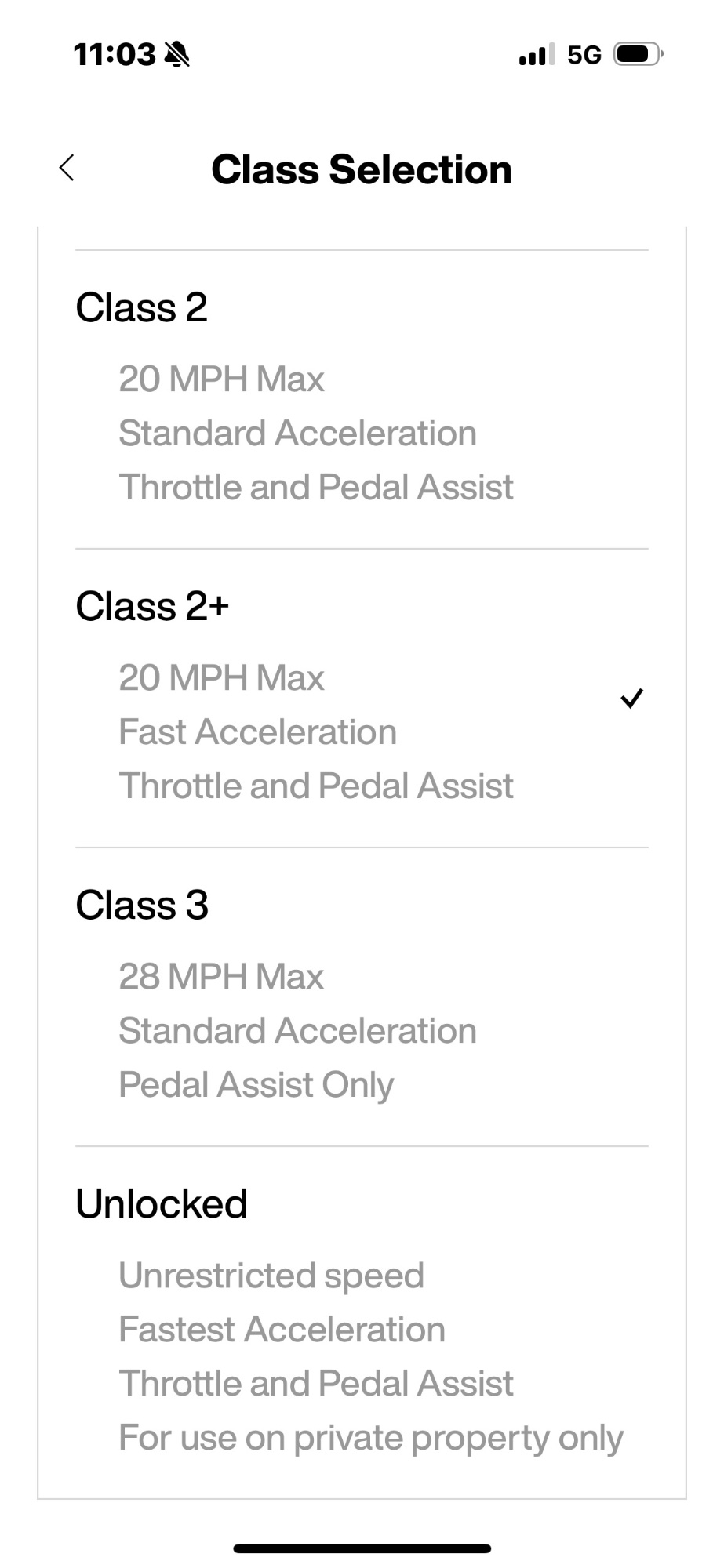
So the Olto has pedals. And you can hypothetically pedal it, though I couldn’t find a way to do so without the electric assist. Using the phone app, you can switch between Class 2 (assist or throttle up to 20 mph/32kmph) or Class 3 (no throttle, assist up to 28 mph/45 kmph). But the seat is low relative to the pedals, and it’s so wide that there’s no way to rotate your legs without your thighs slamming into it.

Instead, it’s meant to be kept in Class 2 mode and operated with a twist throttle. In this mode, you might as well stow the pedals. That involves reaching under the cranks to click a switch that disconnects the cranks from the drive system and then pulling the right crank away from the machine, at which point it will rotate freely. Two pegs can be extended from the Olto’s body to hold the pedals in their furthest forward position, where they serve as footrests. The maneuver is somewhat fiddly, but it can be done in less than a minute once you’re used to the process.

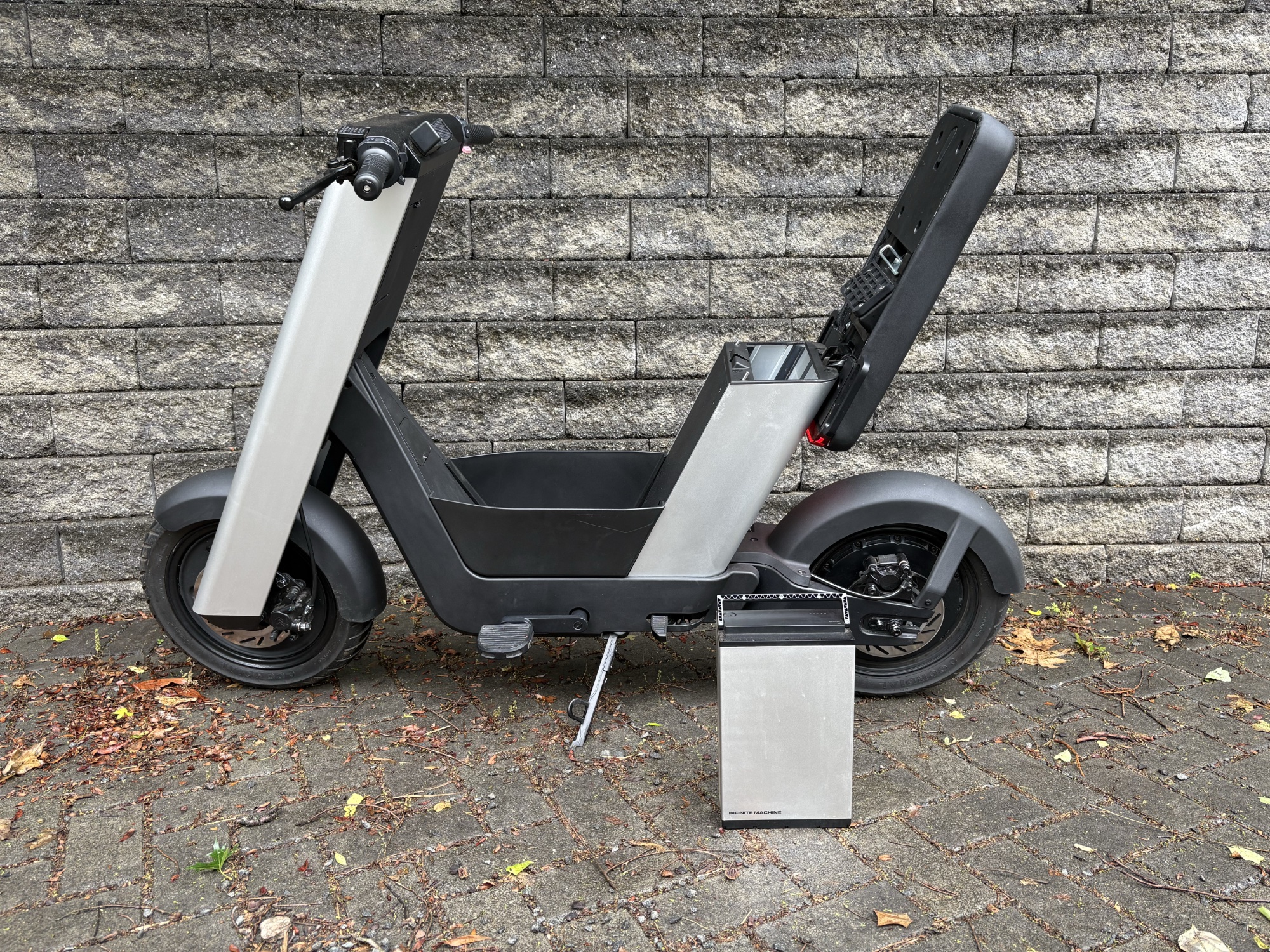
A black and silver scooter with its seat tipped back, and a large silver box in the foreground.

The Olto has a battery that holds enough charge for a lot of riding, held under the seat.

The Olto has a battery that holds enough charge for a lot of riding, held under the seat. Credit: John Timmer

Infinite Machine’s phone app provides access to two Class 2 modes that differ in how quickly they accelerate. The slower one would be appropriate for stop-and-go traffic, since the quicker acceleration would make it difficult to match the speed of the cars around you. The higher acceleration setting is a lot of fun when you have the road mostly to yourself.

I did have one problem with the quick acceleration. At about 175 lbs. (80 kg), the Olto is a beast, and it’s tough to move around by hand if you’re trying to fine-tune where you’re parking it. At one point while doing so, I accidentally twisted the throttle, and it leaped forward out of my hands and away from where I was standing (fortunately, this occurred in my driveway). A weight sensor in the seat would go a long way toward eliminating this risk by ensuring that someone is in the driver’s seat before sending power to the wheels.

Aside from that, Infinite Machine went with a fairly minimalist aesthetic. Beyond the throttle and brake levers, there are only a few controls. One switch operates the Olto’s turn signals (rear-only, unfortunately). It activates the appropriate side when pushed either left or right, but shutting them off requires you to depress the switch while it’s centered, which I found a bit tricky to get right. At least the Olto has clear indicators, so it’s obvious when they’re on or off.

Rounding out the controls are a power button and a button for the lights (which can switch between two angles of forward illumination, the higher one making you more visible to cars). There’s also a boost button, which is a bit problematic. It was described to me as useful for giving extra power on hills, and it certainly did work in that regard. But it also worked well on the flats, where it would accelerate the Olto up to 30 mph (nearly 50 kmph), which is one and a half times its supposed legal limit. We’ll come back to that.

Overall, I found the Olto to be a great ride. The thick scooter tires gave it confident handling and smoothed over bumps and potholes. It had a lot of pickup, and the scooter form factor was extremely comfortable—the long seat, meant to hold two people, allowed me to stretch my legs. I definitely enjoyed running errands with it. But I would never, under pretty much any circumstance, recommend trying to pedal it.

Design and security

The Olto is offered in two different trims, one a Darth Vader-style all-black and the other with silver cladding. We received the latter, and it definitely has a Cybertruck vibe, something a passerby noted to me. The design is striking enough that I had multiple people come up to ask about it—that hasn’t happened since I reviewed the striking Vintage design. Overall, it comes across as a modern update of the traditional scooter.

As mentioned above, in scooter mode, the pedals rest on a small bit of metal that can extend from the frame or be clicked into the scooter’s body and held out of the way. Similar devices can extend out to serve as footrests for passengers, and there are handles under the rear of the seat for them to hold on to. I’m a bit over 6 feet tall (185 cm), and I found myself sitting far enough back that rear passengers weren’t an option. If you’re planning on carrying another person, this may be a concern.

A plastic-walled well in between the cranks serves as the primary storage if you’re using the Olto for some quick grocery shopping or similar errands, but it’s not enough to haul much. Infinite Machine sells a basket and rack, but they are nonstandard—and expensive.

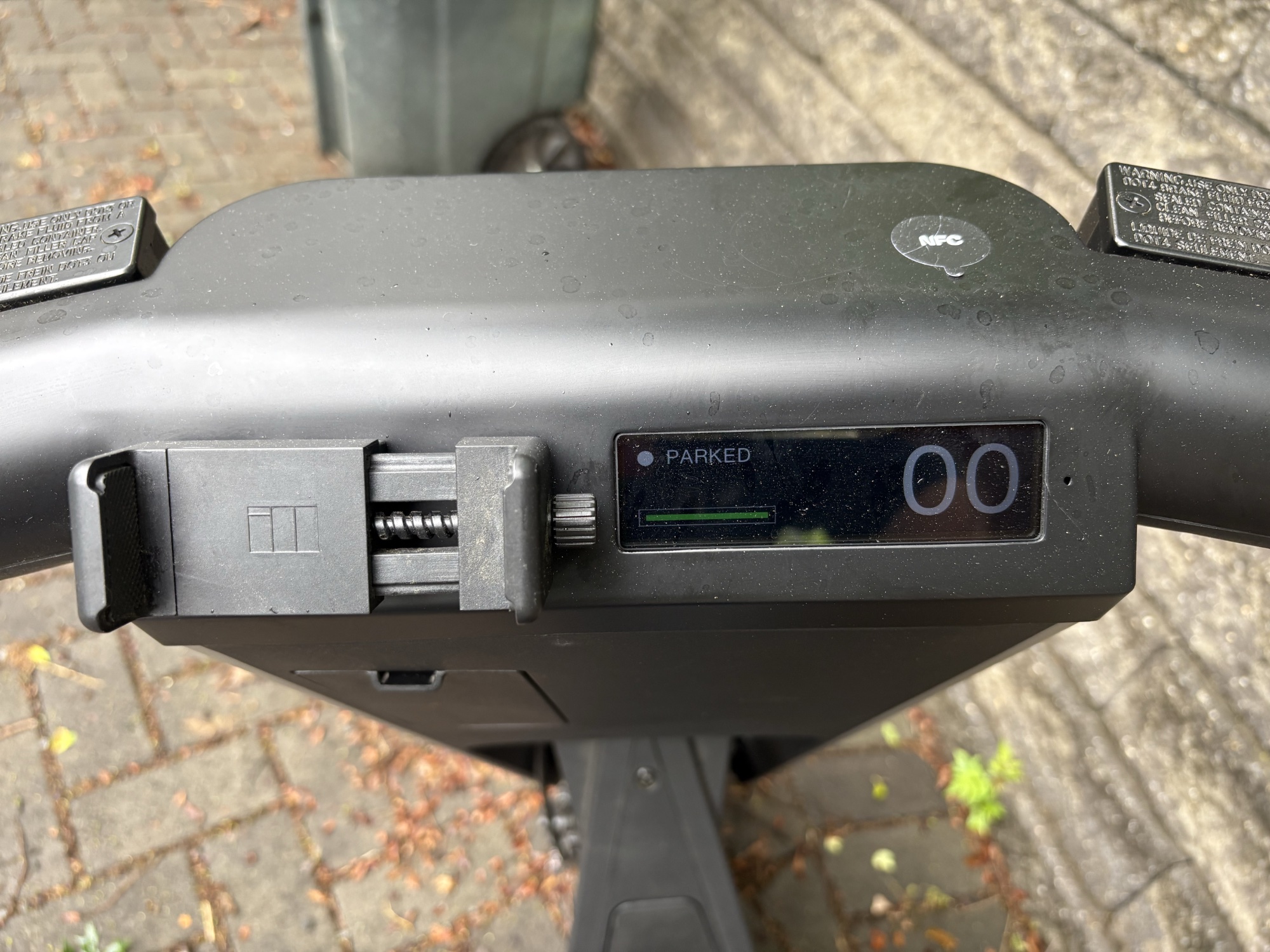
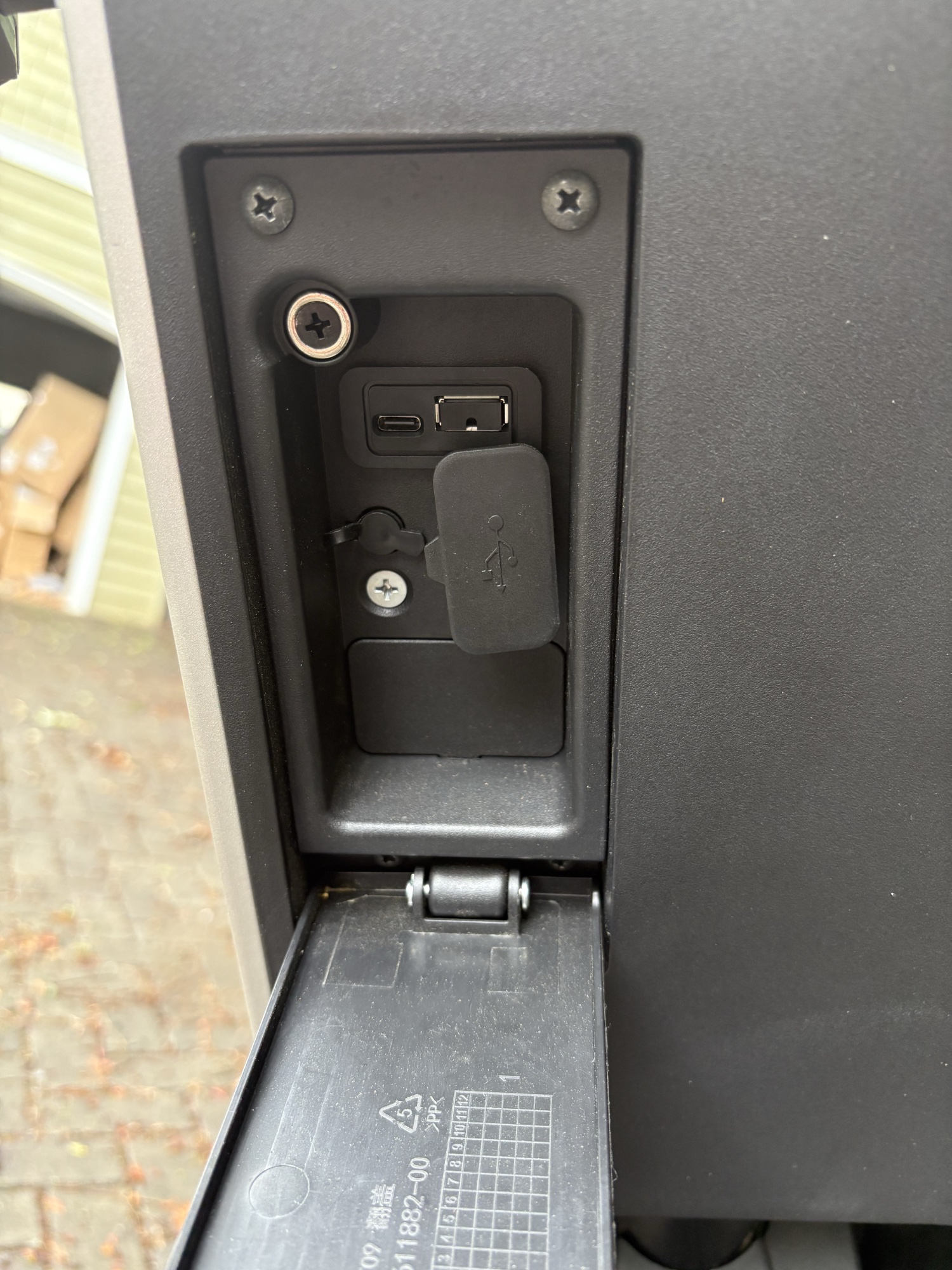
The Olto’s display is pretty minimalistic, primarily showing the speed, the status of the lights, and directional indicators. If you want a clearer picture of the hardware, the machine is designed to be used in tandem with its cell phone app. There’s a clamp for the phone next to the screen, and a small hatch below allows access to a USB charging port; it has enough space to store long charging cords.

Image of a screen from a phone app, showing options for changing the class of the machine.

Infinite Machine offers a number of assist options, but you’ll really only want the Class 2.

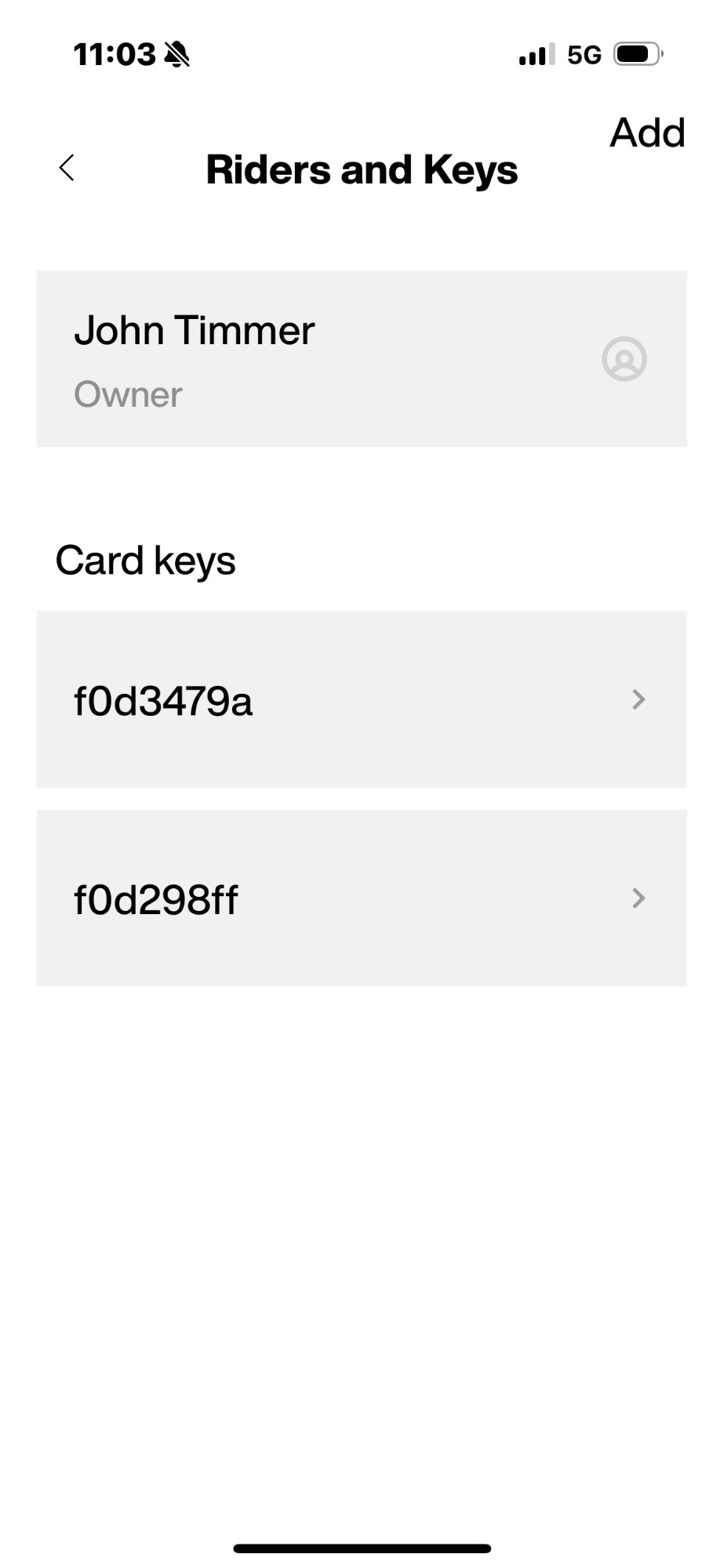
Image of a screen from a phone app, showing how you can manage the NFC cards associated with the bike.

You can manage up to 10 NFC cards that allow other users to unlock the scooter.

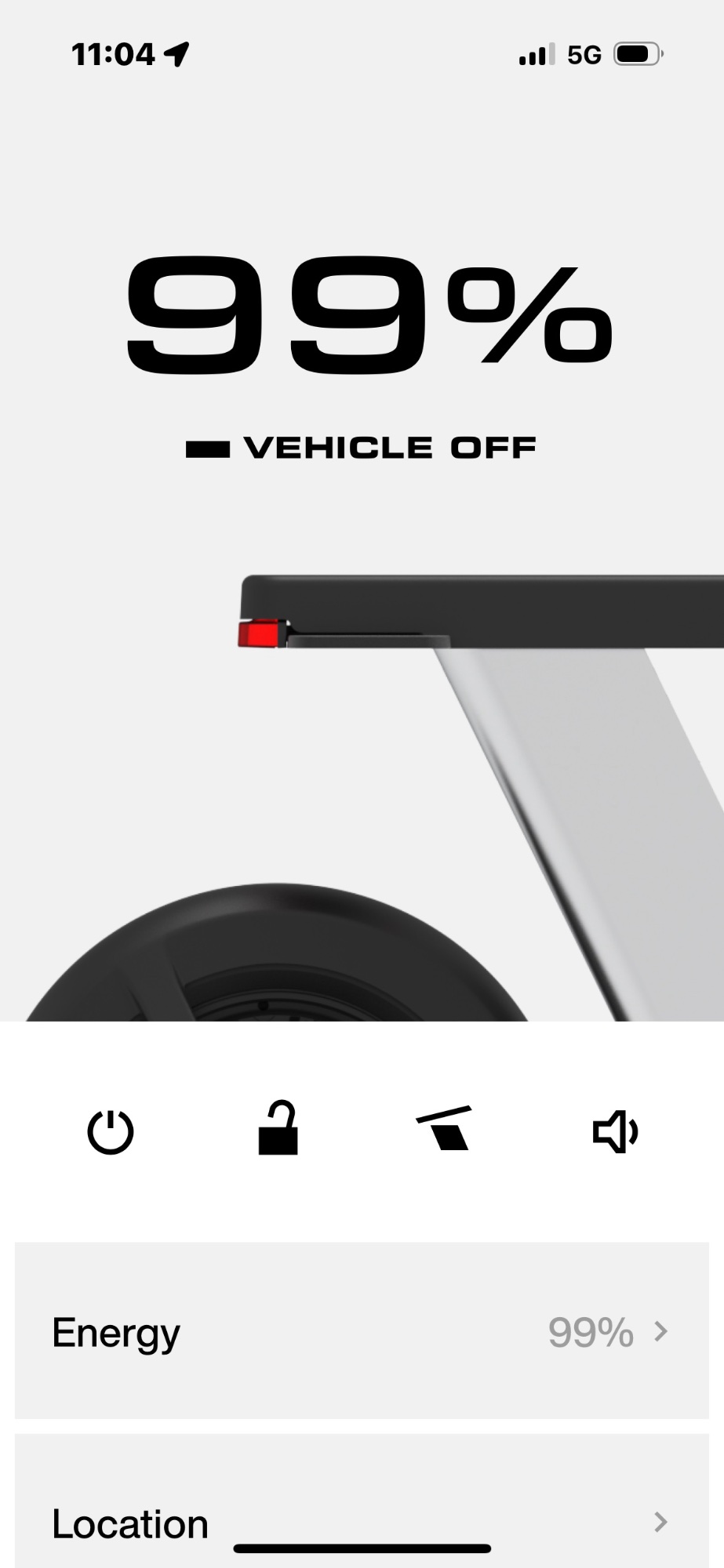
While there’s a power switch, the phone is probably the easiest way to switch the Olto between its three modes: on, off, and locked. The latter is a security mode for when you have to leave the Olto parked outside. It locks the front wheel at an odd angle so it can’t be ridden in a straight line, and it causes the motor to resist any attempt to roll the Olto in either direction. That, plus the heavy weight, should provide significant theft deterrence, but the Olto’s kickstand also has a place to use a more traditional lock to fasten it to something. You can also set an alarm that will both sound and send an alert to your phone.

If you don’t want to use your phone, the company provides a couple of NFC cards, and there’s a reader on the handlebars that lets you unlock it (you can link up to 10 cards to one machine). You can also use the phone app to set the machine to auto-lock when shut down with the NFC card.

If someone manages to take off with your Olto, you can track its location. This is clearly the most security-conscious e-bike I’ve reviewed.

These features exist because the Infinite Machine expects some owners to leave the Olto stored outside. As mentioned above, it’s very heavy and awkward to move, making it difficult, if not impossible, to bring into an apartment or house without a garage. Whether it makes sense to leave a vehicle outside will depend on where you live.

In any case, you’ll probably have to remove the battery to keep it charged. The phone app lets you unlock the seat, where a convenient handle will lift the battery out. Unfortunately, the charging dock is sold separately, and it’s (once again) expensive, at nearly $200. It seems a bit much to design the hardware around the expectation that it will need an external charger and then not include one.

Overall impressions

The Olto has some really nice design features, and its app is excellent (you should view it as a necessary part of using the scooter). It provides a great riding experience in scooter mode, feeling both maneuverable and responsive. It’s great for light errand-running, and it’s fantastic if you live where it’s not uncomfortably hot for much of the year, letting you avoid using a car in urban and suburban areas. While it’s expensive as a bike at about $3,500, that’s cheaper than dedicated electric scooters with similar designs—the Olto is slower, but it avoids ongoing registration, licensing, and insurance costs.

Those are the pros. The cons include the boost button, which simply unlocks illegal performance. To get the most out of the Olto, you’ll probably have to invest in accessories that work only with the Olto and are quite expensive, compared to standard parts available from multiple suppliers. While nimble under power, it’s very awkward to move around when you’re not riding it. And while it was designed with urban environments and security in mind, it may need to be stored on the street in many of them, which might not always be a great option.

Image of the top of a scooter's handle bars, showing a small display and a large clamp for holding a phone.

Infinite Machine has set this up to ride with its phone app accessible the whole time.

Image of a plastic compartment with the door open, showing USB ports inside.

Your phone can be kept charged while riding.

While the picture is a bit mixed on the Olto’s value, it’s crystal clear that this is not a bicycle in any sense. Instead, it’s a scooter designed to fit within the legal definition of a bicycle and take advantage of the rules that come with it. It has pedals, but everything else about it is scooter-like.

That raises the obvious question of how we should think about it.

Sharing infrastructure

There are two overlapping and only partly separable trends happening at the same time. The first is the electrification of everything, driven by our ability to manufacture massive amounts of cheap, high-quality batteries. This includes e-bikes and Vespa-style scooters, as well as simple scooters with two small wheels, skateboards, one-wheeled balance boards, and whatever these things are called. These vehicles often take advantage of infrastructure originally set aside for bicycles but can come with features—much higher speeds, much heavier weights—that can increase the risks for cyclists.

At the same time, many areas are expanding this type of infrastructure, triggering a backlash against cyclists from people who resent the loss of lanes and parking spaces dedicated to cars.

This creates a bunch of trade-offs that can be difficult to optimize. As a cyclist, I think anything that gets people out of cars is a positive—even with its added heft, I’d much rather share the road with an Olto than a typically monsterized SUV or truck. But I’m less excited about sharing a busy bike lane in a crowded city with one, given that it has the weight to bump me out of said lane and into the traffic if it’s operated carelessly.

I also recognize that the opposition to expanding bike infrastructure is fueled in part by bad behavior and the equipment that enables it, some of which is, shall we say, of questionable legality. So as much as possible, I’d like to see the hardware stay clearly within the legal lines. The Olto, by contrast, is designed to push right against them and, whenever the boost button is hit, cross them.

So I find myself appreciating, and even admiring, the motivations of the people behind the Olto: getting people out of cars, taking full advantage of cycling infrastructure, and electrifying transit. But I’m less convinced that the Olto is the right expression of those goals.

BLM Protester Transferred Thousands of Miles Away After They Organized Against Their Solitary Confinement

0
blm-protester-transferred-thousands-of-miles-away-after-they-organized-against-their-solitary-confinement
BLM Protester Transferred Thousands of Miles Away After They Organized Against Their Solitary Confinement


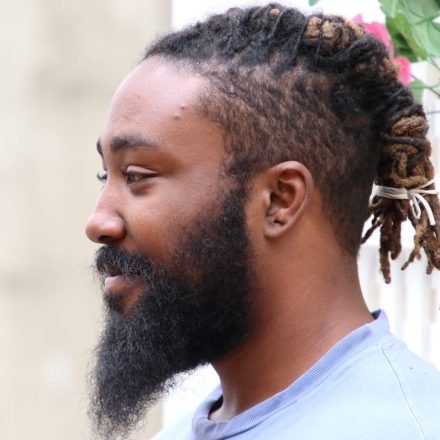
A political activist serving the longest federal prison sentence of any 2020 Black Lives Matter protester was transferred without warning to a detention facility thousands of miles away from their supporters and attorney.

Malik Muhammad’s transfer from the custody of the Oregon Department of Corrections came almost immediately on the heels of a misconduct report about organizing protest activity about their conditions from prison.

The report — which was obtained by The Intercept and flags conversations that are critical of Israel, the U.S., and the Oregon prison system — and subsequent transfer raise serious concerns about the state of censorship and free speech within the state’s carceral system. 

In March, Muhammad vanished from every inmate tracking system without a trace, after missing a scheduled call with their lawyer. Days went by with no word. Inquiries from their attorney were met with vague runarounds from officials.

Muhammad, a veteran diagnosed with post-traumatic stress disorder, spent much of their time in Oregon in and out of solitary confinement. As a result, trouble communicating with Muhammad was not altogether unusual. As the days of silence became weeks, however, fear set in among Muhammad’s loved ones. 

In April, Muhammad’s partner received a letter saying that Muhammad was alive — but thousands of miles away at Kirkland Correctional Institution in South Carolina.

“They want it to be another state’s problem, so they don’t face the same scrutiny.”

The Oregon Department of Corrections, in response to questions from The Intercept in May, denied that Muhammad, an avowed anarchist and father of one, had been transferred as retaliation for their activism inside the Eastern Oregon Correctional Institution. Prison system officials said instead that there were “extensive background reasons” for Muhammad’s transfer.

A misconduct report issued in March suggests that Muhammad’s public-facing and internal activism — particularly on their blog, “Malik Speaks!” — was a major thorn in the side of the Oregon prison system. Other prison write-ups of Muhammad’s activities behind bars described to The Intercept by their attorney took a similar line, focusing on Muhammad’s organizing on their blog and communications with other incarcerated people.

The misconduct report from March details posts from Muhammad’s blog urging their supporters to undertake a coordinated phone and messaging campaign; Muhammad wanted them to write to the prison and to public officials to call for better conditions inside and an end to Muhammad’s solitary confinement.

Oregon corrections officials are “punishing Malik for their political beliefs, for things that would normally be First Amendment protected and not within the normal scope of exceptions,” said Lauren Regan, director of litigation and advocacy at the Civil Liberties Defense Center and Muhammad’s attorney. Prison systems, she said, “hate anarchism and anti-fascism.”

The March misconduct report, which accuses Muhammad of “formulating an impact on the safety and security while promotion of security threat activity,” came only six days before the transfer to South Carolina. (The Oregon Department of Corrections declined to comment on “disciplinary matters,” citing department policy.)

To Christopher Kuttruff, a friend of Muhammad’s, it all seems like Oregon’s transfer was a ploy to make the publicity around Muhammad’s case into someone else’s issue.

“They want it to be another state’s problem,” Kuttruff said, “so they don’t face the same scrutiny.”

In the Hole

As they clutched the wrinkled pages of the misconduct report, Muhammad knew something big was about to happen.

In early March, officials flagged messages where the activist said they “have always been anti-Israel my whole life.” In another message, Muhammad says, “I’m begging for them to do it” — allegedly in reference to someone bombing the U.S. The messages prompted a further review, according to the misconduct report obtained by The Intercept.

The review turned up a message in which Muhammad called a guard a pig and said they wanted to “breakkk” their face. Muhammad maintains that the messages were spliced out of context and that the face comment was not a threat, but an insult tossed out in frustration.

Muhammad was thrown back into a disciplinary housing unit.

Weeks after their time in the “hole,” Muhammad received another misconduct report. This one, however, felt different.

“I knew that was what they were constructing to get me sent out,” they said. “I sent like a hundred letters as soon as I got the DR” — referring to the disciplinary report.

The three-page report accused Muhammad of engaging in “racketeering,” “unauthorized transfer” of digital currency, “unauthorized organization,” and “unauthorized use of info systems.” All the allegations were related to Muhammad’s blog, which they maintain with the help of their supporters and use to organize advocacy around their case and raise funds for their commissary account.

“I knew that was what they were constructing to get me sent out.”

“Evidence supports that AIC Muhammad utilizes his visitor [redacted] to actively maintain a blog on his behalf while he is incarcerated,” a prison official wrote, referring to Muhammad, who uses they/them pronouns, as an “Adult in Custody.”

“His blog website,” the misconduct report says, “focuses on an organized grouping of individuals that support AIC Muhammad in his beliefs, using visual, written, and recorded readings from AIC Muhammad. These items contain his propaganda messages and are dispersed in a social seeding manner through his visitor(s) through his blog.”

The report says Muhammad had broken Oregon administrative rules on “unauthorized use of info systems” by allowing a recording from a prison call system to be transcribed and uploaded to their blog.

Another conclusion was more consequential: Citing writings on Muhammad’s blog, officials claimed that the protest organizing and political activity was having “an impact on the safety and security” of the facility. The report cited Muhammad’s encouragement of the phone campaigns and other activities related to the blog, such as purchasing left-leaning reading materials for other incarcerated people.

Conor Fitzpatrick, an attorney who has litigated prison free-speech cases and is today with the Foundation for Individual Rights and Expression, said that speaking out on conditions inside of prison is generally First Amendment-protected speech. Officials can’t curtail speech to the outside by exempting complaints from inside about prisoners’ incarceration.

“If an inmate,” said Fitzpatrick, “is sending a letter or posting online peacefully making their views known about, ‘Hey, here’s what’s going on inside the facility. If you think this is wrong, I suggest writing your congressman or writing the facility, and asking that something be done to fix this’ — to me, that strikes me as something that ought to be protected by the First Amendment.” 

Behind bars, though, it’s not always that simple. A chasm lies between what should fall under First Amendment protections in prison and what does in practice.

The Supreme Court has ruled that constitutional rights apply in prison, but courts have upheld all types of restrictions on free speech, from bans on fantasy games like “Dungeons & Dragons” to medical texts like the “Physicians’ Desk Reference.” The barriers to even getting before a court to vindicate your rights are steep. 

“The on-the-ground regime of what censorship looks like [inside prisons] is pretty ridiculous, and basically stands the First Amendment on its head,” said David Shapiro, the executive director of the MacArthur Justice Center, a nonprofit focused on the criminal legal system. “It is close to an anything goes censorship regime.”

Muhammad’s Blog

Few people understand this better than Muhammad, who in March was racing against the clock to get help before officials could act. After receiving the report, they began furiously sending letters.

Days after receiving the misconduct report, guards ferried Muhammad, chains hanging around their belly under their jacket, onto a plane. It wasn’t until they landed in Utah that someone bothered to tell them they were headed to South Carolina, where guards at Kirkland Correctional Institution forcibly restrained Muhammad and shaved their head.

(“It is our policy to cut inmates’ hair upon arrival,” said Chrysti Shain, a spokesperson for the South Carolina Department of Corrections, though she said she couldn’t speak directly to Muhammad’s case.)

Only one of the dozens of letters they’d sent made it through, they said, and it only arrived at its recipient after they had already been transferred.

It would be days before Muhammad was able to get a letter out to their partner, alerting their loved ones that they were, in fact, alive — just 3,000 miles away. 

Muhammad is widely liked, with a wit and intellect that obscures their relative youth, a trait that has been rewarded in prison with more than a few bumps and bruises from guards or angry fellow incarcerated people. 

At 25, Muhammad was sentenced to 10 years in prison for throwing Molotov cocktails at protests in September and October 2020. As with many of the later prosecutions in the aftermath of the George Floyd uprisings, federal prosecutors initially left the case to state prosecutors before eventually charging Muhammad federally.

Muhammad wrote on their blog that they first got involved in activism as a high schooler, after the killing of Trayvon Martin. The calling would eventually lead Muhammad to travel the country and participate in the George Floyd protests against police violence and impunity.

The blog touches on a range of topics from their life story to their treatment in prison to poems about resistance. An allegedly unauthorized audio recording cited in the misconduct report is a poem about how oppressed people are robbed of their humanity. 

“Under oppressive conditions, love is resistance as joyousness is not permitted. Like Palestinian hostages being released, but their families told not to celebrate or be joyful; like blacks showing unity, working out in solidarity, or sharing things in prison – food, or hygiene, or shoes,” said Muhammad. “Even emphasized in the visiting room, as one of my partners came to see me, their grin bright and gleamy.”

Where Muhammad sees an outlet, however, Oregon sees a threat — “an impact on the safety and security.” The actual activities at hand seem much more innocuous.

“Watching Malik’s Back”

The report accuses Muhammad of engendering a so-called “zap” phone campaign. In zap campaigns, a common protest tactic to bring public pressure to bear, organizers encourage large numbers of supporters to call or write en masse.

In this case, the declared recipients would be the detention facilities or Oregon Department of Corrections officials. The idea with the campaigns is to demonstrate wide support for a cause by overwhelming the targeted people or institutions with communications.

Oregon officials said the calls and other activities on the blog constituted the security threat.

In one post referenced by the misconduct report, the blog encourages supporters to contact the Eastern Oregon Correctional Institution to get Muhammad released from solitary confinement. In 2024, according to previous reporting from The Intercept, Muhammad had effectively been held in solitary confinement for over 250 days. Oregon is supposed to limit time in so-called special housing to 90 days. 

The report does not elaborate on how receiving calls about solitary confinement placed anyone in jeopardy.

The report does not elaborate on how receiving calls about solitary confinement placed anyone in jeopardy.

“Outsiders watching Malik’s back,” said Regan, their lawyer, “knowing what’s going on, calling the warden and saying, ‘Hey, I know that you’ve put Malik in the hole for 300 days and that Malik is on a hunger strike. What are you going to do about it?’ Those are all what little mechanisms Malik has to ensure their survival while in prison.”

Muhammad said there is nothing “untoward or illegal” about people calling to advocate on their behalf.

“A lot of the times, it’s the only way to get any traction or get anything done because they try to isolate people,” they said. “If people don’t have any knowledge of stuff that’s going on, then these people who run this as their little fiefdom, they’re able to do what they want.” 

Having a loyal community online has landed them in hot water. Officials argue that Muhammad used the recordings, as well as solicitations for donations, to “support and promote an organization,” in violation of their rules on “unauthorized organization,” “racketeering,” and “unauthorized transfer” of digital currency — a charge related to the donation solicitations.

The report accuses Muhammad of fraud for soliciting donations under a hyperlink titled “Free Malik Now!!” It implies the money is going toward an appeal, the report says — despite also acknowledging the website explains that the funds go toward their commissary account and legal needs, as well as toward supplying books and reading materials to other incarcerated people.

The report also casts the online group of supporters that manage and visit Muhammad’s blog as “an organized grouping of individuals that support AIC Muhammad in his beliefs.”

The language about an organized group is consistent with other disciplinary matters, including transfers, behind bars. Prisons sometimes justify prison transfers by saying they are severing contact between gang members, in theory to reduce violence. Calling readers of a blog who occasionally make phone calls and donate to Muhammad’s commissary account an “organization” is a novel interpretation. 

Muhammad wants the censorship they faced to serve as a lesson.

“In this country, free speech has never been allotted to anyone, and certainly not in prison, and certainly not in this climate,” Muhammad said, “not in this steady march to fascism that we’re on.”

EU to use €1.4 billion from interest on frozen Russian assets to help Ukraine

0
eu-to-use-e1.4-billion-from-interest-on-frozen-russian-assets-to-help-ukraine
EU to use €1.4 billion from interest on frozen Russian assets to help Ukraine


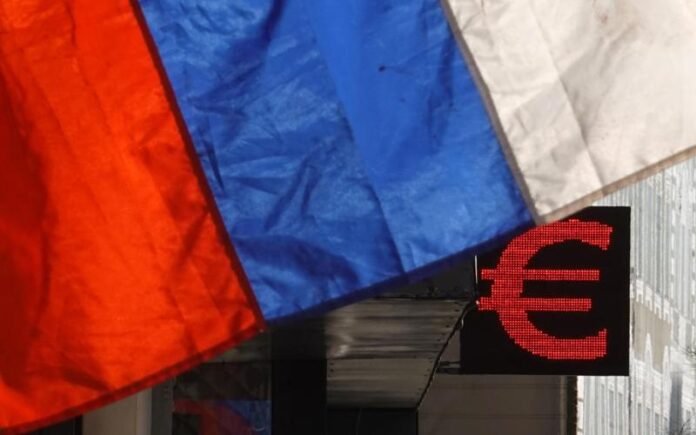
The European Union will use €1.4 billion ($1.6 billion) taken ​from interest generated by ‌frozen Russian assets to help Ukraine, the European Commission said on Wednesday.

The ​money, transferred to the ​bloc on August 3, came ⁠from interest on cash balances, ​part of Russian central bank ​assets frozen by the EU in the wake of Moscow’s invasion, the ​Commission added.

“Russia must pay ​for the destruction it has caused. And ‌we ⁠are using the proceeds from the immobilised Russian assets to make sure it does,” ​European Commission ​President ⁠Ursula von der Leyen said in the statement.

“We ​are making a further €1.4 ​billion ⁠of them available to Ukraine. This will support Ukraine’s continued ⁠resistance ​against Russia’s illegal ​war,” she added.

Source:  Reuters
 

Oprah Says Shocking ‘Makeover’ Left Her Devastated

0
oprah-says-shocking-‘makeover’-left-her-devastated
Oprah Says Shocking ‘Makeover’ Left Her Devastated


Oprah Winfrey has revealed how a disastrous salon makeover left her bald, devastated and too embarrassed to return to work for weeks.

The 72-year-old media powerhouse said the traumatic incident happened when she was a young television reporter in Baltimore and station bosses pressured her to chemically change her thick, natural hair.

“This is when men could tell women what to do with their hair,” Winfrey told Glamour.

At the time, Winfrey washed and styled her own hair, which she wore long and full. But her bosses complained that it was supposedly interfering with the station’s chroma key technology, which was used to place graphics behind presenters.

Winfrey reluctantly visited a French salon, believing the employees knew how to safely treat Black hair.

That confidence quickly turned into a nightmare.

“I went into a French hair salon, y’all, with my Black hair, and they put a French perm on my Black hair, and all of my hair came out,” she said.

One of the only other Black employees in the newsroom eventually pulled Winfrey aside and bluntly told her just how bad the damage was.

“She came up to me, and she said, ‘You ain’t got no hair. Come go with me to my barber,’” Winfrey recalled.

The barber was forced to shave off what remained of her badly damaged hair. Humiliated by the ordeal, Winfrey stayed away from work until it began growing back into what she described as a “teeny, teeny, weeny little Afro.”

Winfrey has spoken about the painful experience before, including during a 1986 appearance on the television roundtable Dinner at Rona’s.

She said the disaster began after a “horrible” boss tore apart nearly every aspect of her appearance when she was just 22 years old.

“Your hair is too thick, it’s too long, your eyes are too far apart, your nose is too wide, and your chin is too long,” Winfrey recalled him saying. “You need to do something about it.”

The criticism crushed the future television icon, especially because the station had hired her while she already looked exactly that way.

Winfrey said salon workers insisted they knew what they were doing when she arrived for the treatment.

“They said, ‘Oui, madame, we do Black hair,’” she remembered.

But within days, the damage was undeniable.

“And in a week, I was bald,” she said.

Although Winfrey was heartbroken at the time, she later said the experience forced her to reconsider how much importance she placed on her physical appearance.

“I understand now that the reason that happened to me then is because I was putting too much emphasis on my weight, my hair, the way I looked,” she said in 1986.

After wearing shorter styles during her years in Baltimore, Winfrey began experimenting with increasingly bold looks as her television career took off.

During The Oprah Winfrey Show, she appeared with everything from towering curls and feathered layers to sleek bobs, curtain bangs, ponytails and shoulder-length waves. Many of those styles were created by her longtime hairstylist, Andre Walker.

But not every makeover impressed her famously outspoken best friend, Gayle King.

During Winfrey’s 2020 Vision Tour, King recalled calling Oprah after seeing the enormous hairstyle she wore during her notoriously uncomfortable interview with Elizabeth Taylor.

While others showered Winfrey with compliments, King delivered a much harsher verdict.

“Everybody was saying, ‘Oh, it looks so good. It looks so good,’” King said. “I go, ‘It looks like you put your hand in a socket. I don’t know why people are telling you that.’”

Winfrey initially defended the gravity-defying look as “fashion,” but later admitted King had been right.

Looking back, she called the Taylor appearance her worst interview for several reasons, including what she described as her “bad hair.”

Decades after the salon disaster that left her hiding from the cameras, Winfrey ultimately learned to embrace her natural texture.

She appeared on the September 2012 cover of O, The Oprah Magazine wearing a full head of natural curls that required no straightening or blow-drying.

Winfrey said the natural look made her feel “unencumbered” — a dramatic transformation for the young anchor who was once ordered to change her appearance just to remain on television.

Getting Those Steps In: When Your Daily Commute Could Double as a Workout  

0
getting-those-steps-in:-when-your-daily-commute-could-double-as-a-workout  
Getting Those Steps In: When Your Daily Commute Could Double as a Workout  


A route option inspired by Bar-Ilan University research aims to help public transportation users increase daily activity without adding time to their commute  

For commuters trying to fit more movement into a packed day, the Moovit app has introduced a route option that adds walking without extending travel time.  

The app is no longer just about getting users from point A to point B—it’s about helping them incorporate more walking along the way. The addition was inspired by academic research showing that commuters can build more walking into their daily routine without necessarily extending their travel time. The study, conducted by Prof. Jonathan Rabinowitz, a wellness researcher at Bar-Ilan University, suggests that for thousands of public transportation users, the simple act of getting off one stop earlier or taking a different route could add meaningful physical activity to their daily routine.  

When choosing a route in the app, users can select the “Steps” feature to prioritize itineraries that include more walking.  

The idea came to Rabinowitz when a family member recovering from an injury noticed that by getting off public transportation earlier, or by walking between connections instead of waiting for a second bus, the commute could be shortened.  

In recent years, life has become increasingly sedentary. Many people spend hours each day sitting at desks, in cars, or on public transportation. In addition, long working hours often limit the time left available for physical activity. This lack of movement has been linked to a higher risk of heart disease, type 2 diabetes, obesity, certain cancers, and premature death. 

 Lack of physical activity has also been connected to poorer mental health and reduced overall well-being. Walking is one of the simplest and most accessible forms of exercise, offering an effective, cheap, and readily available exercise option. Regular walking helps improve cardiovascular health, strengthens muscles and bones, supports weight management, reduces stress and anxiety, and has been shown to lower the risk of chronic disease.   

“It reduces the chances of dying young,” Rabinowitz told The Media Line. “The more you walk, the better it is for you.”   

According to Rabinowitz, the debate over the number of steps recommended daily is unnecessary: “Just get out there and walk,” he said.   

Dr. Eyal Ginesin, an orthopedic surgeon and sports injury specialist at Clalit Health Services, sees the consequences of a sedentary lifestyle in his clinics every day.  

“The main complaints are lower back pain and leg pain,” Ginesin told The Media Line. “Prolonged sitting shortens the muscles, especially the hip flexors and the hamstrings, which are critical to walking.”  

Muscles that don’t move do not get the nourishment they need

“Muscles that don’t move do not get the nourishment they need,” Ginesin added.   

Because it requires no special equipment or training, incorporating more walking into everyday routines—such as during a daily commute—can be an effective way for people to become more active without making major changes to their schedules.  

“In our wellness lab, we try to find changes that people can make in their daily lives by focusing on biohacking for everyone,” Rabinowitz explained. “Sometimes these are small changes that anybody can make to their daily lives.”  

Biohacking refers to making simple, science-backed changes to daily habits to improve physical and mental well-being. While the term is often associated with expensive gadgets or extreme self-optimization, Rabinowitz’s approach focuses on practical, accessible interventions—small adjustments that fit into everyday routines and can have a meaningful impact on long-term health.  

“Almost all of the complaints due to sedentary lifestyle are reversible,” said Ginesin. “Our bodies are meant to be active.”   

The main advantage, according to Rabinowitz, is that people who incorporated walking into their commute could still reach their destinations on time.  

Increasing the amount of walking by a kilometer and a half or so, actually resulted in greater efficiency

“Increasing the amount of walking by a kilometer and a half or so, actually resulted in greater efficiency,” he said. “Oftentimes, fewer transfers opened up additional transportation possibilities.” He noted that some commuters could walk to a train—often a faster option—rather than take buses that involved less walking.  

The popular 10,000-step benchmark is not a universal medical requirement, and health guidelines generally emphasize the total amount and intensity of physical activity rather than a single step count. The World Health Organization recommends that adults engage in 150 to 300 minutes of moderate-intensity aerobic activity per week, or an equivalent amount of vigorous activity, while also limiting sedentary time.

For desk-bound workers and long-distance commuters, walking as part of a regular transit trip may offer a practical way to increase daily movement.  


Ben-Gvir defies Israeli court over crocodile moat plan around prison holding Palestinian detainees

0
ben-gvir-defies-israeli-court-over-crocodile-moat-plan-around-prison-holding-palestinian-detainees
Ben-Gvir defies Israeli court over crocodile moat plan around prison holding Palestinian detainees

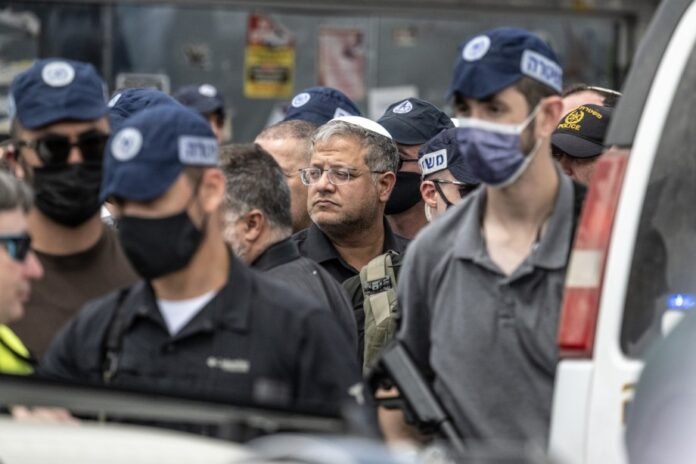
Israel’s far-right National Security Minister, Itamar Ben-Gvir, accompanied by Environmental Protection Minister Idit Silman, toured crocodile trenches surrounding a wing of Ketziot Prison housing Palestinian

The visit came despite a temporary order issued by the Jerusalem District Court on 2 August suspending the plan to place crocodiles around the prison pending a ruling on a petition filed by the animal rights group Let the Animals Live.

Ben-Gvir said: “There are supposed to be crocodiles here, but the court has issued an order and continues to put obstacles in the way of what we are doing.”

Defying the court’s decision, he added: “There will be crocodiles, and we will fight the battle in court.”

Silman said she had visited the site with Ben-Gvir following meetings and discussions about bringing crocodiles to the perimeter of prisons holding Palestinians whom Israel claims are members of Hamas’ Nukhba (Elite) unit.

Addressing the Palestinian detainees, she said: “Anyone who attacks our people should know that they will end up spending the night in a place surrounded by crocodiles.”

Iran, Ukraine wars escalate oil shortages with few signs of relief

0
iran,-ukraine-wars-escalate-oil-shortages-with-few-signs-of relief
Iran, Ukraine wars escalate oil shortages with few signs of relief

The global energy crisis triggered by two wars is set to worsen, as Ukraine pummels Russia’s refining industry and Iranian attacks continue on Middle Eastern oil production and refining. Further, the nature of the destruction and the growing number of fronts and warring parties involved may herald a new era of extended vulnerability for countries that depend on imports for their energy.

Throughout most of modern history, wars have targeted energy infrastructure, including oil wells, refineries, pipelines, export terminals and power plants. But the latest weaponry technology – autonomous drones and automated seafaring vessels – are defeating existing defense systems.

The resulting damage is increasing the threat that crucial oil shipping lanes around the world may be slowed or stopped for long periods of time, and not just in the Strait of Hormuz and the Bab el-Mandeb Strait, at the southern entrance to the Red Sea.

The world has been able to muddle through the first few months of the Iran war, but the earliest efforts to keep oil markets balanced are running out of time. First, there were shipments of Middle Eastern oil that had already moved through the Strait of Hormuz before it was closed, which arrived in ports across the world in March and April 2026. Then a group of governments released strategic stocks of oil to the market, while some countries adopted oil conservation policies such as shifting to remote work.

At the same time, refining capacity – the facilities that convert crude oil into products, such as diesel fuel and gasoline – has been extremely compromised. Goldman Sachs is estimating that the global refining deficit – including bombed Russian refineries and products that cannot exit the Strait of Hormuz or the Black Sea – totals 6.5 million barrels a day. Now, as more energy infrastructure gets destroyed, preventing a deeper crisis will be harder to achieve. And winter isn’t all that far away.

The growing war in the Middle East

Attacks by Iran and its proxies, often using aerial drones, have created widespread, lasting damage to Middle East energy infrastructure. For instance, more than 1.2 million barrels per day of oil refining capacity across the region is out of operation due to physical damage, according to J.P. Morgan.

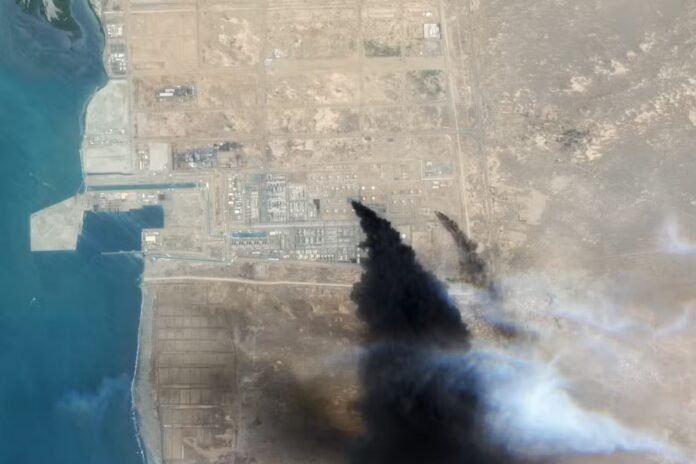
The conflict continues to escalate. For instance, on July 27, drones reportedly launched from southern Iraq by Iranian-aligned militants hit crude processing towers at the critical Saudi oil production hub of Abqaiq. Similar attacks by Iran in 2019 sharply reduced Saudi Arabia’s ability to produce oil.

Saudi crude oil and refined petroleum product exports are also hindered by attacks on shipping through the Hormuz and Bab el-Mandeb straits. A US-Saudi military response against the Iraqi militias raised tensions that the war might spread.

And on July 30, drone attacks on an Egyptian port on the Mediterranean Sea signaled that another area might be vulnerable to the widening war. Since early in the war, Saudi Arabia has depended on the Mediterranean for its oil exports, sending 5 million barrels a day through the Suez Canal and Egypt’s SUMED pipeline.

Ukrainian attacks inside Russia

In its war against Russia, Ukraine’s mastery of long-range drones has resulted in successful bombing of over 11 major Russian refining complexes, knocking out a significant share of Russia’s fuel-making capability. Estimates vary from somewhere between 30% and 50% to as high as 60% of the nation’s refining capacity.

Ukrainian drone attacks on Russia’s refining system are primarily intended to harm Moscow’s war effort by limiting military fuel supplies and war funding from exports of refined products. Yet online images show Russian drivers sitting in cars for hours waiting to get a few gallons of fuel.

The attacks have also led Russia to ban diesel fuel exports – which, before 2022, supplied half of Europe’s diesel.

Ripple effects, including hunger

In addition to blocking crude oil shipments, the closure of the Strait of Hormuz has cut off the flow of about 20% of the world’s supply of liquefied petroleum gas. That is a hard-to-replace cooking fuel widely used in India and China, among other countries.

As far back as April 2026, people in India were having trouble finding and affording gas with which to cook, forcing them to skip meals. To ease shortages, India is looking to increase the volume of liquefied petroleum gas it buys from the US.

Other pressures are also closing in on the world’s petroleum supplies from other directions.

Seaborne drones launched by Ukraine in the Black Sea have at least temporarily blocked most crude oil exports from Kazakhstan, which needs that waterway to ship its oil to the Mediterranean Sea and beyond.

Houthi separatists in Yemen used aerial drones to close off the southern end of the Red Sea in the early 2020s, blocking a key alternate route for oil shipments around the Strait of Hormuz. They are reportedly set to do so again.

Those technologies and tactics are spreading to other oil-rich regions of the globe. For instance, separatists in Colombia used drones to attack oil production equipment in late July.

Possibilities for hope?

Since the Iran war started, China’s imports of crude oil and petroleum-related products have dropped by about 3.6 million barrels per day, roughly one-third of its prewar imports. In fact, Chinese refiners actually started reselling crude oil in global markets to earn money to make up for reduced activity in Chinese refineries.

One explanation is that China is tapping its strategic oil reserves, but it is also possible that an economic slowdown, combined with the country’s massive build-out of alternative fuels and renewables, is curbing the need for imported oil-based fuel. Chinese petrochemical firms are also buying ethane from the U.S. to replace cut-off supplies from the Middle East.

On the supply side, in Brazil, production by government-owned oil company Petrobras is up 14% over 2025 levels and the country is operating refineries at full capacity. As a result, its import needs have dropped substantially, offering some relief to markets in the Americas.

Venezuelan oil production has risen from 937,000 barrels a day in 2025 to 1.2 million barrels a day in mid-2026. Most of that increase is from oil companies that were operating in Venezuela before the US removed former President Nicolás Maduro. A few new deals to buy Venezuelan oil have been signed, but the flood of investment the Trump administration hoped for has yet to materialize. Venezuela’s laws and political instability are making companies wary, and some are still seeking repayments from when their assets were seized by then-President Hugo Chávez in 2009.

Risks of inflation and long-term vulnerability

For now, rising oil and gas production and refinery output in the United States have shielded Americans from significant petroleum shortages.

But there are many ways in which that situation could change. Worsening global supply disruptions could eventually translate into higher market prices on a wide range of goods and commodities, which would push US inflation rates higher.

Ultimately, the new methods of drone-based warfare against energy facilities and shipping are a major national security concern for the US and all major economies that rely on energy shipments and imports of other goods to underpin their economies.

Countries will now need to work toward energy security in a world with insecure global sea lanes, more extreme weather and expanded geopolitical conflict.

Having researched and tracked the geopolitics of global energy markets for decades, I expect that those efforts will focus on determining what energy sources each country has within its own borders. And given the geographical and geological limits of fossil fuels, I anticipate more countries will seek to accelerate the already speedy development of renewable energy like wind and solar power to minimize the risks of wars interrupting their energy supply.

Amy Myers Jaffe is director, Energy, Climate Justice, and Sustainability Lab, and a research professor at New York University; Tufts University.

This article is republished from The Conversation under a Creative Commons license. Read the original article.

Oil extends declines as investors await outcome of US-Iran talks

0
oil-extends-declines-as-investors-await-outcome-of-us-iran-talks
Oil extends declines as investors await outcome of US-Iran talks


Oil extended declines on Wednesday after steep falls in the previous two trading sessions, as investors waited ​to see if efforts to end the Iran war and restore traffic through ‌the blockaded Strait of Hormuz were making progress.

Brent crude futures dropped 92 cents, or about 1.2%, to $78.44 a barrel by 0330 GMT. They have tumbled more than 12% for the week thus far.

U.S. West Texas ​Intermediate futures lost $1.07, or 1.4%, to stand at $74.70 a barrel and are down ​more than 11% this week.

Qatar said on Tuesday mediators were making progress in ⁠efforts to end the war, driving oil prices lower, although Tehran has denied U.S. President ​Donald Trump’s assertion that talks are underway. Brent closed more than 5% lower on Tuesday below $80 ​a barrel for the first time since July 13.

“While the immediate geopolitical premium has unwound, the broader supply picture warrants caution,” said Priyanka Sachdeva, head of market insights at Phillip Nova.

“If diplomatic efforts fail and physical ​supply is ultimately affected, the current pullback could prove short-lived, with tighter inventories amplifying ​the impact of any future supply shock,” Sachdeva added.

Prior to the beginning of the war, some 20% of ‌the ⁠world’s oil and liquefied natural gas transited through the strait, and in March alone prices rose 50%.

“The main sticking point appears to be whether Iran will continue to insist on a degree of control over the waterway, and whether the U.S. will stand its ground and ​refuse that outcome,” analysts ​from IG said ⁠in a note.

Trump and Qatar’s Emir Sheikh Tamim bin Hamad Al Thani discussed efforts to narrow differences between Washington and Tehran and improve ​the prospects for a lasting settlement during a phone call on ​Tuesday, Qatar’s Emiri ⁠office said.

U.S. crude and gasoline inventories rose while distillate stocks fell last week, market sources said on Tuesday, citing data from the American Petroleum Institute.

Crude stocks rose by about 2.7 million barrels ⁠in the ​week ended July 31, the sources said on condition ​of anonymity.

Official numbers from the U.S. Energy Information Administration are due at 10:30 a.m. ET (1430 GMT) on Wednesday.

Source:  Reuters

China is claiming the right to punish its critics anywhere on Earth

0
china-is-claiming-the-right-to-punish-its-critics-anywhere-on earth
China is claiming the right to punish its critics anywhere on Earth

Chinese President Xi Jinping speaks to Canada’s Justin Trudeau after the closing session of a G20 Leaders Summit in Bali, Indonesia in November 2022. Xi reportedly chastised Trudeau over media leaks about their foreign interference conversations at the event. Photo: THE CANADIAN PRESS / Sean Kilpatrick

On July 1, China brought into force its Law on Promoting Ethnic Unity and Progress, converting a decade of Xi Jinping’s doctrine of “forging a strong sense of community for the Chinese nation” into binding law.

Most attention has gone to its domestic machinery: entrenching Mandarin over minority languages, issuing unified state textbooks and creating “inter-embedded” neighborhoods engineered to dilute concentrations of Uyghurs and Tibetans among the Han majority. In other words, this is an assimilationist project that’s already far advanced.

The provision that matters most to the world outside China is buried near the end. Article 63 declares that organizations and individuals outside Chinese territory who “undermine ethnic unity” or “create ethnic division” shall be pursued for legal liability.

The Chinese government is therefore asserting, in statute, that its authority follows its critics across oceans into other countries, including Canada, home to some of the world’s largest Chinese, Uyghur and Tibetan diaspora communities.

The danger is not that the law reaches across borders. It is what it criminalizes, whom it targets and how it’s enforced.

Getting the definition right

The reflexive response is to call this legal imperialism. The conclusion is right, but the usual reasoning is lazy. That matters, because extraterritorial jurisdiction is neither a Chinese invention nor a monopoly. Get the objection wrong and China will swat it away as hypocrisy.

Democracies reach across borders constantly. Europe’s data protection rules bind firms anywhere on Earth that handle Europeans’ data. The United States prosecutes bribery committed entirely overseas. And a German court convicted a former Syrian intelligence officer in 2022 of crimes against humanity committed in Damascus, with no German victim at all.

What separates Article 63 from these precedents comes down to three differences:

  1. The offense. Every Western example rests on a defined wrong: bribery, mishandled data, torture. “Undermining ethnic unity” is not a crime defined anywhere in law. It is an elastic political judgment, rendered by the very authority accused of the underlying abuses. The vagueness is by design. A law that lets the state decide, case by case, who has offended the nation is attempting to export censorship.
  2. The target. Universal jurisdiction prosecutes the perpetrators of atrocities to vindicate the victims. Article 63 runs the other way. Its targets are the victims’ advocates: the Uyghur who testifies before a foreign legislature, the Tibetan who organizes a vigil, the scholar who documents the camps. A government credibly accused of abusing an ethnic minority is claiming the right to punish the people who describe the accusation.
  3. Enforcement. Western extraterritorial law, for all its overreach, runs through courts. Article 63 attaches no procedure at all. Its real instrument is the leverage China already holds: the passport of a sibling still inside China, an exit ban on an aging parent, security officers at a relative’s door. This is the documented machinery of transnational repression, now given a statutory label.

Shadows of Hong Kong law

None of this is an aberration. Article 63’s clearest precedent is Article 38 of the 2020 Hong Kong national security law, which had Beijing’s blessing. It claimed to cover offenses committed outside Hong Kong by people who were not its residents.

The new law extends that logic into the vaguer terrain of “ethnic unity.”

It also tracks a documented trend: China runs the world’s most extensive campaign of transnational repression, operating through informal “overseas police stations” (several identified in Canada) and coercion by proxy. What Article 63 adds is legal form, and an invitation to every other authoritarian government to do the same.

The response should be narrow, firm and co-ordinated. Host governments, Canada among them, should declare plainly that Article 63 has no legal effect in their countries, and treat its enforcement as the crime that it is.

How to respond

The intimidation inherent in the new law already violates many domestic harassment and foreign interference laws in jurisdictions around the world. Prosecutors should use them against the agents carrying out the coercion, not the exiles who are its victims.

Governments should shut the unlicensed “police stations,” and press Interpol to reject politically motivated notices aimed at diaspora activists.

Governments can also build dedicated channels for those targeted: a clear law enforcement contact, protective guidance for Chinese and minority diaspora communities and training for officers who could mistake transnational repression for an ordinary domestic dispute.

Finally, asylum systems should treat Article 63 as evidence: a statute in which China announces that diaspora advocacy invites retaliation is close to proof of persecution for those seeking to flee.

China has every right to legislate for its own territory and citizens. What it cannot legitimately do, however warmly it speaks of unity, is disregard borders. The task for all nations, Canada included, is to insist, in law and in practice, that borders still exist.

Reza Hasmath is a professor in political science, University of Alberta.

This article is republished from The Conversation under a Creative Commons license. Read the original article.

0FansLike
0FollowersFollow
0FollowersFollow
0SubscribersSubscribe
- Advertisement -
Google search engine

Recent Posts