19.8 C
London
Wednesday, August 5, 2026
Home Blog

Oil extends declines as investors await outcome of US-Iran talks

0
oil-extends-declines-as-investors-await-outcome-of-us-iran-talks
Oil extends declines as investors await outcome of US-Iran talks


Oil extended declines on Wednesday after steep falls in the previous two trading sessions, as investors waited ​to see if efforts to end the Iran war and restore traffic through ‌the blockaded Strait of Hormuz were making progress.

Brent crude futures dropped 92 cents, or about 1.2%, to $78.44 a barrel by 0330 GMT. They have tumbled more than 12% for the week thus far.

U.S. West Texas ​Intermediate futures lost $1.07, or 1.4%, to stand at $74.70 a barrel and are down ​more than 11% this week.

Qatar said on Tuesday mediators were making progress in ⁠efforts to end the war, driving oil prices lower, although Tehran has denied U.S. President ​Donald Trump’s assertion that talks are underway. Brent closed more than 5% lower on Tuesday below $80 ​a barrel for the first time since July 13.

“While the immediate geopolitical premium has unwound, the broader supply picture warrants caution,” said Priyanka Sachdeva, head of market insights at Phillip Nova.

“If diplomatic efforts fail and physical ​supply is ultimately affected, the current pullback could prove short-lived, with tighter inventories amplifying ​the impact of any future supply shock,” Sachdeva added.

Prior to the beginning of the war, some 20% of ‌the ⁠world’s oil and liquefied natural gas transited through the strait, and in March alone prices rose 50%.

“The main sticking point appears to be whether Iran will continue to insist on a degree of control over the waterway, and whether the U.S. will stand its ground and ​refuse that outcome,” analysts ​from IG said ⁠in a note.

Trump and Qatar’s Emir Sheikh Tamim bin Hamad Al Thani discussed efforts to narrow differences between Washington and Tehran and improve ​the prospects for a lasting settlement during a phone call on ​Tuesday, Qatar’s Emiri ⁠office said.

U.S. crude and gasoline inventories rose while distillate stocks fell last week, market sources said on Tuesday, citing data from the American Petroleum Institute.

Crude stocks rose by about 2.7 million barrels ⁠in the ​week ended July 31, the sources said on condition ​of anonymity.

Official numbers from the U.S. Energy Information Administration are due at 10:30 a.m. ET (1430 GMT) on Wednesday.

Source:  Reuters

China is claiming the right to punish its critics anywhere on Earth

0
china-is-claiming-the-right-to-punish-its-critics-anywhere-on earth
China is claiming the right to punish its critics anywhere on Earth

Chinese President Xi Jinping speaks to Canada’s Justin Trudeau after the closing session of a G20 Leaders Summit in Bali, Indonesia in November 2022. Xi reportedly chastised Trudeau over media leaks about their foreign interference conversations at the event. Photo: THE CANADIAN PRESS / Sean Kilpatrick

On July 1, China brought into force its Law on Promoting Ethnic Unity and Progress, converting a decade of Xi Jinping’s doctrine of “forging a strong sense of community for the Chinese nation” into binding law.

Most attention has gone to its domestic machinery: entrenching Mandarin over minority languages, issuing unified state textbooks and creating “inter-embedded” neighborhoods engineered to dilute concentrations of Uyghurs and Tibetans among the Han majority. In other words, this is an assimilationist project that’s already far advanced.

The provision that matters most to the world outside China is buried near the end. Article 63 declares that organizations and individuals outside Chinese territory who “undermine ethnic unity” or “create ethnic division” shall be pursued for legal liability.

The Chinese government is therefore asserting, in statute, that its authority follows its critics across oceans into other countries, including Canada, home to some of the world’s largest Chinese, Uyghur and Tibetan diaspora communities.

The danger is not that the law reaches across borders. It is what it criminalizes, whom it targets and how it’s enforced.

Getting the definition right

The reflexive response is to call this legal imperialism. The conclusion is right, but the usual reasoning is lazy. That matters, because extraterritorial jurisdiction is neither a Chinese invention nor a monopoly. Get the objection wrong and China will swat it away as hypocrisy.

Democracies reach across borders constantly. Europe’s data protection rules bind firms anywhere on Earth that handle Europeans’ data. The United States prosecutes bribery committed entirely overseas. And a German court convicted a former Syrian intelligence officer in 2022 of crimes against humanity committed in Damascus, with no German victim at all.

What separates Article 63 from these precedents comes down to three differences:

  1. The offense. Every Western example rests on a defined wrong: bribery, mishandled data, torture. “Undermining ethnic unity” is not a crime defined anywhere in law. It is an elastic political judgment, rendered by the very authority accused of the underlying abuses. The vagueness is by design. A law that lets the state decide, case by case, who has offended the nation is attempting to export censorship.
  2. The target. Universal jurisdiction prosecutes the perpetrators of atrocities to vindicate the victims. Article 63 runs the other way. Its targets are the victims’ advocates: the Uyghur who testifies before a foreign legislature, the Tibetan who organizes a vigil, the scholar who documents the camps. A government credibly accused of abusing an ethnic minority is claiming the right to punish the people who describe the accusation.
  3. Enforcement. Western extraterritorial law, for all its overreach, runs through courts. Article 63 attaches no procedure at all. Its real instrument is the leverage China already holds: the passport of a sibling still inside China, an exit ban on an aging parent, security officers at a relative’s door. This is the documented machinery of transnational repression, now given a statutory label.

Shadows of Hong Kong law

None of this is an aberration. Article 63’s clearest precedent is Article 38 of the 2020 Hong Kong national security law, which had Beijing’s blessing. It claimed to cover offenses committed outside Hong Kong by people who were not its residents.

The new law extends that logic into the vaguer terrain of “ethnic unity.”

It also tracks a documented trend: China runs the world’s most extensive campaign of transnational repression, operating through informal “overseas police stations” (several identified in Canada) and coercion by proxy. What Article 63 adds is legal form, and an invitation to every other authoritarian government to do the same.

The response should be narrow, firm and co-ordinated. Host governments, Canada among them, should declare plainly that Article 63 has no legal effect in their countries, and treat its enforcement as the crime that it is.

How to respond

The intimidation inherent in the new law already violates many domestic harassment and foreign interference laws in jurisdictions around the world. Prosecutors should use them against the agents carrying out the coercion, not the exiles who are its victims.

Governments should shut the unlicensed “police stations,” and press Interpol to reject politically motivated notices aimed at diaspora activists.

Governments can also build dedicated channels for those targeted: a clear law enforcement contact, protective guidance for Chinese and minority diaspora communities and training for officers who could mistake transnational repression for an ordinary domestic dispute.

Finally, asylum systems should treat Article 63 as evidence: a statute in which China announces that diaspora advocacy invites retaliation is close to proof of persecution for those seeking to flee.

China has every right to legislate for its own territory and citizens. What it cannot legitimately do, however warmly it speaks of unity, is disregard borders. The task for all nations, Canada included, is to insist, in law and in practice, that borders still exist.

Reza Hasmath is a professor in political science, University of Alberta.

This article is republished from The Conversation under a Creative Commons license. Read the original article.

2027 Chevrolet Corvette Grand Sport X proves code is as important as hardware

0
2027-chevrolet-corvette-grand-sport-x-proves-code-is-as-important-as-hardware
2027 Chevrolet Corvette Grand Sport X proves code is as important as hardware

When Chevrolet introduced a hybrid system to the Corvette lineup in 2023, creating the E-Ray, many fans were confused. If it was meant to be a performance option, where did it fit alongside the ZR1 and ZR1X? Was this a concession to emissions, or was it a sign of the fabled Stingray getting soft? Promises of silent cruising through neighborhoods and the application of all-season tires didn’t help the situation.

Three years later, the E-Ray is dead, but the hybrid system lives on in the new Grand Sport X. This, though, isn’t intended to be a direct successor. A series of subtle and not-so-subtle software tweaks, plus some additional drive modes and a whole new engine, conspire to create a machine that sounds and feels far more edgy and exciting.

From E-Ray to Grand Sport X

“There were some customers who didn’t necessarily understand the car,” Keith Badgley said of the E-Ray. He was the lead development engineer for that machine, as well as the Grand Sport X and the ZR1X. I spoke with him after spending a few days behind the wheel of the Grand Sport X.

The Grand Sport gets a different electric motor than the E-Ray.

The Grand Sport gets a different electric motor than the E-Ray. Credit: Tim Stevens

The E-Ray, he said, was positioned as something of a grand tourer, a performance machine that mixed big speed and style with all-day comfort and all-weather capability. Owners had other ideas, though.

“We saw that a lot of people were tracking E-Rays, and some of the feedback was that it was a little tight,” Badgley said. A tendency toward understeer is ideal for predictable handling on canyon roads, but it’s less desirable on a racetrack.

Track performance wasn’t at the top of the list of priorities for that particular Corvette. It was, however, the goal for the bonkers 1,250-hp (932 kW) ZR1X. The development of that car created the opportunity to do something a little more special with the Corvette’s hybrid powertrain.

The electric motor at the front in the ZR1X is more powerful than that found in the E-Ray, and the Grand Sport X inherits that power boost.

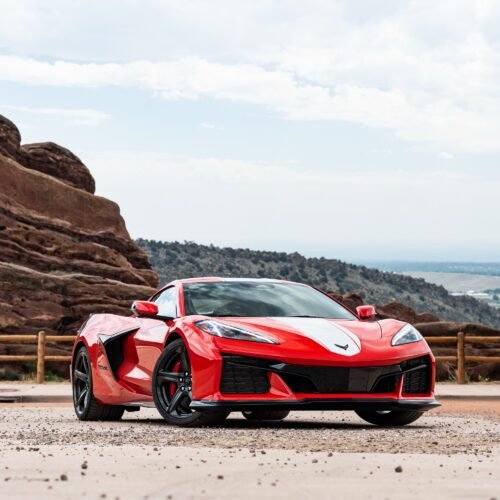
Out back, though, is something even newer: the LS6, a 6.7 L naturally aspirated V8 that will become the base engine in new Stingray models. This continues the Grand Sport tradition of sticking with the entry-level engine while borrowing all the performance-minded upgrades from elsewhere in the Corvette line.

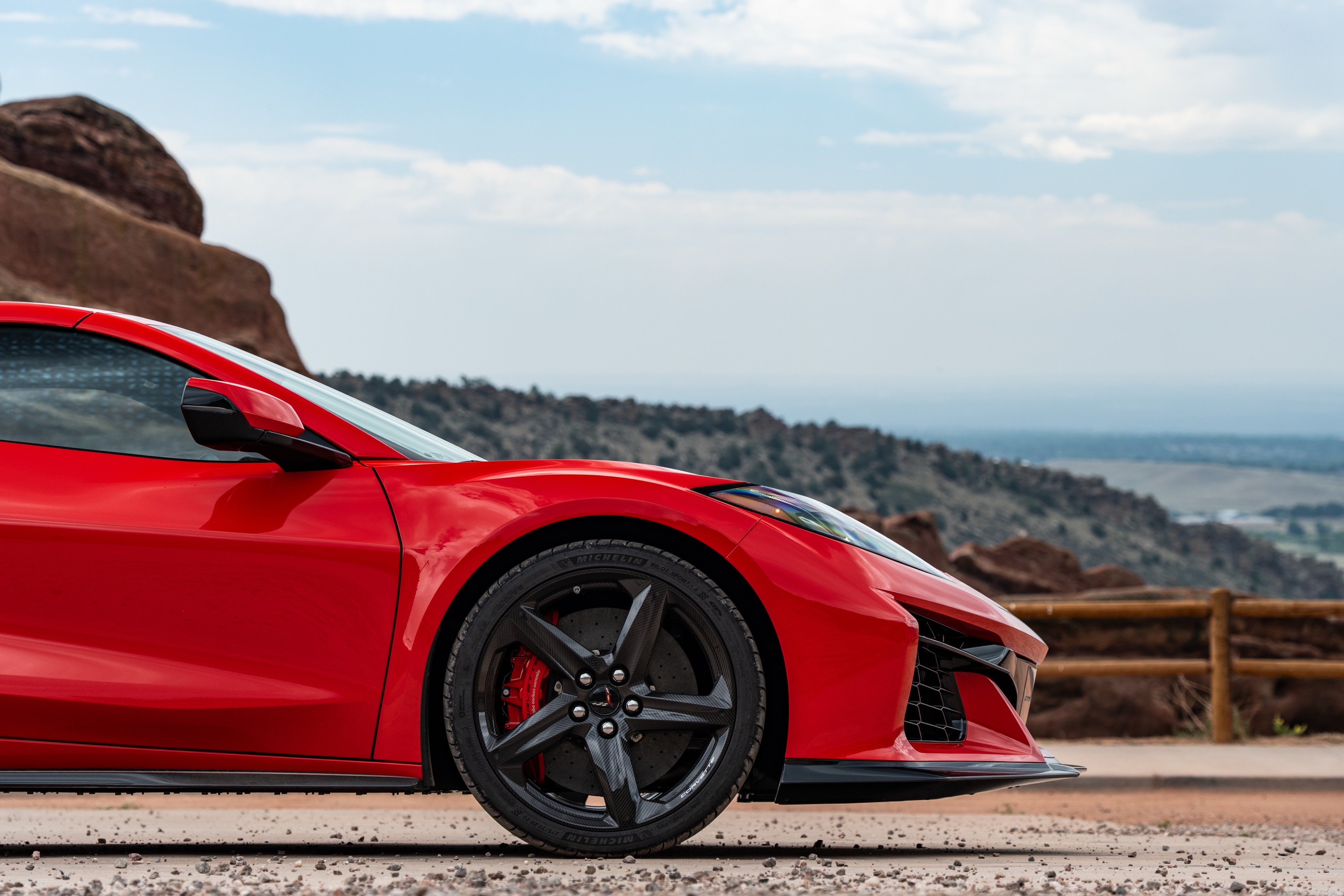
That includes carbon-ceramic brakes, standard Magnetic Ride Control suspension, and even optional carbon fiber wheels, all wrapped by the widebody shape that gives the Grand Sport and Grand Sport X a more aggressive look than the base Stingray.

New software makes a huge difference to the way it drives.

New software makes a huge difference to the way it drives. Credit: Tim Stevens

Beyond the powertrain, virtually nothing else has changed on the hardware side between the new Grand Sport X and the old E-Ray. “We were able to stay inside the same damper part number, springs, bars,” Badgley said. “We did look at changing parts; we just did not need to.”

Given that, I didn’t know what to expect when getting behind the wheel.

On the road

I spent a day crisscrossing Colorado in a pre-production Corvette E-Ray back in 2023. It just so happens that the Centennial State would also be my playground for a long weekend spent with one of the first Grand Sport X coupes to roll off the fabled production line in Bowling Green, Kentucky. I revisited some of the same roads from years ago, and I was immediately surprised by how different the two cars felt, considering they shared so much.

Much of that comes down to the engine. The new LS6 V8 has 40 more hp (30 kW) and 50 more lb-ft of torque (68 Nm) than the E-Ray’s V8. Meanwhile, the new electric motor delivers 186 hp (139 kW), 26 hp (19 kW) more than the E-Ray’s electric motor.

The result is a car that’s up 66 hp (49 kW) and 70 lb-ft (95 Nm) of torque over the outgoing E-Ray.

Corvette Grand Sport interior

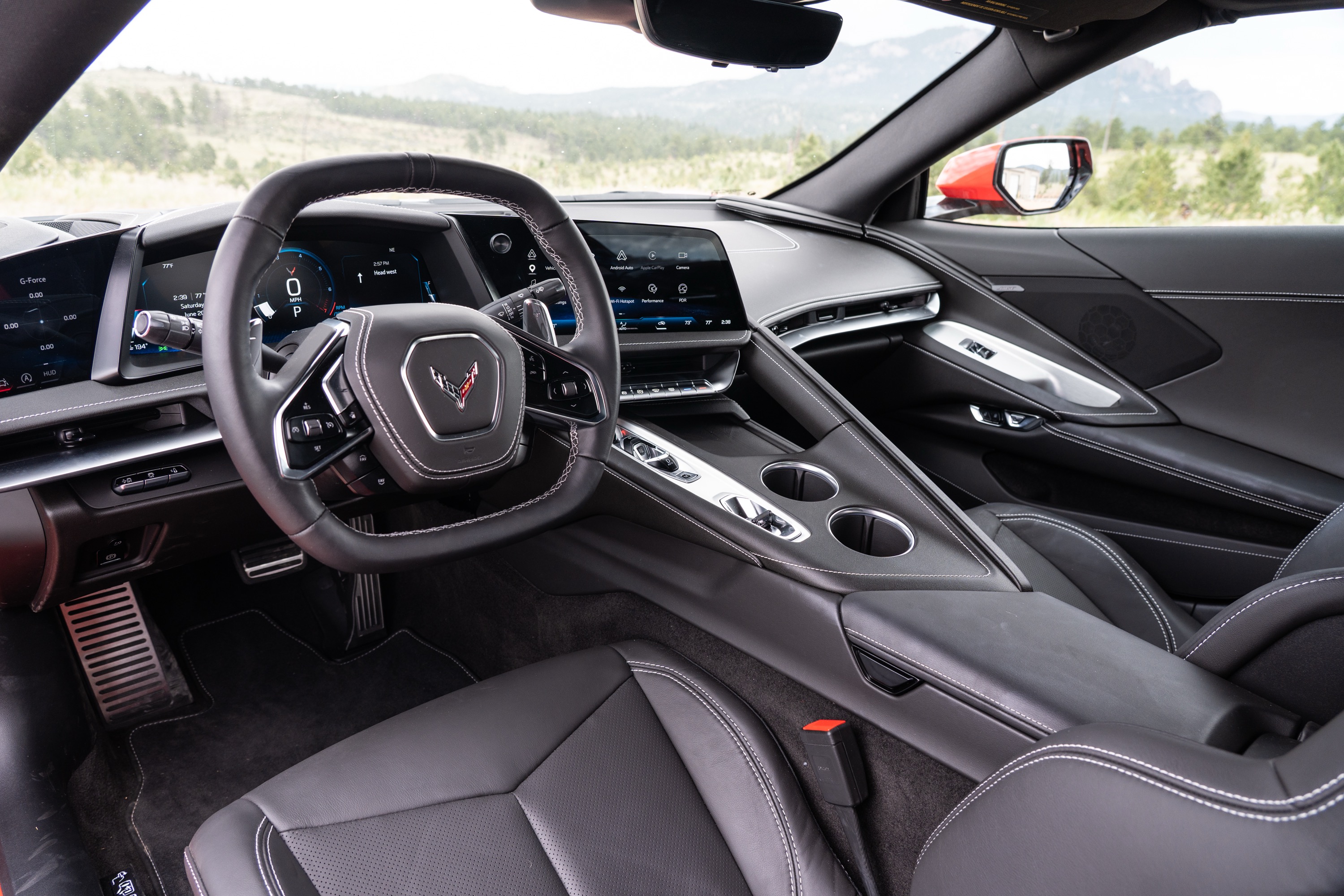
Some complaints about the C8 Corvette interior layout have been remedied with the Grand Sport.

Some complaints about the C8 Corvette interior layout have been remedied with the Grand Sport. Credit: Tim Stevens

It’s more aggressive, too, both in terms of its sound—especially when outfitted with the quad-pipe central exhaust—and in its power delivery. Badgley said his team uses a predictive algorithm to calculate the car’s dynamic control systems, relying on the additional torque of the new engine to change its feel. “We allowed ourselves to free up the car… relying on that predictive capability to dial in the front axle,” he said.

The software controlling the car’s adaptive suspension, stability control, and even the electronic differential has been revised to enable a sharper feel.

The result is a Corvette that not only fires up with a bit more flair but also puts its power down more aggressively. That shot of EV power from the front axle really helps the Grand Sport X feel properly quick, and when that motor starts to run out of steam, the V8 behind your head comes on at full song to drive you up to whatever maximum velocity you desire.

Corvette Grand Sport engine bay

The 2026 Grand Sport gets an all-new V8, which will also be found between the wheels of the regular Stingray.

The 2026 Grand Sport gets an all-new V8, which will also be found between the wheels of the regular Stingray. Credit: Tim Stevens

It doesn’t just deliver that feeling in a straight line. Through the corners, the Grand Sport X feels more eager and aggressive, especially when pushed hard. The average all-wheel-drive car doesn’t respond well to being driven into a corner. While the Grand Sport X still has a tendency toward initial understeer, it does the magical thing some cars with electric front axles can do: using the power up front to help pull its nose through the turn, creating a more balanced response when you push it hard.

But despite that extra eagerness, the Grand Sport X hasn’t sacrificed its everyday appeal. The adaptive dampers still do a fairly good job of smoothing out the ride on Colorado’s concrete highways, and the Corvette’s other charms remain intact. Being able to lose the roof and stow it in the trunk is one of my favorite parts of every modern Corvette, and that’s still true here.

What’s new, though, is the interior that’s exposed when you eject the roof. Gone is the wall of buttons between driver and passenger. The new layout has a 12.7-inch touchscreen and a more open center console that makes room for a wireless charging pad, though it sadly didn’t work so well in my testing.

More than a rebrand

The back of a red Corvette Grand Sport

It seems the recipe still works.

It seems the recipe still works. Credit: Tim Stevens

From a hardware standpoint, this is very much a continuation of the E-Ray line, just with the new motor at the front and engine at the back. But today’s cars are defined by code as much as they are components, and in that regard, the Grand Sport X really does feel like a substantially different machine, one that’s far more in keeping with the traditional Corvette experience.

The E-Ray really is dead, and that’s a shame. I liked seeing America’s iconic sports car branch out into new territory, much as Porsche has done by expanding its 911 offerings without diminishing the appeal of the core Carrera.

Regardless, the new Grand Sport X doesn’t disappoint on the road, though getting one there will take a substantial investment. While the non-hybrid Grand Sport starts at $88,495—$15,000 more than a base Stingray—the Grand Sport X starts at $112,195. That’s a hefty premium, and one that threatens to redefine the meaning of “Grand” in this context.

Wesley Bell Again Defeats Cori Bush — With Plenty of Help From AIPAC

0
wesley-bell-again-defeats-cori-bush-—-with-plenty-of-help-from-aipac
Wesley Bell Again Defeats Cori Bush — With Plenty of Help From AIPAC


Fueled by pro-Israel funding, Rep. Wesley Bell, D-Mo., fended off a primary challenge from former Rep. Cori Bush, whom he ousted from Congress two years ago.

The race in Missouri’s 1st Congressional District was one of several contests on Tuesday pitting the left and democratic socialists against establishment Democrats in a midterm cycle defined by competing visions for the future of the party. Just over an hour after polls closed, The Associated Press called in Bell’s favor.

Before polls closed on Tuesday evening, Bell brushed off Bush’s criticism of his support from the pro-Israel lobby.

“What we’ve seen over and over is talking about an issue that is not impacting folks right here in St. Louis, and while we take those issues seriously, you know, the M in Missouri doesn’t stand for Middle East. It stands for Missouri,” Bell said.

The question going into Tuesday’s primaries, including the widely watched Michigan Democratic Senate race, was whether progressives could win in the Midwest. Despite a decent track record in the region, it was unclear if the energy that boosted progressives in other primaries from New York to Colorado would be enough to help Bush, a former member of Congress and another democratic socialist, come back from a bruising loss two years ago.

Outside groups opposing Bush poured money into the rematch, spending $4.6 million against her or backing Bell. In comparison, Bush drew just $200,000 in outside spending in her favor. Most of that money came from the super PAC for the American Israel Public Affairs Committee, the pro-Israel group that took credit for ousting Bush last cycle. The group’s super PAC, United Democracy Project, spent $3 million against Bush this year, far less than the $8 million it poured out against her in 2024 as part of a historic investment targeting elected lawmakers critical of Israel. 

In response to that kind of spending, progressive groups put much more money into this year’s primaries, though they were still heavily outspent. But while groups like Justice Democrats and American Priorities, the new pro-Palestine super PAC, pumped record-setting sums in races in Michigan, Colorado, and New York, they did not spend in Bush’s race. Justice Democrats, which backed Bush in her 2020 election, gave Bush its endorsement this cycle but instead concentrated its resources on Tuesday in Michigan in support of state Rep. Donavan McKinney, another democratic socialist, in his bid against Rep. Shri Thanedar, D-Mich. Another new pro-Palestine PAC, the Institute for Middle East Understanding Policy Project, spent $20,000 in support of Bush.

With its funding, United Democracy Project recycled attacks that had helped topple Bush in 2024, hitting her for voting against former President Joe Biden’s infrastructure bill and claiming she had been an ineffective member of Congress. In line with that attack, a spokesperson for United Democracy Project, which ran the ads, recently described Bush as “a terrible member of Congress who didn’t do her job and didn’t deliver for St. Louis.” 

Bush’s critics, including AIPAC and Bell, painted her as failed experiment by the left, pointing to past positions on defunding police and criticism of Biden and former Vice President Kamala Harris’s support for Israel’s genocide in Gaza. Bush went on to endorse Harris, and many Democrats have come to share her views on Israel. But her opponents cast her as an “extreme” in the party’s left flank who was out of step with voters. 

Even some of Bush’s backers worried that the damage done last cycle would be enough to tank her attempt at a comeback. 

Although Bush won reelection by a wide margin in 2022, the pro-Israel lobby started laying the groundwork to oust her shortly after Hamas’s October 7, 2023, attacks in Israel. Bush, a vocal critic of Israel, drew ire from AIPAC and other pro-Israel actors after she introduced a resolution for a ceasefire in Gaza less than 10 days later, alongside Rep. Rashida Tlaib, D-Mich. AIPAC’s super PAC and other groups spent close to $20 million to oust her that cycle, hitting her for her vote against Biden’s infrastructure bill. Bush said she took that vote, along with five other leading progressive Democrats, because the measure did not do enough to expand funding for social services.

One Bush supporter said they heard frequently from St. Louis residents about the vote — despite the fact that she easily won reelection shortly after taking it. They suggested that voters only started caring about the vote after AIPAC told them to.

Bush said voters were frustrated by attacks from AIPAC after having been saturated by similar ads in 2024.

“People have been coming up to me apologizing,” Bush told The Intercept in an interview ahead of the primary. “Saying, ‘Cori, I just didn’t understand. I didn’t understand the ads. I didn’t understand what was being said about you. I didn’t know who AIPAC was.’”

Berlin Pride Attack Exposes Europe’s Changing Terrorism Threat   

0
berlin-pride-attack-exposes-europe’s-changing-terrorism-threat-  
Berlin Pride Attack Exposes Europe’s Changing Terrorism Threat   


Online radicalization, lone-actor violence, and Iran-linked networks are placing European security services under pressure from distinct but increasingly simultaneous threats 

The deadly attack near Berlin’s Pride celebrations in late July reopened a difficult question for European authorities: How should security institutions assess individuals whose commitment to extremist violence is visible online but has not yet developed into a specific, detectable attack plan?  

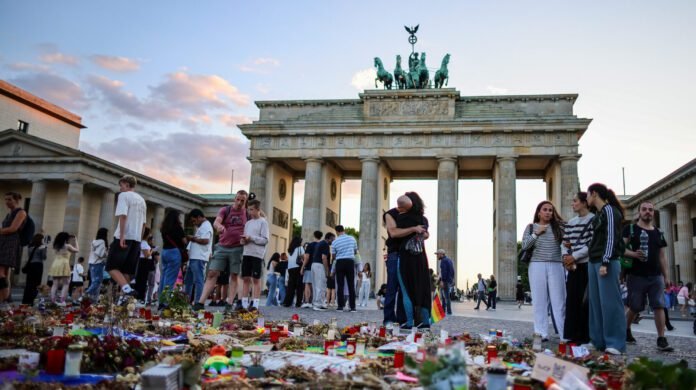
IOn July 25, a man drove a van into a crowd near the closing events of Berlin’s Christopher Street Day, one of Europe’s largest LGBTQ+ Pride celebrations. Investigators say the suspected attacker then continued on foot and was later found armed with a machete. A Polish woman was killed, and at least 29 people were injured. The 21-year-old suspect, Abdul Ballout, was killed the following day during a confrontation with police. German federal prosecutors subsequently confirmed that investigators had recovered a video in which a masked individual believed to be Ballout announced his intention to carry out an attack and pledged allegiance to the Islamic State (ISIS). 

The attack was not directed or operationally coordinated by ISIS, based on information publicly disclosed so far. It nevertheless reflects a model of violence that has become increasingly central to the jihadist threat in Europe: an individual radicalized through propaganda, acting with accessible weapons and apparently without requiring sustained contact with the organization’s central leadership.  

This distinction matters because Europe is not necessarily witnessing a return to the coordinated, high-casualty campaigns associated with the Islamic State’s territorial expansion between 2014 and 2017. The more immediate threat is dispersed across individuals and small groups whose ideological formation, communication and sometimes operational preparation take place largely online.  

“What we are observing in Europe is not so much a return to jihadist terrorism in the form we experienced between 2014 and 2017, but rather its transformation. This is probably the most important distinction to make,” Daniele Garofalo, an expert on extremist groups and jihadism, told The Media Line.  

Europol’s latest terrorism assessment reinforces that conclusion. According to the EU Terrorism Situation and Trend Report 2026 published in July, European Union member states reported 45 terrorist attacks in 2025 and 486 terrorism-related arrests. Jihadist terrorism accounted for 24 of the attacks and 347 arrests. Most attacks and plots involved lone actors or small, self-initiated cells using relatively simple methods. 

The imbalance between arrests and successful attacks does not necessarily indicate that the threat is expanding at the same rate as arrests. It may also demonstrate that intelligence and police services are intercepting suspects during the preparatory phases, including while acquiring materials, conducting surveillance, disseminating propaganda or attempting to contact foreign organizations.  

“This might appear paradoxical, but in reality it indicates that European authorities are intercepting a significant part of the threat before it materializes,” Garofalo said. “The increase in arrests does not necessarily mean that terrorism has suddenly surged, but that there is an active base of radicalization that security forces are monitoring more effectively.”  

European authorities are intercepting a significant part of the threat before it materializes

The Berlin case, however, illustrates the limitations of prevention when warning signs do not produce a sufficiently clear assessment of imminent intent.  

German prosecutors said Ballout had published prohibited Islamic State propaganda on Instagram twice in June 2024. In 2025, he traveled to Lebanon while allegedly intending to reach Syria and join the organization. He was detained in Lebanon before returning to Germany, where he was arrested and held in pretrial detention.  

In May 2026, a juvenile court convicted him and imposed a sentence of one year and 10 months for preparing a serious act of violence endangering the state and for offenses involving prohibited ISIS propaganda. The court postponed for six months a final decision on whether the sentence would be suspended, released him under the supervision of a probation officer and lifted the existing arrest warrant. It took into account his time in detention, his confession, his stated distancing from ISIS and the absence of a concrete threat resulting from the offenses. Prosecutors appealed, seeking a longer sentence that could not be suspended and the continuation of his detention.  

For Lucas Webber, a senior threat intelligence analyst at Tech Against Terrorism, the case demonstrates how online activity may be underestimated when assessed in isolation from the broader process of radicalization.  

“The Berlin Pride attack underscores the enduring threat of ISIS-inspired violence, where propaganda consumed and shared online sustains ideological commitment independent of any operational command link to ISIS leadership,” Webber told The Media Line.  

He continued, “The attacker had been convicted of publishing Islamic State propaganda online, yet received a suspended sentence because judges weighed his confession and apparent distancing from the group against the fact that no concrete threat had materialized, a judgment his subsequent actions have now overtaken. 

Ballout’s precise legal sentence was more complex than a suspended sentence that was immediately finalized, because the court had postponed that decision for six months. The central issue raised by Webber nevertheless remains: how much evidentiary weight should courts and security services assign to the repeated production, consumption or distribution of extremist propaganda when no specific target or operational plan has yet been identified?  

“That gap between digital activity and perceived risk is the core problem: online propaganda sharing is too often treated as a lesser offense, a symptom to be monitored rather than a direct indicator of intent, when in practice it is frequently the only visible marker of radicalization before an individual moves to violence,” Webber said.  

That gap between digital activity and perceived risk is the core problem

Europol has identified the same digital environment as a central component of contemporary terrorism. Its 2026 report states that online platforms allow extremist actors to reach, recruit and mobilize large audiences while coordinating activity both online and offline. Algorithmic distribution can amplify extremist content, while initial exposure on mainstream services may lead users towards closed groups and encrypted platforms containing more explicit material. Young and vulnerable individuals are considered particularly susceptible.  

Among jihadist suspects, Europol found that most arrested individuals had been inspired by ISIS propaganda, although direct organizational connections were less common. Radicalization often began with user-generated jihadist material on social networks, youth-oriented platforms or gaming environments before moving towards more secure communications.  

“In recent years, the distinction between propaganda and operational planning has become increasingly blurred,” Garofalo said. “Many individuals begin by consuming extremist content, gradually come into contact with digital networks, establish relationships with online facilitators and, in some cases, eventually begin preparing an attack. The radicalization process is far more individualized than it was in the past and often does not pass through clandestine mosques or structured territorial networks.”  

This transformation also affects attack methods. Complex, coordinated operations require communications, financing, logistics, and personnel, which increase the likelihood of detection. Vehicles, knives, improvised weapons and arson require fewer resources and can be deployed with limited preparation.  

“The relatively limited number of successful attacks should not be interpreted as an indicator that the threat is low,” Garofalo said. “On the contrary, it also reflects the high effectiveness of the preventive work conducted by intelligence services, counterterrorism units and international cooperation. Many plots are disrupted during their initial stages, when individuals are still acquiring materials, carrying out reconnaissance or communicating with other extremists.”  

The Berlin attack has not been connected to Iran, Hezbollah, Hamas or any Iranian state structure. Conflating ISIS-inspired terrorism with Iranian or Iran-aligned operations would obscure significant ideological and operational differences.  

Its relevance to the wider Iran-Israel-United States conflict lies instead in the cumulative burden on European security services, which must now monitor several distinct threat environments at once.  

The war has intensified propaganda, political polarization and threats against Jewish, Israeli, Iranian opposition and Western targets. Europol has warned that groups linked to Iran’s regional network could seek to conduct destabilizing activities in Europe, potentially including terrorism, intimidation, financing and cybercrime. The agency also warned that the rapid spread of polarizing material could accelerate short-term radicalization among individuals and diaspora communities.  

According to the EU’s 2026 terrorism report, pressure on Iran and its proxy network could generate more direct threats inside Europe. While Iran-aligned organizations had historically used European territory primarily for fundraising and logistical activity, Europol warned that some could increasingly consider attacks against Jewish, Israeli or other targets. The report also referred to indications that Iranian actors and proxies had used criminal networks in incidents across several member states.    

In February, the European Union formally added Iran’s Islamic Revolutionary Guard Corps to its terrorism list, subjecting the organization to asset freezes and restrictions on access to economic resources inside the bloc. Britain has separately sanctioned individuals and entities allegedly connected to an Iran-linked criminal network accused of planning attacks and facilitating hostile activity. Tehran has repeatedly denied involvement in attacks and plots in Europe.  

These developments represent a different security model from the largely self-directed ISIS supporter. Iran-linked activity may involve state intelligence structures, proxy organizations, financial networks, surveillance operations, criminal intermediaries and deniable acts of violence. Yet both threat environments may exploit similar vulnerabilities: encrypted communications, decentralized online recruitment, informal financial channels and individuals who initially appear peripheral to organized terrorism.  

“The traditional jihadist threat has recently been joined by an additional layer of risk linked to the growing tensions among Iran, Israel and the United States,” Garofalo said.  

“European authorities have intensified their monitoring of individuals connected to the Iranian apparatus, Hamas, Hezbollah and other affiliated organizations, not only because of the risk of attacks but also because of intelligence activities, surveillance, financing and logistical support. This is a different threat from the one represented by the Islamic State or al-Qaeda, but it is potentially complementary.”  

The word “complementary” does not necessarily imply cooperation between ideologically hostile organizations. ISIS has repeatedly portrayed Iran and Shiite groups such as Hezbollah as enemies. Rather, it describes the cumulative pressure placed on European institutions when several unrelated networks operate within overlapping digital, financial and criminal ecosystems.  

International conflicts also offer extremist movements a constant supply of images and grievances that can be reframed for recruitment. Europol found that conflicts in the Middle East continued to be exploited in 2025 by jihadist, far-right, left-wing and other violent extremist actors, sometimes contributing to threats or attacks against Jewish and Muslim communities.  

The challenge for European governments is therefore broader than identifying members of a particular organization. They must distinguish between lawful political expression, possession or dissemination of illegal propaganda, ideological commitment and concrete preparation for violence—often on the basis of fragmented digital evidence and before a suspect has selected a target.  

Webber said the case shows why authorities should maintain long-term scrutiny of people with documented histories of creating or circulating extremist material, rather than ending monitoring at conviction or release. In his view, online expressions of ideological commitment can persist despite apparent remorse or claims of disengagement and should remain part of risk assessments.  

“Platforms, courts, and security services all have a stake in closing that gap, treating sustained online extremist activity as a persistent risk factor rather than a resolved one once a sentence is served,” he said.  

Platforms, courts, and security services all have a stake … in treating sustained online extremist activity as a persistent risk factor rather than a resolved one once a sentence is served,

Such monitoring also raises questions of proportionality, judicial oversight and the allocation of limited counterterrorism resources. Not every individual who views or shares extremist material will proceed to violence, and treating digital consumption alone as proof of operational intent risks weakening legal safeguards and producing assessments that are too broad to be effective.  

The Berlin attack nevertheless demonstrates the consequences of the opposite failure: dismissing online extremist behavior as peripheral when it may be the clearest available evidence of an individual’s ideological trajectory.  

Europe’s emerging security environment is not defined by a single organization or a single conflict. It combines persistent Islamic State inspiration, increasingly individualized radicalization, Iran-linked state and proxy activity, and the exploitation of geopolitical crises by multiple forms of extremism.  

It is less reminiscent of a single, organized terrorist campaign than of a fragmented, continuous threat environment. The principal test for European institutions will be whether they can identify when digital allegiance becomes operational intent—without conflating distinct actors, criminalizing communities or waiting until the final stage of radicalization becomes visible through violence.  



Actor Attacked by ‘Psychopath’ Co-Star Before Brad Pitt Stepped In

0
actor-attacked-by-‘psychopath’-co-star-before-brad-pitt-stepped-in
Actor Attacked by ‘Psychopath’ Co-Star Before Brad Pitt Stepped In


Scott Eastwood is opening up about the explosive behind-the-scenes drama that nearly turned the set of Fury into a real-life battlefield.

The 40-year-old actor claimed he almost came to blows with Shia LaBeouf while filming the gritty 2014 World War II movie — forcing their co-star Brad Pitt to step in and defuse the situation.

Eastwood described making the movie as an “incredible experience,” but admitted it was also extremely difficult because of LaBeouf’s intense behavior.

“It was tough,” Eastwood said during the August 3 episode of Dax Shepard’s Armchair Expert podcast.

According to Eastwood, LaBeouf took method acting to disturbing extremes before filming had even begun.

“From what I recall, he pulled out one of his teeth,” Eastwood said. “He pulled out his tooth, but then he cut himself.”

Eastwood said the bizarre behavior immediately convinced him to keep his distance.

“I remember thinking, ‘Okay, this guy’s crazy. I’m just going to keep clear of him because I don’t play that game,’” he recalled.

Eastwood said actors should be able to deliver powerful performances without creating chaos for everyone around them.

“There are plenty of ways to do a performance in a movie and be professional also,” he said. “There are plenty of ways to deliver a great performance in a movie and still be professional.”

But keeping his distance apparently wasn’t enough.

Eastwood said the tension finally exploded during a scene in which his character was supposed to spit tobacco on a tank. Although the action was written into the script, LaBeouf allegedly took issue with it.

“One day he was having an episode and decided I shouldn’t be spitting tobacco on the tank, which was in the script,” Eastwood explained.

The son of Hollywood legend Clint Eastwood said he eventually lost his patience and confronted LaBeouf.

“Finally, I just said, ‘Enough’s enough,’” he recalled. “I said, ‘Hey, f— you. Stop pulling your s—. I’m going to whoop your a–.’”

LaBeouf allegedly responded to the challenge, and the confrontation appeared moments away from becoming physical.

“He got froggy, and then everyone broke it up,” Eastwood said.

Eastwood claimed Pitt helped calm the situation before fists started flying.

“Brad Pitt sort of broke up a little tense moment,” he revealed.

Eastwood also suggested the confrontation was not an isolated incident. He claimed several members of the cast experienced tense moments with LaBeouf during production.

“We all had moments with Shia where it felt like things were going to come to blows,” he said.

Shepard brought up Fury co-star Jon Bernthal, who had reportedly been frustrated by LaBeouf’s extreme method acting before eventually admitting that the troubled star delivered an impressive performance.

Eastwood acknowledged that LaBeouf appeared to be struggling with serious personal issues at the time.

“Look, Shia is clearly tormented and has maybe got, you know, some stuff going on,” he said.

Shepard interjected with a reference to addiction. LaBeouf has publicly discussed his struggles with alcohol and other personal problems over the years.

Despite the frightening experience, Eastwood appeared to recognize the complicated line between artistic intensity and unacceptable behavior.

“The film industry attracts psychopaths because it’s where art and business intersect,” he declared.

Brace for higher US interest rates from the Fed

0
brace-for-higher-us-interest-rates-from-the-fed
Brace for higher US interest rates from the Fed

The bond market has been pushing interest rates higher in recent weeks. Though the Federal Reserve Board’s Federal Open Market Committee kept the benchmark federal funds rate unchanged at its Aug. 28-29 meeting, it could well follow suit by year’s end.

The policy statement the FOMC released after that meeting left markets and commentators wondering what the committee is waiting for. According to the statement, “economic activity is expanding at a solid pace,” and the unemployment rate is low but “inflation remains elevated related to the committee’s 2 percent goal.”

In other words, the Fed is achieving the “maximum employment” part of its dual mandate but failing the “price stability” part. That’s a recipe for a rate increase.

Three of the 12 voting members of the committee wanted to act now. They dissented, preferring a quarter-point increase to holding the benchmark rate unchanged. Minutes of the committee’s April and June meetings show other committee members contemplating rate hikes, too.

More: When the FOMC members made their latest economic projections in June, eight of the 19 members expected a rate increase sometime this year. (Only 12 of the 19 vote, with four of the voting slots rotating annually.)

The committee’s hawkish mood is easy to understand. The latest personal consumption expenditures price index, the Fed’s preferred inflation measure, declined only 0.1% from the previous month. It was 3.7% higher than a year earlier.

Inflation has been well above the Fed’s 2% target for five years. There’s little reason to think it will subside to 2% any time soon. Iran’s continuing chokehold on the Hormuz Strait portends continuing high energy prices.

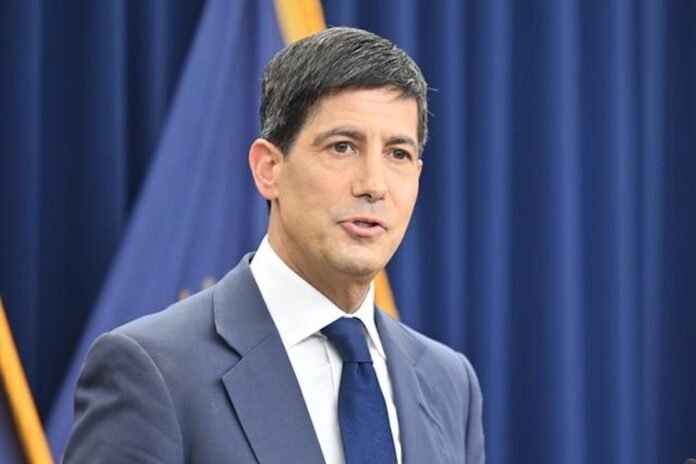
It looks, then, like the FOMC’s next move should be up and soon. The question is, does Federal Reserve Board Chair Kevin Warsh agree?

After Warsh’s first FOMC meeting in June, markets thought the answer was yes. Though the committee held its target rate unchanged at that meeting, Warsh sounded hawkish at the post-meeting press conference. He was cagey; unlike recent predecessors, he rejected giving “forward guidance” about the direction of rates. But he vowed that the Fed would bring inflation down.

Everyone knows President Donald Trump said any Federal Reserve chair he nominated would favor lower interest rates. But at his Senate confirmation hearing in April, Warsh said he’d made no promises to the president. He assured senators he wouldn’t be Trump’s puppet.

Hearing his June press conference, bond investors decided he was a closet hawk. They pushed up market interest rates, arguably in anticipation of Fed rate increases. Warsh, however, interpreted those increases differently.

At his latest press conference, he said market participants were reacting to news about economic growth and inflation rather than anticipating future Fed moves. “Market participants are learning to play the ball, not the referee,” he said.

The markets didn’t react well. His remarks spurred sharp increases in interest rates on long bonds, those most sensitive to inflation. This looked like fear the Fed might let inflation get out of control. As a Wall Street Journal headline put it, “Kevin Warsh’s Honeymoon With the Bond Market Is Already Over.”

As for Warsh’s remark about referees and balls, the Journal’s chief economics commentator, Greg Ip, countered: “The Fed isn’t a neutral umpire, it’s the most important player in the game.”

Warsh’s defenders say he’s just making the markets do their job: Base investment decisions on their assessments of the economy, not the Fed’s intentions. But as long as there’s an actor with the Fed’s power over the economy around, markets must pay attention to it.

Warsh and his supporters may think that by shutting up and not giving guidance the Fed forces investors to ignore the central bank. What silence actually does is leave investors making raw guesses as to where the Fed is going. Many of their guesses will be wrong. Markets will be more volatile.

When Warsh sounded hawkish in June, markets drove up rates in anticipation of Fed rate increases. When he seemed pleased in September that markets were doing the Fed’s work for it, bond investors drove up rates for fear the Fed wouldn’t act.

The first kind of anticipation is healthy even if it involves “playing the referee.” The second is worrisome. It’s a warning sign that Warsh is losing credibility.

It may not be a very serious or lasting loss – time will tell – but credibility is crucial for the Fed. It wouldn’t be surprising if Warsh felt the need to restore it, which is yet another reason to think the FOMC will be raising rates soon.

Barring an unexpected downturn in inflation, then, the Fed has many reasons to raise rates. Will that happen in September, before the midterm elections, or at the Fed’s final meeting of the year in December?

If the Fed raises rates in September, Warsh will face a cranky president. If it doesn’t raise them, he’ll face a cranky bond market.

We will soon see which is of greater concern to Warsh.

Former longtime Wall Street Journal Asia correspondent and editor Urban Lehner is editor emeritus of DTN/The Progressive Farmer. This article, originally published on August 3 by the latter news organization and now republished by Asia Times with permission, is © Copyright 2026 DTN, LLC. All rights reserved.  Follow Urban Lehner on X @urbanize.

Trump admin “aware” of deaths in explosive diarrhea outbreak, delays reporting

0
trump-admin-“aware”-of-deaths-in-explosive-diarrhea-outbreak,-delays-reporting
Trump admin “aware” of deaths in explosive diarrhea outbreak, delays reporting

Two people have died amid the ongoing record-breaking outbreak of explosive diarrhea from the foodborne parasite Cyclospora, Michigan health officials announced Monday.

Cyclosporiasis fatalities are extremely rare, and despite the massive size of the outbreak, some experts were still surprised by the deaths. The Michigan Department of Health and Human Services on Monday said that medical records of both individuals indicated that they had “significant underlying health conditions that may have been impacted by cyclosporiasis and dehydration.”

MDHHS noted that both fell ill with the diarrheal infection before Taylor Farms recalled its shredded iceberg lettuce grown in Mexico, which has been linked to thousands of cases in at least nine states. Cyclospora is a unicellular parasite that spreads in human feces and is often transmitted via contaminated fresh produce, such as lettuces and other fruits and vegetables that have uneven surfaces for the parasite to grip. Past culprits have included fresh herbs, raspberries, green onions, and snow peas.

While news of the deaths made widespread headlines Monday, federal health agencies under the Trump administration were mostly silent. The Food and Drug Administration—which is conducting traceback investigations to identify foods contaminated with the parasite—has not updated its outbreak investigation page since July 24, nearly two weeks ago, as of publication time.

The Centers for Disease Control and Prevention, meanwhile, added a banner notice on its outbreak update webpage saying that the agency was “aware” of the two cases. But its reporting data was not updated to include the two deaths as of this publication.

Sluggish data

Ars Technica contacted the US Department of Health and Human Services about the un-updated numbers to ask if the CDC was still awaiting confirmatory data on the two deaths. In a response, HHS Press Secretary Emily Hilliard confirmed the information provided by Michigan’s health department on the two deaths and said that “FDA and CDC plan to update overall illness numbers, hospitalizations, and deaths this week.”

Outside experts have speculated that the agencies’ sluggish responses to the outbreak may stem from harsh budget and staffing cuts, along with widespread upheaval at the agencies. Anti-vaccine Health Secretary Robert F. Kennedy Jr. has generally tried to shift focus away from infectious diseases and outbreak prevention—aligning with his longstanding efforts to disparage vaccines and downplay their need—and instead redirect attention to wellness campaigns, such as improving diet and exercise.

Two weeks ago, Kennedy confidentially told reporters that the Cyclospora outbreak—linked to lettuce and other unidentified fresh produce—was “under control.” Last week, he announced his own cooking show on YouTube and released the first episode in which he helped prepare a meal that included a fresh salad.

With the CDC and FDA not keeping pace with the outbreak, there is no up-to-date official nationwide tally. Outside experts have been tracking counts from individual states, and local health departments have tallied case numbers of between 17,000 and nearly 23,000. These counts include both confirmed and probable cases. At least 45 states have reported cases. Michigan alone has reported over 11,000 cases, with 193 hospitalizations. Over the past several years, annual counts of cyclosporiasis cases have been between 2,000 and 5,000.

While officials in Michigan are hopeful that the outbreak has peaked in their hard-hit state, others are still seeing jumps. Missouri, for instance, reported on Sunday that its case count nearly doubled, from 593 on July 26 to 1,095 on August 2. Missouri is not one of the nine states that the CDC and FDA have tied to the multi-state outbreak linked to Taylor Farms lettuce, which was sold at Taco Bell restaurants, among other locations. However, Taylor Farms’ recall indicates that Missouri is among the 27 states where its lettuce was distributed.

Indian vessel sinks after Red Sea attack off Yemen, all 14 crew rescued

0
indian-vessel-sinks-after-red-sea-attack-off-yemen,-all-14-crew-rescued
Indian vessel sinks after Red Sea attack off Yemen, all 14 crew rescued

A protestor lifts a mock drone with flags of Yemen and Palestine under a billboard depicting the picture of targeting an Israel-linked ship by Yemen's Houthi forces in the Red Sea, during a demonstration staged against the latest aerial attacks hit Yemen's port city of Hudaydah by Israel and its ongoing war on Palestine, on July 26, 2024, in Sana'a, Yemen. [Mohammed Hamoud/Getty Images]

A protestor lifts a mock drone with flags of Yemen and Palestine under a billboard depicting the picture of targeting an Israel-linked ship by Yemen’s Houthi forces in the Red Sea, during a demonstration staged against the latest aerial attacks hit Yemen’s port city of Hudaydah by Israel and its ongoing war on Palestine, on July 26, 2024, in Sana’a, Yemen. [Mohammed Hamoud/Getty Images]

An Indian vessel sank after coming under attack in the Red Sea by an explosives-laden boat off Yemen’s western coast, with all 14 crew members rescued, Yemen’s government-aligned National Resistance Forces announced on Tuesday, Anadolu reports.

The forces’ December 2 news agency said the Faize Noore Oliya was attacked while sailing about 13 nautical miles south of Al Hudaydah, in the Red Sea, causing it to sink.

The agency did not give details about the circumstances of the attack or identify the party responsible.

It said the Yemeni Navy and Coast Guard carried out a joint rescue operation that saved all 14 crew members, including 13 Indian sailors and one Yemeni.

No casualties were recorded, and the crew members were transferred to a safe location where they received medical assistance, the report added.

The outlet did not specify the vessel’s flag or ownership, identifying it only as an Indian ship. No group had claimed responsibility for the attack as of 1415GMT.

The National Resistance Forces are deployed along Yemen’s western coast near the Bab al-Mandab Strait and are led by Tareq Saleh, a member of the Presidential Leadership Council.

The incident comes amid renewed threats to maritime navigation in the Red Sea and the Bab al-Mandab Strait following a resurgence of attacks on commercial vessels last month.

On July 20, the Houthi group announced what it described as a “naval blockade” on Saudi Arabia. Riyadh warned that it would respond firmly to any threat targeting its vessels.

The Bab al-Mandab Strait is a strategic waterway linking the Red Sea to the Gulf of Aden and the Arabian Sea. Al Hudaydah, which is controlled by the Houthis, lies on the eastern coast of the Red Sea near major international shipping lanes.

Greek PM Mitsotakis urges EU to use all available tools against ‘weaponized’ migration

0
greek-pm-mitsotakis-urges-eu-to-use-all-available-tools-against-‘weaponized’-migration
Greek PM Mitsotakis urges EU to use all available tools against ‘weaponized’ migration


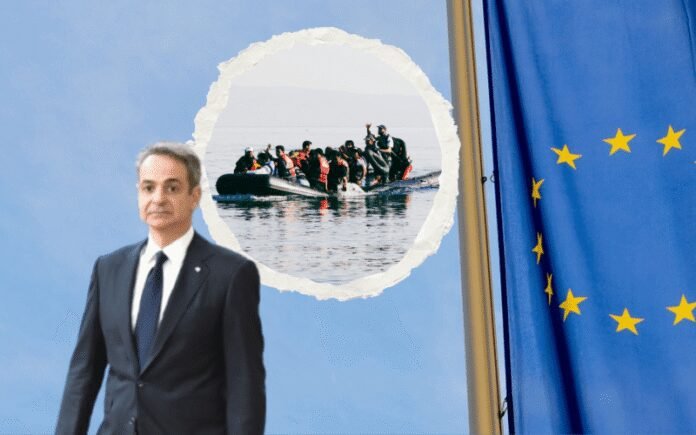
Greek Prime Minister Kyriakos Mitsotakis urged the European Union to make full use of existing legal and operational tools to counter what he described as the “weaponization” of migration, arguing that irregular migration is increasingly being used to pressure frontline member states.

Speaking amid a broader European debate over border security and migration management, Mitsotakis said Greece’s experience has shown that migration flows can become a strategic challenge requiring a coordinated European response. He called for stronger protection of the EU’s external borders, more effective return mechanisms for migrants who do not qualify for protection, and closer cooperation with countries of origin and transit.

The Greek leader’s remarks come as EU governments grapple with renewed tensions over migration policy following recent developments in the Spanish enclave of Ceuta. European Commission President Ursula von der Leyen has told Spain that the bloc must do more to strengthen its borders at “critical points” while maintaining solidarity with member states facing migration pressure.

Greece has long argued that migration can be used by neighboring countries as a means of exerting political leverage on the European Union. Mitsotakis previously characterized the 2020 surge of migrants at the Greek-Turkish border as an “asymmetrical threat” to both Greece and the EU.

Athens has consistently advocated a tougher EU approach combining border enforcement with asylum procedures and returns. The government says its policy is “firm but fair,” while critics have accused Greece of unlawful pushbacks, allegations the Greek authorities deny.

Mitsotakis said frontline states need greater European support in managing secondary migration movements within the bloc and in implementing return decisions that have often proven difficult to enforce.

The intervention also reflects a wider shift among several EU governments toward treating irregular migration as a matter of security and resilience, particularly after the EU identified the orchestration of migration flows by Belarus in 2021 as a form of hybrid pressure against the bloc.

No new EU measures were announced, but Mitsotakis’ comments add to growing calls from member states for the European Commission to use existing instruments more aggressively before proposing additional legislation.

Via Politico

0FansLike
0FollowersFollow
0FollowersFollow
0SubscribersSubscribe
- Advertisement -
Google search engine

Recent Posts