18.5 C
London
Wednesday, August 5, 2026
Home Blog

Brace for higher US interest rates from the Fed

0
brace-for-higher-us-interest-rates-from-the-fed
Brace for higher US interest rates from the Fed

The bond market has been pushing interest rates higher in recent weeks. Though the Federal Reserve Board’s Federal Open Market Committee kept the benchmark federal funds rate unchanged at its Aug. 28-29 meeting, it could well follow suit by year’s end.

The policy statement the FOMC released after that meeting left markets and commentators wondering what the committee is waiting for. According to the statement, “economic activity is expanding at a solid pace,” and the unemployment rate is low but “inflation remains elevated related to the committee’s 2 percent goal.”

In other words, the Fed is achieving the “maximum employment” part of its dual mandate but failing the “price stability” part. That’s a recipe for a rate increase.

Three of the 12 voting members of the committee wanted to act now. They dissented, preferring a quarter-point increase to holding the benchmark rate unchanged. Minutes of the committee’s April and June meetings show other committee members contemplating rate hikes, too.

More: When the FOMC members made their latest economic projections in June, eight of the 19 members expected a rate increase sometime this year. (Only 12 of the 19 vote, with four of the voting slots rotating annually.)

The committee’s hawkish mood is easy to understand. The latest personal consumption expenditures price index, the Fed’s preferred inflation measure, declined only 0.1% from the previous month. It was 3.7% higher than a year earlier.

Inflation has been well above the Fed’s 2% target for five years. There’s little reason to think it will subside to 2% any time soon. Iran’s continuing chokehold on the Hormuz Strait portends continuing high energy prices.

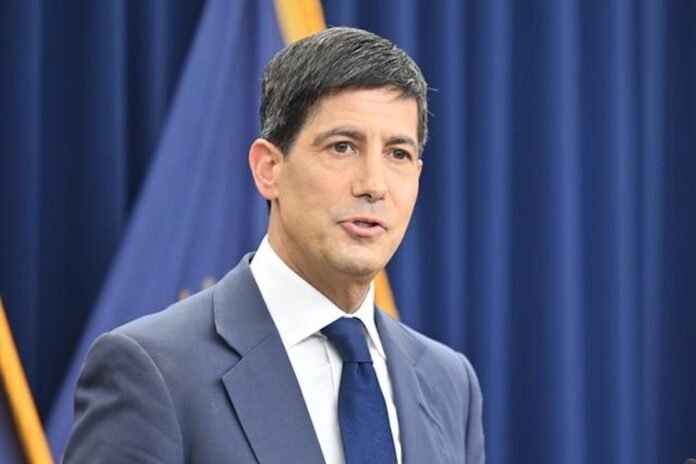
It looks, then, like the FOMC’s next move should be up and soon. The question is, does Federal Reserve Board Chair Kevin Warsh agree?

After Warsh’s first FOMC meeting in June, markets thought the answer was yes. Though the committee held its target rate unchanged at that meeting, Warsh sounded hawkish at the post-meeting press conference. He was cagey; unlike recent predecessors, he rejected giving “forward guidance” about the direction of rates. But he vowed that the Fed would bring inflation down.

Everyone knows President Donald Trump said any Federal Reserve chair he nominated would favor lower interest rates. But at his Senate confirmation hearing in April, Warsh said he’d made no promises to the president. He assured senators he wouldn’t be Trump’s puppet.

Hearing his June press conference, bond investors decided he was a closet hawk. They pushed up market interest rates, arguably in anticipation of Fed rate increases. Warsh, however, interpreted those increases differently.

At his latest press conference, he said market participants were reacting to news about economic growth and inflation rather than anticipating future Fed moves. “Market participants are learning to play the ball, not the referee,” he said.

The markets didn’t react well. His remarks spurred sharp increases in interest rates on long bonds, those most sensitive to inflation. This looked like fear the Fed might let inflation get out of control. As a Wall Street Journal headline put it, “Kevin Warsh’s Honeymoon With the Bond Market Is Already Over.”

As for Warsh’s remark about referees and balls, the Journal’s chief economics commentator, Greg Ip, countered: “The Fed isn’t a neutral umpire, it’s the most important player in the game.”

Warsh’s defenders say he’s just making the markets do their job: Base investment decisions on their assessments of the economy, not the Fed’s intentions. But as long as there’s an actor with the Fed’s power over the economy around, markets must pay attention to it.

Warsh and his supporters may think that by shutting up and not giving guidance the Fed forces investors to ignore the central bank. What silence actually does is leave investors making raw guesses as to where the Fed is going. Many of their guesses will be wrong. Markets will be more volatile.

When Warsh sounded hawkish in June, markets drove up rates in anticipation of Fed rate increases. When he seemed pleased in September that markets were doing the Fed’s work for it, bond investors drove up rates for fear the Fed wouldn’t act.

The first kind of anticipation is healthy even if it involves “playing the referee.” The second is worrisome. It’s a warning sign that Warsh is losing credibility.

It may not be a very serious or lasting loss – time will tell – but credibility is crucial for the Fed. It wouldn’t be surprising if Warsh felt the need to restore it, which is yet another reason to think the FOMC will be raising rates soon.

Barring an unexpected downturn in inflation, then, the Fed has many reasons to raise rates. Will that happen in September, before the midterm elections, or at the Fed’s final meeting of the year in December?

If the Fed raises rates in September, Warsh will face a cranky president. If it doesn’t raise them, he’ll face a cranky bond market.

We will soon see which is of greater concern to Warsh.

Former longtime Wall Street Journal Asia correspondent and editor Urban Lehner is editor emeritus of DTN/The Progressive Farmer. This article, originally published on August 3 by the latter news organization and now republished by Asia Times with permission, is © Copyright 2026 DTN, LLC. All rights reserved.  Follow Urban Lehner on X @urbanize.

Trump admin “aware” of deaths in explosive diarrhea outbreak, delays reporting

0
trump-admin-“aware”-of-deaths-in-explosive-diarrhea-outbreak,-delays-reporting
Trump admin “aware” of deaths in explosive diarrhea outbreak, delays reporting

Two people have died amid the ongoing record-breaking outbreak of explosive diarrhea from the foodborne parasite Cyclospora, Michigan health officials announced Monday.

Cyclosporiasis fatalities are extremely rare, and despite the massive size of the outbreak, some experts were still surprised by the deaths. The Michigan Department of Health and Human Services on Monday said that medical records of both individuals indicated that they had “significant underlying health conditions that may have been impacted by cyclosporiasis and dehydration.”

MDHHS noted that both fell ill with the diarrheal infection before Taylor Farms recalled its shredded iceberg lettuce grown in Mexico, which has been linked to thousands of cases in at least nine states. Cyclospora is a unicellular parasite that spreads in human feces and is often transmitted via contaminated fresh produce, such as lettuces and other fruits and vegetables that have uneven surfaces for the parasite to grip. Past culprits have included fresh herbs, raspberries, green onions, and snow peas.

While news of the deaths made widespread headlines Monday, federal health agencies under the Trump administration were mostly silent. The Food and Drug Administration—which is conducting traceback investigations to identify foods contaminated with the parasite—has not updated its outbreak investigation page since July 24, nearly two weeks ago, as of publication time.

The Centers for Disease Control and Prevention, meanwhile, added a banner notice on its outbreak update webpage saying that the agency was “aware” of the two cases. But its reporting data was not updated to include the two deaths as of this publication.

Sluggish data

Ars Technica contacted the US Department of Health and Human Services about the un-updated numbers to ask if the CDC was still awaiting confirmatory data on the two deaths. In a response, HHS Press Secretary Emily Hilliard confirmed the information provided by Michigan’s health department on the two deaths and said that “FDA and CDC plan to update overall illness numbers, hospitalizations, and deaths this week.”

Outside experts have speculated that the agencies’ sluggish responses to the outbreak may stem from harsh budget and staffing cuts, along with widespread upheaval at the agencies. Anti-vaccine Health Secretary Robert F. Kennedy Jr. has generally tried to shift focus away from infectious diseases and outbreak prevention—aligning with his longstanding efforts to disparage vaccines and downplay their need—and instead redirect attention to wellness campaigns, such as improving diet and exercise.

Two weeks ago, Kennedy confidentially told reporters that the Cyclospora outbreak—linked to lettuce and other unidentified fresh produce—was “under control.” Last week, he announced his own cooking show on YouTube and released the first episode in which he helped prepare a meal that included a fresh salad.

With the CDC and FDA not keeping pace with the outbreak, there is no up-to-date official nationwide tally. Outside experts have been tracking counts from individual states, and local health departments have tallied case numbers of between 17,000 and nearly 23,000. These counts include both confirmed and probable cases. At least 45 states have reported cases. Michigan alone has reported over 11,000 cases, with 193 hospitalizations. Over the past several years, annual counts of cyclosporiasis cases have been between 2,000 and 5,000.

While officials in Michigan are hopeful that the outbreak has peaked in their hard-hit state, others are still seeing jumps. Missouri, for instance, reported on Sunday that its case count nearly doubled, from 593 on July 26 to 1,095 on August 2. Missouri is not one of the nine states that the CDC and FDA have tied to the multi-state outbreak linked to Taylor Farms lettuce, which was sold at Taco Bell restaurants, among other locations. However, Taylor Farms’ recall indicates that Missouri is among the 27 states where its lettuce was distributed.

Indian vessel sinks after Red Sea attack off Yemen, all 14 crew rescued

0
indian-vessel-sinks-after-red-sea-attack-off-yemen,-all-14-crew-rescued
Indian vessel sinks after Red Sea attack off Yemen, all 14 crew rescued

A protestor lifts a mock drone with flags of Yemen and Palestine under a billboard depicting the picture of targeting an Israel-linked ship by Yemen's Houthi forces in the Red Sea, during a demonstration staged against the latest aerial attacks hit Yemen's port city of Hudaydah by Israel and its ongoing war on Palestine, on July 26, 2024, in Sana'a, Yemen. [Mohammed Hamoud/Getty Images]

A protestor lifts a mock drone with flags of Yemen and Palestine under a billboard depicting the picture of targeting an Israel-linked ship by Yemen’s Houthi forces in the Red Sea, during a demonstration staged against the latest aerial attacks hit Yemen’s port city of Hudaydah by Israel and its ongoing war on Palestine, on July 26, 2024, in Sana’a, Yemen. [Mohammed Hamoud/Getty Images]

An Indian vessel sank after coming under attack in the Red Sea by an explosives-laden boat off Yemen’s western coast, with all 14 crew members rescued, Yemen’s government-aligned National Resistance Forces announced on Tuesday, Anadolu reports.

The forces’ December 2 news agency said the Faize Noore Oliya was attacked while sailing about 13 nautical miles south of Al Hudaydah, in the Red Sea, causing it to sink.

The agency did not give details about the circumstances of the attack or identify the party responsible.

It said the Yemeni Navy and Coast Guard carried out a joint rescue operation that saved all 14 crew members, including 13 Indian sailors and one Yemeni.

No casualties were recorded, and the crew members were transferred to a safe location where they received medical assistance, the report added.

The outlet did not specify the vessel’s flag or ownership, identifying it only as an Indian ship. No group had claimed responsibility for the attack as of 1415GMT.

The National Resistance Forces are deployed along Yemen’s western coast near the Bab al-Mandab Strait and are led by Tareq Saleh, a member of the Presidential Leadership Council.

The incident comes amid renewed threats to maritime navigation in the Red Sea and the Bab al-Mandab Strait following a resurgence of attacks on commercial vessels last month.

On July 20, the Houthi group announced what it described as a “naval blockade” on Saudi Arabia. Riyadh warned that it would respond firmly to any threat targeting its vessels.

The Bab al-Mandab Strait is a strategic waterway linking the Red Sea to the Gulf of Aden and the Arabian Sea. Al Hudaydah, which is controlled by the Houthis, lies on the eastern coast of the Red Sea near major international shipping lanes.

Greek PM Mitsotakis urges EU to use all available tools against ‘weaponized’ migration

0
greek-pm-mitsotakis-urges-eu-to-use-all-available-tools-against-‘weaponized’-migration
Greek PM Mitsotakis urges EU to use all available tools against ‘weaponized’ migration


Greek Prime Minister Kyriakos Mitsotakis urged the European Union to make full use of existing legal and operational tools to counter what he described as the “weaponization” of migration, arguing that irregular migration is increasingly being used to pressure frontline member states.

Speaking amid a broader European debate over border security and migration management, Mitsotakis said Greece’s experience has shown that migration flows can become a strategic challenge requiring a coordinated European response. He called for stronger protection of the EU’s external borders, more effective return mechanisms for migrants who do not qualify for protection, and closer cooperation with countries of origin and transit.

The Greek leader’s remarks come as EU governments grapple with renewed tensions over migration policy following recent developments in the Spanish enclave of Ceuta. European Commission President Ursula von der Leyen has told Spain that the bloc must do more to strengthen its borders at “critical points” while maintaining solidarity with member states facing migration pressure.

Greece has long argued that migration can be used by neighboring countries as a means of exerting political leverage on the European Union. Mitsotakis previously characterized the 2020 surge of migrants at the Greek-Turkish border as an “asymmetrical threat” to both Greece and the EU.

Athens has consistently advocated a tougher EU approach combining border enforcement with asylum procedures and returns. The government says its policy is “firm but fair,” while critics have accused Greece of unlawful pushbacks, allegations the Greek authorities deny.

Mitsotakis said frontline states need greater European support in managing secondary migration movements within the bloc and in implementing return decisions that have often proven difficult to enforce.

The intervention also reflects a wider shift among several EU governments toward treating irregular migration as a matter of security and resilience, particularly after the EU identified the orchestration of migration flows by Belarus in 2021 as a form of hybrid pressure against the bloc.

No new EU measures were announced, but Mitsotakis’ comments add to growing calls from member states for the European Commission to use existing instruments more aggressively before proposing additional legislation.

Via Politico

Tom DeLay helped create TV ownership cap—he says Trump FCC has no authority to repeal it

0
tom-delay-helped-create-tv-ownership-cap—he-says-trump-fcc-has-no-authority-to-repeal-it
Tom DeLay helped create TV ownership cap—he says Trump FCC has no authority to repeal it

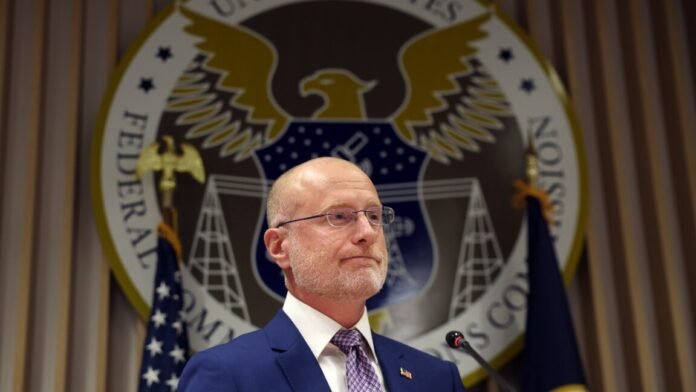
Tom DeLay, the Texas Republican who was House majority leader from 2003 to 2005, said the Federal Communications Commission has no legal authority to repeal the National Television Ownership Rule. Despite DeLay’s warning, the Trump FCC appears ready to eliminate the rule at its meeting this week.

DeLay wrote an op-ed describing how he helped write the law that prohibited any single broadcast station owner from reaching more than 39 percent of all TV households in the US. DeLay said that only Congress, not the Trump FCC, can change the cap because the 39 percent limit is specified in US law and wasn’t chosen by the commission.

DeLay gave his view in an op-ed for The Daily Wire yesterday, less than three weeks after FCC Chairman Brendan Carr announced a plan to eliminate the cap. The FCC is scheduled to vote on Carr’s proposal on Thursday.

“I am a Republican,” DeLay wrote. “I support deregulation and the Trump administration. But my ultimate loyalty rests with the Constitution, which gives certain prerogatives to Congress. Regulatory agencies cannot defy or modify laws enacted by Congress. If Chairman Carr wants to raise the statutory cap, he should ask Congress to pass a law giving him authority to do that.”

DeLay left his post as majority leader in September 2005 and resigned from Congress in 2006 after being indicted on money laundering and conspiracy charges stemming from a campaign finance scheme. He was convicted by a jury in 2010, but the conviction was overturned by a Texas appeals court in 2013.

Carr would be first to test whether FCC can kill cap

The TV ownership cap was originally implemented by the FCC and changed several times before Congress directed the FCC to set it at its current level of 39 percent. The FCC first used its authority to implement a 25 percent nationwide audience reach cap in 1985. In the Telecommunications Act of 1996, Congress directed the FCC to amend its rules to increase the cap to 35 percent.

Congress acted again after the FCC decided in 2003 to raise the limit from 35 percent to 45 percent. The FCC’s 2003 change was controversial, and Congress overrode the FCC decision in January 2004 with a provision inserted into the Consolidated Appropriations Act of 2004.

Specifically, Congress amended the Telecommunications Act to require the FCC to enforce a cap of 39 percent. The law change also said the FCC cannot repeal or modify the cap during its quadrennial reviews of media rules.

Both Democratic and Republican FCC leaders have asserted authority to change the cap. Under Democratic Chairman Tom Wheeler, the Obama-era FCC concluded in 2016 that “the Commission has the authority to modify the national audience reach cap” as long as it doesn’t do so during the quadrennial review. The Wheeler FCC ended up repealing a rule related to the cap, but that decision was reversed by the FCC the next year, during the first Trump administration.

The 39 percent cap has thus survived for over two decades, but Carr scheduled an FCC vote to repeal the 39 percent limit and replace it with a “case-by-case review” of each proposed merger. This would make it easier for the FCC to pick and choose which station groups get to expand, potentially helping Carr achieve his goal of securing more positive news coverage for President Trump.

Carr already seems to be using the case-by-case approach even though his FCC hasn’t formally adopted it yet. In March, the FCC granted a waiver letting Nexstar Media Group buy Tegna in a deal that let it reach over half of TV households.

The Wheeler FCC issued similar legal conclusions about the FCC’s authority to change the cap, but that doesn’t necessarily mean Carr would beat challenges in court. Carr would be the first FCC chairman to test whether the agency can eliminate the cap entirely. He may have to show that the FCC has explicit authority to remove the cap in light of a 2024 Supreme Court ruling that sharply narrowed the leeway federal agencies are given to interpret ambiguous laws.

DeLay explains how Congress decided on 39% cap

Courts reviewing whether an agency decision is lawful often try to determine what members of Congress intended when they passed a law, particularly when the law is vague. According to DeLay, the intent of Congress was clear when it mandated the 39 percent cap.

Although Republicans controlled the House, Senate, and White House in 2003, “Congress was at an impasse” over a budget bill because of a proposal by Sen. Ted Stevens (R-Alaska), DeLay wrote. Stevens “was an ally of the broadcast affiliates,” and he proposed “to codify in law the Federal Communications Commission’s rule that no broadcast group could reach more than 35 percent of American households,” DeLay wrote.

DeLay supported the Bush-era FCC’s deregulatory agenda and refused to back any budget bill that contained the Stevens proposal. DeLay said this week that he also worried about the potential impact on then-recent media mergers. After the FCC raised the cap to 45 percent, “CBS and Fox had acquired stations that had them reaching nearly 39 percent of the nation’s households,” DeLay wrote.

DeLay said he didn’t want to require those networks to divest stations they had lawfully purchased, and he made a compromise with Stevens to pass the budget bill and keep funding the federal government. “In the end, Stevens and I agreed to legislation that set the cap at 39 percent and prohibited the FCC from changing the cap in its biennial review of media ownership rules. The FCC was not allowed to waive the requirement, except to help companies come into compliance,” DeLay wrote.

The budget bill changed the FCC’s biennial reviews to quadrennial and said the FCC authority to repeal or change regulations during its quadrennial reviews does not apply to the 39 percent TV ownership cap. During each quadrennial review, “The Commission shall repeal or modify any regulation it determines to be no longer in the public interest,” the US law says. “This subsection does not apply to any rules relating to the 39 percent national audience reach limitation in subsection (c)(1)(B).”

DeLay said he has “sympathy for Carr’s objectives” and would have preferred to give the FCC more authority over the cap during negotiations with Stevens.

“In fact, I would have happily given the FCC authority to review the cap in 2004, but Stevens would never have gone along with that,” DeLay wrote. “It was his intention to rein in the FCC. My end of the deal was that the cap would be raised to 39 percent, and in return, Stevens received certainty that the FCC wouldn’t and couldn’t raise it higher.”

Stevens died in 2010. “If you had told me in 2004 that I would one day find myself defending Stevens’s side of the argument, I would have found it ironic,” DeLay wrote. “But I was in the room when the deal was struck, and today, I feel compelled to uphold my end of the bargain after Ted’s passing.”

Ex-FCC Republican also said FCC can’t change cap

DeLay quoted former FCC Commissioner Mike O’Rielly, a Republican, as saying that the 39 percent cap is “a statute, not a suggestion.” O’Rielly opposed changing the cap during both Democratic and Republican administrations. He said at a December 2017 FCC meeting, “I do not believe that the Commission has the authority to modify the national audience reach cap… it is up to Congress to make that determination, not the commission. This was the clear intent of Congress when it partially rolled back the FCC’s proposed cap increase of 45 percent in 2004.”

When O’Rielly said that, the FCC under Republican Chairman Ajit Pai was voting to begin a review of the cap and the UHF discount, a provision specifying that only half of the households reached by a UHF station are counted toward the cap. O’Rielly said the FCC had no authority to change the 39 percent cap or to eliminate the UHF discount.

The UHF discount was eliminated just a year earlier by the Wheeler FCC, with dissents from Pai and O’Rielly. After Pai became chairman, he led a vote to reverse Wheeler’s UHF decision but also called for a review of the 39 percent cap and the UHF discount. After all that wrangling, the Pai FCC left both provisions in place.

Eliminating the UHF discount would have effectively made the national TV ownership rule stricter. The Wheeler FCC argued that the transition to digital television eliminated UHF’s technical disadvantage and that maintaining the carveout acted “only to undermine the national audience reach cap.” With the discount in place, a company that only owns UHF stations would be able to reach 78 percent of US households, the Wheeler FCC said.

Carr’s legal arguments

The Carr FCC makes several arguments to support its claim that Congress didn’t intend to forbid the FCC from changing or repealing the cap. A draft of the FCC proposal scheduled for a vote this week claims the FCC has the authority to repeal the cap because Congress imposed the 39 percent limit “by directing the Commission to modify its rules rather than by enacting a fixed cap into law.” The 2004 law change has no language requiring the FCC “to maintain the national cap at 39 percent indefinitely or for any period of time,” Carr’s proposal said.

The Carr FCC said multiple court rulings show Congress always intended the FCC to have power over the cap. The FCC pointed to a 2002 DC Circuit appeals court decision in which judges wrote that Congress’s 1996 “choice of 35 percent rather than any other number determined only the starting point from which the Commission was to assess the need for further change.”

But while the 1996 Telecommunications Act did not explicitly prohibit future changes to the cap, the 2004 law shaped by the DeLay/Stevens compromise went further. It ordered the FCC to set the cap at a specific level and added language restricting the FCC’s ability to change the cap.

As DeLay noted, the law forbids the FCC from changing the cap during its quadrennial media review. But the Carr proposal claims the FCC can change the cap at any other time. The law “simply separates the Commission’s decisions to review the national cap from the statutorily mandated review of other media ownership rules that are to occur every four years,” the Carr FCC says.

To support this view, Carr quotes a sentence from a 2004 3rd Circuit appeals court ruling in which judges said the FCC can issue rule changes “outside the context of” the quadrennial review. One problem for Carr is that the quoted portion of the court ruling refers to “defining the UHF discount,” not to setting the cap at 39 percent or some other number.

But Carr found backing in the Wheeler FCC’s 2016 order, which said the FCC “retains authority under the Communications Act to review any aspect of the national audience reach cap; it simply is not required to do so as part of the quadrennial review.” Although the Wheeler FCC was trying to strengthen the 39 percent cap by eliminating the exception for UHF stations, it argued that “no statute bars the Commission from revisiting the cap or the UHF discount,” indicating it had power to change both if it wished.

Another potential problem for Carr is that Congress’s 2004 law change said the FCC cannot forbear from applying telecom regulations to TV station owners that exceed the 39 percent limit. This limiting language did not appear in the 1996 law.

Carr’s proposal claims the forbearance language “does not preclude the Commission from altering the cap itself” and that the FCC’s “ability to forbear from enforcement of its rules is distinct from its power to alter or eliminate those rules.” The Carr proposal also said Congress’s instruction about regulatory forbearance was unclear because the FCC’s “forbearance authority does not apply to the regulation of broadcasters under Title III of the Communications Act.”

TV providers “confident” courts will overrule FCC

In March, the Carr FCC used the same arguments when it granted the waiver letting Nexstar Media Group buy Tegna. It claimed it could issue a waiver even though the 39 percent cap was still in place, saying Congress instructed it to set that cap “through its rulemaking authority, which necessarily leaves the agency with the discretion to modify or waive its rules.”

Nexstar completed its acquisition of Tegna, but a federal judge ordered the companies to stop integrating their assets and operations. The post-merger integration remains on hold while an antitrust lawsuit filed by DirecTV proceeds.

The repeal plan is likely to pass 2–1 this week, with Carr and Republican Commissioner Olivia Trusty supporting it. Anna Gomez, the only Democrat on the FCC, has repeatedly said the FCC has no authority to abolish the cap. “The 39 percent cap is not an FCC rule that the commission can change on its own,” and repealing it is an “unlawful effort to hand control of the public airwaves to billionaire buddies of this administration,” Gomez said last month.

A legal challenge could come from TV providers that have complained about the ability of national TV networks and broadcasters to demand higher fees to carry their channels. The American Television Alliance—a group whose members include CenturyLink, Charter, Dish, DirecTV, Verizon, and USTelecom—said after Carr unveiled his plan that “the commission’s attempt to repeal the broadcast ownership cap ignores Congress’s clear instructions… We are confident that reviewing courts will quickly overturn this misguided action.”

Trump Gaza Board of Peace caves to Israel’s demands on disarmament

0
trump-gaza-board-of-peace-caves-to-israel’s-demands-on-disarmament
Trump Gaza Board of Peace caves to Israel’s demands on disarmament

Nickolay Mladenov, the United Nations special coordinator for the Middle East peace process, with Israeli Prime Minister Benjamin Netanyahu in Jerusalem, January 8, 2026. Photo: Handout / Amos Ben Gershom / GPO

US President Donald Trump’s Gaza Board of Peace appears to be going back on the disarmament deal it reached last week with Hamas in order to meet Israel’s demands, and it may throw the entire process into jeopardy.

A roadmap agreed to last week, which Trump touted as a massive diplomatic breakthrough, stated that Hamas would begin to decommission its arms in tandem with Israel halting its attacks and withdrawing its forces to the so-called “yellow line” agreed to during the first phase of the ceasefire in October 2025.

In the ten months since the deal, Israel has been gradually advancing its forces deeper into Gaza beyond the ceasefire line to the point where it now controls around 60-70% of Gaza, while its more than 2 million inhabitants are crammed into an area that has largely been reduced to rubble.

Last week’s peace roadmap said explicitly that the gradual decommissioning of Hamas’ heavy weapons, arms depots, production facilities, and tunnels “shall be linked to an Israeli withdrawal, in phases.” Trump echoed this last week, stating that the Israel Defense Forces (IDF) would withdraw as disarmament proceeds.

Though Trump claimed Israel was “very happy” with the deal, its leaders have spent days crying foul, stating that withdrawal would only occur after Hamas completely disarms. Meanwhile, Hamas said it would only go along with the disarmament if Israel withdraws at the same time.

In defiance of the agreement’s language calling to honor ceasefire commitments “without delay,” Israel launched attacks across Gaza on Sunday that killed at least 18 Palestinians, the largest daily toll in weeks. Israeli Energy Minister Eli Cohen, a member of Prime Minister Benjamin Netanyahu’s security cabinet, told Israel’s Army Radio that there was no deal for it to halt attacks on Gaza.

The strategy appears to have worked. Following meetings between Netanyahu and the Board of Peace Gaza envoy, Nickolay Mladenov, on Monday, the board released a statement posted to social media that essentially rewrote the original agreement to match Israel’s demands and claimed it had been part of the agreement from the start.

“Contrary to inaccurate reports, we note that the withdrawal of the IDF beyond the Yellow Line will take place only once decommissioning is complete, as Hamas committed to the mediators,” the board said. “This applies to light weapons, heavy weapons, and the tunnels alike.”

Hamas responded by reiterating that it and other armed factions in Gaza “remain committed to what was agreed regarding the implementation of the second phase of the ceasefire agreement, including all parties’ obligations,” and called for “a clear and official response” from Mladenov regarding what was agreed upon.

The new statement from the Board of Peace directly contradicted Mladenov’s flat statement on Thursday that “withdrawal must move in lockstep with decommissioning.”

Muhammad Shehada, a political analyst from Gaza at the European Council on Foreign Relations, said that the Board of Peace was “betraying the very agreement they just made” and “taking Netanyahu’s side fully.”

“The roadmap explicitly said withdrawal must move in lockstep with decommissioning,” he wrote on social media. “It never said withdrawal would happen only after decommissioning is fully completed.”

“The roadmap made a distinction between ‘heavy weapons’ (e.g. tunnels, rockets, RPGs) and ‘personal/light weapons,’ and allowed Palestinian factions to retain light weapons for protection in case Israel reneges,” he added. “Including light weapons now in this tweet is Netanyahu’s way of sabotaging the agreement.”

Tariq Kenney-Shawa, the associate director of editorial for the Institute for Middle East Understanding, said the Board of Peace’s abrupt reversal “shouldn’t surprise anyone.”

“The Board of Peace is just the administrative and fundraising arm of Israel’s occupation of Gaza,” he said. “It exists to facilitate Gaza’s ethnic cleansing and concentration camps in a way that is palatable and profitable for the international community.”

Since the so-called “ceasefire” went into effect last October following two years of genocidal war, Israeli attacks have killed more than 1,200 Palestinians, bringing the official death toll above 73,000. Experts warn the true number of Palestinians who have been killed since Israel began its attacks in October 2023 is likely far higher.

July was the deadliest month for Palestinians this year, with more than 150 Palestinians killed. Israeli leaders have discussed fully “conquering” the strip, controlling it indefinitely, and moving in illegal Israeli settlers.

-Common Dreams

Bari Weiss’s “60 Minutes” Hires Producer Who Downplayed Gaza Starvation, Justified Killing Journalists

0
bari-weiss’s-“60-minutes”-hires-producer-who-downplayed-gaza-starvation,-justified-killing-journalists
Bari Weiss’s “60 Minutes” Hires Producer Who Downplayed Gaza Starvation, Justified Killing Journalists


Adam Johnson is co-host of the Citations Needed podcast and author of “How to Sell a Genocide: The Media’s Complicity in the Destruction of Gaza,” which is available now.

Bari Weiss’s latest hire for “60 Minutes,” whose major journalistic output includes smearing genocide victims and putting a target on the backs of reporters in Gaza, shows that the full-blown right-wing tabloidification of the television news program is charging ahead. 

If one held out hope that U.S. media would seek to reverse course after its support for genocide in Gaza over the past 34 months, those hopes were severely misplaced. The mainstream media’s lockstep support for genocide, which I document in my recent book on the subject, has not abated, and in key ways it’s only ramped up, become more explicit, and removed any remaining pretense of editorial independence.

The most obvious example of this is the Ellison family’s $8 billion purchase of Paramount and overtly right-wing revamp of CBS News, which kicked off in earnest last year. A former gold standard of centrist journalism, Weiss’s takeover of CBS News has seen numerous high-profile firings, scandals, and credible allegations of undermining journalistic independence, allegations of Trump toadyism, and a broader editorial push to the right.

This campaign has been, in large part, aimed at sucking up to Trump to push through the much bigger prize of a $111 billion Warner Bros. Discovery takeover. But there’s another element at play: The Ellison family’s documented support for Israel and its broader ideological aims. As I noted last December, Weiss was put in place by David Ellison precisely because of her years of strident, pro-Israel coverage and willingness to push the boundaries of racism and cynicism to pursue this cause. So far, Weiss’s attempt to turn the prestigious “60 Minutes” brand into another New York Post has been met with major internal resistance from high-profile reporters, producers, and news management. 

And despite Ellison’s buzzy op-ed for The New York Times today, where he pushes back on “speculation about my politics, my loyalties, my intentions” and pledges “independence” for the newsroom, Weiss’s latest hire makes clear that her ideological coup of the once-vaulted “60 Minutes” brand is right on schedule. 

The New York Post is exactly what Weiss wants CBS News to look like in the near future: lurid incitement mixed with shoddy sourcing and anti-Palestinian racism.

The hiring of Tanya Lukyanova, a video journalist for The Free Press, as an associate producer for “60 Minutes,” was announced Friday. Lukyanova has previously done video and research work for the Wall Street Journal, the New Yorker, and Semafor. She rose the ranks of journalism doing critical — if boilerplate — reporting on Russia, but over the past year, under Weiss’s direction, she has veered into outright right-wing tabloidism. This climaxed with her contribution to two of the most shameful supposedly journalistic contributions since Israel’s genocide in Gaza began in late 2023: an article she produced herself in September 2025 helping justifying Israel’s unprecedented attacks on journalists in Gaza, and an article she co-bylined in August 2025 downplaying mass starvation in Gaza.  

The September 2025 article, “Gazan Journalists Say Al Jazeera Works Hand in Glove with Hamas,” relies almost entirely on alleged Gazan sources procured by the Center for Peace Communications. This is a pro-Israel front group that poses as a “peace organization” and has peddled similar dubious narratives elsewhere, almost aways designed to create the narrative that Gaza is little more than 2 million Palestinians being held captive by Hamas, who desperately want Israel to bomb their way to liberation. The group’s board of directors includes major pro-Israel funders, as well as Dennis Ross, a long-time pro-Israel pundit and fellow at the Washington Institute for Near East Policy, itself a spin-off from the American Israel Public Affairs Committee. The CPC is run by Joseph Braude, who in 2004 pleaded guilty in federal court for illegally smuggling artifacts out of Iraq, namely 4,000-year-old marble and alabaster stone seals he knew to be stolen. 

At no point in the story was the shady past of the “Center for Peace Communications,” or its overt Zionist advocacy and funding, mentioned by Lukyanova, who presents them merely as a good-faith humanitarian organization. The shameful guilt-by-vague-association piece proceeds to imply, over and over again, that any connection to Hamas, no matter how remote, makes journalists a fair target for Israeli killing — without once reckoning with the numerous active and former members of the Israeli military who make up the ranks of Israeli and U.S. media.

It relies heavily on New York Post reporting because the New York Post is exactly what Weiss wants CBS News to look like in the near future: lurid incitement mixed with shoddy sourcing and anti-Palestinian racism. Lukyanova dutifully lends this shoddy racist incitement the veneer of respectability. 

Israel has killed more than 240 media workers in Gaza since October 2023, including several prominent Al Jazeera journalists such as Mohammed Samir Wishah, Hossam Shabat, Mahmoud Wadi, and Anas al-Sharif. In airstrikes in late 2023 and early 2024, Israel killed the wife, 7-year-old daughter, 15- and 27-year-old sons, and two nephews of longtime Al Jazeera reporter and Gaza bureau chief Wael al-Dahdouh, effectively wiping out his whole family while failing to kill al-Dahdouh himself after he was injured in a separate attack.

The Costs of War project at Brown University deemed Israel’s war on Gaza the deadliest conflict for media workers ever recorded. Lukyanova’s anonymously sourced “exposé” accusing Al Jazeera reporters of being “affiliated with Hamas” came just two weeks after +972 Magazine revealed a secret Israeli military propaganda campaign to tie critical reporters to the designated “terrorist organization,” using what it calls a “Legitimization Cell.”

This is who gets ahead in U.S.-based journalism: not who is most humane, or accurate, or fair, or speaks truth to power, but those who serve the needs of power.

Lukyanova’s other major contribution, published along with Olivia Reingold, was “They Became Symbols for Gazan Starvation. But All 12 Suffer from Other Health Problems.” The article led to widespread backlash and criticism for its callousness, bizarre logical leaps, and the implication that starving children was No Big Deal if those being killed by Israel’s deliberate campaign of hunger as a weapon of collective punishment happen to have preexisting conditions.

As Natasha Lennard noted for The Intercept at the time, Anne Frank wasn’t directly killed by the Nazis but died of typhus as a result of the Nazis creating the condition for such a disease to spread in their concentration camps to claim its intended victims. Drop Site News followed up on the 12 “Gazans” whose brutal suffering Reingold and Lukyanova decided to well, actually and found “their underlying health conditions did not drive the deterioration of their health. Instead, it was the lack of access to food and medicine that drove their acute medical crises. Such is the hallmark of a famine. The first to fall victim are generally those who had underlying conditions to begin with.” 

This is consistent with much of Lukyanova’s non-Gaza output. While ​​plenty of her journalistic output is conventional in nature, she has published several articles promoting schlocky regime-change narratives aimed at various U.S. enemies, namely Iran and Venezuela. Lukyanova has shown a willingness — and apparent eagerness — to use her influential platform to promote war, starvation as a weapon of war, attacks on reporters, and related ideological orthodoxies of U.S. and Israel aggression.

And this shameless propagandist, who has repeatedly shown a willingness to be callous in the face of widespread famine and launder pro-Israel talking points about Israel-critical reporters being secret terrorists, will now be an associate producer at the most respected news program in all of the American media.

“60 Minutes” has always been a flawed institution, but hiring people willing to wade into the lowest gutter of incitement reporting — putting targets on the backs of disabled, starving kids and journalists documenting a genocide — is a major escalation in Weiss’s battle to turn “60 Minutes” into a billionaires’ ideological plaything

This is who gets ahead in U.S.-based journalism: not who is most humane, or accurate, or fair, or speaks truth to power, but those who serve the needs of power — whether it be the U.S. and Israeli governments or billionaire media owners.

Just as The Atlantic’s now-editor-in-chief Jeffrey Goldberg was rewarded for his lies attempting to tie Saddam Hussien to 9/11 in the run-up to the Iraq War with becoming the head of the most influential liberal magazine in the country; just as Joe Scarborough was rewarded for cheering on the Iraq War with a three-hour morning block on the most influential liberal cable news show; just as Iraq War cheerleaders from Ezra Klein to Anne Applebaum to Bret Stephens to David Remnick have all enjoyed prestigious positions in today’s elite liberal media — those who lied about, covered up, or otherwise downplayed the genocide in Gaza will continue to rise to the top. This dynamic is only becoming more shameless and acute now that pro-Israel multibillionaires are buying up old legacy media and turning them into their personal tabloid outlets.  

Trump killed the Digital Equity Act, but US was forced to bring part of it back

0
trump-killed-the-digital-equity-act,-but-us-was-forced-to-bring-part-of-it-back
Trump killed the Digital Equity Act, but US was forced to bring part of it back

The Trump administration said it will reinstate a broadband grant program to comply with a court ruling that prevented it from fully ignoring the Digital Equity Act enacted by Congress in 2021. The US government said in a court filing that it plans to start taking applications for grants in December.

However, the Trump administration won a partial victory because the judge ruled the government can’t allocate money based on the race or ethnicity of people who would benefit from grants. The government program can still award broadband grants based on factors such as income, age, and disability.

The Digital Equity Act of 2021 provided $2.75 billion for three grant programs aimed at closing gaps in broadband access. The Biden administration started awarding $60 million in planning grants to states in 2022, and in 2024 it started taking applications to distribute the rest of the $2.75 billion. Trump announced in May 2025 that he would end the grant programs, claiming the Digital Equity Act itself is racist and unconstitutional.

Trump and federal government officials were sued in US District Court for the District of Columbia by the National Digital Inclusion Alliance (NDIA), an advocacy group that was in line to obtain $25.7 million in grant money before the Trump administration ended the program. The NDIA lawsuit is specifically about the Digital Equity Competitive Grant Program, which accounts for $1.25 billion of the total authorized by the Digital Equity Act.

A separate grant program for states and territories accounted for the other $1.44 billion, but there’s no indication that it will be restarted. It doesn’t appear that anyone sued the Trump administration over the discontinued state grants.

“Massive win,” but also a loss

The NDIA called the revival of the Digital Equity Competitive Grant Program “a massive win for the communities we serve,” though it would have to submit a new application for funding because the Trump administration is starting the process from scratch. In January 2025, the Biden administration selected the NDIA for a $25.7 million grant to provide low- and no-cost devices and assist people in accessing low-cost broadband. The Trump administration later terminated the grant, the NDIA lawsuit said.

The Trump administration confirmed in a joint status report yesterday that it will reinstate the Digital Equity Competitive Grant Program, but without the provision that uses race and ethnicity as criteria for awarding funds. The status report did not mention restoring the $1.44 billion program for states, which was not part of the lawsuit filed by the NDIA.

“The Digital Equity Act is the first major federal investment to acknowledge that true connectivity requires more than just laying fiber-optic cables,” the NDIA said. “It takes digital navigators, affordable devices, and localized digital skills training to ensure that historically underserved communities can fully participate in our modern economy. The Competitive Grant Program is designed to directly fund these community-level solutions.”

The NDIA is, of course, not happy about the judge’s decision that grants cannot be targeted to racial and ethnic minorities. “Regrettably, however, the court’s ruling also severed the inclusion of racial and ethnic minorities as a specific covered population in the program on the grounds that it is unconstitutional,” the NDIA said. “NDIA maintains unequivocally that the Digital Equity Act is constitutional in its entirety, and that the administration’s aggressive actions to dismantle it are unjust.”

Judge John Bates, a George W. Bush appointee, ruled last month that “the Digital Equity Act straightforwardly categorizes members of certain races as ‘covered’ by the Act and targets grant money to programs that benefit those groups. That is an explicit racial classification, which can only be upheld if it withstands strict scrutiny. Here, it does not: the offending provision is neither justified by a compelling governmental interest nor narrowly tailored to meet a permissible goal. Accordingly, it is unconstitutional.”

Trump killed whole program over “singular” provision

Bates did not overturn the whole law, saying “the offending provision is severable from the rest of the statute” and that “the government’s only objection to the Digital Equity Act is this singular unconstitutional provision.” Although Trump had ordered an end to the whole program, the government told the court in June that it would be willing to “administer the Competitive Grant Program applying the statute’s race-neutral criteria.”

The National Telecommunications and Information Administration is now preparing a new Notice of Funding Opportunity for the competitive grant program and intends to start accepting applications in December, the joint status report said. The NDIA could object to the government’s proposed timeline, but is still evaluating it and asked the court for another two weeks to determine whether the sides can reach an “agreement on the path forward and proposed schedule.”

The Digital Equity Act directed the US to establish a Competitive Grant Program to “spur greater adoption of broadband among covered populations.” The law defined eight types of covered populations, including “individuals who are members of a racial or ethnic minority group.”

The racial and ethnic minority category will be eliminated from the program as a result of the judge’s ruling, but the other categories remain. This includes people in low-income households, people who are 60 or older, incarcerated people except those in federal correctional facilities, veterans, people with disabilities, people with language barriers, and people living in rural areas.

NDIA waits for details before seeking new grant

NDIA Executive Director Angela Siefer said it is too early to determine whether her group will apply for a grant when the government starts taking applications. She said the NDIA will need to examine the Notice of Funding Opportunity to be issued by the Trump administration.

Siefer said the NDIA proposal that won a grant from the Biden administration “was carefully crafted” and would have served 30,000 people in rural, urban and tribal communities. “NDIA’s vision is for everyone to have the opportunity to use technology to live, learn, work, and thrive. This is not controversial,” she said.

Siefer also said the government should bring back the state grants even though they weren’t part of the NDIA lawsuit. Plans developed by US states during the Biden administration “are ready to be implemented,” Siefer told Ars.

The Digital Equity Act was approved by Congress at the same time as the $42.45 billion Broadband Equity, Access, and Deployment (BEAD) program, which gives money to states to provide subsidies for Internet providers that deploy broadband in unserved and underserved areas. The Trump administration didn’t scrap BEAD, but it delayed the grants and overhauled the program.

The Trump administration cut spending on broadband deployment to about $21 billion, told states not to require low prices or compliance with net neutrality rules, and helped Starlink obtain more funding than it originally was going to get. The administration hasn’t revealed what it will do with the other $21 billion yet.

Russia Names Middle East Veteran as New Ambassador to Syria  

0
russia-names-middle-east-veteran-as-new-ambassador-to-syria  
Russia Names Middle East Veteran as New Ambassador to Syria  


[DAMASCUS] Russian President Vladimir Putin on Monday appointed veteran diplomat Dmitry Dogadkin as Moscow’s new ambassador to Syria, replacing Alexander Yefimov, as Russia seeks to recalibrate its relationship with Damascus and preserve its political, military and economic interests in the country. 

The appointment decree, published on Russia’s official legal information portal, named Dogadkin ambassador Extraordinary and Plenipotentiary to the Syrian Arab Republic. In a separate decree, Putin relieved Yefimov of his duties as ambassador to Damascus, a position he had held since 2018. 

Putin relieved Dogadkin of his post as Russia’s ambassador to Qatar on July 10. Dogadkin had served in Doha since November 2021 before being reassigned to Damascus. His selection suggests Moscow is turning to a diplomat with extensive experience in the Middle East and prior familiarity with Syria-related affairs. 

Born in 1967, Dogadkin graduated from the Moscow State Institute of International Relations in 1990 and joined the Russian diplomatic service that same year. He speaks Arabic and English and served as a senior counselor, and later minister-counselor, at the Russian Embassy in Damascus between 2009 and 2013. He subsequently worked in the Russian Foreign Ministry’s Department of the Middle East and North Africa. 

Dogadkin served as Russia’s ambassador to Oman from 2017 to 2021 before moving to Qatar, giving him considerable experience dealing with Gulf governments and complex regional issues. Since 2023, he has held the rank of ambassador extraordinary and plenipotentiary, the highest rank in Russia’s diplomatic service. 

His appointment comes during a period that differs significantly from the one in which he previously served in Syria. Following the fall of Bashar Assad’s government in December 2024, Moscow began engaging with Syria’s new leadership in an effort to preserve its influence and strategic interests, particularly its military presence at the Hmeimim air base and its naval facility in Tartus. 

Russia had been Assad’s most prominent military and political supporter since launching its direct military intervention in Syria in 2015. 

Although Moscow’s influence has declined compared with previous years, Russia continues to maintain a military presence on Syria’s Mediterranean coast, albeit with reduced capabilities, and remains engaged in discussions with Syrian authorities over the future of its bases. 

Moscow is also seeking to develop new economic and logistical roles in Syria, including the possible use of the Tartus facility as a commercial and logistics hub, while maintaining cooperation in the food, energy and defense sectors. 

One of Dogadkin’s expected priorities will be managing negotiations over the future of Russia’s military presence. His responsibilities are also likely to include addressing agreements signed under Assad’s rule, outstanding debts, Russian-backed economic projects and the expansion of communication channels with Syria’s new government. 

The new ambassador may draw on his previous experience in Damascus and his command of Arabic to establish direct relations with Syrian officials at a time when Damascus is attempting to balance its ties with Russia, the United States, European countries and Gulf states. 

Moscow has not yet announced when Dogadkin will arrive in Damascus or formally present his credentials to the Syrian authorities. His first public statements are expected to indicate the nature of his mission and whether his appointment represents the beginning of a new phase in Syrian-Russian relations or a continuation of Moscow’s efforts to protect its strategic interests in the country. 


Edinburgh Fringe listing for Amanda Knox show draws renewed scrutiny over Kercher case

0
edinburgh-fringe-listing-for-amanda-knox-show-draws-renewed-scrutiny-over-kercher-case
Edinburgh Fringe listing for Amanda Knox show draws renewed scrutiny over Kercher case


Amanda Knox is set to perform a one-woman comedy show at the Edinburgh Festival Fringe that draws on her experience of being accused and later acquitted in the 2007 murder of British student Meredith Kercher.

The show, titled “Cartwheel,” is scheduled to run from Aug. 7-17 at the Gilded Balloon Teviot as part of the 2026 Fringe program, according to the festival listing.

Knox, now 39, was a 20-year-old American exchange student in Perugia, Italy, when Kercher, her British flatmate, was found dead in the apartment they shared. Knox and her then-boyfriend, Raffaele Sollecito, were convicted of murder in 2009, acquitted in 2011, convicted again on appeal in 2014 and definitively acquitted by Italy’s highest court in 2015. Rudy Guede was ultimately convicted in connection with Kercher’s murder and served a prison sentence.

According to promotional material and interviews cited by British media, Knox says the Fringe show is not intended to make light of Kercher’s death. Instead, she describes it as an exploration of trauma, public judgment and the years she spent fighting to clear her name.

The title “Cartwheel” appears to reference a cartwheel Knox performed during the early stages of the police investigation, an incident that attracted significant media attention at the time.

The announcement has reignited debate surrounding Knox’s public projects related to the case. Critics, including representatives of the Kercher family, have previously argued that such ventures are insensitive to the family’s continuing grief. Knox has said she regrets the pain caused by the events surrounding the case while maintaining that she was wrongfully imprisoned.

The Edinburgh Fringe, the world’s largest performing arts festival, is due to run from Aug. 7-31 and will feature thousands of performances across hundreds of venues in the Scottish capital.

Read more via The Independent/ANSA

0FansLike
0FollowersFollow
0FollowersFollow
0SubscribersSubscribe
- Advertisement -
Google search engine

Recent Posts