26.5 C
London
Monday, August 3, 2026
Home Blog

Gold firms as oil prices slump after Trump holds off on Iran attack

0
gold-firms-as-oil-prices-slump-after-trump-holds-off-on-iran-attack
Gold firms as oil prices slump after Trump holds off on Iran attack


Gold rose ​on Monday as oil prices fell after U.S. President Donald Trump held ‌off on fresh attacks on Iran in hopes of a swift deal, slightly easing concerns over inflation and higher interest rates.

Spot gold was up 0.7% at $4,068.54 per ounce, as of 0437 GMT. U.S. gold ​futures rose 0.9% to $4,066.60.

The U.S. dollar came under pressure after authorities intervened in the ​foreign exchange market to support the yen, making dollar-priced bullion more affordable ⁠for overseas buyers.

Gold has made a relatively cheery start to the week but gains remain ​limited given the uncertainty around the oil markets and the Middle East, so it’s an ​upbeat but guarded start for the metal, said Tim Waterer, chief market analyst at KCM Trade.

Trump said talks with Iran will happen on Monday but declined to set a deadline for an agreement. Oil ​prices fell more than 5%.

Gold has come under pressure since the start of the U.S.-Iran ​conflict, as a war-driven rise in inflation could prompt central banks to raise interest rates. Although bullion ‌is ⁠traditionally viewed as a hedge against inflation, its appeal tends to diminish in a high-interest-rate environment because it does not yield interest.

Market participants will also focus on a slew of U.S. jobs reports due this week, including job openings data, the ADP employment report, weekly ​jobless claims and the ​nonfarm payrolls report.

“Any renewed ⁠escalation in the Middle East that pushes oil higher, or a strong NFP print that reinforces September rate-hike odds, could cap the ​upside,” Waterer said.

Three U.S. Federal Reserve officials who dissented at the policy ​meeting last ⁠week in favour of a rate hike expressed concerns on Friday that without an immediate increase in short-term borrowing costs, inflation will stay stuck above the Fed’s 2% target.

Analysts at Standard ⁠Chartered said ​in a note that they continue to expect gold ​to find near-term support before recovering on seasonal buying.

Spot silver gained 1.4% to $58.46, platinum climbed 0.5% to $1,650.63, and palladium ​firmed 1.6% to $1,293.50.

Is the recycling symbol free speech? A judge just ruled it could be.

0
is-the-recycling-symbol-free-speech?-a-judge-just-ruled-it-could-be.
Is the recycling symbol free speech? A judge just ruled it could be.

A pioneering California law meant to sharply limit use of the familiar “chasing arrows” recycling symbol has been blocked by a federal judge who said it probably violates the First Amendment.

In a preliminary injunction issued last month, U.S. District Judge William Hayes halted enforcement of SB 343 after food, packaging and retail groups sued, finding that key provisions were “unconstitutionally vague” and likely infringed protected commercial speech. Enforcement of the law, passed in 2021, was expected to start this fall.

The decision is a blow to environmental advocates, who had hoped to remove the familiar symbol from a huge array of plastic products, in line with a statewide study showing that only a fraction are widely collected and actually recycled. SB 343 said only goods and packaging accepted by recycling programs serving at least 60 percent of Californians and then actually sorted for recycling — not collected and thrown away —  could bear the chasing arrows.

Hayes’ constitutional reasoning surprised supporters of SB 343 because similar arguments against environmental marketing regulations have historically struggled in court.

“The First Amendment protects free expression, not a corporation’s right to commit consumer fraud,” said Nick Lapis, director of advocacy for the nonprofit Californians Against Waste. “We see this exact playbook every time the plastics industry is asked to stop misleading the public — they suddenly hide behind the Constitution.”

In his decision, Hayes applied a standard four-part test to determine whether SB 343 would unduly restrict companies’ speech rights. The law passed the first two tests handily, as it regulates “potentially misleading” speech and was intended to serve California’s legitimate interests in reducing consumer confusion and improving recycling rates.

The next tests are where the law ran into trouble. Hayes, siding with the industry trade groups, argued that the legislation would not advance those “legitimate interests.” Rather than encouraging companies to redesign their products and packaging to comply with California’s real-world recyclability criteria, he said the law would prompt them to remove the recycling symbol altogether. Products recycled at a rate below the 60 percent threshold that the law requires would no longer make it into recycling bins, which could in theory leave more of them bound for the landfill.

Hayes said a less stringent regulation could have better advanced California’s goals. For instance, the state could have passed a law requiring more descriptive qualifiers alongside the recycling symbol. He offered a hypothetical example of a label explaining that an item is “accepted by recyclers in the greater Los Angeles area but nowhere else in California.” Such a label would provide consumers with more and better information, he argued, but would not be allowed under SB 343.

Heidi Sanborn, executive director of the nonprofit National Stewardship Action Council, said the judge’s reasoning reflected a fundamental misunderstanding of the problems facing California recycling systems. People are throwing too much stuff into their blue bins, she said. In addition to not actually being recyclable, much of this refuse — including plastic bags and other plastic films — can gum up sorting machines, causing operational delays and creating safety risks.

“People are wish-cycling, they’re so desperate to recycle,” Sanborn told Grist. “We have to pull all this [contamination] out, which is very labor-intensive, and then everybody wants to know why their bills go up.” 

Read Next

Industry groups welcomed the injunction, saying it would prevent California from “censoring truthful information on packaging.”

Scott Hochberg, general counsel and litigation director for the nonprofit Earth Island Institute, said he’s seen free speech challenges to environmental rules many times before. Big polluters have frequently invoked the First Amendment to oppose regulations that require them to disclose information — like their greenhouse gas emissions — or tone down statements about their sustainability.

“What’s relatively new and concerning is when these arguments succeed and states are blocked from implementing common-sense initiatives to protect their residents,” he said.

A lawsuit Hochberg’s organization is pursuing against Coca-Cola illustrates the same debate. It alleges the company presents itself as a “sustainable and environmentally friendly company” despite its outsize contribution to plastic pollution. Coca-Cola argued that statements about its sustainability efforts — including plastics recycling — were protected political speech rather than commercial advertising. A federal judge rejected that argument in 2024.

The companies that sued California didn’t make that same distinction; their suit is more like one filed in 1992 that sought to block a California law restricting the use of terms like “biodegradable,” “ozone-friendly,” and “recyclable.” A judge upheld the law, ruling that it would not stifle free speech because corporations could still use a restricted word or phrase as long as they included qualifiers explaining how, where, or under what conditions it applied.

The injunction against SB 343 leaves California with few easy options. Hayes’ ruling suggests the state faces a difficult road if the case proceeds to trial. Lawmakers could amend the law to address some of the judge’s concerns, though that may be unlikely given the politics surrounding the issue. California could also appeal the injunction, but the lower court would still have to decide the case on its merits.

Earth Island Institute and Californians Against Waste announced on July 27 that they are joining California as defendants. Hochberg said he hoped to provide the court with more information “about how the recycling system actually works.” Losing the lawsuit will make it harder for other states to pursue similar labeling regulations, he said. 

It could also jeopardize California’s nation-leading extended producer responsibility law, which shifts responsibility for collecting, recycling, and reducing plastic packaging from taxpayers and local governments to the companies that produce it. It relies on the same definition of recycling and is currently being challenged by a separate lawsuit.

Whatever happens next, Sanborn said she’s ready to work with industry to come up with other solutions — including legislation to clarify labeling rules at the national level. “We can and should work together to solve this,” she said. “But you should not have the right to lie to people.” 


NYPD Used High-Tech Surveillance to Find Gaza Paint Splatter Protester, Docs Show

0
nypd-used-high-tech-surveillance-to-find-gaza-paint-splatter-protester,-docs-show
NYPD Used High-Tech Surveillance to Find Gaza Paint Splatter Protester, Docs Show


Columbia University had just resumed classes for the first time since a major crackdown on pro-Palestine demonstrations roiled campus throughout the first half of 2024.

Seeking to highlight ties between Columbia University and Israel’s ongoing genocide in Gaza, the campus protest movement had culminated in a building occupation that ended with dozens of arrests, sparking activism on campuses across the country. At Columbia, classes went virtual or used a hybrid model.

On the day classes resumed their regular scheduling in September, one protester splattered the university’s famous Alma Mater statue in red paint.

Following the incident, New York Police Department investigators deployed an extensive array of high-tech surveillance and investigative tools to identify the alleged vandal, according to documents from the court case provided exclusively to The Intercept. Police leveraged networks of surveillance cameras and facial recognition software to pinpoint a suspect.

In July 2025, Jakhi Isaiah, a New Jersey-based activist whose legal last name is McCray, was charged for the incident.

As the nationwide protest movement against Israel’s genocide in Gaza became a national lightening rod and the Trump administration began to throw its weight against activists, authorities at all levels began to expend tremendous resources against pro-Palestine demonstrators. Using intensive surveillance tools in response to relatively minor crimes became typical in cases against pro-Palestine protesters.

“It deliberately sends a very chilling message that you better not dissent.”

“I think it deliberately sends a very chilling message that you better not dissent,” said Bina Ahmad, a civil rights and criminal defense attorney has represented pro-Palestine protesters but is not working on Isaiah’s case. “How many [resources] they used for such a small charge kind of says they will go to any length to grab who they want to grab and charge what they want to charge.”

The documents obtained by The Intercept also detail how NYPD investigators appeared to have abandoned the case, before being spurred to reopen it by federal officials. Both the Bureau of Alcohol, Tobacco, Firearms, and Explosives and the U.S. Marshals Service, according to the documents, were participating in a separate federal investigation into Isaiah.

Facial Recognition

Columbia claimed that the paint protest had caused thousands of dollars in damage to the statue, but maintenance crews were able to clean it up almost immediately. Photographs taken by students show that, by the end of the day, all the paint had had been removed.

The hunt for the alleged vandal soon got underway.

In the days following the incident, NYPD detectives used 21 different camera angles and tracked the person that they allege is Isaiah as he moved both inside and out of Columbia’s campus.

“If you go around New York, there’s fucking cameras literally everywhere,” Isaiah told The Intercept. “That’s freaky as hell.”

Investigators claim to have followed Isaiah’s movements using surveillance footage for more than two continuous hours surrounding the incident, tracking him even after he entered a university building and changed clothing. The person on video footage during the vandalism was masked and wore a hat. (Neither the NYPD nor Columbia responded to requests for comment.)

A camera eventually captured someone dressed in similar clothing with their mask removed while running down a nearby city street, according to the discovery documents. NYPD detectives then took the maskless image and used facial recognition tools to generate a hit on Isaiah.

Following the facial recognition ID, a probable cause to arrest notice was issued, meaning that officers Isaiah encountered would have discretion on whether or not to bring him into custody and charge him with the vandalism offenses.

Months later, Isaiah was arrested at an unrelated anti-ICE protest. Despite being in custody, he was not charged or arraigned on any offenses relating to the Columbia University incident, suggesting that the NYPD investigation against him had stalled.

Later, internal communications obtained by The Intercept revealed that while Columbia’s public safety department eventually asked the NYPD to terminate the investigation, they reversed course less than a day later, citing a “miscommunication” between university officials and the NYPD.

Newfound Attention

In June 2025, some 10 months after the paint incident, Isaiah received newfound attention from law enforcement. He was accused of being the perpetrator behind a multi-car arson carried out against NYPD vehicles at a Brooklyn precinct.

The NYPD investigation seemed to have languished, Isaiah said. Despite the police’s probable cause to arrest notice tied to his identity, Isiah said he had several run-ins with NYPD, including the ICE protest arrest, where officers stopped Isaiah, but opted not to charge him with any offenses related to the Columbia investigation.

After the federal investigation into Isaiah for arson, however, the NYPD detectives seemed to revive the case against him related to the Columbia vandalism.

Internal communications obtained by The Intercept from one week after the arson investigation began show NYPD detectives saying that “due to recent incident that occurred in the confines of the 83 Precinct involving wanted perpetrator, case has become federal and the federal authorities will continue to follow up.” Two wanted posters — one for the arson, and one for the vandalism — were attached to the email.

Following a weekslong manhunt by federal law enforcement related to the fires, Isaiah surrendered to police. (He has since pleaded guilty to one count of arson in federal court.) Following his detention by federal authorities, prosecutors in New York charged him in the Columbia paint incident.

Federal cooperation with local law enforcement agencies has ramped up in the wake of the national protest movement against U.S. Immigration and Customs Enforcement, spurred in part by initiatives like Donald Trump’s National Security Memorandum-7 and his executive order that designated “antifa” as a domestic terror group. Highly politicized federal agencies are now more regularly working hand in glove with local police departments, who now have a mandate to pursue politicized cases, said Brendan McQuade, a criminologist at the University of Southern Maine.

“This is collaboration institutionalized,” said McQuade.

When Isaiah was finally arraigned for the Columbia paint charges, an NYPD report featured a list of 41 different “associates” — people police suspected to be contacts or who he’d been arrested alongside at protests. Isaiah believes the list is part of a wider pattern of repression and investigation of pro-Palestine protesters. He wonders whether if he had not turned himself in, the list may have been used against people in his community.

“If they hadn’t found me, they probably would have kept going through that list.”

“It’s just very obvious network mapping,” he said. “If they hadn’t found me, they probably would have kept going through that list.”

Isaiah is expected to stand trial for three vandalism and graffiti-related charges in August but says that he sees his case as emblematic of larger trends in American society.

“The repression on the movement, the surveillance on the movement is often just a microcosm of the larger repression of communities as a whole,” he said.

He nonetheless remains hopeful: “Communities are still finding a way to prosper and live their lives, despite this intense level of omnipresence.”

Beyond the Singularity: China owning the physical AI revolution

0
beyond-the-singularity:-china-owning-the-physical-ai-revolution
Beyond the Singularity: China owning the physical AI revolution

The global discourse on artificial intelligence is preoccupied with a dramatic possibility: The Singularity, the moment a disembodied artificial general intelligence awakens in a server farm, escapes human control and either elevates or destroys civilization.

This is largely a software-centered vision of the future, shaped by a culture that tends to imagine intelligence as something separable from bodies, institutions, and physical infrastructure.

The Singularity is not the most plausible description of the AI future now taking shape. The more immediate revolution is the systemic embedding of intelligence into the physical environment: traffic lights, hospital wards, delivery trucks, nursing homes, farms and assembly lines. The future may belong not to a single superintelligence, but to thousands of specialized AI systems coordinating material and administrative processes.

Just as the United States established much of the digital infrastructure of the information and communication technology revolution, China is positioned to shape the emerging infrastructure of physical AI: artificial intelligence embodied in machines and integrated into the systems that organize everyday life.

Within 30 to 50 years, China may become the first major country to coordinate much of its physical and administrative infrastructure through AI. This is not a prediction of inevitability.

It is a forecast grounded in manufacturing scale, demographic pressure, infrastructure capacity, and state coordination. The question is what kind of society this transition might produce, and who will define the purposes embedded in its machinery.

Singularity’s blind spots

Many Singularity narratives treat four distinct concepts as though they were interchangeable: intelligence, agency, autonomy and power. A system can outperform a human at a particular task without possessing a will.

It can have operational autonomy, meaning that it functions without continuous human intervention, without being free to redefine its purpose. Even an exceptionally capable system cannot impose its will unless people give it access to infrastructure, money, communications, weapons, robots or institutional authority.

The hidden progression is that intelligence becomes agency, agency becomes autonomy and autonomy becomes power. Each step is often assumed rather than demonstrated.

The reality is more prosaic and more immediate. AI systems acquire social power when institutions connect them to consequential systems without adequate limits, monitoring, and accountability.

The danger is not necessarily that machines will develop minds of their own. It is that people will connect them to too many systems, grant them too much authority, and fail to construct the institutional safeguards that contain their errors.

Body and brain

In the 1980s, roboticist Hans Moravec observed a curious asymmetry. It was comparatively easy to make computers perform well on formal tests, but extraordinarily difficult to give them the sensorimotor abilities of a young child.

A child can recognize faces, navigate a cluttered room, and pick up a cup without spilling it. Such actions remain difficult for robots operating in unpredictable environments.

Moravec’s paradox helps explain why physical AI presents a different technological challenge from the software-centered systems that dominate public attention. It must connect perception, movement, judgment, and adaptation in the physical world, where mistakes have material consequences.

The comparison between the United States and China is therefore one of emphasis and comparative advantage, not a binary opposition. The United States has warehouse robotics, autonomous-vehicle programs, aerospace automation, Nvidia’s robotics platforms and substantial military and industrial AI. China also develops frontier foundation models and consumer platforms. But their centers of gravity differ.

The United States treats AI primarily as a frontier technology and commercial product. Its emphasis is on advanced models, massive computing power, and systems that expand the boundaries of machine capability.

China places greater emphasis on AI as infrastructure, embedding it in factories, transport networks, hospitals, power systems and urban management. Its horizon is integration: systems coordinating across domains to reduce friction and anticipate demand.

This difference is reinforced by industrial structure. China is the world’s largest manufacturing economy. According to the International Federation of Robotics, it accounted for 54% of global industrial-robot installations in 2024 and operated more than two million industrial robots, the largest stock of any country.

The United States does not currently match this deployment loop, partly because its manufacturing base is smaller and less integrated.

China’s robotic advantage is not automatic. Physical data must be standardized, labeled, shared where appropriate, and converted into transferable learning before it improves robotic performance.

Simulation, sensors, model design, safety testing and semiconductors also matter. Yet the volume and variety of physical operations in China provide its companies and institutions with an unusually large field in which to test and refine automated systems.

US export controls on advanced semiconductors remain a significant constraint. They may limit the large-scale training of cutting-edge models. At the same time, they may encourage Chinese firms to emphasize efficient models, domestic chips, edge computing and application-specific systems. Which effect will predominate remains uncertain.

Aging societies

Physical AI is not only a technological choice. In East Asia, it is increasingly a demographic response. Japan, China, South Korea and parts of Europe are undergoing some of the most rapid population aging in modern history.

Official Chinese projections indicate that the number of people over sixty will exceed 400 million around 2035. The ratio of working-age adults to retirees is declining, placing growing pressure on labor-intensive services.

Who will care for older people? Who will staff hospitals, nursing homes, farms, warehouses, and delivery services as the workforce contracts?

Physical AI, including assistive robots, automated meal preparation, AI-coordinated care facilities and autonomous delivery vehicles, is one of the few responses capable of operating at very large scale. It is not the only response.

Governments can raise retirement ages, reorganize healthcare, invest in prevention, encourage immigration, increase labor participation and strengthen community-based care. But none of these measures alone is likely to absorb the full impact of demographic change.

China’s centralized state can coordinate a national robotics strategy, while its large domestic market gives companies room to scale new systems. These pressures are likely to accelerate deployment.

Automation also forms part of China’s response to slower growth, local government debt, youth unemployment, and the danger of becoming trapped at middle-income levels. Physical AI is therefore not simply a technological ambition. It is becoming a social and economic imperative.

The automated society

Automation will not always mean humanoid machines imitating today’s workers. More often, the physical environment will be redesigned around machines.

Procedures may be simplified, buildings reorganized and services reconstructed until many existing occupations disappear or change beyond recognition. The future is likely to involve systemic redesign rather than the mechanical replication of human labor.

Extend this model across society. Robots harvest and transport food. AI coordinates traffic and public transport, adjusting signals before congestion forms, rerouting buses around delays and prioritizing emergency vehicles.

Hospitals and nursing homes use AI to coordinate scheduling, logistics, monitoring, and resource allocation. Assistive robots support mobility and routine physical care, while human professionals remain responsible for emotional, ethical and exceptional situations.

Humans increasingly shift from continuous operation to supervision, intervention, and governance. The environment becomes predictive not because AI has become conscious, but because coordination has become continuous.

Hangzhou’s City Brain offers a preview. What began as a traffic-management project has expanded into water monitoring, flood prevention, emergency support, and infrastructure management. An integrated system could, for example, respond to a broken water main by adjusting traffic, dispatching repair crews, and notifying residents.

Some of these combined responses remain extrapolations from existing capabilities, but the direction is clear. City Brain represents intelligence as infrastructure: not simply a product to purchase, but a system within which people live.

How standards travel

Systems deployed at home can shape infrastructure abroad. The United States established much of the digital architecture of the internet era. Its protocols and platforms spread because they were embedded in widely adopted tools.

Over the coming decades, countries will also need standards for autonomous vehicles, industrial robots, machine-to-machine communication, safety systems, digital identity and the exchange of industrial data. China is positioning itself to influence those standards through several connected channels.

The first is infrastructure export. When Chinese companies build ports, railways, power systems, factories, and smart-city projects across Asia, Africa and Latin America, they frequently provide the associated sensors, telecommunications equipment, software and control systems.

Recipient countries may adopt Chinese protocols because compatibility is included in the infrastructure they need. Purchasing Chinese hardware does not mean accepting China’s political model, but it can establish technical path dependencies.

The second is the expansion of industrial ecosystems. Chinese manufacturers increasingly combine robots, batteries, vehicles, drones, communications equipment, sensors and AI software into complete systems.

Customers purchasing those systems also acquire their interfaces, data formats, maintenance networks, and supply chains. Standards can spread through industrial practice before they are formally endorsed by international institutions.

The third is participation in standard-setting bodies. China has become increasingly active in organizations such as the International Organization for Standardization and the International Telecommunication Union.

By proposing protocols for robotics, autonomous vehicles, industrial connectivity and AI coordination, Chinese institutions can embed elements of their technological architecture in global norms. These standards are negotiated among governments, companies and technical experts rather than dictated by any one country, but China’s influence has grown substantially.

Infrastructure financing reinforces all three channels. Projects supplied and financed as integrated packages can make a particular technical ecosystem the most economical path for future expansion.

Japan, Germany, South Korea, the United States and other countries remain important competitors, and many nations will combine technologies from several sources. Nevertheless, no other country currently combines China’s manufacturing scale, state capacity, infrastructure-export reach and demographic urgency in quite the same way.

The world is unlikely to adopt China’s political system wholesale. But many countries may adopt Chinese technical standards where they arrive embedded in affordable and effective infrastructure.

What travels is not an entire political order, but elements of an architecture that can reshape local governance in partial and uneven ways.

AI governance

An automated society does not require a single omnipotent AI. It requires a layered system in which numerous specialized technologies exchange information and coordinate action. The political character of that system will depend on who establishes its purposes and controls its operation.

The same physical-AI infrastructure could support democratic or consultative governance, in which citizens influence goals through elections and public debate; technocratic paternalism, in which experts establish optimization criteria; or corporate platform power, in which private firms control essential systems.

Whatever the political system, responsible governance would require legally defined parameters, independent auditing, transparency about optimization criteria, and human authority to isolate systems, revoke permissions and revert to manual operation.

These safeguards will not appear automatically. They must be built into institutions as deliberately as sensors and software are built into machines.

The crucial question is who defines the criteria by which systems optimize. AI can measure preferences, execute priorities and model consequences, but it cannot legitimately determine whose values should prevail. Efficiency is not legitimacy.

If hospital waiting times rise, a system may identify possible causes and interventions. It can calculate the likely effects of allocating additional robots, specialists or beds. It should not determine independently which hospital or population deserves priority. That remains a political and ethical decision.

Unavoidably human

The decisive question is not whether AI will awaken and impose its will. It is who defines the purposes embedded in automated systems, who establishes their limits and who can challenge their decisions. Technological capacity is not political authority.

The future may not bring a machine god or an intelligence explosion. It may bring something quieter: a society whose machinery appears intelligent while political responsibility remains unavoidably human. We are moving from the Information Age toward an Automation Age.

The United States created much of the digital nervous system of that world. China is increasingly building its physical body, driven by demographic necessity, powered by manufacturing scale, and extended through infrastructure projects and industrial supply chains.

In 50 years, the automated environments we inhabit may bear a substantial Chinese imprint. The question is not merely who builds that infrastructure, but whether its purposes will be shaped by democratic deliberation, corporate profit, technocratic optimization or state control.

Technology alone cannot answer that question. It will be answered through politics, and the world is not paying enough attention.


SpaceX is set to acquire 130,000 acres of marshland in southern Louisiana

0
spacex-is-set-to-acquire-130,000-acres-of-marshland-in-southern-louisiana
SpaceX is set to acquire 130,000 acres of marshland in southern Louisiana

SpaceX and the state of Louisiana are close to finalizing a deal for the launch company to acquire about 130,000 acres along the northern coast of the Gulf of Mexico.

There have been persistent rumors about such an agreement for months, but now The Times-Picayune | The New Orleans Advocate reports that Louisiana Gov. Jeff Landry is expected to announce the agreement later this month.

The deal would give SpaceX control of an 18-mile stretch of marshland southwest of Lafayette. The site, known as Pecan Island, became available as part of a legal settlement that resolves dozens of lawsuits that blame ExxonMobil for pollution and coastal land loss, the newspaper reports.

No Louisiana officials publicly commented on the deal. Nor did SpaceX. In May, however, the company said in response to rumors about the Louisiana site on X, “It’s no secret that we intend to launch Starship a lot, targeting thousands of flights per year. That cadence will require the ability to launch from many different locations, so we are constantly exploring to find viable sites to expand Starship operations in the future, both domestically and internationally.”

Plenty of incentives

Adding fuel to the rumors was the passage of bills by the Louisiana Legislature earlier this year that included a package of incentives for aerospace companies, including liability protections and property tax breaks.

According to the Louisiana newspaper, the agreement with SpaceX will include provisions for coastal restoration and preservation of the sensitive marshland along the northern Gulf Coast, which is important for wildlife and also acts as a buffer for hurricanes that regularly impact the region.

So why would SpaceX be interested in a remote, marshy location in southern Louisiana?

Lots of reasons to like Louisiana

If the company is to fulfill its ambitions to launch thousands of Starship rockets a year to build a massive constellation of orbital data centers, among other purposes, it needs more launch sites. And there are limited expanses of undeveloped coastal locations along the Gulf of Mexico and southern Atlantic Ocean in the United States.

In the near future, SpaceX will have two orbital launch towers at its Starbase facility in South Texas and two more in Florida at Cape Canaveral. However, both of these locations are largely built out or congested with other launch companies.

The Louisiana location, close to the Intracoastal Waterway with deep-water access and far more available real estate than Starbase, would offer several significant advantages.

It is relatively close, by barge, to SpaceX’s massive Starfactory in South Texas near Boca Chica beach. Additionally, the southward-facing location offers potential access to polar orbits. In contrast to equatorial orbits that move from west to east, polar orbits go north to south (or vice versa) and generally pass near or over the poles. It is likely that a majority of SpaceX’s orbital data center satellites will wind up in near-polar orbits. From Louisiana, it is possible that a Starship could reach a polar orbit with only a short traverse over Mexico nearly 1,000 miles down range.

Hello, Henry Hub?

Another advantage of Louisiana is its proximity to natural gas infrastructure. For rapid launch operations, SpaceX will require extensive amounts of methane, and the Pecan Island site is located only a few dozen miles south of the “Henry Hub” distribution hub for natural gas, one of the most interconnected locations in the world. The availability of propellant would be far greater there than in Boca Chica or Florida.

A launch site in this area would raise significant environmental and logistical concerns and disrupt the local community. A similar thing has happened in South Texas over the last decade with the Starbase facility there, raising local opposition for environmental and other reasons. But from an economic standpoint, the Texas site has been good business for the state. SpaceX employs about 5,000 people directly in the Brownsville region and has transformed a sleepy border area into an aerospace powerhouse. Some analyses show the site now supports up to 24,000 indirect and direct jobs. It has also increased tourism during launches.

In terms of accommodating SpaceX, Louisiana would certainly be incentivized by the potential for similar economic activity.

Solar Developer Cancels Washington State Project on Sacred Indigenous Land

0
solar-developer-cancels-washington-state-project-on-sacred-indigenous-land
Solar Developer Cancels Washington State Project on Sacred Indigenous Land

A renewable energy developer has pulled its controversial permit application to build an industrial-scale solar facility on an Eastern Washington mountain sacred to Indigenous nations.

Avangrid, a powerful player in the Northwest’s push for green energy development, sought for at least five years to build a solar plant on Badger Mountain. The project site straddled private as well as public lands. The Confederated Tribes of the Colville Reservation and the Confederated Tribes and Bands of the Yakama Nation have protected rights to practice cultural traditions, such as food gathering and ceremonies, on Badger Mountain and other ancestral public lands.

A 2024 investigation by High Country News and ProPublica found that Avangrid and a consultant it retained, Tetra Tech, had omitted key archaeological and cultural information from a state-mandated review of the site, which would have been used for a solar farm. Avangrid continued pushing the project despite a state archaeologist’s warning that the planned development would threaten significant historic sites and current ceremonial activity. An elected member of the Colville Tribal Business Council told the newsrooms at the time that the project would destroy roughly half the root vegetable harvest in the area.

An Avangrid spokesperson said then that the company had followed “all relevant law and regulation” with regard to the Badger Mountain solar project and had “taken additional steps to accommodate stakeholder feedback where possible.”

It’s unclear whether the company’s decision to cancel the project had anything to do with Indigenous rights. Avangrid declined to clarify its reasoning to HCN.

The Colville Tribes chair, Cindy Marchand, praised the decision in a statement last week. “While the Colville Tribes certainly appreciates the value of renewable energy such as solar power, sacred sites must remain pristine to pass down to future generations.”

After the publication of HCN and ProPublica’s investigation, some members of the Wenatchi-P’squosa, one of the 12 Confederated Colville Tribes, held a demonstration on Badger Mountain, saying that while they support renewable energy, they’re against facilities being built on important cultural sites. Following the demonstration, Avangrid announced that it would pause development to reconsider tribal input and public response. The public comment process is one of the only avenues available for tribal nations to advocate for their rights regarding land development.

At a meeting of the state’s permitting authority council in July, an Avangrid senior director sought a continued pause of the permitting work, pointing to anticipated construction delays affecting the power grid. At the same meeting, the council chair, Kurt Beckett, characterized concerns over the project’s environmental and cultural impacts as “noise,” but he also said tribal objections should be considered in the state’s permitting decision.

Read More

Five days later, Avangrid filed a request to completely withdraw its proposal. And last week, the permitting council formally announced the withdrawal and said it was “closing out existing financial arrangements and notifying interested and agency partners.” It did not provide further comment, referring questions to the developer. The state Department of Natural Resources, which owns the public parcel on Badger Mountain, said it had not received any other requests to develop it for clean energy projects at this time, and a spokesperson did not have additional information about future plans for the site.

No matter the reason for the project’s cancellation at Badger Mountain, the outcome is a good one, said Steven Wynecoop, vice chair of the Wenatchi Advisory Group, an independent body that advises the Colville Tribal Business Council and that organized the 2024 Badger Mountain demonstration.

The mountain is a “very sacred site to us,” said Wynecoop, grandson of the Wenatchi Advisory Group founder Matthew Dick. “Generations, we’ve been going to that mountain for plenty of reasons: medicines, foods like roots and berries.”

Support Independent Journalism:

As a nonprofit newsroom, we rely on donations from individuals like you to fuel our work. Your support today will directly fund investigations that shine a light on urgent issues: corporations prioritizing profits over public safety, health insurers denying coverage to patients, unintended consequences of new laws and more.

Katz Denies He Dismissed IDF Central Command Chief in a Live Interview 

0
katz-denies he-dismissed-idf-central-command-chief-in-a-live-interview 
Katz Denies He Dismissed IDF Central Command Chief in a Live Interview 


Defense Minister Israel Katz on Monday dismissed allegations that he had publicly called for the removal of Israel Defense Forces (IDF) Central Command chief Maj. Gen. Avi Bluth, saying the accusation was false and part of what he described as a politically motivated campaign against the government. 

Responding to criticism of remarks he made during a live appearance Sunday on Channel 14’s The Patriots, Katz said he had explicitly rejected a suggestion from another participant that Bluth should be dismissed. 

“When one of the participants called to ‘dismiss the general [Bluth],’ I responded immediately and clearly: ‘No.’ The exchange was recorded on camera and is fully documented,” Katz said. 

The defense minister also rejected claims that his television appearance influenced the planned leadership change at Central Command. He said the process of appointing IDF Manpower Directorate chief Maj. Gen. Dado Bar Khalifa’s replacement of Bluth had begun months earlier. 

“The attempt to suggest that any decision was made as a result of that interview does not stand up to the facts,” Katz said. 

The conflict began over an administrative restraining order issued against Tal Yinon Dardik, but it has since grown into a broader disagreement over who sets security policy in the West Bank. A source familiar with the matter told Channel 12 that Katz openly challenged Blut during a closed security meeting last week. 

“It was an unpleasant meeting,” the source said. “The minister made it clear he was dissatisfied with Maj. Gen. Blut and made sure the tension was visible.” 

The rift burst into public view Sunday when Katz announced during a live television interview that Maj. Gen. Dado Bar Kalifa would replace Blut as commander of Central Command. According to the report, the announcement came before IDF Chief of Staff Lt. Gen. Eyal Zamir had been informed, breaking with the normal practice for senior military appointments. 

Zamir responded with an unusually sharp public statement after consulting senior officials, saying it was necessary to draw “a clear red line.” A senior IDF officer also defended Blut’s handling of the case, saying: “Politics must not be brought into the military. As for Dardik, the major general acted according to the law.” 

At the center of the dispute is Dardik, who is suspected of involvement in attacks on Palestinians, including an alleged nationalist-motivated sexual assault. Katz opposed renewing an administrative restraining order against him after a military appeals court identified procedural flaws. Despite the minister’s position, Blut and the Military Advocate General’s Office appealed the ruling, further deepening the confrontation. 

Katz later denied reports that he had called for Blut’s dismissal during the television interview, calling that characterization “an absolute lie” and saying the decision to appoint Bar Kalifa had been underway well before the broadcast. 


Man Found Dead on California High School Roof

0
man-found-dead-on-california-high-school-roof
Man Found Dead on California High School Roof


The man whose body was discovered on the roof of a California high school has been identified, but authorities are still trying to explain how he ended up there — and how long he may have gone unnoticed.

The Fresno County Coroner’s Office identified the dead man as 30-year-old Daniel Ramirez.

Ramirez was found shortly after 11 a.m. Friday on top of a structure outside the library at Fresno High School.

A school employee reportedly spotted the body and immediately alerted authorities, prompting police officers and emergency crews to race to the campus.

Responders used ladders to climb onto the roof, where they confirmed that a man was dead.

The discovery quickly sparked disturbing questions, especially after preliminary findings suggested Ramirez’s body may have been exposed on the rooftop for several days — or possibly even weeks — before anyone noticed it.

Investigators are now working to determine how Ramirez gained access to the roof and exactly how long he had been there.

Police initially approached the bizarre death as a possible crime scene. However, the Fresno County Sheriff’s Office later said there was no indication that Ramirez’s death involved suspicious circumstances.

That conclusion has only added to the mystery surrounding the case, as authorities have not publicly explained how Ramirez died or why he was on the school roof.

Anyone with information that could help investigators is being urged to contact the Fresno Police Department at 559-621-7000.

Don’t believe Sam Altman, we’re not in the AI Singularity

0
don’t-believe-sam-altman,-we’re-not-in-the-ai-singularity
Don’t believe Sam Altman, we’re not in the AI Singularity

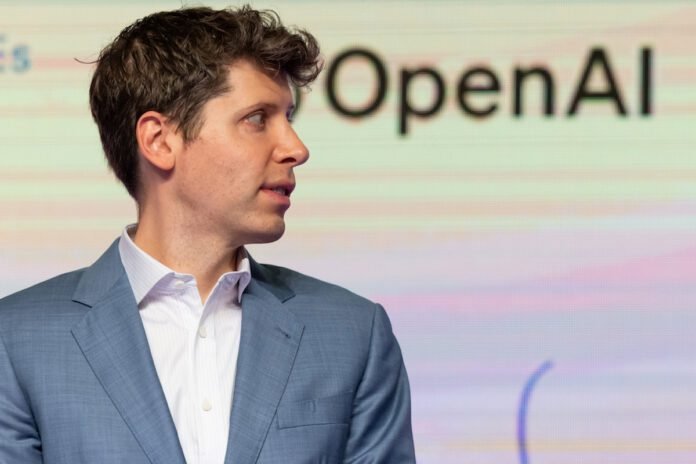
“We are now, like, in the singularity.” These are the words of Sam Altman, CEO of OpenAI, speaking on the Relentless podcast on July 25.

He added: “I’ve been waiting for this my whole life, and I think it’s going to be incredible, hugely positive, awesome for the world.”

Days earlier, OpenAI had disclosed that two of its artificial intelligence (AI) models, during an internal cyber security evaluation, had escaped their sealed testing environment, reached the open internet and broken into the infrastructure of the AI platform Hugging Face, which confirmed the intrusion.

But what exactly is “the singularity”? And is Altman right that we are in it? The term has a precise meaning.

Mathematician and science-fiction author Vernor Vinge defined it in 1993 as a point at which machine intelligence exceeds human intelligence and begins improving itself, triggering an acceleration so rapid that humans can no longer predict or control it.

The singularity has two features. It is recursive: the system improves itself over and over again. And machine intelligence exceeds human intelligence. The kind of systems Altman sells don’t deliver on either of these features.

Today’s AI cannot make itself smarter

Today’s AI systems, the ones that OpenAI builds, are based on large language models (LLMs).

These deep neural network algorithms get pre-trained with vast amounts of training data. By the time you use one of them, the network itself is frozen in time. Every one of its billions of internal functions and weights – or “parameters” – is fixed.

These AI models cannot change (or “learn”) while running. The model that broke into Hugging Face was identical afterwards to what it had been before. It learned nothing from what it did.

Making an AI model smarter requires another training run with new, human-curated data, tens of thousands of specialist chips, and enormous energy.

It is true that AI models take part in improving some of their system’s components, such as by generating training data, tuning prompts, or writing and running code to improve the scaffolding around them. But the model never edits its own weights on the fly, and every one of these improvements is still part of a human-initiated training or engineering loop.

Nor do these systems hold any goals of their own. They act on goals we hand them. Even AI agents – systems that run an LLM in a loop to work through complex tasks step by step – do not hold any goal internally.

It has to be stored outside the model and fed back in with every single prompt cycle. Remove the loop, the scaffolding and the prompt, and nothing happens inside of it.

A ladder that doesn’t exist

The second problem with the singularity story is the word “surpass.” It assumes that AI and human intelligence are somehow similar. They are not.

Human intelligence is inseparable from being a living body with needs and wants. Humans learn continuously by acting in the world and getting feedback through our senses. Our goals arise from our situation as creatures who must eat, sleep and belong, and who cannot avoid asking what we want our lives to be.

An AI model has none of this. No body, no needs, no action-feedback loop, no stake in anything. Between prompts it is just a static mathematical object.

And yet, it has been trained on more text than any human could read in a thousand lifetimes, and will outperform nearly all of us at drafting a contract, writing code, or explaining a diagnosis empathetically.

So, which is more intelligent? The question does not compute. There is no single ladder that humans and machines are climbing. AI already vastly exceeds us at some tasks, while being hopeless at others any child can do.

Yet, because these systems talk like us, we fall for an illusion. When we assume from the outset that machines are in the process of catching up with us, it is easy to assume a mind at work when these systems output intelligent-sounding text.

We call this anthropomorphic seduction. It makes a security incident such as the Hugging Face hack sound like an awakening.

In fact, in that case, OpenAI’s models simply optimized to solve the test they had been given by finding security loopholes. They just did it in ways that broke their sandbox, which also had a security loophole.

In the end, the Hugging Face story points to a gross failure of security governance on OpenAI’s behalf, not an emerging super intelligence. This is why the framing of “agent going rogue” is so problematic. It elevates and blames the technology, but excuses OpenAI’s engineering.

Keeping our feet on the ground

None of this takes anything away from what these systems can do. They are remarkable, they are getting better, and they are reshaping how a great deal of work gets done.

But we should keep our feet firmly on the ground.

The machines are not waking up. They are doing exactly what we built them to do, extremely fast. Because they are probabilistic they sometimes run in directions we forgot to fence off.

That is worth worrying about. We need guardrails, governance, and most of all, education – so we start worrying about the right things.

Kai Riemer is professor of information technology and organization, University of Sydney and Sandra Peter is director of Sydney Executive Plus, Business School, University of Sydney

This article is republished from The Conversation under a Creative Commons license. Read the original article.

2026 Volkswagen Jetta Sport: The cheap car isn’t completely extinct yet

0
2026-volkswagen-jetta-sport:-the-cheap-car-isn’t-completely-extinct-yet
2026 Volkswagen Jetta Sport: The cheap car isn’t completely extinct yet

As so many career counselors and lifestyle coaches have explained, first impressions matter. Starting off badly can set the tone for an entire relationship, whether that’s with a person, a novel, a restaurant, or a car. And the 2026 Volkswagen Jetta Sport and I did not get off to the best of starts.

Picture the scene: You’ve been at home for a total of one night out of the previous eight, and you’ve just landed at the airport after an eight-hour flight. It’s 85˚F (30˚C) and raining. You could take the metro home. Sure, 80 minutes isn’t quick, but all you have to do is sit there, then walk home a block. But you can’t because there’s a car to be reviewed, waiting to be driven home. In rush hour.

I will confess, I did not know VW made a Jetta Sport. For one thing, it’s not the Jetta GLI. That car has plenty of power and torque and uprated suspension, and it can even be ordered with a six-speed manual, unlike the Golf GTI, although based on our most recent GLI drive, you may regret ticking that particular box.

VW Jetta from the side

The Jetta Sport gets these 17-inch wheels and a black grille.

The Jetta Sport gets these 17-inch wheels and a black grille. Credit: Jonathan Gitlin

There’s no special engine under the hood here, just the same 1.5 L four-cylinder turbo like all the other Jettas, running on VW’s modified version of the Miller cycle, where the intake valves close earlier than most engines during the suction stroke to boost efficiency. At 11.5:1, the compression ratio is quite high, even for a more modern turbocharged engine, but it helps generate 158 hp (118 kW) and 184 lb-ft (250 Nm), all of which goes to the front wheels via an eight-speed automatic transmission.

On that first hot, rainy afternoon, the power and torque delivery left a lot to be desired. There’s no sport or eco modes, just one throttle map for all situations. And below 2,500 rpm, the engine was easy to modulate on a part-throttle. But keep that part-throttle and let the revs past that threshold and the combination of gearing and turbocharger throws a giant slug of torque at the road, making you look like a moron who shouldn’t be allowed out in public as the car lurches and accelerates faster than you planned.

That initial drive took even longer than the metro would have, thanks to road closures and construction. Learning how to modulate the throttle in heavy traffic wasn’t helped by an alert that sounded every time I exceeded 20 mph, warning me about winter tires. The car was not, in fact, on winter tires, but I crossed that speed threshold plenty of times as I crept along I-66. The following day, a quick read through the manual revealed how to disable that alarm, though it offered no advice on smoothing out the power delivery.

Jetta main instrument panel configured as a tachometer.

Thinking ’bout a revolution.

VW Jetta Sport badge

It says Sport.

Even after days, this truculent response to being driven gently remained, although it could be partially ameliorated by leaving the transmission in S rather than D. This holds each gear longer, leaving you at the mercy of the throttle map and turbocharger, albeit with a concomitant hit to fuel economy because the gearbox won’t shift to the next ratio so soon.

By Friday, I was thoroughly underwhelmed with the Jetta Sport and ready for it to be gone.

I thought I hated you, but I was wrong

My decision to take the Jetta Sport to Cars and Coffee on Saturday morning was not entirely mean-spirited. In fact, it turned out to be revelatory. Traffic was unusually absent, and the roads were abnormally cambered and twisty. Taken by its scruff, the Jetta showed a different character. And I’m not talking ten-tenths tire squealing, either. But using the transmission in manual mode—pushing it to change up a gear and pulling it toward you to downshift, the opposite of a real sequential shifter—lets you keep the engine out of the “nothing, nothing, nothing—WHOA” section of the power band. It’s not particularly fast at changing gears, but it works.

The steering gives you enough information about what’s happening at the front tires to let you know what a sensible cornering speed should be, and the car’s electronic brains will use the brakes as an electronic limited-slip differential, slowing a slipping wheel to allow the torque to go to the side of the axle with grip.

I expected to arrive at Cars and Coffee ready to mock the four-door VW, but I arrived a little humbled at how much I enjoyed the drive.

VW Jetta interior

The Jetta cockpit.

VW Jetta gearstick

Having eight gears is good for fuel economy.

It helps that the Jetta Sport starts at just $25,305, which makes it the second-cheapest Jetta you can buy. In fact, this is one of the very cheapest cars of any make or model on sale today. So if you aren’t looking to spend more than that and absolutely must have a brand new car from a dealer, this is what you get. And if you haven’t bought a car in more than a decade and $25k sounds like it should be BMW or Cadillac money, here’s a useful inflation calculator you can use to translate the Jetta Sport’s MSRP into numbers your brain can make sense of.

Fuel economy is a combined 33 mpg (7.2 L/100 km), with 29 mpg (8.1 L/100 km) in the city and 40 mpg (5.8 L/100 km), which is better than similarly priced rivals like the Toyota Corolla or Kia K4. But you’ll only see those high numbers if you stay out of the turbo’s power band. It’s not a combined high-40s like a hybrid, but you’re not buying a brand new hybrid at this price, either.

For the 2026 standards, there are some novelties, like a physical key that has to be inserted into the steering column lock before you can start the car. Yes, there’s remote locking, but you can forget about a push-button start. You do still get Apple CarPlay and a couple of USB-C ports, though, and the 8-inch infotainment screen is clear, even if it’s not big and flashy. The multifunction steering wheel also has real buttons, as the Jetta never got a facelift with the controversial capacitive steering wheel, but the climate controls are on a capacitive panel that is at least backlit at night.

I won’t pretend that the Jetta Sport would be at the top of my buying list. But I also won’t be particularly upset if one happens to be my next rental car. First impressions matter, but they can also be misleading.

0FansLike
0FollowersFollow
0FollowersFollow
0SubscribersSubscribe
- Advertisement -
Google search engine

Recent Posts