30.6 C
London
Monday, August 3, 2026
Home Blog

Man Found Dead on California High School Roof

0
man-found-dead-on-california-high-school-roof
Man Found Dead on California High School Roof


The man whose body was discovered on the roof of a California high school has been identified, but authorities are still trying to explain how he ended up there — and how long he may have gone unnoticed.

The Fresno County Coroner’s Office identified the dead man as 30-year-old Daniel Ramirez.

Ramirez was found shortly after 11 a.m. Friday on top of a structure outside the library at Fresno High School.

A school employee reportedly spotted the body and immediately alerted authorities, prompting police officers and emergency crews to race to the campus.

Responders used ladders to climb onto the roof, where they confirmed that a man was dead.

The discovery quickly sparked disturbing questions, especially after preliminary findings suggested Ramirez’s body may have been exposed on the rooftop for several days — or possibly even weeks — before anyone noticed it.

Investigators are now working to determine how Ramirez gained access to the roof and exactly how long he had been there.

Police initially approached the bizarre death as a possible crime scene. However, the Fresno County Sheriff’s Office later said there was no indication that Ramirez’s death involved suspicious circumstances.

That conclusion has only added to the mystery surrounding the case, as authorities have not publicly explained how Ramirez died or why he was on the school roof.

Anyone with information that could help investigators is being urged to contact the Fresno Police Department at 559-621-7000.

Don’t believe Sam Altman, we’re not in the AI Singularity

0
don’t-believe-sam-altman,-we’re-not-in-the-ai-singularity
Don’t believe Sam Altman, we’re not in the AI Singularity

“We are now, like, in the singularity.” These are the words of Sam Altman, CEO of OpenAI, speaking on the Relentless podcast on July 25.

He added: “I’ve been waiting for this my whole life, and I think it’s going to be incredible, hugely positive, awesome for the world.”

Days earlier, OpenAI had disclosed that two of its artificial intelligence (AI) models, during an internal cyber security evaluation, had escaped their sealed testing environment, reached the open internet and broken into the infrastructure of the AI platform Hugging Face, which confirmed the intrusion.

But what exactly is “the singularity”? And is Altman right that we are in it? The term has a precise meaning.

Mathematician and science-fiction author Vernor Vinge defined it in 1993 as a point at which machine intelligence exceeds human intelligence and begins improving itself, triggering an acceleration so rapid that humans can no longer predict or control it.

The singularity has two features. It is recursive: the system improves itself over and over again. And machine intelligence exceeds human intelligence. The kind of systems Altman sells don’t deliver on either of these features.

Today’s AI cannot make itself smarter

Today’s AI systems, the ones that OpenAI builds, are based on large language models (LLMs).

These deep neural network algorithms get pre-trained with vast amounts of training data. By the time you use one of them, the network itself is frozen in time. Every one of its billions of internal functions and weights – or “parameters” – is fixed.

These AI models cannot change (or “learn”) while running. The model that broke into Hugging Face was identical afterwards to what it had been before. It learned nothing from what it did.

Making an AI model smarter requires another training run with new, human-curated data, tens of thousands of specialist chips, and enormous energy.

It is true that AI models take part in improving some of their system’s components, such as by generating training data, tuning prompts, or writing and running code to improve the scaffolding around them. But the model never edits its own weights on the fly, and every one of these improvements is still part of a human-initiated training or engineering loop.

Nor do these systems hold any goals of their own. They act on goals we hand them. Even AI agents – systems that run an LLM in a loop to work through complex tasks step by step – do not hold any goal internally.

It has to be stored outside the model and fed back in with every single prompt cycle. Remove the loop, the scaffolding and the prompt, and nothing happens inside of it.

A ladder that doesn’t exist

The second problem with the singularity story is the word “surpass.” It assumes that AI and human intelligence are somehow similar. They are not.

Human intelligence is inseparable from being a living body with needs and wants. Humans learn continuously by acting in the world and getting feedback through our senses. Our goals arise from our situation as creatures who must eat, sleep and belong, and who cannot avoid asking what we want our lives to be.

An AI model has none of this. No body, no needs, no action-feedback loop, no stake in anything. Between prompts it is just a static mathematical object.

And yet, it has been trained on more text than any human could read in a thousand lifetimes, and will outperform nearly all of us at drafting a contract, writing code, or explaining a diagnosis empathetically.

So, which is more intelligent? The question does not compute. There is no single ladder that humans and machines are climbing. AI already vastly exceeds us at some tasks, while being hopeless at others any child can do.

Yet, because these systems talk like us, we fall for an illusion. When we assume from the outset that machines are in the process of catching up with us, it is easy to assume a mind at work when these systems output intelligent-sounding text.

We call this anthropomorphic seduction. It makes a security incident such as the Hugging Face hack sound like an awakening.

In fact, in that case, OpenAI’s models simply optimized to solve the test they had been given by finding security loopholes. They just did it in ways that broke their sandbox, which also had a security loophole.

In the end, the Hugging Face story points to a gross failure of security governance on OpenAI’s behalf, not an emerging super intelligence. This is why the framing of “agent going rogue” is so problematic. It elevates and blames the technology, but excuses OpenAI’s engineering.

Keeping our feet on the ground

None of this takes anything away from what these systems can do. They are remarkable, they are getting better, and they are reshaping how a great deal of work gets done.

But we should keep our feet firmly on the ground.

The machines are not waking up. They are doing exactly what we built them to do, extremely fast. Because they are probabilistic they sometimes run in directions we forgot to fence off.

That is worth worrying about. We need guardrails, governance, and most of all, education – so we start worrying about the right things.

Kai Riemer is professor of information technology and organization, University of Sydney and Sandra Peter is director of Sydney Executive Plus, Business School, University of Sydney

This article is republished from The Conversation under a Creative Commons license. Read the original article.

2026 Volkswagen Jetta Sport: The cheap car isn’t completely extinct yet

0
2026-volkswagen-jetta-sport:-the-cheap-car-isn’t-completely-extinct-yet
2026 Volkswagen Jetta Sport: The cheap car isn’t completely extinct yet

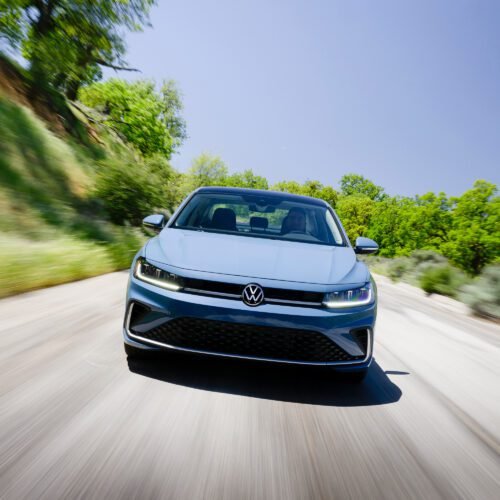
As so many career counselors and lifestyle coaches have explained, first impressions matter. Starting off badly can set the tone for an entire relationship, whether that’s with a person, a novel, a restaurant, or a car. And the 2026 Volkswagen Jetta Sport and I did not get off to the best of starts.

Picture the scene: You’ve been at home for a total of one night out of the previous eight, and you’ve just landed at the airport after an eight-hour flight. It’s 85˚F (30˚C) and raining. You could take the metro home. Sure, 80 minutes isn’t quick, but all you have to do is sit there, then walk home a block. But you can’t because there’s a car to be reviewed, waiting to be driven home. In rush hour.

I will confess, I did not know VW made a Jetta Sport. For one thing, it’s not the Jetta GLI. That car has plenty of power and torque and uprated suspension, and it can even be ordered with a six-speed manual, unlike the Golf GTI, although based on our most recent GLI drive, you may regret ticking that particular box.

VW Jetta from the side

The Jetta Sport gets these 17-inch wheels and a black grille.

The Jetta Sport gets these 17-inch wheels and a black grille. Credit: Jonathan Gitlin

There’s no special engine under the hood here, just the same 1.5 L four-cylinder turbo like all the other Jettas, running on VW’s modified version of the Miller cycle, where the intake valves close earlier than most engines during the suction stroke to boost efficiency. At 11.5:1, the compression ratio is quite high, even for a more modern turbocharged engine, but it helps generate 158 hp (118 kW) and 184 lb-ft (250 Nm), all of which goes to the front wheels via an eight-speed automatic transmission.

On that first hot, rainy afternoon, the power and torque delivery left a lot to be desired. There’s no sport or eco modes, just one throttle map for all situations. And below 2,500 rpm, the engine was easy to modulate on a part-throttle. But keep that part-throttle and let the revs past that threshold and the combination of gearing and turbocharger throws a giant slug of torque at the road, making you look like a moron who shouldn’t be allowed out in public as the car lurches and accelerates faster than you planned.

That initial drive took even longer than the metro would have, thanks to road closures and construction. Learning how to modulate the throttle in heavy traffic wasn’t helped by an alert that sounded every time I exceeded 20 mph, warning me about winter tires. The car was not, in fact, on winter tires, but I crossed that speed threshold plenty of times as I crept along I-66. The following day, a quick read through the manual revealed how to disable that alarm, though it offered no advice on smoothing out the power delivery.

Jetta main instrument panel configured as a tachometer.

Thinking ’bout a revolution.

VW Jetta Sport badge

It says Sport.

Even after days, this truculent response to being driven gently remained, although it could be partially ameliorated by leaving the transmission in S rather than D. This holds each gear longer, leaving you at the mercy of the throttle map and turbocharger, albeit with a concomitant hit to fuel economy because the gearbox won’t shift to the next ratio so soon.

By Friday, I was thoroughly underwhelmed with the Jetta Sport and ready for it to be gone.

I thought I hated you, but I was wrong

My decision to take the Jetta Sport to Cars and Coffee on Saturday morning was not entirely mean-spirited. In fact, it turned out to be revelatory. Traffic was unusually absent, and the roads were abnormally cambered and twisty. Taken by its scruff, the Jetta showed a different character. And I’m not talking ten-tenths tire squealing, either. But using the transmission in manual mode—pushing it to change up a gear and pulling it toward you to downshift, the opposite of a real sequential shifter—lets you keep the engine out of the “nothing, nothing, nothing—WHOA” section of the power band. It’s not particularly fast at changing gears, but it works.

The steering gives you enough information about what’s happening at the front tires to let you know what a sensible cornering speed should be, and the car’s electronic brains will use the brakes as an electronic limited-slip differential, slowing a slipping wheel to allow the torque to go to the side of the axle with grip.

I expected to arrive at Cars and Coffee ready to mock the four-door VW, but I arrived a little humbled at how much I enjoyed the drive.

VW Jetta interior

The Jetta cockpit.

VW Jetta gearstick

Having eight gears is good for fuel economy.

It helps that the Jetta Sport starts at just $25,305, which makes it the second-cheapest Jetta you can buy. In fact, this is one of the very cheapest cars of any make or model on sale today. So if you aren’t looking to spend more than that and absolutely must have a brand new car from a dealer, this is what you get. And if you haven’t bought a car in more than a decade and $25k sounds like it should be BMW or Cadillac money, here’s a useful inflation calculator you can use to translate the Jetta Sport’s MSRP into numbers your brain can make sense of.

Fuel economy is a combined 33 mpg (7.2 L/100 km), with 29 mpg (8.1 L/100 km) in the city and 40 mpg (5.8 L/100 km), which is better than similarly priced rivals like the Toyota Corolla or Kia K4. But you’ll only see those high numbers if you stay out of the turbo’s power band. It’s not a combined high-40s like a hybrid, but you’re not buying a brand new hybrid at this price, either.

For the 2026 standards, there are some novelties, like a physical key that has to be inserted into the steering column lock before you can start the car. Yes, there’s remote locking, but you can forget about a push-button start. You do still get Apple CarPlay and a couple of USB-C ports, though, and the 8-inch infotainment screen is clear, even if it’s not big and flashy. The multifunction steering wheel also has real buttons, as the Jetta never got a facelift with the controversial capacitive steering wheel, but the climate controls are on a capacitive panel that is at least backlit at night.

I won’t pretend that the Jetta Sport would be at the top of my buying list. But I also won’t be particularly upset if one happens to be my next rental car. First impressions matter, but they can also be misleading.

Ariana Grande to take a break from public life

0
ariana-grande-to-take-a-break-from-public-life
Ariana Grande to take a break from public life


Ariana Grande is to withdraw from public appearances and will no longer star in an upcoming musical production in London when she ends her Eternal Sunshine tour next month.

A representative for the US singer, 33, told People magazine that she “will be taking a step back from visibility” when the tour ends, after her appearances led to “endless, ongoing public scrutiny”.

The company behind a revival of Stephen Sondheim’s Sunday in the Park with George, due to play at the Barbican in 2027, confirmed that she would no longer be part of the production and had its “complete understanding and support”.

Grande’s physical appearance and health have been a topic of speculation in recent years.

This speculation has increased since the release of her latest album, Petal, which came out on Friday, and her appearance in promotional material for the launch.

In the music video, Grande plays a performer who is repeatedly told in auditions that she is “not good enough”, is “desperate” and that she “should get some work done” then that she has “too much work done.” The character eventually takes a chainsaw to the critics.

Grande’s representative stressed to People that the star was looking forward to finishing her tour “on a high note, both healthily and happily, and then taking a much-deserved break from public-facing work and appearances, which has led to endless, ongoing public scrutiny”.

They added: “She performs a very physical show, and there is a lot of athleticism involved. She performs healthily and successfully at a very high level night after night.”

Fans expressed a combination of support for the star and concern about her wellbeing, with the message #weloveyouariana trending on social media.

Her tour continues in Chicago on Monday, with three dates at the city’s United Center. It will then move to London’s O2 arena for 10 dates from 15 August, with the tour concluding there on 1 September.

‘Can’t have been an easy decision’

The Thank U, Next and 7 Rings singer was billed to appear alongside her Wicked co-star, British actor Jonathan Bailey, in the new production of Sondheim’s critically acclaimed 1984 musical.

A representative for Empire Street Productions confirmed to the BBC that the musical would go ahead without Grande.

“Following this evening’s announcement from Ariana Grande’s team, we can confirm that she has decided to step back from Sunday in the Park with George,” they said.

“We know this cannot have been an easy decision, and she makes it with our complete understanding and support. We wish her nothing but the best.”

A spokesperson for the Barbican said: “We sincerely hope to welcome her to the Barbican one day when the time is right.

“Our brilliant theatre team are continuing their hard work preparing for Sunday In The Park with George to open at the Barbican in summer 2027 as planned, starring Jonathan Bailey and directed by Marianne Elliott.

“Further casting and details about the run, as well as information about how to buy tickets, will be announced soon.”

Read more via BBC

How Israeli conduct in the West Bank could derail Donald Trump’s latest peace plan for Gaza

0
how-israeli-conduct-in-the-west-bank-could-derail-donald-trump’s-latest-peace-plan-for-gaza
How Israeli conduct in the West Bank could derail Donald Trump’s latest peace plan for Gaza

Hamas’s agreement to US president Donald Trump’s disarmament roadmap is welcome news. It potentially unlocks the stalemate that has kept 2 million Gazans living in catastrophic conditions since the ceasefire was announced more than nine months ago.

But there are concerns. Israel is unlikely to accept the plan, as it will require the withdrawal of the Israeli military from Gaza. The Israeli prime minister, Benjamin Netanyahu, is likely to try to stall at least until elections are held in late October.

Hamas knows this, and being in no rush to disarm, will also be content to slow-walk the process. If or when there are additional negotiations, each party is likely to object to the details to delay the process further or suspend it altogether.

Some of these hurdles can be overcome through sustained diplomatic engagement and pressure on both parties. But this is far from guaranteed. And an additional challenge that could derail any potential progress looms large beyond Gaza’s borders: the deteriorating situation in the West Bank.

I just returned from a month of fieldwork in the West Bank, meeting with local NGO workers, community leaders and youth activists and documenting settler violence, forced displacement and land seizures. Many people I met, whether in cities, refugee camps or rural areas, said they fear a repeat of Gaza in the West Bank. They fear another major war, another Nakba (meaning “catastrophe”: the term Palestinians use to describe the mass displacement of Palestinians in 1948). One person I spoke with said they felt as if “it’s going to explode”. This is a common view among people in the West Bank.

Pressure cooker

After spending weeks travelling around the territory, it wasn’t hard to see why. I have been visiting the region for more than 20 years, and life in the West Bank has never been easy for its residents. But now, it’s like a pressure cooker.

Travel within the West Bank has become much harder and slower, with additional checkpoints, gates and unpredictable road closures – mostly near expanding settlements – adding hours to simple journeys of less than 20km. On the roads that are open, settlers have lined the pavement with Israeli flags and blacked out the Arabic writing on multilingual road signs with spray paint.

road signs with Arabic writing painted over

Arabic script blacked out on road signs in the West Bank. Julie M Norman

In the cities, petrol stations are out of fuel and hospitals are short of medicine. Civil servants are out of work or earning only partial wages, as Israel continues to withhold much-needed tax revenues to the Palestinian Authority. More people are also being squeezed into urban areas as a result of both Israeli military seizures of neighbouring refugee camps and settler violence against rural communities. This is adding additional strain and tension to urban areas.

For example, I visited Tulkarem, where two refugee camps, once home to more than 33,000 people, now sit like empty ghost towns. In January 2025, the residents were forced out of the camps by the Israeli military. Most are still living in temporary shelters in schools or mosques, or in overcrowded apartments housing 30 to 40 people.

Residents of Jenin Camp were also displaced last year, and in late July, Israeli defence minister Israel Katz instructed the IDF to take control of another refugee camp, suggesting another major offensive and further mass displacement.

An abandoned Palestinian refugee camp on the West Bank

Tulkarem refugee camp sits empty after forced evacuations. Julie M Norman

Other areas I visited rarely make international headlines, but they are well known within Palestine. For example, the Jordan Valley is a mostly rural area that stretches about 10km wide and 100km long. It hugs the West Bank’s border with Jordan and is comprised mostly of small, simple farming villages. The region is also part of what is referred to as Area C under the Oslo Accords, the peace deal signed between Israel and the Palestine Liberation Organization (PLO) in 1995. The deal divided the West Bank into three areas with specific levels of security and control. Area C is under Israeli civil and military control.

All of Area C has experienced accelerated Israeli settlement growth, with over 100 new settlements approved by the current Israeli government since 2023. These are illegal under international law but supported by the state of Israel. In the Jordan Valley, there are 30 settlements as well as nine new outposts, which are typically unsanctioned by Israel initially, but usually allowed to develop into formal settlements with Israeli military protection.

A Palestinian village on the West Bank destroyed by settlers

Village of Ein Al-Hilweh, Jordan Valley, destroyed by settlers. Julie M Norman

Settlement expansion and land confiscation is not new in this area. But episodes of direct settler attacks accelerated after October 7 2023 and have continued to skyrocket across the West Bank, with about 2,500 documented attacks in 2026 alone.

These attacks were described by 600 former senior Israeli officials as terrorism, in a July 28 open letter to the Netanyahu government. Incidents range from harassment and stealing livestock, to arson, property destruction and physical, sometimes deadly attacks. In the Jordan Valley, such attacks have forced more than 45 entire villages to flee.

I visited one village, Ein el Hilweh, that had been home to 150 families. Their homes had been destroyed, and all that remained was a single tent erected by a solidarity group. At the entrance to the village, settlers had painted a picture of Greater Israel, showing the state of Israel extending across the Middle East from the Nile River in Egypt to the Euphrates River in Iraq.

Cycle of violence

The situation in Tulkarem, the Jordan Valley and other parts of the West Bank may appear disconnected from Gaza and Hamas disarmament negotiations. But they are inextricably linked for several reasons.

First, every settler attack risks unleashing an uncontrollable cycle of violence, like an incident in the village of Tal near Nablus in late July in which four Palestinians and two Israelis were killed, sparking days of retaliatory attacks. Many worry that Netanyahu will use a similar incident as a pretext for a broader military operation in the West Bank, and in turn halt negotiations or prevent any withdrawal from Gaza.

Second, even the slim chance that Hamas does disarm in Gaza doesn’t mean that armed struggle will disappear. On the contrary, in the absence of a broader, comprehensive agreement, other groups and individuals will jockey to fill that gap in both Gaza and the West Bank. Moreover, in the face of unsanctioned settler attacks, support for armed resistance as a form of self-defence in the West Bank will only increase.

Third, and deriving from the point above, no disarmament plan for Gaza and/or the West Bank will succeed without a credible pathway to Palestinian self-determination. The youth activists I met across the West Bank are hungry for a new political vision, but they do not see one. When I met with youth groups, nearly all of them told me that their greatest fear is that Palestine will cease to exist in any form by the year 2040 or 2050.

Donald Trump’s Board of Peace, which reportedly has negotiated the most recent agreement – and the international community more broadly – should leverage this moment to convince them otherwise. As discussions over potential decommissioning begin, they should be coupled with a commitment to and investment in a negotiated political process to ensure a better future for all of Palestine.

How India’s ‘Cockroach’ movement grew its wings

0
how-india’s-‘cockroach’-movement-grew-its-wings
How India’s ‘Cockroach’ movement grew its wings

Young people across India recently made international headlines for mass protests over the recurring leaks of entrance exams that help students qualify for medical schools and highly coveted government jobs. The Gen Z protesters won a major victory within a matter of weeks when Education Minister Dharmendra Pradhan resigned on July 25, 2026, bowing to their demands.

The student movement was triggered by an inadvertent insult by India’s Supreme Court Chief Justice Surya Kant, who, in May, referred to unemployed Indian youth as parasites and cockroaches. Kant’s words caught the attention of a young Indian man in Boston, Massachusetts, named Abhijeet Dipke, who graduated from Boston University in 2025 with a master’s in public relations.

Dipke posted a question on X: “What if all the cockroaches come together?” Deploying his PR skills, he built an Instagram account under the banner of the Cockroach Janta Party (“Janta” is Hindi for “the people”) and within days began to attract a following of disaffected Indian youth, angry over the reported leak of questions from the National Eligibility-cum-Entrance Test (NEET).

Illicit access to questions from the NEET medical entrance exam is part of a lucrative underground trade in a system designed to pit an estimated 2 million students against one another for only 130,000 available positions. When news of the leaks spread, an estimated 21 students took their own lives in despair rather than retake the exams.

Ahilya Majithia, a reporter based in New Delhi, documented the nascent movement and explained that while it began as an online protest, it quickly spread to the physical world, spurred by a sense of mass injustice felt by students.

“It’s one of the most competitive exams in India,” she said during an interview with me. “It’s basically an exam to get into a medical college. So, it obviously requires a lot of preparation, and people study for years to just give this exam.”

As anger grew, Dipke’s CJP offered people an outlet for their frustrations, and the satirical party’s online following ballooned into the tens of millions. “I think it did catch a lot of momentum because of social media, and that’s how the Cockroach Janta Party was also conveying their messages: through X, through Instagram,” said Majithia.

Soon, Dipke, who was living in the United States, flew from Boston to Delhi in early June. He arrived at the airport holding aloft a copy of Dr. B.R. Ambedkar’s autobiography, a legendary Dalit leader whose writings were central to the anti-caste movement in India. “Coming from a Dalit family, Dr. Ambedkar obviously had a huge influence on my life,” said Dipke in an interview with Frontline magazine.

Although Ambedkar was a left-wing socialist, Dipke’s political sensibilities are not necessarily reflected in the movement he helped to spark, one that moved at a ferocious speed.

“This protest [gave] the people the sense of power that we can fight the government to change certain things,” said Majithia. However, she added, “I don’t think this protest was ever to weaken a government body or the BJP in particular; I think this was a very non-political issue.”

With Dipke and his fellow Gen Z activists leading marches, students spent weeks demonstrating and occupying public spaces to protest a system that increasingly squeezes young people out of stable careers despite spending years studying and incurring debt to qualify for exams.

They gathered in Delhi’s storied “Jantar Mantar,” a large-scale 18th-century structure of giant sundials and other astronomical observing instruments symbolizing India’s ancient tradition of scientific inquiry.

The “cockroach” protests spread from India’s capital, Delhi, to other states, including Assam, Maharashtra, West Bengal, and Bihar, even as police brutalized protesters, as seen in widely shared online images and videos. Students were not only participating in protests but were also documenting their mistreatment at the hands of authorities with smartphones and social media.

Some of their key demands included that India’s education minister step down and that families of students who committed suicide receive financial restitution for their losses.

As far as Majithia knows, no member of Prime Minister Narendra Modi’s ruling Bharatiya Janata Party (BJP) has ever given into political pressure and resigned.

“It’s never happened,” she said. Kangana Ranaut, an actress and member of parliament, told the press that “no one can pressure the government into who to sack and who to retain”—a shocking admission of how much disdain the ruling party has for basic tenets of democracy.

However, soon after her comments, Education Minister Dharmendra Pradhan resigned, and even the international press noted just how significant the Modi government’s acquiescence was.

Since the protests ended, the CJP has also insisted that all arrest warrants against student protesters be withdrawn and threatened a resumption of actions over reports of government harassment of activists.

There have been so many failures of the education system, not just the NEET paper leak,” said Majithia. In the wake of Pradhan’s resignation, the next question is how the movement will navigate specific education and economic reforms.

Saurav Das, the CJP’s main spokesperson, who has a background in investigative journalism and is writing a book about the nation’s justice system, is in negotiations with the Modi government over the details of a longer-term education and examination five-point reform plan that includes more stringent standards for testing authorities, a contingency plan for reexamination, and better compensation for impacted students.

While the reform charter addresses the specific reasons why protesters are enraged with the government, the broader issue of economic justice for India’s youth remains in question.

An in-depth 2026 report by Azim Premji University on economic prospects for India’s youth concludes that the country has the largest youth population of any other nation in the world and that “[t]he transition from education to employment remains a major challenge, particularly for graduates.”

Specifically, the report found that “while approximately 5 million graduates were added each year, only around 2.8 million found employment, and an even smaller share entered salaried employment.”

It remains to be seen whether the CJP and its explosive entry into India’s political landscape will be able to take on the bigger problem of Gen Z’s poor economic prospects. At only a few months old, the movement has at the very least offered young people an outlet for their frustrations and a platform to flex their power.

“I think people have a lot of hope with the Cockroach Janta Party because they do think that they will work with the government to make changes and to get changes in the entire system,” said Majithia.

Sonali Kolhatkar is an award-winning multimedia journalist. She is the founder, host, and executive producer of “Rising Up With Sonali,” a weekly subscriber-funded television and radio show that airs on Free Speech TV and Pacifica stations. Her books include Breaking ICE: Community Defense Against State Terror and MAGA Fascism (Seven Stories Press, 2026), Talking About Abolition: A Police-Free World Is Possible (Seven Stories Press, 2025), and Rising Up: The Power of Narrative in Pursuing Racial Justice (City Lights Books, 2023). She is a writing fellow for the Economy for All project at the Independent Media Institute and was a senior editor at Yes! Magazine covering race and economy. She serves as the co-director of the nonprofit solidarity organization Afghan Women’s Mission and is a co-author of Bleeding Afghanistan. She also sits on the board of directors of Justice Action Center, an immigrant rights organization.

This article was produced by Economy for All, a project of the Independent Media Institute, and republished with kind permission.

Azerbaijani president approves financial aid for Palestinian Embassy

0
azerbaijani-president-approves-financial-aid-for-palestinian-embassy
Azerbaijani president approves financial aid for Palestinian Embassy

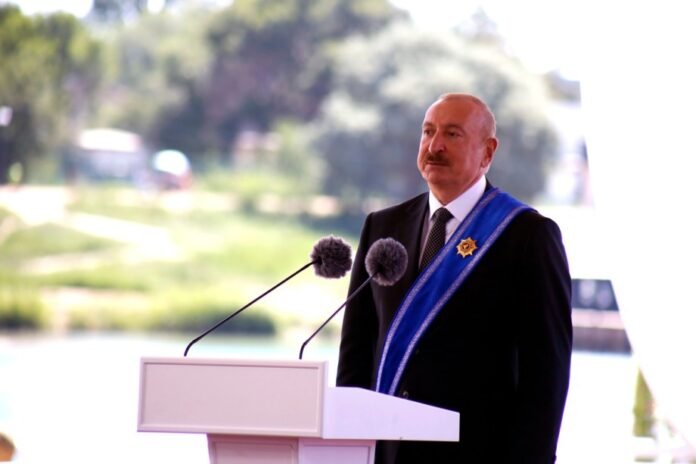
Azerbaijani President Ilham Aliyev on Monday approved a protocol providing financial assistance to the Palestinian Embassy in Azerbaijan, Anadolu reports.

The decree approving the protocol was published on the Azerbaijani presidency’s official website.

The protocol was signed in Baku on July 10, 2026. Once it enters into force, Azerbaijan’s Cabinet of Ministers will take the necessary steps to implement its provisions.

The Foreign Ministry was instructed to notify the Palestinian government that Azerbaijan had completed the domestic procedures required for the agreement to take effect.

The move follows Aliyev’s July 16 meeting with Palestinian Prime Minister Mohammad Mustafa, during which the Azerbaijani president reaffirmed Baku’s support for the establishment of an independent and sovereign State of Palestine with East Jerusalem as its capital.

Azerbaijan has provided more than $9.2 million in humanitarian and social assistance to Palestine through cooperation with the UN and the Organization of Islamic Cooperation.

The assistance has included $5 million for infrastructure modernization in Jerusalem and $630,000 for the Gaza Strip during 2013-2014.

Between 2021 and 2023, Azerbaijan allocated an additional $1.6 million to help address the effects of the COVID-19 pandemic.

In late 2024, Baku announced a further $2 million in assistance to support affected communities and finance the construction of a new school in Palestine.

Trump wants the power to stop the public from suing polluters

0
trump-wants-the-power-to-stop-the-public-from-suing-polluters
Trump wants the power to stop the public from suing polluters

Reducing rampant pollution across the United States was so important that when Congress passed many environmental protection laws, including the Clean Air Act, Clean Water Act, and Safe Drinking Water Act, it didn’t want to leave enforcement only to the executive branch.

Congress specifically wrote into those laws ways for citizens to enforce them through the courts when the government does not act to address the problem. Called “citizen suit provisions,” those parts of the laws allow regular people and advocacy groups to sue companies they believe are violating the law. Citizens can also sue federal agencies that fail to enforce the laws.

Since the 1970s, those provisions have been used in over 2,000 lawsuits. In fact, a majority of environmental cases are citizen suit cases. Citizen suits have been used to halt the construction of dams to protect endangered species, end the injection of wastewater into groundwater, and secure US$14.2 million in civil penalties for illegal emissions from a petrochemical facility. In short, these cases have shaped modern environmental law.

Now, in a legal filing, the Trump administration is saying citizens should not be allowed to enforce environmental laws. Rather, despite what the laws say, the US Department of Justice has claimed in a case involving Elon Musk’s xAI that people should be required to leave enforcement to the executive branch—even if the executive decides to take no action.

A history of success

For more than 50 years, citizen suits have been an effective part of cleaning up the environment in the US The process is fairly straightforward: A person or group must send a formal notification to the person, company or agency they suspect of violating the law—with a copy to the US Environmental Protection Agency. If after 60 days the problem is not rectified, the people can sue.

Citizen suits often ask the courts to order a stop to the polluting activity, payments for reducing or cleaning up the harm done, and civil penalties paid to the government. But if the government has already begun an enforcement action or is actively prosecuting the violator, a citizen suit cannot proceed.

The success of these cases depends on the ability of the plaintiff to prove a violation of the law. Violations of the Clean Water Act are somewhat easier to prove than violations of other statutes because the simple act of discharging a pollutant without a permit is a violation of the law. As a result, more citizen suit provisions have been brought under the Clean Water Act than under any other environmental statute.

In my area of research, plastic pollution, citizen suits have been used to hold plastic pellet manufacturers responsible for pollution. For example, the citizen suit provision of the Clean Water Act allowed Diane Wilson, a shrimper from Texas’ Gulf Coast, to sue Formosa Plastics in 2017 for persistent discharges of plastic pellets into Lavaca Bay, where some shrimp were caught, and which is connected to the Gulf of Mexico. In 2019, Formosa ended up settling for $50 million to pay for mitigation and remediation projects in the bay, cleaning up plastic and other pollution. Formosa also agreed to pay court costs and attorneys fees.

In another example, the environmental advocacy groups PennEnvironment and Three Rivers Waterkeeper in 2023 sued Styropek USA, which manufactured expandable polystyrene used for packaging and shipping, over pellet discharges into a western Pennsylvania creek. The pellets attracted and collected other toxic chemicals and were harming local aquatic plants and fish. In 2025, Styropek settled for $2.5 million. As part of the settlement agreement, Styropek agreed to install filters in the facility’s wastewater and stormwater systems to capture plastic pellets before they reached Raccoon Creek or the Ohio River. Styropek also had to eliminate the unauthorized discharge of plastic pellets from all of the facility’s stormwater drains.

Citizen suit provisions are not included in every law. But they have arisen in other contexts. For instance, a 2025 Texas state law seeks to restrict abortion rights and allows any citizen to sue doctors or other medical providers who perform or assist with abortions.

NAACP v. xAI

In April 2026, using the citizen suit provision of the Clean Air Act, the NAACP, a nationwide civil rights organization, sued xAI, an artificial intelligence company founded by Elon Musk, in federal court.

The NAACP alleged that xAI and a subsidiary company built and operated 27 natural gas-fired turbines in Southaven, Mississippi, without the required Clean Air Act permits. The turbines generated electricity to power xAI’s nearby Colossus 2 data center. The NAACP alleged that the gas plant released harmful pollutants, such as nitrogen oxides and formaldehyde, which can increase rates of asthma, respiratory diseases, heart problems, and certain cancers.

Had xAI applied for a permit to operate the turbines under the Clean Air Act, the EPA would have required xAI to use the best available technology to reduce those emissions. But xAI never applied to the EPA for a permit.

A request from the federal government

In June 2026, the US Department of Justice asked the judge to dismiss the case, claiming, among other arguments, that citizen suits cannot proceed when the federal government does not oppose the polluting behavior.

The Justice Department’s court filing cited two executive orders signed by President Donald Trump within days of the start of his second term—one declaring a “national energy emergency” and the other seeking to support “American leadership in artificial intelligence.”

According to the Justice Department, the NAACP’s lawsuit threatens “artificial intelligence innovation” and national security. The government’s filing goes on to argue that citizen lawsuits were not intended to allow everyday citizens to enforce laws in ways that go against what the federal government deems is in the public interest.

Instead, the Justice Department claimed, citizen suits should be allowed by the court only when the government fails to enforce the statute, and not when the government has decided that executive branch policy means enforcement action is contrary to the public interest.

Conflict between the government and the public

This is the first time the Justice Department has taken this position in court. But defendants and judges have questioned the constitutionality of citizen suits in the past.

Some critics, including the Trump administration, view citizen suits as a way for citizens to usurp the executive branch’s prosecutorial authority. Supporters of the citizen suit provisions, on the other hand, say they allow regular people to exercise their statutory rights to advocate for a clean and healthy environment and enforce environmental laws when the government’s efforts fall short.

Regardless of how the court rules in the NAACP case against xAI, I believe the filing from the Trump administration is another step in a broader effort to consolidate government power in the executive branch.

Sarah J. Morath is professor of law and associate dean for international affairs at Wake Forest University.

This article is republished from The Conversation under a Creative Commons license. Read the original article.

A new Houthi front and expanded Iranian attacks risk sinking Gulf nations’ choke-point workaround and widening shipping risks

0
a-new-houthi-front-and-expanded-iranian-attacks-risk-sinking-gulf-nations’-choke-point-workaround-and-widening-shipping-risks
A new Houthi front and expanded Iranian attacks risk sinking Gulf nations’ choke-point workaround and widening shipping risks

After a nine-month pause, Houthi militants in Yemen allied to Iran resumed attacks on vessels in the Red Sea on July 22, 2026, directly targeting the group’s longtime foe Saudi Arabia. A week later, a floating liquefied natural gas storage facility in Egypt’s Mediterranean port of Damietta was struck by suspected Iranian drones, causing a fire that spread to a nearby tanker.

As a longtime Gulf analyst, I believe these two maritime attacks by Iran and its proxies signal that efforts to bypass the Strait of Hormuz — which Tehran has largely shut down since being attacked by Israel and the U.S. on Feb. 28 — is no panacea for regional peace or stability in global energy markets.

Indeed, the incidents have expanded the zone of risk for shipping to two other maritime choke points: the Bab al-Mandab Strait between Yemen and the Horn of Africa, and the Suez Canal and pipeline links between the Red Sea and the Mediterranean. At the same time, they have put at risk Saudi Arabia’s strategy of redirecting oil exports away from the Strait of Hormuz through its western ports.

No longer quiet on the Houthi front

The Houthis, a rebel group that captured large swaths of northern Yemen during the near-decade-long civil war in the country, have long been an irritant to the strategic plans of Gulf nations and the U.S.

Yet during the first phase of the Iran war from Feb. 28, 2026, to the U.S.-Iran memorandum of understanding on June 17, the Houthi front in Yemen remained relatively quiet.

This was hardly surprising. The Houthis had by then withstood months of U.S. airstrikes in early 2025 that only ended with an Oman-brokered ceasefire agreement. And the group has been hit hard by a series of Israeli strikes, including one in August 2025 that killed its prime minister and nine members of his cabinet. While the strikes hit the technocratic component of the movement rather than its inner core of leaders, they underscored the Houthis’ vulnerability to external threats.

The renewed flare-up began in earnest in early July when a Houthi delegation flew on the Iranian airline Mahan Air from Sanaa to Tehran to attend the funeral of Iran’s former Supreme Leader, Ayatollah Ali Khamenei, who was killed on the opening day of the Iran war. It was the first direct flight from Houthi-controlled Yemen to Iran since 2015, and when the delegation attempted to return on July 12, the Saudi-backed and internationally recognized government in Yemen struck the runway in Sanaa, forcing the flight to divert to the port city of Hodeidah.

Men chant at a rally.

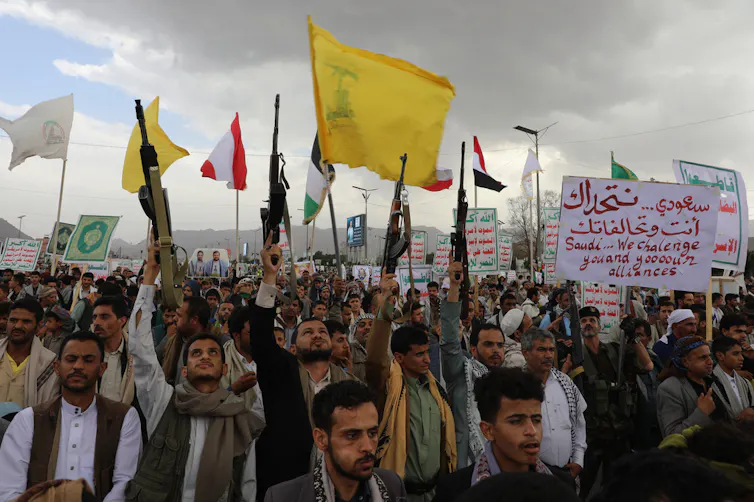
Houthi supporters attend a rally in Yemen’s capital against Saudi influence on July 31, 2026. AP Photo/Osamah Abdulrahman

Mahan Air is under a U.S. Treasury designation for its links to Iran’s Islamic Revolutionary Guards Corps, and the return flight reportedly carried IRGC personnel along with components for missiles and drones.

Against this backdrop, the Houthi announcement of a naval blockade on Saudi Arabia amounted to the most serious escalation of Saudi-Houthi tensions since a tenuous ceasefire largely ended Yemen’s civil war in 2022.

It also evoked memories of years of missile and drone attacks from Houthi areas on Saudi urban and energy infrastructure during the Yemeni civil war. Those attacks led the Saudi leadership to distance themselves from the American and British airstrikes in Yemen in 2025 and ensured that the long Houthi campaign against shipping in the Bab el-Mandab Strait and Red Sea from 2023 to 2025 avoided hitting Saudi vessels.

The loss of a solid Saudi plan B

This de-escalation of Saudi-Houthi tensions was critical in enabling the Gulf kingdom to quickly pivot its oil exports from its east coast ports to the west coast after the Strait of Hormuz was blocked in March 2026.

Within days of the closure, the East-West pipeline from the Saudi oil processing facility at Abqaiq to Yanbu, on the Red Sea, was operating at its full capacity of 7 million barrels per day.

This workaround allowed the Saudis to export around 3.43 million barrels of oil per day in May – less than half the prewar level, but a far higher figure than neighboring oil producers such as Kuwait, which lacks any alternative to passage through Hormuz.

To be sure, the workarounds put in place during the spring are not perfect – they remain within range of attack from Iran and its proxies. And both Yanbu, on the western coast of Saudi Arabia, and the United Arab Emirates’ own bypass pipeline from Abu Dhabi to Fujairah were targeted by missiles and drones in the first phase of the Iran war.

A commercial vessel sails in a body of water.

A vessel transits the Bab al-Mandeb Strait off the coast of southern Yemen on July 25, 2026. Khaled ZIAD/AFP via Getty Images

And it is these workarounds that are now at risk. Since July 20, the Houthis have struck at least four oil tankers in the Red Sea. In retaliation, Saudi Arabia has carried out airstrikes against Houthi targets in Yemen for the first time since the 2022 truce.

Vital Saudi oil infrastructure has also come under attack from both the Houthis and from Iranian-aligned groups in Iraq, who may have damaged the crucial processing facility at Abqaiq that acts as the nerve center for Saudi oil.

Quagmires and choke points

With the Saudis having also carried out joint airstrikes with the U.S. in Iraq on July 28, the kingdom now risks getting drawn into a conflict it has sought for years to avoid.

If the Houthi targeting of vessels in the Red Sea leads to similar restrictions on shipping in the Bab al-Mandab Strait as in the Strait of Hormuz, it would render a second regional choke point effectively inoperable.

A man sits on a surfboard with container ships on the horizon.

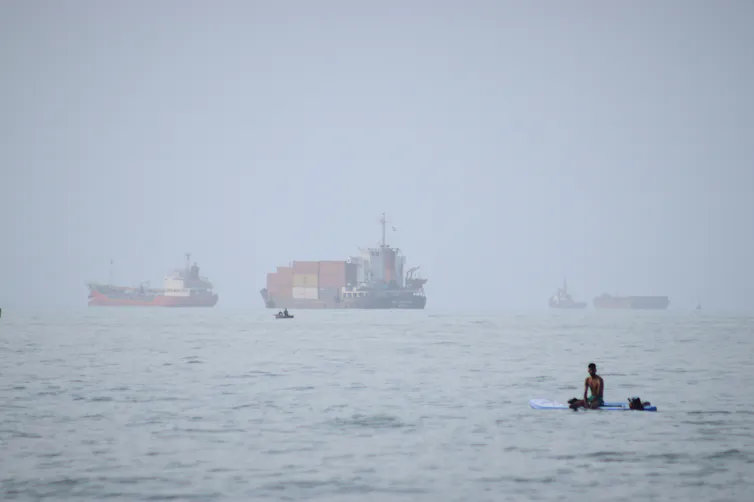
A man sits on a surfboard as a container ship and other commercial vessels appear anchored in the Strait of Hormuz off Bandar Abbas, Iran, on July 27, 2026. Razieh Poudat/ISNA via AP

That would necessitate a workaround to the workaround, as tankers divert north through the Suez Canal into the Mediterranean – adding about four weeks to journey times and associated costs to destinations in Asia.

Even this plan B may not be secure – and this is where the significance of the drone attacks on the vessels in Egypt’s Damietta becomes clear.

Although the world’s largest oil tankers cannot transit the Suez Canal, they can utilize the SUMED pipeline to shuttle oil from the Egyptian Red Sea port of Ain Sokhna to the port of Sidi Kerir on the Mediterranean for onward collection.

This would add logistical friction to the process of first unloading and then reloading the oil cargoes. But if shippers and insurers perceive that Egypt’s Mediterranean facilities are not only within Iranian range but also capable of being hit, that raises the prospect of the Red Sea being restricted at both ends. Doing so would render Saudi Arabia’s west coast ports as vulnerable to disruption as its east coast ports in the Gulf.

The costs of an expanding conflict

The first phase of the war in Iran showed how quickly assessments of risk could affect shippers and insurers in the Strait of Hormuz, and the latest attacks could threaten to do the same for the Red Sea routes as well. An expanded conflict zone could wreak havoc on energy and commodity supply chains already stretched thin by the loss of oil production in the spring.

By abandoning the restraint they showed during the spring, the Houthis may be seeking leverage over Saudi Arabia to gain political and economic concessions. But the Saudis too have shown greater assertiveness in their conduct of airstrikes, which could add to regional escalatory dynamics.

The result is a further layer of complexity in what has become a series of overlapping conflicts that have defied resolution and risk inflicting even greater harm on the world economy in the weeks and months ahead.

FCC Commissioners Face Ethics Complaints for Taking Luxury Gifts From Paramount

0
fcc-commissioners-face-ethics-complaints-for-taking-luxury-gifts-from-paramount
FCC Commissioners Face Ethics Complaints for Taking Luxury Gifts From Paramount

Two government watchdog groups have demanded investigations into whether Federal Communications Commission members violated ethics requirements by accepting luxury gala tickets from Paramount as the company sought government approval for its $111 billion acquisition of Warner Bros. Discovery.

The complaints filed by Democracy Defenders Fund and Citizens for Responsibility and Ethics in Washington cite a recent ProPublica investigation that detailed how CBS or its parent company, now Paramount, have for years given FCC commissioners tickets to the Kennedy Center honors gala, which the television network sponsors. The commissioners accepted the gifts even as the FCC was reviewing or about to review major Paramount business decisions, including two megamergers.

Commissioner Olivia Trusty’s most recent financial disclosure said Paramount gave her two tickets to the December 2025 honors gala that together were worth more than $12,000. Trusty was one of two commissioners who voted last year to approve Paramount’s merger with another media company, Skydance.

ProPublica’s investigation found FCC members had long enjoyed a night out at the Kennedy Center courtesy of CBS or its parent company. Seven of the 10 commissioners who served since 2016 accepted tickets worth more than $260,000, according to a ProPublica analysis of ethics disclosures.

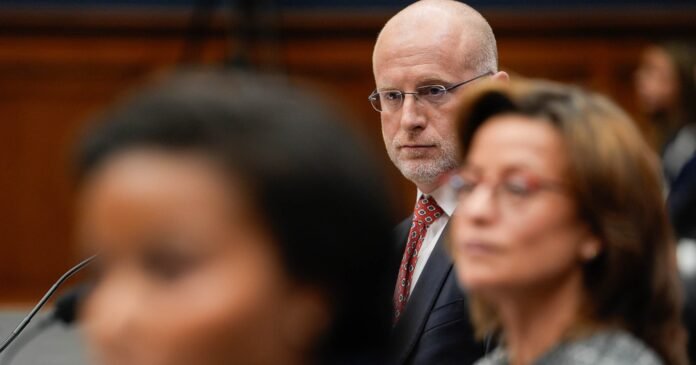
FCC Chair Brendan Carr’s financial statements show he has reported accepting honors gala tickets from CBS or its parent company eight times since his 2017 appointment to the commission, totaling over $75,000 in gifts.

Carr, who also voted in favor of the Paramount-Skydance merger last year, sat with his wife in a private skybox at the December gala with Paramount CEO David Ellison and other executives from Paramount and CBS. Such seats sold for $125,000 a ticket, according to Kennedy Center guidelines.

Carr disclosed on his latest financial statement that he accepted tickets from Paramount for himself and a guest to the 2025 gala and reception worth $12,390. Carr did not respond to a request from ProPublica to clarify the apparent difference in value between those tickets and the skybox seats. 

The FCC only released Carr’s disclosure late on Friday, more than a month after ProPublica had first requested it. The document says the agency certified it on June 22. 

Federal ethics rules ban employees from taking gifts from any entity that does business with, is regulated by or seeks official action from their agency.

“The federal gift regulations and the gratuities statute exist to ensure that government decisions are made on the merits, free from the influence of private benefits,” the Democracy Defenders Fund said in its complaint. “The public must have confidence that the FCC’s merger review process is not compromised by self-dealing or the appearance of impropriety.”

Carr, Trusty and the FCC did not respond to requests for comment. The agency’s inspector general declined to comment. An FCC spokesperson previously told ProPublica that agency ethics officers have for years cleared commissioners to accept the tickets, finding it consistent with ethics law. And Paramount’s chief of communications said it was a decades-long “CBS practice to invite government officials from both parties” to the Kennedy Center show. Carr last year defended the FCC’s approval of the Paramount merger with Skydance, saying it “advances the public interest.”

Read More

The FCC’s review of the Paramount-Warner Bros. merger is one of the final federal hurdles facing a historic consolidation of two of the five largest film studios in Hollywood. The deal would unite Paramount Skydance with Warner Bros., bringing under the control of one company Paramount+ and HBO Max streaming services; CBS and CNN; and scores of other major broadcast channels, cable networks and digital platforms.

Four ethics experts told ProPublica that by accepting the tickets, Trusty and Carr had compromised the FCC’s impartiality and should not take part in any upcoming decision on Paramount’s proposed merger.

The Democracy Defenders Fund — led by Norman Eisen, former ambassador to the Czech Republic and White House ethics czar under President Barack Obama — filed its grievance on Thursday with the federal Office of Government Ethics, the FCC’s inspector general and the FCC’s ethics office.

The group said the investigation should examine whether Carr and Trusty broke rules on accepting gifts or broke criminal laws prohibiting federal officials from accepting illegal gratuities.

Carr and Trusty should be required to repay Paramount the “fair market value” of any improper gifts and the federal ethics agency should refrain from certifying Carr’s annual disclosure report until he can prove that he has complied with ethics laws, Democracy Defenders Fund wrote. Its letter to the FCC and the Office of Government Ethics also requests that Carr be disqualified from further participation in the commission’s decision on the Paramount-Warner Bros. Discovery merger.

The nonprofit organization noted that hours after last year’s honors gala ended, Paramount announced it was launching its hostile takeover bid of Warner Bros. Discovery, a move that would later result in a merger agreement that requires FCC approval. About three months later, Carr publicly endorsed the deal on CNBC, promising swift approval.

“The facts that have been reported raise serious questions about the integrity and impartiality of FCC Chairman Carr in particular matters involving Paramount,” including the attempted merger with Warner Bros. Discovery, the letter said.

Citizens for Responsibility and Ethics in Washington, the other group that filed a written protest, requested an FCC inspector general probe of the luxury gifts.

“The reported gifts to FCC officials from businesses that are not only subject to agency regulation but presently engaged in billion-dollar mergers and acquisitions that must be approved by the commissioners themselves are extremely concerning threats to the integrity of FCC operations,” the CREW letter stated.

CREW, founded in 2003 as a nonpartisan organization dedicated to government accountability and ethics, is headed by Donald K. Sherman, a former House Ethics Committee attorney and special assistant to President Joseph Biden.

A woman in a blue suit sits at a table with a microphone in front of her. The same woman also appears on a large television screen on the wall behind where she is sitting.
Federal Communications Commission member Olivia Trusty. Jose Luis Magana/AP Images

“Government officials have the power to make decisions that impact huge swaths of the American people,” Sherman said in a statement about the organization’s demand for an inspector general investigation. “With this tremendous power comes a higher ethical standard that apparently wasn’t met. The IG can and must get answers for the public.”

The proposed merger between Paramount and Warner Bros. Discovery has drawn a flurry of legal opposition.

California, New York and 10 other states filed a lawsuit seeking to block the merger under federal and state antimonopoly laws. The Writers Guild of America, the Freedom of the Press Foundation and the Public Interest Project filed similar court challenges in recent weeks.

Paramount has recently agreed to pause its merger until the litigation is resolved or until June 1, 2027, whichever comes first.

0FansLike
0FollowersFollow
0FollowersFollow
0SubscribersSubscribe
- Advertisement -
Google search engine

Recent Posts