15.4 C
London
Sunday, August 2, 2026
Home Blog

Sony acknowledges backlash, “cautiously” moves ahead with end of PlayStation discs

0
sony-acknowledges-backlash,-“cautiously”-moves-ahead-with-end-of-playstation-discs
Sony acknowledges backlash, “cautiously” moves ahead with end of PlayStation discs

Sony is “cautiously” moving forward with plans to stop producing discs for PlayStation games as of January 2028, CFO Lin Tao said through an interpreter today.

During an earnings call, Tao said there are “various reasons” for Sony’s decision, with the biggest being that the “digitalization of [content] overall has been progressing.”

“When we think about the future, and we put in a lot of thought and time, and we cautiously considered this, and we came to this conclusion. And we’re going to cautiously move this forward,” Tao said.

Sony’s announcement this month has drawn backlash from gamers and big names in the gaming industry who question a future in which they don’t own PlayStation games but instead buy licenses, which can be revoked. There’s also concern that some games will become hard to find if Sony eventually closes its digital storefronts.

Tao acknowledged that “people have strong views” about the end of PlayStation discs.

“Games are loved by many people,” she said. “It’s a form of entertainment that’s loved by people. It’s connected to people’s fond memories in many cases. We understand those emotions. We want to consider that, and in the future digital ecosystem how… we engage the gamers is something that we would like to continue to explore.”

The change in strategy reflects how Sony sells games today. In its fiscal year ending on March 31, digital downloads accounted for 78 percent of Sony’s full-game unit purchases. In 2008, 100 PlayStation games sold over 100,000 physical units in the first half of the year, compared to seven in the first half of 2026, according to data shared this month by Circana analyst Mat Piscatella. More broadly, physical game sales have declined from 297 million units in the US from June 2008 through June 2009 to 37 million in the past year, Circana’s data says.

When asked about the financial impact of Sony’s decision to end disc production, Ishii, a corporate communications executive, said Sony has yet to see an impact and noted that content sales are largely “digitized” already.

“Therefore, as a result of the discontinuation of a disc, we don’t see that there will be any negative impact on our business. However… the users, the players, have attachments, and we have to think about how to respond to those feedbacks,” the executive said, per a transcript of the call.

Sony executives were also asked how PlayStation will differentiate itself from PC gaming, which generally does not use discs. Tao said Sony doesn’t believe discs are what distinguishes PlayStation from the PC, instead pointing to “curated” content as a strength of the console, according to the transcript.

“The game environment being stable, that’s another strength. Compared to the high-end gaming PC, our product is more affordable. We don’t feel that the disc itself is a strong factor for differentiation. Going forward, we can coexist peacefully with PC games.”

Sony has reportedly started repurposing its disc factory to make optical microlenses.

Netflix Star, 43, Feared Dead Following Avalanche

0
netflix-star,-43,-feared-dead-following-avalanche
Netflix Star, 43, Feared Dead Following Avalanche


Netflix mountaineering star Nirmal Purja is among six climbers missing and feared dead after a devastating avalanche struck Pakistan’s Broad Peak mountain.

Purja, 43, whose record-breaking adventures were featured in the 2021 documentary “14 Peaks: Nothing Is Impossible,” was leading a team of 10 climbers when disaster struck around noon on July 30.

The group was reportedly near the highest point of its climb in Pakistan’s treacherous Karakoram mountain range when the avalanche tore through the expedition.

Four bodies have since been recovered, while an international rescue operation continues to search for Purja and five other missing climbers.

The Pakistan-led mission was temporarily suspended when severe weather made aerial searches too dangerous. Officials later confirmed that rescue efforts were continuing.

Pakistan’s Alpine Club said in a statement that authorities “remain hopeful for the safe recovery of the missing climbers.”

Purja had shared an emotional message on social media shortly before beginning the dangerous ascent.

“Broad Peak, I ask for nothing but safe passage up and back down,” he wrote on X.

Purja became an international star after completing a historic challenge to climb all 14 of the world’s mountains taller than 8,000 meters. His astonishing achievement was chronicled in the hit Netflix documentary.

Broad Peak, which stands more than 26,000 feet tall near the Pakistan-China border, is considered one of the world’s most dangerous and unforgiving mountains.

As poor weather continues to complicate the search, loved ones and climbing fans around the world are anxiously awaiting news about Purja and the five other missing mountaineers.

‘A Big Step for the Middle East’: President Trump Hails Hamas Disarmament Plan

0
‘a-big-step-for-the-middle-east’:-president-trump-hails-hamas-disarmament-plan
‘A Big Step for the Middle East’: President Trump Hails Hamas Disarmament Plan


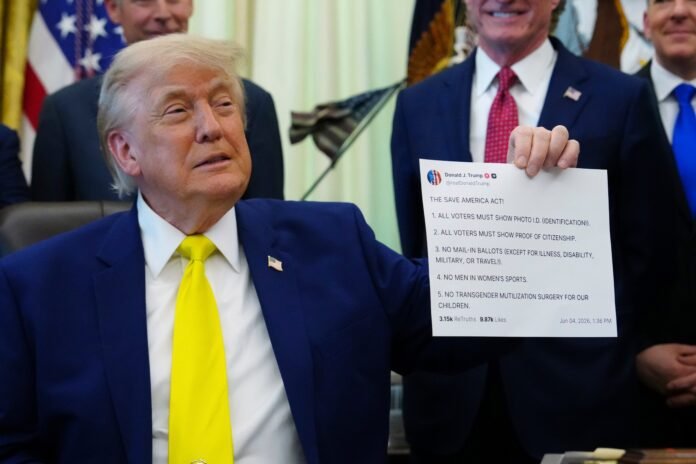
US President Donald Trump defended a newly announced Gaza agreement on Friday, calling it “a big step for the Middle East,” while declining to say whether the Israel Defense Forces (IDF) would withdraw from the Gaza Strip as part of the arrangement.

Speaking during a Cabinet meeting at Camp David, President Trump was asked about a possible Israeli withdrawal from Gaza under the agreement with Hamas but did not directly answer. Referring to the agreement, which includes the terror group’s disarmament, the president said it was “a big step for the Middle East” and added that “Israel is very happy.”

The comments came after the Gaza Peace Council released what it described as a roadmap for implementing Trump’s Gaza plan. Under the published principles, a timeline and implementation mechanisms are to be established within 14 days. The National Committee for the Management of Gaza, described as a “technocratic government,” would then enter the Strip, followed by deployment of the International Stabilization Force.

The framework states that a process would begin to decommission and store “heavy weapons, sites for producing combat equipment, weapons warehouses and tunnels.” It says that process “will be linked to a gradual Israeli withdrawal from areas under its control in the Gaza Strip and to the disarmament of armed militias.”

A political source reiterated that Israel’s position has not changed, saying there would be no Israeli military withdrawal before Hamas is disarmed.

“Regarding various publications about political progress in the Gaza Strip, Israel has reiterated and clarified that there will be no withdrawal of the IDF from the current yellow line without real disarmament of Hamas from its weapons,” the source said. A senior Israeli official separately said Israeli troops would not withdraw from Gaza without “genuine” disarmament of Hamas.

Hamas said implementation of the ceasefire’s second phase depends on Israel fully carrying out the first phase. The terror group said discussions over heavy weapons were conditioned on “cessation of aggression, withdrawal from the Gaza Strip, early reconstruction, entry of an administrative committee, deployment of an international defense force, dismantling of armed gangs and militias and establishment of a Palestinian state.”

European Union foreign policy chief Kaja Kallas welcomed the agreement as “a constructive step,” while cautioning that “a lot needs to fall into place for this to work.”

“Its success depends on commitment from all sides. Ensuring Hamas complies will be a significant challenge, while Israel will ultimately need to withdraw from Gaza,” she said, adding that the European Union is ready to support the next steps.

Researchers devise a full-color night vision goggle

0
researchers-devise-a-full-color-night-vision-goggle
Researchers devise a full-color night vision goggle

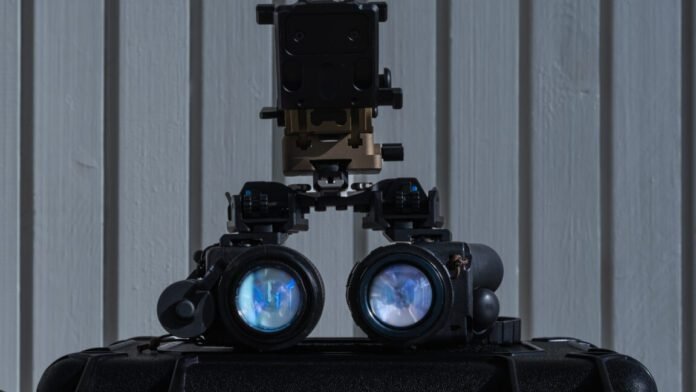
Human eyes don’t register the infrared portion of the light spectrum because infrared photons don’t carry enough energy to trigger the signaling pathway inside our light-sensing cells. But we’ve been able to make devices that give us a visual representation of what’s happening in the infrared.

A team at the Beijing Institute of Technology, led by Xin Tang and Ge Mu, has now built a device that lets people see infrared in a new way. Instead of just translating it to visible shades of green as it’s done in standard night-vision goggles, it translates different infrared wavelengths into distinct parts of the visual spectrum, giving the eye something closer to natural vision.

Researchers achieved that by combining mercury telluride colloidal quantum dots, which absorb infrared light, and a dual-layer OLED, which converts that absorbed energy into visible color. Stacked together with the right internal wiring, they make incoming infrared radiation come out the other side as an ordinary-looking, full-color image.

Invisible light

Vision begins when a photon strikes a light-sensitive pigment in the retina and causes it to change shape. That alters a protein that the pigment is embedded in, starting a nerve impulse that eventually contributes to an image in the brain. The molecular shape change that starts it all needs a minimum amount of energy, roughly 1.6 electron volts; infrared photons with wavelengths longer than 700 nanometers don’t carry enough energy to do it. That leaves over half of the Sun’s radiant energy outside our visual reach, along with anything that emits or reflects heat rather than visible light.

Most existing devices that allow us to see infrared use IR photodetectors wired to visible-light LEDs. This approach makes infrared light visible, but only as brightness: A warmer object glows a bit more, a cooler one glows a bit less, and we represent them all in the same (usually greenish) color. One problem with this is that human eyes are far better at distinguishing subtle differences in hue than they are at picking out brightness differences, so a device that only modulates brightness is leaving most of the eye’s sensitivity unused.

The solution Tang’s team arrived at starts with the way infrared light is registered in the first place.

Selective quantum dots

Bulk semiconductors routinely used in IR detectors have continuous energy bands, which means they absorb a broad, undifferentiated swath of the infrared spectrum. This doesn’t preserve much information about which specific wavelength arrived. The mercury telluride colloidal quantum dots the Chinese team picked for their device behave differently. Due to their tiny size, roughly 4 nanometers across, quantum confinement breaks their energy levels into discrete steps rather than a continuous chunk. Photons of different infrared wavelengths and intensities excite different electronic transitions, moving an electron between discrete energy levels within the dot, rather than just producing more or less of a single signal.

At wavelengths of around 2 micrometers, the longest the team tested, incoming photons have just enough energy to bump an electron across the dot’s fundamental bandgap, producing a modest number of charge carriers, either negatively charged electrons or positively charged holes that move around the dot.

At shorter infrared wavelengths, photons carry more energy per particle, and they can access additional, higher-energy electronic transitions inside the dot. In some cases the excess energy in a carrier can be enough to kick loose more than one electron-hole pair per photon. These processes open extra channels for generating charge carriers. The effect is that shorter infrared wavelengths and more intense infrared light push more positively charged holes out of the quantum dot layer and toward the OLED side of the device.

But getting a variable number of holes dependent on the wavelength and intensity of infrared light out of the detector was only half the problem. The other half was translating this signal into a color image at the other side.

The barrier

The team achieved this by building the OLED with two separate emissive layers stacked on top of each other. One layer, closer to where the holes enter, was doped with a red-emitting phosphor. The other one, positioned farther away, was doped with phosphor-emitting cyan light. The key component that made full-color vision work was an energy barrier of about 0.82 electron volts between these two layers.

When only a small number of holes arrive from the infrared detector because of dim illumination or long-wavelength photons, they are all captured by the red layer, and the device emits a low-brightness red glow. As the number of incoming holes grows, whether because the infrared light is brighter or because it contains shorter wavelengths, additional carrier-generating pathways in the quantum dots are unlocked, and the barrier gets saturated. Holes start finding their way through it and into the cyan layer, and the device begins emitting a mixture of red and cyan simultaneously, shifting the overall color and increasing the luminance.

Because this color shift is tied to carrier number rather than a fixed lookup table, the resulting color space encodes both the wavelength and the intensity of the incoming infrared light. The team’s calculations presented in the study show the device should enable users to distinguish infrared power differences roughly 200 times smaller than they would be able to if using a single-color, brightness-only design.

To show how all this works, scientists built an IR-vision eyeglass using these quantum dots.

Glasses and implants

The eyeglass is semi-transparent and weighs only 23 grams, with an active viewing area of about 3.57 square centimeters. In the first test, aimed at objects illuminated with shortwave infrared light, the eyeglass projected sharp, color-coded images, including test patterns and moving objects that could be captured by a standard camera. It still let ordinary visible light pass through the semi-transparent structure, as well. In principle, the eyeglass could be switched between an augmented-reality mode that overlays infrared information on normal sight, and an immersive infrared-only mode with a simple filter.

The team also tested whether the upconverted IR light could drive a biological visual system, rather than just a camera. They bound the upconverters to cells that produce channelrhodopsin-2, a light-sensitive protein commonly used to make neurons responsive to blue light. Infrared illumination through the device indeed triggered photocurrents in those cells.

Moving up to whole organisms, having test subjects view the LED screen while it was illuminated by infrared pulses produced clear electroencephalogram responses in mice and clear electroretinogram responses in human volunteers. In both cases, the same infrared pulses alone, without the upconverter, produced no measurable response at all.

In the paper, the team says their work “redefined infrared vision” by “transcending the monochrome paradigm.” The authors claim that by “surpassing the evolutionary boundaries of biological photoreception,” their device paves the way to “next generation visual prosthetics.” But there are still plenty of details researchers need to figure out before full-color IR glasses or retinal implants are achievable with this technology.

Heavy metal vision

Every demonstration covered in the study happened under controlled conditions the real world rarely offers. The eyeglass was tested against a calibrated blackbody source and simple, high-contrast test patterns like letters and leaf shapes, not the multi-wavelength infrared clutter of an actual room or street. It’s unclear how readable the color-coding stays once real scenes are involved. The OLED side also needs an external power supply, which makes the eyeglass closer to a small powered display than a passive lens.

Finally, mercury telluride is a heavy-metal compound, and the paper says nothing about long-term skin contact or, for the more ambitious implantable version, biocompatibility or safety over time. The idea of an implantable retinal photoreceptor, so far, is supported only by isolated neurons in a dish, EEG traces from mice, and ERG readings from humans with light shone at the eye externally. All this serves as convincing evidence that the infrared light signal upconverted this way can reach the visual system. But the team is still several steps short of a device that could be implanted in an eye or even work in actual night-vision glasses.

Science Advances, 2026.  DOI: 10.1126/sciadv.aed0245

Trump’s Truth Social API Is a Blatantly Corrupt Favor to Wall Street

0
trump’s-truth-social-api-is-a-blatantly-corrupt-favor-to-wall-street
Trump’s Truth Social API Is a Blatantly Corrupt Favor to Wall Street


Dylan is a senior researcher at the Revolving Door Project, where she leads RDP’s Economic Media Project.

For the low, low price of $100,000 a month, the ever-oxymoronic Truth Social is now selling direct access to its most important posts — or, in the firm’s preferred parlance, “truths” — to Wall Street. That’s an expedited lane to access statements and data from the president of the United States and other government officials, which have significant potential to move financial markets, ahead of us suckers in the general public. 

This sort of product, called an Application Processing Interface, or API, is not a particularly unusual offering for a social media company in the abstract. But Truth API, which launched today, is uniquely positioned to fuel blatant presidential graft. 

The move has been rightly called “brazen corruption,” “the president’s most desperate grift yet,” and a “clear and unacceptable pathway for corruption.” In a letter to the Securities and Exchange Commission, Sens. Adam Schiff and Elizabeth Warren called the offering “an outrageous abuse of the President’s office for his personal benefit that undermines everyday investors and the integrity of our markets, while enriching Wall Street and other wealthy insiders.” All of that is true, but Truth API doesn’t stop at creating a new pathway to funnel de facto bribes to Trump; it also seeks to functionally merge the provision of a public good with a for-profit company. 

It has become de facto administration policy for high-ranking government officials to make official announcements on Truth Social without going through traditional press offices. Trump has also set a new standard for blurring the lines between his communications as a public official and a private citizen.

For nearly half a century, communications from the president have been recognized as the property of the United States, not the president himself. Under the Presidential Records Act, any documents (with some carve-outs for national security and personal records like journals and diaries) that are “created or received by the President … in the course of conducting activities which relate to or have an effect upon the carrying out of the constitutional, statutory, or other official or ceremonial duties of the President” are subject to the United States’ “complete ownership, possession, and control.”

Selling expedited access to Trump’s statements is effectively privatizing a public asset.

In other words, selling expedited access to such statements is effectively privatizing a public asset. That might be part of the reason why, this spring, Trump’s Department of Justice Office of Legal Counsel issued an opinion that argues the heretofore uncontroversial Presidential Records Act is unconstitutional.

Trump owns a 41 percent stake in Truth Social’s parent company, Trump Media & Technology Group. In December 2024, all of his shares were transferred into Trump’s revocable trust, which is overseen by Donald Trump Jr. At the time, it was a 52 percent stake, worth about $4 billion against the company’s total valuation of $7.5 billion. Those TMTG shares (which are of course traded under the narcissistic ticker DJT) represent a major part of the president’s total wealth. While his stake in the company is now valued at (only!) $1.2 billion, it still represents 18 percent of Trump’s overall wealth, which Forbes estimated to be $6.5 billion.

And while Truth Social has become a pillar of the Trump business empire, it is also a pillar of sand. Truth Social hemorrhages money: In 2024, it only brought in $3.6 million and had a net loss of more than $400 million. Last year was even worse: Revenue ticked up slightly to $3.68 million, but its net loss soared to more than $700 million. The company’s value is now less than one-fourth of what it was in its spring 2024 heyday. That’s a lot of money on board a sinking ship.

TMTG tried to find income streams from branching out into prediction markets, cryptocurrency issuing, bitcoin investment, and nuclear energy production (perhaps a nod to Trump’s physicist Uncle John). But none of these maneuvers have stopped the bleeding.

This latest plan to sell the API might finally be the path to profitability that TMTG so desperately needs. At its core, what an API does is provide a data feed directly into a particular software program, in this case financial trading terminals. So even though the company insisted to the Wall Street Journal that “Truth API is designed to deliver posts the instant they are made public to everyone, not before,” it still represents priority access to government officials’ statements because anyone not paying for the service will be unable to process the information at the same pace as subscribers, letting professional traders and hedge funds outpace the market and reap the benefits.

In modern financial markets, an advantage of even fractions of a second can be decisive — and can provide the opportunity to reap huge profits. This is the sitting president directly selling financial powerhouses a significant edge from the very heart of the federal government for a cool $100,000 a month (or a paltry $60,000 if you opt for a multi-year subscription!).

This entire sordid arrangement already reeks of corruption, but the stench grows stronger when juxtaposed with this administration’s propensity to mistakenly, illegally, and/or prematurely release information when they aren’t supposed to, and not infrequently on Truth Social. Trump’s presidency has always been defined by the degradation of our sense of shared reality and by rampant corruption. There’s no better metaphor than sticking a price tag on the “truths” coming out of the administration.

Israeli occupiers torch Palestinian vehicle, attack home in southern West Bank

0
israeli-occupiers-torch-palestinian-vehicle,-attack-home-in-southern-west-bank
Israeli occupiers torch Palestinian vehicle, attack home in southern West Bank

Israeli settlers set fire to a Palestinian-owned vehicle in the village of Abu Njeim, leaving the vehicle completely destroyed and unusable in southeast of Bethlehem, West Bank, Palestine on July 29, 2026. [Wisam Hashlamoun - Anadolu Agency]

Israeli settlers set fire to a Palestinian-owned vehicle in the village of Abu Njeim, leaving the vehicle completely destroyed and unusable in southeast of Bethlehem, West Bank, Palestine on July 29, 2026. [Wisam Hashlamoun – Anadolu Agency]

Israeli occupiers set fire to a Palestinian vehicle and attacked a home near the town of Surif, north of Hebron in the southern occupied West Bank, early Saturday, according to a local resident, Anadolu reports.

Ali Ghneimat told Anadolu that occupiers “attacked the outskirts of Surif from the direction of the Etzion settlement” at around 2.30 am local time (2330GMT Friday).

“They set fire to one vehicle and attempted to burn another,” he said.

The occupiers also “attacked a house and attempted to set it on fire,” but residents gathered in its courtyard thwarted the attack, Ghneimat said.

He added that the assault caused fear and panic, particularly among women and children.

Residents of the area remain in a constant state of anxiety due to repeated occupier attacks, Ghneimat said, adding that local men have been forced to leave their jobs and avoid social occasions to stay near their homes and protect them.

The UN Office for the Coordination of Humanitarian Affairs (OCHA) has documented more than 1,330 Israeli occupier attacks in the occupied West Bank since the beginning of 2026 that resulted in casualties or damage to Palestinian property.

Around 750,000 Israeli occupiers live in 156 illegal settlements and 360 outposts across the occupied West Bank, including occupied East Jerusalem, according to Palestinian figures.

High school defends staying silent while boys made AI nudes of 59 classmates

0
high-school-defends-staying-silent-while-boys-made-ai-nudes-of-59-classmates
High school defends staying silent while boys made AI nudes of 59 classmates

One of the first schools to shut down after students were found making AI nudes of female classmates is now asking a court to toss a lawsuit filed by victims who claimed that the school stayed silent for months while the emboldened boys targeted many more girls.

In a motion to dismiss this week, Lancaster Country Day School (LCDS)—a private K-12 school in Pennsylvania with fewer than 600 students—argued that it was false to say the school never reported the harm to law enforcement. The tip that the school received came from the Pennsylvania Office of the Attorney General, which is itself a law enforcement agency, the filing said.

It’s also false to say the school knew that girls were being targeted, the school argued, because the tip did not mention any specific student victims.

LCDS said that “it looked into the tip as best as their educator training allowed,” but the tip only identified one bad actor and was too vague to identify any potential victims. At no time did the school see the images, and the school maintains that all activity connected to the AI nudes happened off-campus.

Instead of warning all parents that inappropriate AI-generated images were potentially being made, the school only interviewed the boy accused of making the image and his mother. The boy has since pled guilty with another male student but at the time denied making the AI nudes, and the mother provided no more information.

Ultimately, LCDS closed its investigation and shared results with the attorney general, then never heard back. In its motion to dismiss, the school argued that it had no duty to report the images to local police because it’s only required to report tips on actual child abuse, and AI images don’t qualify as that in the state, at least not yet.

An attorney representing the school, Rory Connaughton of Saxton Stump, told Ars that “it is impossible to assert that the school failed to report to law enforcement when law enforcement provided the tip to the school and the school reported back to law enforcement.”

“The Attorney General’s office had the discretion and legal authority to refer this matter to the local police or conduct its own investigation,” Connaughton said. “That it did not use its investigative authority or refer the matter to the local police when armed with the same information available to Lancaster Country Day School, makes clear that the school acted properly and did not fail to fulfill any legal duty.”

Ars could not reach the attorney general to comment, but a spokesperson told a local news site, Lancaster Online, that the office “does not investigate information provided in tips. Rather, the information is passed along to the relevant school and/or police to investigate the information provided.”

“Boys will be boys,” school head allegedly said

Girls suing the school argued that at least 59 girls were traumatized by “an extended, catastrophic institutional failure.” They claimed that they “were forced to go to high school while ‘deepfake’ nude images of them were circulating within the school community,” and that appallingly, Lindsay Deibler-Wallace, assistant head of Upper School, took no action to protect them after telling parents that “boys will be boys.”

The victims alleged that the school never suspended the students even after “the LCDS upper school was in a state of acute panic and disruption related to the AI-generated images.” Instead, the school allegedly discouraged girls from going to police, while withholding information from parents and obstructing efforts to investigate the distribution of AI-generated child sex abuse materials (CSAM), such as by refusing to respond to detectives seeking a yearbook photo for comparison.

Two male students have since pleaded guilty to 59 felony counts of sexual abuse of children, and their victims are hoping the court will rule that LCDS was required to report the incident to police, both by law and by “reasonable institutional practice.”

Ars could not reach the victims’ lawyer for comment. However, their lawsuit emphasized that on top of emotional harms, girls targeted were also “effectively deprived” of “equal access to the educational opportunities and benefits provided by LCDS.” They’ve further accused the school of violating Title IX by being “deliberately indifferent” to sexual harassment that was “severe, pervasive, and objectively offensive.”

Gaps in laws may let school off the hook

Notably, another Pennsylvania school coping with AI-generated nudes on its campus did report the incident to police, according to a press release from lawmakers pushing to update the state’s law to ensure that schools always immediately report AI nudes.

In that case, a middle school student targeted 11 female classmates in deepfake images, and the school delayed contacting police until after concluding its own internal investigation.

State lawmakers argued that schools should not be delaying reporting AI nudes until their own probes end but rather should be required to promptly tip off police, who are better positioned to investigate the crimes.

Troublingly, delays in reporting can result “not only in lost evidence,” but also cause “significant trauma to the female victims,” whose images may spread further the longer the harm goes unchecked.

The press release said that lawmakers were motivated to close a loophole in a law defining child abuse that doesn’t explicitly mention AI-generated CSAM.

“This bill will make certain that law enforcement is notified at the earliest possible moment, and it makes other changes that put the wellbeing and safety of our children first,” the press release said. But that bill is not yet law, LCDS said, and is currently under review by the state Senate.

In LCDS’s motion to dismiss, the school claimed that the very fact that lawmakers are moving to update the law is proof that it had no legal obligation to report the vague tip that it received.

Specifically, they argued that “child-on-child” incidents such as these are not legally defined as abuse, since using AI to sexualize images of young girls is not among current child-on-child exceptions, such as rape or indecent exposure. To add weight to this defense, they cited Lancaster County District Attorney Heather Adams’ decision not to charge the school “for failing to report the AI-generated content, because possession and dissemination of AI pornography did not fall under crimes defined as child abuse.”

However, it’s unclear if that argument will hold up, since the students who made the images admitted to 59 counts of sexual abuse of a child, and the court will surely consider that. As punishment, the boys were ordered to “serve probation and perform 60 hours of community service each,” Lancaster Online reported. In their complaint, victims argued that “the tip described conduct constituting child sexual abuse” under state and federal laws—“specifically, the production and/or possession of child sexual abuse material involving minor students.”

School accused of aiding spread of AI nudes

LCDS’s attorney told Ars that only the students are criminally liable for the images and that the court should agree to leave the school out of the fight since the only alleged connection is that the boys were their students.

“What Student Plaintiffs do not allege, at any point in the Complaint, is that the images were shared in school, during school hours, or using school equipment or a school Internet connection,” LCDS’s filing said. “The sole nexus to LCDS in the Complaint is that the Student Plaintiffs and the harassers were all students of the school, but that is not enough to survive a motion to dismiss.”

Although gaps in the law may help the school escape the AI nudes scandal, its motion to dismiss did suggest that the court may not grant every demand in their filing. On aiding and abetting claims, the motion to dismiss noted that case-law is “split,” which means an unfriendly judge could side with students and leave the school on the hook for at least some liability for negligence.

However, if the judge doesn’t lean their way, LCDS argued that victims still can’t argue that the school knew the images existed or intentionally helped facilitate their spread, which the school thinks should be fatal.

For victims, the school’s response coolly denying it could have intervened sooner is likely unsurprising but still jarring. Their complaint alleged that after it became clear that the AI nudes described in the tip were real, the school failed to “provide adequate support, counseling, and resources to the victims following the abuse,” allegedly negligently inflicting emotional distress at the time when girls felt most vulnerable walking the halls.

Israeli Technology Could Halt Colombia’s Drug Traffickers as Relations Improve

0
israeli-technology-could-halt-colombia’s-drug-traffickers-as-relations-improve
Israeli Technology Could Halt Colombia’s Drug Traffickers as Relations Improve


Abelardo de la Espriella aims to restore diplomatic ties, pursue an embassy in Jerusalem and reverse Colombia’s position at the International Court of Justice

Colombia’s incoming president, Abelardo de la Espriella, is preparing to reverse nearly every major element of Gustavo Petro’s Israel policy after taking office on August 7.

His government says it will restore full diplomatic and economic relations with Israel, exchange ambassadors, lift visa requirements, pursue a Colombian embassy in Jerusalem and withdraw Colombia’s intervention in South Africa’s genocide case against Israel at the International Court of Justice.

Security could provide the most substantial area of renewed cooperation. Before the diplomatic break, Israel supplied Colombia with military equipment and security technology. De la Espriella has said he wants access to new weapons, drones and artificial intelligence from Israel and the United States.

Alberto Spektorowski, a lecturer in political science at Tel Aviv University, said Israeli technology could assist Colombia in addressing narcotics trafficking, organized crime and armed groups operating in parts of the country. He predicted close cooperation but stopped short of describing it as a formal strategic alliance. “Everything connected to state security will involve extensive collaboration with Israel,” he said. “Colombia will request it, Israel will provide it, and that relationship will become stronger.”

Everything connected to state security will involve extensive collaboration with Israel

The planned reset, outlined after a mid-July meeting in Washington between Israeli Foreign Minister Gideon Sa’ar and Colombia’s incoming foreign minister, Omar Bula Escobar, would end more than two years of diplomatic rupture. It would also move Colombia from one of Latin America’s sharpest critics of Israel’s Gaza war toward a government that frames renewed ties as a strategic and ideological priority.

Petro broke diplomatic relations in May 2024, restricted defense ties, and ultimately imposed a complete ban on Colombian coal exports to Israel. The incoming government is presenting the reversal as the recovery of a longstanding alliance. Its critics see an ideologically driven swing from one pole to the other, particularly in the decision to relocate Colombia’s embassy to Jerusalem.

“The historic relationship that the Petro government unilaterally broke will be strengthened again,” the incoming president’s office said. Colombia, it added, would recover its allies and its standing as a dependable international partner. The precise scope of the proposed visa changes has not yet been published.

Israel moved first on diplomatic representation, with government approval for the appointment of veteran diplomat Vivian Aisen as ambassador to Colombia. Aisen previously served as ambassador to North Macedonia and has held posts in Chile, London and Brussels. Colombia has not publicly named an ambassador it will send to Israel.

Marcos Peckel, executive director of the Confederation of Jewish Communities of Colombia and commissioner to combat antisemitism at the Latin American Jewish Congress, expects the restoration of relations to be announced during, or immediately after, De la Espriella’s inauguration.

The Israeli mission in Bogotá continued operating as a consulate after relations were severed, Peckel told The Media Line. Restoring it to embassy status can therefore be accomplished more quickly than establishing an entirely new mission. He said the next steps would likely include naming Colombia’s ambassador, restoring military and police attachés, and expanding security cooperation that had deteriorated under Petro but had never disappeared entirely.

De la Espriella is proposing more than a return to the relationship that existed before the rupture. Rather than reopen Colombia’s former embassy in Tel Aviv, he has promised to establish it in Jerusalem. “It was a campaign promise by the president, and he is going to fulfill it,” Peckel said. “Is it going to generate polarization? Yes. Is it going to generate debate? Yes.”

Petro called the Jerusalem proposal a grave offense to Muslim countries. The Organization of Islamic Cooperation also condemned it, warning that the move could harm Colombia’s relations with its 57 member states and describing it as contrary to United Nations resolutions governing Jerusalem’s status. The organization urged the incoming administration to reverse course and maintain support for a two-state solution.

The embassy announcement remains a political commitment rather than a completed transfer. The location, budget, and opening date have not been disclosed. Nor has the incoming government announced that it will reverse Colombia’s 2018 recognition of a Palestinian state.

De la Espriella has, however, said he will halt the opening of a Colombian diplomatic mission in Palestine, arguing that the planned representation never became operational. The decision was part of a broader reorganization of Colombia’s foreign service that also calls for the closure of 14 embassies and about 15 consulates. Closing the proposed mission would not, by itself, withdraw Colombia’s recognition of Palestinian statehood.

The planned break with Petro’s policy also extends to The Hague. Colombia filed a declaration in April 2024 to intervene under Article 63 in South Africa’s case against Israel under the Genocide Convention. It did not file the original lawsuit, and it is not a plaintiff in the case. De la Espriella’s government has said it intends to withdraw Colombia’s intervention after taking office.

The incoming administration has also announced a change in Colombia’s conduct at the United Nations, saying it will adopt what it describes as a more neutral and consultative position. It has not identified specific resolutions that Colombia would oppose, support or abstain from under the new policy.

Spektorowsk said the first phase should be understood as a diplomatic reversal. A strategic alliance may follow, he said, particularly in areas such as security and efforts to limit Iranian influence in Latin America, but that outcome is not yet assured. “The first step is the diplomatic question,” Spektorowski told The Media Line. “It is to completely change the attitude toward Israel that existed under Petro.”

He sees Israel and Palestine as symbols in a larger political contest. Parts of the Latin American left have embraced the Palestinian cause, he said, while rising conservative movements have responded by making support for Israel part of their political identity.

That symbolism should not be confused with the reasons most Colombians vote, he added. Economic performance, corruption and domestic security remain far more consequential than Middle Eastern affairs for the electorate. “The challenges for Colombia’s president will be how to rebuild Colombia and how to establish the basis of its economy,” Spektorowski said. “That is what will define him.”

Janiel Melamed, director of Barranquilla’s Citizen Security Observatory and a professor and researcher at Universidad del Norte’s Department of Political Science and International Relations, made a similar distinction. Most Colombian voters are concerned with their household finances and daily security rather than events in the Middle East, he said. Foreign policy becomes politically relevant when its consequences reach local industries or public budgets.

Melamed pointed to the coal restrictions as one example. Petro’s government initially restricted exports under Decree 1047, issued in August 2024. A later decree, Decree 0949 of Aug. 28, 2025, removed the remaining exceptions and prohibited all thermal-coal exports to Israel.

He argued that the prohibition did little to constrain Israel, which could seek other suppliers, while reducing royalty income in Colombia’s coal-producing areas. Those revenues, he said, help finance infrastructure, education and sanitation. “It was a kind of shot in the foot,” Melamed said. “The measure ended up being counterproductive to Colombia’s own national interests.”

Although the incoming government has emphasized commercial restoration, it has not yet issued a decree to repeal the coal ban. Peckel said he expects its removal to be among the first concrete measures after Aug. 7. Colombia and Israel’s free-trade agreement, in effect since 2020, was not automatically terminated when diplomatic relations were broken, but the rupture and related restrictions impeded the institutions that support trade.

For Colombia’s Jewish community, the diplomatic rupture created practical and emotional strain without stopping communal life. Synagogues, schools and other institutions continued to operate normally, Peckel said, and no wave of serious attacks followed the government’s policy.

The community nonetheless faced what Peckel called “antisemitism from the state,” citing Petro’s comparisons between Gaza and Auschwitz, references to Nazism and repeated statements about Jews. The frequency of the president’s remarks made responding to each one impractical, he said. “We did not have to interrupt any activities, prayers or schools,” Peckel said. “But it generated concern and discomfort.”

Peckel also warned that an intensely pro-Israel government could expose the community to a different form of political pressure. Colombian Jews, he said, could again be treated as stand-ins for a foreign government, this time by opponents of De la Espriella. “An excessively pro-Israel president can generate antisemitism and hostile declarations against us,” Peckel said. “That is something we are watching very closely.”

An excessively pro-Israel president can generate antisemitism and hostile declarations against us. That is something we are watching very closely

The next test comes on August 7. De la Espriella can restore diplomatic relations as soon as he assumes office, and Aisen is expected to arrive in Bogotá later that month. Colombia has yet to name its ambassador; the scope of the visa agreement and the timetable for opening an embassy in Jerusalem remain unsettled.

Reopening diplomatic channels may prove to be the easiest part of the reset. Withdrawing Colombia’s intervention at the International Court of Justice, repealing the coal decree and establishing an embassy in Jerusalem will each require separate legal or administrative action. The first announcement could come on inauguration day. Whether the two countries can build a relationship that survives Colombia’s next political shift will take much longer to determine.

How fruit flies chase invisible ribbons of smell to get to their source

0
how-fruit-flies-chase-invisible-ribbons-of-smell-to-get-to-their-source
How fruit flies chase invisible ribbons of smell to get to their source

A fruit fly hunting a piece of rotting fruit or a mate navigates by smell, following plumes of odor. Out in the wild, turbulent air swirls these plumes into a chaotic, broken landscape—dense chemical filaments laced through long stretches of clean air. A fly trying to find the source gets the smell in stutters, from constantly shifting directions, with no guarantee that a next whiff is coming at all.

Scientist had little idea of how fruit flies manage this chaotic signal with a brain the size of a pinhead. For a long time, biologists stood by the “surge and cast” model, which posited that insects solved this with hardwired reflexes. The idea was that, when a fly registers the plume with olfactory neurons in its antennae, it simply flies upwind until it’s gone and then flies side to side attempting to catch it again. But now a team led by Vanessa Ruta, a neuroscientist at the Rockefeller University, has shown that fruit flies do something far more advanced.

A treadmill for flies

The trouble with the traditional surge and cast model is that it struggles to explain how an insect tracks a meandering plume across long distances. Chemical cues floating in the air in the natural environment are often sparse and unreliable. But those same features make the mechanism behind olfactory navigation notoriously difficult to test. “Odors are invisible,” Ruta says, “and often they’re carried along by turbulent airflow.” We’ve got no way of knowing what the animal is smelling from one moment to the next.

So, Ruta’s team designed an experiment to learn that. Scientists tethered a fly (Drosophila) in place over a small ball floating on a cushion of air in complete darkness. “It’s a little fly-sized treadmill,” Ruta explains. As the fly walked on the surface of the ball, its turns steered a nozzle that blew a steady stream of air at its antennae, so the insect always felt wind coming from a fixed direction, as if it were walking across an open field. Then the researchers piped apple cider vinegar into that airstream, switching it on and off depending on the fly’s position on this virtual field.

This way, the researchers could precisely control the intensity and direction of the odor the fly was registering. “We could actually generate any kind of arbitrary chemical landscape,” Ruta says. The team could simulate a lifelike olfactory experience with turbulent plumes, straight-edged corridors, and gradients of smell running backwards. “It’s actually not a very complicated virtual reality system, but it is actually extremely powerful,” Ruta adds.

For once, the experimenters knew the identity and quantity of every molecule the fly was receiving. The first thing they tested was the surge and cast model. And it did not hold up well.

Edge tracking

In the experiment with a straight corridor of vinegar about 50 millimeters wide, flowing with the wind, the flies did not do the obvious thing and march up the middle. Instead, they hugged one edge, riding it through a repeating two-step process. The moment a fly crossed into the odor, it would whip around and move back out, loop through the clean air outside, then make a beeline back to the boundary. The team called it edge tracking.

The flies also spent far more time loitering outside the plume than inside it, even though nearly all their forward progress toward the source happened during those brief dips into the scent. “Flies will track meters along the edge of a plume and never cross over,” Ruta says.

The first explanation the researchers came up with was that the flies were climbing a rising gradient of odor toward the source. But they didn’t do that either. When the team reversed the gradient, so the vinegar grew fainter as the fly advanced, the flies tracked the edge just as well.

The team also worked with flies genetically engineered so light could switch their olfactory neurons on directly, in both antennae at once. When scientists swapped real odor for a beam of 660-nanometer red light, the insects tracked the edge of this light plume flawlessly.

The real surprise, though, came when the team took a close look at what the flies were doing when there was no smell at all to guide them.

Olfactory memories

When the researchers made a plume vanish while a fly was outside it, the insect kept heading back to where the edge should have been. Rather than searching at random, they were heading to where they knew the odorant should be. “It looked as if they had a stored memory that was still steering them in that direction,” Ruta says.

So, the team started looking for these stored olfactory memories. The first candidate was a brain structure called the central complex, which is like a navigation hub in the insect brain.

Using fluorescent imaging to watch neurons fire in real time, Ruta and her colleagues pinpointed neurons that acted as the fly’s compass. Throughout edge tracking, that compass stayed locked to the wind, indifferent to whether the fly was in odor or out. When the team silenced these neurons, the flies got lost entirely, wandering upwind with no idea how to get back.

The neuronal compass, though, was just one piece of the puzzle. To find the smell that got lost in the wind, the fly must have a goal—a memory of what to search for. The team went searching for that memory.

The team located olfactory memories in another group of neurons found in something called the fan-shaped body, already known to encode where a fly wants to go. Like in a compass, the activity of these neurons acts like a pointer, but in this case, the one that marks the fly’s intended destination. Out in the clean air, this pointer swung away from the compass to aim at the plume’s edge, several seconds before the fly physically turned to head back. Just as with the compass neurons, silencing the neurons encoding the odor’s edge position made it impossible for the flies to find it. “When they get out, they have no immediate sensory information to guide them back to the plume. That’s when the memory becomes important,” Ruta says.

To confirm whether the flies memorize where the plume’s edge is, the team tested whether the insects could update these memories.

Updating the map

To understand what might be going on in the flies’ brains, the team built a computer model in which a simulated fly flips between a leaving mode and a returning mode, updating a stored plume’s edge position every time it crosses the boundary. It turned out the most important piece of data was the entry angle, the direction from which the fly last hit the plume. Without the angle, the simulated flies could no longer edge track.

Then the researchers went back to real flies to test how fast they could revise their olfactory memories. They had flies track a plume tilted 45 degrees, then abruptly flipped it to the opposite 45-degree angle. At first the insects were lost, searching in the old direction. But a single training session—a puff of vinegar delivered whenever a fly happened to walk the correct new angle—was enough to fix the issue. The flies instantly rewrote their internal goal and began tracking the new segment.

“We could write in new entry angles,” Ruta says. To her that was some of the strongest evidence that a memory, not a reflex, was responsible for fruit flies’ olfactory navigation.

But it doesn’t necessarily mean the old surge and cast idea is done for.

Built-in redundancy

When the team ran the flies through a simulated natural plume in their computer model, the entry-angle memory worked best near the source, where the plume held together as a coherent ribbon. Farther downwind, where it shattered into chaotic filaments arriving from every direction, the memory quickly grew unreliable and got overridden. The team speculates that’s likely where the flies fall back on simpler reflexes. “Animals are adapting their strategy,” Ruta says.

She suggests they probably lean on memory when the world is predictable and abandon it when it isn’t. One of the first things the team wants to examine now is whether the memories are relevant for tracking very turbulent plumes in living flies or are in fact replaced by other mechanisms when things calm down, as their model suggested.

“There’s an increasing appreciation of Drosophila and the power of this fly to provide insights into core computations translating fleeting sensory signals into stored spatial goals,” Ruta argues. Because the fruit fly has one of the simplest and most extensively studied brains, such insights, she thinks, should be relevant for how this process works in the rest of the animal kingdom. “It’s a fundamental feature that all animals are able to carry out, including ones with more sophisticated, complex brains like our own,” she adds.

Nature, 2026.  DOI: 10.1038/s41586-026-10827-7

Putin ‘Humiliated’ as Furious Russians Turn on Him

0
putin-‘humiliated’-as-furious-russians-turn-on-him
Putin ‘Humiliated’ as Furious Russians Turn on Him


Vladimir Putin’s government is facing a fresh wave of anger after residents of a Siberian city accused authorities of covering up a foul-smelling environmental “catastrophe” while pouring resources into the war in Ukraine.

People living in Tyumen say their city has been overwhelmed by polluted water, rotting fish and a sickening stench that has lingered for weeks.

“It’s some kind of apocalypse,” a resident named Elizaveta told the independent Russian outlet Meduza. “The water reeks, the air reeks, the city is under water.”

She claimed officials appeared determined to pretend everything was “fine” despite mounting complaints from the public.

Another resident, Albina, described the water as a horrifying mixture of chemicals, dead animals and poultry-farm waste.

“A terrible smell, the entire periodic table, dead fish, and poultry-farm waste in our water,” she said.

Residents said the crisis began after severe flooding along the Tura River. Local authorities initially insisted the water remained safe, even as people reported becoming sick and developing alarming skin problems.

Albina said massive red blotches appeared across her body.

“They swell up, and they itch and burn unbearably,” she said.

Fear quickly spread across the city, with residents refusing to drink the water or use it for cooking, bathing and washing produce. Some were reportedly afraid to even give it to their pets.

One woman said she trusted the official assurances and drank the tap water, only to become ill for five days.

“No one is helping,” she said.

The outrage has also fueled criticism of Putin’s war spending.

One resident claimed ordinary Russians had been abandoned because government money was being directed toward the Kremlin’s so-called “special military operation” in Ukraine.

“All the financing is going towards those three famous letters,” the person said, referring to the Russian abbreviation SVO.

Other residents described a stomach-turning scene along the riverbanks.

“You can’t stand to be anywhere in the city near the Tura,” one man told Meduza, saying the area smelled like human waste.

He also reported seeing dead fish and even footage of a dead roe deer floating in the polluted water.

After weeks of public fury, authorities finally declared an emergency and opened a criminal investigation into the source of the pollution.

Alexander Bastrykin, the powerful head of Russia’s Investigative Committee and an old school friend of Putin, demanded an official progress report on the probe.

For residents, however, the action came far too late.

“In 50-odd years I’ve never seen water problems like this,” a man named Yevgeny said.

He said the water had occasionally appeared yellow in the past, but had never carried such a strong sewage-like odor.

“And meanwhile they’re trumpeting everywhere that there’s no problem at all,” he added.

A tanker carrying clean water finally arrived in Tyumen on Friday. Video reportedly showed enormous lines of desperate residents waiting with bottles and containers.

Authorities are now examining a roughly 224-mile stretch of the Tura River.

The official explanation blamed oxygen deprivation caused by extreme weather. The region received approximately 260 percent of its normal monthly rainfall in June, followed by unusually hot temperatures.

Officials said the heavy rain washed huge amounts of soil and organic material into the river. As that material decomposed, it stripped oxygen from the water and suffocated large numbers of fish.

Residents were not officially advised to stop drinking the tap water until July 24 — weeks after the first complaints surfaced.

Many locals remain deeply skeptical of the government’s explanation. They believe pollution from poultry operations and other sources may also be involved.

Some fear the damage could last for months or even years.

“The consequences will be terrible,” one woman warned, “for people, for agriculture, and for the river ecosystem.”

0FansLike
0FollowersFollow
0FollowersFollow
0SubscribersSubscribe
- Advertisement -
Google search engine

Recent Posts