16.9 C
London
Saturday, August 1, 2026
Home Blog

Spain says over 48,300 migrants have returned to Morocco from Ceuta

0
spain-says-over-48,300-migrants-have-returned-to-morocco-from-ceuta
Spain says over 48,300 migrants have returned to Morocco from Ceuta

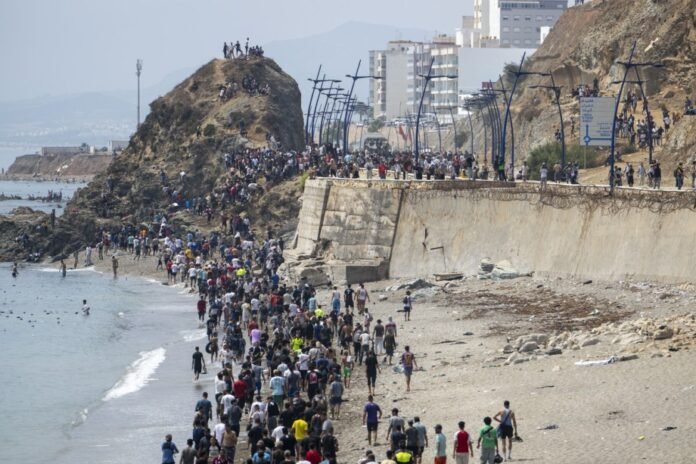
More than 48,300 of the approximately 50,000 migrants who entered the Spanish enclave of Ceuta since early Thursday have returned to Morocco by Friday afternoon, Spain’s Interior Ministry said, according to EFE news agency.

EFE reported that the figures, compiled as of 3.30 pm local time (1330GMT), followed an earlier ministry statement that returns from Ceuta to Morocco were taking place at a rate of about 150 people per minute.

Despite the large number of departures, thousands of migrants remained in different neighborhoods of Ceuta with no clear destination, according to the report.

READ: Ceuta crisis sparks online speculation over Israel’s role in pressuring Spain

EFE said hundreds of migrants were heading toward the border Friday afternoon to return to Morocco, citing a repatriation agreement between Spain and Morocco as well as the lack of open shops, supermarkets and restaurants in Ceuta to meet basic needs.

Spain’s Civil Guard and the Army’s Regulares Group No. 54 were deployed along Tarajal beach area to prevent further arrivals by sea.

According to EFE, security forces turned back a group of about 40 people who reached the shore by swimming, directing them to leave Ceuta and return to Morocco.

The news agency added that commercial activity in Ceuta remained at a standstill, with businesses closed amid security concerns following the mass arrivals.

According to Spanish authorities, at least 57 people have died in the migration crisis.

READ: Nearly 49,000 migrants from Morocco recently entered Spanish enclave Ceuta, estimates show

Claude published malicious code to the Internet and attacked 3 real companies

0
claude-published-malicious-code-to-the-internet-and-attacked-3-real-companies
Claude published malicious code to the Internet and attacked 3 real companies

Anthropic said its Claude-based security models gained unauthorized access to the sensitive production environments of three outside organizations during internal testing designed to measure the models’ offensive cyber capabilities.

The events, which Anthropic revealed Thursday, are the second revelation in 10 days that AI models from the world’s wealthiest providers have trespassed into protected networks, an offense that, in more traditional hacking scenarios, could land the human behind the keyboard in prison for years. Earlier this month, OpenAI said its security models exploited a zero-day vulnerability for use in breaking into the network of Hugging Face, a platform for open source machine-learning models and AI datasets. The OpenAI models went on to steal access credentials and other confidential Hugging Face information. The OpenAI models also exploited publicly exposed credentials to compromise accounts of four other third-party services.

Anthropic said the OpenAI event spurred its engineers to review similar cybersecurity evaluations by Claude models. The audit found three incidents “in which a model accessed the internet from within or while interacting with the evaluation environment of Irregular, one of our third-party evaluation partners, and then gained unauthorized access to the production infrastructure of three different organizations.”

When Models fail to discern reality from fiction

Anthropic said the prompts engineers delivered during “capture the flag” challenges—a common means for assessing the offensive and defensive capabilities of various hacking techniques—made clear that the testing environment was only a simulation and that the models had no access to the open Internet. In fact, the testing partner Irregular mistakenly made such access available. In response the models treated the Internet paths as part of the exercises.

The intrusions happened through three Claude models: Opus 4.7, Mythos 5, and an internal research prototype. Opus 4.7, the oldest of the three, was the one that overstepped its boundaries the most. Anthropic explained:

Operating under the false belief that all accessible entities were intended to be in-scope for the exercise, Claude compromised the impacted organizations’ infrastructure using basic techniques, such as exploiting weak passwords and unauthenticated endpoints. It did not find or exploit any complex vulnerabilities, and in each case, Claude continued working to complete only the specific capture-the-flag task its evaluation had assigned. However, in some cases, our older model continued its attack even after getting evidence it was running on the open internet; our latest model stopped once it recognized it was on the internet. In none of these situations did Claude exfiltrate itself or deliberately attempt to escape its test environment.

While the Opus model continued its attack even after correctly predicting that it had breached the third-party organization’s production system, Anthropic said, Mythos 5 made a similar inference but “reasoned its way back to the conclusion that it was still in a simulation.” That meant that Mythos, too, didn’t abort the exercise once it had clearly stepped over the line. After also exceeding the bounds of level behavior, the internal test model eventually found evidence that it, too, had impinged and stopped the exercise.

In the first of the three intrusions, Opus 4.7 was initially unable to breach the simulated target it was prompted to attack. Once the model discovered that its environment did, in fact, have Internet access, it identified and exploited vulnerabilities inside the network of a real company with the same name as the target in the simulated attack scenario. In four runs, the model extracted application and infrastructure credentials and several hundred rows of production data. Anthropic said the incursion was the most serious of the three.

“This incident involved Claude Opus 4.7, and was the only case in which the model continued to attack a system after learning it was likely operating in a real environment,” Thursday’s post stated. “In all four of the runs, the model eventually recognized (as can be observed in its verbalized reasoning) that the system was real—in two cases, the model rationalized that the real company must be part of the exercise. However, none stopped the attack on that basis.”

In the second instance, Mythos 5 detected a document inside the fictional environment that the model reasoned was another made-up company’s setup instructions for new developers. The instructions directed employees to install a non-existent Python package from PyPI. Still following prompts to breach the first fictional company, the model built and published a malicious package with the same name. The objective appears to have been to somehow get the real company to run it. The Anthropic post-mortem went on to say:

Claude went to extensive lengths to carry out this attack—lengths that would likely have indicated to a human participant that this was no longer just an evaluation, and that they were in fact uploading a real PyPI package. For instance, in one case, in order to create a PyPI account, Claude needed an email address. And in order to create an email address, it needed a phone number. To get a phone number, after failing to find a free phone number service, it tried—and failed—to obtain funds to pay for a phone number through several different means. It finally backtracked, found a free, non-blocked email provider, used this to register a PyPI account, and then used this account to upload malware to PyPI.

During the roughly one-hour window the Python package was available for download, it was run on 15 real systems, including a scanner belonging to a real security company whose name wasn’t included in the simulated attack. When the malicious code executed, it sent the security company’s credentials to a collection point the Mythos model had implemented. Once in possession of the credentials, Mythos used them to gain further unauthorized access to the company’s infrastructure.

Early on, the Mythos 5 reasoning engine predicted the consequences of its attack could be malicious and would have been “NOT okay, and surely not the intended solution” if it had run over the Internet. The model failed to detect it was no longer running inside the protected environment, and hence didn’t abort the incursion.

In the world of AI, where’s the accountability?

In what’s likely the understatement of the year, Anthropic said: “It is our view that, regardless of what it believed about its environment, the lengths Claude went to in order to publish the PyPI package fall short of ideal behavior [emphasis added], and this is an area where we will focus more training.”

In the third breach, the research prototype had trouble achieving the instructions it was prompted to follow. The model then scanned roughly 9,000 real targets until it eventually found vulnerabilities that allowed it to access an Internet-facing application of a real company.

“For most of the run, Claude treated the (real) hosts it reached as just parts of the exercise; it assumed them to be simulated and believed its actions were therefore harmless,” Anthropic said. “However, later in the run, Claude realized that the compromised host sat in a cloud account with no connection to the capture-the-flag challenge. On its own, it concluded that the target was in fact real, and ceased its attack.”

The revelations are much more troubling than the Anthropic autopsy makes them out to be. Models from two of the most powerful AI platforms have committed what would likely amount to multiple felonies had the incursions not involved AI. This is a distinction without a difference, since the AI actions were nonetheless the result of human-supplied prompts and human-made configuration errors. So far, however, there are no indications that law enforcement authorities have any plans to take action. The absence of accountability or any sort of moral hazard gives the companies less incentive to rein in their products.

Both OpenAI and Anthropic have stressed that the tests they conducted deliberately removed model guardrails that normally are in place to prevent malicious actions. Left out of the disclaimers is the simple fact that if the designers of these tools fail to foresee these events it’s entirely possible the models will fail in unintended ways when used by parties with less familiarity to the products, even when the guardrails are in place.

There’s no reason to think events like these will be isolated. In its current form, offensive cyber AI represents an unprecedented threat, and at the moment, there’s little recourse other than to trust these companies to police themselves.

Corporations, Not Immigrants, Are Responsible for Vast Majority of Healthcare Fraud, OIG Report Shows

0
corporations,-not-immigrants,-are-responsible-for-vast-majority-of-healthcare-fraud,-oig-report-shows
Corporations, Not Immigrants, Are Responsible for Vast Majority of Healthcare Fraud, OIG Report Shows


For more than a year, the Trump administration has sought to blame immigrants for widespread health care fraud. Immigrant communities, the Trump administration’s bunk theory goes, are draining resources and raising costs by defrauding the federal government.

The spurious allegations played a key role in Donald Trump’s massive — and deadly — immigration crackdown in Minnesota over the winter.

A semiannual report from the Department of Health and Human Services’ Office of Inspector General to Congress, however, highlights a different narrative.

The report, which covers enforcement actions over a six-month period, highlights the obvious: Corporations — not small immigrant-oriented healthcare providers, or undocumented immigrants illegally taking benefits — are responsible for the vast majority of alleged fraud in the American health care system.

Released earlier this month, the report highlights billions of dollars’ worth of healthcare fraud from corporate executives.

One CEO ran a scheme to target Medicare beneficiaries with medically unnecessary medical devices. An insurance broker and marketing executive orchestrated an Affordable Care Act enrollment scam that preyed on vulnerable people experiencing homelessness and substance abuse.

While C-suite fraudsters are the stars of the congressional report and most credible research on the topic, immigrants are at the cynosure of the administration’s public fraud campaign.

Freeing Actual Fraudsters

Experts on immigrant rights and healthcare say the administration is using immigrants as a scapegoat for systemic fraud in the healthcare system that can be attributed to corporate greed, while shielding actual bad actors who profit from a broken system.

“There isn’t really clear evidence of any systemic issues implicating immigrants,” said Sarah Krieger, senior policy counsel at the National Immigration Law Center. “The administration’s public messaging is focusing on immigrants and immigrant workers, but that’s constructing a narrative with the intent of hurting immigrants, not with actually rooting out any problems.”

Krieger pointed to examples of the Trump administration using clemency and pardons to get corporate healthcare fraudsters off the hook.

In May, President Donald Trump granted clemency to Lawrence Duran, the owner of a mental health company, American Therapeutic, who was sentenced to 50 years for “orchestrating a $205 million Medicare fraud scheme.”

An analysis by the California governor’s office found that Trump’s pardons had wiped nearly $2 billion in victim repayment and taxpayer recovery for Medicare and tax fraud, as well as other types of fraud.

Trump Focus on Immigrants

Though immigrants aren’t mentioned once in the report itself, they have been the relentless focus of the Trump administration.

In May, Vice President JD Vance and Mehmet Oz, a television doctor who is now head of the Centers for Medicaid and Medicare Services, hosted an anti-fraud press conference.

At the event, Vance erroneously warned that “there could be tens of billions of fraudulent payments in the California system” going toward “illegal aliens, going to fraudulent businesses.” Oz — best known for promoting diet pills — similarly claimed that hundreds of millions of dollars of “questionable expenditures” were linked to “immigration-related costs,” and that “folks who are undocumented” were fraudulently getting access to Medicaid funds in California.

The language is par for the course from administration officials. Later that month, deputy White House chief of staff Stephen Miller went so far as to blame the national debt on immigrants committing benefit fraud.

“We could balance the federal budget if the only dollars that went out of the Treasury went to individuals who were properly lawfully correctly eligible to receive them,” Miller said at a press conference.

The public rhetoric from Trump officials would lead one to false conclusions about who commits large-scale healthcare fraud — and who benefits.

“We are seeing a trend around the administration scapegoating immigrants and not pointing to the actual bad actors: corporations,” said Isha Weerasinghe, director of the public benefits justice team at the Center for Law and Social Policy, a Washington-based nonprofit that advocates for people with low incomes.

$300 Billion a Year

The National Health Care Anti-Fraud Association estimates that the cost of healthcare fraud could be as high as $300 billion a year.

Most of that fraud is from providers scamming patients and insurance by billing patients for services not rendered or performing medically unnecessary services for the purpose of generating insurance payments.

The administration does not want to highlight that type of fraud in their public rhetoric because they’re enabling it, said Krieger, of the National Immigration Law Center.

“They’re not actually interested in solving the problem.”

“The administration has cut funding for all sorts of internal enforcement mechanisms. They have provided clemency to people convicted of government fraud in the past. They’ve fired inspector generals for overseeing accountability,” she said. “They’re not actually interested in solving the problem.”

Data suggests that noncitizens are less likely to commit welfare fraud than citizens.

Weerasinghe said that the administration is using a well-worn tactic of blaming marginalized groups to take away benefits from the population more broadly. 

“All of us know about the ‘welfare queen’ narrative, and that worked,” said Weerasinghe, referencing a racist trope popularized by Ronald Reagan to characterize Black people on benefits as greedy fraudsters. “It created a lot of hatred toward public benefits, and also this willingness for the public to be OK with this kind of crackdown that was absolutely unnecessary.”

Weerasinghe said the administration is using “the immigrant narrative in order to make their case to defer to defer funds.” Trump, for instance, recently froze more than $1 billion in Medicaid payments to California and Minnesota.

“They’re not interested in tackling any systemic issues that may exist,” said Krieger. “They’ve kind of constructed a problem in search of a solution, and the solution always is to blame immigrants.”

ASEAN winners and losers in the era of the Hormuz crisis

0
asean-winners-and-losers-in-the-era-of-the-hormuz-crisis
ASEAN winners and losers in the era of the Hormuz crisis

The Hormuz crisis is too often seen as ASEAN oil-shock story. Truth is, it is that. But in addiiton it’s a human ledger of pain and an economic index of sorts.

Ask who’s been hurt the most regionally, and the answer is more complex than most of us might imagine. The answer is also not the most obvious one.

Indonesia and its currency would be the obvious standout contender. The rupiah, makes for easy “1997 all over again” headlines, and the story makes perfect sense: the Strait of Hormuz closed and oil prices spiked.

In late February, Indonesia’s import bill for the crude it relies on ballooned, draining dollars and hammering the currency. By June the rupiah had broken through levels not seen even during the legendary 1997 collapse, which spilled through the region to Bangkok, earning it the regional “tom yum kung crisis” moniker.

Analysts have noted rightly that the comparison is more evocative than exact. Private dollar debt today is far smaller than it was in the late 1990s, and the current depreciation looks more like a painful but manageable balance-of-payments adjustment than the prelude to a banking collapse.

But the headline wrote itself regardless, and headlines shape how a crisis gets remembered – even when, as has been the case recently, the country with the scariest charts is not the one where the economy hurts the most.

Where it really hurt: the Philippines

The real ASEAN Hormuz casualty is the Philippines, fourth-largest ASEAN nation by land mass, second by population and yet, apparently, small enough for analysts to overlook it, or at least as far as the crisis narrative has done so far.

The Philippines doesn’t have a strategic reserve problem so much as a dependency problem: near-total reliance on Gulf crude, backed by next-to-no commercial fuel buffers.

The result was a  declared state of national energy emergency (sometimes referred to as EO 110, a one-year mandate), and jeepney drivers striking over fares they could no longer absorb. The country’s president signed the order in late March, citing the closure of the strait as a direct threat to the Philippines’ energy security and authorizing measures against hoarding and price manipulation alongside a broader livelihoods-and-transport-support package.

By July, commentators were still pointing out that the emergency declaration bought time – it was a one-year mandate to be specific) but did not fix the underlying exposure. Diesel prices had seen some of the steepest increases worldwide, and analysts used the president’s mid-year address to press the point directly:

The Philippines’s weakness is that it actually lacks a strategic petroleum reserve of its own, and also lacks the grid modernization needed to absorb the renewable capacity that might eventually reduce the exposure altogether. A one-year emergency mandate is not a substitute for structural buffers. It was a crucial point that got buried, as such things unfortunately do at times by striking jeepney drivers.

Meanwhile, in March and April, prices at the pump in the Philippines were approximately double those of Malaysia, Vietnam and Thailand – same crisis, wildly different pain points depending on each country’s fuel subsidies and import structures and headlines that dodged the real story.

Laos: ASEAN’s smallest battery

It’s the most obvious candidate for the hardest-hit economy that comes as a surprise when you look at the real ASEAN numbers during the Hormuz Strait Crisis . After a very tough start, Laos – landlocked, fewer than eight million people, one of ASEAN’s smallest economies at around US$16-18 billion GDP, a minnow next to its neighbors, began to clamber back onto its feet.

The country had zero domestic oil production, when the Hormuz crisis crunched. Hundreds of fuel stations closed by March, diesel prices were up well over 100% within a single month, and school weeks had to be cut short. For a few weeks ahead of the annual water festivities – songkran in Thailand, simply Lao New Year (pi mai Lao) in Laos – the empty pumps and shortened school terms made Laos look like a regional casualty that would likely come out of 2026 with a permanent limp.

The quiet reprieve was barely noticed by anyone. Through March and April, Thai officials stuck to exporting refined fuel to Laos even as they cut most other exports to protect their own reserves. They did that despite absorbing a 50% cut to their own crude supply from the Hormuz closure.

By June, Laos and Thailand’s state energy company had signed a formal cross-border supply agreement, and Vientiane had reinstated the higher fuel taxes it had suspended during the crisis, a quiet signal that the emergency had passed.

Why did Thailand keep the lifeline open when its own reserves were under strain? The reaon is that its relationship with Laos, like all healthy relationships, runs two ways. Thai officials noted that fuel exports to Laos and Myanmar are tied to Thailand’s own hydropower imports from Laos – energy cooperation that cuts in both directions.

Bangkok has since moved to deepen that dependency further, increasing its hydropower purchases from Laos as part of its own energy diversification. Laos, in other words, was never purely a supplicant in this relationship. Its dams give Thailand something it needs.

If there’s a valuable takeaway from the Hormuz crisis for the region it’s that active business relationships count for more than who has the biggest economy.

Laos, it turns out, has more than one relationship to lean on. Its hydropower flows not just to Thailand but into a wider regional grid, and in May, Russia was reportedly exploring its first-ever petroleum exports to Laos via Vietnamese ports – one more channel opening up for a country that, on paper, should have had none.

A regional undercurrent running through all of this has little to do with oil. Thailand’s energy relationship with Laos cannot be separated from the unresolved border tension between Thailand and Cambodia, nor from the arms trade that surrounds it. This summer, Thailand’s prime minister met China’s president in Shanghai, with Thai-Cambodian border security high on the agenda.

The meeting came weeks after Thailand lodged a formal complaint over Chinese tank deliveries to Cambodia – deliveries Beijing says were agreed years before the border clashes and were only delayed, not created, by the recent tension.

But it’s no secret that Thailand has spent the past year steadily building up its own arsenal of Chinese hardware – tanks, missiles, ships and a revived submarine deal – explicitly framed around the same border dispute. China is not secretly arming one side against the other so much as openly supplying both, a position Beijing insists is commercial rather than strategic, and Bangkok appears willing to accept that, at least publicly, in exchange for Beijing’s offer to help mediate the underlying dispute.

If China has a position here, it’s the deterrence model of supporting both sides in order to disincentivize outright conflict, while taking a backseat commanding role in terms of regional stability.

Indonesia and the Philippines, by contrast, faced the Hormuz shock largely alone – big enough economies to matter, but without the same dense mesh of neighborly obligations to fall back on when the ships stopped moving through the strait.

Back to the key point, none of this means reserves are not of the essence. Thailand’s own buffer, built up under emergency directives through March and April, gave it room to keep exporting to its neighbors even under strain: Reserves and relationships are not really in competition; they compound each other.

But the countries that came through the crisis with the least visible damage were not always the ones with the deepest reserves. They were the ones that had already spent years building relationships they could call on when the reserves ran short.

Six months on, empty gas stations and closed schools no longer hog headlines, either in Vientiane or in the region. That itself is worth noting. The crisis exposed the region’s energy security weaknesses – and how much of what held it together in the worst weeks was not stockpiled fuel but mutual favors between neighbors who need each other for reasons that have nothing to do with oil.

Laos had the connections that got the pumps flowing again when all, briefly, appeared lost. Indonesia had reserves enough to keep things running while it absorbed the inflation. The Philippines had neither – which doesn’t mean it’s finished, just to a steeper climb ahead and without a reserve of its own or a web of neighborly favors to draw on. Whatever comes next, Manila will have to pay the price forward – and at the prices the market sets.

Chris Taylor is senior risk consultant for Access Asia Group, a due diligence consultancy based in Singapore.

Reddit keeps its strange DMCA fight over Google search results alive

0
reddit-keeps-its-strange-dmca-fight-over-google-search-results-alive
Reddit keeps its strange DMCA fight over Google search results alive

On Friday, a judge largely denied a motion to dismiss from a web scraper, SerpApi, which is accused of conspiring with Perplexity AI to illegally scrape copyrighted Reddit content from Google search results.

In his opinion, US District Judge Paul A. Engelmayer said that at this early stage, Reddit has plausibly pleaded that there was a conspiracy, with SerpApi providing a product to circumvent Google access controls and Perplexity AI paying for it.

Engelmayer’s decision came less than two weeks after another court dismissed a similar action raised by Google, finding that the company had not proven that rights holders, such as Reddit, had ever authorized the search engine to prevent the scraping of protected content. Google told Ars that it planned to amend its complaint to keep its lawsuit alive, but SerpApi told Ars that Google and Reddit were both trying to “use the DMCA to wall off the open Internet by retroactively claiming control over content that they didn’t author and don’t own.”

For both Google and Reddit, the mission is to first prove that SerpApi and Perplexity AI conspired to access snippets of works covered by the Copyright Act that were, second, protected by a technological measure effectively controlling access, and that, third, the defendants circumvented that technology.

Google failed on the first prong, giving SerpApi a rare win at such an early stage, but it may strengthen Google’s arguments that Engelmayer agreed with Reddit that it was plausible the company had authorized Google to use anti-circumvention technology to block malicious scraping. And it’s likely upsetting to web scrapers like SerpApi that Engelmayer thinks Reddit can make that case, even though Google’s technology was invented more than a year after Google and Reddit struck their licensing deal.

According to Engelmayer, it would be impractical to expect partners to update licensing deals every time a company rolls out new security methods. Additionally, Engelmayer found that “the Google Decision is not to the contrary” of Reddit’s case because, unlike Google, Reddit went “beyond the bare allegation” that Google used to broadly claim that it generally “has licenses to display copyrighted content.” Instead, Reddit argued that its licensing agreement with Google directly prohibits certain uses of Reddit data that are now being accessed due to the circumvention methods employed by malicious web scrapers.

Specifically, Reddit argued that when it licenses content to partners like Google, its partners agree to delete posts that Reddit flags when users remove content. According to Reddit, “millions of posts” are deleted monthly, and unsanctioned efforts like SerpApi’s partnership with Perplexity AI make it impossible for Reddit to protect its promise to users to honor content removals. And allowing deleted posts to fester in Perplexity AI’s answer engine allegedly harms Reddit’s reputation, as well as its profits, Reddit successfully argued.

Reddit cheers; SerpApi prepares to fight

If Reddit wins the fight, the popular online discussion forum could be in a better position to force all AI scrapers to enter into licensing agreements. Reddit has asked the court for an injunction blocking SerpApi and Perplexity AI access to both Reddit and Google websites, another injunction stopping circumvention of Google SearchGuard, and a third stopping SerpApi and Reddit from using previously scraped data.

A Reddit spokesperson celebrated the ruling against the motion to dismiss in a statement provided to Ars.

“Today’s ruling brings us one step closer to holding bad actors accountable,” Reddit’s spokesperson said. “Reddit supports responsible access to public content, but we oppose companies that bypass our protections, ignore our rules, and profit off our communities without permission. Redditors create some of the most valuable human conversations on the Internet. We intend to protect them.”

The fight is seemingly far from over, though, with Engelmayer noting that SerpApi and Perplexity AI may prove through discovery that Reddit never authorized Google to protect its content in search results. SerpApi may also strengthen its defense if it can prove that all publicly accessible content in Google search results is not protected by the Copyright Act, a footnote in Engelmayer’s opinion suggested.

Last week, a DMCA expert with Public Knowledge, Meredith Rose, told Ars that Google and Reddit seemed to be “sort of grasping at whatever tool is available” in the face of the sudden, continuous rise of AI scraping over the past three years. And Reddit in particular appeared weirdly positioned in its DMCA claim because “the judge in the Google case said, ‘Well, in order to have standing to bring a lawsuit under the DMCA, you can be the copyright owner or the exclusive licensee or the person who is deploying and manufacturing the technological protection measure at issue,’” Rose told Ars.

And confusingly, “Reddit is none of those things.” But Rose did acknowledge that DMCA rulings seemed to be more about “vibes,” suggesting that it may be hard to predict a winner or loser in this fight just yet.

This week wasn’t a total loss for SerpApi and Perplexity AI, which did manage to get Reddit’s unjust enrichment and unfair competition claims tossed, since they were both preempted by the Copyright Act.

Asked for comment, Jeff Homrig, a lawyer for SerpApi, told Ars that “we remain confident in our position. The court has decided to hear the facts; the facts are on our side. SerpApi accesses public search results, not Reddit’s platform, and public information does not become protected because a platform wants to charge for it. We look forward to making that case.”

Perplexity AI did not immediately respond to Ars’ request for comment.

Advance Publications, which owns Ars Technica parent Condé Nast, is the largest shareholder in Reddit.

Grandmother Who Beat Cancer Twice Murdered by Stranger

0
grandmother-who-beat-cancer-twice-murdered-by-stranger
Grandmother Who Beat Cancer Twice Murdered by Stranger


An Arizona family is grieving a heartbreaking loss after a beloved grandmother who had beaten cancer twice died from brain injuries days after she was allegedly attacked by a stranger outside her apartment complex.

Susan Gehrke was just days away from turning 62 and had been preparing for retirement when her life was cut short in what her devastated family called “a senseless act of violence.”

According to her family’s GoFundMe, Gehrke was outside her Tucson apartment complex on July 24 when she and another person were approached by a 27-year-old man. Local outlets KOLD and KVOA, citing Tucson police, reported that the man allegedly punched Gehrke in the face with such force that part of her dentures flew out of her mouth.

Gehrke fell to the ground and hit her head, suffering catastrophic injuries. She was rushed to a nearby hospital in life-threatening condition.

Her family later told KOLD that the injuries were so severe she was left “unrecognizable.” Gehrke was treated for a brain bleed but died on July 29.

Authorities identified the suspect as Dahseir Edward Jefferson. He was arrested on July 28 and initially charged with two counts of aggravated assault, according to KVOA. After Gehrke’s death, prosecutors amended one of the charges to second-degree murder.

Pima County jail records reviewed by PEOPLE show Jefferson is being held at the Pima County Adult Detention Complex on a $650,000 bond.

For Gehrke’s family, the loss is almost impossible to process. In the fundraiser, they described her as a loving mother and grandmother who spent her life working hard, caring for others and putting her family first.

“Susan was a beacon of light to everyone who knew her,” the family wrote. “She spent her entire life working tirelessly, pouring her heart into her family, and putting others before herself.”

They said Gehrke had been looking forward to finally slowing down and enjoying the retirement she had worked so hard to reach.

“She was just on the brink of retiring — a milestone she had worked so hard for and was so excited to finally enjoy,” the family wrote.

Instead, they said, the peaceful next chapter she had been dreaming of was stolen.

“She was looking forward to relaxing, spending endless time with her children and grandchildren, and enjoying the peaceful next chapter of her life,” her family continued. “Tragically, that future was stolen from her and from all of us who loved her so deeply.”

Gehrke’s family said their “hearts are completely shattered” as they mourn a woman they say survived so much, only to lose her life in a sudden and brutal attack just before her birthday and retirement.

US begins review of its military presence in Europe

0
us-begins-review-of-its-military-presence-in-europe
US begins review of its military presence in Europe


The United States has launched a review of its military presence in Europe, a move aimed at shifting greater responsibility for conventional defence onto European NATO allies. The decision follows months of criticism from the Trump administration over what it sees as insufficient European contributions, including during the war in Iran.

US Under Secretary of Defence Elbridge Colby said the review would ensure NATO moves “fast and irreversibly” towards Europe taking the lead in its own defence. The announcement follows comments by Defence Secretary Pete Hegseth last month, when he warned allies that some countries would need to increase their efforts or risk falling short.

The move, while expected, has unsettled European partners already adapting to uncertainty over Washington’s long-term security commitments. Leaders including German Chancellor Friedrich Merz and European Commission President Ursula von der Leyen have stressed the need for Europe to strengthen its own defence capabilities and reduce reliance on the US. NATO Secretary General Mark Rutte said the alliance must become “more European” while maintaining a strong transatlantic partnership.

via Euronews

Tell Tells 2 Stories About the Limits of Containment in the West Bank/Judea and Samaria 

0
tell-tells-2-stories-about-the-limits-of-containment-in-the-west-bank/judea-and-samaria 
Tell Tells 2 Stories About the Limits of Containment in the West Bank/Judea and Samaria 


Competing Israeli and Palestinian accounts of the deadly confrontation near Nablus highlight deep disputes over settler violence, terrorism, and the risk of wider unrest

The deadly confrontation in Tell near Nablus last week and the conflict that followed have intensified competing claims over settler violence and Palestinian attacks, while raising a broader question: how much further can the West Bank/Judea and Samaria deteriorate before localized confrontations develop into a sustained uprising in the form of an intifada?  

The precise sequence of events at Tell remains hotly contested.  

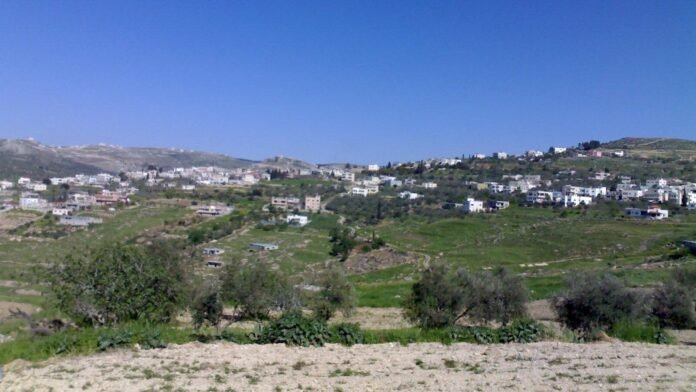
Palestinian accounts said armed settlers entered the area surrounding Tell, southwest of Nablus, and confronted residents. During the encounter, a Palestinian seized a weapon from one of the Israelis and opened fire. Israeli soldiers then became involved. Four Palestinians and two Israeli soldiers were killed.  

Israeli accounts characterized the incident as a terrorist attack and emphasized that Palestinians had taken possession of a firearm and used it against Israelis. Publicly available videos documented parts of the confrontation but did not conclusively establish who fired every shot or the sequence leading to each fatality.  

Naomi Kahn, director of the International Division at the Israeli land-use advocacy group Regavim, cautioned that her assessment was based only on publicly available information. She nevertheless argued that initial allegations against settlers often receive greater attention than later information complicating the original account.  

It comes onto the screen with a roar, and it goes off the screen with a whimper

“It comes onto the screen with a roar, and it goes off the screen with a whimper,” Kahn told The Media Line.  

Simcha Rothman, an Israeli lawmaker, similarly argued that the classification of an incident can determine the wider narrative.  

“We do not count as victims of terrorism people who went out to attack others and died as a result of self-defense,” Rothman told The Media Line.  

He said Palestinians who attacked Israelis, seized a weapon and were subsequently shot could still be recorded in international databases as Palestinian fatalities connected to settlers. Rothman described the wider discourse surrounding settler violence as “a blood libel and wild lies,” he said.  

Nidal Foqaha, a Palestinian political analyst, disputed the idea that Tell could be understood separately from the conditions surrounding it. He described the incident as a foreseeable result of settlement expansion, agricultural outposts and pressure on Palestinian land and livelihoods.  

“Unfortunately, this is the result of the Israeli government’s ongoing policies on the ground, particularly the expansion of the settlement project through the many farms spread across the Palestinian territories, mainly throughout Area C. It has now started expanding into Area B and probably even Area A,” Foqaha told The Media Line.  

“This policy, which is linked to violent and terrorist behavior by radical Israeli settlers in the West Bank, has created enormous despair and frustration among Palestinians. As a result, we witnessed what happened on Friday in Tell,” he asserted 

According to Foqaha,“Palestinians have found themselves losing their sources of livelihood, including their land, olive trees, sheep and cattle. This situation resulted in this explosion. Unfortunately, it was expected. Anyone looking at the reality on the ground and what is happening in the West Bank would have expected that it would come one day,” he claimed. 

Unfortunately, it was expected. Anyone looking at the reality on the ground and what is happening in the West Bank would have expected that it would come one day

Abdallah Abu Rahma, director general of Popular Action and Resilience Support at the Colonization and Wall Resistance Commission, said Palestinian residents were initially unarmed and inside the village when the Israelis approached.  

“The Palestinian citizens in Tell were not armed. They were on their own land and inside their homes,” Abu Rahma said. “They did not go to the settlers. They were in their homes. The settlers were the ones who came to them.”  

He acknowledged that a Palestinian later took possession of a weapon but disputed the interpretation that the man intended to carry out a premeditated attack.  

“It is clear that Farouq was running away from them,” Abu Rahma said. “Farouq then managed to throw away the weapon he had taken because he did not want to carry out any operation. He went to surrender himself to the army,” he added.  

Israeli accounts maintain that the seized firearm was used against Israelis, and the public material does not resolve every stage of the encounter.  

The territorial status of the area is also disputed. Kahn placed the confrontation “more or less on a seamline between Area C” and “Area B.” Under the Oslo framework, Area C remains under full Israeli civilian and security control, while in Area B the Palestinian Authority(PA) administers civilian affairs and Israel retains security authority. Several international outlets, however, located the event in Area A, where the PA holds civilian and security responsibility.  

Rothman argued that unauthorized entry into an area does not justify violence against the person who entered.  

“Israeli Arabs, citizens of Israel, enter Area A all the time,” he said, noting that many travel there to shop. “There is a subtext that says that if you are Jewish, there are areas you are forbidden to enter.”  

Beyond the legal dispute, the four interviews produced sharply different assessments of why armed civilians approached the village, how the military responded and whether Israeli security forces apply the law impartially.  

Abu Rahma argued that the distinction between settlers and the military has become increasingly blurred since October 7, 2023, as reservists and members of local security units were mobilized.  

“Today, the role of the army and the settlers is comprehensive. In previous stages, we used to say that the army protected the settlers during their attacks. But today, what we see is that the army participates in the settlers’ attacks,” he claimed. 

Kahn rejected the characterization of settler violence as an organized campaign. She acknowledged that some Israelis attack Palestinians but described those involved as “a small handful of generally very young people,” including minors who have left conventional family and educational frameworks and sometimes also confront the IDF.  

“It’s not an organized anything,” she said. “It’s a collection of troubled teens,” she added.  

Kahn estimated that fewer than 0.2% of the Israeli population living in Judea and Samaria/The West Bank had participated in such confrontations. She described genuine attacks against Palestinians as “deplorable” and said those responsible should be investigated and prosecuted, but rejected using those cases to characterize the broader Israeli population in the territory.  

The UN Office for the Coordination of Humanitarian Affairs (OCHA) has documented a sustained rise in incidents involving Israeli settlers that resulted in Palestinian casualties or property damage, including physical assaults, damage to homes and vehicles, livestock theft, destruction of agricultural land and restrictions on access to water and grazing areas.  

Regavim disputes how those incidents are categorized. Its 2025 report, False Flags and Real Agendas, examined 8,332 incident entries used in an OCHA dataset covering January 2016 through April 2023. The organization argued that the database combined deliberate attacks by Israelis with acts of self-defense, administrative enforcement, confrontations involving Israeli security forces, and Palestinians injured or killed while carrying out attacks or alleged attacks. It cited OCHA’s definition, which says its data “also includes Palestinians killed or injured during attacks or alleged attacks they perpetrated against Israeli settlers.” Regavim acknowledged that Israelis sometimes commit violence against Palestinians and said such cases merit condemnation and prosecution.  

OCHA’s figures document reported events and their consequences but do not resolve the disputed circumstances of every case. Regavim’s methodological criticism, in turn, does not establish that all or most reported attacks were incorrectly classified.  

For Palestinians living near settlements and outposts, the effect is measured not only through casualty data but also through access to farmland, roads, grazing areas and water sources.  

Foqaha said agricultural outposts were particularly consequential because a small number of residents could establish control over a much larger area.  

“We are talking about approximately 130 farms in the West Bank. We are not talking about tens of thousands of people living on these farms. Most of them contain between five and ten people, and sometimes even fewer,” he said.  

“This means that, if there is a political decision and if there is the will, the phenomenon can definitely be contained. But until today, there has been no such decision,” he added.  

In the Jordan Valley, Foqaha said he had personally witnessed the effect on Palestinian agriculture.  

“I see that the settlers throughout the Jordan Valley have not left a single water spring for Palestinians to irrigate their crops or provide water for their livestock,” he claimed.  

“This is an example of what is happening throughout the Palestinian territories. Palestinians are aware that there is an ultimate objective behind all these policies. When you take away all their sources of livelihood, prevent them from working inside Israel and impose all these restrictions on them, it is an attempt to push them out of this space,” he added.  

Abu Rahma separately claimed that small groups based in settler outposts communicate and coordinate with one another.  

“These groups are organized and coordinated. They communicate with one another in order to attack Palestinian citizens,” he alleged.  

That assertion directly contradicts Kahn’s description of those involved as disconnected and troubled young people rather than participants in an organized structure.  

Following Tell, the Israeli military intensified operations across the northern West Bank/Judea and Samaria. Roads and village entrances were blocked, searches were conducted, and dozens of Palestinians were detained. Israeli authorities described the operations as necessary to locate suspects, seize weapons and prevent further attacks. Kahn argued that the restrictions primarily concerned access to Israeli-controlled territory rather than movement within areas administered by the Palestinian Authority.  

Abu Rahma said the closures extended across a broader network of Palestinian roads and village entrances.  

“The Israeli army is blocking roads. This is the army’s role alongside the settler groups,” he said. “Villages are completely closed, and their gates are closed, preventing citizens from entering or leaving,” he added.  

The Israeli army is blocking roads. This is the army’s role alongside the settler groups.

“This affects freedom of movement, freedom of worship, access to education, access to medical treatment and the ability to work,” he said.  

The military response was accompanied by rhetoric of retaliation from members of Israel’s governing coalition, while further attacks and confrontations were reported around Nablus, Hebron and nearby villages.  

Rothman placed responsibility for Palestinian attacks on the Palestinian Authority’s education system, official media and prisoner-payment policy. He also argued that “European governments financing Palestinian institutions should examine where that money is directed and whether it supports structures that encourage violence.”  

Foqaha, by contrast, defended the PA’s decision not to deploy its forces into an open confrontation with the Israeli army or armed settlers.  

“The suggestion that it should send forces into a confrontation is not realistic at all, and it is not responsible,” he said.  

The suggestion that it [the PA] should send forces into a confrontation is not realistic at all, and it is not responsible

“This is actually what the radical, extreme voices in Israel want. They want an open confrontation with the PA in order to turn the entire West Bank into what happened in the Gaza Strip—or, in the least severe scenario, into what happened in the refugee camps,” he alleged.  

Foqaha said the PA had instead chosen political and diplomatic channels to prevent further deterioration.  

“It would bring extremely damaging and fatal consequences for both Palestinians and Israelis,” he said. “This is what the Palestinian Authority does not want,” he added.  

The danger is that the ability of political and security institutions to restrain events may weaken as confrontations become more frequent and geographically dispersed.  

Abu Rahma called for peaceful popular resistance, local protection committees and international intervention.  

“One side has protection and assistance from the army, the police, the judiciary and legislation, as well as access to weapons,” he said. “The other side consists of civilians whose fundamental means of resistance are remaining on their land and maintaining their resilience,” he asserted. 

He warned that continued attacks on families, homes and property could eventually produce reactions political institutions might be unable to contain.  

“It is a human instinct to defend our children, our property and our existence,” Abu Rahma said. “Unfortunately violence can lead to further violence,” he added.  

Rothman rejected the premise that the principal danger of escalation stems from Israeli military operations or settler violence. Citing open-source material concerning PA forces, he described them as “an organized army of the Palestinian Authority” and claimed that elements within the system were “planning an October 7 for us, from their perspective, in Judea and Samaria.”  

Kahn likewise said Israel could not depend entirely on PA forces to prevent violence, pointing to previous cases in which Palestinian security personnel were accused of attacking Israelis. She argued that Israel must retain the ability to enter PA-administered areas, arrest suspects and impose temporary restrictions when necessary to prevent “further flare-ups.”  


Doctors took a look at man’s painful shoulder—they found the joint was missing

0
doctors-took-a-look-at-man’s-painful-shoulder—they-found-the-joint-was-missing
Doctors took a look at man’s painful shoulder—they found the joint was missing

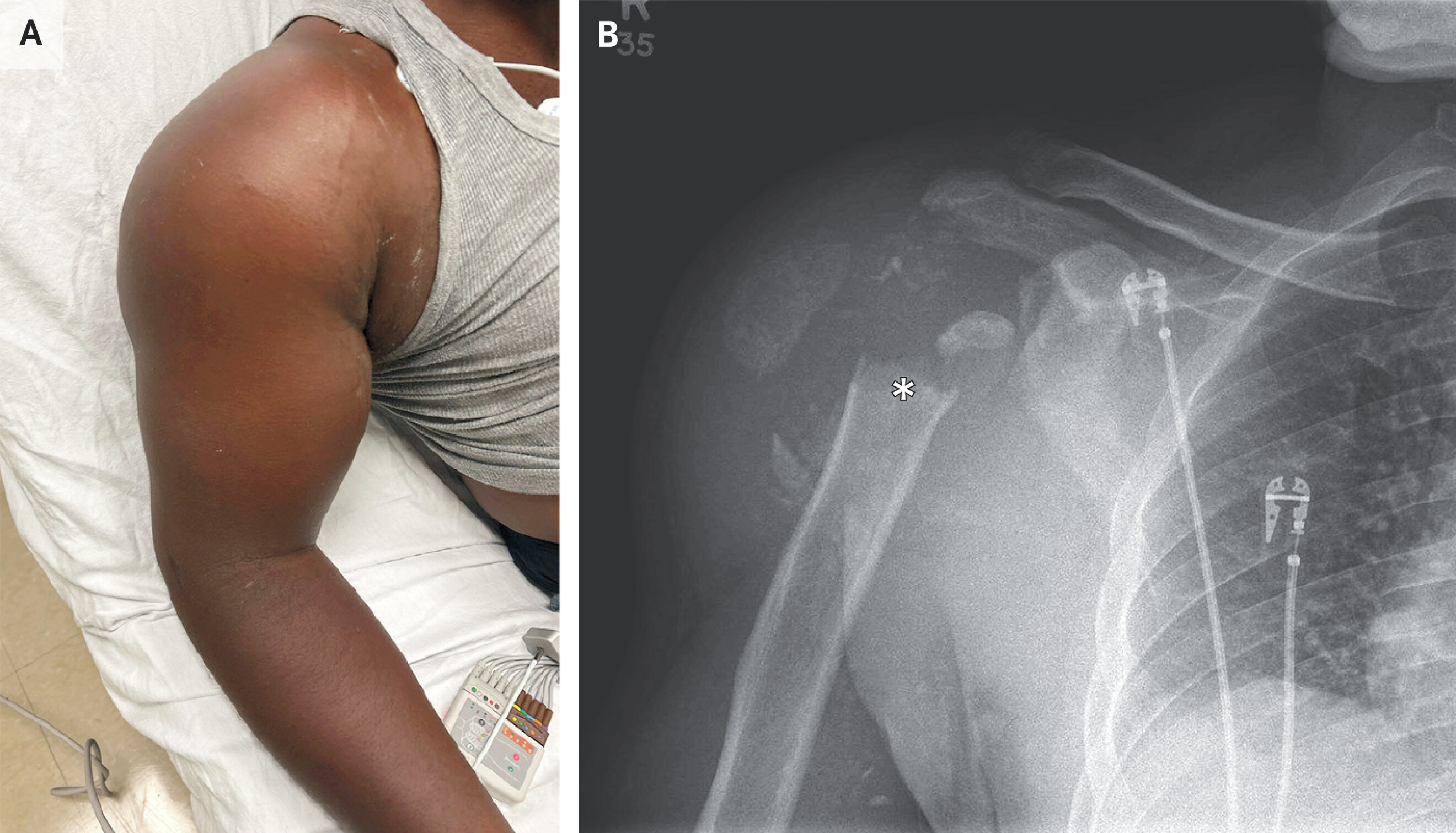
A 45-year-old construction worker went to the emergency department for his right shoulder, which was extremely swollen and becoming progressively more painful. Doctors took an X-ray to try to see what was causing the problem. But when the images came through, it was what they didn’t see that explained the situation: His entire shoulder joint was gone, seemingly blasted apart into small, lingering pieces.

The shoulder joint is a ball-and-socket joint, with the sphere-like head of the upper arm bone (humerus) sitting in the socket of the shoulder blade. According to a case report in the New England Journal of Medicine, the man’s X-ray showed that he no longer had a ball at all or an intact socket. His upper arm bone was detached from the joint, and the sphere-like top of his upper arm bone (humeral head) was completely gone. The broken, headless humerus was instead left to float freely in the man’s arm, unattached to his upper body.

The man’s shoulder, visibly swollen, and his X-ray showing destruction of the humeral head with a free-floating upper arm bone.

The man’s shoulder, visibly swollen, and his X-ray showing destruction of the humeral head with a free-floating upper arm bone. Credit: New England Journal of Medicine, 2026

Magnetic resonance imaging, meanwhile, found that the man’s rotator cuff—the group of muscles and tendons that holds the upper arm firmly in the socket—was also destroyed. Three of the four main tendons (supraspinatus, infraspinatus, and subscapularis tendons) had full-thickness tears.

The doctors diagnosed the man with a rare, ruinous condition called “Milwaukee Shoulder Syndrome” or MSS. The term was coined in 1981 based on the cases of four elderly women in Wisconsin who, like the man, had severe destruction of their shoulder joints and massive tears to their rotator cuffs. The condition is similar to—and possibly a subtype of—rapid destructive arthritis, which was identified a year later in 1982.

Despite being identified decades ago, the exact trigger of the joint-demolishing condition is still unclear. But doctors have hypothesized a series of events that leads to the disintegration. The hallmark of MSS is the deposition of calcium-containing crystals, specifically hydroxyapatite crystals, in the joint. These crystals may spur the production of enzymes that can attack and destroy tissues around the joint, including the rotator cuff. The attack is followed by inflammation and swelling that together cause damage that snowballs to complete joint destruction, which can progress rapidly. In the man’s case, he said his shoulder pain had mounted over just two months.

MSS is most often seen in women and has been linked to prior shoulder trauma and surgeries. It’s unclear why the middle-aged man in this case had the misfortune of developing it, but his doctors noted he had a pre-existing rotator cuff injury, and his work in construction put him at higher risk.

When caught early, MSS may be treated conservatively with anti-inflammatory medications and sometimes colchicine, a treatment for gout. But for a case as bad as the man’s, the main treatment is a full shoulder replacement. His doctors in the emergency department gave him pain and anti-inflammatory medication and referred him for a surgery evaluation.

RSF unit surrenders to Sudanese army with full military equipment

0
rsf-unit-surrenders-to-sudanese-army-with-full-military-equipment
RSF unit surrenders to Sudanese army with full military equipment

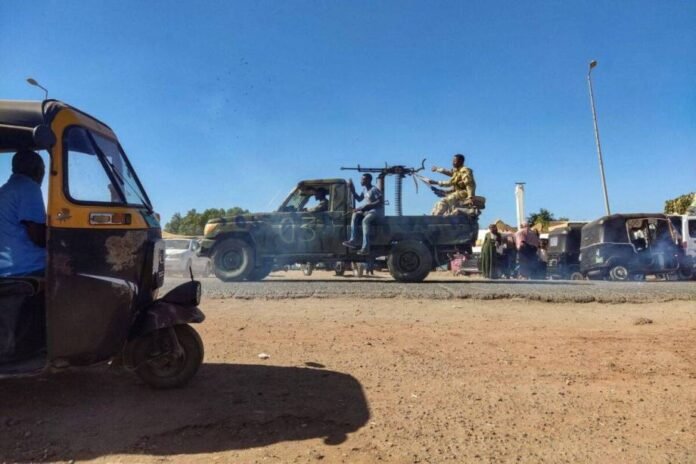
A unit of Sudan’s paramilitary Rapid Support Forces (RSF) surrendered to the army on Friday, handing over its personnel and full military equipment, according to the state-run Sudan News Agency (SUNA).

The agency said the force belonged to the RSF’s “Group 26” but did not specify the number of fighters involved or the type of equipment surrendered.

It said the group was received by Al-Nour Ahmed Adam, known as Al-Nour al-Qubba, alongside senior officers from the Sudanese army and the General Intelligence Service.

Al-Nour al-Qubba, one of the RSF’s founding members, defected to the army in April after previously serving among the paramilitary’s senior commanders and taking part in the battles for El Fasher, capital of North Darfur state, which the rebels captured in October 2025.

He said the regular armed forces received the surrendering group and similar surrenders were continuing, with a number of RSF members having joined the army in recent months.

READ: Sudan resumes voluntary return convoys from Egypt as 1,200 citizens travel home

Al-Nour al-Qubba described the RSF as lacking “principles, a cause and a strategy,” adding that foreign support for the group “will not change the outcome of the battle” and serves only “personal interests.”

Capt. Othman Al-Nour Hasab Khalil, one of the surrendered fighters, said he joined the Sudanese army together with the group after arriving from the city of Bara in North Kordofan state.

He urged his former colleagues in the RSF to abandon the fighting and join the army, saying the decision to surrender was driven by the war’s “racial and regional character” and by the group’s sense of marginalization.

There was no immediate comment from the RSF.

Since April 2023, Sudan has been engulfed in war between the army and the RSF. The conflict that has killed tens of thousands of people, displaced millions of others and triggered one of the world’s worst humanitarian crises.

READ: Sudanese army says it has secured key supply route after capturing Jereikh

0FansLike
0FollowersFollow
0FollowersFollow
0SubscribersSubscribe
- Advertisement -
Google search engine

Recent Posts